


Attention-deficit hyperactivity disorder (ADHD) was first thought to be a disorder only present in childhood; however, it is now recognised as a persistent disorder into adulthood. Thus far, most studies in adulthood concern young or middle-aged adults, whereas little is known about ADHD in old age. Attention-deficit hyperactivity disorder affects 3% to 7% of school-aged children, 1 and the estimated prevalence of adult ADHD is marginally lower at 4.4%. Reference Polanczyk and Rohde2 However, older adults were not included in these prevalence studies. As far as we know, only one study included older adults in their prevalence estimates. This study estimated the ADHD prevalence in The Netherlands to be 1–2.5% among adults between 18 and 75 years of age, without any signs of decline in the older age groups. Reference Kooij, Buitelaar, van den Oord, Furer, Rijnders and Hodiamont3 Only one study focused on childhood ADHD in older adults aged 65–80 years: a prevalence of 3.3% of childhood ADHD was found. Reference Guldberg-Kjär and Johansson4
Attention-deficit hyperactivity disorder has a profound impact on the lives of adults. Those afflicted often work below their intellectual level, have problems in relationships and social contacts, have problems organising their daily lives, are more likely to have accidents, more often have comorbid psychiatric disorders and more often display antisocial behaviour compared with adults without ADHD. Reference Kessler, Lane, Stang and Van Brunt5–Reference Young, Adamou, Bolea, Gudjonsson, Muller and Pitts8 Attention-deficit hyperactivity disorder might also lead to significant impairment in older age and the first step towards establishing possible needs for treatment for this disorder in older adults is to have credible data on its prevalence. Therefore, the objective of the present study was to estimate the prevalence of ADHD and the prevalence of ADHD subtypes in the general older population aged 60–94 years in The Netherlands. The expectation was that ADHD would not disappear in later life. Earlier research showed slightly lower prevalence rates of ADHD among adults than among children 1,Reference Polanczyk and Rohde2 and the expectation therefore was that the prevalence rate among older adults would be lower than the prevalence rates in children and younger adults.
Method
Study sample
Data for the present study were collected in the Longitudinal Aging Study Amsterdam (LASA), an ongoing study of changes in autonomy and well-being with ageing in The Netherlands. Full details on sampling are described elsewhere. Reference Huisman, Poppelaars, van der Horst, Beekman, Brug and van Tilburg9 In summary, a random sample of older men and women (55–85 years), stratified by age and gender, was drawn from the population registries of 11 municipalities in 3 geographical areas of The Netherlands. Data collection started in 1992–1993 (n = 3107), with respondents born in 1908–1937 (cooperation rate 62%). Further follow-ups were carried out in 1995–1996 (n = 2545), 1998–1999 (n = 2076) and 2001–2002 (n = 1691). In 2002–2003, a new cohort was sampled (birth years 1938–1947, n = 1002) from the same sampling frame as the earlier cohort. Both samples were combined and a follow-up was carried out in 2005–2006 (n = 2165). Cumulative attrition during the 16 years of follow-up in LASA was mainly caused by death (76%) and to a lesser extent by refusal (14%) and frailty or no establishment of contact (10%). Reference Huisman, Poppelaars, van der Horst, Beekman, Brug and van Tilburg9 Every measurement wave consists of two parts. The first part is the main interview, where topics such as social network and religion were assessed. During the main interview respondents were asked to participate in a subsequent nurse interview, where mostly medical topics were assessed. Interviews were conducted in the homes of the participants. In the present study, data were used from the follow-up in 2008–2009 (n = 1601). The ADHD screening list was part of the nurse interview (n = 1494). Attrition between the main and medical interview (6.9%) was due to refusal (n = 86), frailty (n = 13), death (n = 4) and not being able to contact the person (n = 4). Specially trained and intensively supervised interviewers conducted the main and nurse interviews. Informed consent was obtained from all participants, and the study was approved by the ethical review board of the VU University Medical Center.
Measures
ADHD
Attention-deficit hyperactivity disorder was screened using a questionnaire developed by Barkley et al. Reference Barkley, Murphy and Fischer10 The questionnaire consists of seven items on inattention, one item on hyperactivity and one item on impulsivity. Using two response categories (no/yes), the sum score varied from 0 to 9 (0 = no symptoms of ADHD, 9 = all symptoms of ADHD). This questionnaire was translated into Dutch and back-translated into English by independent translators. In our group, Semeijn et al Reference Semeijn, Michielsen, Comijs, Deeg, Beekman and Kooij11 found that the questionnaire had acceptable qualities, with good sensitivity and an area under the curve (AUC) which is in concordance with the AUC (0.86) found among adults. Reference Faraone, Biederman and Spencer12
To diagnose ADHD, the Diagnostic Interview for ADHD in Adults, second edition, (Diagnostisch Interview Voor ADHD bij volwassenen, DIVA 2.0) was used. Reference Kooij and Francken13 This semi-structured interview consists of two parts: one for assessing the presence of all 18 DSM-IV-TR criteria 1 in childhood (primary school, age 6–12) and at the current time; the other to assess impairment in five areas of functioning (work, education, family, social/relationships and self-confidence) in childhood and at present, related to the ADHD symptoms. The DIVA 2.0 has not yet been validated in (older) adults, but as it is based on the DSM-IV-TR criteria, 1 we expect the validity to be high. Reference Kooij, Buitelaar, van den Oord, Furer, Rijnders and Hodiamont3
For the present study, the DIVA 2.0 was modified into a structured diagnostic interview because LASA works with lay interviewers. Examples of behaviour often reported by adults with ADHD were added with each symptom. An example of a question is ‘Do you often find it difficult to keep your attention; for example, are you distracted easily by your own thoughts, do you find it difficult to watch a film through to the end, or to read a book?’ (answer no/yes). When participants endorsed a symptom, either at the present time or in childhood, further questions were asked about the duration (‘Longer than 6 months?’, no/yes), frequency (‘More than once a week?’, no/yes), and whether the symptom persisted throughout their life. In part two it was asked whether the symptoms led to impairment in different areas of functioning, both in adulthood and during childhood. A stem question about impairment in one area was first asked and, when given a negative answer, several more specific examples of impairment were given. These questions also had to be answered with yes or no. Additional impairment could be reported by the respondent. An area was scored as impaired when two or more examples in an area were answered affirmatively. Interviewers were adequately trained to evaluate the answers to the questions of the structured interview. The interviewers received 8 h of training and practised one interview before the study. The authors (M.M. and E.S.) intensively supervised all interviews, and questions were discussed with an experienced psychiatrist (J.J.S.K.).
In the literature for measuring the persistence of ADHD from childhood to adulthood, different persistence rates are used. Reference Faraone, Biederman and Mick14 The first is the syndromatic persistence rate, the maintenance of the full diagnostic status; the second is the symptomatic persistence rate, the maintenance of partial diagnostic status with impairment. A syndromatic diagnosis of adult ADHD required six symptoms or more of either inattention and/or hyperactivity–impulsivity during the 6 months prior to the interview (DSM-IV-TR criterion A). Symptomatic ADHD required the cut-off score of four symptoms or more of either inattention and/or hyperactivity–impulsivity during the 6 months prior to the interview. Reference Kooij, Buitelaar, van den Oord, Furer, Rijnders and Hodiamont3
Following the DSM-IV-TR criteria, a distinction was made between the three ADHD subtypes.
-
(a) The predominantly inattentive subtype (ADHD-IA) required six (syndromatic) or four (symptomatic) inattention symptoms and fewer than six or four symptoms of the hyperactive–impulsive domain during the 6 months prior to the interview.
-
(b) The predominantly hyperactive–impulsive subtype (ADHD-HI) required six (syndromatic) or four (symptomatic) hyperactivity–impulsivity symptoms and fewer than six or four symptoms of the inattention domain during the 6 months prior to the interview.
-
(c) The combined subtype (ADHD-C) required six (syndromatic) or four (symptomatic) inattention symptoms and six or four hyperactive–impulsive symptoms during the 6 months prior to the interview.
For all diagnoses it was required to have six symptoms of either inattention and/or hyperactivity–impulsivity in childhood (DSM-IV-TR criterion A). It was also required to have clinically significant impairment in at least two areas of daily life during the past 6 months prior to the interview and in childhood (criterion C and D). No attempt was made to operationalise DSM-IV-TR criterion E, which states that the symptoms are not better accounted for by another mental disorder.
To analyse differences in demographic characteristics the sum score of all current and childhood ADHD symptoms was calculated (range 0–36).
Demographic characteristics
The demographic characteristics included gender (male, female), age (based on the median, 60–70 and 71–94 years), living status (living together with partner or alone), urban environment (Amsterdam or elsewhere) and socioeconomic status (education and monthly income). Categories for education were: low (elementary education or less, ⩽6 years), medium (general, intermediate and lower vocational education, 7–11 years) and high (university, college, higher vocational education, ⩾11 years). For monthly net household income, three categories (tertiles), in Euros, were distinguished: low (e1350), medium (between e1350 and ⩽e1929) and high (⩾e1929). For participants with a partner living in the household, household income was multiplied by 0.7 to make it comparable with the income in a one-person household. Reference Koster, Bosma, van Groenou, Kempen, Penninx and van Eijk15 Income data were missing for 16 respondents.
Procedure
In order to limit the number of diagnostic interviews, a two-phase non-proportional stratified random sampling procedure was used (Fig. 1). In the first phase, 1494 participants responded on the screening questionnaire for ADHD: 45 respondents were excluded owing to too many missing values (⩾3), and 467 respondents were unavailable for further participation because of participation in another side study. These respondents were randomly chosen – there were no specific inclusion or exclusion criteria, therefore the ADHD study sample is not likely to be biased by excluding these respondents.
Three exclusion criteria were implemented. First, low cognitive functioning, measured with the Mini-Mental State Examination, Reference Folstein, Folstein and McHugh16 a frequently used screening instrument for global cognitive dysfunction. The scale consists of 23 items and scores range from 0 to 30, with higher scores indicating better cognitive functioning. Respondents with an MMSE score ⩽18 were excluded. Second, those who experienced cognitive decline, which was defined as a difference in score of more than one standard deviation on the MMSE (⩾3 points) over a period of 3 years were excluded. Finally, respondents with a history of cerebrovascular accident were excluded.
Flowchart of screeining and diagnostic interview phases. CVA, cerebrovascular accident; MMSE, Mini-Mental State Examination.

The first phase consisted of 1449 respondents. Based on the score on the ADHD screening questionnaire the sample was divided into three groups. The screening list has not yet been validated among older adults; therefore the best cut-off score for older adults is unknown. To ensure sufficient power and equal group sizes, the total score on the screening list of the high scoring group, most likely to have ADHD, was set at 3–9. The moderate scoring group was set at a total score between 1 and 2, and the low scoring group was set at a total score of 0. In phase 2, all of the participants in group 3, and a random sample of the participants in groups 1 and 2 (n = 271), were approached for a diagnostic interview. The randomisation was done by means of the random number generator using the Statistical Package for Social Sciences (SPSS) software version 15.0 for Windows. In total, 94 respondents of the low scoring group, 93 of the moderate scoring group and 84 respondents of the high scoring group were approached; 85 (90%), 80 (86%) and 69 (82.3%) respectively consented to be interviewed. Three respondents were excluded from statistical analysis: one participant refused to answer questions about childhood because of experienced trauma during that period; the second participant had a cerebrovascular accident and was not able to answer the questions; the third participant was not able to recollect childhood memories. Thus, the study sample consisted in total of n = 231. Respondents who participated in the phase 2 (interview) were significantly younger (mean 71.6 years, s.d. = 7.7) than those who participated in phase 1 (mean 73.4 years (s.d. = 8.5); t(341,8) = –3.095, P = 0.002). There were no significant differences in gender between those who participated in phase 2 and those who did not. All interviews were conducted between May and September 2010. The interviewers were masked to the initial results of the screening questionnaire.
Statistical analysis
The prevalence of ADHD was computed according to the two-phase sampling model. The data were weighted for sampling probability. The sampling weight is an indicator of how many phase 1 respondents were represented by each of the phase 2 respondents. The values are the reciprocal of the sampling fractions. The prevalence was then weighted back to the general older population, by comparing the study sample of 1449 respondents with population-based numbers from Statistics Netherlands regarding age and gender. Afterwards the weights were scaled back to the study sample (n = 231). Weighted prevalence rates were calculated with STATA version 10 for Windows. Independent t-tests (two-tailed) and ANOVA were conducted with SPSS.
Results
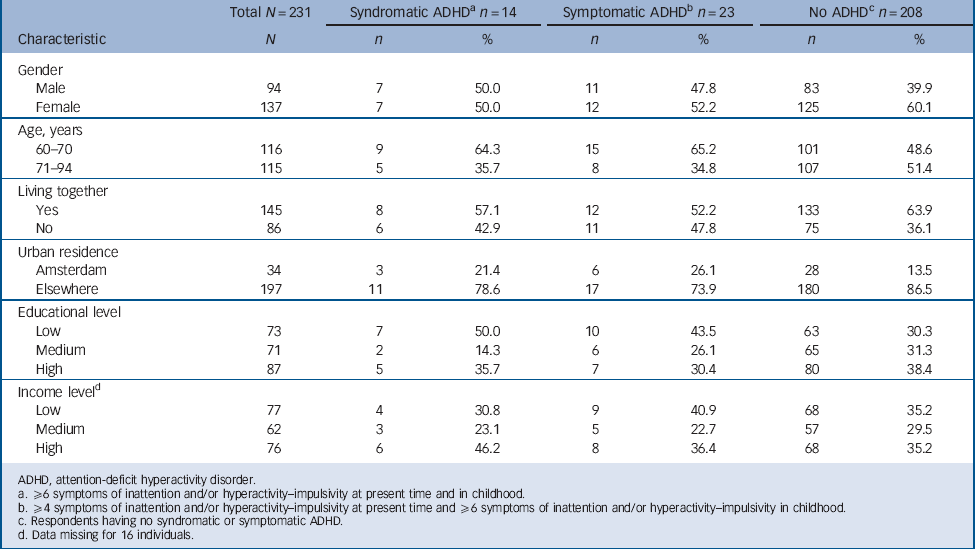
Descriptive statistics of the respondents are presented in Table 1. Of the 231 respondents, 137 were female (59%) and 97 (41%) were male. The average age was 71 years (s.d. = 7.7, range 60–94), more than half of the respondents were living together with their partner (63%).
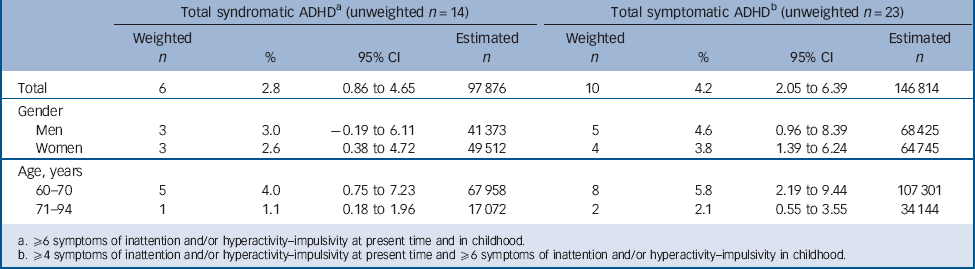
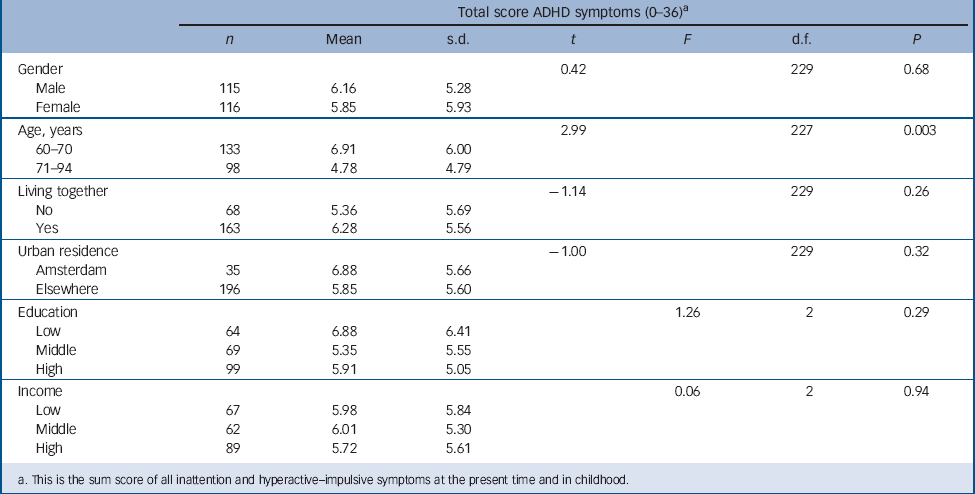
Weighted back to the general population, the prevalence rate of syndromatic ADHD was estimated at 2.8% (95% CI 0.86–4.64) and the prevalence of symptomatic ADHD at 4.2% (95% CI 2.05–6.39) (Table 2). At face value, the prevalence was higher in younger elderly adults compared with older elderly adults (4.0% v. 1.1% for syndromatic and 5.8% v. 2.1% for symptomatic ADHD), but the prevalence rates in the different age groups were not tested for significance owing to the small sample size. However, independent samples t-test showed that younger elderly adults reported significantly more ADHD symptoms (mean 6.91, s.d. = 6.0) than older elderly adults (mean 4.78 (s.d. = 4.79); t(227,3) = 3.00, P = 0.003) (Table 3). There was no significant difference in ADHD symptoms between men and women, by living situation, level of education or level of income.
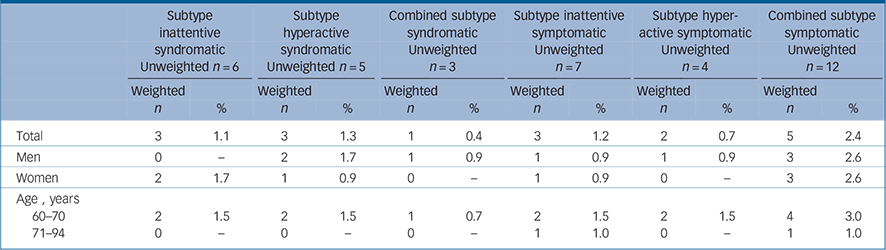
The difference in prevalence rates of the syndromatic and symptomatic subtypes between genders and age groups was not tested for significance owing to the small sample sizes. On face value, the prevalence rates for the syndromatic subtypes ADHD-HI and ADHD-C were slightly higher among men than women; it was only for the inattention subtype that the prevalence rate was higher among women than men (Table 4). The prevalence rates for the symptomatic subtypes were only different for ADHD-HI: the rate was higher among men than women. The prevalence rates were higher for all subtypes in the younger elderly group compared with the older elderly group.
Unweighted demographic characteristics of the study sample
| Total N = 231 | Syndromatic ADHDFootnote a n = 14 | Symptomatic ADHDFootnote b n = 23 | No ADHDFootnote c n = 208 | ||||
|---|---|---|---|---|---|---|---|
| Characteristic | N | n | % | n | % | n | % |
| Gender | |||||||
| Male | 94 | 7 | 50.0 | 11 | 47.8 | 83 | 39.9 |
| Female | 137 | 7 | 50.0 | 12 | 52.2 | 125 | 60.1 |
| Age, years | |||||||
| 60–70 | 116 | 9 | 64.3 | 15 | 65.2 | 101 | 48.6 |
| 71–94 | 115 | 5 | 35.7 | 8 | 34.8 | 107 | 51.4 |
| Living together | |||||||
| Yes | 145 | 8 | 57.1 | 12 | 52.2 | 133 | 63.9 |
| No | 86 | 6 | 42.9 | 11 | 47.8 | 75 | 36.1 |
| Urban residence | |||||||
| Amsterdam | 34 | 3 | 21.4 | 6 | 26.1 | 28 | 13.5 |
| Elsewhere | 197 | 11 | 78.6 | 17 | 73.9 | 180 | 86.5 |
| Educational level | |||||||
| Low | 73 | 7 | 50.0 | 10 | 43.5 | 63 | 30.3 |
| Medium | 71 | 2 | 14.3 | 6 | 26.1 | 65 | 31.3 |
| High | 87 | 5 | 35.7 | 7 | 30.4 | 80 | 38.4 |
| Income levelFootnote d | |||||||
| Low | 77 | 4 | 30.8 | 9 | 40.9 | 68 | 35.2 |
| Medium | 62 | 3 | 23.1 | 5 | 22.7 | 57 | 29.5 |
| High | 76 | 6 | 46.2 | 8 | 36.4 | 68 | 35.2 |
ADHD, attention-deficit hyperactivity disorder.
a. ⩾6 symptoms of inattention and/or hyperactivity–impulsivity at present time and in childhood.
b. ⩾4 symptoms of inattention and/or hyperactivity–impulsivity at present time and ⩾6 symptoms of inattention and/or hyperactivity–impulsivity in childhood.
c. Respondents having no syndromatic or symptomatic ADHD.
d. Data missing for 16 individuals.
An important DSM-IV-TR ADHD criterion is that ADHD should lead to impairment in at least two areas of functioning. Respondents with both syndromatic and symptomatic ADHD described impairments due to the reported symptoms in 3.7 of the 5 areas in childhood and 4.4 areas of functioning at the present time.
Discussion
This study is the first to report on the prevalence rates of ADHD in older adults. It was estimated that 2.8% of older adults have full-blown, syndromatic ADHD and 4.2% symptomatic ADHD. This correlates roughly with 95 000 older adults in The Netherlands who have syndromatic ADHD, and 145 000 older adults who have symptomatic ADHD. People with syndromatic or symptomatic ADHD reported impairment due to the symptoms in several areas of functioning, meaning that ADHD remains an important cause of impairment in old age.
With these prevalence rates, we have to take into consideration that the diagnostic instruments were not yet validated in (older) adults. However, as expected, these prevalence rates are a bit lower than the prevalence rates of ADHD in children (3–7%) 1 and adults (4.4%). Reference Kessler, Adler, Barkley, Biederman, Conners and Demler17 In contrast to most prevalence studies among children and adults where ADHD is more prevalent among men, in our study men and women reported similar levels of ADHD symptoms. Reference Kessler, Adler, Barkley, Biederman, Conners and Demler17–Reference Tuithof, Ten Have, Van Dorsselaer and de Graaf21 This may be a surprising result, although some studies in adults also found similar prevalence estimates between genders. Reference Kooij, Buitelaar, van den Oord, Furer, Rijnders and Hodiamont3 It may be that the prevalence rates of genders converge over the life course, but more research is necessary to further explore this finding.
In this study the prevalence rates of the different subtypes of ADHD were estimated to examine whether symptoms of ADHD change over the life course. Among children, only considering studies among community-based samples, ADHD-IA is most common (4.5–5.4%) compared with 1.7–2.4% for ADHD-HI and 1.9–3.6% for ADHD-C. Reference Gaub and Carlson19,Reference Murphy and Barkley22,Reference Wolraich, Hannah, Pinnock, Baumgaertel and Brown23 A community-based study among younger adults estimated prevalence rates of 1.3% for ADHD-IA, 2.5% for ADHD-HI and 0.9% for ADHD-C. Reference Murphy and Barkley22 In our study, a similar order of prevalence rates was found for the three different subtypes; ADHD-C was the least prevalent and the prevalence rate of ADHD-IA was estimated at 1.1%, a bit lower than the prevalence estimate of the study among younger adults. In contrast to the estimated prevalence rates among adults, where ADHD-HI was found to be the most prevalent, the prevalence rates of ADHD-IA and ADHD-HI were almost the same in our study. Looking at the three age groups of community-based respondents with ADHD, it seems that all three subtypes are more prevalent among children. The hyperactivity–impulsivity prevalence seems to peak in adults and to decline in older age. The inattention subtype does not seem to change after adulthood, whereas ADHD-C seems to decline over the life course. Care must be taken with inference on the course of ADHD over the life course; so far our study is the only study researching these subtypes in older adults, and more, preferably longitudinal, studies are necessary to get a clear insight into ADHD and its development over the life course.
Estimated weighted prevalence rates of attention-deficit hyperactivity disorder (ADHD) among men and women and different age groups
| Total syndromatic ADHDFootnote a (unweighted n = 14) | Total symptomatic ADHDFootnote b (unweighted n = 23) | |||||||
|---|---|---|---|---|---|---|---|---|
| Weighted n |
% | 95% CI | Estimated n |
Weighted n |
% | 95% CI | Estimated n |
|
| Total | 6 | 2.8 | 0.86 to 4.65 | 97 876 | 10 | 4.2 | 2.05 to 6.39 | 146 814 |
| Gender | ||||||||
| Men | 3 | 3.0 | –0.19 to 6.11 | 41 373 | 5 | 4.6 | 0.96 to 8.39 | 68 425 |
| Women | 3 | 2.6 | 0.38 to 4.72 | 49 512 | 4 | 3.8 | 1.39 to 6.24 | 64 745 |
| Age, years | ||||||||
| 60–70 | 5 | 4.0 | 0.75 to 7.23 | 67 958 | 8 | 5.8 | 2.19 to 9.44 | 107 301 |
| 71–94 | 1 | 1.1 | 0.18 to 1.96 | 17 072 | 2 | 2.1 | 0.55 to 3.55 | 34 144 |
a. ⩾6 symptoms of inattention and/or hyperactivity–impulsivity at present time and in childhood.
b. ⩾4 symptoms of inattention and/or hyperactivity–impulsivity at present time and ⩾6 symptoms of inattention and/or hyperactivity–impulsivity in childhood.
Weighted differences of demographic characteristics on total score of attention-deficit hyperactivity (ADHD) symptoms
| Total score ADHD symptoms (0–36)Footnote a | |||||||
|---|---|---|---|---|---|---|---|
| n | Mean | s.d. | t | F | d.f. | P | |
| Gender | 0.42 | 229 | 0.68 | ||||
| Male | 115 | 6.16 | 5.28 | ||||
| Female | 116 | 5.85 | 5.93 | ||||
| Age, years | 2.99 | 227 | 0.003 | ||||
| 60–70 | 133 | 6.91 | 6.00 | ||||
| 71–94 | 98 | 4.78 | 4.79 | ||||
| Living together | –1.14 | 229 | 0.26 | ||||
| No | 68 | 5.36 | 5.69 | ||||
| Yes | 163 | 6.28 | 5.56 | ||||
| Urban residence | –1.00 | 229 | 0.32 | ||||
| Amsterdam | 35 | 6.88 | 5.66 | ||||
| Elsewhere | 196 | 5.85 | 5.60 | ||||
| Education | 1.26 | 2 | 0.29 | ||||
| Low | 64 | 6.88 | 6.41 | ||||
| Middle | 69 | 5.35 | 5.55 | ||||
| High | 99 | 5.91 | 5.05 | ||||
| Income | 0.06 | 2 | 0.94 | ||||
| Low | 67 | 5.98 | 5.84 | ||||
| Middle | 62 | 6.01 | 5.30 | ||||
| High | 89 | 5.72 | 5.61 | ||||
a. This is the sum score of all inattention and hyperactive–impulsive symptoms at the present time and in childhood.
Estimated weighted prevalence of the different attention-deficit hyperactivity disorder subtypes among men and women and different age groups
| Subtype inattentive syndromatic Unweighted n = 6 |
Subtype hyperactive syndromatic Unweighted n = 5 |
Combined subtype syndromatic Unweighted n = 3 |
Subtype inattentive symptomatic Unweighted n = 7 |
Subtype
hyper- active symptomatic Unweighted n = 4 |
Combined subtype symptomatic Unweighted n = 12 |
|||||||
|---|---|---|---|---|---|---|---|---|---|---|---|---|
| Weighted n |
% | Weighted n |
% | Weighted n |
% | Weighted n |
% | Weighted n |
% | Weighted n |
% | |
| Total | 3 | 1.1 | 3 | 1.3 | 1 | 0.4 | 3 | 1.2 | 2 | 0.7 | 5 | 2.4 |
| Men | 0 | – | 2 | 1.7 | 1 | 0.9 | 1 | 0.9 | 1 | 0.9 | 3 | 2.6 |
| Women | 2 | 1.7 | 1 | 0.9 | 0 | – | 1 | 0.9 | 0 | – | 3 | 2.6 |
| Age, years | ||||||||||||
| 60–70 | 2 | 1.5 | 2 | 1.5 | 1 | 0.7 | 2 | 1.5 | 2 | 1.5 | 4 | 3.0 |
| 71–94 | 0 | – | 0 | – | 0 | – | 1 | 1.0 | 0 | – | 1 | 1.0 |
An additional interesting finding in our study is that younger elderly adults (60–70 years) reported more ADHD symptoms compared with older elderly adults (71–94 years). A possible explanation may be that the symptoms diminish with increasing age. The specific (biological) mechanisms behind this decrease of symptoms are unknown. Another explanation may be that the diagnostic interview used is not sensitive enough to detect ADHD in older elderly adults. A final possible explanation for the lower levels of ADHD symptoms found at age 71 and over may be that persons with ADHD have a lower life expectancy compared with people with no ADHD. The disorder is associated with increased morbidity and with other psychiatric disorders such as substance use disorder, depression and anxiety disorders. Reference Leibson, Katusic, Barbaresi, Ransom and O'Brien24,Reference Sobanski25 Furthermore, an almost fourfold increase in average frequency of being involved in accidents as drivers was reported by young adults with ADHD. Reference Barkley, Guevremont, Anastopoulos, DuPaul and Shelton26 These factors might have a negative influence on the life expectancy of people with ADHD and may explain the lower prevalence rates among older elderly adults.
Another striking finding is that older adults with ADHD did not differ in living situation, level of education and income compared with older adults without ADHD. Given the chronicity and impact of the ADHD, one might have expected that older adults with ADHD would experience impairments in these three areas. There are several explanations for this finding. First, although we did not find any objective differences in these three areas, our respondents with ADHD did however report a negative impact of the ADHD symptoms on four out of five areas of functioning, currently and in childhood. It may be that owing to the small sample that the differences in the three areas did not reach statistical significance. Second, a recent study among community-dwelling older adults with ADHD also did not find a lower income among older adults with ADHD. Reference Brod, Schmitt, Goodwin, Hodgkins and Niebler27 It may be that older adults with ADHD do not differ in income level compared with older adults without ADHD. Third, education is not directly related to ability in the older age group. Many able older adults did not have the opportunity to study in their childhood; therefore low level of education may not be a distinctive characteristic of older people with ADHD. Finally, the respondents may be looked upon as survivors and represent a subsample of relatively successful and higher functioning older adults with ADHD.
Limitations
Diagnosing ADHD in older adults comes with several limitations. Our diagnostic instrument is based on the DSM-IV-TR criteria as developed for children, and has not yet been validated in (older) adults. Clinical observations have shown that symptoms of ADHD are different in adults than in children, although not less impairing. Consequently, in the past few years, a number of researchers have questioned the validity of this diagnosis in adults. Reference Fayyad, De Graaf, Kessler, Alonso, Angermeyer and Demyttenaere28,Reference Mannuzza, Klein, Klein, Bessler and Shrout29 New suggestions for the adjustment of the adult ADHD diagnosis have been proposed, such as a new questionnaire mainly asking about executive functioning Reference Barkley, Murphy and Fischer10 and a reduction in the cut-off for diagnosis using DSM-IV. Reference Kooij, Buitelaar, van den Oord, Furer, Rijnders and Hodiamont3 How the symptoms of ADHD develop in older adults is unknown, however it seems likely that symptoms of ADHD might be different for older people too. Weiss describes possible challenges ADHD presents to older adults, Reference Weiss30 such as an increase in cognitive impairments that were previously compensated for by coping mechanisms. This could mean that the DSM-IV-TR criteria currently used may not be subtle enough for diagnosing ADHD in older adults. More research is needed in this area. The semi-structured DIVA (2.0) was modified into a fully structured interview for this study. Although it is unknown what the effect of this may have been on the results, previous studies have shown that fully structured interviews such as the Composite International Diagnostic Interview do very well in some disorders, such as anxiety disorders and depression, Reference Pez and Gilbert31 while they tend to underestimate the prevalence of others, such as bipolar disorder. Reference Regeer, ten Have, Rosso, Hakkaart-van Roijen, Vollebergh and Nolen32 Under- or overestimation may also be the case here, meaning that the prevalence of ADHD based on the fully structured interview should be interpreted with some caution.
In addition, in our study other psychiatric disorders were not included in the diagnostic interview. A cross-sectional study of age-related changes in ADHD symptoms in a clinical sample diagnosed with ADHD (ages 16–50 years) found that older adults reported more depressive symptoms and inattentive symptoms, whereas inattentive symptoms improved according to informants. Reference Bramham, Murphy, Xenitidis, Asherson, Hopkin and Young33 The subjective increase of attention symptoms may be associated with depression. This could mean that possible affective symptoms present in older persons in our study may have led to misdiagnosis. However, a respondent would only receive an ADHD diagnosis in our study when six out of nine ADHD symptoms were already present in childhood. This childhood onset and lifetime persistence of symptoms and impairment should filter out the false positives. Since we did not include other psychiatric disorders, the prevalence rate should be interpreted with some caution and further research on ADHD and comorbid disorders in older adults is needed.
Another limitation regards the recollection of childhood symptoms. Since external reports, from informants and/or school reports were not available in our study, the ADHD diagnosis relied solely on the respondents’ recollection of childhood symptoms. Studies on concordance between recollection of patients with ADHD and recollection of informants have shown inconsistent results; most studies showed an underestimation of childhood symptoms among children and young adults, Reference Barkley, Fischer, Smallish and Fletcher34–Reference Loeber, Green, Lahey and Stouthamer-Loeber37 although one study found that recollection by the participant produced overestimation, Reference Mannuzza, Klein, Klein, Bessler and Shrout29 while two other studies found that adults with ADHD can be just as reliable in reporting (attention) problems as informants. Reference Young and Gudjonsson38,Reference Murphy and Schachar39 More research on linking childhood school reports with measures of ADHD in older adults is needed.
Finally, the analyses were carried out in the sixth cycle of an ongoing study covering 16 years, which inevitably involved attrition of participating respondents. Attrition in the LASA cohort can be attributed for the largest part to mortality Reference Huisman, Poppelaars, van der Horst, Beekman, Brug and van Tilburg9 but attrition due to mortality does not necessarily influence the representativeness of the sample Reference Huisman, Poppelaars, van der Horst, Beekman, Brug and van Tilburg9 since high mortality is a characteristic of older populations. Attrition due to frailty in LASA was associated with poorer self-rated health. Conversely, attrition due to refusal was associated with better health. Reference Deeg, van Tilburg, Smit and de Leeuw40 As very little is known about the determinants of ADHD in older people, it is difficult to estimate the effect any selective loss of respondents may have had. Since the prevalence was weighted back to the general Dutch older population regarding age (and gender), our expectation is that attrition did not bias the prevalence rate.
Clinical implications
This is the first epidemiological study, systematically studying ADHD in the general older population, using a diagnostic interview. Although many unresolved issues remain, the study demonstrates clearly that ADHD does not fade or disappear in older age and it is a topic very much worthy of further study.
Funding
The LASA is supported in large part by the Ministry of Health, Wellbeing and Sports of the Dutch Government. This study was funded by Shire.
Acknowledgements
We thank Filip Smit for his time and help with the statistical analysis.




eLetters
No eLetters have been published for this article.