





Non-technical Summary
The Late Ordovician was a time of rapid diversification and biodiversity accumulation for brachiopods, a key component of the Paleozoic Evolutionary Fauna, composed predominantly of filter-feeding benthic organisms. In this paper, we reconstruct the evolutionary relationship and biodiversity dynamics of a key group of atrypide brachiopods in the family Anazygidae, including the genera Anazyga, Catazyga, and Zygospira. Analysis of multiple potential datasets of internal and external characters using Bayesian phylogenetic methods under the fossilized birth–death model recovered topologies that were most robust when incorporating only external characters. Moreover, all recovered topologies indicate that species previously assigned to Anazyga and Zygospira do not separate into discrete clades but are intermixed within a single monophyletic group. Consequently, we propose a systematic revision based on external characters that recognizes two monophyletic genera: Catazyga, which includes most species historically assigned to Catazyga, and Zygospira, which includes most species historically assigned to Zygospira and Anazyga. One new species, Zygospira idahoensis is described, and one former subspecies is elevated to species status as Zygospira multicostata. The Anazygidae is estimated to have originated around 453 million years ago in the Sandbian Stage. Recovered diversification rates indicate that the highest speciation and extinction rates occurred in the late Katian (Katian 3) state, when the total number of species in the clade reached its peak. This was followed by an abrupt decline in biodiversification rates that led to an extinction episode in the Katian 4 Stage for all lineages. Therefore, Catazyga and Zygospira are interpreted as early Late Ordovician atrypids that experienced both rapid radiation and extinction during the last phase of the Ordovician Radiation in the Katian Stage.
Introduction
The order Atrypida originated and diversified in the Middle Ordovician (Darriwilian), flourished during the Late Ordovician, and persisted through the early Silurian until its extinction in the Late Devonian (Harper et al., Reference Harper, Popov and Holmer2017). Anazygidae Davidson, Reference Davidson1882 is an early, geographically widespread brachiopod family within the order Atrypida that ranges from the Middle to Late Ordovician (Copper, Reference Copper1977; Baarli et al., Reference Baarli, Huang and Maroja2022). Anazygidae species are stratigraphically important taxa that substantially impacted community structures and ecosystems (Copper, Reference Copper1977; Patzkowsky and Holland, Reference Patzkowsky and Holland1999; Sproat and McLeod, Reference Sproat and McLeod2023). Typical species within the Anazygidae are small (5–15 mm), oval-shaped, with fine-ribbed shells characterized by brachidia with “the apex of their vertical spiral cones directed towards the bottom of the dorsal valve” (i.e., coiling toward the margins of the dorsal valve; Davidson, Reference Davidson1882, p. 4). Their interior morphology consists of a calcified, whorled spiralia, which has historically played an important role in atrypide taxonomy (Sproat and McLeod, Reference Sproat and McLeod2023).
This study focuses on Anazyga Davidson, Reference Davidson1882, Catazyga Hall and Clarke, Reference Hall and Clarke1894, and Zygospira Hall, Reference Hall1862, which are paleoecologically significant taxa in Late Ordovician communities of (mainly) Laurentia (Copper, Reference Copper1977; Patzkowsky and Holland, Reference Patzkowsky and Holland1999). A parsimony analysis conducted by Baarli et al. (Reference Baarli, Huang and Maroja2022) that included 40 characters and 71 atrypide genera recovered these genera as forming a monophyletic group with the Silurian non-Laurentian genera Zygatrypa and Pentlandella; however, the geographic and stratigraphic relations among these five genera remain unclear and require revaluation. Four Zygospira species were recently systematically revised by Sproat and McLeod (Reference Sproat and McLeod2023); however, no previous studies have explored species-level evolutionary relationships of Late Ordovician anazygid species. The goal of this study is to reconstruct species-level relationships and evolutionary rates within this group in the Late Ordovician. In addition, this analysis investigates the relative importance of incorporating internal and external characters versus only external characters into tip-dated Bayesian phylogenetic analyses implementing a fossilized birth–death (FBD) model.
Background
The atrypide genus Zygospira Hall, Reference Hall1862 ranges from the late Sandbian to the late Katian Age (Late Ordovician) throughout North America (Foerste, Reference Foerste1924; Wang, Reference Wang1949; Howe, Reference Howe1965; Copper, Reference Copper1977; Jin et al., Reference Jin, Caldwell and Norford1997; Sproat and McLeod, Reference Sproat and McLeod2023), although species have also been reported from Australia (Percival, Reference Percival1991) and Wales (Cowper Reed, Reference Cowper Reed1905). Zygospira was erected by Hall (Reference Hall1862), who defined Zygospira as being externally distinct from other atrypids due to its size, circular to oval shape, number of ribs, and discrete combination of internal structures, specifically five to eight spiralium whorls that coil laterally. Anazyga was described 20 years later by Davidson (Reference Davidson1882) as a genus similar to Zygospira, which was characterized as being longitudinally oval and having one to three spiralium whorls. Later, Copper (Reference Copper1977) characterized Anazyga as the earliest known wholly ribbed atrypide and described it as being coarsely ribbed. The earliest species attributed to Anazyga are Sandbian 2 in age whereas most species previously attributed to Zygospira are Katian in age. This has led various authors to interpret these as time-stratigraphic lineages (e.g., Copper, Reference Copper1977). Anazyga species are commonly found in North America, although they have also been reported from Laurentian terranes in the United Kingdom and in Baltoscandia (Copper, Reference Copper1977).
Similarities in the internal structures of Zygospira and Anazyga suggest very close evolutionary affinities, with the primary difference between the two being the location and orientation of the jugum that connects the spiralia and differences in the orientation of the spiralia (Copper, Reference Copper1977). Species have been transferred between Anazyga and Zygospira by various authors over the past 140 years. For example, a total of 10 Zygospira species were transferred to Anazyga (Copper, Reference Copper1977) on the basis of stratigraphic ranges, the presence of teeth cavities, and jugum position. Baarli et al. (Reference Baarli, Huang and Maroja2022) inferred Zygospira + Anazyga as a monophyletic group, but it is possible each genus may be paraphyletic as historically defined.
The third anazygid genus, Catazyga Hall and Clarke, Reference Hall and Clarke1894, was assigned in addition with the Silurian genus Pentalandella Boucot, Reference Boucot1964 to the subfamily Catazyginae by Baarli et al. (Reference Baarli, Huang and Maroja2022), although Baarli et al. (Reference Baarli, Huang and Maroja2022) noted a significant stratigraphic gap between these genera. Catazyga is diagnosed as a rotund costellate brachiopod with an elliptical outline. Catazyga is recorded from eastern North America and Europe and assumed to have originated during the early Katian, making it younger than both Anazyga and Zygospira. From the literature, there is no apparent doubt about the division between Catazyga and its related genera due to its unique rotund profile and abundance of prominent costellae. There are, however, uncertainties in the phylogenetic position of Anazyga within the clade. Externally, Anazyga appears most closely related to Zygospira, but internally, it shares multiple morphological features with both Catazyga and Zygospira, such as the dorsal spiralia with fewer whorls (Copper, Reference Copper1977).
Internal characters have historically been given substantial taxonomic importance in differentiating Anazyga and Zygospira; however, the internal morphology of most species within the clade has not been well characterized. In total, only three species have well-documented brachidia, Anazyga recurvirostra (Hall, Reference Hall1847), Zygospira modesta Say in Hall, Reference Hall1847, and Z. kentuckiensis Nettelroth, Reference Nettelroth1889 (Hall, Reference Hall1862; Davidson, Reference Davidson1882; Copper, Reference Copper1977; Sproat and McLeod, Reference Sproat and McLeod2023). Due to variable preservation of internal structures and the labor- and time-intensive process of serial sectioning required to examine the spiralia morphology in anazygids, little is known about species-specific internal anatomy. Generalizations from these three well-constrained species are frequently made when describing species and genera (Ross and Dutro, Reference Ross and Dutro1966), or internal morphology is not discussed at all (Cowper Reed, Reference Cowper Reed1905; Fenton and Fenton, Reference Fenton and Fenton1922; Cooper, Reference Cooper1956). These biases in species’ descriptions make it difficult to fully account for the importance of internal morphology in evolutionary history of anazygid taxa. In this study, analyses were conducted with both internal (when available) and external characters and with exclusively external characters to reconstruct relationships among Anazyga, Catazyga, and Zygospira. We aim to explore the importance of utilizing internal characters to describe the broadly distributed family and to clarify the taxonomy within the family on the basis of a holistic framework combining both internal and external morphology.
This study presents the first species-level phylogeny for the atrypide genera. Anazyga, Catazyga, and Zygospira. The relative importance of internal versus external characteristics to phylogeny estimation is examined, and the monophyly of each named genus is assessed and systematically revised as needed. In addition, extinction and speciation rates were inferred for the group across the Late Ordovician to quantify biodiversification trends during this interval. Thus, this analysis provides a framework for evaluating macroevolutionary patterns in these lineages during the globally recorded rise in Late Ordovician brachiopod diversity.
Materials and methods
Studied taxa
All available Late Ordovician Laurentian species of Zygospira, Anazyga, and Catazyga were examined and morphologically characterized. In total, 147 specimens representing 20 anazygid species (Table 1) were included within the morphological dataset. Zygospira species diagnoses follow recent revisions of Sproat and McLeod (Reference Sproat and McLeod2023). Anazyga and Catazyga species were identified following the original descriptions and subsequent revisions by Copper (Reference Copper1977). Protozyga exigua Hall, Reference Hall1847 was included as the outgroup for comparison. This species was chosen because earlier phylogenetic analyses by Baarli et al. (Reference Baarli, Huang and Maroja2022) recovered Protozyga as a sister group to Anazygidae.
Species included in the phylogenetic analysis. Names in the first and second columns indicate original taxonomic assignment and current taxonomic nomenclature, respectively. Anazyga species are transferred to Zygospira herein; therefore, names in the third column indicate the updated nomenclature (this study). *Indicates outgroup species

The subspecies Zygospira resupinata multicostata Howe, Reference Howe1965 from the Montoya Group in Texas is poorly understood, and its placement within Zygospira resupinata Wang, Reference Wang1949 was suggested by Sproat and McLeod (Reference Sproat and McLeod2023) to possibly indicate an early lineage split between Anazyga and Zygospira. Because of that, Z. resupinata multicostata was added to the dataset as a separate operational taxonomic unit (OTU) to elucidate its phylogenetic position within the clade. Two Catazyga species from Scoto-Avalonia, Catazyga arcana Williams, Reference Williams1962 and Catazyga hicksi (Cowper Reed, Reference Cowper Reed1905), were also included in the analysis as this region has close paleoenvironmental and tectonic affinities with Laurentia (Harper et al., Reference Harper, Lefebvre, Percival and Servais2023). Similarly, Catazyga homeospiroides Ross and Dutro, Reference Ross and Dutro1966 from Alaska was included within the dataset given its geographical proximity with Laurentia and tectonic displacement from Laurentian subterranes (Servais et al., Reference Servais, Harper, Lefebvre and Percival2023).
Characters and coding
A total of 34 characters, including external and internal traits, were coded for the measured specimens (Fig. 1; Table 2; Supplementary Data 1). Character traits were selected on the basis of the assessment of the published literature on the group (Copper, Reference Copper1977; Baarli et al., Reference Baarli, Huang and Maroja2022; Sproat and McLeod, Reference Sproat and McLeod2023). Atrypida was the first brachiopod order to evolve the spiralia as a helical structure with ribbons of calcite (Copper, Reference Copper, Brunton, Cocks and Long2001). Within Anazygidae, the number and directionality of the spiralia whorls is considered a diagnostic trait and significant for systematics and classification. Zygospira spp. comprise species ranging from 4 to 10 mm in length, and the lophophore has five to eight whorls bearing a lateral orientation (Hall, Reference Hall1862; Copper, Reference Copper1977). Anazyga spp. are similar in size, ranging from 4 to 6 mm, and are described as typically possessing one to three whorls in their lophophore (Davidson, Reference Davidson1882; Copper, Reference Copper1977). Catazyga spp. typically have larger valves than the other genera, with lengths ranging from 10 to 19 mm and bear three to 10 lophophore whorls (Hall and Clarke, Reference Hall and Clarke1894; Copper, Reference Copper1977). Traits that have traditionally been used to differentiate species within these clades (e.g., spiralia characteristics, shell size, number of ribs) were combined with characters newly developed from empirical assessment of analyzed specimens (e.g., rib spacing, deflection rate) to generate a comprehensive character set. Many of the incorporated traits are continuous characters. However, the incorporation of continuous traits in morphological phylogenetics has long been challenging (Rae, Reference Rae1998; Goloboff et al., Reference Goloboff, Mattoni and Quinteros2006; Parins-Fukuchi, Reference Parins-Fukuchi2018; Wright and Hopkins, Reference Wright and Hopkins2024) due to the mathematical limitations of incorporating continuous values into analyses. Consequently, the 10 characters within this dataset that represent continuous traits (e.g., maximum shell length, maximum shell width, and maximum shell height) were converted into categorical character states for analysis. The categorization was initially graphically executed, by looking for natural breaks in the slopes in a plot as is typical for phylogenetic analyses of similar clades (Stigall Rode, Reference Stigall Rode2005; Wright and Stigall, Reference Wright and Stigall2013, Reference Wright and Stigall2014; Bauer and Stigall, Reference Bauer and Stigall2016). After manual identification of character state ranges, an analysis of variance (ANOVA) was conducted in R to ascertain whether the proposed character states were statistically distinct. If the bins were statistically distinct, they were accepted as valid states. If not, the process was repeated until statistically distinct character states were identified. In general, continuous traits were divided into multistate characters. Conversely, categorical traits were mainly binary characters (such as presence or absence). Polymorphism was commonly observed in anazygids and, therefore, incorporated into the final character matrix as well. See Supplementary Data 1 for additional details on character definition and coding. Some characters, notably internal characters, are not available for many in-group taxa, resulting in “?” within the character matrix (Table 2). Anazygid taxa rarely disarticulate owing to their tightly fitting cyrtomatodont teeth and sockets; thus, internal characters are known mainly from serial sections, which are available for only a few species. Nevertheless, incorporating characters with missing data has been demonstrated to improve phylogenetic resolution and accuracy in general and within Bayesian inference in particular (e.g., Wiens, Reference Wiens2003; Wiens and Moen, Reference Wiens and Moen2008; Roure et al., Reference Roure, Baurain and Philippe2013; Khakurel et al., Reference Khakurel, Grigsby, Tran, Zariwala, Höhna and Wright2024), so we retain these characters herein.
Explanation of key morphological characters indicated in Table 2. Zygospira modesta Say in Hall, Reference Hall1847 specimen from the Arnheim Formation of Brookville, Indiana. (1) Dorsal view. (2) Ventral view. (3) Lateral view. (4) Posterior view (hinge line). (5) Anterior view (commissure opening). Scale bar = 2 mm.

Phylogenetic analysis
Phylogenetic analysis was conducted using a Bayesian “tip-dated” phylogenetic approach implementing the FBD process in BEAST 2.5 v2.7.6 (Bouckaert et al., Reference Bouckaert2019; Wright et al., Reference Wright, Wagner and Wright2021). Bayesian phylogenetic analyses incorporating the FBD model facilitate the joint inference of evolutionary relationships, divergence times, and diversification dynamics (Stadler, Reference Stadler2010; Heath et al., Reference Heath, Huelsenbeck and Stadler2014; Wright, Reference Wright2017; Wright et al., Reference Wright, Wagner and Wright2021). First proposed by Stadler (Reference Stadler2010), the FBD model is a stochastic model that simulates rates of birth (λ) and death (μ) for individuals sampled in the past at a rate (ψ). When applied to paleontological data, λ is considered as the rate of species’ origination (speciation, i.e., lineage-splitting events), μ is the extinction rate, and ψ is the fossil sampling and recovery rate (Stadler et al., Reference Stadler, Gavryushkina, Warnock, Drummond and Heath2018). Bayesian tip-dating approaches incorporating the FBD model can be viewed as a Bayesian hierarchical model composed of three parts: (1) a tree model (e.g., the FBD); (2) a model of morphological character evolution; (3) a clock model describing how rates vary across the tree (Warnock and Wright, Reference Warnock and Wright2020; Wright et al., Reference Wright, Wagner and Wright2021). The principal strength of tip-dating approaches is that they infer time-calibrated phylogenetic trees, allowing inference of divergence times (Wright et al., Reference Wright, Wagner and Wright2021), and potentially lead to improved phylogenetic inferences compared with undated approaches (Barido-Sottani et al., Reference Barido-Sottani, Van Tiel, Hopkins, Wright, Stadler and Warnock2020; Mongiardino Koch et al., Reference Mongiardino Koch, Garwood and Parry2021).
Empirically informed prior distributions were placed on FBD parameters using values calculated from clade-wide fossil occurrence data (Wright et al., Reference Wright, Wagner and Wright2021; Thuy et al., Reference Thuy, Eriksson, Kutscher, Lindgren, Numberger-Thuy and Wright2022). Empirical estimates for extinction and origination rates were obtained from the Paleobiology Database (PBDB; paleobiodb.org) platform on the basis of generalized rates obtained for the Rhynchonelliformea clade (= all articulated brachiopods). A total of 21,242 occurrences of Ordovician rhynchonelliform taxa were extracted from the PBDB and the mean per capita rates were calculated for each of the seven Ordovician Ages (i.e., Tremadocian, Floian, Dapingian, Darriwilian, Sandbian, Katian, and Hirnantian). Equations for per capita rates are from Foote (Reference Foote2000), which considers the time interval duration and the number of boundary crossers. The distribution of per capita rates and the total number of occurrences were then analyzed in R to place priors on diversification, turnover, and fossil sampling (Wright et al., Reference Wright, Wagner and Wright2021).
Chronostratigraphic ranges were created for each individual species on the basis of data obtained from oldest and earliest-known occurrences from museum specimens augmented with data from the PBDB (Table 3). To avoid regional synonyms and outdated nomenclature, all geologic formations and unit names were revised and adapted to the recently revised Cincinnatian Series sequence stratigraphy (Brett et al., Reference Brett, Aucoin, Dattilo, Freeman, Hartshorn, McLaughlin and Schwalbach2020). Absolute ages follow the Ordovician timescale of Goldman et al. (Reference Goldman, Sadler, Leslie, Melchin, Agterberg, Gradstein, Gradstein, Ogg, Schmitz and Ogg2020).
Morphological characters included in phylogenetic analysis. *Indicates internal characters

Chronostratigraphic data for the 21 analyzed species in millions of years (Ma). Taxonomic nomenclature correlates with the second column on Table 1. Age range is from Middle Ordovician (453.5 Ma) to the Ordovician–Silurian boundary (443.07 Ma) following dates within Goldman et al. (Reference Goldman, Sadler, Leslie, Melchin, Agterberg, Gradstein, Gradstein, Ogg, Schmitz and Ogg2020). First appearance (FA), and last appearance (LA) are given for all analyzed species. *Indicates outgroup species

The substitution model for morphologic character evolution was set to follow the Mk Model (Lewis, Reference Lewis2001), with a gamma distribution accounting for rate variation among characters. Per-branch rate variation was modeled using an uncorrelated, log-normal relaxed clock model. The log-normal clock model predicts that the evolutionary rate in branches is generally low but can vary sporadically over time and/or throughout the tree (Ho and Phillips, Reference Ho and Phillips2009; Wright et al., Reference Wright, Wagner and Wright2021). For more details about the application of these models to paleontological data, please see Wright et al. (Reference Wright, Wagner and Wright2021). Markov-chain Monte Carlo (MCMC) was conducted in BEAST2 (Bouckaert et al., Reference Bouckaert2019) to infer phylogenies and evolutionary parameters. MCMC was run for 2,000,000 iterations. The burn-in value was set to 10,000 initial generations.
To assess the effects of the internal versus external traits on anazygid phylogeny, we used the model configuration described in the preceding to analyze four potential scenarios: (1) an analysis including external + internal traits with no phylogenetic constraints; (2) an analysis including only external traits with no phylogenetic constraints; (3) an analysis including only external traits but implementing a Catazyginae constraint, which requires Catazyga species (exclusive of Catazyga hicksi and C. uphami [Winchell and Schuchert, Reference Winchell and Schuchert1892]) to resolve as a clade (see Barido-Sottani et al., Reference Barido-Sottani, Pohle, de Baets, Murdock and Warnock2023); and (4) an analysis including only external traits with clade constraints forcing the monophyly of all three genera.
To assess the MCMC convergence and posterior probability of each scenario modeled, the software TRACER was used (Rambaut et al., Reference Rambaut, Drummond, Xie, Baele and Suchard2018). Convergence and model diagnostics were assessed according to Nascimento et al. (Reference Nascimento, Reis and Yang2017) and Wright et al. (Reference Wright, Wagner and Wright2021) (i.e., trace plots, estimated sample size (ESS) values, MCMC mixing, etc.). In addition, tree topologies for alternative scenarios were compared using maximum clade credibility (MCC) trees with the median node heights in TreeAnnotator (distributed with BEAST2). An MCC represents a point estimate of phylogeny and is found by identifying the tree in the MCMC sample with the largest product of clade posterior probabilities (Heled and Bouckaert, Reference Heled and Bouckaert2013).
To infer diversification dynamics over the Late Ordovician, we ran a subsequent analysis implementing a skyline FBD model using the MCC tree obtained from scenario 3 (our preferred phylogeny; see Results). The advantage of a skyline model is that it allows inferences of time-varying (piecewise constant) FBD parameters for discrete time intervals (Gavryushkina et al., Reference Gavryushkina, Welch, Stadler and Drummon2014; Wright et al., Reference Wright, Wagner and Wright2021). Therefore, considering previous interpretations of anazygid evolution and diversification throughout the Late Ordovician (Copper, Reference Copper1977), four time intervals were considered for the skyline model. The intervals were based on North American Ordovician stages: Interval 1: Chatfieldian (Sandbian 2 and Katian 1 stage slices); Interval 2: Edenian (Katian 2); Interval 3: Maysvillian (Katian 3); and Interval 4: Richmondian (Katian 4) and Gamachian (Hirnantian) stages. Exponential priors were placed on each estimated rate: birth (speciation), death (extinction), and sampling rate. MCMC was run for 5,000,000 generations to estimate FBD parameters for each interval, with a set burn-in of 500,000 runs.
Repositories and institutional abbreviations
Specimens from the type series for each species were analyzed when available. In addition, or when types were not available, non-type museum specimens and specimens illustrated in the literature were coded to incorporate a wide range of morphological and geographical variation within each species. For all specimens, both the dorsal and ventral valves were analyzed. Specimens displaying internal characters were limited; therefore, internal characters were coded mainly from literature sources (Davidson, Reference Davidson1882; Cowper Reed, Reference Cowper Reed1905; Foerste, Reference Foerste1910; Williams, Reference Williams1962; Copper, Reference Copper1977, Reference Copper1986).
Types, figures, and other specimens examined in this study are reposited in the following institutions: Smithsonian National Museum of Natural History (NMNH), Washington D.C, USA; Cincinnati Museum Center (CMC), Cincinnati, OH, USA; Field Museum of Natural History (FMNH), Chicago, IL, USA; Minnesota Geological Survey (MGS), Saint Paul, MN, USA; University of Iowa Museum of Natural History (UIMNH), Iowa City, IA, USA; Sedgwick Museum at Cambridge University (SMCU), Cambridge, UK; and Walker Museum, Chicago, IL, USA (WM).
Results
Among the four scenarios analyzed, our preferred model was scenario 3: the model constructed using only external traits and a phylogenetic constraint that required topologies to resolve a monophyletic Catazyginae with exception of C. hicksi and C. uphami. The inferred MCC for scenario 3 is shown in Figure 2 (log posterior probability mean –323.38). In all four scenarios (Fig. 2; Supplementary Data 2), the Bayesian framework recovered paraphyly among the subfamilies Anazyginae and Catazyginae. In the first scenario (internal + external characters, no taxonomic constraints), the estimated topology was similar to Figure 2: Anazyginae includes two distinct clades, and Catazyginae contains all previously assigned Catazyga species + Zygospira kentuckiensis (log posterior probability –327.56; Supplementary Data 2). In the second scenario (external characters only, no taxonomic constraints, log posterior probability –318.77), Catazyga species + Zygospira kentuckiensis were also estimated as a group. Anazyga recurvirostra recovered as a basal taxon and as the sister taxon to the derived zygospirinids, and C. hicksi + Z. resupinata + A. calhounensis Fenton and Fenton, Reference Fenton and Fenton1922 resolved as a polytomy (Supplementary Data 2). The fourth scenario (external characters only, constrained to monophyletic traditional genera) recovered the lowest log posterior probability (–342.19) among all runs, and internal relationships observed in previous scenarios were not maintained (Supplementary Data 2).
MCC tree Bayesian phylogeny estimated using external data and with the partial Catazyga clade constraint (scenario 3) for the subfamily Anazygidae under the fossilized birth–death model. Log posterior probability: –323.38. Posterior probabilities higher than 0.30 are labeled. Taxonomic nomenclature correlates with the second column on Table 1.

Although scenario 2 recovered a slightly higher posterior probability than our preferred model (–318.77 versus –323.38), the recovery of Z. kentuckiensis in the Catazyginae group does not reflect a biologically reasonable topology. The placement of Zygospira kentuckiensis within Zygospira has never been questioned within the literature. Zygospira kentuckiensis is the largest zygospirinid known (Sproat and McLeod, Reference Sproat and McLeod2023), and the fact that this species was estimated to belong within Catazyginae in scenarios 1 and 2 suggests that the size of the shell (Table 2) may have been overly influential in resolving this topology in these models. Consequently, our preferred phylogenetic framework for Anazyga is scenario 3, which imposes a phylogenetic constraint of a monophyletic Catazyginae (scenario 3; see Fig. 2). With this constraint imposed, Z, kentuckiensis groups appropriately with other Zygospira species, and thus this is our preferred topology for systematic revision.
There were no scenarios in which the set of species attributed to Catazyga, Anazyga, or Zygospira in the recent revisions (e.g., the middle column of Table 2) resolved as monophyletic groups. Catazyga would form a monophyletic assemblage if C. hicksi and C. uphami are excluded from the genus. In all scenarios, anazygid clades included a mix of species previously assigned to Anazyga and Zygospira. Therefore, the validity of Anazyga and Zygospira as discrete monophyletic entities is not supported. Consequently, the best supported systematic interpretation transfers Anazyga species to Zygospira, as indicated in Figure 3.
Time-calibrated phylogeny of the Anazygidae based on results of Bayesian phylogenetic analysis with revised systematic interpretation. Evolutionary relationships and branch lengths are scaled to geologic time. X-axis reflects units of time in millions of years (Myr). (1) Represents the Catazyginae group. (2) Represents the Anazyginae group. Taxonomic nomenclature correlates with the third column on Table 1.

The predicted highest mean posterior probability estimate for the clade’s origination was during the late Sandbian Stage, around 453.48 Ma. The origin of both subfamilies was estimated to have occurred in the Katian Stage Slice 1 while the Anazyginae group is estimated to have originated 452.68 Ma, which is slightly before the Catazyginae estimate of 452.25 Ma. The predicted diversification rate for the entire family was relatively low (mean 0.16); whereas the turnover rate was higher (mean 0.82).
Skyline model (Fig. 4; Table 4) predicted higher speciation and extinction rates for intermediate stage slices (Katian 2 and Katian 3). Katian 4 exhibited the lowest speciation and extinction rates, indicating a decline in speciation within the clade. Biodiversity (the counted number of lineages) was estimated to be the highest at Katian 3 and early Katian 4.
(1) Boxplot of estimated birth (speciation) and death (extinction) rates in lineages per million years (Lmy-1). Speciation rates are shown in blue boxes, and extinction rates in red. Thick horizontal lines indicate median values. The four analyzed time intervals are highlighted by the tan and light tan rectangles. 452–451 Ma (Chatfieldian, Sandbian 2–Katian 1); 451–450 (Katian 2, Edenian); 450–449.7 (Katian 3, Maysvillian); 449.7–443 (Katian 4–Hirnantian, Richmondian and Gamachian). (2) Diversity through time, counts represent the number of branches (lineages) during three Late Ordovician stages: Sandbian (452 Ma), Katian (449.7 Ma), and Hirnantian (443 Ma).

(1–5) Zygospira variabilis Fenton and Fenton, Reference Fenton and Fenton1922 (holotype) FMNH UC25861. (1) Ventral, (2) dorsal, (3) lateral, (4) anterior, and (5) posterior views. (6–15) Zygospira variabilis fountainensis Fenton and Fenton, Reference Fenton and Fenton1922. (6–10) (Cotype) FMNH UC27455A. (6) Ventral, (7) dorsal, (8) lateral, (9) anterior, and (10) posterior views. (11–15) (Cotype) FMNH UC27455B. (11) Ventral, (12) dorsal, (13) lateral, (14) anterior, and (15) posterior views. (16–18) Zygospira cincinnatiensis James in Meek, Reference Meek1873 (plesiotype) CMC19064. (16) Ventral, (17) dorsal, and (18) lateral views. (19–21) Zygospira kentuckiensis Nettelroth, Reference Nettelroth1889 (plesiotype) CMC54470. (19) Ventral, (20) dorsal, and (21) lateral views. (22–24) Zygospira recurvirostra Hall, Reference Hall1847 (plesiotype) FMNH20757a. (22) Ventral, (23) dorsal, and (24) lateral views. Scale bars = 1 mm.

Estimated Skyline median speciation and extinction rates for the four analyzed time intervals. Interval 1: Chatfieldian (Sandbian 2 and Katian 1 stage slices); Interval 2: Edenian (Katian 2); Interval 3: Maysvillian (Katian 3); Interval 4: Richmondian (Katian 4) and Gamachian (Hirnantian) Stage.

Discussion
Recognition of clades
Phylogenetic analysis resolved the genera into two clades that coincide with the two subfamilies proposed by Davidson (Reference Davidson1882), Copper (Reference Copper1977), and Baarli et al. (Reference Baarli, Huang and Maroja2022): (1) Catazyginae (Fig. 2), encompassing a monophyletic group of Catazyga species, and (2) Anazyginae (Fig. 2), including the species historically assigned to Anazyga and Zygospira plus two species formerly assigned to Catazyga: Catazyga hicksi and C. uphami. Catazyginae comprises all other known Catazyga species and is supported by finely ribbed, biconvex, pentagonal shells. Within all phylogenetic scenarios analyzed, Catazyginae was clearly distinct from Anazyginae. Anazyginae includes both Anazyga and Zygospira species that have strong costae, plicated outline, and prominent fold and sulcus. In all analyzed scenarios, the group was largely monophyletic (Fig. 2; Supplementary Data 2). In the most probable scenario, two sister groups were recovered within Anazyginae, one including the type species of Anazyga, A. recurvirostra, and the other including the type species of Zygospira, Z. modesta (Fig. 2). However, both clades within Anazyginae included a mix of species assigned to both Anazyga and Zygospira, rendering both genera polyphyletic as recently circumscribed. Therefore, a systematic revision is proposed in which Anazyga is synonymized with Zygospira, with revised species assignments indicated in Figure 3 and Table 1. Previous phylogenetic (Baarli et al., Reference Baarli, Huang and Maroja2022) and early systematic studies (Hall, Reference Hall1862; Hall and Clarke, Reference Hall and Clarke1894; Copper, Reference Copper1977) also expressed concerns about the validity of Anazyga and Zygospira as discrete evolutionary entities. Our results suggest that some species previously assigned to Anazyga may be ancestral to later forms of Zygospira, as predicted by Copper (Reference Copper1977).
The overlapping evolutionary signal within Anazyginae is interpreted as a response to the typical external anatomy shared by all anazyginid species related to the size, folding, and striae in the shells. However, some species previously assigned to Anazyga share internal traits with catazyginid species, specifically the directionality of the jugum relative to the spiralia (Hall and Clarke, Reference Hall and Clarke1894; Copper, Reference Copper1977). This internal similarity likely represents the pleisiomorphic condition of Anazygidae in general as it is expressed in the oldest members of both subfamilies (Figs. 2 and 3). The close and sometimes overlapping relationship among the three traditional genera indicates that the division of the family into three monophyletic genera is not supported by evolutionary relationships among the species.
The incorporation of internal traits in the phylogeny does not improve resolution of the evolutionary relationships in the group in our analysis (Supplementary Data 2). Instead, tree support is reduced and resolution declines. In fact, one noticeable outcome is the positioning of Zygospira kentuckiensis among the Catazyginae clade, an outcome highly inconsistent with overall shell morphology that appears to be influenced primarily by the larger size of the shell. When internal traits are excluded from the data matrix, the analysis recovers a more resolved phylogenetic tree with stronger tree support (Supplementary Data 2). In the latter case, the monophyly in Catazyginae is still maintained (posterior probability –318.77). Taking that into account, our preferred phylogenetic tree includes a clade constraint in Catazyginae, which consists of five Catazyga species: C. arcana, C. cartieri Cooper and Kindle, Reference Cooper and Kindle1936, C. homeospiroides, C. anticostiensis (Billings, Reference Billings1862), and C. headi Billings, Reference Billings1862. Two species previously assigned to Catazyga, Catazyga hicksi and Catazyga uphami, are also not included in Catazyginae; these two species were, in fact, first described as Zygospira spp. and exhibit the diagnostic size and ornamentation characters of Zygospira (Winchell and Schuchert, Reference Winchell and Schuchert1892; Cowper Reed, Reference Cowper Reed1905). Hence, they are transferred to Zygospira herein.
Evolutionary patterns
Clade origination is inferred to have occurred around 453 Ma, during the late Sandbian Age (Fig. 3). Results indicate that anazygids underwent a basal division into the two subfamilies during the early Katian. Within Anazyginae, the clade including Zygospira recurvirostra diversified first, becoming more abundant and widespread in the Katian 1 and Katian 2 stage slices (Chatfieldian to Edenian). The clade including Zygospira modesta diversified mainly during the Katian 2 slices (Edenian to basal Maysvillian). Catazyginae was less diverse, but cladogenetic events extended from the late Chatfieldian through Richmondian (stage slices Katian 1 through 4). Catazyga and Zygospira became abundant, sometimes forming shell pavements across the basins at specific horizons (Copper, Reference Copper1977; Harper et al., Reference Harper, Popov and Holmer2017), such as those observed by Bretsky (Reference Bretsky1969) and Copper (Reference Copper1982).
Anazygid speciation and extinction rates indicate a biodiversification event during the middle Katian Stage, followed by a decline in both speciation and extinction rates (Fig. 4). Rates reached their maximum during the Maysvillian (Katian 3), causing a biodiversity accumulation by the early late Katian (Fig. 4). The diversity decline observed during the Richmondian and later (Katian 4 and Hirnantian Stage) is explained by a decline in speciation rates; reducing the number of origination events led to the clade’s downfall (Fig. 4). The radiation of Zygospira and Catazyga reached its peak during the Katian 3 Stage (Fig. 4). This finding is coordinated with higher speciation rates present at the last peak of diversification of the latest part of the Ordovician Radiation before the diversity decline by the late Katian (Rasmussen et al., Reference Rasmussen, Kröger, Nielsen and Colmenar2019). Anazygid biodiversification has been previously examined (Copper, Reference Copper1977, Reference Copper, Brunton, Cocks and Long2001; Sproat and McLeod, Reference Sproat and McLeod2023), and these results documenting their rapid but brief radiation conform to the diversification patterns predicted by earlier studies (Copper, Reference Copper1977, Reference Copper, Brunton, Cocks and Long2001; Harper et al., Reference Harper, Popov and Holmer2017).
Model implications
Previous studies have interpreted Anazyga as an earlier genus and Zygospira to have occurred temporally later (Davidson, Reference Davidson1882; Hall and Clarke, Reference Hall and Clarke1894; Copper, Reference Copper1977, Reference Copper, Brunton, Cocks and Long2001; Sproat and McLeod, Reference Sproat and McLeod2023). However, these results do not conform with that perspective. Instead, Zygospira is reconstructed as a diverse clade with an ancestor–descendent relationship among species previously assigned to Anazyga, such as A. recurvirostra, and other anazyginids. Anazygid species are predominantly present from the late Sandbian to early Katian Stage, and Catazyga is the only genus that persisted throughout and beyond Katian 4 (Fig. 3).
Internal characters, such as lophophore support structures have historically been given strong evolutionary significance in atrypide brachiopods (Hall, Reference Hall1862; Hall and Clarke, Reference Hall and Clarke1894; Copper, Reference Copper1977). Unfortunately, data on the internal morphology of anazygid species, notably their brachidia, are scarce (Sproat and McLeod, Reference Sproat and McLeod2023). Serial sections of shell interiors for Zygospira modesta, Z. kentuckiensis, Anazyga recurvirostra, and Catazyga headi are the only ones available at the present (Copper, Reference Copper1977; Sproat and McLeod, Reference Sproat and McLeod2023), limiting the potential for incorporation of brachidia into phylogenetic analyses. Because interior data are unknown for most of the focal species, anazygid species have been classified by most previous authors primarily by their external morphology (such as shell size, outline, beak size and angle, and costae appearance) and their stratigraphic range in the early Paleozoic (e.g., Copper, Reference Copper1977) coupled with assumptions about interior morphology. In our analyzed scenarios, incorporation of limited internal character data resulted in lower tree support, but further studies on the interior of this lineage are needed for a comprehensive view of the range of internal shell features that it contains. Therefore, the following systematic revision is based on external-character-only phylogenetic framework.
Conclusions
The Anazygidae were a widespread and diverse clade in the Late Ordovician, and its species played an important role in ecological communities. Indeed, there are no stratigraphic units among the Edenian to Richmondian strata of eastern North America in which this clade is absent. The increase in diversification and speciation right at the end of the Ordovician Radiation suggest that anazygids might have been one of the last clades to benefit from the environmental cooling and increase in oxygenation during the interval (Rasmussen et al., Reference Rasmussen, Kröger, Nielsen and Colmenar2019; Stigall et al., Reference Stigall, Edwards, Freeman and Rasmussen2019). The two genera within this revised classification, Zygospira and Catazyga, are shown to be monophyletic groups using Bayesian phylogenetic methods. However, species within the former genus concepts of Anazyga and Zygospira do not segregate as clades. Therefore, species previously assigned to these genera are reassigned to Zygospira. Some species previously ascribed to Anazyga, such as Z. calhounensis, occur basally within the clade and include more plesiomorphic features. Catazyga is reconstructed as a monophyletic genus, spanning almost the entire Late Ordovician. Although likelihoods calculated from different datasets cannot readily be compared in a model-fitting framework (e.g., Bayes Factors), it is interesting to note the phylogenetic trees with the highest posterior probability recovered were those constructed without internal traits. However, further work in examining the internal morphology of species within this lineage may result in a more detailed and finer scaled framework. In addition to difficulty imposed by the small size, many shared traits among members of the clade such as the position of the spiralia, overall shape of the spirals, and valve outline are extremely variable (Hall and Clarke, Reference Hall and Clarke1894) and often poorly documented. This makes it more complex to fully reconstruct evolutionary relationships and establish a taxonomic framework with confidence. Nevertheless, phylogenetic estimation of evolutionary relationships is the first step to understanding how ecological and biogeographical factors might have impacted the apparent evolutionary convergence in the clade.
Systematic paleontology
The original description and later revisions are sufficient to characterize some anazygid species; species that do not require additional revision or description are listed in Table 5. The original and subsequent descriptions of these species may be combined with the character data in Supplementary Materials to provide enhanced diagnoses. Revised generic descriptions for all genera and species descriptions for seven species are presented in the following. The genera Anazyga and Zygospira are synonymized as Zygospira. Zygospira aff. Z. putilla Ross, Reference Ross1959 is recognized as a new species, Zygospira idahoensis Vilela-Andrade n. sp. The subspecies Zygospira resupinata multicostata Howe, Reference Howe1965 is elevated in the taxonomic rank to an independent species, Zygospira multicostata Howe, Reference Howe1965.
Specimens examined for species that do not require taxonomic revision. *Indicates non-type specimen

Class Rhynchonellata Williams et al., Reference Williams, Carlson, Brunton and Holmer1996
Order Atrypida Rzhonsnitskaya, Reference Rzhonsnitskaya and Orlov1960
Family Anazygidae Davidson, Reference Davidson1882
Subfamily Anazyginae Davidson, Reference Davidson1882
Genus Zygospira Hall, Reference Hall1862
Type species
Producta (Atrypa) modesta Say in Hall, Reference Hall1847. Katian, Cincinnati, Ohio, and Nashville, Tennessee, regions, U.S.A.
Other species
The type horizon and locality of Anazyga calhounensis Fenton and Fenton, Reference Fenton and Fenton1922 is unknown, neotype from the Kimmswick Limestone in Batchtown, Illinois, U.S.A; Zygospira circularis Cooper, Reference Cooper1956 from the upper Carters Formation, Franklin, Tennessee, U.S.A., and Saturday Mountain Formation, Lemhi Range, Idaho, U.S.A; Zygospira lebanonensis Cooper, Reference Cooper1956 from the Lebanon Formation, Shelbyville, Tennessee, U.S.A, and Saturday Mountain Formation, Lemhi Range, Idaho, U.S.A; Zygospira aff. Z. putilla Ross, Reference Ross1959 = Zygospira idahoensis n. sp. from the Saturday Mountain Formation in Lemhi Range, Idaho, U.S.A; Atrypa recurvirostra Hall, Reference Hall1847 from the Trenton Group, Minnesota, New Jersey, New York, and Virginia, U.S.A, Red River Formation, Montana, U.S.A, and Cynthiana Formation, Kentucky, U.S.A; Zygospira variabilis Fenton and Fenton, Reference Fenton and Fenton1922 from the Plattin Formation of Missouri, and Decorah Formation, Minnesota, U.S.A; Zygospira cincinnatiensis James in Meek, Reference Meek1873 from the Hudson River Group, Kope, Fairview (Fairmount Member), and Mt. Auburn formations in Cincinnati, Ohio, U.S.A; Zygospira concentrica Ulrich, Reference Ulrich1879 from the Kope, Lorraine, and Bellevue formations in Cincinnati, Ohio, U.S.A; Zygospira kentuckiensis Nettelroth, Reference Nettelroth1889 from the Waynesville Formation in Jefferson, Marion, and Oldham counties, Kentucky, U.S.A, Reedsville Formation near Ewing, Virginia, U.S.A, and Manitoulin Island in Canada; Zygospira modesta Hall, Reference Hall1847 from the Hudson River Group, Fairmount, and Corryville formations in Cincinnati, Ohio, U.S.A, Liberty Formation in Oxford, Ohio, U.S.A, Arnheim Formation in Nashville, Tennessee, and Waynesville, Ohio, U.S.A, and Whitewater Formation in South Gate, Indiana, U.S.A; Zygospira resupinata multicostata Howe, Reference Howe1965 = Zygospira multicostata Howe, Reference Howe1965 from the Montoya Group, El Paso, Texas, U.S.A; Zygospira resupinata Wang, Reference Wang1949 from the Maquoketa Formation, Jackson County, Iowa, U.S.A, Elkhorn Formation, in Hamburg, Indiana, and Eaton, Ohio, U.S.A; Zygospira sulcata Howe, Reference Howe1965 from the Montoya Group, El Paso, Texas, U.S.A; Zygospira uphami from the Galena Group in Weisebach’s Dam, Spring Valley, and Wykoff and Fountain, Minnesota, U.S.A; and Zygospira hicksi Cowper Reed, Reference Cowper Reed1905 from the Slade Formation, Haverfordwest, Wales. For discussion of additional species, see Copper (Reference Copper1977) and Sproat and McLeod (Reference Sproat and McLeod2023).
Diagnosis
Small biconvex shells. Outline subcircular to elliptical. Surface plicated with fine to strong ribs. Ventral valves often have an accentuated median costa, fewer ribs, and elevated marginal ridges from the sulcus. Dorsal valves composed of double radiating ribs and a deep median costa. Concentric growth lines usually absent. Distinct and curved beak, often with an acute angle from the ventral shell. Usually prominent fold and sulcus, resulting in a wide commissure. Acute dorsal apical area, narrow and prominent ventral umbo, associated with a small and triangular delthyrium. Crura are oppositely long, extending anteriorly toward a dorsally oriented spiralia. The number and shape of whorls vary, and the presence of dental cavities is observed.
Occurrence
Early Late Ordovician (Sandbian 2–Katian 4 stages), mostly abundant in the strata of central to eastern North America, with possible occurrences reported in Wales and Australia. In the United States, Zygospira is abundant and diverse in rocks from the Katian 2 to early Katian 4 stages (Edenian to early Richmondian stages in North American nomenclature).
Remarks
Zygospira was proposed by Hall (Reference Hall1862) and externally defined as “shell bivalve, equilateral, inequivalve, surface plicate in the typical species; a sinus in the dorsal valve” (Hall, Reference Hall1862, p. 24) with the typical form being Zygospira modesta. The internal morphology of Zygospira was described as being similar to Atrypa, another atrypide genus, that had similar spiralia. Anazyga was proposed as a distinct genus by Davidson (Reference Davidson1882) on the basis of its smaller size, oval outline, and whorls positioned in the same direction as observed in Zygospira. However, shortly thereafter, Hall and Clarke (Reference Hall and Clarke1894) noted that the morphological features of Zygospira, especially the jugum position, supported synonymizing Anazyga with the older Zygospira (Hall and Clarke, Reference Hall and Clarke1894; Sproat and McLeod, Reference Sproat and McLeod2023).
Eighty years later, uncertainties regarding Anazygidae came back into debate. Copper (Reference Copper1977) restored Anazyga Davidson, Reference Davidson1882 as a discrete genus on the basis of size, the direction of the spiralia, and rib appearance. Copper (Reference Copper1977, p. 24) reassigned basal zygospirid forms to Anazyga Davidson, Reference Davidson1882 on the basis of Zygospira “having coarser ribs, more strongly carinated shells, with differentiated mid and lateral ribs, and planoconvex-ventribiconvex shells.” Williams et al. (Reference Williams, Carlson, Brunton and Holmer1996) analyzed zygospirid specimens and showed that biconvexity and accentuated costae are predominant in both Anazyga and Zygospira, and argued that these features should not be used to distinguish the two genera.
Sproat and McLeod (Reference Sproat and McLeod2023) recently recharacterized Zygospira on the basis of its coarse external ribs and its mediodorsally directed spiralia according to serial section data. The studies of both Copper (Reference Copper1977) and Sproat and McLeod (Reference Sproat and McLeod2023) constrained the genus Zygospira to comprise stratigraphically younger species but also noted that the lack of data on the internal characters for most species was problematic. However, these species do not optimize as clades in the phylogenetic analyses presented herein, which suggests Anazyga and Zygospira are not discrete evolutionary entities.
Copper (Reference Copper1977) also pointed to differences in internal morphology of the type species of Anazyga and Zygospira such as having a larger number of whorls and the jugum being positioned posterodorsally. Nonetheless, the availability of internal data is not sufficient to show a phylogenetic signal separating the clades (see Discussion). Thus, although the type species of Anazyga recurvirostra and Zygospira modesta show distinct jugal processes, the variability observed within Zygospira itself (Hall and Clarke, Reference Hall and Clarke1894; Howe, Reference Howe1965; Sproat and McLeod, Reference Sproat and McLeod2023) and external morphological features indicate that the two type species may be variations of the same lineage.
Notably, in the current study, neither genus optimizes as a clade within the best supported phylogenetic reconstruction, and tree support is reduced when constraints are emplaced to force the species into monophyletic groups reflecting historical species associations (Scenario 4). Consequently, our analyses strongly support synonymy of Anazyga with Zygospira. Therefore, all valid species previously attributed to Anazyga are transferred to the genus Zygospira herein.
Zygospira idahoensis Vilela-Andrade new species
Reference Savage1913 Atrypa putilla Savage, p. 85, pl 4, fig. 25.
Reference Ross1959 Zygospira aff. putilla Ross, p. 457, pl. 56, figs 11, 12.
Holotype
USNM PAL 133263 (figured), from the Late Ordovician Saturday Formation, Lemhi Range, Idaho, U.S.A.
Diagnosis
Elongate, dorso-biconvex, rectimarginate, strongly sulcate shells. Few homogenous ribs, strongly carinated. Dorsal valve covered by the umbo, strong shell convexity on each side of the sulcus, and growth lines sometimes present. Short and curved beak. Large, distinct, and round delthyrium.
Occurrence
Sandbian, Late Ordovician (Mohawkian Series) of the United States. Hudson River Group in Missouri, U.S.A; Saturday Mountain Formation (Sandbian 2) in Lemhi Range, Idaho, U.S.A.
Description
Average length of 3.7 mm, width of 3.31 mm, and height of 1.94 mm. Biconvex, elongate shells, average number of costae is 14 in the ventral valve and 12 in the dorsal valve. Strong and distinct simple costae radiating anterior to the umbo, lack of concentric ornamentation. Prominent curved umbo, projecting in a 55° angle from the dorsal shell. Interior not examined.
Etymology
The specific name idahoensis comes from Latin. The name is derived from the toponym in which the specimen was found, Idaho, U.S.A. followed by the suffix ensis, meaning “place” or “location.”
Additional materials
USNM PAL 133262, USNM PAL 133263.
Remarks
Hall and Clarke (Reference Hall and Clarke1894) erected Zygospira putilla for Silurian specimens that shared morphological similarities, notably plications on the valves and the posteriorly directed spiralia, with the genus Zygospira. Amsden (Reference Amsden1974) synonymized Zygospira putilla and Atrypa praemarginalis Savage, Reference Savage1913 and assigned this species to Eospirigerina on the basis of ontogenetic variation apparent in studied specimens and overall shell size. Eospirigerina is a member of the subfamily Spirigerininae, which is not closely related to the Anazyginae, which includes Zygospira (Baarli et al., Reference Baarli, Huang and Maroja2022). Thus Z. putilla Hall and Clarke, Reference Hall and Clarke1894 is now included within Eosprigerina praemarginalis and is excluded from the monophyletic concept of Zygospira developed herein. The specimens examined by Amsden (Reference Amsden1974) and Ross (Reference Ross1959) from the Edgewood Formation are also eospirigerinid forms (see plate 18, figs. 1a–j and plate 19, figs. 1a–h in Amsden, Reference Amsden1974) and members of a clade exclusive of the Anazygidae.
Separately, Ross (Reference Ross1959) identified Z. putilla-like specimens from the Saturday Mountain Formation (Sandbian 2 Stage) in Idaho as atypical Z. putilla specimens. These atypical specimens were identified as Zygospira aff. Z. putilla Hall and Clarke, Reference Hall and Clarke1894. Morphological affinities shared between the Saturday Mountain specimens and Zygospira recurvirostra, Z. circularis, and Z. lebanonensis were noted.
The Zygospira aff. Z. putilla specimens described by Ross (Reference Ross1959) differ from typical Z. putilla Hall and Clarke Reference Hall and Clarke1894 forms by their unusual elongate outline, small size, strong ribs, lack of concentric ornamentation, presence of double-ribbed valves, and occurrence in Late Ordovician (Mohawkian) strata. Zygospira aff. Z. putilla differs from eospirigerinids in not having radial growth lines, having small sizes (3–5 mm), and being found in older rocks (down to the Sandbian 2 Stage Slice) than is typical of the Spirigerininae clade that becomes more common in the latest Ordovician (Hirnantian) (Baarli et al., Reference Baarli, Huang and Maroja2022). Therefore, the Zygospira aff. Z. putilla specimens described by Ross (Reference Ross1959) do not fit within the genus concept of Eospirigerina but rather fit within the current genus concept of Zygospira. In our phylogenetic analysis, Zygospira aff. Z. putilla specimens resolved as a sister taxon to Zygospira multicostata and Zygospira modesta. Given that the name Zygospira putilla still refers to other unrelated specimens, we herein erect a new taxon, Zygospira idahoensis, to include the species assigned to Zygospira aff. Z. putilla by Ross (Reference Ross1959).
Zygospira multicostata Howe, Reference Howe1965
Reference Howe1965 Zygospira resupinata multicostata Howe, p. 653, pl. 81, figs. 1–8.
Reference Jin, Caldwell and Norford1997 Zygospira resupinata multicostata Jin et al., p. 40, pl. 30, figs. 1–21.
Type specimens
USNM PAL 145054 (holotype) and USNM PAL 145055, USNM PAL 145056, and USNM PAL 145057 (paratypes) from the Aleman Limestone of the Late Ordovician Montoya Group (Katian 2 Stage Slice, Cincinnatian, Edenian), Hueco Mountains, El Paso, Texas, U.S.A.
Diagnosis
Elliptical in outline, biconvex in lateral profile, parasulcate, gently folded shells. Numerous strong ribs, presence of double ribs, and ventral accentuated median costae. Remarkable resupination on the dorsal and ventral shells, i.e., ventral folding and dorsal sulcation. Short and curved beak. Small delthyrium and palintrope area, mostly covered by the curved, accentuated umbo.
Occurrence
Aleman Limestone (Katian 2) of the Montoya Group in the Hueco and Franklin Mountains, New Mexico, U.S.A; Surprise Creek (Katian 3, Maysvillian Stage) and Caution Creek (Katian 4, early Richmondian Stage) formations in the Hudson Bay Lowlands of Manitoba, Canada.
Description
Average length of 7.05 mm, width of 6.75, and height of 4.74 mm. Costae numerous, average dorsal costae number of 28.73. Costae originating anterior to the umbo. In the dorsal valve, deep median costae and double ribs are often observed. The ventral valve has accentuated median costae and very gentle sulcus. Shell resupinate. Internal characters unknown.
Etymology
Following the description of Zygospira resupinata multicostata (Howe, Reference Howe1965), the subspecific name multicostata comes from Latin and refers to the numerous costae of this species, the prefix multi meaning “many” and the adjective costatus meaning “ribbed.”
Remarks
Howe (Reference Howe1965) described this taxon as a subspecies of Zygospira resupinata. However, Z. multicostata is morphologically distinct and resolves in a distant position from Z. resupinata in the phylogenetic analysis. Thus, Z. multicostata is raised to species level herein. Zygospira multicostata is distinguishable from Zygospira resupinata Wang, Reference Wang1949 by its larger number of ventral and dorsal costae (27–28 to 16–19, respectively), greater resupination, larger size, and thicker shells as discussed by Howe (Reference Howe1965) and Sproat and McLeod (Reference Sproat and McLeod2023). When compared with the two most common contemporaneous zygospirinids from the Cincinnati basin, Zygospira modesta and Z. kentuckiensis, Z. multicostata shows gentler fold and sulcus, resupination, and more ribs (>25). Jin et al. (Reference Jin, Caldwell and Norford1997) noted that Canadian forms of the species are more elongate and have a larger number of ribs (25–35). Zygospira multicostata is placed within Zygospira because of its plicate shells, small size, double-ribbed costae, and distinct apical region. On the basis of a single specimen, illustrated by Jin et al. (Reference Jin, Caldwell and Norford1997, pl. 30, fig. 21) from the Hudson Bay Lowlands, Sproat and McLeod (Reference Sproat and McLeod2023) noted that the calcified spiralia of Z. multicostata has a dorsomedial directionality, which is consistent with Zygospira (Hall, Reference Hall1847; Davidson, Reference Davidson1882).
Zygospira calhounensis Fenton and Fenton, Reference Fenton and Fenton1922
Reference Fenton and Fenton1922 Zygospira calhounensis Fenton and Fenton, p. 76, pl. 2, figs. 4–6.
(1–5) Zygospira idahoensis n. sp. (holotype) USNM PAL 133263. (1) Ventral, (2) dorsal, (3) lateral, (4) anterior, and (5) posterior views. (6–10) Zygospira multicostata Howe, Reference Howe1965 (holotype) USNM PAL 145054. (6) Ventral, (7) dorsal, (8) lateral, (9) anterior, and (10) posterior views. (11–15) Zygospira calhounensis Fenton and Fenton, Reference Fenton and Fenton1922 (neotype) FMNH UC27458A. (11) Ventral, (12) dorsal, (13) lateral, (14) anterior, and (15) posterior views. (16–18) Zygospira resupinata Wang, Reference Wang1949 (holotype) SUI1874. (16) Ventral, (17) dorsal, and (18) lateral views. Scale bars = 1 mm.

(1–5) Catazyga homeospiroides Ross and Dutro, Reference Ross and Dutro1966 (holotype) USNM PAL 145327. (1) Ventral, (2) dorsal, (3) lateral, (4) anterior, and (5) posterior views. (6–10) Catazyga cartieri Cooper and Kindle, Reference Cooper and Kindle1936 (holotype) USNM PAL 91786E. (6) Ventral, (7) dorsal, (8) lateral, (9) anterior, and (10) posterior views. (11–13) Catazyga headi Billings, Reference Billings1862 (plesiotype) FMNH PE89341. (11) Ventral, (12) dorsal, and (13) lateral views. Scale bars = 2 mm.

Reference Copper1977 Anazyga calhounensis Copper, p. 305.
Type specimens
The original holotype (FMNH UC27457) is now lost. FMNH UC27458A, a complete, articulated specimen from the type series, is herein designated as the neotype. The neotype and paratype specimens, including FMNH UC27458B, are from the Kimmswick Limestone in Batchtown, Illinois
Diagnosis
Shell size varying in length and width from 4 to 6 mm, oval outline (length > width), no evident median costae or prominent rib, medium to fine parallel ribs originating near the umbo. Concave umbo projecting on top of the dorsal valve, round delthyrium, distinct palintrope area. Weak fold and sulcus, dorsal valve almost flat, with no clear prominent costae. Shell wider toward anterior, very rotund anterior area.
Occurrence
Maysvillian, Late Ordovician (Cincinnatian Series, Katian Stage) in the United States. Type specimens collected from the Kimmswick Limestone (Katian 2 Stage) in Batchtown, Illinois, U.S.A.
Description
Average length of 5.04 mm, width of 4.57 mm, and height of 3.68 mm. Elliptical (or oval) shell, unisulcate anterior commissure. Average number of costae on the dorsal valve is 18.25. Medium fine ribs originating near the umbo, overall biconvex valves. Absence of apparent growth lines, high angled umbo, with round delthyrium opening. No evident dorsal median costae, absence of double ribbing on the dorsal valve. Fold and sulcus very weak. Internal characters are unknown.
Remarks
Although similar in rib orientation and appearance, Zygospira calhounensis is distinguished from Z. circularis by the overall outline, which is longer than wide, and by the rotundity of the anterior area (see Fig. 5.3–5.8). The commissure deflection is not influenced by the folding but is, nonetheless, significantly wider than the rest of the shell.
Zygospira circularis Cooper, Reference Cooper1956
Reference Cooper1956 Zygospira circularis Cooper, p. 670, pl. 141C, figs. 18–21.
Reference Copper1977 Anazyga circularis Copper, p. 305.
Type specimens
USNM PAL 111374a (holotype) from the Carters Formation in Tennessee, U.S.A; USNM PAL 133267 and 133268 (plesiotypes) from the Saturday Mountain Formation, Idaho, U.S.A.
Diagnosis
Shell size varying in length and width, semi-circular shell, very short in height (depth), inconspicuous ribs, unusually large number of ribs for genus, ribs spacing distance is continuous throughout the valves. No apparent median costae, ribs uniform in size and appearance. Gentle ventral fold and sulcus, almost flattened toward maximum convexity in dorsal valve.
Occurrence
Sandbian and Katian stages, Late Ordovician in the United States. Specimens found in the Carters Formation (Katian 1) in Tennessee, U.S.A (holotypes) and in the Saturday Mountain Formation (Sandbian 2) in Idaho, U.S.A (plesiotypes).
Description
Dorso-biconvex semicircular to quadrate shells ranging from 3.0 to 4.5 mm in length and width. An average of 22 distinctive but not prominent ribs on the dorsal and ventral valves. Absence in growth lines, weak fold and sulcus originating anterior to the umbo, parasulcate anterior commissure, dorsally flattened shells, with anterior and posterior fold deflection of 0.80 and 0.10 mm, respectively. Small, low-angled umbo, barely covering the dorsal valve. Internal characters unknown and not examined herein.
Remarks
Zygospira circularis differs from other zygospirinids in its almost completely circular outline and the lack of a prominent median costa on the dorsal valve. In the original description, Cooper (Reference Cooper1956, p. 33) differentiated Z. circularis from other species as “resembling Z. variabilis Fenton and Fenton but differs in its more rounded outline and indistinctness of the fold and sulcus.” However, Z. circularis is not as rotund as Z. variabilis, it has more numerous and weaker ribs, and the umbo is not as well developed and projected. Otherwise, Zygospira variabilis has a more typical Zygospira shape, with stronger and well-spaced ribs, and fold and sulcus. Ross (Reference Ross1959) described Z. circularis as being similar to Z. resupinata Wang, Reference Wang1949 by also having clear, distinct ribs. Zygospira circularis has a typical morphology (outline, overall rib morphology, and size) observed in basal anazyginids, such as Z. sulcata Howe, Reference Howe1965 and Z. concentrica Ulrich, Reference Ulrich1879 from the Upham Limestone in New Mexico and the Kope Formation in Ohio, respectively.
Zygospira hicksi Cowper Reed, Reference Cowper Reed1905
Reference Cowper Reed1905 Zygospira hicksi Cowper Reed, p. 452, pl. 23, figs. 17–19.
Reference Copper1977 Catazyga hicksi Copper, p. 312.
Type specimens
SMCU A30861 (paralectotype), SMCU A30862 (lectotype) from the Slade and Redhill formations in Cuckoo Grove Lane, Haverfordwest, Wales.
Diagnosis
Large shells with slight fold and sulcus on dorsal valve. Elliptical outline, simple radiating ribs, double ribs absent, weak deep median costae, growth lines present. Short teeth, adductor muscle fields divided by median ridge. Brachidia morphology unknown.
Occurrence
Katian Stage, Late Ordovician in Wales. Specimens found in the Slade and Redhill formations (Katian 4) in Cuckoo Grove Lane, Haverfordwest, Wales.
Description
Average length and width of 10 mm; 25–30 ribs; short, curved beak.
Remarks
Zygospira hicksi was erected by Cowper Reed (Reference Cowper Reed1905), who noted its circular outline and the numerous fine ribs. Zygospira hicksi was the second known atrypide brachiopod in the Ordovician exposures in Britain. Cowper Reed (Reference Cowper Reed1905) identified overall outline similarities with Zygospira (Catazyga) headi. Zygospira hicksi however, differs from this early catazyginid by bearing fewer ribs and having a more quadrate outline. Similar to Z. kentuckiensis, Z. hicksi is a larger zygospirinid with numerous ribs.
Zygospira lebanonensis Cooper, Reference Cooper1956
Reference Winchell and Schuchert1892 Hallina saffordi Winchell and Schuchert, p. 292, pl. 34, figs. 55–58.
Reference Hall and Clarke1894 Zygospira saffordi Hall and Clarke, p. 151, pl. 84, figs. 36–38.
Reference Cooper1956 Zygospira lebanonensis Cooper, p. 671, pl. 142C, figs. 11–15.
Reference Copper1977 Anazyga lebanonensis Copper, p. 306.
Type specimens
USNM PAL 111377a (holotype) from the Lebanon Formation in Tennessee, U.S.A; USNM PAL 133270 (plesiotype) from the Saturday Mountain Formation in Lemhi Range, Idaho, U.S.A.
Diagnosis
Overall small shell, variable length and width. Rectangular to semicircular and biconvex valves. Ventral and dorsal valves are characterized by having strong simple, rounded costae. Small umbo and palintrope area. Strong ventral sulcus originating approximately two-thirds toward anterior of valve, containing three deep median costae and deformation progressing approximately 1 mm from the sulcus.
Occurrence
Sandbian (Late Ordovician, Mohawkian Series) stages in the United States. Lebanon Limestone (Sandbian 1) at Shelbyville, Tennessee, U.S.A; Moccasin Formation in Tennessee, U.S.A; Camp Nelson Formation in Kentucky, U.S.A; Barnhart Formation in Missouri, U.S.A; Saturday Mountain Formation (Sandbian 2) in Lemhi Range, Idaho, U.S.A.
Description
Average length of 4.2 mm, width of 4.2 mm, and height of 2.4 mm. Parasulcate anterior commissure, no prominent median costa on either valve.
Additional materials
Plesiotypes: USNM PAL 133269, USNM PAL 133270.
Remarks
Zygospira lebanonensis was first identified by Winchell and Schuchert (Reference Winchell and Schuchert1892) as a terebratulid species rather than an atrypid, although the authors have highlighted the external morphological similarities between Z. lebanonensis and Z. recurvirostra. Hall and Clarke (Reference Hall and Clarke1894) identified similarities with zygospirinids, including the development of spiral cones and lophophore’s loops and an inward inclination of the apices, which are typical of Zygospira.
Zygospira uphami Winchell and Schuchert, Reference Winchell and Schuchert1892
Reference Winchell and Schuchert1892 Zygospira uphami Winchell and Schuchert, p. 291.
Reference Winchell and Schuchert1895 Zygospira uphami Winchell and Schuchert, p. 468, pl. 34, figs. 45–48.
Reference Copper1977 Catazyga uphami Copper, p. 312.
Type specimens
Neotype: MGS 8227 from the Late Ordovician Galena Formation, Weisebach Dam, Spring Valley, Minnesota.
Diagnosis
Large, pentagonal, biconvex shells. Strong and numerous ribs, radiating anteriorly to the umbo and extending to the anterior margins, growth lines, and double ribs sometimes present, absent accentuated and deep median costae. Weak fold and sulcus, thick umbo.
Occurrence
Sandbian 2 and Katian 1, Late Ordovician (Mohawkian Series). Present in the fine-grained horizons in the Galena Group (Edenian) in Weisebach Dam, Spring Valley, and Wykoff and Fountain, Minnesota, U.S.A.
Description
Average length of 7.8 mm, width of 7.1, and height of 4.7 mm. Biconvex to dorso-biconvex, pentagonal shells, average number of costae in the ventral valve of 36.2 and dorsal of 37.5. Dorsal costae radiating near the umbo. Parasulcate zigzagged anterior. Thick and curved umbo (average size of 2.4 mm), partially covering the dorsal valve (ventrally apsacline). Internal characters are unknown.
Remarks
Copper (Reference Copper1977) reassigned Zygospira uphami Winchell and Schuchert, Reference Winchell and Schuchert1892 to Catazyga without further reasoning. The internal morphology of Catazyga uphami was neither examined herein nor described by either Copper (Reference Copper1977) or Winchell and Schuchert (Reference Winchell and Schuchert1892, Reference Winchell and Schuchert1895). Bayesian phylogenetic inference in this study indicates a placement within Zygospira rather than Catazyga on the basis of external characteristics. Zygospira uphami is distinguished from Catazyga-form species by its smaller size, less numerous but more accentuated costae, stronger fold in the dorsal valve, lack of concentric ornament, and double ribs. These morphological attributes, and the evolutionary placement of Z. uphami as a sister taxon to Z. calhounensis and Z. resupinata support transferring this species back into Zygospira.
Zygospira variabilis Fenton and Fenton, Reference Fenton and Fenton1922
Reference Fenton and Fenton1922 Zygospira variabilis Fenton and Fenton, p. 75, pl 2, figs. 7–9.
Reference Fenton and Fenton1922 Zygospira variabilis fountainensis Fenton and Fenton, p. 76, pl 2, figs. 1–3.
Reference Copper1977 Anazyga variabilis Copper, p. 305.
Type specimens
FMNH UC25861 (holotype) and USNM PAL 111387a (plesiotype) from the Late Ordovician Plattin Formation, St. Genevieve County, Missouri, U.S.A.
Diagnosis
Strongly biconvex, rectangular shells. Poorly developed fold and sulcus. Sulcus on the ventral valve separated from shell flanks by two accentuated lateral ridges. Strong ribs originating near the umbo. Absence of growth lines. Very distinct apsacline ventral valve, resulting in a large, high-angled prominent umbo.
Occurrence
Sandbian, Late Ordovician (Mohawkian Series) in the United States. Plattin Formation in Missouri, U.S.A; Decorah Formation in Missouri, U.S.A.; Black River Formation in Kentucky, U.S.A.
Description
Average length of 5.3 mm, width of 5.6 mm, and height of 3.6 mm. Biconvex, rectangular shells, average number of costae in the dorsal valve of 15.5 and dorsal of 17. Dorsal costae radiating near the umbo. Parasulcate anterior commissure. Sharp and curved dorsal umbo (average size of 1.7 mm), partially covering the ventral valve (ventrally apsacline). Internal characters are unknown.
Additional materials
USNM PAL 111387a-b, USNM PAL 111388a-b. Z. variabilis fountainensis Fenton and Fenton, Reference Fenton and Fenton1922 cotypes: FMNH UC27455A, FMNH UC7455B.
Remarks
As noted by Fenton and Fenton (Reference Fenton and Fenton1922), Zygospira variabilis can be distinguished from Z. recurvirostra by its overall greater size but less convex lateral profile and its stronger and fewer ribs in both valves. Analysis of internal morphology of a silicified specimen (USNM PAL 111387d) indicates a resemblance of the crura of Z. variabilis with those documented from Z. modesta Hall, Reference Hall1862 and Z. recurvirostra Davidson, Reference Davidson1882. In this case, both stems are parallel to each other for a short distance before the start of the loops, which were not preserved well enough to describe further. In the same paper, Fenton and Fenton (Reference Fenton and Fenton1922) erected a subspecies, Zygospira variabilis fountainensis, remarking the specimens as almost identical to Z. variabilis except for a larger number of fine costae and a rounder outline. We consider these differences to fall within the range of variation for Z. variabilis as circumscribed herein.
Subfamily Catazyginae Copper, Reference Copper1977
Genus Catazyga Hall and Clarke, Reference Hall and Clarke1894
Type species
Athyris headi Billings, Reference Billings1862, p. 147, from the Pontgravé River Formation, Bécancour, Quebec, Canada, by original designation.
Other species
Zygospira anticostiensis Billings, Reference Billings1862 from the Hudson River Formation in Anticosti Island, Quebec, Canada; Catazyga arcana Williams, Reference Williams1962 from the Kiln Mudstone in the Craighead Formation in Ayrshire, Girvan district, Scotland; Catazyga cartieri Cooper and Kindle, Reference Cooper and Kindle1936 from the Whitehead Formation in Percé, Quebec; Athryis headi Billings, Reference Billings1862 from the Pontgravé River Formation in Bécancour, Quebec, Canada, and from the Waynesville Formation in Madison and Weisburg, Indiana, U.S.A, Oxford, Woodville, Waynesville, and Blanchester, Ohio, U.S.A; Athyris headi borealis Billings, Reference Billings1862 from the Hudson River Formation in Lake St. John, Quebec, Canada; Catazyga headi filistriata Sproule, Reference Sproule1936 from the Cobourg Formation, Georgian Bay, Ontario, Canada; Catazyga homeospiroides Ross and Dutro, Reference Ross and Dutro1966 from the Jones Ridge Formation near the Tatonduk River, Alaska, U.S.A. For discussion of additional species, see Copper (Reference Copper1977).
Diagnosis
Moderate to large, elongate, fine-ribbed shells. Strongly biconvex shells. Numerous ribs, rarely bifurcating double ribs, concentric ornamentation frequently present at the margins. Rectinomarginate to unisulcate anterior commissure. Weak fold and sulcus, lack of distinct deep or accentuated median costae. Thick umbo, projecting upward and covering most of the ventral valve. Discrete pedicle openings. Deep, thick adductor area, small teeth socket cavities. Narrow and poorly defined diductor muscle field. Jugum located posterior to midline of spiralia, directly inclined toward whorls apices, three to 10 whorls.
Occurrence
Early to middle Late Ordovician (Sandbian 2 to Katian 4). The oldest specimens are found in Sandbian 2 to Katian 1 exposures in Wales and Scotland. In North America, Catazyga is more abundant and commonly found in exposures from the Katian 4 Stage (Richmondian) in the eastern basins, such as the Cincinnati Arch and on Anticosti Island, Québec (Canada).
Remarks
Catazyga was erected by Hall and Clarke (Reference Hall and Clarke1894) on the basis of its rotundity, weak fold and sulcus, and great number of costae. Internally, Catazyga is distinguished from Zygospira by having spiralia that have apices oriented dorsal medially but toward the posterior, comprising three to 10 whorls, which is larger than the five to eight whorls of known Zygospira spiralia. Copper (Reference Copper1977) described additional details of Catazyga muscle fields and hinge structures; the genus is recognized by having a broad ventral adductor muscle area and irregular, small, teeth sockets.
Catazyga homeospiroides Ross and Dutro, Reference Ross and Dutro1966
Reference Ross and Dutro1966 Catazyga homeospiroides Ross and Dutro, p. 8, pl. 2, figs. 8, 11, 13.
Reference Copper1977 Catazyga homeospiroides Copper, p. 315.
Holotype
USNM PAL 14532 from the Jones Ridge Formation in Alaska, U.S.A.
Diagnosis
Thick, elliptical biconvex shells, protruding umbo, and well-defined delthyrium. Poorly developed fold and sulcus. Distinct and well-spaced costae radiating anterior to the umbo, occasional presence of growth lines. Rectimarginate and marginally deflected anterior commissure.
Occurrence
Katian 1 Stage, Late Ordovician (Edenian, Cincinnatian Series) in the United States. Trenton Formation in Alaska, U.S.A.
Description
Overall large specimens, average length of 11.8 mm, width of 11.0 mm, and height of 8.20 mm. Elliptical shells, average number of costae in the dorsal valve of 13 and 19.5 strong ribs in the dorsal valve. Growth lines occasionally present, absence of double ribs and median costae. Interior morphology unknown.
Additional materials
Holotype: SNM145327; paratypes: USNM PAL 145331 and USNM PAL 145329.
Remarks
In the original description, Ross and Dutro (Reference Ross and Dutro1966) were hesitant to unambiguously place Catazyga homeospiroides within Catazyga. Copper (Reference Copper1977) further indicated that the placement required additional confirmation. On the basis of these analyses, the higher number of costae (>10), rotundity, poor development of the fold and sulcus, and ovoid outline present in the analyzed specimens are consistent with the placement of this species within the genus Catazyga. Phylogenetic analysis conducted herein additionally supports the inclusion of C. homeospiroides within Catazyga, although the internal morphology of this species remains unknown.
Overall, C. homeospiroides is a typical Catazyga form, but with coarser costae as a derived trait. The species can be distinguished from other Catazyginae forms by its coarser costae, weak fold and sulcus, larger but not curved umbo, and extreme biconvexity. Ross and Dutro (Reference Ross and Dutro1966) noted that Catazyga homeospiroides closely resembles C. cartieri in outline and number of growth lines. Furthermore, the costae in C. homeospiroides are coarser than C. cartieri. Catazyga arcana, another related species from the Scoto-Avalonia terrane (Girvan) differs from C. homeospiroides by having a highly convex dorsal shell, whereas C. homeospiroides is characterized by its more equal biconvexity. Finally, Ross and Dutro (Reference Ross and Dutro1966) compared C. homeospiroides with the typical Catazyginae form, C. headi, which can be differentiated by finer costae and a more rotund outline.
Catazyga cartieri Cooper and Kindle, Reference Cooper and Kindle1936
Reference Cooper and Kindle1936 Catazyga cartieri Cooper and Kindle, p. 359, pl. 52, figs. 8–13, 18.
Reference Copper1977 Catazyga cartieri Copper, p. 315.
Type specimens
USNM PAL 91786a–e (holotypes); USNM PAL 91786a (paratype) from the Whitehead Formation in Percé, Quebec, Canada.
Diagnosis
Biconvex, elliptical shells. Numerous fine costae originating near the short, thick umbo. Absence of growth lines and median costae. Short delthyrium. Rectimarginate commissure opening. Fold and sulcus typically absent or weak when present.
Occurrence
Katian 1 Stage, Late Ordovician (Edenian in the Cincinnatian Series) in Canada. Whitehead Formation, northwest Percé, Gaspé Peninsula, Quebec, Canada.
Description
Average length of 16.6 mm, width of 15.8, and height of 10.3 mm. Average number of fine costae in the dorsal valve of 30.5 and of 32 in the dorsal valve, lack of double ribs and growth lines. High angled umbo (59°) and average umbo size of 5.0 mm. Interior not examined.
Remarks
As noted by Cooper and Kindle (Reference Cooper and Kindle1936), Catazyga cartieri differs from other Catazyginae forms in its sharp umbo and convex valves. Catazyga cartieri shows an unusual rotundity in its outline and profile, and costae are evenly and homogenously distributed throughout the valves.
Acknowledgments
We thank B. Hunda from the Cincinnati Museum Center, T. Adrain at the Iowa Museum of Natural History, M. Florence, K. Hollis, and J. Nakano from the National Museum of Natural History, and P. Mayer at the Chicago Field Museum, who provided access and/or loaned specimens for this study. We thank C. Sumrall, B. Thomson, R. Freeman, and an anonymous reviewer for constructive comments that helped us improve this manuscript. This study was supported by the University of Tennessee, Knoxville, a Dry Dredgers Paleontological Research Award to M. Vilela-Andrade, the Natural Sciences and Engineering Research Council of Canada Discovery Grant to C. Sproat, and a National Science Foundation Grant (Award #2346400) to D.F. Wright. This is a contribution to IGCP-735: Rocks and the Rise of Ordovician Life.
Author contribution
MVA: conceptualization, data curation, formal analysis, funding acquisition, methodology, investigation, writing–original draft; DFW: investigation, writing–review and editing; CS: investigation, writing–review and editing; ALS: conceptualization, funding acquisition, methodology, investigation, supervision, writing–review and editing.
Competing interests
The authors declare no competing interests.
Data availability statement
Data are available from the Dryad Digital Repository: https://doi.org/10.5061/dryad.v9s4mw773
Supplementary Data 1. Morphological matrix for FBD model.
Supplementary Data 2. Maximum clade credibility trees for alternative scenarios.
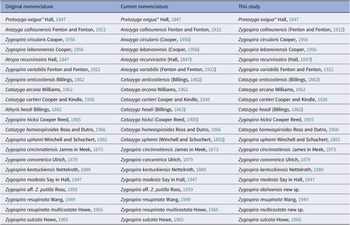
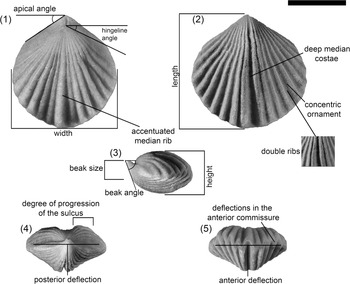
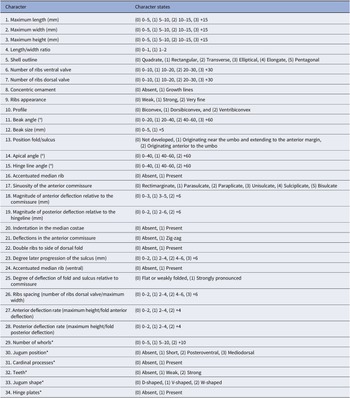
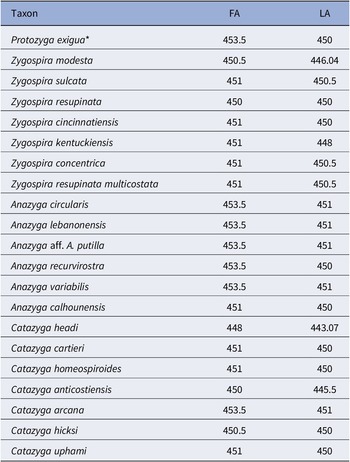
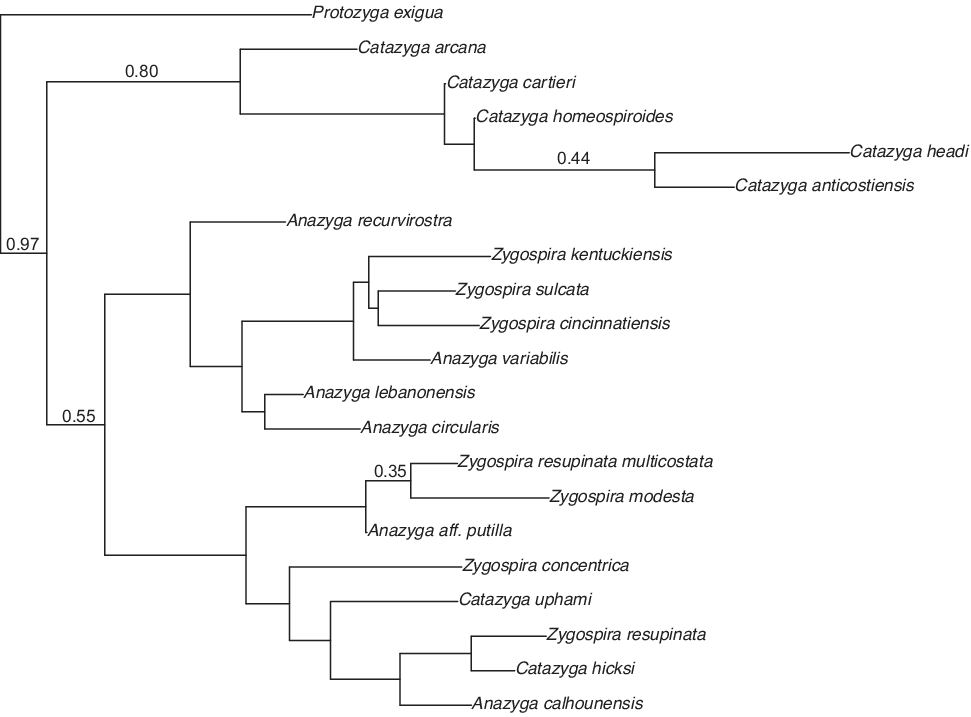
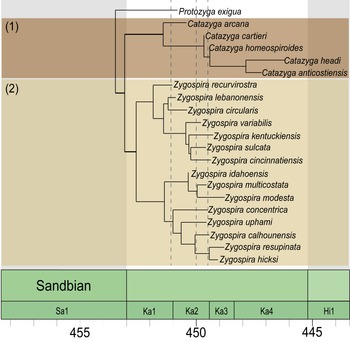
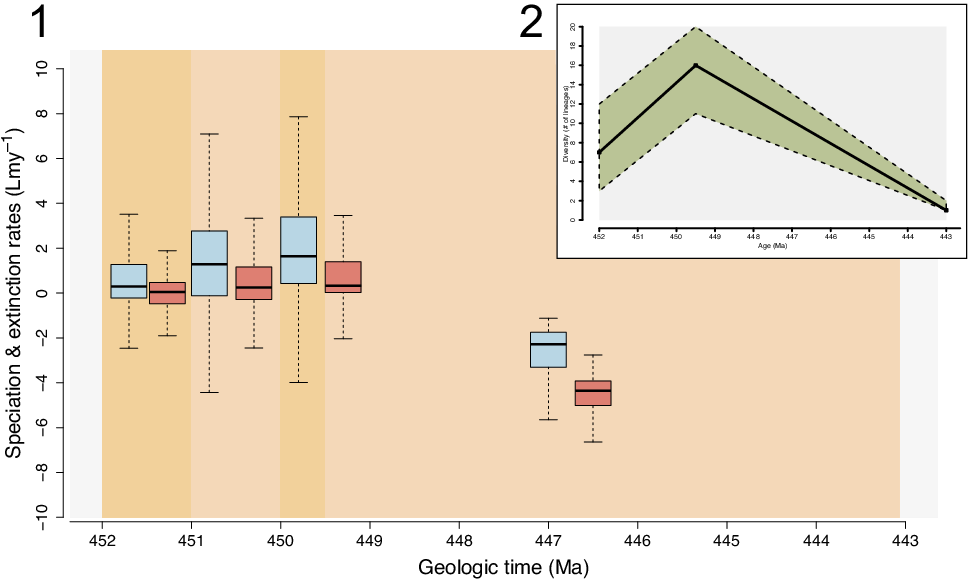
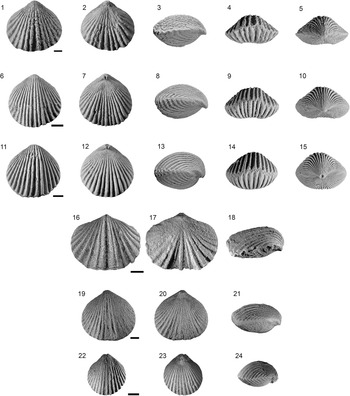
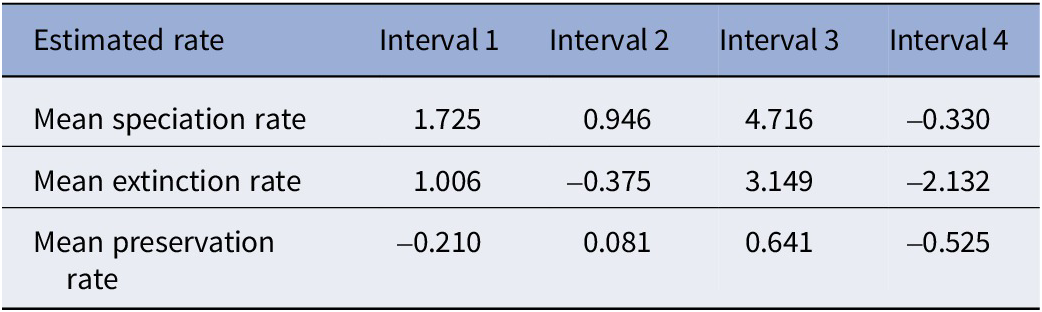
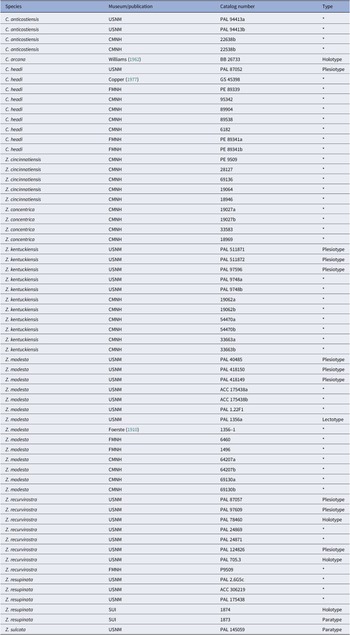
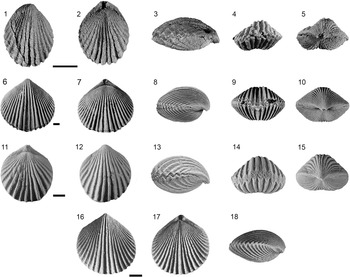
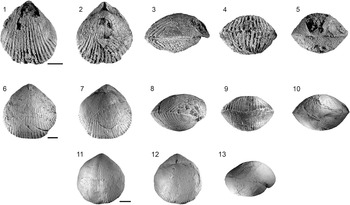

 Open access

