


I. Introduction
U.S. firms often directly establish operations outside their headquarters states in the United States (hereafter referred to as “interstate investments”).Footnote 1 The location choice for these direct investments plays a crucial role in determining the success of an investing firm. Previous studies have highlighted the quality of local workforce as an important factor in firms’ location choice among a variety of other local neoclassical and formal institutional factors (Coughlin, Terza, and Arromdee (Reference Coughlin, Terza and Arromdee1991), Friedman, Gerlowski, and Silberman (Reference Friedman, Gerlowski and Silberman1992), Coughlin and Segev (Reference Coughlin and Segev2000), Alcácer and Delgado (Reference Alcácer and Delgado2016), and Giroud and Rauh (Reference Giroud and Rauh2019)). In this study, we aim to provide large-sample evidence on whether and how firms consider the ethnic diversity of the local workforce in choosing where to locate their interstate investments.Footnote 2
We predict that the presence of high ethnic diversity in a location positively influences companies’ decisions to choose it as an interstate investment destination. Companies can benefit from high ethnic diversity in investment locations both directly—by accessing a diverse workforce to improve problem-solving and productivity—and indirectly—by enhancing their reputation for inclusivity. These advantages motivate firms to make interstate investments in highly diverse areas.Footnote 3 However, an ethnically diverse workforce may also entail various costs, potentially reducing a firm’s preference for investing in high ethnic diversity locations. These costs revolve around potential preference and communication conflicts, as well as discrimination among people with different ethnic backgrounds, all of which can lower productivity and economic performance.Footnote 4
We use a novel database from fDi Markets, containing project-level data on interstate investments in the United States, to examine the effect of county-level ethnic diversity on firms’ destination choice for interstate investments. Following prior studies (e.g., Alesina and La Ferrara (Reference Alesina and La Ferrara2000), (Reference Alesina and La Ferrara2002), Costa and Kahn (Reference Costa and Kahn2003)), we measure county-level ethnic diversity as 1 minus the Herfindahl index calculated across four basic Census tract ethnic categories: Hispanic, non-Hispanic Black, non-Hispanic white, and Asian in each county.
We first conduct analyses at the firm-project-county level to examine how a firm considers a county’s ethnic diversity when choosing the locations of its interstate investment projects. For each interstate investment project, we generate three pools of alternative candidate counties: all non-chosen counties in the same state as the chosen county, 19 geographically closest counties to the chosen county, and all counties that ever-received interstate investments in the past 3 years. Our findings show that firms are more likely to choose a county with higher ethnic diversity for their interstate investment projects after controlling for a large set of county characteristics, project fixed effects, county fixed effects, and state-by-year fixed effects.Footnote 5 In addition, we show that the location choices of the interstate investments, on average, allow firms to potentially access a more ethnically diverse workforce.
Despite controlling for an extensive set of determinants of location choice and various fixed effects, our results are still subject to the endogeneity concern. We follow Card (Reference Card2001) and Ottaviano and Peri (Reference Ottaviano and Peri2006) to construct an instrument variable (IV) of local ethnic diversity based on the county’s past ethnicity distribution that is distant from the beginning of our sample period and each ethnic group’s national-level growth rate within the period to isolate the exogenous variation in diversity that is not subject to local-level shocks (see Section IV for detail). The coefficient estimates from the IV analysis show a robust and economically sizable effect for ethnic diversity across all three samples. For example, using the candidate pool comprising all counties in the same state as the destination county, a 1-standard-deviation increase in the instrumented ethnic diversity variable corresponds to a 0.23% increase in the probability of being chosen, about a 20% increase over the average probability for a county to be chosen as the destination of an interstate project.
The firm-project-county-level baseline analysis indicates that companies perceive it as advantageous to invest in counties with greater levels of ethnic diversity when expanding their investments beyond their home states. We hypothesize two potential mechanisms underlying the net benefits of investing in high-diversity locations: i) leveraging a diverse workforce to enhance problem-solving, productivity, and performance and ii) improving diversity reputation or image. We perform several cross-sectional analyses to comprehend the specific channels that contribute to the two mechanisms.
The first channel is firms’ pursuit of innovation. A diverse working environment can foster innovation and technological advancements by offering varied perspectives for problem-solving. Consequently, firms active in innovation activities can reap greater benefits from a diverse local workforce. Our results are consistent with this prediction, demonstrating a stronger link between county-level ethnic diversity and firms’ decision to select a county for investment for those operating in high-tech industries or having higher R&D intensity. In addition, we find that firms exhibit a higher likelihood of choosing ethnically diverse locations to set up R&D centers.
The second channel that supports the benefit of having an ethnically diverse workforce is our finding that firms exhibit a higher likelihood of choosing ethnically diverse locations to set up service centers. Like innovation activities, firms’ sales activities can also benefit from diverse languages, skills, knowledge, and experience in dealing with customers from different ethnic backgrounds, and in developing creative solutions for better serving customers.Footnote 6
The third specific channel we examine is firms’ experience and ability to manage a diverse workforce and avoid conflicts among different ethnic groups (i.e., firms’ ability to address the potential cost associated with ethnic diversity to enjoy the benefits of enhanced productivity and performance).Footnote 7 We capture a firm’s experience and capability of managing a diverse workforce using i) its workforce diversity rating before the interstate investment, ii) the ethnic diversity of its headquarters location, iii) whether it is led by a pro-Democratic CEO, and iv) with at least the first syllable of “whether” it is headquartered in a county leaning toward the Democratic ideology.Footnote 8 We find that the positive link between a candidate county’s ethnic diversity and a firm’s decision to choose that county as its investment location is more pronounced when the investing firm is more capable of managing a diverse workforce based on the four proxies, suggesting that such firms perceive a higher net benefit of investing in locations with high ethnic diversity. The stronger result for firms with higher pre-existing workforce diversity suggests that improving diversity reputation may not be the primary mechanism underpinning our baseline finding. This is because the diversity reputation mechanism predicts that firms with lower pre-existing workforce diversity are more likely to choose locations with higher ethnic diversity due to the larger marginal benefit from improved diversity reputation for such firms.
We provide further evidence that investing firms perceive higher benefits of investing in ethnically diverse locations by analyzing their conference call discussions following their interstate investments. We define high ethnic diversity counties as those with the pre-investment ethnic diversity level in the top quartile of the sample distribution. We show that firms investing in those counties discuss more about the investment and workforce diversity in conference calls than those that invest in other counties after the investment.
To shed further light on the underlying mechanisms and specific channels, we examine the economic consequences of investing in locations with high ethnic diversity. We first show that the announcements of investing in a high ethnic diversity location, on average, generate 0.4% higher three-day CARs compared with those of investing in other counties, suggesting that investors perceive the choice of high-diversity locations as more beneficial. We further employ a stacked difference-in-differences (DiD) design (Sun and Abraham (Reference Sun and Abraham2021), Duchin, Gao, and Xu (Reference Duchin, Gao and Xu2025)) and show that firms investing in high ethnic diversity counties experience an increase in the number of patent applications, annual sales growth, and overall operating performance, and receive more favorable media coverage, following their investments. However, we do not observe a significant increase in workforce diversity ratings for these firms.Footnote 9
We further show that investing in high-diversity counties has a more pronounced effect on patent applications for firms active in R&D activities and those investing to establish R&D centers. However, we do not find that establishing service centers in high-diversity counties leads to a significantly higher sales growth in the near term. We find a significant increase in diversity ratings after firms with low pre-existing diversity ratings invest in high-diversity locations. This result suggests that although firms with low-diversity ratings may lack the capability to manage a diverse workforce as discussed earlier, their investment in high-diversity locations can allow them to enjoy improved diversity ratings. Collectively, the DiD results highlight the benefits of investing in high-diversity locations, as manifested by enhanced innovation and improved performance.
II. Links to Literature
Our study is mainly related to three streams of literature. First, our study is primarily motivated by the unsettled literature examining the economic implications of ethnic diversity, which documents evidence on both the benefits and costs of having an ethnically diverse workforce.
Regarding the benefits, prior studies argue that individuals from different ethnic backgrounds bring diverse skills, experience, culture, and perspectives to the table (e.g., Hoffman (Reference Hoffman1959), Lazear (Reference Lazear1999)). Such variety can promote creative ideas, provide a wealth of resources for problem-solving, and contribute to a synergistic effect in production and services, ultimately enhancing innovation and productivity (e.g., Lazear (Reference Lazear1999), Cox Jr. (Reference Cox1991), (Reference Cox2001), and Herring (Reference Herring2009)). Hong and Page (Reference Hong and Page2004) develop a theoretical framework to show that groups of diverse problem solvers can outperform groups of high-ability problem solvers. Using field data/experiments, early management studies show that ethnically diverse work teams make better decisions than homogeneous teams (McLeod and Lobel (Reference McLeod and Lobel1992), Watson et al. (Reference Watson, Kumar and Michaelsen1993)).
Several studies have provided evidence on the benefits of leveraging a diverse workforce to enhance problem-solving and decision-making by linking workforce diversity to firm performance. Based on survey data, Herring (Reference Herring2009) finds that workforce racial diversity is associated with better operating performance. More recent studies find that firms with greater board and management diversity exhibit better performance and more innovations (e.g., Carter et al. (Reference Carter, D’Souza, Simkins and Simpson2010), Bernile et al. (Reference Bernile, Bhagwat and Yonker2018), and Giannetti and Zhao (Reference Giannetti and Zhao2019)). Research in the public sector also shows that ethnic diversity of government bureaucracies is associated with optimal selection and efficient implementation of policies aimed at achieving specific objectives (Rasul and Rogger (Reference Rasul and Rogger2015)).Footnote 10
Workforce diversity may also offer indirect benefits. By embracing ethnic diversity, firms have opportunities to build a reputation or image of promoting fairness and representation by investing in high ethnic diversity locations (Brennan (Reference Brennan2023)). By aligning themselves with societal expectations on diversity and inclusivity in corporate operations, firms can avoid potential backlash and gain recognition. As a result, they may be rewarded with positive media coverage, more business opportunities, or more resources from stakeholders.
At the same time, prior studies show that an ethnically diverse workforce may also entail various costs. These costs stem from preference mismatch, communication barriers, and intergroup discrimination, which can undermine productivity and economic performance (Williams and O’Reilly III (Reference Williams and O’Reilly1998), Lazear (Reference Lazear1999), Alesina and La Ferrara (Reference Alesina and La Ferrara2000), (Reference Alesina and La Ferrara2002), Cox Jr. (Reference Cox2001), Putnam (Reference Putnam2007), and Herring (Reference Herring2009)). Hjort (Reference Hjort2014), for example, finds that ethnic discrimination in team production of a plant in Kenya lowers job allocation efficiency and productivity, forcing firms to adopt suboptimal policies to mitigate discrimination distortions. In addition, diversity-induced cost might be more prominent in the public sector, as ethnic heterogeneity can decrease the efficiency of public policies and the provisions of productive public goods due to differing preferences among individuals from different ethnicities (Glaeser, Scheinkman, and Shleifer (Reference Glaeser, Scheinkman and Shleifer1995), Easterly and Levine (Reference Easterly and Levine1997), Alesina, Devleeschauwer, Easterly, Kurlat, and Wacziarg (Reference Alesina, Devleeschauwer, Easterly, Kurlat and Wacziarg2003), and Alesina and La Ferrara (Reference Alesina and La Ferrara2005)).
Our study contributes to this literature on the economic effect of having an ethnically diverse workforce by showing that within the United States, firms are more likely to choose regions with higher ethnic diversity as their interstate investment locations, suggesting that firms perceive ethnic diversity as offering net benefits in the context of interstate investment decisions that typically have a long-term nature. This result is consistent with the argument of Putnam (Reference Putnam2007) that in the long run, ethnic diversity is likely to have important cultural, economic, and developmental benefits, but in the short run, it may reduce social connectedness and social capital. In addition, we provide evidence on the mechanisms for firms to benefit from investing in high ethnic diversity locations. Our evidence that firms prefer locations with high ethnic diversity for the benefits of leveraging a diverse workforce in problem-solving also contributes to the current political debate over diversity, equity, and inclusion in the United States.Footnote 11
Second, we contribute to the literature that aims at understanding firms’ location choices for their investments. This research has important implications for entrepreneurs and policymakers because the choice of investment locations often crucially affects the financial outcome of business ventures and shapes the outlook of regional economies (Strotmann (Reference Strotmann2007)). A large literature has focused on the effects of local economic, political, and cultural factors on the location choices of cross-country foreign direct investments (FDIs) (e.g., Coughlin et al. (Reference Coughlin, Terza and Arromdee1991), Friedman et al. (Reference Friedman, Gerlowski and Silberman1992), Loree and Guisinger (Reference Loree and Guisinger1995), Flores and Aguilera (Reference Flores and Aguilera2007), and Ang, Cheng, and Wu (Reference Ang, Cheng and Wu2015)). Only several studies have examined the location choices of U.S. firms for their domestic investments, which also mainly focus on local neoclassical and formal institutional factors, such as state taxes, government subsidies, and proximity to existing operations (Alcácer and Delgado (Reference Alcácer and Delgado2016), Giroud and Rauh (Reference Giroud and Rauh2019), and Gabe and Bell (Reference Gabe and Bell2004)). We add to the literature on U.S. firms’ interstate investment location choice by highlighting the importance of ethnic diversity as a factor influencing firms’ interstate investment decisions.
Finally, our study is related to, but differs from, the growing literature on local culture and corporate decisions. Prior studies show that countries with higher levels of trust are more likely to receive FDIs (Flores and Aguilera (Reference Flores and Aguilera2007)) and multinational firms are more likely to enter culturally proximate countries when choosing foreign locations for new investments (Loree and Guisinger (Reference Loree and Guisinger1995), Flores and Aguilera (Reference Flores and Aguilera2007)). Other studies document that cultural factors, including social capital, corruption, and religion in the local environment, affect local firms’ decisions such as risk-taking (Hilary and Hui (Reference Hilary and Hui2009)), financial reporting, executive compensations (Hoi, Wu, and Zhang (Reference Hoi, Wu and Zhang2019)), cash holding, and leverage decisions (Smith (Reference Smith2016)). Our study differs from these studies in that ethnic diversity is a different construct that represents the diversity of culture, skills, knowledge, and others.
III. Data, Sample Selection, and Research Design
A. Measuring Ethnic Diversity and Other County-Level Macro Factors
Following Putnam (Reference Putnam2007) and Hasan, Hoi, Wu, and Zhang (Reference Hasan, Hoi, Wu and Zhang2017), we adopt the four basic categories of race and ethnicity identified by the U.S. Census: Hispanic, non-Hispanic Black, non-Hispanic white, and Asian. We measure local ethnic diversity as 1 minus the Herfindahl index calculated using the percentage of populations across the four ethnic groups in a county (e.g., Alesina and La Ferrara (Reference Alesina and La Ferrara2000), (Reference Alesina and La Ferrara2002), Costa and Kahn (Reference Costa and Kahn2003), and Ottaviano and Peri (Reference Ottaviano and Peri2006)). Specifically, our diversity measure is constructed as follows:
 $$ Ethnic\;{Diversity}_{c,t}=1-{\sum}_{i=1}^4{\left({Ethnicity}_{i,c,t}\right)}^2, $$
where Ethnicityi,c,t represents the population percentage of ethnic group i in the total population of the four ethnic groups in county c in year t. This measure is larger when the population is less concentrated in specific ethnic groups and thus can capture ethnic diversity.
We control for a large set of county characteristics, including the economic conditions in a specific location proxied by GDP growth (GDP Growth), average household income (Income), the Gini index of income inequality (Gini Index), whether the local government provides subsidy to local firms (Subsidy), and unemployment rate (Unemployment) (Alesina and La Ferrara (Reference Alesina and La Ferrara2000), Putnam (Reference Putnam2007)). Since labor force characteristics also affect firms’ location choices (Coughlin and Segev (Reference Coughlin and Segev2000)), we use education attainment (Education), workforce population growth (Workforce Growth), age diversity (Age Diversity), and local average employment wage (Wages) to proxy for local labor market conditions. It is plausible that investing firms may be drawn to a location’s specific political climate rather than its ethnic diversity. For example, a local Democratic-leaning political environment may be more conducive to ethnic diversity, whereas a Republican-leaning political environment tends to be more pro-business (Bartels (Reference Bartels2008)). Therefore, we further control for the Democratic political leaning within a county (Democratic County).
We also control for several firm-county pair characteristics that capture the alignment between an investing firm and a potential candidate county for each investment project. First, prior studies show that agglomeration economies play an important role in affecting firm location decisions and firms tend to locate their operations close to peer firms or upstream/downstream firms to gain access to specialized labors and facilitate transactions (Glaeser and Kerr (Reference Glaeser and Kerr2009), Delgado, Porter, and Stern (Reference Delgado, Porter and Stern2014), Ang et al. (Reference Ang, Cheng and Wu2015), and Alcácer and Delgado (Reference Alcácer and Delgado2016)). We thus control for agglomeration economies in a candidate county using the ratio of the number of establishments from the investing firm’s industry (defined using 2-digit NAICS codes) located in the candidate county to the total number of establishments operating in the same industry across the United States, multiplied by 100 (Industry Concentration). We also control for the existence of a focal firm’s customers or suppliers headquartered in a candidate county (Supplier-Customer). Second, because firms may prefer locations near their existing operations to facilitate monitoring and information exchange (Henderson and Ono (Reference Henderson and Ono2008), Giroud (Reference Giroud2013)), we control for the geographic distance (Distance) between a firm’s headquarters and a candidate county. Third, inspired by Duchin, Farroukh, Harford, and Patel (Reference Duchin, Farroukh, Harford and Patel2021), we further control for the alignment of political leaning between a candidate county and the CEO of the investing firm (Political Alignment).Footnote 12 See the Appendix for detailed variable definitions.
B. Research Design
Following prior studies (e.g., Head, Ries, and Swenson (Reference Head, Ries and Swenson1995), Alcácer and Chung (Reference Alcácer and Chung2007), and Ang et al. (Reference Ang, Cheng and Wu2015)), we estimate the following location choice model at the firm-project-county level to investigate the effect of local ethnic diversity on firms’ location choices for interstate investments:
 $$ {\displaystyle \begin{array}{l}{Choose}_{i,p,j,t}=\alpha +{\beta}_1 Ethnic\ {Diversity}_{j,t-1}+County{\textstyle \hbox{-}}Level\ {Characteristics}_{j,t-1}\\ {}\hskip9.2em +County{\textstyle \hbox{-}}Firm\ Pair\ {Characteristics}_{i,j,t-1}+Project\ FE+County\ FE\\ {}\hskip9.2em +state-by-year\ FE+{\varepsilon}_{i,p,j,t},\end{array}} $$
where Choosei,p,j,t equals 1 if firm i chooses county j for its investment project p in year t, and 0 otherwise. Our test variable, Ethnic Diversityj,t-1, and control variables are as defined in Section III.A. We include candidate county fixed effects to capture time-invariant county characteristics and candidate state-by-year fixed effects to control for any state-level year-specific attributes that may influence firms’ location choices, such as unobserved state-year-specific economic shocks (e.g., infrastructure improvement, tax policies, labor market conditions, and other unobserved economic shocks). Since we have multiple counties as potential candidates for the location of each investment project, we can include project fixed effects to control for project characteristics and thus do not need to further control for firm-level characteristics or firm-by-year fixed effects in equation (2), as all firm-year-level variables would be perfectly subsumed by project fixed effects. Equation (2) is estimated using OLS regression.Footnote 13 The standard errors are clustered by projects.
C. Data and Sample
We obtain interstate greenfield investment data from Financial Times fDi Markets database, a comprehensive database covering both FDI around the world and interstate greenfield investments in the U.S. The fDi Markets database provides detailed information on each project, including the identity of the investing firm, the source and destination counties, and descriptions of the business activities. The data in fDi Markets are collected in real time from multiple sources, including media, press releases, industry organizations, investment agencies, and company websites. The information of each project recorded by fDi Markets goes through a rigorous quality control process and is cross-referenced against multiple sources (Burger, van der Knaap, and Wall (Reference Burger, van der Knaap and Wall2013), Albino‐Pimentel, Dussauge, and Shaver (Reference Albino-Pimentel, Dussauge and Shaver2018)). The comprehensive coverage and reliability of fDi Markets make it a leading source of greenfield investment data used by large organizations, including the United Nations Conference on Trade and Development, the Economist Intelligence Unit, and the World Bank (Burger et al. (Reference Burger, van der Knaap and Wall2013), Albino‐Pimentel et al. (Reference Albino-Pimentel, Dussauge and Shaver2018)).Footnote 14
We first obtain 35,597 interstate greenfield investment projects from fDi Markets between 2011 and 2021. We start from 2011 due to the availability of data on county-level control variables, which are collected from the Census Bureau’s five-year American Community Survey. The sample period ends in 2021 because some of the key data items for measuring control variables, such as industry concentration and political alignment between the CEO and the candidate county, are not publicly available after 2020. From this initial sample, we first remove projects without county-level location information in fDi Markets, reducing to 35,485 projects. We then match this investment sample with Compustat data using firm names.Footnote 15 After dropping unmatched projects, our interstate investment sample comprises 8,539 investment projects by 1,411 firms.
We employ three pools of candidate counties that a firm may choose from to locate an interstate investment project (Kuhnen (Reference Kuhnen2009), Bena and Li (Reference Bena and Li2014)). First, for each project, we use all non-chosen counties in the same state where the chosen county is located as alternative candidates (the Same State Sample). This matching method effectively controls for any potential influence of state-level characteristics, such as state tax rates, minimum wages, investment tax credit, and job creation tax credit. Second, we choose 19 geographically closest counties to the destination county as alternative locations, resulting in a total of 20 location candidates, including the chosen location for each investment project (the Neighboring County Sample). Because neighboring counties are considered to share similar economic and business conditions, this control sample helps isolate the effects of regional characteristics on location choices. The third approach selects all other counties that have ever received an interstate investment project during the past three years as alternative candidate counties (All County Sample). This sample construction method considers the possibility that firms may have a wide range of candidate locations when making interstate investments.Footnote 16 For each project, there is one observation for the chosen destination county of the project and one observation for each of the alternative candidate counties.
The data on county characteristics come from various sources. We obtain data on ethnic distribution from the Census Annual County Resident Population Estimates, other population and workforce-related characteristics from the Census Bureau 5-year American Community Survey, local industry concentration from the Census Bureau’s County Business Patterns dataset, local economic condition from the Bureau of Economic Analysis, local employment rate from the Bureau of Labor Statistics, county-level voting data from the MIT Election Data and Science Lab, and subsidy granted by local government from the Subsidy Tracker database. To construct measures related to county-firm pair characteristics, we obtain data on managers’ political contribution from the Federal Election Commission for measuring CEOs’ political leaning, customer and supplier data from the FactSet database, and headquarters locations from 10-K filings. After requiring non-missing data to estimate equation (2), we obtain 625,293, 141,210, and 4,461,011 firm-project-county-level observations in the Same State Sample, the Neighboring County Sample, and the All County Sample, respectively.
IV. Empirical Results
A. Summary Statistics
Panel A of Table 1 reports the total number of interstate investment projects in each year in the initial sample from fDi Markets after matching with the Compustat firms between 2011 and 2021. Panel B presents the industry distribution (based on the fDi Markets’ industry classification system) of the projects. We provide specific examples of these interstate investment projects in Supplementary Material Table OA1. We observe an evenly distributed number of projects across years, and that the largest number of projects are in financial service industries (19.57%), followed by those in consumer products (10.96%), transportation and warehousing (7.21%), and Software and IT services (6.69%). In Supplementary Material Table OA2, we tabulate the destination state distribution of interstate investment projects and find that the number of projects is generally dispersed across states, except for Texas, Florida, California, North Carolina, and Ohio, which stand out as the five most popular destination states. Supplementary Material Table OA3 lists the top 20 counties with the highest ethnic diversity in our sample. Table 2 presents the descriptive statistics of the key variables for our three matched samples.


B. Baseline Results on Location Choice for Corporate Interstate Investments
Panel A of Table 3 presents the results from estimating equation (2). All regressions include a constant. We do not tabulate its coefficient estimate for brevity. Columns 1 and 2 report the results from using the Same State Sample. Column 1 presents the results of controlling for only project, county, and state-by-year fixed effects. The coefficient on Ethnic Diversity is significantly positive (0.056, t = 4.81), suggesting that, on average, firms are more likely to choose counties with higher ethnic diversity as the location for an interstate investment project. In column 2, we further control for a large set of county characteristics and variables reflecting the alignment between the investing firm and a candidate county (i.e., Industry Concentration, Supplier-Customer, Distance, and Political Alignment). The magnitude and statistical significance of Ethnic Diversity remain similar (0.053, t = 4.54), indicating that local ethnic diversity is an important factor for firms’ interstate investment location choice decisions after controlling for other factors identified by prior studies.

From columns 3–6, we estimate equation (2) using the Neighboring County Sample and the All County Sample, respectively. The results again show a positive and highly significant link between a county’s ethnic diversity and firms’ tendency to choose the county as the destination of their interstate investment projects.
The results presented in Panel A of Table 3 indicate that, on average, firms are more likely to place their interstate investments in counties with higher levels of ethnic diversity. Therefore, we expect that interstate investments, on average, enable investing firms to potentially access a more diverse workforce across their operations in different geographic locations, which we verify in Panel B.
We consider a firm’s operations in different geographic locations as its operation portfolio, and take the following steps to estimate the change in the potential ethnic diversity level of the firm’s operation portfolio following its interstate investment. First, we obtain the firm’s operation locations and the number of employees at each operation from the LexisNexis database. Second, we estimate the number of employees in each ethnic group at each operation using the ethnic composition of the local population. This step assumes that the workforce diversity of each operation is representative of the diversity of the local population. Third, we aggregate the estimated number of employees in each ethnic group across all operations in different geographic locations at the firm level and calculate ethnic diversity using 1 minus the Herfindahl index across different ethnic groups. For each interstate investment project, we re-estimate an overall ethnic diversity level for the investing firm after adding this new operation into the firm’s operation portfolio and compare it with the estimated level in the year prior to the investment.Footnote 17 In Panel B of Table 3, we observe a significant increase in the potential level of overall ethnic diversity across an investing firm’s operations in different locations. The increase is even more significant for investing firms with a low pre-existing operation portfolio diversity. These results demonstrate that, on average, firms have enhanced access to a diverse workforce after making interstate investment.
C. Robustness Checks for the Baseline Location Choice Model
We conduct several tests to check the robustness of the baseline results. First, we re-estimate equation (2) using McFadden’s (Reference McFadden and Zarembka1974) conditional logit regressions (e.g., Head et al. (Reference Head, Ries and Swenson1995), Alcácer and Chung (Reference Alcácer and Chung2007)). Due to the criticism of Greene (Reference Greene2004) and Wooldridge (Reference Wooldridge2010) on the inclusion of a large number of fixed effects in nonlinear models, we only include project fixed effects in equation (2) for the conditional logit estimations. The results reported in Panel A of Supplementary Material Table OA4 are robust to this alternative estimation.
Second, we drop the 5 most popular destination counties that receive the largest number of interstate investment projects, including Maricopa County in Arizona, Harris County in Texas, New York City County in New York, Fulton County in Georgia, and Dallas County in Texas from our sample and re-estimate equation (2) to ensure that our results are not driven by the undue influence of the 5 most popular destination counties. We show robust results in Panel B of Supplementary Material Table OA4.
Third, a county’s ethnic diversity might be correlated with the presence of a sizable minority group. To ensure that our results are attributable to the overall ethnic diversity of a destination county rather than the largest minority group in the county, we further control for the population percentage of the largest ethnic minority group (Largest Ethnic Minority Group) in a county.Footnote 18 Panel C of Supplementary Material Table OA4 reports that the coefficients on Ethnic Diversity remain significantly positive, whereas the coefficients on Largest Ethnic Minority Group are positive but insignificant across all three samples, suggesting that our results are primarily driven by the overall ethnic diversity in a county.
Fourth, in the main regressions, we control for project fixed effects to account for the effect of project-level characteristics on the location decisions for interstate investments. We also check the robustness of our results by replacing project fixed effects with firm-by-year fixed effects. Panel D of Supplementary Material Table OA4 reports robust results.Footnote 19
D. IV Estimations
Despite controlling for a comprehensive set of location characteristics, the alignment between a candidate county and the investing firm, and various types of fixed effects, it remains challenging to rule out the possibility that unobservable factors—correlated with both a county’s ethnic diversity and its likelihood of receiving interstate investments—could drive our results. To further mitigate the endogeneity concern, we implement an IV analysis based on the “shift-share” methodology, which is widely used in the economics literature to identify the causal effect of immigrants on local political and economic environments (e.g., Card (Reference Card2001), Ottaviano and Peri (Reference Ottaviano and Peri2006)). This methodology creates an instrument of immigration by combining the initial population share of each ethnic group at the local level and the growth of immigrants within each ethnic group at the national level during a period. The rationale of this instrument is that immigrants tend to settle where other immigrants from the same country already reside, which ensures the relevance of the instrument. Given that the national-level immigration growth is exogenous to economic conditions in a certain county, we can isolate the exogenous variation in immigration that is unrelated to current local-level shocks.
Specifically, we follow Ottaviano and Peri (Reference Ottaviano and Peri2006) to construct the shift-share instrument for a county’s ethnic diversity in year t as follows: We choose to measure the initial population share of each ethnic group in 2000, 10 years before the first year of our sample period, to ensure a sufficient gap between the measurement of the pre-existing ethnic distribution and interstate investment. Using the national-level growth rate of each ethnic group’s population share from 2000 to year t, we then compute the predicted population share of ethnic group i that resides in county c in year t ( $ \hat{Ethnicity_{i,c,t}} $
) as:
$ \hat{Ethnicity_{i,c,t}} $
) as:
 $$ \hat{Ethnicity_{i,c,t}}={Ethnicity}_{i,c,2000}\times \left(1+{g}_{i,2000\;\mathrm{to}\;t}\right), $$
where Ethnicity
i,c,2000 is the population share of ethnic group i in county c in 2000; $ {g}_{i,2000\;\mathrm{to}\;t} $
is the national-level growth rate for ethnic group i’s population share from 2000 to year t. Based on the predicted population share of each ethnic group, we construct the predicted ethnic diversity for county c in year t (
$ {g}_{i,2000\;\mathrm{to}\;t} $
is the national-level growth rate for ethnic group i’s population share from 2000 to year t. Based on the predicted population share of each ethnic group, we construct the predicted ethnic diversity for county c in year t ( $ \hat{Diversity_{c,t}} $
) as:
$ \hat{Diversity_{c,t}} $
) as:
 $$ \hat{Diversity_{c,t}}=1-{\sum}_{i=1}^4{\hat{\left({Ethnicity}_{i,c,t}\right)}}^2. $$
Because the predicted level of ethnic diversity obtained from the above procedures is attributed to a county’s ethnic distribution in 2000 and the ethnic group’s national-level growth rate, this instrument is independent of any county-specific shock after 2000. In this respect, this shift-share instrument meets the exclusion requirement of a valid IV.
In the first stage of the IV estimation, we regress the actual ethnic diversity, Ethnic Diversity, on this shift-share instrument, $ \hat{Diversity} $
. The results reported in Panel A of Table 4 show that the coefficient estimates on
$ \hat{Diversity} $
. The results reported in Panel A of Table 4 show that the coefficient estimates on $ \hat{Diversity} $
are significantly positive for all three samples. Moreover, the Kleibergen–Paap rk statistics are well above the Stock–Yogo critical values for weak instruments for all three samples.
$ \hat{Diversity} $
are significantly positive for all three samples. Moreover, the Kleibergen–Paap rk statistics are well above the Stock–Yogo critical values for weak instruments for all three samples.

Panel B of Table 4 reports the results of the second-stage regressions for the three samples, in which we replace Ethnic Diversity with Instrumented Ethnic Diversity obtained from the first stage. As shown, the coefficient estimates on Instrumented Ethnic Diversity are positive and statistically significant across all three samples. Taken together, the result of the IV analysis confirms a positive link between local ethnic diversity and the likelihood of an investing firm choosing the county as the location of its interstate investment.
We follow prior studies (e.g., Ferrell, Liang, and Renneboog (Reference Ferrell, Liang and Renneboog2016), Bernile et al. (Reference Bernile, Bhagwat and Yonker2018)) to rely on the IV estimates in interpreting the economic significance of ethnic diversity in explaining investing firms’ location choices. The results reported in Panel B suggest that 1-standard-deviation increase in the instrumented ethnic diversity would increase a county’s probability of being chosen as the location of an interstate investment by 0.23% (0.018 × 0.127 × 100), 1.98% (0.126 × 0.157 × 100), and 0.06% (0.004 × 0.150 × 100), for the Same State, Neighboring County, and All County samples, respectively.Footnote 20 Given that the unconditional average probabilities of being chosen as the investment location of an interstate investment are 1.1%, 5%, and 0.2% in the Same State Sample, Neighboring County Sample, and All County Sample, respectively, these results suggest that ethnic diversity has an economically sizable effect on firms’ choices of their interstate investment locations. For example, an increase of 0.23% in the probability of being chosen as the destination county estimated for the Same State Sample is about 20% increase over the average probability (0.23%/1.1% × 100 = 20.9%). This magnitude is also comparable to that of another important factor of location choice, Distance. For Distance, a 1-standard-deviation increase can reduce the probability of the investing firm choosing the county as its investment location by 0.28% (−0.004 × 0.702 × 100), 1.82% (−0.022 × 0.825 × 100), and 0.07% (−0.001 × 0.742 × 100), for the three different samples, respectively.
E. Supplementary Analyses on the Characteristics of Investment Projects
We conduct several supplementary analyses related to project characteristics. First, we examine whether the investment scale could be influenced by the local ethnic diversity of the destination county, conditional on firms’ decision to invest in the county. If firms expect to benefit from investing in high-diversity locations, they are also likely to place larger investments in these areas. To test this prediction, we conduct a project-level analysis to examine the effect of ethnic diversity on investment amount and job creation of the invested projects. The results presented in Panel A of Supplementary Material Table OA5 show that firms tend to place larger-scale projects in locations with high ethnic diversity, but the number of jobs created is not significantly associated with the level of local ethnic diversity. We note that the projects invested in high-diversity counties tend to be more technology intensive rather than labor intensive (as highlighted in the cross-sectional tests in Panel A of Table 5), and therefore, ex ante, we do not have a clear prediction on the link between ethnic diversity and the number of jobs created by the projects.

Second, the greenfield investment projects in the fDi Markets database include both brand new projects and projects that expand existing operations in other states (about 42%). Arguably, firms have more flexibility in choosing the locations of new establishments, and thus county-level ethnic diversity may play a more significant role in affecting their locations. In addition, it is interesting to examine whether our results hold for expansion projects. Results reported in Panel B of Supplementary Material Table OA5 indicate that while firms are more likely to invest in high-diversity counties for both new and expansion projects, the results are stronger for new projects.
F. Mechanisms
As discussed in Introduction, we propose two potential mechanisms that could drive firms’ preference for high-diversity locations for interstate investments: i) the net benefit of leveraging a diverse workforce to enhance problem-solving, productivity, and performance and ii) the benefit of improving diversity reputation or image. Below, we conduct both cross-sectional and consequence analyses to shed light on these two mechanisms and their specific channels.
1. Cross-Sectional Analyses
In the cross-sectional analyses, we start by identifying the specific channels through which a firm can reap a net benefit from leveraging a diverse workforce (the first mechanism) from both the benefit and cost perspectives.
Channels Regarding the Benefits of Leveraging a Diverse Workforce
First, we argue that firms with a stronger focus on innovation can benefit more from operating an ethnically diverse workforce. This is because the diversity in skills, ideas, and knowledge among employees from different ethnic backgrounds can facilitate the identification of creative solutions and diverse perspectives for solving complex problems and generating innovative ideas (Niebuhr (Reference Niebuhr2010), Parrotta, Pozzoli, and Pytlikova (Reference Parrotta, Pozzoli and Pytlikova2014)).
Second, a diverse workforce is likely to improve firms’ service activities by allowing them to better interact with a wider and more diverse customer base. The ability to serve customers from different ethnic and cultural backgrounds can lead to improved customer satisfaction, increased customer loyalty, and, ultimately, greater business opportunities for the firm. In addition, a diverse workforce can provide a wider range of perspectives and offer more creative solutions to better cater to customers’ needs.
To test these two channels, we examine whether ethnic diversity has a stronger effect on firms’ location choice of their interstate investment projects for firms in high-tech industries, those active in innovation activities, and those undertaking investment projects to establish R&D and service centers.
We first construct two dummy variables, High-tech Industry and High_R&D Intensity, to identify innovation-intensive firms. High-tech Industry takes the value of 1 for firms operating in a high-tech industry, and 0 otherwise. We define high-tech industries as the computer, electronics, pharmaceuticals, and telecommunications industries (Francis and Schipper Reference Francis and Schipper1999). High_R&D Intensity takes the value of 1 if an investing firm’s ratio of R&D expenses over total sales is in the top quartile of the sample distribution in the year before the investment, and 0 otherwise. We then separately interact each indicator variable with Ethnic Diversity and include the interaction term in equation (2). Panel A of Table 5 reports the results, showing that the coefficient estimates on Ethnic Diversity × High-tech Industry and Ethnic Diversity × High_R&D Intensity are all positive and statistically significant at the 5% level or better.Footnote 21
We next delve into the specific details of the project’s purposes and explore the types of projects that are more likely to benefit from the high ethnic diversity in a target county. We code the purpose of the projects based on whether they seek to build R&D centers (R&D Center), service centers (Service Center), or manufacturing plants (Manuf Plant). We include the interaction terms of these indicator variables with Ethnic Diversity in equation (2). The other project purpose categories are omitted from the regression model as the reference group.
Panel B of Table 5 reports the results. We observe positive and significant coefficients on Ethnic Diversity × R&D Center, suggesting that the tendency to invest in high ethnic diversity counties is more pronounced for projects that aim at building R&D centers. This finding and those in the cross-sectional tests based on high-tech industry and R&D intensity in Panel A collectively indicate that the benefit of leveraging an ethnically diverse workforce to enhance firms’ innovation activities could be one specific channel that motivates them to locate interstate investments in high ethnic diversity locations.
In Panel B of Table 5, we also find significantly positive coefficients on Ethnic Diversity × Service Center, indicating that firms aiming at establishing service centers place a higher value on local ethnic diversity. This finding suggests that investing firms may view an ethnically diverse workforce as more capable of catering to a diverse customer base and generating creative ideas to better serve customers, potentially leading to improved customer service and enhanced sales activities.Footnote 22 This argument is consistent with the anecdotal evidence in Supplementary Material Table OA1, showing the motive of Affirm Holdings in making interstate investment in Chicago.
In contrast to the results observed for R&D and service centers, the positive effect of local ethnic diversity on firms’ selection of investment locations is weaker when the investment projects are for building manufacturing plants. It is plausible that manufacturing jobs are more labor-intensive and involve a higher proportion of repetitive routine tasks compared with creativity, interactions, and communications required in innovation and service activities.
Channels Related to Firms’ Capability to Leverage a Diverse Workforce
Operating with a diverse workforce is also associated with certain costs arising from potential preference and communication conflicts, as well as potential discrimination among people with different ethnic backgrounds. Effectively managing a diverse workforce and addressing the tension and conflicts between different ethnic groups require experience and an inclusive corporate culture. Firms possessing such experience and ability are subject to lower costs of operating an ethnically diverse workforce and thus can potentially reap a greater net benefit from investing in high-diversity locations.
To capture a firm’s experience and capability of managing a diverse workforce, we consider the following factors: i) its pre-investment workforce diversity rating, ii) the ethnic diversity of its headquarters location, iii) whether it has a pro-Democratic CEO, and iv) whether it is headquartered in a Democratic-leaning county. The first two factors capture a firm’s experience in operating in an ethnically diverse environment. The latter two factors could be related to a firm’s ability to manage a diverse workforce because Democrats generally exhibit more liberal and inclusive attitudes toward ethnic/racial diversity than Republicans (Di Giuli and Kostovetsky (Reference Di Giuli and Kostovetsky2014), Hajnal and Rivera (Reference Hajnal and Rivera2014)). We conduct cross-sectional analyses based on these four factors to examine whether ethnic diversity has a more pronounced positive impact on firms’ interstate investment location choices for firms with more experience or greater capability in managing a diverse workforce.
It is worth noting that the cross-sectional analysis based on workforce diversity ratings can also offer insights into whether the positive influence of ethnic diversity on firms’ location choices primarily stems from the benefit of enhancing a firm’s diversity reputation (the second mechanism). If this is the case, we would expect ethnic diversity to have a more pronounced positive effect on firms with lower (rather than higher) ex ante diversity ratings, as these firms have a greater need to enhance their diversity image.
We measure the first proxy of an investing firm’s workforce diversity rating using data from the MSCI KLD database (Diversity Ratings). Following prior studies (e.g., Servaes and Tamayo (Reference Servaes and Tamayo2013), Cao, Liang, and Zhan (Reference Cao, Liang and Zhan2019), and Gao, He, and Wu (Reference Gao, He and Wu2024)), we measure Diversity Ratings as the total number of strengths scaled by the maximum possible number of strengths in that year minus the total number of concerns scaled by the maximum possible number of concerns in that year from all diversity-related categories. The second proxy, the ethnic diversity level of a firm’s headquarters location (Home County Diversity), is calculated in the same way as Ethnic Diversity for the candidate counties of the investment project. We then create an indicator variable High_Diversity Ratings (High_Home County Diversity) that equals 1 for firms with the value of Diversity Ratings (Home County Diversity) in the top quartile of the distribution of the respective variable in the year before the investment, and 0 otherwise. We define two other indicator variables, Democratic CEO and Democratic Home County, to capture the political orientation of an investing firm’s CEO and its home county. Specifically, Democratic CEO equals 1 if the CEO’s financial contribution made to the Democratic candidates in the Presidential, Senate, and House elections is greater than his/her contribution to the Republican candidates in such elections, and 0 otherwise. Democratic Home County equals 1 if most votes in an investing firm’s home county support the Democratic rather than the Republican candidates in the Presidential election in the year before the interstate investment, and 0 otherwise. If the year does not have a Presidential election, we use the interpolated value of the share of votes for each Party between the two nearest elections to define this variable. We interact each indicator variable with Ethnic Diversity and include the interaction term in equation (2).
The results based on the first two proxies are reported in Panel C of Table 5. In columns 1–3, we report the results based on firms’ workforce diversity ratings. We find that the coefficients on Ethnic Diversity × High_Diversity Ratings are all significantly positive at the 1% level. In columns 4–6, we report the results based on the diversity level of a firm’s home county. Across all three columns, the coefficient estimates on Ethnic Diversity × High_Home County Diversity are significantly positive at the 1% level.
We report the results based on the two proxies related to political leaning in Panel D of Table 5. In columns 1–3, the coefficient estimates on Ethnic Diversity × Democratic CEO are significantly positive across all three samples at the 10% level or better. In columns 4–6, we also report positive coefficient estimates on Ethnic Diversity × Democratic Home County that are statistically significant at the 1% level.
Overall, the results suggest that firms’ experience and ability to manage a diverse workforce and avoid conflicts among different ethnic groups could motivate them to locate interstate investments in ethnically diverse counties. We note that the finding regarding the positive moderating effect of pre-existing diversity is not consistent with the notion that the positive effect of ethnic diversity on firms’ location choice is primarily due to their intention to improve the reputation for diversity and inclusion. Otherwise, we would expect to observe that firms with lower diversity ratings or operating in low-diversity environments are more inclined to invest in high-diversity locations.Footnote 23
2. Conference Call Discussions Following Interstate Investments
Based on the analyses above, firms expect to derive more benefits from investing in high-diversity locations by either leveraging a more diverse workforce for problem-solving or improving their diversity reputation. If this is the case, we expect firms to discuss more about their interstate investments and workforce diversity when communicating with investors in conference calls held shortly after their investments in high-diversity counties.
To test this prediction, we obtain investing firms’ conference call transcripts from the Capital IQ database within 1 year from each interstate investment’s announcement month provided by fDi Markets. We focus on management presentations rather than Q&A sections to capture managers’ voluntary disclosure of interstate investments and workforce diversity. For discussions of interstate investments, we extract sentences mentioning both the specific investment location and at least one keyword indicating investment, such as invest, establish, or build. After manually verifying all extracted sentences, we define a variable, Nmentions_Investment, as the total number of sentences referring to the interstate investment in the presentation sections of the conference calls. To measure management discussions of workforce diversity, we extract sentences containing at least one of the keywords, diversity or diverse. We manually check all extracted sentences to verify that they contain discussions about workforce diversity and define a variable, Nmentions_Diversity, as the number of sentences referencing workforce diversity in the presentation sections of the conference calls. We estimate the following Poisson model to test conference call discussions:
 $$ {\displaystyle \begin{array}{l}\hskip-4em Nmentions\_ Investment\left(\mathrm{or}\; Nmentions\_ Diversity\right)\\ {}={\beta}_0+{\beta}_1 High\ Diversity\ Investment+{\sum}_{k=2}{\beta}_k Controls\\ {}\hskip1.2em + Firm\; FE+ Year\; FE+\varepsilon, \end{array}} $$
where High Diversity Investment is a dummy variable that equals 1 for firms that make interstate investments in counties with the level of ethnic diversity in the top quartile of the sample distribution, and 0 for firms that invest in other counties. The control variables include lagged market value (Ln(Market Value)), lagged financial leverage (Leverage), lagged cash holdings (Cash Holding), and lagged market-to-book ratio of equity (Market-to-Book). The Appendix provides detailed definitions of all variables.
The results reported in Table 6 show that the coefficients on High Diversity Investment are significantly positive in both columns 1 and 2.Footnote 24 These findings support our prediction that firms investing in high-diversity locations discuss more about their investments and workforce diversity compared with those investing in other counties within the year following the investments (about 38.26%(=exp(0.324) − 1) and 7.57%(=exp(0.073) − 1) more, respectively).

3. Analyses of the Economic Consequences of Investing in Counties with High Diversity
So far, we find that companies tend to favor counties with greater ethnic diversity as their destinations for interstate investments. This preference is particularly noticeable when businesses can potentially benefit more from a diverse workforce for innovation and service activities and when they are experienced in operating a diverse workforce. There is also evidence that firms advertise their interstate investments and workforce diversity in high ethnic diversity locations in conference calls. We can further understand these channels by examining the economic consequences of investing in high-diversity locations in terms of investor reaction, and ex post changes in innovation activities, sales growth, diversity ratings, the frequency of positive news coverage, and firms’ overall operating performance.
Market Reactions to Announcements of Investments in Counties with Higher Ethnic Diversity
We manually collect the announcement dates of interstate investment projects using the news sources of each project provided by the fDi Markets database, including news articles, press releases, industry organizations, investment agencies, and company websites. As the fDi Markets database only provides information sources for projects invested after 2018, our market reaction analysis focuses on interstate investments made after 2018.Footnote 25 We examine how stock market reactions to project announcements vary with the ethnic diversity of destination counties by estimating the following model:
 $$ {\displaystyle \begin{array}{l}{CAR}_{[-1,+1]}={\beta}_0+{\beta}_1High\ Diversity\ Investment+{\beta}_2Ln(Market\ Value)\\ {}\hskip8.7em +{\beta}_3Market-to-Book+Year\ FE+Industry\ FE+\varepsilon, \end{array}} $$
where CAR [−1,+1] denotes one of the two measures of cumulative abnormal returns (CARs, in decimal form) over the [−1, +1] window surrounding the investment announcement date. Specifically, CAR_Market Model [−1,+1] is estimated using the market model, and CAR_Fama French [−1,+1] is estimated using the Fama–French 3-factor model. The parameters of both models are estimated with daily stock returns from trading days −240 to −41 relative to the investment announcement date (Gokkaya, Liu, and Stulz (Reference Gokkaya, Liu and Stulz2023)). High Diversity Investment is defined in the same way as that in equation (5). In equation (6), we control for firms’ logged market value and Market-to-Book ratio measured at the fiscal year end before the investment announcement.
In Table 7, we report the result from estimating equation (6) with and without control variables. We observe significantly positive coefficients on High Diversity Investment across all columns, suggesting that the announcements of interstate investments in high ethnic diversity locations, on average, elicit higher CARs (e.g., by 0.4% as reported in column 2). In other words, investors perceive a higher net benefit for firms to invest their interstate projects in high ethnic diversity locations.

Ex Post Economic Consequences
In this section, we examine the longer-term economic consequences of investing in high-diversity locations in terms of innovation activities, sales growth, workforce diversity ratings, positive media coverage, and overall operating performance. Following Gormley and Matsa (Reference Gormley and Matsa2011) and Sun and Abraham (Reference Sun and Abraham2021), we employ a stacked DiD research design over a fixed window of [−3, +3] around each interstate investment event. A relatively short window ([−3, +3]) can avoid confounding events or firm decisions that are likely to arise in a long window. Such a short-window DiD research design is often adopted by prior studies (e.g., Chen, Harford, and Lin (Reference Chen, Harford and Lin2015), Dobbie, Goldsmith-Pinkham, Mahoney, and Song (Reference Dobbie, Goldsmith‐Pinkham, Mahoney and Song2020), Kim, Lin, Mao, and Wang (Reference Kim, Lin, Mao and Wang2023), and Cao, Xuan, Yuan, and Zou (Reference Cao, Xuan, Yuan and Zou2025)).
Specifically, for each year in our sample period of 2011–2021, we create a cohort that includes all firms investing in high-diversity counties in the same year as treatment firms. For these treatment firms in a cohort, we include firms that make interstate investments outside the high-diversity counties in the same year, but never make any interstate investments in the high-diversity counties throughout the entire sample period as potential control firms. By selecting control firms that make interstate investments in other locations in the same year, we can focus on the effect of firms’ decision to invest in high-diversity locations rather than their decision to make interstate investments. For both treatment firms and control firms of each cohort, we use firm-year observations within a [−3, +3] window and then stack the data across different cohorts. Additionally, we require treatment firms not to make any investments in high-diversity counties in a 3-year pre-event window to identify a clean treatment effect. All treatment and control firms are required to have at least one observation in both the pre- and post-event periods.
As interstate investments in high-diversity counties are not exogenous events, we employ an entropy balancing approach to achieve covariate balance between treatment and control firms (Hainmueller (Reference Hainmueller2012), Gao et al. (Reference Gao, He and Wu2024), and Raleigh (Reference Raleigh2024)). We balance treatment and control firms using the first moment of the control variables in equation (7) in the year prior to the investment. We then estimate the average treatment effect using the following DiD model:
 $$ {\displaystyle \begin{array}{l}{Outcomes}_{i,c,t}={\beta}_0+{\beta}_1High\ Diversity\ {Investment}_{i,c}\times {Pos{t}_{i,}}_{c,t}\\ {}\hskip10em +{\sum}_{k=2}\hskip0.35em {\beta}_k{Controls}_{i,t-1}+Cohort-by-Firm\ FE\\ {}\hskip10em +Cohort-by-Year\ FE+{\varepsilon}_{i,t},\end{array}} $$
where High Diversity Investmenti,c is a dummy variable indicating firms that make interstate investment in a high ethnic diversity county (based on the top quartile of sample distribution) in cohort c. Posti,c,t is a dummy variable that equals 1 for the year of investment and subsequent years, and 0 otherwise for treatment and control firms in cohort c. Outcomesi,c,t is one of the five dependent variables capturing the economic consequences of investing in high-diversity counties, including Npatent, Sales Growth, Diversity Ratings, Freq Positive News, and ROA. Npatent is measured as the number of patent applications filed by a firm. Sales Growth is measured by the year-on-year difference in the natural logarithm of sales. Diversity Ratings is a firm’s workforce diversity rating as defined earlier for the cross-sectional analyses in Section IV.F.1. Freq Positive News is calculated as the frequency of positive media news about a firm with a relevance score of 100 in the RavenPack database, where the positive media news are the news stories with a Composite Sentiment Score (CSS) above 50. ROA proxies for the overall operating performance of a firm, which is the pre-tax income divided by the average level of total assets in a year. We control for firm characteristics, including lagged market value (Ln(Market Value)), lagged financial leverage (Leverage), lagged cash holdings (Cash Holding), and lagged market-to-book ratio of equity (Market-to-Book). The Appendix provides detailed definitions of all variables. Following Gormley and Matsa (Reference Gormley and Matsa2011), we include Cohort-by-Firm fixed effects and Cohort-by-Year fixed effects to allow the firm and year fixed effects to vary across cohorts and thereby provide more conservative inference than imposing constant firm and year fixed effects.Footnote 26 We estimate Poisson regressions for Npatent and Freq Positive News, and OLS regressions for other outcome variables.
The Main DiD Analysis
In Panel A of Table 8, we report the results of estimating equation (7). The results are presented in an order consistent with the three channels discussed in the cross-sectional tests in Section IV.F.1. As shown in columns 1 and 2, the coefficients on High Diversity Investment × Post are positive and statistically significant at the 5% level, suggesting that after investing in high ethnic diversity locations, firms exhibit an increase in patent applications relative to their control firms within 3 years after the investments. The DiD estimate in column 2 represents an 8.98% (=exp(0.086) − 1) increase in the number of patent applications for firms investing in high-diversity locations relative to those investing in other locations. Columns 3 and 4 also report positive and statistically significantly coefficients on High Diversity Investment × Post. Since Sales Growth is measured as the difference in logged sales, the result in column 4 suggests that investing in locations with high ethnic diversity on average increases the sales revenue by 2.33% (=exp(0.023) − 1) relative to control firms, which is economically meaningful.

We report the results for diversity ratings in columns 5 and 6. Both columns report positive but insignificant coefficients on High Diversity Investment × Post, implying no significant change in firms’ diversity ratings after they make interstate investments in high-diversity locations. These results imply that enhancing diversity ratings may not be a primary motive/mechanism in our setting. In Panel B of Table 3, we demonstrate that firms have enhanced potential access to a diverse workforce following their interstate investment. However, this effect does not appear to be captured by investing firms’ diversity ratings. Our finding in Panel C of Table 5 shows that firms with high-diversity ratings are more likely to continue to invest in high-diversity locations.Footnote 27 As a result, there is limited scope for these companies to further enhance their diversity ratings. In addition, it is plausible that rating agencies may not update diversity ratings in a timely manner, or the diversity ratings may fail to capture small improvements in workforce diversity.
In columns 7 and 8, we report the results for the frequency of positive news coverage, which show positive and significant coefficients on High Diversity Investment × Post at the 5% level, suggesting that firms receive more frequent positive media coverage after making interstate investments in high-diversity locations. The result in column 8 implies a 3.67% (=exp(0.036) − 1) increase in the frequency of positive news coverage for firms investing in high-diversity locations relative to those investing in other locations. Therefore, investing in locations with high ethnic diversity does help firms garner positive media coverage.
We report the result on overall operating performance proxied by ROA in columns 9 and 10, and both columns report positive and marginally significant coefficients on High Diversity Investment × Post. Specifically, the result in column 10 suggests that firms experience a 0.6% increase in ROA after investing in high-diversity locations relative to control firms. Given that the mean value of ROA for firms investing in high ethnic diversity counties in the pre-event window is 4.23%, this result is economically meaningful. Overall, the results of the DiD analyses suggest that firms appear to benefit from investing in high ethnic diversity locations for enhancing innovation and sales activities, positive media coverage, and operating performance, although it does not significantly improve diversity ratings on average.
We next conduct a dynamic DiD analysis to check the parallel trend assumption and the timing of the consequences. Specifically, we modify equation (7) by replacing High Diversity Investment × Post with High Diversity Investment × Pre2, High Diversity Investment × Pre1, High Diversity Investment × Post0, High Diversity Investment × Post1, High Diversity Investment × Post2, and High Diversity Investment × Post3. Pre2 and Pre1 equal 1 for 2 years and 1 year before the event year, respectively, and 0 otherwise. Post0, Post1, Post2, and Post3 equal 1 for the year of, 1 year after, 2 years after, and 3 years after the event year, respectively, and 0 otherwise. The reference year is the third year before the investment. As reported in Panel B of Table 8, the coefficients on High Diversity Investment × Pre2 and High Diversity Investment × Pre1 are not significant across all columns, confirming the existence of a parallel trend between the treatment and control groups in the pre-investment period. In addition, the results indicate that firms experience a significant increase in the frequency of positive media coverage starting from the event year. This significant increase persists throughout the post-event window. Regarding the number of patent applications, sales growth, and ROA, we observe an increase in the second year or the third year following the investment, suggesting that the improvements in innovation, sales growth, and operating performance take more time. On average, we do not observe a significant change in workforce diversity ratings in the post-event window.Footnote 28
We next conduct cross-sectional analyses to provide further evidence to corroborate the mechanisms that drive firms to choose high-diversity locations as their investment destinations. We first examine whether firms focusing on innovation activities exhibit a greater increase in patent applications after they invest in counties with high ethnic diversity. Consistent with Section IV.F.1, we identify firms with a strong innovation focus as those operating in high-tech industries, those intensively investing in R&Ds, and those undertaking projects to establish R&D centers. We conduct cross-sectional analyses for these three proxies as follows: First, we separate High Diversity Investment into High Diversity Investment_Hightech and High Diversity Investment_Other Industries to indicate firms from high-tech industries investing in high-diversity counties and firms from other industries investing in high-diversity counties, respectively. We then estimate equation (7) by replacing High Diversity Investment × Post with High Diversity Investment_Hightech × Post and High Diversity Investment_Other Industries × Post, and report the results in column 1 of Table 9. We find that the coefficients on High Diversity Investment_Hightech × Post and High Diversity Investment_Other Industries × Post are both significantly positive with similar magnitudes.

Second, we define two dummy variables, High Diversity Investment_High R&D Intensity and High Diversity Investment_Low R&D Intensity, to indicate treatment firms whose ratios of pre-event average of R&D expenses over total sales fall into the top quartile of the distribution and the rest, respectively. We then estimate equation (7) after replacing High Diversity Investment × Post with the interaction terms between these two variables and Post. The results reported in column 2 of Table 9 show a significantly positive coefficient on High Diversity Investment_High R&D Intensity × Post (0.122, t = 2.24) and a negative and insignificant coefficient on High Diversity Investment_Low R&D Intensity × Post (−0.016, t = −0.26). The difference between the two coefficients is marginally significant (p-value = 0.106).
Third, we create two dummy variables, High Diversity Investment_R&D Center and High Diversity Investment_Non-R&D Center, to indicate firms that invest in high ethnic diversity counties to establish R&D centers and those that invest in high-diversity counties for other purposes, respectively. We re-estimate equation (7) by replacing High Diversity Investment × Post with the interaction terms between these two dummy variables and Post. Column 3 of Table 9 reports that the coefficients on both interaction terms are significantly positive, but the coefficient on High Diversity Investment_R&D Center × Post (0.138, t = 2.36) almost doubles that of High Diversity Investment_Non-R&D Center × Post (0.074, t = 1.70), although their difference is not statistically significant. Taken together, the results of the cross-sectional analyses provide some evidence that firms active in innovation activities have a larger increase in patent applications after they invest in high ethnic diversity counties.
Next, we examine whether the increase in sales growth is more pronounced for firms establishing service centers in high ethnic diversity locations. We define two dummy variables, High Diversity Investment_Service Center and High Diversity Investment_Non-Service Center, to indicate firms investing in high-diversity counties to establish service centers and those investing in such locations for other purposes, respectively. In column 4 of Table 9, we report the result of re-estimating equation (7) by replacing High Diversity Investment × Post with the interaction terms between these two variables and Post. Column 4 reports a positive albeit insignificant coefficient on High Diversity Investment_Service Center × Post (0.026, t = 1.58) and a smaller, but significantly positive coefficient for High Diversity Investment_Non-Service Center × Post (0.022, t = 2.16). The lack of statistical significance for the former interaction may stem from a larger standard error, resulting in a noisier estimate.
Finally, we generate two dummy variables, High Diversity Investment_Low Pre-Diversity and High Diversity Investment_High Pre-Diversity, to indicate firms with diversity ratings in the bottom quartile and the rest, respectively, prior to investing in high-diversity counties. We then estimate equation (7) by replacing High Diversity Investment × Post with the interaction terms between these two variables and Post. The results reported in column 5 of Table 9 show a significantly positive coefficient on High Diversity Investment_Low Pre-Diversity × Post and an insignificant coefficient on High Diversity Investment_High Pre-Diversity × Post. These results suggest that firms with low pre-existing diversity ratings experience improved diversity ratings after investing in high-diversity locations, even though they may face more challenges in managing a diverse workforce as discussed earlier.
V. Conclusion
Using a novel database from fDi Markets that contains project-level interstate investment data, we show that a county’s ethnic diversity is positively and significantly related to the likelihood of an investing firm choosing it as the location for interstate investment. This finding, robust to the IV estimation and other sensitivity checks, suggests that firms may perceive a net benefit from investing in high ethnic diversity locations. We further show stronger results for innovation-active firms and projects involving R&D or service centers, supporting the view that a diverse workforce is expected to enhance problem-solving, innovation, and customer service. The results are also more pronounced for firms with better workforce diversity ratings, headquartered in high-diversity or Democratic-leaning counties, or led by pro-Democratic CEOs, suggesting that inclusive cultures are better equipped to manage diverse workforces.
Consequence analyses further highlight the potential benefits of investing in high-diversity locations. Investors react more positively to such announcements, and firms investing in high-diversity counties see increased patent applications, sales growth, favorable media coverage, and improved operating performance compared to other interstate investments.
The findings of our study contribute to the ongoing debate on DEI in the United States. Amid the current political climate, many large corporations have scaled back their support for DEI initiatives. However, many other CEOs and boards remain committed to their DEI efforts, emphasizing the benefits of workplace diversity in fostering a variety of perspectives and innovative solutions, and in improving overall performance. This sentiment was echoed by CEOs of Nasdaq, Pinterest, Cisco, and others during the 2025 World Economic Forum annual meeting in Davos (see https://www.cnbc.com/2025/01/24/heres-what-ceos-are-saying-about-dei-at-davos.html). Our findings are consistent with their views, showing that access to a diverse workforce serves as the underlying mechanism of driving firms to choose high-diversity locations for their interstate investments.
We acknowledge the limitation that our research findings for interstate greenfield investments may not be generalizable to other investment contexts such as M&As and strategic alliances. For greenfield investments, firms face fewer constraints compared with M&As, such as the availability of potential acquisition targets, allowing for a broader range of location choices (Coughlin and Segev (Reference Coughlin and Segev2000), Alcácer and Chung (Reference Alcácer and Chung2007)). When setting up new businesses in unfamiliar locations, a diverse workforce is critical for enhancing problem-solving and decision-making processes to tackle challenges in the initial stages. In contrast, firms pursuing growth through acquisitions may prioritize target firms with proven strengths, such as acquired innovation capabilities or an established customer base. In such cases, ethnic diversity may play a less significant role in target selections. Moreover, post-deal integration that often presents greater challenges than the deal completion itself may be further complicated by a higher level of ethnic diversity in the workforce.
Appendix. Variable Definitions
Variables Used in the Location Choice Analyses
- Choose
-
A dummy variable that equals 1 for the chosen county for an interstate investment project, and 0 for alternative counties.
- Ethnic Diversity
-
One minus the Herfindahl index calculated across four basic Census tract ethnic categories—Hispanic, non-Hispanic Black, non-Hispanic white, and Asian—in a county in a year.
- GDP Growth
-
The year-on-year GDP growth of a county.
- Income
-
The natural logarithm of the median household income in a county.
- Gini Index
-
A measure of income inequality ranging from 0 to 1, which is based on the difference between the Lorenz curve (the observed cumulative income distribution) and a perfectly equal income distribution.
- Subsidy
-
A dummy variable that equals 1 if the local government provides subsidies for local firms, and 0 otherwise.
- Unemployment
-
The unemployment rate in a county.
- Education
-
The percentage of people who are 25 years old or above possessing a bachelor’s degree or above in a county.
- Workforce Growth
-
The year-on-year working-age population growth of a county. The working-age population is defined as people between 15 years old and 64 years old.
- Age Diversity
-
One minus the Herfindahl index calculated across different age groups defined by the Census Bureau. The Census Bureau defines seventeen age groups for people below 85 years old and one group for people above 85 years old.
- Wages
-
The natural logarithm of the average wages and salaries in a county.
- Democratic (Home) County
-
A dummy variable set to 1 if the majority of the votes in a candidate (the home) county go to the Democratic candidates rather than the Republican candidates in the Presidential election in the year before the interstate investment, and 0 otherwise. If the year does not have a Presidential election, we use the interpolated value of the share of votes going to each Party between two adjacent elections to define this variable.
- Industry Concentration
-
The ratio of the number of establishments in the investing firm’s industry in a county to the total number of establishments in the whole industry across the United States, multiplied by 100. The ratio proxies for agglomeration economies.
- Supplier-Customer
-
A dummy variable that equals 1 if an investing firm has at least one supplier or customer headquartered in a county, and 0 otherwise.
- Distance
-
The natural logarithm of the distance (in miles) between a county and an investing firm’s home county.
- Political Alignment
-
A dummy variable set to 1 if the political orientation of a county matches that of the CEO of an investing firm, and 0 otherwise. We identify Democratic-leaning CEOs as those who make greater financial contributions to the Democratic candidates in the Senate, House, or Presidential elections than to the Republican candidates in such elections. We identify Republican-leaning CEOs in the same way. The financial contribution to a certain party is calculated using the method employed by Hutton, Jiang, and Kumar (Reference Hutton, Jiang and Kumar2014) and Christensen, Dhaliwal, Boivie, and Graffin (Reference Christensen, Dhaliwal, Boivie and Graffin2015). A county is classified as a Democratic (Republican) county if the majority of votes go to Democratic (Republican) candidates in the Presidential election.
- Democratic CEO
-
A dummy variable set to 1 for Democratic CEOs, and 0 otherwise.
- Estimated Potential Workforce Diversity
-
One minus the Herfindahl index calculated based on the estimated number of employees in four basic Census tract ethnic categories—Hispanic, non-Hispanic Black, non-Hispanic white, and Asian—within a firm in a given year. The estimated number of employees in each ethnic group is aggregated across a firm’s all operating entities. An operating entity’s estimated number of employees in an ethnic group is calculated by multiplying the entity’s total number of employees by the population percentage of the ethnic group in the county where the operating entity is located. Firms’ potential ethnic diversity after each interstate investment is estimated by adding the new operation to all existing operating entities in the year before the investment.
- High-tech_Industry
-
A dummy variable set to 1 for firms in high-tech industries. We follow Francis and Schipper (Reference Francis and Schipper1999) to define high-tech industries as the computer, electronics, pharmaceuticals, and telecommunications industries.
- High_R&D Intensity
-
A dummy variable set to 1 if a firm’s R&D expense scaled by total sales is in the top quartile of the sample distribution in the year before the investment.
- R&D Center
-
A dummy variable set to 1 if a project is established as an R&D center.
- Service Center
-
A dummy variable set to 1 if a project is established as a service center. A service center can serve the function of providing business service, customer contact, technical support, shared service, sales and marketing, and maintenance and servicing.
- Manuf Plant
-
A dummy variable set to 1 if a project is set up as a manufacturing plant.
- High_Diversity Ratings
-
A dummy variable set to 1 if a firm’s MSCI KLD diversity rating is in the top quartile of the sample distribution in the year prior to the investment, and 0 otherwise. The MSCI KLD diversity rating is defined as a firm’s number of diversity strengths divided by the maximum possible number of strengths in that year minus the firm’s number of diversity concerns divided by the maximum possible number of concerns in the same year.
- High_Home County Diversity
-
A dummy variable set to 1 if a firm’s home county ethnic diversity is in the top quartile of the sample distribution in the year before the investment.
Variables Used in Conference Call Analyses
- Nmentions_Investment
-
Total number of sentences referencing a focal interstate investment in the presentation sections of the conference calls held within 1 year from the investment announcement.
- Nmentions_Diversity
-
Total number of sentences referencing workforce diversity in the presentation sections of the conference calls held within 1 year from the investment announcement.
- High Diversity Investment
-
A dummy variable set to 1 for firms making interstate investments in high-diversity counties, and 0 for firms making interstate investments in other counties. A county is classified as a high-diversity county if its ethnic diversity in the year before the investment is in the top quartile of the sample distribution.
- Ln(Market Value)
-
The natural logarithm of market capitalization.
- Leverage
-
(Long-term debt + debt in current liabilities) scaled by total assets.
- Cash Holding
-
Cash and cash equivalents divided by total assets.
- Market-to-Book
-
Market value of equity divided by the book value of equity.
Additional Variables Used in Consequence Analyses
- CAR_Market Model [−1,+1]
-
The cumulative abnormal return (in decimal) estimated using the market model over the event window of [−1, +1] surrounding an investment announcement date. The parameters of the market model are estimated based on daily stock returns from trading days −240 to −41 relative to the investment announcement date (Gokkaya et al. (Reference Gokkaya, Liu and Stulz2023)).
- CAR_Fama French [−1,+1]
-
The cumulative abnormal return (in decimal) estimated using the Fama–French model over the event window of [−1, +1] surrounding an investment announcement date. The parameters of the Fama–French 3-factor model are estimated based on daily stock returns from trading days −240 to −41 relative to the investment announcement date (Gokkaya et al. (Reference Gokkaya, Liu and Stulz2023)).
- Post
-
A dummy variable that equals 1 for the year of investment (i.e., the cohort year) and beyond, and 0 otherwise.
- Npatent
-
The number of patent applications filed by the firm.
- Sales Growth
-
The natural logarithm of sales in the current year minus the natural logarithm of sales in the prior year.
- Diversity ratings
-
A firm’s MSCI KLD diversity rating, which is defined as a firm’s number of diversity strengths divided by the maximum possible number of strengths in that year minus the firm’s number of diversity concerns divided by the maximum possible number of concerns in the same year.
- Freq Positive News
-
The frequency of positive media news pertaining to a firm with a relevance score of 100 in the RavenPack database, where the positive media news are the news stories with a CSS above 50.
- ROA
-
Pre-tax income divided by the average level of total assets in a year.
Supplementary Material
To view supplementary material for this article, please visit http://doi.org/10.1017/S0022109025102202.
Financial statement
Zou acknowledges the financial support of University of Hong Kong Seed Fund for Basic Research (2402101958).


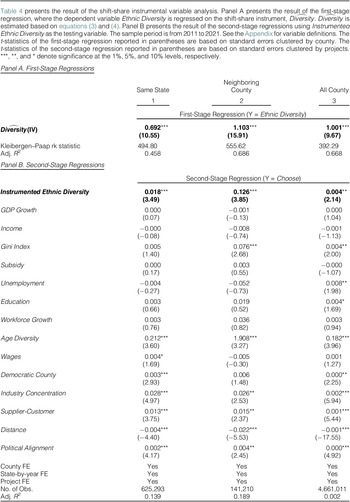


 Open access

