




Introduction
While the historical interconnectedness of cities and religions received only scant attention in the past, recent research has addressed it more thoroughly.Footnote 1 By contrast, the question of whether and how non-religionFootnote 2 has shaped the faces of modern cities remains to be explored. In this article, I attempt to probe how this urban–non-religious relationship could be approached. While non-religion in the form of atheismFootnote 3 has accompanied ChristianityFootnote 4 for greater parts of its history, in this article, I consider some of its European manifestations of the nineteenth century more closely, namely, the developing secularisms.Footnote 5 These were advanced, notably in the second half of the century, by atheists, freethinkers, freemasons, socialists, monists and scientific materialists against the backdrop of waging European culture wars fought between church, state and different branches of civil society.Footnote 6 I understand secularism to be what Todd Weir has termed the ‘fourth confession’,Footnote 7 a multifold worldview of its own completing the confessional landscape of the various Protestantisms, Catholicisms and Judaisms of the time.Footnote 8 Secularists strove to replace religion by materialistic, non-transcendent, non-dualistic and civic convictions directed towards inner-worldly perfection.Footnote 9 Just like religious confessions, the secularisms, too, left their mark on modern European cities, as will be shown in this article. An important aspect to keep in mind when approaching this topic is that the boundaries between religion and non-religion are fluid. Both categories are intertwined. This has been emphasized by Talal Asad in his study of the religious and the secular, on which I rely methodologically.Footnote 10 In any case, this fluidity sometimes renders it difficult to label a historical phenomenon or practice as ‘religious’ or ‘non-religious’ without reservations.
In what follows, the focus is on secularist-encoded technologiesFootnote 11 and infrastructures in modern European cities, specifically on the history of modern cremation in the Western world.Footnote 12 Other than in the Hindu context and unlike single cremations on open wood pyres carried out in Europe, such as that of the drowned poet Shelley on the Mediterranean coast in 1822, modern cremation in newly invented crematories in Europe started to unfold as a technology-driven urban phenomenon in the later nineteenth century. This type of cremation was closely aligned with urban infrastructures, the urban public sphere and connected to a certain urban pride, as will be detailed below. The first modern crematories, which are at the centre of this article, were built in Milan (1876) and Gotha (1878)Footnote 13 with the full support of the city councils. Leading voices of the accompanying initiatives for cremation expressed views that ranged from sheer rejection of (Christian) religion to general anticlerical or, more specifically, anti-Catholic attitudes.Footnote 14 Cremationists’ attempts to change the funerary culture of the time led to the invention of cremation technologyFootnote 15 and inspired the construction of crematoriaFootnote 16 as well as related facilities like columbaria. In addition, the nineteenth-century cremation discourse, including its technological and architectural materializations, overlapped with other recently established infrastructures and institutions: railroads for transporting corpses from afar to those cities equipped with crematories; modern mortuaries for observing and storing the dead awaiting their funeral;Footnote 17 and municipal cemeteriesFootnote 18 under the supervision of communal administrations.
The next section starts with a brief history of cremation before moving on to the histories of Milan and Gotha. The article then develops an analysis of ‘worldview technologies’, namely the first cremation furnaces working in modern times, and side glances at related infrastructures like urn halls and columbaria.Footnote 19 These technologies and buildings changed the faces of cities and were in turn influenced by these cities’ local needs and requirements. They blended into nineteenth-century cityscapes and became part of these cities’ characters. In addition to a specific modern identity, they also endowed cities with a non-religious one formed in stone and iron, which had a symbolic presence that has received little attention so far.
Urban histories of cremation
In its beginnings, modern cremation in Europe was an urban phenomenon, not only a metropolitan one, but one that unfolded in both larger and mid-sized cities with a solid liberal-bourgeois and sometimes also socialist culture critical of religion, its influence in society, its institutions and representatives. Among them were cities as diverse as Milan and Gotha, but also Paris and Woking near London. Incineration of the dead had been practised in antiquity and among non-Christian people in Europe. In late Roman antiquity, earth burial prevailed, which Charlemagne adopted as the norm for his reign in the eighth century.Footnote 20 While instances of cremations on open wood pyres continued to occur over the centuries,Footnote 21 earth burials dominated in Christian Europe, albeit in a variety of forms, ranging from burials in crypts or in churches for those with a certain religious or worldly status, to burial pits for the poor, to storage of bones in ossuaries, to name but a few.Footnote 22
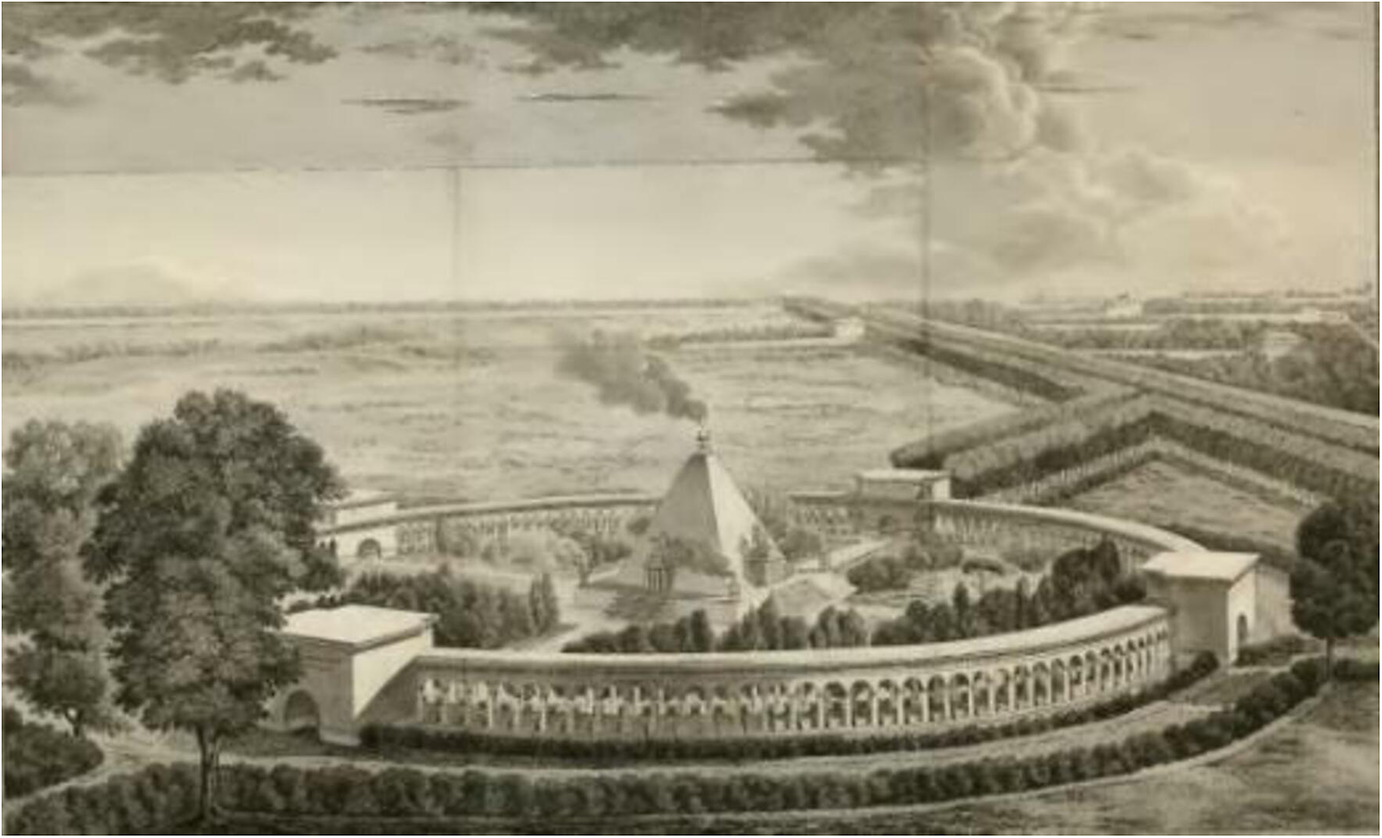
Earth burial experienced a first major challenge during the French Revolution. With its anti-Christian, laicist culture,Footnote 23 this event accelerated previous efforts to implement changes in the funerary culture of the time.Footnote 24 The Revolution affected the living and the dead. In an attempt to establish rituals and practices not codified in Christian terms, discussions of the treatment and commemoration of the dead during this period drew on Ancient Egyptian (Figure 1), Roman and Greek models, but also referred to customs among other peoples such as the Ancient Chinese or Persians.Footnote 25 The ashes from the first cremations taking place on open wood pyres in various French cities during the Revolution were put in urns and placed in local Temples of Reason.Footnote 26
Draft of a crematorium in a pyramid-shaped building, surrounded by columbaria.
Source: P. Giraud, Les tombeaux, ou Essai sur les sepultures (Paris, 1801), 64.
These first initiatives to reintroduce cremation did not last, but fell into oblivion in the course of the Restoration. It was not until the later nineteenth century – and in response to efforts by European hygienistsFootnote 27 supported by secularists who promoted cremation during the cultural wars between church and state in the nineteenth century – that the topic gained renewed and lasting momentum, and that the Catholic church officially started to oppose cremation. From 1886, Catholics were forbidden this mode of corpse treatment, a ban that lasted until 1963.Footnote 28 Many Protestant churches initially reacted with similar restraint, but then gradually accepted cremation by the end of the nineteenth century.Footnote 29 While cremation retained its secularist character, especially as it became part of the developing socialist culture of the early twentieth century,Footnote 30 this acceptance by Protestant churches also made it compatible with Christian ideas.Footnote 31 Not every urn placed in modern cemeteries, therefore, testified to a secularist attitude on the part of those who opted for this practice in the nineteenth century.
Milan
The discourse on cremation and civic forms of commemorating the deceased established during the French Revolution resurfaced in Italy’s emerging secularist circles in the second half of the century.Footnote 32 Cultural contacts between French and Italians had not been without conflict during Napoleonic rule over the peninsula, but left a lasting mark, not least in the field of death, since Napoleon had introduced French administrative structures and secular cemetery regulations in Italy.Footnote 33 The first modern European crematorium was built in the Lombard capital of Milan. One question we might ask is: why this city? While an answer to this probably leads to a circular argument, glimpses into the history of Milan as it was remembered and constructed during the Risorgimento offer insights into how this city was perceived and with which narratives it was surrounded.
In their search for historical references that would legitimize the idea of national unity, early historians of the Risorgimento had directed their attention to events of the Middle Ages, which they reinterpreted in national contexts.Footnote 34 The Lombard League of 1167, an alliance of northern Italian cities directed against the claims of the Hohenstaufen Emperor Frederick I, became a role model for the Italian national movement of the nineteenth century. As an antithesis to foreign domination symbolized by the Hohenstaufen, communal medievalism inspired the uprisings during the Risorgimento, among them the Cinque Giornate of Milan, which paved the way for the First Italian War of Independence against Habsburg domination.Footnote 35 Influential radical philosophers of the Risorgimento like Carlo Cattaneo took the Lombard League, with Milan at its core, as a revolutionary model of a federal nation.Footnote 36 Interestingly, this interpretation of the League corresponded to a nineteenth-century risorgimental disdain for church and clergy: Pope Pius IX’s lack of support for the national cause after the Revolution of 1848/49 found reflection in the commemoration of the League. In Giuseppe Ricciardi’s history of the League, La Lega Lombarda (1869),Footnote 37 for instance, Pope Alexander III, opponent of Emperor Frederick I in the twelfth century, equalled his modern successor Pius IX. He appeared as a conspirator and traitor switching sides, while Ricciardi emphasized the liberation struggle of the common people. The pope, once the bearer of national hope, in Ricciardi’s portrayal symbolized reaction.Footnote 38
Besides such narratives of independence, nonconformity and autonomy, Milan – along with the city’s hinterland – was also a centre of economic prosperity in agriculture and silk production, and increasingly, during the last quarter of the nineteenth century, in finance and industry, especially mechanical engineering.Footnote 39 These economic developments were spearheaded by an already established urban middle class that could resort to long-standing European trade contacts.Footnote 40 The construction of new infrastructures such as railroads and power plants, solving the energy problems of the coal-scarce region, further accelerated industrialization.Footnote 41 By mid-century, gas lighting was introduced, endowing northern Italian cities, among them Milan, with the latest form of artificial illumination.Footnote 42 Cremation and crematories fit both into the anticlerical framework set by the Risorgimento and its historiographers, and into that of industrialization, without, of course, assuming that such frameworks and trends alone would have led to the idea of cremating the dead in modern cities.
More concretely, three factors facilitated the construction of the first crematorium in Milan. First, as elsewhere in the nineteenth century, the idea of hygiene found support in Italy, too.Footnote 43 In essence, nineteenth-century hygiene was about improving living conditions, reducing child mortality and preventing deaths caused by malnutrition, poor working and living circumstances and infectious diseases. But hygiene also featured social-missionary, educative and eugenic components.Footnote 44 Cremation and hygiene joined forces at a discursive and actor level: Gaetano Pini, a freemason, secularist, physician, philanthropist and prominent hygienist in Italy, who lived and worked in Milan,Footnote 45 was also among the leaders of Italy’s developing cremation initiative. Along with other physicians, such as Ferdinando Colletti and Giovanni Dujardin, and notorious freethinkers and secularists, such as Jacob Moleschott,Footnote 46 Pini promoted both hygienic ideas and cremation in publications and at scientific congresses and campaigned tirelessly for the new method of treating the dead.Footnote 47
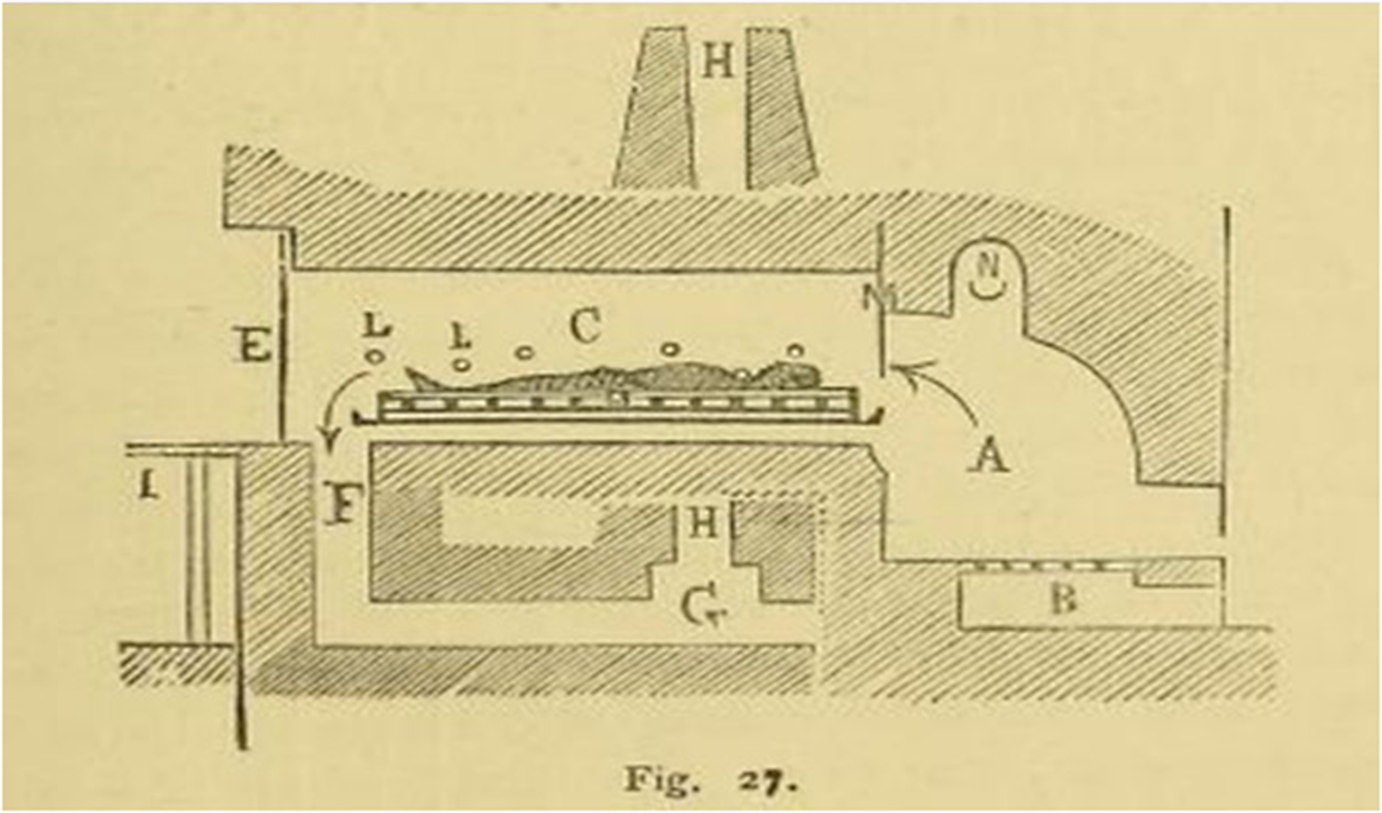
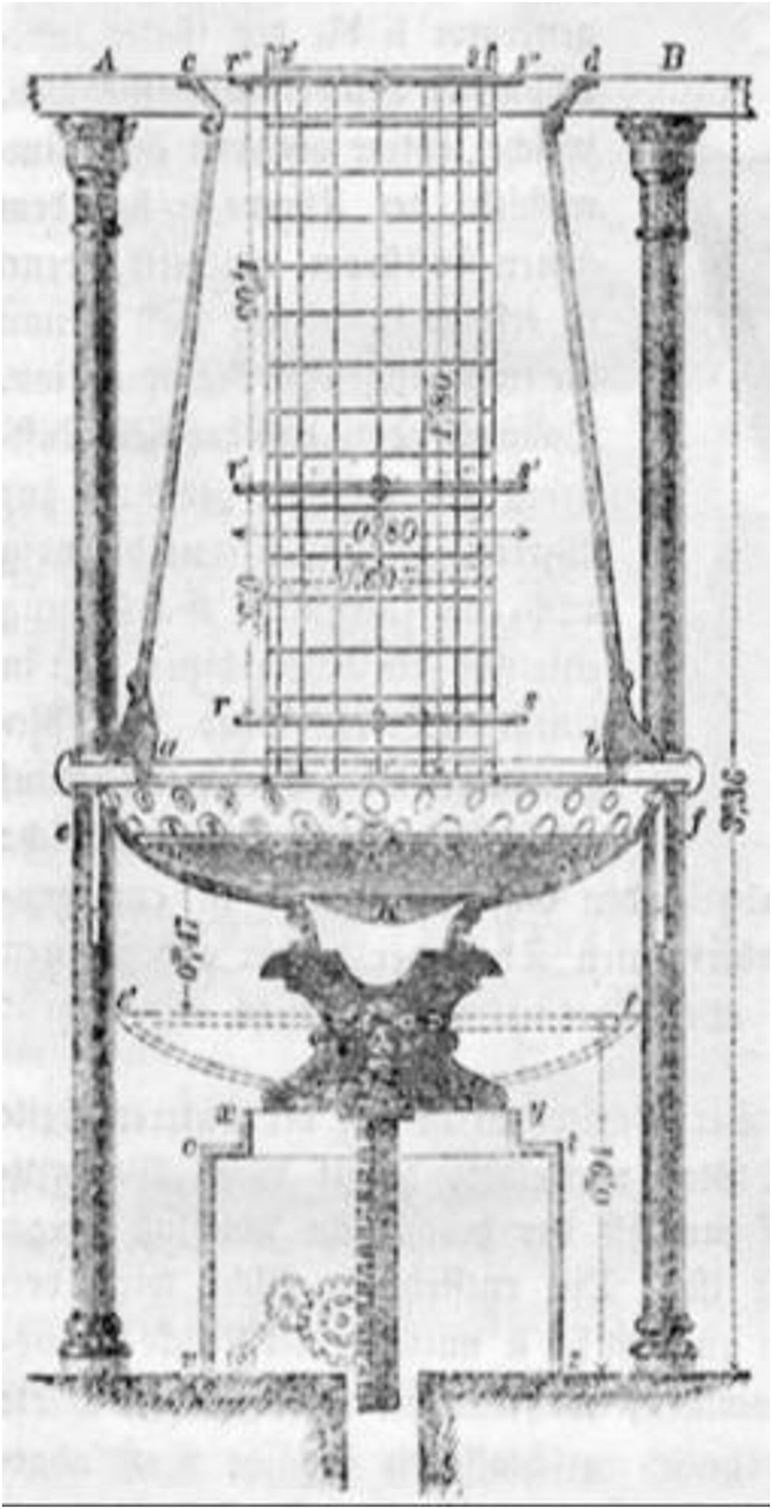
The death of the silk merchant Alberto Keller in 1874 marked the second factor.Footnote 48 In his will, Keller had provided a sum for the construction of a crematory in which he wanted to have his body incinerated. In doing so, Keller had also wished to introduce a new, future-oriented and secular mode of treating mortal remains.Footnote 49 Keller’s corpse was embalmed and kept for two years in a chapel at Milan’s Cimitero Monumentale, a new municipal cemetery opened in 1866 with sections for Jews and non-Catholics.Footnote 50 Prior to Keller’s proposal, experiments with cremation furnaces had already been conducted by inventor, mathematician and geologist Paolo Gorini in Lodi near MilanFootnote 51 (Figure 2) and by Milan professor of chemistry Giovanni Polli together with engineer Celeste Clericetti (Figure 3). Keller had corresponded with all three of them before his death. It was Gorini who embalmed Keller’s mortal remains in his additional capacity as a preparator and inventor of a new method of preserving human corpses.Footnote 52 The same Gorini, due to his strictly materialistic and secularist convictions, planned to transform the cathedral of the city of Lodi into a giant crematory, with the bell tower serving as a chimney.Footnote 53
Crematory designed by Paolo Gorini in Lodi near Milan. Gorini’s model was used widely. The first British crematory in Woking near London, for example, was designed by Gorini.
Source: G. Pini, La Crémation en Italie et à l’étranger de 1774 jusqu’à nos jours (Milan, 1885), 148.
Crematory built by Giovanni Polli and Celeste Clericetti (1872). This device, which never left the experimental state, resembled an antique urn. The corpse could be inserted into the wire rack, where it was consumed by hundreds of tiny flames.
Source: F. Fischer, ‘Ueber Leichenverbrennung und Friedhöfe’, Polytechnisches Journal, 214 (1874), 382–92, at 387.
The idea behind the new crematories was again a hygienic one: corpses were no longer to be cremated in the open – a practice considered unhygienic and a sign of impiety by later secularistsFootnote 54 – but in a modern technical device created exclusively for incinerating human remains. The crematories took on a secularist connotation since it was secularists who built and promoted them and who associated them with a secularist mission to gradually replace Christian earth burial by cremating the dead on communal sites. That way, these particular furnaces not only reflected hygienic but also and above all secularist convictions which, through cremation, were imprinted on corpses and, in turn, reinforced secularist–materialist concepts. In this sense, these furnaces could be understood as ‘worldview technologies’. Keller’s corpse was finally incinerated in an improved version of Polli’s and Clericetti’s crematory financed by the money from his will. The furnace and its surrounding building were placed at the Cimitero Monumentale after the city council had approved it. Immediately after Keller’s cremation, which was accompanied by speeches from Pini, Polli, Clericetti and a Protestant pastor named Paira who lauded cremation and uttered humanist thoughts,Footnote 55 a cremation society was formed.Footnote 56 Many of the overwhelmingly middle-class members of this society were convinced that Milan was ‘always at the forefront of every progress, rightly deserving the title of Moral Capital of Italy’.Footnote 57
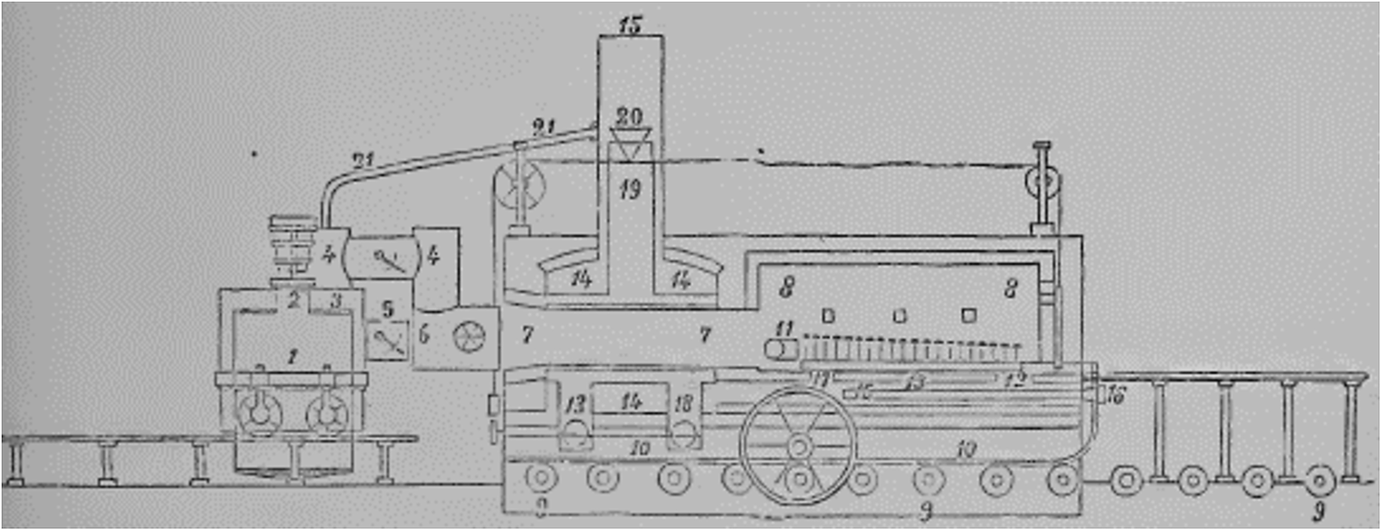
After several cremations of corpses in Polli’s and Clericetti’s furnace, the city of Milan replaced this device with a new model designed by the engineer Giuseppe Venini. Measured against the demands of those in favour of cremation, this model provided better and faster results (Figure 4).Footnote 58 But how did this new method of treating the dead, favoured by secularists and frequently addressed by journalists,Footnote 59 concretely intertwine with the city, its administration and its landscape? This leads to the third factor: compliance of local policy.
Crematory designed by Giuseppe Venini with a wheel system to mechanically feed the corpse into the furnace.
Source: Pini, La Crémation, 157.
In terms of administration, cremations in Milan and later in other Italian citiesFootnote 60 had to be approved on a case-by-case basis by the Ministry of the Interior. It took several attempts by Pini, senator and physician Carlo Maggiorani and others to legalize cremation in the Italian Sanitary Code of 1888 as a measure to protect public health and hygiene. Subsequent bodies of law further specified this new practice.Footnote 61 At a local level, after unification, Milan expanded considerably. Incorporation of surrounding territory was pursued by the council, especially under Mayor Giulio Bellinzaghi,Footnote 62 an investor in infrastructures like railways and industrial plants, who stemmed from a family of merchants and financiers.Footnote 63
The idea of hygiene resonated strongly in Milan’s city council, which authorized plans for a new system of drinking water supply, a new sewage system, a hospital for contagious diseases and – in the 1880s and 1890s – a new cemetery, the Cimitero Maggiore, replacing older ones.Footnote 64 Included in these measures was the permission for constructing the crematorium on the Cimitero Monumentale, a cemetery closer to the city centre than the later Maggiore. In the meeting held by the city council on 20 July 1875 under the chairmanship of Carlo Servolini, deputy to the mayor, the following resolution was adopted: the crematorium with the furnace inside would be erected close to the cemetery wall, perpendicular to the ossuary, and it would be constructed in a solid way covered by a stone roof.Footnote 65 Designs were made by architect Carlo Maciachini, who also bore responsibility for the conceptualization of the whole cemetery (Figure 5). Between 1880 and 1883, to the left and right of his Neo-Greek style crematorium, additional columbaria were installed for the above-ground storage of urns.Footnote 66 This had been an important demand of the secularists promoting cremation; mortal remains were not to be interred, as in Christian custom, but should remain part of the material world of the living in the form of ashes.Footnote 67 Since the dead were purified by fire – a common catchphrase of early cremation – they no longer posed a threat to the living and their health. Rather, both could share one space – the city – again. This, at least, was the theory of many nineteenth-century cremationists, who wanted the dead to return to the city as role models for the living, and hoped they would function as building blocks of the emerging inner-worldly community, rather than simply being consigned to cemeteries outside inhabited spaces.Footnote 68 The place of the dead in the world of the living was, one could conclude at this point, not determined in longue durée perspectives. In antiquity, they had to leave the urban space; in the early Middle Ages they were allowed back in; from the eighteenth century on they had to leave again, only to be welcomed back in having first been rendered harmless hygienically by fire, in modern cremation.
Crematorium at Milan’s Cimitero Monumentale. Polli’s and Clericetti’s cremation furnace shows through the pilasters of Maciachini’s design.
Source: Pini, La Crémation, 11.

According to the decision of the city council in 1875, the gas tankFootnote 69 and the pressure vessels necessary to operate the cremation furnace were to be placed outside the cemetery, yet in its immediate vicinity. The entire facility was supervised by city authorities. Obviously, it was important to both the city officials and the constructors of the furnace to maintain an impression of piety and to this end avoid giving the crematorium an overly factory-like appearance. Municipal regulations determined ‘[t]hat the smoke pipe from the interior of the crematory passes underground through the shortest pathway to the cemetery wall, through which it then vents outside the cemetery and beyond the plants surrounding it, so that those in the cemetery are deprived of the possibility of seeing the chimney’.Footnote 70 The new crematory, built with Keller’s money according to the rules of the Provincial Sanitary Council and in line with ministerial provisions, remained the property of the city.Footnote 71
Polli and Clericetti for their part underscored that the crematorium surrounding their furnace occupied a prominent space in the cemetery and did not hide in a remote corner: ‘No – it rises majestically above the silhouette of the cemetery, and in front of the ossuary, in front of the Famedio; it confirms its equality with the tombs of earth burial.’Footnote 72 Following municipal resolutions, the crematorium was built opposite the entrance where the Famedio – a final resting place for famous personalities – and monumental individual and family tombs were situated.
Thus, while Polli and Clericetti were right that the crematorium was a monumental one fitting well into the existing funerary silhouette of the Cimitero Monumentale, it still was located at the outskirts of the cemetery. While this can be explained by the infrastructures required to run the furnace, historically, such peripheries were also places for those who died in poverty, for the unknown dead and for the dead with low social status like criminals or for suicides. All considerations regarding technical infrastructures aside, the placement of the crematorium on the margins rather than at the centre of the cemetery could also be read as an echo of such long-established encodings. As for the question of worldview, this positioning suggests that the non-religious was only in the process of emerging. By no means had it already achieved a status of equality that would have been evidenced by a more central placing of the crematorium.
Gotha
The second modern crematorium was built in 1878 in the city of Gotha, from 1826 to 1918, together with Coburg, the capital of the dukes of Saxe-Coburg and Gotha. A centre of Protestantism,Footnote 73 Gotha had a reputation for its enlightened, educational, scientific and liberal traditions, all of which were encouraged by its rulers.Footnote 74 In addition to flourishing porcelain manufacturing,Footnote 75 the establishment of the Justus Perthes Geographische Anstalt laid the foundations for another thriving and world renowned enterprise in the later eighteenth century.Footnote 76 Thanks to Perthes, the publisher of Enlightenment literature and cartographical material, Gotha turned into a ‘Hotspot’Footnote 77 of knowledge that research travellers, missionaries and geographers built up with the data they sent to Gotha from all over the world. Gotha was also the birthplace of the German Socialist Party in 1875. In the age of industrialization, it developed into a traffic hub connected to the Leipzig–Frankfurt rail line and also gained recognition for its high-quality metal production, mechanical engineering and growing life insurance industry.Footnote 78
As elsewhere in Europe and the German Empire, the idea of cremation also found appeal in Gotha during the second half of the nineteenth century.Footnote 79 In a way, the concept matched the city’s image of itself as progressive, innovative and liberal. Notions of hygiene, the fear of growing cities producing a rising number of dead that would have to be dealt with, but also a wish for liberalizing, rationalizing and secularizing the handling of corpses were key elements in the German initiatives for cremation.Footnote 80 They, too, were borne of anti-Catholic and anticlerical considerations and placed hygiene, health and productivity above religion. As a professor of medicine and an advocate of cremation, Karl Heinrich Reclam stated in his polemics against opponents of the new practice printed in the popular German family magazine Die Gartenlaube: ‘Only one thing matters to me: the gain for health and productivity of the human being. If this benefit is available (and I am firmly convinced that it is [in cremation]), then I give up “tradition”, “symbols” and “churchyard” for its sake.’Footnote 81 However, given Protestantism’s weaker resistance towards cremation noted above, the polemics against religion appear less pronounced in the German cremation discourse. Rather, it was a strategy of German cremationists to emphasize the compatibility of cremation with Christianity or to avoid questions of religion entirely and by doing so lower the hurdles for the introduction of the new practice. This worked as long as Protestant clergy co-operated. Once they refused, the underlying rejection of the church as an institution of tradition and of established Christian burial traditions surfaced, as illustrated by this protest letter printed in the cremation journal Die Flamme:
To the Church Council: In a letter dated 10 October addressed to the local cremation association and signed by Provost Becker, you…refuse the construction of an urn hall…The position adopted here is unacceptable…An icy breeze of bygone times blows at us, we are faced with a piece of the dark Middle Ages.Footnote 82
Such examples indicate that cremation in the German Empire was given a reformist but also a secular and secularist colouring.
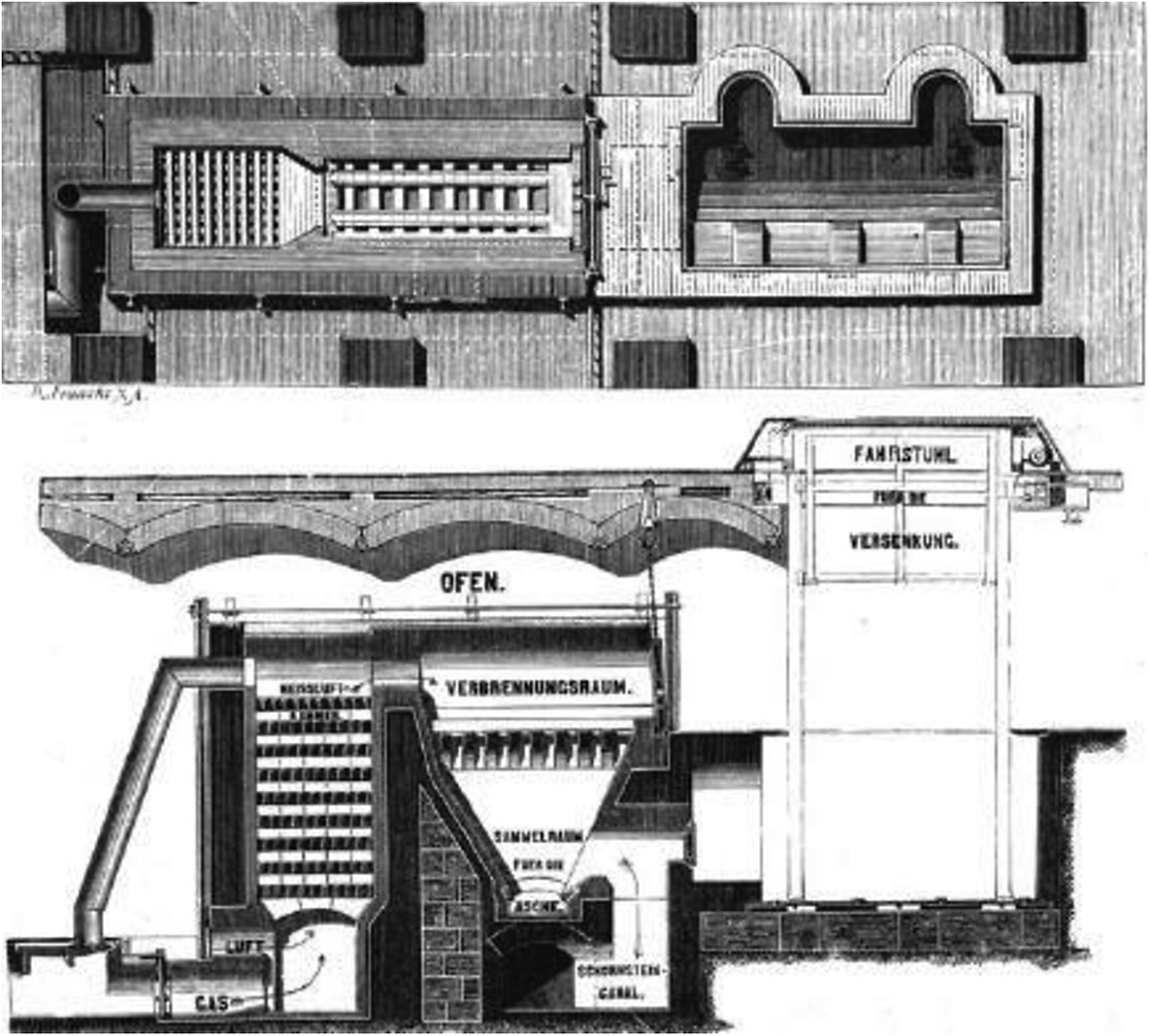
It was engineer Friedrich Siemens who designed the first German cremation furnace. Siemens had spent long periods of time in Britain where he lived with his brother Wilhelm. Both invented industrial regenerative furnaces capable of generating the amount of heat necessary for steel and glass production. Encouraged by the leader of the British cremation movement, the queen’s surgeon Sir Henry Thompson,Footnote 83 the brothers had initially experimented with the incineration of animal cadavers before considering a cremation furnace for human remains.Footnote 84 While Wilhelm abandoned these experiments, Friedrich Siemens continued to develop the crematory in Löbtau near Dresden on the property of his glass factory. Impressed by results of test cremations with animals, leading members of the Gotha cremation society, among them engineer Carl Heinrich Stier and Wilhelm Ewald, administrative lawyer, member of the state parliament and trusted friend of Ernest II, duke of Saxe-Coburg and Gotha, petitioned the state ministry of the duchy for approval of cremation.Footnote 85 The ministry had no reservations but left the decision on the matter to the discretion of individual municipalities. Gotha’s city council voted in favour of this project, financed by the cremation society, which launched a fundraising campaign to gather the 15,000 Marks needed for this project.Footnote 86 The undertaking was supported by a new police code, which stipulated that any cremation in Gotha had to be authorized by the local police authority after a proper post-mortem examination of the deceased.Footnote 87 Correspondence between Gotha’s city architect Julius Bertuch, who oversaw the construction of the crematorium, and Siemens’ engineer Richard Schneider, responsible for the construction of the furnace, reveals that it was the explicit request of the city of Gotha to add a mechanical elevator for corpses to the crematorium – at a cost of 2,425 Marks (Figure 6).Footnote 88 This enhancement made the cremation furnace even more ‘modern’ in the eyes of those in favour of cremation. It displayed the technical advancements late nineteenth-century engineering was capable of – something the city and its businesses were particularly proud of. Thus, although the Gotha cremationists were not the trailblazers of the German cremation discourse dominated by prominent physicians such as Reclam or Rudolf Virchow,Footnote 89 they were the first to put cremation in their city into practice. A commemorative booklet for the fiftieth anniversary of the crematorium and what it called ‘wise and free-thinking’ supporters stated:Footnote 90 ‘One may think whatever one likes about Thuringia’s state particularism in the last century, but one good thing came out of it: the residence cities turned into dense cultural centres, the relevance, richness and importance of which cannot be found anywhere else in Germany.’Footnote 91
Crematory designed by Friedrich Siemens. This device was equipped with a lift with which the corpse could be lowered in the combustion chamber. As with Venini’s crematory, Siemens’ model featured a mechanism with which the coffin could be introduced into the furnace.
Source: Siemens, Ueber die Vortheile, 6.
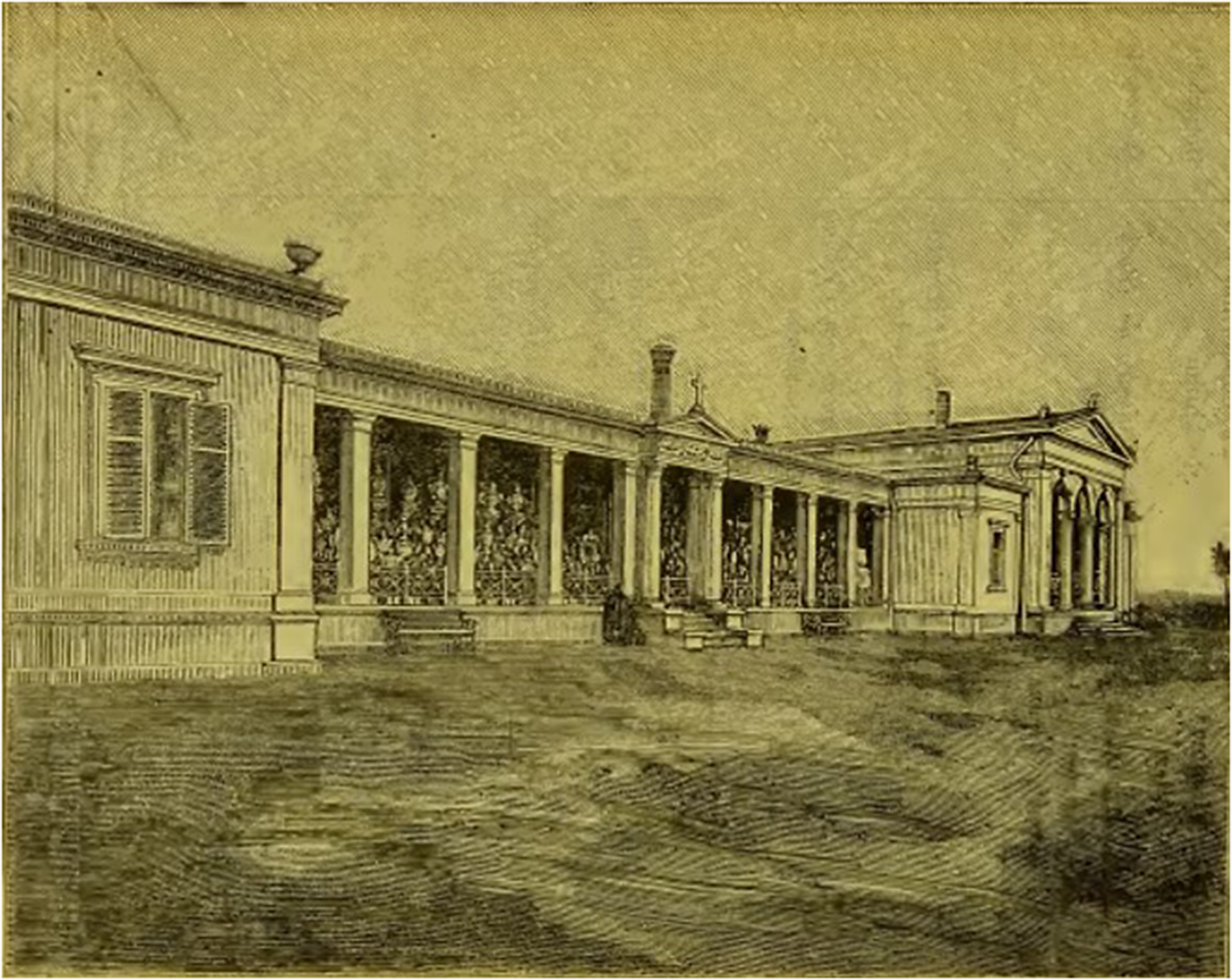
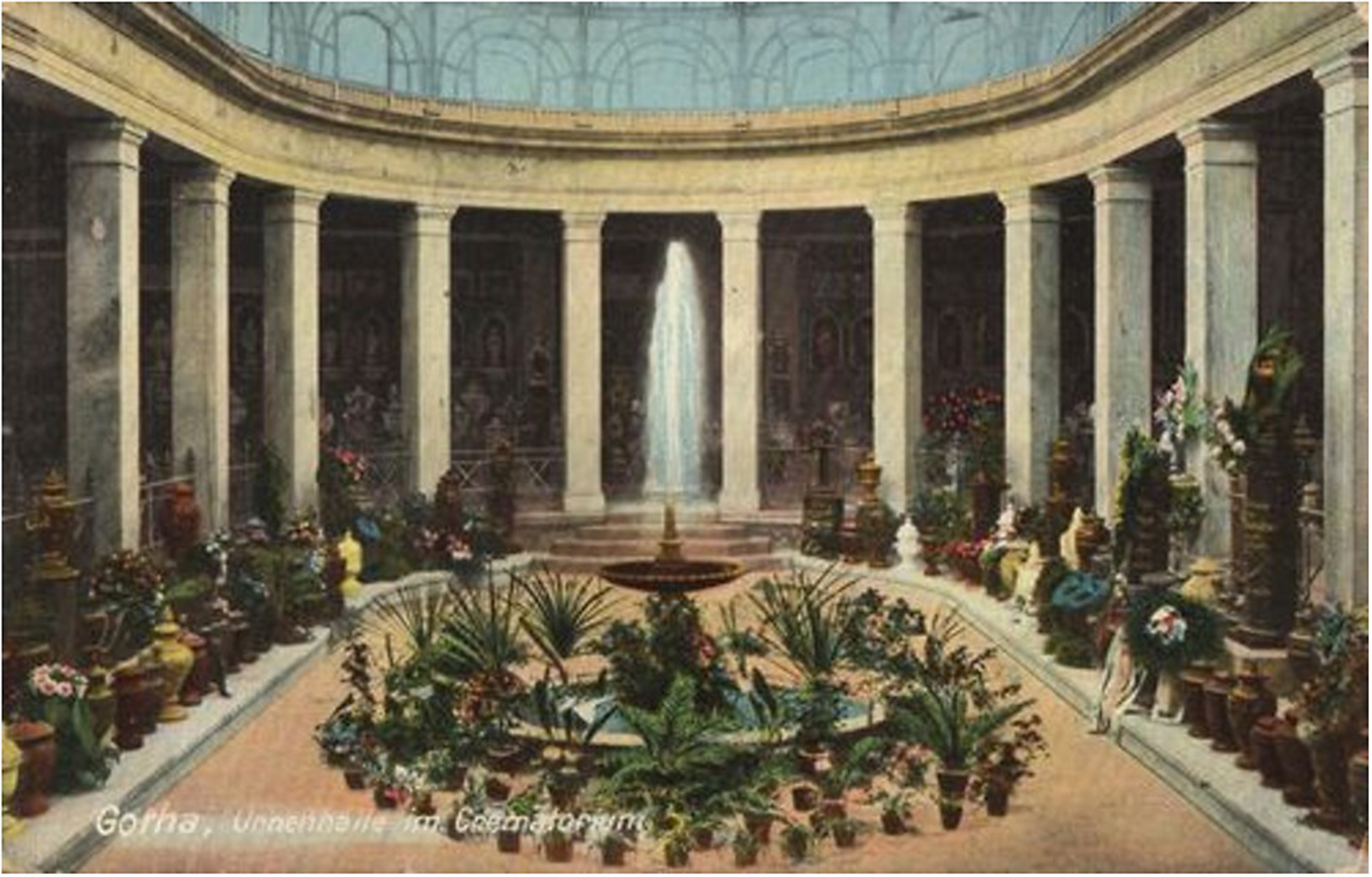
The crematorium was constructed in a neoclassical style according to Bertuch’s designs on the newly established cemetery number V on the outskirts of the city. Today, it is Gotha’s main cemetery.Footnote 92 This cemetery was as new as the crematory: it opened in 1878 and was extended in 1908 and 1920. Bertuch’s facility consisted of two temple-like sections, one of which served to store the bodies awaiting cremation, while the other accommodated the cremation furnace and a funeral chapel (Figure 7). Comparable to the columbarium in Milan, an urn hall was erected in Gotha at a later stage (1892), challenging Christian earth burial.Footnote 93 Its ground plan extended around a semicircle with an inner courtyard covered by a glass roof at its centre (Figure 8).Footnote 94
Crematory in Gotha.
Source: Selbstverlag des Vereins für Feuerbestattung ‘Die Flamme’ (ed.), Catalog der Crematistischen Ausstellung des VIII. Internationalen Congresses für Hygiene und Demographie in Budapest, 1.–9. September 1894 (Vienna, 1894), 126.
Coloured postcard, urn hall, Gotha. With such postcard greetings from Gotha, the city’s liberal and innovative self-image was sent out to the world.
Source: www.zeno.org – Henricus – Edition Deutsche Klassik GmbH.
In 1877, Gotha’s city council determined that urns should be kept in this space for no longer than 20 years, unless relatives requested otherwise. The time regime on the new cemeteries, thus, extended to urns as well.Footnote 95 Since the crematory opened the same year as the new cemetery and since Siemens’ furnace could be fired with coke and coal,Footnote 96 therefore requiring no gas tanks or pipes, the entire complex moved closer to the centre of the cemetery when compared to Milan. On a symbolical level, this could be read as an indication that the crematory and cremation had enjoyed a greater degree of acceptance in Gotha and its mainly Protestant society. Most importantly, the crematorium manifested the liberal-progressive self-image the city wanted to be recognized for. As mentioned earlier, modern cremation initially had a strong secularist encoding, but the boundaries between the religious and the secular(ist) were again fluid. In the case of Gotha, the city’s cremation records revealed a rational-administrative rather than an anti-religious tone. To be precise, religion was not an issue at all in these documents. This could be considered a secular moment as it reflected the shrinking influence of the church over the dead and their spaces. It was the city, civil institutions and physicians, not the church or the clergy deciding about the dead and their cremation. This laic supremacy resulted from a longer historical development of gradual secularization in the sphere of dying, death and burial from the eighteenth century onwards, with milestones such as Napoleon’s Décret impérial sur les sépultures or the General State Laws for the Prussian States. Cemeteries moved out of the cities for hygienic reasons with local authorities gaining authority over these spaces.Footnote 97 Individual religious (or non-religious) confessions were not affected by these regulations.
Due to such developments, in the nineteenth century, requests for cremations had to be directed to the city council. Citizens who petitioned for this kind of treatment of their mortal remains often paid money to the council in advance to ensure a quick and uncomplicated cremation, either because they did not want to burden their relatives with this task or because they did not trust them to fulfil this very special and socio-confessionally charged last wish, which could potentially damage reputations in a mainly Christian society. To them, the city and its administration obviously seemed a neutral executor. Moreover, while reasons for cremation are mostly absent from these requests, sometimes the applicants clearly expressed a desire to be cremated without church ceremony, as for example city councillor Dr A. Rueb in his letter to the council.Footnote 98 In any case, the city of Gotha allowed the crematory and associated infrastructures in its new cemetery, willingly accepting the confessional challenges they would cause.
The above-mentioned engineer Stier was the first to be cremated in Gotha’s new crematory. Like Keller, he died before furnace and building were ready, which is why his corpse, like Keller’s, was embalmed.Footnote 99 But unlike Milan counterpart, Stier was buried in a metal coffin in a provisional earth grave. A year after his death, on 10 December 1878, his cremation took place in Gotha. Like Keller’s, Stier’s cremation was attended by a Protestant pastor, Superintendent Seydel. In his address, Seydel pointed out the unconventionality of cremation and that it had been ‘our high authorities’Footnote 100 who had permitted it. Next, Seydel made it clear that he would not perform any Christian rituals during this cremation, since Stier had already been buried in a proper Christian earth grave the year before. While this was a sound explanation, behind it was also an insecurity about what to do and a certain reluctance to take immediate action from the church’s side. But, as Seydel conceded in words, if not in deeds, the Protestant church in Gotha would not refuse its participation. On the contrary, it wanted to demonstrate publicly that cremation was compatible with religion and that church officials were prepared to accompany both burials and cremations in the same way.
Thus, the church and its officials embraced the narrative of innovation and liberalism, and tried to combine both with Protestant Christianity.Footnote 101 As the Gothaische Zeitung reported on the event of the first cremation, a cheerful atmosphere prevailed at the cemetery among the many guests, high officials from Gotha, the duchy and out-of-town visitors alike. Many critics of cremation seemed to have been won over by the simplicity of the procedure.Footnote 102
As seen earlier with the letter of complaint in Die Flamme, Protestantism and cremation did not easily co-exist in every German city. The crematory in Gera, 100 kilometres east of Gotha, that went into operation in 1910, featured a so-called ‘hole for monists’,Footnote 103 a special sinking shaft called for by the regional church congregation of the duchy of Reuss in order to separate cremations carried out with Christian support from non-religious ones. The secularist German Monist Association, with prominent figures like Ernst Haeckel and the Nobel Prize Winner Wilhelm Ostwald, who became known for his Monist Sunday sermons, was founded in 1906 in the neighbouring city of Jena.Footnote 104 Members of the region’s cremation societies were often at the same time monists and held secularist worldviews.
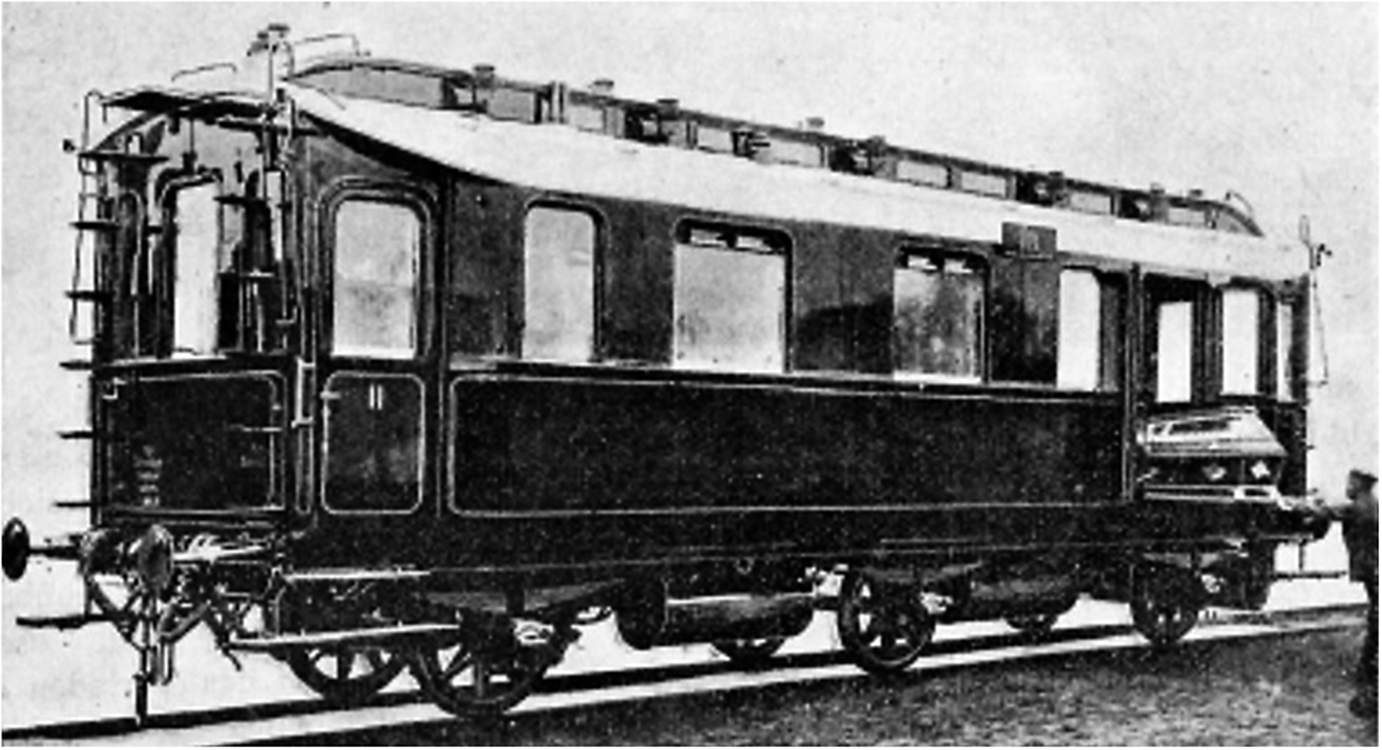
The second crematory on German soil was not opened until 13 years after the one in Gotha in Heidelberg. Even though numbers of those choosing cremation in the nineteenth century were modest,Footnote 105 Gotha continued to receive a steady inflow of dead bodies transported from all over the German Empire and Europe for cremation. This also meant a considerable source of income for the city’s hospitality industry. Advertisements placed in cremation journals testify to this (Figure 9). Once cremation gained popularity, the Königliche Preußische Eisenbahnverwaltung (Royal Prussian Railway Administration) even constructed special wagons for the transportation of corpses to crematories (Figure 10). This was an expensive enterprise, since this service entailed additional costs like wagon use (30 Marks), fees for no-load routes, fees for the transport of the coffin (30 Pfennige/km) and the ticket for the accompanying person.
Advertisement for Gotha’s Hotel Herzog Ernst. Corpses were transported to Gotha by train. Those who escorted the dead or travelled to Gotha to attend cremations were enticed by the hotel’s proximity to the station, its quiet location appropriate to the occasion, and other amenities.
Source: Die Flamme (1905), 4436.

Special wagon of the Royal Prussian Railway Administration (with a mechanism for loading the coffin) by which corpses could be transported to cities with crematories. Before this invention, coffins were transported in closed freight cars.
Source: Die Flamme (1905), 4437.
Innovations associated with a certain amount of confessional upheaval also had an economic dimension. Cities with crematoria and corresponding infrastructures benefited or hoped to benefit from them.
Conclusion
This article’s focus has been on developments in two European cities of the long nineteenth century, a period of city building and urban growth and a century in which the city was increasingly attractive for residents and industrial workers alike.Footnote 106 The city during that time was a space of liberalization and hopes for a better future for many, promising and offering new ways of living together, of communicating, believing (or not believing), of creating, socializing, inventing, learning and consuming. At the same time, it faced severe critique and rejection for this very liberality and the hopeful promises that were belied by the lived experiences of many.Footnote 107
The history of modern cremation was closely entwined with this urban take off, with the flourishing public and political life in cities, and the negotiations of power between the secular and the religious within. The history of the first crematories confirm what Simon Gunn has concluded more generally for cities and their infrastructures in the later nineteenth century: ‘infrastructural complexes’ he writes, had ‘knock-on effects for the performance of citizenship’.Footnote 108 The often tireless engagement of citizens with cremation in the nineteenth century bore witness to that. Interestingly, as has become evident in this article, modern cremation in its beginnings was not so much part of the history of metropolises like London, New York or Berlin, but of large cities like Milan or smaller residential cities like Gotha. Both modern cities associated cremation with a sense of self-determination and liberty, of rationality and progress, of multiple choices and advanced technology. For these cities, the crematorium represented a special proof of their modernity, which the metropolises were in no hurry to prove since they were already perceived as centres of modernity. But they, too, quickly authorized the construction and commissioning of crematories in response to overcrowded cemeteries and hygiene requirements, for example in Paris at Père Lachaise cemetery in 1889.
As has been illustrated, secularist concepts influenced modern cities and intermingled with religious positions and institutions. It also became apparent that cremation technologies and their associated infrastructures carried worldview aspects. They were not neutral artefacts, but embedded in a dense web of secularist ideas, religious-reformist attitudes, visions of high culture, progress and notions of hygiene that emerged in modern nineteenth-century cities. One aspect that has only been briefly addressed here are the architectural designs of the new crematoria, which revived ancient forms with their often monumental and neoclassical façades. While the architecture of the crematoria has already been the subject of several studies,Footnote 109 some remarks on worldview and cities could be added here that have not been explicitly mentioned in these works. Indeed, the reference to the city as a specific space of innovation, open-mindedness and as an engine of progress was a decisive factor in the historical cremationists describing themselves as ‘modern’ in the sense they gave this term, namely characterized by science, technology, rationality, unbiasedness, aesthetics and progress. As Paolo Gorini, the Italian inventor of crematories, commented on his home city which allowed him to carry out his cremation experiments: ‘It is an undeniable fact that there is no other city, even in Lombardy, than Lodi, which can pride itself more strongly of being emancipated from any shameful prejudice.’Footnote 110 All this was at the expense of Christian and sometimes Jewish religion, which were discursively marginalized and overwritten by references to antiquity – not least through architecture as has been shown with the columbarium and temple-like crematoria. In the cremation discourse with its anticlericalism and anti-Catholicism, antiquity was portrayed as a time of non-Christian high culture.Footnote 111 Cremationists – in the nineteenth century stemming mainly from the bourgeoisie with its claim to set the tone in society – thus seem to have considered the city as what Jörg Rüpke has called a ‘market for the shaping of the self’.Footnote 112 Cremation, its technology, infrastructures and architecture, intermingled with debates about religion and worldview, contributed to this self-fashioning and self-labelling: of individuals, groups and the cities they inhabited.
Acknowledgments
This article builds on ideas that I have established in my forthcoming book, C. Kosuch, Die Abschaffung des Todes: Säkularistische Ewigkeiten vom 18. bis ins 21. Jahrhundert (Frankfurt/Main, 2024). I am very grateful for the valuable suggestions and helpful feedback from the reviewers of this article.


 Open access

