


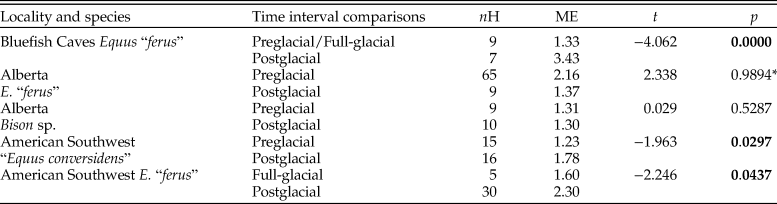
In the original publication of Barrón-Ortiz et al. (Reference Barrón-Ortiz, Jass, Barrón-Corvera, Austen and Theodor2019), Table 10 had incorrect t and p values for the Bluefish Caves Equus “ferus” locality and species. The correct values are t = −4.062 and p = 0.0000. The corrected table is replicated below.
Results of t-tests (left-tailed) using the bootstrap resampling method (10,000 replicates) to determine whether the number of stress events per affected specimen increased during the postglacial relative to the previous time interval(s). nH = total number of specimens with enamel hypoplasia; ME = mean number of hypoplastic events per affected specimen; t = t-statistic; p = p-value. Statistically significant p-values are shown in bold. An asterisk (*) identifies comparisons in which the mean number of hypoplastic events per affected specimen significantly decreased during the postglacial (i.e., showing a trend opposite to the one being tested). “Equus conversidens” from the American Southwest for the full-glacial interval was excluded from the analysis because of its small sample size.
The publisher apologizes for the error.



