





Introduction
Cystic echinococcosis (CE) is a zoonotic disease with worldwide distribution, commonly in pastoral regions with a favourable environment for its life cycle (Higuita et al., Reference Higuita, Brunetti and McCloskey2016; Deplazes et al., Reference Deplazes, Rinaldi, Alvarez Rojas, Torgerson, Harandi, Romig, Antolova, Schurer, Lahmar, Cringoli and Magambo2017). Intermediate hosts such as sheep, cattle, goats, and other ungulates become infected by the ingestion of the parasite's eggs passed by definitive hosts such as wild and domestic dogs (Romig et al., Reference Romig, Deplazes, Jenkins, Giraudoux, Massolo, Craig, Wassermann, Takahashi and De La Rue2017). Humans are dead-end intermediate hosts and do not perpetuate the parasite life cycle. CE is caused by the species complex of E. granulosus sensu lato (s.l.), which includes several genotypes that can differ in their pathogenicity and host range (Craig et al., Reference Craig, McManus, Lightowlers, Chabalgoity, Garcia, Gavidia, Gilman, Gonzalez, Lorca, Naquira and Nieto2007). The natural course of E. granulosus (s.l.) cyst growth in humans is not well understood and the rate at which the cysts grow was found highly variable depending on the age of the hosts, location of cysts, and other factors (Kern et al., Reference Kern, Menezes da Silva, Akhan, Müllhaupt, Vizcaychipi, Budke and Vuitton2017). However, most infections remain asymptomatic throughout life (Menghi et al., Reference Menghi, Gatta and Arias2017). The presentation and severity of symptoms depend on the infection site, the size of the cyst, the organ involved, and its relation to surrounding structures and the cyst's wall integrity (Higuita et al., Reference Higuita, Brunetti and McCloskey2016; Menghi et al., Reference Menghi, Gatta and Arias2017). CE in humans and animals is characterized by the expansive growth of echinococcus cysts in different parts of the body. In humans, the liver and lungs account for 69–75% and 17–22% of infection sites, respectively (Kern et al., Reference Kern, Menezes da Silva, Akhan, Müllhaupt, Vizcaychipi, Budke and Vuitton2017; Haleem et al., Reference Haleem, Niaz, Qureshi, Ullah, Alsaid, Alqahtani and Shahat2018).
As per the World Health Organization, around 1 million people are affected by CE (World Health Organization, Reference World2020a). Worldwide, E. granulosus sensu stricto (s.s.; G1, G3) accounts for most of the human CE cases followed by genotypes of E. canadensis (G6, G7); all other species including E. equinus (G4), E. ortleppi (G5), E. canadensis (G8, G10) have only been found sporadically in CE patients (Deplazes et al., Reference Deplazes, Rinaldi, Alvarez Rojas, Torgerson, Harandi, Romig, Antolova, Schurer, Lahmar, Cringoli and Magambo2017). CE in humans is also endemic in South Asian countries like India, Bangladesh, and Nepal with the documented transmission in dogs and livestock (Deplazes et al., Reference Deplazes, Rinaldi, Alvarez Rojas, Torgerson, Harandi, Romig, Antolova, Schurer, Lahmar, Cringoli and Magambo2017). Globally, CE is responsible for an estimated 2225 deaths and 188 079 disability-adjusted life-years (DALYs) annually (Torgerson et al., Reference Torgerson, Devleesschauwer, Praet, Speybroeck, Willingham, Kasuga, Rokni, Zhou, Fèvre, Sripa and Gargouri2015). Data from community studies suggest the prevalence can vary from a low of 1% to as high as 7% in endemic districts (Rojas et al., Reference Rojas, Romig and Lightowlers2014). The control of this disease is challenging owing to the absence of acute symptoms and long incubation period, and the treatment is also complicated – often requiring admission to a hospital, as well as prolonged hospitalization (Tamarozzi et al., Reference Tamarozzi, Deplazes and Casulli2020).
In Bhutan, around 65% of the population lives in rural areas depending on subsistence farming and almost all the rural household own cattle (National Statistics Bureau, 2018). Many rural residents raise dogs mainly to protect their homes and farms, and similarly owning dogs as pets has increasingly become common in urban Bhutan. For instance, around 40% of the rural residents owned a pet dog, while about 21% of urban households in major urban centres owned pet dogs (Humane Society International, 2018). The stray and/or community dog population is also high throughout the country, especially in urban areas (Rinzin et al., Reference Rinzin, Tenzin and Robertson2016).
A molecular epidemiology study in Bhutan detected the occurrence of E. granulosus s.s. (G1) and E. ortleppi (G5), suggesting the potential role of dogs, cattle, sheep, and yaks in the local transmission of CE in Bhutan (Thapa et al., Reference Thapa, Armua-Fernandez, Kinzang, Gurung, Wangdi and Deplazes2017). Recently, a subsequent study investigated the environmental contamination with Echinococcus eggs in populated areas of all districts documenting parasite transmission in several districts (Sharma et al., Reference Sharma, Thapa, Tshomo, Dema, Alvarez Rojas, Tenzin, Gurung, Norbu, Lhatru, Namgyel and Jamtsho2021). These factors such as living in rural areas, dog ownership, feeding dogs, slaughtering at home, being a farmer, and unsafe drinking water sources were shown to be important determinants of CE (Wang et al., Reference Wang, Huang, Huang, Yu, He, Zhong, Li, Zeng, Vuitton, Giraudoux and Craig2014; Acosta-Jamett et al., Reference Acosta-Jamett, Weitzel, Boufana, Adones, Bahamonde, Abarca, Craig and Reiter-Owona2014; Possenti et al., Reference Possenti, Manzano-Román, Sánchez-Ovejero, Boufana, La Torre, Siles-Lucas and Casulli2016; Yuan et al., Reference Yuan, Wu, Zeng, Liu, Xu, Gao, Li, Li, Huang, Yu and Sun2017). The existence of these favourable conditions and risk factors suggests that a large proportion of Bhutan's population is at risk for CE. For instance, CE is commonly encountered in Bumthang and other districts where much of the population participate in activities involving livestock. In addition, recently, the contamination of Echinococcus eggs in environmental dog fecal samples have been documented (Sharma et al., Reference Sharma, Thapa, Tshomo, Dema, Alvarez Rojas, Tenzin, Gurung, Norbu, Lhatru, Namgyel and Jamtsho2021).
Epidemiological data on the burden and risk factors of human CE, which is essential to develop cost-effective interventions (Kebede et al., Reference Kebede, Hagos, Girma and Lobago2009) is scarce in Bhutan. A study that examined the clinical profiles of patients with CE in 2017 showed a longer treatment duration and favourable surgical treatment outcomes (Kelzang et al., Reference Kelzang, Dorji and Tenzin2019). Although there is a Zoonotic Disease Control Program under the Department of Public Health of the Ministry of Health, prevention and control of echinococcosis seem to have received less attention thus far. This could be mainly attributable to the lack of epidemiological data and consequently the perceived low burden and severity. While not much is known about it in the past, increasing cases were being detected with the recent introduction of imaging services such as ultrasonography (US) in district hospitals and computerized tomography (CT) scan in regional and other hospitals. This retrospective review of records was conducted to gain a preliminary understanding of the burden and distribution of CE and the potential risk factors. These findings can help the related health programmes to design prevention policies and prioritize future research areas.
Materials and methods
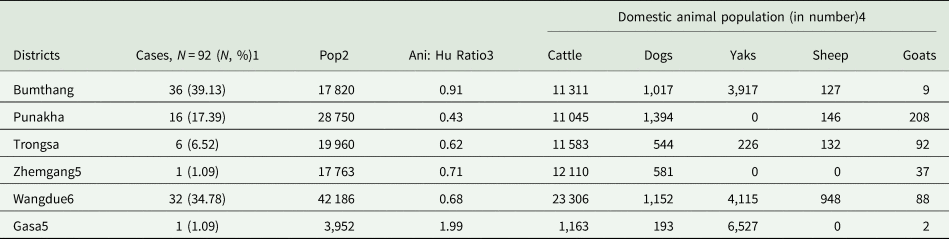
This study retrospectively reviewed the hospital records of CE cases detected and recorded in the 7 hospitals of Bhutan including the Jigme Dorji Wangchuck National Referral Hospital (JDWNRH), the national referral hospital of Bhutan. The other 6 district-level hospitals were Wangdicholing (in Bumthang district), Yebilaptsa (in Zhemgang district), Trongsa, Wangdue Phodrang, Punakha, and Gasa. These hospitals were visited from 21st May 2022 to 20th June 2022 by 1 of the investigators. Data were obtained only from the ultrasonography (US) units of district hospitals, while the records of the surgical department, radiology department, medical records section, and ex-country referral section of JDWNRH were extracted and reviewed. For 2 hospitals, namely Gasa and Yebilaptsa (in Zhemgang district), data were only available for recent years since US services were instituted only from 2017 onwards. Due to the lack of advanced diagnostic facilities and clinical expertise, CE cases were not managed at the district level and regional referral hospitals of Bhutan. The probable cases from all districts requiring further investigations including surgical intervention are usually referred to and managed at the JDWNRH until recent installation of CT scan in regional and other hospitals. Thus, the records mainly from JDWNRH were analysed in this study. Data from the 6 districts were also analysed to supplement the main analysis (Table 1). Using data from JDWNRH for the main analysis can help prevent the potential double counting of cases given that there is no formal recording and reporting system for CE currently.
Total number of cystic echinococcosis cases detected by US and total human and domestic animal population in the 6 districts where field visit was made
US, ultrasonography.
1 Cases detected by the US in the six districts from 2015–2019.
2 Population, 2017 National Census, Bhutan.
3 Domestic animal (cattle, dogs, and yaks) to human population ratio.
4 Source: Livestock statistics, 2017, Ministry of Agriculture and Forest, Bhutan.
5 The data was only available for the few recent years since US services were instituted only from 2017 onwards.
6 Wangdue Phodrang.
A case of CE is defined as any patient with a clinical or epidemiological history and imaging findings or serology positive for CE on 2 tests with either; (1) demonstration of protoscoleces or their components, using direct microscopy or molecular tools in the cyst contents aspirated by percutaneous puncture or at surgery, or (2) changes in US appearance, e. g., detachment of the parasitic cyst in a CE1 cyst, thus moving to a CE3a stage, or solidification of a CE2 or CE3b, thus changing to a CE4 stage, after administration of benzimidazoles (for at least 3 months) or spontaneously (Kern et al., Reference Kern, Menezes da Silva, Akhan, Müllhaupt, Vizcaychipi, Budke and Vuitton2017). US cystic liver images are classified using the World Health Organization Informal Working Group on Echinococcus (WHO-IWGE) classification criteria. The diagnoses of the CE cases included in this study were based on the US and CT scans, as serology is not performed routinely in comparable tests. The imaging results, however, are currently not classified using the WHO-IWGE in the health facilities of Bhutan. Only cases confirmed following referral and treatment (usually surgical treatment) were included in the study.
The information collected from the hospital records included age, gender, permanent address, occupation, year of case registration, site of infection, total number of males and females scanned with US in JDWNRH, and type of treatment provided, and treatment days in the hospital. Information on the number of cattle, dogs, yaks, sheep, and goats in each of the districts was obtained from the 2017 Livestock Statistics, Ministry of Agriculture and Forest (Ministry of Agriculture, 2017). Information on the human population was obtained from the Population and Housing Census of Bhutan Report 2017 (National Statistical Bureau, 2017) and the Statistical Year Books published annually by the National Statistics Bureau of Bhutan. These data sets were used to estimate the incidence rates of CE for each district, different age groups and gender. Exact binominal 95% confidence interval was calculated for means of binomial variables, according to the method of Clopper and Pearson (Clopper and Pearson, Reference Clopper and Pearson1934).
The burden of disease was estimated using the Disability Adjusted Life Year (DALY). The DALY has 2 components, the years of life lost due to premature mortality (YLLs) and the years lived with disability (YLDs). DALY = YLL + YLD (Devleesschauwer et al., Reference Devleesschauwer, Havelaar, Maertens de Noordhout, Haagsma, Praet, Dorny, Duchateau, Torgerson, Van Oyen and Speybroeck2014). YLL is difference between the age of death in fatal cases and the assumed residual life expectancy. The life table used was that recommended by the World Health Organisation (World Health Organization Reference World2020b). The case fatality rate associated with CE for cases seeking treatment was assumed to be 2%. It was also assumed that morbidity associated with CE that is treated was for a period of approximately 2 years. The respected disability weights (DW) and standard deviations for hepatic echinococcosis was 0.123 (0.02), for pulmonary echinococcosis was 0.192 (0.132) and for other or multiple organ involvement 0.221 (0.04) (Salomon et al., Reference Salomon, Vos, Hogan, Gagnon, Naghavi, Mokdad, Begum, Shah, Karyana, Kosen and Farje2012; Torgerson et al., Reference Torgerson, Devleesschauwer, Praet, Speybroeck, Willingham, Kasuga, Rokni, Zhou, Fèvre, Sripa and Gargouri2015). Uncertainty in the incidence of CE was modelled using a gamma distribution. Uncertainty in the proportion of cases in each age group was modelled using a Dirichlet distribution. Uncertainty in the disability weights was modelled using the mean and standard deviations of the DW. Based on ultrasound population studies, it has been estimated that for every case of CE that is treated, there may be 100 cases that remain undiagnosed and untreated (Budke et al., Reference Budke, Carabin, Ndimubanzi, Nguyen, Rainwater, Dickey, Bhattarai, Zeziulin and Qian2013). As an additional scenario it was assumed that such cases would have a negligible case fatality rate and a low disability weight of 0.012 with a duration of 10 years.
A Poisson regression model was used to explore any relationship between numbers of reported cases of CE and population density of livestock species and dogs in the districts of Bhutan. All analysis was undertaken in R (R Core Team, 2023) and the code is provided as additional information.
Results
The burden of cystic echinococcosis
Based on the records maintained with the JDWNRH, a total of 145 CE cases were recorded in the surgical department and another 14 cases were referred to other hospitals outside the country (e.g., India) in the 5-year period of 2015–2019. This gave a crude case notification rate of 22 hospitalized CE cases per 100 000 population or an average annual incidence of 4.4 CE cases per 100 000 inhabitants.
The number of cases recorded in 2016 and 2017 with 40 cases each year resulting in an annual incidence of 5.42 cases per 100 000 inhabitants. This was not significantly different from the numbers of cases diagnosed in 2015, 2018, and 2019 (Table 2) with annual incidences of 3.43, 3.71, and 3.40 per 100 000 population, respectively.
Number of cystic echinococcosis (CE) cases and annual incidences per 100 000 inhabitants recorded in Jigme Dorji Wangchuck National Referral Hospital (JDWNRH) from 2015 to 2019

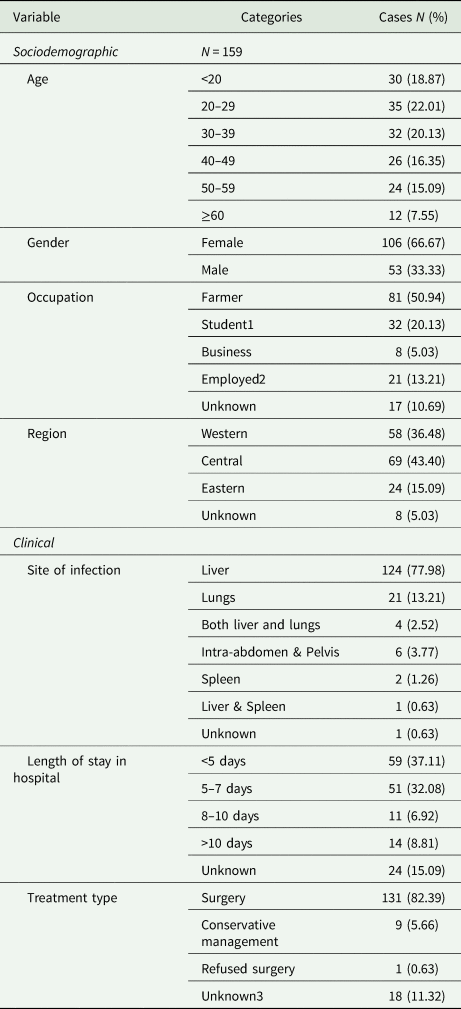
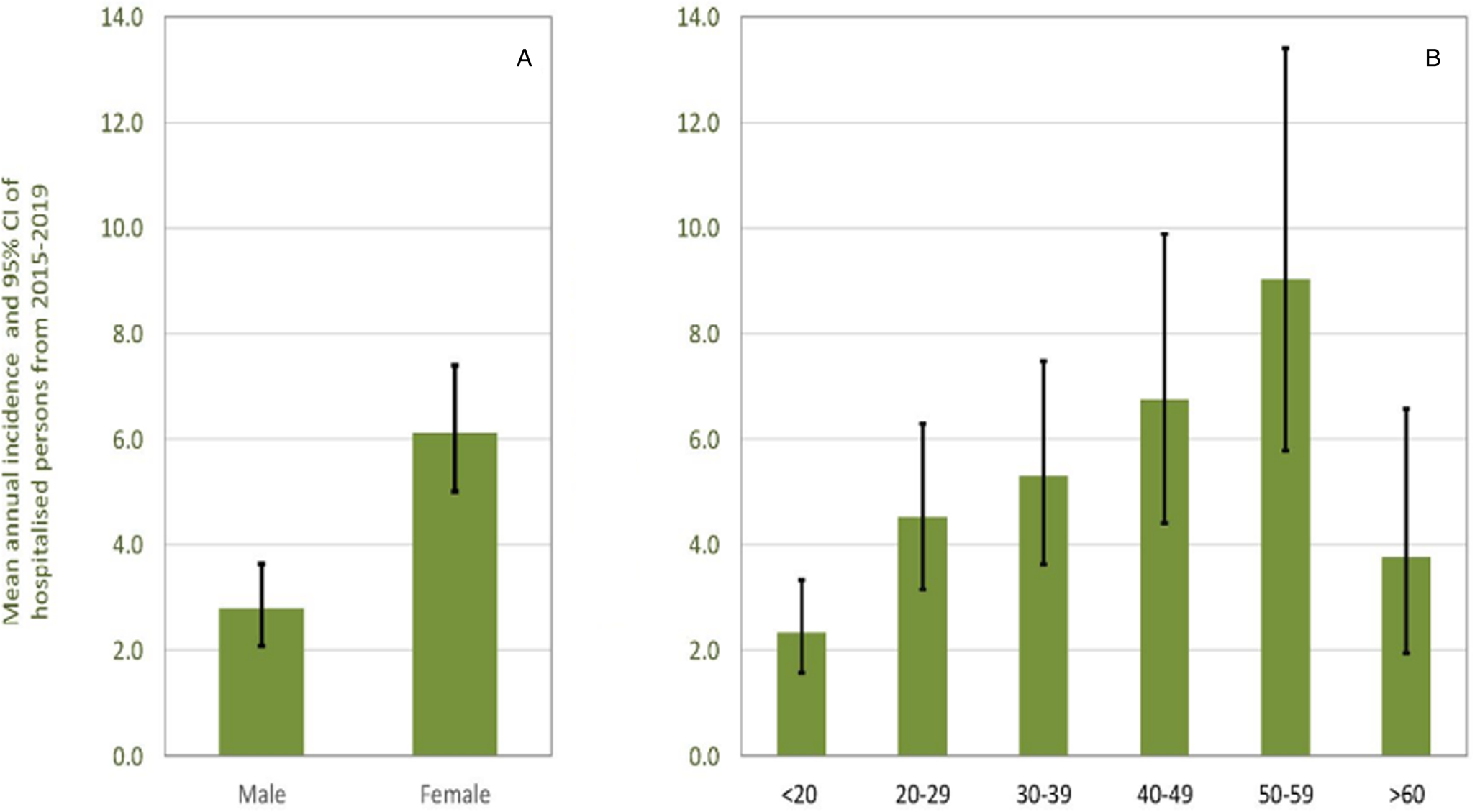
Table 3 shows that a majority (66.67%) of the cases detected and recorded in JDWNRH were females and farmers. The majority of cases were hepatic echinococcosis. Correspondingly, the annual incidence in females was significantly higher than in males (6.11 vs 2.79, P < 0.001) (Fig. 1A).
Distribution of cystic echinococcosis cases recorded in JDWNRH by sociodemographic and clinical characteristics
JDWNRH, Jigme Dorji Wangchuck National Referral Hospital; N, number.
1 Student: includes student, monks, and nuns.
2 Employed: includes uniform personnel, government, and private employees.
3 Includes the 14 cases referred out of the country.
Annual incidences per 100 000 inhabitants (A) per gender and (B) age class with a diagnosis of cystic echinococcosis within 5 years (2015–2019). Error bars: exact binomial 95% confidence intervals. Population by age group: <20 = 257703, 20–29 = 154695, 30–39 = 120729, 40–49 = 77028, 50–59 = 53 215, ≥60 = 63 775.
The most common sites of infection were the liver (78%), followed by the lungs (13%) (Table 3). However, specific information on whether cases were diagnosed based on thoracic x-ray (chest x-ray) was not available. Infection of other sites such as the spleen, pelvis, and retroperitoneum accounted for a very small share. Four patients had infections in both the liver and lungs. Infections of sites such as the brain, heart, bones, and other sites were not recorded in the surgical department in the last 5 years. The majority (~48%) of the patients were admitted to the hospital for more than 5 days for management and most (82%) received surgical treatment (Table 3). About 6% of the patients were managed conservatively. The youngest patient that was operated on was 8 years old and the oldest was 85 years old. Fourteen patients with CE in the lungs or with some other complications were referred out of the country for treatment.
The individual risk for a diagnosis with CE increased strongly with increasing age and the estimated annual incidence was significantly lower in the age group <20 years (2.33) than in adults from 30–39, 40–49, and 50–59 years 5.30, 6.75 and 9.02, respectively. (Fig. 1B). Surprisingly the estimated annual incidence decreased for people >60 years (3.76), which is even lower than for the age group 20–29 (4.53).
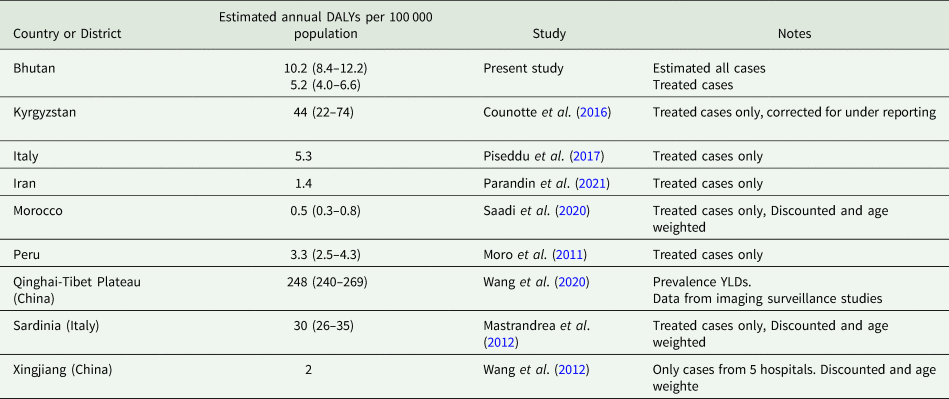
The burden of disease, using the data on the clinical location of the cysts, the demographics of the reported cases (Table 3) and the reported incidence on CE was 41 DALYs per year (95% uncertainty intervals 32–51 DALYs). The additional burden of disease that may be attributed to cases not seeking treatment was estimated at 39 DALYs per year (95% uncertainty intervals 33–45 DALYs). The total burden of disease attributed to treatment seeking and non-treatment seeking cases may be estimated at 80 DALYs per year (95% uncertainty interval of 66–96 DALYs). This equates to 10.2 DALYs per 100 000 per year (95% uncertainty intervals 8.4 to 12.2 DALYs per 100 000 per year).
Geographical distribution
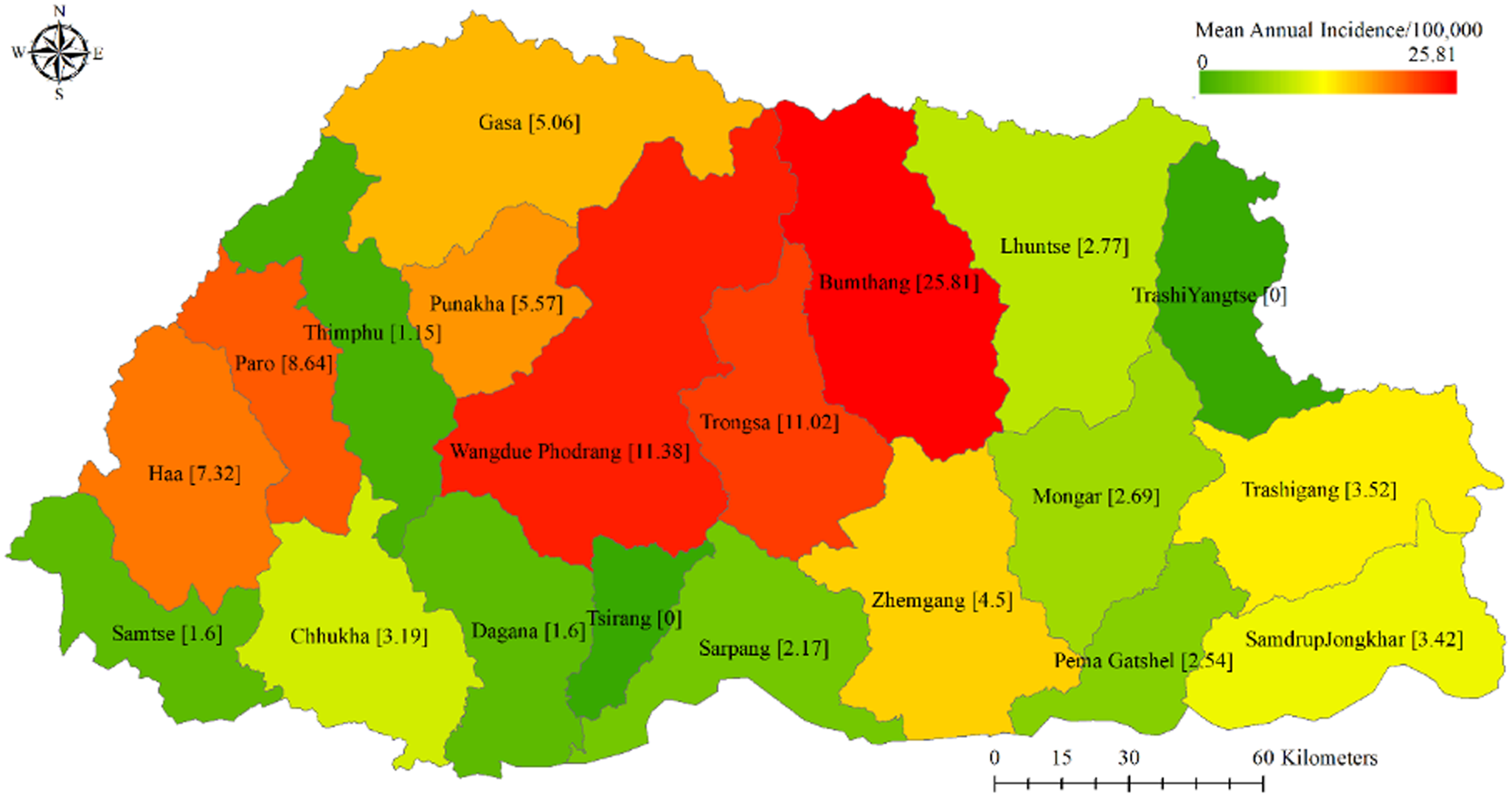
Although there were at least one or more cases from almost all the districts, the highest number of cases detected were from Wangdue Phodrang (15.89%, N = 24) followed by Bumthang (15.23%, N = 23), Paro (13.25%, N = 20), Trongsa (7.28%, N = 11), and Chhukha (7.28%, N = 11) (Table 4). The mean annual incidence was highest in Bumthang, Wangdue Phodrang, Trongsa, and Paro with the rates of 25.8, 11.38, 11.02, and 8.64 cases per 100 000 population, respectively. Low numbers of cases were reported from Gasa with only one case, and Dagana and Lhuntse reported two cases each. No cases were reported from Tashi Yangtse and Tsirang districts during this period. When grouped into regions, the central region (43.40%) had the largest proportion of cases notified followed by western (36.48%) and eastern (15.09%) regions (Table 3). The regional annual mean case notification rate was also significantly higher in the central region than in the western and the eastern regions (annual incidence rates: 7.2, 3.2, and 2.8 cases per 100 000 population). The review of US records in 6 districts also revealed that most cases detected were from Bumthang and Wangdue Phodrang (Table 4). The geographical distribution of incidence is also illustrated by Fig. 2. The distribution of CE by districts partly corresponds with the population of cattle and dogs in these districts (Table 1). The Poisson regression model was unable to demonstrate a significant association between livestock or dog populations and the district incidence of CE.
Hospitalized cystic echinococcosis cases (2015–2019) and annual incidences by districts and regions in Bhutan
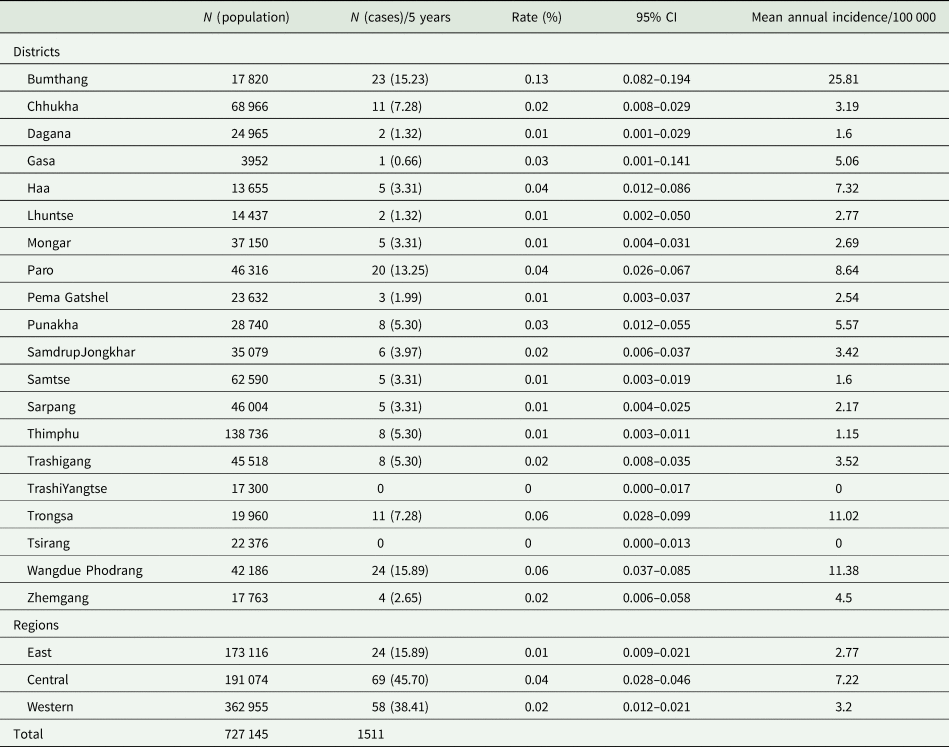
1 Eight of the 159 cases did not have information of the district of origin.
Annual incidences of cystic echinococcosis by districts in Bhutan per 100 000 population (2015–2019).
Discussion
The incidence for hospitalized patients, however, may not represent the actual burden of the disease in the country as documented in other endemic areas (Possenti et al., Reference Possenti, Manzano-Román, Sánchez-Ovejero, Boufana, La Torre, Siles-Lucas and Casulli2016). For instance, those that are asymptomatic, those with mild symptoms, and those who do not require health services will be missed in the hospital records. Furthermore, many diagnosed cases may also have been managed conservatively on an outpatient basis especially those with uncomplicated inactive cysts on watch and wait for management plan in other referral hospitals. Likewise, some cases could be possibly managed at the district hospitals. Additionally, the sonographers may have also potentially missed infection in the early stages and infection of rare sites in asymptomatic individuals. Therefore, prevalence surveys are needed to provide more precise estimates of the burden of CE. A standardized recording and reporting system, that is currently lacking, can be useful in providing timely and more accurate information regarding case detection and management.
The data from the study was from 5 years previously. However, it is the most up-to-date information available. Since 2021 there has been a major restructuring of health infrastructure. Previous to 2021 CE cases were referred to the National Referral Hospital for treatment and thus data from this hospital represents an estimate of the national incidence of CE. Subsequently, many more cases have been treated at upgraded local facilities. Due to resource constraints resulting from limited funding, and disruption due to COVID-19 pandemic it has not been possible to investigate the records of these additional centres.
The gender distribution with the majority being females is consistent with other reports which usually demonstrate a higher incidence in females (Budke et al., Reference Budke, Carabin, Ndimubanzi, Nguyen, Rainwater, Dickey, Bhattarai, Zeziulin and Qian2013). The difference in gender roles may help explain this finding. Women may be more involved in looking after the cattle and dogs, gardening, and preparing meals by which their exposure risk is increased as compared to males. Traditionally, Bhutanese women are tasked with household chores and such a role of women in the family still exists, especially in rural Bhutan. It may be also that females are more often investigated using US. For instance, around 62% of the total US performed in JDWNRH in the last 5 years were females.
Although rates are usually greater among older adults people given the long incubation period, the largest proportion (~42%) of the total cases have been registered in the age group 20–39 due to demographic reasons (37% of the total population) (Table 3). Generally, young adults might be the ones who attend to household activities more often, including livestock-related work. Many old adults remain asymptomatic throughout life and remain undiagnosed, while some may not be fit for surgery due to their age and other associated comorbidities (Budke et al., Reference Budke, Carabin, Ndimubanzi, Nguyen, Rainwater, Dickey, Bhattarai, Zeziulin and Qian2013). This could have potentially led to the low number of cases reported among older adults and the elderly in hospital-based records.
Of the total number of cases, most were farmers (50.94%), followed by students (20.13%) (Table 3). This is expected as farmers, who represent much of the rural population, come in direct contact with dogs and the environment contaminated by infectious hosts. A review study showed that herdsmen were the most at risk of CE in the Qinghai-Tibet Plateau, China (Wang et al., Reference Wang, Huang, Huang, Yu, He, Zhong, Li, Zeng, Vuitton, Giraudoux and Craig2014). Children love touching animals and playing in the open field; thus, they are more likely to encounter dogs and contaminated environments. The risk is even higher for children living in villages given the easy access to open fields to play and work, higher stray dog population, and poor sanitation and access to safe drinking water (Yuan et al., Reference Yuan, Wu, Zeng, Liu, Xu, Gao, Li, Li, Huang, Yu and Sun2017).
In several districts, contamination of the environment with E. ortleppi and or E. granulosus s.s. eggs in dog fecal samples have previously been documented (Wangdue Phodrang 18 of 143, Bumthang 3 of 50, Paro 5 of 28, and Trongsa 1 of 24 samples contained Echinococcus eggs) (Sharma et al., Reference Sharma, Thapa, Tshomo, Dema, Alvarez Rojas, Tenzin, Gurung, Norbu, Lhatru, Namgyel and Jamtsho2021). Interestingly, a study that collected fecal samples from all 20 districts selecting areas with a high population of owned and free roaming/stray dogs found the environmental contamination with Echinococcus eggs were also very low in these districts with only two out of 37 and one out of 23 samples investigated contained echinococcus eggs respectively (Sharma et al., Reference Sharma, Thapa, Tshomo, Dema, Alvarez Rojas, Tenzin, Gurung, Norbu, Lhatru, Namgyel and Jamtsho2021).
The review of US records revealed that most cases detected were from Bumthang and Wangdue Phodrang (Table 4). The greater number of cattle and dog population in these districts was hypothesized to provide some explanation. Similarly, the greater domestic animal (cattle, dogs, and yaks) to human population ratio in Bumthang compared to other districts including Wangdue Phodrang also render some support for the higher number of cases notified from Bumthang. However, the Poisson regression model was unable to demonstrate a significant association between livestock or dog populations and the district incidence of CE.
While it is likely that rural residents in these districts are more likely to be at a heightened risk, information on rural-urban residences were not available in the records maintained with the hospitals. For instance, those in rural areas may be exposed through drinking water contaminated with the feces of infected definitive hosts (Wang et al., Reference Wang, Huang, Huang, Yu, He, Zhong, Li, Zeng, Vuitton, Giraudoux and Craig2014; Yuan et al., Reference Yuan, Wu, Zeng, Liu, Xu, Gao, Li, Li, Huang, Yu and Sun2017). Lower case notification from the eastern region may also be partly due to poor access to health facilities than the central and western regions.
The most common sites of infection were the liver followed by the lungs (Table 3). Infection of sites other than the liver of lungs were seldom reported. The lack of reports of infections of the brain, heart, bones, and other sites were not recorded could be because the management of infection of cases might have been dealt with by the specialized department. Alternatively they might have been directly referred out of the country (India) without admission to the surgical ward. For instance, a few cases of cardiac hydatid cysts were reported in Bhutan (Giri et al., Reference Giri, LeVine and Watts2020) but no records were available in the surgical department. Similarly, a case of CE in the spine was also managed by the orthopedic department of JDWNRH (Dr K. Wangdi, Spine Surgeon, email communication, September 06, 2022).
These data suggest that CE also contributes to the increasing health care cost in Bhutan. Interventions aimed to detect and manage cases early would not only prevent complications but also reduce associated treatment and referral costs. However, the length of stay and treatment type was not known for 24 and 18 cases respectively, and information on treatment outcome was not available in the records.
For comparison, we have illustrated other national of subnational studies on the burden of CE in terms of annual numbers of DALYs per 100 000 population (Table 5). Unfortunately, not all studies were standardized. Some of the earlier studies used age weighting (where a year of life lost in a young adult is given greater weighting to one lost as a child or an older adult) and discounting. These have now been abandoned so that more recent studies weight age equally and do not discount into the future. Most studies only estimated the burden of disease due to reported cases, and these would be directly comparable to the lower measure of reported cases in Bhutan. For example from Italy (Piseddu et al., Reference Piseddu, Brundu, Stegel, Loi, Rolesu, Masu, Ledda and Masala2017), which suggests a similar annual burden incidence per 100 000 population compared to Bhutan. However, it is likely that as Italy is an upper income country, cases are more likely to receive treatment compared to a lower- or middle-income country such as Bhutan. The Qinghai-Tibet Plateau (China) has the highest estimated incidence of DALYs. The data was obtained from a number of recent published reports on mass surveillance and 10 government data bases and is the unlikely to suffer from underreporting. This region of China is one of the most highly endemic regions in the world for CE of China and illustrates an upper limit to the likely burden of disease due to CE.
Comparison with other studies that have estimated DALYs due to cystic echinococcosis on a national or subnational scale
Strengths and limitations
This study expands upon the previous observations concerning the epidemiology of CE in Bhutan (Thapa et al., Reference Thapa, Armua-Fernandez, Kinzang, Gurung, Wangdi and Deplazes2017; Kelzang et al., Reference Kelzang, Dorji and Tenzin2019; Sharma et al., Reference Sharma, Thapa, Tshomo, Dema, Alvarez Rojas, Tenzin, Gurung, Norbu, Lhatru, Namgyel and Jamtsho2021) by including records of human CE cases over a 5-year period from all districts recorded and managed at the JDWNRH. Given that no patients were operated on at the regional referral and other district-level hospitals in the given period (verbal communication with surgeons at the regional referral hospitals (Dr S. Kelzang & Dr S. Jamtsho, personal communication, September 03, 2022), the patients reported and managed at JDWNRH are likely to represent most cases detected in the country of that period. Since the data was obtained from hospital records, the data collected was accurate and reliable for those treated patients. The findings provide a crude burden by districts and regions and the potential risk factors in Bhutan that can be used to inform initial public health policies.
Bhutan is a small lower middle income country with little engagement with the international scientific community. This report therefore provides important epidemiological data which demonstrates that echinococcosis is highly endemic in the country and indicates the extent of the health burden of a neglected tropical disease. Thus the information will be valuable to global public health organizations such as the World Health Organisation. Indeed, it is the only data on echinococcosis available from Bhutan that can be used in the WHO estimates of the burden of foodborne disease through the Foodborne Disease Burden Epidemiology Reference Group (FERG) initiative.
This study has some limitations. The burden is very likely to be underestimated since clinically diagnosed cases may represent only a trivial portion of the total number of actual cases. However, when estimating the DALYs we have illustrated this with an estimate for to include estimated numbers of undiagnosed cases. The absence of cases of the brain, heart, and bones also suggests potential under recording of cases. Although, validation through cross-checking of cases recorded in JDWNRH and those registered in the district hospitals may yield better estimates, this was not possible due to a lack of a standardized recording and reporting system. The US reports are currently not read by a blinded experienced person and is not classified using the WHO-IWG criteria, which might have affected the reliability of the diagnosis to some extent. Similarly, information on serological status was not available which otherwise could help in confirming the diagnosis. Some individuals might have also acquired infection during their stay at the present addresses, while the addresses that we obtained for this study were their permanent addresses.
Furthermore, information on some variables such as length of stay, treatment type, treatment outcome, geographic location of the case, and occupation was incomplete or not available. These recording deficiencies are expected since control of CE has not currently received much attention. The descriptive analysis used in this study only allows to make summations of the sample analysis. Multivariable analysis using a Poisson regression model failed to find any association of CE incidence with animal population density. Other multivariable analyses were not possible owing to data limitations. Given the small number of observations (cases), the parameter estimates for the case notification rates were estimated using the total cases reported in the five-year period, which might have overestimated the estimates to some extent. Nonetheless, this might have been offset by the potential underreporting of cases in hospital records discussed earlier. This study also could not assess other factors such as knowledge, health behaviour, eating habits, living environment, drinking water and sanitation, and management of dogs and domestic animals (Acosta-Jamett et al., Reference Acosta-Jamett, Weitzel, Boufana, Adones, Bahamonde, Abarca, Craig and Reiter-Owona2014; Wang et al., Reference Wang, Huang, Huang, Yu, He, Zhong, Li, Zeng, Vuitton, Giraudoux and Craig2014; Possenti et al., Reference Possenti, Manzano-Román, Sánchez-Ovejero, Boufana, La Torre, Siles-Lucas and Casulli2016; Conraths et al., Reference Conraths, Probst, Possenti, Boufana, Saulle, La Torre, Siles-Lucas and Casulli2017; Yuan et al., Reference Yuan, Wu, Zeng, Liu, Xu, Gao, Li, Li, Huang, Yu and Sun2017; Cadavid Restrepo et al., Reference Cadavid Restrepo, Yang, McManus, Gray, Barnes, Williams, Soares Magalhães and Clements2018; Haleem et al., Reference Haleem, Niaz, Qureshi, Ullah, Alsaid, Alqahtani and Shahat2018), which is crucial in identifying high-risk groups and developing targeted policy interventions.
Conclusions
Given that the majority of the population depends on livestock farming, especially in rural areas, a large section of the population is at risk for CE in Bhutan. A total of 159 cases were detected and recorded in the period 2015–2019. CE also contributes to the rising healthcare cost in Bhutan. The case notification rates were higher among females, those aged 30–59 years, and farmers suggesting that these groups are most affected. The central districts, mainly Bumthang, Wangdue Phodrang, Trongsa, and Paro, and Haa in the western region also had high case notification rates.
Policy interventions targeting farmers, females, older adults, and the high endemic districts of the central and western regions may yield larger returns. Initial activities may include health education for health workers, training of health workers in case detection and management, control of stray dog populations and deworming of dogs (both pet and stray), and the institution of a recording and reporting system that ought to be carried out in collaboration with the animal health and other relevant sectors through One Health approach. Future prospective studies assessing the burden, geographic distribution, and disparities, and examining a range of plausible risk factors are needed. Studies also need to use the WHO-IWGE criteria and recommended diagnostic approaches to define and/or classify cases. Such developments are essential for the national programme and related agencies to help develop effective interventions for the prevention and control of CE in Bhutan.
Supplementary material
The supplementary material for this article can be found at https://doi.org/10.1017/S0031182024001069.
Data availability statement
All the data analysed is in the manuscript or supplementary material. Other information will be available on a reasonable request from the principal investigator.
Acknowledgements
We would like to express our deepest gratitude to Professor Urs Martin Lütolf for his unwavering inspiration, motivation, and support throughout this study. We also would like to extend our health felt thanks to professor Teivi Laurimae for his guidance and support for the study. Lastly, our sincere appreciation and gratitude to Swiss Association for Bhutan Health-care System Support and Ministry of Health, Royal Government of Bhutan for their generous support with fund to collect the data for this study.
Authors contributions
Conceptualization – CT, PD, TZ, Tsheten, Study design, data collect, analysis and interpretation – all authors, Drafting of manuscript – CT, TD, Critical revision – PRT, PD, TD, Tsheten, SZ, CW and TZ. Final approval – all authors
Financial support
The conduct of this study was supported with financial assistance from the Ministry of Health of Bhutan and the Swiss Association for Bhutan Healthcare System Support.
Competing interests
None.
Ethical standards
Since, this study used secondary data (record review) that was anonymized and do not involve direct contact with any patients/participants, the study had a negligible risk. However, prior ethical clearance from REHB, the Ministry of Health and a written approval from the administration of each hospital and JDWNRH was obtained.


 Open access

