



According to the FAO, obesity (BMI≥30 kg/m2) occurs in 32·8 % of Mexican adults, an estimate exceeding that reported for many developed countries including the USA (31·8 %)( 1 ). When Mexican-Americans are compared with their counterparts in Mexico, a greater prevalence of obesity and overweight is observed in the USA( Reference Vera-Becerra, Lopez and Kaiser 2 – Reference Hernandez-Valero, Bustamante-Montes and Hernandez 4 ). As reported by a Mexican national study conducted in 2012, the prevalence of overweight and obesity among Mexican 5–11-year-olds averages 34·4 %, with 36·9 % of boys and 32·0 % of girls at or above the 85th percentile of BMI( Reference Gutierrez, Rivera-Dommarco and Shamah-Levy 5 ). Comparable US national studies from 2009–2010 report an overweight and obesity prevalence of 39·0 % among Mexican-American children aged 6–11 years, with 38·5 % of boys and 39·5 % of girls at or above the 85th BMI percentile( Reference Ogden, Carroll and Kit 6 ). A gender gap for Mexican-American children is apparent by adolescence (12–19 years), when 46 % of Mexican-American boys have BMI≥85th percentile compared with 40 % of girls. This finding is largely due to more boys (28·9 %) than girls (18·6 %) having BMI≥95th percentile for their age and gender. A smaller gender difference is seen among Mexican adolescents, with 14·5 % of boys and 12·1 % of the girls being obese.
Among the multiple social, economic and environmental factors that contribute to obesity, parenting styles and feeding practices influence the dietary intake and growth of young children( Reference Chaidez and Kaiser 7 – Reference Timperio and Fulkerson 13 ). Recent efforts towards understanding parent contributions to child obesity have differentiated between general parenting styles and parenting practices, each of which makes significant yet distinct contributions to the development of children’s dietary behaviours. In contrast to parenting practices focused on directly influencing what a child eats (e.g. restriction of food, serving fruits and vegetables, pressure to eat), general parenting refers to the ‘style’ that parents adopt in their interactions with their children( Reference Darling and Steinberg 14 ). Parents can fall into one of four general parenting ‘styles’ based on two dimensions: demandingness (i.e. attempts to control children’s behaviour: high or low control) and responsiveness (i.e. acceptance of children’s demands and needs: child-centred or parent-centred)( Reference Maccoby and Martin 15 ). Based on ratings of parents’ behaviours with their children on these two dimensions, general parenting is classified as ‘authoritative’, ‘authoritarian’, ‘permissive’ or ‘neglectful’. This typology has since been applied to feeding styles reflecting demandingness (degree to which parents try to get their children to eat) and responsiveness (degree to which child-centred strategies are used to get children to eat) and result in authoritative, authoritarian, indulgent and uninvolved feeding styles( Reference Hughes, Power and Orlet Fisher 10 ). The evidence to date reveals unique associations between child obesity and both authoritative parenting styles, which balance demandingness with child-centred responsiveness, and indulgent feeding practices, which lack proper control over children’s dietary environments( Reference Vollmer and Mobley 16 , Reference Tovar, Hennessy and Pirie 17 ).
Less is known about the modifying effects of gender and age on the relationship of parenting styles and practices to the development of obesity in Latino children. For example, in cultures where male children are particularly valued, a permissive parenting style, which is highly responsive but lacks structure and limits, could result in allowing boys to eat too many high-sugar or high-fat snacks( Reference Olvera, George and Kaiser 9 ). A Mexican-based study provides some supporting evidence, concluding that children are more likely to be obese if they are boys, from households with no other or few children and have parents with a permissive parenting style( Reference Brewis 18 ). An observational study of 177 families in Texas found that Latino boys (but not girls) of parents with a permissive style are more likely to have increased BMI Z-scores, compared with African-American boys( Reference Hughes, Power and Papaioannou 19 ). In contrast, an overly controlling parenting style, characterized by strict rules, commands and other directive strategies, can also be counterproductive and results in children demanding more of the ‘restricted’ foods( Reference Olvera, George and Kaiser 9 ). A US study of 812 Latino parents with children in kindergarten through second grade reported that a controlling parenting style is positively related to consumption of unhealthy foods but only in girls( Reference Arredondo, Elder and Ayala 20 ). Although a study based on the 2003 National Survey of Children’s Health found that family meals reduced the risk of obesity in white children of both genders, Latino boys, but not girls, are marginally at greater risk for overweight when family meals are frequent( Reference Rollins, Belue and Francis 21 ).
For Mexican immigrants, acculturation to the USA has been associated with many dietary and lifestyle changes( Reference Ayala, Baquero and Klinger 22 – Reference Kaiser 26 ). Acculturation is a long-term, fluid process in which people adopt aspects of a new culture while simultaneously modifying values, beliefs and/or behaviours associated with their culture of origin( Reference Kaiser 26 , Reference Cuellar, Arnold and Maldonado 27 ). Although researchers often use structured, validated instruments such as the Cuellar Scale( Reference Cuellar, Arnold and Maldonado 27 ) to measure level of acculturation, others may use a proxy such as birthplace or years in the USA to measure this construct. Use of different measures of acculturation and failure to control for effect modifiers have led to contradictory findings in the literature regarding the effect of acculturation on diet and lifestyle.
Nevertheless, several studies report that higher levels of acculturation are negatively related to fruit and vegetable intakes and positively related to intakes of sugar-sweetened beverages( Reference Batis, Hernandez-Barrera and Barquera 24 , Reference Kaiser 26 ) and fast and convenience food items( Reference Vera Becerra 28 ). One study suggests that boys and girls may respond differently to acculturation. A study among fourth graders (1646 boys and 1861 girls) in Texas public schools found that greater acculturation is associated with less frequent milk and fruit consumption in Latino boys, but not in girls( Reference Lind, Mirchandani and Castrucci 29 ).
For US-born children of immigrant parents, the transition to school provides greater contact with mainstream culture and is a time when several factors coalesce to influence food patterns. At 60 months of age, children are no longer eligible for food assistance from the federal Special Supplemental Nutrition Program for Women, Infants, and Children (WIC). However, upon entry to school, immigrant children can participate in the school nutrition programmes (School Breakfast, Lunch and Supper) and thus are exposed to menus and foods that may differ from those offered in the homes of newly arrived, immigrant families. Research on the effect of this transition to school on the diet of immigrant children is sparse. Cross-sectional US data document that fruit and vegetable intakes are lower in 6–11-year-olds, compared with 2–5-year-olds( Reference Lorson, Melgar-Quiñonez and Taylor 30 ). Although this trend is also observed in Mexican-American children, it is not clear how food patterns change among immigrant children as they grow older. In a longitudinal study, a larger proportion of acculturated youth in the school student body has been associated with more rapid linguistic acculturation of entering students but no data were available on diet, physical activity or other lifestyle changes( Reference Nieri 31 ).
Niños Sanos, Familia Sana (NSFS; Healthy Children, Healthy Family) is a 5-year, community-based intervention to prevent obesity in young Latino children through nutrition education and an economic incentive to purchase fruit and vegetables( Reference de la Torre, Sadeghi and Green 32 ). In 2012, baseline data were collected in the intervention and comparison communities in Fresno County, located in California’s Central Valley. The purpose of the present paper is to examine the influence of maternal and household-level factors and child’s age and gender on food patterns of children aged 2–8 years, using baseline data from the NSFS study. Specific research questions include the following: (i) Do gender (male) and older age influence child food patterns to reflect a less healthy diet (more fast and convenience foods and fewer vegetables)? (ii) Is there a modifying role of gender and age on the relationship of child feeding practices to food patterns?
Methods
Participants
Participants included 303 children enrolled in the baseline sample of the NSFS intervention( Reference de la Torre, Sadeghi and Green 32 ). Over 90 % of the population in these communities is of Latino descent, primarily from Mexico. Inclusion criteria for the present analysis were: (i) at least one child between 2 and 8 years of age; (ii) residence within targeted school districts; and (iii) mother and/or father self-identified as being of Mexican, Hispanic, Latino or Chicano ethnicity. The study was approved by the Institutional Review Board of the University of California at Davis. Parents or legal guardians signed informed consent forms in their preferred language (Spanish or English).
Measures
The study used an FFQ to capture child food patterns. This instrument consisted of twenty-six items related to consumption of specific foods or beverages in the past month and used a Likert response scale (1=‘never/rarely’; 2=‘1 time or less a week’; 3=‘2–3 times a week’; 4=‘1 time a day’; and 5=‘more than once a day’). The twenty-six food items were selected based on studies in Mexican-origin households( Reference Vera Becerra 28 , Reference Kaiser, Martin and Metz 33 ). In a binational study( Reference Vera Becerra 28 ), a US food pattern, based on FFQ items including hamburgers, pizza, hot dogs, fried chicken, cheese, pastries, juice and instant cereal, demonstrated good construct validity and internal reliability (Cronbach’s α=0·77) and was positively correlated with BMI Z-score (r=0·24, P<0·0003) in young Mexican-origin children. In a Mexican-origin population in California, the fruit and vegetable FFQ items yielded estimates of pre-school children’s fruit and vegetable intakes that were significantly correlated with household food supplies( Reference Kaiser, Martin and Metz 33 ). Four items related to child feeding practices and adapted from previous research were included in the questionnaire( Reference Anderson and Whitaker 34 ). These items asked about whether the child eats with an adult, consumes meals and snacks on a regular schedule, and skips meals. Responses included: 1=‘no/rarely’; 2=‘sometimes’; 3=‘often’; and 4=‘very often’. The pictures and wording of the final instrument were cognitively tested with seven Spanish-speaking community health workers. Their feedback on interpretation of the words and pictures informed modifications to ensure cultural relevance and comprehension of the final instrument. Researchers used the Brief Acculturation Rating Scale for Mexican-Americans, with a twelve-item Likert scale to measure acculturation using two subscales: the Mexican Orientation Subscale and the Anglo Orientation Subscale( Reference Cuellar, Arnold and Maldonado 27 ). Back-translation of the instruments was performed to ensure the items were identical.
Data collection
Bilingual researchers, certified by the Institutional Review Board of the University of California at Davis, administered the FFQ to the parent or caregiver who responded for his/her children enrolled in the NSFS study. Because the goal was to examine changes in diet over the course of the intervention (including transition to school), interviewers selected one 1–5-year-old pre-school child per household for the FFQ administration. Where the household had multiple children or children outside that age range, parents responded to the FFQ items for the youngest child.
The research team measured height and weight of the children. Weight was recorded to the nearest 0·2 kg on a portable balance, and height to the nearest 0·1 cm using a stadiometer as described elsewhere( Reference de la Torre, Sadeghi and Green 32 ). The team measured each child twice, and the average was used to calculate BMI. The BMI Z-score for each child used the Centers for Disease Control and Prevention growth references( Reference Kuczmarski, Ogden and Guo 35 ).
Analysis
The researchers analysed data using the SAS statistical software package version 9·3. Descriptive statistics (medians, means or frequencies) were calculated for the demographic variables. Two separate factor analyses with varimax rotation assisted in identifying underlying patterns related to (i) food intake and (ii) child feeding practices (daily structure of meals/snacks and role modelling). The strongest factors included those with eigenvalues greater than 1·0. Absolute factor loading >0·40 was used as the cut-off for determining which items belonged to a particular pattern. Based on the factor analysis, the researchers created food pattern and child feeding scales by summing several highly correlated individual items into a score. For this step, the full Likert range of responses was used. To maximize internal consistency or reliability, items above the 0·40 cut-off were retained in the scale if their inclusion increased the Cronbach’s α coefficient (desirable α coefficient ≥0·7)( Reference Santos 36 ). In bivariate analyses, Student’s t test determined the effect of age and gender on weight status as measured by BMI Z-score and food pattern scales. The researchers used ANCOVA to examine the effects of age group (2–4 years or 5–8 years) and gender on food patterns. Covariates included maternal acculturation, age, marital status and education; number of siblings; and household participation in food assistance programmes including WIC and the Supplemental Nutrition Assistance Program (SNAP). Interactions of age and gender with child feeding practices were examined. Statistical significance was set at P=0·05, with P=0·10 considered as marginally significant.
Results
Table 1 shows demographic characteristics of the families in the study. Of the 303 families interviewed, complete food consumption and child feeding practices data were available for 217 children. The reason for missing data was due to respondents not answering one or more items in the FFQ. There were no significant differences in child’s BMI Z-score, household income, participation in food assistance programmes, maternal age or marital status among families with complete or missing data (data not shown). However, compared with those with complete data, mothers with missing data had lived more years in the USA (17·4 v. 12·8 years, P=0·0004) and were more educated (11·0 v. 9·3 years of schooling, P=0·002). Eighty-nine per cent (n 163) of fathers and 87 % (n 188) of mothers were born in Mexico. Eight per cent of fathers (n 16) and 11 % of mothers (n 23) were US-born. The remainder of fathers (2 %, n 4) and mothers (2 %, n 5) were born in Central America. Among mothers, 73·6 % (n 159) were categorized having a low (traditional) acculturation level; 16·2 % (n 35) as low bicultural; 7·4 % (n 16) as high bicultural; and 3 % (n 6) as assimilated. There were no significant differences in BMI Z-score by age group or gender (Table 1). Prevalence of overweight and obesity (BMI for age and gender ≥85th percentile) was 51 % (n 100) for the total sample.
Demographic characteristics of the study families (n 217); Niños Sanos, Familia Sana (NSFS; Healthy Children, Healthy Families), California’s Central Valley, USA, 2012

WIC, Special Supplemental Nutrition Program for Women, Infants and Children; SNAP, Supplemental Nutrition Assistance Program.
* Family has one or more members enrolled in the federal WIC or SNAP programme.
† BMI Z-score (t test): boys v. girls, NS; 2–4 years v. 5–8 years, NS.
Food patterns
Factor analysis in Table 2 reveals three clear food patterns. A ‘fast/convenience pattern’ included pizza, hamburgers, hot dogs, canned fruit, instant noodles, spaghetti sauce, fried potatoes, chips and soft drinks. A second food pattern (‘vegetable pattern’) included vegetables in different forms, including vegetable soup; other cooked vegetables (except potatoes); lettuce or cabbage; other raw forms of produce; and Mexican-style salsa. A third food pattern (‘WIC pattern’) included many items allowable for purchase with WIC vouchers, such as low-fat milk, fresh fruit, ready-to-eat cereal, juice and corn tortillas. Internal consistency or reliability of the scale based on the fast/convenience and vegetable food patterns was good (Cronbach’s α=0·74 and 0·70, respectively), but reliability of the WIC food pattern scale was lower (α=0·58).
Food patterns based on factor analysis (n 217); Niños Sanos, Familia Sana (NSFS; Healthy Children, Healthy Families), California’s Central Valley, USA, 2012
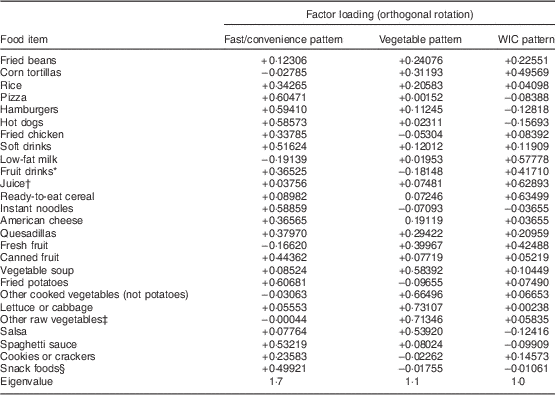
* Including Tampico®, Caprisun® and Sunny Delight®.
† Including 100 % fruit juice and agua fresca, a traditional Mexican beverage made with water and fresh fruit.
‡ Including cucumber, jicama, radish and carrots.
§ Including Hot Cheetos® and chips.
Effects of age and gender on food patterns and child feeding practices
Table 3 shows the relationships of age and gender with food patterns, based on bivariate analyses. Gender was not related to any of the three food patterns. Compared with children aged 2–4 years, older children (aged 5–8 years) consumed fast and convenience foods more often (P=0·04) and tended to consume WIC food items less often (P=0·10). No effect of age was observed on the frequency of consuming vegetables.
Child food patterns by age and gender (n 217); Niños Sanos, Familia Sana (NSFS; Healthy Children, Healthy Families), California’s Central Valley, USA, 2012
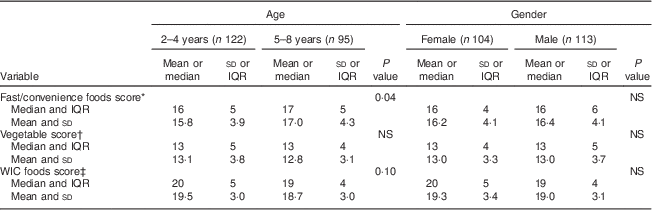
IQR, interquartile range; WIC, Supplemental Nutrition Program for Women, Infants, and Children.
* Fast/convenience foods score is a sum of responses (range: 9–36) for frequency of consuming pizza, canned fruit, hamburgers, soft drinks, hot dogs, instant noodles, fried potatoes, snack foods and spaghetti sauce. Cronbach’s α=0·74 (t test).
† Vegetable score is a sum of responses (range: 5–20) for frequency of consuming vegetable soup, other cooked vegetables (not potatoes), lettuce/cabbage, other raw vegetables and salsa. Cronbach’s α=0.70 (t test).
‡ WIC foods score is a sum of responses (range: 5–20) for frequency of consuming low-fat milk, juice, ready-to-eat cereal, corn tortillas and fruit. Cronbach’s α=0·58 (t test).
Multivariate analyses
When maternal and household characteristics and child feeding practices (role modelling, scheduling of dinner and snacks, meal skipping) were included in the models, the effect of child’s age on the frequency of fast and convenience foods was only marginally significant (P=0·10; Table 4). However, maternal acculturation (P=0·0002) and child skips meals (P=0·04) were positively associated with the fast/convenience food pattern. SNAP participation was marginally related to the fast/convenience food pattern (P=0·08). No main effects or interactions (data not shown) of age group and gender with child feeding practices or any of the other variables were observed.
ANCOVA: children’s food patterns (n 217); Niños Sanos, Familia Sana (NSFS; Healthy Children, Healthy Families), California’s Central Valley, USA, 2012
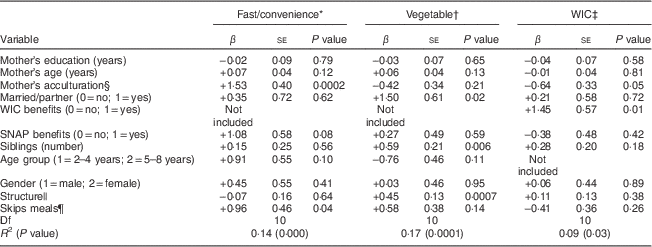
WIC, Special Supplemental Nutrition Program for Women, Infants and Children; SNAP, Supplemental Nutrition Assistance Program.
* Fast/convenience foods score is a sum of responses (range: 9–36) for frequency of consuming pizza, hamburgers, soft drinks, hot dogs, instant noodles, fried potatoes, snack foods, canned fruit and spaghetti sauce (Cronbach’s α=0·74).
† Vegetable score is a sum of responses (range: 5–20) for frequency of consuming vegetable soup, other cooked vegetables (not potatoes), lettuce/cabbage, other raw vegetables and salsa (Cronbach’s α=0·70).
‡ WIC foods score is a sum of responses (range: 5–20) for frequency of consuming low-fat milk, juice, ready-to-eat cereal, corn tortillas and fruit (Cronbach’s α=0·58).
§ Maternal acculturation: 1=traditional (low); 2=low bicultural; 3=high bicultural; 4=assimilated.
|| A summed score (range 3–12) of the following items: (i) My child sits and eats with an adult; (ii) My child eats dinner around the same time every day; and (iii) My child eats a snack around the same time every day. Response options for each item: 1=‘never/rarely’; 2=‘sometimes’; 3=‘often’; 4=‘very often’ (Cronbach’s α=0·55).
¶ Full wording is: My child skips meals. Responses: 1=‘never/rarely’; 2=‘sometimes’; 3=‘often’; 4=‘very often’.
Child feeding practices (role modelling, regular schedules of dinner and snacks) were positively related to vegetable intake (P=0·0007; Table 4). Acculturation was not related to vegetable intake. Presence of the mother’s spouse or partner (P=0·02) and number of the target child’s siblings in the home (P=0·006) were also positively related to vegetable intake. No main effects or interactions (data not shown) of age group and gender with any of the other variables were observed.
Since the age group and WIC participation variables were strongly correlated (r=0·49), only one of these variables at a time was included in the models to avoid a multicollinearity problem. Thus, in examining correlates of the WIC food pattern, two separate analyses were run using age group or WIC status. As expected, currently receiving WIC benefits was positively related to the WIC food pattern (P=0·01; Table 4) but receiving SNAP was not. After controlling for covariates, older age group was not related to the WIC food pattern (β=−0·74 (se 0·45), P=0·11). Greater acculturation was negatively related to the WIC food pattern (β=−0·62 (se 0·32), P=0·05) but the effect was diminished without corn tortillas included in the scale (β=−0·43 (se 0·26), P=0·10). In this sample, WIC mothers also reported fewer years living in the USA than non-WIC mothers (mean 12·4 v. 17·6 years, P=0·0007).
Discussion
In this sample of rural, Mexican-heritage children, neither age group nor gender had a significant effect (main or modifying) on consumption of a fast/convenience or vegetable food pattern after controlling for maternal and household characteristics. Providing role modelling and structure in scheduling meals and snacks had a positive effect on the vegetable pattern, whereas meal skipping was associated with more frequent fast and convenience food consumption. As expected, consumption of foods allowable through the WIC programme was higher among the younger children, compared with the older ones, although the effect was only marginal. Mother’s acculturation level was positively related to children’s consumption of less healthy foods (fast and convenience foods) and negatively related to consumption of WIC foods.
Prevalence of overweight and obesity was higher in this sample (51 %), compared with national US data for Mexican-American children aged 2–5 years (33·3 %) and 6–11 years (39·0 %)( Reference Ogden, Carroll and Kit 6 ). However, other studies in Mexican immigrant populations have reported estimates similar to ours (44–49 %)( Reference Vera-Becerra, Lopez and Kaiser 2 , Reference Crespo, Elder and Ayala 37 ). No differences by gender or age group were observed.
Our finding that older age was unrelated to vegetable intake differs from national data showing that the percentage of children meeting recommendations for fruit and vegetable consumption is significantly lower among 6–11-year-olds, compared with 2–5-year-olds( Reference Lorson, Melgar-Quiñonez and Taylor 30 ). However, our study only included children up to 8 years of age. Future waves of our study that include older children may reveal significant age effects on vegetable and fruit intake.
Other studies in Latino children (5–12 years) and youth (12–19 years) have reported that acculturation is negatively associated with fruit and vegetable intake, although a California study did not find a significant relationship in Latino pre-school children (3–5 years)( Reference Dave, Evans and Pfeiffer 38 – Reference Wilson, Adolph and Butte 41 ). The young age of the children (2–8 years) in our study may explain why no effect of acculturation on vegetable intake was observed. Similar to our findings, other research shows that parenting practices, such as positive role modelling, may partially mitigate negative influences of acculturation on access and availability of fruit and vegetables in Latino households with children( Reference Liu, Chu and Frongillo 39 ).
The strong effect of acculturation on children’s consumption of fast-food items, like pizza, hot dogs, chips, hamburgers and soda, parallels previous research. In a study that compared national survey data from the USA and Mexico, US populations (first- and second-generation Mexican-Americans) reported higher consumption of desserts, pizza, French fries and salty snacks, compared with populations in Mexico( Reference Matias, Stoecklin-Marois and Tancredi 25 ). These patterns were particularly evident among children and youth. In the Viva la Familia study, conducted in Texas among 1030 Mexican-American 4–19-year-olds, more than 21 % of the total energy intake in overweight boys and girls came from pizza, soda, chips, processed meats and burgers( Reference Taveras, Berkey and Rifas-Shiman 42 ). In US children and adults, consumption of fried foods prepared away from home has been linked to greater energy and fat intakes and higher BMI( Reference Duerksen, Elder and Arredondo 43 ).
Among immigrant children, the increased frequency of consuming fast and convenience foods over time most likely reflects acculturation through increased exposure to foods prepared away from home. This phenomenon is consistent with the epidemiological paradox present in Mexican-origin communities where traditional cultural practices are protective and promote resiliency despite low socio-economic status( Reference de la Torre and Estrada 44 ). That is, newly arrived Mexican immigrant parents may be more likely to offer healthy, traditional food choices (for example, vegetable soups) to their children before they enter the public school system. Once these children are exposed to peer influences and the broader food choices offered in US schools, food preferences of these children shift to more American-style foods (for example, pizza and hot dogs). In a previous study also conducted among Latinos in California’s Central Valley, 71·8 % (n 112) of immigrant parents reported offering other foods when their children refuse to eat what families serve at mealtimes( Reference Kaiser, Melgar-Quiñonez and Lamp 45 ). Where parents are highly responsive to their children’s demands (and refusals) and set few limits or provide little structure, these American-style foods may rapidly displace healthier traditional Mexican foods, like vegetable soups and legumes. A recent study found that when immigrants from different ethnic groups are compared, dietary acculturation occurred most rapidly in Hispanics( Reference Van Hook, Quiros and Frisco 46 ). This observation may be due to highly responsive parent feeding practices and/or to the opportunity for the USA and Mexico to jointly influence dietary patterns due to their close proximity. In the rural community where our study was conducted, parents attribute changes in their children’s food habits to exposure to American-style foods offered in the schools. Our data show that the practice of skipping meals at home is also associated with greater consumption of these American-style foods.
In Latino families undergoing acculturation, teasing out the ways that parenting practices influence children’s dietary intake requires a deeper appreciation of other factors that may be changing within the household. To make a living in a new country, fathers may work long hours, often at multiple jobs, and arrive home for meals after the children have gone to bed. Particularly after children start school, mothers with higher levels of education and English-speaking skills may be able to enter the job market, leaving the youngest children with older siblings or other caregivers such as a teen-aged relative in charge of managing meals and snacks. Even if mothers only work seasonally, as they do in these communities, this situation may lead to an absence of adult role models at mealtimes and ‘grazing’ or a lack of structure in meals or snacks. Especially where parents have experienced food deprivation as children, they may feel the need to compensate by stocking the pantry with inexpensive sweet or salty snack foods and allowing their children to choose when, where and what they want to eat( Reference Kuyper, Smith and Kaiser 47 ). Thus, acculturation and economic conditions may all contribute to a household environment that, along with lack of structure and role modelling, has a negative influence on child dietary patterns and ultimately on childhood obesity( Reference Tovar, Hennessy and Pirie 17 ).
Although gender had no apparent effect on the frequency of consumption specific foods, actual amounts consumed were not measured and may differ by gender. Our FFQ was designed only to describe food patterns and does not yield quantitative data on energy and nutrient intakes. A study conducted among Mexican-American families with pre-school children in California found that boys consumed more energy from fat and saturated fat and spent more time watching television or playing video games than did girls( Reference Elder, Broyles and Brennan 48 ).
Studies conducted in other populations have reported similar findings linking family-level feeding practices and routines to dietary patterns. In an Australian study, the home food environment, including eating at set times, was positively related to children’s fruit and vegetable score( Reference Wyse, Campbell and Nathan 49 ). In a New York City population of second and fifth graders, skipping meals adversely affected diet quality( Reference Melnik, Rhoades and Wales 50 ). A meta-analysis of seventeen studies found that the frequency of family meals – namely three or more times weekly – was associated with an increased odds of eating a healthy diet and of having a body weight within a healthy range( Reference Hammons and Fiese 51 ). In combination with neighbourhood-level factors, family-level factors influencing mealtimes contribute to increased risk of childhood obesity( Reference Fiese, Hammons and Grigsby-Toussaint 52 ).
The present study has several limitations. Parental recall of the child’s food intake may be subject to bias. However, the fast/convenience food pattern emerging in the study is consistent with observations reported previously in a binational study( Reference Vera Becerra 28 ). Baseline FFQ data collection occurred from September 2012 through May 2013. Since the parents responded about the child’s food intake during the previous month, seasonal variation, including that due to employment cycles, may have affected the children’s dietary intakes. We were unable to examine the effect of food insecurity on dietary patterns in this population because the administration of the food security instrument and the FFQ did not always occur within the same season.
The main strength of the study is the community-based sample of an underserved, high-risk population from a rural, economically disadvantaged area. This population is often difficult to reach due to its geographic location and mobility. For this reason, the study provides valuable information about a rural, immigrant population from Mexico.
The study gathered only semi-quantitative data on the children’s diets. Future work should collect energy and nutrient intakes from caregivers of the children to allow further analysis of intakes by gender and/or age group. There is a need for long-term studies to investigate the factors such as parent feeding styles, child feeding practices, acculturation and food insecurity, all of which may have a combined effect on dietary patterns of Mexican-heritage children of pre-school age( Reference Timperio and Fulkerson 13 ).
New contributions to the literature
Our findings suggest that acculturation and child feeding practices jointly influence food patterns in Latino, particularly Mexican-origin, immigrant children. Since the transition from home to school is a major life event, future interventions should take advantage of US public school food programmes to encourage parents and schools to work together to support the development of healthy food habits at both school and home. This work should involve a mutual commitment, where the schools in immigrant communities promote healthy, cultural foods to reinforce what families eat at home and parents provide structure and model healthy eating habits that include the fruits, vegetables and whole grains appearing in school meals.
Acknowledgements
Acknowledgements: The authors would like to acknowledge the contributions of Maria Rangel, Judith Martinez, Ivan Garcia, the families in the study, Dorina Espinoza, Kristen Stenger, Jan Peerson, and graduate and undergraduate student research assistants at the University of California at Davis. Financial support: This project was supported by an Agriculture and Food Research Initiative Competitive Grant (number 2011-68001-30167) and Project CA-D*-NTR-2117-H from the US Department of Agriculture, National Institute of Food and Agriculture. The funders had no role in the design, analysis or writing of this article. Conflict of interest: None. Authorship: The authors contributed as follows. Securing funding: A.d.l.T. and L.L.K.; instrument selection: all; training/supervision of data collectors: A.L.A. and R.G.-C.; data handling and analysis: L.L.K., R.G.-C. and A.L.A.; data interpretation: all; writing of first draft: L.L.K. and A.L.A.; preparation of final draft: all. Ethics of human subject participation: This study was conducted according to the guidelines laid down in the Declaration of Helsinki and all procedures involving human subjects/patients were approved by the University of California at Davis Institutional Review Board. Written informed consent was obtained from all subjects/patients.



