


1. Introduction
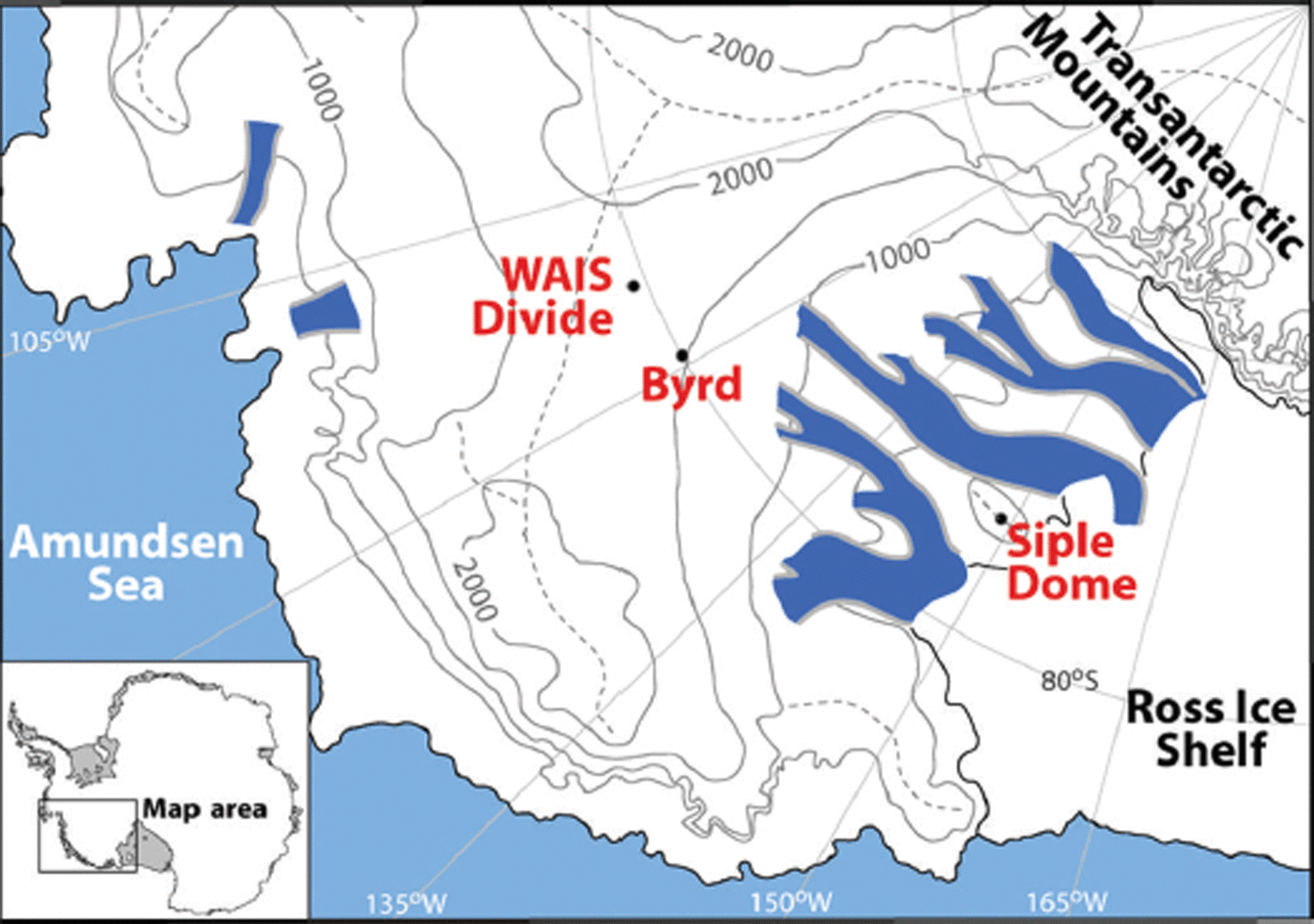
The West Antarctic Ice Sheet (WAIS) Divide ice-core project is a United States (US) deep ice-coring project in central West Antarctica investigating the past ∼68 000 years of Earth’s climate history (WAIS Divide Project Members, 2013). The WAIS Divide deep ice-core drilling site is located at 79°28.058’S, 112°05.189’ W, ∼24 km west of the Ross–Amundsen ice-flow divide and 160 km east of the Byrd ice-core site (Fig. 1). The elevation is 1766 m, the present-day snow accumulation rate is 22 cm ice equivalent a−1 (Reference Banta, McConnell, Frey, Bales and TaylorBanta and others, 2008) and the average temperature is ∼–30°C.
Map of West Antarctica showing the WAIS Divide ice-core drilling location. The ice at the WAIS Divide ice-core site is ∼3465 m thick and the surface elevation is ∼1766m. Contours represent surface elevation (m). Figure modified from Reference Morse, Blankenship, Waddington and NeumannMorse and others (2002).
After completion of the 114m deep pilot borehole in December 2006, deep ice-coring was carried out at WAIS Divide during austral summer field seasons 2007/08, 2008/09, 2009/10, 2010/11 and 2011/12 using the Deep Ice Sheet Coring (DISC) drill (Table 1). On 1 December 2011 the WAIS Divide ice-core project reached its final depth of 3405 m. The WAIS Divide ice core is not only the longest US ice core to date, but is also the highest-quality deep ice core, including ice from the brittle ice zone, that the US has ever recovered.
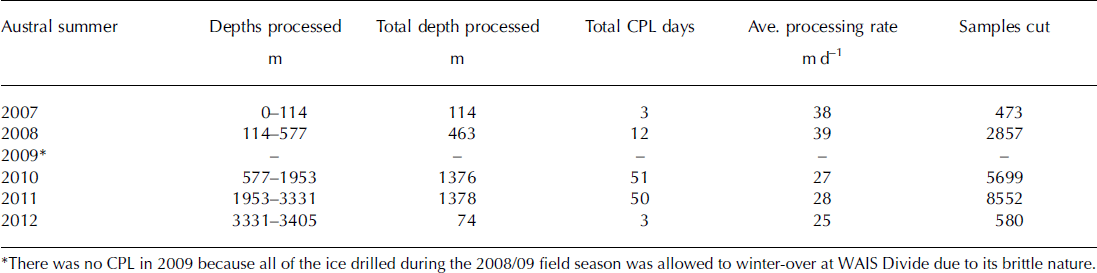
Summary of drilling and core-handling progress for the WAIS Divide deep ice core
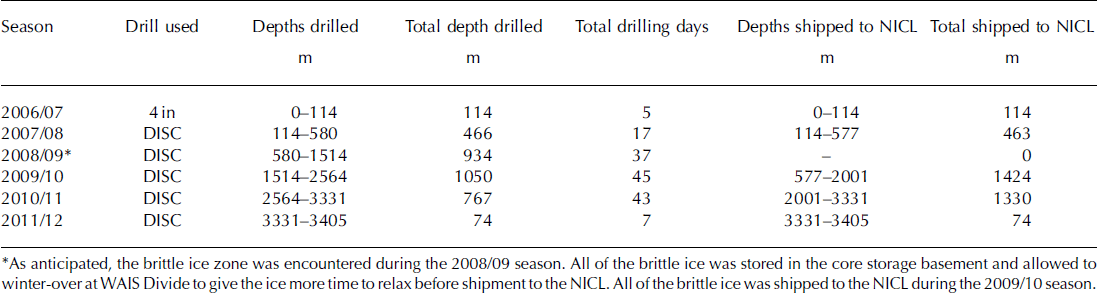
Details of the DISC drill and the WAIS Divide drilling operation are reported elsewhere (Reference Mason, Shturmakov, Johnson and HamanMason and others, 2007; Reference Shturmakov, Lebar, Mason and BentleyShturmakov and others, 2007; Reference SlawnySlawny and others, 2014). In this paper, we discuss the methods used during the deep drilling to handle and log the drilled ice at WAIS Divide, the procedures used to safely retrograde the ice back to the US National Ice Core Laboratory (NICL), and the methods used to process and sample the ice at the NICL.
2. Core Handling and Logging at Wais Divide
The US National Science Foundation (NSF) operated a seasonal field camp at WAIS Divide to support both the WAIS Divide ice-core project and other West Antarctic field science activities. McMurdo Station, the primary logistics facility for the US Antarctic Program (USAP), was the nearest permanent Antarctic station to WAIS Divide (∼1640 km). Throughout the project, Lockheed LC-130 aircraft primarily resupplied WAIS Divide, with minor additional support by Basler BT-67 and De Havilland Twin Otter. The WAIS Divide ice-core project required extensive cargo support to transport the drilling and core-handling equipment, materials and fuel needed to conduct the deep drilling, as well as concomitant retrograde of the drilled ice. The LC-130 support provided by McMurdo Station was critical to the success of the project.
All drilling and core-handling operations at WAIS Divide took place within two abutted steel arch structures: an unheated 30.5 m × 9.1 m × 8.2 m drilling arch, and an actively refrigerated 25.6 m × 9.1 m × 5.0 m core-handling arch with an 18.3 m × 3.7 m × 3.7 m underground basement for core storage (Fig. 2). The separation of the drilling and core-handling operations allowed independent control of the temperature and ventilation of the two areas. The core-handling area was actively refrigerated by four Carrier industrial freezer units and kept below −25°C to minimize thermal shock to the core when it was removed from the drill. Such low temperatures were unnecessary around the drilling equipment and would have been detrimental to the drillers’ productivity. The separation of the drilling and core-handling operations also allowed for greater ventilation of the drilling area where vapor from the drilling fluid (70% Isopar-K, 30% HCFC-141b) was present.
(a) View of the core-handling (left) and drilling (right) arches in January 2006 shortly after construction. Both arches are now completely buried by accumulation and drift. (b) The core-handling (left) and drilling (right) arches at the end of the 2012/13 field season, after seven winters of accumulation and drift. The arrows in each photo point to the ends of the arches.
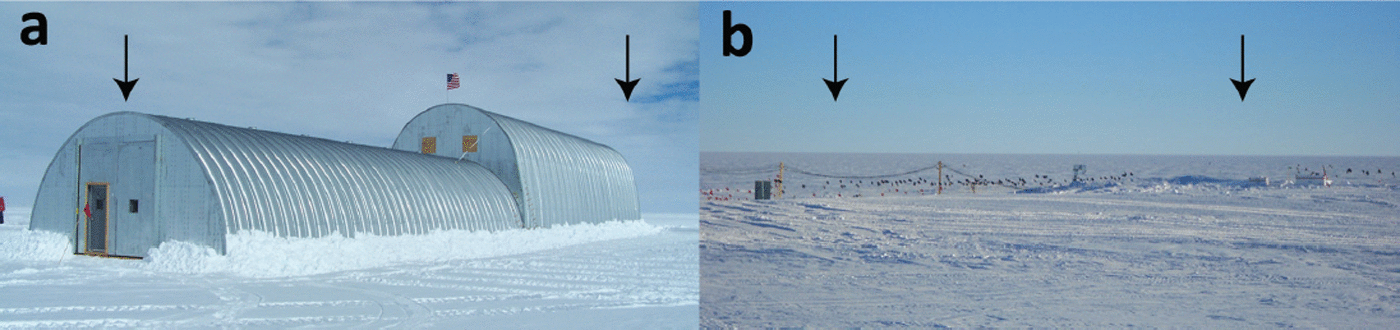
Figure 3 shows the generalized layout of the core-handling arch at WAIS Divide, which, in its broadest sense, was designed to accommodate a 24 hours per day, 6 days per week drilling operation producing 4 m of 122 mm diameter ice core per drill run. Only minimal processing and sampling of the ice core was carried out in the field. The main goal of on-site core handling and logging at WAIS Divide was to assign a precise depth to the ice, cut the ice into 1 m long sections, measure its electrical properties to obtain a preliminary depth–age scale, and safely prepare the ice for transport back to the NICL in Denver, CO, for subsequent intensive processing and sampling.
Layout of the WAIS Divide core-handling arch. The circled letters correspond to the circled letters in the core-handling and logging flow chart (Fig. 4).

Figure 4 shows the stations and flow plan for the core handling and logging at WAIS Divide as a function of drill depth. As is typical with deep ice-core drilling projects, the brittle ice was handled differently than the non-brittle ice (explained in Section 2.9). Throughout the project, drilling and processing rates consistently reached >30m of ice core per day.
Flow chart for the core handling and logging at WAIS Divide. The circled letters above each station correspond to the circled letters in Figure 3.

2.1. Drilling
The WAIS Divide drilling operation is discussed by Reference SlawnySlawny and others (2014) and is not discussed in detail here. However, for the purposes of this paper, it is important to describe the sequence of events inside the drilling arch at the end of each drill run.
At the completion of each drill run, the DISC drill’s tower and sonde were tilted horizontally to allow for the removal of the core barrel and servicing of the sonde (Reference Shturmakov, Lebar, Mason and BentleyShturmakov and others, 2007). After the core barrel was disconnected from the rest of the sonde, it was lifted and rotated 180° using an 1814kg (2 ton) gantry crane fitted with a barrel-lifting and -rotating fixture (Reference JohnsonJohnson and others, 2007). The core barrel was then lowered onto a stainless-steel ‘Core Transfer Truss’ that abutted the wall common to the core-handling arch. The run of ice core was then pushed, top-first, out of the core barrel, through a hole in the wall common to the drilling and core-handling arches, and into a 4 m extruded aluminum ‘push-out tray’ inside the actively refrigerated core-handling arch.
Proper alignment of the core barrel and push-out tray was critical to avoid shattering the core when pushed from the core barrel to the core tray. The core transfer between the core barrel and the push-out tray occurred on a rigid truss held in tight alignment by brackets on the truss. The brackets were aligned with an optical transit. It was anticipated that the floor under the truss would have small vertical movements in response to the differential loading associated with personnel moving around the truss. Because of this, the truss was designed with two adjustable legs on both ends to accommodate any differential movement of the floor, thus allowing the core barrel and push-out tray to remain aligned despite the movement of the floor. The portion of the truss that supported the core barrel was in the drilling arch, and the portion of the truss that supported the push-out tray was in the core-handling arch. The ice core was not exposed to the higher temperatures in the drilling area because it was pushed out of the core barrel directly into the refrigerated core-handling area. The arrangement of the truss, which minimized mechanical and thermal stress on the ice core, was essential to recovering high-quality ice.
2.2. Receiving and logging
The ‘Receiving and logging’ station was designed to receive drill runs of ice core up to 4 m in length. In actuality, the DISC drill initially produced >2.5 m long cores and, after the drill was modified following the 2008/09 field season, routinely produced >3.2 m long cores each drill run. Throughout the project the quality of ice that the DISC drill produced was excellent.
As a given run of ice core was pushed out of the core barrel and into the core-handling arch, it first passed through a vacuum system (the Fluid Evacuation Device (FED)) to remove drill fluid, and then into a rigid 4m long push-out tray (Fig. 5). The core barrel, FED and 4 m push-out tray were all carefully aligned and leveled to minimize any bending stresses and mechanical shock to the run of ice core.
A run of ice core is coming out of the FED and into the 4 m push-out tray at the ‘Receiving and logging’ station. On the other side of the wooden wall is the drilling arch.

Once the run of ice core was in the 4 m push-out tray, the length of the ice-core run was measured using a Balluff digital distance-measuring system equipped with a laser pointer to positively locate the Balluff relative to the ice core. This digital measuring system was simpler, more accurate and placed less stress on the ice core than the traditional measuring-stick method, and allowed for the measurements to be directly imported into a database, decreasing the errors generated with logging to paper and then transcribing to digital format. After the length of the ice-core run was measured, its diameter and temperature were measured and recorded into a database using a computer terminal. Using a handheld fiber-optic light source, the run of ice core was then closely inspected and any fractures, spalls, breaks, cloudy layers or interesting features documented. The 4 m push-out tray was then transferred via a roller chain conveyor system across a core buffer table that was designed to queue up to six 4m long drill runs of ice. The ice core from the drill run was then fitted to a remainder from the previous drill run, and the length of the core was measured using a second laser pointer-equipped Balluff digital distance-measuring system. Precise depths in 1 m intervals were then assigned with the Balluff and marked on the ice core’s surface using a soft pencil. The ice-core logging procedure that we used to measure the length of the ice core and assign depths was based on the North Greenland Ice Core Project (NorthGRIP) ice-core logging procedure outlined by Reference Hvidberg, Steffensen, Clausen, Shoji and KipfstuhlHvidberg and others (2002). Arrows were also drawn on the ice core’s surface to indicate the vertically upward direction of the core, and for ice below the brittle ice zone a continuous line was drawn along the ice core to maintain the relative orientation of the ice-core sections. All of the logging information was entered into the digital database and also recorded in a paper backup logbook. Once all of the logging was finished and the 1 m depth marks were assigned, the ice core was pushed down the core-handling line to the ‘Cutting’ station so that the run of ice could be cut into 1 m long sections.
2.3. Cutting
The primary purpose of the ‘Cutting’ station was to cut the >2.5 (or >3.2) m long runs of ice core into 1 m long sections so that they would fit into the standard-sized insulated shipping container (ISC) boxes used by the US ice-coring community to transport ice cores. A dry-cut circular saw with a 355 mm (14 in) diameter tungsten carbide tipped blade (∼3 mm thick with −6° rake) was used to make the cuts (Fig. 6a). Our decision to use a dry-cut circular saw, rather than a bandsaw, was influenced by its successful use during the Berkner Island ice-core drilling project (Reference Mulvaney, Alemany and PossentiMulvaney and others, 2007).
(a) View of the ‘Cutting’ station and the dry-cut circular saw used to cut the runs of ice core into 1 m long sections. (b) View of the inside of the core-handling arch. A roller rack full of 1m long sections of ice core is on the right. The person in the middle of the photo is at the ‘Electrical properties’ station. The white rectangular booths on the left of the photo are the drying booths.

After the cores were cut into 1 m sections they were stored in 1.1 m long extruded aluminum trays, which were subsequently placed on roller racks (Fig. 6b). Each rack held 24 trays (24 m) of ice, allowing decreased handling of individual cores. The roller racks also doubled as storage units in the drying booths (Section 2.4) and provided winter brittle ice storage in the core storage basement (Section 2.7).
2.3.1. Physical properties samples
In the non-brittle ice from 120-520 m and 1340-2564 m, full core diameter 10 cm long samples were taken at 20 m intervals for physical properties analysis (Reference FegyveresiFegyveresi and others, 2011). Vertical and horizontal sections were immediately created from the 10 cm long samples, and later shipped to the US for detailed analysis. During the field seasons in which the electrical properties of the ice were measured (Fig. 4), the physical properties samples were cut after the electrical properties were measured along the entire 1 m length of ice core. Physical properties samples (e.g. vertical and horizontal sections) from 540–1320 m and 2564–3405 m were taken during NICL core-processing lines (CPLs; Section 4) at 20 m intervals.
2.3.2. Water isotope samples
Starting below ∼2907m and continuing through to ∼3330m, a hand planer was used to collect water isotope samples (∼4g of ice per sample) that were analyzed in the US to establish a preliminary depth–age scale for the deepest ice by matching with the Byrd ice-core record (Reference Blunier and BrookBlunier and Brook, 2001). The isotope samples were initially collected at ∼100 cm resolution and then increased to ∼33 cm resolution.
2.3.3. Fugitive gas samples
During the final drilling season, fugitive gas samples were collected from the bottommost cores within minutes of the core being brought to the surface. The samples were 50 mm × 70 mm and placed in individual evacuated containers within 30 min of the core arriving on the surface. The timing mitigated loss of fugitive gases (e.g. helium), due to rapid diffusion through the ice.
2.4. Drying
A two-part drilling fluid consisting of ∼70% Isopar-K (base) and 30% HCFC-141b (densifier) was used for the project. While the FED at the ‘Receiving and logging’ station did a fairly good job at removing the bulk of the drill fluid from the ice core, drying booths were also utilized to further evaporate the drill fluid. The core-handling arch contained three drying booths (Fig. 6b) – each booth capable of accommodating two roller racks of core (48m of ice) – providing the capacity to dry 144 m of ice at a time. The roller racks typically stayed inside the drying booths for 8–12 hours, during which time ∼0.378 m3 s−1 (∼800 ft3 min−1) of ambient air (<−20°C) was passed over the ice cores, promoting additional evaporation of any remaining drilling fluid.
2.5. Electrical properties
During the first two field seasons of deep ice-core drilling (2007/08,2008/09; 114–1514 m), the electrical properties of the ice were measured to begin development of the ice-core depth–age scale. The electrical measurements were made in the field when the brittle ice was recovered because it was anticipated that brittle ice-core quality would be better in the field than after transportation to the NICL. In retrospect the ice cores did not degrade significantly during transport. The dielectric profiling (DEP) method was employed to measure the ice’s electrical properties because the measurement could be made through the elastic netting that contained the brittle ice (Section 2.9). The field DEP measurements were made with a robotically controlled system in which two non-contacting electrodes moved along the outside of the elastic netting constraining the ice core. Each electrode was 1 cm wide and spanned 70 degrees of arc. Measurements of the impedance were made for each mm of the core with an Agilent E4980A LCR meter operating at 1 MHz. The elastic netting held the brittle ice together very well, and most fractures fit tightly together and did not adversely affect the electrical measurements, which showed a strong annual signal throughout the brittle ice zone (WAIS Divide Project Members, 2013). For the last three field seasons of deep ice-core drilling (1514–3405 m), we did not measure the electrical properties of the ice when it was in the field, and instead only made measurements during annual core-processing lines at the NICL.
2.6. Packing
After the 1 m long sections of ice core were ‘dried’ for 8–12 hours in the drying booths (and, for the ice from 114–1514 m, their electrical properties subsequently measured), they were ready to be packed. The 1 m long ice cores were put into 0.152 mm (6 mil) thick polyethylene ‘layflat’ tubing and then into aluminum-coated cardboard core tubes. The core tubes were then packed into ISC boxes, with the voids around each core tube filled with foam blocks or snow. Initially, four core tubes were packed inside each ISC box. Towards the end of the drilling, however, we packed only three core tubes inside each ISC box and replaced the fourth core tube with frozen cold packs (Johnny ‘Blue’ Plastic Ice) for added thermal security. Eight ISC boxes would then be palletized onto a single wood skid, which was then banded and shrink-wrapped (Fig. 7a). Each skid contained two ISC boxes with temperature loggers inside them–one box on the bottom row and one box on the top row (Fig. 8). A pallet jack was then used to move the wood skids of ISC boxes. From WAIS Divide to the NICL, the ISC boxes were handled as a palletized unit, eliminating the need to move individual ISC boxes.
(a) View of the inside of the core-handling arch showing an AFP with four wood skids (32 ISC boxes) of ice core. Also shown is the roller track system on the floor to facilitate the movement of the AFPs. (b) A finished AFP of ice cores sits inside the core-handling arch as it waits for its cold-deck LC-130 flight to McMurdo Station.

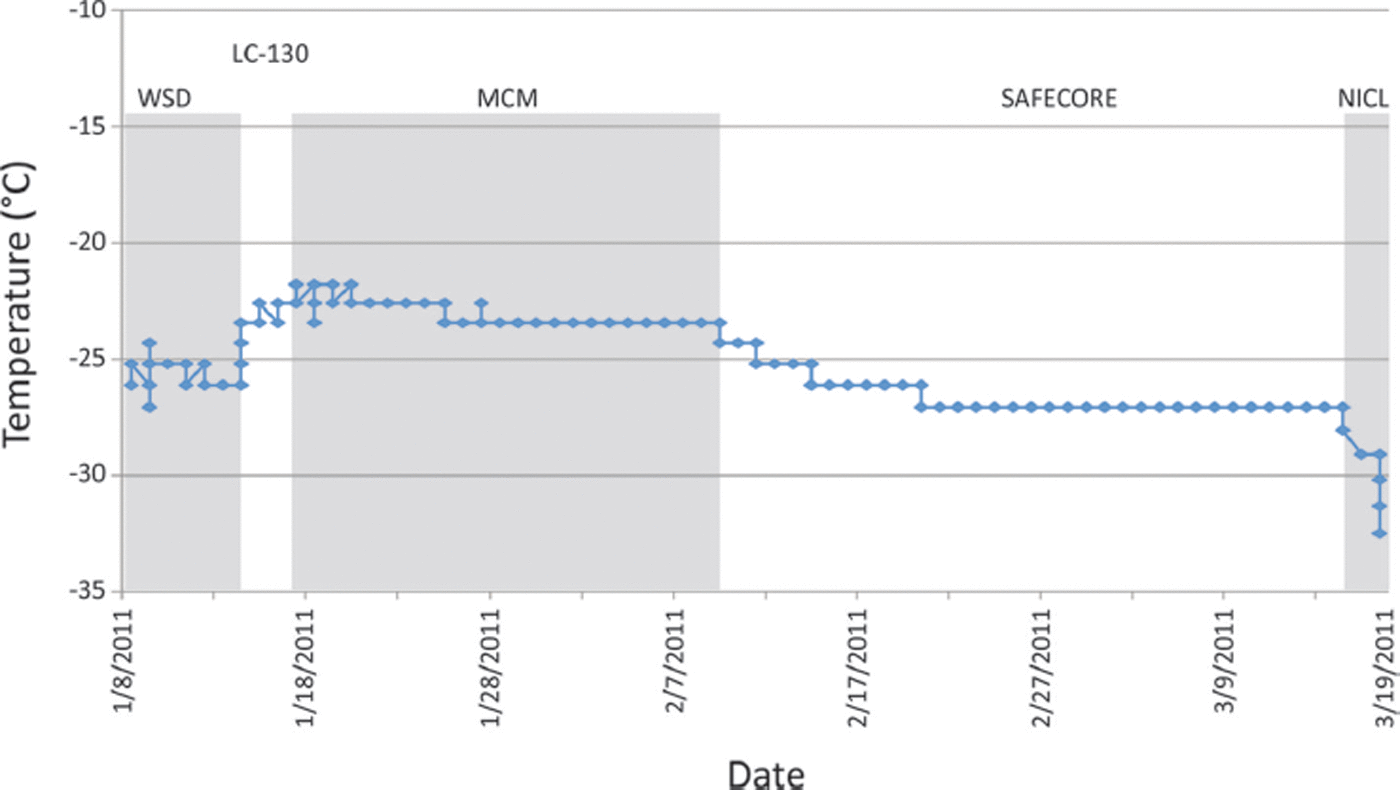
Typical profile for the temperature loggers inside the ISC boxes as the ice core was transported from WAIS Divide to the the NICL (Section 3). This example is from ISC box 573 from the 2010/11 field season. WSD = inside the WAIS Divide arch; LC-130 = cold-deck LC-130 flight from WAIS Divide to McMurdo Station; MCM = inside McMurdo Station’s freezers; SAFECORE = inside the SAFECORE container during vessel transport from McMurdo Station to Port Hueneme, CA; NICL = inside the NICL’s archive freezer. Date format is month/day/year.
2.7. Core storage
Below the core-handling arch was an 18.3 m × 3.7 m × 3.7 m underground basement that was used to store the brittle ice over winter to provide more time to relax internal stresses before shipment to the NICL (Fig. 9a). The basement also served as a storage buffer for any palletized non-brittle ice until it could be flown to McMurdo Station (Fig. 9b). An overhead gantry crane was used to lower and raise the roller racks of brittle ice and the wood skids of palletized ISC boxes into and out of the basement.
View of the core storage basement packed with (a) rolling racks of brittle ice ready to winter-over and, later, (b) wood skids of ISC boxes ready to be palletized onto AFPs.

2.8. Shipping
The packed ice cores were flown from WAIS Divide to McMurdo Station via ‘cold-deck’ LC-130 airlift (Section 3). The rear doors of the core-handling arch were large enough for a 463L Master Pallet – or Air Force Pallet (AFP) – to fit through, and the floor of the arch by the rear doors was equipped with a roller track system to facilitate movement of AFPs that weighed 130 kg (290 lb) when empty and ∼2100 kg (∼4600lb) when fully loaded with four wood skids (32 ISC boxes) of ice core, the typical load configuration (Fig. 7a). The floor plan of the core-handling arch was designed to enable the building of two AFPs of ice core inside the arch. A hoist pallet lifter fitted to the overhead gantry crane was used to lift four wood skids onto an AFP. The four loaded wood skids were covered with a 25.4 mm (1 in) thick insulating blanket before being secured using AFP cargo netting (Fig. 7b). In addition to those placed inside ISC boxes, temperature loggers were also placed on each loaded AFP. A fork-equipped track loader was then used to transport the AFP out of the arch and to the skiway apron.
2.9. Brittle ice
While there are many challenges associated with the drilling and recovery of deep ice cores, one of the primary challenges is to maintain high-quality ice (e.g. avoiding ice-core fracturing) throughout the brittle ice zone. In the brittle ice zone, the air bubbles trapped within the ice are highly compressed to the point where their internal gas pressure creates tensile stresses that exceed the strength of the ice (Reference GowGow, 1971). The result is a marked tendency for ice within this zone to fracture and break after it is brought to the surface, as well as during any subsequent handling or storage. Most of the brittle ice was removed from the drill with less than two fractures per meter, but then spontaneously fractured after it was in the push-out tray for several minutes.
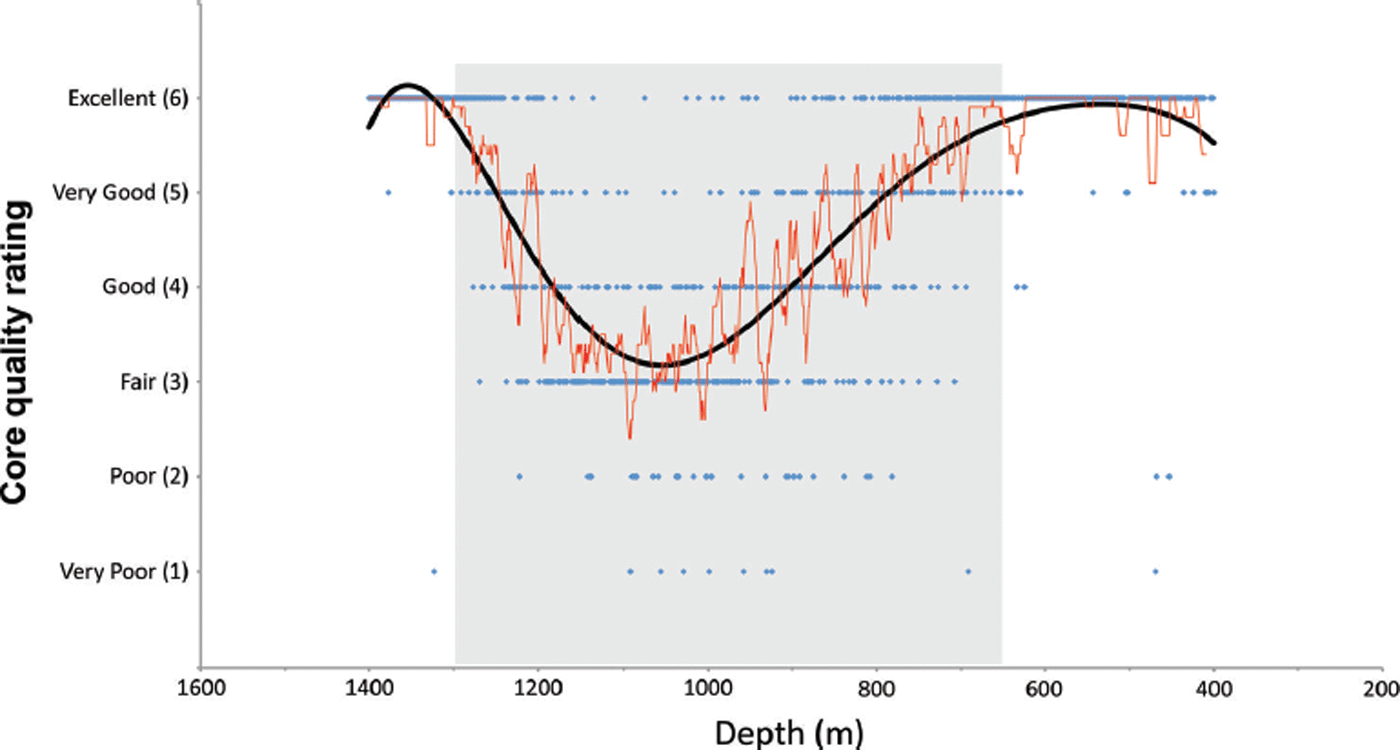
At ∼650m depth the WAIS Divide ice core became increasingly brittle. The minimum core quality was observed at ∼1100m, after which core quality steadily improved; ‘excellent’ quality ice was again routinely observed starting at ∼1300 m (Fig. 10).
Qualitative assessment of ice-core quality vs depth through the brittle ice zone. The change in ice quality from ∼650 to 1300 m is clearly seen. Excellent: 0–1 breaks/no fractures; Very Good: 0–2 breaks/90% no fractures; Good: 0–3 breaks/50% no fractures; Fair: >10 cm without fractures; Poor: >10cm without through fractures; Very Poor: <10cm without through fractures. The thin red line is a ten-period moving average and the thick black line is a sixth-order polynomial of the core quality rating (blue diamonds).
Instead of our traditional approach of drilling and handling >2.5m long segments of ice, which then require cutting into 1 m long sections to be moved around in the arch and shipped back to the US, a new drilling method was employed from 580 to 1310m depth while within the brittle ice zone. First, a 1 m long piece of ice was drilled, pulling the drill up to achieve a core break from the bottom of the borehole. Then, instead of bringing the drill sonde back to the surface, it was lowered again to immediately drill and break off a second 1 m long piece of ice. The drill was lowered a third time to drill and break off a final 0.5 m long piece of ice. The drill system was able to reliably produce the ice pieces within 4cm of the desired length. Only after drilling 2.5 m (approximately the limit of the DISC drill at the time) was the drill sonde brought back to the surface. On alternate trips down the borehole, the order was reversed such that two adjacent 0.5 m long core sections would fill a single 1.1 m long core tray. This new drilling method provided much higher-quality brittle ice because the ice core was sectioned into 1 m pieces downhole under ‘ambient’ pressure, and the air in bubbles did not apply any differential stresses to the ice – the ice was not brittle. The alternative was to bring the ice to the surface, where it would be at atmospheric pressure and therefore brittle, and cut it with a saw, which would shatter the ends of the cores.
Because it can be difficult to maintain the integrity of brittle ice cores when they are handled, the innovative ‘elastic netting method’ developed by the Berkner Island ice-core drilling project was used (Reference Mulvaney, Alemany and PossentiMulvaney and others, 2007). As soon as the WAIS Divide brittle ice exited the FED at the ‘Receiving and logging’ station, it was extruded into elastic netting to ensure that, if any breakage did occur, core fragments would be contained (Fig. 11a). The elastic netting, however, made it impossible to tightly fit the 1 m (and 0.5 m) sections of core against one another, and because of this, precise depths for the brittle ice were not assigned in the field. Instead, precise depths were assigned to the brittle ice after it was removed from the netting and re-logged during the core processing at the NICL (Section 4).
View of the ‘Receiving and logging’ station at WAIS Divide with (a) 2.5 m of brittle ice contained in the green elastic netting and (b) a 3.2 m long continuous run of ductile ice showing one of the many prominent tephra layers observed in the WAIS Divide ice core.

Each 1 m long section of netted brittle ice was transferred to a 1.1m long extruded aluminum tray, which was subsequently stored on a roller rack and allowed to dry in a drying booth for 8–12 hours. After drying, the electrical properties of the brittle ice were measured (Section 2.5) and then the ice was lowered into the core storage basement where it remained through the winter to give the ice time to relax before it was packed and shipped – in the same manner as the non-brittle ice (Sections 2.6 and 2.8) – to the NICL. After the winter-over period, very slight indentations in the ice could be observed where the netting contacted the ice, but this did not affect any subsequent handling or analyses. The key factors in obtaining high-quality ice in the brittle ice zone were minimizing the thermal and mechanical stresses to the core, allowing the ice to relax over the winter and applying the ‘elastic netting method’. These procedures allowed more analysis to be done on the brittle ice section than previous ice cores.
3. Core Transportation
There were three major transportation legs involved in the ∼18 000 km retrograde of the ice cores from WAIS Divide to the NICL in Denver, CO: (1) WAIS Divide to McMurdo Station via air; (2) McMurdo Station to Port Hueneme, CA, via sea; and (3) Port Hueneme to the NICL via land. At the height of the project, the transportation system needed to accommodate the shipment of ∼1440m of ice per season (Table 1).
The ice cores were flown from WAIS Divide to McMurdo Station via cold-deck (e.g. unheated aircraft cabin) LC-130 airlift. The LC-130 flight time between WAIS Divide and McMurdo Station is ∼3.5 hours. Within 2 hours of landing at the Pegasus blue-ice runway, the USAP’s well-coordinated Science Cargo system had the ice cores safely stored in the freezers at McMurdo Station.
In February, at the end of each field season, the ice cores were transferred from McMurdo Station’s freezers into refrigerated shipping containers and transported to Port Hueneme, CA – the US port through which most USAP cargo passes – via the USAP’s cargo vessel. This is the longest and riskiest transportation leg for the ice cores because once the refrigerated shipping containers are loaded onto the vessel they typically cannot be accessed. Previous experience has shown that logistic issues on the vessel usually preclude chances of fixing a broken refrigerated container or physically transferring ice cores out of a broken refrigerated container and into a new one. For this reason, three new 12.19 m (40ft) long refrigerated containers with fully redundant cooling and power generation systems were purchased for the project. The refrigerated containers, termed SAFECORE containers, automatically switch to their backup refrigeration unit and/or generator set in case of a loss of performance. The three SAFECORE containers were operated at −30°C and provided the capacity to ship ∼1440m of ice per season. They were also equipped with telemetry that allowed their location, temperature and operational status to be monitored via the web during transport from McMurdo Station to the NICL. After some initial power integration issues were worked through on the cargo vessel, the SAFECORE containers worked flawlessly and enabled the most secure shipments of ice the US ice-coring community has ever experienced. As an additional safety precaution, however, a dedicated refrigeration technician accompanied the SAFECORE containers all the way from McMurdo Station to the NICL.
Once the USAP cargo vessel reached PTH, the three SAFECORE containers were loaded onto three flatbed semitrailer trucks and driven the ∼1600km to the NICL in Denver. Once at the NICL, the ice cores were unloaded from the SAFECORE containers and moved into the NICL’s −36°C archive freezer.
4. Core Processing at the NICL
The NICL is a US National Science Foundation (NSF)-funded facility for storing, curating and studying ice cores. After each field season in which ice was shipped back to the US (Table 1), a core-processing line (CPL) was held inside the NICL’s −24°C exam room to cut the ice core for shipment to laboratories across the US for analysis. The exam room contains a series of stations around the perimeter and in the center of the room (Fig. 12a). A roller track is installed around the perimeter of the exam room to allow the transfer of 1 m long sections of ice core from one station to the next. Very few analyses on the ice core were actually carried out at the NICL, rather being conducted at the scientists’ individual universities or laboratories (Table 2). The entire 3405 m long ice core was processed at the NICL in the same stratigraphic sequence that it was extracted from the ice sheet (e.g. from 0 m depth continuously down to 3405 m depth) (Table 3).
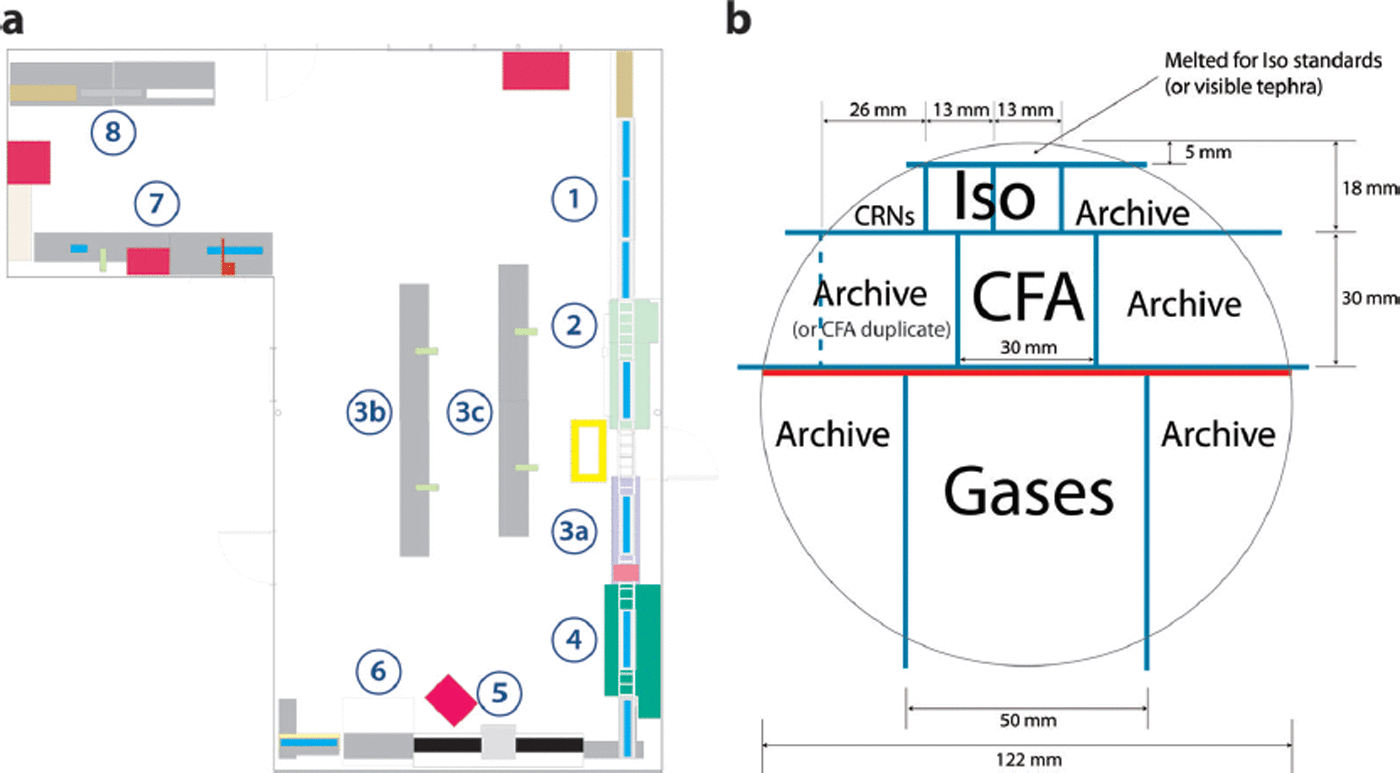
(a) Generalized layout of the NICL’s–24°Cexam room during the CPLs to process and sample ice from ∼1300 to 3405 m. The circled numbers correspond to the circled numbers in the CPL flow chart (Fig. 13). The purple rectangles are logging computers. (b) Cross section of the ice core showing the generalized cut plan used from ∼1300 to 3405 m. The thick red line represents the ice removed by the planer before the electrical properties are measured on the bottom half of the core. Iso = water stable isotopes; CFA = continuous flow analysis; CRNs = cosmogenic radionuclides. From 114 to 577 m depth, three 30 mm × 30 mm CFA sticks were cut from the top half of the core.
Summary of universities/laboratories that received samples from the initial WAIS Divide deep ice-core CPLs at the NICL (see Table 3). Additional sampling of the ice core has taken place since the initial CPLs, so there are now more universities/laboratories analyzing WAIS Divide ice than are listed here

Summary of core-processing line (CPL) activities at the NICL for the WAIS Divide deep ice core
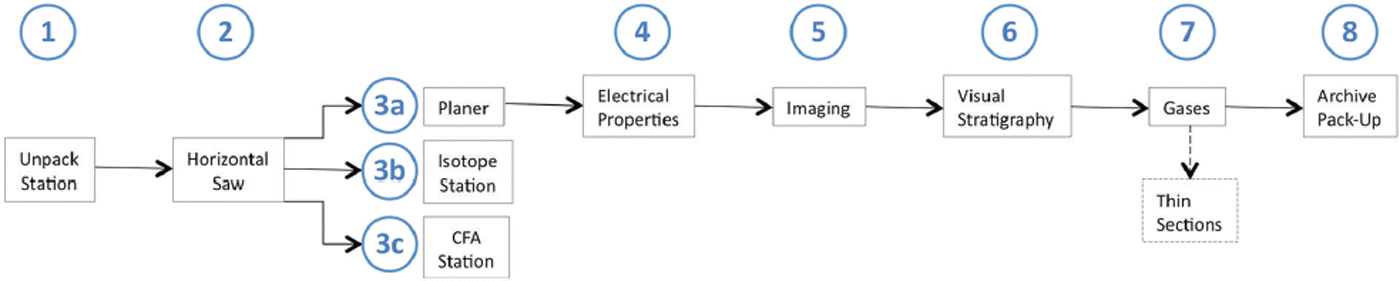
As is typical with US deep ice-core projects, the cut plan changed occasionally from year to year to accommodate specific projects and measurements funded by the NSF at a given point in time. Figure 12b shows the typical cut plan used during the CPLs for ice from ∼1300 to 3405 m depth, and Figure 13 shows the flow chart and stations for these CPLs. Typically, 12–14 people manned the CPL and ∼28m were processed per day.
Generalized flow chart for the NICL CPLs to process and sample ice from ∼1300 to 3405 m. The circled numbers above each station correspond to the circled numbers shown in Figure 12.
4.1. ‘Unpack’ station
The purpose of the ‘Unpack’ station was to prepare each 1 m long section of ice core for the CPL, and to double-check information logged in the field using a laser pointer-equipped Balluff digital distance-measuring system (Fig. 14a). The ice core was first unpacked from its core tube, fitted to the previous ice core, and placed in a clamping tray in preparation for cutting. For the brittle ice, the elastic netting was first removed by carefully cutting the netting along the long axis of core with a pair of scissors, and then the brittle ice core was fitted to the previous brittle ice core, and placed in a clamping tray in preparation for cutting. The 1 m ice-core top- and bottom-depths were then compared to the measurements taken at WAIS Divide and the new data recorded into the NICL’s computerized inventory database. The ice-core logging procedure that we used at the NICL to measure the length of the ice cores and assign final depths (for both ductile and brittle ice) was based on the NorthGRIP ice-core logging procedure outlined by Reference Hvidberg, Steffensen, Clausen, Shoji and KipfstuhlHvidberg and others (2002). Any breaks or notable features in the ice were also documented and entered into the database. Sample cards were then printed and placed with the ice core in the tray. The sample cards indicated the specific cuts needed for the given 1 m long section of ice core. As each cut was made on the ice core, a unique sample card accompanied the particular sample for identification.
(a) Measuring an ice core at the ‘Unpack’ station during one of the NICL CPLs. Photo credit: Peter Rejcek/NSF. (b) View of the inside of the NICL’s –36°C archive freezer. Each silver tube on these shelves contains a 1 m long section of the WAIS Divide ice core. Photo credit: Peter Rejcek/NSF.

4.2. Horizontal saw
At the ‘Horizontal saw’ station, three cuts along the core’s long axis split the ice core into four slabs (Fig. 12b). The first cut essentially leveled the ice for the ‘Isotope sampling’ station. The resultant 5 mm thick convex slab was typically collected in a barrel to eventually be melted and used as isotope standard water, except when visible tephra was present, in which case the piece was sampled and set aside for microparticle and geochemical analysis. The second cut from the horizontal saw created a 13mm thick slab that continued on to the ‘Isotope sampling’ station for further cutting. The third cut from the horizontal saw created a 30 mm thick slab that went to the ‘CFA sampling’ station for further cutting. The resultant half-core slab continued down the CPL to the ‘Planer’ and ‘Electrical properties’ stations.
4.3. ‘Isotope sampling’ station
At the ‘Isotope sampling’ station, a bandsaw was used to cut two 13 mm × 13 mm sticks out of the 13 mm thick slab. The two sticks went to different laboratories for continuous and discrete water stable-isotope analysis. One of the 13 mm × 13 mm sticks was used for continuous flow analysis (CFA) and was packed into transparent 19 mm (3/4 in) square acrylic tubes to retain the ice’s integrity during transport and subsequent handling during analysis. The remaining small ‘wing’ piece was typically analyzed for cosmogenic radionuclides, and the larger wing piece was typically archived.
4.4. ‘CFA sampling’ station
At the ‘CFA sampling’ station, a bandsaw was used to cut a 30 mm × 30 mm stick out of the center of the 30 mm thick slab. A suite of chemical compounds, dust, biology and gases were measured by CFA on the stick (e.g. Reference McConnell, Lamorey, Lambert and TaylorMcConnell and others, 2002; Reference Osterberg, Handley, Sneed, Mayewski and KreutzOsterberg and others, 2006). The two wing sections next to the CFA piece were typically archived when not used for duplicate CFA samples. Three 30 mm × 30 mm CFA sticks could be cut from the top half of the core, as was the case from 114 to 577 m depth.
4.5. ‘Planer’ station
At the ‘Planer’ station, ∼2 mm of ice was removed from the surface of the half-core slab to remove saw marks and prepare the surface for the ‘Electrical properties’, ‘Imaging’ and ‘Visual stratigraphy’ stations. The planer was a standard 305 mm (12 in) woodworking bench planer modified to move horizontally on rails above the core.
4.6. Electrical properties
At the ‘Electrical properties’ station, the electrical properties of the ice core were measured on the planed surface of the half-core slab via the electrical conductivity measurement (ECM; Reference HammerHammer, 1983). Measurements were made with alternating-current ECM, direct-current ECM and multi-track ECM via a robotically controlled system in which two electrodes in contact with the ice were moved along the long axis of the ice core. These measurements were also made on the lower-quality brittle ice, with only a small reduction of data quality caused by fractures in the core. The electrical properties measurements were primarily used to identify annual layers in the ice, thus determining the age of the ice (WAIS Divide Project Members, 2013).
4.7. ‘Imaging’ station
At the ‘Imaging’ station, a color image of the polished flat surface of the half-core slab was taken to digitally archive the ice core’s visual appearance. The station utilized an optical line-scanning system that scanned the cores at a spatial resolution of ∼0.06 mm (160 pixels cm−1) (Reference McGwireMcGwire and others, 2008). The line-scanning system was fully integrated into the CPL, with top and bottom depths automatically assigned to each image based on the measurements entered into the NICL inventory database at the ‘Unpack’ station. The polished flat surface of the half-core slab was imaged – as opposed to a slab polished on both surfaces (e.g. Reference SvenssonSvensson and others, 2005) – because test imaging of 3 cm thick slabs polished on both surfaces showed that ice from WAIS Divide did not have enough visual features to warrant the extra effort required to image ice that had been polished on both surfaces.
4.8. Visual stratigraphy
At the visual stratigraphy booth, the half-core slab was backlit with fluorescent lighting inside a darkened booth and inspected by eye with a handheld fiber-optic light. Any ash layers, fractures, breaks, crusts, annual layers or notable features were recorded in 1 m long paper logbooks and later ‘digitized’ by hand.
4.9. ‘Gas sampling’ station
At the ‘Gas sampling’ station, a bandsaw and dry-cut circular saw were used to cut discrete samples from the half-core-diameter slab for a variety of gas analyses. Physical properties samples for vertical and horizontal thin sections were also typically cut in this area of the exam room.
4.10. Archive pack-up
About a third or more of each 1 m long section of ice core was retained for future studies. Each remaining part of each cross section of the core was placed in its own clearly labeled layflat bag so that the only ice-to-ice contact was at the top and bottom of pieces from the same cross section. Samples from different cross sections were stored in separate bags so that they would not contact each other. All of the archived ice from a given 1 m long section of core was returned to its core tube and placed inside the NICL’s –36°C archive freezer for long-term storage (Fig. 14b). The saw and planer dust that was produced at the various CPL stations from cutting and planing the ice cores was not collected for any hard-to-contaminate analyses, nor was it archived.
5. Final Comments
The core-handling line at WAIS Divide was designed to minimize the handling of individual ice cores, decrease drill fluid drying time, improve brittle ice quality, decrease logging time and increase logging accuracy, decrease handling of individual ice-core boxes and increase the shipping efficiency of the ice.
We attribute the high quality of the brittle ice to the combination of breaking the brittle ice into the desired lengths while it was downhole and still under pressure; using a push-out table that had no detectable bending when examined with an optical transit; eliminating thermal shock to the ice core; using elastic netting to contain the ice; using rigid core trays; and allowing the brittle ice to relax for 1 year before its transport to the NICL.
During the largest CPLs at the NICL, nearly ∼1400m of ice core were processed within a 3 month period (Table 3), with ∼28md−1 processed on average. While these CPLs were the most challenging that the US has ever completed at the NICL in terms of the amount of ice and the complexity of the sampling, the CPLs went very smoothly and there were no significant problems processing and cutting, or archiving the remaining sections of, the brittle ice.
Obtaining high-quality ice core requires careful integration and tight control over all aspects of core handling, from when it is separated from the ice sheet through to its arrival at the laboratory.
Acknowledgements
This work was supported by NSF grants 0440817, 0944348 and 0944266. We appreciate the support of the Ice Drilling Program Office and Ice Drilling Design and Operations group for drilling the ice core; the National Ice Core Laboratory for designing and building the core-handling systems at WAIS Divide and at the NICL, and for curating the ice core; the Antarctic Support Contractor for logistics support in Antarctica; the 109th New York Air National Guard for airlift support in Antarctica; the dozens of core handlers who handled and processed the ice core at WAIS Divide and at the NICL; M. Davis for his cargo support; S. Mikel for his SAFECORE refrigeration support; and J. Fitzpatrick for her core-handling development. This project would not have been possible without the dedication and support of J. Palais, B. Stone and G. Blaisdell.



