


Parents play an important role in children’s food intake: they make foods available and accessible for the child and they act as role models(Reference Birch and Fisher1–Reference Nicklas, Baranowski, Baranowski, Cullen, Rittenberry and Olvera4). Parents also create the social eating environment by the use of parental child-feeding (PCF) strategies, such as rules, table food management and verbal instructions(Reference Birch and Fisher1, Reference Ventura and Birch5, Reference Bere and Klepp6). There is substantial evidence that such child-feeding strategies influence children’s eating(Reference Ventura and Birch5). Although parents use these strategies with the best intentions, research has shown that the effects of these parental strategies on children’s food intake are not always in the intended direction.
Modelling, mere exposure, verbally rewarding for eating, increasing the availability and accessibility of food and using foods as rewards for good behaviour are strategies that have proved effective in increasing intake of specific foods(Reference Cullen, Baranowski, Rittenberry, Cosart, Hebert and de Moor2, Reference Fisher, Mitchell, Smiciklas-Wright and Birch3, Reference Bere and Klepp6–Reference Birch, Zimmerman and Hind10). Restricting the intake of unhealthy food and giving health information about a product appear to foster an unhealthy eating pattern(Reference Benton11–Reference Wardle and Huon14). Pressuring a child to eat and offering rewards using instrumental eating (‘If you eat your spinach, you will get a dessert’) also decrease children’s intake or preferences(Reference Wardle, Herrera, Cooke and Gibson9, Reference Wardle, Carnell and Cooke13, Reference Birch, Birch, Marlin and Kramer15, Reference Galloway, Fiorito, Francis and Birch16). However, the consequences of these strategies appear to be less straightforward, since pressure and reward may have positive effects under appropriate circumstances(Reference Horne, Lowe, Bowdery and Egerton17–Reference Wind, De Bourdeaudhuij, Te Velde, Sandvik, Due, Klepp and Brug20). Offering unfamiliar foods with a familiar topping or providing the child with taste information can increase children’s willingness to taste(Reference Pelchat and Pliner21, Reference Pliner and Stallberg-White22).
The use and role of PCF strategies in relation to food consumption is usually studied with fruit and vegetables as one food category(Reference Cullen, Baranowski, Rittenberry, Cosart, Hebert and de Moor2, Reference Vereecken, Keukelier and Maes8, Reference Darling23). Since fruit and vegetables vary considerably in taste, energy content and consumption moment, parents may use different strategies for fruit as compared with vegetables. Additionally, the relationship between parental strategies and children’s intake may depend on whether fruit or vegetables are involved.
The aims of the present study were to: (i) investigate which PCF strategies Dutch parents use to stimulate their children to eat fruit or vegetables; (ii) determine how frequently these strategies are used; and (iii) examine the relationship between these strategies and children’s intake of, and preference for, fruit and vegetables. Fruit and vegetables were analysed as two distinct food groups. We strove to reveal strategies that have the potential to increase primary-school-aged children’s fruit or vegetable intake.
Methods
Subjects
Participants were recruited via three primary schools in three Dutch cities (Wageningen, Franeker and Zeewolde) in order to include participants from various backgrounds. The participants consisted of children of varying ages to ensure that the whole range of primary school was included (4–5 years, 7–8 years and 11–12 years) and their parents. At each school, three classes participated in the study, one class per age group.
All parents of the participating classes (280) were invited to participate. Those children whose parents signed an informed consent form were included in the study. Two hundred and sixty parents (93 %) signed the informed consent for themselves and their child/children and 242 parents (86 %) returned the questionnaire. The response rate for the children was 93 % (259 children).
Study design
The study protocol was approved by the Medical Ethical Committee of Wageningen University. Parents completed a booklet with questions about four topics: (i) their practices in relation to feeding fruit and vegetables to their children; (ii) fruit and vegetable intake of the parent and child; (iii) parental control practices; and (iv) demographic variables. The parent most involved in family eating was requested to fill in the booklet. The children completed a preference questionnaire concerning fruit and vegetables.
Parent-reported variables
Parental child-feeding strategies
Various questions were asked about specific, practical behaviours that parents can apply to influence their children’s food choice. These practical actions are defined as parental practices(Reference Darling23). We use the term ‘strategies’ to indicate the more general concepts underlying the practices.
To our knowledge, there are no questionnaires available that focus on fruit or vegetables separately in a comprehensive way. Therefore, we developed a PCF strategies questionnaire on the basis of existing questionnaires(Reference Cullen, Baranowski, Rittenberry, Cosart, Hebert and de Moor2, Reference Kremers, Brug, de Vries and Engels18, Reference Darling23–Reference Tibbs, Haire-Joshu, Schechtman, Brownson, Nanney, Houston and Auslander26). One set of questions was adjusted for fruit-eating situations (thirty-five practices) and another for vegetable-eating situations (forty practices). Four additional questions were included for vegetables with regard to adding sauces. Response categories were on a 5-point scale where 1 = ‘never’, 2 = ‘rarely’, 3 = ‘sometimes’, 4 = ‘often’ and 5 = ‘always’. The questionnaire was improved after a pre-test on twenty parents (not participants).
Fruit and vegetable intake
The eight-item FFQ of Bogers et al. was used to determine fruit and vegetable intake of parents and children. This FFQ is validated in mothers aged 29–50 years with vitamin C and carotenoids as biomarkers(Reference Bogers, Van Assema, Kester, Westerterp and Dagnelie27), and has been used in further research to assess fruit and vegetable intake of parents and their children(Reference Bogers28, Reference Liem, Bogers, Dagnelie and de Graaf29). Parents completed the questions for themselves and their child. They were asked to report their average intake frequency during the previous month and their usual portion size. Standard portion sizes were used to calculate intake in grams(Reference Donders-Engelen, Van der Heijden and Hulshof30).
Child Feeding Questionnaire
Parents completed the parental control sections of the Child Feeding Questionnaire (CFQ)(Reference Birch, Fisher, Grimm-Thomas, Markey, Sawyer and Johnson24): ‘Monitoring’, ‘Restriction’ and ‘Pressure to eat’. Questions were on a 5-point scale from 1 = ‘disagree’ to 5 = ‘agree’ or from 1 = ‘never’ to 5 = ‘always’.
Demographic variables
Parents completed questions about their age, gender, educational level and the educational level of their partner.
Child-reported variables
Preference questionnaire
The questionnaire consisted of photographs of twenty-four products from five product categories: fruits, vegetables, fruit juices, neutral products and energy-dense products. There were eight fruit types, eight vegetable types and the two fruit juices most frequently consumed by Dutch children(31). Carrots were included twice (raw and cooked), because both forms are frequently eaten and differ in liking(Reference Kelley and Behe32). To enable a comparison, three neutrally tasting products (potatoes, bread and milk) and two energy-dense products (chocolate and French fries) were included.
The response format was a 5-point smiley scale ranging from 1 = ‘dislike a lot’ to 5 = ‘like a lot’ along with the option ‘never tried’. This format has been used successfully in other studies with children(Reference Cooke and Wardle33, Reference Guinard34). A pre-test with eight children (not participants) confirmed comprehensibility.
Procedures
Parents received the questionnaire booklet at home and returned the completed booklet to their child’s teacher.
The child sessions were performed at school during regular school hours. To ensure consistency in the instructions during data collection, an instruction sheet was developed for these sessions.
The youngest children (4–5 years) were guided individually in a separate, quiet room. After practising the smiley scale, the researcher assisted the child with completing the preference questionnaire. The other two age groups completed the preference questionnaire in their own classroom following the instructions of the researchers, who were available for assistance. Each individual session and each classroom session took about 15 min.
Statistical analyses
All statistical analyses were performed with the SPSS statistical software package version 12·0·1 (SPSS Inc., Chicago, IL, USA). The child questionnaire and parental booklet had pre-assigned identical codes to link the child–parent couples. Three child–parent couples were excluded from the fruit analysis because the children were allergic to fruit. Children’s mean preference scores were calculated for each of the five product categories.
When more than 20 % of the parent-reported intake questions were missing, the subject received a missing value for intake of that category. When 20 % or less were missing, ‘frequency’ and ‘portion size’ were replaced by the mean population value. This replacement procedure was applied for twenty-five parents (10 %) and seventeen children (7 %) to calculate their fruit intake.
Exploratory principal component analysis (PCA) with varimax rotation was applied to the forty PCF practices for vegetables and the thirty-five practices for fruit to find underlying PCF strategies. Factor loadings of 0·50 were assumed practically significant and an internal consistency (Cronbach’s alpha) of 0·60 was considered sufficient for exploratory research(Reference Hair, Anderson, Tatham and Black35). In addition, the final factor structures were based largely on the interpretation of the factors. Factor values were calculated as the mean score of the items comprising the factor.
To investigate the predictive value of the different strategies on children’s fruit and vegetable intake and preference, we performed a stepwise multiple regression analysis. To further analyse the impact of a particular strategy, tertiles were composed based on parental use of the particular strategy. For each tertile, children’s fruit or vegetable intake was estimated. ANOVA with Bonferroni as post hoc test was used to compare the tertiles.
Pearson correlation coefficients were calculated between ‘Monitoring’, ‘Restriction’ and ‘Pressure to eat’ (CFQ) and the fruit and vegetable strategies specific to our study, in order to explore validity. Correlation coefficients above 0·25 were regarded as relevant.
For all analyses, a P value ≤0·05 was considered significant.
Results
Demographic characteristics
The demographic characteristics of the study population are shown in Table 1. Mainly mothers completed the parental booklet. Less educated parents were under-represented. Children’s participation rates were high for all three schools: Franeker 94 % (107/114); Wageningen 97 % (77/79); Zeewolde 86 % (75/87).
Demographic characteristics of the study population in which the association between parental child-feeding strategies and children’s fruit and vegetable intake was studied (242 parents and 259 children)Footnote *

* Due to missing data, totals can be lower than 242 or 259.
Liking
Children’s liking for vegetables (mean = 3·1; sd = 0·9) was the lowest, followed by the neutral product group (mean = 3·8; sd = 0·8). Preference for fruit (mean = 4·0; sd = 0·7) and fruit juice (mean = 4·0; sd = 1·0) was similar. The energy-dense products (chocolate and French fries) were the most appreciated by the children (mean = 4·6; sd = 0·6).
Factor analysis
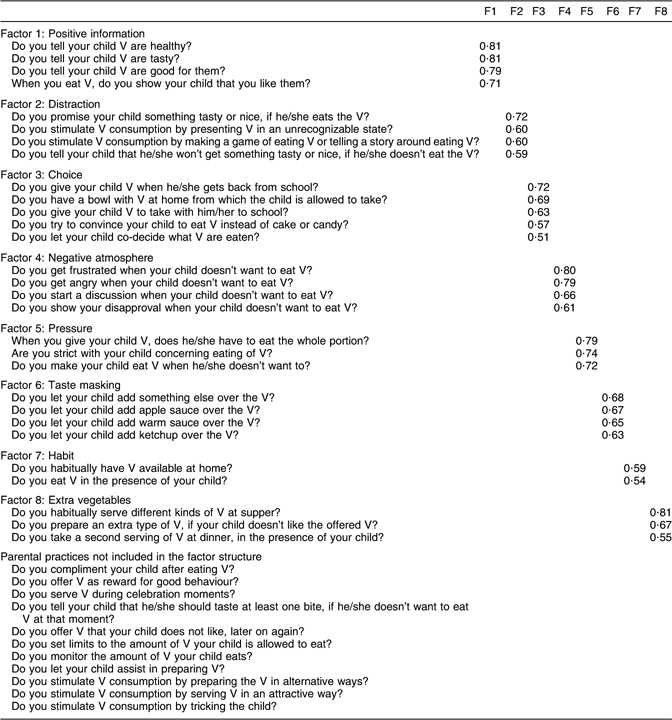
The PCA on the PCF practices for vegetables yielded eight factors (R 2 = 52 %; see Appendix 1). Six factors had an internal consistency acceptable for exploratory research (Cronbach’s α > 0·60; see Table 2) and were used for further analyses. Eleven of the forty practices for vegetables were not included because ten did not load highly on any of the factors and one loaded moderately highly on two factors. We labelled the six acceptable PCF strategies for vegetables as: ‘Positive information’, ‘Distraction’, ‘Choice’, ‘Negative atmosphere’, ‘Pressure’ and ‘Taste masking’.
Mean factor values, standard deviation and Cronbach’s alpha for the parent-reported parental child-feeding (PCF) strategies for fruit and vegetables separatelyFootnote *

* Response categories were on a 5-point scale where 1 = ‘never’, 2 = ‘rarely’, 3 = ‘sometimes’, 4 = ‘often’ and 5 = ‘always’.
† n 238 to 242.
‡ n 240.
§ Excluded from further analyses, due to low Cronbach’s α (<0·60).
|| n 233 to 239.
The PCA on the PCF practices for fruit yielded five factors (R 2 = 44 %; see Appendix 2). One factor did not have an acceptable internal consistency (α = 0·54; see Table 2) and was therefore omitted from further analyses. Thirteen of the thirty-five items for fruit were not included since they did not load highly on any of the factors. The four acceptable factors for fruit were labelled as ‘Negative atmosphere and Pressure’, ‘Positive information’, ‘Choice’ and ‘Availability’.
Although the PCF practices for both fruit and vegetables were almost identical in the questionnaire, factor analyses showed some differences in the underlying structure. ‘Pressure’ and ‘Negative atmosphere’ were separate PCF strategies for vegetables, whereas they belonged to one strategy for fruit. ‘Availability’ was an acceptable factor for fruit, whereas this strategy did not emerge as a separate factor for vegetables. ‘Choice’ for fruit seemed to focus on child participation, whereas for vegetables the focus was more on making a choice possible. For vegetables, ‘Distraction’ included instrumental eating and positive, playful practices; for fruit, this strategy was not reliable. The composition of the strategy ‘Positive information’ was exactly the same for fruit and vegetables.
The mean factor scores for each PCF strategy for fruit and vegetables are shown in Table 2. ‘Positive information’ and ‘Pressure’ were the strategies most frequently applied for vegetables. ‘Taste masking’ and ‘Distraction’ were the least used strategies for vegetables. For fruit, ‘Availability’ was the most used PCF strategy, followed by ‘Positive information’ and ‘Choice’.
Relationship between parental child-feeding strategies and children’s intake
The final regression model explained 47 % of the variance in children’s vegetable intake. The model included seven variables, shown in Table 3. ‘Distraction’, ‘Negative atmosphere’ and ‘Positive information’ were negative predictors of children’s vegetable intake. ‘Parental vegetable intake’, ‘Choice’, ‘Pressure’ and ‘Age 7–8 years or 11–12 years’ were positive predictors of vegetable intake.
Final stepwise multiple regression model for children’s vegetable (R 2 = 47 %) and fruit intake (R 2 = 28 %) with parental child-feeding strategies, age and parental intake as independent variables

The regression model for children’s fruit intake included three variables, which accounted for 28 % of the variance (Table 3). ‘Parental fruit intake’ and ‘Choice’ were positive predictors of children’s fruit intake, whereas ‘Negative atmosphere and Pressure’ was a negative predictor.
The regression models to predict children’s preference explained a much smaller amount of variance: 3 % for vegetables and 18 % for fruit (results not shown). However, both models included the PCF strategy ‘Choice’ as a significant positive predictor.
Additional analyses
Additional analyses were conducted with the PCF strategies that were positive predictors of children’s intake. Since it is unlikely that parents use these strategies more because their children eat already large quantities of fruit or vegetables, it seems plausible that a high use of these strategies results in a higher intake. For that reason, tertiles were made based on the use of the strategies ‘Choice’ and ‘Pressure’ for vegetables, and ‘Choice’ for fruit. The differences in children’s intake between the tertiles were calculated to estimate the impact of the particular strategy.
Figure 1 shows that there is no significant difference in children’s vegetable intake between the three tertiles for ‘Pressure’ (P = 0·56). For the strategy ‘Choice’, the difference in children’s intake between the lowest and highest tertile was 40 g/d for vegetables (P < 0·001) and 72 g/d for fruit (P < 0·001). The mean use of ‘Choice’ for vegetables in the highest tertile was 2·8 compared with 1·4 in the lowest tertile, whereas for fruit, these values were 4·2 and 3·0 on a 5-point scale.
Comparison of children’s vegetable or fruit intake between the tertiles (n 72 to 84) of three parental child-feeding strategies (response categories were on a 5-point scale where 1 = ‘never’, 2 = ‘rarely’, 3 = ‘sometimes’, 4 = ‘often’ and 5 = ‘always’): ‘Choice’ for fruit; ‘Choice’ for vegetables; and ‘Pressure’ for vegetables. Tertiles are based on the frequency of use of the specific parental child-feeding strategy. P values for comparisons between the three tertiles (ANOVA plus Bonferroni) as follows. ‘Choice’ for fruit (P < 0·001): tertile 1 v. 2, P = 0·52; tertile 1 v. 3, P < 0·001; tertile 2 v. 3, P = 0·02. ‘Choice’ for vegetables (P < 0·001): tertile 1 v. 2, P = 0·06; tertile 1 v. 3, P < 0·001; tertile 2 v. 3, P = 0·09. ‘Pressure’ for vegetables (P = 0·56)

Relationship between parental child-feeding strategies and Child Feeding Questionnaire
For vegetables, CFQ ‘Restriction’ was positively correlated with the PCF strategies ‘Distraction’ (r = 0·37; P < 0·001) and ‘Negative atmosphere’ (r = 0·28; P < 0·001). CFQ ‘Pressure to eat’ was positively related to the PCF strategies ‘Distraction’ (r = 0·40; P < 0·001), ‘Negative atmosphere’ (r = 0·38; P < 0·001) and ‘Pressure’ (r = 0·27; P < 0·001).
For fruit, the PCF strategy ‘Negative atmosphere and Pressure’ was positively associated with the CFQ factors ‘Restriction’ (r = 0·37; P < 0·001) and ‘Pressure to eat’ (r = 0·39; P < 0·001).
Discussion
Our study showed that parents applied different strategies for fruit compared with vegetables. For fruit, ‘Availability’, ‘Positive information’ and ‘Choice’ were the most used, which all seem positive strategies. For vegetables, ‘Positive information’ and ‘Pressure’ were the most used strategies, making the vegetable-eating context more negative than the fruit-eating context. This difference in use of strategies could be due to differences in cultural habits(Reference Gibson, Wardle and Watts36) or to a difference in liking: parents may use different strategies because their children like fruit but dislike vegetables(Reference Cooke and Wardle33, Reference Domel, Baranowski, Davis, Leonard, Riley and Baranowski37).
The strategies ‘Negative atmosphere’, ‘Distraction’ and ‘Positive information’ were negatively related to children’s vegetable intake. This could mean that parents use these PCF strategies often because their child does not want to eat vegetables, but it could also indicate that the use of these strategies results in a low vegetable intake. Similarly for fruit: frequent use of the strategy ‘Negative atmosphere and Pressure’ could be caused by a child’s low fruit intake or could lead to a lower fruit intake. Hence, the use of a particular strategy may be the cause or the consequence of low consumption. Further research is needed to investigate the direction of these relationships.
It was remarkable that ‘Pressure’ was positively related to children’s vegetable intake, whereas this strategy was negatively related to fruit intake, although for fruit, ‘Pressure’ formed one strategy together with ‘Negative atmosphere’. In the literature, negative correlations are often found between pressure and intake, although Wind et al.(Reference Wind, De Bourdeaudhuij, Te Velde, Sandvik, Due, Klepp and Brug20) found a positive correlation as well between parental demand (∼pressure) and children’s vegetable intake. Presumably, the impact of a particular strategy on children’s intake depends on the product in question. The fact that children preferred fruits above vegetables may be the reason for this contrasting finding. Consumption of disliked products, such as vegetables, may need some pressure, whereas liked products, such as fruits, may not need pressure. Variation in product liking may partly explain the different results in the literature regarding intake and pressuring strategies(Reference Wardle, Carnell and Cooke13, Reference Galloway, Fiorito, Francis and Birch16, Reference Kremers, Brug, de Vries and Engels18, Reference Wind, De Bourdeaudhuij, Te Velde, Sandvik, Due, Klepp and Brug20).
Parental intake and the PCF strategy ‘Choice’ were the strongest positive predictors of children’s intake for both fruit and vegetables. Modelling, genetic similarity and similar food availability have been suggested to account for the strong influence of parental intake(Reference Wardle, Carnell and Cooke13, Reference Feunekes, Stafleu, De Graaf and van Staveren38).
‘Choice’ as a potential strategy to promote children’s fruit and vegetable intake is a new finding. A high use of ‘Choice’ compared with a low use of ‘Choice’ is associated with a higher daily intake of 40 g of vegetables and 72 g of fruit, corresponding to 27 % of the recommended vegetable intake for children and 36 % for fruit. Additionally, ‘Choice’ was a positive predictor of children’s preference for both fruit and vegetables. The potentially powerful role of ‘Choice’ is in accordance with motivation theories. Choice gives children a feeling of autonomy, and this enhances their intrinsic motivation(Reference Ryan and Deci39). It has indeed been shown that food liking scores in adults are higher when there is some degree of choice compared with no-choice conditions(Reference De Graaf, Cardello, Kramer, Lesher, Meiselman and Schutz40). Although children themselves often state that they dislike being ‘preached to’ and want to have some autonomy over their food behaviour(Reference Silvia41, Reference Hubbs-Tait, Seacord Kennedy, Page, Topham and Harrist42), this strategy does not receive much attention in interventions. Especially for vegetables, there is room for improvement in the use of ‘Choice’, since the mean use in the highest tertile in our study was only 2·8 on a 5-point-scale.
The results concerning pressure can be viewed in the light of motivation theories as well. Eating vegetables is not intrinsically satisfying or enjoyable for children, so they need an external motivation (pressure) to eat them. In contrast, fruit is liked, thus eating fruit is an enjoyable activity in itself. External controllers, such as parental pressure, can result in reactance or diminish children’s internal motivation for eating fruit(Reference Ryan and Deci39, Reference Silvia41). More research is needed to investigate how pressure works in the long term.
In view of general parenting styles, the strategy ‘Pressure’ for fruit or vegetables probably fits into an authoritarian style, which is typified by extensive external control, strict discipline, little responsiveness(Reference Kremers, Brug, de Vries and Engels18, Reference Hughes, Power, Orlet Fisher, Mueller and Nicklas25) and which is positively associated with ‘Restriction’ and ‘Pressure to eat’(Reference Hubbs-Tait, Seacord Kennedy, Page, Topham and Harrist42). ‘Restriction’ and ‘Pressure to eat’ were positively correlated to our strategies ‘Pressure’ for vegetables and ‘Negative atmosphere and Pressure’ for fruit, strengthening the abovementioned assumption. ‘Distraction’ for vegetables was also positively correlated to ‘Restriction’ and ‘Pressure to eat’, suggesting that ‘Distraction’ is a type of external control as well.
‘Choice’ may fit into an authoritative style, which is characterized by warmth, responsiveness, setting limits without controlling, reasoning, some flexibility and which has been related to more positive child outcomes(Reference Kremers, Brug, de Vries and Engels18, Reference Hughes, Power, Orlet Fisher, Mueller and Nicklas25). In our study, ‘Choice’ was neither for fruit nor for vegetables correlated with ‘Restriction’, ‘Pressure to eat’ or ‘Monitoring’, indicating that this is a distinct concept that deserves further attention.
Limitations and strengths
Interpretation of our findings should take the limitations into account. First, the data are cross-sectional, so no conclusions can be drawn about cause and effect. Longitudinal studies and experimental work is required to elucidate cause and effect.
Another limitation is that the data about intake and the strategies were self-reported, which may have led to socially desirable answers. Besides, parents may not always be consciously aware of how often they use specific practices with regard to fruit and vegetables. Parents completed the questions about their children’s fruit and vegetable consumption, which may have led to under- or overestimation. The alternative, an observational study, would be impossible in practical terms with this number of participants.
For future research, the validity and reproducibility of our PCF strategies questionnaire for fruit and for vegetables should be assessed. The correlations between our strategies and the parental control practices of the CFQ(Reference Birch, Fisher, Grimm-Thomas, Markey, Sawyer and Johnson24) give initial support for the validity of our questionnaire.
Although we tried to include subjects from various educational backgrounds, the research population consisted mainly of more highly educated people. Since fruit and vegetable intake as well as parental use of strategies may differ by educational level(Reference Vereecken, Keukelier and Maes8, Reference Irala-Estévez, Groth, Johansson, Oltersdorf, Prättälä and Martínez-González43), future studies should also include parents with a lower educational background.
Because the fruit and vegetable intake data are validated to rank order individuals according to their intakes(Reference Bogers, Van Assema, Kester, Westerterp and Dagnelie27), we have to be careful with conclusions about the absolute quantities for intake.
Yet, this study has important strengths. First, we studied the role of parental strategies in relation to fruit and vegetables separately, which has not been done before. Furthermore, we did not use a pre-determined factor structure, but extracted the underlying strategies from the data themselves. Finally, the high response rate is a strength. Comprehensible, timely information, thorough preparation by the research team, enthusiastic teachers and an up-to-date, hot topic have probably led to this high response rate.
Conclusion and recommendations
We aimed to identify strategies that have the potential to increase primary-school-aged children’s fruit or vegetable consumption. Our study showed that a high parental intake and giving children choice are promising strategies to encourage children’s fruit and vegetable intake. Healthy eating programmes should make a distinction between fruit and vegetables, since there is a difference in how they are handled at home. Using pressure to encourage the child to eat some vegetables every day can be beneficial for children’s vegetable intake, whereas this is not true for fruit. However, providing the child with choice has a much greater potential to stimulate fruit and vegetable intake and deserves more attention. To encourage children’s fruit and vegetable intake in the long term, a positive eating atmosphere where children have some autonomy over their food choices will be most advantageous.
Acknowledgements
Sources of funding: The present study is part of G.G.Z.’s PhD project, which is funded by Wageningen University, Graduate School VLAG and Mansholt Graduate School. Conflict of interest declaration: There are no conflicts of interest. Authorship responsibilities: All authors were involved in the design of the study. G.G.Z. and N.v.d.L. collected the data. G.G.Z. was responsible for the data analysis with assistance and input from the other authors. All authors contributed to the discussion of the results. G.G.Z. wrote the manuscript with critical input from all authors. Acknowledgements: We would like to thank the directors and teachers of the schools for their time and hospitality. In addition, we would like to thank the children and their parents for their participation. Jeny Schrotenboer and Trienika Luth are gratefully acknowledged for their practical assistance. Finally, we appreciated Catherine O’Dea’s contribution to the manuscript.
Appendix 1
Factor structure for parent-reported parental child-feeding strategies for vegetables (V)
Appendix 2
Factor structure for parent-reported parental child-feeding strategies for fruit (F)
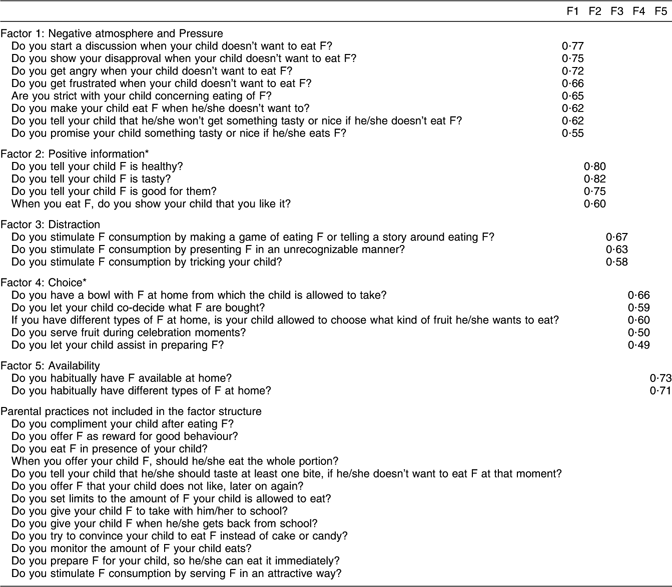
*For reasons of comparison, the items for this factor have been listed in the same order as for vegetables.



