




High use of hospital emergency department (EDs) is a recognised problem. Approximately 2.5% of all ED users account for 10% of total ED attendances. Reference Shannon, Pang, Jepson, Williams, Andrew and Smith1 High users have high prevalences of multimorbidity, psychiatric comorbidities and psychosocial problems, Reference Giannouchos, Kum, Foster and Ohsfeldt2,Reference Bodenmann, Baggio, Iglesias, Althaus, Velonaki and Stucki3 and failure to recognise and address high users’ needs is thought to increase the probability of re-attendance.
A recent mapping review of interventions for high users of EDs identified 58 studies worldwide. Reference Memedovich, Asante, Khan, Eze, Holroyd and Lang4 Most studies were from the USA (35), with only 3 from the UK. The review authors grouped interventions into the following categories: continuation of care, which included case management, care planning and care coordination; additional services in the ED, which included ED counselling, early assessment and intervention, telepsychiatry and medication review; warning systems to identify patients as high users and to limit services they can receive in the ED, such as opioid prescriptions; and services outside the ED, such as out-patient clinics or community services.
NHS England recently encouraged the development of services for high users of EDs via two separate workstreams. Liaison mental health services (LMHS) were offered a financial incentive to develop high user services via a national Commissioning for Quality and Innovation (CQUIN) standard (2017–2019), 5 and regions were also encouraged to develop community services for ‘high intensity users’. 6 This has resulted in services developing in a somewhat uncoordinated and piecemeal fashion.
The aim of this study was to map and characterise current services for high users of EDs in England.
Method
We conducted a nationwide survey to determine the presence and location of high user services that supported EDs, followed by in-depth structured interviews with 20 informants from exemplar high user services. This project is part of a wider programme of research funded by the National Institute for Health Research (NIHR) Health and Social Care Delivery Research programme entitled ‘Frequent Users of the Emergency Department: improving and standardizing services – a mixed methods study’ (FUsED; NIHR132852).
All LMHS in England in National Health Service (NHS) acute hospitals with EDs have been regularly surveyed over the past 11 years to determine progress towards the target of providing adequate LMHS in all acute hospitals with EDs in England by 2023–2024. The surveys have been funded variously by NHS England, Health Education England and the Faculty of Liaison Psychiatry of the Royal College of Psychiatrists. Response rates to previous surveys have been very high because there is a buy-in from liaison teams, the questions are crafted to make them concise and simple for clinicians to complete, and the results are quickly disseminated to the wider liaison network and used to inform policy decisions.
To gain a national picture of high user services in England, we included a subset of questions about high user services in the sixth of these Liaison Psychiatry Surveys of England (LPSE-6). The questions about high user services were as follows.
-
(a) Is there a frequent attenders service at your hospital?
-
(b) If there is, what date did it start, if you know?
-
(c) If there used to be one, what date did it start and what date did it stop, if you know?
-
(d) Please include contact details for the service if it is different from your liaison service.
-
(e) Please indicate how the high user service is best described.
The survey, including the additional questions about high user services, was sent out in May 2022, with further emails to non-responders in July and September 2022, plus telephone reminders. The survey was sent directly to a key liaison mental health member of staff, usually a consultant psychiatrist or team manager, at each acute hospital in England with an ED. These staff are well placed to know about high user services in their locality, even if they are not directly involved. No data were collected or processed from patient records. Missing data were supplemented by freedom of information requests to the relevant hospitals.
Using the responses from the liaison survey and the findings of Memedovich and colleagues Reference Memedovich, Asante, Khan, Eze, Holroyd and Lang4 we grouped together services according to the responses, and selected 20 services, representative of the main groups, for more detailed study. The main groups were: continuation of care services (with or without designated staff); additional services in the ED; and services outside the ED (i.e. community services). We remotely interviewed a clinician who could provide detailed information about their hospital’s service using a framework for describing healthcare organisations Reference Greenfield, Blair, Aylin, Saxena, Majeed and Hoffman7 to characterise each service according to: capacity (physical assets); organisational structure; financial mechanisms; patient characteristics (including specific subgroups, e.g. women); care processes; and infrastructure across the urgent and emergency care network. This framework was created for describing important differences in healthcare delivery for all sizes and types of service, particularly involving a system-oriented approach while maintaining a patient-centred focus.
The analysis involved a descriptive summary of responses to the structured part of the questionnaire and a descriptive account of the interview responses. We did not employ qualitative methods to analyse the interview responses, as the interview was very structured and focused on fact-finding.
Ethics and consent
The authors assert that all procedures contributing to this work comply with the ethical standards of the relevant national and institutional committees on human experimentation and with the Helsinki Declaration of 1975, as revised in 2013. All procedures involving human subjects/patients were approved by West Midlands – Solihull Research Ethics Committee (REC reference: 23/WM/0055).
Written or verbal informed consent was obtained from all interviewed individuals. Verbal consent was witnessed and formally recorded. No specific approval was required for this national survey of health professionals. No individual patient data were collected.
Results
Data from the survey were returned by all (100%) 171 acute hospitals in England with EDs. The main findings concerning liaison mental health services are reported at the NHS Futures platform (https://future.nhs.uk/); 8 the findings below are limited to those concerning high user services.
There were 157 hospitals (92%) with some form of service for high users. Of the 171 acute hospitals, 76 (44%) offered continuation of care services but with no designated staff, 71 (42%) offered continuation of care services in the ED with some designated staff time and 12 of these 71 services also offered additional services. Ten (6%) hospitals had community services, either separate or involving outreach from the hospital. Fourteen hospitals had no current high-user service. There were no services we could identify that operated warning systems. A range of terminology was used to describe the various services: high intensity user service; high intensity user care planning meetings; high intensity users group; frequent attenders service; regular attenders and complex care service; high intensity network; frequent engagement response network; multi-agency collaborative groups; and high impact user team. Within the broad groupings described above, there was great diversity in the responses regarding the proportion of staff time allocated to the service, the number and different types of health professionals who might attend meetings organised by the service and the frequency of meetings.
Interview results
We conducted interviews with people from 19 hospital and community sites (anonymised as services A–T) who could provide greater detail about their local high user service. One hospital had two separate services for high users, so 20 informant interviews were conducted. We aimed to have interviews from: continuation of care services (with and without designated staff); continuation of care services with additional services; and services outside the ED. Two sites offered a continuation of care service with no designated staff (Services D and E); eight offered continuation of care services with designated staff (Services B, C, F, H, K, O, P and T); five offered continuation of care services plus additional services (Services I, J, L, M and N); two offered continuation of care services plus services outside hospital (a community service linked to the ED) (Services A and G); and three offered separate services outside hospital (Services Q, R and S).
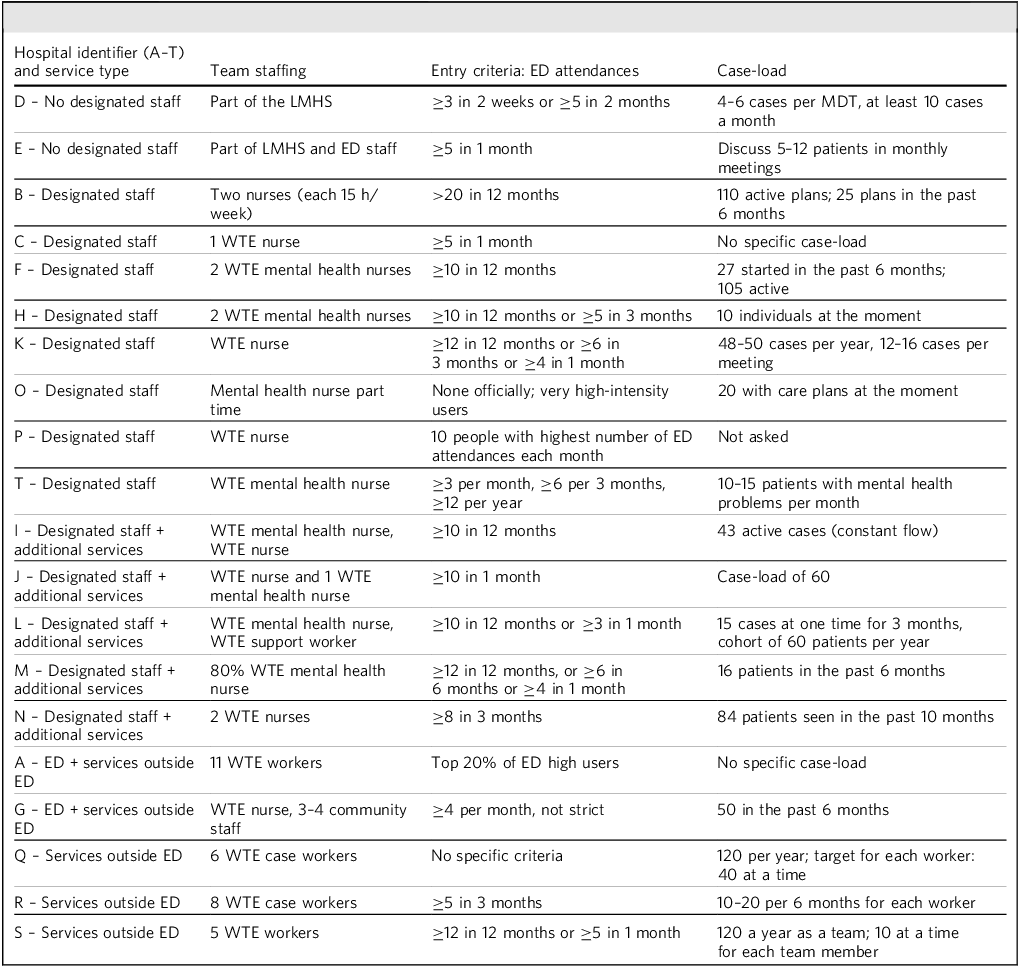
Table 1 summarises the responses we received, according to: the type of service; funded staff designated to the service; entry criteria for the service; and case-load. The table shows the variation in thresholds for attendance or basic criteria for entry to the service. Only 3 out of the 20 services shared the exact same criteria for defining high use. The most common threshold was 10 or more attendances per year (5 services), followed by 12 or more attendances per year (3 services), but some of these services also employed additional criteria for shorter periods of time (e.g. 8 or more attendances in 3 months). Two teams (Services O and Q) did not use a threshold or definition but based their intervention on perceived clinical need. Several teams were not overly reliant on their set thresholds and accepted referrals that technically did not meet their criteria but were felt to be suitable for the team.
Summary of the characteristics of 20 services for high users of hospital emergency departments in England
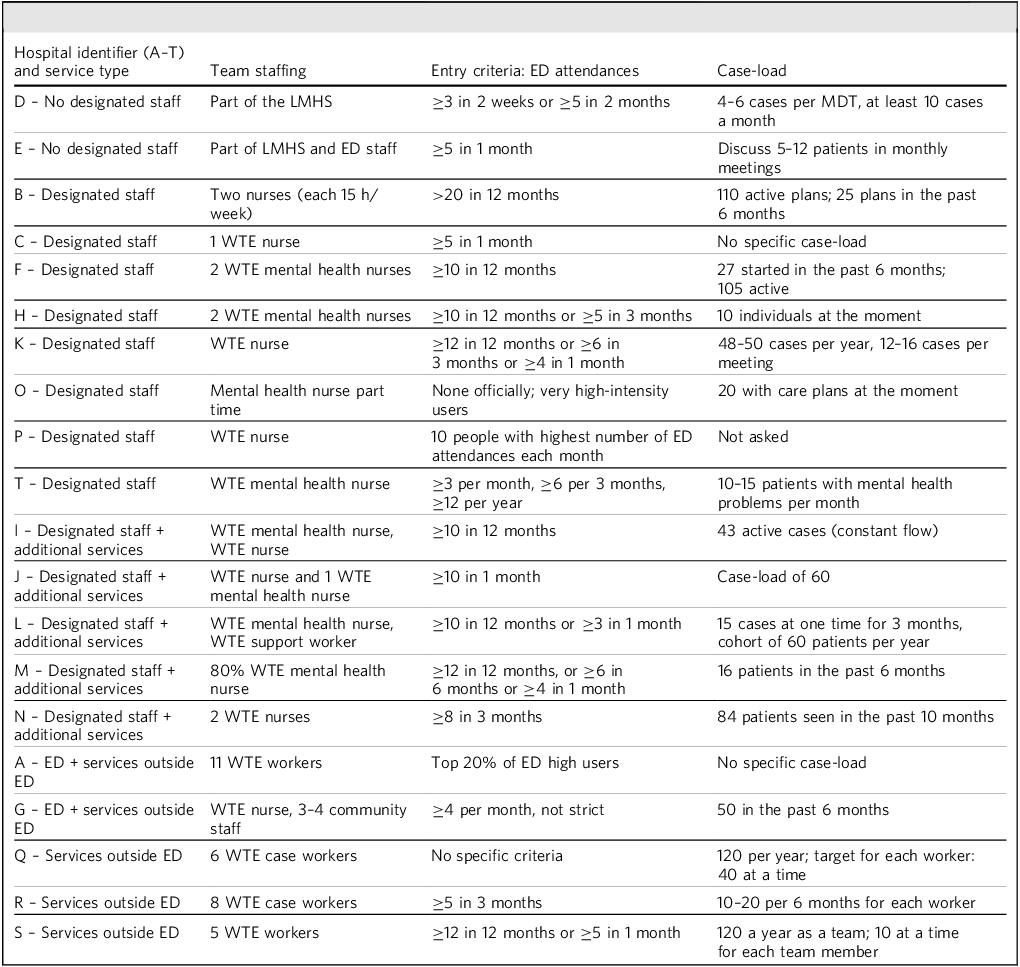
ED, emergency department; LMHS, liaison mental health services; MDT, multidisciplinary team; WTE, whole-time equivalent.
Table 1 also shows the large variation among services in staffing and funding. Teams with the highest number of staff tended to be community teams with between 5 and 8 staff per service (Services Q, R and S). There were only two ED-based services with similarly high staffing levels (Hospitals A and G) and these hospitals offered community outreach. Hospital teams offering ‘continuation of care’ interventions usually had smaller teams than community services, often with 1–2 nurses supplemented by sessional support by more senior health professionals. The table does not include details of the sessional support, but it usually involved support from a consultant liaison psychiatrist and or ED consultant. Liaison teams or other mental health teams played some kind of supporting role in most of the services.
Case-loads varied greatly between teams. Hospitals A and C had no specific case-loads. In the services outside hospital (i.e. community teams) case-loads varied between 10 and 40 per worker. The hospital-based services were difficult to compare as case-load was defined in different ways.
Funding for the teams varied, with some teams employed by local integrated care boards (ICBs), some jointly between the acute trust and mental health trust, and some by the acute trust alone. Several services had been started by clinicians who had recognised that there was a need and had organically grown the service. Some of the liaison high user services had been funded through financial incentives set up by NHS England and most of the community teams had been funded via a separate NHS England initiative that encouraged local ICBs to themselves fund and set up services.
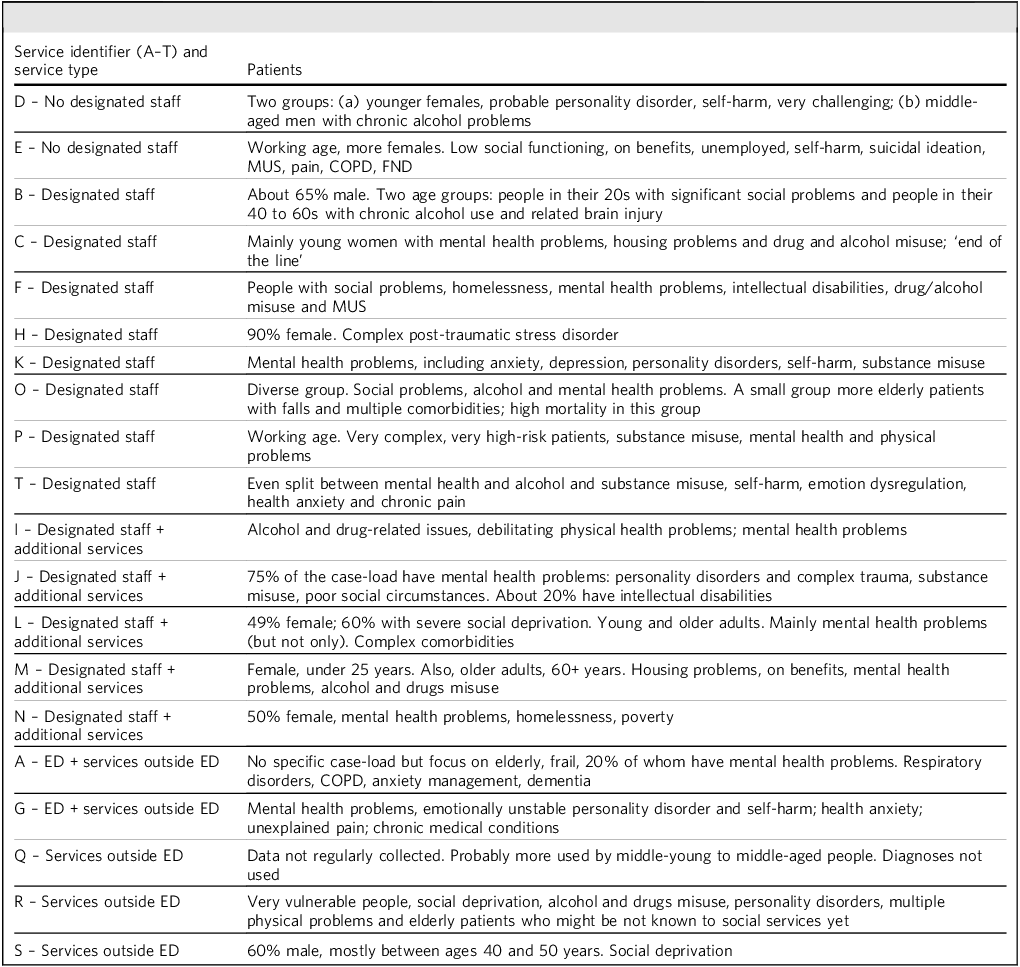
Table 2 summarises the characteristics of patients referred to the various high user services. One service (Service A) focused on the frail elderly, of whom 20% had mental health-related problems. The other services largely saw a younger age group of people with combinations of mental health and social problems. Mental health problems commonly included self-harm, alcohol and substance misuse and personality disorders. Patients were frequently referred to as having complex issues or complex trauma. The proportions of males to females differed between services: Hospital B reported that 65% of their high users were male, whereas Hospital H reported that 90% of their high users were female. The three community services, Services Q, R and S, did not use diagnoses but described their patient group as vulnerable and with high levels of social deprivation.
Summary of the characteristics of patients using emergency department high user services in England
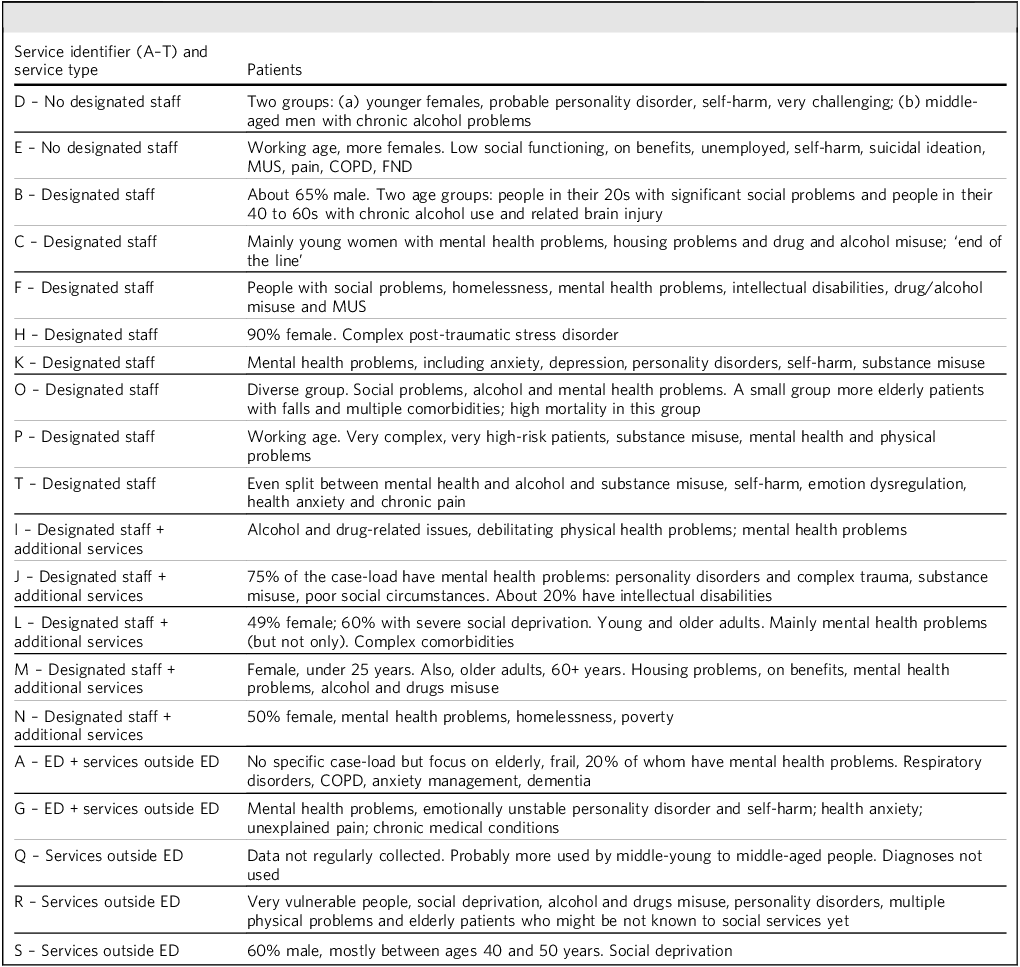
MUS, medically unexplained symptoms; COPD, chronic obstructive pulmonary disease; FND, functional neurological disorder.
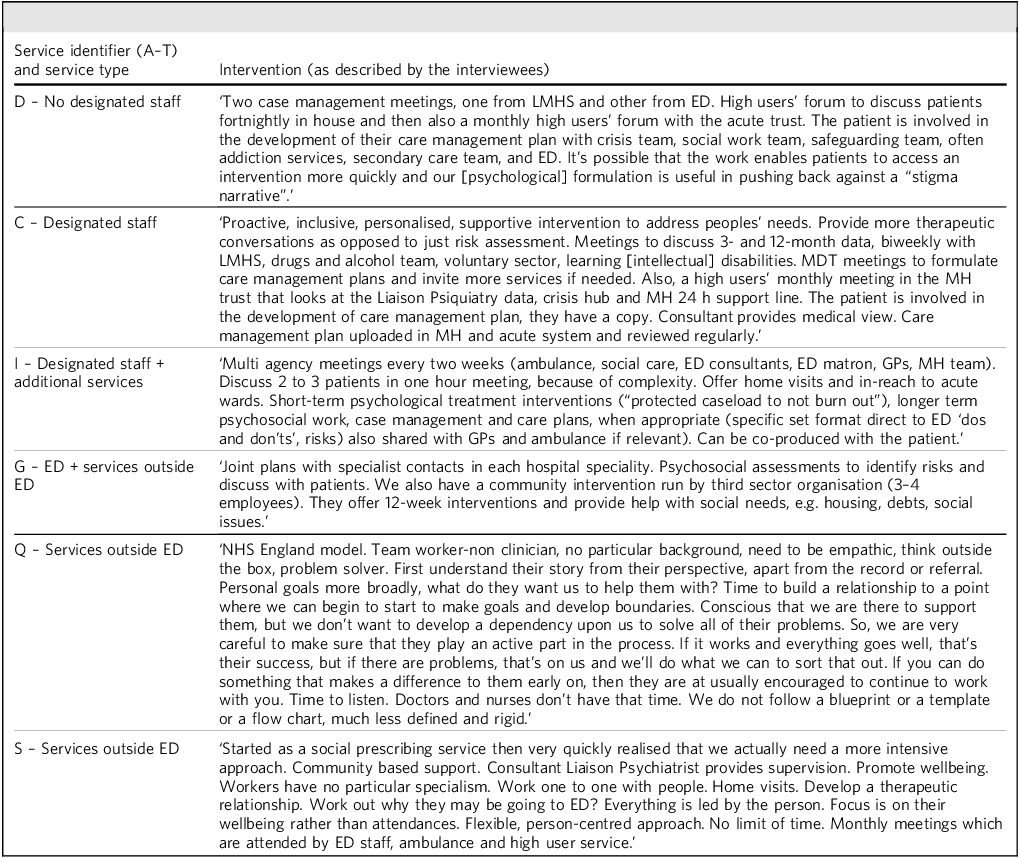
Table 3 gives examples of the kinds of service offered by teams, although no two services were similar on most parameters. The table shows examples of different types of service, including those providing continuation of care and those located outside the hospital. Most teams described a personalised approach to care even if they had very few staff or no designated staff at all. For example, the team at Service C described a proactive, inclusive, personalised and supportive intervention to address people’s needs. The team at service D, which had no designated staff, described ‘pushing back against a “stigma narrative”’. The community teams at Hospitals Q and S described person-centred approaches, working with individuals, building trust and focusing on their well-being. The Service Q operated the NHS England model, which has a particular non-clinical ethos. 6 The site at Service S also offered a person-centred (non-clinical) approach but was supported by a consultant liaison psychiatrist.
Examples of the different types of intervention delivered by emergency department high user services in England
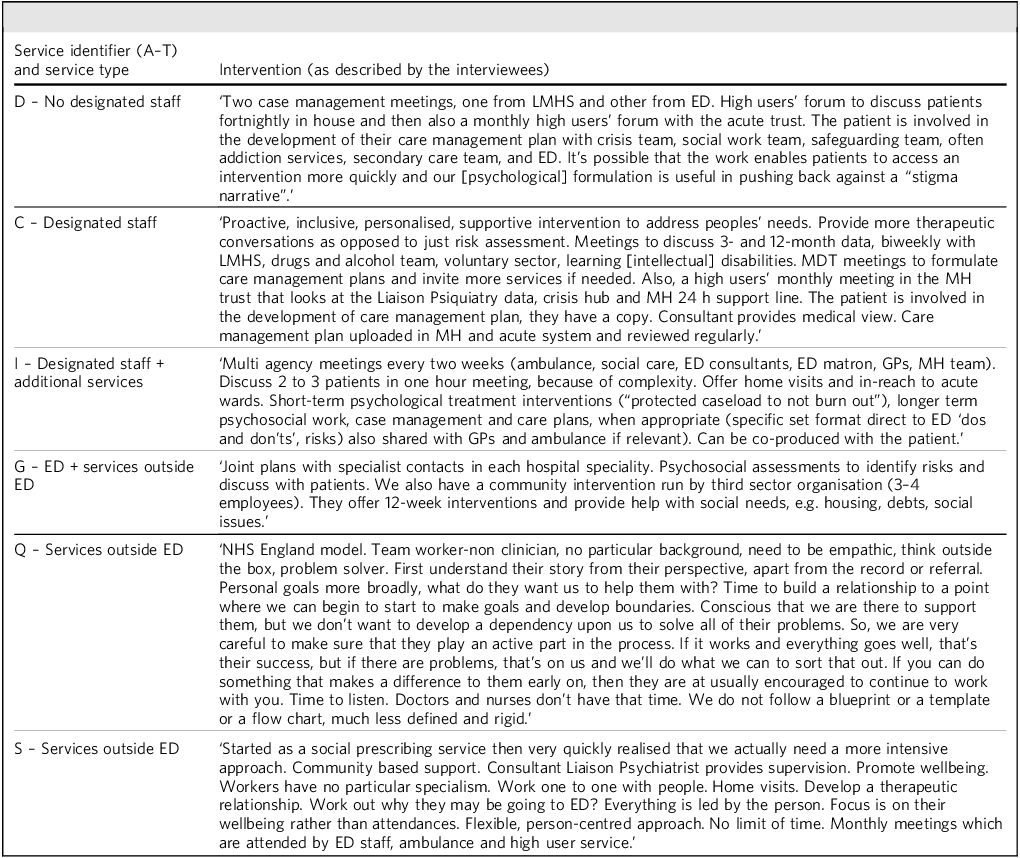
LMHS, liaison mental health services; ED, emergency department; MH, mental health; MDT, multidisciplinary team; GP, general practitioner.
Hospital-based services tended to offer ‘continuation of care’ interventions, which could include multidisciplinary team meetings, care planning, and case management with or without additional interventions such as counselling, individual talking treatments or outreach work, including home visits. Services outside hospital were community based and offered more social interventions working one to one with patients to offer support and help with housing, debt and improving social networks. The term case management was disliked by some of the community teams, as they considered it too medical and preferred, for example, ‘personalised, psychosocial, practical and emotional intervention with service coordination’.
Discussion
We conducted the largest and most comprehensive mapping survey of high user services in England that support hospital EDs. We supplemented the survey with 20 interviews from representative services. The most striking finding from this mapping project was the heterogeneity of services. We found wide-ranging differences in virtually all aspects of service delivery, including: the name of services, composition of staff, definitions of high use, case-load, types of intervention, location and funding.
One of the main reasons for the heterogeneity in service delivery that we encountered is the lack of an evidence base in this field. There is no agreed definition of high use of the ED, or even of the term used to describe it, and most studies have defined high use either by a certain number of visits within a set period of time or by a top percentile cut-off (e.g. top 10 or 15% of attendances). Reference Shukla, Faber and Sick9 Five or more attendances per year at an ED has been established in England as an indicator of high use. 10,11 However, it is unclear whether this threshold should be used by clinical teams in high user services, as it would identify relatively high numbers of people. Teams tended to use a higher threshold of 10 or 12 attendances in the previous year and/or tried to identify people attending in bursts by using smaller time thresholds, such as a certain number of attendances in 1–3 months. No team had an upper age limit, yet it was clear, with exception of Hospital A, that they were set up to manage mental and social difficulties rather than the multiple health problems of elderly people, who can also be frequent users of EDs.
Recent systematic reviews have examined the effectiveness of interventions to decrease ED visits by adult high users. Reference Althaus, Paroz, Hugli, Ghali, Daeppen and Peytremann-Bridevaux12–Reference Iovan, Lantz, Allan and Abir15 There is evidence for reductions in attendance from studies with uncontrolled designs, but very weak evidence from the small number of randomised controlled trials that have been conducted. Several uncontrolled UK evaluations of frequent user interventions have suggested that they generate large cost savings to the NHS and that services should be expanded. Reference Sousa, Hilder, Burdess and Bolton16–Reference Kontogeorgis and Masoura18 However, these uncontrolled evaluations result in large overestimates of service impact, most likely because of regression to the mean or the natural course of patients’ or systems’ difficulties.
The community teams had greater consistency in approach, with two following a specific model championed by NHS England, but the evidence of effectiveness for this model is based on local uncontrolled studies. Reference Sousa, Hilder, Burdess and Bolton16,Reference Ng, Nadarajan, McIver, Reid, Schofield and Sachar17 Recent claims that these community teams can result in a reduction in ED attendance of between 38 and 84% 19 fail to acknowledge that 60% of all high users stop qualifying as high users within a 12-month period without any intervention at all. Reference Kennedy and Ardagh20
Strengths and limitation
Strengths of the mapping project include its nationwide scope and its 100% response rate. This was achieved by adding questions about high user services to an established national liaison psychiatry survey which is delivered by a respected team and has ongoing support from liaison psychiatry teams in England. Because we were limited in the number of questions we could add to the usual liaison survey, we supplemented the survey with 20 in-depth interviews with representative services to characterise services in more detail.
A limitation of the study is its cross-sectional design, which provides a snapshot of services as they were delivered in 2022, when several of the surveyed teams were in a process of change. Some had been depleted during the COVID-19 pandemic and were planning to reform, and others were under threat of closure because their funding stream had come to an end. So, the clinical picture is evolving.
Implications
The great heterogeneity and instability in services for high users of the ED is likely to continue until there is robust evidence to support services in their decision-making regarding criteria and thresholds for interventions and types of intervention.
About the authors
Sonia Saraiva is a senior research fellow and Programme Manager of the Frequent Users of the Emergency Department (FUsED) research programme at Leeds Institute of Health Sciences, University of Leeds, UK. William Lee is a consultant liaison psychiatrist at Cornwall Partnership NHS Foundation Trust, Bodmin, UK. Kate Welsh is a registered mental health nurse at Cornwall Partnership NHS Foundation Trust, Bodmin, UK. Christina M. van der Feltz-Cornelis is a professor emerita in the Department of Health Sciences, University of York, and Honorary Professor at the Institute of Health Informatics, University College London (UCL), UK. At the time of the study, Gerlinde Pilkington was a research associate at Sheffield Centre for Health and Related Research, University of Sheffield, UK. At the time of the study, Steven Ariss was a senior research fellow at Sheffield Centre for Health and Related Research, University of Sheffield, UK. Stephanie de-la-Haye is an expert by experience in the School of Health and Social Care at Sheffield Hallam University, UK. Chris Burton is a professor of primary medical care at Sheffield Centre for Health and Related Research, University of Sheffield, UK. Suzanne Mason is a professor of emergency medicine at Sheffield Centre for Health and Related Research, University of Sheffield, UK. Else Guthrie is a professor of psychological medicine at Leeds Institute of Health Sciences, University of Leeds, UK.
Data availability
Data from the survey used in this study are available on reasonable request from W.L. via the corresponding author, S.S.
Author contributions
W.L., C.B., S.M. and E.G. conceived of the research. W.L. and K.W. conducted the survey. S.S. conducted the interviews. S.S. and E.G. conducted the analysis. E.G. and S.S. wrote the first draft of the manuscript. C.M.v.d.F.-C., G.P., S.A. and S.d.-l.-H. contributed to all drafts of the manuscript. W.L., C.B., S.M. E.G., K.W., S.S., C.M.v.d.F.-C., G.P., S.A. and S.d.-l.-H. have read and approved the final manuscript.
Funding
This project is part of a wider programme funded by the National Institute for Health Research (NIHR) Health and Social Care Delivery Research programme (project reference NIHR132852) entitled ‘Frequent Users of the Emergency Department: improving and standardizing services – a mixed methods study’ (FUsED). The views expressed are those of the author(s) and not necessarily those of the NIHR or the Department of Health and Social Care.
Declaration of interest
All authors acknowledge funding from the National Institute for Health Research.

 Open access


eLetters
No eLetters have been published for this article.