



In recent years, interest in well-being has increased in the Western societies due to its relationship with physical health and survival( Reference Chida and Steptoe 1 ); however, previous studies have addressed signs of a deteriorated well-being in youths. Mental health disorders are one of the most common chronic health conditions in young people and represent a significant economic burden. One fourth of adolescents report a mental health disorder in the previous year and a third across their lifetimes( Reference Merikangas, Nakamura and Kessler 2 ). Childhood and adolescence are periods of critical importance for understanding the development of well-being and the contribution to behavioural risk.
Well-being is a complex aspect of life, whereby understanding and measuring well-being are challenges for scientists. On one hand, a subjective psychological dimension of well-being has to be considered. Subjective well-being is defined as someone’s evaluation of his or her own life, including emotional reactions and feelings of satisfaction( Reference Diener, Lucas and Oishi 3 ). An important component of subjective well-being is described as hedonic well-being, an affective indicator that distinguishes between positive and negative affect as independent measures, considering feelings such as happiness, sadness, anger, stress and pain( Reference Watson, Clark and Tellegen 4 ). On the other hand, well-being related to quality of life should be regarded. A commonly used measure is health-related quality of life (HR-QoL), which refers to an individual’s perception and subjective evaluation of their health and well-being within their unique cultural environment( 5 ).
Diet quality is a behavioural protective factor that has been associated with well-being and mental health in adolescents, according to the literature. In this sense, a recent systematic review of observational studies found an association between a healthy diet and lower levels of depression( Reference O’Neil, Quirk and Housden 6 ). An example of a high-quality dietary pattern is the Mediterranean diet (MD), which is characterised by the consumption of fish or seafood, white meat, moderate amounts of dairy products, increased amounts of enriched fibre foods (such as fruits, vegetables, legumes, nuts and whole grain cereals) and unsaturated fats, especially olive oil( Reference Bach-Faig, Berry and Lairon 7 ). Its protective effect on mental( Reference Anastasiou, Yannakoulia and Kosmidis 8 – Reference Voltas, Arija and Aparicio 10 ) and cardiovascular and metabolic disease( Reference Babio, Toledo and Estruch 11 , Reference Widmer, Flammer and Lerman 12 ) has been reported previously. Adherence to an MD or a high-quality diet has been associated with better HR-QoL in Mediterranean( Reference Costarelli, Koretsi and Georgitsogianni 13 , Reference Muros, Salvador Perez and Zurita Ortega 14 ) and non-Mediterranean adolescents( Reference Bolton, Jacka and Allender 15 , Reference Kulkarni, Swinburn and Utter 16 ). Furthermore, the higher adherence to MD was associated with a higher life satisfaction status in Spanish adolescents( Reference Grao-Cruces, Nuviala and Fernandez-Martinez 17 ).
Therefore, since none of the previously described studies had evaluated the longitudinal relationship of MD adherence and well-being in children and adolescents, the aims of the present study were (1) to analyse the cross-sectional relationship between MD adherence and well-being indicators in a large sample of Spanish children and adolescents at baseline and at 2-year follow-up and (2) to assess the potential predictive effect of MD adherence at baseline on well-being indicators measured at 2-year follow-up.
Methods
Study design
This study was performed under the umbrella of the UP&DOWN study (follow-up in schoolchildren and adolescents with and without Down’s syndrome: psycho-environmental and genetic determinants of physical activity and their impact on physical fitness, CVD, inflammatory biomarkers and mental health). Data were collected on MD adherence (KIDMED index, a Mediterranean diet quality index for children and teenagers) and well-being indicators (Positive and Negative Affect Schedule (PANAS) and HR-QoL). The present study excluded children and adolescents with Down’s syndrome and instead included only those without Down’s syndrome. Detailed information about the study design has been reported previously( Reference Castro-Piñero, Carbonell-Baeza and Martinez-Gomez 18 ).
Participants
Participants were recruited from primary schools in Cadiz and secondary schools in Madrid (Spain). Data were compiled over a daily school class from September to June: (a) baseline data from 2011 to 2012 and (b) 2-year follow-up from 2013 to 2014. Participants’ selection criteria for children and adolescents considered in the study were as follows: (i) to study in first/fourth grades (6–7 and 9–10 years old, respectively) for children and seventh/tenth grades (12–13 and 15–16 years old, respectively) for adolescents at baseline and (ii) to not have physical disability or health problems, which might limit the levels of physical activity. For the present study, primary schoolchildren (aged between 6 and 11 years old at baseline) and secondary school adolescents (aged between 11 and 19 years old at baseline) with valid data regarding MD adherence and well-being indicators were included. Thus, a total of 536 primary schoolchildren (50 % girls) and 987 secondary school adolescents (49 % girls) provided valid data at baseline, while 527 children (50 % girls) and 798 adolescents (49 % girls) provided valid data at 2-year follow-up. Cross-sectional analyses included all participants who participated as each time point, whereas longitudinal analyses included only those participants that provided valid data at both baseline and 2-year follow-up.
Before participating in the UP&DOWN study, parents and school supervisors were informed by letter about the purpose of the study. Written parental consent and child/adolescent assent were obtained. The UP&DOWN study was approved by the Ethics Committee of the Hospital Puerta de Hierro in Madrid, the Bioethics Committee of the Spanish National Research Council and the Ethics Committee for Research Involving Human Subjects at Cádiz University.
Mediterranean diet adherence
Mediterranean diet adherence was assessed using the KIDMED index( Reference Serra-Majem, Ribas and Ngo 19 ). This is an MD quality index, ranging from –4 to 12 and based on a 16 yes-or-no question test, which determines adherence to the Mediterranean dietary pattern. Questions with a negative connotation were scored –1, while questions with positive connotation were scored 1. Higher scores indicate higher adherence to the MD( Reference Serra-Majem, Ribas and Ngo 19 ). The KIDMED index has shown good internal consistency with a Cronbach’s α coefficient of 0·7( Reference Muñoz 20 ).
Well-being
Hedonic subjective psychological well-being was measured using the PANAS( Reference Watson, Clark and Tellegen 4 , Reference Sandín 21 ). This instrument comprises two 10-item scales, providing independent measurements of positive and negative affect, which are linked to positive feelings such as joy or pleasure and negative feelings such as anxiety and sadness, respectively. Participants are required to respond to every item using a five-point Likert-type scale that ranges from very slightly or not at all to extremely. The scoring range is from 10 to 30, where higher scores indicate greater positive or negative feelings( Reference Watson, Clark and Tellegen 4 ). In the current study, the Spanish version for children and adolescents (PANASN) was employed, respecting the same bi-dimensional structure and showing adequate internal consistency as well as convergent and discriminant validity (for the positive affect scale, the Cronbach’s α coefficient was 0·87–0·89 and for the negative affect scale it was 0·89–0·91)( Reference Sandín 21 ).
HR-QoL was assessed using the KIDSCREEN-10 (a health-related quality of life questionnaire for children and young people and their parents), which provides a self-reported well-being and HR-QoL measure for children and adolescents( Reference Ravens-Sieberer, Erhart and Rajmil 22 ). It is composed of ten items answered through a five-point response scale (items 1 and 9: not at all–slightly–moderately–very-extremely; all others: never–seldom–quite often–very often–always). As a result, the score ranges from 10 to 50, where higher scores indicate better HR-QoL. The ten items explore a wide range of factors related to well-being and quality of life, such as physical activity, energy and fitness, depressive and stressful feelings, opportunities to structure and enjoy social life and leisure time, participation in social activities, quality of social interactions, perception of his or her cognitive capacity and satisfaction with school performance. This tool has demonstrated adequate reliability, validity and internal consistency with a Cronbach’s α coefficient of 0·87( 23 ).
Covariates
Covariates were included to adjust for confounding by variables likely to be associated with both diet and well-being. The covariates included were age, socio-economic status (SES), overweight and obesity prevalence as well as pubertal staging.
SES was measured using the family affluence scale, a four-item scale( Reference Currie, Molcho and Boyce 24 ). This score was obtained after summing the answers provided by the participants in the four questions. Based on the score obtained, children and adolescents were categorised into low (from 0 to 2), medium (from 3 to 5) or high SES (from 6 to 8)( Reference Jimenez Pavon, Ortega and Ruiz 25 ).
Weight and height were measured using standard procedures( Reference Castro-Piñero, Carbonell-Baeza and Martinez-Gomez 18 ). Weight was measured using an electronic scale (SECA 701; range, 0·05–220 kg; precision, 0·05 kg) and height was measured in the Frankfort plane using a telescopic height-measuring instrument (SECA 220; range, 85–200 cm; precision, 1 mm). BMI was calculated as weight/height squared (kg/m2). BMI, age- and sex-specific cut offs proposed by Cole et al. ( Reference Cole, Bellizzi and Flegal 26 ) were used to categorise primary and secondary school girls and boys as normal weight, underweight and overweight or obese.
Self-reported pubertal staging of primary and secondary school girls and boys was measured according to Tanner scale( Reference Chavarro, Watkins and Afeiche 27 ). This scale includes two separate measures for girls and boys. For girls, pubic hair distribution and breast development were self-reported. For boys, pubic hair distribution and genital development were self-reported. Although self-reported pubertal assessment is not a reliable measure for exact pubertal staging, it has been frequently used in epidemiological studies due to its accuracy for a simple distinction between pre-puberty and puberty( Reference Chavarro, Watkins and Afeiche 27 ). However, since pubertal staging showed no effect on the associations examined, it was not included in the adjusted model.
Statistical analysis
All statistical analyses were conducted using the Statistical Package for the Social Sciences software version 21.0 (SPSS Inc.) and STATA/SE 14.1 software (StataCorp LP).
Descriptive statistics (mean values and standard deviations or numbers and percentages) were calculated to describe the participant characteristics. Differences between primary and secondary school girls and boys were analysed by Student’s t test for continuous variables and χ 2 test for categorical variables. Differences between values at baseline and at 2-year follow-up were analysed by paired t test.
Multi-level, mixed-effects linear regression was used to test the association between MD adherence and well-being indicators. Interactions for sex and age were significant, so analyses were conducted separately for primary school (aged 6–11 years) and secondary school (aged 11–19 years) girls and boys. All models included a random intercept for school and class. In cross-sectional analysis, unadjusted models and models adjusting for age, SES and overweight and obesity prevalence were fitted. In longitudinal analysis, models adjusted for baseline well-being indicators (model 1) and then additionally adjusted for 2-year follow-up age, SES, overweight and obesity prevalence (model 2) were fitted. Covariates were included one-by-one in the models for each analysis performed (data not shown, given the lack of effect of the mentioned variables).
Results
Characteristics of the primary and secondary school girls and boys are presented in Table 1. At baseline, compared to secondary school girls, primary school girls showed lower SES, pubertal stage, higher prevalence of overweight and obesity and higher KIDSCREEN and positive affect scores (all P<0·001). Furthermore, compared to secondary school boys, primary school boys showed lower SES, lower pubertal stage, lower KIDMED and KIDSCREEN scores and higher positive and negative affect scores (all P<0·001). At 2-year follow-up, primary school girls had a lower pubertal stage, greater KIDSCREEN scores and lower negative affect scores compared to secondary school girls (all P<0·001), and primary school boys had lower pubertal stage (P<0·001) and KIDMED scores (P=0·019), and higher KIDSCREEN scores (P=0·001) than secondary school boys.
Characteristics of primary and secondary school girls and boys at baseline and 2-year follow-up (Mean values and standard deviations)
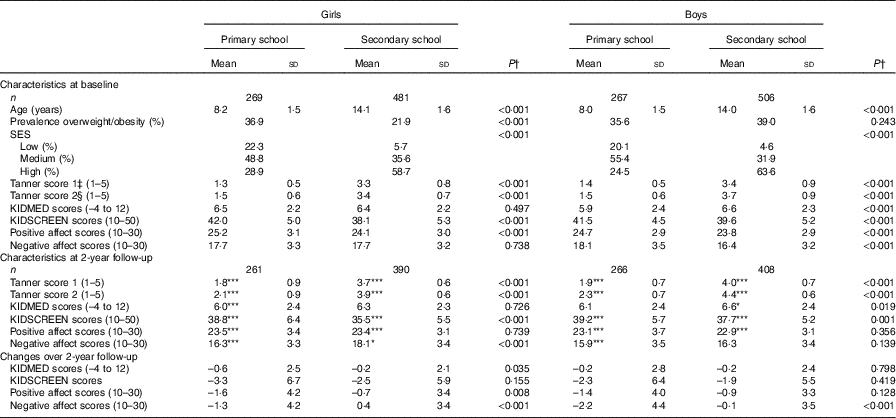
SES, socio-economic status. Mean value was significantly different from that at baseline: * P<0·05, *** P<0·001 (paired t tests).
† Student’s t test (Pearson χ² test for prevalence of overweight/obesity and SES).
‡ Pubic hair distribution.
§ Genitals/breasts development.
Multi-level, mixed-effects linear regression models for the cross-sectional association between MD adherence and well-being at baseline are presented in Table 2. MD adherence was positively associated with KIDSCREEN scores in secondary school girls and boys, and this persisted after adjusting for relevant covariates (age, SES and prevalence of overweight and obesity). A unit increase in MD adherence score was associated with an increase in KIDSCREEN scores in secondary school adolescent girls and boys (β=0·41, se 0·10, P<0·001; β=0·46, se 0·10, P<0·001, respectively). A one-unit increase in MD adherence score was also associated with an increase in positive affect scores in secondary school girls and boys (β=0·16, se 0·05, P=0·006; β=0·20, se 0·05, P<0·001, respectively) and in primary school boys (β=0·20, se 0·08, P=0·019). There was no relationship between MD adherence and negative affect scores.
Multi-level, mixed-effect linear regression models for the cross-sectional association between Mediterranean diet adherence (KIDMED scores) and well-being (KIDSCREEN, positive and negative affect scores) at baseline in Spanish primary and secondary school girls and boys (β-Coefficients with their standard errors; numbers and 95 % confidence intervals)
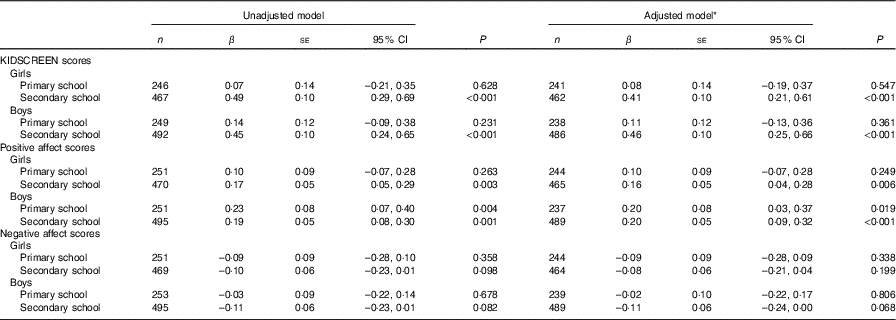
β, Unstandardised coefficient.
* Adjusted model: analyses were adjusted for age, socio-economic status and prevalence of overweight and obesity (all collected at baseline).
Changes in characteristics over 2-year follow-up are also presented in Table 1. Pubertal stage increased in all primary and secondary girls and boys after 2 years (P<0·001 for all). In primary school girls, KIDMED, KIDSCREEN, positive and negative affect scores all reduced after 2-year follow-up (all P<0·001). In secondary school girls, KIDSCREEN and positive affect scores reduced (both P<0·001), whereas negative affect scores increased (P<0·05) after 2-year follow-up. In primary school boys, KIDSCREEN, positive and negative affect scores all reduced after 2-year follow-up (all P<0·001). In secondary school boys, KIDMED (P<0·05), KIDSCREEN, positive and negative affect scores all reduced (all P<0·001) after 2-year of follow-up.
Multi-level, mixed-effect linear regression models for the cross-sectional association between MD adherence and well-being at 2-year follow-up are presented in Table 3. A one-unit increase in MD adherence score was associated with increased KIDSCREEN scores in secondary school girls in an unadjusted model (β=0·27, se 0·12, P=0·025). This association was no longer significant after adjustment for age, SES and overweight/obesity. On the other hand, a one-unit increase in MD adherence score was associated with increased positive affect scores in secondary school girls in the adjusted model (β=0·30, se 0·06, P<0·001) and in primary school boys (β=0·20, se 0·09, P=0·023). Finally, a one-unit increase in MD adherence score was related to a decrease in negative affect scores in secondary school adolescent girls and boys in the adjusted model (β=–0·15, se 0·07, P=0·047; β=–0·16, se 0·06, P=0·019, respectively).
Multi-level, mixed-effect linear regression models for the cross-sectional association between Mediterranean diet adherence (KIDMED scores) and well-being (KIDSCREEN, positive and negative affect scores) at 2-year follow-up in Spanish primary and secondary school girls and boys (β-Coefficients with their standard errors; numbers and 95 % confidence intervals)
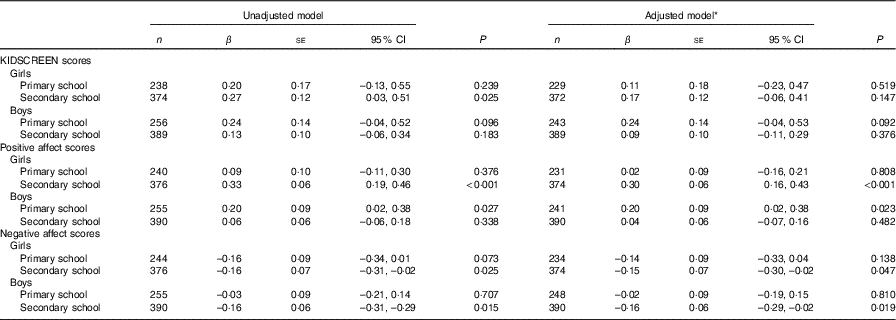
β, Unstandardised coefficient.
* Adjusted model: analyses were adjusted for age, socio-economic status and prevalence of overweight and obesity (all collected at 2-year follow-up).
Multi-level, mixed-effect linear regression models for the longitudinal association between MD adherence at baseline and well-being indicators (at 2-year follow-up) are shown in Table 4. After adjusting for baseline levels of well-being indicators, MD adherence at baseline did not predict well-being indicators at 2-year follow-up, either before (model 1) or after controlling for age, SES, prevalence of overweight and obesity (model 2).
Multi-level, mixed-effect linear regression models for the longitudinal association between Mediterranean diet adherence at baseline (KIDMED scores) and well-being at 2-year follow-up (KIDSCREEN, positive and negative affect scores) in Spanish primary and secondary school girls and boys (β-Coefficients with their standard errors; numbers and 95 % confidence intervals)
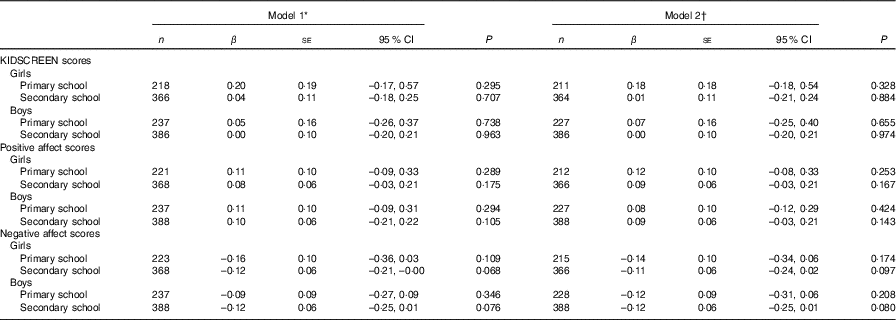
β, Unstandardised coefficient.
* Model 1: adjusted for KIDSCREEN, positive affect or negative affect scores at baseline.
† Model 2: adjusted for age, socio-economic status, prevalence of overweight and obesity (all collected at 2-year follow-up) and KIDSCREEN, positive affect or negative affect scores at baseline.
In addition, not only age and SES but also pubertal staging was included one-by-one in every model performed and did not show any effect in any of the associations examined (data not shown).
Discussion
This study found that a higher MD adherence was associated with better HR-QoL and positive affect in secondary school girls and boys at baseline. In addition, MD adherence was associated with greater levels of positive affect in primary school boys and secondary school girls and lower levels of negative affect in secondary school adolescent girls and boys at 2-year follow-up. However, we found no prospective associations between MD adherence at baseline and well-being indicators at 2-year follow-up after controlling for baseline levels of well-being indicators.
Our cross-sectional findings about the association between higher MD adherence and better HR-QoL is consistent with a number of other studies. For example, there was a positive association between adherence to the MD and HR-QoL in Spanish adolescents living in Granada( Reference Muros, Salvador Perez and Zurita Ortega 14 ) and Spanish adolescents living in rural and urban areas who reported higher adherence to the MD and a greater life satisfaction( Reference Grao-Cruces, Nuviala and Fernandez-Martinez 17 ). Also, a study conducted in Greece reported a positive association between adherence to MD and HR-QoL in male and female adolescents( Reference Costarelli, Koretsi and Georgitsogianni 13 ). Furthermore, in non-Mediterranean countries, a similar association has been found, where better diet quality was related to higher HR-QoL in urban and rural Australian adolescents( Reference Bolton, Jacka and Allender 15 ) as well as in socially disadvantaged New Zealand adolescents( Reference Kulkarni, Swinburn and Utter 16 ).
In the present study, we did not see longitudinal associations between baseline MD adherence and HR-QoL after 2-year follow-up, although borderline negative associations were observed between MD adherence and negative affect in secondary school boys and girls. In this regard, we have not found any other longitudinal studies analysing this association in Spanish or Mediterranean adolescent populations. To our knowledge, the only longitudinal study carried out in Spain reported a positive association between adherence to the MD and HR-QoL in an adult population( Reference Henriquez Sanchez, Ruano and de Irala 28 ). In addition, studies conducted in non-Mediterranean populations found evidence of a longitudinal association between high-quality diets and a more favourable HR-QoL in older adults( Reference Milte and McNaughton 29 ). For example, a study carried out in an older Australian population found greater adherence to a healthy diet to be associated with a more favourable HR-QoL 2 years later in men and women aged 55–65 years( Reference Milte, Thorpe and Crawford 30 ).
Differences in the cross-sectional association of Mediterranean diet adherence and well-being indicators between baseline and 2-year follow-up
In the present study, we found that higher MD adherence was associated with better HR-QoL and positive affect in secondary school girls and boys at baseline and lower negative affect scores in secondary school adolescent girls and boys at 2-year follow-up. These variations observed in the associations examined between baseline and 2-year follow-up may be related to changes experienced by the participants between childhood and adolescence. From baseline to 2-year follow-up, the change in age of boys and girls in both the groups (Table 1) was reflected in significant increases in self-reported Tanner staging (Table 1). However, the influence of these changes in biological maturation was tested and discarded due to the variable showing no influence on the associations examined. We could only speculate that critical times during childhood and adolescence could bring potential differences in psychological maturity (that were not measured in this study), which may influence the relationships between MD adherence and well-being indicators. Furthermore, sex and age differences in well-being indictors have been widely described in the literature( Reference Cavallo, Dalmasso and Ottova-Jordan 31 , Reference Michel, Bisegger and Fuhr 32 ) and could also be involved in the variations observed in the relationship of MD adherence and well-being between baseline and 2-year follow-up.
Changes in well-being indicators and Mediterranean diet adherence along 2-year follow-up
In the present study, we found that HR-QoL and positive affect scores decreased and negative affect scores increased in primary and secondary school girls and boys, except negative affect scores improved in secondary school girls only, indicating that overall well-being had deteriorated over the 2 years of the study. The only improvement observed consisted of a decrease in negative affect in the primary school girls and boys. These results are difficult to interpret; however, they are partially consistent with the age and sex differences described in the literature examining well-being indicators and previously mentioned in this manuscript. Less favourable well-being has been shown with increasing age of the adolescents, particularly in female adolescent populations( Reference Cavallo, Dalmasso and Ottova-Jordan 31 ). In particular, the tendency of a decreasing quality of life with age between childhood and adulthood has been reported previously( Reference Michel, Bisegger and Fuhr 32 ). Possible explanations could include hormonal changes, stressful life events and less efficacious coping strategies that emerge among girls in this age range( Reference Michel, Bisegger and Fuhr 32 ).
In this study, we found that MD adherence decreased over the 2-year follow-up for primary and secondary girls and boys. Relevant factors that could be associated with this change include an increase in screen time which has been associated with a poor diet( Reference Falbe, Willett and Rosner 33 ). Parental control is also known to change during this period, and parental control has been shown to influence dietary patterns( Reference Dickens and Ogden 34 ).
Potential reasons for the favourable effect of the Mediterranean diet adherence on well-being
The mechanism explaining the favourable effect of MD adherence on well-being is still unknown. However, previous studies have found the MD to have beneficial effects on brain functioning( Reference Anastasiou, Yannakoulia and Kosmidis 8 , Reference Feart, Samieri and Barberger-Gateau 35 ), to act as a protective factor of neurodegenerative disease( Reference Anastasiou, Yannakoulia and Kosmidis 8 ), and to reduce depressive symptoms in adolescent girls( Reference Trichopoulou, Bamia and Trichopoulos 9 , Reference Voltas, Arija and Aparicio 10 ). Apart from the psychological mechanisms, biological mechanisms could also be involved. For example, there is evidence of an immune protective effect and anti-inflammatory properties associated with the MD( Reference Casas, Sacanella and Estruch 36 ) as well as a protective effect on cardiovascular and metabolic diseases( Reference Babio, Toledo and Estruch 11 , Reference Widmer, Flammer and Lerman 12 ).
A current line of research that could help to elucidate the favourable effects of MD adherence on well-being in youth populations is one postulating diet as a modulator of gut microbiota. Previous studies have described the positive influence of the MD on gut microbiota( Reference Del Chierico, Vernocchi and Dallapiccola 37 , Reference Lopez-Legarrea, Fuller and Zulet 38 ) as well as the beneficial link between the commensal microbiota on host physiology and brain development and function( Reference Zhou and Foster 39 ). Alterations in gut microbiota have been shown to influence stress-related behaviours and could be related to mood and anxiety disorders( Reference Foster and McVey Neufeld 40 ). It would seem reasonable to speculate that MD adherence may improve gut microbiota homoeostasis, which may in turn influence brain functioning and development, thus improving subjective well-being and HR-QoL of adolescent populations.
However, other factors might come in to play when considering the relationship between MD adherence and well-being, particularly contextual factors may determine child and adolescent’s diet and well-being. Previous research has shown the influence of family meal frequency, home availability of foods and parental dietary habits to be related to dietary patterns and well-being of the adolescents. Greater frequency of family meals has been found to be positively associated with diet( Reference Cutler, Flood and Hannan 41 – Reference Befort, Kaur and Nollen 43 ) and well-being of adolescents( Reference Utter, Denny and Robinson 44 ). Also, healthy food availability as well as maternal, paternal and peer support for healthy eating were positively associated with dietary patterns of the adolescents( Reference Cutler, Flood and Hannan 41 ). Parental reported intakes of fruits and vegetables were also associated with a greater quality of diet in children( Reference Santiago-Torres, Adams and Carrel 45 ).
In addition, family environment should be considered. The presence of family conflict may negatively influence dietary practices of adolescents( Reference Hinchliff, Kelly and Chan 46 ), and discrepancies among family members are related to well-being of adolescents( Reference Stuart and Jose 47 ). Parental modeling, parental rules and parental encouragement seem to be related to eating behaviours of children and adolescents( Reference Pearson, Biddle and Gorely 48 ). Along the same line, the family structure has been shown as a determinant of diet and well-being. Particularly, the cohabitation with both parents may positively influence diet( Reference Papadaki and Mavrikaki 49 ), while single-parent family background may relate to worse mental health in adolescents( Reference Laukkanen, Hakko and Riipinen 50 ). Finally, factors such as increased meal skipping and meal consumption away from home may also affect diet quality( Reference Storey, Hanning and Lambraki 51 ).
There are limitations associated with this study which must be considered when interpreting the findings. With the exception of overweight/obese status, all variables were self-reported, which may influence the quality of data inherent to the use of questionnaires (although the questionnaires used are valid and reliable). It is possible that residual confounding remained as a result of unmeasured covariates or the presence of measurement error in those covariates included in the models. The cross-sectional nature of some of these data and lack of findings from the longitudinal analysis cannot infer causation, and we can only report associations between MD adherence and well-being. It is not known whether a higher MD adherence led to greater well-being or whether greater well-being led to a high MD adherence in this sample. Self-reported pubertal assessment is not a reliable measure of exact pubertal staging, although it has been frequently used in epidemiological studies due to its accuracy for a simple distinction between pre-puberty and puberty. The results of this study may not be generalisable to other populations beyond this sample of Spanish primary and secondary school girls and boys. Finally, future longitudinal studies with a longer follow-up should be carried out to extend the longitudinal perspective examined in this study. However, the present study has examined a wide sample of children and adolescents, considering several well-being indicators.
In conclusion, higher MD adherence was found to be associated with better well-being in a population of Spanish secondary school girls and boys. However, MD adherence at baseline did not predict well-being after 2-year follow-up. Further research including intervention studies are required to determine causality between MD adherence and well-being, which might help inform future public health nutrition programs for this target group.
Acknowledgements
The authors gratefully acknowledge the youth, families and teachers who participated in this study.
The UP&DOWN study was supported by the DEP 2010-21662-C04-00 grant from the National Plan for Research, Development and Innovation (R+D+i) MICINN. I. E.-C. is supported by a grant from the Alicia Koplowitz Foundation.
L. E.-G. was an investigator of the UP&DOWN study, designed the study presented in the manuscript, carried out the statistical analyses and wrote the draft of the article. A. I. T. contributed to design the study presented in the manuscript, to carry out the statistical analysis, to the interpretation of the results obtained and she revised the article. S. J. T. contributed to design the study presented in the manuscript, to carry out the statistical analysis, to the interpretation of the results obtained and she revised the article. I. E.-C. was an investigator of the UP&DOWN study and revised the article. She contributed in the data acquisition. J. C.-P. was a principal investigator of the UP&DOWN study and revised the article. Á. D.-A. was an investigator of the UP&DOWN study and revised the article. He contributed in the data acquisition. A. M. was a coordinator and main investigator of the UP&DOWN study. She oriented and revised the article. S. G.-M. was an investigator of the UP&DOWN study and revised the article. Ó. L. V. was a coordinator and main investigator of the UP&DOWN study. He oriented and revised the article. All authors approved the final version of the manuscript.
The authors declare that there are no conflicts of interest.



