


Introduction
This article presents and discusses the findings of a systematically conducted scoping review of English-language literature, published between 2005 and 2017, about the perceptions, benefits and purposes of day centres for older people.
‘Day centre’ is a generic term. It describes building-based services that offer a wide variety of programmes and services. They may be owned by different types of provider, operate in different types of building, and may differ in size, target clientele and the way they are funded. Accounts of the development of English social care and day centres (e.g. Tester, Reference Tester1989; Tucker et al., Reference Tucker, Hughes, Challis and Burns2005; Thane, Reference Thane2009) report that day centres have been an integral part of social care in England since the National Assistance Act 1948 (HM Government, 1948). This Act permitted local authorities to contribute financially to voluntary organisations that provided recreational facilities, such as day centres, for adults with disabilities. This was extended to include older people by an amendment to the Act in 1962 (HM Government, 1962). For this study, day centres are defined as community building-based services that provide care and/or health-related services and/or activities specifically for older people who are disabled and/or in need, which people can attend for a whole day or part of a day. Generalist day centres are those that do not specialise in the care of people with dementia or palliative care, for example, and do not target their services solely at a particular demographic sub-group, such as certain ethnic groups or homeless people.
The last detailed study of day care in England and Wales was published almost three decades ago. A government-funded study, it reported that day centres, day care and hospitals aimed to help older people remain independent in the community, provide social care and company, rehabilitation, assessment and treatment, and support for carers (Tester, Reference Tester1989). Later United Kingdom (UK) research confirmed that day centres met these aims (Andrew et al., Reference Andrew, Moriarty, Levin and Webb2000; Davies et al., Reference Davies, Fernandez and Nomer2000; Burch and Borland, Reference Burch and Borland2001; Powell and Roberts, Reference Powell and Roberts2002) which were policy-relevant. While certain policy themes have remained the same since this body of research was undertaken, the overall policy and funding environment in which day centres exist has since changed considerably.
The Care Act 2014 (HM Government, 2014) requires local authorities in England to arrange services that promote wellbeing and help prevent or delay deterioration, and to support a market that delivers a wide range of care and support services. It continues the themes that have featured strongly across policy for several decades: promotion of good health and wellbeing, prevention of decline, and voluntary or community support to both older people and carers, and enabling people to choose to remain at home while growing older, to ‘age in place’ (Department of Health, 1998, 2006; HM Government, 2010, 2012).
Further to the increased emphasis on a market of social care, by the National Health Service and Community Care Act 1990 (HM Government, 1990) which rendered local authorities enablers rather than providers, people eligible for publicly funded social care have been transformed into consumers of services by the adult social care policy of ‘personalisation’. Personalisation, a central part of the ‘transformation’ (modernisation) of adult social care (Department of Health, 1998), was conceptualised as a route to improving outcomes through empowerment, by giving people eligible for publicly funded services choice and control over their care and support so it would meet individual needs and preferences and support continued independence and societal participation (HM Government, 2007; Department of Health, 2010). Assessing and planning care and support in a person-centred way and individualising finances were key, and would enable ‘individually tailored support packages’ (HM Government, 2007: 3), as was transparency of the resource allocation process. To enable flexible services, personalisation was expected to involve ‘reduction of inflexible block contracts’ and budget-pooling (Department of Health, 1998: 15). People eligible for public funding may opt to receive cash (direct payments) with which to purchase care or it may be organised on their behalf (managed personal budgets).
These policies are set against a backdrop of reduced funding and reduced numbers of older people with higher needs receiving publicly funded care (Dunning, Reference Dunning2010; Fernandez et al., Reference Fernandez, Snell and Wistow2013; Ismail et al., Reference Ismail, Thorlby and Holder2014; Age UK, 2015), a move from low-level support to more intensive support and a reduction in voluntary-sector services funded by block grants (Fernandez et al., Reference Fernandez, Snell and Wistow2013).
Outcomes Frameworks for adult social care, health and public health were introduced in 2014–2015 (Department of Health, 2013). The social care framework focuses on enhancing the quality of life of people with care and support needs, delaying and reducing the need for care and support, ensuring that people have a positive experience of care and support, and safeguarding vulnerable adults, and the health framework has similar themes. Annual reports against frameworks are informed by national surveys undertaken by local authorities.
The policy of personalisation, marketisation of social care, a shift to competitive tendering and budget cuts are impacting on day centres for older people. Tensions arise when implementing policy in a context of cuts with differing interpretations of a key driver, and when assumptions predominate over evidence. Both from an older people's perspective and more broadly, some fundamental principles and the implementation of personalisation have been subject to considerable analysis, debate and criticism (e.g. Scourfield, Reference Scourfield2007; Roulstone and Morgan, Reference Roulstone and Morgan2009; Barnes, Reference Barnes2011; Needham, Reference Needham2012, Reference Needham2013; Powell, Reference Powell2012; Spicker, Reference Spicker2013; Needham and Glasby, Reference Needham and Glasby2014, Reference Needham and Glasby2015; Lymbery and Postle, Reference Lymbery and Postle2015; Woolham et al., Reference Woolham, Daly, Sparks, Ritters and Steils2017). Topics covered include interpretations of the concept; overshadowing of its outcomes-improving ‘spirit’ by take-up of individualised funding mechanisms; inadequately transparent resource allocation systems; lack of financial resources required for successful implementation; its potential contribution to efficiencies; its (un)suitability and (in)effectiveness for different groups of people; failure to acknowledge the varying circumstances of different groups of people; assumptions concerning a universal desire for individual services; and the ethics of a statutory shirking of responsibilities. Furthermore, while the notion of choice underpins policy, the potential for financial savings is argued to be of similar importance (Lymbery and Postle, Reference Lymbery and Postle2015) despite the limited potential for reducing public funding being acknowledged (e.g. National Audit Office, 2011).
Regarding service options, the framing of choice in social care as an individual matter is argued to ignore the fundamentally public nature of social care (Stevens et al., Reference Stevens, Glendinning, Jacobs, Moran, Challis, Manthorpe, Fernandez, Jones, Knapp, Netten and Wilberforce2011) in which individual choice may impact on others. There are several aspects to its public nature, including funding and access to services. Lymbery and Postle (Reference Lymbery and Postle2015: 83) asserted that ‘there is little understanding that the choice that one person makes might tend to affect the range of options open for another’, something which relates to the quasi-market in which social care services operate. Although intended to offer greater choice, control and satisfaction to ‘consumers’ (Audit Commission, 2006), market oversight is variable (National Audit Office, 2011). Despite user and carer need and market analyses being central to strategic commissioning principles (Audit Commission, 1997), consultations about day service provision that inform ‘strategic’ commissioning by local authorities vary in scope, length and responsiveness (Orellana, Reference Orellana2010; Needham and Unison, Reference Needham2012). Commissioning decisions are not always based on evidence or service user feedback (Miller et al., Reference Miller, Williams, Allen and Glasby2014). Needham concluded, based on her analysis of the narratives of personalisation advocates and a survey, that a combination of personalised funding with funding cuts ‘has led to inadequate attention to the potential for an undersupply of collective and public goods … without sufficient responsiveness to how and what individuals want them to commission’ (Reference Needham2013: 1). Thus, local authorities may be contravening market principles of supply and demand. Additionally, dubitable intimations that core funding or subsiding services alongside providing personalised funding means double-funding services seemingly also influence commissioning practice (Orellana, Reference Orellana2010).
Local authorities no longer view day centres as a core service (Needham, Reference Needham2014) and their decommissioning or closure is increasingly common (Association of Directors of Adult Social Services (ADASS), 2011; ADASS Research Group 2014), particularly those providing low-level support (ADASS, 2011). Closures are justified by changing policy and funding structures which, some believe, render day centres an outdated service model (Leadbetter, Reference Leadbetter2004; Tyson et al., Reference Tyson, Brewis, Crosby, Hatton, Stansfield, Tomlinson, Waters and Wood2010; Needham, Reference Needham2014). This is despite some older people expressing a wish to access them (Bartlett, Reference Bartlett2009; Wood, Reference Wood2010; Miller et al., Reference Miller, Williams, Allen and Glasby2014; Needham, Reference Needham2014), a preference reportedly different from that of younger people with physical or learning disabilities or mental health problems (Wood, Reference Wood2010). Furthermore, narratives have repeatedly referred to the (in)appropriateness of group services in a ‘modernised’ environment. Publicly funded, collective and traditional building-based services, such as day centres (Cottam, Reference Cottam2009; Duffy, Reference Duffy2010) are purportedly ‘insufficiently attuned to individual needs and wishes’ (Barnes, Reference Barnes2011: 164). Yet individualising services, rather than personalising them, when group services may be preferred, imposes the values of those holding power on ‘what constitutes quality of life’ for the most vulnerable, undermining ‘the actual and potential value of collective provision’ (Barnes, Reference Barnes2011: 164) and leading to ‘enforced individualism’ (Roulstone and Morgan, Reference Roulstone and Morgan2009: 334) which may, or may not, meet individual needs. Thus, concerns have been expressed that the policy of personalisation may ‘lead to under-emphasis on the social and collective, as opposed to individual, outcomes of social care’ (Rees et al., Reference Rees, Mullins and Bovaird2012: 8).
Within the context of change outlined above, it is important to understand better the purpose, benefits and perceptions of day centres, to discover what day centres’ potential may be and to identify gaps in the evidence. Yet national data are difficult to obtain in England as day centres are not required to register centrally or locally. The scant English data cover people aged over 65 years in receipt of local authority-provided or -commissioned services; from this it is reported that day centres are attended by around 10 per cent (N = 59,300) of this group (NHS Digital, 2014), exluding private payers and centres not in receipt of local authority funding. Of these attenders, 54 per cent are physically frail or disabled, 19 per cent have dementia and 4 per cent have hearing, vision or dual sensory loss. Furthermore, the difficulties of researching a service described by its location rather than its aims or what it offers were highlighted in Manthorpe and Moriarty's (Reference Manthorpe and Moriarty2013, Reference Manthorpe and Moriarty2014) review of the literature from an equalities perspective, as were the gaps in and overall lack of evidence about English day centres despite the importance of data about those funding such services or purchasing them on behalf of individuals.
This article reports the findings of a scoping review which was undertaken to inform new empirical research. After setting out the review methods, the findings open with an overview of the included literature and the types of non-UK day centres in the literature, their aims and what they offer. This is followed by a profile of attender participants in the studies, then findings about how day centres are perceived. Outcomes are presented under five themes, four of which are the aims of day centres as specified in the literature: providing social and preventive services, supporting independence, supporting attenders’ health and daily living needs, and supporting family carers. Under each of these, outcomes resulting from centre attendance are presented separately from those resulting from interventions undertaken in centres. The fifth theme, defined later, is that of process outcomes. Finally, findings about the systemic purpose of day centres are presented. These are then discussed in the light of the evidence gaps, and a summary of the limitations of the literature and the strengths and limitations of this review given. The article concludes by summarising the gaps in knowledge identified.
Methods
Overall aim and review questions
The review aimed to establish the levels of existing knowledge in relation to three questions:
• How are day centres perceived?
• Who benefits from day centres and how?
• What is the purpose of day centres?
It was undertaken to inform new empirical research investigating, from multiple perspectives, the role and purpose of four English generalist day centres for older people, how they are viewed, and their use within a changing policy and practice context, including the potential for day centres’ development. As well as identifying gaps to inform the study, understanding what is already known about day centres in other contexts was valuable, and this review's findings informed the discussion of the study's empirical findings. The study was supported by The Dunhill Medical Trust and received ethical approval from the Health Research Authority's Social Care Research Ethics Committee.
Outside the review's scope was a comparison of the varying international operational models of day centres, and the health, social care and funding systems within which these operate, although a summary of those appearing in the literature is provided.
Search strategies
A systematic approach was taken, with transparent and replicable processes set at the start (Gough et al., Reference Gough, Oliver and Thomas2012; Campbell Collaboration, nd). Given the expected scant English literature on this topic, a three-stage, systematic, comprehensive and sensitive search strategy that aimed to identify as much diverse and potentially relevant material as possible was adopted (see Table 1). Database and library searches were undertaken in October 2014 and hand-searches of websites, research repositories and journals conducted in November 2014. Alerts to Google Scholar and key journals’ contents pages were then set up to capture any new literature in November 2014; in August 2017, these were reviewed and a search of the National Institute for Health and Care Excellence's (NICE) evidence database undertaken.
Literature review search strategy

Following testing and refinement, combinations of keywords used in searches aimed to compensate for terminological variation and reflected the focus on the role, purpose or place of day centres, perceptions of day centres, and outcomes for older attenders, their informal or family carers and those working and/or volunteering in or providing day centres (see Table 2). The broad focus of the ‘purpose’ of day centres and perceptions of them necessitated inclusion of those commissioning or funding and making referrals or signposting to them. Results were further narrowed by language, date (2000–2014) and database categories.
Key words used in structured searches of bibliographic databases

Note: Where * denotes alternative word endings.
Inclusion and exclusion criteria
Literature was included if it concerned older people and day centres, was published in English from 2000 up to the date of the search, and explored the role, purpose or place of day centres, outcomes for older attenders/carers/volunteers/staff or perceptions of day centres. Literature was excluded if it was about day centres operating within end-of-life/palliative/hospice services, homeless people or children, as these have discrete purposes and users, or if it could not be retrieved in full.
Inclusion criteria were revised after screening on title and abstract as a large volume of literature remained. During full-text screening, a sizeable international body of literature, including literature reviews, emerged about day centre attenders with dementia and their carers (e.g. Quayhagen et al., Reference Quayhagen, Quayhagen, Corbeil, Hendrix, Jackson, Snyder and Bower2000; Zank and Frank, Reference Zank and Frank2002; Gaugler et al., Reference Gaugler, Jarrott, Zarit, Stephens, Townsend and Greene2003a, Reference Gaugler, Jarrott, Zarit, Stephens, Townsend and Greene2003b; Woods et al., Reference Woods, Thorgrimsen, Spector, Royan and Orrell2006; Gustafsdottir, Reference Gustafsdottir2011; Zarit et al., Reference Zarit, Kim, Femia, Almeida, Savla and Molenaar2011, Reference Zarit, Kim, Femia, Almeida and Klein2014; Fields et al., Reference Fields, Anderson and Dabelko-Schoeny2012). For this reason, and because a study of the value, meaning and purpose of day centre for people with dementia in England was being undertaken from 2014 to 2016 at the University of Manchester, remaining studies in which more than approximately one-third of samples had dementia were excluded (e.g. 39% in Katz et al., Reference Katz, Holland, Peace and Taylor2011) unless findings were relevant and separated from findings about people without dementia (e.g. Kuzuya et al., Reference Kuzuya, Masuda, Hirakawa, Iwata, Enoki, Hasegawa and Iguchi2006, Reference Kuzuya, Izawa, Enoki and Hasegawa2012). This proportion was due to the authors’ experience that English generalist day centres for older people were unlikely to have more than around one-third of service users with dementia. Literature published from 2000 to 2004 was also excluded since inherent publishing delays meant that findings were likely to be less relevant to the current policy and service situation. Papers concerning a very specific context or population that may not be relevant to generalist day centres in England were also excluded (e.g. service preferences of Japanese American baby-boomers compared with older Japanese migrants). Master's degree dissertations retrieved were excluded unless findings had been published and were retrieved.
Paper selection process
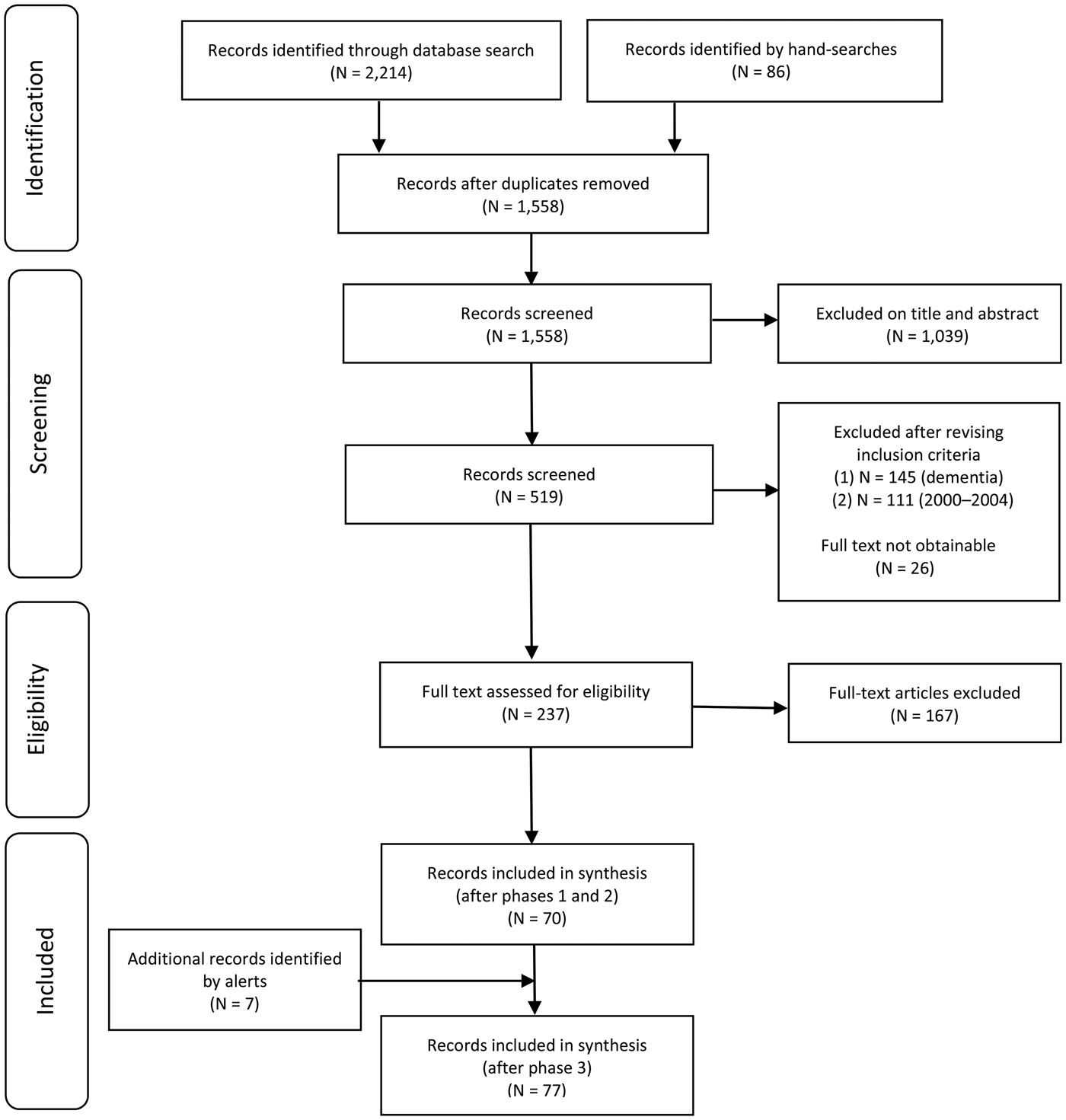
In total, 77 papers (of 71 studies) were included in this review.
Literature was saved in EndNote bibliographic software, duplicates removed, and inclusion and exclusion criteria applied on title and abstract, or full text if relevance was unclear. Full text of remaining literature was then retrieved and screened. The evidence was not rated; even within the medical field, it has been acknowledged that ‘the use of any quality score can be fraught with difficulty’ (Torgerson, Reference Torgerson2003: 54). A modified version of the Critical Appraisal Skills Programme's (CASP) three-stage approach to appraising evidence which uses a staged ‘yes’, ‘can't tell’, ‘no’ approach (CASP, 2013a, 2013b) was employed. First, the validity of results is evaluated based on whether a clearly focused issue was considered with an appropriate methodology. If ‘yes’ then methodological details are considered. Papers considered valid and minimally biased continue to the second and third stages, in which findings are reviewed for importance and usefulness. A different set of questions is used for different methodologies. This approach does not assign numerical scores based on quality. This was considered appropriate given the review's location in social care and the breadth of type of material. To compensate for inclusion not being score-based, limitations were identified. Thus, all papers included in the review addressed a clearly focused issue, used an appropriate methodology, and were judged relevant and with useful findings. To inform this stage, data from all papers were extracted into evidence tables detailing aims and location of studies, day centre type, publication type, theoretical frameworks used, and sample, design, methods, findings and limitations identified. Figure 1 summarises the literature, the searching and screening process. Details of all the literature included in this review are in Tables S1–S3 in the online supplementary material.
PRISMA flow diagram (Moher et al. Reference Moher, Liberati, Tetzlaff and Altman2009).
Synthesis of papers’ findings
Following Gough et al. (Reference Gough, Oliver and Thomas2012) and integrative review methodology (Whittemore and Knafl, Reference Whittemore and Knafl2005), findings of both qualitative and quantitative research are presented together in a configurative synthesis, in which data are organised to answer the review question by identifying themes ‘to build up a picture of the phenomenon of interest’ (Gough et al., Reference Gough, Oliver and Thomas2012: 188). In other words, this synthesis reports qualitative and quantitative research findings together thematically, with findings of interventions at day centres presented separately from those concerning attendance only.
Terms used in this paper
The terms ‘day centre’ and ‘attendance’ are used throughout, regardless of day centre type or how older people ‘use’ day centres which, in many studies, was not stated. ‘Significant’ refers to findings that are statistically significant using criteria defined in papers. As a systematic review reporting both positive and negative findings, the term ‘outcome’ is used to refer to any impact, effect or consequence (Glendinning et al., Reference Glendinning, Clarke, Hare, Maddison and Newbronner2008), whether beneficial or not.
Findings
General overview of included studies’ characteristics
In total, 77 papers met the criteria for this review. Evidence Tables S1–S3 (see the online supplementary material) detail the location of studies, type of day centre referred to, publication type, theoretical frameworks used, and sample, design, methods, findings and limitations. Three categories of literature were apparent: (a) day centres or their attenders (46 papers), (b) not focused on day centres but addressed review questions (ten papers) and (c) interventions carried out in day centres (21 papers).
Most of the literature was non-UK (see Figure 2), with the largest proportion from the United States of America (USA), and was published in peer-reviewed journals, most commonly gerontological, with about half as many in geriatric or health journals. Some appeared in social work, social care or public health journals, a few in other specialist topics (e.g. activities) and only one in a social policy journal.
Countries of papers.

Excepting studies relating to interventions in day centres, just over half the literature was quantitative. A number used validated scales (N = 16) which mostly measured depression, loneliness, physical function, health-related quality of life or social support. Many studies interviewed participants (N = 22) or were based on surveys (N = 9). Secondary analysis of data (N = 7), observation (N = 4), focus groups (N = 6) and questionnaires (N = 3) were less-common methods. Eight papers were literature reviews (N = 2), with smaller numbers being think pieces or expert opinion articles (N = 4), evaluations (N = 3) or case studies (N = 2).
Types of day centre in the literature, their aims and what they offer
An array of operational models appeared in the literature illustrating the breadth and complexity of day centres, both within and between countries (see Table 3). Also meriting acknowledgement are further differences including, for example, funding mechanisms and provider organisations. Detailed outline or comparison of the varying international operational models of day centres and the health, social care and funding systems within which these operate were outside the scope of the review. In descriptions, most centres were said to provide socialisation and activities while some offered health services and rehabilitation. Target users included functionally impaired/frail, socially isolated or retired people and, less often, family carers. Four possible aims of day centres were stated:
(1) To provide social and preventive services (Fitzpatrick et al., Reference Fitzpatrick, Gitelson, Andereck and Mesbur2005; Lund and Englesrud, Reference Lund and Engelsrud2008; Boen et al., Reference Boen, Dalgard, Johansen and Nord2010; Caiels et al., Reference Caiels, Forder and Malley2010; Dabelko-Schoeny and King, Reference Dabelko-Schoeny and King2010; MaloneBeach and Langeland, Reference MaloneBeach and Langeland2011; Kuzuya et al., Reference Kuzuya, Izawa, Enoki and Hasegawa2012; Iecovich and Biderman, Reference Iecovich and Biderman2013b; Fawcett, Reference Fawcett2014; Marhankova, Reference Marhankova2014; Liu et al., Reference Liu, Yap, Wong, Wei and Hua2015; Shahbazi et al., Reference Shahbazi, Foroughan, Rahgozar and Roghani2016; Kelly, Reference Kelly2017).
(2) To support continued independence of attenders (Ron, Reference Ron2007; Schmitt et al., Reference Schmitt, Sands, Weiss, Dowling and Covinsky2010; Kuzuya et al., Reference Kuzuya, Izawa, Enoki and Hasegawa2012; Liu et al., Reference Liu, Yap, Wong, Wei and Hua2015; Kelly et al., Reference Kelly, Puurveen and Gill2016).
(3) To support attenders’ health and daily living needs (Lund and Englesrud, Reference Lund and Engelsrud2008; Boen et al., Reference Boen, Dalgard, Johansen and Nord2010; Dabelko-Schoeny and King, Reference Dabelko-Schoeny and King2010; Schmitt et al., Reference Schmitt, Sands, Weiss, Dowling and Covinsky2010; Kuzuya et al., Reference Kuzuya, Izawa, Enoki and Hasegawa2012; Al-Dosseri et al., Reference Al-Dosseri, Khalil, Matooq, Al-Junaidi, Aldoy and Othman2014; Fawcett, Reference Fawcett2014; Liu et al., Reference Liu, Yap, Wong, Wei and Hua2015; Shahbazi et al., Reference Shahbazi, Foroughan, Rahgozar and Roghani2016).
(4) To enable family carers to have a break and/or continue with employment (Schmitt et al., Reference Schmitt, Sands, Weiss, Dowling and Covinsky2010; Al-Dosseri et al., Reference Al-Dosseri, Khalil, Matooq, Al-Junaidi, Aldoy and Othman2014; Fawcett, Reference Fawcett2014).
Models of day centre appearing in the literature

These four aims fall within the first two types of social care outcomes identified by research with older people and carers, namely outcomes resulting in change and outcomes for the purpose of maintenance or prevention, but do not reflect the third type, process outcomes (the way services are accessed and delivered) (Qureshi et al., Reference Qureshi, Patmore, Nicholas and Bamford1998).
Although what a day centre offers is likely to be influenced by its aims, only a small number of studies (Kuzuya et al., Reference Kuzuya, Masuda, Hirakawa, Iwata, Enoki, Hasegawa and Iguchi2006; Lund and Englesrud, Reference Lund and Engelsrud2008; Hostetler, Reference Hostetler2011; Boen et al., Reference Boen, Dalgard, Johansen and Nord2012; Iecovich and Biderman, Reference Iecovich and Biderman2013c; Wittich et al., Reference Wittich, Murphy and Mulrooney2014) proffered lists or categories of activities, but not their frequency, nor details of other services available (e.g. manicures, hairdressing, laundry) and without stating whether these were led by staff or visitors, or levels of participation. One paper did not list activities but outlined building layouts (Salari et al., Reference Salari, Brown and Eaton2006).
Day centre attenders
Fewer than half of the included research papers reported their attender participant characteristics in detail. Age, gender, marital status and living arrangements were the most commonly reported characteristics followed by physical and/or mental health, education, income and ethnicity. Nothing was reported about religious affiliations, sexual orientation or gender reassignment. Although proportions varied between studies, attenders emerged as primarily women who lived alone or were widowed, divorced or single and older, without further education, with low income, comorbidities and who took multiple medications. Demand for generalist day centre places by people with learning disabilities, who highly value their specialist day centres but are expected to ‘retire’ from these on reaching 65 years (Judge et al., Reference Judge, Walley, Anderson and Young2010), was predicted to increase in the future.
Varying levels of social support outside day centres were reported in five studies (Del Aguila et al., Reference Del Aguila, Cox and Lee2006; Fulbright, Reference Fulbright2010; Iecovich and Carmel, Reference Iecovich and Carmel2011; Chaichanawirote and Higgins, Reference Chaichanawirote and Higgins2013; Wittich et al., Reference Wittich, Murphy and Mulrooney2014). Having an inadequate informal network was one of two factors found to contribute to the decision to apply for a day centre place (Del Aguila et al., Reference Del Aguila, Cox and Lee2006). The English study by Caiels et al. (Reference Caiels, Forder and Malley2010) reported some volunteering activity (with no details) and only one attender in a Norwegian study also attended a course (unspecified) elsewhere (Lund and Engelsrud, Reference Lund and Engelsrud2008). Two studies covered other formal services received (Kuzuya et al., Reference Kuzuya, Masuda, Hirakawa, Iwata, Enoki, Hasegawa and Iguchi2006; Schmitt et al., Reference Schmitt, Sands, Weiss, Dowling and Covinsky2010) and a third found that, for people with functional impairments, receiving activity of daily living (ADL) support on attendance days was one factor that significantly improved regularity of attendance (Savard et al., Reference Savard, Leduc, Lebel, Beland and Bergman2009).
Why attend day centres?
In reporting reasons for attendance at day centres, the literature suggests prior social isolation and poor wellbeing are key. Reasons reported mainly fall under the first aim of day centres, namely providing social contact (Fulbright, Reference Fulbright2010; Pardasani, Reference Pardasani2010; Ingvaldsen and Balandin, Reference Ingvaldsen and Balandin2011; Iecovich and Biderman, Reference Iecovich and Biderman2013a; Marhankova, Reference Marhankova2014; McHugh et al., Reference McHugh, Lee, Lawlor and Brennan2015) and preventive services (Iecovich and Biderman, Reference Iecovich and Biderman2013a) or activities (Lund and Engelsrud, Reference Lund and Engelsrud2008; Fulbright, Reference Fulbright2010; Ingvaldsen and Balandin, Reference Ingvaldsen and Balandin2011). Two papers reported reasons addressing other aims: improving or maintaining health (Ingvaldsen and Balandin, Reference Ingvaldsen and Balandin2011; Iecovich and Biderman, Reference Iecovich and Biderman2013a) and perceived support for family carers (Iecovich and Biderman, Reference Iecovich and Biderman2013a). People also attended with an aim of introducing structure to their lives after retirement or losing a spouse (Lund and Englesrud, Reference Lund and Engelsrud2008) or because they felt that day centres met needs, without specifying the nature of these (Iecovich and Biderman, Reference Iecovich and Biderman2013a; Marhankova, Reference Marhankova2014).
Who benefits most?
A small amount of literature concluded that certain attenders may experience better outcomes than others. These were people living alone (Caiels et al., Reference Caiels, Forder and Malley2010; Fawcett, Reference Fawcett2014), the functionally (Caiels et al., Reference Caiels, Forder and Malley2010) or mobility impaired (Fawcett, Reference Fawcett2014), people with a low income (Caiels et al., Reference Caiels, Forder and Malley2010) or who were younger (⩽70) (Fawcett, Reference Fawcett2014). Caiels et al. (Reference Caiels, Forder and Malley2010: 67) noted ‘a diminishing effect size with greater need, meaning that a needs-based rule which only prioritised high needs potential recipients would generally not produce the greatest wellbeing improvement in the population for a given budget’. Frequent (Kuzuya et al., Reference Kuzuya, Masuda, Hirakawa, Iwata, Enoki, Hasegawa and Iguchi2006; Bilotta et al., Reference Bilotta, Bergamaschini, Spreafico and Vergani2010; Caiels et al., Reference Caiels, Forder and Malley2010) or longer (Dabelko-Schoeny and King, Reference Dabelko-Schoeny and King2010; Fawcett, Reference Fawcett2014) attendance and starting a new activity (Fitzpatrick et al., Reference Fitzpatrick, Gitelson, Andereck and Mesbur2005) and participating in and enjoying activities (Dabelko-Schoeny and King, Reference Dabelko-Schoeny and King2010) also contributed to better outcomes.
Perceptions of day centres
Professionals working in health and social care
While day centres occupy a recognised place in the care continuum in some countries (e.g. Boen et al., Reference Boen, Dalgard, Johansen and Nord2010; Pardasani, Reference Pardasani2010; Kuzuya et al., Reference Kuzuya, Izawa, Enoki and Hasegawa2012; Liu et al., Reference Liu, Yap, Wong, Wei and Hua2015), the literature indicates this may not be the case in England. Recognition, however, did not mean that different professionals universally recommended them (Kane et al., Reference Kane, Bershadsky and Bershadsky2006). In England, they were absent from lists of preventive services commissioned by some local authorities (Miller et al., Reference Miller, Williams, Allen and Glasby2014) and were not among services prioritised most highly by a small group of nurses (Clough et al., Reference Clough, Manthorpe, Oprsi, Green, Fox, Raymond, Wilson, Raymond, Sumner, Bright and Hay2007). Some local authority staff believed that demand had declined for two possible reasons: lack of a personalised service in a day centre or older people preferring other services or options (Brookes et al., Reference Brookes, Callaghan, Netten and Fox2013).
Day centre managers
According to day centre managers and senior staff in the USA, day centres suffer from an image problem (Hostetler, Reference Hostetler2011) and are influenced by terminology (Sanders et al., Reference Sanders, Saunders and Kintzle2009). They felt that the term ‘day services’ was preferred by older people over ‘day care’ which was likely to be associated with images of disabled and very old attenders and, consequently, stigmatised. Managers also thought that other professionals lacked understanding of the value of day centres (Sanders et al., Reference Sanders, Saunders and Kintzle2009).
Older people: attenders and non-attenders
Day centres are perceived by some attenders as undesirable welfare services for people who are old, isolated, ill or miserable (Lund and Englesrud, Reference Lund and Engelsrud2008; Ingvaldsen and Balandin, Reference Ingvaldsen and Balandin2011; Iecovich and Biderman, Reference Iecovich and Biderman2013a). Among some, attitudes became more positive once attending (Sale, Reference Sale2005; Lund and Englesrud, Reference Lund and Engelsrud2008).
It is possible that negative perceptions may be reflected in reasons given for not attending day centres. These included preferring to be at home, lack of interest or need, difficulty seeing other users with dementia or disability, a view that activities were not of interest or culturally inappropriate, and that centres offered insufficient opportunities to contribute by volunteering (Pardasani, Reference Pardasani2010; Iecovich and Biderman, Reference Iecovich and Biderman2013a; Ipsos MORI, 2014).
Considering future attenders, US baby-boomers (younger older people) appeared to feel positive about day centres, viewing them as social and activity centres and as offering carer support (MaloneBeach and Langeland, Reference MaloneBeach and Langeland2011). Potential challenges in attracting future cohorts in Canada were acknowledged, but a literature review concluded that day centres ‘are already a traditional part of our culture and are widely recognized and respected’ (Fitzpatrick and McCabe, Reference Fitzpatrick and McCabe2008: 211).
Mapping outcomes of attendance and interventions against day centre aims
Four aims of day centres were identified in the literature: providing social and preventive services, supporting continued independence of attenders, supporting attenders’ health and daily living needs, and enabling family carers to have a break and/or continue with employment. Bearing in mind the breadth of what is covered by the term ‘prevention’ (Wistow et al., Reference Wistow, Waddington and Godfrey2003), the first three aims overlap, and findings have been divided in this section as follows. The prevention of decline and possible avoidance of more expensive services (except care homes) are covered under ‘providing social and preventive services’. ‘Supporting independence’ encompasses literature concerning the direct supporting of independence, including remaining at home and delaying a move to long-term residential care. Literature linked with existing health conditions appears next and then carer support. Judgements were necessary on occasion. For example, meals may be preventive (e.g. of loneliness or malnutrition) or may be classified as supporting people's daily living needs. Outcomes of interventions undertaken in day centres are presented separately from outcomes of attendance alone. Finally, process outcomes for attenders are summarised.
Providing social and preventive services
Attendance
Positive psycho-social outcomes of day centre attendance were the most documented, mainly by non-UK literature and one large English study, testing a validated measure, which found that day centre attendance increased overall quality of life (Caiels et al., Reference Caiels, Forder and Malley2010).
Social participation was an important benefit (Aday et al., Reference Aday, Kehoe and Farney2006; Caiels et al., Reference Caiels, Forder and Malley2010; Dabelko-Schoeny and King, Reference Dabelko-Schoeny and King2010; Fulbright, Reference Fulbright2010; Ingvaldsen and Balandin, Reference Ingvaldsen and Balandin2011; Fawcett, Reference Fawcett2014). It helped people gain a better perspective of their own abilities (Dabelko-Schoeny and King, Reference Dabelko-Schoeny and King2010), and feel more stimulated, confident and content (Fawcett, Reference Fawcett2014). It appeared to encourage increased activity outside day centres with new day centre friends (Aday et al., Reference Aday, Kehoe and Farney2006) or existing networks (Fawcett, Reference Fawcett2014). Having supportive networks increased the likelihood of activity participation (Aday et al., Reference Aday, Kehoe and Farney2006) which also contributed to improved perceived wellbeing (Dabelko-Schoeny and King, Reference Dabelko-Schoeny and King2010). Intergenerational contact improved wellbeing and activity (Weintraub and Killian, Reference Weintraub and Killian2007, Reference Weintraub and Killian2009). Day centres were also likened to second homes (Lund and Englesrud, Reference Lund and Engelsrud2008; Ingvaldsen and Balandin, Reference Ingvaldsen and Balandin2011) and new social connections substituted for family (Aday et al., Reference Aday, Kehoe and Farney2006; Weintraub and Killian, Reference Weintraub and Killian2007).
Attendance improved mental health and quality of life or prevented its decline, as evidenced by reductions in depression and/or anxiety (Bilotta et al., Reference Bilotta, Bergamaschini, Spreafico and Vergani2010; Dabelko-Schoeny and King, Reference Dabelko-Schoeny and King2010; Fulbright, Reference Fulbright2010; Santangelo et al., Reference Santangelo, Testai, Castelli, Albani, Cappello, Primavera, Tomarchio and Maugeri2012; Fawcett, Reference Fawcett2014), improved resilience scores (Fawcett, Reference Fawcett2014), significantly improved life satisfaction (Aday et al., Reference Aday, Kehoe and Farney2006) and, compared with non-attenders, higher emotional, physical and overall quality of life (Iecovich and Biderman, Reference Iecovich and Biderman2013b), self-esteem and sense of control (Ron, Reference Ron2007). Reflecting a finding that subjective variables (e.g. self-rated health) were more likely to explain higher quality of life than objective ones (e.g. morbidity, attendance frequency), higher wellbeing was significantly associated with social participation and feeling that attendance supported carer wellbeing (Iecovich and Biderman, Reference Iecovich and Biderman2013b). Also impacting on wellbeing was the ability to access other services (e.g. occupational therapy) (Dabelko-Schoeny and King, Reference Dabelko-Schoeny and King2010). Prevention of decline was evidenced by maintenance of general wellbeing (Wittich et al., Reference Wittich, Murphy and Mulrooney2014) and similar levels of loneliness in frail attenders and non-attenders were interpreted as indicating the probable positive impact of attendance given group differences (Iecovich and Biderman, Reference Iecovich and Biderman2012).
Positive outcomes are said to be partly attributable to the group nature of the service (Ron, Reference Ron2007; Dabelko-Schoeny and King, Reference Dabelko-Schoeny and King2010; Fitzpatrick, Reference Fitzpatrick2010) which provides structure (Ron, Reference Ron2007), enables involvement (Aday et al., Reference Aday, Kehoe and Farney2006; Ron, Reference Ron2007; Lund and Englesrud, Reference Lund and Engelsrud2008; Ingvaldsen and Balandin, Reference Ingvaldsen and Balandin2011; Iecovich and Biderman, Reference Iecovich and Biderman2013a; Fawcett, Reference Fawcett2014) and ‘volunteering’ (undefined) (Fitzpatrick et al., Reference Fitzpatrick, Gitelson, Andereck and Mesbur2005; Lund and Englesrud, Reference Lund and Engelsrud2008). It is possible that the congregate environment may be one reason behind enjoying attending despite this not changing some people's lives (Dabelko-Schoeny and King, Reference Dabelko-Schoeny and King2010). A small English study reported attenders felt useful by helping clearing tables after meals and energised by being around people, and they enjoyed telling family about their day's activities (Ipsos MORI, 2014). Staff members were felt to play a role in meeting attenders’ emotional needs (Weintraub and Killian, Reference Weintraub and Killian2007) and raising their self-esteem (Ron, Reference Ron2007). Informal staff monitoring of health may have contributed to lower mortality in attenders than non-attenders (Kuzuya et al., Reference Kuzuya, Masuda, Hirakawa, Iwata, Enoki, Hasegawa and Iguchi2006).
Attendance at two day centres that integrated health and social care prevented decline, with a bio-psychosocial model of support resulting in attenders faring significantly better than a control group in disability and functioning domains of getting around, getting along with people, life activities and participation (Shahbazi et al., Reference Shahbazi, Foroughan, Rahgozar and Roghani2016). Individually tailored therapeutic packages, however, had less impact, resulting in small improvements in physical wellbeing in attenders compared with non-attenders; impact on functional ability was very limited and psychological wellbeing did not change (Murphy et al., Reference Murphy, Hugman, Bowen, Parsell, Gabe-Walters, Newson and Jordan2017).
Interventions
Seven interventions reportedly prevented decline of or improved mental, physical and cognitive health and aspects of wellbeing, and increased social networks (Mathieu, Reference Mathieu2008; Pitkala et al., Reference Pitkala, Routasalo, Kautiainen and Tilvis2009, Reference Pitkala, Routasalo, Kautiainen, Sintonen and Tilvis2011; Dabelko-Schoeny et al., Reference Dabelko-Schoeny, Anderson and Spinks2010; Fitzpatrick, Reference Fitzpatrick2010; Boen et al., Reference Boen, Dalgard, Johansen and Nord2012; Ganz and Jacobs, Reference Ganz and Jacobs2014; Gallagher, Reference Gallagher2016). However, outcomes of interventions were not positive without exception (see Table 4). One, a discussion group, resulted in the unexpected outcome of improved relationships between attenders, and between attenders and staff.
Interventions in day centres and their outcomes

Two further papers exemplified joint working between services and sectors. A programme of health outreach offering flexible service choices for people in public housing addressed individual need and targets for both organisational partners, a housing provider and public health services (Vogel et al., Reference Vogel, Ransom, Wai and Luisi2007). A newly introduced hearing screening service improved links with a co-located support programme for hearing-impaired people (Wittich et al., Reference Wittich, Murphy and Mulrooney2014).
Finally, day centres were argued to be suitable venues for health promotion interventions (Boen et al., Reference Boen, Dalgard, Johansen and Nord2012) and well placed to identify hearing and vision impairments, screen for depression, and perhaps offer falls prevention programmes and depression treatment in collaboration with primary care or community health centres (Cabin and Fahs, Reference Cabin and Fahs2011).
Supporting independence
Attendance
Apart from two studies linking day centre attendance with remaining at home for longer, little was found about the contribution of day centre attendance to supporting independence. The first of these linked consistent day centre attendance with delaying a care home move in functionally and/or cognitively impaired people over a four-year period, with institutionalisation (move to long-term care) risk significantly decreasing among those attending more frequently or for longer (Kelly et al., Reference Kelly, Puurveen and Gill2016). The second identified that a combination of day centre attendance and personal care at home supported functionally limited people to remain at home (Chen and Berkowitz, Reference Chen and Berkowitz2012). Other studies have reported that attendance supported people with sight loss to remain at home following participation in rehabilitative services (Wittich et al., Reference Wittich, Murphy and Mulrooney2014) and contributed to the reduction of socio-health-related hospital admissions and delaying moves to long-term care facilities (Fawcett, Reference Fawcett2014) and, potentially, makes practical support available.
With respect to attenders’ own perceptions, some felt that attendance helped them remain at home (Ingvaldsen and Balandin, Reference Ingvaldsen and Balandin2011). Socially integrated women living alone attributed this partly to participation in health promotion activities (Aday et al., Reference Aday, Kehoe and Farney2006). Practical support (e.g. transport, shopping) was perceived to be available at times of need from ‘close friendships’ (undefined) newly developed at day centres (Aday et al., Reference Aday, Kehoe and Farney2006). Home maintenance was linked with attendance in England; home cleanliness and comfort were the second highest domain of benefit of attendance, possibly ‘due to reducing the tasks associated with food preparation and personal cleanliness that would otherwise take place at home’ (Caiels et al., Reference Caiels, Forder and Malley2010: 37).
Interventions
Four interventions indicate that day centres may play a role in supporting people to age in place (see Table 4). They maintained or improved physical function and quality of life, impacting on their attenders’ potential ability to remain independent (Henwood et al., Reference Henwood, Wooding and de Souza2013; Battaglia et al., Reference Battaglia, Bellafiore, Caramazza, Paoli, Bianco and Palma2014; Ota et al., Reference Ota, Goto, Fujita, Haruta, Noda and Tamakoshi2014; Yamada and Demura, Reference Yamada and Demura2014). These findings are particularly pertinent since people may initially access day centres when their functional capacity and support network have reduced (Del Aguila et al., Reference Del Aguila, Cox and Lee2006). Thus, day centres may replace rather than supplement informal support.
Supporting attenders’ health and daily living needs
Attendance
Findings of seven studies addressing impact of attendance on physical health and functional needs were mixed. Increased exercise, improved eating habits (Aday et al., Reference Aday, Kehoe and Farney2006), significantly less restricted physical and emotional health, compared with non-attenders, despite no significant change in physical, social and mental health-related quality of life (Schmitt et al., Reference Schmitt, Sands, Weiss, Dowling and Covinsky2010) and physical health improvements (Fawcett, Reference Fawcett2014) were reported. Attenders felt that attendance improved and maintained their health (Ingvaldsen and Balandin, Reference Ingvaldsen and Balandin2011). Surprisingly, social support from friendship did not significantly impact on health (Fitzpatrick et al., Reference Fitzpatrick, Gitelson, Andereck and Mesbur2005). Two studies found that it was other factors, not day centre attendance, which impacted on outcomes; these were morbidity (Iecovich and Biderman, Reference Iecovich and Biderman2013c) and older age (Ishibashi and Ikegami, Reference Ishibashi and Ikegami2010).
Interventions
Nine interventions successfully addressed the management of existing conditions (Frosch et al., Reference Frosch, Rincon, Ochoa and Mangione2010; Truncali et al., Reference Truncali, Dumanovsky, Stollman and Angell2010; McGivney et al., Reference McGivney, Hall, Stoehr and Donegan2011; Santacreu and Fernandez-Ballesteros, Reference Santacreu and Fernandez-Ballesteros2011; Resnick et al., Reference Resnick, Ilagan, Kaylor, Mehling and Alwan2012; Dickson et al., Reference Dickson, Melkus, Katz, Levine-Wong, Dillworth, Cleland and Riegel2014; Morrisroe et al., Reference Morrisroe, Rodriguez, Wang, Smith, Trejo and Sarkisian2014) or health promotion and improvement (West et al., Reference West, Bursac, Cornell, Felix, Fausett, Krukowski, Lensing, Love, Prewitt and Beck2011; Kogan et al., Reference Kogan, Gonzalez, Hart, Halloran, Thomason, Levine and Enguidanos2013), pointing to the suitability of day centres as venues for such interventions (see Table 4). Reportedly, but without evidence of outcomes, activities to support health and mobility have been undertaken by pharmacists at day centres for some time as their expertise puts them in a good position to support older people's health (Wick, Reference Wick2012).
Additionally, a small study found that the provision of meals enhanced nutrition particularly, health professionals thought, for people lacking company or who have experienced bereavement (McHugh et al., Reference McHugh, Lee, Lawlor and Brennan2015). Reflecting evidence about the value placed on eating in company (Pardasani, Reference Pardasani2010; Ingvaldsen and Balandin, Reference Ingvaldsen and Balandin2011), McHugh et al. (Reference McHugh, Lee, Lawlor and Brennan2015) highlighted how nutritional and social support can be delivered together.
Formal relationships with health services were the subject of only two papers, one from England, suggesting that relationships may be underdeveloped. English day centres were reported to be a common venue for outreach by Community Mental Health Teams (Tucker et al., Reference Tucker, Wilberforce, Brand, Abendstern and Challis2014) and some US day centres had developed their services strategically to remain financially stable, resulting in more cross-referrals from home health services and lower public costs (Dabelko et al., Reference Dabelko, Koenig and Danso2008).
Supporting family carers
Attendance
Two studies investigated outcomes for carers of attenders. One found day centre use significant in explaining the better psychological quality of life experienced by family carers of attenders compared with carers of people receiving home care (Iecovich, Reference Iecovich2008). However, overall quality of life and carer ‘burden’ were similar in the two groups. In the other, a slightly lower percentage of carers of people attending day centres and using home care reported burden, regardless of frequency and length of attendance, compared with carers of people using home care only (Kelly et al., Reference Kelly, Puurveen and Gill2016).
Day centre attenders in another study perceived that attendance improved relationships with their carers and decreased carer burden. This was because they thought their carers did not need to worry about them while they were at the day centre (Dabelko-Schoeny and King, Reference Dabelko-Schoeny and King2010).
Interventions
No interventions were identified that specifically supported carers of attenders, although there is potential for some of the above interventions to reduce carer burden. For example, one exercise programme in a day centre providing respite for carers resulted in functional improvements and reduced risk of falls for attenders (Henwood et al., Reference Henwood, Wooding and de Souza2013), thereby potentially delaying need for support that would impact on carers.
Process outcomes for day centre attenders
Very little was identified about process outcomes. Appreciation for being offered choice, being respected and for empowerment enabled by relationships with staff was conveyed by a small number of studies (Weintraub and Killian, Reference Weintraub and Killian2007; Glendinning et al., Reference Glendinning, Clarke, Hare, Maddison and Newbronner2008; Dabelko-Schoeny and King, Reference Dabelko-Schoeny and King2010; Fawcett, Reference Fawcett2014). Better emotional support may have been more available from day centre than home care staff (Ron, Reference Ron2007). English studies reported attenders’ high satisfaction with their relationships with day centre workers, their behaviour and work (Caiels et al., Reference Caiels, Forder and Malley2010), and one concluded that ‘day centres could provide excellent quality services, with a high emphasis on process outcomes’ (Glendinning et al., Reference Glendinning, Clarke, Hare, Maddison and Newbronner2008: 61).
The systemic purpose of day centres
Earlier sections of this article have covered purposes of day centres for older people attending them. The literature also reported outcomes for health and social care systems in two areas and joint working in the provision of interventions at day centres.
Firstly, English day centres were reported to be cost-effective by a large study which measured outcomes using a cost–utility tool (ASCOT) and then applied criteria used by NICE to judge cost-effectiveness of health services relative to outcomes (Caiels et al., Reference Caiels, Forder and Malley2010).
Secondly, interventions with significant and positive benefits for participants may have consequences for the other parts of the health and social care system, namely the potential for financial savings and by complementing the work of health professionals. Substantial annual cost savings were estimated as a result of lower use of health services following psycho-social group work (Pitkala et al., Reference Pitkala, Routasalo, Kautiainen and Tilvis2009), while monitoring of blood pressure at day centres was thought to have the potential to reduce cardiovascular disease and associated costs (Resnick et al., Reference Resnick, Ilagan, Kaylor, Mehling and Alwan2012). Whereas one study found that attendance alone made no impact on use of hospital and specialist health services (Iecovich and Biderman, Reference Iecovich and Biderman2013c), another found that attenders spent significantly fewer days in hospital than non-attenders and had significantly shorter hospital stays, possibly due to regular contact with centres’ health-care professionals (Kelly, Reference Kelly2017). One may infer from the above studies that interventions in day centres may be best placed to impact on primary care services. However, costs may also be incurred by interventions involving outside professionals not usually employed by English day centres. For example, nurses, occupational therapists and physiotherapists ran the psycho-social groups in the study by Pitkala et al. (Reference Pitkala, Routasalo, Kautiainen and Tilvis2009, Reference Pitkala, Routasalo, Kautiainen, Sintonen and Tilvis2011) and the exercise programme in Henwood et al. (Reference Henwood, Wooding and de Souza2013) required staff to be trained. As for impacts on health professionals, nurses may have been able to use their time more efficiently as a result of automatic and remote monitoring of blood pressure data generated in telehealth kiosks in day centres (Resnick et al., Reference Resnick, Ilagan, Kaylor, Mehling and Alwan2012), pharmacy students undertaking medication reviews improved their professional skills and learnt about older people when encountering them in day centres (McGivney et al., Reference McGivney, Hall, Stoehr and Donegan2011), and a programme of Kegel exercises showed that information provided by general practitioners (GPs; family physicians) can be consolidated by expert supervision at a day centre (Santacreu and Fernandez-Ballesteros, Reference Santacreu and Fernandez-Ballesteros2011).
Although interventions may be delivered by trained lay people or volunteers (West et al., Reference West, Bursac, Cornell, Felix, Fausett, Krukowski, Lensing, Love, Prewitt and Beck2011; Dickson et al., Reference Dickson, Melkus, Katz, Levine-Wong, Dillworth, Cleland and Riegel2014), co-operative working with health or public health professionals in delivering interventions was also evidenced (Vogel et al., Reference Vogel, Ransom, Wai and Luisi2007; Pitkala et al., Reference Pitkala, Routasalo, Kautiainen, Sintonen and Tilvis2011; Resnick et al., Reference Resnick, Ilagan, Kaylor, Mehling and Alwan2012), which also addressed provider's service targets (Vogel et al., Reference Vogel, Ransom, Wai and Luisi2007). The challenge of collaboration between differing organisational cultures was said to reduce with time (Vogel et al., Reference Vogel, Ransom, Wai and Luisi2007), although there may remain a risk that longer-term maintenance outcomes become over-shadowed by the change outcomes favoured by health services (Glendinning et al., Reference Glendinning, Clarke, Hare, Maddison and Newbronner2008). For example, it may be considered more important to improve cognition or reduce blood pressure than to prevent psychological wellbeing from declining further.
Discussion
This paper adds to the existing knowledge by considering the findings of a review aiming to discover the extent of the evidence about how day centres for older people are perceived, their benefits – and whom these are for – and purpose. As a scoping review aiming to inform new empirical research, this discussion focuses on the gaps in knowledge rather than what can be learnt from the literature. It located considerable gaps in the literature. It also identified a great diversity of research, day centre types and countries of origin with distinct systems, all presenting obstacles to drawing conclusions. This diversity was earlier observed by Gaugler and Zarit (Reference Gaugler and Zarit2001: 44) who stated that the ‘the literature on adult day care is diverse in terms of focus, design and client population. Therefore, deriving conclusions is difficult’.
Concerning the first question, this review has identified that little is known about how day centres are perceived by those who attend them, their carers and other professionals, particularly those who are commonly in contact with older people in need of care and support (e.g. GPs or family physicians, nurses, social workers and occupational therapists). This is relevant to both the English health and social care systems and beyond. The future of day centres in England may be affected by these perceptions given that local authorities have a new role in shaping the care market (HM Government, 2014), and that part of commissioners’ roles is to gather evidence about user views and service options (Local Government Association and University of Birmingham, 2015). This point is particularly salient given that day centre managers in the USA, where – as reported in the literature – day centres are integrated within the health and care system and operational models are clear-cut, expressed concern about professionals’ understanding of day centres’ value and older people's negative perceptions based on terminology.
In relation to the benefits of day centres, the literature has yielded evidence that day centre attendance and participation in interventions taking place within them may have a positive impact on older attenders’ mental health, social life, physical function and quality of life. Quality of life is ‘a broad ranging concept, incorporating in a complex way a person's physical health, psychological state, level of independence, social relationships, personal beliefs and relationship to salient features in the environment’ (World Health Organization, 1998: 17). Day centres make available social contact, activities and interventions that improve quality of life, support the management of existing conditions, and may prevent declining health and function in a congregate environment that, itself, seems to contribute to outcomes. Process outcomes for attenders have been neglected, though, and may be an important part of day centre experiences. In England, as noted above, quality of life and satisfaction of people receiving publicly funded services and carers are monitored annually and reported in Outcomes Frameworks, but findings concerning day centres are not presented separately. Furthermore, as day centres are not regulated, the inspectorate does not include them in its ratings of care quality.
Day centres appear to be gendered services, largely used by older old women with declining health and from lower socio-economic backgrounds. Since more women than men live to older ages, when health tends to decline, and further education was uncommon in current very old cohorts, this profile is unsurprising. With the UK's Equality Act 2010 (HM Government, 2010) in mind, this review found no studies reporting attenders’ protected characteristics of religious affiliation, sexual orientation or gender reassignment, confirming Manthorpe and Moriarty's (Reference Manthorpe and Moriarty2014) review of UK literature from 2000 to 2013 which found a dearth of such data about day centre attenders, and argued that such data were needed to enable examination of barriers to service use or differing experiences, for example. These groups tend to remain invisible except in focused studies.
Important data for the contextualisation of outcomes are also missing. There was little about attenders’ lives beyond day centres, whether additional recreational activity, social support or other formal services were received, or their frailty and wellbeing. Neither is it known what motivates people to start attending a day centre. Furthermore, even the validated tool of Caiels et al. (Reference Caiels, Forder and Malley2010) that aims to isolate the impact of a service is not able to explain what elements of day centres attenders particularly like and why, about which there is very limited literature.
With respect to their contribution to health and social care systems, day centres’ four aims, as ascribed by the literature, fall within the English government's current policy of preventing deterioration, promoting wellbeing, enabling people to remain at home while growing older and supporting carers (HM Government, 2014). Mainly in non-UK settings, day centres have demonstrated themselves to be convenient pre-existing community venues for a range of daily, short- and long-term, preventive and health-related interventions run by trained staff or volunteers, or by health or social care professionals which are accessible to relevant target groups. Interventions that were focused on change or maintenance/prevention mainly showed positive outcomes, including cost-effectiveness and potential for cost savings. Despite this evidence suggesting that day centres may make a positive contribution to health and social care systems and may play a more prominent role in the prevention of ill-being, the lack of literature focusing on day centres’ role as preventive services and any current relationships with health services suggests this may not be recognised. This includes their role as services that support older people to remain at home. Furthermore, the lack of literature about perceptions of professionals working in health or social care about day centres perhaps reflects an underlying perception that day centres do not align with current local or national priorities.
Conspicuously absent is evidence concerning family carers and volunteers with reference to all three review questions. Many English day centres are run within the voluntary or not-for-profit sector and are ‘staffed’ by volunteers (Hussein and Manthorpe, Reference Hussein and Manthorpe2014). Furthermore, few studies have included paid day centre staff, thus neglecting the views and experiences of those providing care and support to older attenders.
Policy-related theory was also notably lacking, with studies concerning ageing in place, for example, mainly focused on preventing dependence or moves to long-term care facilities, rather than on impact on quality of life for those remaining at home.
Although the qualitative and quantitative findings in the literature complemented each other and findings were commonly in accord with earlier research findings, six points are worth highlighting with respect to the limitations of this body of literature. First, the generalisability of several studies’ findings is affected by small sample sizes and the characteristics of participants who may have been recruited against specific criteria, study design or day centre model. Also, much literature originated in the USA where funding systems and day centre models are often different to those operating elsewhere. Second, attrition due to health problems or caring responsibilities was, on occasion, relatively high. Although conceivable that the apparent typical profile of attenders – very old women with declining health, frailty and multiple morbidities – may be the underlying cause, this may also indicate that the studies’ requirements were too demanding or that day centres do not support wellbeing or meet expectations. Third, bias may be present as respondents may have given socially desirable answers (Dabelko-Schoeny and King, Reference Dabelko-Schoeny and King2010), especially during interviews at day centres (Iecovich and Biderman, Reference Iecovich and Biderman2013b), potentially due to fear of service withdrawal. Fourth, sample sizes were wide-ranging, usually larger in secondary data analysis and quantitative studies than qualitative studies. Fifth, most outcomes measures used and data collected required expert administration, equipment, analysis and interpretation. Measures that can be administered and interpreted by staff and volunteers and are pertinent to the service being offered may be of more practical use to day centre management, operation and statutory bodies, particularly if measures correspond with centres’ overall aims. Finally, there is an imbalance in the types of day centres involved in research. Less is known about day centres whose attenders have substantial functional limitations or which may be supported by external funding (Sanders et al. Reference Sanders, Saunders and Kintzle2009) than about US ‘senior centers’ targeting a more active population. Given the declining numbers of English day centres and the tightening of social care eligibility criteria for publicly funded services, it is likely that English day centre attenders may be of the former type.
Limitations of the review
The limitations of this scoping review lie in its inclusion of only English-language material. Additionally, due to the differing terminology used about day centres, some literature may not have been not identified. While literature was not ‘scored’, its limitations are acknowledged. However, a systematic approach was taken and this, together with its broad search strategy, helped to identify more literature than expected.
Conclusion
This review presents a strong argument for conducting an England-based empirical study. It confirms that day centres are under-researched as whole services, both in England and elsewhere. No interventions appear to have been tested in English day centres and English literature tends not to be directly focused on day centres, similar to much of the non-UK literature. Although the lack of research about English day centres may indicate a less-defined role compared with some other countries, it may also arise from the limited funding for social care research (Rainey et al., Reference Rainey, Woolham and Stevens2015) or reflect the low priority given to this service model by policy makers and researchers (Clark, Reference Clark2001). Notwithstanding the difficulty of making international comparisons and drawing conclusions from the diversity of operational models, the non-UK evidence in this paper suggests that the role of day centres in England is underdeveloped and that there is potential for development given the mainly positive outcomes reported in the 2005–2017 literature which align with current English policy themes. Day centres’ potential contribution to health and social care outcomes would benefit from further research. In the absence of national surveys or data, it will be important to establish what day centres offer, who uses them and why, and how they are perceived by their various stakeholders and potential users to contextualise their current and potential role.
Supplementary material
To view supplementary material for this article, please visit https://doi.org/10.1017/S0144686X18000843.
Author contributions
KO undertook the review reported in this article and drafted the article. JM was involved in developing the research proposal for this study and assisted with drafting this article. AT commented on drafts of this article.
Financial support
This work was supported by The Dunhill Medical Trust (grant number RTF59/0114). The views expressed are those of the authors only.
Conflict of interest
The authors declare no conflicts of interest.
Ethical standards
The study received ethical approval from the Health Research Authority's Social Care Research Ethics Committee (reference 15/IEC08/0033).


 Open access

