

Implications
Improved breeding, feeding and management have led to intensive dairy systems with increased milk to meat production based on cows with improved lactation persistency and peak milk yield. The use of extended lactation can increase cows’ lifetime and improve lifetime milk production and reduce the frequency per annual cow of the welfare issues associated with calving. Furthermore, extended lactation has the potential to improve the sustainability of dairy production by lower land use and emissions of greenhouse gas.
Introduction
Lactation in dairy cows can be extended (EXT) beyond the standard 305-d lactation (STD) by delayed rebreeding leading to an extended calving interval (CI). Since the 1990s, various EXT strategies have been studied in a number of experiments (Bertilsson et al., Reference Bertilsson, Berglund, Ratnayake, Svennersten-Sjaunja and Wiktorsson1997; van Amburgh et al., Reference van Amburgh, Galton, Bauman and Everett1997; Österman and Bertilsson, 2003; Christiansen et al., Reference Christiansen, Danfær, Sehested and Kristensen2005; Auldist et al., Reference Auldist, O’Brien, Cole, Macmillan and Grainger2007; Kolver et al., Reference Kolver, Roche, Burke, Kay and Aspin2007; Sorensen et al., Reference Sorensen, Muir and Knight2008), and in one on-farm study (Arbel et al., 2001) where cows were deliberately managed to receive a delayed first insemination. Studies of an EXT strategy where cows likely went through an EXT not on purpose but because of reproductive failure were not included here.
An EXT strategy will decrease the number of calvings per year and decrease the number of health risk periods (mastitis, lameness, metabolic problems in early lactation) associated with calving (Ingvartsen et al., Reference Ingvartsen, Dewhurst and Friggens2003), and thereby the EXT strategy holds the potential to improve dairy cow longevity and lifetime efficiency. Farm economy should potentially benefit from this by reduced costs of insemination, reduced veterinary costs and reduced costs of rearing replacement heifers, which represent the second-largest annual expense of a dairy farm after the feed costs (Bach et al., Reference Bach, Valls, Solans and Torrent2008). Modern dairy cows have been selected for increased milk yield, but this is associated with a decrease in health and reproductive performance (Butler, Reference Butler2000). With an EXT strategy, the cow is being inseminated in a stage of more positive energy balance (EB) and might also be dried off at a lower milk yield than when managed for STD. However, the individual lactation persistency is varying (Kolver et al., Reference Kolver, Roche, Burke, Kay and Aspin2007). Both peak yield (kg and days in milk (DIM)) and lactation persistency affect the ability of the individual cow to maintain a high daily milk production during EXT. Delaying rebreeding should itself improve lactation persistency as pregnancy exerts a negative effect on milk yield, especially during the last trimester (e.g. Brotherstone et al., Reference Brotherstone, Thompson and White2004). However, milk yield and persistency might be affected by health incidences during lactation and can also be manipulated through management decisions, including milking frequency and feeding strategy (Stockdale, Reference Stockdale2006; Kolver et al., Reference Kolver, Roche, Burke, Kay and Aspin2007; Grainger et al., Reference Grainger, Auldist, O’Brien, Macmillan and Culley2009).
Managing herds for EXT can be critical for milk quality if cows fail at sustaining high yields (Sorensen et al., Reference Sorensen, Muir and Knight2008). Such scenario is of special relevance for seasonal calving systems, as EXT bulk milk can be problematic for the manufacturer of high-quality dairy products (Auldist et al., Reference Auldist, Grainger, Houlihan, Mayes and Williams2010).
Recently, focus has also been on the potential impact that an EXT strategy may have on greenhouse gas (GHG) emission from dairy production and herd profitability (Wall et al., Reference Wall, Coffey and Pollott2012; Browne et al., Reference Browne, Behrendt, Kingwell and Eckard2015). However, the complex effects on herd dynamics and production performance of changing from an STD strategy to an EXT strategy make it less clear what the aggregated effect will be at herd and farm levels.
This paper aims at reviewing the effects of an EXT strategy in dairy cattle. The review will focus on effects of EXT on main sections: milk production and persistency, reproduction, milk quality, lifetime performance of the cow and herd and farm levels. The paper reviews the scientific literature including results from the recent Danish project REPROLAC on EXT strategy. The empirical basis of REPROLAC was (1) experiments at four private Danish farms (Lehmann et al., Reference Lehmann, Mogensen and Kristensen2014, Reference Lehmann2016 and Reference Lehmann, Mogensen and Kristensen2017; Lehmann, Reference Lehmann2016; Maciel et al., Reference Maciel, Mogensen, Lehmann, Kidmose, Kristensen, Larsen and Poulsen2017); (2) experiment at the experimental farm, Aarhus University, Foulum (Gaillard, Reference Gaillard2016; Gaillard et al., Reference Gaillard, Barbu, Callesen, Sørensen, Sehested and Vestergaard2016a and Reference Gaillard, Vestergaard, Weisbjerg and Sehested2016c; Maciel, Reference Maciel, Poulsen, Larsen, Kidmose, Gaillard, Sehested and Larsen2016; Maciel et al., Reference Maciel, Poulsen, Larsen, Kidmose, Gaillard, Sehested and Larsen2016); (3) lifetime modelling by use of the GARUNS model (Gaillard et al., Reference Gaillard, Martin, Blavy, Friggens, Sehested and Phuong2016b); and (4) modelling of various herd scenarios using the SimHerd-model (Lehmann et al., Reference Lehmann2016 and Reference Lehmann, Mogensen and Kristensen2019).
Milk production and persistency
The ascending, peak and descending phases of milk yield during the lactation of a dairy cow characterise the course of milk production from calving through cessation by drying off. The rate of decline in milk yield after the peak phase broadly defines milk production persistency, and hence a combination of peak yield and lactation persistency defines total lactation milk production. The following subsections focus on how an EXT strategy and management decisions (milking frequency, feeding strategy) affect milk production and persistency.
Several studies (Table 1) compare EXT with STD. Some studies compare milk production per lactation day, whereas others compare milk production per feeding day, which is the sum of lactating and dry days. Extending the lactation dilutes the effect of including dry days on milk production per feeding day if dry period length is unchanged.
ECM yield per day of CI (lactating + dry days) of dairy cows in confinement systems during control and EXT. Number of observations (n)
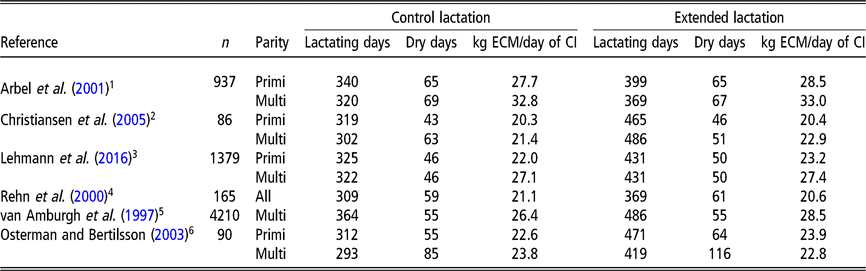
ECM = energy-corrected milk; Primi = Primiparous; Multi = Multiparous.
1 High-yielders (Prim: >30 kg ECM/day, Mult: 305-d yield above herd average) were randomly assigned to either control or treatment.
2 Randomised 2 x 2-factorial design.
3 Observational study where farmers selected the majority of their cows for extended lactation.
4 Random allocation at calving between control and experimental group. Swedish Holstein (SLB).
5 Random allocation to one of four treatments within herd. Only second lactation cows. Cows were treated with bovine somatotropin from day 63 after parturition.
6 Blocked by calving date and randomly allocated to one of four treatments.
In confinement systems, primiparous cows are able to produce equal or more milk per feeding day during EXT compared with STD (van Amburg et al., Reference van Amburgh, Galton, Bauman and Everett1997; Rehn et al., Reference Rehn, Berglund, Emanuelson, Tengroth and Philipsson2000; Arbel et al., 2001; Östermann and Bertilsson, 2003; Christiansen et al., Reference Christiansen, Danfær, Sehested and Kristensen2005; Lehmann et al., Reference Lehmann2016), whereas results for multiparous cows are inconsistent (Table 1). In pastoral, season-based systems, cows produced less milk per feeding day during EXT (Auldist et al., Reference Auldist, O’Brien, Cole, Macmillan and Grainger2007; Grainger et al., Reference Grainger, Auldist, O’Brien, Macmillan and Culley2009; Kolver et al., Reference Kolver, Roche, Burke, Kay and Aspin2007), partly due to concomitant changes in grass/sward with season, although this could be compensated for with supplementary feeding (Grainger et al., Reference Grainger, Auldist, O’Brien, Macmillan and Culley2009). Both Arbel et al. (2001) and Lehmann et al. (Reference Lehmann2016) based their analyses on cows selected for EXT, and that may skew their conclusions. However, they do demonstrate that a high milk yield during EXT is indeed achievable. Some studies (Bertilsson et al., Reference Bertilsson, Berglund, Ratnayake, Svennersten-Sjaunja and Wiktorsson1997; Grainger et al., Reference Grainger, Auldist, O’Brien, Macmillan and Culley2009; Kolver et al., Reference Kolver, Roche, Burke, Kay and Aspin2007) note that not all experimental cows were capable of completing an EXT with a satisfactory level of milk production. Hence, selecting the most suitable cows for EXT is a potential optimisation strategy, and both production performance such as previous and current milk production (Lehmann et al., Reference Lehmann, Mogensen and Kristensen2017) and physiological stage, described by Insulin-like Growth Factor 1 (IGF-1) and non-esterified fatty acid (NEFA) blood levels (Kay et al., Reference Kay, Aspin, Phyn, Roche and Kolver2007), may prove to be useful selection criteria.
Studies at the four private dairy herds in the REPROLAC project showed that (Figure 1) (1) both primi- and multiparous cows managed for longer lactations produced similar milk yields compared with cows managed for shorter lactations, albeit with a large individual variation, (2) early second lactation milk yield was increased for cows managed for a longer first lactation compared with cows managed for a shorter first lactation and (3) multiparous EXT cows had a lower yield during the last 45 days before dry-off than cows with a shorter lactation (Lehmann et al., Reference Lehmann, Fadel, Mogensen, Kristensen, Gaillard and Kebreab2016). These results illustrate that it in practice is possible to maintain a high milk yield with cows undergoing EXT while the large individual variation indicates that there is potential for developing selection methods to only manage high-persistent cows for EXT.
Mean ECM production per day in relation to five CI groups. Values are per feeding day during CI and per day during the last 45 days of lactation for multiparous cows as well as per day during the first 80 days of the second lactation following an extended first lactation. Error bars indicate standard error. Modified from Lehmann et al. (Reference Lehmann2016). ECM=energy-corrected milk; CI=calving interval.

Milking frequency
Increasing milking frequency from two to three times per day generally increases daily milk production by 10% to 15% (Stockdale, Reference Stockdale2006). Two studies confirm this response for EXT (Östermann and Bertilsson, 2003; Sorensen et al., Reference Sorensen, Muir and Knight2008) and showed that increased milking frequency increased energy-corrected milk (ECM) yield per feeding day by 13.2%. Furthermore, the effect of milking three times per day on milk yield lasts beyond switching to milking two times per day if three times milking per day is initiated at calving, whereas there is no long-lasting effect if the cow is switched to three times milking per day later in lactation (Stockdale, Reference Stockdale2006). However, it is unclear how far into an EXT that this effect would persist.
In the REPROLAC project, a milking robot was used at the experimental farm. Milking frequency was not fixed and could therefore vary between cows and over the lactation which might have had an effect on the production results. However, the results indicate that milking frequency was quite stable over the lactation with around 2.5 visits per day for the primiparous cows, while for the multiparous cows milking frequency decreased after the end of the mobilisation period from around 3.5 to 2.5 milkings per day.
Feeding strategy
There are few studies on feeding in relation to EXT reporting that feeding strategies may be able to increase lactation persistency. An individual feeding strategy based on live weight measurements was applied on the experimental farm in the REPROLAC project (Gaillard et al., Reference Gaillard, Barbu, Callesen, Sørensen, Sehested and Vestergaard2016a), where 62 cows were on an EXT strategy with a planned CI of 18 months. Half of the cows received a diet enriched in energy (HD diet) in early lactation until individual live weight nadir from where they were shifted to a lower energy density diet (LD diet) until the end of the lactation. The other half of the cows were fed the LD diet throughout the lactation. During early lactation the multiparous cows fed the HD diet had a higher milk production compared with the cows fed the LD diet, but no diet effect on milk production was observed for primiparous cows. After the shift to the LD diet, the milk production (ECM) decreased faster for the HD-LD cows than for the LD-LD cows, meaning that the HD diet given in early lactation had a 300-day negative carry-over effect on the lactation persistency for all the cows compared with cows fed the LD diet through EXT. This differs from the results of Bossen and Weisbjerg (Reference Bossen and Weisbjerg2009), reporting that an individualised feeding strategy imposed in early lactation increased the lactation milk yield in early and mid-lactation, and also increased persistency of lactation in cows on a 12-month lactation cycle, without changing the feed efficiency and with reduced live weight (LW) losses. It can be due to diet differences between the two studies; indeed, in Bossen and Weisbjerg (Reference Bossen and Weisbjerg2009) the difference between the high- and the low-energy diet was twice the difference used in the REPROLAC experiment, where the attained energy differences between HD and LD diets were relatively small.
Conclusion and perspectives on milk yield and persistency
The achievable level of milk production during EXT and hence the ability to maintain a high level of persistency is essential for the success of the EXT strategy. Delaying rebreeding itself improves milk yield persistency. Management factors including milking frequency and feeding strategy in combination with different grouping of cows may also be useful to improve persistency. Less is known about cow characteristics and other factors that can predict cows’ ability to both maintain a high level of milk production and a high level of persistency.
Reproduction
Dairy cows are genetically selected to produce more milk and consequently to partition nutrients towards the mammary gland (Veerkamp et al., Reference Veerkamp, Hill, Stott, Brotherstone and Simm1995). The potential for milk production in first lactation is also influenced by the live weight and age at first calving (Markusfeld and Ezra, Reference Markusfeld and Ezra1993). This increase in production is related to increased energy deficiency in early lactation which has negative effects on the reproductive performance of the cows (Butler, Reference Butler2000). Therefore, delaying insemination until after peak yield, like with an EXT strategy, would potentially increase pregnancy rates (Schindler et al., Reference Schindler, Eger, Davidson, Ochowski, Schermerhorn and Foote1991), decrease the number of inseminations needed per pregnancy and the frequency of anestrus treatment (Larsson and Berglund, Reference Larsson and Berglund2000).
Pregnancy rate recordings for cows managed for EXT are rare and vary a lot. This variation might be due to large variations in individual reproductive performance, and to the quality of recordings that can vary from farm to farm (Pryce et al., Reference Pryce, Royal, Garnsworthy and Mao2004). Despite pregnancy rates seem to be improved with EXT (Table 2), in most cases no significant difference has been found between the pregnancy rates of cows managed for EXT and those of cows managed for STD.
Selected references about EXT in dairy cows and its effects on pregnancy rates at 1st AI

EXT = extended lactation; AI = artificial insemination; NS = non-significant difference; Primi = primiparous; Multi = multiparous; EXT = extended lactation; STD = standard 305-d lactation. * = significant difference P < 0.05.
1 A posteriori data analysis on 22432 lactations, a lactation was labelled as extended when its duration was above 305 days.
Observational studies at the four private dairy herds in REPROLAC showed that inseminations per conception were below 2 across CI groups (Lehmann et al., Reference Lehmann, Fadel, Mogensen, Kristensen, Gaillard and Kebreab2016), although the longest CIs did have the highest number of inseminations. Compared with the low-yielding cows, the high-yielding cows required more inseminations per conception (1.9 v. 1.4), had a lower conception rate at first insemination (50% to 5%4 v. 67.2% to 70.6%) and took a higher number of days from first insemination to conception (63 to 73 days v. 48 to 54 days) (Lehmann et al., Reference Lehmann, Mogensen and Kristensen2017). This may reflect that pregnancy difficulties increase with increasing milk yield. However, both studies were founded on cows selected for EXT, and those cows were likely the highest-yielding cows within herd. Thus, there may be a confounding between lactation length, milk yield and reproduction.
On the experimental farm in REPROLAC, more cows tended to express mounting behaviour at estrus #8 than #2 (63.3% v. 45.9%, P = 0.06). However, in cows managed for EXT the reproductive parameters, defined as pregnancy rates (at first and second insemination), and number of inseminations were not improved compared with 10-month lactations (Gaillard et al., Reference Gaillard, Martin, Blavy, Friggens, Sehested and Phuong2016b). Moreover, the level of live weight loss in early lactation, given as an estimation of EB, had no effect on the reproductive parameters (Gaillard et al., Reference Gaillard, Barbu, Callesen, Sørensen, Sehested and Vestergaard2016a).
Conclusion and perspectives on reproduction
Delaying insemination enhances mounting behaviour which could facilitate insemination at the right time. However, in most cases EXT has no effect or a non-significant positive effect on reproduction. Moreover, the level of negative EB in early lactation did not seem to explain the reproductive parameters. Factors like insemination protocol and timing, estrus detection, environment and genetics might have a higher impact on reproduction than feeding strategies or lactation length per se.
Milk composition and quality
There is a fundamental difference between STD late lactation milk and EXT milk. Late lactation milk is the milk collected in the last third of a given STD lactation before dry-off, whereas EXT milk refers to the milk collected from cows in which re-breeding has deliberately been postponed, and lactation persists beyond what is considered late lactation in a STD lactation. In this sense, comparisons between the composition of EXT and late lactation milk have been logical, although studies have suggested that impairment in STD late lactation milk quality takes place particularly in low-input systems, where cows experience a substantial yield decline (i.e. poor milking persistency) during late lactation (Auldist et al., Reference Auldist, Coats, Sutherland, Mayes, McDowell and Rogers1996; Bertilsson et al., Reference Bertilsson, Berglund, Ratnayake, Svennersten-Sjaunja and Wiktorsson1997; Sorensen et al., Reference Sorensen, Muir and Knight2008).
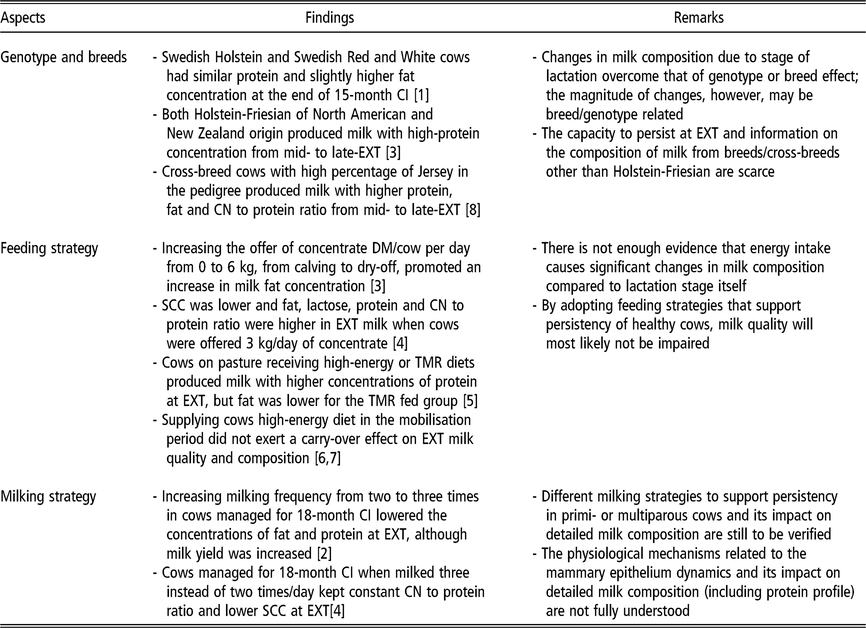
Literature retrieved from the past 20 years documents a consensus that good-quality milk at EXT can be produced in both seasonal (Kolver et al., Reference Kolver, Roche, Burke, Kay and Aspin2007; Grainger et al., Reference Grainger, Auldist, O’Brien, Macmillan and Culley2009; Auldist et al., Reference Auldist, Grainger, Houlihan, Mayes and Williams2010) and continuous calving systems (Rehn et al., Reference Rehn, Berglund, Emanuelson, Tengroth and Philipsson2000; Österman and Bertilsson, Reference Osterman and Bertilsson2003). The particularities of the genotypes, breeds, feeding and milking strategies investigated in these studies are summarised in Table 3. Milk fat, protein and total solids concentrations were reported to be, at least, the same at dry-off when comparing 15-, 18- or even 22-month CI to 12-month CI (Rehn et al., Reference Rehn, Berglund, Emanuelson, Tengroth and Philipsson2000; Österman and Bertilsson, 2003; Auldist et al., Reference Auldist, Grainger, Houlihan, Mayes and Williams2010). The same components have been documented to be higher in late- compared with mid-EXT milk from cows managed from 15- up to 22-month CI irrespective of calving system, which was confirmed in two publications related to REPROLAC (Maciel et al., Reference Maciel2016 and Reference Maciel, Mogensen, Lehmann, Kidmose, Kristensen, Larsen and Poulsen2017).
Summary of aspects associated with good-quality milk in dairy cows at EXT retrieved from literature

CI=calving interval; EXT=extended lactation; SCC=somatic cell count; TMR=total mixed ration; CN=casein.
[1] Rehn et al. (Reference Rehn, Berglund, Emanuelson, Tengroth and Philipsson2000); [2] Österman and Bertilsson (2003); [3] Kolver et al. (2007); [4] Sorensen et al. (Reference Sorensen, Muir and Knight2008); [5] Grainger et al. (Reference Grainger, Auldist, O’Brien, Macmillan and Culley2009); [6] Auldist et al. (Reference Auldist, Grainger, Houlihan, Mayes and Williams2010); [7,8] Maciel et al. (Reference Maciel2016, Reference Maciel, Mogensen, Lehmann, Kidmose, Kristensen, Larsen and Poulsen2017).
When it comes to the detailed composition and quality of EXT milk in relation to dairy processing, published data are scarce. The study from Auldist et al. (Reference Auldist, Grainger, Houlihan, Mayes and Williams2010) reported that the higher protein and fat concentrations and an unaffected CN (casein) to protein ratio and protein composition of the milk produced by cows in the second half of 22-month lactation compared with milk produced by cows in 10-month lactation resulted in superior cheese-making properties and cheese quality. Accordingly, Sorensen et al. (Reference Sorensen, Muir and Knight2008) suggested positive attributes of EXT milk for cows milked trice daily; cows that did not receive concentrate supplement and were only milked twice daily showed a poor persistency, and a progressively reduced CN to protein ratio during the EXT period. Our recent publications from REPROLAC confirm that the improved cheese-making properties of EXT milk are linked to the increased concentrations of proteins and casein (Maciel et al., Reference Maciel2016 and Reference Maciel, Mogensen, Lehmann, Kidmose, Kristensen, Larsen and Poulsen2017). Those increases were not affected by the distance from calving to conception, but were instead related to the gestational stage in cows managed for 15- or 18-month CI. Regardless of CI, milk composition was enhanced from 180 to 90 days before calving, as the chymosin-induced gels were firmer and tended to be built up at a faster rate, although rennet coagulation time (RCT) did not differ between the referred periods. In a similar way, relative concentration of major milk proteins also changed towards the end of the lactation with an increase in total κ-CN; glycosylated κ-CN and α-LA concentrations, and decrease in αS1-CN and β-LG (Maciel et al., Reference Maciel, Mogensen, Lehmann, Kidmose, Kristensen, Larsen and Poulsen2017). Besides that, our recent findings have also revealed that the udder integrity indicators; SCC, pH, conductivity or free amino terminals (i.e. natural proteolysis in milk) were not significantly different from mid-lactation towards the end of the EXT. On the other hand, a higher chloride level was observed in late EXT, but seemed to be associated with the reduction in milk yield and concentration of milk solids, due to its strong negative correlation with lactose (Maciel et al., Reference Maciel2016). Bertilsson et al. (Reference Bertilsson, Berglund, Ratnayake, Svennersten-Sjaunja and Wiktorsson1997) reported salty taste of EXT milk from low-yielding cows, which may relate to chloride concentrations. However, late-EXT milk of healthy cows that was evaluated by a trained sensory panel did not present any sensory disadvantage in relation to mid-EXT milk, as both pasteurised full-fat and skim milk produced by healthy cows at late-EXT was graded similarly (Maciel et al., Reference Maciel, Mogensen, Lehmann, Kidmose, Kristensen, Larsen and Poulsen2017), or better (Maciel et al., Reference Maciel2016) than mid-EXT milk for sensory attributes.
Conclusion and perspectives on milk quality characteristics
The outlined studies document that good-quality milk can be produced with EXT in both seasonal and continuous calving systems, and even in low-input organic farm systems. No major concern in relation to overall milk quality and technological properties of milk from EXT compared to STD have been reported. However, quantification of minor milk components, such as specific proteins, fatty acids and metabolites, could potentially uncover some changes in underlying metabolic pathways behind the secretory mammary epithelium dynamics, for example, in relation to cell turnover and cellular activity (Garnsworthy et al., Reference Garnsworthy, Masson, Lock and Mottram2006; Murney et al., Reference Murney, Stelwagen, Wheeler, Margerison and Singh2015) during EXT, which has not been explored in the reported studies. It is important to also measure the bulk concentration of minor components (i.e. protein fractions and minor whey proteins, salts, enzymes and metabolites), specifically for seasonal calving systems, as the share of whey-based ingredient sales on the income of whey-processing dairies is increasing together with its gradually higher value in the market (Lagrange et al., Reference Lagrange, Whitsett and Burris2015).
Lifetime scenarios for cows
In REPROLAC we studied the effect of an EXT strategy with 18-month CI, corresponding to a 16-month lactation period, on productive and reproductive performances on a time scale of one lactation per cow at the experimental farm. Then, a modelling approach allowed us to go further by predicting the lifetime effect of using an EXT strategy on cows’ performance testing different length of EXT (12, 14, 16 or 18 months). We used the GARUNS model developed by Martin and Sauvant (Reference Martin and Sauvant2010), a dynamic and stochastic model taking into account the changing priorities in nutrient partitioning of an animal as its ages, through repeated reproduction cycles in combination with a reproduction sub-model (Phuong et al., Reference Phuong, Blavy, Martin, Schmidely and Friggens2015). The lifetime scenario optimising the productive performance of high-yielding Holstein cows would be to have an EXT of 16 months at first parity, followed by 10-month lactations (EXT-STD scenario). The scenario where all cows were managed for 16-month lactation gave a performance similar to the EXT-STD scenario (Gaillard et al., Reference Gaillard, Martin, Blavy, Friggens, Sehested and Phuong2016b). It should be noted that lifetime predicted in the model scenarios is only defined by reproductive performance and culling rules, as the effects of diseases are not yet incorporated in the model (Phuong et al., Reference Phuong, Blavy, Martin, Schmidely and Friggens2015).
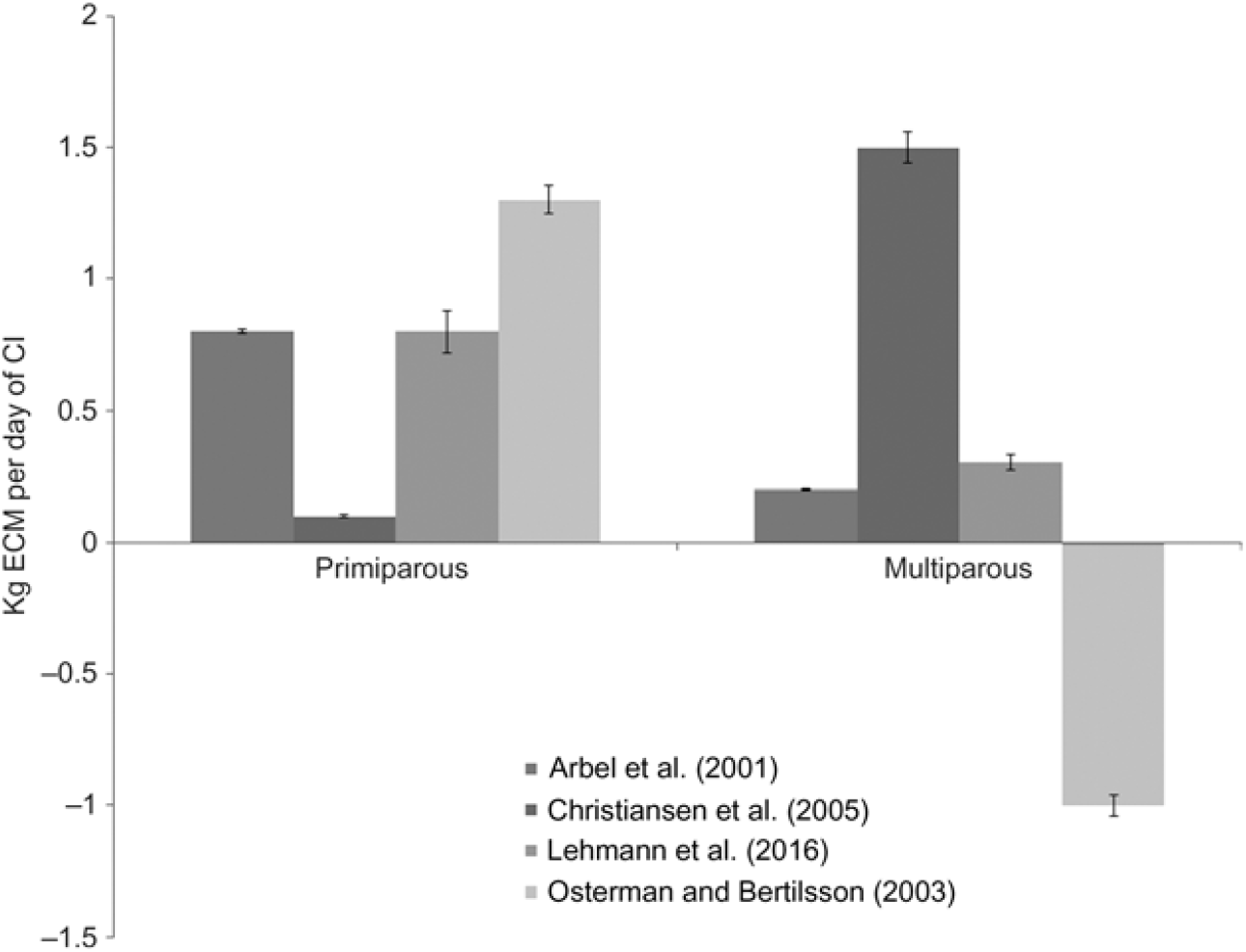
Primiparous cows have a lower peak yield than multiparous cows, but their persistency is higher (Bar-Anan and Genezi, Reference Bar-Anan and Genizi1981) so they maintain a long lactation with a decent daily milk yield in late lactation (Ratnayake et al., Reference Ratnayake, Berglund, Bertilsson, Forsberg and Gustafsson1998). Gaillard et al. (Reference Gaillard, Vestergaard, Weisbjerg and Sehested2016c) also reported differences in weight loss and metabolite and hormone concentrations between primiparous and multiparous cows, indicating that primiparous cows promote nutrient partitioning into body growth and not only into milk (Wathes et al., Reference Wathes, Cheng, Bourne, Taylor, Coffey and Brotherstone2007). This might explain why extending the duration of lactation of primiparous cows seems more advantageous for the following lactations than for multiparous cows. This modelling approach is the first to report results on lifetime scale of the cows. Experimental studies or at least on-farm data are needed at this scale to confirm the results obtained. However, other studies at the scale of one lactation showed that EXT was more advantageous for primiparous cows than for multiparous cows in terms of daily milk yield and economical profitability (Arbel et al., 2001; Osterman and Bertilsson, Reference Osterman and Bertilsson2003) (Figure 2). For multiparous cows, a reason why a 16-month lactation appears less advantageous than for the primiparous cows might be that there are more days with low milk yield at the end of the lactation. However, on the lifetime scale, the multiparous cows could benefit from longer lactation by increasing their efficiency (Gaillard et al., Reference Gaillard, Martin, Blavy, Friggens, Sehested and Phuong2016b). The higher rate of proliferation of mammary gland epithelial cells in primiparous cows as compared with multiparous cows (Miller et al., Reference Miller, Delbecchi, Petitclerc, Wagner, Talbot and Lacasse2006) might partly explain the positive carry-over of an EXT on primiparous cows’ following lactations (milk production) and lifetime.
Difference in kilogram ECM per day of CI between control and EXT in primiparous and multiparous cows. Error bars indicate standard error. ECM = energy-corrected milk; CI = calving interval; EXT = extended lactation.
Conclusion and perspectives on lifetime efficiency
GARUNS model was used to predict productive and reproductive performances of cows managed for EXT. Modelling showed that the optimal lifetime scenario for production cows would be an EXT of 16 months at first parity cows, followed by 10-month lactations for later parities. Further work should include health incidents to the prediction model to have predictions that are more accurate on the lifetime efficiency. The productive and reproductive performances predicted should then be compared with real data for cows managed for the optimum lifetime scenario defined by the model.
Effects at herd and farm levels
Deliberately delaying the time of first insemination for all or selected cows initiates a cascade of system effects at herd and farm levels. For the dairy herd, EXT can be expected to lead to fewer diseases per cow-year (365 feeding days) because the majority of diseases occur around the time of calving (Ingvartsen et al., Reference Ingvartsen, Dewhurst and Friggens2003). Similarly, EXT leads to fewer calvings, fewer replacement heifers and fewer dry days per cow-year if dry period length is maintained, but replacement rate per lactation can be maintained despite more time per lactation for accidents etc. to happen (Lehmann et al., Reference Lehmann, Mogensen and Kristensen2014; Reference Lehmann, Mogensen and Kristensen2019). Together, this leads to lower total live-weight gain from males and females per cow-year and therefore a reduced production of beef.
Longer CIs also cause the cow herd on average to be more days in milk (longer time from latest calving), and to have a lower proportion of dry days per cow-year. This will increase the average feed intake capacity per unit of milk yield and hence allow for feeding the herd a low energy–rich diet on average. The combined reduction in replacement heifers and reduced need for an energy-rich diet during lactation will reduce and change the composition of total herd feed intake. In systems with on-farm forage production, this reduces the need for on-farm feed growing area and might change the crop rotation and the required composition of crops. Thus, an EXT strategy can have a profound effect on herd production of milk and meat, herd composition, herd feed intake and farm feed-growing area.
However, the magnitude of the cascade of effects described in the previous paragraphs depends on (1) the proportion of cows selected for EXT, (2) the parity of the selected cows and (3) the extent to which these cows have their EXT. These effects are in addition to the direct effect of EXT on milk yield per feeding day as well as possible interactions between EXT, health and fertility. Recently, a few studies have investigated different EXT (Table 4) and their consequences for herd milk production, profitability and GHG emissions per kilogram of milk.
Milk production, operating profit and GHG emission for different strategies for EXT (CI) in dairy cows at herd level
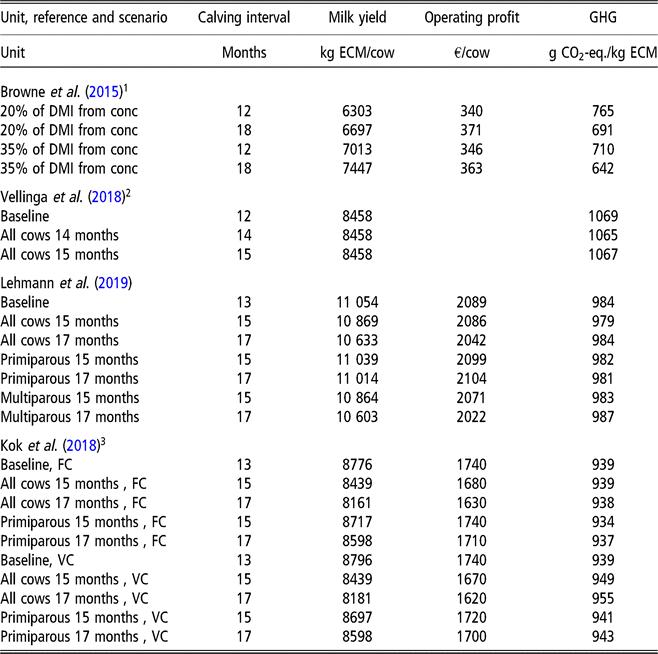
GHG = greenhouse gas; ECM = energy-corrected milk to contain 4.2% fat and 3.4% protein; DMI = dry matter intake; conc = concentrate feed; eq. = equivalents.
1 Exchange rate used: 0.63 €/AU$. Pastoral system.
2 Milk yield was assumed unchanged.
3 FC = fixed culling per lactation; VC = variable culling per lactation.
Under pastoral conditions, Browne et al. (Reference Browne, Behrendt, Kingwell and Eckard2015) compared 18- with 12-month CIs and showed an increased milk production per cow per year, an improved profitability and a reduced GHG emission per kilogram of milk. Kok et al. (Reference Kok, Lehmann, Kemp, Hogeveen, van Middelaar, de Boer and van Knegsel2018) showed the opposite results under confinement conditions, whereas the results of Lehmann et al. (Reference Lehmann, Mogensen and Kristensen2019) differed depending on which groups of cows were submitted to EXT, and they argued that their estimated GHG emissions would all increase if emissions from displaced meat production were included based on beef breed cattle. Browne et al. (Reference Browne, Behrendt, Kingwell and Eckard2015), Kok et al. (Reference Kok, Lehmann, Kemp, Hogeveen, van Middelaar, de Boer and van Knegsel2018) and Lehmann et al. (Reference Lehmann, Mogensen and Kristensen2019) include a change in replacement rate with a concomitant change in cow longevity, either as a default or because of other model assumptions. The increase in lifespan is a major reason for the reduction in GHG emissions per unit milk, because fewer replacement heifers are reared and these heifers are costly in terms of emissions. This is a major part of the explanation for the dynamics and derived consequences of implementing an EXT strategy. An EXT strategy will inevitably reduce meat production as fewer calves are born, but the combined use of sexed dairy semen and beef semen could partially compensate for this if the sector requires an unchanged amount of beef. The use of sexed dairy semen and beef semen could also offset the genetic lag caused by an EXT strategy (Clasen et al., Reference Clasen, Lehmann, Thomasen, Østergaard and Kargo2018).
Table 4 indicates that it is economically more advantageous to manage primiparous cows for EXT, as compared with managing all cows for EXT. However, to our knowledge, no empirical study has so far investigated the effect of managing the most persistent cows for EXT while managing the remaining herd for STD lactations. Through modelling both Lehmann et al. (Reference Lehmann, Mogensen and Kristensen2019) and Kok et al. (Reference Kok, Lehmann, Kemp, Hogeveen, van Middelaar, de Boer and van Knegsel2018) found than an improved lactation persistency substantially improves lactation yield and the economic effect of EXT, and that a selection of the most suitable cows for EXT could lead to this effect. Suitable cows could be cows with a high milk production in early lactation relative to other cows in the herd (Lehmann et al., Reference Lehmann, Mogensen and Kristensen2017), but more work is needed to determine which cows are more suitable than others. However, the economic consequences estimated by Browne et al. (Reference Browne, Behrendt, Kingwell and Eckard2015) under pastoral, seasonal conditions as well as by Kok et al. (Reference Kok, Lehmann, Kemp, Hogeveen, van Middelaar, de Boer and van Knegsel2018) and Lehmann et al. (Reference Lehmann, Mogensen and Kristensen2019) under confinement conditions highly depend on the costs included. Thus, Lehmann et al. (Reference Lehmann, Mogensen and Kristensen2019) showed that accounting for a potential change in labour costs would have a major impact on the estimated economic effect of implementing an EXT.
Furthermore, Lehmann et al. (Reference Lehmann, Mogensen and Kristensen2019) showed that the potential reduction in the area required for feed production leads to a positive economic effect, either through an increased number of cows in the herd or growing a cash crop, which far exceeded the estimated direct economic effect of EXT.
Conclusion and perspectives at herd and farm levels
Deliberately delaying the time of first insemination sets off a cascade of effects at cow, herd and farm levels. Economically it seems most advantageous to manage primiparous cows for EXT, as compared with managing all cows for EXT. Selecting the most suitable cows for EXT could support the positive economic effect of EXT. The EXT strategy has potential to decrease estimated GHG emissions, but GHG emissions increase if displaced meat production is included based on beef breed cattle. There is a scope for optimisation of EXT through a selection of the most suitable cows as well as finding ways of realising the potential reduction in land use for feed growing, which could lead to an economic benefit for the farmer.
Conclusions
Dairy cows managed for EXT can maintain or even slightly increase daily milk yield through a CI and achieve a higher lifetime milk production while delivering milk with unchanged or improved quality properties. Delaying insemination enhances mounting behaviour and allows insemination after the cow’s EB has become positive. However, in most cases EXT has no effect or a non-significant positive effect on reproduction. The EXT strategy sets off a cascade of effects at herd and farm levels. Thus, the EXT strategy leads to fewer calvings and thereby expected fewer diseases, fewer replacement heifers and fewer dry days per cow per year. The optimal lifetime scenario for milk production was modelled to be an EXT of 16 months for first parity cows followed by an EXT of 10 months for later lactations. Modelling studies of herd dynamic indicate a positive effect of EXT on lifetime efficiency (milk per dry matter intake (DMI)), mainly originating from benefits of EXT on daily milk yield in primiparous cows and the reduced number of replacement heifers. Consequently, EXT also leads to reduced total meat production at herd level. For the farmer, EXT can give the same economic return as a traditional lactation period. At farm level, EXT will contribute to a reduction in the environmental impact of dairy production, mainly because of a reduced herd feed use through fewer young stock and dry cows. A wider dissemination of the EXT concept will be supported by methods to predict which cows may be most suitable for EXT, and clarification of how milking frequency and feeding strategy through the lactation can be organised to support milk yield and an appropriate body condition at the next calving.
Acknowledgements
The authors wish to thank the Danish Council for Strategic Research, the Programme Commission on Health, Food and Welfare and Aarhus University for the financial support for the REPROLAC project (Grant no 11-116247). The authors also would like to thank the farmers and technicians involved in the REPROLAC experiments for their highly committed efforts.
J. Sehested, https://orcid.org/0000-0001-6977-6972
Declaration of interest
The authors declare that there is no conflict of interest in this review.
Ethics statement
No original data are presented in this review, and no ethics approval was sought or required.
Software and data repository resources
No software or data were deposited anywhere as part of this review.