


Introduction
The Antillean manatee Trichechus manatus manatus, a subspecies of the West Indian manatee, is categorized as Endangered across its range (Self-Sullivan & Mignucci-Giannoni, Reference Self-Sullivan and Mignucci-Giannoni2008), and excessive and uncontrolled mortality may be the main factor affecting the species’ status (Marsh et al., Reference Marsh, Lawler, Kwan, Delean, Pollock and Alldredge2004). In most countries where this sirenian subspecies occurs, stranding events and mortality have been attributed mainly to anthropogenic pressures such as poaching and significant habitat changes (Castelblanco-Martínez et al., Reference Castelblanco-Martínez, Nourisson, Quintana-Rizzo, Padilla-Saldivar and Schmitter-Soto2012; Alvarez-Alemán et al., Reference Alvarez-Alemán, Alfonso, Forneiro Martin-Vianna, Hernández Gonzalez, Domenech and Hurtado2018; Domínguez-Tejo, Reference Domínguez-Tejo2019). The regional causes of strandings are diverse, however, with differences in the incidence of threats among local populations (Mignucci-Giannoni et al., Reference Mignucci-Giannoni, Montoya-Ospina, Jiménez-Marrero, Rodríguez-López, Williams and Bonde2000; Alvarez-Alemán et al., Reference Alvarez-Alemán, Alfonso, Forneiro Martin-Vianna, Hernández Gonzalez, Domenech and Hurtado2018; Domínguez-Tejo, Reference Domínguez-Tejo2019; Alvarez-Alemán et al., Reference Alvarez-Alemán, Alfonso, Powell, Jacoby, Austin and Frazer2021). Information on this matter is not available for many populations of manatees within the subspecies’ range, but is required for monitoring of conservation actions to reduce mortality.
The population of the Antillean manatee in Belize has been referred to as the last stronghold for this subspecies in the Caribbean because of the quality and quantity of habitats available and the presumed large size of this population (O'Shea & Salisbury, Reference O'Shea and Salisbury1991; UNEP, Reference Quintana-Rizzo and Reynolds2010). Moreover, this population may be an important migratory link between the manatee populations of Mexico and southern Central America (Nourisson et al., Reference Nourisson, Morales-Vela, Padilla-Saldívar, Tucker, Clark and Olivera-Gómez2011; Castelblanco-Martínez et al., Reference Castelblanco-Martínez, Padilla-Salivar, Hernández-Arana, Slone, Reid and Morales-Vela2013).
Belize has a well-established programme to respond to marine mammal stranding events along its extensive coast. The collection of stranding data for manatees in Belize dates from 1995. Consistent assessments of manatee strandings began in 1997 under the Belize Coastal Zone Management Authority and Institute, formerly the Global Environment Facility/United Nations Development Programme Coastal Zone Management Project, at the commencement of the National Manatee Project. Coordination was then taken over by the Wildlife Trust in 2005, and in 2008 by the Clearwater Marine Aquarium Research Institute, formerly called Sea to Shore Alliance, under a Memorandum of Understanding with the Government of Belize. The current Belize Marine Mammal Stranding Network comprises representatives from two government agencies and 12 national NGOs, and scientists, veterinarians and volunteers. The members of the network are periodically trained and equipped to respond to stranding incidents. The Belize Marine Mammal Stranding Network members collect data countrywide. The larger coastal communities have district coordinators equipped to respond to and address stranding reports. All reports are recorded by the Belize Marine Mammal Stranding Network Coordinator; stranding data are compiled and shared with authorities for management recommendations.
A stranding refers to any dead marine mammal that washes ashore or floats near shore; any live cetacean or sirenian on a beach, along the shore, or in a helpless situation unable to return to the water unaided because of injury or poor health; any marine mammal trapped or entangled; and any dependent calf (Geraci & Lounsbury, Reference Geraci and Lounsbury2005). Conducting necropsies on dead animals is important to elucidate the cause of death. Ancillary data collected during assessments of strandings help to identify population-level threats and stressors, which is critical to guide conservation actions addressing identified threats. Additionally, by assessing stranding data, we can gather the information that provides insight into the life history of marine animals, including seasonal distribution, natural history, population health, environmental contaminant levels, interactions with people, and incidence of parasites and diseases (NOAA, 2019). The purpose of this study was to analyse the documented manatee stranding reports for Belize and to explore the occurrence and patterns of the threats affecting this species during 1997–2019.
Study area
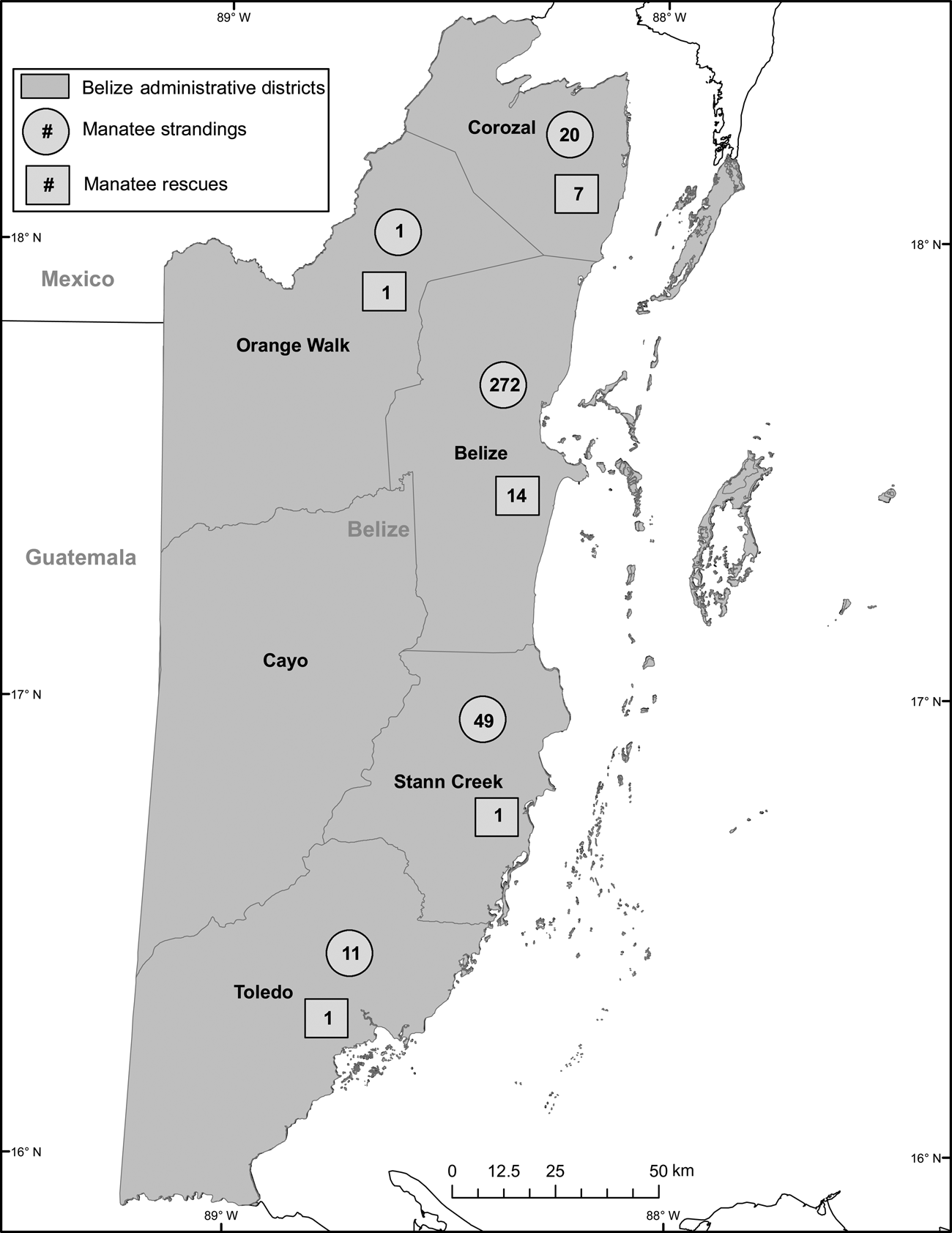
The entire 386 km eastern coast of Belize, in Mesoamerica (Fig. 1), borders the Caribbean Sea. Four of Belize's six districts are coastal: Corozal, Belize, Stann Creek, and Toledo. The 16 major watersheds (CZMAI, 2014) across Belize total 22,960 km2 of landmass that terminate in one of these four districts, discharging into the Caribbean. The watersheds run from the karst hills of southern Mexico, eastern Guatemala and southern Belize, discharging into coastal lagoons and inner channels between the shore and the barrier reef (CZMAI, 2014). Belize has part of the longest barrier reef in the western hemisphere, extending for 250 km and lying 13–48 km offshore (CZMAI, 2014). Within the coastal zone, Belize has > 1,000 mangrove and sand islands within and outside the reef lagoon (McField et al., Reference McField, Gibson and Wells1996). Manatees are known to travel along and within the limits of the coastline, coastal lagoons, rivers and reefs of Belize.
Belize and its districts, indicating the distribution of the 376 verified strandings and rescues of the Antillean manatee Trichechus manatus manatus during 1997–2019.
Belize has an annual mean air temperature of 26 °C, which can be ≥ 35 °C during May–October (Fairweather, Reference Fairweather2014). Although global air temperatures have risen by c. 0.8 °C since 1880, national data indicate that the air temperature in Belize rose by c. 1 °C from 1960 to 2006, and water temperatures have also increased, notably in the summer (Fairweather, Reference Fairweather2014). The coast faces the south-easterly trade winds, which average 10–13 knots (19–24 km/h), and the hurricane season is during June–November (Fairweather, Reference Fairweather2014), which corresponds with the rainy season.
Methods
Stranding data were collected in the four coastal districts and the inland Orange Walk District, which has an elaborate river system inhabited by manatees. Trained members of the Belize Marine Mammal Stranding Network, upon receipt of a call from the public regarding any marine mammal believed to be in distress or dead, collect preliminary information on the state of the animal and the exact location before verification and examination in situ. The flow of communication includes consultation between the Belize Marine Mammal Stranding Network representatives within the specific areas and/or through a telephone hotline number for the general public. Stranding reports were classified as either verified (when confirmed by a member of the network and a necropsy is conducted), or not verified (not reported or confirmed by network members or a trusted source, with no substantiating evidence supporting the report).
When possible, a field necropsy was carried out on dead manatees, following a manual of procedures for the salvage and necropsy of carcasses of the West Indian manatees (Bonde et al., Reference Bonde, Beck and O'Shea1983). Whenever possible, biological material, including tissue samples and parasite specimens, were collected for histological analysis, and photographs for identification.
Each live distressed manatee reported was observed for a minimum of 45 minutes before determining whether to assist and release on-site or whether a rescue was warranted. If the individual was a candidate for rescue, the Wildtracks Rehabilitation Center was informed of a possible admission and all information was relayed to the rehabilitation centre staff to allow them to make the necessary preparations. Following rescue, manatees were transported as soon as possible to the Center for care.
The information collected and analysed during both live and dead stranding events included location, sex and age class. In the case of carcasses, decomposition state and possible cause of death were also recorded. The categories for the cause of death were recorded as watercraft collision, poaching (illegally hunted), drowned, entanglement, dependent calf (i.e. smaller than 150 cm and thus not able to survive alone; Bonde et al., Reference Bonde, Beck and O'Shea1983), undetermined and other. Consistent with the Universal Agreement for Stranding Networks, manatee age class was categorized as adult (> 266 cm), juvenile/subadult (246–265 cm), calf (80–245 cm), foetus, or undetermined; and body condition as alive, freshly dead, decomposed, advanced decomposition, bone remains only, or mummified tissue (Geraci & Lounsbury, Reference Geraci and Lounsbury2005).
Stranding records were verified, stored in a database and exported for analysis in R 3.4.3 (R Core Team, 2020) and SigmaPlot 12.5 (Systat, San Jose, USA). We used χ 2 and Mann–Whitney tests to examine any differences in the cause of death between male and female manatees. A map was created of the locations of all strandings, which were recorded with a GPS. The potential biological removal (the maximum number of animals that may be removed from a marine mammal stock by anthropogenic-related mortality while allowing that population to maintain its optimum sustainable size; Wade, Reference Wade1998), developed under the U.S. Marine Mammal Protection Act for managing the impacts of fishing on marine mammal populations, was calculated for the Belize manatee population. The potential biological removal allows managers to compare allowable take associated with anthropogenic-related mortality to estimate the sustainable anthropogenic mortality of a sirenian population (Marsh et al., Reference Marsh, Lawler, Kwan, Delean, Pollock and Alldredge2004). Potential biological removal is calculated as
 $${\rm N}_{{\rm min}}{\rm \times 1/2}{\rm R}_{{\rm max}}\times {\rm F}_{\rm r}$$
where Nmin is the estimate of the minimum population size of the stock, 1/2Rmax is one-half the maximum theoretical or estimated rate of increase for the population, and Fr is the recovery factor from 0.1 to 1 (Wade, Reference Wade1998). The estimated population size of the Antillean manatee in Belize is 1,000 (Mignucci-Giannoni et al., Reference Mignucci-Giannoni, Montoya-Ospina, Jiménez-Marrero, Rodríguez-López, Williams and Bonde2000; Self-Sullivan & Mignucci-Giannoni, Reference Self-Sullivan and Mignucci-Giannoni2008; Castelblanco-Martínez et al., Reference Castelblanco-Martínez, Nourisson, Quintana-Rizzo, Padilla-Saldivar and Schmitter-Soto2012). Estimated growth rates of 0.08, 0.062 and 0.04 have been previously described or suggested for West Indian manatees (Runge et al., Reference Runge, Langtimm and Kendall2004; Marsh et al., Reference Marsh, O'Shea and Reynolds2011; NMFS, 2016). We calculated the potential biological removal for the Belize manatee population using both minimum and maximum growth rates.
We used the number of visitors per year (Belize Tourism Board, 2018) as a proxy for tourism activity. The correlation between stranding events and the number of visitors was evaluated with the Spearman rank correlation coefficient. The non-parametric Mann–Whitney U statistic was used to test whether stranding occurrence was significantly different between seasons.
Results
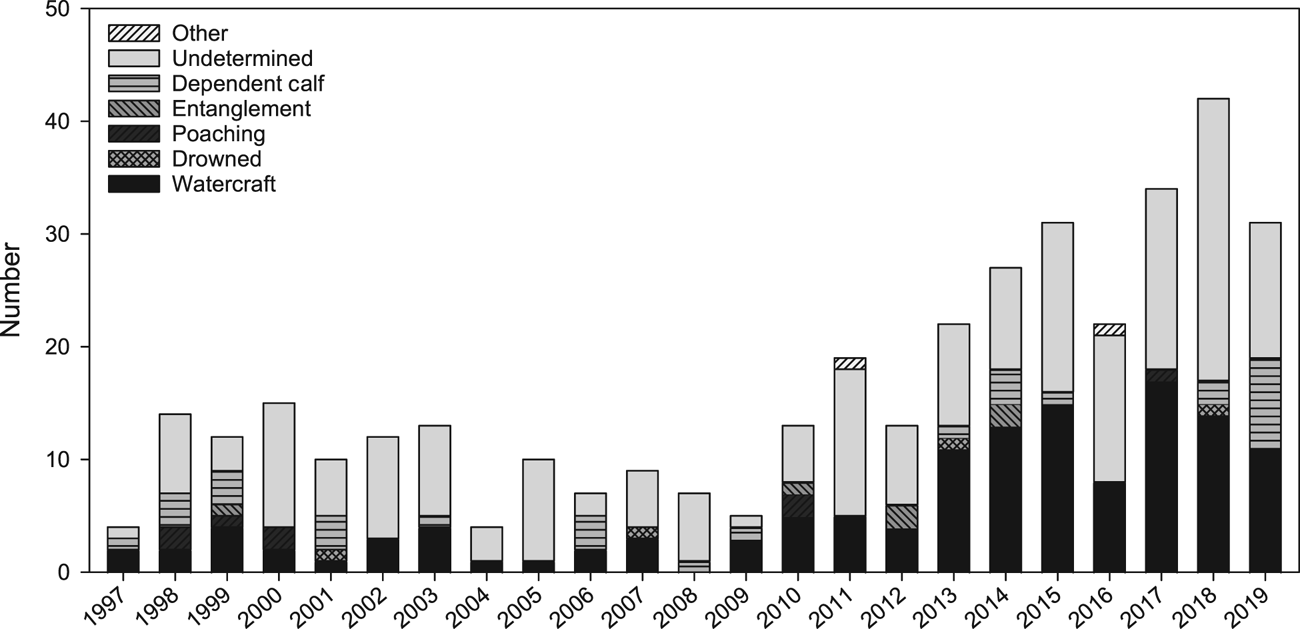
A total of 451 Antillean manatee strandings were reported in Belize during 1997–2019, of which 376 (83.4%) were verified (a mean of 16 per year; Table 1) and 75 (16.6%) could not be verified as the animal was not located by responders. Of the 376 verified cases, 46 (12.2%) were reported alive and 330 (87.8%) were dead. The highest number of strandings (42) was in 2018, followed by 34 in 2017 and 31 in 2015 (Fig. 2). From 2009 onwards there was a rise in the number of manatee stranding events, with a total of 255 strandings, of which 233 (87.5%) were dead. The mean annual numbers of verified alive and dead cases reported for the 23-year period were 2.0 and 14.4, respectively.
Total annual number of verified Antillean manatee strandings in Belize, characterized by cause of stranding, from 1997 to 2019.
Number of verified manatee Trichechus manatus manatus strandings in Belize by cause and district during 1997–2019.

1 The landlocked Orange Walk District is accessible via river.
Of the verified strandings, 138 (36.7%) were in an advanced state of decomposition, 115 (30.6%) moderately decomposed, 70 (18.6%) freshly dead, 46 (12.2%) alive and seven (1.9%) comprised only bone remains. The highest number of verified manatee strandings were adults (232, 61.70%), followed by calves (99, 26.3%), juveniles/subadults (36, 9.6%), and foetuses found in three dead pregnant manatees (3, 0.8%); age class was not determined for six individuals (1.6%). Sex was determined in 334 (88.8%) of the verified dead strandings, 173 (51.8%) of which were female and 161 (48.2%) male. There was no statistically significant difference in the number of males and females stranded (Mann–Whitney U = 265.500, P = 0.831).
The χ 2 test indicated a significant difference among causes of death (χ 2 = 55.48, df = 10, P = <0.001). For the countrywide verified stranding cases, the cause of 194 (51.6%) could not be determined. For the other cases, the main confirmed cause of strandings was collision with watercraft, which accounted for 131 (34.8%) of the verified incidents. Other reported causes were dependent calf (31, 8.2%), poaching (8, 2.1%), entanglement (6, 1.6%), drowning (4, 1.1%) and hurricane (2, 0.5%) (Fig. 2).
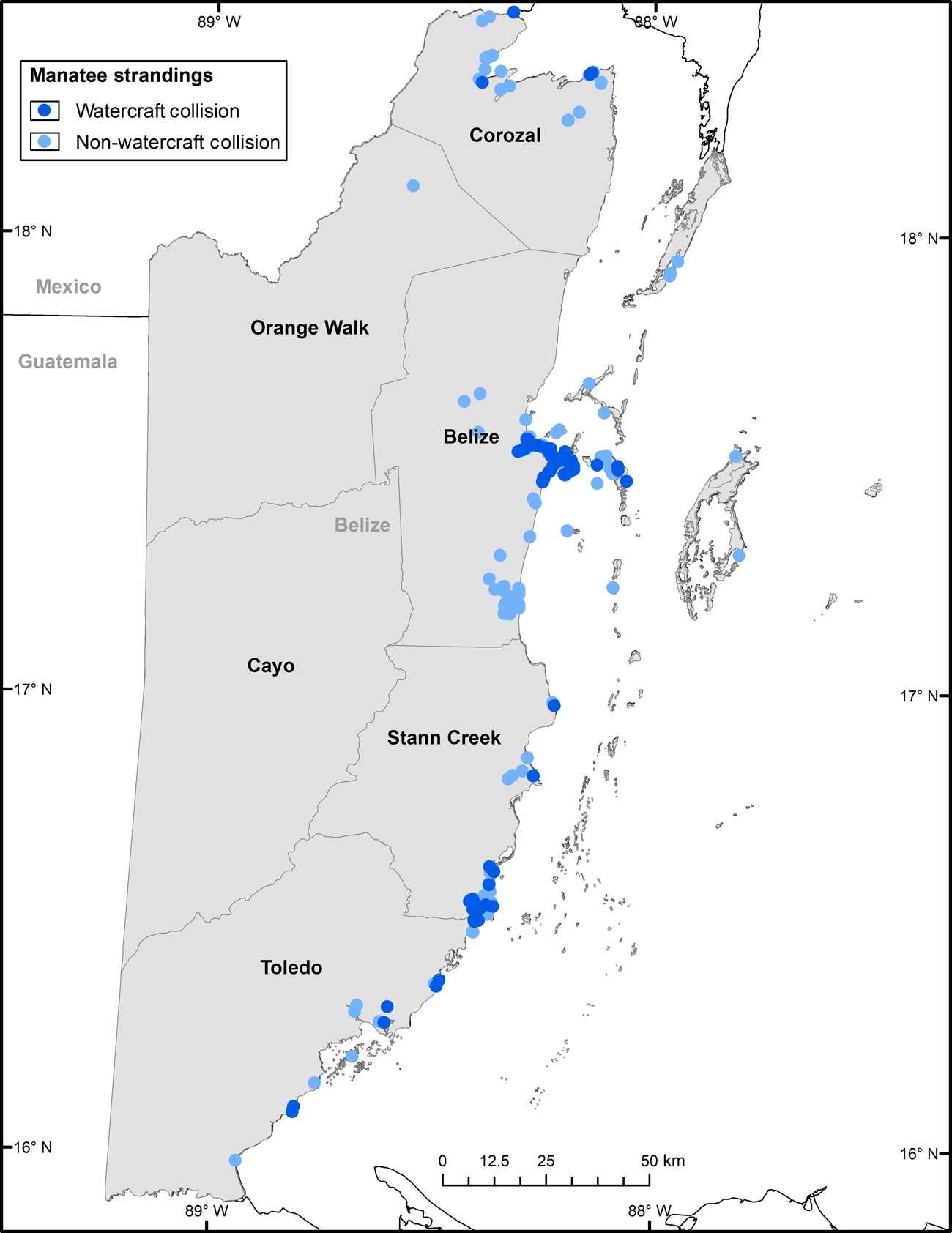
Belize District had the highest number of verified cases (286, 76.1%), followed by Stann Creek (50, 13.3%), Corozal (27, 7.2%), Toledo (12, 3.2%) and Orange Walk (1, 0.3%) (Table 1, Fig. 1). Of the verified cases from Belize District, cause of death could not be determined for 153 (53.5%), and 104 (36.5%) of the fatalities in this district were a result of collision with watercraft (Fig. 2). Many of the incidents in Belize District occurred in the immediate Belize City area (Fig. 3). The Stann Creek District had the second highest number of verified strandings, the cause of 22 (44.0%) of which were undetermined, 18 (36.0%) were a result of collision with watercraft and three (6.0%) were poached or were a dependent calf (Fig. 2). Most of the incidents in the Stann Creek District occurred in the Placencia area (Fig. 3). The highest number of poached manatees (35) was recorded in the Toledo District in 1995, with evidence indicating illegal hunting (Bonde & Potter, Reference Bonde and Potter1995). There were eight additional manatee poaching reports for 1996–2019: three each in the Toledo and Stann Creek Districts and two in the Corozal District (Fig. 2).
Distribution of the 376 verified Antillean manatee strandings in Belize during 1997–2019, categorized by collisions with watercraft and other causes (Table 1).
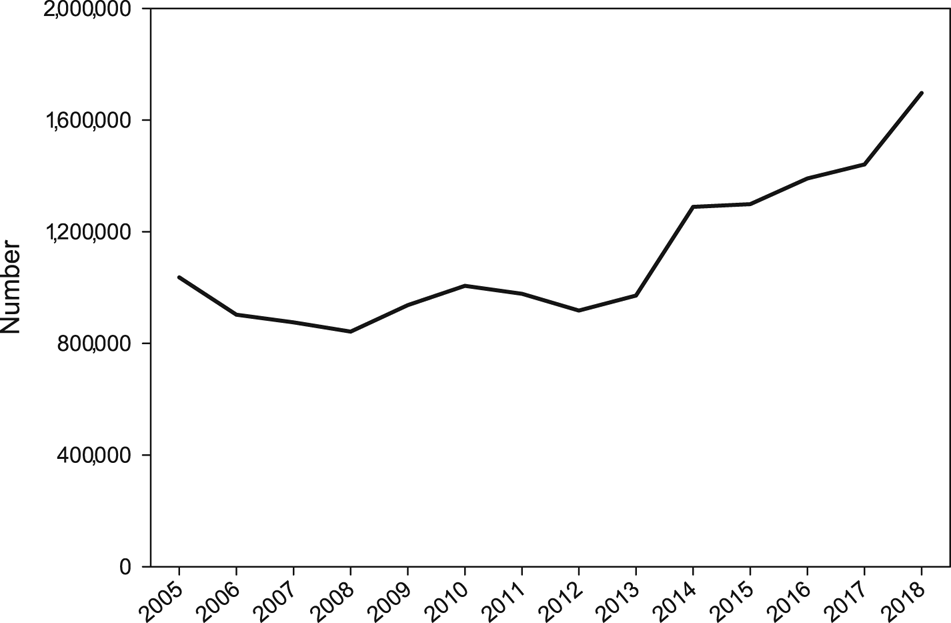
There was a strong and positive relationship between the number of stranding events and the number of tourists per year in Belize during 2005–2019, the period for which tourism data were available (Spearman correlation coefficient ρ = 0.849, P < 0.0001; Fig. 4). There was no statistically significant difference in the median values of stranding frequency between dry and wet seasons (Mann–Whitney U = 215.000, P = 0.280).
Annual total number of tourists visiting Belize from 2005 to 2019 (Belize Tourism Board, 2018).
A total of 46 verified live strandings were reported; 24 individuals were rescued and 22 were not in need of rescue. Of the rescued manatees, 10 died during rehabilitation as a result of preconditions that resulted in the need for the rescue. During 1999–2019 six rehabilitated manatees were successfully returned to the wild. A further three are in the soft-release phase, four are ready to transition from rehabilitation to soft release, and one calf is under full rehabilitation care.
Mean annual verified mortality was c. 14 individuals, with c. 6 events per year a direct result of anthropogenic causes. The potential biological removal for a population of 1,000 is four, assuming the growth rate is 0.08; if the growth rate is 0.04, the potential biological removal is only two (Table 2). A potential biological removal of two was exceeded in 17 years and a removal of four was exceeded in 11 years during 1997–2019 (Fig. 2).
Potential biological removal for the Belize population, calculated using both maximum (0.08) and minimum (0.04) estimated growth rates reported for the manatee population in Belize (Runge et al., Reference Runge, Langtimm and Kendall2004; Marsh et al., Reference Marsh, O'Shea and Reynolds2011).
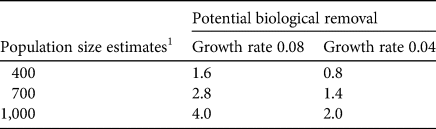
1 Based on (Mignucci-Giannoni et al., Reference Mignucci-Giannoni, Montoya-Ospina, Jiménez-Marrero, Rodríguez-López, Williams and Bonde2000; Self-Sullivan & Mignucci-Giannoni, Reference Self-Sullivan and Mignucci-Giannoni2008; Castelblanco-Martínez et al., Reference Castelblanco-Martínez, Nourisson, Quintana-Rizzo, Padilla-Saldivar and Schmitter-Soto2012).
Discussion
Belize has a long-established network for responding to marine mammal stranding events along its coast, and a centralized database in which all the data are consolidated. The Belize Marine Mammal Stranding Network was established in 1996 and consistent stranding response began in 1997. The ability to respond to stranding incidents countrywide resulted in the verification of a high percentage (83.4%) of reported manatee strandings. With representatives in each district, the network is efficient in responding to reported strandings. Further work is required, however, to reduce the number of unverified cases and to resolve more of the cases that have an undetermined cause of death.
Of the 376 stranded manatees reported and verified during 1997–2019, 330 were dead, and it is likely that additional strandings were not reported or discovered. The mean annual number of stranded manatees in Belize (16) is more than four times higher than the annual mean of 3.9 strandings in the neighbouring population of manatees in Chetumal Bay, Mexico (Padilla-Saldivar et al., Reference Padilla, Morales, Castelblanco-Martínez, Niño-Torres, Hernández and Pérez-Flores2018). For Belize, population surveys need to be implemented to determine to what degree the recorded mortalities are affecting the status of this population.
Potential biological removal (Wade, Reference Wade1998) has been used as a reference in the mitigation of anthropogenic mortality in manatees (Runge et al., Reference Runge, Langtimm and Kendall2004), dugongs (Marsh et al., Reference Marsh, Lawler, Kwan, Delean, Pollock and Alldredge2004) and large whales (van der Hoop et al., Reference van der Hoop, Moore, Barco, Cole, Daoust and Henry2013). Our estimate of the potential biological removal for manatees in Belize is considerably lower than the mean annual number of strandings (Table 2). We recommend that appropriate management actions are taken to reduce manatee mortality from anthropogenic causes to < 2 individuals per year. These actions should include additional manatee protection regulations under the new Fisheries Resources Act of 2020 (Belize Fisheries Department, 2020), with adequate law enforcement, removal of gill-nets from areas used by manatees, the establishment of additional protected areas for the species, and expanded and regulated boat speed zones in areas where high boat traffic and manatee presence overlap (Martin et al., Reference Martin, Edwards, Fonnesbeck, Koslovsky, Harmak and Dane2015; FWC, 2016; Hostetler et al., Reference Hostetler, Edwards, Martin and Schueller2018). However, as the growth rate estimates that we used in this study to calculate potential biological removal are conservative and not specific for Belize, we recommend additional research to facilitate more accurate estimation of potential biological removal for manatees in the country.
There was no significant difference in the number of males and females stranded, and stranded individuals were mostly adults. This could suggest that experience or maturity does not increase a manatee's ability to avoid potential threats or that there is a higher number of adults than calves.
Of the assessed strandings, 36.7% were in an advanced state of decomposition. This may be linked to the subtropical climate of Belize (Fairweather, Reference Fairweather2014) and to strandings in remote coastal areas that are not reported early. An advanced state of decomposition reduces the likelihood of being able to identify the cause of the stranding. The cause of manatee strandings can vary from lethal and non-lethal collisions with watercraft, poaching, entanglement in fishing gear, natural causes such as disease, or other threats (Auil, Reference Auil1998). The first detailed report of manatee deaths in Belize was the identification of a large manatee butchering site in the Toledo District near the border with Guatemala (Bonde & Potter, Reference Bonde and Potter1995; Reep & Bonde, Reference Reep and Bonde2021). Based on skull fragments and partial skeletons, there were 35 manatee carcasses at 11 locations along the mangrove shoreline of Port Honduras. Many of the skulls had large, deep cut marks in the cranial bones. It was apparent the manatees were either shot, harpooned or chased until exhausted, then brought close to the boat and killed with heavy blows from a machete to the head and nose (Bonde & Potter, Reference Bonde and Potter1995).
In 2000, this area was declared as Port Honduras Marine Reserve, with patrols to monitor any illegal activities or incursions (Foster et al., Reference Foster, Mosher, Daly, Heller and Walker2011). It appears the management of this Reserve, national efforts to raise awareness about the status of the species, and conservation actions have combined to reduce the threat of poaching, as no evidence of this was observed in a recent visit to the Reserve (Reep & Bonde, Reference Reep and Bonde2021).
Prior to 1997, poaching was believed to be the main cause of manatee deaths, as they were reportedly hunted or poached for food. Since 2010, however, collisions with watercraft have been the main cause of known strandings, increasing from an annual mean of 10 prior to 2010 to an annual mean of 25. This increase coincided with an increase in tourism (Belize Tourism Board, 2018), with more boating activities in areas used by manatees. For example, the highest number of annual strandings in the 23-year data set was in 2018, when there were 17% more tourism visits compared to the previous year, with > 1.4 million visitors (Belize Tourism Board, 2018). However, since 2010 there has been an increase in public awareness, citizen science programmes linked to the Belize Marine Mammal Stranding Network, and improved communication between stranding team members and boat users, and this could have contributed to the rise in the reporting of incidents.
Stranded Antillean manatees have been found along the entire coast of Belize from the Rio Hondo River in the north to the Sarstoon River in the south, including inland waterways and offshore islands. The highest number of recorded strandings was in Belize District, however, which has the highest human population and where the greatest number of manatees have been sighted in countrywide aerial surveys (Auil, Reference Auil2004). This district also contains the largest watershed in the country and includes two major rivers (the Belize and Sibun Rivers), extensive seagrass beds, and offshore mangrove islands, all of which are habitats favoured by manatees (Auil, Reference Auil1998). The Belize District also has the highest number of registered commercial and recreational boats in the country and is the main hub for cruise tourism, resulting in heavy boating-related activities in critical manatee habitat (Galves et al., Reference Galves, Clarke and Rosado2013). This combination of high manatee density and unregulated boating tourism is believed to be the main cause of the high number of boat collisions with manatees and of manatee strandings (Guy, Reference Guy2020). Examinations of manatees during health assessments conducted since 1997 have also recorded an increase in non-lethal boat-related scarring (J. Galves et al., unpubl. data). Watercraft collisions are also the main anthropogenic cause of death of Florida manatees (Lightsey et al., Reference Lightsey, Rommel, Costidis and Pitchford2006), but have not been considered a significant threat to the Antillean manatee except in Puerto Rico (Mignucci-Giannoni et al., Reference Mignucci-Giannoni, Montoya-Ospina, Jiménez-Marrero, Rodríguez-López, Williams and Bonde2000) and Belize (Auil, Reference Auil1998; Galves et al., Reference Galves, Clarke and Rosado2013).
There have been increased efforts to rescue and rehabilitate manatees, many of which suffer wounds from collision with watercraft or were rescued as a dependent calf. Since 1999, six rehabilitated manatees have been reintroduced into the wild. Experiences in other countries have demonstrated that long-term programmes to rehabilitate and release orphaned or injured manatees are a key strategy for manatee conservation (Adimey et al., Reference Adimey, Mignucci-Giannoni, Auil-Gomez, da Silva, Alvite, Morales-Vela, Hines, Reynolds, Aragones, Mignucci-Giannoni and Marmontel2012, Reference Adimey, Ross, Hall, Reid, Barlas, Keith Diagne and Bonde2016; Normande et al., Reference Normande, Luna, Malhado, Borges, Junior, Attademo and Ladle2014; Soorae, Reference Soorae2018; Ball et al., Reference Ball, Malmi and Zgibor2020). Improvement in nationally coordinated manatee rescue, rehabilitation and release will be important for reducing the number of deaths. This also provides the opportunity to raise awareness about types of injuries and the negative impacts of anthropogenic activities.
Manatees can have a long lifespan, with a captive manatee in Florida living to > 69 years (Anon., 2017). However, the increasing threats (Auil, Reference Auil2004; Marsh et al., Reference Marsh, O'Shea and Reynolds2011), combined with the limited range-wide protection, Endangered status, low population numbers and reproductive rate, and increasing number of strandings, are a matter of concern for the species’ long-term viability (Reep & Bonde, Reference Reep and Bonde2021), including in Belize. Aerial counts have been higher in Belize than in other areas of the Antillean manatee's range (O'Shea & Salisbury, Reference O'Shea and Salisbury1991; Auil, Reference Auil2004, UNEP, Reference Quintana-Rizzo and Reynolds2010; Castelblanco-Martínez et al., Reference Castelblanco-Martínez, Nourisson, Quintana-Rizzo, Padilla-Saldivar and Schmitter-Soto2012), but there has been a marked increase in manatee strandings since 2010, in particular as a result of collisions with watercraft.
The findings of this research have been shared with the relevant government agencies, to guide them in decisions that may affect the species. Our findings have also been shared with the general public during education and outreach activities to encourage the public to adopt guidelines to protect this threatened subspecies. Stranding networks are critical for monitoring threats to manatee populations, and the resulting long-term data can be used to guide the management of this species and its habitat (Mignucci-Giannoni et al., Reference Mignucci-Giannoni, Montoya-Ospina, Jiménez-Marrero, Rodríguez-López, Williams and Bonde2000; Bonde et al., Reference Bonde, Mignucci-Giannoni, Bossart, Hines, Reynolds, Aragones, Mignucci-Giannoni and Marmontel2012; Balensiefer et al., Reference Balensiefer, Attademo, Sousa, Freire, da Cunha and Alencar2017). Our study will help other countries recognize the severity of the threats to the manatee, in particular those countries sharing this genetic population (the Caribbean area of Mexico, and Guatemala), which also have established stranding networks. There is a need for greater awareness of the threats facing the species and its habitat, for stakeholder partnerships to address these threats, implementation of legislation for the protection of manatees, and consistent enforcement of regulations to protect this population. Boating regulations, such as no-wake zones within areas of high manatee presence, as well as regulation of tourism boating activities, need to be implemented to reduce the threats to the species. Additionally, stranding protocols and procedures should be implemented to detect emerging diseases in this population, as previous reports have documented Antillean manatee deaths as a result of bacterial and viral infections (Bossart et al., Reference Bossart, Mignucci-Giannoni, Rivera-Guzmán, Jimenez-Marrero, Camus and Bonde2012).
Acknowledgments
We thank all individuals who contributed to the collection of the 23 years of manatee stranding data, and the members and organizations of the Belize Marine Mammal Stranding Network (the Belize Forest and Fisheries Department, supported by the Animal Medical Center, Clearwater Marine Aquarium Research Institute, Crocodile Research Coalition, ECOMAR Belize, Fragments of Hope, Friends of Swallow Caye, Gales Point Wildlife Sanctuary, Hol Chan Marine Reserve, Oceana Belize, Sarteneja Alliance for Conservation and Development, Southern Environmental Association, Toledo Institute for Development and Education, Turneffe Atoll Sustainability Association, Wildlife Conservation Society, Wildlife Referral Clinic, and Wildtracks Rehabilitation Center). We are grateful for the stranding response training for the Belize Marine Mammal Stranding Network members that was provided in 1999, 2004, 2007 and 2017 with the assistance of the Florida Fish & Wildlife Conservation Commission, U.S. Geological Survey, U.S. Fish & Wildlife Service, and National Oceanic and Atmospheric Administration. Funding for Belize Marine Mammal Stranding Network activities was provided by the Columbus Zoo and Aquarium, Mesoamerican Reef Fund, Harvest Caye Conservation Foundation, Protected Areas Conservation Trust, Global Environment Facility/United Nations Development Programme, Whitley Fund for Nature, WWF's Education for Nature Program, Disney Conservation Foundation, New England Bio-lab Foundation, Zoological Society of London, and National Geographic Society. We acknowledge the Belize Manatee Working Group for their continued efforts and guidance for the conservation of manatees in Belize, the people of Belize for reporting incidents, all who assisted or volunteered their time or resources, and the volunteers for their contributions and dedication. JG is grateful for the support of Joaquin Magana Jr. of the University of Belize, and the guidance of Cathy Beck, Nicola Erdsack, and for the GIS support and assistance of Kelly Zilliacus of the University of California Santa Cruz. We thank the government of Belize through the Coastal Zone Management Authority & Institute, and the Belize Fisheries and Forest Departments for facilitating our national efforts to reduce strandings.
Author contribution
Study design, fieldwork: JG, NAG, RKB, JP, CGG; data analysis: CGG, JG, AA-A, NC-M; writing: all authors.
Conflict of interest
None.
Ethical standards
This research abided by the Oryx guidelines on ethical standards and conformed to the highest possible ethical and legal standards. The study of manatee carcasses in Belize was conducted under all appropriate wildlife research permits and sanctioned by the Forestry Department of the government of Belize. All manatees in captive care (historical or present) in Belize are held following all appropriate Institutional Animal Care and Use Committee standards. No monetary gain was used to procure specimens or to hire agents to catch or trap any live manatees. This research did not involve any harassment, or caused any injury or death, to any manatees or other wildlife.


 Open access

