

Hostname: page-component-6766d58669-fx4k7 Total loading time: 0 Render date: 2026-05-18T17:09:41.055Z Has data issue: false hasContentIssue false

CONNECTIVITY AND PURITY FOR LOGARITHMIC MOTIVES

Published online by Cambridge University Press:  14 June 2021

Federico Binda
Affiliation:
Dipartimento di Matematica “Federigo Enriques”, Università degli Studi di Milano Via Cesare Saldini 50, Milano 20133, Italy (federico.binda@unimi.it)
Alberto Merici
Affiliation:
Institut für Mathematik, Universität Zurich, Winterthurerstr. 190, CH-8057 Zürich, Switzerland (alberto.merici@math.uzh.ch)
Rights & Permissions [Opens in a new window]

Abstract

Core share and HTML view are not available for this content. However, as you have access to this content, a full PDF is available via the 'Save PDF' action button.

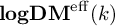
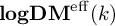
The goal of this article is to extend the work of Voevodsky and Morel on the homotopy t-structure on the category of motivic complexes to the context of motives for logarithmic schemes. To do so, we prove an analogue of Morel’s connectivity theorem and show a purity statement for $({\mathbf {P}}^1, \infty )$-local complexes of sheaves with log transfers. The homotopy t-structure on ${\operatorname {\mathbf {logDM}^{eff}}}(k)$ is proved to be compatible with Voevodsky’s t-structure; that is, we show that the comparison functor $R^{{\overline {\square }}}\omega ^*\colon {\operatorname {\mathbf {DM}^{eff}}}(k)\to {\operatorname {\mathbf {logDM}^{eff}}}(k)$ is t-exact. The heart of the homotopy t-structure on ${\operatorname {\mathbf {logDM}^{eff}}}(k)$ is the Grothendieck abelian category of strictly cube-invariant sheaves with log transfers: we use it to build a new version of the category of reciprocity sheaves in the style of Kahn-Saito-Yamazaki and Rülling.

Information

Type
Research Article
Creative Commons
Creative Common License - CCCreative Common License - BY
This is an Open Access article, distributed under the terms of the Creative Commons Attribution licence (https://creativecommons.org/licenses/by/4.0/), which permits unrestricted re-use, distribution and reproduction, provided the original work is properly cited.
Copyright
© The Author(s), 2021. Published by Cambridge University Press
