

The analysis of increasingly vast stores of text data has transformed political science research. Scholars have used text-as-data approaches to shed new light on existing questions in American politics, comparative politics, and international relations, and to open new lines of inquiry across these subfields (Gerner et al. Reference Gerner, Schrodt, Francisco and Weddle1994; Grimmer Reference Grimmer2013; Hopkins and King Reference Hopkins and King2010; King and Lowe Reference King and Lowe2003; Laver, Benoit, and Garry Reference Laver, Benoit and Garry2003). The impact of these methods has been especially pronounced in the study of legislative politics both in the United States (e.g., Quinn et al. Reference Quinn, Monroe, Colaresi, Crespin and Radev2010) and abroad (e.g., Proksch and Slapin Reference Proksch and Slapin2012). Although the development of sophisticated automated techniques for treating text as data has unlocked new and interesting sources of political information (Grimmer and Stewart Reference Grimmer and Stewart2013), to date this work has largely neglected audio data, which is stripped away in transcription. Yet, audio data contain information about an important component of (political) speech: speakers’ nonverbal expressions.
In this article, we posit that it is not only what legislators say that matters but also how they say it. Drawing on well-established psychology research on emotions and vocal communication, we argue that speakers’ emotional intensity is reflected in minor changes in vocal pitch that are difficult to control. We assess this claim using one of the largest collections of natural audio ever compiled—all US House floor speeches given over a five-year period. With this previously untapped resource, we construct a novel measure of legislators’ emotional intensity based on small deviations above or below a speaker’s baseline vocal pitch. Coupled with corresponding text data, our measure allows for the examination of legislators’ emotional intensity around different issue areas.
To develop and test our approach, we examine female House members’ speech on behalf of women. Women remain significantly underrepresented in the US Congress. Legislative speech, in turn, is especially meaningful for historically marginalized groups. As well as fostering feelings of institutional trust (Mansbridge Reference Mansbridge1999), speech facilitates the link between numeric (or descriptive) and policy (or substantive) representation. Whether it is talking more about women (Pearson and Dancey Reference Pearson and Dancey2011b) or “women’s issues” (Gerrity, Osborn, and Mendez Reference Gerrity, Osborn and Mendez2007; Osborn and Mendez Reference Osborn and Mendez2010), scholars have consistently shown that female representatives are more likely to elevate the voice of women both within (Pearson and Dancey Reference Pearson and Dancey2011a) and beyond the halls of government (Herrnson, Lay, and Stokes Reference Herrnson, Lay and Stokes2003). Because female MCs have a demonstrated commitment to representing women, this issue area serves as an ideal case for examining whether this commitment is reflected in minor changes in vocal pitch that are indicative of legislators’ emotional intensity. At the same time, our research also underscores, and extends our understanding of, the importance of descriptive representation in legislatures. Although male MCs can and do represent women, we posit that female legislators are able to speak about women in a way that male lawmakers generally do not.
In the sections that follow, we first make the case for studying nonverbal aspects of political speech generally, and legislators’ speech in particular. In doing so, we introduce vocal pitch as a measure of underlying emotional intensity. Focusing on women’s representation as a crucial test case, we posit that female lawmakers’ speech on behalf of women will be more intense, on average, than both men’s speech on women and also women’s speech on other issues. To assess these claims, we draw on text and audio from all 74,158 floor speeches that are at least 50 words in length, given between 2009 and 2014 in the US House. We use the text to determine whether a representative is talking about women and the audio to capture the emotional intensity of the speech—as measured by subtle changes in the lawmaker’s vocal pitch relative to her baseline. As compared with other topics, we find that female MCs are especially intense when talking about women.
Having shown that female MCs speak with greater emotional intensity when referencing women, we then offer two sets of supplementary analyses. We first examine whether increased vocal pitch is consistent with legislators’ issue commitments. To do so, we begin by demonstrating that the Congresswomen who are most emotionally intense when talking about women also have voting records that are rated more favorably by women’s interest groups. We then confirm that the patterns observed in female MCs’ speech on women hold more generally by showing that Democratic and Republican MCs speak with heightened pitch on issues traditionally owned by their respective parties.
In our second set of extensions, we broaden our work further to provide a preliminary assessment of lawmakers’ responses to the emotional intensity of floor speeches—in this case examining whether, and in what ways, male MCs react to female legislators’ speech through their own speech and voting behavior. Our preliminary results suggest that as the amount and intensity of women’s speech increase, Congressmen respond by talking more (and more intensely) about women. Despite concerns about backlash effects, we find that greater numbers of women’s speeches delivered with heightened emotional intensity are positively associated with male MCs voting with women. Taken together, our central finding and extensions demonstrate that studying the nonverbal aspects of political speech offers new insights into important political phenomena. We thus conclude by highlighting some avenues of future research related to this new method and data source.
THE NONVERBAL CONTENT OF LEGISLATIVE SPEECH
Existing scholarship examines many forms of Congressional behavior to draw inferences about legislators’ ideologies (Clinton, Jackman, and Rivers Reference Clinton, Jackman and Rivers2004; Poole and Rosenthal, Reference Poole and Rosenthal1985, Reference Poole and Rosenthal2001) and issue attention (Burden Reference Burden2007; Jones, Larsen-Price and Wilkerson Reference Jones, Larsen-Price and Wilkerson2009; Sulkin Reference Sulkin2005; Woon Reference Woon2009). Although these studies provide significant insights into lawmakers’ behaviors, they are limited in important ways. Roll call voting, for example, is largely constrained by party (Snyder and Groseclose Reference Snyder and Groseclose2000). Bill sponsorship is not only time consuming but also influenced by factors not easily controlled by legislators, such as staff size, seniority, and committee assignments (Schiller Reference Schiller1995). As a result, it is difficult to determine the issues about which MCs feel more intensely versus issue activities that are the result of party influence, constituency pressures, or institutional barriers.
We argue that legislative speech can be leveraged to gain a deeper understanding of MCs’ emotional intensity around a given issue. Choosing to speak on the House floor is traditionally seen as position-taking (Mayhew Reference Mayhew1974), and the verbal content of floor speeches has been used to estimate legislators’ ideologies (Diermeier et al. Reference Diermeier, Godbout, Yu and Kaufmann2012). Yet, floor speeches offer more than just ideological positions. In particular, the nonverbal content of a legislator’s speech—specifically, her vocal pitch—captures her emotional engagement with the issue at hand.
Vocal Pitch as a Measure of Emotional Intensity
Although understudied within legislatures, the nonverbal elements of speech have clear political ramifications. A growing body of work demonstrates that vocal pitch affects evaluations of candidates (Anderson et al. Reference Anderson, Klofstad, Mayew and Venkatachalam2014; Anderson and Klofstad Reference Anderson and Klofstad2012; Klofstad Reference Klofstad2016; Klofstad, Anderson, and Nowicki Reference Klofstad, Anderson and Nowicki2015; Klofstad, Anderson, and Peters Reference Klofstad, Anderson and Peters2012). This research shows both that differences in baseline vocal pitch can influence candidates’ political prospects and also that these effects are deeply gendered. Experimental studies, for example, suggest that citizens make inferences about competence and trustworthiness based on vocal characteristics (Anderson et al. Reference Anderson, Klofstad, Mayew and Venkatachalam2014), and prefer female leaders with lower pitched voices (Klofstad, Anderson, and Peters Reference Klofstad, Anderson and Peters2012).
Despite the interest in political speech broadly, and newer work on the nonverbal elements of speech in particular, political science research has overlooked a central feature of speech: subtle variations within an individual’s vocal pitch. These small deviations convey information about a speaker’s emotional state. When individuals become emotionally activated, a typical physiological response is a tightening of the vocal cords. This tightening, in turn leads to a higher-than-average vocal pitch when speaking. Indeed, studies have “routinely shown that [pitch]-related measures…are influenced by affect-related arousal” (Owren and Bachorowski Reference Owren, Bachorowski, Coan and Allen2007, 240), and “higher levels of arousal have been linked to higher-pitched vocal samples” (Mauss and Robinson Reference Mauss and Robinson2009, 222).Footnote 1
Although novel within political science research, the link between higher vocal pitch and emotional arousal is well established in the psychology literature. Indeed, on pages S4–S16 of our Supplemental Information, we provide an extended discussion of this link between vocal pitch and emotional intensity, including validation exercises.Footnote 2 These include studies that generate emotional intensity via acting prompts and those that induce emotional states via the Velten procedure. Here, we note that Bachorowski and Owren (Reference Bachorowski and Owren1995) induced specific emotional states within respondents by asking them to complete a 210-trial word identification task on a computer. After each block of 10 words, the respondents received either positive (“Good Job”) or negative (“Try Harder”) feedback. Subjects were then asked to answer a battery of questions about their emotional state and read a block of text aloud. The authors showed that vocal pitch was higher when individuals reported higher levels of emotional intensity, leading them to conclude that pitch can be used to assess respondents’ levels of emotional arousal.
These shifts in vocal pitch are subtle and difficult for the speaker to control. This physiological response, like many automatic responses, is thought to occur largely below conscious awareness. In this way, minor changes in vocal pitch serve as an “inherently honest indicator” of a speaker’s “internal state” (Ekman et al. Reference Ekman, O’Sullivan, Friesen and Scherer1991, 133–4). This latter argument is supported by Zuckerman and Driver (Reference Zuckerman, Driver, Siegman and Feldstein1985), who argue that nonverbal behaviors reveal (or “leak”) information that speakers are trying to hide. “Tone of voice,” in particular, has been identified as an especially telling indicator. Indeed, “several studies have shown that…the tone of a person’s voice leaks information that is not revealed by the verbal content or facial expressions associated with the message” (Zuckerman and Driver Reference Zuckerman, Driver, Siegman and Feldstein1985, 129). For these reasons, verbal and nonverbal behavior can be thought of in terms of a “leakage hierarchy” with “verbal content” (i.e., the words spoken) located in the “controllable end of the continuum, whereas the body and tone of voice may be classified as less controllable and more leaky channels” (Zuckerman and Driver Reference Zuckerman, Driver, Siegman and Feldstein1985, 130). In fact, when individuals attempt to control their vocal pitch, they often sound “more tense and less pleasant or compelling than someone speaking sincerely,” which is in turn associated with “increased vocal pitch” (Elkins et al. Reference Elkins, Zafeiriou, Pantic, Burgoon, Calvo, D’Mello, Gratch and Kappas2014, 505).Footnote 3 This difficulty in controlling vocal pitch makes it uniquely well suited for studying the emotional states of strategic actors.
Emotional Intensity in Legislators’ Speech
Finding a reliable indicator of emotional activation or intensity is especially important in the domain of legislative speech. Scholars have long recognized that much of a legislator’s behavior is best understood as strategic actions used to meet her reelection or institutional goals. That is, the verbal content of speech is often seen as cheap talk (Austen-Smith Reference Austen-Smith1990). Indeed, “to the extent [that a] behavior furthers the actor’s short-term self-interests,” Kraut (Reference Kraut1978) argues that we should “discount an actor’s behavior as a reflection of his or her true nature.” For this reason, with legislative speech, it is difficult to disentangle legislators’ internal states from their strategic behavior.
Although lawmakers have ulterior motives when speaking in the legislature, some aspects of their speech may be outside their conscious control. Because “one should believe most in those aspects of a person’s performance that the person is least able to deliberately and consciously control” (Kraut Reference Kraut1978, 381), subconscious aspects of speech should serve as more meaningful signals of legislators’ emotional states. With respect to legislative speech, features like “verbal content, speech rate and fluency, most body movements, and the large easy-to-see facial expressions are all more susceptible to deliberate control” (Ekman et al. Reference Ekman, O’Sullivan, Friesen and Scherer1991, 134). Speech topic, choice of words, and the length or extent of remarks each have a high degree of “controllability,” and should thus be driven largely by legislators’ strategic concerns. Vocal pitch, on the other hand, typically lies beyond the control of the individual (Ekman et al. Reference Ekman, O’Sullivan, Friesen and Scherer1991, 134). Because changes in pitch are less “controllable,” they are a more honest indicator of a lawmaker’s emotional intensity on a given issue.
This argument about the difficulty of controlling nonverbal aspects of speech has not been entirely lost on political scientists. Citing Goffman (Reference Goffman1959), Fenno (Reference Fenno1977) recognizes the importance of nonverbal expressions for evaluating the sincerity of legislators’ behaviors. He says:
Goffman is particularly interested in the second kind of expression—“the more theatrical and contextual kind”—because he believes that the performer is more likely to be judged by others according to the nonverbal than the verbal elements of his presentation of self. Those who must do the judging, Goffman says, will think that the verbal expressions are more controllable and manipulable by the performer; and they will, therefore, read his nonverbal “signs” as a check on the reliability of his verbal “signs” (898).
When MCs speak, they do so with a combination of controllable and manipulable elements, and relatively uncontrolled and sincere elements. The less easily controlled an element, the more likely that it measures the emotional disposition the speaker has toward the issues she is advancing. There is significant evidence that changes in pitch can arise from affective arousal, and that these variations in vocal pitch are associated with other noticeable emotional displays. Because such changes in vocal pitch are difficult to purposefully manipulate, discussing a topic with higher-than-average vocal pitch signals one’s emotional intensity about that issue. We turn now to outlining a test case for our claims about emotional intensity: women’s and men’s legislative speech on women.
EMOTIONAL INTENSITY AND WOMEN’S REPRESENTATION
The well-established link between women’s numeric and policy representation makes Congressional speech on women an ideal test case for examining legislators’ emotional intensity across policy arenas. Of course, men can (and do) act on behalf of women. Congresswomen also have a range of issue priorities, and working to represent women is not a primary concern for every female MC. Yet, scholars have pointed to a unique link between female lawmakers and female constituents, with women being more active on issues that are related to women, both within and beyond their districts (Carroll Reference Carroll2002). This behavior has been attributed in part to women’s shared lived experiences. Reingold (Reference Reingold1992), for example, finds that female state legislators are “more likely to express some sort of commitment to representing women and/or women’s concerns,” arguing that “because of their gender, they felt uniquely qualified to handle the concerns of their female constituents” (531). As compared with other topics, we thus expect that in the aggregate female lawmakers are not only more likely to talk about women but also are especially emotionally engaged when doing so.
Existing work suggests that Congresswomen do, in fact, use floor speeches to draw attention to issues related to women. Hall (Reference Hall1998) notes that female MCs were more active on the House floor during the Job Training Partnership Act of 1982 and on the Older Americans Act, both of which were supported by the Congressional Caucus for Women’s Issues. Pearson and Dancey (Reference Pearson and Dancey2011a, Reference Pearson and Dancey2011b) show that female legislators are not only more likely to speak on the House floor than their male colleagues but also more likely to reference women in those speeches. Osborn and Mendez (Reference Osborn and Mendez2010) likewise find that female senators speak more about health and family issues as compared with male senators. Shogan (Reference Shogan2001) demonstrates that 11% of the statements made by female MCs mentioned the specific concerns of women, indicating that “female representatives often utilize the ‘talking and deliberating’ activity associated with descriptive representation to promote women’s issues, interests, and concerns” (140).
Beyond the content of their speech, male and female legislators also differ in their rhetorical style, with women being especially likely to emphasize social bonds and personal experiences. Kathlene (Reference Kathlene1995) shows that female legislators are more likely than their male counterparts to emphasize the societal link to crime, leading them to speak more about long-term preventative strategies. This “connected” world view is also advanced by women in small group discussions (Karpowitz and Mendelberg Reference Karpowitz and Mendelberg2014) and other legislative debates (e.g., Levy, Tien, and Aved Reference Levy, Tien and Aved2001). Based on her analysis of floor debates on five bills in the 104th Congress, Walsh (Reference Walsh and Rosenthal2002) suggests that women tend to expand the frame of discussion to not only mention women but also to relate issues to their personal experiences. Swers (Reference Swers2002) makes similar claims. These differences in rhetorical style may also manifest in some aspects of nonverbal expression. Women, for example, use more smiling, nodding, and gazing behaviors. They also use greater facial and gestural expressiveness and smaller interpersonal distances (Hall, Carter, and Horgan Reference Hall, Carter, Horgan and Fischer2000).
Female and male lawmakers’ speech thus differs in both content and style. These differences should be especially pronounced in legislative speech referencing women. This is to be expected, given that when talking about women, female MCs can speak “with a voice carrying the authority of experience” (Mansbridge Reference Mansbridge1999, 644). Although previously unexamined, we posit that the effect of experience extends beyond content and style to influence Congresswomen’s emotional intensity when referencing women. This suggests our central hypothesis: on average, female MCs speak with elevated vocal pitch when talking about women as compared with both women’s average vocal pitch when discussing other topics and also men’s vocal pitch when referencing women.
DATA AND MEASUREMENT
Testing our central hypothesis requires data on male and female legislators’ vocal pitch when speaking about women as compared with other issue areas. To measure legislators’ emotional intensity when speaking on a given topic, we turn to data from HouseLive.Footnote 4 HouseLive is an online service from the Office of the Clerk that provides live and archived video of proceedings in the US House dating back to 2009. We focus our analyses on the audio and closed-captioning text information embedded in these videos. In total, we collected 6,432 hours of audio from 863 US House debates beginning on January 6, 2009, and ending on August 4, 2014, representing the totality of debate occurring on the US House floor over those five-and-a-half years.
Having collected all floor speeches given in this time period, we split each audio file into individual speeches using the timestamps found in the closed-captioning information. Focusing on speeches that have at least 50 words yielded audio and text for 74,158 speeches.Footnote 5 As we explain below, we use the audio data to extract the vocal pitch of each speech and the closed-captioning text to identify speech topic.
Importantly, in addition to contributing to Congressional scholarship, our work also provides an impressive corpus of “real-world” audio data. Past studies of emotions and vocal pitch have typically relied on either a small number of speakers induced into a particular emotional state, or trained actors asked to portray emotions (although without explicit instructions to vary their vocal pitch) (Scherer Reference Scherer2013).Footnote 6 Although Schuller et al. (Reference Schuller, Batliner, Steidl and Seppi2011) recognize the importance of actor portrayals to the study of emotion and human speech, they also argue that “obtaining more realistic data will still be the most important issue in the foreseeable future” (1,080). In line with this directive, our data encompass a vast number of utterances by hundreds of speakers conveying emotional content in a natural (to them) setting. Our real-world application of vocal pitch as a marker for emotional content thus also contributes to the psychology literature on emotional activation.
Measuring Emotional Intensity via Vocal Pitch
From our raw audio data, we compute changes in speakers’ vocal pitch as our measure of emotional intensity. We first calculate speakers’ baseline levels of vocal pitch, and then measure variations in vocal pitch across speeches. Generally speaking, “voice pitch is the perceived ‘highness’ or ‘lowness’ of a voice and is influenced by the fundamental frequency” (Klofstad Reference Klofstad2016, 2). Following Titze (Reference Titze2000), the fundamental frequency (F 0) can be defined using the following equation:
 $${F_0} = {1 \over {2L}}\sqrt {{\sigma \over \rho }} ,$$
where L is the vocal fold length, σ is the longitudinal stress on the vocal folds, and ρ is the vocal fold tissue density. Individual variations in vocal fold length (L) and density (ρ) are largely determined by genetics (e.g., Debruyne et al. Reference Debruyne, Decoster, Van Gijsel and Vercammen2002; Przybyla, Horii, and Crawford Reference Przybyla, Horii and Crawford1992).Footnote 7 Conversely, variations in longitudinal stress (σ) are specific to the speaker and speech. Puts, Gaulin, and Verdolini (Reference Puts, Gaulin and Verdolini2006, 285) demonstrate that “[e]motional activation raises F 0 by increasing tension on the vocal fold mucosa [σ, in equation (1)], mainly via contraction of the cricothyroid muscles and consequent lengthening of the vocal folds.”Footnote 8
To measure pitch, we extract the mean fundamental frequency (F 0)—that is, the average vocal pitch—from each floor speech using Praat.Footnote 9 This commonly used speech analysis software estimates the fundamental frequency by dividing the autocorrelation of a windowed signal by the autocorrelation of the window itself.Footnote 10 Given that the pitch window can influence the vocal pitch estimate, on pages S22–S30 in the Supplemental Information, we reestimate all of our models using different Praat settings. The results remain essentially unchanged, regardless of the pitch window used.
To control for inter- and intra-speaker variations, we scale vocal pitch to standard deviations above or below the speaker’s baseline. Dietrich, Enos, and Sen (Reference Dietrich, O’Brien and Yao2019) argue that this should be done for two reasons. First, in this project, we are not interested in whether a lawmaker generally speaks at a higher vocal pitch. Rather, we are concerned with whether a legislator’s vocal pitch changes from its baseline level when speaking about women. Standardizing vocal pitch not only helps capture whether a speaker is higher or lower than her average but also gives the relative magnitude of the change. Second, although studies find few gender differences in the vocal characteristics used to convey emotions—such as laryngeal tension, lip rounding, pitch level and range, loudness, clarity, and rate (Bezooyen Reference Bezooyen1984; Brody Reference Brody2009; Davitz Reference Davitz1964)—because women’s vocal cords tend to be smaller and shorter, they do typically speak at a higher baseline vocal pitch than men. By standardizing vocal pitch using each speaker’s baseline (or mean) vocal pitch, we account for this inherent sex difference.
Identifying Speech Topic
Individual-level variation in vocal pitch provides a measure of emotional intensity. We expect that levels of emotional activation vary by speech topic. We use the closed-captioning text data from HouseLive to determine whether a MC addressed women in a given speech. We opt for closed-captioned transcripts because they more accurately report what is said on the House floor than the Congressional Record. Legislators can change the Congressional Record after the fact, and often read in text that was not spoken on the House floor (e.g., asking that a letter from a constituent be added to the Congressional Record instead of reading it aloud). Because it is directly transcribed, closed-captioning information does not suffer from this limitation.Footnote 11
To establish whether the speaker addressed women, we create a binary variable indicating whether the speech used any of the Pearson and Dancey (Reference Pearson and Dancey2011b) dictionary terms related to women. These include “woman,” “women,” “woman’s,” “women’s,” “girl,” “girl’s,” “girls,” “girls’,” “female,” “female’s,” “females,” “females’,” “servicewoman,” “servicewoman’s,” “servicewomen,” and “servicewomen’s.” If a speech contains any of these terms, it is coded as a 1, otherwise 0. Given that this is a coarse measure of whether a speech addresses women, we also estimate all models using two alternative operationalizations of the dependent variable. The first considers the proportion of words in the speech drawn from these dictionary terms. The second identifies speech about women using a Structural Topic Model (STM) (Roberts et al., Reference Roberts, Stewart, Tingley and Airoldi2013, Reference Roberts, Stewart, Tingley, Lucas, Leder-Luis, Kushner Gadarian, Albertson and Rand2014; Roberts, Stewart, and Tingley Reference Roberts, Stewart and Tingley2014). Irrespective of the way we measure the degree to which a speech addressed women, the results are identical to those outlined below. The models using alternative approaches are reported on pages S30–S36 in the Supplemental Information.
Modeling Strategy
Our key predictor of interest is speaker sex, which we obtain from GovTrack.Footnote 12 We view each speech as a unique opportunity to address women. We thus use the legislative speech (rather than the legislator) as our unit of analysis. Aggregating to the legislator level would obfuscate the important within-individual variation that takes place from speech to speech. For example, a single emotionally activated speech could artificially inflate a MC’s mean vocal pitch—giving the impression that she is an emotive legislator when in reality she generally delivers subdued speeches (with one extreme exception). At the same time, because speeches given by the same MC will likely share commonalities, we estimate multilevel linear and logistic regressions with random intercepts for each legislator. This modeling approach also helps to account for other unobserved differences between legislators that could influence the parameter estimates.
We also control for other factors that may bias the results if omitted. Members who are institutionally disadvantaged are forced to take to the floor more often in an attempt to influence legislation (Maltzman and Sigelman Reference Maltzman and Sigelman1996), because they have fewer other tools at their disposal. We therefore include measures of speaker race and seniority from GovTrack, and use data from Stewart and Woon (Reference Stewart and Woon2016)Footnote 13 to determine whether the speaker was a committee chair. We also incorporate data on partisanship and ideology from Voteview,Footnote 14 both of which affect floor speeches (Harris Reference Harris2005; Morris Reference Morris2001). For similar reasons, we include dummy variables for whether the speech was less than one minute and whether it was delivered during an election year, both of which have been shown to influence speaking behavior (Maltzman and Sigelman Reference Maltzman and Sigelman1996). We also incorporate a control for the speech duration because spikes in vocal pitch will have a greater effect on mean vocal pitch when a speech is shorter. Finally, on pages S51–S86 of the Supplemental Information, we further replicate these results with a number of different model specifications.
RESULTS: LEGISLATORS’ VOCAL PITCH WHEN REFERENCING WOMEN
To begin, if the link between numeric and policy representation leads female MCs to speak with more emotional intensity about women, then we would likewise expect female MCs to speak more frequently about women than their male colleagues. We thus first establish that female lawmakers are on average more likely to talk about women in their floor speeches. In total, Congresswomen include at least one of the Pearson and Dancey (Reference Pearson and Dancey2011b) dictionary terms in 2,403 of their 13,484 total speeches (17.82%). Male MCs, in contrast, use a dictionary term in 5,507 of 60,667 speeches (9.08%). We further verify this expectation in Models 1.1 (Table 1, Model 1) and 1.2 (Table 1, Model 2). Here, the dependent variable is whether a given floor speech used a word from Pearson and Dancey (Reference Pearson and Dancey2011b)’s “women” dictionary. The predictor of interest is Female, which equals 1 if the MC is a woman and 0 otherwise. Like previous studies, our findings indicate that female legislators are, in fact, more likely to talk about women in their speeches. Based on our results from Model 1.1, women in Congress are 2.13 times more likely to reference women as compared with male MCs (predicted probabilities of 0.17 for women and 0.08 for men). This holds even after accounting for party identification, ideology, institutional position, seniority, race, and whether it was an election year (see Model 1.2).
Female MCs More Likely to Talk About Women, with Greater Intensity

Note: In Models 1 and 2, the dependent variable equals 1 if the speech included any of the Pearson and Dancey (Reference Pearson and Dancey2011b) women’s dictionary terms, 0 otherwise. These models report the results from a multilevel logistic regression. In Models 3 and 4, the dependent variable is the speaker’s vocal pitch in standard deviations above or below the speaker’s baseline. These models report the results from a multilevel linear regression. All models also include a randomly varying intercept for each member of Congress. Levels of significance are reported as follows: *p < 0.1; **p < 0.05; ***p < 0.01. Standard errors are reported in parentheses.
Although this is an important finding in and of itself, it is difficult to assess the degree to which female MCs are emotionally invested in speaking about women using only the text and topics of their speeches. In Table 2, we present the mean and standard deviation of men’s and women’s vocal pitch by party. Here, higher values mean that the MC is speaking with greater emotional intensity. Comparing the first and second columns shows female MCs speak at a significantly higher vocal pitch when using one of the Pearson and Dancey (Reference Pearson and Dancey2011b) terms (t = 4.14, df = 12,917, p ≤ 0.001). More specifically, both Democratic (t = 3.12, df = 8,967, p ≤ 0.01) and Republican women (t = 2.81, df = 3,948, p ≤ 0.01) have markedly higher vocal pitch when they reference women as compared with when they do not.Footnote 15 The same cannot be said for male MCs, whose vocal pitch remains essentially unchanged when referencing women (t = 0.02, df = 58,281, p ≤ 0.99). Indeed, neither Democratic (t = −0.43, df = 25,868, p ≤ 0.67) nor Republican men (t = 0.33, df = 32,411, p ≤ 0.75) significantly change their vocal pitch when talking about women.Footnote 16
Average Vocal Pitch and Standard Deviation for Male and Female MCs by Party

Note: Measurements of vocal pitch are in Hertz (Hz). In the first two columns, we restricted our data to speeches which used at least one of the terms outlined by Pearson and Dancey (Reference Pearson and Dancey2011b). In the last two columns, we restricted our data to speeches which did not use any of these terms. Rows correspond to indicated groups. For example, the average vocal pitch for all speeches delivered by Republican men mentioning women was 151.11 Hz. Averages for each column can be found in the “All” rows.
Moving beyond descriptive statistics, in Models 1.3 and 1.4, we predict speaker’s vocal pitch, as measured in standard deviations above or below his or her baseline. Here, positive values mean that the MC is speaking with more emotional intensity than we would otherwise expect, whereas the inverse is true for negative values. We test whether female MCs demonstrate greater emotional intensity when talking about women than other topics (our central hypothesis) by interacting Female with a dummy variable, indicating whether a given speech used any of Pearson and Dancey (Reference Roberts, Stewart, Tingley, Lucas, Leder-Luis, Kushner Gadarian, Albertson and Rand2011b)’s dictionary terms about women (“Women” mentioned).
The significant interaction effect found in Table 1, Model 3 (Model 1.3) shows that female legislators speak with a higher vocal pitch when referencing women than when talking about other topics. When female legislators use any of the Pearson and Dancey (Reference Pearson and Dancey2011b) dictionary terms, their vocal pitch is 0.09 standard deviations higher than their baseline. This is nearly five times greater than male MCs, whose vocal pitch only increases 0.02 standard deviations when referencing women. At the same time, the raw magnitude is slight enough that this change in vocal pitch is likely beyond the control of the speaker. This finding holds even when traditional predictors of legislative behavior are included in Model 1.4, which suggests that our measure of emotional intensity is capturing information that scholars would otherwise miss. Related work by Dietrich, O’Brien, and Yao (Reference Dietrich, O’Brien and Yao2019) suggests that similar results hold when analyzing word-level vocal inflections.Footnote 17
Our results shed new light on the relationship between women’s numeric and policy representation. Moving beyond studies that focus only on the verbal content of legislative speech, we demonstrate that women lawmakers are not only more likely to discuss women but also are more emotionally engaged on average when doing so. Of course, not all female MCs express the same level of emotional intensity when speaking about women, and some male MCs are especially emotionally engaged on this topic. There are also likely other individual-level characteristics not captured by our covariates that affect legislators’ propensity to speak with intensity about women. Yet, the fact remains that even when controlling for a myriad of other factors, female MCs are more likely to speak with above-average vocal pitch when referencing women than when referencing other issues and as compared with their male counterparts. Given the well-established relationship between women’s numeric and policy representation, moreover, our findings support our argument that small deviations from baseline vocal pitch represent a novel measure of legislators’ emotional intensity more broadly.
EMOTIONAL INTENSITY AND LEGISLATORS’ ISSUE COMMITMENTS
Thus far, we have introduced a novel measure of legislators’ emotional intensity and shown that female MCs, on average, are especially intense when speaking about women. We now turn to two additional analyses that explore whether increased vocal pitch is consistent with legislators’ broader issue commitments. First, we examine whether female lawmakers’ vocal pitch when speaking about women is associated with their voting behavior on women’s issues. Second, we assess whether our findings hold for Democratic and Republican legislators speaking on issues owned by their respective parties.
Vocal Pitch and Interest Group Ratings
If increases in vocal pitch reflect legislators’ emotional intensity about a topic, then vocal pitch should be associated with other types of legislative activity related to the issue area. To this end, we examine whether female MCs’ emotional intensity when speaking about women is associated with differences in voting behavior on women’s issues. To do so, we use legislative scorecards from 24 prominent women’s interest groups, as reported by Project Vote Smart. These scorecards are used by interest groups to inform their members about which lawmakers are more or less likely to cast votes that are consistent with the organization’s mission.Footnote 18 We collapse these scores into the average vote score for each legislator across all 24 groups for all available years of data, and use this information to examine voting patterns among female lawmakers.
Although on average Congresswomen speak with higher-than-baseline pitch when referencing women, Table 3 demonstrates that there is substantial variation in female MCs’ emotional intensity when addressing this topic. Importantly, we find that the Congresswomen who speak with the greatest intensity about women receive significantly higher scores from women’s interest groups than those who speak with the lowest intensity. In fact, there is a statistically significant difference between the average vote scores for the 25 most (Table 3a) and least (Table 3b) activated women (t = 2.59, df = 48, p ≤ 0.02). This suggests that the female legislators who are especially emotionally intense when referencing women also have voting records that reflect their interest in representing women.
Emotionally Intense Congresswomen are Rated More Highly by Women’s Interest Groups

Note: Measurements of vocal pitch are in Hertz (Hz). In the first column, we restricted our data to speeches which used at least one of the terms outlined by Pearson and Dancey (Reference Pearson and Dancey2011b). In the second column, we restricted our data to speeches which did not use any of these terms. The “Pitch Difference” column (abbreviated “Pitch Diff.”) is the difference between these two columns. The 25 most (see Panel A) and least activated (see Panel B) female MCs had the highest and lowest “Pitch Difference,” respectively. The average vote score from 24 prominent women’s interest groups (as reported by Project Vote Smart) is found in the column labeled “Vote Smart.” A full list of the groups we used can be found in Table S4 in the SI. Higher values imply the MC cast more votes that are consistent with the mission of these groups. Column averages for Democratic and Republican women can be found in the “Groups” section.
Of course, interest groups associated with women tend to skew Democratic, so our results are likely to be stronger for female Democratic MCs. As expected, when we conducted separate tests for each party, we found a statistically significant difference between the average vote scores for the most and least emotionally intense Democratic women (t = 2.83, df = 39, p ≤ 0.01). These results did not hold for Republican women (t = 0.14, df = 7, p > 0.05), although we note that there are far fewer observations in this category. Moreover, although falling outside of the conventional bounds of statistical significance, the most intense Republican women are still rated higher than the least intense women. Our strong findings for Democratic women—and suggestive results for Republican MCs—together offer additional support for our assertion that changes in vocal pitch can be used to capture legislators’ emotional intensity around a given issue.
To further validate this claim, on pages S81–S84 in the SI, we interact our vocal pitch measure with the MC’s average women’s interest group rating. Here too we find that female lawmakers who tend to vote in the preferred direction of women’s interest groups (as defined by Project Vote Smart) also speak with greater emotional intensity when talking about women as compared with their speech on other topics. We also replicate this analysis on pages S80–S81 in the SI with a second measure of legislative activity on behalf of women: the number of women’s issue bills introduced as defined by Volden, Wiseman, and Wittmer (Reference Volden, Wiseman and Wittmer2018). We find that Congresswomen who introduce more women’s bills also tend to speak with higher vocal pitch when referencing women than when speaking about other issues. These results are not only consistent with our broader argument but also demonstrate that vocal pitch may yield additional insights when used in conjunction with more traditional measures of substantive representation.Footnote 19
Vocal Pitch and Partisan Issue Ownership
Our work on female lawmakers suggests that we will observe heightened vocal pitch among MCs who have a broader commitment to the policy under discussion. As a further exploration of this claim, we turn now to an analysis of the speaking behavior of partisans in the US House on issues that are traditionally “owned” by the Democratic and Republican Parties. If emotional intensity is associated with legislators’ issue commitments, then we should observe Democrats in Congress speaking with heightened pitch on traditionally Democratic issues as compared with both Republican issues and also those that are owned by neither party. Likewise, we expect Republicans to express greater emotional intensity when speaking about topics that are especially important to their party. To assess this claim, we examine variations in vocal pitch above or below the speaker’s baseline on issues that are more likely to be associated with Democrats and Republicans.
Using a 30-topic structural topic model (STM) to categorize the content of legislative speeches (see pages S30–S32 in the Supplemental Information for more information), we select a number of topic areas that correspond to widely acknowledged partisan-owned issues. For Democratic-owned issues, we identify nine topic categories that generally correspond to broader issues related to social welfare, land management/infrastructure, and civil rights. For Republican-owned issues, we identify nine topic categories that generally correspond to defense, immigration, and budget/tax policy.Footnote 20 Although it is beyond the scope of this article to resolve debates about which issues are owned by the respective parties (e.g., Petrocik Reference Petrocik1996; Petrocik, Benoit, and Hansen Reference Petrocik, Benoit and Hansen2003), these topics are widely recognized by the general public as Democratic and Republican issues (Goggin and Theodoridis Reference Goggin and Theodoridis2017).
As a validation of our identification of Democratic- and Republican-owned issues, we should find that legislators’ speeches contain more language that falls under their party’s owned issues. Indeed, we find that Republicans talk more about Republican-owned issues as compared with Democrats (t = 30.51, df = 74,135, p < 0.001), and Democrats talk more about Democratic-owned issues than Republicans (t = 18.43, df = 74,047, p < 0.001). This corresponds to Democrats using 9.02% more words—and Republicans using 17.21% more words—related to their respective party-owned issues. Although these differences may seem relatively small, the topics we extract from our STM capture less than 8% of the words in a given speech on average. This is because STMs—like other forms of Latent Dirichlet Allocation (LDA) topic modeling—view speeches as mixtures of several “topics,” many of which are not issues but rather reflect different types of speaking styles (e.g., being more collegial or deferential). Words from a single issue are thus rare as compared to the entire corpus of words used in a speech.
Table 4 displays our results for changes in vocal pitch for Democratic- and Republican-owned issues. The positive and statistically significant interaction term in Models 4.1 and 4.2 indicates that Democrats speak with higher vocal pitch when speeches reference more Democratic-owned issues. Conversely, the statistically significant interaction term in Models 4.3 and 4.4 indicates that Republicans speak with a higher vocal pitch when speeches reference more Republican-owned issues. Moreover, the negative main effects for Democratic- and Republican-owned issues suggests that Democrats and Republicans speak at a significantly lower vocal pitch when referencing issues owned by the opposing party. On pages S20–S22 in the Supplemental Information, we further show that MCs who are closest to their party’s median voting behavior (as measured by DW-NOMINATE scores) are more emotionally intense on their party’s issues as compared with legislators who are further from the party median.Footnote 21
Partisans Talk about Party Issues with Greater Intensity

Note: The dependent variable is the speaker’s vocal pitch in standard deviations above or below the speaker’s baseline. In Panel A, we consider whether Democrats tend to raise their vocal pitch when speaking about Democratic-owned issues. In Panel B, we consider whether Republicans tend to raise their vocal pitch when speaking about Republican-owned issues. The issues themselves are derived from the Structural Topic Model (STM) outlined on pages S30–S32 in the Supplemental Information. All models are multilevel linear regressions and include randomly varying intercepts for each member of Congress. Levels of significance are reported as follows: *p < 0.1; **p < 0.05; ***p < 0.01. Standard errors are reported in parentheses.
Petrocik, Benoit, and Hansen (Reference Petrocik, Benoit and Hansen2003) argue that partisans have more credibility when talking about their party’s issues in part “because typical Democrats (or Republicans) believe in the concerns of their party” (602). This argument is consistent with our results, as Democrats and Republicans speak with more emotional intensity when discussing their party’s core issues as compared with those owned by the opposition. Moreover, the slight changes we isolate are also consistent with vocal pitch being an indicator of a lawmaker’s emotional disposition toward an issue. Policy topics that are central to a party’s identity should elicit a stronger emotional reaction from party members, which is exactly what we observe in the rising vocal pitch of Democrats and Republicans in Congress when discussing issues owned by their parties.Footnote 22
Heightened emotional intensity thus appears to correspond to policy commitments. Female MCs who speak at higher standard deviations above their baselines when referencing women also demonstrate their commitment to women through their voting behavior (as measured by interest group ratings). And, Democrats and Republicans speak on issues owned by their party with greater intensity than on other issues. Together, these supplementary analyses provide further evidence consistent with our claim that a legislator’s vocal pitch signals her emotional intensity about the issue she is discussing.
LEGISLATORS’ RESPONSES TO HEIGHTENED VOCAL PITCH
Having established that vocal pitch can be used as a measure of legislators’ emotional engagement with a given issue area, we conclude our empirical analyses with a preliminary assessment of the broader implications of this speech. In particular, we ask whether emotionally intense speech by women is associated with changes in other lawmakers’ behavior. MCs’ floor speeches can provide information to both their constituents and also their fellow legislators. Even when lawmakers are not physically present on the floor, the rise of C-SPAN means that they are devoting more time to both giving and paying attention to floor speeches. As Kingdon (Reference Kingdon1989) notes, “it has become common for members or their staffs to listen to the debate on the set in the office, keeping one ear on the proceedings while attending to other kinds of work” (103).
Although it is impossible to say with certainty which MCs observe floor speeches, we expect that some lawmakers do hear (about) them, especially when delivered in large numbers and with emotional intensity. As a result, we believe that floor speeches have the potential to send meaningful signals to other legislators. Returning to our test case, we may be especially likely to observe effects with respect to Congresswomen’s speech about women. Work on men and women in deliberative settings shows that male behavior responds to changes in women’s presence and participation (Mendelberg, Karpowitz, and Oliphant Reference Mendelberg, Karpowitz and Oliphant2014). Focusing on the judiciary, Boyd, Epstein, and Martin (Reference Boyd, Epstein and Martin2010) find that male judges turn to their female colleagues when deciding cases directly related to women. We may see similar effects in Congress. When a large number of female legislators talk about women, they signal that the topic will impact women in their colleagues’ districts. Because constituency pressures are a powerful force shaping speaking behavior (Maltzman and Sigelman Reference Maltzman and Sigelman1996), male legislators may subsequently take to the floor to discuss women as a means to address concerns that are salient to their female constituents.
The clarity of these signals should be influenced not only by the frequency with which female legislators speak but also by the intensity. Exposure to female legislators’ emotionally intense speeches by and about women should activate other legislators’ emotions, leading them to become more emotionally intense themselves. Moreover, whereas a single legislator speaking at a slightly higher vocal pitch may not send a very strong signal, several speeches delivered in such a way start to carry considerable weight (particularly when those speeches are delivered by women about women). That is, a large number of emotionally intense speeches delivered on the same day is not only likely to get the attention of male MCs but also may influence their behavior.Footnote 23 Although providing a direct causal test of this claim is beyond the scope of this paper, below we offer suggestive evidence consistent with male legislators responding to women’s speeches.
Amount and Intensity of Men’s Speech on Women
To examine men’s response to female MCs’ speech on women, we first extend our main analysis to consider men’s willingness to address women in their floor speeches (see Table 5). In Models 5.1 and 5.2, the dependent variable is whether a given Congressman’s floor speech contained one of Pearson and Dancey’s (Reference Pearson and Dancey2011b) women’s dictionary terms. Our primary independent variables are (1) the number of speeches delivered by women on a given legislative day that reference women (Female Speeches), and (2) the average vocal pitch of those speeches (Female Pitch). We are thus interested in the interaction between Female Speeches and Female Pitch. A positive and statistically significant interaction term would be consistent with male MCs becoming more likely to mention women when female MCs deliver a large number of speeches about women at an increased vocal pitch.
The Quantity and Intensity of Women’s Speech Affects the Quantity of Men’s Speeches about Women

Note: Dependent variable equals 1 if the speech included any of the Pearson and Dancey (Reference Pearson and Dancey2011b) women’s dictionary terms, 0 otherwise. These models report the results from a multilevel logistic regression. All models also include a randomly varying intercept for each member of Congress. Levels of significance are reported as follows: *p < 0.1; **p < 0.05; ***p < 0.01. Standard errors are reported in parentheses.
We restrict our analysis to male MCs who delivered speeches on the same legislative day as female speeches about women for which we have vocal pitch data. This restriction allows us to focus on those male legislators who are most likely to have been influenced by Congresswomen’s behavior.Footnote 24 We also include two additional controls for the types of issues being debated on a given legislative day. First, we want to isolate the impact of female MCs’ speech from the general effects of women’s heightened issue activity. To do so, we draw on Volden, Wiseman, and Wittmer’s (Reference Volden, Wiseman and Wittmer2018) “women’s issues” measure to include a variable counting the number of bills debated in their six “women’s issues” categories.Footnote 25 This provides a general proxy for whether issues highly salient to women in Congress appeared on the day’s agenda. Second, we are concerned that both male and female MCs may speak with greater emotional intensity when important issues are being debated. In these instances, we would expect the vocal pitch of male and female legislators to be heightened, leading to the impression that women’s speech is influencing male behavior when in reality both groups are responding to the importance of the issue itself. To account for this possibility, we use CQ Weekly’s “Bills to Watch”Footnote 26 to create a count variable of the number of major bills debated on each legislative day.Footnote 27
Our results are in line with what we would expect if women’s speeches influence male legislators’ discussion of women. Although the interaction term in Model 5.1 is not statistically significant at the 0.05-level, calculating predicted probabilities suggests that vocal pitch can have a substantively meaningful effect on whether a male MC mentions women in his speech, particularly when large numbers of female MCs give emotionally intense speeches. Introducing controls (see Model 5.2) strengthens this interaction effect and also indicates that this relationship holds even after accounting for individual speakers’ characteristics and the types of bills on the agenda.
To assess the substantive significance of our finding, Figure 1 plots the predicted values from Model 5.2. The x-axis shows the range of our Female Speeches variable (from 0 to 43). The y-axis plots the likelihood that a male MC’s speech includes at least one Pearson and Dancey (Reference Pearson and Dancey2011b) term. We show average Female Pitch set to 2 standard deviations above and below its baseline in the solid and dashed lines, respectively.
The Quantity and Intensity of Women’s Speech Affects the Quantity of Men’s Speeches about Women
Note: Predicted male speaking behavior from Model 2 in Table 5 holding all other variables constant. Solid and dashed lines indicate Female Pitch was set to two standard deviations above (1.41) and below (−1.28) the mean, respectively. On the x-axis, Female Speeches is allowed to vary from its minimum (0) to maximum (43). The y-axis is the probability that the male speech included any of the Pearson and Dancey (Reference Pearson and Dancey2011b) women’s dictionary terms. The gray ribbons represent 90% confidence intervals. The 95% confidence intervals overlap until the x-axis reaches approximately 25 speeches.

From this figure, it is clear that as more female MCs take to the floor to give emotionally intense speeches about women, their male colleagues become more likely to mention women in their own speeches. For example, when Female Pitch is two standard deviations above its mean, going from the minimum number of female speeches referencing women (0) to the maximum (43) results in an increase in the likelihood that male MCs mention women from 0.05 to 0.56. Yet, it is important to note that such an effect only occurs when the number of female speeches becomes quite large. Going from one standard deviation below (6) to one standard deviation above (11) the mean number of female speeches, yields only a 3% gain in the likelihood of a male MC referencing women (from 0.07 to 0.10). This underscores the hurdles female lawmakers face when trying to advance women’s issues in the US House of Representatives.Footnote 28
We next turn to investigating whether women’s speeches might also influence the emotional intensity of male speeches referencing women (Table 6). Here, the main dependent variable is the vocal pitch of male MCs who spoke on the same day as women, scaled to standard deviations above and below their baseline. We are primarily interested in the interaction between (1) the number of female speeches using any of the Pearson and Dancey (Reference Pearson and Dancey2011b)’s terms (Female Speeches), (2) the average vocal pitch of those speeches (Female Pitch), and (3) whether a male MC mentioned women (“Women” Mentioned). If women’s speeches increase not only the quantity, but also the emotional intensity, of male references to women, then we would expect this interaction term to be positive and statistically significant.
The Quantity and Intensity of Women’s Speech Affects Men’s Vocal Pitch

Note: The dependent variable is the speaker’s vocal pitch in standard deviations above or below the speaker’s baseline. Levels of significance are reported as follows: *p < 0.1; **p < 0.05; ***p < 0.01. Standard errors are reported in parentheses.
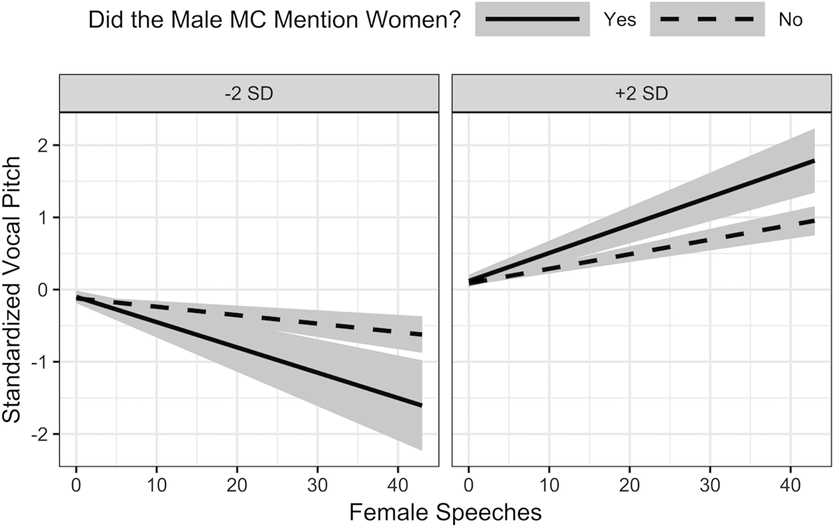
In Model 6.1, the interaction term is positive and statistically significant at the 0.05-level. To help interpret this result, we present predicted values in Figure 2. When average female vocal pitch is set to two standard deviations above the mean (1.41), increasing the number of female speeches mentioning women from one standard deviation below the mean (6) to one standard deviation above the mean (11) raises men’s predicted vocal pitch when talking about women from 0.17 standard deviations to 0.26 standard deviations above their baseline. Increasing the number of female speeches mentioning women from the minimum (0) to the maximum (43) raises men’s predicted vocal pitch when talking about women from 0.12 standard deviations to 1.79 standard deviations above their baseline. This suggests that when female MCs deliver a large number of speeches on women with higher vocal pitch, male MCs are not only more likely to mention women but also do so with increased emotional intensity.Footnote 29 These results hold even after the addition of a number of controls for legislator characteristics and the legislative agenda (see Table S14 on page S37 in the Supplemental Information). Together, this provides strong suggestive evidence of the link between female MCs’ emotionally intense speeches about women and male MCs’ speaking behavior.
The Quantity and Intensity of Women’s Speech Affects Men’s Vocal Pitch
Note: Predicted vocal pitch derived from Model 2 in Table 6 holding all other variables constant. Solid lines indicate the speech included at least one of the Pearson and Dancey (Reference Pearson and Dancey2011b) women’s dictionary terms. Dashed lines indicate all other speeches. For a given legislative day, Female Speeches is the total number of female speeches that used any of the Pearson and Dancey (Reference Pearson and Dancey2011b) women’s dictionary terms and Female Pitch is the average vocal pitch of those speeches. Female Speeches is allowed to vary from the minimum (0) to maximum (43), whereas Female Pitch is set to two standard deviations above (1.41) and below (−1.28) the mean in the right and left panel, respectively. The gray ribbons represent 95% confidence intervals.
Voting Behavior
Our results thus far are consistent with male MCs talking more about women, and with greater emotional intensity, when female lawmakers deliver a large number of emotionally intense speeches referencing women. On the one hand, these findings may represent (some) male legislators’ desire to speak to women’s concerns. In both judicial settings (Boyd, Epstein, and Martin Reference Boyd, Epstein and Martin2010)—and in deliberation more generally (Karpowitz and Mendelberg Reference Karpowitz and Mendelberg2014, 288)—when women talk, men listen. This can, in turn, alter group behavior and decisions. On the other hand, men’s behavior could also reflect a backlash against female MCs’ speeches. Past research has shown that as women become more prevalent in legislatures, male politicians act to minimize their influence to maintain dominance (Heath, Schwindt-Bayer, and Taylor-Robinson Reference Heath, Schwindt-Bayer and Taylor-Robinson2005; Kanthak and Krause Reference Kanthak and Krause2012; Krook Reference Krook2015), including becoming more aggressive and controlling of deliberation (Kathlene Reference Kathlene1994). In this way, when female MCs take to the floor to deliver emotionally intense speeches, it could signal to male legislators that their dominance is under threat and thus result in an adverse reaction. We provide a preliminary examination of men’s voting behavior to investigate whether changes in male MCs’ speaking patterns can be better characterized as supportive of, or a backlash against, women’s speech. To do so, we construct a measure of whether those Congressmen referencing women became more or less likely to vote with female MCs’ who spoke about women on the House floor.
Estimating the relationship between women’s speech and men’s voting behavior is inherently difficult, as male legislators may be more likely to vote with female MCs who gave emotionally intense speeches about women simply because of shared ideology or partisanship.Footnote 30 To overcome this challenge, our dependent variable in the models presented in Table 7 scales the proportion of male MC votes cast with female speakers based on their previous shared voting behavior. Our measure includes three components: (1) the proportion of votes male MCs cast in the same direction as the female speakers on a given legislative day, (2) the proportion of votes those male MCs typically cast with those same female speakers on all previous legislative days, and (3) the degree to which those proportions vary. Combining these three pieces of information yields a standardized measure where positive values indicate that male speakers were more likely to vote in line with female speakers than their past voting history would predict. Negative values indicate that male speakers were less likely to vote in line with female speakers, and would thus provide evidence of a backlash effect among those men who spoke with emotional intensity about women. A detailed working example can be found on pages S36–S41 in the Supplemental Information. We also provide alternative model specifications that yield similar results on pages S41–S42.Footnote 31 Likewise, a dyadic estimation of this relationship (and accompanying placebo tests) can be found in Section S8.2 of the Supplemental Information which starts on page S55.
The Quantity and Intensity of Women’s Speech Affects Men’s Voting Patterns

Note: Outcome is the proportion of time male MCs voted with women, as described on page Voting Behavior. Levels of significance are reported as follows: *p < 0.1; **p < 0.05; ***p < 0.01. Standard errors are reported in parentheses.
The results of our model predicting male voting behavior can be found in Table 7. Because our primary variable of interest is the interaction term between Female Speeches and Female Pitch, we plot predicted percentage of co-voting in Figure 3. Model 7.2 shows a positive and statistically significant relationship between this interaction and the percentage of votes male MCs cast with female speakers. This provides evidence consistent with male legislators becoming more likely to vote with their female counterparts when women give a large number of emotionally intense speeches about women. When female MCs’ average vocal pitch is set to two standard deviations above the mean (1.41) and women’s speeches on women range from the minimum (0) to maximum (43), the rate at which male MCs vote with women on a given day increases from 0.23 standard deviations below to 0.53 standard deviations above what we would expect given past voting behavior.Footnote 32
The Quantity and Intensity of Women’s Speech Affects Men’s Voting Patterns
Note: Predicted male voting behavior from Model 2 in Table 7 holding all other variables constant. Solid and dashed lines indicate Female Pitch was set to two standard deviations above (1.41) and below (−1.28) the mean, respectively. On the x-axis, Female Speeches is allowed to vary from its minimum (0) to maximum (43). The y-axis has the percentage of time the male MC voted with women, as described on page Voting Behavior. The gray ribbons represent 95% confidence intervals.

Together, these results hint at the importance of women’s collective speaking efforts. In the 111th–113th Congresses, there were between 77 and 81 women in the US House. The maximum number of female speeches we observe in our data (43) thus represents 56% of all women in the legislature taking to the floor to reference women. When we observe this high degree of women’s participation, our models suggest that we are also likely to see men talk more (and with greater intensity) about women. And, our preliminary evidence indicates that they may be more likely to vote in line with those female speakers. This suggests that increasing women’s descriptive representation in legislatures, particularly by electing female candidates who are champions of women, could help female representatives further advance the interests of women among their male colleagues.
At the same time, two caveats are in order. First, given the observational nature of our data, we do not claim that these findings reflect a causal relationship. Indeed, our aim is not to make claims about the effect of female MCs’ emotionally intense speeches about women on men’s voting behavior, but instead to simply determine whether men’s heightened vocal pitch represents a backlash effect. Our examination of voting behavior yields no evidence of male backlash, which suggests that when Congresswomen speak with greater intensity about women, they do not encounter any immediate detrimental consequences. More generally, although we find an association between women’s speeches and male MCs’ behavior—and present dyadic models and placebo tests that lend further support to this relationship (see Section S8.2 of the Supplemental Information)—legislators’ speeches on women simply cannot be randomly assigned. We thus cannot definitively rule out alternative explanations for this relationship.
Second, it is important to note that at lower levels of female floor participation, we see no positive (and sometimes negative) estimates of the effect of women’s emotionally intense speech. This finding in some ways echoes the broader literature on gendered speaking behavior. Research focusing on ordinary citizens finds that women speak in a way that is characterized as more feminine than men, which includes speaking with more emotional content (Hogg Reference Hogg1985). Importantly, in mixed-gender settings, women often speak less than men (Karpowitz and Mendelberg Reference Karpowitz and Mendelberg2014) and are perceived as less influential than their male counterparts (Carli, LaFleur, and Loeber Reference Carli, LaFleur and Loeber1995). Although there are important differences in elite women’s speaking behavior as compared to ordinary citizens, our results suggest that when speaking alone, or in small numbers, Congresswomen may also find it difficult to achieve the standing and influence necessary to affect their male colleagues’ behavior. Building on our preliminary findings, future work should thus explore the broader consequences of women’s collective legislative efforts.
CONCLUSIONS
Despite the growth of research using text-as-data approaches, audio data have received scant attention from political scientists. Yet, audio archives are available for a growing number of legislative chambers, including some state legislatures and city councils in the United States and national assemblies abroad. Similar data also exist in other political settings, from courts and public hearings to candidate debates. Our work represents the first effort to harness this growing corpus of audio data to ask and answer questions about legislators’ speech. In focusing our attention on vocal pitch and emotional activation, our findings provide new insights concerning both the emotional intensity of US lawmakers’ speech and gendered speech dynamics. By highlighting the utility of audio-as-data approaches, we draw attention to a new way of studying political speech more broadly.
We argue that nonverbal components of legislators’ floor speeches—in particular, small changes in a speaker’s vocal pitch that are difficult to control—can shed new light on MCs’ emotional intensity around a given issue area. Drawing on the well-established theoretical and empirical link between women’s descriptive representation and activity on behalf of women, we focus on legislative speech addressing women as an ideal application of our approach. Using almost 75,000 floor speeches given in the US House of Representatives, we show that women in Congress are not only more likely to discuss women on the floor, but also do so with greater emotional intensity. Our research thus both underscores and also extends our understanding of the importance of descriptive representation in legislatures. Although male MCs can and do represent women in Congress, female legislators are able to speak about women in a way that male lawmakers generally do not.
Our central finding suggests that small changes in vocal pitch can capture important information about legislators’ emotional intensity. Our secondary analyses both indicate that increased vocal pitch is consistent with legislators’ issue commitments and also draw attention to possible effects of emotionally intense speech. In our first extension, we offer two studies that provide important initial evidence that changes in vocal pitch correspond to other aspects of legislators’ behavior. We show that the Congresswomen who are most emotionally activated when talking about women also receive significantly higher evaluations from women’s interest groups as compared to the least activated female MCs. And, we show that Democrats and Republicans in Congress tend to become more emotionally activated when discussing policy issues owned by their respective parties. Taken together, these findings indicate that the emotional intensity legislators display in their floor speeches is not arbitrary, but is instead related to their underlying connection to the policy issue under debate. Extending our work further, our second set of extensions suggest that lawmakers’ emotionally intense speech may have a broader impact in the legislative chamber. There is a positive correlation between large numbers of women taking to the floor to talk about women with intensity and male legislators discussing women (and doing so with greater intensity).
Clearly, the nonverbal content of legislative speech provides information that is not captured by more overt measures of lawmakers’ attitudes or commitments. Changes in vocal pitch are not explained, for example, by partisanship or D-W NOMINATE scores. And, when we examine other behaviors—such as legislators’ interest group scores and men’s vocal pitch and voting behavior—vocal pitch is a significant explanatory variable even when we control for these measures. Audio data also provide an opportunity to uncover information from legislative speeches that is lost in text-as-data approaches. By incorporating vocal pitch into the study of legislators’ behavior we gain information about the intensity (and perhaps impact) of representatives’ words.
In highlighting vocal pitch as a measure of emotional intensity, our work also opens up new avenues of research with respect to legislative speech. Our extensions suggest that lawmakers who have long-standing commitments to a particular issue area tend to speak about that issue with higher vocal pitch. We expect that this logic could also apply to other groups of MCs. Veterans, doctors, and educators, for example, each likely draw heavily on personal experiences when discussing veterans’ benefits, health policy, and education policy, respectively, on the floor of the US House. Analyzing audio data from the legislative speech of those group members would further validate the results from this paper. More generally, the novel method and data that we advance provide a measure that can potentially separate those who feel intensely about a policy from those who are simply responding to district or party demands.
Our analyses, moreover, have only scratched the surface of what can be learned from audio data. In this paper, we focus on emotional intensity both because it is substantively interesting and also because our measure of emotional activation is well established in the psychology literature. Yet, much more information can be gleaned from this data. Political scientists, for example, are already studying raw vocal pitch (e.g., Klofstad Reference Klofstad2016). Scholars can also easily use audio data to examine other nonverbal measures. Researchers can analyze downward pitch contour as a proxy for disgust, as well as pitch variance within utterance (or total silence duration) as measures of anger.Footnote 33 Indeed, a variety of audio variables have been used to identify specific emotional states (Banse and Scherer Reference Banse and Scherer1996). These measures, which can be computed from our data, could provide us with new perspectives on MCs’ emotional reactions to their colleagues and to different issue areas. Moving beyond emotional intensity to measuring distinct emotional states would represent a significant step forward in the broader literature on emotions in politics.
An important future step for research involving audio data will be the development of tools to study vocal pitch at a more granular level than present techniques allow. Throughout our analyses, we have focused on mean fundamental frequency at the speech level. While much can be gained from this approach, matching audio data to text at the word level is an intriguing potential avenue of future research. Although segmenting audio data into individual words poses significant methodological challenges, early work by Dietrich, O’Brien, and Yao (Reference Dietrich, Enos and Sen2019) posits interesting questions on intersectional identities that could benefit from more granular audio data.
Regardless of the results of this additional work, it is clear that floor speeches are an important tool for legislators. While it is easy to think of these speeches simply as collections of sentences and paragraphs, by examining the nonverbal behavior of MCs, we conceptualize the House floor as something more than words on a page. Our work allows scholars to view speeches as acts in which text, audio, and video come together to produce content that influences behavior within (and possibly beyond) Capitol Hill. Although speeches have long been acknowledged as valuable tools for understanding politicians’ underlying ideological positions, we demonstrate that their nonverbal components yield insights into the intensity with which those positions are held.
SUPPLEMENTARY MATERIAL
To view supplementary material for this article, please visit https://doi.org/10.1017/S0003055419000467.
Replication materials can be found on Dataverse at: https://doi.org/10.7910/DVN/M4ARI7.




Comments
No Comments have been published for this article.