





1 Introduction
Let $\Sigma $
be a finite set called the alphabet and G a discrete group. A subshift of finite type or SFT
$\Sigma $
be a finite set called the alphabet and G a discrete group. A subshift of finite type or SFT $X \subset \Sigma ^G$
is a set closed under the shift maps
$X \subset \Sigma ^G$
is a set closed under the shift maps $\sigma _g(x)_h = gx_h = x_{g^{-1}h}$
, and which is defined by removing exactly the points
$\sigma _g(x)_h = gx_h = x_{g^{-1}h}$
, and which is defined by removing exactly the points $x \in \Sigma ^G$
whose orbit hits a particular clopen set F, or equivalently contain a forbidden pattern from a finite set.
$x \in \Sigma ^G$
whose orbit hits a particular clopen set F, or equivalently contain a forbidden pattern from a finite set.
It is well known that one-dimensional SFTs (the case $G = \mathbb {Z}$
) behave in a much nicer and uniform way than multidimensional SFTs (
$G = \mathbb {Z}$
) behave in a much nicer and uniform way than multidimensional SFTs ( $G = \mathbb {Z}^d, d \geq 2$
). As two examples of nice dynamical properties that hold in one dimension, topologically transitive subshifts of finite type in one dimension have a unique measure of maximal entropy and have dense periodic points (these fail for general subshifts of finite type, but in completely manageable ways). Furthermore, SFTs (and even their subshift factors called sofic shifts) can be algorithmically compared for equality and inclusion. See e.g. the standard reference [Reference Lind and Marcus13].
$G = \mathbb {Z}^d, d \geq 2$
). As two examples of nice dynamical properties that hold in one dimension, topologically transitive subshifts of finite type in one dimension have a unique measure of maximal entropy and have dense periodic points (these fail for general subshifts of finite type, but in completely manageable ways). Furthermore, SFTs (and even their subshift factors called sofic shifts) can be algorithmically compared for equality and inclusion. See e.g. the standard reference [Reference Lind and Marcus13].
In higher dimensions, even under strong irreducibility (a strong mixing/niceness assumption), subshifts may have multiple measures of maximal entropy [Reference Burton and Steif6], $\mathbb {Z}^3$
-SFTs are not known to have dense periodic points (see e.g. [Reference Hochman8]) and it is not even possible to algorithmically tell whether a given subshift of finite type is empty [Reference Berger4]. For this reason, a recurring endeavor in the field of symbolic dynamics is to try to find classes of multidimensional subshifts that capture some of the interesting phenomena from the two-dimensional setting, but where at least some properties are decidable or otherwise understandable.
$\mathbb {Z}^3$
-SFTs are not known to have dense periodic points (see e.g. [Reference Hochman8]) and it is not even possible to algorithmically tell whether a given subshift of finite type is empty [Reference Berger4]. For this reason, a recurring endeavor in the field of symbolic dynamics is to try to find classes of multidimensional subshifts that capture some of the interesting phenomena from the two-dimensional setting, but where at least some properties are decidable or otherwise understandable.
Group shifts—groups where the elements are points of the subshift and group operations are continuous and shift-commuting—are the most successful such class. They are of finite type when the shift group G is polycyclic [Reference Schmidt23]. They have dense periodic points at least on abelian groups [Reference Kitchens, Schmidt and Alexander9]. They also of course have a ‘most uniform’ measure, namely the Haar measure. Many of their basic properties (inclusions and even some dynamical properties) are decidable [Reference Béaur and Kari3]. An extensive theory of group shifts (with emphasis on the abelian case) is developed in [Reference Schmidt23].
In [Reference Salo16], the author introduced the so-called k-totally extremally permutive (TEP) subshifts. They share some properties of group shifts and one-dimensional SFTs: there is a natural measure (the measure that ‘samples patterns uniformly on convex sets’). They have dense periodic points and there are also some decidable properties, for example, inclusion is easily seen to be decidable for this class. (The last results are not explicitly stated in [Reference Salo16], but are obvious corollaries of results proved therein; in any case, they follow from the results proved in the present paper.)
Different mixing assumptions can have useful implications also in higher dimensions (even if usually not as nice as in one dimension). Strong irreducibility implies dense periodic points at least for two-dimensional SFTs [Reference Lightwood11, Reference Lightwood12]. Two stronger mixing properties are the existence of a safe symbol and the more general topological strong spatial mixing. Here, we say $0 \in \Sigma $
is a safe symbol for an SFT X if turning a non-
$0 \in \Sigma $
is a safe symbol for an SFT X if turning a non- $0$
symbol to
$0$
symbol to $0$
in a valid configuration can never introduce a forbidden pattern; for the latter property, see Definition 4.8. All SFTs in these classes have dense periodic points and, thus, their languages and inclusion are decidable.
$0$
in a valid configuration can never introduce a forbidden pattern; for the latter property, see Definition 4.8. All SFTs in these classes have dense periodic points and, thus, their languages and inclusion are decidable.
In the present paper, we define a new class of subshifts called avoshifts. This class is defined with respect to a family of subsets of the acting shift group G, and the definition is that if a partial configuration $x \in \Sigma ^C$
(with C in the specified class of shapes) extends to a complete configuration of the subshift, then the set of valid extensions to the identity element is determined by a finite subpattern of the configuration, which is bounded as a function of x (but not necessarily C).
$x \in \Sigma ^C$
(with C in the specified class of shapes) extends to a complete configuration of the subshift, then the set of valid extensions to the identity element is determined by a finite subpattern of the configuration, which is bounded as a function of x (but not necessarily C).
We consider the class of avoshifts for a quite restricted class of shapes called inductive intervals. (This is a good thing—the smaller the class of shapes, the larger the class of avoshifts.) With this choice, avoshifts generalize (cellwise quasi-)group shifts, k-TEP subshifts (on $\mathbb {Z}^d$
with the standard convex geometry). It also covers all SFTs with a safe symbol, and topological strong spatial mixing in fact precisely coincides with the avo property for the class of all possible shapes. Inductive intervals make sense on any polycyclic group and depend on the chosen subnormal series.
$\mathbb {Z}^d$
with the standard convex geometry). It also covers all SFTs with a safe symbol, and topological strong spatial mixing in fact precisely coincides with the avo property for the class of all possible shapes. Inductive intervals make sense on any polycyclic group and depend on the chosen subnormal series.
The following theorem lists our main results.
Theorem 1.1. Let G be polycyclic and let $X \subset A^G$
be an avoshift for inductive intervals. Then:
$X \subset A^G$
be an avoshift for inductive intervals. Then:
-
• X is of finite type;
-
• the language of X can be computed algorithmically (uniformly in X);
-
• the truth of $X \subset Y$
can be decided algorithmically for any given SFT Y;
$X \subset Y$
can be decided algorithmically for any given SFT Y; -
• forbidden patterns for the restrictions of X to the groups in the subnormal series (a.k.a. projective subdynamics) can be effectively computed;
-
• ‘avofactors’ can be effectively computed;
-
• X is uniformly SFT on inductive intervals and the corresponding forbidden patterns can be computed; and
-
• we can algorithmically semidecide that X is an avoshift from its forbidden patterns.

Avofactors are factors that can be expressed as projections from a product that satisfies a similar property as that defining avoshifts. This includes all factors given by algebraic maps between group shifts.
The first five results (see below for a discussion of the sixth) were previously known for group shifts (at least for abelian groups). The first is proved in [Reference Kitchens10, Reference Schmidt23] (in the former on $\mathbb {Z}$
, in the latter for general polycyclic groups), the second and third are from [Reference Kitchens, Schmidt and Alexander9], and the fourth and fifth are from [Reference Béaur and Kari3].
$\mathbb {Z}$
, in the latter for general polycyclic groups), the second and third are from [Reference Kitchens, Schmidt and Alexander9], and the fourth and fifth are from [Reference Béaur and Kari3].
An important takeaway is that avoshifts on polycyclic groups satisfy the basic decidability properties, and SFTness, of group shifts. Notably, our proof of these results uses the group structure ‘only once’ and the only fact used is ‘equal extension counts’ (see §3.1 for the definition) for all finite patterns of the same shape, which is trivially true for (cellwise quasi)group shifts. For group shifts, both [Reference Béaur and Kari3, Reference Kitchens, Schmidt and Alexander9] strongly use Wang’s algorithm [Reference Wang25], which is based on the density of periodic points. Avoshifts do not in general have dense periodic points and our methods are not related to Wang’s algorithm in any obvious way.
The fact that avoshifts are of finite type does not seem to generalize beyond polycyclic groups [Reference Salo17], but the other properties are really consequences of the uniform avo property (meaning the set of valid extensions of $x \in \Sigma ^C$
to the identity element is determined by a subpattern which is bounded as a function of C and x), which in the case of polycyclic groups and inductive intervals is automatic. We illustrate this by giving an avoshift proof of the well-known fact that SFTs on free groups have decidable languages and decidable inclusion, by showing that SFTs are characterized by the uniform avo property on the tree convex sets from [Reference Salo16].
$x \in \Sigma ^C$
to the identity element is determined by a subpattern which is bounded as a function of C and x), which in the case of polycyclic groups and inductive intervals is automatic. We illustrate this by giving an avoshift proof of the well-known fact that SFTs on free groups have decidable languages and decidable inclusion, by showing that SFTs are characterized by the uniform avo property on the tree convex sets from [Reference Salo16].
The sixth property in Theorem 1.1 means that there is a finite set of forbidden patterns such that for $C \subset G$
in the family, configurations that are locally legal on C are globally legal (similarly to the main property of k-TEP subshifts described in the first bullet point of [Reference Salo16, Theorem 1.1]). This is closely tied with the uniform avo property.
$C \subset G$
in the family, configurations that are locally legal on C are globally legal (similarly to the main property of k-TEP subshifts described in the first bullet point of [Reference Salo16, Theorem 1.1]). This is closely tied with the uniform avo property.
We also make the following two observations that may be of interest despite not having decidability implications. The topological Markov property [Reference Barbieri, Gómez, Marcus and Taati1] is equivalent to being avo for the class of cofinite sets (Proposition 4.12). The property of being topologically k-mixing for all k can be stated equivalently as being uniformly SFT on the sets of cardinality n for all n.
2 Definitions
We have $0 \in \mathbb {N}$
. We denote the power set of a set S by
$0 \in \mathbb {N}$
. We denote the power set of a set S by $\mathcal {P}(S)$
. A subset (not necessarily proper) is written
$\mathcal {P}(S)$
. A subset (not necessarily proper) is written $A \subset B$
. A finite subset is written
$A \subset B$
. A finite subset is written $A \Subset B \iff A \subset B \wedge |A| < \infty $
. We write
$A \Subset B \iff A \subset B \wedge |A| < \infty $
. We write $\mathbb {Z}_k$
for the cyclic group on k elements, for k finite. By
$\mathbb {Z}_k$
for the cyclic group on k elements, for k finite. By $\vec 0$
, we denote the zero vector of
$\vec 0$
, we denote the zero vector of $\mathbb {Z}^d$
for any d.
$\mathbb {Z}^d$
for any d.
Throughout, G will denote a group. Our groups are for the most part finitely generated (f.g.) and countable. The identity element is denoted by $e_G$
or just e. We typically think of G as acting on itself by left translation. We consider the group to carry a generating set (usually called S when a name is needed, but this symbol is not reserved for this purpose) and the resulting left-invariant word metric (typically called d). The ball of radius n or n-ball is
$e_G$
or just e. We typically think of G as acting on itself by left translation. We consider the group to carry a generating set (usually called S when a name is needed, but this symbol is not reserved for this purpose) and the resulting left-invariant word metric (typically called d). The ball of radius n or n-ball is $\mathcal {B}_n = \{g \in G : d(e_G, g) \leq n\}$
. Specifically this is the metric closed ball of radius n around the identity element, but
$\mathcal {B}_n = \{g \in G : d(e_G, g) \leq n\}$
. Specifically this is the metric closed ball of radius n around the identity element, but $g\mathcal {B}_n$
is the metric ball around the element g so we do not need special notation for it. We usually have in mind the right Cayley graph
$g\mathcal {B}_n$
is the metric ball around the element g so we do not need special notation for it. We usually have in mind the right Cayley graph $\textrm {Cay}(G, S)$
with nodes G and edges
$\textrm {Cay}(G, S)$
with nodes G and edges $(g, gs)$
for
$(g, gs)$
for $s \in S$
. Subsets of G are sometimes called areas or shapes. For
$s \in S$
. Subsets of G are sometimes called areas or shapes. For $A, B \subset G$
, we write
$A, B \subset G$
, we write $d(A, B) = \min \{d(a, b) : a \in A, b \in B\}$
.
$d(A, B) = \min \{d(a, b) : a \in A, b \in B\}$
.
An alphabet is a finite (discrete) set $\Sigma $
. A subshift is
$\Sigma $
. A subshift is $X \subset \Sigma ^G$
which is topologically closed (
$X \subset \Sigma ^G$
which is topologically closed ( $\Sigma ^G$
having the product topology) and closed under the shift or translation action of G defined by the formula
$\Sigma ^G$
having the product topology) and closed under the shift or translation action of G defined by the formula $gx_h = x_{g^{-1}h}$
, where in turn
$gx_h = x_{g^{-1}h}$
, where in turn $x_h$
is the notation for indexing x at h. Note that
$x_h$
is the notation for indexing x at h. Note that $\Sigma ^G$
is compact and, thus, so are subshifts.
$\Sigma ^G$
is compact and, thus, so are subshifts.
The subsets $\mathcal {P}(G)$
also carry the standard Fell topology (through identification of a set
$\mathcal {P}(G)$
also carry the standard Fell topology (through identification of a set $S \subset G$
with its indicator function in
$S \subset G$
with its indicator function in $\{0,1\}^G$
, this is the same as the topology used for subshifts). Subsets of G are also considered as an ordered set with inclusion as the order, and
$\{0,1\}^G$
, this is the same as the topology used for subshifts). Subsets of G are also considered as an ordered set with inclusion as the order, and $S_i \nearrow S$
means
$S_i \nearrow S$
means $\text { for all } i: S_i \subset S_{i+1} \wedge \bigcup _i S_i = S$
.
$\text { for all } i: S_i \subset S_{i+1} \wedge \bigcup _i S_i = S$
.
In this paper, we use the terminology that a point is always an element of $\Sigma ^G$
for a group G, a configuration is any element of
$\Sigma ^G$
for a group G, a configuration is any element of $\Sigma ^D$
where
$\Sigma ^D$
where $D \subset G$
for some group G (possibly a point, possibly
$D \subset G$
for some group G (possibly a point, possibly $D \subsetneq G$
), and a pattern is a configuration
$D \subsetneq G$
), and a pattern is a configuration $x \in \Sigma ^D$
whose domain D is finite. We sometimes use the term ‘finite pattern’ (meaning pattern) and ‘partial configuration’ (meaning configuration) for emphasis, and a point is sometimes referred to as a ‘complete configuration’. A D-pattern is a pattern with domain D. We mostly use
$x \in \Sigma ^D$
whose domain D is finite. We sometimes use the term ‘finite pattern’ (meaning pattern) and ‘partial configuration’ (meaning configuration) for emphasis, and a point is sometimes referred to as a ‘complete configuration’. A D-pattern is a pattern with domain D. We mostly use $x, y, z$
to refer to points and configurations, and
$x, y, z$
to refer to points and configurations, and $P, Q, R$
to refer to patterns.
$P, Q, R$
to refer to patterns.
If $x \in \Sigma ^D$
and
$x \in \Sigma ^D$
and $C \subset D$
, we write restriction as
$C \subset D$
, we write restriction as $x|C \in \Sigma ^C$
, as we tend to have non-trivial formulas for the sets C that we prefer not to have in a subscript. If
$x|C \in \Sigma ^C$
, as we tend to have non-trivial formulas for the sets C that we prefer not to have in a subscript. If $X \subset \Sigma ^D$
,
$X \subset \Sigma ^D$
, $X|C =$ $\{x|C : x \in X\}$
. We say a configuration
$\{x|C : x \in X\}$
. We say a configuration $x \in \Sigma ^C$
is a subconfiguration of
$x \in \Sigma ^C$
is a subconfiguration of $y \in \Sigma ^D$
if
$y \in \Sigma ^D$
if $C \subset D$
and
$C \subset D$
and $y|C = x$
. If C is the set of elements of D at some distance from the origin, we also call x a prefix of y. We say two configurations
$y|C = x$
. If C is the set of elements of D at some distance from the origin, we also call x a prefix of y. We say two configurations $x \in \Sigma ^C, y \in \Sigma ^D$
agree on
$x \in \Sigma ^C, y \in \Sigma ^D$
agree on $B \subset C \cap D$
if
$B \subset C \cap D$
if ${x|B = y|B}$
.
${x|B = y|B}$
.
For a symbol $a \in \Sigma $
and
$a \in \Sigma $
and $g \in G$
, write
$g \in G$
, write $a^g$
for the pattern
$a^g$
for the pattern $P \in \Sigma ^{\{g\}}$
with
$P \in \Sigma ^{\{g\}}$
with $P_g = a$
. We sometimes identify a with the pattern
$P_g = a$
. We sometimes identify a with the pattern $a^e$
. For two patterns
$a^e$
. For two patterns $P \in \Sigma ^C, Q \in \Sigma ^D$
, write
$P \in \Sigma ^C, Q \in \Sigma ^D$
, write $P \sqcup Q$
for the pattern
$P \sqcup Q$
for the pattern $R \in \Sigma ^{C \cup D}$
defined by
$R \in \Sigma ^{C \cup D}$
defined by $R|C = P, R|D = Q$
, when such a pattern exists. If
$R|C = P, R|D = Q$
, when such a pattern exists. If $P \in \Sigma ^D$
and
$P \in \Sigma ^D$
and $g \in G$
, then
$g \in G$
, then $gP \in \Sigma ^{gD}$
is the configuration defined by
$gP \in \Sigma ^{gD}$
is the configuration defined by $gP_{gh} = P_h$
(equivalently
$gP_{gh} = P_h$
(equivalently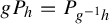 $gP_h = P_{g^{-1}h}$
, so shifting a point
$gP_h = P_{g^{-1}h}$
, so shifting a point $x \in \Sigma ^G$
is a special case of this definition). The empty pattern is the unique pattern with domain
$x \in \Sigma ^G$
is a special case of this definition). The empty pattern is the unique pattern with domain $\emptyset $
.
$\emptyset $
.
We say x occurs or appears in y if $gx$
is a subconfiguration of y for some
$gx$
is a subconfiguration of y for some $g \in G$
; equivalently, we say y contains x. We denote this by
$g \in G$
; equivalently, we say y contains x. We denote this by $x \sqsubset y$
. We write
$x \sqsubset y$
. We write $x \sqsubset X$
(and use the previous three terms as well) if
$x \sqsubset X$
(and use the previous three terms as well) if $x \sqsubset y$
for some
$x \sqsubset y$
for some $y \in X$
. We write
$y \in X$
. We write $\mathscr {L}(X) = \{P : P \sqsubset X\}$
for the language of X. Note that the empty pattern is in the language of X if and only X is non-empty.
$\mathscr {L}(X) = \{P : P \sqsubset X\}$
for the language of X. Note that the empty pattern is in the language of X if and only X is non-empty.
A subshift of finite type or SFT is $X \subset \Sigma ^G$
defined by
$X \subset \Sigma ^G$
defined by $X = \{x \in \Sigma ^G : \text { for all} g \in G: gx \notin F\}$
, where
$X = \{x \in \Sigma ^G : \text { for all} g \in G: gx \notin F\}$
, where $F \subset \Sigma ^G$
is clopen. Any clopen set F is a finite union of cylinders
$F \subset \Sigma ^G$
is clopen. Any clopen set F is a finite union of cylinders ${[P] = \{x \in A^G : x|D = P\}}$
where
${[P] = \{x \in A^G : x|D = P\}}$
where $P : D \to A$
for
$P : D \to A$
for $D \Subset G$
(the notation
$D \Subset G$
(the notation $\Subset $
means finite subset). The patterns P giving the cylinders comprising F in the definition of an SFT are called the forbidden patterns. A window for an SFT
$\Subset $
means finite subset). The patterns P giving the cylinders comprising F in the definition of an SFT are called the forbidden patterns. A window for an SFT $X \subset \Sigma ^G$
is any
$X \subset \Sigma ^G$
is any $M \Subset G$
such that there is a set of defining forbidden patterns whose domains are contained in M. A window size is any m such that
$M \Subset G$
such that there is a set of defining forbidden patterns whose domains are contained in M. A window size is any m such that $\mathcal {B}_m$
is a window. Note that on a group, we can always pick M to be the same for all the finitely many forbidden patterns, but it will be necessary later (when we later talk about being SFT on a subset of the group) to allow for the forbidden patterns to have different domains.
$\mathcal {B}_m$
is a window. Note that on a group, we can always pick M to be the same for all the finitely many forbidden patterns, but it will be necessary later (when we later talk about being SFT on a subset of the group) to allow for the forbidden patterns to have different domains.
If $M \Subset G$
and
$M \Subset G$
and $X \subset \Sigma ^G$
is a subshift, the M-SFT approximation of X is the SFT
$X \subset \Sigma ^G$
is a subshift, the M-SFT approximation of X is the SFT ${Y \subset \Sigma ^G}$
defined by
${Y \subset \Sigma ^G}$
defined by
 $$ \begin{align*} Y = \{y \in \Sigma^G : \text{ for all } g \in G: \text{ there exists } x \in X: gy|M = x|M\}. \end{align*} $$
Equivalently, this is the set of configurations defined by forbidding precisely the patterns $P \in \Sigma ^M$
that do not appear in X.
$P \in \Sigma ^M$
that do not appear in X.
Suppose a group G and a subshift $X \subset \Sigma ^G$
are clear from context. Then, we say a configuration
$X \subset \Sigma ^G$
are clear from context. Then, we say a configuration $x \in \Sigma ^C$
is globally valid or globally legal if
$x \in \Sigma ^C$
is globally valid or globally legal if $x \in X|C$
. In the case where X is an SFT, and
$x \in X|C$
. In the case where X is an SFT, and $\mathscr {P}$
is a defining set of forbidden patterns, then
$\mathscr {P}$
is a defining set of forbidden patterns, then $x \in \Sigma ^C$
is locally
$x \in \Sigma ^C$
is locally $\mathscr {P}$
-valid or locally
$\mathscr {P}$
-valid or locally $\mathscr {P}$
-legal if no
$\mathscr {P}$
-legal if no $P \in \mathscr {P}$
appears in x (with
$P \in \mathscr {P}$
appears in x (with $\mathscr {P}$
omitted if clear from context). Globally valid configurations are of course locally valid, and locally valid points (complete configurations) are globally valid.
$\mathscr {P}$
omitted if clear from context). Globally valid configurations are of course locally valid, and locally valid points (complete configurations) are globally valid.
If $X \subset \Sigma ^G$
is a subshift and
$X \subset \Sigma ^G$
is a subshift and $x \in \Sigma ^D$
for
$x \in \Sigma ^D$
for $D \subset G$
, then the follower set
$D \subset G$
, then the follower set $\mathcal {F}(x, E) = \mathcal {F}_X(x, E)$
is the set of configurations
$\mathcal {F}(x, E) = \mathcal {F}_X(x, E)$
is the set of configurations $z \in \Sigma ^E$
such that for some
$z \in \Sigma ^E$
such that for some $y \in X$
, we have
$y \in X$
, we have ${y|D = x \wedge y|E = z}$
or, equivalently,
${y|D = x \wedge y|E = z}$
or, equivalently, $x \sqcup z \in X|D \cup E$
(and
$x \sqcup z \in X|D \cup E$
(and $\sqcup $
is well defined). We refer to configurations
$\sqcup $
is well defined). We refer to configurations $z \sqcup x \in X|D \cup E$
as the extensions of x to E. If E is a singleton (indeed even if
$z \sqcup x \in X|D \cup E$
as the extensions of x to E. If E is a singleton (indeed even if $E = \{g\} \neq \{e\}$
), we may simply write the unique element of
$E = \{g\} \neq \{e\}$
), we may simply write the unique element of $\Sigma $
in this place to refer to an extension.
$\Sigma $
in this place to refer to an extension.
We say a subshift $X \subset \Sigma ^G$
is topologically mixing if for any non-empty open
$X \subset \Sigma ^G$
is topologically mixing if for any non-empty open ${U, V \subset X}$
, for any large enough g (in word norm), there is a point
${U, V \subset X}$
, for any large enough g (in word norm), there is a point $x \in X$
with
$x \in X$
with $x \in U, gx \in V$
. More generally, topological k-mixing means for any non-empty open
$x \in U, gx \in V$
. More generally, topological k-mixing means for any non-empty open $U_1, \ldots , U_k$
, there exists n such that for any
$U_1, \ldots , U_k$
, there exists n such that for any $(g_1, g_2, \ldots , g_k) \in G^k$
with
$(g_1, g_2, \ldots , g_k) \in G^k$
with $d(g_i, g_j)> n$
for
$d(g_i, g_j)> n$
for $i \neq j$
, there exists
$i \neq j$
, there exists $x \in X$
such that
$x \in X$
such that $g_ix \in U_i$
for all i. In the introduction, we used the term mixing/gluing property; by this, we refer to notions that in some (intuitive, informal) sense, generalize the idea of topological mixing.
$g_ix \in U_i$
for all i. In the introduction, we used the term mixing/gluing property; by this, we refer to notions that in some (intuitive, informal) sense, generalize the idea of topological mixing.
If $X, Y \subset \Sigma ^G$
are subshifts, a conjugacy is a shift-commuting homeomorphism
$X, Y \subset \Sigma ^G$
are subshifts, a conjugacy is a shift-commuting homeomorphism ${\phi : X \to Y}$
, and we say X and Y are conjugate in this case. A factor map is a shift-commuting continuous surjection
${\phi : X \to Y}$
, and we say X and Y are conjugate in this case. A factor map is a shift-commuting continuous surjection $\phi : X \to Y$
and we say X covers Y or Y is a factor of X in this case. A factor of an SFT is called sofic (note that in this paper, a factor is always a subshift).
$\phi : X \to Y$
and we say X covers Y or Y is a factor of X in this case. A factor of an SFT is called sofic (note that in this paper, a factor is always a subshift).
If $\Sigma $
itself is a finite group, then a subshift
$\Sigma $
itself is a finite group, then a subshift $X \subset \Sigma ^G$
is called a group shift if it is closed under the operations obtained from those of
$X \subset \Sigma ^G$
is called a group shift if it is closed under the operations obtained from those of $\Sigma $
by applying them cellwise. Group shifts are, up to conjugacy, the same as subshifts on which one can define a group structure by shift-invariant continuous operations [Reference Kitchens10, Reference Salo and Törmä19, Reference Salo and Törmä21]. More generally, for any universal algebraic structure on
$\Sigma $
by applying them cellwise. Group shifts are, up to conjugacy, the same as subshifts on which one can define a group structure by shift-invariant continuous operations [Reference Kitchens10, Reference Salo and Törmä19, Reference Salo and Törmä21]. More generally, for any universal algebraic structure on $\Sigma $
, we can talk about subshifts with this structure by applying the operations cellwise.
$\Sigma $
, we can talk about subshifts with this structure by applying the operations cellwise.
3 Avoshifts and basic properties
We begin with the precise definition of an avoshift. This is given for general groups and families of subsets of groups.
Definition 3.1. Let G be a group. Let $X \subset \Sigma ^G$
be a subshift. We say X is avo for
$X \subset \Sigma ^G$
be a subshift. We say X is avo for ${C \subset G \setminus \{e_G\}}$
(or C-avo, or a C-avoshift) if there exists
${C \subset G \setminus \{e_G\}}$
(or C-avo, or a C-avoshift) if there exists $B\Subset C$
such that for all
$B\Subset C$
such that for all $x \in X|C$
, we have
$x \in X|C$
, we have
 $$ \begin{align*} x|B \sqcup a^e \sqsubset X \iff x \sqcup a^e \sqsubset X. \end{align*} $$
In this case, we say B is determining for C, or C-determining. Similarly, we say C is determined by B, or B-determined. Let $\mathcal {C} \subset \mathcal {P}(G \setminus \{e_G\})$
. We say X is
$\mathcal {C} \subset \mathcal {P}(G \setminus \{e_G\})$
. We say X is $\mathcal {C}$
-avo, or a
$\mathcal {C}$
-avo, or a $\mathcal {C}$
-avoshift if it is avo for all
$\mathcal {C}$
-avoshift if it is avo for all $C \in \mathcal {C}$
.
$C \in \mathcal {C}$
.
Example 3.2. In the case of $G = \mathbb {Z}^d$
, one natural family
$G = \mathbb {Z}^d$
, one natural family $\mathcal {C}$
we could use comes from Euclidean convexity. If
$\mathcal {C}$
we could use comes from Euclidean convexity. If $\mathcal {D}$
is the set of intersections
$\mathcal {D}$
is the set of intersections $C \cap \mathbb {Z}^d$
where
$C \cap \mathbb {Z}^d$
where $C \subset \mathbb {R}^d$
is convex (for simplicity we refer to such subsets of
$C \subset \mathbb {R}^d$
is convex (for simplicity we refer to such subsets of $\mathbb {Z}^d$
as convex as well), then we take
$\mathbb {Z}^d$
as convex as well), then we take $\mathcal {C}$
to be the set of all
$\mathcal {C}$
to be the set of all $C \in \mathcal {D}$
such that also
$C \in \mathcal {D}$
such that also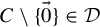 $C \setminus \{\vec 0\} \in \mathcal {D}$
. For this choice, being an avoshift on
$C \setminus \{\vec 0\} \in \mathcal {D}$
. For this choice, being an avoshift on $\mathbb {Z}^d$
equivalently means that if we take a convex subset
$\mathbb {Z}^d$
equivalently means that if we take a convex subset $C \not \ni \vec 0$
of
$C \not \ni \vec 0$
of $\mathbb {Z}^d$
and add a new element
$\mathbb {Z}^d$
and add a new element $\vec v$
so that
$\vec v$
so that $C \cup \{\vec v\}$
stays convex, then for globally valid patterns x on C, the set of valid extensions to
$C \cup \{\vec v\}$
stays convex, then for globally valid patterns x on C, the set of valid extensions to $\vec v$
is determined by looking at only a bounded subpattern of x (bounded as a function of x). This is the natural family to use for the k-TEP subshifts from [Reference Salo16], discussed in §4.
$\vec v$
is determined by looking at only a bounded subpattern of x (bounded as a function of x). This is the natural family to use for the k-TEP subshifts from [Reference Salo16], discussed in §4.
Example 3.3. The class on which we concentrate in the present paper is ‘inductive intervals’. In $\mathbb {Z}^d$
, an inductive interval is defined by including all elements
$\mathbb {Z}^d$
, an inductive interval is defined by including all elements $\vec v \in \mathbb {Z}^d$
where the last coordinate is in a particular interval of one of the forms
$\vec v \in \mathbb {Z}^d$
where the last coordinate is in a particular interval of one of the forms
 $$ \begin{align*} (-\infty, -1], [-m, -1], \emptyset, [1, m], [1, \infty), \end{align*} $$
or if it is zero, then the projection to the first $d-1$
coordinates belongs to an inductive interval of
$d-1$
coordinates belongs to an inductive interval of $\mathbb {Z}^{d-1}$
. These are a proper subset of the convex sets defined in the previous example, so the corresponding notion of avoshifts covers a larger class of subshifts. A typical inductive interval for
$\mathbb {Z}^{d-1}$
. These are a proper subset of the convex sets defined in the previous example, so the corresponding notion of avoshifts covers a larger class of subshifts. A typical inductive interval for $\mathbb {Z}^3$
is illustrated in Figure 1.
$\mathbb {Z}^3$
is illustrated in Figure 1.
The group $\mathbb {Z}^3$
visualized in Minecraft 1.21.1 [Reference Studios24], with the first axis pointing right, the second axis forward, and the third axis upward. The inductive interval with axis intervals
$\mathbb {Z}^3$
visualized in Minecraft 1.21.1 [Reference Studios24], with the first axis pointing right, the second axis forward, and the third axis upward. The inductive interval with axis intervals $([-8, -1], [1, 5], [-64, -1])$
is filled with blocks: a block of birch marks the origin, glass is used to fill on the first axis, cherry tree trunks on the second, and desert sand on the last. Plants and camels appear organically and serve no mathematical purpose. The interval
$([-8, -1], [1, 5], [-64, -1])$
is filled with blocks: a block of birch marks the origin, glass is used to fill on the first axis, cherry tree trunks on the second, and desert sand on the last. Plants and camels appear organically and serve no mathematical purpose. The interval $[-64, -1]$
denotes the depth of the layer of sand, which is not visible in the picture (colour online).
$[-64, -1]$
denotes the depth of the layer of sand, which is not visible in the picture (colour online).

We call these inductive intervals because they are defined inductively and we prove most of their properties by induction.
Another convenient way of expressing that X is C-avo is through follower sets.
Lemma 3.4. A subshift $X \subset A^G$
is C-avo for
$X \subset A^G$
is C-avo for $C \subset G \setminus \{e_G\}$
with determining set B if and only if
$C \subset G \setminus \{e_G\}$
with determining set B if and only if $\mathcal {F}(x|C, e_G) = \mathcal {F}(x|B, e_G)$
for all
$\mathcal {F}(x|C, e_G) = \mathcal {F}(x|B, e_G)$
for all $x \in X$
.
$x \in X$
.
Proof. Suppose first X is C-avo and B is C-determining. If $a \in \mathcal {F}(x|C, e_G)$
, then there exists
$a \in \mathcal {F}(x|C, e_G)$
, then there exists $y \in X$
such that
$y \in X$
such that ${y|C = x|C}$
and
${y|C = x|C}$
and $y_e = a$
. Then, also
$y_e = a$
. Then, also $y|B = x|B$
and
$y|B = x|B$
and $y_e = a$
, so
$y_e = a$
, so ${a \in \mathcal {F}(x|B, e_G)}$
. Conversely, if
${a \in \mathcal {F}(x|B, e_G)}$
. Conversely, if $a \in \mathcal {F}(x|B, e_G)$
, then there exists
$a \in \mathcal {F}(x|B, e_G)$
, then there exists $y \in X$
such that
$y \in X$
such that ${y|B = x|B}$
and
${y|B = x|B}$
and $y_e = a$
. Thus,
$y_e = a$
. Thus, $x|B \sqcup a^e \sqsubset X$
. Of course,
$x|B \sqcup a^e \sqsubset X$
. Of course, $x|C \in X|C$
and
$x|C \in X|C$
and $x|C|B = x|B$
. By the C-avo property,
$x|C|B = x|B$
. By the C-avo property,
 $$ \begin{align*} x|B \sqcup a^e \sqsubset X \iff x|C \sqcup a^e \sqsubset X, \end{align*} $$
so $x|C \sqcup a^e \sqsubset X$
, meaning
$x|C \sqcup a^e \sqsubset X$
, meaning $a \in \mathcal {F}(x|C, e_G)$
.
$a \in \mathcal {F}(x|C, e_G)$
.
Suppose then $\mathcal {F}(x|C, e_G) = \mathcal {F}(x|B, e_G)$
. We show X is C-avo with determining set B. Suppose
$\mathcal {F}(x|C, e_G) = \mathcal {F}(x|B, e_G)$
. We show X is C-avo with determining set B. Suppose $x \in X|C$
, let
$x \in X|C$
, let $x = y|C$
for
$x = y|C$
for $y \in X$
. We need to show
$y \in X$
. We need to show
 $$ \begin{align*} x|B \sqcup a^e \sqsubset X \iff x \sqcup a^e \sqsubset X. \end{align*} $$
Suppose first $y|B \sqcup a^e = x|B \sqcup a^e \sqsubset X$
. Then,
$y|B \sqcup a^e = x|B \sqcup a^e \sqsubset X$
. Then, $\mathcal {F}(y|B, e) \ni a$
, so by the assumption, also
$\mathcal {F}(y|B, e) \ni a$
, so by the assumption, also $a \in \mathcal {F}(y|C, e) = \mathcal {F}(x, e)$
, meaning there exists
$a \in \mathcal {F}(y|C, e) = \mathcal {F}(x, e)$
, meaning there exists $z \in X$
with
$z \in X$
with $z|C = x, z_e = a$
. Conversely, if
$z|C = x, z_e = a$
. Conversely, if $x \sqcup a^e \sqsubset X$
, then trivially
$x \sqcup a^e \sqsubset X$
, then trivially $x|B \sqcup a^e \sqsubset X$
.
$x|B \sqcup a^e \sqsubset X$
.
Note that $e_G$
does not really play a special role in the definition of the avo property, since X is always a subshift, and thus, if
$e_G$
does not really play a special role in the definition of the avo property, since X is always a subshift, and thus, if $B \Subset C$
satisfies
$B \Subset C$
satisfies $\mathcal {F}(x|C, e_G) = \mathcal {F}(x|B, e_G)$
for all
$\mathcal {F}(x|C, e_G) = \mathcal {F}(x|B, e_G)$
for all $x \in X$
, then equivalently
$x \in X$
, then equivalently $\mathcal {F}(x|gC, g) = \mathcal {F}(x|gB, g)$
for all
$\mathcal {F}(x|gC, g) = \mathcal {F}(x|gB, g)$
for all $g \in G$
. Sometimes it simplifies life not to have to translate things back to the origin and we use the preposition ‘at’ as follows.
$g \in G$
. Sometimes it simplifies life not to have to translate things back to the origin and we use the preposition ‘at’ as follows.
Definition 3.5. If $\mathcal {F}(x|C, g) = \mathcal {F}(x|B, g)$
, then we say B is determining for C (or C-determining) at g.
$\mathcal {F}(x|C, g) = \mathcal {F}(x|B, g)$
, then we say B is determining for C (or C-determining) at g.
Lemma 3.6. The follower set function $\mathcal {F}$
is decreasing in the leftmost argument with respect to the subconfiguration relation.
$\mathcal {F}$
is decreasing in the leftmost argument with respect to the subconfiguration relation.
Proof. Let $C \subset D$
. Let
$C \subset D$
. Let $x \in X|C$
and
$x \in X|C$
and $y \in X|D$
with
$y \in X|D$
with $y|C = x$
. Suppose
$y|C = x$
. Suppose $z \in \mathcal {F}(y, B)$
for some
$z \in \mathcal {F}(y, B)$
for some $B \subset G$
. This means there exists
$B \subset G$
. This means there exists $w \in X$
such that
$w \in X$
such that $w|D = y$
and
$w|D = y$
and $w|B = z$
. Then,
$w|B = z$
. Then, $w|C = y|C = x$
, so
$w|C = y|C = x$
, so $z \in \mathcal {F}(x, B)$
, which concludes the proof.
$z \in \mathcal {F}(x, B)$
, which concludes the proof.
By the previous lemma, $\mathcal {F}(x|C, e_G) = \mathcal {F}(x|B, e_G)$
for
$\mathcal {F}(x|C, e_G) = \mathcal {F}(x|B, e_G)$
for $B \Subset C$
implies that
$B \Subset C$
implies that $\mathcal {F}(x|C, e_G) = \mathcal {F}(x|D, e_G)$
for all
$\mathcal {F}(x|C, e_G) = \mathcal {F}(x|D, e_G)$
for all $B \subset D \subset C$
. We obtain the following immediate consequence.
$B \subset D \subset C$
. We obtain the following immediate consequence.
Lemma 3.7. If $B \Subset C$
is C-determining, then B is D-determining for all D such that
$B \Subset C$
is C-determining, then B is D-determining for all D such that ${B \subset D \subset C}$
, and every D with
${B \subset D \subset C}$
, and every D with $B \subset D \Subset C$
, is C-determining.
$B \subset D \Subset C$
, is C-determining.
We call such D intermediate sets. It is useful to observe that if X is C-avo, then, since the determining set B can be any sufficiently large finite intermediate set, we may simply take B to be the set of elements in C which are at distance n from the identity in the group, for any sufficient n. Any n such that $C \cap \mathcal {B}_n$
is C-determining is called an avoradius for C (the term ‘radius’ comes from the theory of cellular automata, see Proposition 4.10). This allows us to express the following notion, which plays a key role later in the paper.
$C \cap \mathcal {B}_n$
is C-determining is called an avoradius for C (the term ‘radius’ comes from the theory of cellular automata, see Proposition 4.10). This allows us to express the following notion, which plays a key role later in the paper.
Definition 3.8. Let $\mathcal {C} \subset \mathcal {P}(G \setminus \{e_G\})$
be any family of sets. We say X is uniformly
$\mathcal {C} \subset \mathcal {P}(G \setminus \{e_G\})$
be any family of sets. We say X is uniformly $\mathcal {C}$
-avo or a uniform
$\mathcal {C}$
-avo or a uniform $\mathcal {C}$
-avoshift if there is a common avoradius for all
$\mathcal {C}$
-avoshift if there is a common avoradius for all $C \in \mathcal {C}$
.
$C \in \mathcal {C}$
.
In other words, if we have a configuration with domain $C \in \mathcal {C}$
that is globally valid, then to know the set of its legal continuations to
$C \in \mathcal {C}$
that is globally valid, then to know the set of its legal continuations to $e_G$
, it suffices to look at the subpattern on
$e_G$
, it suffices to look at the subpattern on $C \cap \mathcal {B}_n$
, where n does not depend on C.
$C \cap \mathcal {B}_n$
, where n does not depend on C.
The following characterization of the avo property is mainly used to explain the name and to point out a connection to a well-known property of SFTs in one dimension, namely that the shift map being open characterizes one-sided SFTs [Reference Parry15, Theorem 1]. For ${C \subset G \setminus \{e_G\}}$
, write
${C \subset G \setminus \{e_G\}}$
, write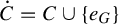 $\dot C = C \cup \{e_G\}$
.
$\dot C = C \cup \{e_G\}$
.
Lemma 3.9. A subshift X is avo for a set $C \subset G \setminus \{e_G\}$
if and only if the projection from
$C \subset G \setminus \{e_G\}$
if and only if the projection from $X|\dot C$
to
$X|\dot C$
to $X|C$
is an open map.
$X|C$
is an open map.
Here, the set $X|D \subset \Sigma ^D$
is topologized by the relative topology inherited from the product topology on
$X|D \subset \Sigma ^D$
is topologized by the relative topology inherited from the product topology on $\Sigma ^D$
.
$\Sigma ^D$
.
Proof. Suppose $B \Subset C$
is such that for all
$B \Subset C$
is such that for all $x \in X|C$
, we have
$x \in X|C$
, we have
 $$ \begin{align*} x|B \sqcup a^e \sqsubset X \iff x \sqcup a^e \sqsubset X. \end{align*} $$
Note that, as explained above, this property holds for any superset of B (contained in C) as well.
Write $\pi : X|\dot C \to X|C$
for the projection. Observe that this map is surjective, since
$\pi : X|\dot C \to X|C$
for the projection. Observe that this map is surjective, since $X|\dot C$
and
$X|\dot C$
and $X|C$
are both just projections of
$X|C$
are both just projections of $X \subset A^G$
to different sets of coordinates. Let
$X \subset A^G$
to different sets of coordinates. Let $U \subset X|\dot C$
be an open set. Let
$U \subset X|\dot C$
be an open set. Let $z \in \pi (U)$
, say
$z \in \pi (U)$
, say $z = \pi (y)$
, where
$z = \pi (y)$
, where $y \in U$
. It suffices to show that some open set (in
$y \in U$
. It suffices to show that some open set (in $X|C$
) containing z is contained entirely in
$X|C$
) containing z is contained entirely in $\pi (U)$
.
$\pi (U)$
.
Since $y \in U$
and U is open in
$y \in U$
and U is open in $X|\dot C$
, there exists
$X|\dot C$
, there exists $B' \Subset \dot C$
such that whenever
$B' \Subset \dot C$
such that whenever ${y'|B' = y|B'}$
and
${y'|B' = y|B'}$
and $y' \in X|\dot C$
, then
$y' \in X|\dot C$
, then $y' \in U$
. Note that this property holds for any superset of
$y' \in U$
. Note that this property holds for any superset of $B'$
(contained in
$B'$
(contained in $\dot C$
) as well. Thus, we may assume
$\dot C$
) as well. Thus, we may assume $\dot B = B \cup \{e_G\} = B'$
by possibly replacing both with a larger set. We claim that then, the open set
$\dot B = B \cup \{e_G\} = B'$
by possibly replacing both with a larger set. We claim that then, the open set $[z|B]$
(in
$[z|B]$
(in $X|C$
) is contained in
$X|C$
) is contained in $\pi (U)$
. To see this, let
$\pi (U)$
. To see this, let $x \in [z|B]$
be arbitrary, meaning
$x \in [z|B]$
be arbitrary, meaning $x \in X|C$
and
$x \in X|C$
and $x|B = z|B$
.
$x|B = z|B$
.
We now have $z \sqcup a^e = y \in X|\dot C$
, where
$z \sqcup a^e = y \in X|\dot C$
, where $a = y_e$
. Thus trivially,
$a = y_e$
. Thus trivially, $x|B \sqcup a^e = z|B \sqcup a^e \sqsubset X$
. Thus, by the defining property of B,
$x|B \sqcup a^e = z|B \sqcup a^e \sqsubset X$
. Thus, by the defining property of B,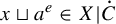 $x \sqcup a^e \in X|\dot C$
. This means there exists
$x \sqcup a^e \in X|\dot C$
. This means there exists $w \in X$
such that
$w \in X$
such that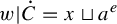 $w|\dot C = x \sqcup a^e$
. Then,
$w|\dot C = x \sqcup a^e$
. Then,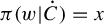 $\pi (w|\dot C) = x$
and
$\pi (w|\dot C) = x$
and $w|\dot B = y|\dot B$
, so
$w|\dot B = y|\dot B$
, so $w|\dot C \in U$
, which concludes the proof.
$w|\dot C \in U$
, which concludes the proof.
Conversely, suppose the property fails for all $B \Subset C$
, meaning for some
$B \Subset C$
, meaning for some $a \in \Sigma $
we can find, for all
$a \in \Sigma $
we can find, for all $B \Subset C$
, patterns
$B \Subset C$
, patterns $x^B, y^B \in X|C$
such that
$x^B, y^B \in X|C$
such that $x^B|B = y^B|B$
and
$x^B|B = y^B|B$
and $x^B \sqcup a^e \in X|\dot C$
, but
$x^B \sqcup a^e \in X|\dot C$
, but $y^B \sqcup a^e \notin X|\dot C$
. Let
$y^B \sqcup a^e \notin X|\dot C$
. Let $(x, y)$
be any limit point of
$(x, y)$
be any limit point of $(x^B, y^B)$
as
$(x^B, y^B)$
as $B \nearrow C$
. Then, clearly
$B \nearrow C$
. Then, clearly $x = y \in X|C$
and
$x = y \in X|C$
and $z = x \sqcup a^e = \lim _B (x^B \sqcup a^e) \in X|\dot C$
.
$z = x \sqcup a^e = \lim _B (x^B \sqcup a^e) \in X|\dot C$
.
For the open set $U = [a^e] = [(z_e)^e] \ni z$
of points agreeing with z at the identity, we have
$U = [a^e] = [(z_e)^e] \ni z$
of points agreeing with z at the identity, we have $y = x \in U|C$
. We see that none of the points
$y = x \in U|C$
. We see that none of the points $y^B$
are in
$y^B$
are in $U|C$
, so
$U|C$
, so $U|C$
it is not a neighborhood y. Thus, the projection is not open.
$U|C$
it is not a neighborhood y. Thus, the projection is not open.
Remark 3.10. The prefix ‘avo’ [ ] refers to ‘open’ in Finnish. This and the previous lemma are the source of the term ‘avoshift’.
The forward direction of the following result (that avoshifts are of finite type) is based on the classical proof of Kitchens for group shifts being subshifts of finite type [Reference Kitchens10].
Lemma 3.11. If $G = \mathbb {Z}$
,
$G = \mathbb {Z}$
, $X \subset \Sigma ^G$
is an avoshift for the sets
$X \subset \Sigma ^G$
is an avoshift for the sets $(-\infty , -1]$
if and only if it is of finite type.
$(-\infty , -1]$
if and only if it is of finite type.
Proof. Suppose first that X is of finite type. Let n be the maximal diameter of a forbidden pattern. Then, $(-\infty , -1]$
is determined by
$(-\infty , -1]$
is determined by $[-n, -1]$
: if
$[-n, -1]$
: if $x \in X|(-\infty , -1]$
and
$x \in X|(-\infty , -1]$
and $x|[-n, -1] \sqcup a^0 \sqsubset X$
, then let
$x|[-n, -1] \sqcup a^0 \sqsubset X$
, then let $y \in X$
be any point with
$y \in X$
be any point with $y|[-n, 0] = x|[-n, -1] \sqcup a^0$
. The point
$y|[-n, 0] = x|[-n, -1] \sqcup a^0$
. The point $z = x \sqcup y \in \Sigma ^{\mathbb {Z}}$
, that is, the point defined by
$z = x \sqcup y \in \Sigma ^{\mathbb {Z}}$
, that is, the point defined by $z|(-\infty , -1] = x, z|[-n, \infty ) = y|[-n, \infty )$
, is clearly locally valid and thus a point of X, and
$z|(-\infty , -1] = x, z|[-n, \infty ) = y|[-n, \infty )$
, is clearly locally valid and thus a point of X, and $z|(-\infty , 0] = x \sqcup a^0$
, proving the avo property for
$z|(-\infty , 0] = x \sqcup a^0$
, proving the avo property for $(-\infty , -1]$
.
$(-\infty , -1]$
.
Suppose then that X is an avoshift for this set. By assumption, then there is a determining set M for $(-\infty , -1]$
, we can take
$(-\infty , -1]$
, we can take $M = [-m, -1]$
and
$M = [-m, -1]$
and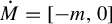 $\dot M = [-m, 0]$
. We claim that then, X is equal to its
$\dot M = [-m, 0]$
. We claim that then, X is equal to its $[-m, 0]$
-SFT approximation. Equivalently, we claim that if every
$[-m, 0]$
-SFT approximation. Equivalently, we claim that if every $i+\dot M$
subpattern of a point
$i+\dot M$
subpattern of a point $x \in \Sigma ^{\mathbb {Z}}$
is a translate of a pattern in
$x \in \Sigma ^{\mathbb {Z}}$
is a translate of a pattern in $X|\dot M$
, then
$X|\dot M$
, then $x \in X$
. For this, suppose that indeed
$x \in X$
. For this, suppose that indeed $x \in \Sigma ^{\mathbb {Z}}$
is such that
$x \in \Sigma ^{\mathbb {Z}}$
is such that $x|i+\dot M \in X|i+\dot M$
for all
$x|i+\dot M \in X|i+\dot M$
for all $i \in \mathbb {Z}$
.
$i \in \mathbb {Z}$
.
For $n \in \mathbb {Z}$
, consider the intervals
$n \in \mathbb {Z}$
, consider the intervals $J_0 = [n, n+m-1], J_1 = [n, n+m], J_2 =$ $[n, n+m+1], \ldots $
. We show by induction that
$[n, n+m+1], \ldots $
. We show by induction that $x|J_i \sqsubset X$
for all i. For the basis of induction, our assumption directly implies
$x|J_i \sqsubset X$
for all i. For the basis of induction, our assumption directly implies $x|J_0 = x|n+m+M \sqsubset X$
. Suppose then that
$x|J_0 = x|n+m+M \sqsubset X$
. Suppose then that $x|J_i$
is globally valid and let
$x|J_i$
is globally valid and let $y \in X$
satisfy
$y \in X$
satisfy $y|J_i = x|J_i$
. We have in particular
$y|J_i = x|J_i$
. We have in particular $y|n+m+i+M \sqsubset X$
since
$y|n+m+i+M \sqsubset X$
since $n+m+i+M \subset J_i$
. Since M is determining at
$n+m+i+M \subset J_i$
. Since M is determining at $0$
for
$0$
for $(-\infty , -1]$
, the set
$(-\infty , -1]$
, the set $n+m+i+M$
is determining at
$n+m+i+M$
is determining at $n+m+i$
for
$n+m+i$
for $(-\infty , n+m+i-1]$
. Thus, it is also determining at
$(-\infty , n+m+i-1]$
. Thus, it is also determining at $n+m+i$
for the intermediate set
$n+m+i$
for the intermediate set $J_i$
(recall that this means
$J_i$
(recall that this means $n+m+i+M \subset J_i \subset (-\infty , n+m+i-1]$
). Since
$n+m+i+M \subset J_i \subset (-\infty , n+m+i-1]$
). Since $y|(-\infty , n+m+i-1] \sqsubset X$
(because even
$y|(-\infty , n+m+i-1] \sqsubset X$
(because even $y \in X$
) and
$y \in X$
) and $x|n+m+i+\dot M \sqsubset X$
, we conclude that
$x|n+m+i+\dot M \sqsubset X$
, we conclude that $y|(-\infty , n+m+i-1] \sqcup (x_{n+m+i})^{n+m+i} \sqsubset X$
, in particular,
$y|(-\infty , n+m+i-1] \sqcup (x_{n+m+i})^{n+m+i} \sqsubset X$
, in particular, $x|J_{i+1}$
is globally valid.
$x|J_{i+1}$
is globally valid.
By compactness, we conclude that $x|\bigcup _i J_i = x|[n, n+\infty )$
is globally valid. Since
$x|\bigcup _i J_i = x|[n, n+\infty )$
is globally valid. Since $n \in \mathbb {Z}$
was arbitrary, we conclude that
$n \in \mathbb {Z}$
was arbitrary, we conclude that $x \in X$
.
$x \in X$
.
The direction that all SFTs are avo is specific to dimension $1$
(or rather, it generalizes naturally to free groups, see Theorem 7.7). As avoshifts have nice computational properties, no decidability-theoretically useful notion of avoshift can cover all SFTs in higher dimensions. The direction that avoshifts are SFT however generalizes to all polycyclic groups, as we will see.
$1$
(or rather, it generalizes naturally to free groups, see Theorem 7.7). As avoshifts have nice computational properties, no decidability-theoretically useful notion of avoshift can cover all SFTs in higher dimensions. The direction that avoshifts are SFT however generalizes to all polycyclic groups, as we will see.
Note that the previous lemma implies that even in the case of $\mathbb {Z}$
, avoshifts need not have dense periodic points and may have any number of measures of maximal entropy (though not in the topologically mixing case).
$\mathbb {Z}$
, avoshifts need not have dense periodic points and may have any number of measures of maximal entropy (though not in the topologically mixing case).
3.1 Equal extension counts
In this section, we define subshifts with equal extension counts. This is an intermediate class that contains all group shifts and k-TEP subshifts (as we show in §4), and is contained in the avoshifts. In the present paper, all results we prove are proved for general avoshifts (or uniform avoshifts), so equal extension counts do not play a direct role in the proofs.
Definition 3.12. A subshift X has equal extension counts for a set $C \subset G \setminus \{e_G\}$
if the cardinality
$C \subset G \setminus \{e_G\}$
if the cardinality $|\mathcal {F}(x|C, e_G)|$
does not depend on
$|\mathcal {F}(x|C, e_G)|$
does not depend on $x \in X$
. If
$x \in X$
. If $\mathcal {C}$
is a family of subsets of G, we say X has equal extension counts for
$\mathcal {C}$
is a family of subsets of G, we say X has equal extension counts for $\mathcal {C}$
if it has equal extension counts for all
$\mathcal {C}$
if it has equal extension counts for all $C \in \mathcal {C}$
.
$C \in \mathcal {C}$
.
The following proof again should remind the reader of Kitchens’ argument that group shifts are of finite type.
Lemma 3.13. If X has equal extension counts for a set $C \subset G \setminus \{e_G\}$
, then it is avo for this set.
$C \subset G \setminus \{e_G\}$
, then it is avo for this set.
Proof. A map between compact spaces with fibers of constant finite cardinality is open. Or more concretely, $|\mathcal {F}(x|S', e_G)|$
can only decrease as
$|\mathcal {F}(x|S', e_G)|$
can only decrease as $S' \nearrow S$
, so this is reached by some finite
$S' \nearrow S$
, so this is reached by some finite $S'$
and, by uniformity,
$S'$
and, by uniformity, $S'$
must be S-determining.
$S'$
must be S-determining.
Again, we may define a notion of uniform equal extension counts by requiring that the $B \Subset C$
in the definition such that
$B \Subset C$
in the definition such that $|\mathcal {F}(x|C, e_G)| = |\mathcal {F}(x|B, e_G)|$
can be taken
$|\mathcal {F}(x|C, e_G)| = |\mathcal {F}(x|B, e_G)|$
can be taken $C \cap \mathcal {B}_r$
for some fixed r. Uniform equal extension counts for a family of sets
$C \cap \mathcal {B}_r$
for some fixed r. Uniform equal extension counts for a family of sets $\mathcal {C}$
implies uniform avo for the same set, by the previous proof.
$\mathcal {C}$
implies uniform avo for the same set, by the previous proof.
4 Examples of avoshifts
Our first example is the group shifts. The proof should again remind the reader of Kitchens’ argument [Reference Kitchens10] that group shifts are of finite type.
Lemma 4.1. Let $\Sigma $
be a finite quasigroup and suppose
$\Sigma $
be a finite quasigroup and suppose $X \subset \Sigma ^G$
is a subshift closed under cellwise application of operations of
$X \subset \Sigma ^G$
is a subshift closed under cellwise application of operations of $\Sigma $
. Then, X has equal extension counts for any
$\Sigma $
. Then, X has equal extension counts for any $C \subset G \setminus \{e_G\}$
. Thus, such X is an avoshift for
$C \subset G \setminus \{e_G\}$
. Thus, such X is an avoshift for $\mathcal {P}(G \setminus \{e_G\})$
.
$\mathcal {P}(G \setminus \{e_G\})$
.
Proof. We extend the cellwise quasigroup operations to any patterns with the same domain in the usual way (the operations are defined cellwise, so apply them cellwise in the input patterns). Let $C \subset G \setminus \{e_G\}$
be arbitrary. If
$C \subset G \setminus \{e_G\}$
be arbitrary. If $x, y \in X|C$
, then
$x, y \in X|C$
, then $z \cdot x = y$
, where
$z \cdot x = y$
, where ${z = (y / x)}$
. List the extensions
${z = (y / x)}$
. List the extensions $x_1, \ldots , x_k \in \mathcal {F}(x|C, C\cup \{e_G\})$
. Let
$x_1, \ldots , x_k \in \mathcal {F}(x|C, C\cup \{e_G\})$
. Let $z' \in \mathcal {F}(z, C \cup \{e_G\})$
be arbitrary. Then clearly,
$z' \in \mathcal {F}(z, C \cup \{e_G\})$
be arbitrary. Then clearly, $(z' \cdot x_i)|C = y$
. Since multiplication by a constant in a quasigroup is injective and the operations are applied cellwise, we obtain that if
$(z' \cdot x_i)|C = y$
. Since multiplication by a constant in a quasigroup is injective and the operations are applied cellwise, we obtain that if $x_i \mapsto z \cdot x_i$
is injective, and the only possibility is that these patterns differ at
$x_i \mapsto z \cdot x_i$
is injective, and the only possibility is that these patterns differ at $e_G$
. Thus, y has at least as many extensions to
$e_G$
. Thus, y has at least as many extensions to $e_G$
as x.
$e_G$
as x.
Recall that group shifts are cellwiseable [Reference Kitchens10, Reference Salo and Törmä19] meaning up to conjugacy, the operations of the group can be taken cellwise (the term is from [Reference Salo and Törmä20]). Thus, this lemma indeed applies to all group shifts up to conjugacy. Quasigroup shifts are not cellwiseable [Reference Salo and Törmä19], so in the case of quasigroups, the assumption that the alphabet itself is a quasigroup may be crucial.
Example 4.2. The Ledrappier subshift
 $$ \begin{align*} X_L = \{x \in \mathbb{Z}_2^{\mathbb{Z}^2} : x_{\vec v} + x_{\vec v + (1,0)} + x_{\vec v + (0,1)} = 0\} \end{align*} $$
is an abelian group shift with cellwise group operation addition in the two-element group $\mathbb {Z}_2$
. In particular, it is a quasigroup subshift with cellwise operations, thus, it has equal extension counts. Thus, it is an avoshift for the family of all subsets of
$\mathbb {Z}_2$
. In particular, it is a quasigroup subshift with cellwise operations, thus, it has equal extension counts. Thus, it is an avoshift for the family of all subsets of $\mathbb {Z}^2$
.
$\mathbb {Z}^2$
.
Example 4.3. Let G be any f.g. infinite group. Then, there is a group shift $X \subset \mathbb {Z}_2^G$
which is not uniformly
$X \subset \mathbb {Z}_2^G$
which is not uniformly $\mathcal {P}(G \setminus \{e_G\})$
-avo. For example,
$\mathcal {P}(G \setminus \{e_G\})$
-avo. For example, $X = \{0^G, 1^G\}$
is not uniformly
$X = \{0^G, 1^G\}$
is not uniformly $\mathcal {P}(G \setminus \{e_G\})$
-avo.
$\mathcal {P}(G \setminus \{e_G\})$
-avo.
Our next example is the k-TEP subshifts. In [Reference Salo16], these are defined in high generality (with respect to any ‘S-UCP translation-invariant convexoid $\mathcal {C}$
’ on the shift group G), but we restrict here to the Euclidean case. Let
$\mathcal {C}$
’ on the shift group G), but we restrict here to the Euclidean case. Let $S \Subset \mathbb {Z}^d$
and let
$S \Subset \mathbb {Z}^d$
and let $\mathscr {P} \subset \Sigma ^S$
be a set of patterns. A corner of S is any
$\mathscr {P} \subset \Sigma ^S$
be a set of patterns. A corner of S is any $s \in S$
such that there exists a linear functional
$s \in S$
such that there exists a linear functional $\ell : \mathbb {R}^d \to \mathbb {R}$
such that
$\ell : \mathbb {R}^d \to \mathbb {R}$
such that $\ell (s)> \ell (t)$
for all
$\ell (s)> \ell (t)$
for all $t \in S \setminus s$
.
$t \in S \setminus s$
.
Definition 4.4. We say $\mathscr {P}$
is k-TEP if for all corners s of S, for any
$\mathscr {P}$
is k-TEP if for all corners s of S, for any $Q \in \Sigma ^{S \setminus s}$
, there are exactly k patterns in
$Q \in \Sigma ^{S \setminus s}$
, there are exactly k patterns in $\mathscr {P}$
that agree with Q on
$\mathscr {P}$
that agree with Q on $S \setminus s$
. We say
$S \setminus s$
. We say $X \subset \Sigma ^{\mathbb {Z}^d}$
is k-TEP if it is defined by forbidden patterns
$X \subset \Sigma ^{\mathbb {Z}^d}$
is k-TEP if it is defined by forbidden patterns $\Sigma ^S \setminus \mathscr {P}$
for some k-TEP set
$\Sigma ^S \setminus \mathscr {P}$
for some k-TEP set $\mathscr {P} \subset \Sigma ^S$
.
$\mathscr {P} \subset \Sigma ^S$
.
Let $\mathcal {D}$
be the family of all intersections of real convex sets with
$\mathcal {D}$
be the family of all intersections of real convex sets with $\mathbb {Z}^d$
, and let
$\mathbb {Z}^d$
, and let $\mathcal {C}$
be the set of all
$\mathcal {C}$
be the set of all $C \in \mathcal {D}$
such that
$C \in \mathcal {D}$
such that $\vec 0 \notin C$
and
$\vec 0 \notin C$
and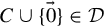 $C \cup \{\vec 0\} \in \mathcal {D}$
.
$C \cup \{\vec 0\} \in \mathcal {D}$
.
Lemma 4.5. Let $X \subset \Sigma ^{\mathbb {Z}^d}$
be a k-TEP subshift. Then, X has uniform equal extension counts for
$X \subset \Sigma ^{\mathbb {Z}^d}$
be a k-TEP subshift. Then, X has uniform equal extension counts for $\mathcal {C}$
; thus, is uniformly
$\mathcal {C}$
; thus, is uniformly $\mathcal {C}$
-avo.
$\mathcal {C}$
-avo.
Proof. This is the restriction of [Reference Salo18, Lemma 5.2] to the Euclidean case.
Definition 4.6. Let $X \subset \Sigma ^G$
and let
$X \subset \Sigma ^G$
and let $0 \in \Sigma $
. We say
$0 \in \Sigma $
. We say $0$
is a safe symbol for X if whenever
$0$
is a safe symbol for X if whenever $y \in \Sigma ^G$
and for some
$y \in \Sigma ^G$
and for some $x \in X$
, we have
$x \in X$
, we have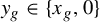 $y_g \in \{x_g, 0\}$
for all
$y_g \in \{x_g, 0\}$
for all $g \in G$
, then
$g \in G$
, then $y \in X$
.
$y \in X$
.
Proposition 4.7. Let $0 \in A$
, and suppose
$0 \in A$
, and suppose $X \subset A^G$
is a subshift of finite type and
$X \subset A^G$
is a subshift of finite type and $0$
is a safe symbol for X. Then, X is uniformly avo for
$0$
is a safe symbol for X. Then, X is uniformly avo for $\mathcal {P}(G \setminus \{e_G\})$
.
$\mathcal {P}(G \setminus \{e_G\})$
.
Proof. Let $C \subset G \setminus \{e_G\}$
be arbitrary. Let
$C \subset G \setminus \{e_G\}$
be arbitrary. Let $D \Subset C$
be large enough so that
$D \Subset C$
be large enough so that $d(e_G, C \setminus D)$
is larger than the diameter of any forbidden pattern. Suppose
$d(e_G, C \setminus D)$
is larger than the diameter of any forbidden pattern. Suppose $x \in X$
and let
$x \in X$
and let $y \in \mathcal {F}(x|D, e_G)$
. Define a new configuration z by
$y \in \mathcal {F}(x|D, e_G)$
. Define a new configuration z by
 $$ \begin{align*} z_g = \begin{cases} y_g & \mbox{if } g \in D \cup \{e_G\}, \\ x_g & \mbox{if } g \in C, \\ 0 & \mbox{otherwise}. \end{cases} \end{align*} $$
Note that the first two cases intersect in D, but $x|D = y|D$
so the definitions agree.
$x|D = y|D$
so the definitions agree.
We claim that z does not contain any forbidden patterns. This is because in every E which is the support of a forbidden pattern, $z|E$
agrees with either the configuration
$z|E$
agrees with either the configuration $x|C \sqcup 0^{G \setminus C}$
or
$x|C \sqcup 0^{G \setminus C}$
or $y|D \cup \{e_G\} \sqcup 0^{G \setminus (D \cup \{e_G\})}$
, which are legal by the assumption that
$y|D \cup \{e_G\} \sqcup 0^{G \setminus (D \cup \{e_G\})}$
, which are legal by the assumption that $0$
is a safe symbol.
$0$
is a safe symbol.
Next, we consider the topological strong spatial mixing property [Reference Briceño5], which generalizes the previous proposition.
Definition 4.8. A subshift $X \subset A^G$
satisfies topological strong spatial mixing or TSSM with gap
$X \subset A^G$
satisfies topological strong spatial mixing or TSSM with gap $n \in \mathbb {N}$
, if for any disjoint sets
$n \in \mathbb {N}$
, if for any disjoint sets $U, V, S \Subset G$
such that
$U, V, S \Subset G$
such that $d(U, V) \geq n$
, and for every
$d(U, V) \geq n$
, and for every $u \in A^U, v \in A^V$
, and
$u \in A^U, v \in A^V$
, and $s \in A^S$
,
$s \in A^S$
,
 $$ \begin{align*} u \sqcup s \sqsubset X, s \sqcup v \sqsubset X \implies u \sqcup s \sqcup v \sqsubset X. \end{align*} $$
Briceño defines this in the case of $\mathbb {Z}^d$
in [Reference Briceño5], but the definition makes sense in any group. He does not state that
$\mathbb {Z}^d$
in [Reference Briceño5], but the definition makes sense in any group. He does not state that $U, V, S$
are disjoint, but this does not change the definition.
$U, V, S$
are disjoint, but this does not change the definition.
Theorem 4.9. A subshift has topological strong spatial mixing if and only if it is uniformly avo for $\mathcal {P}(G \setminus \{e_G\})$
.
$\mathcal {P}(G \setminus \{e_G\})$
.
Proof. Suppose a subshift has strong spatial mixing with gap n. Let $C \Subset G \setminus \{e_G\}$
be arbitrary and let
$C \Subset G \setminus \{e_G\}$
be arbitrary and let $B = C \cap \mathcal {B}_n$
. Suppose
$B = C \cap \mathcal {B}_n$
. Suppose $x \in X|C$
and
$x \in X|C$
and $y \in X|B \cup \{e\}$
with
$y \in X|B \cup \{e\}$
with $x|B = y|B$
. We should show
$x|B = y|B$
. We should show $x \sqcup y_e^e \sqsubset X$
. Pick large m and take
$x \sqcup y_e^e \sqsubset X$
. Pick large m and take $U = (C \cap \mathcal {B}_m) \setminus B$
,
$U = (C \cap \mathcal {B}_m) \setminus B$
, $V = \{e_G\}$
,
$V = \{e_G\}$
, $S = B$
,
$S = B$
, $u = x|U$
,
$u = x|U$
, $s = x|S$
,
$s = x|S$
, $v = y_e^e$
. Then, the assumptions of TSSM are easy to check and we thus have
$v = y_e^e$
. Then, the assumptions of TSSM are easy to check and we thus have $u \sqcup s \sqcup v = x|(U \cup S) \sqcup y_e^e \sqsubset X$
. Since m was arbitrary, we conclude that
$u \sqcup s \sqcup v = x|(U \cup S) \sqcup y_e^e \sqsubset X$
. Since m was arbitrary, we conclude that ${x \sqcup y_e^e \sqsubset X}$
by compactness.
${x \sqcup y_e^e \sqsubset X}$
by compactness.
Next, suppose $X \subset \Sigma ^G$
is uniformly C-avo with avoradius n for all sets
$X \subset \Sigma ^G$
is uniformly C-avo with avoradius n for all sets $C \subset G \setminus \{e_G\}$
. Pick n as the gap and consider any disjoint sets
$C \subset G \setminus \{e_G\}$
. Pick n as the gap and consider any disjoint sets $U, V, S \Subset G$
such that
$U, V, S \Subset G$
such that $d(U, V) \geq n$
, and patterns
$d(U, V) \geq n$
, and patterns $u \in A^U, v \in A^V$
, and
$u \in A^U, v \in A^V$
, and $s \in A^S$
such that
$s \in A^S$
such that $u \sqcup s \sqsubset X, s \sqcup v \sqsubset X$
. Write
$u \sqcup s \sqsubset X, s \sqcup v \sqsubset X$
. Write $V = \{p_1, \ldots , p_m\}$
.
$V = \{p_1, \ldots , p_m\}$
.
In particular, $u \sqcup s \sqsubset X, s \sqcup v_{p_1}^{p_1} \sqsubset X$
, so the uniform avo property applied for the set
$u \sqcup s \sqsubset X, s \sqcup v_{p_1}^{p_1} \sqsubset X$
, so the uniform avo property applied for the set $U \cup S$
at
$U \cup S$
at $p_1$
gives us
$p_1$
gives us $u \sqcup s \sqcup v_{p_1}^{p_1} \sqsubset X$
because
$u \sqcup s \sqcup v_{p_1}^{p_1} \sqsubset X$
because $p_1 \mathcal {B}_n \cap U \cup S \subset S$
meaning
$p_1 \mathcal {B}_n \cap U \cup S \subset S$
meaning $s \sqcup v_{p_1}^{p_1} \sqsubset s \sqcup v \sqsubset X$
from the assumption.
$s \sqcup v_{p_1}^{p_1} \sqsubset s \sqcup v \sqsubset X$
from the assumption.
We can proceed by induction, observing that if
 $$ \begin{align*} u \sqcup s \sqcup v_{p_1}^{p_1} \sqcup \cdots \sqcup v_{p_k}^{p_k} \sqsubset X, \end{align*} $$
then because
 $$ \begin{align*} s \sqcup v_{p_1}^{p_1} \sqcup \cdots \sqcup v_{p_k}^{p_k} \sqcup v_{p_{k+1}}^{p_{k+1}} \sqsubset X \end{align*} $$
and $p_{k+1} \mathcal {B}_n \cap (U \cup S \cup V) \subset S \cup V$
, we can apply the avo property for the set
$p_{k+1} \mathcal {B}_n \cap (U \cup S \cup V) \subset S \cup V$
, we can apply the avo property for the set $U \cup S \cup \{p_1, \ldots , p_k\}$
at
$U \cup S \cup \{p_1, \ldots , p_k\}$
at $p_{k+1}$
to deduce
$p_{k+1}$
to deduce
 $$ \begin{align*} u \sqcup s \sqcup v_{p_1}^{p_1} \sqcup \cdots \sqcup v_{p_k}^{p_k} \sqcup v_{p_{k+1}}^{p_{k+1}} \sqsubset X. \end{align*} $$
We eventually obtain $u \sqcup s \sqcup v$
as desired.
$u \sqcup s \sqcup v$
as desired.
The following is related to Lemma 3.11 where one-sided intervals were used to characterize SFTs. Here, $\mathcal {C}$
is the set of inductive intervals that are restricted to being negative in one axis (as we will see when we give the general definition). The proposition shows that in the two-dimensional case, this does not lead to X being an avoshift for the two-sided version of
$\mathcal {C}$
is the set of inductive intervals that are restricted to being negative in one axis (as we will see when we give the general definition). The proposition shows that in the two-dimensional case, this does not lead to X being an avoshift for the two-sided version of $\mathcal {C}$
.
$\mathcal {C}$
.
Here, a cellular automaton is a shift-commuting continuous function $f : \Sigma ^{\mathbb {Z}^d} \to \Sigma ^{\mathbb {Z}^d}$
. A neighborhood is
$f : \Sigma ^{\mathbb {Z}^d} \to \Sigma ^{\mathbb {Z}^d}$
. A neighborhood is $N \Subset \mathbb {Z}^{d}$
such that
$N \Subset \mathbb {Z}^{d}$
such that $x \mapsto f(x)_{\vec 0}$
is a function of
$x \mapsto f(x)_{\vec 0}$
is a function of $x|N$
(which always exists by continuity). The function
$x|N$
(which always exists by continuity). The function $x|N \mapsto f(x)_{\vec 0}$
is called a local rule for f. A cellular automaton is reversible if it is bijective (this is equivalent to any of the following: injectivity, being a homeomorphism, or having a cellular automaton inverse
$x|N \mapsto f(x)_{\vec 0}$
is called a local rule for f. A cellular automaton is reversible if it is bijective (this is equivalent to any of the following: injectivity, being a homeomorphism, or having a cellular automaton inverse $f^{-1}$
).
$f^{-1}$
).
Proposition 4.10. Let $f : \Sigma ^{\mathbb {Z}} \to \Sigma ^{\mathbb {Z}}$
be a surjective cellular automaton. Let X be its spacetime subshift
$f : \Sigma ^{\mathbb {Z}} \to \Sigma ^{\mathbb {Z}}$
be a surjective cellular automaton. Let X be its spacetime subshift $\{x \in \Sigma ^{\mathbb {Z}^2} : \text { for all } i: x_{i+1} = f(x_i)\}$
, where
$\{x \in \Sigma ^{\mathbb {Z}^2} : \text { for all } i: x_{i+1} = f(x_i)\}$
, where $x_i \in \Sigma ^{\mathbb {Z}}$
is defined by
$x_i \in \Sigma ^{\mathbb {Z}}$
is defined by $(x_i)_j = x_{j,i}$
. Let
$(x_i)_j = x_{j,i}$
. Let $\mathcal {C}$
consist of sets
$\mathcal {C}$
consist of sets $(I_1 \times \{0\}) \cup \mathbb {Z} \times I_2$
, where
$(I_1 \times \{0\}) \cup \mathbb {Z} \times I_2$
, where $I_1$
is an interval of one of the forms
$I_1$
is an interval of one of the forms $(-\infty ,-1], [-n,-1], \emptyset , [1, n], [1, \infty )$
and
$(-\infty ,-1], [-n,-1], \emptyset , [1, n], [1, \infty )$
and $I_2$
is an interval of one of the forms
$I_2$
is an interval of one of the forms $(-\infty , 1], [-n,-1]$
. Then:
$(-\infty , 1], [-n,-1]$
. Then:
-
• X is always a
$\mathcal {C}$
-avoshift; -
• if f is reversible, then X is avo for the sets
$\mathcal {C}$
and for the sets
$-\mathcal {C} = \{-C : C \in \mathcal {C}\}$
; and -
• if
$\Sigma = \{0,1,2\}$
and f is the cellular automaton with neighborhood
$\{0,1\}$
and local rule given by the rules
$F(2, a) = 2$
and
$F(a, b) = a + b \text { mod 2}$
otherwise (taken in
$\{0,1\}$
), then X is not a
$(-\mathcal {C})$
-avoshift.









Proof. For the first item, consider an inductive interval with axis intervals $(I_1, I_2)$
. If
$(I_1, I_2)$
. If $I_2 \neq \emptyset $
, then the local rule of f can be used to determine the unique symbol used at
$I_2 \neq \emptyset $
, then the local rule of f can be used to determine the unique symbol used at $\vec 0$
from the contents of
$\vec 0$
from the contents of $[-n, n] \times \{-1\} \subset \mathbb {Z} \times I_2$
if f has neighborhood
$[-n, n] \times \{-1\} \subset \mathbb {Z} \times I_2$
if f has neighborhood $[-n, n]$
. If
$[-n, n]$
. If $I_2 = \emptyset $
, any symbol is legal since
$I_2 = \emptyset $
, any symbol is legal since $X|\mathbb {Z} \times \{0\}$
is just a full shift on
$X|\mathbb {Z} \times \{0\}$
is just a full shift on $\Sigma $
due to the surjectivity of f.
$\Sigma $
due to the surjectivity of f.
For the second item, if f is reversible, we can use the same argument for $f^{-1}$
.
$f^{-1}$
.
For the third item, consider the inductive interval with axis intervals $(I_1, I_2)$
, where
$(I_1, I_2)$
, where $I_2 = \{1\}$
and
$I_2 = \{1\}$
and $I_1 = \emptyset $
, that is, the set
$I_1 = \emptyset $
, that is, the set $C = \mathbb {Z} \times \{1\}$
, then we cannot determine from any finite subset of the all-zero pattern
$C = \mathbb {Z} \times \{1\}$
, then we cannot determine from any finite subset of the all-zero pattern $0^C$
what the possible symbols at
$0^C$
what the possible symbols at $(0,0)$
are (that is, we cannot locally compute the set of possible symbols at the origin of f-preimages of
$(0,0)$
are (that is, we cannot locally compute the set of possible symbols at the origin of f-preimages of $0^{\mathbb {Z}}$
), since for
$0^{\mathbb {Z}}$
), since for $0^C$
, either symbol can appear, but if we change a
$0^C$
, either symbol can appear, but if we change a $0$
to
$0$
to $2$
far to the right, then the symbol
$2$
far to the right, then the symbol $0$
becomes forced.
$0$
becomes forced.
It is a nice exercise (but possibly not an easy one) to show that in the previous proposition (even without assuming f surjective), the spacetime subshift X is an avoshift for $\mathcal {C} \cup -\mathcal {C}$
(the set of all inductive intervals) if and only if f is stable (reaches its limit set in finitely many steps) and f is a constant-to-one (equivalently, open) endomorphism of its limit set.
$\mathcal {C} \cup -\mathcal {C}$
(the set of all inductive intervals) if and only if f is stable (reaches its limit set in finitely many steps) and f is a constant-to-one (equivalently, open) endomorphism of its limit set.
Next, we show that the avo property is also related to the topological Markov property (TMP), as well as its strong variant. The reason we include this is that in [Reference Barbieri, Gómez, Marcus and Taati1] the authors are able to prove this property for abelian group shifts on many groups, and some interesting properties of group shifts can be deduced by only using the TMP. Specifically, this property suffices to show some interesting measure-theoretic properties. It is a much weaker property than being SFT; even on $\mathbb {Z}$
, subshifts with strong TMP need not be SFT, although they are sofic [Reference Chandgotia, Han, Marcus, Meyerovitch and Pavlov7], and on
$\mathbb {Z}$
, subshifts with strong TMP need not be SFT, although they are sofic [Reference Chandgotia, Han, Marcus, Meyerovitch and Pavlov7], and on $\mathbb {Z}^2$
, there are uncountably many subshifts with strong TMP, so they are far from even being sofic. Thus one cannot expect decidability results.
$\mathbb {Z}^2$
, there are uncountably many subshifts with strong TMP, so they are far from even being sofic. Thus one cannot expect decidability results.
Definition 4.11. Let $X \subset A^G$
be a subshift. We say X has the topological Markov property or TMP if for all
$X \subset A^G$
be a subshift. We say X has the topological Markov property or TMP if for all $B \Subset G$
there exists
$B \Subset G$
there exists $C \Subset G$
containing B such that, for all
$C \Subset G$
containing B such that, for all $x, y \in X$
with
$x, y \in X$
with $x|C\setminus B = y|C \setminus B$
, the point
$x|C\setminus B = y|C \setminus B$
, the point $z \in A^G$
defined by
$z \in A^G$
defined by $z|C = x|C$
and
$z|C = x|C$
and $z|G \setminus B = y|G \setminus B$
is in X. If there exists
$z|G \setminus B = y|G \setminus B$
is in X. If there exists $S \Subset G$
such that we can always take
$S \Subset G$
such that we can always take $C = BS$
, then X has the strong topological Markov property.
$C = BS$
, then X has the strong topological Markov property.
Proposition 4.12. A subshift is (uniformly) avo for the family of cofinite subsets of $G \setminus \{e_G\}$
if and only if it has the (strong) TMP.
$G \setminus \{e_G\}$
if and only if it has the (strong) TMP.
Proof. Suppose first that X is avo for the cofinite subsets. Let $B \Subset G$
be arbitrary. Write
$B \Subset G$
be arbitrary. Write $B = \{g_1, g_2, \ldots , g_n\}$
without repetition. For all i, the set
$B = \{g_1, g_2, \ldots , g_n\}$
without repetition. For all i, the set $g_i^{-1}((G \setminus B) \cup \{g_1, \ldots , g_{i-1}\}) = F_i$
is a cofinite subset of
$g_i^{-1}((G \setminus B) \cup \{g_1, \ldots , g_{i-1}\}) = F_i$
is a cofinite subset of $G \setminus \{e_G\}$
. Thus, for any such i, there exists a finite set
$G \setminus \{e_G\}$
. Thus, for any such i, there exists a finite set $D_i$
such that
$D_i$
such that $D_i \Subset F_i$
and such that
$D_i \Subset F_i$
and such that
 $$ \begin{align*} \mathcal{F}(x|D_i, e) = \mathcal{F}(x|F_i, e) \end{align*} $$
for all $x \in X$
. Writing
$x \in X$
. Writing $E_i = g_iD_i$
, translating by
$E_i = g_iD_i$
, translating by $g_i$
, and substituting
$g_i$
, and substituting $y = g_ix$
, we deduce
$y = g_ix$
, we deduce
 $$ \begin{align*} \mathcal{F}(y|E_i, g_i) = \mathcal{F}(y|(G \setminus B) \cup \{g_1, \ldots, g_{i-1}\}, g_i) \end{align*} $$
for all $y \in X$
. Let
$y \in X$
. Let $E = \bigcup _i E_i$
. We claim that we can pick
$E = \bigcup _i E_i$
. We claim that we can pick $C = B \cup E$
in the definition of TMP.
$C = B \cup E$
in the definition of TMP.
Namely, suppose $x, y \in X$
with
$x, y \in X$
with $x|C\setminus B = y|C \setminus B$
. We prove by induction (in finitely many steps) that the point
$x|C\setminus B = y|C \setminus B$
. We prove by induction (in finitely many steps) that the point $z \in A^G$
defined by
$z \in A^G$
defined by $z|C = x|C$
and
$z|C = x|C$
and $z|G \setminus B = y|G \setminus B$
is in X, by showing that
$z|G \setminus B = y|G \setminus B$
is in X, by showing that $z|(G \setminus B) \cup \{g_1, \ldots , g_i\}$
is globally valid. For
$z|(G \setminus B) \cup \{g_1, \ldots , g_i\}$
is globally valid. For $i = 0$
, this is clear since
$i = 0$
, this is clear since $y \in X$
. Now, assume
$y \in X$
. Now, assume $z|(G \setminus B) \cup \{g_1, \ldots , g_{i-1}\}$
is globally valid. We have
$z|(G \setminus B) \cup \{g_1, \ldots , g_{i-1}\}$
is globally valid. We have
 $$ \begin{align*} \mathcal{F}(z|E_i, g_i) = \mathcal{F}(z|(G \setminus B) \cup \{g_1, \ldots, g_{i-1}\}, g_i) \end{align*} $$
from the above, so $x_{g_i}$
is a legal symbol for extending
$x_{g_i}$
is a legal symbol for extending $z|(G \setminus B) \cup \{g_1, \ldots , g_{i-1}\}$
to
$z|(G \setminus B) \cup \{g_1, \ldots , g_{i-1}\}$
to $g_i$
if and only if
$g_i$
if and only if $z|E_i \cup \{g_i\}$
appears in X. However, since
$z|E_i \cup \{g_i\}$
appears in X. However, since $E_i \subset E \subset C$
, we have
$E_i \subset E \subset C$
, we have $z|E_i \cup \{g_i\} = x|E_i \cup \{g_i\} \sqsubset X$
.
$z|E_i \cup \{g_i\} = x|E_i \cup \{g_i\} \sqsubset X$
.
Conversely, suppose we have the topological Markov property and let $D \subset G \setminus \{e_G\}$
be any cofinite set, meaning
$D \subset G \setminus \{e_G\}$
be any cofinite set, meaning $D = G \setminus B$
for some finite
$D = G \setminus B$
for some finite $B \ni e$
. We will show that X is D-avo. For this, let
$B \ni e$
. We will show that X is D-avo. For this, let $C \Supset B$
be as in the definition of TMP for the set B. We claim that
$C \Supset B$
be as in the definition of TMP for the set B. We claim that $C \setminus \{e_G\}$
is D-determining. Namely, suppose
$C \setminus \{e_G\}$
is D-determining. Namely, suppose $y \in X|D$
. We show the non-trivial direction
$y \in X|D$
. We show the non-trivial direction
 $$ \begin{align*} y|(C \setminus \{e\}) \sqcup a^e \sqsubset X \implies y \sqcup a^e \sqsubset X. \end{align*} $$
For this, suppose $y|(C \setminus \{e\}) \sqcup a^e \sqsubset X$
, say
$y|(C \setminus \{e\}) \sqcup a^e \sqsubset X$
, say $x \in X$
satisfies
$x \in X$
satisfies $x|C = y|(C \setminus \{e\}) \sqcup a^e$
.
$x|C = y|(C \setminus \{e\}) \sqcup a^e$
.
Note that $x|C \setminus B = y|C \setminus B$
, since
$x|C \setminus B = y|C \setminus B$
, since $e \in B$
. Thus, by TMP, the unique point z with
$e \in B$
. Thus, by TMP, the unique point z with $z|C = x|C, z|G \setminus B = y|G \setminus B$
is in X. However, clearly
$z|C = x|C, z|G \setminus B = y|G \setminus B$
is in X. However, clearly $z|D \cup \{e\} = y \sqcup a^e$
, so
$z|D \cup \{e\} = y \sqcup a^e$
, so $y \sqcup a^e \sqsubset X$
as desired.
$y \sqcup a^e \sqsubset X$
as desired.
By retracing the proof, one sees that the uniform avo property similarly corresponds to strong TMP.
5 Being SFT in an area
In this section, we introduce the idea of a set of configurations in a subset of a group being SFT. Let $X \subset A^G$
be a subshift and let
$X \subset A^G$
be a subshift and let $S \subset G$
.
$S \subset G$
.
We say X is SFT on S if there is a finite set of finite patterns $\mathscr {P}$
such that
$\mathscr {P}$
such that $x \in X|S$
if and only if
$x \in X|S$
if and only if $x \in A^S$
and none of the patterns in
$x \in A^S$
and none of the patterns in $\mathscr {P}$
appear as a subpattern in x. When
$\mathscr {P}$
appear as a subpattern in x. When $X \subset A^S$
and
$X \subset A^S$
and $S \subset G$
with G clear from context, we also say directly that X is SFT if there is a finite set of forbidden patterns with domains
$S \subset G$
with G clear from context, we also say directly that X is SFT if there is a finite set of forbidden patterns with domains $D \Subset G$
, such that
$D \Subset G$
, such that $x \in X$
if and only if
$x \in X$
if and only if $x \in A^S$
, and x does not contain a translate of one of these patterns whose domain fits inside S (even if X might not extend to any subshift on G). If
$x \in A^S$
, and x does not contain a translate of one of these patterns whose domain fits inside S (even if X might not extend to any subshift on G). If $\mathcal {C} \subset \mathcal {P}(G)$
, then we say X is uniformly SFT on the sets
$\mathcal {C} \subset \mathcal {P}(G)$
, then we say X is uniformly SFT on the sets $\mathcal {C}$
or simply uniformly
$\mathcal {C}$
or simply uniformly $\mathcal {C}$
-SFT if there is a finite set of finite patterns
$\mathcal {C}$
-SFT if there is a finite set of finite patterns $\mathscr {P}$
that define all the restrictions
$\mathscr {P}$
that define all the restrictions $X|C$
for
$X|C$
for $C \in \mathcal {C}$
. In each case, a window is a set
$C \in \mathcal {C}$
. In each case, a window is a set $M \Subset G$
which can contain the domains of all the defining forbidden patterns, and a window size is m such that
$M \Subset G$
which can contain the domains of all the defining forbidden patterns, and a window size is m such that $\mathcal {B}_m$
is a window.
$\mathcal {B}_m$
is a window.
We make some simple general observations about this notion. These results are not used in the following sections. Nevertheless, the first two propositions may be useful for understanding the notion and the reader may find the third observation of independent interest. We use the term ‘single’ in the first two statements to emphasize we are not claiming uniformly SFT over all areas with the given description, only that the claim holds separately for individual areas with the given description.
Proposition 5.1. Every subshift is SFT on every (single) finite area.
Proof. Let $X \subset A^G$
be a subshift and let
$X \subset A^G$
be a subshift and let $S \Subset G$
. Let
$S \Subset G$
. Let $\mathscr {P}$
be all S-patterns that do not appear in X. Then trivially,
$\mathscr {P}$
be all S-patterns that do not appear in X. Then trivially, $\mathscr {P}$
defines
$\mathscr {P}$
defines $X|S$
.
$X|S$
.
Proposition 5.2. A subshift is SFT if and only if it is SFT on every (single) cofinite area.
Proof. Since G is cofinite in G, a subshift SFT on all cofinite sets must itself be an SFT.
For the other direction, let $X \subset A^G$
be an SFT and let
$X \subset A^G$
be an SFT and let $B \Subset G$
. Let
$B \Subset G$
. Let $S \subset G$
be a symmetric set containing
$S \subset G$
be a symmetric set containing $e_G$
such that a defining set of forbidden patterns
$e_G$
such that a defining set of forbidden patterns $\mathscr {P} \subset A^S$
exists. Let
$\mathscr {P} \subset A^S$
exists. Let $\mathscr {Q}$
be the set of all patterns with domains contained in
$\mathscr {Q}$
be the set of all patterns with domains contained in $BS^2$
, which do not appear in X. If
$BS^2$
, which do not appear in X. If $x \in X$
, then clearly
$x \in X$
, then clearly $x|G \setminus B$
does not contain an occurrence of any pattern from
$x|G \setminus B$
does not contain an occurrence of any pattern from $\mathscr {Q}$
. Conversely, suppose
$\mathscr {Q}$
. Conversely, suppose $x \in A^{G \setminus B}$
does not contain any pattern from
$x \in A^{G \setminus B}$
does not contain any pattern from $\mathscr {Q}$
. Then, in particular,
$\mathscr {Q}$
. Then, in particular, $P = x|BS^2 \setminus B$
appears in X, and thus there exists a legal pattern
$P = x|BS^2 \setminus B$
appears in X, and thus there exists a legal pattern $Q \in X|BS^2$
with
$Q \in X|BS^2$
with $Q|BS^2 \setminus B = P$
. Define
$Q|BS^2 \setminus B = P$
. Define $y \in A^G$
by
$y \in A^G$
by $y|G \setminus B = x$
and
$y|G \setminus B = x$
and $y|B = P$
, so that, in fact,
$y|B = P$
, so that, in fact, $y|BS^2 = Q$
. If
$y|BS^2 = Q$
. If $g \in BS$
, then
$g \in BS$
, then $gS$
is contained in
$gS$
is contained in $BS^2$
and thus
$BS^2$
and thus $y|gS^2 \sqsubset Q \sqsubset X$
. If
$y|gS^2 \sqsubset Q \sqsubset X$
. If $g \notin BS$
, then
$g \notin BS$
, then $gS \subset G \setminus B$
, so
$gS \subset G \setminus B$
, so $y|gS \sqsubset x \in X$
. Thus, y does not contain any of the defining forbidden patterns and we conclude
$y|gS \sqsubset x \in X$
. Thus, y does not contain any of the defining forbidden patterns and we conclude $y \in X$
.
$y \in X$
.
Proposition 5.3. A subshift is uniformly SFT in finite sets of every fixed cardinality if and only if it is topologically k-mixing for all k.
To clarify the reading, let $\mathcal {C}_n$
be the set of sets of cardinality n. The left-hand-side of the equivalence states that for every n, X is uniformly SFT on the sets
$\mathcal {C}_n$
be the set of sets of cardinality n. The left-hand-side of the equivalence states that for every n, X is uniformly SFT on the sets $\mathcal {C}_n$
(but not necessarily uniformly in n).
$\mathcal {C}_n$
(but not necessarily uniformly in n).
Proof. Suppose first that $X \subset A^G$
is uniformly SFT in all finite sets of a fixed cardinality n. Let
$X \subset A^G$
is uniformly SFT in all finite sets of a fixed cardinality n. Let $P_1, \ldots , P_k$
be any finite set of patterns that appear in X. Let n be the sum of cardinalities of their supports. Let
$P_1, \ldots , P_k$
be any finite set of patterns that appear in X. Let n be the sum of cardinalities of their supports. Let $\mathscr {P}$
be a set of forbidden patterns defining the restrictions
$\mathscr {P}$
be a set of forbidden patterns defining the restrictions $X|C$
for all
$X|C$
for all $C \in \mathcal {C}_n$
. Let
$C \in \mathcal {C}_n$
. Let $r_1$
be the maximal norm of any element of the domain of any pattern in
$r_1$
be the maximal norm of any element of the domain of any pattern in $\mathscr {P}$
and let
$\mathscr {P}$
and let $r_2$
be the maximal norm of the domain of any pattern from any
$r_2$
be the maximal norm of the domain of any pattern from any $P_i$
. Then, the pattern
$P_i$
. Then, the pattern $g_1P_1 \cup \cdots \cup g_kP_k$
cannot contain any pattern from
$g_1P_1 \cup \cdots \cup g_kP_k$
cannot contain any pattern from $\mathscr {P}$
as long as
$\mathscr {P}$
as long as $d(g_i, g_j)> 2r_1 + 2r_2$
(since any such pattern can see at most one translate of a pattern
$d(g_i, g_j)> 2r_1 + 2r_2$
(since any such pattern can see at most one translate of a pattern $P_i$
, and all of them appear in X). Since k was arbitrary, we conclude that X is topologically k-mixing for all k.
$P_i$
, and all of them appear in X). Since k was arbitrary, we conclude that X is topologically k-mixing for all k.
For the converse, we show by induction on k that if X is topologically k-mixing for all k, then it is uniformly SFT in $\mathcal {C}_{k, r}$
, the sets whose support is contained in a (not necessarily disjoint) union of k many r-balls. For
$\mathcal {C}_{k, r}$
, the sets whose support is contained in a (not necessarily disjoint) union of k many r-balls. For $k = 1$
, this follows from Proposition 5.1, since
$k = 1$
, this follows from Proposition 5.1, since $\mathcal {C}_{k, r}$
contains only finite sets for any r. Suppose now the claim holds up to k and all
$\mathcal {C}_{k, r}$
contains only finite sets for any r. Suppose now the claim holds up to k and all $r \in \mathbb {N}$
. We prove the claim, or
$r \in \mathbb {N}$
. We prove the claim, or $k+1$
, for an arbitrary
$k+1$
, for an arbitrary $r \in \mathbb {N}$
.
$r \in \mathbb {N}$
.
By $(k+1)$
-mixing, there exists n such that for any
$(k+1)$
-mixing, there exists n such that for any $k+1$
many patterns with supports contained in the r-ball, and which are globally legal, any union of those patterns whose separation (distance between the centers of the containing r-balls) is at least n is also globally legal. Thus, we can find a finite set of forbidden patterns such that the set of patterns with support
$k+1$
many patterns with supports contained in the r-ball, and which are globally legal, any union of those patterns whose separation (distance between the centers of the containing r-balls) is at least n is also globally legal. Thus, we can find a finite set of forbidden patterns such that the set of patterns with support $C \in \mathcal {C}_{k+1,r}$
are correctly defined, when C can be partitioned into
$C \in \mathcal {C}_{k+1,r}$
are correctly defined, when C can be partitioned into $k+1$
many r-balls whose separation is at least n. We need to show that we can add enough forbidden patterns so that also the patterns whose domain
$k+1$
many r-balls whose separation is at least n. We need to show that we can add enough forbidden patterns so that also the patterns whose domain $C \in \mathcal {C}_{k+1,r}$
cannot be partitioned in this way are correctly defined.
$C \in \mathcal {C}_{k+1,r}$
cannot be partitioned in this way are correctly defined.
However, note that for any such C, we can break its domain into equivalence classes by putting two of the r-balls in the same class when their distance is less than n. Each single equivalence class fits into an $R = ((k + 1)n + 2r)$
-ball. Thus, it suffices to apply induction to topological
$R = ((k + 1)n + 2r)$
-ball. Thus, it suffices to apply induction to topological $\ell $
-mixing and this choice of R.
$\ell $
-mixing and this choice of R.
5.1 Connections between the (uniform) avo and uniform SFT properties
In this section, we show that:
-
• under minor assumptions on
$\mathcal {C}$
, uniform SFT implies uniform avo; -
• under very strong assumptions on
$\mathcal {C}$
, avoshift implies uniformly avo; and -
• under intermediate assumptions on
$\mathcal {C}$
, uniform avo implies uniform SFT.


Definition 5.4. We say a family $\mathcal {C} \subset \mathcal {P}(G \setminus \{e_G\})$
is good if
$\mathcal {C} \subset \mathcal {P}(G \setminus \{e_G\})$
is good if
 $$ \begin{align*} C \in \mathcal{C} \implies \text{ there exists } g \in G: g(C \cup \{e_G\}) \in \mathcal{C}. \end{align*} $$
Lemma 5.5. If $X \subset \Sigma ^G$
is uniformly SFT on the sets
$X \subset \Sigma ^G$
is uniformly SFT on the sets $\mathcal {C} \subset \mathcal {P}(G \setminus \{e_G\})$
and suppose
$\mathcal {C} \subset \mathcal {P}(G \setminus \{e_G\})$
and suppose $\mathcal {C}$
is good, then X is uniformly avo on
$\mathcal {C}$
is good, then X is uniformly avo on $\mathcal {C}$
.
$\mathcal {C}$
.
Proof. Let $\mathscr {P}$
be a set of finite patterns that defines X on the sets
$\mathscr {P}$
be a set of finite patterns that defines X on the sets $\mathcal {C}$
. Let
$\mathcal {C}$
. Let $x \in \Sigma ^C$
be globally valid for X. We need to show
$x \in \Sigma ^C$
be globally valid for X. We need to show
 $$ \begin{align*} x \sqcup a^e \sqsubset X \iff x|B \sqcup a^e \sqsubset X \end{align*} $$
for some finite $B \Subset C$
. Pick
$B \Subset C$
. Pick $B = \mathcal {B}_r \cap C$
such that
$B = \mathcal {B}_r \cap C$
such that $\mathcal {B}_r$
contains the domain of every
$\mathcal {B}_r$
contains the domain of every ${P \in \mathscr {P}}$
. Now, if
${P \in \mathscr {P}}$
. Now, if $x|B \sqcup a^e \sqsubset X$
, then
$x|B \sqcup a^e \sqsubset X$
, then $x|B \sqcup a^e$
does not contain any pattern from
$x|B \sqcup a^e$
does not contain any pattern from $\mathscr {P}$
. Since
$\mathscr {P}$
. Since $x \in X|C$
, neither does x. Thus, neither does
$x \in X|C$
, neither does x. Thus, neither does $x \sqcup a^e$
. Since
$x \sqcup a^e$
. Since $\mathcal {C}$
is good, we have
$\mathcal {C}$
is good, we have $D = g(C \cup \{e\}) \in \mathcal {C}$
for some
$D = g(C \cup \{e\}) \in \mathcal {C}$
for some $g \in G$
; therefore,
$g \in G$
; therefore, $\mathscr {P}$
defines the restriction
$\mathscr {P}$
defines the restriction $X|D$
as an SFT, and thus it defines also
$X|D$
as an SFT, and thus it defines also $X|g^{-1}D$
since X is shift-invariant. This is the domain of
$X|g^{-1}D$
since X is shift-invariant. This is the domain of $x \sqcup a^e$
, so the locally valid configuration
$x \sqcup a^e$
, so the locally valid configuration $x \sqcup a^e$
is globally valid in X, proving the uniform avo property.
$x \sqcup a^e$
is globally valid in X, proving the uniform avo property.
Recall that a well-quasi-order or wqo is a preorder $<$
such that every infinite sequence contains a non-decreasing subsequence. We only consider partial orders
$<$
such that every infinite sequence contains a non-decreasing subsequence. We only consider partial orders $<$
(in fact, set containment). Equivalently, a wqo is a preorder that is well founded (there are no infinite decreasing sequences) and has no infinite antichains (infinite sets of incomparable elements).
$<$
(in fact, set containment). Equivalently, a wqo is a preorder that is well founded (there are no infinite decreasing sequences) and has no infinite antichains (infinite sets of incomparable elements).
Lemma 5.6. Let $\mathcal {C}$
be any family of subsets of
$\mathcal {C}$
be any family of subsets of $G \setminus \{e_G\}$
which is wqo under inclusion and closed under increasing union. Suppose X is
$G \setminus \{e_G\}$
which is wqo under inclusion and closed under increasing union. Suppose X is $\mathcal {C}$
-avo. Then, X is uniformly
$\mathcal {C}$
-avo. Then, X is uniformly $\mathcal {C}$
-avo.
$\mathcal {C}$
-avo.
Proof. It suffices to show that a single avoradius works for all $C \in \mathcal {C}$
. Suppose not, and for each
$C \in \mathcal {C}$
. Suppose not, and for each $i \in \mathbb {N}$
, let
$i \in \mathbb {N}$
, let $C_i \in \mathcal {C}$
be any set that does not admit radius i. By the wqo assumption, we may restrict to a subsequence
$C_i \in \mathcal {C}$
be any set that does not admit radius i. By the wqo assumption, we may restrict to a subsequence $C_{n_i}$
which are increasing as sets and do not admit radius
$C_{n_i}$
which are increasing as sets and do not admit radius $n_i$
. Then,
$n_i$
. Then, $\bigcup _i C_{n_i} = C \in \mathcal {C}$
by closure under increasing union and, thus, C admits a determining set
$\bigcup _i C_{n_i} = C \in \mathcal {C}$
by closure under increasing union and, thus, C admits a determining set $B \Subset C$
by the
$B \Subset C$
by the $\mathcal {C}$
-avo assumption. For all large enough i, we have
$\mathcal {C}$
-avo assumption. For all large enough i, we have $B \Subset C_{n_i} \subset C$
. Thus, B is also a determining set for the intermediate set
$B \Subset C_{n_i} \subset C$
. Thus, B is also a determining set for the intermediate set $C_{n_i}$
. Taking i also large enough so that
$C_{n_i}$
. Taking i also large enough so that $B \subset \mathcal {B}_{n_i} \cap C_{n_i}$
, we conclude that
$B \subset \mathcal {B}_{n_i} \cap C_{n_i}$
, we conclude that $n_i$
is an avoradius for
$n_i$
is an avoradius for $C_{n_i}$
, which is a contradiction.
$C_{n_i}$
, which is a contradiction.
If S is a set where an order is understood from context, then ${\downarrow s} = \{t \in S : t < s\}$
. Note that typically with this notation, one has
${\downarrow s} = \{t \in S : t < s\}$
. Note that typically with this notation, one has $s \in {\downarrow s}$
, but not here.
$s \in {\downarrow s}$
, but not here.
Definition 5.7. Let $\mathcal {C}$
be a family of subsets of
$\mathcal {C}$
be a family of subsets of $G \setminus \{e_G\}$
. A
$G \setminus \{e_G\}$
. A $\mathcal {C}$
-well-ordering
$\mathcal {C}$
-well-ordering $<$
of
$<$
of $D \subset G$
is a well-ordering of D such that for each
$D \subset G$
is a well-ordering of D such that for each $s \in D$
, the set
$s \in D$
, the set $s^{-1} {\downarrow s} = \{s^{-1}t : t < s\}$
is in
$s^{-1} {\downarrow s} = \{s^{-1}t : t < s\}$
is in $\mathcal {C}$
. If D has a
$\mathcal {C}$
. If D has a $\mathcal {C}$
-well-ordering, then we say D is
$\mathcal {C}$
-well-ordering, then we say D is $\mathcal {C}$
-constructible. A family
$\mathcal {C}$
-constructible. A family $\mathcal {C}$
is constructible if every
$\mathcal {C}$
is constructible if every $C \in \mathcal {C}$
admits a
$C \in \mathcal {C}$
admits a $\mathcal {C}$
-well-ordering and the group G also admits one.
$\mathcal {C}$
-well-ordering and the group G also admits one.
Lemma 5.8. Let $X \subset A^G$
be a subshift that is uniformly
$X \subset A^G$
be a subshift that is uniformly $\mathcal {C}$
-avo for
$\mathcal {C}$
-avo for $\mathcal {C} \subset \mathcal {P}(G \setminus \{e_G\})$
with avoradius r. Then, whenever D is
$\mathcal {C} \subset \mathcal {P}(G \setminus \{e_G\})$
with avoradius r. Then, whenever D is $\mathcal {C}$
-constructible,
$\mathcal {C}$
-constructible, $X|D$
is SFT with window size r.
$X|D$
is SFT with window size r.
Proof. If X is empty, the claim is trivial as we may forbid the empty pattern to define its restriction to any set D.
Consider now any constructible set D. Let $\mathscr {P}$
be the set of all patterns that do not appear in configurations of X and whose domain is contained in the r-ball. Of course, if
$\mathscr {P}$
be the set of all patterns that do not appear in configurations of X and whose domain is contained in the r-ball. Of course, if $x \in X|D$
, then x does not contain any of these patterns. Suppose then that
$x \in X|D$
, then x does not contain any of these patterns. Suppose then that $x \in A^D$
does not contain any of these patterns. We will show that x is the restriction of a point in X.
$x \in A^D$
does not contain any of these patterns. We will show that x is the restriction of a point in X.
Take a $\mathcal {C}$
-well-ordering
$\mathcal {C}$
-well-ordering $<$
of D and recall the notation
$<$
of D and recall the notation ${\downarrow s} = \{t \in S : t < s\}$
. Note that D is isomorphic to an initial segment of the ordinals and also isomorphic to
${\downarrow s} = \{t \in S : t < s\}$
. Note that D is isomorphic to an initial segment of the ordinals and also isomorphic to $\{{\downarrow s} : s \in D\}$
(ordered by containment) under
$\{{\downarrow s} : s \in D\}$
(ordered by containment) under $s \mapsto {\downarrow s}$
, with limit ordinals corresponding to increasing unions. We show by induction along
$s \mapsto {\downarrow s}$
, with limit ordinals corresponding to increasing unions. We show by induction along $<$
that
$<$
that $x|{\downarrow s}$
is globally valid in X. This is obviously true for the minimal element
$x|{\downarrow s}$
is globally valid in X. This is obviously true for the minimal element $s_0$
of D, since
$s_0$
of D, since $x|{\downarrow s_0}$
is the empty pattern and X is non-empty. For limit ordinals, this follows immediately from compactness of X (an increasing union of globally valid patterns is globally valid).
$x|{\downarrow s_0}$
is the empty pattern and X is non-empty. For limit ordinals, this follows immediately from compactness of X (an increasing union of globally valid patterns is globally valid).
For successor ordinals $\downarrow s$
, say with predecessor
$\downarrow s$
, say with predecessor $t \prec s$
for s, we are dealing with a
$t \prec s$
for s, we are dealing with a $<$
-prefix
$<$
-prefix $C \sqcup \{t\} \subset D$
with maximal element t, such that
$C \sqcup \{t\} \subset D$
with maximal element t, such that $x|C$
is globally valid and
$x|C$
is globally valid and ${t^{-1}C \in \mathcal {C}}$
. By shift-invariance of X, also
${t^{-1}C \in \mathcal {C}}$
. By shift-invariance of X, also $y|t^{-1}C$
is globally valid where
$y|t^{-1}C$
is globally valid where $y = t^{-1}x$
. Since r is a radius for
$y = t^{-1}x$
. Since r is a radius for $t^{-1}C$
, the set
$t^{-1}C$
, the set $B = \mathcal {B}_r \cap t^{-1}C$
is determining for
$B = \mathcal {B}_r \cap t^{-1}C$
is determining for $t^{-1}C$
.
$t^{-1}C$
.
Since $y|t^{-1}C \in X|t^{-1}C$
(this is just another way to say that
$y|t^{-1}C \in X|t^{-1}C$
(this is just another way to say that $y|t^{-1}D$
is globally valid), the definition of a determining set states that
$y|t^{-1}D$
is globally valid), the definition of a determining set states that
 $$ \begin{align*} {y|B \sqcup a^e \sqsubset X} \iff {y|t^{-1}C \sqcup a^e \sqsubset X}. \end{align*} $$
We have indeed $y|B \sqcup a^e \sqsubset X$
, since
$y|B \sqcup a^e \sqsubset X$
, since $B \cup \{e\}$
is contained in
$B \cup \{e\}$
is contained in $\mathcal {B}_r$
, and
$\mathcal {B}_r$
, and $y|B \sqcup a^e = y|B \cup \{e\}$
is a pattern that appears in X (since
$y|B \sqcup a^e = y|B \cup \{e\}$
is a pattern that appears in X (since $y = t^{-1}x$
does not contain any pattern from
$y = t^{-1}x$
does not contain any pattern from $\mathscr {P}$
). Thus,
$\mathscr {P}$
). Thus, $y|t^{-1}C \cup \{e\} = y|t^{-1}C \sqcup a^e \sqsubset X$
.
$y|t^{-1}C \cup \{e\} = y|t^{-1}C \sqcup a^e \sqsubset X$
.
Shifting back by t, we conclude that $x|C \cup \{t\} = x|C \sqcup a^t$
is globally valid, which concludes the induction step.
$x|C \cup \{t\} = x|C \sqcup a^t$
is globally valid, which concludes the induction step.
6 Polycyclic groups and inductive intervals
Let G be polycyclic. Fix a sequence of subgroups $1 = H_0 < H_1 < \cdots < H_n = G$
each normal in the next, so that quotients
$1 = H_0 < H_1 < \cdots < H_n = G$
each normal in the next, so that quotients $H_{i+1}/H_i$
are cyclic (the existence of such a sequence is the definition of a polycyclic group). Pick
$H_{i+1}/H_i$
are cyclic (the existence of such a sequence is the definition of a polycyclic group). Pick $h_i$
so that
$h_i$
so that $h_i H_{i-1}$
generates
$h_i H_{i-1}$
generates $H_i/H_{i-1}$
, equivalently,
$H_i/H_{i-1}$
, equivalently, $H_i = \langle h_i \rangle H_{i-1}$
. Let
$H_i = \langle h_i \rangle H_{i-1}$
. Let $k_i = \mathrm {ord}(H_i/H_{i-1})$
.
$k_i = \mathrm {ord}(H_i/H_{i-1})$
.
Definition 6.1. The $((h_i)_i, (H_i)_i, (k_i)_i)$
are called a polycycle structure for G.
$((h_i)_i, (H_i)_i, (k_i)_i)$
are called a polycycle structure for G.
Of course $H_i$
and
$H_i$
and $k_i$
are determined by the choices of
$k_i$
are determined by the choices of $h_i$
, but it is convenient to always have
$h_i$
, but it is convenient to always have $h_i, H_i, k_i$
refer to this data. Each
$h_i, H_i, k_i$
refer to this data. Each $H_i$
by default inherits a polycycle structure from G, by restricting to an initial subset of the
$H_i$
by default inherits a polycycle structure from G, by restricting to an initial subset of the $h_i$
. We always consider a polycyclic group as carrying a fixed polycycle structure. We call n the size of the structure. The various i are informally referred to as axes or dimensions, and a dimension is called finite or infinite depending on whether
$h_i$
. We always consider a polycyclic group as carrying a fixed polycycle structure. We call n the size of the structure. The various i are informally referred to as axes or dimensions, and a dimension is called finite or infinite depending on whether $k_i < \infty $
.
$k_i < \infty $
.
Note that the size n is not equal to the standard Hirsch length of the group, which only counts infinite dimensions. A polycyclic group is called strongly polycyclic if all the $k_i$
are infinite. Every polycyclic group is virtually strongly polycyclic and, by a bit of recoding, it should be possible to remove the finite dimensions from the following discussion completely, but the theory should be more easily applicable if they are allowed and they do not add much length to the discussion.
$k_i$
are infinite. Every polycyclic group is virtually strongly polycyclic and, by a bit of recoding, it should be possible to remove the finite dimensions from the following discussion completely, but the theory should be more easily applicable if they are allowed and they do not add much length to the discussion.
Each element of G corresponds uniquely to a tuple $t = (t_1, \ldots , t_n) \in \mathbb {Z}^n$
where for all i such that
$t = (t_1, \ldots , t_n) \in \mathbb {Z}^n$
where for all i such that $k_i < \infty $
, we have
$k_i < \infty $
, we have $t_i \in [0, k_i-1]$
. The tuple is given inductively for
$t_i \in [0, k_i-1]$
. The tuple is given inductively for $g \in G$
: the last coordinate is a direct projection to
$g \in G$
: the last coordinate is a direct projection to $H_n/H_{n-1}$
, then we turn it to
$H_n/H_{n-1}$
, then we turn it to $0$
by multiplying by a power of
$0$
by multiplying by a power of $h_n$
from the right, and extract the tuple for
$h_n$
from the right, and extract the tuple for $H_{n-1}$
inductively (using its inherited polycycle structure) to get the first
$H_{n-1}$
inductively (using its inherited polycycle structure) to get the first $n-1$
coordinates. Conversely, we write the element g corresponding to a tuple t as
$n-1$
coordinates. Conversely, we write the element g corresponding to a tuple t as $g(t)$
. We are typically only interested in the value of the last non-zero element of the tuple, which is independent of the choice of the
$g(t)$
. We are typically only interested in the value of the last non-zero element of the tuple, which is independent of the choice of the $h_i$
(it only depends on the
$h_i$
(it only depends on the $H_i$
).
$H_i$
).
We say an interval $I \subset \mathbb {Z}$
(possibly infinite in one direction) grazes
$I \subset \mathbb {Z}$
(possibly infinite in one direction) grazes $0$
if it is of one of the forms
$0$
if it is of one of the forms $(-\infty ,-1], [-n, -1], \emptyset , [1, n], [1,\infty )$
. It is positive if it is one of the last two, and negative if it is one of the first two. This is the sign of the interval. The empty set has no sign zero, say. In the case of a finite cyclic group
$(-\infty ,-1], [-n, -1], \emptyset , [1, n], [1,\infty )$
. It is positive if it is one of the last two, and negative if it is one of the first two. This is the sign of the interval. The empty set has no sign zero, say. In the case of a finite cyclic group $\mathbb {Z}_k$
, intervals are images of intervals on
$\mathbb {Z}_k$
, intervals are images of intervals on $\mathbb {Z}$
under projection. Then, an interval grazes
$\mathbb {Z}$
under projection. Then, an interval grazes $0$
if it is empty, or it contains one of
$0$
if it is empty, or it contains one of $1$
or
$1$
or $-1$
(or both), but not
$-1$
(or both), but not $0$
.
$0$
.
Definition 6.2. Let G be a polycyclic group with a polycycle structure as above. Its inductive intervals, or IIs, are defined inductively as sets $S \subset G$
of elements whose tuple t satisfies that either:
$S \subset G$
of elements whose tuple t satisfies that either:
-
•
$t_n$
comes from a particular interval grazing
$0$
in
$\mathbb {Z}_{k_n}$
; or -
•
$t_n = 0$
and
$(t_1, \ldots , t_{n-1})$
comes from a certain inductive interval in
$H_{n-1}$
.




Concretely, an II I is thus determined by an n-tuple of intervals $(I_1, I_2, \ldots , I_n)$
where
$(I_1, I_2, \ldots , I_n)$
where $I_i$
is a
$I_i$
is a $0$
-grazing interval in
$0$
-grazing interval in $\mathbb {Z}_{k_i}$
(of
$\mathbb {Z}_{k_i}$
(of $k_i$
finite) or
$k_i$
finite) or $\mathbb {Z}$
(if
$\mathbb {Z}$
(if $k_i = \infty $
). The
$k_i = \infty $
). The $I_i$
are called axis intervals. Then,
$I_i$
are called axis intervals. Then, $g(t_1, \ldots , t_n) \in I$
if
$g(t_1, \ldots , t_n) \in I$
if $t_i \neq 0$
for some i, and for the maximal such i, we have
$t_i \neq 0$
for some i, and for the maximal such i, we have $t_i \in I_i$
.
$t_i \in I_i$
.
For the group $\mathbb {Z}^d$
, we by default use the polycyclic structure where
$\mathbb {Z}^d$
, we by default use the polycyclic structure where $h_i$
is the ith standard generator
$h_i$
is the ith standard generator $(0, \ldots , 0, 1, 0, \ldots , 0)$
with
$(0, \ldots , 0, 1, 0, \ldots , 0)$
with $1$
in the ith position. Again, Figure 1 illustrates an inductive interval for the group
$1$
in the ith position. Again, Figure 1 illustrates an inductive interval for the group $\mathbb {Z}^3$
with this choice. For example, since the last axis interval is
$\mathbb {Z}^3$
with this choice. For example, since the last axis interval is $[-64, -1]$
and this axis points upward, the ground below the player is completely included in the set, all the way until
$[-64, -1]$
and this axis points upward, the ground below the player is completely included in the set, all the way until $-64$
; but on the first axis (pointing right), we only fill finitely many positions.
$-64$
; but on the first axis (pointing right), we only fill finitely many positions.
6.1 Main properties of inductive intervals
Lemma 6.3. Inductive intervals are a good family.
Proof. If an inductive interval C is given by axis intervals $(I_1, I_2, \ldots , I_n)$
where
$(I_1, I_2, \ldots , I_n)$
where ${I_1 = [1, m]}$
or
${I_1 = [1, m]}$
or $I_1 = [1, \infty )$
, then
$I_1 = [1, \infty )$
, then $C \cup \{e_G\}$
is given by
$C \cup \{e_G\}$
is given by $(J, I_2, \ldots , I_n)$
where
$(J, I_2, \ldots , I_n)$
where $J = [0, m]$
or
$J = [0, m]$
or $J = [0, \infty )$
, and then
$J = [0, \infty )$
, and then $g_1C$
is an inductive interval where
$g_1C$
is an inductive interval where $g_1$
is the generator for the first axis. The same is true if
$g_1$
is the generator for the first axis. The same is true if $I = \emptyset $
. If
$I = \emptyset $
. If $I_1 = [-m, -1]$
or
$I_1 = [-m, -1]$
or $I_1 = (-\infty , -1]$
, then
$I_1 = (-\infty , -1]$
, then $g_1^{-1}C$
is an inductive interval.
$g_1^{-1}C$
is an inductive interval.
We show that the family of inductive intervals has good order-theoretic properties, and that polycyclic groups can be ordered so that all prefixes of the order are also inductive intervals up to translation. These are the properties that later allow us to conclude that II-avo subshifts are SFTs, as well as computable properties.
Lemma 6.4. Inductive intervals form a well-quasi-order under inclusion.
Proof. Consider a sequence of inductive intervals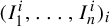 $(I_1^i, \ldots , I_n^i)_i$
. If some inductive interval appears infinitely many times, we are done. If some
$(I_1^i, \ldots , I_n^i)_i$
. If some inductive interval appears infinitely many times, we are done. If some $I_j^i$
takes on only finitely many intervals, we may restrict to the infinite subsequence where this interval is fixed. Next, we may restrict to an infinite subsequence such that each
$I_j^i$
takes on only finitely many intervals, we may restrict to the infinite subsequence where this interval is fixed. Next, we may restrict to an infinite subsequence such that each $I_i$
is of the same sign, that is, grazes
$I_i$
is of the same sign, that is, grazes $0$
from the same side. By symmetry, we may assume that
$0$
from the same side. By symmetry, we may assume that $I_i$
is empty or
$I_i$
is empty or $1 \in I_i$
for all i. We may assume that, for all j, if
$1 \in I_i$
for all i. We may assume that, for all j, if $I_j^i$
does not stay fixed, it becomes an increasingly longer prefix of
$I_j^i$
does not stay fixed, it becomes an increasingly longer prefix of $[1, \infty )$
. The sequence of IIs we end up with is then increasing under set containment.
$[1, \infty )$
. The sequence of IIs we end up with is then increasing under set containment.
Lemma 6.5. Inductive intervals are closed under increasing union.
Proof. Let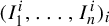 $(I_1^i, \ldots , I_n^i)_i$
be an increasing sequence of inductive intervals. This just means that each sequence of intervals
$(I_1^i, \ldots , I_n^i)_i$
be an increasing sequence of inductive intervals. This just means that each sequence of intervals $I_j^i$
is increasing in i. The union is easily verified to be
$I_j^i$
is increasing in i. The union is easily verified to be $(\bigcup _i I_1^i, \ldots , \bigcup _i I_n^i)$
.
$(\bigcup _i I_1^i, \ldots , \bigcup _i I_n^i)$
.
In particular, it follows from the above lemmas that the inductive intervals are also topologically closed in $\mathcal {P}(G)$
.
$\mathcal {P}(G)$
.
Lemma 6.6. The inductive intervals are topologically closed in $\mathcal {P}(G)$
.
$\mathcal {P}(G)$
.
Proof. If we have a converging sequence of inductive intervals, the previous lemmas show we can find an increasing subsequence that converges to an inductive interval. Thus, the sequence itself converges to an inductive interval.
Lemma 6.7. The family $\mathcal {C}$
of inductive intervals is constructible.
$\mathcal {C}$
of inductive intervals is constructible.
Proof. We start with the claim that inductive intervals are constructible. We now prove the statement of the lemma by induction on the dimension n. For $n = 1$
, the claim is easy, simply enumerate prefixes of the unique axis interval
$n = 1$
, the claim is easy, simply enumerate prefixes of the unique axis interval $I_1$
in the case of an inductive interval, and for the entire group
$I_1$
in the case of an inductive interval, and for the entire group $\mathbb {Z}$
, enumerate first the non-negative numbers and then the negative numbers (for example).
$\mathbb {Z}$
, enumerate first the non-negative numbers and then the negative numbers (for example).
For general n, first consider an inductive interval $(I_1, \ldots , I_n)$
. Up to symmetry, we may assume that
$(I_1, \ldots , I_n)$
. Up to symmetry, we may assume that $1 \in I_i$
for all non-empty
$1 \in I_i$
for all non-empty $I_i$
, that is, the intervals are not negative. Let
$I_i$
, that is, the intervals are not negative. Let $\ell _n \leq k_n$
be the maximal element of the last axis interval
$\ell _n \leq k_n$
be the maximal element of the last axis interval $I_n$
(or
$I_n$
(or $\ell _n = \infty $
if
$\ell _n = \infty $
if $k_n = \infty $
and the interval is
$k_n = \infty $
and the interval is $[1, \infty )$
). Pick a
$[1, \infty )$
). Pick a $\mathcal {C}$
-well-ordering of the group
$\mathcal {C}$
-well-ordering of the group $H_{n-1}$
by induction. Shift this well-ordering to
$H_{n-1}$
by induction. Shift this well-ordering to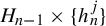 $H_{n-1} \times \{h_n^j\}$
for
$H_{n-1} \times \{h_n^j\}$
for $j < \ell _n$
by picking any base point. Then, order
$j < \ell _n$
by picking any base point. Then, order $H_{n-1} \times \{h_n^j : 0 < j < \ell _n\}$
by first comparing the power of
$H_{n-1} \times \{h_n^j : 0 < j < \ell _n\}$
by first comparing the power of $h_n$
, and then
$h_n$
, and then $H_{n-1}$
in case of equality. This is a
$H_{n-1}$
in case of equality. This is a $\mathcal {C}$
-well-ordering, since for any individual element, the translated downset
$\mathcal {C}$
-well-ordering, since for any individual element, the translated downset $S = s^{-1} {\downarrow s}$
is of the form
$S = s^{-1} {\downarrow s}$
is of the form $S = (H_{n-1} \times \{h_n^{-1}, \ldots , h_n^{-j}\}) \cup T$
, where
$S = (H_{n-1} \times \{h_n^{-1}, \ldots , h_n^{-j}\}) \cup T$
, where $T \subset H_{n-1}$
is a prefix of the order. Since T is an inductive interval on
$T \subset H_{n-1}$
is a prefix of the order. Since T is an inductive interval on $H_{n-1}$
, S is one in G.
$H_{n-1}$
, S is one in G.
At this point, we have $\mathcal {C}$
-well-ordered the subset with axis intervals
$\mathcal {C}$
-well-ordered the subset with axis intervals $(\emptyset , \ldots , \emptyset , I_n)$
. Next, we well-order
$(\emptyset , \ldots , \emptyset , I_n)$
. Next, we well-order $(I_1, \ldots , I_{n-1})$
by induction, as an inductive interval on (
$(I_1, \ldots , I_{n-1})$
by induction, as an inductive interval on ( $H_n$
). We add this at the end of the well-order described in the previous paragraph. The order remains a
$H_n$
). We add this at the end of the well-order described in the previous paragraph. The order remains a $\mathcal {C}$
-well-order, since the new translated downsets are those of
$\mathcal {C}$
-well-order, since the new translated downsets are those of $(I_1, \ldots , I_{n-1})$
, with all of
$(I_1, \ldots , I_{n-1})$
, with all of $I_n$
included on the last axis.
$I_n$
included on the last axis.
In the case of the entire group G, mix the previous idea and the case of $\mathbb {Z}$
: first, list the positive cosets and then the negative ones.
$\mathbb {Z}$
: first, list the positive cosets and then the negative ones.
Definition 6.8. If $D \subset G$
is such that
$D \subset G$
is such that $G \setminus D$
admits a well-order such that
$G \setminus D$
admits a well-order such that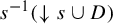 $s^{-1} ({\downarrow s} \cup D)$
is in
$s^{-1} ({\downarrow s} \cup D)$
is in $\mathcal {C}$
for all
$\mathcal {C}$
for all $s \notin D$
, then we say D is
$s \notin D$
, then we say D is $\mathcal {C}$
-extendable. We say a family of shapes
$\mathcal {C}$
-extendable. We say a family of shapes $\mathcal {C}$
is extendable if every
$\mathcal {C}$
is extendable if every $C \in \mathcal {C}$
is
$C \in \mathcal {C}$
is $\mathcal {C}$
-extendable.
$\mathcal {C}$
-extendable.
Lemma 6.9. The inductive intervals are extendable.
Proof. Consider an inductive interval D with axis intervals $(I_1, \ldots , I_n)$
. Begin ordering the complement by adding elements on the sides of
$(I_1, \ldots , I_n)$
. Begin ordering the complement by adding elements on the sides of $I_1$
in, say alternating, order. It is easy to see that up to a shift, the prefixes of the order, together with D, are of the form
$I_1$
in, say alternating, order. It is easy to see that up to a shift, the prefixes of the order, together with D, are of the form $(J, I_2, \ldots , I_n)$
for increasingly larger intervals J with alternating signs, and after adding all elements of the first axis this way, we have ordered a translate of
$(J, I_2, \ldots , I_n)$
for increasingly larger intervals J with alternating signs, and after adding all elements of the first axis this way, we have ordered a translate of $(\emptyset , I_2', \ldots , I_n)$
where now
$(\emptyset , I_2', \ldots , I_n)$
where now $I_2'$
is
$I_2'$
is $I_2$
with one new element. We can now order a new coset of the first axis (on either side of
$I_2$
with one new element. We can now order a new coset of the first axis (on either side of $I_2'$
). We can continue similarly up the dimensions to order D (with order type at most
$I_2'$
). We can continue similarly up the dimensions to order D (with order type at most $\omega ^n$
).
$\omega ^n$
).
7 SFTness and the avo property in concrete examples
7.1 Polycyclic groups
Theorem 7.1. Let G be a polycyclic group and let $X \subset A^G$
be a subshift that is avo for the class
$X \subset A^G$
be a subshift that is avo for the class $\mathcal {C}$
of all inductive intervals. Then, X is uniformly SFT on
$\mathcal {C}$
of all inductive intervals. Then, X is uniformly SFT on $\{G\} \cup \mathcal {C}$
.
$\{G\} \cup \mathcal {C}$
.
Proof. Suppose G is polycyclic and $X \subset A^G$
is avo for inductive intervals
$X \subset A^G$
is avo for inductive intervals $\mathcal {C}$
. By Lemma 6.4,
$\mathcal {C}$
. By Lemma 6.4, $\mathcal {C}$
is a wqo under inclusion and by Lemma 6.5, it is closed under increasing union. Thus, by Lemma 5.6, X is uniformly
$\mathcal {C}$
is a wqo under inclusion and by Lemma 6.5, it is closed under increasing union. Thus, by Lemma 5.6, X is uniformly $\mathcal {C}$
-avo. By Lemma 6.7,
$\mathcal {C}$
-avo. By Lemma 6.7, $\mathcal {C}$
is constructible, meaning any
$\mathcal {C}$
is constructible, meaning any $D \in \mathcal {C} \cup \{G\}$
admits a
$D \in \mathcal {C} \cup \{G\}$
admits a $\mathcal {C}$
-well-order. Then, Lemma 5.8 implies that
$\mathcal {C}$
-well-order. Then, Lemma 5.8 implies that $X|D$
is a subshift of finite type with window size r for any of these sets. In other words, X is uniformly SFT on
$X|D$
is a subshift of finite type with window size r for any of these sets. In other words, X is uniformly SFT on $\{G\} \cup \mathcal {C}$
.
$\{G\} \cup \mathcal {C}$
.
Corollary 7.2. Let G be a polycyclic group and let $X \subset A^G$
be a subshift that is avo for inductive intervals. Then, X is SFT.
$X \subset A^G$
be a subshift that is avo for inductive intervals. Then, X is SFT.
Proof. We have $G \in \{G\} \cup \mathcal {C}$
.
$G \in \{G\} \cup \mathcal {C}$
.
For group shifts, the following is shown in [Reference Schmidt23]. We obtain a new proof.
Corollary 7.3. Let G be a polycyclic group and let $X \subset \Sigma ^G$
be a quasigroup shift (that is,
$X \subset \Sigma ^G$
be a quasigroup shift (that is, $\Sigma $
is a quasigroup and X is closed under cellwise quasigroup operations). Then, X is SFT.
$\Sigma $
is a quasigroup and X is closed under cellwise quasigroup operations). Then, X is SFT.
Proof. We showed in Lemma 4.1 that X is avo for all subsets of $G \setminus \{e\}$
. In particular, it is avo for inductive intervals and, thus, it is SFT.
$G \setminus \{e\}$
. In particular, it is avo for inductive intervals and, thus, it is SFT.
For shift groups beyond polycyclic, one cannot expect to obtain SFTness from an avo property. Namely, every group that has a non-f.g. subgroup admits a group shift which is not of finite type [Reference Salo17]. Group shifts are avo for all sets so, in particular, there cannot exist any family of shapes on such a group, which would allow deducing SFTness of avoshifts for that shape. (Finitely generated groups where all proper subgroups are finitely generated are known to exist, see e.g. [Reference Olshanskii14], but simple examples are not known.)
For the lamplighter group $\mathbb {Z}_2 \wr \mathbb {Z}$
, we note that there is even a sofic group shift which is not SFT, so ‘avo implies SFT’ is not even true for sofic shifts, for any family of sets
$\mathbb {Z}_2 \wr \mathbb {Z}$
, we note that there is even a sofic group shift which is not SFT, so ‘avo implies SFT’ is not even true for sofic shifts, for any family of sets $\mathcal {C}$
. (The same can be proved on many other groups with a sufficiently strong simulation theory.)
$\mathcal {C}$
. (The same can be proved on many other groups with a sufficiently strong simulation theory.)
Proposition 7.4. On the lamplighter group G, there is a sofic group shift (thus, an avoshift for all subsets $G \setminus \{e\}$
), which is not SFT.
$G \setminus \{e\}$
), which is not SFT.
Proof. Every group shift is avo for the family of all sets, so it suffices to find a sofic group shift which is not SFT. The two-symbol group shift on $\bigoplus _{i \in \mathbb {Z}_+} \mathbb {Z}_2$
is of course not SFT [Reference Salo17]. It is easy to see that also its pullback in the sense of [Reference Bartholdi and Salo2] to
$\bigoplus _{i \in \mathbb {Z}_+} \mathbb {Z}_2$
is of course not SFT [Reference Salo17]. It is easy to see that also its pullback in the sense of [Reference Bartholdi and Salo2] to $\bigoplus _{i \in \mathbb {Z}} \mathbb {Z}_2$
is not SFT, but is still a group shift. By [Reference Salo17], its free extension to any supergroup (that is, the subshift defined on the larger group by the same forbidden patterns) is also non-SFT, but is still a group shift, in particular, we get a non-SFT group shift on the lamplighter group. By the simulation theorem of [Reference Bartholdi and Salo2], this specific form of subshift is automatically sofic, since the two-symbol subshift on
$\bigoplus _{i \in \mathbb {Z}} \mathbb {Z}_2$
is not SFT, but is still a group shift. By [Reference Salo17], its free extension to any supergroup (that is, the subshift defined on the larger group by the same forbidden patterns) is also non-SFT, but is still a group shift, in particular, we get a non-SFT group shift on the lamplighter group. By the simulation theorem of [Reference Bartholdi and Salo2], this specific form of subshift is automatically sofic, since the two-symbol subshift on $\bigoplus _{i \in \mathbb {Z}_+} \mathbb {Z}_2$
is obviously computable.
$\bigoplus _{i \in \mathbb {Z}_+} \mathbb {Z}_2$
is obviously computable.
7.2 Free group SFTs are avo
We recall a definition from [Reference Salo16].
Definition 7.5. Let G be free on generators S. A tree convex set of G is $C \Subset G$
such that if
$C \Subset G$
such that if $u, w \in C$
, and v lies on the geodesic between u and w, then if
$u, w \in C$
, and v lies on the geodesic between u and w, then if $\min (d(v, u), d(v, w)) = r$
, the ball
$\min (d(v, u), d(v, w)) = r$
, the ball $v \mathcal {B}_{r-1}$
is contained in C. A limit tree convex set is a possibly infinite set with the same property.
$v \mathcal {B}_{r-1}$
is contained in C. A limit tree convex set is a possibly infinite set with the same property.
Lemma 7.6. A set is a limit tree convex set if and only if it is a limit of tree convex sets in Cantor space.
Proof. The condition is clearly closed so limits of tree convex sets are limit tree convex. Let then C be limit tree convex. Then, $C_r = C \cap \mathcal {B}_r$
satisfies the condition, so is tree convex for all r and C is a limit of these sets.
$C_r = C \cap \mathcal {B}_r$
satisfies the condition, so is tree convex for all r and C is a limit of these sets.
We also need the standard notion of a geodesically convex set: $C \subset G$
is geodesically convex in a free group G if the unique path between any
$C \subset G$
is geodesically convex in a free group G if the unique path between any $a, b \in C$
is contained in C.
$a, b \in C$
is contained in C.
If $\mathcal {C}$
is a family of sets, the corresponding extension sets are
$\mathcal {C}$
is a family of sets, the corresponding extension sets are $\mathcal {D} = \{C \in \mathcal {P}(G \setminus \{e\}) \;|\; C \in \mathcal {C} \wedge C \cup \{e\} \in \mathcal {C}\}$
.
$\mathcal {D} = \{C \in \mathcal {P}(G \setminus \{e\}) \;|\; C \in \mathcal {C} \wedge C \cup \{e\} \in \mathcal {C}\}$
.
Theorem 7.7. A subshift on a free group is an SFT if and only if it is uniformly avo on the extension sets of limit tree convex sets.
Proof. Let G be a free group. Suppose first that X is an SFT. Consider $x \in X|C$
where C and
$x \in X|C$
where C and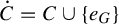 $\dot C = C \cup \{e_G\}$
are limit tree convex sets. Let X be an SFT with forbidden patterns of diameter at most r. Recall that
$\dot C = C \cup \{e_G\}$
are limit tree convex sets. Let X be an SFT with forbidden patterns of diameter at most r. Recall that $\dot C$
is geodesically convex [Reference Salo16]. If there is no geodesic path from
$\dot C$
is geodesically convex [Reference Salo16]. If there is no geodesic path from $e_G$
which is of length at least
$e_G$
which is of length at least $2r$
, we have a bound on the diameter of
$2r$
, we have a bound on the diameter of $\dot C$
and we are done.
$\dot C$
and we are done.
Since the radius-r ball is a cutset of the group, when determining the possible legal continuations, we need not look past any such ball. For any geodesic path of length at least $2r+1$
in C, the r-ball around the central element is contained in C since C is a limit tree convex set. We conclude that it suffices to look a bounded distance away from the identity element to know the legal extensions, which implies the uniform avo property.
$2r+1$
in C, the r-ball around the central element is contained in C since C is a limit tree convex set. We conclude that it suffices to look a bounded distance away from the identity element to know the legal extensions, which implies the uniform avo property.
Suppose then that X is uniformly avo on the limit tree convex sets. In particular, it is uniformly avo with some avoradius r on the tree convex sets. By [Reference Salo16], the tree convex sets form a convexoid. This implies that we can order G with order type $\omega $
so that every prefix of it is tree convex. Then, Lemma 5.8 implies that X is a subshift of finite type with window size r.
$\omega $
so that every prefix of it is tree convex. Then, Lemma 5.8 implies that X is a subshift of finite type with window size r.
Example 7.8. On the free group $F_2 = \langle a, b \rangle $
, there is an SFT which is not avo for geodesically convex sets. Consider an SFT over alphabet
$F_2 = \langle a, b \rangle $
, there is an SFT which is not avo for geodesically convex sets. Consider an SFT over alphabet $\mathbb {Z}_2^2$
with the rule that if
$\mathbb {Z}_2^2$
with the rule that if $x_{gb} = (s_1, t_1), x_{gab} = (s_2, t_2), x_{g} = (s_3, t_3)$
, then
$x_{gb} = (s_1, t_1), x_{gab} = (s_2, t_2), x_{g} = (s_3, t_3)$
, then $t_3 = s_1 + s_2$
. Then,
$t_3 = s_1 + s_2$
. Then, $b^{-1} \langle a \rangle \cup \{b^{-1} a^n b\}$
is geodesically convex and has avoradius
$b^{-1} \langle a \rangle \cup \{b^{-1} a^n b\}$
is geodesically convex and has avoradius $\Omega (n)$
.
$\Omega (n)$
.
7.3 More applications of Lemma 5.8
Lemma 5.8 (which deduces uniform SFT from uniform avo) has implications on groups other than polycyclic ones. It only needs a constructible family of sets and these are easy to find. We illustrate the result by proving the following result from [Reference Briceño5], which applies to all groups.
Proposition 7.9. Let $X \subset A^G$
be a topologically strong spatial mixing subshift on any f.g. group G. Then, X is SFT.
$X \subset A^G$
be a topologically strong spatial mixing subshift on any f.g. group G. Then, X is SFT.
Proof. Recall that TSSM is equivalent to being uniformly avo for the class of all sets $\mathcal {C} \subset \mathcal {P}(G \setminus \{e_G\})$
. Obviously,
$\mathcal {C} \subset \mathcal {P}(G \setminus \{e_G\})$
. Obviously, $\mathcal {C}$
is constructible (one can well-order any set in any way). By Lemma 5.8,
$\mathcal {C}$
is constructible (one can well-order any set in any way). By Lemma 5.8, $X|D$
is SFT with window size r for any
$X|D$
is SFT with window size r for any $D \subset G$
, in particular, this is true for
$D \subset G$
, in particular, this is true for $D = G$
.
$D = G$
.
Less trivial examples exist of constructible families, for example, the convexoids $\mathcal {C}$
(slightly generalizing the standard convex geometries) considered in [Reference Salo16] have this property. A convexoid is a family
$\mathcal {C}$
(slightly generalizing the standard convex geometries) considered in [Reference Salo16] have this property. A convexoid is a family $\mathcal {C}$
of finite subsets of a set G which satisfies
$\mathcal {C}$
of finite subsets of a set G which satisfies $\emptyset \in \mathcal {C}$
and for all
$\emptyset \in \mathcal {C}$
and for all $B \Subset G: \text { there exists } C\in \mathcal {C}: C \supset B$
, and which have the corner addition property
$B \Subset G: \text { there exists } C\in \mathcal {C}: C \supset B$
, and which have the corner addition property
 $$ \begin{align*} C, D \in \mathcal{C} \wedge C \subsetneq D \implies \text{ there exists } a \in D \setminus C: C \cup \{a\} \in \mathcal{C}. \end{align*} $$
Lemma 7.10. Let $\mathcal {C}$
be a convexoid. Then, the family of extension sets of
$\mathcal {C}$
be a convexoid. Then, the family of extension sets of $\mathcal {C}$
is constructible.
$\mathcal {C}$
is constructible.
Proof. Let $\mathcal {D}$
be the family of extension sets, that is, all
$\mathcal {D}$
be the family of extension sets, that is, all $C \in \mathcal {C}$
such that
$C \in \mathcal {C}$
such that $e_G \notin C$
and
$e_G \notin C$
and $C \cup \{e_G\} \in \mathcal {C}$
. We check that each
$C \cup \{e_G\} \in \mathcal {C}$
. We check that each $D \in \mathcal {D}$
and G itself are
$D \in \mathcal {D}$
and G itself are $\mathcal {D}$
-constructible, that is, admit
$\mathcal {D}$
-constructible, that is, admit $\mathcal {D}$
-well-orders.
$\mathcal {D}$
-well-orders.
First, we recall that repeated application of the corner addition property for $C \Subset D$
provides an anti-shelling from C to D, or ordering of
$C \Subset D$
provides an anti-shelling from C to D, or ordering of $D \setminus C$
such that any prefix of this order, together with C, is convex (meaning belongs to the convexoid
$D \setminus C$
such that any prefix of this order, together with C, is convex (meaning belongs to the convexoid $\mathcal {C}$
). If
$\mathcal {C}$
). If $D \in \mathcal {C}$
, then one can verify that an anti-shelling from
$D \in \mathcal {C}$
, then one can verify that an anti-shelling from $\emptyset $
to D is a
$\emptyset $
to D is a $\mathcal {D}$
-well-order.
$\mathcal {D}$
-well-order.
From the second property in the definition, we can list an increasing sequence of convex sets $C_1, C_2, \ldots $
. Starting from
$C_1, C_2, \ldots $
. Starting from $C_0 = \emptyset \in \mathcal {C}$
and concatenating anti-shellings from
$C_0 = \emptyset \in \mathcal {C}$
and concatenating anti-shellings from $C_i$
to
$C_i$
to $C_{i+1}$
for all i, one can check that the resulting order of G (with order type
$C_{i+1}$
for all i, one can check that the resulting order of G (with order type $\omega $
) is a
$\omega $
) is a $\mathcal {D}$
-well-order.
$\mathcal {D}$
-well-order.
Thus, for example, the extension sets of tree convex sets defined in §4 are extendable. We could thus conclude from Lemma 5.8 that the uniform avo property on the free group, for extension sets of tree convex sets, implies the SFT property. Since we already characterized that SFTs are the uniformly avo subshifts for the extension sets of limit tree convex sets, this is not worth stating here (in the uniform avo case, taking the limits does not matter). Convexoids for strongly polycyclic groups are built in [Reference Salo16], as well as on some other groups which are not discussed in the present paper.
8 Decidability results
Next, we explain how one can, starting from a finite set of forbidden patterns, prove (algorithmically or in any sufficient proof system) that an SFT X is indeed an avoshift for a set of shapes and compute its language, and perform comparisons between such subshifts. In the case of inductive intervals on polycyclic groups, we can also compute traces (restrictions to subgroups in the subnormal series). In the next section, we explain how one can also compute some factors (avofactors), which in the case of group shifts include all algebraic factors.
A common situation in symbolic dynamics is that we are applying partial algorithms to undecidable problems, and we know that they work on some subclass of the problems, but this class itself is not obviously decidable, yet we usually want that our algorithm never make an incorrect claim (in addition to making correct claims on the subclass). Namely, this allows us to blindly apply our algorithms without even knowing whether they belong to the class. The algorithm is ‘allowed’ to work correctly and work on some instances that are not in this class, or it may never halt; it is simply not allowed to give an incorrect answer. We make this slightly more precise in the following definition.
Definition 8.1. Let I be some countable set of (codings of) problem instances, $J \subset I$
a subset of these instances (thought of as a nice subclass), and
$J \subset I$
a subset of these instances (thought of as a nice subclass), and $T \subset I$
the ‘positive instances’. We say an algorithm safely partially solves
$T \subset I$
the ‘positive instances’. We say an algorithm safely partially solves $(I, T)$
if, when given
$(I, T)$
if, when given $i \in I$
, it either eventually outputs ‘yes’, ‘no’, or never halts. Furthermore, if it says ‘yes’, then
$i \in I$
, it either eventually outputs ‘yes’, ‘no’, or never halts. Furthermore, if it says ‘yes’, then $i \in T$
, and if it says ‘no’, then
$i \in T$
, and if it says ‘no’, then $i \notin T$
. We say the algorithm safely solves
$i \notin T$
. We say the algorithm safely solves $(I, T)$
on
$(I, T)$
on $J \subset I$
if it safely partially solves
$J \subset I$
if it safely partially solves $(I, T)$
and, given
$(I, T)$
and, given $i \in I$
, then it eventually gives an answer (thus, indeed the correct answer) if
$i \in I$
, then it eventually gives an answer (thus, indeed the correct answer) if $i \in J$
.
$i \in J$
.
This definition readily generalizes from decision problems to problems with more complex output (like computing the language of a subshift).
We define some computability properties for the sets $\mathcal {C}$
. A family of subsets of G is upper semicomputable if we can uniformly in r compute a sequence of upper approximations to
$\mathcal {C}$
. A family of subsets of G is upper semicomputable if we can uniformly in r compute a sequence of upper approximations to $B = \{C \cap \mathcal {B}_r : C \in \mathcal {C}\}$
, which eventually reaches B (though we cannot necessarily detect when this has happened). We say such a family
$B = \{C \cap \mathcal {B}_r : C \in \mathcal {C}\}$
, which eventually reaches B (though we cannot necessarily detect when this has happened). We say such a family $\mathcal {C}$
is computable if it is also lower semicomputable, meaning we can actually compute the set of finite subsets of sets in
$\mathcal {C}$
is computable if it is also lower semicomputable, meaning we can actually compute the set of finite subsets of sets in $\mathcal {C}$
(note that this does not necessarily mean we can decide
$\mathcal {C}$
(note that this does not necessarily mean we can decide $C \in \mathcal {C}$
for a given finite set C).
$C \in \mathcal {C}$
for a given finite set C).
Lemma 8.2. Let G be a finitely generated group and let $\mathcal {C} \subset \mathcal {P}(G)$
be any topologically closed family of shapes. Let X be an SFT defined by a finite set of forbidden patterns
$\mathcal {C} \subset \mathcal {P}(G)$
be any topologically closed family of shapes. Let X be an SFT defined by a finite set of forbidden patterns $\mathscr {Q}$
, such that
$\mathscr {Q}$
, such that $\mathscr {Q}$
uniformly defines X on all
$\mathscr {Q}$
uniformly defines X on all $C \in \mathcal {C}$
. Then, for all
$C \in \mathcal {C}$
. Then, for all $r \in \mathbb {N}$
, there exists R such that whenever
$r \in \mathbb {N}$
, there exists R such that whenever $C \in \mathcal {C}$
and
$C \in \mathcal {C}$
and $x \in \Sigma ^{C \cap \mathcal {B}_R}$
is locally
$x \in \Sigma ^{C \cap \mathcal {B}_R}$
is locally $\mathscr {Q}$
-valid in X, then
$\mathscr {Q}$
-valid in X, then $x|C \cap B_r$
is globally valid in X.
$x|C \cap B_r$
is globally valid in X.
Proof. Suppose that the conclusion fails for some fixed r. Then, we can find for arbitrarily large R a shape $C_R \in \mathcal {C}$
and a locally valid pattern
$C_R \in \mathcal {C}$
and a locally valid pattern $x_R \in \Sigma ^{C_R \cap \mathcal {B}_R}$
(containing no
$x_R \in \Sigma ^{C_R \cap \mathcal {B}_R}$
(containing no $\mathscr {Q}$
-pattern), such that
$\mathscr {Q}$
-pattern), such that $x|C_R \cap B_r$
is not globally valid.
$x|C_R \cap B_r$
is not globally valid.
Since $\mathcal {C}$
is closed, we can pass to a subsequence of
$\mathcal {C}$
is closed, we can pass to a subsequence of $C_R$
that tends to
$C_R$
that tends to $C \in \mathcal {C}$
, in which case also
$C \in \mathcal {C}$
, in which case also $C_R \cap \mathcal {B}_R$
tends to C. By compactness of Cantor space, we can find a converging subsequence of the patterns
$C_R \cap \mathcal {B}_R$
tends to C. By compactness of Cantor space, we can find a converging subsequence of the patterns $x_R$
that tends to a configuration x on
$x_R$
that tends to a configuration x on $C \in \mathcal {C}$
which contains no pattern from
$C \in \mathcal {C}$
which contains no pattern from $\mathscr {Q}$
.
$\mathscr {Q}$
.
By the assumption that $\mathscr {Q}$
defines the restriction
$\mathscr {Q}$
defines the restriction $X|C$
, we have
$X|C$
, we have $x \in X|C$
. However,
$x \in X|C$
. However, $x|\mathcal {B}_r \cap C = x_R|C_R \cap \mathcal {B}_r \not \sqsubset X$
for large enough R, which is a contradiction.
$x|\mathcal {B}_r \cap C = x_R|C_R \cap \mathcal {B}_r \not \sqsubset X$
for large enough R, which is a contradiction.
Lemma 8.3. Let G be a finitely generated group with decidable word problem and let $\mathcal {C} \ni \emptyset $
be a topologically closed, upper semicomputable, extendable family of shapes. Then, there is an algorithm that, given a finite set of patterns
$\mathcal {C} \ni \emptyset $
be a topologically closed, upper semicomputable, extendable family of shapes. Then, there is an algorithm that, given a finite set of patterns $\mathscr {P}$
defining an SFT X on G, enumerates all finite families of forbidden patterns
$\mathscr {P}$
defining an SFT X on G, enumerates all finite families of forbidden patterns $\mathscr {Q}$
that uniformly define the
$\mathscr {Q}$
that uniformly define the $\mathcal {C}$
-restrictions of X.
$\mathcal {C}$
-restrictions of X.
In particular, this algorithm recognizes the SFTs that are uniformly $\mathcal {C}$
-SFTs. Note that here, we need not explicitly discuss safety; the algorithm simply will not enumerate any sets
$\mathcal {C}$
-SFTs. Note that here, we need not explicitly discuss safety; the algorithm simply will not enumerate any sets $\mathscr {Q}$
if such sets do not exist.
$\mathscr {Q}$
if such sets do not exist.
Proof. Since X is SFT and G has a decidable word problem, we can compute upper approximations to the language. Note also that the equality of SFTs is semidecidable (see e.g. [Reference Salo and Törmä22]), so we can enumerate the complete list of sets of patterns $\mathscr {Q}$
which define X.
$\mathscr {Q}$
which define X.
Thus, it suffices to show that once we have found a set of patterns $\mathscr {Q}$
equivalent to the original, which additionally defines
$\mathscr {Q}$
equivalent to the original, which additionally defines $X|C$
uniformly on
$X|C$
uniformly on $C \in \mathcal {C}$
, then we can recognize this fact. For this, consider any such
$C \in \mathcal {C}$
, then we can recognize this fact. For this, consider any such $\mathscr {Q}$
and let R be given for
$\mathscr {Q}$
and let R be given for $2r+1$
obtained from the previous lemma for the family
$2r+1$
obtained from the previous lemma for the family $\mathscr {Q}$
, meaning if
$\mathscr {Q}$
, meaning if $x \in \Sigma ^{C \cap \mathcal {B}_R}$
is a locally
$x \in \Sigma ^{C \cap \mathcal {B}_R}$
is a locally $\mathscr {Q}$
-legal configuration, then
$\mathscr {Q}$
-legal configuration, then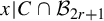 $x|C \cap \mathcal {B}_{2r+1}$
is globally legal.
$x|C \cap \mathcal {B}_{2r+1}$
is globally legal.
We claim that whenever $x \in \Sigma ^{C \cap \mathcal {B}_R}$
is
$x \in \Sigma ^{C \cap \mathcal {B}_R}$
is $\mathscr {Q}$
-legal for
$\mathscr {Q}$
-legal for $C \in \mathcal {C}$
, then x has a
$C \in \mathcal {C}$
, then x has a $\mathscr {Q}$
-legal extension to
$\mathscr {Q}$
-legal extension to $e_G$
. Namely, otherwise, every extension
$e_G$
. Namely, otherwise, every extension $x|(C \cap \mathcal {B}_{2r+1}) \sqcup a^e$
is actually globally illegal. However, this is a contradiction, since then clearly
$x|(C \cap \mathcal {B}_{2r+1}) \sqcup a^e$
is actually globally illegal. However, this is a contradiction, since then clearly $x|(C \cap \mathcal {B}_{2r+1})$
already cannot be a globally valid pattern.
$x|(C \cap \mathcal {B}_{2r+1})$
already cannot be a globally valid pattern.
This means that we can (for the fixed $\mathscr {Q}$
) go through increasingly larger R, and for fixed
$\mathscr {Q}$
) go through increasingly larger R, and for fixed $(\mathscr {Q}, R)$
, we can compute increasingly better approximations to the set of R-sized prefixes of shapes in
$(\mathscr {Q}, R)$
, we can compute increasingly better approximations to the set of R-sized prefixes of shapes in $\mathcal {C}$
. Since the limits of shapes from
$\mathcal {C}$
. Since the limits of shapes from $\mathcal {C}$
are upper semicomputable, we eventually know the correct set of their subshapes of size at most R (though of course we cannot necessarily recognize that we do). At this point, by the assumption on R and the discussion of the previous paragraph, no matter what
$\mathcal {C}$
are upper semicomputable, we eventually know the correct set of their subshapes of size at most R (though of course we cannot necessarily recognize that we do). At this point, by the assumption on R and the discussion of the previous paragraph, no matter what $\mathscr {Q}$
-legal pattern we put on one of these shapes
$\mathscr {Q}$
-legal pattern we put on one of these shapes $M \Subset \mathcal {B}_R \cap G \setminus \{e_G\}$
, it will have at least one legal continuation to
$M \Subset \mathcal {B}_R \cap G \setminus \{e_G\}$
, it will have at least one legal continuation to $e_G$
that does not contain a
$e_G$
that does not contain a $\mathscr {Q}$
-pattern.
$\mathscr {Q}$
-pattern.
At this point, the algorithm can conclude that $\mathscr {Q}$
is a set of forbidden patterns defining
$\mathscr {Q}$
is a set of forbidden patterns defining $X|C$
uniformly on
$X|C$
uniformly on $C \in \mathcal {C}$
. Namely, if we have a configuration on
$C \in \mathcal {C}$
. Namely, if we have a configuration on $C \in \mathcal {C}$
which has no
$C \in \mathcal {C}$
which has no $\mathscr {Q}$
-pattern, then by
$\mathscr {Q}$
-pattern, then by $\mathcal {C}$
-extendability of C, we can order
$\mathcal {C}$
-extendability of C, we can order $G \setminus C$
so that prefixes of the order together with C are (up to a shift) in
$G \setminus C$
so that prefixes of the order together with C are (up to a shift) in $\mathcal {C}$
and inductively prove along this order that at any point of the process, there is an extension containing no pattern from
$\mathcal {C}$
and inductively prove along this order that at any point of the process, there is an extension containing no pattern from $\mathscr {Q}$
.
$\mathscr {Q}$
.
Lemma 8.4. Let G be a finitely generated group with decidable word problem, and let $\mathcal {C} \ni \emptyset $
be a topologically closed, upper semicomputable and extendable family of shapes. Then, there is an algorithm that, given a finite set of patterns
$\mathcal {C} \ni \emptyset $
be a topologically closed, upper semicomputable and extendable family of shapes. Then, there is an algorithm that, given a finite set of patterns $\mathscr {P}$
defining an SFT X on G, safely solves emptiness on all X which are uniformly SFT on
$\mathscr {P}$
defining an SFT X on G, safely solves emptiness on all X which are uniformly SFT on $\mathcal {C}$
. If
$\mathcal {C}$
. If $\mathcal {C}$
is constructible, it also safely solves emptiness on uniform
$\mathcal {C}$
is constructible, it also safely solves emptiness on uniform $\mathcal {C}$
-avoshifts X.
$\mathcal {C}$
-avoshifts X.
Proof. If the given SFT X is empty, we can recognize this fact. Otherwise, we will try to apply the previous theorem. Since its output is correct on all SFTs (when it gives an output), if it eventually outputs some $\mathscr {Q}$
, we can determine emptiness: the empty pattern is in the language of a subshift if and only if the subshift is non-empty. Since
$\mathscr {Q}$
, we can determine emptiness: the empty pattern is in the language of a subshift if and only if the subshift is non-empty. Since $\emptyset \in \mathcal {C}$
, the only possible reason why the empty pattern would be forbidden is that the empty pattern is directly in
$\emptyset \in \mathcal {C}$
, the only possible reason why the empty pattern would be forbidden is that the empty pattern is directly in $\mathscr {Q}$
. That is, X is empty if and only if
$\mathscr {Q}$
. That is, X is empty if and only if $\mathscr {Q} \cap \Sigma ^\emptyset \neq \emptyset $
. If X is uniformly SFT on
$\mathscr {Q} \cap \Sigma ^\emptyset \neq \emptyset $
. If X is uniformly SFT on $\mathcal {C}$
, then eventually we find
$\mathcal {C}$
, then eventually we find $\mathscr {Q}$
can can check this.
$\mathscr {Q}$
can can check this.
It suffices to show the last claim. Indeed, if $\mathcal {C}$
is constructible and X is a uniform
$\mathcal {C}$
is constructible and X is a uniform $\mathcal {C}$
-avoshift, then X is uniformly SFT on
$\mathcal {C}$
-avoshift, then X is uniformly SFT on $\mathcal {C}$
by Lemma 5.8.
$\mathcal {C}$
by Lemma 5.8.
The following theorem implies, in particular, the theorem of [Reference Béaur and Kari3] that projective subdynamics of group shifts on $\mathbb {Z}^d$
can be computed effectively.
$\mathbb {Z}^d$
can be computed effectively.
Theorem 8.5. Let G be a polycyclic group with polycycle structure $((h_i)_i, (H_i)_i, (k_i)_i)$
. Then, given an SFT X, we can safely compute a set of forbidden patterns
$((h_i)_i, (H_i)_i, (k_i)_i)$
. Then, given an SFT X, we can safely compute a set of forbidden patterns $\mathscr {P}$
that defines X uniformly on all inductive intervals if X is an II-avoshift. The restriction
$\mathscr {P}$
that defines X uniformly on all inductive intervals if X is an II-avoshift. The restriction $X|H_i$
is an avoshift for all i. Furthermore, we can effectively compute the forbidden patterns for
$X|H_i$
is an avoshift for all i. Furthermore, we can effectively compute the forbidden patterns for $X|H_i$
.
$X|H_i$
.
Proof. For the first claim, by Theorem 7.1, X is uniformly SFT on inductive intervals whenever X is an II-avoshift. By Lemma 8.3, we can find a set of forbidden patterns $\mathscr {Q}$
defining it uniformly on these sets, since by Lemma 6.9, the II is extendable (the other properties are obvious).
$\mathscr {Q}$
defining it uniformly on these sets, since by Lemma 6.9, the II is extendable (the other properties are obvious).
The second claim (that $X|H_i$
is an avoshift) is immediate from the definition.
$X|H_i$
is an avoshift) is immediate from the definition.
For the third (decidability) claim, since each of the groups $H_i$
is an inductive interval, the forbidden patterns in
$H_i$
is an inductive interval, the forbidden patterns in $\mathscr {Q}$
that admit a translate contained in
$\mathscr {Q}$
that admit a translate contained in $H_i$
directly define
$H_i$
directly define $X|H_i$
. Obviously, it is decidable whether a forbidden pattern admits such a translate.
$X|H_i$
. Obviously, it is decidable whether a forbidden pattern admits such a translate.
Corollary 8.6. The set of II-avoshifts on a polycyclic group is recursively enumerable.
Proof. For each finite set of forbidden patterns defining an SFT X, we try to compute forbidden patterns that define X uniformly on all inductive intervals. If we find such, then X is indeed uniformly SFT on the inductive intervals. Since the inductive intervals are a good family, Lemma 5.5 implies that X is (uniformly) avo on inductive intervals.
Next, we proceed to show that we can compute the language of an avoshift under suitable assumptions.
Lemma 8.7. Let G be a group with decidable word problem, let $\mathcal {C}$
be a topologically closed, computable family of sets, and suppose that G is
$\mathcal {C}$
be a topologically closed, computable family of sets, and suppose that G is $\mathcal {C}$
-constructible. Then, there is an algorithm that, given a finite set of forbidden patterns
$\mathcal {C}$
-constructible. Then, there is an algorithm that, given a finite set of forbidden patterns $\mathscr {P}$
such that
$\mathscr {P}$
such that $\mathscr {P}$
defines an SFT
$\mathscr {P}$
defines an SFT $X \mathcal {C}$
-uniformly, decides the language of the SFT X.
$X \mathcal {C}$
-uniformly, decides the language of the SFT X.
This is a promise problem, that is, we do not care what the algorithm does if $\mathscr {P}$
does not have the property stated. (However, we will only apply this when we actually know
$\mathscr {P}$
does not have the property stated. (However, we will only apply this when we actually know $\mathscr {P}$
has this property.)
$\mathscr {P}$
has this property.)
Proof. Our algorithm computes increasingly better upper approximations to the set of patterns of X on finite subsets of G using upper semicomputability of the language.
At times, it will declare that it has found the precise set of patterns in the language on a particular domain. We will be sure to only add such deduction rules when they are actually safe (assuming the given property of $\mathscr {P}$
), that is, when the algorithm declares it knows the patterns of a particular shape, this can be trusted to be actually true.
$\mathscr {P}$
), that is, when the algorithm declares it knows the patterns of a particular shape, this can be trusted to be actually true.
To root the process, the algorithm can check whether the empty pattern is in $\mathscr {P}$
. If it is, then X is empty and we are done. Otherwise, it concludes that it knows the exact set of globally legal patterns on the domain
$\mathscr {P}$
. If it is, then X is empty and we are done. Otherwise, it concludes that it knows the exact set of globally legal patterns on the domain $\emptyset $
already (that is, the empty pattern appears in the language). Also, if the algorithm has already deduced the globally legal patterns on a domain D, then it knows the globally legal patterns on any
$\emptyset $
already (that is, the empty pattern appears in the language). Also, if the algorithm has already deduced the globally legal patterns on a domain D, then it knows the globally legal patterns on any $gD$
and on any subset of D.
$gD$
and on any subset of D.
The crucial point is that if we know the exact patterns on $C \cap \mathcal {B}_R \setminus \{e_G\}$
for
$C \cap \mathcal {B}_R \setminus \{e_G\}$
for $C \in \mathcal {C}$
, where R is larger than the diameter of any domain of a pattern in S, then we also know the
$C \in \mathcal {C}$
, where R is larger than the diameter of any domain of a pattern in S, then we also know the $(C \cap \mathcal {A}_R) \cup \{e_G\}$
-patterns. This is because a pattern on
$(C \cap \mathcal {A}_R) \cup \{e_G\}$
-patterns. This is because a pattern on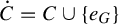 $\dot C = C \cup \{e_G\}$
is in X if and only if it does not contain a
$\dot C = C \cup \{e_G\}$
is in X if and only if it does not contain a $\mathscr {P}$
-pattern, so if we know the contents of a C-pattern on the annulus
$\mathscr {P}$
-pattern, so if we know the contents of a C-pattern on the annulus $\mathcal {B}_R \setminus \{e_G\}$
, then since patterns in
$\mathcal {B}_R \setminus \{e_G\}$
, then since patterns in $\mathscr {P}$
cannot see over the annulus, the algorithm just needs to list the possible extensions that do not directly introduce a pattern from
$\mathscr {P}$
cannot see over the annulus, the algorithm just needs to list the possible extensions that do not directly introduce a pattern from $\mathscr {P}$
, and these will give exactly the globally legal patterns on the extended shape.
$\mathscr {P}$
, and these will give exactly the globally legal patterns on the extended shape.
We can now prove by transfinite induction on $s \in G$
, with respect to the
$s \in G$
, with respect to the $\mathcal {C}$
-well-order of G, that the algorithm eventually knows all D-shaped patterns for finite sets D whose elements are strictly below s, and all their translates. (Stated like this, if the order on G has a maximum s, then we do not actually deduce the finite patterns containing s directly, but any pattern can be shifted so as not to include the maximum.) For limit ordinals s, the induction step is trivial. For successor ordinals, suppose
$\mathcal {C}$
-well-order of G, that the algorithm eventually knows all D-shaped patterns for finite sets D whose elements are strictly below s, and all their translates. (Stated like this, if the order on G has a maximum s, then we do not actually deduce the finite patterns containing s directly, but any pattern can be shifted so as not to include the maximum.) For limit ordinals s, the induction step is trivial. For successor ordinals, suppose $t \prec s$
is the predecessor and let
$t \prec s$
is the predecessor and let $D \Subset C = \{g : g <~t\}$
be any finite set. It suffices to show that the algorithm eventually deduces the correct patterns on
$D \Subset C = \{g : g <~t\}$
be any finite set. It suffices to show that the algorithm eventually deduces the correct patterns on $D \cup \{t\}$
.
$D \cup \{t\}$
.
By induction, we eventually know the exact set of patterns on $\mathcal {B}_R \cap t^{-1} C$
. If R is larger than the diameter of any pattern in
$\mathcal {B}_R \cap t^{-1} C$
. If R is larger than the diameter of any pattern in $\mathscr {P}$
and large enough so that
$\mathscr {P}$
and large enough so that $t\mathcal {B}_r \supset D$
, then we note that by the main deduction rule, the algorithm eventually deduces the set of patterns on
$t\mathcal {B}_r \supset D$
, then we note that by the main deduction rule, the algorithm eventually deduces the set of patterns on $(\mathcal {B}_R \cap t^{-1} C) \cup \{e_G\}$
. After a shift, it deduces them on
$(\mathcal {B}_R \cap t^{-1} C) \cup \{e_G\}$
. After a shift, it deduces them on $(C \cap t\mathcal {B}_R) \cup \{t\}$
and then also the subset
$(C \cap t\mathcal {B}_R) \cup \{t\}$
and then also the subset $D \cup \{t\}$
.
$D \cup \{t\}$
.
Lemma 8.8. Let G be a finitely generated group with decidable word problem. Let A be any algorithm that, given an SFT X, safely enumerates the language of every X if X belongs to a class of subshifts $\mathcal {S}$
. Then, given SFTs
$\mathcal {S}$
. Then, given SFTs $X, Y \subset \Sigma ^G$
, the inclusion
$X, Y \subset \Sigma ^G$
, the inclusion $X \subset Y$
is safely decidable for pairs
$X \subset Y$
is safely decidable for pairs $(X, Y)$
such that
$(X, Y)$
such that $X \in \mathcal {S}$
.
$X \in \mathcal {S}$
.
Proof. The inclusion $X \subset Y$
is semidecidable. If
$X \subset Y$
is semidecidable. If $X \not \subset Y$
, then there exists a pattern
$X \not \subset Y$
, then there exists a pattern ${P \sqsubset X}$
such that
${P \sqsubset X}$
such that $P \not \sqsubset Y$
. The latter is semidecidable. The former is semidecidable if
$P \not \sqsubset Y$
. The latter is semidecidable. The former is semidecidable if $X \in S$
, because eventually, the algorithm A outputs the pattern P. Since A outputs the language of X safely, if it outputs P, then indeed
$X \in S$
, because eventually, the algorithm A outputs the pattern P. Since A outputs the language of X safely, if it outputs P, then indeed $P \sqsubset X$
, so if the deduction
$P \sqsubset X$
, so if the deduction $X \not \subset Y$
is made, it is correct even if we do not necessarily have
$X \not \subset Y$
is made, it is correct even if we do not necessarily have $X \in S$
, so
$X \in S$
, so $X \subset Y$
is indeed decided safely.
$X \subset Y$
is indeed decided safely.
While the previous lemma is not commonly stated as we have here, it is well known and commonly applied in the case that $\mathcal {S}$
is the class of subshifts where periodic points are dense. Namely, Wang’s algorithm [Reference Salo and Törmä22, Reference Wang25] is more or less the proof of precisely this result. Note that here, the idea of ‘safety’ is quite useful—Wang’s algorithm naturally allows use to conclude
$\mathcal {S}$
is the class of subshifts where periodic points are dense. Namely, Wang’s algorithm [Reference Salo and Törmä22, Reference Wang25] is more or less the proof of precisely this result. Note that here, the idea of ‘safety’ is quite useful—Wang’s algorithm naturally allows use to conclude $X \not \subset Y$
for also many X where periodic points are not dense, since the algorithm that enumerates the subpatterns of periodic points indeed safely enumerates the language of a given SFT when it has dense periodic points.
$X \not \subset Y$
for also many X where periodic points are not dense, since the algorithm that enumerates the subpatterns of periodic points indeed safely enumerates the language of a given SFT when it has dense periodic points.
Theorem 8.9. The language of an II-avoshift on a polycyclic group is safely computable, uniformly in the SFT. In particular, given two SFTs on a polycyclic group $X, Y$
, such that X is an II-avoshift, we can safely decide the inclusion
$X, Y$
, such that X is an II-avoshift, we can safely decide the inclusion $X \subset Y$
.
$X \subset Y$
.
Proof. By Theorem 8.5, we can safely find a set of forbidden patterns defining X uniformly on the IIs. Then, we can safely compute the language by Lemma 8.7. The previous lemma concludes the proof.
We recall that even in the case $G = \mathbb {Z}$
, the previous theorem covers some cases Wang’s algorithm does not, as it does not require dense periodic points. (Similarly, Wang’s algorithm covers many cases ours does not.)
$G = \mathbb {Z}$
, the previous theorem covers some cases Wang’s algorithm does not, as it does not require dense periodic points. (Similarly, Wang’s algorithm covers many cases ours does not.)
The following is an easy exercise in automata theory, but it may be of some interest that the avoshift technology covers this.
Theorem 8.10. The language of an SFT on the free group is decidable. In particular, given two SFTs on a free group $X, Y$
, we can decide the inclusion
$X, Y$
, we can decide the inclusion $X \subset Y$
.
$X \subset Y$
.
Proof. As we showed in §4, any SFT on the free group is uniformly avo on the extension set $\mathcal {D}$
of the limit tree convex sets
$\mathcal {D}$
of the limit tree convex sets $\mathcal {C}$
. Lemma 5.8 says that if
$\mathcal {C}$
. Lemma 5.8 says that if $X \subset A^G$
is a subshift that is uniformly
$X \subset A^G$
is a subshift that is uniformly $\mathcal {D}$
-avo for
$\mathcal {D}$
-avo for $\mathcal {D} \subset \mathcal {P}(G \setminus \{e_G\})$
with avoradius r, then whenever D is
$\mathcal {D} \subset \mathcal {P}(G \setminus \{e_G\})$
with avoradius r, then whenever D is $\mathcal {D}$
-constructible,
$\mathcal {D}$
-constructible, $X|D$
is SFT with window size r. The set
$X|D$
is SFT with window size r. The set $\mathcal {D}$
is constructible since
$\mathcal {D}$
is constructible since $\mathcal {D}$
is a convexoid by Lemma 7.10.
$\mathcal {D}$
is a convexoid by Lemma 7.10.
Next, Lemma 8.3 says that if $\mathcal {D} \ni \emptyset $
is a topologically closed, upper semicomputable, extendable family of shapes, then there is an algorithm that, given the finite set of patterns
$\mathcal {D} \ni \emptyset $
is a topologically closed, upper semicomputable, extendable family of shapes, then there is an algorithm that, given the finite set of patterns $\mathscr {P}$
defining an SFT X on G, enumerates all finite families of forbidden patterns
$\mathscr {P}$
defining an SFT X on G, enumerates all finite families of forbidden patterns $\mathscr {Q}$
that uniformly define the
$\mathscr {Q}$
that uniformly define the $\mathcal {C}$
-restrictions of X. Topological closure and upper semicomputability are clear for
$\mathcal {C}$
-restrictions of X. Topological closure and upper semicomputability are clear for $\mathcal {D}$
from the corresponding properties of
$\mathcal {D}$
from the corresponding properties of $\mathcal {C}$
(which are clear from the definition). Extendability follows from the proof of constructibility in Lemma 7.10 since we can take
$\mathcal {C}$
(which are clear from the definition). Extendability follows from the proof of constructibility in Lemma 7.10 since we can take $C_i = C$
for some i in the proof. We conclude that such a set
$C_i = C$
for some i in the proof. We conclude that such a set $\mathscr {Q}$
exists and, thus, the algorithm eventually finds one.
$\mathscr {Q}$
exists and, thus, the algorithm eventually finds one.
Next, Lemma 8.7 says that if $\mathcal {D}$
be a topologically closed, computable family of sets and G is
$\mathcal {D}$
be a topologically closed, computable family of sets and G is $\mathcal {D}$
-constructible, then there is an algorithm that, from such a set
$\mathcal {D}$
-constructible, then there is an algorithm that, from such a set $\mathscr {Q}$
, decides the language of the SFT X. Since the family
$\mathscr {Q}$
, decides the language of the SFT X. Since the family $\mathscr {Q}$
is guaranteed to indeed define X uniformly on
$\mathscr {Q}$
is guaranteed to indeed define X uniformly on $\mathcal {D}$
, the language is decided safely for all SFTs.
$\mathcal {D}$
, the language is decided safely for all SFTs.
Lemma 8.8 then implies that inclusion of SFTs is safely decidable for all SFTs, in other words, the problem is simply decidable.
9 Avofactors
We slightly generalize the avoshift concept to give an avoshift proof for the useful fact that algebraic factors of group shifts can be computed [Reference Béaur and Kari3]. We give only the outline, as this is analogous to the theory developed previously.
Let S be any set and $\mathcal {C} \subset \mathcal {P}(S) \times S$
any set of cornered subsets meaning
$\mathcal {C} \subset \mathcal {P}(S) \times S$
any set of cornered subsets meaning $(C, c) \in \mathcal {C} \implies c \notin C$
. Then, we say
$(C, c) \in \mathcal {C} \implies c \notin C$
. Then, we say $X \subset \Sigma ^S$
is
$X \subset \Sigma ^S$
is $\mathcal {C}$
-avo if for any
$\mathcal {C}$
-avo if for any $(C, c) \in \mathcal {C}$
, there is a finite subset of
$(C, c) \in \mathcal {C}$
, there is a finite subset of $B \Subset C$
such that
$B \Subset C$
such that $\mathcal {F}_X(x|C, c) = \mathcal {F}_X(x|B, c)$
for all
$\mathcal {F}_X(x|C, c) = \mathcal {F}_X(x|B, c)$
for all $x \in X$
. In the case of subshifts, we could always take
$x \in X$
. In the case of subshifts, we could always take $c = e_G$
and always translate the cell to be determined to the origin, so we did not discuss corners explicitly.
$c = e_G$
and always translate the cell to be determined to the origin, so we did not discuss corners explicitly.
Now, if we have a family of subsets $\mathcal {C}$
on a group G, then we can extend it to a family of cornered shapes
$\mathcal {C}$
on a group G, then we can extend it to a family of cornered shapes $\mathcal {D}$
on
$\mathcal {D}$
on $G \times L$
where
$G \times L$
where $L = \{1, \ldots , \ell \}$
, by taking the shapes
$L = \{1, \ldots , \ell \}$
, by taking the shapes $(G \times \{j+1, \ldots , \ell \}) \cup (C \times \{j\})$
with corner
$(G \times \{j+1, \ldots , \ell \}) \cup (C \times \{j\})$
with corner $(e_G, j)$
. This corresponds roughly to the inductive intervals on the group
$(e_G, j)$
. This corresponds roughly to the inductive intervals on the group $G \times \mathbb {Z}_{\ell }$
, which on the last axis, graze the origin from the right, but now,
$G \times \mathbb {Z}_{\ell }$
, which on the last axis, graze the origin from the right, but now, $\{1, \ldots , \ell \}$
is not a group but an interval. Now, we define an avoshift relation to be a subset
$\{1, \ldots , \ell \}$
is not a group but an interval. Now, we define an avoshift relation to be a subset $X \subset \Sigma ^{G \times \{1, \ldots , \ell \}}$
which is closed, G-invariant, and is avo for the cornered set described in this paragraph. The construction order one should imagine is that we build the ‘cosets’
$X \subset \Sigma ^{G \times \{1, \ldots , \ell \}}$
which is closed, G-invariant, and is avo for the cornered set described in this paragraph. The construction order one should imagine is that we build the ‘cosets’ $G \times \{i\}$
for decreasing i, and the possible constructions in each coset come from
$G \times \{i\}$
for decreasing i, and the possible constructions in each coset come from $\mathcal {C}$
.
$\mathcal {C}$
.
In the case where $\mathcal {C}$
is the set of inductive intervals on a polycyclic group, one can repeat the arguments of the previous sections to conclude that if
$\mathcal {C}$
is the set of inductive intervals on a polycyclic group, one can repeat the arguments of the previous sections to conclude that if $X \subset \Sigma ^{G \times L}$
is G-invariant and a
$X \subset \Sigma ^{G \times L}$
is G-invariant and a $\mathcal {D}$
-avoshift, then we can compute a set of G-invariant finite patterns on
$\mathcal {D}$
-avoshift, then we can compute a set of G-invariant finite patterns on $G \times L$
that define X uniformly on all sets in
$G \times L$
that define X uniformly on all sets in $\mathcal {D}$
.
$\mathcal {D}$
.
Definition 9.1. Let G be a polycyclic group with fixed polycycle structure. Given an avoshift $X \subset \Sigma ^G$
, we say
$X \subset \Sigma ^G$
, we say $Y \subset \Sigma ^G$
is an avofactor of X if there is a factor map
$Y \subset \Sigma ^G$
is an avofactor of X if there is a factor map $f : X \to Y$
such that the graph
$f : X \to Y$
such that the graph $Z \subset X \times Y \subset \Sigma ^{G \times \{1, 2\}}$
of f, defined by
$Z \subset X \times Y \subset \Sigma ^{G \times \{1, 2\}}$
of f, defined by $(x, y) \in Z \iff f(x) = y$
, is an avorelation.
$(x, y) \in Z \iff f(x) = y$
, is an avorelation.
Note that we assume the same alphabet just for notational convenience; if they are not the same, we can consider both with the union alphabet. It is important that the image is written on the second component, so that the ‘image of f is constructed before the preimage’ when we consider $\mathcal {D}$
-well-orderings. The following decidability result effectively comes from the fact that we find local rules for building preimages for any image.
$\mathcal {D}$
-well-orderings. The following decidability result effectively comes from the fact that we find local rules for building preimages for any image.
Now, we can show the following analogously to Theorem 8.5.
Theorem 9.2. Every avofactor of an II-avoshift on a polycyclic group is an avoshift and we can effectively compute its forbidden patterns.
Sketch of proof.
Let $\mathcal {C}$
be the inductive intervals of the polycyclic group G. Consider the subshift
$\mathcal {C}$
be the inductive intervals of the polycyclic group G. Consider the subshift $Z \subset X \times Y \subset \Sigma ^{G \times \{1, 2\}}$
, assumed avo. Note that Y must be an avoshift, since
$Z \subset X \times Y \subset \Sigma ^{G \times \{1, 2\}}$
, assumed avo. Note that Y must be an avoshift, since $C \times \{2\} \in \mathcal {D}$
for all
$C \times \{2\} \in \mathcal {D}$
for all $C \in \mathcal {C}$
, proving the first claim.
$C \in \mathcal {C}$
, proving the first claim.
Next, we go through the entire theory with $\mathcal {D}$
in place of inductive intervals. We can easily show that
$\mathcal {D}$
in place of inductive intervals. We can easily show that $\mathcal {D}$
is wqo under inclusion and closed under increasing union. Now, the proof of Lemma 5.6 shows that any
$\mathcal {D}$
is wqo under inclusion and closed under increasing union. Now, the proof of Lemma 5.6 shows that any $\mathcal {D}$
-avoshift X is uniformly
$\mathcal {D}$
-avoshift X is uniformly $\mathcal {D}$
-avo.
$\mathcal {D}$
-avo.
Next, analogously to Lemma 5.8, we see that $X|D$
is uniformly SFT for
$X|D$
is uniformly SFT for $D \in \mathcal {D}$
, that is, there is a set of forbidden patterns for it, by showing that sets in
$D \in \mathcal {D}$
, that is, there is a set of forbidden patterns for it, by showing that sets in $\mathcal {D}$
are constructible in an appropriate sense.
$\mathcal {D}$
are constructible in an appropriate sense.
Since $\mathcal {D}$
are also extendable and are computable in any reasonable sense, we see as in §8 that we can compute a set of forbidden patterns defining X uniformly on
$\mathcal {D}$
are also extendable and are computable in any reasonable sense, we see as in §8 that we can compute a set of forbidden patterns defining X uniformly on $D \in \mathcal {D}$
. In particular, these patterns work on
$D \in \mathcal {D}$
. In particular, these patterns work on $G \times \{2\} \in \mathcal {D}$
, which means precisely that they give forbidden patterns for the image subshift.
$G \times \{2\} \in \mathcal {D}$
, which means precisely that they give forbidden patterns for the image subshift.
Corollary 9.3. We can effectively compute the algebraic factors of any group shift on a polycyclic group.
Proof. It is easy to verify that the graph of a shift-invariant continuous group homomorphism between group shifts is an avorelation.
Example 9.4. Not all factors of avoshifts are avo—in fact, avoshifts on inductive intervals are not closed under conjugacy even on the group $\mathbb {Z}^2$
(note that on
$\mathbb {Z}^2$
(note that on $\mathbb {Z}$
, they are just the SFTs, so they are closed under conjugacy). For example, take the
$\mathbb {Z}$
, they are just the SFTs, so they are closed under conjugacy). For example, take the $\mathbb {Z}^2$
binary full shift. Now, double the alphabet and always write the f-image of the first track of the row below, to the second track of the present row, where f is the cellular automaton from Example 7.8. As in Example 7.8, it is easy to see that the subshift is not avo for inductive intervals.
$\mathbb {Z}^2$
binary full shift. Now, double the alphabet and always write the f-image of the first track of the row below, to the second track of the present row, where f is the cellular automaton from Example 7.8. As in Example 7.8, it is easy to see that the subshift is not avo for inductive intervals.
Acknowledgements
The author thanks Pierre Guillon and Jarkko Kari for sharing their ideas on local rules and determinism, which are somehow in the background of the theory of avoshifts, although the precise connections are, at present, not fully clear to the author. The author thanks Benjamin Hellouin de Menibus and Guillaume Theyssier for discussions on TEP subshifts, which were one of the precursors (or siblings) of avoshifts. The author also thanks Sebastián Barbieri for interesting discussions, which partially motivated the present paper.


 Open access

