



One of the major determinants of morbidity and mortality among Australian Aboriginal and Torres Strait Islander (Indigenous) peoples is poor nutrition( Reference Vos, Barker and Begg 1 – 3 ) and in a global context Indigenous peoples from other countries also face elevated disease burden attributed to poor nutritional status( Reference Martin 4 – Reference Grant, Wall and Yates 7 ). Barriers to healthy eating and food security among Australian Indigenous families have been attributed to poor nutritional knowledge and cooking skills, budgeting issues, high food prices, ease of access to convenience foods, poor access to nutritious foods and large household numbers( Reference Brimblecombe, Ferguson and Liberato 8 – Reference Harrison, Lee and Findlay 11 ). This has resulted in poor nutrition throughout the life span, causing inadequate consumption of proteins, carbohydrates, fats, minerals, vitamins and micronutrients, which are all essential in maintaining biological and physiological health( Reference Harrison, Lee and Findlay 11 – Reference Darnton-Hill, Nishida and James 13 ).
In this context the women Elders and leaders of an Aboriginal community in regional south-west Western Australia collaborated with the researchers to develop and implement a health promotion programme for their community. The Bindjareb Yorgas Health Programme (BYHP) is a health promotion research initiative and comprises four health promotion components of cooking and nutrition classes, group fitness classes, a community garden project and a narrative art project. The word ‘Bindjareb’ refers to an Aboriginal region within the Nyungar nation of south-west Western Australia and ‘yorgas’ is the Nyungar word for woman or women. To ensure the success of health promotion initiatives in Indigenous communities, research has shown that programmes must be developed collaboratively with genuine community engagement and must be specific to community needs( Reference Barnett and Kendall 14 , Reference Kendall, Sunderland and Barnett 15 ). To this end the four components incorporated in the BYHP were those considered most appropriate by the community Elders and leaders to address the perceived health concerns of their community.
The present paper discusses the investigation of the experiences of the Bindjareb women participating in the cooking and nutrition component of the BYHP. The narrative art project has been analysed separately and reported elsewhere (C Nilson, K-A Kearing, C Fetherson and P Morrison, unpublished results) and the other two components of the BYHP will form the basis of other publications yet to be. The classes were facilitated by the first author (C.N.), a non-Indigenous health professional, academic and researcher, and coordinated by the second author (K.-A.K.-S.), a Bindjareb Nyungar community leader, appointed study research assistant and author. C.N. was well known to the community as she had volunteered her time to collaborate with them on the development and facilitation of a children’s cooking programme in 2011, which was the seed project to the BYHP. Appointing K.-A.K.-S. as research assistant aligned with processes in the Aboriginal research paradigm, but importantly it benefited the research because she was able to share cultural perspectives through the world view of Bindjareb Kaartdijin lore. ‘Kaartdijin’ in Nyungar means ‘knowledge’ and importantly Kaartdijin belongs to Nyungar people only and is different from other Aboriginal groups( 16 ). It involves knowledge of a set of ‘lore’ and customs relating to marriage, food, all aspects of womanhood, land ownership and access, to mention a few, and is therefore essential to maintaining health and well-being( 16 ).
Engagement with the community’s women to develop the structure and contents of each of the components of the BYHP resulted in the study’s aims. These aims were to explore the ways in which a community-designed health promotion programme: (i) facilitates healthy lifestyle change in the Bindjareb women and their families; (ii) meets the health education needs of the Bindjareb women and provides a supportive environment for the women to engage in health promotion activities; (iii) encourages community ownership of ongoing change in healthy lifestyle habits; and (iv) influences community action to lead to sustainability of the programme (C Nilson, P Morrison, C Fetherston and K-A Kearing-Salmon, unpublished results).
The detailed research methods employed in the BYHP study are the subject of an article currently submitted for review elsewhere; however, an overview of the research approach is given below to provide some context.
Methods
Study design
The present ethnographic action research study used a naturalistic interpretive design( Reference Thorne, Reimer Kirkham and O’Flynn-Magee 17 ) that was guided by the Making Two Worlds Work (MTWW) framework( 18 ). Ethnographic action research combines the methodologies of ethnography, participatory techniques and action research( Reference Tacchi, Slater and Hearn 19 , Reference Tacchi, Fildes and Martin 20 ). The BYHP is grounded in the core principles of the MTWW framework( 18 ), which proposes empowerment as its foundation and is underpinned by Aboriginal health promotion concepts (Box 1). These concepts consider the whole-of-life approach to Aboriginal health and well-being, and recognise the historical and social context of the community( 18 ). The MTWW framework was also used to guide the research processes including the interpretation of relevant literature, linking the study to previous knowledge, the identification of the benefits to the benefactors, the development of the interview questions, referencing the findings and validating the significance of the research (C Nilson, P Morrison, C Fetherston and K-A Kearing-Salmon, unpublished results). Informed consent materials were developed in collaboration with the community Elders and leaders and the BYHP study was granted ethics approval by Murdoch University Human Ethics Research Committee (approval number 2012/051) and the Western Australian Aboriginal Health Ethics Committee (approval number 399). The BYHP is registered on the Australian & New Zealand Clinical Trials Registry (ACTRN12612000292875).
Concepts of the Making Two Worlds Work (MTWW) framework (from Making two worlds work. Health promotion framework with an ‘Aboriginal lens’( 18 ) , pp. 19–20)
1. Identifying guiding values and principles
2. Identifying theoretical underpinnings and frameworks
3. Analysing health promotion practice environments
4. Evidence gathering and needs analysis
5. Identifying settings and sectors for health promotion
6. Determining and implementing health promotion strategies and approaches
7. Evaluation design and delivery
8. Partnerships, leadership and management
9. Capacity building for the Aboriginal community and generalist health and community sector
10. Infrastructure and resources for sustainability
Each concept has two criterion questions in the MTWW framework. Scoring system for each question: criterion met=1 point; criterion not met=0 points. Maximum possible total score=20. Total score ratings: 0–10=learning to apply an Aboriginal lens in the approach to health promotion; 11–15=making progress and are showing inclusivity and respect for Aboriginal communities, services and organisations; 16–20=approach to health promotion with Aboriginal communities, services and organisations is exemplary. Actual total score rated by the research team=16.
During the study’s time frame, which was from September 2012 to September 2013, there were twenty-four cooking and nutrition classes, which were conducted on a weekly basis during the school terms only. The classes were held in a community centre situated on the grounds of the local primary school, which was familiar to the participants, promoting feelings of safety and security( Reference Barnett and Kendall 14 ). Each cooking class ran for 3–4 h and typically began with a nutrition education session followed by food preparation and cooking. A dietitian from Foodbank Western Australia attended a total of four classes and covered topics such as food groups, daily dietary recommendations, nutrient characteristics and dietary management of chronic disease. Prior to the commencement of the BYHP, and in preparation to facilitate the remaining classes, C.N. completed a Food Safety course, a Food Cents course and a Food Sensation course. The aims and nutrition education and activity schedule of the nutrition and cooking classes and their relationship to the checklist of the MTWW framework (Box 1) are presented in Table 1.
Mapping the aims and activities of the cooking and nutrition component of the Bindjareb Yorgas Health Programme (BYHP) against the checklist of concepts of the Making Two Worlds Work (MTWW) framework (from Making two worlds work. Health promotion framework with an ‘Aboriginal lens’ ( 18 ))Footnote *
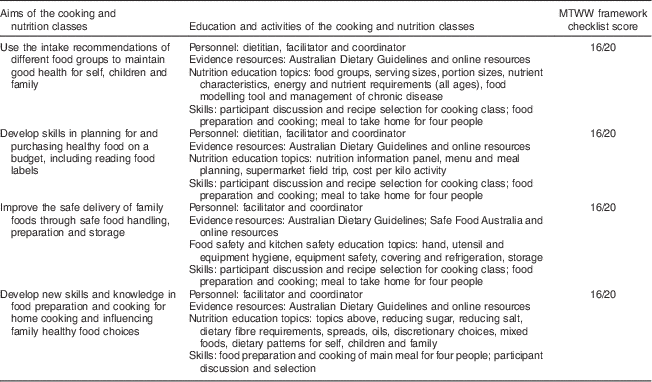
* The research team used the MTWW framework checklist to determine if appropriate consideration was given to each concept of the MTWW framework in the planning and delivery of the cooking and nutrition classes.
Funding from the Australian Government through two community grants was received to conduct the BYHP during the research timeframe. A funding budget of $AU 20 per participant per class was allocated to purchasing the ingredients. Each participant prepared and cooked a healthy meal for four people, which they then took home to share with their family. The recipes used in the classes were simple and nutritious and only called for ingredients that were readily available and reasonably priced. A portion of the funding was used to purchase cooking equipment, utensils and consumables for the classes. Special consideration was given to the purchase of these items as a way of modelling how families on low incomes could prepare and cook a healthy meal without the use of expensive kitchen appliances( Reference Foley, Spurr and Lenoy 21 , Reference Abbott, Davison and Moore 22 ). At each class there was provision for ten cooking stations with each station having its own equipment and utensils.
Participants
Purposive sampling is a common technique in Aboriginal research( Reference Jalla and Hayden 23 ) and was undertaken in the present research to facilitate a wide representation in age within the two kinship groups in the region. Initially the participants were invited by the research assistant; however, through word-of-mouth other women expressed an interest in participation and were also recruited. Inclusion criterion for the study was women of Aboriginal decent, aged 18 years and over and residing in the (Murray) Shire. In total there were seventeen participants aged between 18 and 61 years from the two kinship groups recruited for the BYHP who consented to take part in the research. Purposive sampling is useful when studying a particular Indigenous cultural domain( Reference Tongco 24 – Reference Wong, Wu and Boswell 26 ) as it acknowledges the Elders as being the custodians of the local Kaartdijin regarding the protocols for who may be approached.
All participants were from the main town and one smaller town of a Shire situated in the Peel region of south-west Western Australia. The Shire has a total area of 808 km2 with a total number of eighty-seven Indigenous females aged between 18 and 65 years recorded from a population survey conducted in 2011( 27 ). Cooking and nutrition class attendance by study participants varied, with approximately 29 % (n5) attending between fifteen and twenty-four classes, approximately 47 % (n8) attending between five and fourteen classes and approximately 23 % (n4) attending four classes or less. While the study programme was designed for the women of the community, attendance and participation of other family members and children was accommodated to increase engagement, participation and learning within the community( Reference Dudgeon and Ugle 28 ), particularly as inclusion is recognised as being culturally important( Reference Barnett and Kendall 14 ). As a result five family members and children who were not study participants also attended a total of twenty-one classes; however, these attendees did not participate in the yarning groups or individual yarning.
Data collection and analysis
The MTWW framework guided the processes of participant observation, direct observation, photography, yarning groups, individual yarning (interviews) and a narrative art project, which were conducted to gather research data throughout the duration of the study (C Nilson, K-A Kearing, C Fetherston and P Morrison, unpublished results). Research processes were discussed when consent was obtained from the participants at the commencement of the research; however, this was covered again prior to each yarning session, because Aboriginal people need repeated opportunity and time to discuss and reconsider consent processes( Reference Russell, Carapetis and Liddle 29 ). ‘Yarning’ is recognised by Aboriginal people as a way to talk about specific issues, topics of interest or to share information and as a legitimate research method to gather data( Reference Bessarab 30 ). The four yarning groups were conducted by C.N. and K.-A.K.-S., were informal and inclusive, and lasted between 1 and 1½ h. They were held during the last weeks of the four school terms at the community centre, during the research time frame and were attended by between five and eight participants. Median age of participants for each group session was 41, 34, 43 and 41 years, respectively. Six individual yarning sessions were also conducted within a month of the research completion by the first author. A total of eight participants who had been regular attendees to all or most of the BYHP components were invited. The ages of the six participants were 61, 35, 30, 25, 31 and 31 years, respectively. The consent processes were conducted by K.-A.K.-S. and each participant received a grocery gift voucher valued at $AU 40, for volunteering her time and effort( 31 ). The individual yarning sessions lasted between 1 and 1½ h, and were conducted in a place selected by the participants to provide a ‘sense of place’( Reference Barnett and Kendall 14 ).
The yarning sessions were audio recorded and utilised four yarning techniques( Reference Bessarab 30 ). In the first instance ‘story telling’ engaged the participant and researcher(s) in ‘social yarning’, which then paved the way for the purposeful phases of ‘research topic yarning’, ‘collaborative yarning’ and ‘therapeutic yarning’. Research topic yarning was guided by semi-structured questions and related to the participants’ experiences of the cooking and nutrition classes and the collaborative yarning enabled the group to explore new concepts and ideas. Therapeutic yarning took place when a participant’s story was personal and the group (or C.N.) supported her by listening and acknowledging her voice (C Nilson, P Morrison, C Fetherston and K-A Kearing-Salmon, unpublished results). Participant observation and direct observation were conducted by C.N. with the aim of experiencing and observing the events in the same manner in which the participants also experienced these events. Personal diary notes (PDN) were also audio recorded by C.N. during the course of the fieldwork and the study time frame allowed for development of strong relationships with the participants as this is integral to robust data collection in the Aboriginal paradigm( Reference Dudgeon, Wright and Coffin 32 ).
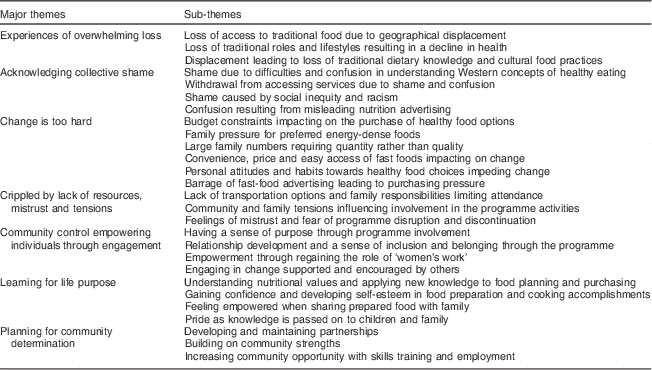
Using the computer-based program, Artichoke™ (T Fetherston, Edith Cowan University, Perth, 2007), interpretative analysis was implemented( Reference Thorne, Reimer Kirkham and O’Flynn-Magee 17 ). C.N., K.-A.K.-S. and a woman Elder who mentored C.N. throughout the research conducted the initial analysis, which was repeatedly reviewed at all stages by the third and four authors (C Nilson, P Morrison, C Fetherston and K-A Kearing-Salmon, unpublished results). Initial analysis involved systematically working through the coding schemas, differences were highlighted and discussed, and the coding adjusted as necessary (C Nilson, P Morrison, C Fetherston and K-A Kearing-Salmon, unpublished results). The PDN were analysed alongside the other recorded data and enabled triangulation of the data to increase rigour( Reference Ritchie and Spencer 33 ). Thematic analysis development occurred using interpretative coding and descriptive coding of the data; by using three points of reference (recurrence, forcefulness and repetition)( Reference King and Horrocks 34 ), seven major themes emerged.
Results
Seven major themes and sub-themes derived from the data analysis are detailed in Table 2. Findings are presented under the theme headings and verbatim quotes from the yarning sessions and the individual interviews are included as supporting evidence. Each verbatim quote is referenced using the participant codes (CP1, CP2 and so on). Additional supporting evidence in the form of excerpts of the first author’s PDN are also included.
Themes and sub-themes derived from the interpretative analysis of the data
Experiences of overwhelming loss
The women Elders who attended the BYHP cooking and nutrition classes considered that historical factors had contributed to the current disease burden experienced by Aboriginal people. They suggested that when they could no longer access their usual traditional foods because of displacement from traditional land their health and wellness began to decline. They also considered that the loss of the hunter-gatherer roles resulted in the loss of traditional nutritional knowledge transfer of sourcing and accessing food. The loss of cultural food practices and traditions was also considered significant.
‘Us Nyungars aren’t made to eat this kind of food [western food]. Our bodies need bush tucker [traditional food] to be healthy. When our mob [Aboriginal family/community group] lived in our camps it was good. I remember my grandparents; ninety something when they died. My parents died younger and now others are dying younger and younger.’ (CP1)
‘When we looked for food in the bush we were walking and running all the time. In the reserves men couldn’t hunt and yorgas couldn’t go looking for tucker. There was nothing to do. They forgot how to do it. It wasn’t passed on. It’s gone. We had damper [bread made with refined flour, salt, sugar and water] and salted meat from welfare. People started to get sick on the reserve; blood pressure, sugar problems, heart problems, kidney trouble.’ (CP8)
‘I used to watch when a kangaroo was brought back from hunting and when it was gutted I would run in and take the kidneys and throw them in the fire. The sad thing is that my grannies [grandchildren] have never eaten bush tucker. Even beliefs don’t get used anymore. My family’s totem is the long necked turtle. When someone died we didn’t eat it for a certain time; out of respect. This was our culture.’ (CP1)
Acknowledging collective shame
The participants expressed that prior to the BYHP they had wanted to make healthy changes to their diet, but they had felt that accessing information about healthy eating was difficult. They discussed the constraints and stressors in information acquisition on two levels: (i) on a level of social inequity, where accessing the main stream services was difficult for Aboriginal people from a cultural perspective of ‘shame’ (embarrassment), which affected attributes reflective of self-confidence, self-esteem and self-efficacy( Reference Louth 35 ); and (ii) from the unwanted stress of experiencing discrimination and behavioural racism, thus withdrawing from or choosing not to access available resources.
‘I want to know more about eating healthy for the family and kids too. You got to go to the health centre and sometimes it’s too much stuff that’s difficult to understand and I feel shame and I leave and don’t go back.’ (CP5)
‘If you ask if there is somewhere to go to get information [healthy eating], you feel like they look at you. “Why do you want to know that?” Shame; no good.’ (CP10)
Behavioural racism and verbal racism are characterised by actions of patronising, ignoring, avoiding, harassment and hurtful remarks, and deliberate direct and intimidating comments( Reference Mellor 36 ). These actions were evidenced by an experience observed by C.N. while the BYHP cooking and nutrition group was taking part in an education activity during a supermarket tour, and then recorded as a PDN:
‘I had arranged a supermarket tour so that we could do an activity looking at price per kilo. Permission was given by the supermarket manager and the group was really keen and excited. As we were moving up one of the isles a white woman pushing her trolley stopped and looked at the group and then said to me “Why do you have to bring them here into the supermarket? You could have done this in a classroom where it wouldn’t bother everyone else.” I was flabbergasted. The look of embarrassment on the faces of the women in the group was so distressing. I quickly recovered and as politely as I could I invited the white woman to join the activity suggesting she might also gain something from it too. I have never been so angry and ashamed for the blatant racism from a fellow white woman.’ (PDN, 19 November 2012)
Misleading and false nutrition advertising on food packaging as well as the barrage of food-related advertising on television was considered to negatively influence the participants’ food purchasing decisions.
‘It’s so confusing; one box says low sugar and salt and other things like that. Now I know I check [labels] for what’s in it. Before I didn’t know and I thought I was doing the right thing.’ (CP3)
‘Sometimes you don’t know about if it’s [food] good or bad and you can’t tell when the TV ads say its good; you believe them.’ (CP6)
Change is too hard
Participants highlighted financial hardship and providing food for large numbers as being major barriers to eating healthy food. The high prices of foods such as legumes, fruit and vegetables were considered inhibitive and when selecting food the first consideration was cost. Further, the additional expense of utility services was considered an additional barrier.
‘Getting food is OK, it’s the cost that’s the problem. It seems like all my money goes on food. I have other bills too [utility] and it costs to cook at home.’ (CP6)
‘I have so many people to feed and I need to fill them. It has to go far. Pasta and sauces; things like that, they’re filling and cheap. Sometimes it’s easier to get fish and chips and stuff like that; all the mob [family group] like it and fills them up.’ (CP10)
Attitudes and habits around food were also acknowledged as barriers by the participants. There was consensus that the preference for the energy-dense foods was difficult to overcome. Feelings of frustration and disappointment were described in acknowledging this barrier. The accessibility of ready-made and fast foods and the enjoyment and temptation of them were considered another barrier. However, feelings of guilt and transgression were discussed as a negative impact of this practice.
‘You give it [healthy food] to them and they all start. We don’t like that. Then only some will eat it and others won’t. I want them to start eating healthy and it’s frustrating and disappointing.’ (CP10)
‘When we’ve just finished sport and it’s late, it’s so easy to get takeaway. It’s cooked; it’s quick and saves all the hassle.’ (CP2)
‘I feel guilty about eating takeaway, but it’s so good. Why do they make it so yummy?’ (CP1)
The participants also felt that the barrage of fast-food advertising pressurised them into buying less healthy foods for their families.
‘There are [fast food] ads on the television all the time. The children are at me and at me. Then they won’t eat anything else.’ (CP6)
Crippled by lack of resources, mistrust and tensions
The participants perceived the lack of transport to be a major barrier for those who lived outside the town where the programme was conducted. The cost of fuel and limited bus services reduced the possibility of participation for others. Additional child caring responsibilities burdening grandmothers and aunts was a further perceived barrier to participation.
‘Transport’s the problem. If I could collect them I would but petrol is expensive. The bus service but it doesn’t go everywhere. It would be good if others came. We will have to think about this when the centre is ready.’ (CP2)
‘Looking after grannies; there’s no free time and it’s hard with no car for everyone.’ (CP8)
Family and community tensions( Reference Eversole 37 ) were also considered a barrier to participation. However, participants acknowledged that in order to journey towards positive and desirable resolutions, negotiation between all parties was essential. Furthermore, it was considered that when situations arose that were undesirable or counterproductive for the greater good of the community, the use of policies and procedures to manage the issues was preferable to feuding. In addition, fear of disappointment and feelings of unease and mistrust in the organisational processes of the BYHP were also considered to be an initial possible barrier.
‘It takes time for people to feel comfortable. A lot of things have been talked about or started and then nothing happens. They wait to see if it’s going to be OK.’ (CP1)
Community control empowering individuals through engagement
Having community control over the BYHP cooking and nutrition classes was seen as an important factor for promoting community health. Participants considered that community control increased participation and inclusion. In addition, they felt that taking an active role in the structure and delivery of the classes encouraged and motivated them to promote healthy eating to their families and others in the community.
‘The cooking programme is ours we can make sure that it’s what we need. If it isn’t going to work for us and help us then no one will use it. Something like this has to think about everyone and how they feel and make everyone feel good when they come so that they can learn about being healthy.’ (CP3)
‘Being involved in the whole thing makes me feel good about what it’s all about. You want to eat well and feel good and tell everyone too.’ (CP6)
Relationship development, a sense of inclusion and a sense of purpose were common threads expressed by all the women. These feelings were discussed as a collective connection with the new knowledge and the development of a common link to the topic of healthy cooking and nutrition.
‘We all come together and we know it’s going to be for a good reason. We come and learn new things about healthy food and we are learning together. That’s good for all of us because if we all learn, it will be good for everyone.’ (CP6)
‘It’s really good because I get up and know I’ve got cooking on. It’s good to be meeting up with everyone, having a laugh and making something healthy.’ (CP4)
The support of the Elders and leaders in the development and structure of the BYHP cooking and nutrition classes was important to the participants because they felt comfortable and safe in the environment. They felt that the classes were conducted in a relaxed and informal way which acknowledged the Aboriginal ways of doing and being. Being able to bring their children was also important because it made it possible for some to attend.
‘If I feel shame going to a place then I won’t go. But here it’s good because [names of the Elder and leaders] are here. I can bring the kids and it’s OK. I like the way we just talk about the food as we cook. It’s easy to understand when we all just ask questions and everyone feels relaxed.’ (CP11)
Connected to a sense of purpose was the sense that women had regained their roles of ‘women’s work’. They felt that coming together to cook and learn about nutrition had rekindled a sense of responsibility for that role. Although women were already mostly responsible for food work, it was usually a role that was burdensome because of financial restraint, family preferences and number pressures. However, with new knowledge and skills they felt liberated to take more control of family food. Further, the participants acknowledged that women’s work was connected to passing down food knowledge to children and that changes to unhealthy practices were important for the health of future generations.
‘I think; Oh no, what can we have? I don’t have the money and I have to feed so many and some like this and others like that. But the cooking has made me stronger to know what to cook. I think about what I’ll do and I make it. The kids ask to help and it’s important for the children to know for their future.’ (CP1)
In her role as facilitator of the cooking and nutrition classes and as a direct observer, C.N. also noticed the participant’s adaptation and recognition of their responsibilities in the women’s work role.
‘As the women’s nutritional knowledge increases and as their cooking skills improve I can definitely feel that there is a shift in their attitudes towards their responsibilities to provide healthy meals. When we discuss what we should cook at the next class they are thinking more about the nutritional value of the dish rather than just the taste. They discuss adding more vegetables and herbs to add flavour rather than sauces, salt and butter.’ (PDN, 5 March 2013)
Learning for life purpose
The participants suggested that the BYHP cooking and nutrition classes had boosted their confidence and self-esteem, and their nutrition knowledge and food planning, purchasing and cooking skills.
‘Food on the cooking shows are so fancy and sometimes I don’t even know what it is. I thought all cooking had to look like that you know. Learning here has been good and I get really pleased when I made a dish in cooking and how the dish looks so good.’ (CP7)
‘I didn’t know before that most of my favourite foods had so much fat, and salt and sugar in them. Learning about the labels has made a difference. I always look at the labels now and if it’s too high in those things I look for something else.’ (CP1)
‘Learning to cook meals that are healthy and simple makes it easy to buy. Some of the tricks, like draining the fat from the mince and using basmati rice; those sorts of things are really good.’ (CP9)
All of the participants considered that they had learned new cooking skills and some had learned cooking skills for the first time, reporting that they had never had the need or the opportunity to cook before. The development of confidence in their abilities and the development of attributes reflecting increased self-esteem were noted by C.N. (PDN, 13 March 2013):
‘I wasn’t able to stay for the cooking class yesterday, so I helped the women set up and we went through the ingredients and the method on the recipe sheet. They were a little apprehensive and anxious to be left, so I was thrilled to receive a text message from [author source] to say that they had all done really well: “Hi, just wanted to tell you that the food we made yesterday came out beautiful, it was lovely and refreshing. Everybody did really well, but they kept asking me things. I’m like ‘help me!’, but everyone’s turned out good and no mess with the yogurt which was good”.’ (K.-A.K.-S., personal communication, 2013)
Other skills and knowledge that the participants valued were using more vegetables, learning alternative cooking methods to frying and safe food preparation. However, the participants thought that the most valued skills and knowledge were learning that cooking healthy food did not need to be overly expensive or complicated to prepare.
‘I always thought that it was too expensive to eat healthy. When we did the supermarket trip and looked at prices it works out cheaper.’ (CP3)
‘The food is simple and tastes OK. Not difficult. I always want to cook like this.’ (CP6)
The practical application of BYHP cooking and nutrition classes where all food was prepared and cooked from scratch was suited to the participants’ contextual learning styles. Participants considered that the classes gave them an opportunity to experiment with new recipes and a variety of different vegetables and other ingredients and to trial the recipe with their families without the financial pressure of waste. Using basic kitchen appliances in the cooking classes was an important consideration because most Aboriginal households are not equipped with expensive kitchen gadgets.
‘When we don’t have the fancy things [kitchen utensils and appliances] the meals need to be easy. I like that we don’t use fancy things here because it shows us how to do it at home.’ (CP10)
In conducting fieldwork the first author noted that the weekly recipe sheets were seldom taken home after the classes; however, she often received a telephone text message requesting specific recipes. In a yarning group discussion the topic was raised and there were varied responses.
‘Aboriginal people are not good with paper work. In the old days we didn’t use things like recipes. The animal was cooked on the fire with other bush tucker and that was how it was done. No one cup of this, ½ teaspoon of this. Paper recipes weren’t tradition. We didn’t know about them.’ (CP1)
‘I haven’t been used to using them. Probably because the recipe is always on the packet [laughs]. I think as we cook more and get better we’ll use them more.’ (CP3)
The participants consistently decided on simple main meal dishes, which were based on meeting family preferences and needs. The participants felt that when meals were approved of by the family then the recipe was worth making note of to accommodate repeat requests. The participants acknowledged feeling more confident to openly discuss their new knowledge and skills with the family when they appreciated the meal and it gave them more confidence to negotiate further meal choices. They also reported that preparing meals that the family enjoyed had resulted in a reduction of fast-food purchases.
‘We only have takeaway maybe two times a week now. We are making changes. I even give the kids healthy recess now. Cut up veggies and fruit and they like it.’ (CP1)
‘It’s good when everyone likes the food. I feel good about telling them about what’s in it and how healthy it is. I’m more positive because I can talk to them about the food and we talk about what we’ll have next.’ (CP3)
Planning for community determination
The participants considered that maintaining partnerships with funding and health organisations would enable sustainability of the nutrition and cooking programme, increase opportunity for training and skills development, and build on community strengths. These issues were discussed when asked about the ways in which the BYHP cooking and nutrition classes could lead to sustained community development.
‘Things like this take time and happens slowly. That’s why it’s good that the cooking has gone on. Keeping our contacts with [naming funders] and [naming the partner organisations] will keep the programmes going. When the centre is finished [local Aboriginal Community Centre] we will have our own kitchen; a community kitchen for people to use. They can use the veggies too. We can have someone from the community doing a course or something and run the women’s classes and the kid’s classes too and look after the veggies [community vegetable garden] full time.’ (CP2)
Discussion
The Elders considered that historical factors leading to loss of traditional food knowledge (types, seasonal availability, sources) and skills (hunting and gathering, cooking) had impacted on their current health status. With the relocation away from their land, hunting and gathering roles changed and traditional food knowledge was no longer passed down through the generations. This resulted in a feeling of uncertainty, with parents losing opportunities to pass down the generational depth of traditional food knowledge, coupled with a sense of disempowerment owing to the lack of knowledge regarding the new food system( Reference Brimblecombe, Maypilama and Scarlett 10 ). The cooking and nutrition classes were structured with the aim of developing the participants’ knowledge and skills of the new food system to use the intake recommendations of the different food groups to maintain good health. Further, the historical factors of segregation, protection and assimilation of Australian Aboriginal peoples also impacted on their feelings of safety and security( 2 , Reference Dudgeon and Ugle 28 ); thus the setting, processes and practices of the cooking classes were monitored by the Elders and leaders to ensure adherence to the principles of cultural security( 18 ).
The structure and activities of the cooking and nutrition classes assisted in overcoming constraints such as shame and racism highlighted in the findings, specifically through the provision of support, which involved reflexive practice, non-judgemental attitudes, listening, asking and sharing. Importantly, the intervention allowed for the participants to share stories which were witnessed by the others. Having their story witnessed by others was a form of acknowledgement of their experiences to both themselves and the others and the processes involved in witnessing and acknowledging can be empowering( Reference Barton 38 , Reference Gorman and Toombs 39 ). The internal environment of the cooking and nutrition classes was socially comfortable and supportive, culturally safe and acknowledged the contextual learning styles of the participants, which was conducive to learning and enabling lifestyle change in the Bindjareb women. These findings are supported by recent research, which also recommends approaches that are non-authoritarian and non-judgemental and that foster open discussion( Reference Barnett and Kendall 14 , Reference Kendall, Sunderland and Barnett 15 , Reference Foley, Spurr and Lenoy 21 , Reference Dudgeon and Ugle 28 , Reference Foley 40 ). By encouraging open discussion the participants could discuss challenges that they experienced regarding food work, and this provided an insight into community life and experiences, so that advice during the cooking and nutrition classes could be given based on contextual experience( Reference Foley, Spurr and Lenoy 21 ). The results of others’ research suggest that an Indigenous frame of reference for a community health evidence base can emerge in this way( Reference Foley 40 , Reference McEwan and Tsey 41 ).
Making a meal to take home for the family reconnected food work to the woman’s role of being responsible for family health and well-being, resulting in evidence of self-efficacy related to an increase in women’s confidence to advocate for healthier meal options( Reference Foley 40 – Reference Bandura 42 ). This was further enhanced by incorporating hands-on cooking skills and nutrition education into the BYHP cooking and nutrition classes. Self-efficacy relates to perceptions of goal achievement and also impacts on perceived levels of self-esteem and self-confidence( Reference Bandura 42 ). Importantly, self-efficacy is considered the most important precursor to behaviour change( Reference Bandura 42 ). In addition, by taking their meals home, they included the family unit into the food work processes, providing the family an opportunity to sample new and healthier foods and to discuss important factors such as cost, preferences, dietary patterns and habits( Reference Brimblecombe, Ferguson and Liberato 8 – Reference Darnton-Hill, Nishida and James 13 ) that had the potential to influence dietary change, which is important in the prevention of nutrition-related disease( Reference Foley 40 , Reference Thompson, Gifford and Thorpe 43 , Reference Cooper and Begley 44 ).
Compared with other countries of the world, Australia is classified as ‘food secure’( Reference Browne, Laurence and Thorpe 45 ). However, others’ research concurred with the present study’s findings, reporting that when consulting with urban Aboriginal communities across all states and territories of Australia, the dominant theme was high prices for healthy food( Reference Brimblecombe, Ferguson and Liberato 9 , Reference Brimblecombe, Maypilama and Scarlett 10 , Reference Browne, Laurence and Thorpe 45 , Reference Kettings, Sinclair and Voevodin 46 ). The current study found that developing nutrition knowledge and skills to make suitable healthy food choices, facilitating the understanding for the use of basic kitchen appliances and increasing skills in planning, purchasing and preparing food aligned with some of the points within the three key components identified to ensure food security( Reference Browne, Laurence and Thorpe 45 , Reference Rosier 47 ). Thus, in this context the newly learned skills enabled the participants to overcome contextual issues that were potentially influencing their thinking and behaviour and that were forestalling their intentions to become proactive and self-determined in their well-being( Reference Ryan and Deci 48 ). Research in the Aboriginal context relating to the development of health literacy suggests that individuals who experience increased self-efficacy and competence, autonomy (identified relevance to personal needs) and feel relatedness (behaviours modelled, valued or prompted by significant others) are more likely to be self-determined in relation to their health( Reference Ryan and Deci 48 – Reference Keleher and Hagger 50 ).
The present study also identified potential barriers to successful development of community empowerment and governance through the ongoing effects of local family tensions and community mistrust of outside individuals, groups and/or organisations( Reference Eversole 37 , Reference Bishop 51 – Reference Gooda 54 ). The term used to describe tensions experienced within Indigenous communities is lateral violence( Reference Gooda 53 ), and within communities lie complex social relationships which impact on people’s access to resources and either discourage or welcome participation( Reference Eversole 37 ). Indigenous peoples’ mistrust of outsiders has occurred from colonising powers undermining community and cultural capacity over the centuries, leading to powerlessness( Reference Gooda 53 ). The participants acknowledged that to ensure the ongoing sustainability of the BYHP it is necessary to continue to engage in culturally competent partnership support( 18 , Reference Gooda 54 ) to assist the direction of change and reinstate community governance by recognising and understanding the patterns of community mistrust, and interfamily and intrafamily lateral violence, and to encourage many different voices to contribute to discussion and acknowledge in detail the complex social structures in which change can be conceived and implemented( Reference Mellor 36 , Reference Gooda 53 – Reference Laverack 55 ).
The future directions of the community are focused on continued partnerships and resource development aimed at strengthening leadership and management; initiating training and skills opportunities; and increasing community engagement and participation( 18 , Reference Laverack 55 – Reference Hunt 57 ). This directly relates to the study aim of encouraging community ownership of ongoing change in healthy lifestyle habits and links with the Aboriginal health promotion principle of empowerment, which is integral to the MTWW framework( 18 ). It must be noted that the cooking and nutrition classes have relocated to the newly renovated Aboriginal community centre located on the outskirts of the town, following its opening in September 2014, and they have extended beyond the study time frame with the support of partner organisations and continue to operate on a fortnightly basis during the school terms. This is evidence of the community’s desire for sustainability of the programme and is in line with the principles of health promotion initiatives in Aboriginal communities highlighted in the MTWW framework( 18 ). Further, prompted by her participation in the BYHP cooking and nutrition classes one of the participants is currently enrolled in a certificate course in nutrition.
Limitations and recommendations
The ideal, well-diversified sample for the present study was hard to achieve as the population to draw from was small and issues such as transport difficulties hampered participation of those living away from the main town. As the study sample could only be drawn from the two Bindjareb kinship groups in the main town and one other, it was attenuated by circumstance.
A strength of the BYHP was that it was community owned and developed and directly responded to the women Elders’ and leaders’ requests and needs, which enabled them to set their own research agenda and ensured that the research methods were protective to the rights of the people( 18 , Reference Clapham 58 – Reference Couzos, Lea and Murray 60 ). However, there were some acknowledged limitations in the measures of the data. It is recommended that future longitudinal observation is conducted to collect data on actual dietary intake and to explore the impact and influences that family members have on dietary change.
The applicability of the study method, the health promotion programme structure and content and the processes of delivery to other Aboriginal urban, regional and rural communities needs to be determined. Therefore, it is suggested that the principles generated from the present findings be considered as a guide in the design and implementation of cooking and nutrition programmes in similar community settings.
Conclusion
To the authors’ knowledge, the present study is the first to examine the outcomes of a cooking and nutrition programme that is a component of a larger health promotion initiative, which is community designed, owned and delivered, in a regional setting in Western Australia.
The importance of understanding the relationship between the colonisation processes, segregation, protection and assimilation policies, and the current nutritional status of Aboriginal people was identified in the study. Acknowledging the impact that historical factors have on the social and contextual constructs of Aboriginal people today was found to be an essential contributor to designing and structuring the BYHP nutrition and cooking classes to ensure that they were culturally appropriate and sustainable( 18 ).
The study has identified that providing participants with the opportunity to make a meal to take home to their family has positive effects. On an individual level, this has impacted on the development of a range of skills for healthy home cooking, but more importantly has impacted on the development of self-efficacy and confidence, and has empowered the participants to negotiate and advocate for healthy family food changes. On a community level, it has encouraged community action for change by providing an opportunity for participants to voice their experiences, challenges, interests and aspirations, and thus to develop a frame of reference for their community’s health evidence base.
The findings of the study have identified that genuine long-term engagement was successful. This constitutes building sustained relationships of trust and respect, sharing accountability and responsibility for programme aims, management and activities with sustained partnerships, and long-term engagement processes that aim to build community capacity and empowerment through training and skills development( 18 , 56 , Reference Hunt 57 ).
Acknowledgements
Financial support: This work was supported by the Australian Government through the Swap-It-Don’t-Stop-It campaign; and the Australian Government through the Ngulluk Koolbaang community grant programme (grant number G05984). The Australian Government had no role in the design, analysis or writing of this article. Conflict of interest: None. Authorship: C.N. conceived, facilitated and designed the study, collated, analysed and interpreted the data and prepared the manuscript. K.-A.K.-S. conceived, coordinated and designed the study, participated with data analysis and interpretation and manuscript preparation. P.M. participated in the design of the study, participated with data analysis and interpretation and manuscript preparation. C.F. participated in the design of the study, participated with data analysis and interpretation and manuscript preparation. Ethics of human subject participation: This study was conducted according to the guidelines laid down in the Declaration of Helsinki and all procedures involving human subjects were approved by Murdoch University Human Ethics Research Committee (approval number 2012/051) and the Western Australian Aboriginal Health Ethics Committee (approval number 399). This study has been registered with the Australian & New Zealand Clinical Trials Registry (ACTRN12612000292875).



