Prediabetes affects as many as 25–50 % of some adult populations including in New Zealand, where the prevalence in the adult population is 26 %, with higher rates in indigenous populations such as New Zealand Māori(Reference Coppell, Mann and Williams1,Reference Lee, Warren and Liu2) . Prediabetes is a risk factor for the development of type 2 diabetes, CVD and the microvascular complications associated with diabetes(Reference Ali, Bullard and Saydah3–Reference Tabak, Herder and Rathmann6). Lifestyle modification and weight loss in those who are overweight can prevent or delay progression to type 2 diabetes(Reference Knowler, Barrett-Connor and Fowler7–Reference Tuomilehto, Lindstrom and Eriksson9). In the landmark US-based Diabetes Prevention Program study(Reference Knowler, Barrett-Connor and Fowler7) and the Finnish Diabetes Prevention Study(Reference Tuomilehto, Lindstrom and Eriksson9), incidence of type 2 diabetes was reduced by 58 % over 3 years. This reduction was achieved through individualised dietary and physical activity advice and supervised physical activity programmes, which sought to reduce body weight by 5–7 % and increase physical activity of moderate intensity to 150 min/week.
While there is good clinical trial evidence from landmark studies(Reference Knowler, Barrett-Connor and Fowler7–Reference Tuomilehto, Lindstrom and Eriksson9), the successful translation of diabetes prevention lifestyle programmes into real-world settings is challenging(Reference Cefalu10), particularly in community primary care settings(Reference Ashenden, Silagy and Weller11). The cost of similarly intensive programmes employing specialist lifestyle intervention staff is a significant barrier(Reference Hernan, Brandle and Zhang12), and those with prediabetes in community clinical settings are typically a more heterogeneous group than those enrolled in diabetes prevention lifestyle clinical trials. Further, the challenges of making lifestyle changes from the perspective of the person with prediabetes are often complex(Reference Abel, Whitehead and Coppell13–Reference Twohig, Hodges and Hobbis15).
While weight loss and diabetes prevention dietary guidelines have traditionally focused on recommending particular macronutrient proportions with an emphasis on broad food groups, promoting healthful foods and eating patterns, rather than nutrients, and avoiding processed foods are increasingly common practice(Reference Dyson, McArdle and Mellor16–Reference Forouhi, Misra and Mohan18). Further, it is now considered that dietary advice should be individually tailored and take into account personal, cultural and socio-economic factors(Reference Dyson, McArdle and Mellor16–Reference Forouhi, Misra and Mohan18).
Behaviour change models and theories that focus on psycho-social influences have often informed lifestyle change interventions, but the influence of wider social determinants of health on the development of prediabetes and diabetes has been less acknowledged(Reference Hill, Galloway and Goley19,Reference Hill-Briggs, Adler and Berkowitz20) . However, there is increasing interest in models that also take into account the influence of these wider cultural, social and environmental factors(Reference Sallis, Cervero and Ascher21), such as the socio-ecological model (SEM)(Reference McLeroy, Bibeau and Steckler22). The SEM recognises five levels of influence: personal, interpersonal, organisational, community and policy(Reference McLeroy, Bibeau and Steckler22) and is underpinned by a public health perspective consistent with the Ottawa Charter for Health Promotion(23).
Community-based diabetes prevention programmes that take this wider holistic approach have met with some success(Reference Aziz, Absetz and Oldroyd24), including a New Zealand community intervention undertaken in partnership with local indigenous Māori(Reference Coppell, Tipene-Leach and Pahau25). Dietary interventions undertaken in primary care clinical settings that recognise wider public health domains of influence on dietary behaviours, and prediabetes and diabetes risk also have the potential to reduce the incidence and impact of diabetes, but are uncommon(Reference Green, Brancati and Albright26).
The Prediabetes Intervention Package (PIP) in primary care study was designed to be a pragmatic primary care nurse delivered approach to dietary advice for overweight and obese patients with prediabetes that could be adapted to each individual’s circumstances(Reference Coppell, Abel and Freer27,Reference Coppell, Freer and Abel28) . A preventive healthcare approach based on public health principles informed the easy-to-implement intervention within the constraints of a primary health service environment. The cost of training primary care nurses was low, and there was no health service cost for participants(Reference Connor, Coppell and Gray29). While the primary focus of the intervention is diet, an understanding of participants’ socio-economic and cultural context, and goal setting are key components. A pragmatic mixed-methods non-randomised 6-month pilot study conducted in the Hawke’s Bay region, New Zealand, demonstrated that intervention implementation fidelity was high and, after adjustment, the intervention group lost a mean 1·3 kg more than the control group (P < 0·001)(Reference Coppell, Abel and Freer27). The subsequent cohort study, which is using the same dietary intervention approach in the primary care setting with the addition of two extra visits in the first 6 months and review visits at 3-monthly intervals for 18 months, aims to determine if there are clinically relevant differences between those with prediabetes who regress to normoglycaemia, those who have persistent prediabetes and those who progress to type 2 diabetes(Reference Coppell, Freer and Abel28).
The aim of this qualitative study was to explore and examine motivators, facilitators and challenges to making clinically meaningful dietary changes among a demographically diverse sample of those who had, and had not, regressed to normoglycaemia following 6 months of the primary care nurse delivered prediabetes intervention package. For the purposes of this study, motivators were defined as those factors that prompted people to want to make dietary changes and to engage with the PIP programme, facilitators were those factors that helped people adopt and maintain their healthful dietary changes and challenges were those factors that inhibited the adoption and maintenance of these healthful changes. In this paper, we report on these findings which are discussed using the socio-ecological model(Reference McLeroy, Bibeau and Steckler22).
Methods
Setting
This qualitative interview study was undertaken as an adjunct to the main PIP study. In brief, the main study recruited participants from eight primary care practices in two neighbouring cities (Napier and Hastings) in the Hawke’s Bay region, New Zealand. In 2018, more than one-fifth (22·2 %) of the Napier city population (62 241) and more than one-quarter (27·3 %) of the Hastings district population (81 537) were indigenous Māori, which is higher than that for the overall New Zealand population (16·5 %)(30).
The participating practices implemented the PIP intervention following a successful pilot undertaken in the same region(Reference Coppell, Abel and Freer27). Participants were adults aged 18–69 years with prediabetes defined according to the New Zealand diagnostic criteria (glycated Hb (HbA1c) 41–49 mmol/mol)(31), and a BMI ≥ 25 kg/m2. They were diagnosed with prediabetes following screening as part of a recommended cardiovascular risk assessment or because they were deemed to be at risk of diabetes(31).
The PIP intervention was pragmatic, low cost and simple to implement. It consisted of six components(Reference Coppell, Abel and Freer27,Reference Coppell, Freer and Abel28) : (1) primary care nurse training and support from a local dietitian; (2) individualised dietary assessment, goal setting and dietary advice taking into account socio-economic and cultural influences; (3) key messages and consistent opportunistic reminders; (4) nutritionally supportive primary care environment; (5) community-based group education for participants and their family and (6) written patient resources.
In the main study, participants were assessed at baseline with follow-up intervention appointments at 2–3 weeks, 6 weeks, 3 months, 4 months and 6 months, followed by reviews at 3-monthly intervals for 18 months. Demographic, clinical (including weight and HbA1c) and study data (including self-monitoring activities, social support systems, sleep patterns, physical activity and health-related quality of life) were collected at baseline and at 6 months, 12 months and 24 months.
Participants
Participants in this qualitative study comprised a sub-sample of those who participated in the main study. Inclusion criteria were completion of the 6-month intervention and, at enrolment into the main study, consent to take part in further research. Eligible participants (n 197) were identified in the main study database (n 359) iteratively, as the study progressed. Participants were then purposefully selected to ensure a stratified sample with a balance by gender, indigenous Māori and non-Māori, and those who had regressed to normoglycaemia after completion of the 6-month intervention and those who had not. Although Māori comprise 16·5 % of the New Zealand population, 22 % and 27 %, respectively, of the two Hawke’s Bay cities where the intervention took place(30), and 34 % of the main study sample, we sought a sample of 50 % Māori to enable meaningful understanding of their experiences in recognition of the high rates of prediabetes and diabetes in this ethnic group(Reference Coppell, Mann and Williams1).
Interviews
Data collection involved single face-to-face interviews. Explanation of the qualitative study, checking participation willingness, obtaining written consent and the setting up and conduct of interviews for those agreeing to participate were undertaken by SA, a local female independent researcher with 30 years of qualitative research and interviewing experience, including research with Māori. To ensure culturally safe practices and processes were in place, she was supported by DT-L, an experienced Māori public health doctor and researcher and a long-term research collaborator. Participants were approached first by phone, sent information and followed up by phone or email. No potential participants had a previous relationship with SA. Those wishing to participate were invited to choose the interview time and place, and to bring anyone else they wanted to the interview. The majority were interviewed at their home, but a few chose their own or the interviewer’s workplace. An interviewer safety protocol was adhered to. Three participants invited spouses who were actively involved in the interview, several others had family in the background but the majority chose to be interviewed alone. Cultural practices such as removing shoes on entry to the home, allowing time for personal and whānau (extended family) introductions and establishing relationship connections, participating in food and drink if offered, and offering a koha (a gift/contribution) were an integral part of interviews with Māori. Participants were assured confidentiality and anonymity in the use of their interview data.
The interview schedule was developed collaboratively, informed by results from the pilot evaluation and was semi-structured, with open-ended questions that covered a range of experiences relating to the diagnosis of prediabetes and factors influencing making dietary changes. For the purposes of this paper, questions explored what motivated the desire to undertake the dietary intervention, and what facilitated and challenged the adoption and maintaining of dietary improvements, with a further two questions relating to cost and the food environment added later (Table 1). With consent, all interviews were audio-recorded. Participants received a koha ($NZ30 gift voucher) following the interview to acknowledge their contribution to the study. Interview duration was approximately 1 h. Interviews took place between April 2018 and March 2020, a period determined by recruitment for the main study. This occurred over a 2-year period with some subgroups (e.g. Māori males) recruited later in the process. Data saturation was reached once adequate numbers for all subgroups were interviewed.
Relevant questions from interview schedule

Data analysis
Interview recordings were transcribed by an external transcriber, and transcripts underwent minimal editing by SA to improve readability. Transcripts were sent to participants for approval and comment. No-one requested changes. The data set comprised the interview transcripts and brief notes written by SA following each interview.
All authors contributed to data analysis to ensure the validity and reliability of themes, with Māori cultural oversight and input provided by DT-L. Data were analysed by thematic analysis, using a pragmatic descriptive general inductive approach(Reference Thomas32). This was an iterative process with interim analysis undertaken at various points, and the team met regularly throughout the study for verbal discussion of insights and issues. Consequently, two further questions were added after forty-two interviews (Table 1). Data analysis was undertaken manually and involved thorough reading of the transcripts, coding participants’ talk and grouping the codes into inductively derived themes under a priori headings determined by the interview questions (Table 1).
Inductive themes were identified as dominant concepts or patterns evident in participants’ responses. Using Word files, coding and analysis were undertaken systematically and separately for subgroups by gender, ethnicity and glycaemic outcome to enable comparisons across groups. Initial coding and creation of themes were undertaken by SA. The other authors independently reviewed eight transcripts each and following further discussions, the final thematic schema was determined (Table 2). The socio-ecological model, which focuses on individual, societal and environmental factors(Reference McLeroy, Bibeau and Steckler22), was used to interpret and frame these findings. A summary of findings was sent to interview participants and the other participants in the main study.
Thematic schema

Results
In total, fifty-eight people participated and were recruited from across the eight participating primary care practices. Participants’ ages ranged from 28 to 69 years, with half being aged 60 years or older. Their demographic and outcome profiles are shown in Table 3. Twenty-eight were Māori. The non-Māori participants were all NZ Europeans (NZE). A further twelve people (4 Māori; 8 NZE) were invited but declined to participate, with eight citing they were too busy and four giving no reason. Seven of those twelve were NZ European males who had not regressed to normoglycaemia.
Participant characteristics (n 58)

* Normoglycaemia, prediabetes and diabetes outcomes at 6 months defined according to glycated Hb (HbA1c) level at 6 months and the New Zealand diagnostic criteria(Reference Sallis, Cervero and Ascher21).
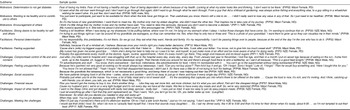
The key findings are presented below, with the inductively derived themes described under the a priori headings: motivators, facilitators and challenges. These descriptive themes are then discussed in the next section. Of particular interest was that the themes identified were similar in each group (Māori and non-Māori, women and men, and those whose HbA1c had returned to normoglycaemia and those whose had not). Unless otherwise stated, therefore, the descriptions below apply across demographic and glycaemic outcome groups. Brief quotes from interview transcripts are included in the text, and longer quotes illustrating each theme are shown in Table 4.
Sample quotes for subthemes

NZE, NZ European; PD, Persistent prediabetes post 6 month intervention; NG, Normoglycaemia post 6 month intervention.
Motivators for wanting to make dietary changes
Three themes regarding motivators for wanting to make dietary changes were identified, and these were a combination of personal and interpersonal factors.
Determination to not get diabetes
The biggest motivator was a fear of diabetes and a strong determination not to progress to diabetes. Over half of the participants (53 %) had a family history of diabetes, and others had in-laws diagnosed with diabetes (Table 3). Most had observed or assisted family members, friends or colleagues to cope with diabetes and its health consequences and did ‘not want to end up like that’.
Wanting to be healthy and to contribute to others
Many wanted to take charge of their own health, mustering their will and determination to start making healthful dietary changes. Some aged over 55 years realised they were no longer ‘bullet proof’ and needed to act to stay healthy, and two Māori men were moved to act by the absence of older healthy Māori men in their community. A common refrain was wanting to enter older age in a healthy state and be around for close family members, especially grandchildren, ‘so that they can probably remember who I am.’
Encouragement of others
The encouragement of others was a strong motivator to initiate dietary change. Having others alongside supporting them provided the impetus many needed to take the first steps. Mostly encouragement was provided by a spouse or partner, adult child or workmate, but another important motivator was the encouragement of their primary care nurse to go on the PIP programme.
Facilitators for adopting and maintaining dietary changes
Factors facilitating the adoption and maintenance of healthful dietary changes comprised three induced themes which were also a combination of personal, interpersonal and organisational factors. Personal and interpersonal factors were similar to those that motivated participants to want to make these dietary changes.
Strong desire to be healthy for self and others
The desire to be healthy for oneself and for others, to be around to watch ‘grandkids get older and older’ and to contribute to family, was strongly evident in people’s comments when asked what helped them stay on track with their dietary changes. Feeling ‘so much better than I used to – physically and mentally’ helped keep the momentum. As part of the endeavour to be well, people talked about developing and nurturing healthy strategies. This involved planning food and meals, establishing and maintaining routines, reading labels and generally taking control of their food.
Personal determination
Most people also felt that their own will or determination was what enabled them to stay the course, that it was ‘mind over matter’. Even those whose 6-month results showed no improvement felt their grit and determination had helped them. Part of this was taking control, having ‘pig-headed resolve’ and, as above, developing and nurturing healthy strategies.
Feeling supported
Just as it was a motivator, the support of others, particularly within the household, was also a facilitating factor. The large majority lived with others (91 %), and many reported spouses or partners not only supporting them but also making dietary changes themselves, being ‘quite happy to change with me [and] always helping me.’ Both receiving praise for changes made and being reprimanded when tempted or when lapses occurred were a boost to confidence and determination, highlighting the importance of relationships in the endeavour to improve eating patterns. Some participants were also encouraged and supported by work colleagues, and a few felt more supported by them than their family members.
The PIP programme and the nurses were also frequently mentioned as sources of encouragement and support for participants’ endeavours. Many people mentioned that being monitored by the programme and feeling accountable to their PIP nurse were extremely helpful and ‘made a huge difference’. The ability to manage the promotion of unhealthy food temptations was ‘because of the nurse, the PIP programme’. Many spoke very highly of their PIP nurse and valued the care and attention they provided, with one person saying ‘as long as you’re being noticed things can change’. Seeing improvements in their own health, getting good results and being praised for these were also considered helpful.
Challenges around adopting and maintaining dietary changes
Five themes were identified encapsulating the challenges participants faced regarding dietary changes. These included a combination of personal, interpersonal and external environmental influences. A sixth theme describes strategies people used to work with these challenges.
Compromised control of life and environment
Being overly busy, working irregular hours, being out of routine and experiencing stress prevented or interrupted good food habits contributing to a sense of poor control over one’s life and environment. This sometimes dovetailed with feeling a lack of personal motivation or self-will, almost a sense of self blame, although some acknowledged the powerful influential role of external factors, such as proximity to unhealthy food outlets and being exposed to unhealthy food advertising and promotions. ‘Fast food was too easy and it was accessible’. Sixteen participants were specifically asked whether they felt these factors influenced their dietary choices. While some felt their personal resolve minimised this influence, others reported being strongly influenced by them.
Feeling unsupported by others
Feeling unsupported by those in their household or by others of influence was very challenging for many. Several people talked of family members who appeared to sabotage their efforts to eat healthily by cooking or offering them unhealthy options or eating unhealthy foods in front of them knowing it was tempting. It was also difficult when grandchildren lived in or visited as ‘chocolate turns up when the grandchildren turn up; a lolly and chips and those sort of things’.
Social occasions
People commonly described social occasions as difficult because there was often a strong societal expectation to partake in eating sizeable portions or the wrong type of food. Special family and work events were described as involving unhealthy food and eating together was an important part of the event. Temptations were often presented, beyond special events, ‘in work places, in the home and historical behaviours in the family that you’re dealing with, if you’re involved with social activities.’ Marae (traditional Māori meeting place) events, where the offering and partaking of food are of particular cultural importance, were singled out by some Māori because ‘there’s always a hākari (feast)…[and] everything is sweets and cakes, and all those sorts of things’.
Financial constraints
Some people found that insufficient money limited their ability to buy more healthy foods as ‘to eat better is a bit more expensive’ and a few reported having to work closely with their PIP nurse to manage this limitation. While PIP intervention appointments with the nurse was at no cost to participants, amongst the sixteen people asked whether they would have participated if it had cost money, 11 (69 %) felt they would not have.
Other health conditions
Having other health conditions also presented a challenge for many. A large majority (88 %) of participants had some other significant health issue and many had several. A wide range of conditions were mentioned, including hypertension, asthma, arthritis, depression and heart disease. For some, getting prediabetes on top of other health problems was a motivator to make lifestyle changes, but for others, it was just another thing to deal with on top of everything else and sometimes their other conditions took priority. Some participants described how certain conditions impacted negatively on their ability to maintain lifestyle changes; for example, depression or insomnia affected energy and motivation, and arthritis or injuries lessened the ability to exercise. While a couple of people found some of the PIP dietary advice conflicted with that for another health issue, most found it reinforced what they had been advised elsewhere and were grateful for another impetus to make changes.
Meeting the challenges
When talking about the challenges they faced, many people went on to describe strategies they had developed to work with or minimise the negative impacts. These were often small things (such as drinking water before going to the supermarket or social occasions to minimise feelings of hunger, or taking one’s own lunch to work to avoid buying unhealthy food). Developing their own strategies empowered them, and they felt proud of themselves for taking such control.
Discussion
Prediabetes is a common condition, and progression to type 2 diabetes can be prevented through healthful lifestyle changes(Reference Knowler, Barrett-Connor and Fowler7–Reference Tuomilehto, Lindstrom and Eriksson9), if appropriate, acceptable and timely advice, guidance and support are given(Reference Somerville, Burch and Ball33). Participants in the PIP study welcomed the opportunity to participate in the diabetes prevention programme and described a number of themes regarding what motivated them to want to attend the programme and make dietary changes, and what facilitated and challenged them when initiating and maintaining these dietary changes. The socio-ecological model (SEM)(Reference McLeroy, Bibeau and Steckler22) provided a useful theoretical framework for interpreting these themes, and we have framed our findings around the five SEM levels in the following way: personal (motivation and determination), interpersonal (relationships with others), organisational (healthcare services), environmental (availability of healthy foods) and policy (access to no cost prediabetes primary care interventions) (see Fig. 1). Importantly, the more proximal variables are nested within the more distal ones.
The socio-ecological model of the primary care-based prediabetes intervention and diabetes prevention with corresponding multilevel intervention strategies

The motivators and facilitators described comprised a mix of personal and interpersonal organisational factors. The determination to not get diabetes, to be around for family, to improve their own well-being and to live a long healthy life were powerful motivators for initiating wanting to make dietary changes, as well as being powerful facilitators for adopting and maintaining them, and demonstrated that participants wanted to take personal ownership of their health and well-being. Simultaneously, they stressed that the supportive interpersonal relationships (including the support of the nurse) were of crucial importance to motivate them into and facilitate this change process. Another powerful facilitator was the organisational capacity of their primary care provider of the PIP programme. Key challenges comprised a combination of personal and interpersonal influences, namely when personal determination and supportive relationships were absent, but these were intertwined with environmental and policy influences of varying degrees, such as social expectations, financial constraints and the obesogenic environment.
In accord with the holistic nature of the SEM, the variables of influence were interconnected. The presence of personal determination and supportive relationships with others helped, and their absence hindered the adoption and maintenance of new healthful habits and eating patterns. Yet, the two are difficult to disentangle as they are intricately woven together when it comes to having a sense of control over both one’s eating patterns and proximal food environment. While individual will and personal resolve are a necessary part of behaviour change(Reference Prochaska and Velicer34), the ability to muster and maintain this determination appears to be greatly facilitated by supportive relationships, at both interpersonal and health provider organisational levels. Self-efficacy, in this case the confidence to know one can make healthful behaviour changes(Reference Bandura35), has been shown to be an important contributor to successful dietary changes and weight loss(Reference Nezami, Lang and Jakicic36), but for meaningful or sustained change, this confidence relies on supportive personal and environmental factors(Reference Vogel, Abbott and Ntani37). The words expressed by one participant when talking about his PIP nurse that ‘as long as you’re being noticed, things can change’ are a reminder that personal determination does not occur in a vacuum but rather is nurtured and sustained by others’ interest and engagement, and the practical support of a trained supportive healthcare provider. The findings also point to the importance of the human face within health services, and that the quality of one’s relationship with a health professional can make a difference in health seeking behaviours. Other studies have also emphasised the importance of relationships in changing dietary behaviours(Reference Lim, Wee and For38,Reference Metzgar, Preston and Miller39) , and many facilitators and barriers found in this study have also been observed among women seeking weight loss(Reference Metzgar, Preston and Miller39–Reference Morrison, Douglas and Bhopal42) and those with type 2 diabetes attempting to modify their diet(Reference Vanstone, Rewegan and Brundisini14,Reference Rice, Te Hiwi and Zwarenstein43) .
A nuanced approach tailored to individual cultural and personal needs, and circumstance, coupled with a strong and ongoing relationship with a health provider appears to be important components of successful diabetes prevention interventions. An integrative review examining knowledge, attitudes and practices regarding nutritional care for those with prediabetes stressed the importance of patient-centred approaches and individualised structured support(Reference Somerville, Ball and Sierra-Silvestre44), and a systematic review found that a trusting relationship with a familiar healthcare professional was a hallmark of successful diabetes prevention programmes(Reference Messina, Campbell and Morris45). Both of these were integral to the planning, design and features of the PIP programme(Reference Coppell, Abel and Freer27,Reference Coppell, Freer and Abel28) , and results from this qualitative study are consistent with these review findings.
The community/environment sphere in our socio-ecological model (Fig. 1) is supportive food environments, within which the personal, interpersonal and organisational variables are nested. The importance of supportive food environments when attempting to make dietary changes cannot be underestimated(Reference Carins, Pang and Willmott46). It is likely that participants in this study described more fully the proximal personal, interpersonal and healthcare provider influences, as they were more readily recognised than the distal more complex social, environmental and policy factors. However, some participants in this study were mindful of the influence of the wider food environment. They found the ready availability of unhealthy food options a real challenge, and financial constraints also influenced food choices. Other studies have similarly highlighted the powerful influence of food environments on dietary behaviours, with poorer, marginalised ethnic minority and indigenous populations particularly susceptible to these influences(Reference Hill-Briggs, Adler and Berkowitz20,Reference Rice, Te Hiwi and Zwarenstein43,Reference Vanstone, Giacomini and Smith47) . It is possible that these distal influences may have contributed to the regression, or not, to normoglycaemia in this study, and this warrants further research.
Our finding that the motivators, facilitators and challenges regarding dietary change were similar across groups also warrants further research. This finding highlights perhaps the complex but fundamental relationship that food plays in all our lives; however, the nuances may vary. For example, while social occasions were a challenge for both Māori and non-Māori, for Māori, this challenge appeared more strongly based in powerful cultural expectations around the giving and partaking of food(Reference Abel, Whitehead and Coppell13). How these influential factors present, and how they can be managed will differ between individuals and social groups, necessitating tailored diabetes prevention approaches that work with the unique socio-cultural and personal factors that prompt behaviour change, facilitate engagement and support the retention of people in diabetes prevention programmes(Reference Jay, Gutnick and Squires41,Reference Kong, Tussing-Humphreys and Odoms-Young48) . This is especially important given the well-recognised ethnic disparities in the prevalence of prediabetes and diabetes(Reference Coppell, Mann and Williams1,Reference Hill-Briggs, Adler and Berkowitz20) .
Healthy food was perceived to be more expensive by some. Despite this, the trained primary care PIP nurses were able to work with participants within this constraint to some extent and as best they could, providing realistic guidance. While this was at least partially workable, a high proportion of those asked felt that they would not have participated in the PIP programme if there had been a nurse consultation cost to them. This suggests that financial constraints can mitigate against accessing supportive diabetes prevention programmes and developing healthful eating, particularly in those most at risk of developing diabetes. As prediabetes and diabetes disproportionately affect those in lower socio-economic and socially marginalised communities(Reference Kyrou, Tsigos and Mavrogianni49), this issue could be partially addressed through the provision of no cost programmes such as the PIP programme that are embedded within primary care settings and provide supportive individualised targeted dietary advice, particularly as many already visited their primary health centre for the treatment of other conditions. Indeed, a cost effectiveness analysis of the PIP pilot programme showed that it was likely to be a cost-effective strategy for weight loss and diabetes prevention(Reference Connor, Coppell and Gray29). For these reasons, our SEM policy sphere (Fig. 1) positions access to no consultation cost primary care prediabetes interventions as a facilitative policy initiative that supports the other variables of influence.
Many participants developed strategies to manage the dietary change challenges they faced, illustrating that, with information, advice and support, a considerable level of self-empowerment is achievable. The broader food environment, however, particularly the promotion and ready availability of unhealthy options, was an issue for some and public health measures to modify their negative influences remain steadfastly important(Reference Gruss, Nhim and Gregg50).
Strengths and limitations
This study involved a robust sample of Māori and was stratified by demographic and outcome groups. The main limitation of the study was that the participants were selected from the group who had chosen to take part in further research, and they may have been more motivated to make changes. Further, a lower proportion of Māori consented to take part in further research (23 %) compared with the wider study cohort (34 %), suggesting a smaller proportion of Māori than non-Māori was willing to take part in further research.
Conclusions
In conclusion, the motivators, facilitators and challenges when making and maintaining dietary change for those with prediabetes involved personal, interpersonal, organisational, environmental and policy factors, highlighting the multi-faceted nature of influences on dietary behaviour change. The presence or absence of personal determination and supportive relationships was commonly reported as important influences, but they must be considered within the context of the wider socio-cultural and environmental influences that appeared to be less readily recognised. The similarity in influential factors across the participants, irrespective of their demographic background or clinical outcome after completing the 6-month dietary intervention points to the importance food plays in all our lives and warrants further investigation. The commonality of experience across the sample does not call for a universal approach to diabetes prevention efforts, but rather the identification of the specific ways these motivators, facilitators and barriers arise in, and are part of, people’s lives. It is important that achievable individual goals and strategies are negotiated and tailored accordingly within the wider context of the obesogenic and socio-economic environment, and the influences and challenges this presents across socio-cultural groups. Efforts to tackle the obesogenic environment, particularly in lower socio-economic areas and among minoritised and indigenous populations should continue, alongside initiatives to develop personal skills(23), as in the PIP programme(Reference Coppell, Abel and Freer27,Reference Coppell, Freer and Abel28) .
Acknowledgements
Acknowledgements: We are very grateful to the Prediabetes Intervention Package (PIP) qualitative study participants who generously gave of their time, thoughts and experiences to allow us to better understand what helps and hinders making dietary changes following a diagnosis of prediabetes and participation in a primary care nurse delivered dietary intervention. We acknowledge Stuart Greville and Angeline Tangiora (Research Nurse), Health Hawke’s Bay, for their assistance with the collection and collation of quantitative data, and we thank the anonymous reviewers whose suggestions helped to improve the manuscript. Financial support: This research was supported by a Health Research Council of New Zealand project grant (16/344). The Health Research Council of New Zealand had no role in the design/conduct of the study, collection/analysis/interpretation of the data and preparation/review/approval of the manuscript. Conflict of interest: There are no conflicts of interest. Authorship: K.C. conceived the overall Prediabetes Intervention Package (PIP) study. S.A., L.W. and K.C. conceived the qualitative component of the study and developed the research design with DT-L providing cultural guidance. S.A. collected the data. All authors were involved with the analysis of the data. S.A. and K.C. wrote the first draft of the manuscript, and all authors contributed to subsequent drafts of the manuscript. All authors revised the manuscript for important intellectual content and read and approved the submission of the final version. Ethics of human subject participation: This study was conducted according to the guidelines laid down in the Declaration of Helsinki, and all procedures involving research participants were approved by the Northern A Health and Disability Ethics Committee, New Zealand in November 2017 (17/NTA/24/AM01) and is registered with the Australian New Zealand Clinical Trials Registry (ACTRN12617000591358). Written informed consent was obtained from all participants.