

Introduction
This article is about frontiers and what I call frontier nostalgia. I argue that nostalgia forms a crucial part of the imaginary that informs frontier subjectivities and thus shapes frontier economies—not contradicting but rather constituting the future-oriented imaginaries of speculation, anticipation, and appearances. To make this argument, and to unpack the notion of nostalgia that I work with, I will engage interdisciplinary literature on both frontier and memory, as well as scholarship on Chinese sociality that will help me ground my argument in the context in which it emerged. But first, the context: this article is the result of reflections on a decade of interactions with places and people at the boundaries of the People’s Republic of China (PRC), across the borderlands of East and Southeast Asia. It is in settlements and with people across those borderlands that the idea of frontier nostalgia emerged, materialized into ruins and evoked by the aspirations of individuals who have made those places their home—for a week, a year, or a lifetime. I begin in one specific place: a street in downtown Myitkyina, during my first visit to Burma, in June 2015, at the onset of a project on China’s southwestern borderlands that would take me back to the region throughout the following decade.Footnote 1 The vignette describes an encounter, casual yet consequential, and the first of many encounters that shaped my articulation of frontier economies as formed by imaginaries that are both future- and past-oriented. An encounter that puts frontier nostalgia in stark relief.
A Frontier Encounter
It is my first evening in Myitkyina, the capital of Kachin State, in the northernmost corner of Burma and a short distance from the Chinese border, as I stroll past the brand-new “Two Dragons Hotel.” Bright red and yellow neon lights reflect on the wet asphalt, the seven-floor edifice conspicuous amidst the lower housing blocks surrounding it. Curious, I glimpse inside, through the glass door. What I see resembles a typical Chinese business hotel, with a wide lobby featuring fake leather sofas and a large redwood table. By the wall, I notice a fridge with various Chinese soft drinks, and a small glass cabinet with some jade for sale. Hanging on the wall I see a large picture of excavators working a large hole in the Hpakant jade mines and what looks like a tiger skull. I enter and ask in Mandarin the Kachin man at the reception about the price of a room. The man replies, in flawless Mandarin, that it’s forty U.S. dollars per night. “How long has the hotel been opened?” I ask. “Not long,” the man replies, adding that the laoban—a generic term that usually translates as “boss”—is from Yunnan.
A group of Chinese men is congregating, smoking, chatting loudly on the fake leather sofa. There are four of them and a fifth is approaching, emerging from the staircase. They are, I guess, in their thirties and forties, and seem to know each other quite well. I approach them and ask if they know any good Chinese restaurant in town—my attempt to connect, as food has been the trusted tool that has served me well over years of fieldwork in China. What ensues is a series of curious questions, and in relatively short order I am invited to join them for dinner. “We are going to the best Chinese restaurant in town,” says the man that seems to be the group’s laoban, as he hands me a cigarette. I ask him what they are doing in Myitkyina, and the answer is rather evasive. “Wan,” he says, “hanging out, having fun.” I ask him if it is his first time, and he tells me that he has been to Myitkyina many times.
Two of the other men, sitting at the table, have started to play cards in the meantime. “Do you play poker?” one of them asks. I shake my head. “Not really,” I reply. “We can teach you,” another man interjects. “Sure, why not,” I play along. But the game comes soon to an end, as the laoban ushers us into two LandCruiser Prados parked outside. Waiting by the cars, and joining us for dinner, are two Kachin men—both young (in their twenties, I reckon) and fluent in Mandarin. One introduces himself as a guide while another one is introduced to me as someone the Chinese men are in business with. I shake hands, exchange the ritual cigarette, lighting up one as I put another behind my right ear, the embodied gestures of male sociality in the rural parts of China I have previously worked in—and where the men I am with hail from.
The drive is short and the restaurant is rather unassuming, consisting of a handful of tables gathered under a wide tin-roofed structure, fully open toward the road. As we drink and chat, I learn that my companions are all from Guizhou. I also gather that, apart from the laoban, they are all new to Burma. Prior to traveling here, they have primarily been working odd jobs in Guizhou and Yunnan (truck driving, running small convenience stores, some factory jobs). Much of the conversation revolves around Burma, mostly a litany of complaints—from the generic “not good” to the specific “too hot,” pragmatic assessments such as “it’s very poor” and dismissive comments like “it’s backward.” My interlocutors, I soon realize, do not quite enjoy themselves here. “Guizhou,” one says with the others nodding, “is much better.” In the meantime, our Kachin companions listen, yet do not speak a word.
After a few rounds of drinks, and as the food is served and we begin to fill our rice bowls, I am told by one of the men that they are here “on business.” I gather that they are not keen to share what business this is, and I do not inquire. Eventually, the same man tells me that the reason they are here is to buy gold. To make sure I understand, he points to a ring on his finger. One of his companions shows me some pictures on his phone, depicting a mining area beside a river. “Where is this,” I ask, only to get a waving gesture in return—someplace up north.
After dinner we return to the hotel and gather around the redwood table in the lobby, munching on sunflower seeds. The laoban is telling a story, and we all listen, in silence. The story is about the past, precisely about an issue he faced some years before with a logging permit. He was working with a laoban from Yunnan at the time. It was one of his first seasons in Burma, and he was driving a truck. He tells us that he was with many others—Yunnanese, Sichuanese, fellow men from Guizhou. At the time, he continues, there were many more people here, from all over China. It was, he puts it, “very lively (renao).” You could find yourself in the middle of the forest, he describes, but you had everything at your disposal: food, drinks, satellite TV. Things, however, were also quite dangerous (weixian)—he warns us, almost theatrically, drawing on his cigarettes as he says the word, pausing to look around. Once they were supposed to log an area with “the government” giving them a permit. I am tempted to ask which government, but I do not want to interrupt, and I stay silent. When they showed up at the logging spot, the story goes, some “Kachin” started to ask for a cut. At this point he begins to swear a lot, seemingly still agitated by the events. His companions appear captivated, intensively listening. He recounts how he was threatened at gunpoint and how he was kept in captivity in a shack by the logging road. The whole ordeal took some time to unravel, and he and some companions were stuck in the forest for days. But then, he tells us with a smile, friends of his Yunnanese laoban intervened. They had connections (guanxi) and eventually they got their way—they could log as planned, and leave.
“Now stuff like this does not happen,” one of the men says with some confidence. “It does,” the laoban corrects him, seriously. “Not like before,” he concedes, “but it happens.” Silence falls amidst the group, as I realize that what is unfolding before my eyes is a moment of learning, a parable of its time. “Now it’s better,” the laoban goes on, once again, “but there is not much money to make.” The last sentence he says with a smile, which turns into a resounding laugh, eventually giving in to a mild cough. The story is over, and the men begin chatting among themselves.
Frontiers and Frontier Nostalgia
Frontiers, both as territorial edges and as heuristic concepts, have experienced a revival across the social sciences over the past three decades (for a critical overview, see Saraf Reference Saraf2020). This revival can be attributed, at least in part, to the global expansion and acceleration of capitalist accumulation since the end of the Cold War, alongside the growing tensions that emerge and consolidate in specific sites. These tensions include conflicts over natural resources (Tsing Reference Tsing2005; Woodworth Reference Woodworth2017), conservation (Hathaway Reference Hathaway2013), land rights (Peluso and Lund Reference Peluso and Lund2011; Li Reference Li2014), and technological development (Harlan Reference Harlan2022). Here, frontiers function as the edge of capitalist expansion: spaces that “have not yet been enclosed, extracted, and incorporated into circuits of production and consumption” (Barney Reference Barney2009: 146) and thus remain largely unregulated zones ripe for “primitive accumulation” (Glassman Reference Glassman2006). Within this literature, the frontier is generally regarded as a “relational space” (cf. Barney Reference Barney2009) produced through the interactions of different actors and institutions. Frontiers, as such, are primarily understood as mobile spaces that create the ecological, social, and political conditions for specific forms of exploitation and accumulation.
One particularly influential contribution to this body of scholarship is Anna Tsing’s notion of the “resource frontier,” developed in the context of her research in Kalimantan (Tsing Reference Tsing2003; Tsing Reference Tsing2005). In this work, Tsing conceptualizes the frontier as an edge of both space and time: a project more than a destination. Frontiers, she contends, are not discovered but are “projects in making geographical and temporal experiences” (Reference Tsing2003: 5100). Frontiers thus understood rely on translation and unmapping: requiring the localization of global forms (Ong and Collier Reference Ong and Collier2007) and the reduction (or plain erasure) of situated histories and more-than-human socialities.
Alongside Tsing’s focus on the frontier’s temporal aspect, several studies in anthropology have examined the aspirational and future-oriented nature of frontier engagements (for example, Cross Reference Cross2014; Mosley and Watson Reference Mosley and Watson2016).Footnote 2 In a recent collection, Cons and Eilenberg (Reference Cons and Michael Eilenberg2019) extend Tsing’s formulation to the study of new resource frontiers across Asia, noting how frontier spaces are continuously reinvented into “zones of opportunity.” Primacy here is given to analyzing the desires and fantasies that shape frontier projects and how these are situated at the convergence of accelerated socio-ecological transformation and the re-imagination of “remote spaces” into “productive sites.”
Geographer Michael Watts aptly captures this future-oriented temporality by describing frontiers as a “permanent prospect” (Watts Reference Watts, Barrett and Worden2014: 193): conjunctions that emerge, disappear, and often re-emerge. What is more, he suggests, frontiers are made discursively as much as concretely: the representational aspect of the frontier is central to its existence (Reference Watts, Appel, Mason and Watts2015: 167). This latter point is particularly relevant for my argument, as “frontier nostalgia” encapsulates a particular imaginary that, in shaping frontier subjectivities, concretely contributes to the reproduction of frontier spaces in the context I am analyzing. Here, as I will show, the permanency of frontier prospects is etched out of an imagined past—a dynamic that, in turn, empties out the present. It is in this hollow space that nostalgia crystallizes a certain form of frontier subjectivity.
The role of future-oriented practices in frontier-making projects has found particularly fertile ground in the study of an increasingly common frontier space: the Special Economic Zone (SEZ), particularly for how these areas coalesce and display dynamics of exception (Ong Reference Ong2006) and experimentation (Bach Reference Bach, O’Donnell, Wong and Bach2017). In the Southeast Asian context that I analyze in this paper, an important early contribution by Pal Nyíri (Reference Nyíri2012) shows how these zones also function as enclaves of “improvement”; they serve, in other words, as models of progress and development.
In these various formulations, SEZs are supported by anticipatory practices rooted in what Tsing (Reference Tsing2000) calls an “economy of appearance,” that is, the ways in which economic value is constructed through spectacle and performance. Anthropologists have demonstrated that these anticipatory practices extend beyond speculative financial calculations; they are both productive of and produced by everyday engagements. Jamie Cross, for instance, traces the history of India’s Andhra Pradesh Special Economic Zone to account for various future-oriented practices that constitute an overarching “economy of anticipation” shared by planners, workers, and local residents (Reference Cross2014; Reference Cross2015). Through these practices, SEZs become “deeply affective spaces in which the future is felt, encountered, and inhabited, in which the lived sensation of future prospects can seize bodies, persons, and selves, gripping them with hope and desire, anxiety and fear” (Cross Reference Cross2015: 425). Echoing recent work on suspension and waiting (Gupta Reference Gupta, Anand, Gupta and Appel2018; Carse and Kneas Reference Carse and Kneas2019; Rest Reference Rest2019; Rippa Reference Rippa, Chettri and Eilenberg2021), the compelling imaginaries of development and prosperity reflected by SEZs become a defining condition for both the present and future of multiple communities.
In Tsing’s seminal scholarship, however, frontiers concern not only the future but also the past. As Tsing writes, “frontiers reach backward as well as forward in time, energizing old fantasies, even as they embody their impossibilities” (Tsing Reference Tsing2003: 5100). In this paper I build on Tsing’s insight to show how memory and longing are constitutive of the frontier temporality that Watts termed “permanent prospects”: spaces carved out of an idealized past and framed in the grammar of futures.
The argument that follows is that frontier spaces are driven by nostalgia alongside aspiration—the two, in fact, are co-constitutive in the landscapes and subjectivities I describe. Here, a particular form of nostalgia emerges, stemming from the short cycles of boom and bust that define frontiers and creating what Norum (Reference Norum2013) describes as “hypersocial” environments: intense moments of sociality that are difficult to relinquish. Addressing this particular phenomenon, I develop the concept of “frontier nostalgia” to capture a process that is both affective and material. In the context of global Chinese investments that I address, ethnographically and comparatively, in this paper, frontier nostalgia exists alongside anticipation, and it is through this dialectic of nostalgia and anticipation that such frontier spaces are experienced and reproduced today.
A few clarifications on my usage of both “frontier” and “nostalgia” are in order—and to what I argue is the analytical originality and usefulness of their combination in “frontier nostalgia.”
Building on the literature I sketched out above, the notion of the frontier that I work with in this article acquires analytical value for how it renders certain relations and commitments visible, regardless of their specific occurrence in time and place. The frontier is primarily understood as a heuristic, not a geographical location—and yet at the same time there is, in both the perceptions of my interlocutors and the location of my ethnography, a conflation of the two meanings of the term. My interlocutors, as the vignette above illustrates and as I show through other ethnographic examples below, often evoked certain “wild west” stereotypes and other frontier fetish. This, I argue, is primarily a result of the particular economies they found themselves involved with (the frontier as heuristic). It is also evident that those perceptions are shaped by the borderland spaces and histories in which my interlocutors find themselves in (the frontier as a location). In everyday engagement, that is, one (the heuristic) is reinforced by the other (the location). It is important to stress, however, that the frontier-like forms of economic engagement I describe are neither solely nor predominantly related to the geographical locations in which they took place. Rather, I remain convinced that the analytical usefulness of the notion of the frontier lies in the overall forces it points to—relations that are not bound to particular places but that are significant precisely because they can reproduce across different milieus (and at times, in the same place at different times).
“Frontier nostalgia” is not my term. In a study of the suburbanization of Los Angeles’s East San Gabriel Valley, historian James Zarsadiaz (Reference Zarsadiaz2022) employs “frontier nostalgia” to encapsulate how western and predominantly white frontier imaginaries informed residents’ ideas about race, class, and national belonging, in turn shaping ideas of current California rurality. As it will emerge in the ethnography below, the connection Zarsadiaz unveils between imaginaries of the past and present ideas and practices align with my own intentions in this paper. In addition to Zarsadiaz’s argument, I also highlight the importance of nostalgia for the constitution and consolidation of present-day resource frontier economies. In this sense, my point follows from Svetlana Boym’s celebrated work on nostalgia, particularly for how she conceptualizes nostalgia as “not always retrospective.” Nostalgia, Boym writes, “can be prospective as well. The fantasies of the past determined by the needs of the present have a direct impact on the realities of the future” (Reference Boym, Baladrán and Havránek2010). In their introduction to a volume dedicated to anthropological approaches to nostalgia, Angé and Berliner make a similar point, urging anthropologists to investigate the pragmatic conditions and effects of nostalgia: “What and how do nostalgic memories make act? How may nostalgic longings constitute operators for social transformations?” (Reference Angé, Berliner, Angé and Berliner2015: 9) These are some of the questions I address in this paper, in the context of frontier economies and subjectivities.
Nostalgia has also been shown to underscore memory that is not individual but collective. As Boym puts it, “nostalgia is about the relationship between individual biography and the biography of groups or nations, between personal and collective memory” (Reference Boym, Baladrán and Havránek2010). Precisely because of this collective aspect, “nostalgia itself has a utopian dimension”—one that is not necessarily oriented toward the future but also not solely directed at the past. Nostalgia, as Dominic Boyer shows in the Eastern German context, can be a means to claim a future “free from the burden of history” (Reference Boyer2006, 363). Frontier nostalgia, in my adaptation, strives to capture this sense of belonging that is suspended, somehow, at the interstices of time and place. A fantasy, if you will, that is nevertheless highly consequential.
Ethnographically, this paper focuses on a region often regarded and problematized (cf. Leach Reference Leach1960) as a frontier: what today lies at the borderlands of China, Laos, and Burma. From a Chinese imperial perspective, this is a region that remained on the periphery of state control, perceived as separate from the political and cultural “core,” and in need of discipline and integration into a homogeneous Han Chinese national identity (Leibold Reference Leibold2007). This is a perspective that denies local state-making efforts in the past as well as in the present (cf. Ferguson Reference Ferguson2021, for Shan State, and Sadan Reference Sadan2016 for Kachin State in Burma) and that in typical imperialist fashion sees local communities as needy and inferior (Barfield Reference Barfield1992). My Chinese interlocutors today reproduce such imaginaries, in turn highlighting a frontier perspective that persists despite radical region- and nation-level developments in recent decades. As Sharma and Murton recently argued, the frontier heuristic remains useful today precisely because it allows us to interrogate “how colonial frontier projects continue to inform modern Asian borderlands” (Reference Sharma and Murton2025: 1061).
Today, then, the borderlands of China and Southeast Asia that I address in this article continue to embody a double narrative. On one hand, they remain popularly viewed as underdeveloped and unstable, inhabited by ethnic minorities who have been offered the “gift” of modernization by the Chinese state (Yeh Reference Yeh2013). On the other hand, they are at the forefront of Chinese economic expansion, representing a testing ground for Beijing’s aspirations as a new global actor (Rippa Reference Rippa2020). It is China’s expansion and its growing aspirations, in fact, that recast those borderlands into contemporary frontier spaces: edges not only of nation-states but of speculative projects of heightened accumulation.Footnote 3 It is in this particular context that I situate my argument, which builds on my interactions with Chinese fortune-seekers and border residents.
While I suggest that my argument about frontier nostalgia has broader applicability beyond the Chinese context, in the article I account for the specificities of “frontier nostalgia” for my Chinese interlocutors as embedded in the socio-economic landscape of the PRC and its current global reach—what scholars increasingly refer to as Global China (cf. Lee Reference Lee2017). Studies have predominantly focused on the Mao era and on the “personal” and “political” qualities of nostalgia in contemporary China (cf. Hubbert Reference Hubbert2022; Zhu Reference Zhu2022), but I make special consideration of social practices that are common across the frontier spaces I am analyzing here. In particular, I will draw on studies showing how social bonds form across practices that are deemed to create “heat,” and how these contribute to both challenging and consolidating the boundaries of community and of what is considered acceptable. In frontier contexts, I argue, fleeting and thinner hyper-social practices differ from the community-building and -bounding “hot” socialities described in this literature, yet are framed and understood in the same terms.
Two further notes are in order, respectively on positionality and the nature of my ethnographic material. As the vignette with which I began shows, as a Mandarin-speaking white man it has been relatively easy for me to partake in activities and conversations with many of the men that populate the frontier spaces I describe here. While I do not want to give the impression that the places I describe are solely or even predominantly a masculine space (they are not), ideas of masculinity profoundly shape those borderlands and the imaginaries associated with them, and they certainly affected my own fieldwork. Further, the image of the frontier I depict in the following pages is not complete: it centers purposefully on a kind of blatant frontierism that underpins much of the frontier nostalgia I am trying to capture. What falls outside of this paradigm, and that I do not dwell on here, are other ways to engage with frontier pasts and futures across those borderlands (and that I wrote about it the past). These include Burmese language classes aspiring entrepreneurs take part in across various Chinese border towns in Yunnan. Or the experience of thousands of Chinese university graduates who end up working for companies set up across casino towns in Burma, Laos, Vietnam, and Cambodia to perform white-collar jobs under dire conditions (Rippa Reference Rippa, Chettri and Eilenberg2021). There are other affordances of frontier economies that seem to counter the dynamics I describe here: Burmese migrants successfully establishing themselves in China (Yang and Rippa Reference Yang, Rippa, Haugen and Wang2025), or efforts to regulate unruly economies by the very same actors who benefited from their illegibility (Rippa and Yang Reference Rippa and Yang2017). I do not intend to cast those important dimensions of local livelihoods off. But I do believe that what I name and describe here as frontier nostalgia is a critical and consequential attitude that needs to be singled out and analyzed—not as a totalizing concept but as a useful analytic through which we can better understand the borderlands of China and Southeast Asia today.
My argument in this paper is the result of several phases of both long-term and short-term fieldwork between 2015 and 2023 that have largely focused on the presence and prospect of growing Chinese investments in Burma and Laos. The “frontier,” for me, was conjured through the lives and aspirations of my predominantly Chinese interlocutors: investors, workers, and various fortune-seekers I have met—often repeatedly, and at times befriended—across various places in the region. This article, however, unlike other ethnographic-inspired accounts I have written, departs from the ethnography itself to make a broader argument about how frontier imaginaries manifest themselves and how they linger and reproduce across both space and time. This choice might lead some readers to regard the ethnographic material presented here as fragmented and rather “thin.” While I do recognize the personal and fleeting nature of the stories presented in the following pages, I contend that not only are they representative, but they also epitomize the kind of frontier livelihoods and imaginaries I am trying to capture. The ethnographic material is, in other words, the result of the nature of both my fieldwork and of the field itself. My fieldwork stretched over years and multiple visits, it was both itinerant and multi-sited, and it consisted of following people and commodities and their stories across boundaries and landscapes (see Rippa Reference Rippa2020). This is a type of fieldwork that consolidated intermittently in short but intense episodes—reflecting the nature of hypersociality that I argue characterizes frontier spaces and the often excessive and fragmented narratives that are used locally to describe them. As such, I would characterize the material I present here as fragments of stories that, when taken and analyzed together, are relevant not because these are impressionistic nor exuberant. Rather, it is because such stories make up the frontier, are objects of longing (what I call frontier nostalgia), and that in turn contribute to bringing new frontiers to life.
While this paper builds on long-term engagement with a particular region and economic forms, there is a particular moment that crystallized the main argument I present here: my return to the Golden Triangle Special Economic Zone in Laos in October 2023, almost four years after my previous visit. This was, as I describe below, my first encounter with an actual boom economy—something I had heard about but never experienced, and something I had ceased to seek. The article reflects on this encounter, wherein multiple frontier temporalities collided—and the three examples I dwell upon present themselves as a reverse comparison. A comparison in which I detail three moments of frontier temporality. A reverse one, in that they appear in regressive order: from the aftermath of a frontier boom to its materialization. The article is thus structured into three sections, each describing a particular frontier economy. These are Pianma, a town on the Chinese side of the China-Burma border in Western Yunnan; Mong La, or Special Region Number 4, a self-administered enclave in Burma’s Shan State, at the border with the PRC; and the Golden Triangle Special Economic Zone, a concession in Laos’s Bokeo province managed by a Chinese entrepreneur. Throughout these three case studies and their comparison, I develop the notion of frontier nostalgia that I unpack in more detail at the end.
Pianma: Nostalgia for the Timber Frontier
Pianma is a small border town in Western Yunnan, nested in a tight valley in the Gaoligong mountains, and surrounded on three sides by Burma’s Kachin State. Its connection with the rest of the PRC, to the East, is a winding road that takes you first up the Gaoligong mountains, at over three thousand meters, and then rapidly down toward the Salween river.
While the area had already been at the center of a controversy in imperial times, when a conflict among local chiefdoms led to British occupation of this territory (until then recognized as under Qing indirect rule), Pianma’s current predicaments are largely shaped by the opening of the China-Burma border for business in the early 1990s. At this time, the collapse of the Communist Party of Burma (CBP) in 1989, and the establishment of ceasefire agreements between the Burmese government and some of the country’s key Ethnic Armed Organizations (EAO) that followed engendered a period of relative stability and transnational business opportunities (Woods Reference Woods2011a).Footnote 4 In this phase, Kachin power-holders granted generous logging concessions to Chinese companies, who accessed ever-more remote forest areas through timber roads built ad-hoc from the Chinese border (Woods Reference Woods, Tagliacozzo and Chang2011b; Woods Reference Woods and Sadan2016). The trade in timber products with Burma grew further from 1997 to 2002, in response to increasing demand for precious redwood in China and following a widespread ban on logging in China.
Pianma, lying on the western side of the Gaoligong mountains and favored by a comparatively drier rainy season, was crucially located to take advantage of this situation and quickly established itself as one of three key areas in which logging was concentrated at the peak of the industry in the early 2000s, alongside Yingjiang County (Dehong Prefecture) and Diantan Township (Baoshan Municipality) (Woods Reference Woods2013). To promote its role in cross-border exchanges, the Yunnan Government designated Pianma Township, already in 1991, as a provincial-level checkpoint and as one of twelve Special Economic Zones. This turned Pianma into a “provincial level open port” for trade, and one of the province’s busiest border-crossing points. Pianma also bordered territory controlled by the New Democratic Army—Kachin (NDA-K): a splinter group that allied itself with the Burmese military and opened up most of its forests to aggressive logging. Here, permits were easier to get, compared to territories controlled by other EAOs, and timber dealers considered the NDA-K a more reliable partner. This situation attracted timber workers and executives from around China to Pianma (Kahrl, Yufang, and Weyerhaeuser Reference Kahrl, Yufang and Weyerhaeuser2004: 32).
In this phase, Pianma became an exemplary frontier boom town—and it is remembered as such by those who partook in the town’s businesses at the time. Men and women I met in Pianma often described the town at the peak of the timber business (by then, almost a decade earlier) as “lively (renao)” and “busy (mang),” and as a place where one could “find everything (shenme dou you).” As other frontier boom towns in this area, Pianma became a conduit not only for redwood, but also for other illicit economies; the trade in animal parts, in particular, but also drugs, gambling, and prostitution were rampant. Those same interlocutors often shared with me how dangerous Pianma and its surrounding areas were at the time, and everybody had at least one violent story to tell from the Kachin forests.
This history left its share of material traces, and by the time I regularly visited the area between 2015 and 2018 Pianma presented all the signs of a former boom town. Piles of used truck tires were rotting along the road, as run-down trucks without license plates sat in empty deposits. An impressive number of repair workshops laid closed, while the handful of shops that remained opened were still selling logging utensils—chainsaws, water tanks, camouflage outfits, rubber boots—but lacked customers. Few cars roamed the streets, and apartment blocks, cheaply built over three of four floors, remained unused, some of them sealed. The elementary school, a large building arranged in a courtyard fashion, hosted only a handful of children. Sichuanese-run barber shops and restaurants were mostly closed—only the colorful signs above the closed metal shutters still visible. Pianma had become, in the words and impressions of my interlocutors, the few who remained in town, a very boring place.
It is across those ruins that I encountered a handful of people who remained, after the boom went bust, in Pianma. One night, for instance, I ate with a group of men at a small barbeque stall just outside the bar area where a few women who looked to be in their early twenties, and hailing from both sides of the border, still worked. This was all that remained of a larger entertainment district: poorly lit rooms featuring large TV screens, a motley collection of old, dirty sofas, and a few plastic chairs laying around. One of the men I was with, originally from the Tibet Autonomous Region, had been working in construction around Pianma for several years. He did not mind Pianma, but he warned me that business around here was doomed. “I am here,” he told me, “because there are still some government projects going.” But he thought this was not going to last: the government will soon focus elsewhere, where business required investments. We were also joined by the Sichuanese man I had met before who ran one of the two hotels still active in town. There used to be many more hotels, he told us, and he did not have enough room for all the customers. “Now” he continued, “I am not making any profit.” Speaking with the two men that evening and over several encounters, I found them mostly concerned with finding an opportunity to leave, rather than a reason to stay.
On a sunny afternoon, a local government official spoke to me at length about how lively the small town used to be, and how quiet it had become since the end of the timber business. Pianma, my companion explained, looked very different in the 1990s—it was a small village, with an unreliable road connection to the rest of China. That connection, he described, was improved to sustain the logging business. “The government paid for it,” he said, “and after that many people came.” The village then turned into a town, dotted with houses, shops, and workshops. My companion then related the same story I had heard several times, a story etched in the material remains surrounding us: once timber stopped coming in, “all people left,” he commented, laconically. “There’s nothing to do here now” (figure 1).
Abandoned logging equipment in Pianma (photo by the author, 2015).

Pianma, I had the distinct impression during my recurrent visits, was a town haunted by this recent past and, most precisely, by the absence of the timber business. An absence that lent itself to “negative methodologies” (Navaro Reference Navaro2020) developed by anthropologists and other social scientists to study the aftermath of particular encounters, and the debris (Stoler Reference Stoler and Stoler2013), ruination (Navaro-Yashin Reference Navaro-Yashin2009), and rubble (Gordillo Reference Gordillo2014) left behind. Taken together, such perspectives challenge the linearity of modernity and encourage us to look for material traces that present us with alternative temporalities (see Dawdy Reference Dawdy2010). In Pianma those traces abounded, in the form of rusting logging equipment and closed-down businesses.
With such material traces came a diffuse sense of melancholic, almost sentimental yearning for the times that had just passed. Like the government official who took me around Pianma, the atmosphere was consistently described to me as renao: lively, bustling with excitement. This is an important word, as it signifies not only thriving economic activities and business opportunities but also a distinct joy and thrill presented by a burst of “hot” social activities (more on renao below). People, in other words, were not only mourning the loss of money. They were also lamenting the missing sociality that characterized a short moment of time across these seemingly remote borderlands.
Those ruins, I came to appreciate in Pianma, serve a double purpose: they summon images of a mythologized frontier past, while offering a glimpse of possible futures. Pianma’s ruins are, in this sense, sites of both imagination and reality, always reinterpreted to convey new meanings and associations.Footnote 5 For the few who remained behind, a much larger number of men and women had left Pianma and its ruins, not to return home, as I would learn, but rather to seek fortune across other boom towns. What the Pianma ruins bring to the fore is the extent to which the forward notion of the “frontier” remains ultimately embedded in a dynamic that accommodates—if not demands—returns and repetitions. A dynamic, as I argue in this paper, that needs to account for the imaginative reach of a particular sense of nostalgia.
There was also another, discernible, and widespread sentiment that was shared by those who stayed behind, across small trading enclaves along the Chinese borderlands, like Pianma. All, in one way or another, were migrants: some had moved from within Yunnan, most from Sichuan, the rest from other parts of China. And while all were ready to move again, most were reluctant to travel across China’s boundaries, unless necessary. One phrase I got used to hearing, over the years, was that “Burma is like China twenty years ago.” This sentence, I learned, underscored two contrasting sentiments. On the one hand, Burma (and Laos) was ripe with opportunities, just like China used to be. On the other hand, Burma (and Laos) was not a desirable place to be—it was a step back in the development trajectory that people envisioned for themselves. “I don’t want to go” was a frequent response to my inquiries over whether a future opportunity in Burma would arise—a sentence often followed by a laconic “but we don’t have much of a choice (mei banfa).” Here we begin to appreciate how, suspended between ruins and aspirations, the frontier embodies a profound contradiction that I seek to address through the notion of frontier nostalgia.
Mong La: The Double Frontier
Anna Tsing’s discussion of the frontier was shaped by her experience of abandoned logging roads in Kalimantan following the timber boom of the 1980s. My own ethnographic explorations of resource frontier were prompted by encounters in semi-abandoned timber boom towns, like Pianma, in the mid- and late-2010s. Timber was not, in this part of China, either the first or the last commodity to mobilize a large-scale resource grab. Yet the timber boom, as I have argued elsewhere (Rippa Reference Rippa2020: 89–102), shaped the very infrastructure through which both trade flows and state presence occurred in its aftermath. It was also, crucially, a conductor for a rather large movement of people to the borderlands. Entire towns were made and later unmade in a matter of a few years, featuring volatile business ventures and economies.
Pianma’s ruins and their afterlives, as I explored them in the previous section, epitomized this trajectory—one that was framed by those who stayed behind in the past tense. From them I also gathered, however, that the frontier had not just disappeared from the region—it had moved, taken up different forms, at times returned to the same places it shaped earlier. To explore some of those dynamics, I visited what I considered to be the center of a still lively resource frontier economy: Mong La, or Special Region 4 as it is officially known in Burma. This enclave comprises a large territory (roughly twice the size of Luxembourg) at the north-easternmost corner of Burma, bordering China to the North and Laos to the East.
When I visited Mong La in 2015, the political situation was stable. Its recent history, however, had been characterized by violence and instability. This history goes back two decades to when the Communist Party of Burma (CPB) controlled a large section of the country’s borderlands, benefiting from direct help from Beijing (Smith Reference Smith1991; Lintner Reference Lintner1990). Mong La, then known as 815 War Zone, was the CPB’s easternmost outpost and was controlled by a young commander, Lin Mingxian, a former red guard born on the Yunnanese side of the China-Burma border.
Following the breakup of the CPB in 1989, Lin (known in Burma as U Sai Lin) established his own armed group, the National Democracy Alliance Army (NDAA), which maintained control over the same 815 War Zone. The NDAA was one of the first groups to sign a ceasefire with the Burmese army on 30 June 1989, granting Lin a large degree of local autonomy over his territory in exchange for the promise not to attack government forces.
By 1992, Burma expert Bertil Lintner wrote that Lin Mingxian was heading the “best organised drug syndicate in northern Burma” (Lintner Reference Lintner1994: 325) and was able to open a new trafficking route to Cambodia and Laos, where he had a wide network of contacts from his former life as a guerrilla commander. At this time Lin’s business interests began to diversify beyond opium and drug trafficking, and in the 1990s Mong La became one of the first towns in the area to build and open several large casinos, catering to Chinese customers. At the same time, Special Region 4 established itself as a site of Chinese investments in mining and plantation, further tying the region’s future with the PRC.
Throughout this phase, Mong La developed a reputation as a frontier city par excellence: an almost stereotypical site of vice and debauchery, where large fortunes could be made and lost in the blink of an eye, known particularly for wildlife trade, human trafficking, and prostitution. Yunnanese authorities were repeatedly alarmed by what happened in Mong La, and the Chinese government cracked down on gambling activities on at least two occasions. In 2005, the PRC even sent a small number of troops to shut down the casinos. Lin, in response, invested in the growing online gambling industry. Within a year, he was building new casino facilities ten miles south of town and equipping them with satellite dishes as a direct response to China’s attempt to limit Internet gambling by cutting cell phone service to the area in 2012 (Rippa and Saxer Reference Rippa and Saxer2016).
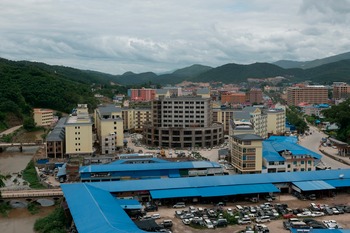
If the frontier prism remains the perspective through which Mong La had been generally depicted, both in international media as well as locally in Yunnan, my visit to Special Region 4 complicated if not challenged this picture. Signs of an illicit frontier economy certainly persisted: a lively wildlife market prominently displaying endangered species such pangolins and tiger parts, streets lined up with brothels, and drugs were readily available. Such exuberant frontier traits were nevertheless contained within a few blocks, just like the casinos had been enclaved in a satellite town 10 kilometers to the south. Around them, Mong La featured apartment blocks catering to Chinese middle-class buyers, and karaoke bars and clubs not unlike those in Yunnan’s Jinghong, a burgeoning tourism scene and a plantation economy in full swing. Mong La, it was apparent, had achieved a level of development almost unparalleled in Burma, strikingly resembling a provincial Chinese town complete with modern infrastructures and facilities.
More than the textbook frontier economy I was expecting, then, what I saw in Mong La resembled a typical development zone model, paired with the idiosyncratic political characteristics of Burma’s borderlands. As Chettri and Eilenberg (Reference Chettri and Eilenberg2021) argued, the Special Economic Zone model has in recent decades taken hold across Asian borderlands, benefiting rather than being pushed away by geopolitical instabilities that traditionally characterize those areas (see also Billé, Delaplace, and Humphrey Reference Billé, Delaplace and Humphrey2012; Nyíri Reference Nyíri2012; van Schendel and de Maaker Reference Van Schendel and de Maaker2014; Saxer and Zhang Reference Saxer and Zhang2017). Yet while ubiquitous and following a similar model, “each development zone is unique owing to localised differences in demography and socio-political history” (Reference Chettri and Eilenberg2021: 12). As Andrew Ong (Reference Ong2023) showed in his detailed ethnography of Wa statehood, in the China-Burma border context this uniqueness is a perilous and ongoing act of balancing, involving a degree of what he calls “tactical dissonance”: the continuous oscillation in political ties and allegiances, paired with fundamental incongruities between different understandings of autonomy and sovereignty.Footnote 6 In Mong La, this dissonance is clearly visible in the ambiguities in which both Chinese and Burmese state actors deal with the small polity: at once a source of profits, and a threat to national interests.
Some of the conversations I had in Mong La navigated this fine line between a resource frontier economy, a developing special zone, and a borderland polity that challenged, albeit subtly, the nation state it bordered (China) and the one it was officially part of (Burma). Consider the following encounter. A few young men I met across town had recently arrived from nearby Yunnan, attracted by the business prospects that Mong La promised to offer. One opened a restaurant, another ended up working as a security guard, a third boasted of being a professional gambler. They all, in different ways, fell prey to frontier promises of fast money, and all related a sense of excitement for trying their luck outside of their home country. The other side of the coin was visible too: a young mother and a middle-class Yunnanese couple had recently purchased apartments in Mong La, part of a high-rise complex on the outskirts of town. This was, they insisted, a good place to live and a safe town to raise a child in that was cheaper and offered more opportunities than China (figure 2).
View of Mong La (picture by the author, 2015).

Figure 2. Long description
In the foreground to the South, several large buildings with bright blue corrugated metal roofs dominate the lower frame, adjacent to a dirt parking lot filled with numerous white and silver cars. Moving into the mid-ground, the center of the town features a large, circular multi-story building under construction or with a curved facade, surrounded by other yellow and beige apartment-style blocks. To the West, a brown river flows under two small bridges, bordered by lush green vegetation. In the background to the North, the urban density continues with taller pink and tan buildings before transitioning into rolling green mountains under a cloudy, overcast sky.
I also soon realized that Mong La was not the first choice for some of the Chinese migrants I met in the small border enclave. Over a meal I spoke at length with a group of young men, all employed in construction, all from Yunnan. They had followed their boss to Mong La and were employed in a vast construction site—a series of apartment blocks, towering over the green hills covered in rubber trees at the outskirts of town. As we shared some barbecue (shaokao) and drinks, they presented me with an increasingly familiar list of complaints: Mong La was too hot and dusty, the food was unremarkable, the locals were lazy and prone to cheating. If they had been given the opportunity, they all agreed, they would head back to China—and most, in fact, told me that they were planning to do so. “Burma is like China twenty years ago,” they remarked, this time the negative undertone far dominating any positive meaning of the sentence.
As I have previously argued (Rippa and Saxer Reference Rippa and Saxer2016), the Mong La I visited followed a particular model of Chinese-style development based on infrastructure construction, resource exploitation, and close ties with the PRC. Mong La thus resonated with the “enclaves of improvement” aptly described by Pal Nyíri (Reference Nyíri2012) in his work on Special Economic Zones in Laos: an area that positioned itself as an engine of development and modernization, not entirely dependent yet not fully outside of the power of nearby states (see also Nyíri Reference Nyíri, Saxer and Zhang2016). At the same time, Mong La offered a glimpse of a particular kind of frontier sociality that was only referred to in the past tense in Pianma and other former timber boom towns I had visited on the Chinese side of the border. In Mong La, gambling establishments were opened all night, with karaoke bars and restaurants crowded until the early morning hours. Across the city’s markets one could still find various illicit items sold openly, and groups of young Chinese men repeatedly told me, not without some bravado, that “one can find everything” in Mong La.
What struck me of those conversations, and of the moment of sociality I partook in, was how much they were shaped by the grammar of what anthropologists of China have identified as a particular form of sociality. This refers to terms such as “renao” (and its close kin honghuo) that are used to describe how social events should be: lively, noisy, successful. Those terms reference “heat”: re (in renao) meaning hot; huo (in honghuo) meaning literally fire. In his analysis on common social practices such as men’s drinking games and temple fairs, Adam Chau showed how such gatherings produce “social heat,” in turn arguing that a sensorially rich ambience is key to successful practices of sociality (Chau Reference Chau2008). In Mong La, much everyday life revolved around such moments of heightened socializing: whether through food, drinking, or joint visits to karaoke bars. “Social heat,” in Mong La, was built quickly and unceremoniously: I witnessed, for instance, how gatherings were improvised following a chance meeting, and extended through phone calls that would bring together diverse networks of people. Dinner parties or karaoke evenings were set up in a matter of minutes, as bonds were cemented through the sharing of food, drinks, and various card games. Building on Chau’s work and writing about gambling in rural China, Hans Steinmüller (Reference Steinmüller2011) elaborates on the moving boundaries of what is considered acceptable in expressions of those “hot” socialities, and how these are challenged and contested. Steinmüller’s argument is that social heat is highly ambivalent, with negotiation over its boundaries showing both shifting notions of what is locally acceptable as well as the limits of local sociality. In Mong La, two key differences emerged. First, the form of “social effervescence” epitomized by “hot” socialities was not confined to the boundaries of what was deemed socially acceptable. Rather, my interlocutors repeatedly pointed out that Mong La allowed for forms of sociality and play (wan) that would not, in the Chinese context, be acceptable. The main difference with what Steinmüller describes, however, lies in another aspect of frontier socialities I witnessed in Mong La: these displayed effervescence and intensity, yet remained relatively thin. They were not, in other words, expected to lead to long-lasting relationships and were largely perceived in terms that might be called utilitarian. Gatherings dissolved as quickly as they formed; connections were kept via social media apps but, while resulting in large networks, were rather superficial. People, I came to learn, moved frequently—back to China, to other SEZs, or onto different businesses. The fleeting nature of social interactions, I was beginning to learn, reflected the ephemeral nature of frontier economies: to take advantage of it, one had to cast their net wide, but not necessarily very deep nor for very long. This transiency, as we shall see below, is central to how frontier subjectivities are constituted, in turn shaping the very spaces in which such encounters take place.
Despite those experiences, I left Mong La with a similar impression to what I had experienced in Pianma: that I had arrived too late. That the frontier—whether in reality or as an imaginary, and most distinctively as a mixture of both—continued to exist predominantly in the past and as a memory. Unlike Pianma, what was left were not empty streets and rubbish, but a more regulated market: something that resembled a state-like administration, a far cry from the unruly and lawless characterization of typical frontier economies.
It is at this time that I began reflecting on what it meant to follow, along the China-Burma borderlands, the echoes of previous frontier boom economies. Inspired by Jane Guyer (Reference Guyer2007), it seemed that I was busy with an anthropology of the near past. Yet at the same time, memories and stories of what recently occurred remained a key driver of anticipation: many of the men and women I met in Pianma and Mong La were still in pursuit of economic opportunities, albeit reluctantly at times they were willing to move and try their luck in other boom towns and new businesses. People shifted between those two temporalities—near past and near future—and filled them with plans and hopes, goals and thoughts. The result, paradoxically, was that the present was continuously evacuated. It is this type of fleeting temporality that, as I show in the next section, I aim to capture with the notion of “frontier nostalgia.”
Golden Triangle SEZ: Back to the (Frontier) Future
The frontier boom, eventually, caught up with me—ironically, at a time when I had given up on finding it. In October 2023, some four years after my latest visit, I arrived in the Golden Triangle Special Economic Zone in northern Laos with a small group of colleagues. We had been working in northern Thailand, and without much pre-planning decided to cross to the Laos side. Partly, this was driven by my own curiosity. I had visited the Golden Triangle SEZ several times between 2016 and 2018, and I had been writing about the kind of exceptionality that this concession exemplified (Rippa Reference Rippa2019). Throughout that period, however, no new major project was completed, and I had the impression that the SEZ was another example of a promised boom area that did not quite materialize. What I saw in 2023, however, radically challenged this perspective and ultimately prompted the reflections that are at the core of this paper.
The Golden Triangle SEZ is largely the outcome of the initiative of one Zhao Wei, a Macau resident originally from northeast China. Zhao Wei had learned the tricks of the trade in Mong La, where he opened and ran a casino in the 2000s. Then, in 2007, he obtained from the Laos government a ninety-nine year lease on 10,000 hectares of land alongside the Mekong river, where Laos, Burma, and Thailand meet. Following the establishment of the SEZ, investments soon materialized. As Nyíri (Reference Nyíri2012) details, these initially went into basic infrastructure, centered around a large casino: the Kings Romans (for reference, this was much larger than anything that had been ever built in Mong La, and was designed by a Portuguese architect who has also designed Macau casinos). There were also roads and houses for employees, as well as a few hotels for casino customers and tourists.
The SEZ was also set to feature shopping malls and themed shopping streets, an island resort and a golf course, and much more. When I conducted fieldwork in the SEZ between 2016 and 2018, some of those promises had materialized, others were rotting away, while most remained alive only on the glossy paper on which brochures and pamphlets were printed. Two casinos and a handful of hotels had been built, alongside a “China town” themed shopping area. There were also a run-down zoo hosting tigers and bears, and a shooting arcade that I never saw open. The golf course was not particularly impressive either, and I never saw anybody playing there. The promises, however, remained, and even surpassed those of the earlier plans: these included now an airport, organic farms, and processing centers.
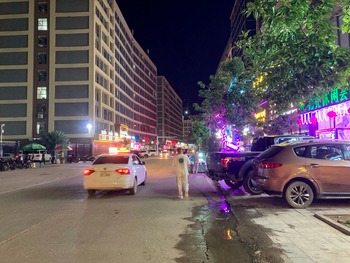
My overall sense in 2016–18, however, was that of a boom that was not quite materializing. Not that the SEZ lacked activity. Online casino operations—another of the tricks that Zhao Wei learned from his Mong La experience—were thriving, and a few dozen women, mainly from Ukraine and the Philippines, were working full-time there, hosted in apartment blocks a short walk away from Kings Romans. By 2018, a new food court had been built, and a walkaway was under construction along the Mekong River. Tourism, however, had not taken off to an extent that would justify major investments, and the plan of turning the Golden Triangle SEZ into a major engine of local growth seemed far-fetched. What felt more realistic, to me as well as to other observers at the time, was that the SEZ would establish itself as an online gambling center benefiting from the money laundering possibilities that its location and proximity to powerful criminal organizations afforded (figure 3).
Nightlife at the Golden Triangle SEZ. The tall buildings on the left are dormitories for tech workers (photo by the author, 2023).

Figure 3. Long description
The scene is captured from a low-angle street perspective at night. In the foreground, a white sedan with a lit roof sign drives away from the viewer, while a person in a white outfit walks along the right side of the road. Parked vehicles, including a dark pickup truck and a bronze S U V, line the right curb. The right side of the street is illuminated by bright, colorful neon signs in various languages and purple decorative lighting hanging from trees. On the left side of the image, several massive, multi-story dormitory buildings with repetitive rectangular window patterns rise into the dark sky. The ground level of these buildings features brightly lit storefronts with yellow and white signage. In the far distance, the street continues with more lights and silhouettes of people, suggesting a dense urban environment within the S E Z.
This impression was supported by various encounters and conversations I had at the time. At the main hotel in the SEZ, a three-floor establishment with a large swimming pool, I was frequently approached to partake in some scam business, attempts at leveraging my European passport to obtain credit cards for international banks. Some of the men I met back then displayed some stereotypical frontiersman characteristics: they spoke loudly, smoked and drank heavily, dressed conspicuously with jewelry and flamboyant tattoos, and were often accompanied by much younger women. They spoke of other frontier spaces across which they seemed to move frequently, seeking fortune in Mong La and other casino towns in Vietnam and Cambodia. One, once, proudly talked about how he was banned from Cambodia for killing a man (in self-defense, so his story went). Yet there were also others, mostly men, and largely from Yunnan, who did not quite fit the same stereotypes. In smaller and cheaper hotels around the SEZ, I spoke with travel agents who had come to Laos to attract Chinese tourists, small-scale traders who were hoping to set up shop in the SEZ, and entrepreneurs who wanted to open restaurants, barber businesses, and the like. What struck me was a sense that they were not necessarily looking for a frontier boom: they complained vocally about Laos and lamented that they would much rather go back to China. But job opportunities were scarce, and some relative or friend convinced them to try their luck abroad.
Against this backdrop, what I experienced in October 2023 was remarkable. The Golden Triangle SEZ had become, by all accounts, a boom town. Driving from the immigration office by the Mekong River into the zone, the local road slowly widened into a six-lane boulevard surrounded not by fallow fields but by block after block of high-rise buildings. Roads, unlike my experience from a few years prior, were perpetually congested, and the old Kings Romans was now dwarfed by a newly built complex, twenty stories high, painted in gold. To its side, an even more ambitious project was in the making: a fake Venice sitting on water channels and facing a large pool.
The glitter and gold, and the poster advertising new development projects, hid a less glamorous reality. As documented by investigative reporters, the Golden Triangle had become a site not only of money laundering but also of online scams—which had in recent years been the subject of crackdowns within Chinese borders, and that had for the most part relocated to Chinese enclaves in Southeast Asia (Franceschini and Ry Reference Franceschini and Ry2024; International Crisis Group 2023). Similarly, less glamorous were the stories of recent migrants I encountered across the SEZ. One brought me back years, to similar conversations I had in places like Pianma and Mong La. It took place at a small beef noodle restaurant, at the outer limit of “China town”: the replica of a traditional Chinese street that had been built alongside the first casino, years before. During previous visits, the street was mostly empty, while now shops were opened, colorful lights were on, and groups of men and women crowded its corners. The small beef noodle restaurant had been opened only a few months prior to my visit, and the lady who ran it hailed from Yunnan. She had come, she told me, through a friend who had opened a Taiwanese-style bubble tea shop in another part of the SEZ, and who praised the numerous clientele. She had been running a restaurant in her hometown, in south-eastern Yunnan, but business had been disappointing and she decided to move. The reality of the SEZ was, however, a far cry from what she had expected. Costs were extremely high, and the owner complained that she struggled to deal with her Burmese employees. Outside the SEZ, where she had to live in order to be able to afford a small apartment, she added, Laos was strikingly underdeveloped (bu fazhan). Barely three months in, she was planning her way out.
During my visit, and as I reflected on my previous experiences in former frontier towns, two elements stood out. First, the extent to which the Golden Triangle SEZ had become a place of what Norum calls “hypersociality": an urgent form of social interaction typified by rapidly produced, intensified social relation, and extensive and frequent social obligation (Norum Reference Norum2013). In addition to gambling halls, newly built restaurants, karaoke bars, and clubs catered to thousands of sleep-deprived, heavy drinking residents and visitors, mostly from mainland China. These were opened, and crowded, at all times of the day and night, and seemed to offer endless opportunity for entertainment. This was, I reasoned, what many of my interlocutors in Pianma would have described as renao: lively, busy, “hot.” At the same time, my experience in the SEZ confirmed what I had witnessed in Mong La: that this form of frontier sociality was characterized by intensity rather than depth—a pattern that differs significantly from the long-term affective bonds that have been shown to form in other frontier-like contexts across post-Mao China’s borderlands (cf. Steenberg Reference Steenberg, Horstmann, Saxer and Rippa2018). The hypersociality of the Golden Triangle SEZ was strikingly thin and ephemeral: the embodiment of forms of rapid yet fleeting accumulation expressed in the language of social heat. It also seemed to reproduce the SEZ template itself based on volatility and the possibility of its endless reproduction across space and time.
In this sense, walking through the Golden Triangle SEZ and talking with some of its newly arrived and older residents, what emerged was the replica of a model that had characterized China’s borderland development for the previous thirty years. Both the modes of sociality and their aesthetic were similar to what I had either experienced or was related to me: the food, the karaoke bars, the gambling halls. That is to say, the ways in which the SEZ was renao were akin to how places like Pianma were described to me in the past tense. If anything, what surrounded me in Laos was less of a window into the future and more of a glimpse of the past. I was, uncannily, walking through the memories of previous booms—into the unraveling of a new one.
Frontier Nostalgia
In the writing of Watts (Reference Watts, Barrett and Worden2014; Reference Watts, Appel, Mason and Watts2015) and Tsing (Reference Tsing2000) that I mentioned above, it is an act of dramatization that creates the conditions of existence for the system of accumulation that is encapsulated by the frontier heuristic. In this article, I argue that nostalgia is constitutive of such dramatization. Frontier nostalgia emerges as an axis to interpret the layered histories and emotive reactions surrounding various frontier spaces, as delineated in my experiences along China’s borderlands with Burma and Laos. In those contexts, frontier nostalgia becomes a lens for examining how frontier spaces are not only sites of economic intersections but also locales of emotive and productive recollection. This temporal dimension is critical, as it recognizes that people’s engagement with frontier spaces shapes present predicaments through a cycle of memory and aspiration.
Nostalgia, as Kathleen Stewart noted, is always dependent on changing cultural references and shifts with context, depending “on where the speaker stands in the landscape of the present” (Reference Stewart1988: 227). This means that what the content of such nostalgia is shifts too, in both its location (in time and space) and features (what is it that people are nostalgic about). These elements are quite evident in the case of frontier nostalgia I detailed here: as “edges of space and time” frontiers epitomize fast-moving landscapes and socio-economic arrangements. It is this transiency, almost paradoxically, that becomes here the object of nostalgia: something that is not and cannot be fixed.
The case study of Pianma captures this interplay vividly. With its legacy of aggressive resource extraction and illicit trade, Pianma illustrates the haunting presence of a once-booming town. The absent bustle is keenly felt by those who inhabit the empty remnants, invoking a romanticized recollection of renao. This dynamic reflects the affective depth of frontier nostalgia, as it mourns not merely economic loss but the social stimulations engendered during the peak of activity. There is, in the frontier nostalgia I describe here, an unmistakable longing for a return—what Rebecca Bryant terms an “absent site of social belonging” (Reference Bryant2008, 403). However, in the frontier context I analyze, there is no longing for a homeland but a discernible sense of belonging to a particular form of “hot” sociality—what I have called hypersociality—that is unavailable because of the passage of time and changing socio-political arrangements. This is a form of sociality that is made unavailable, ultimately, by its own transience: the fast-paced nature of frontier economies producing its own longing, recreating its own imaginary.
In Mong La, the frontier’s sensory excesses were tangible, yet tinged with a sense of bygone opportunity, as local development adopted state-like structuration amidst illicit undertones. Nostalgia here materialized not in the ruins of the past but in the competing temporalities of striving for regulated progress against uncontained, vibrant accents of the frontier potentials. Individuals oscillate between seeking stability and relishing the unpredictable allure that marked frontier tales, resulting in a form of what Elisabeth Kirtsoglou (Reference Kirtsoglou, Kirtsoglou and Simpson2020, 171) calls “anticipatory nostalgia”—a sentiment rooted in both memory and expectation.
The most recent example of the Golden Triangle SEZ illuminates how frontier nostalgia is operationalized within an ongoing boom, one eerily reminiscent of past patterns. This zone exhibits an uncanny replication of the renao past, where bustling markets and entertainment venues now serve as spaces of revived social connectivity and economic prospect. The reproduction of a certain model of hypersociality seems constitutive of frontier expansion and consolidation. Here, past and present overlap: the reproduction of past models operating alongside the future-oriented practices of speculation and aspiration.
There is an impossibility at the heart of the dynamic I am describing here, an eminent contradiction. For the transiency that frontier nostalgia attempts to capture makes it something that cannot be quite achieved. My interlocutors embodied such contradictions continuously: striving to seek fortune across frontier spaces they themselves often attempted to leave—or, at least, treated with contempt. Here, the frontier is both a site of material aspiration—where people move to in order to improve their livelihoods—and imagination: a myth that nevertheless informs expectations, and as Zarsadiaz (Reference Zarsadiaz2022) shows in the case of the Los Angeles suburbs and the American frontier, shapes identities, subjectivities, and how people relate to places. In the context I analyze in this article, the frontier is also, due to its being suspended somewhat between past and future, a site of an evacuated present: where livelihoods are promised and longed for yet framed in a past tense that underscores a reluctancy to return. In this light it is not surprising that many of my interlocutors were, at once, striving to take advantage of frontier booms and keen to relinquish those very spaces: the imaginary they had been embedded in, one shaped by “heated” socialities, was not one that envisioned long-term engagement. Frontier prospects, here, were permanent (in Watts’s sense), yet were also permanently transient.
Frontier nostalgia, as such, emerges as an affective and material phenomenon intricately tied to the cyclicality of boom-and-bust economies that define frontier geographies as ephemeral and volatile as the SEZ model in which nostalgia took hold. It does not simply counterpoint anticipatory tropes but constitutes them, creating a space where nostalgia and aspiration coexist. Thinking of the ruins of the timber boom in Pianma alongside the glittery present of the Golden Triangle SEZ exemplify this well: “[tears] in the spaciotemporal fabric” (Dawdy Reference Dawdy2010: 777) of modernity, instances in which past experiences intersected with future aspirations. It is those ruins and the imaginaries attached to past experiences that, I argue, continue to shape subjectivities and livelihoods at China’s borderlands.
Conclusions
In anthropology, the resurgence of interest in frontiers has prompted a nuanced exploration of how these spaces function as both territories and temporal projects. This article developed the notion of frontier nostalgia to address both frontier spaces, as well as those who journey through them in the context of China’s borderlands. Frontier nostalgia, as I have examined, refers not only to the romanticized images of wilderness, freedom, or vice associated with frontier zones but also to the dynamic, densely social time-spaces that these regions temporarily foster.
This form of nostalgia, to be sure, is informed by a gaze that has colonial contours: one in which frontier spaces are constructed through acts of erasure, dismissing local histories, knowledge systems, and livelihoods, and that is generative of orientalist tropes (the lazy native, the untouched resources, the dialectic of dangers and opportunities). My notion of frontier nostalgia aims to encapsulate a situation in which the future is imagined as the return of the past: something that has already been accomplished yet remains out of reach. In Kirtsoglou’s (Reference Kirtsoglou, Kirtsoglou and Simpson2020) work, ethnographically grounded in the Greek experience of austerity, anticipatory nostalgia is a colonial condition based in orientalist visions of the colonized self. In the context I analyze in this article, frontier nostalgia points to the other end of the same spectrum: one in which the object of nostalgia is a colonizing project. The frontier, to put it another way, is in itself a space that has been at once accomplished and yet to be achieved: a prospecting that is underscored by a colonial gaze.
In her work, Anna Tsing (Reference Tsing2003) shows how “frontier men and resources” emerge out of “dynamics of intensification and proliferation.” These are, like in my ethnography, men and women who look forward, striving for enrichment. As we saw in this paper, however, they also look backward and inhabit a temporality that is both present and bygone. The frontier, for my interlocutors, is both a “permanent prospect” and a return to the past: both in terms of the nostalgia that characterize frontier encounters, and for the perception that such frontier spaces are underdeveloped, stubbornly unmodern, “like China was twenty years ago.” Traveling to the frontier is a journey in space and time.
There is, then, a fundamental and remarkable ambiguity to the nostalgia I detail in this paper. On the one hand, my interlocutors longed for moments of social heat—what in the frontier context becomes hypersocial: thin but intense moments of sociality. At the same time, they perceived the places we were in through a teleological lens informed by hegemonic ideas of modernity and orientalist tropes. There was, in their words, a reluctancy to partake in such moments of perceived “backwardness,” a recurrent tension between their material aspirations and the condescending attitude through which frontier spaces were described.
In this paper I attempted to dwell on such ambiguities: showing that while aspiration captures the motivations behind frontier economies—the allure of fortune and new beginnings—nostalgia often encapsulates the lived experience of these spaces, and how hypersocial moments shared in transient frontier worlds are a significant component of this nostalgia. Frontier nostalgia, in this sense, does more than evoke an imagined past; it embodies the sensory and social richness of life at the edges of capitalist expansion, capturing both the exhilarating and hazardous aspects of such existence. Nostalgia thus stretches beyond personal yearning to become a communal, affective resonance that underscores the collective memory and identity of those who have lived through these experiences. Nostalgia becomes the frontier—just as the frontier thrives on its own longing.
Acknowledgement
I am grateful to the reviewers and the editor of CSSH for their generous and insightful comments on the paper. I would also like to thank Huiying Ng, Roger Norum, Jessica Clendenning, and little Olive in whose company the idea of “frontier nostalgia” first emerged. I would also like to acknowledge the financial support of the European Research Council (Starting Grant 101075511, AMBER).


 Open access

