


The Fallen Soldier as Fascist Exemplar
A corrupt society needs the Man who can restore it with his example—a population that had been thus educated will be healthy and strong, and able to conduct a war and a revolution to good end.Footnote 1
In Italy, Fascist morality drew heavily on admirable models, or figures which might be real or imaginary, and whose attitudes and deeds were to be admired and imitated.Footnote 2 Those models gained their identity by means of narratives that highlighted inherent values in their behavior with respect to the state. Given that morality implies “conduct in relation to [either] esteemed or despised human qualities,” those exemplars were benchmarks for virtues that were expressed in the form of images and paradigms rather than rules.Footnote 3 Moreover, due to its violent and repressive nature, Italian Fascism was heavily dependent on persuasion and the role played by exemplars.Footnote 4 In that the Fascist regime could not rely wholly on coercion or blind obedience, it legitimized state policies and actions through the creation of a highly orchestrated sense of good and evil. Thus, given their capacity to enthuse and motivate, Fascist exemplars were ideal bases of moral authority.
In particular, soldiers who fell in the First World War, together with others who were seen to have died for the nation, were a major source of Fascist exemplars in that they represented older traditions of military heroism, while satisfying new needs through which heroism was closely associated with a spirit of sacrifice. Official propaganda presented fallen soldiers as role models in order to encourage patriotic feelings favorable to the regime. In that respect, a group of Fascist ossuaries that were built to rehouse the remains of soldiers who had fallen in the First World War presents a clear opportunity to examine how the regime used the fallen soldier as an exemplar. In effect, the key purpose of the ossuaries was to exploit the example of the dead in order to foster nationalism, militarism, and imperialism. In this sense, the creation of the ossuaries illustrates how the practice of exemplarity worked, what it achieved for the regime, and how it contributed to a morality suited to Fascism. However, in order to understand how the ossuaries functioned with regard to the morality and ambitions of the Fascist state, it is first necessary to explore the role of the fallen soldier as an archetypical exemplar, and how the dead were appointed as a fount of propaganda aimed at the reinforcement of morality and of practices that drew their legitimacy from both history and new political devices.
Fallen Soldiers as Exemplars
For Fascism, morality was an ideological and practical necessity in part because it served to legitimize social and political conditions that were relatively extreme and included a high degree of brute force. In an article of 1921 entitled “Morality,” Mussolini claimed that the death of Fascists in violent attacks against opponents was “proof” that such attacks were “rational” and “legitimate.”Footnote 5 Thus, even in the early years of Italian Fascism, the dead emerged as exemplars and their willingness to die was taken as evidence of the justness of a cause. As Fascist ideology took the form of a political faith that gave moral authority to the state, it placed its interests above the rights of individuals and other nations. As indicated by the philosopher Giovanni Gentile, morality meant the self-sacrifice of the individual and the suppression of private ambitions and feelings.Footnote 6 By giving power to the state, Fascism was also intended to generate a state based on discipline and an evident moral order. In short, for Mussolini, morality was “that which gives the law force and the state the right to demand obedience of its citizens.”Footnote 7
Moral norms in the European, and idealistic, tradition tend to follow three principles: they are consistent, clear, and the same for everyone.Footnote 8 On all three counts, such norms were not suited to Fascism as an ideology that accommodated populism, social division, and an opportunistic form of decision-making, and which was also centered on an idea of national differences rather than universal principles. Conversely, for various reasons, exemplars offered the perfect vehicle for a Fascist morality. Emerging as a relative latecomer among political ideologies, Fascism may be defined in terms of its opposition to liberalism, socialism, and communism, and as a movement driven by action and leadership rather than by political theory.Footnote 9 As Mussolini stated, “The fist is the synthesis of our [Fascist] theory.”Footnote 10 Instead of a fixed program of stated aims, Fascism pursued an evolving set of goals. In that respect, narratives relating to exemplary behavior that left moral principles unarticulated and open to interpretation were better than fixed codes, in that they reflected a preference for “moral action” over contemplative or “abstract maxims.”Footnote 11 Thus, as an exemplar of Fascist morality the fallen soldier expressed the emphasis placed on feeling rather than on logic or codes. Moreover, Fascism foregrounded the idea of a national and moral regeneration, political and economic renewal, and the emergence of a reformed society.Footnote 12
The role of exemplars as figures whose attitudes and behavior should be imitated also suited Fascism as an ideology that promoted its own brand of elitism. The emphasis on imitation and obedience suited the stress placed on the strength and will of Mussolini as a leader who led by example, and who was the primary exemplar for “the formation of a new moral character.”Footnote 13 As a model from which others might be derived, and as an idealized Fascist, Mussolini was male, strong, and charismatic, and when dressed in a military uniform he was an exemplar from which an image of the ideal soldier might be spun. The extent to which Mussolini cultivated his associations with the military indicates the significance of the fallen soldier, and of the ossuaries. In addition, in that the exemplar may be defined in terms of an opposition to negative or counteractive forces, the ideal Fascist soldier presented as a warrior engaged in a “struggle between good and evil.”Footnote 14 In that respect, Fascist exemplars served to distinguish a society bound together by Fascism from enemy or alien forces, and to draw boundaries between the Fascist state and its antagonists.
Italy’s Exemplary Dead
Given that the dead naturally inspire a reverence that silences criticism, “necro-exemplarity” (to use Francisco Ferrándiz’s term) is common to different cultures. Renaissance humanism looked to a form of secular immortality through the remembrance of illustrious figureheads. Similarly, the Enlightenment advocated commemoration as a source of morals associated with worthy figures of earlier generations. Due to the value placed on war, heroism, and sacrifice, Italian Fascism found its perfect exemplar in the dead soldier. In casting the fallen soldier as a key exemplar, the Fascists did not entirely invent a new political mechanism or tool of propaganda, rather they drew on traditions of European and Italian nationalism.Footnote 15 Since the late eighteenth century, emerging nation-states took charge of the burial of the fallen in order to draw political capital from the respect due to those who died for the national cause. Already an established model of patriotism, militarism, and masculinity, the figure of the fallen soldier was particularly suited to Fascism. At the same time, Fascism also benefitted from Italy’s deep-rooted culture of patriotic commemoration.Footnote 16 From the late 1700s, the commemoration of national heroes emerged as one of the key ideological vehicles for the various movements that contributed to the gradual emergence of Italian nationalism, to the struggle for independence or Risorgimento, and eventually to the establishment of a unified Italy.Footnote 17 Those earlier movements honored those who died in the various attempts to liberate Italy. For instance, propaganda generated by the patriot Giuseppe Mazzini (1805–1872) refers to “martyrs” for the fatherland. Equally, martyrdom was an essential component of the Risorgimento as the “resurrection” of the nation.Footnote 18 In the context of Italy’s tormented fight for freedom, the efficacy of martyrdom lay in a capacity to convert past failures into moral victories. The value of the patriotic cause was evidenced by the death of those who fought for that cause. In part, there was an underlying obsession with the Romantic idea of a meritorious death, and attitudes that were borrowed from Catholicism, although martyrdom appealed to all parts of the movement for independence, including anticlerical factions that saw the spirit of patriotism as an alternative to religion.Footnote 19
After the unification of Italy in 1861, martyrdom lost its associations with rebellion. In time, it was absorbed into the official ideology of the Italian state and used to help gather the population behind the idea of Italy as one nation. Having been divided since the early Middle Ages, Italy remained deeply fragmented after 1861, while its new rulers were faced with the need to forge a common history, memory, and identity.Footnote 20 As such, remembrance was seen as necessary to the moral health of the nation. For example, the funerals and entombment of worthy citizens were employed as instruments of propaganda, and in cemeteries across Italy monuments and elaborate tombs were created for the honorable burial of national heroes. Many of them were exhumed and reburied with the aim of converting the new nation to patriotism as a “religion of the fatherland” (religione della patria).
As part of the bedrock of Italian nationhood, the celebration of the dead as patriotic exemplars was passed down from the Risorgimento to Liberal and then to Fascist Italy. Meanwhile, the potential to exploit a cult of the dead, or to use martyrdom as a political mechanism, was augmented by the significant losses that resulted from the First World War, which left most Italian families in mourning and thereby created a large audience whose emotions might be manipulated. After Mussolini’s rise to power in 1922, commemoration and patriotism were subjected to greater state control as allied keystones of Fascist propaganda.Footnote 21 Fascist efforts to harness commemoration were reinforced as the regime coopted older Catholic and patriotic practices and drew on images and concepts that were familiar to Italians. In addition, the regime honored various groups who were seen to have died for Italy as “martyrs,” including heroes of the Risorgimento, fallen soldiers of the First World War and of Italy’s colonial wars, and Fascists who died in the initial struggle for power.Footnote 22 For Mussolini, that Fascism had “its own fallen and martyrs” was evidence of its efficacy and value as a political force. Across Italy, authorities created dedicated spaces known as the Shrines of Fascist Martyrs (Sacrari dei Martiri Fascisti).Footnote 23 Meanwhile, Fascist exemplars competed with the appeal of anti-Fascist martyrs, such as the murdered socialist Giacomo Matteotti.Footnote 24 Appropriate exemplars who died before the emergence of the movement were cast as “precursors” guiding “humanity … toward Fascism.”Footnote 25 In short, the dictatorship sought to hijack existing and potential exemplars by claiming their deaths as sacrifices for the Fascist cause, and also as sources of legitimacy through which the regime might be validated.
While maintaining a high degree of continuity with the past, Fascism also adapted existing concepts to suit new political ends. As the ultimate sacrifice of the individual for the sake of the many, the soldier’s death was depicted as the highest incarnation of Fascist collectivism, as an anti-individualistic doctrine that privileged collective interests. In 1925, Mussolini pledged to establish a “totalitarian” state with limitless powers over all aspects of human life, within which individuals would find true freedom by subordinating themselves to the state.Footnote 26 Given that aim, to die in war was no longer simply a necessity, but the highest possible aspiration. As noted by Umberto Eco, all fascist movements share a cult of death, and while “in non-fascist societies, the lay public is told that death is unpleasant but must be faced with dignity,” the fascist hero craves death for the cause.Footnote 27
That the fallen soldiers of the First World War occupied a special position is evidenced by an image, promoted by the regime, of Fascism as a “military formation of Living and Dead with at its head the Heroes of the war” (1941).Footnote 28 Different media, including art, architecture, film, literature, and journalism, and various practices such as speeches, rituals, and ceremonies, cast the fallen soldier as an exemplar. For instance, popular literature that appeared after the First World War gradually adopted a Fascist idealization of Italy’s war dead.Footnote 29 Similarly, schoolbooks, children’s literature, and the activities of Fascist youth clubs encouraged the young to admire the fallen and to aspire to their level of sacrifice. While the covers of the copy books used by schoolchildren carried images of young, healthy, and attractive men and women dressed in the uniforms of Italy’s armed services, Eco recalls how, at age ten, he received first prize in an essay competition on the basis of a positive answer to the question: “Should we die for the glory of Mussolini?”Footnote 30
Vehicles of Exemplarity
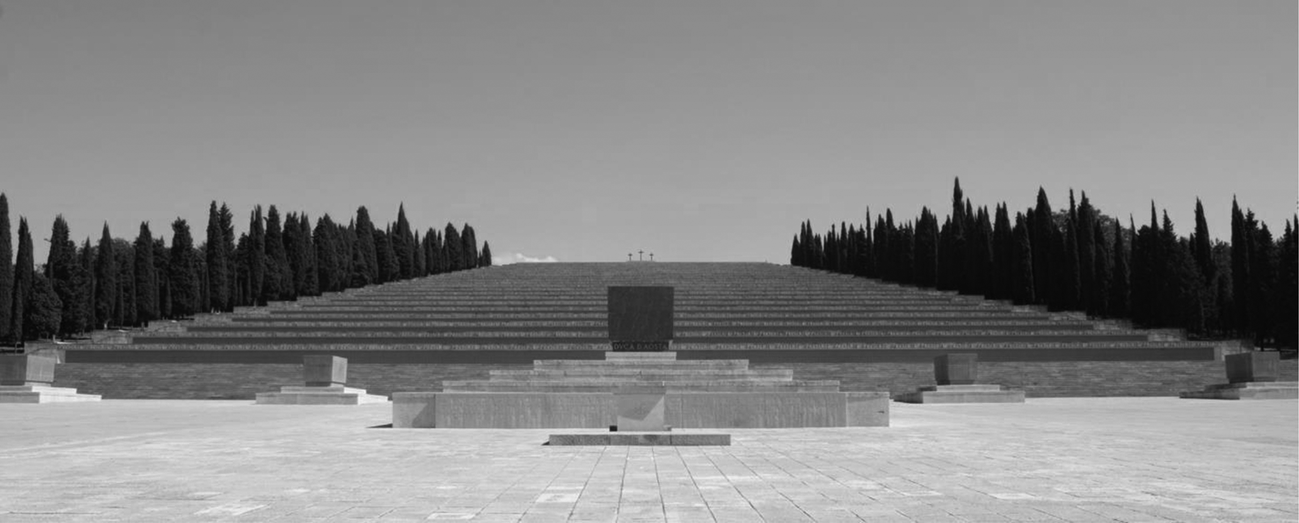
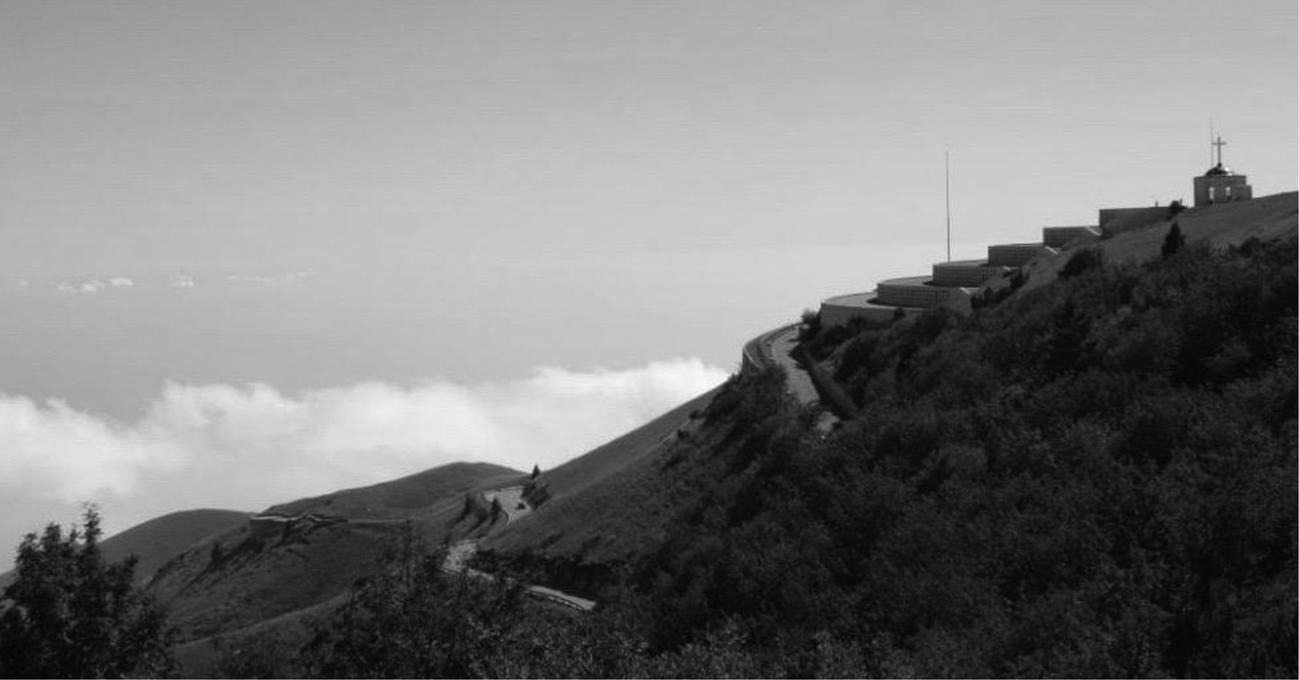
The Fascist ossuaries that were built to accommodate soldiers who had fallen in the First World War resulted from a campaign to encourage imitation of those soldiers and to create the ossuaries as monuments with “a very high moral content.”Footnote 31 Originally, Italian soldiers who died fighting in 1915–1918 were buried in small cemeteries or mass graves close to the battlefields. However, by the late 1920s, these modest burial places were judged to be insufficient given the aims of Fascist propaganda. Having removed control over the war dead from veterans’ groups, local councils, and the Catholic Church, the state set about centralizing the commemoration of the fallen. Hence, the bodies of over three hundred thousand soldiers were disinterred and reburied in roughly thirty new ossuaries that were created in 1929–1939 along former frontlines in northeastern Italy and present-day Slovenia.Footnote 32 The process of reburial concentrated the dead within fewer, and remarkably larger, sites under the control of the military. As a result, the new ossuaries were among the largest war cemeteries in the world. For instance, the ossuary of Redipuglia accommodated the remains of over one hundred thousand soldiers in a vast stepped structure that ascends a hill (image 1). Moreover, a number of the ossuaries were located in, or close to, territories that had formerly belonged to the Austro-Hungarian Empire, and which Italy acquired as a result of the First World War. As markers of newly won land, they were meant “to bear witness, across the centuries, to the heroic sacrifices” of those “who died serenely … so Italy could be expanded.”Footnote 33 Unique with respect to their size and symbolic power, some of the ossuaries were also sited in evocative, war-torn landscapes. For example, while Monte Grappa is located at an altitude of nearly 2,000 meters, it accommodates the bodies of over twelve thousand Italian soldiers in an ossuary shaped like a tower of Babel, from which it is possible to look down on land indented by bombing (image 2). At Monte Grappa, as elsewhere, the ossuaries combined highly innovative architecture with hints of a medieval fortress. Generally, while the ossuaries vary with respect to planning formats and architectural styles, their architecture consists of a typically Fascist interplay of tradition and modernity, or as a form of modernism with abstract historical motifs.
Redipuglia, 1938 (author’s photo, 2014).
Monte Grappa, 1935 (author’s photo, 2014).
The removal and reburial of the dead was run by a military commission, which was originally established in 1919 but took on extensive powers in the late 1920s in order to build the new ossuaries.Footnote 34 The commission was headed by a succession of generals who, from 1935, responded directly to Mussolini. Although the ossuaries reflected the divergent interests of the architects and other individuals involved in their creation, the centralization of power in the hands of the commission, and its close relationship to Mussolini, indicates the importance awarded to the realization of the regime’s strategy with respect to its treatment of the fallen. Moreover, the evolution of the ossuaries over the period of their creation (1929–1939) mirrored political developments within a regime that grew in size, and which absorbed power once held by the Church, the monarchy, and other institutions. In fact, while the ossuaries established before 1935 are relatively diverse in terms of their architecture, later projects are more homogeneous and were subject to tighter controls and influences generated by fewer designers, as demonstrated, for example, by the prolonged employment of the partnership between the architect Giovanni Greppi and the sculptor Giannino Castiglioni.
As a vast and costly endeavor, the ossuaries were primarily aimed at promoting the dead as exemplars that might unify the nation, strengthen the regime, and prepare the population for war. Above all, Fascism sought to unite a fractured nation through a shared reverence for the dead. The First World War had been highly divisive in that few Italians had wanted the conflict and many had opposed it.Footnote 35 The death of over a half a million Italians was followed by a disappointing peace treaty, which deepened divisions and destabilized the political system—factors that fueled violence and disorder after 1918 and paved the way for Fascism. Meanwhile, in the immediate postwar period largely private or local initiatives resulted in the construction of monuments to the fallen in squares and streets across Italy.Footnote 36 Ranging between the poles of pacifism and triumphalism, socialism and nationalism, those monuments emerged from a widespread need to give meaning to the nation’s losses, whether viewed as a glorious sacrifice or as a warning against war. While the diversity of those early monuments expressed a lack of agreement among Italians regarding how to remember the conflict, after 1919 many monuments with a pacifist, socialist, or regretful character were destroyed or vandalized by Fascists, who in turn created new monuments imbued with nationalist or triumphalist meanings. This “war of the monuments” ran parallel to the violent nationalists and Fascist attacks against socialist and workers’ groups.
Unity
Having come to power with the promise to unite the nation, the Fascists sought to erase divisions by imposing their own interpretation of the First World War as a triumph.Footnote 37 In that respect, the ossuaries and the use of the fallen soldier as an exemplar helped to promote a positive vision of the war as a glorious victory, which the entire nation had supported.Footnote 38 As a shared admiration for the dead conveyed a sense of common morality, the ossuaries also supported Mussolini’s goal to achieve “moral unity” and the integration of Italians into a reconstructed state.Footnote 39 As “brothers in sacrifice,” the dead were seen to bind the nation into oneness and to aid the Fascist ambition for a morality under which Italians would be united.Footnote 40
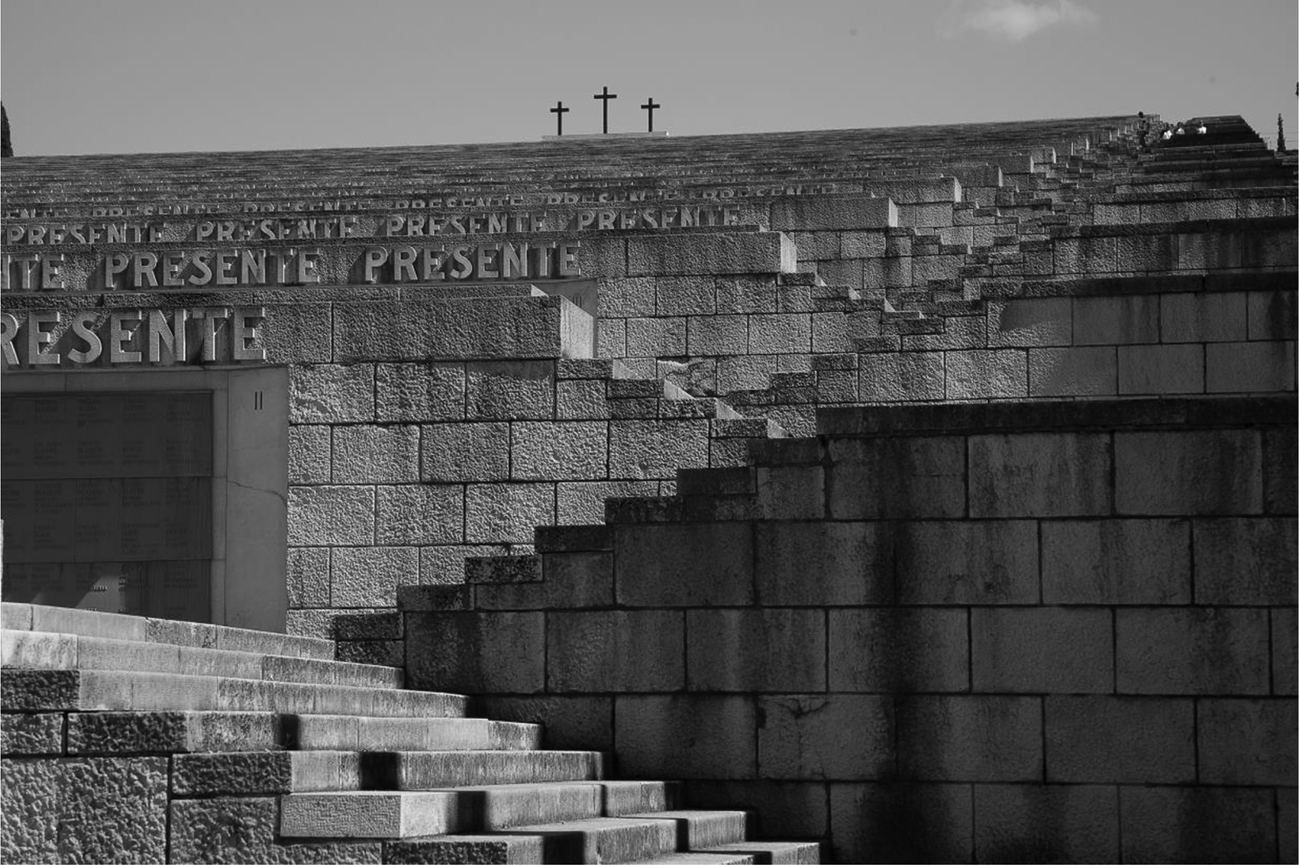
That vision of unity was reflected in the design and organization of the ossuaries. Whereas originally the fallen had been buried in smaller cemeteries with graves differentiated by individual markers, within the ossuaries there was generally little distinction between one set of remains and the next. At Redipuglia, for instance, the remains of over sixty thousand unidentified bodies were massed into crypts, while the remaining forty thousand known soldiers were located in uniform niches within a stepped monolith of white stone. The word presente, which runs along the top of each massive step, is a reference to the Fascist ritual of the rollcall, whereby an officer calls out the names of the dead and their fellow soldiers answer presente, meaning that the dead are ever-present in the memory of the living, and notionally, ever ready to serve (image 3). Against that background of willing obedience, individual identities are largely ignored within the ossuaries, as individuality gave way to the use of exemplars as representatives of Italy’s “moral unity.” The ossuaries also sidelined those who were seen as unworthy, such as soldiers who had been executed for desertion and whose names did not appear in the official register of deaths, the Albo d’Oro (Golden Register).Footnote 41
Redipuglia, 1938 (author’s photo, 2014).
National unity was of particular concern where the ossuaries were located on land that had been acquired from Austro-Hungary, and within which the regime sought to “Italianize” German-, Ladin-, Croat- and Slovene-speaking inhabitants through a form of “internal colonization” that involved the brutal repression of local languages and cultures.Footnote 42 For instance, Redipuglia, which is now close to the Slovenian border, stands in a region where the majority of men fought with the Austro-Hungarian army.Footnote 43 As a tool in the Fascist campaign of “Italianization,” Redipuglia presented the fallen soldier as a model Italian, while excluding from the national community those who fought on the other side. The ossuaries also constituted a warning to local non-Italian and dissident groups in that, for the regime, they represented “an order” to those who might seek to “diminish the immense moral value of our sacrifice,” and “an admonishment to the generations that will follow” (1931).Footnote 44
In some ossuaries, enemy soldiers were buried in areas that were separate from those given over to an Italian majority.Footnote 45 Whereas Italians and Austrians were buried together following the wars of Italian Independence of the late nineteenth century, Fascist ideology divided Italians from their adversaries.Footnote 46 That separation reflected a common policy among former belligerent countries in the interwar period, and a tendency to move away from the notion of international solidarity.Footnote 47 Although an international treaty obliged the Italian state to maintain Austro-Hungarian graves on Italy’s soil, these were mostly excluded from Fascist strategies regarding the war dead. One exception was the ossuary at Monte Grappa, which, in addition to over twenty-two thousand Italians, accommodates about ten thousand Austro-Hungarians within a separate area that signals their marginalization.Footnote 48 That tendency to sideline even a former enemy reflected the nature of a Fascist morality, and a separatist ethos based on the rights of Italy as an individual nation rather than universal human values.Footnote 49 In ignoring the principle of international reciprocity, that separatism excluded from moral consideration foreigners and non-Italians within the new territories, and reflected in how the presence of ossuaries aided the forced assimilation of Italy’s new citizens.
Strength
The ossuaries also used commemoration in a way that supported Mussolini as the nation’s primary exemplar. Having ascended to power by undemocratic means, the Duce needed to legitimize his government in the face of entrenched weaknesses in the Italian state and the existence of rival factions. In his speeches, he invoked the moral authority of the fallen whose sacrifices ennobled Fascism as a cause. Equally, the Fascist celebration of the death of “honorable men” helped enhance the regime’s image of itself and to generate emotions that were harvested by Mussolini. A text written by a veteran of the First World War, and published as propaganda in 1935, describes how: “Since [the Fascist rise to power] the white bones of our comrades … rest in peace and their spirits float in the blue sky of Imperial Rome, singing the new songs of the Fatherland.”Footnote 50 Seen from this perspective, credit for the ascendency of the dead “into the blue sky” was largely awarded to Mussolini.
Moreover, given that the First World War had exposed limitations in both Italy’s military prowess and international standing, the ossuaries contributed to propaganda aimed at restoring the nation’s dignity. In that respect, they were said to have inspired a sense of “gratitude towards the Government of Benito Mussolini” for having “been able, alone, to awaken in the soul of each Italian awareness of their moral value and strength by reclaiming the victory [in the war].”Footnote 51 As monuments to the “sacrifices and glory of the fatherland,” the ossuaries also assuaged an Italian inferiority complex that resulted from a stereotypical image of Italy as a militarily inept nation; an image that was, in part, dispelled through propaganda that depicted Mussolini as the principal exemplar in control of the ossuaries.Footnote 52 In short, the idea that the dead were a source of energy and renewal was captured in an image of how “light irradiates” from the ossuary of Redipuglia “into all the capillaries of national activity” from Mussolini, “to the comrade [and] to the child who is their most ready and secure heir.”Footnote 53
War
Another major motivation behind the creation of the ossuaries was their value as a call to arms. In accordance with Mussolini’s dictum to “remember [the dead] and prepare [for war]” (ricordare e prepararsi), commemoration and mobilization went hand in hand within Fascist ideology. The regime faced resistance in promoting the principle of military service as tradition dictated that many Italians felt a greater obligation toward their family or community than to the state.Footnote 54 As a model of self-sacrifice, the fallen soldier popularized the idea of dying for the fatherland, while centuries of military mythmaking depicted that death as the bella morte, or the “good” or “beautiful” death—an ideal that was also infused with a Christian view of martyrdom.Footnote 55 Thus, in reminding the nation that no death is “more beautiful than that of a soldier in battle,” a guide to war cemeteries of 1929 reiterated tropes once associated with nineteenth-century Italian patriotism.Footnote 56 However, in contrast to earlier incarnations of Italian nationalism, Fascism cast death in combat as both an act of obedience and the fulfillment of an ideal. War was depicted as a state of being that “increases all human energies to the maximum tension.”Footnote 57 Thus, war was viewed in the light of a mobilization of the spirit that might pervade the Italian people. In that sense, the military served as an important institution of moral education that advocated “virtue, sacrifice and complete dedication to the [Fascist] Idea.”Footnote 58 This bellicose rhetoric heightened over the period of 1935–1939 in line with Italy’s invasion of Ethiopia, the Spanish Civil War, and the outbreak of the Second World War. While most of the ossuaries were built within that period, some ten days after the inauguration of the ossuary of Monte Grappa in 1935, Italy invaded Ethiopia, at which point one journalist compared the site to a “blazing light that the Nation watches so as to attain, through one victory after another, peace through justice.”Footnote 59 Similarly, at the opening of the ossuary of Asiago in 1938, the Chief of the Italian General Staff, Pietro Badoglio, stated that to be “worthy” of the fallen, all Italians “must be ready to follow their example.”Footnote 60 As such, while supporting the Fascist view of war as a source of moral regeneration, the ossuaries promoted Italy’s imperialist ambitions and colonial wars.
As already noted, the ossuaries were also instruments of war in that they signaled the subjection of areas gained by Italy after the First World War. In fact, while the press described the ossuaries as sentinels protecting Italy’s borders, they were also seen as outposts for future conquests.Footnote 61 For example, three ossuaries that were built in the German-speaking region of South Tyrol/Alto Adige departed from the general program in that they were not located near former battlegrounds but were intended to communicate to local populations that they were under new Italian rule. Hence, for example, the ossuary of Colle Isarco, close to the Brenner Pass, looks like a fortress sited on a major road. In Mussolini’s words, the aim was “to let the Tyrolians, the Austrians” know that “all Italians—living and dead—stand ready by the Brenner.”Footnote 62 One author described the dead warning Italy’s enemies that Italians were prepared to fight against invaders.Footnote 63 Significantly, after the assassination of the Austrian chancellor in 1934, Mussolini moved troops to the Brenner Pass in order to discourage a German annexation of Austria. Similarly, whereas the ossuary at Redipuglia was initiated during the Ethiopian war, by the time of its completion in 1938, Europe was heading towards a second global conflict. In fact, propaganda published in 1941 describes Redipuglia as the “spark” that ignited the Second World War and depicts Italian soldiers gathering at the ossuary to march into the Balkans.Footnote 64 Although the influence of propaganda should not be overestimated, the Fascists clearly envisaged the ossuaries as a concrete expression of Italy’s “battle cry.”Footnote 65
Means and Modes
The benefits that the regime attempted to draw from Italy’s war dead determined the symbolic values carried by the architecture and location of the ossuaries, and by the uses to which they were put. Architecturally, those values were realized by means of the organization of forms, spaces, and iconography within the ossuaries. For instance, some designs drew on signs embedded in ecclesiastical architecture in order to imbue the burial of the fallen with a sacred aura.Footnote 66 Plans and spatial structures are generally hierarchical and some, such as Monte Grappa and Redipuglia, are evidently axial. Accordingly, the axial and hierarchical nature of those plans allowed for the prominence of specific exemplars, as evidenced by the placement of the tombs of commanders at the front of the lower ranks in Redipuglia, and the location of the bodies of decorated soldiers within a sarcophagus at the center of the ossuary at Oslavia (image 1). In that they were sited close to former frontlines, the ossuaries contributed to a policy to turn the former battlefields into national monuments, and that symbolism was also underwritten by the location of the ossuaries in frontier regions and on sites whose significance was enhanced by altitude or by landscapes pockmarked by war.
With regard to its capacity to inspire visitors, a guidebook of 1940 describes the ossuary at Monte Grappa as “a symbol, memory, source, example [my italics].”Footnote 67 In addition, choreographed and ritualized forms of use reinforced the value of the ossuaries as political sites of pilgrimage and places in which a nation might honor its dead. School children, veterans, Fascist youth groups, and leisure organizations visited the ossuaries through organized tours. Visitors were expected to “pay grateful homage to the memory of the Fallen” and “take from their heroic sacrifice inspiration and encouragement to love the Fatherland.”Footnote 68 In particular, the young were encouraged to “draw on the heroic virtues” of the dead.Footnote 69 Expressions of respect were incorporated in rituals and specific actions, as in the act of ascending steep routes and staircases as at Redipuglia. Above all, the rallies and ceremonies that took place in the ossuaries were meant to school Italians in a Fascist morality that accorded the highest merit to death in battle. The nature of that morality, and the manner in which it was transmitted, were expressed in certain practices and bodily actions such as marching, and a pageantry of images and sounds. For example, the inauguration of Redipuglia in 1938 incorporated sensory experiences so as to induce particular feelings.Footnote 70 As reported in newspapers, the audience heard a “pleasant murmur” from a choir, smelt the smoke from a salvo of guns, and watched the Duce ascend the vast staircase.Footnote 71 At the climax of that ceremony, members of the military shouted presente to indicate they were “ready to be sent anywhere at [the Duce’s] orders”Footnote 72 Again, that ritual accorded the greatest value to individual sacrifice as a primary factor of a morality that was also popularized through film, pamphlets, newspaper articles, and postcards relating to the ossuaries.
At the same time, the ossuaries demonstrated how exemplars and their noble deeds were publicized by means of “storytelling,” as in a narrative that “reveals meaning without committing the error of defining it” (Hannah Arendt).Footnote 73 Under Fascism, stories of exemplary behavior had the capacity to appeal to a range of different individuals. The myths communicated through the ossuaries were also situated within the wider mythology of Fascism. That wider mythology embodied, for instance, the idea that the First World War was a heroic victory, that Fascism was heir to that victory, and that war was a regenerative sacrifice. Moreover, tales about specific exemplars reinforced those broader narratives, which generally gained greater moral weight as they involved a cast of characters to which Italians could relate. In admiring an exemplar, an audience might subconsciously accept the moral premise of a story that distinguished between correct and incorrect attitudes or behaviors.Footnote 74 Equally, the fallen were exemplary precisely because they conformed to long-standing definitions of bravery, loyalty, selflessness, discipline, ruthlessness, and perseverance. The relative familiarity and simplicity of such virtues had the potential to forge “moral unity,” or a nation motivated by common values such as patriotic pride and social solidarity.Footnote 75 Hence, Fascism borrowed from known elements of literature and religion to reinforce the image of the fallen soldier, as an exemplar that might be easily absorbed into the public consciousness.
Heroic Exemplars
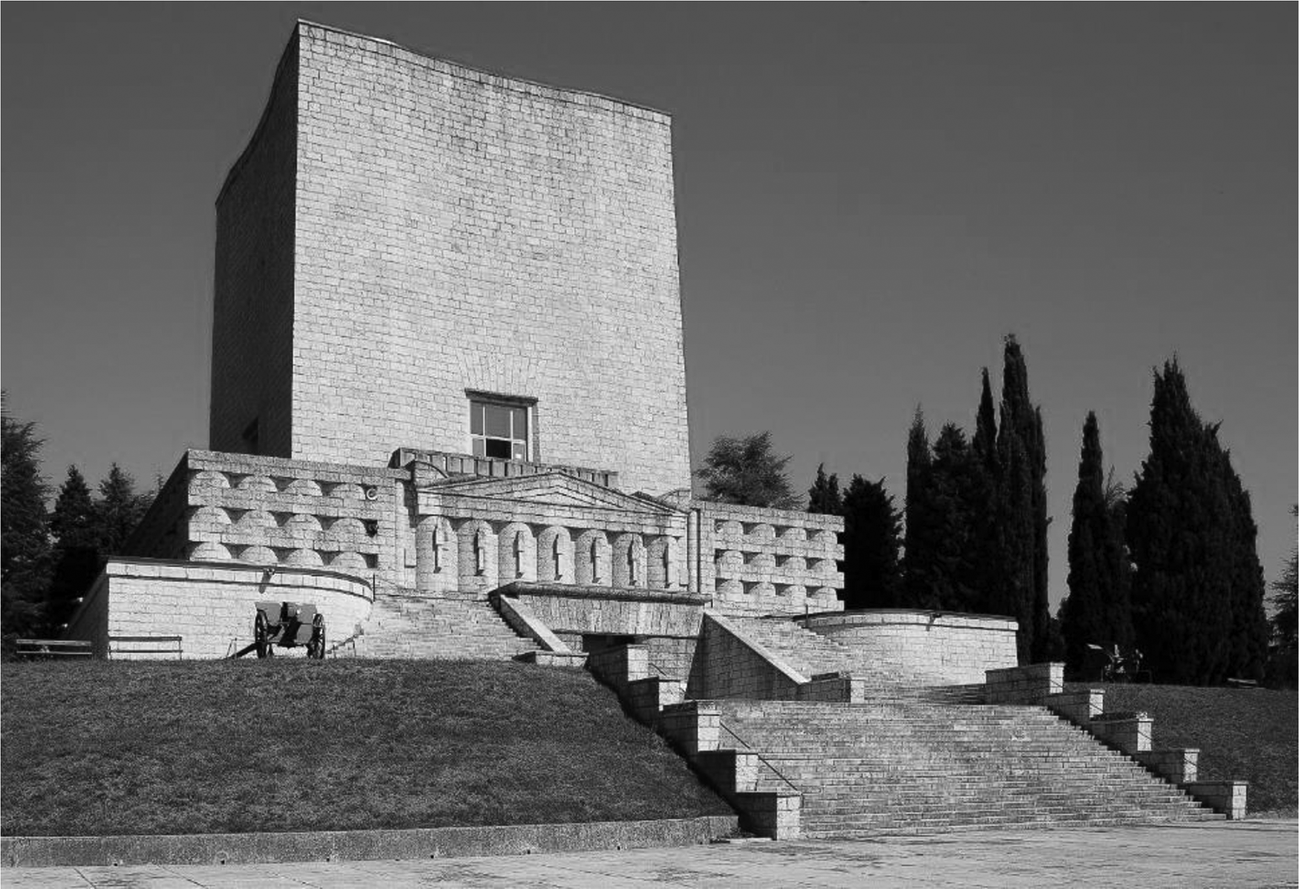
In order to “glorify the epic deeds of our soldiers across the ages,” the ossuaries drew on the traditions of epic poetry and ancient tales of heroism, combat, and death.Footnote 76 Such means enhanced the propaganda value of Italy’s war dead by elevating some exemplars above others in the same group. For instance, decorated soldiers were singled out as chief exemplars. At the ossuary of Montello, where the remains of over ten thousand soldiers are held within a modernistic fortress built in 1935, special status is given to those who were awarded the Golden Medal for military merit (Medaglia d’oro), in that they are buried in separate niches marked by plaques that record their heroic actions (image 4). Despite the fact that most Italian soldiers were conscripts, accounts of heroism tend to portray the dead as volunteers who willingly died for the cause. For propaganda purposes, lives were meant to be freely given or “donated.”Footnote 77 One soldier is remembered as: “An officer of evident virtue who having learned that his Battalion was engaged in an offensive, voluntarily interrupted his winter leave to run back to his position of honor and danger.”Footnote 78 Another is described in terms of the importance placed on lives freely given: “Voluntarily enlisted, he took part in important actions, always driven by great enthusiasm and love of the fatherland. Although suffering from a fever he wanted to participate in an important offensive with supreme disregard for danger.”Footnote 79 Similarly, dedication to the national cause is seen to render soldiers careless with regard to their own safety and ready to exhibit a fearlessness that is highly prized: “He was always among the fighters in the most dangerous moments of battle. Finding himself with a division that was thoroughly worn out, whose Commander had fallen, he took control and reassured the men, inciting them to avenge their Captain, and launching them in attack.”Footnote 80 Moreover, plaques are evidently intended to inspire future soldiers who might be drawn into war under Fascism: “Having taken Command of the Battalion in particularly critical circumstances he managed with singular skill and the influence of his valorous example [my italics] to drag troops that were already shaken into an attack. He was the first to reach the much-contested enemy position where he fell stabbed in the heart by an Austrian bayonet.”Footnote 81
Montello, 1935 (author’s photo, 2014).
Many of the stories told follow a pattern rooted in epic literature, whereby the warrior meets unsurmountable challenges, perseveres, and finally dies without remorse or fear: “Fighting the enemy hand-to-hand and injured in different body parts by bomb shards, heedless of the pain, he continued to advance always at the head of his men. In a second advance … he was injured a second time, [and] medicating himself as best as he could, he continued to fight.… Hit for a third time and lethally he fell gloriously in battle.”Footnote 82 Thus, these accounts graft onto older traditions of heroism the Fascist ideal of individual sacrifice for collective gain: “Having bravely advanced in reconnaissance among the enemy lines … he managed to warn [his comrades] of an encircling movement on the right side in time to avoid the trap. Repeatedly hit by a burst of machine guns, he fell gloriously on the field of battle, shouting: ‘do not think about me, comrades, always [march] ahead, for the grandeur of Italy.’”Footnote 83 Fundamentally, however, as moral exemplars all fallen soldiers are seen to share common attributes; notably, stubbornness, optimism, and courage: “Serene, calm, and smiling in the face of danger he was always in an exposed position among his men as a shining example of tenacity and valor.”Footnote 84
Such stories were tools through which existing and future members of the military were trained to kill and die without hesitation or remorse, and to aspire to the qualities of a warrior.Footnote 85 In that sense, the ossuaries endorsed a morality that legitimized violence and killing in the name of a higher cause. Equally, they promoted a mindset that might be described as masculine and virile, whereas women were expected to look to other Fascist exemplars such as “the unsmiling mother, with dry eyes, who is capable of saying to her son: ‘Go and accomplish your duty thoroughly [by dying at war]’ but in solitude suffers and waits.”Footnote 86
Among the fallen of the First World War, famous exemplars also included the “martyrs” of irrendentismo, the nationalist movement that sought the seizure, from Austro-Hungary, of Italy’s “unredeemed” lands to the northeast and along the Balkan coast. Born in the Trentino region, the irredentisti Damiano Chiesa, Fabio Filzi, and Cesare Battisti evaded conscription by the Austrian army and enlisted as volunteers with the Italians but were eventually captured by the Austrians and executed as traitors. Told in the traditional terms of martyrdom, their stories became well known and were popularized under Italy’s Liberal and Fascist governments as evidence of a patriotism that transcended Italy’s borders. Whereas Battisti was buried in a mausoleum in the city of Trento, the remains of Chiesa and Filzi were placed in urns at the center of the ossuary of Rovereto.
While Fascism incorporated different depictions of martyrdom, the ideal hero was devoted to the Romantic model of an almost impossible mission and entertained relatively old-fashioned images of warfare and sacrifice. Plaques at Montello describe scenes of hand-to-hand combat that were rare by the time of the First World War given the emergence of mechanized forms of warfare.Footnote 87 In contrast, Fascist propaganda reflects images of chivalrous encounters with a visible enemy. That outdated image of warfare recalled an earlier group of over two thousand commemorative booklets that were published during, or soon after the First World War by the families of Italy’s fallen soldiers.Footnote 88 These pamphlets offer an idealized biography of the deceased from childhood to death and were generally in a format akin to that used by the Church to outline the life of a saint. Privately published, they show the degree to which the general public used a rhetoric based on patriotic and spiritualized sacrifice as a means of coping with the loss of immediate family members. They also indicate the existence of attitudes to the fallen that were later coopted by Fascism and adapted to new purposes. Fascism also overlaid such attitudes with adjustments that licensed an air of inhumanity and violence towards the enemy, and an allied conception of the exemplary soldier as a dutiful but ruthless servant to the state. Thus, over time, the image of the martyrs of irrendentismo as exceptional individuals moved toward an image of the obedient soldier, and a willingness both to serve and to die. For instance, a biography of Fabio Filzi published in a magazine in 1917 stresses “the qualities of his intellect and character,” and his “enthusiasm” and “patriotic feelings.”Footnote 89 By contrast, a Fascist pamphlet focuses on Filzi’s military skill, and that he declared “I am very happy to die for my Italian Fatherland.”Footnote 90
Ordinary exemplars could also be elevated among their peers.Footnote 91 For example, an honorable burial was accorded to the “humble peasant” Giuseppe Degol, who returned to Italy from Australia in order to enlist and whose lowly origins and ability to struggle are recorded in the following terms:
Commander of a large selected patrol, he launched himself in attack at the head of his men against a group of enemies in a strong position. Fatally hit in the head, he continued to encourage his men to persevere with the action, and with his heroic example [my italics] and his words, he was able to instill in them so much impetus and audacity that, although in smaller number, they were able to dislodge the enemy and force them flee. Exhausted, he exhaled his last breath while crying “Hurray for Italy”! [Viva l’Italia].Footnote 92
In contrast to the nineteenth century, when the same final words were attributed to heroes of the Risorgimento, Degol was depicted as an obedient soldier rather than as a unique individual.Footnote 93
Under Fascism, the unnamed majority evidently outweighed the number of “named” exemplars, decorated soldiers, and famous martyrs. That undifferentiated mass was loosely represented by the foot soldier (fante)—a symbolic figure that emerged prior to Fascism as the result of efforts to democratize the remembrance of fallen soldiers, but which was later coopted as an element of Fascist mythmaking. Fascist propaganda describes the foot soldier as “the warrior with formidable muscles, flashing eyes and a brutal force who is able to resist all other forces.”Footnote 94 He stands out within the “immense army of the fallen” as the epitome of soldierly virtues.Footnote 95 Although he is “good and gentle,” he transforms on the battlefield into a killing machine, and his willingness to sacrifice his own life gives him the right to kill his enemies without mercy.Footnote 96 Behind this image lies that of the most celebrated soldier of the dictatorship; namely Mussolini, who served in the First World War as a marksman before being wounded in a training accident in 1917. In contrast to Mussolini, the Italian foot soldier is an “everyman” and is akin to the anonymous figure of the Unknown Soldier to whom monuments were erected in cities across Europe in 1920–1921.Footnote 97 However, while that image of the foot soldier emerged after the First World War as a symbol of the rights afforded to common soldiers, in Italy the notion of anonymity reflected the Fascist ideal of a private life that was subordinated to the public good. Thus, the identity of the Fascist foot soldier is as a member of the military, rather than as a son, father or husband. Nevertheless, although ordinary, the Italian foot soldier is also special, which reflects the ambivalence highlighted by Paolo Heywood (this CSSH issue) with respect to exemplars, which are typical of a general category but possessed of special qualities.
In Italy, the status awarded to the foot soldier reinforced, rather than reduced, a tendency toward elitism. For example, three Italian generals of the First World War, who later held positions in the Fascist regime, were granted the honor of burial within the ossuaries even though they died of natural deaths years after the conflict.Footnote 98 Their exemplarity served a different purpose, which was to support the Fascist principles of hierarchy and leadership. In contrast to the foot soldier, the generals were seen to be extraordinary. Thus, while the fallen were generally deemed worthy of imitation, there were important differences between the celebration of dutiful soldiers as a laudable mass, and of leaders as unique individuals. Meanwhile, there were also other variations: for example, survivors of the First World War were singled out when, in claiming to represent the interests of veterans, the regime looked to former combatants as possible recruits, and as exemplars whose continued presence had propaganda value. Such veterans included the “Grande Mutilato” Carlo Delcroix, who having lost his hands and sight in the First World War became an icon of the regime as a member of the Fascist government and President of the Association of disabled ex-Servicemen (ANMIG).
Religious Exemplars
The Fascist categorization of the fallen soldier as an exemplar overlapped with that of the religious martyr and followed an older tendency to promote the First World War as something akin to a holy crusade, or sacred mission.Footnote 99 This reflected a convergence of politics and religion, or a “sacralization of politics” as a process whereby, from the late 1700s, Italian nationalism borrowed strategies from the clergy, and the sacred migrated from the religious to the political sphere. In effect, Fascist ideology was conceptualized as a faith.Footnote 100 Under conditions in which the decline of religious authority ran together with an expansion of the state, Fascism sought to supplant Catholic morals with a code that favored the regime, and which depicted its cause in religious terms.Footnote 101 When, in 1925, Mussolini established the Albo d’Oro, the roll of honor that bore the names of fallen Italian soldiers, he declared its pages to be “as sacred as Christ’s Gospel,” thereby casting Fascism as a “political religion” founded, in part, on the sacredness of the fallen.Footnote 102
At the same time, the Fascist institutionalization of remembrance also reflected a rapprochement between Church and state. The Lateran Pacts of 1929, which officially allied the dictatorship to the Vatican, were meant to resolve conflicts between secular and clerical authorities dating back to the Risorgimento. In reality, this was a marriage of convenience dictated by mutual self-interest rather than ideological alignment. Thus, tensions emerged as Fascism encroached on the domain of the Church and threatened the autonomy of the clergy.Footnote 103 As a facet of Italian life that was commandeered by the regime, the commemoration of the war dead became a source of rivalry between the Fascist and clerical powers, although, in exchange for backing the regime, the Catholic Church was granted a role in the main rituals of Fascist commemoration.Footnote 104
Meanwhile, Catholicism was a fruitful source of images and concepts through which the regime promoted the fallen soldier as an exemplar. For instance, the ossuaries were officially called shrines (sacrari) because they gathered “the mortal remains of our Martyrs.”Footnote 105 The traditional, and often bloodied image of the religious martyr was largely secularized through nationalist narratives of the nineteenth century.Footnote 106 In turn, religious imagery and a militaristic rhetoric of aggression came together during the First World War, as the Catholic Church supported the Italian state through initiatives aimed at harnessing a religious sense of duty to the war effort.Footnote 107 Under Mussolini, however, the traditional paradigm of Christian martyrdom was resurrected insomuch as it was appropriate to Fascism as an ideology based on death and sacrifice.Footnote 108
The creation of shrines dedicated to Fascist martyrs within churches, such as that of Santa Croce in Florence, demonstrates how Fascism attempted to benefit from associations with Catholicism. Similarly, within the ossuaries, the exemplarity of the fallen soldier drew on the image of Christ as a figure sacrificed, and as a major symbol of martyrdom. At Redipuglia three large crosses, located at the top of the giant staircase, symbolize the “Calvary” of the fallen (image 4). Equally, at Pian di Salesei, the ossuary rises from a plan that is arranged in the shape of a cross, and while the blocks that make up the cross represent battles in the surrounding area, the deaths associated with those battles are cast as necessary sacrifices on the path to national salvation. Official publications also compared the mythical foot soldier to Christ as a messianic figure, who died under comparable conditions, in that both Christ and the fallen soldier “saved humanity … died for Redemption … gave us a religion, [and] began a new era.”Footnote 109
Following an Italian tradition of sacri monti, or up-hill pilgrimages sites, visitors to the ossuaries were meant to endure pathways that were physically taxing in order to express their indebtedness to the dead and faith in the nation for which lives were lost. For one author, the soldiers buried in the ossuaries were akin to saints because their “sacred function is to keep patriotism alive among Italians.”Footnote 110 For another, the role of the dead was that of “apostles of the religion of the fatherland.”Footnote 111 Similarly, as “chosen souls” the fallen were thought to enjoy a state of grace or enlightenment.Footnote 112 Thus, the idea that Italians should follow the example of the fallen, and embrace a spirit of sacrifice, is akin to the concept of Imitatio Christi as established in the medieval book of devotion attributed to Thomas à Kempis.
In order to encourage emulation, it was also crucial that exemplars were seen to be rewarded by means of their position within the national memory.Footnote 113 In that sense, the regime’s view of exemplars can be examined in the light of how they were viewed by Italians who responded perhaps with enthusiasm, admiration, disgust, or indifference. Due to the difficulties of accessing sources, knowledge of individual responses is necessarily limited, and restrictions on freedom of expression due to censorship cast doubt on the veracity of sources that are available. Thus, it is difficult to gauge the success of the ossuaries in terms of the promotion of a genuine admiration for fallen soldiers. It is also hard to distinguish between reactions engendered by the regime and those that sprang from the nature of bereavement and the emotional needs of mourners. Nonetheless, recruitment under Fascism drew heavily from a generation of men who had been too young to enlist in the First World War, and some of those recruits joined the Fascist squads to compensate for that missed experience.Footnote 114 Equally, the popularity of war literature in this period suggests that some men did fall under the spell of heroic exemplars. It is also the case that, in general, the narratives associated with exemplars varied because they were promoted by different bodies of the Fascist state, the Party, related associations, and the official and unofficial media. Those narratives also took on different meanings as individuals tailored exemplars to suit their own needs and beliefs. Thus, to some extent, the fate of the fallen soldier as an exemplar was the product of a mass of individual reactions and interpretations on the part of the Italian people, and of a medley of adjustments made to propaganda as promoted by Fascism.
International Comparisons
Although Fascist exemplarity drew on distinctly Italian traditions, beyond Italy, most (although not all) fascist movements looked to the use of exemplars, especially in relation to the dead. In particular, given that Hitler’s regime had strong ideological, cultural, and political ties with Mussolini’s, parallels emerged between the use of exemplars in Italy and Germany. As in Fascist Italy, National Socialism promoted a morality that highlighted the importance of the German nation and the role of the individual in relation to the state. Fallen soldiers of the First World War occupied a special role as martyrs harvested by Nazism.Footnote 115 Equally, a cult of the dead was reinforced by religious and political narratives that promoted war, heroism, duty, morality, and manhood. In casting the fallen as a life force of the German nation, the Hitler Youth proclaimed: “The best of our people did not die so that the living might die, but that the dead might come alive.”Footnote 116 As with the Italian fante, the anonymous infantry soldier, or Landser, became a German icon. However, in this realm there were subtle differences between National Socialism and Italian Fascism, for instance with respect to the use of religious imagery in Italy. Although Germany embraced the idea of the soldier as martyr and savior, the emphasis on Christian symbols was less pronounced.Footnote 117 Moreover, whereas Mussolini’s pact with the Vatican allied religion to political martyrdom, National Socialism endorsed a secular cult of the dead that restricted or excluded the role of the clergy within commemorative practices, a sign of Nazism’s relative independence from religious institutions. In comparison to German Protestants, Italian Catholics were also more inclined to venerate the war dead as figures akin to religious martyrs.
From the early 1930s, the German War Graves Commission (VDK or Volksbund Deutsche Kriegsgräberfürsorge) created Totenburgen, or “fortresses of the dead,” to accommodate German soldiers who fell in Central Europe and the Balkans.Footnote 118 Three months before Italy and Germany were linked by the Rome-Berlin Axis of 1936, an agreement between the two governments led to the creation of five German Totenburgen in northern Italy. They were comparable to their Italian counterparts in form and intent, insofar as they adopted monolithic architectural formats and functioned as sites that Germans were encouraged to visit. However, while the architecture of the Italian ossuaries generally reflected an attachment to styles that were both historicist and yet modernistic, the art and architecture of their German equivalents tended to be more historicist and conservative, and to carry stronger references to the Middle Ages and medieval chivalry. For instance, the German ossuary at Quero (1936–1939), although on Italian soil, was built in the style of a medieval fortress with traditional and naturalistic depictions of robust soldiers. In effect, the Totenburgen reflected Nazi Germany’s rejection of modernism and the control the state exerted over art and architecture that were intended to legitimize Nazism by means of evidently historical references. Still, although different in style, both the German and Italian ossuaries resulted from the ambition to use the fallen soldier as an exemplar with a view to satisfying political and ideological demands.
Conclusions
Fascism embodied a sense of morality that justified the use of force and coercion, encouraged obedience, and promoted acceptance of the primacy of the state. That morality was suited to the use of exemplars, and particularly of the fallen soldier, whose value to the state was such that it resulted in the creation of the Fascist ossuaries. While every society has its own exemplars, Italy’s Fascist regime was particularly reliant on exemplarity as a political tool. In that respect, the image of the fallen soldier was fashioned to support an ideology that was: (a) ill-defined and inconsistent; (b) polarizing and divisive; (c) based on an epic vision of nationalism and renewal; and (d) demanded subservience to the Fascist leadership. Thus, those who died for the nation were depicted as warriors and martyrs, and used to epitomize heroism, obedience, violence, and sacrifice. Meanwhile, in constructing an image of the fallen, Fascism drew on history and precedents, such as those borrowed from the Risorgimento and the Church, but it also shaped each exemplar by means of new devices and immediate political needs and, in the case of the fallen soldier, in line with the model of the Duce as the prime exemplar.
While the ossuaries concentrated the remains of the war dead in a homogenized mass of similar “cells,” they were also places where architecture and art served to concretize and exploit the meanings attached to the fallen. Equally, certain uses, practices, and ceremonies acted as ritualized forms of propaganda that drew on history, religion, and political traditions, and on symbolism that could be ancient and modern. Both the physical and functional aspects of the ossuaries carried meanings borrowed, for example, from epic poetry, European Romanticism, and Catholicism. Whether as martyrs or as warriors, the dead were presented as paradigms of obedience, discipline, faith, sobriety, social solidarity, disdain of materialism, and respect for authority, and ultimately as heroes who were willing to die for the benefit and glory of Italy and Fascism.Footnote 119 Moreover, in that they helped attribute moral value to the core myths of Fascist ideology, the fallen became key sources of political and moral legitimacy. The war dead were thus used to support efforts to unify and strengthen Italy, and to prepare Italians for war. In appealing to values such as loyalty and selflessness, idealism and patriotism, Fascism turned traditional and “positive” qualities towards militaristic ends. In that respect, a Fascist morality emerged on the back of adjustments made to the definition and interpretation of established virtues.
Finally, exemplarity continues to be a chief facet of political and religious ideologies, culture wars, and social conflicts that revolve around factors such as racism and gender equality. It is expressed in the current struggle to either destroy or protect certain statues and monuments, and to commemorate or expel from history figures associated, for example, with colonialism and slavery. It also runs through the naming and renaming of streets and urban spaces. In that respect, its importance can also be traced through the evolving reactions of populations, such as those of Italy or Germany, to monuments and urban projects inherited from regimes whose ideologies have been largely rejected. Equally, it is evident in the attempts, for example, of far-Right movements to defend the existence of such monuments. Essentially, there is the question of who deserves exemplary status. As in the case of the “monuments war” that erupted in Italy after the First World War, clashes continue to be fought between different conceptions of morality. In Italy, Fascist exemplars still exist as part of the cultural and political fabric of the country. Since 2017, Italian neo-fascist groups have met every year in order to commemorate “Fascist martyrs” at a chapel built by Mussolini within Rome’s Verano Cemetery for those who gave their lives for the regime.Footnote 120 At the same time, the growth of anti-racist activism across the globe is empowering calls within Italy for the demolition of monuments associated with Fascism and colonialism, including those that commemorate the Fascist governor of Somalia, Rodolfo Graziani, and the journalist Indro Montanelli.Footnote 121 On both sides of the political divide, Fascist exemplars are still inspiring calls to action. Thus, an understanding of how exemplarity is tied to fascist tendencies might be used as a basis on which to examine their ongoing appeal, especially to particular sections of Italian society and those of other countries.


 Open access

