


Introduction
Covering > 12% of land surface, protected areas constitute the principal approach to biodiversity conservation and comprise the largest planned land use globally (Jenkins & Joppa, 2009). Described as ‘clearly defined geographical space[s], recognised, dedicated and managed, through legal or other effective means, to achieve the long-term conservation of nature with associated ecosystem services and cultural values’ (Dudley, Reference Dudley2008), the very concept of a protected area assumes that it will be preserved and/or managed in perpetuity, remaining a permanent fixture in the landscape. As such, historically they have been conceived and managed as static features that should persist unchanged through time (Bengtsson et al., Reference Bengtsson, Angelstam, Elmqvist, Emanuelsson, Folke and Ihse2003; Folke et al., Reference Folke, Hahn, Olsson and Nordberg2005; Mascia & Pailler, Reference Mana, Rajaonarivelo, Milleville, Razanaka, Grouzis, Milleville, Moizo and Aubry2011).
Increasingly the steady state paradigm of protected area management is viewed as inadequate, given the fact that ecosystems are inherently dynamic and that climate change will lead to the migration of species and habitats beyond protected area boundaries (Hannah, Reference Goodman2008). There is increasing awareness that protected areas are components of complex social–ecological systems (Ostrom, Reference Newton2009; Milner-Gulland, Reference Meyers, Ramamonjisoa, Sève, Rajafindramanga and Burren2012), with the resource use patterns of rural communities living within and around protected areas evolving through time (Geoghegan & Renard, Reference Gaston, Jackson, Cantú-Salazar and Cruz-Piñón2002; Aung et al., Reference Aung, Swe, Oo, Moe, Leimgruber and Allendorf2004; Venter et al., Reference Venter, Naiman, Biggs and Pienaar2008; Newton, Reference Newing2011). Thus, temporal shifts in land use and livelihoods should be seen as the rule rather than the exception (Folke, Reference Folke2003). However, whereas there is a considerable body of literature on protected areas as agents of social change (e.g. Ghimire & Pimbert, Reference Geoghegan and Renard1997; West et al., Reference West, Igoe and Brockington2006; Schmitz et al., Reference Réau2012), there has been little research, policy or practical focus on livelihood dynamics as a management challenge for protected area managers. For example, none of the relevant publications in IUCN's Best Practice Protected Area Guidelines series (Phillips, Reference Ostrom2002; Thomas & Middleton, Reference Thomas and Middleton2003; Dudley, Reference Dudley2008) provide explicit instructions or recommendations regarding how to detect or manage sites being influenced by shifting livelihoods.
Resource use by local communities is a key threat to the viability of many protected areas (Naughton-Treves et al., Reference Naughton-Treves, Holland and Brandon2005; Gaston et al., Reference Gardner, Nicoll, Mbohoahy, Olesen, Ratsifandrihamanana and Ratsirarson2008). If protected area managers are to respond effectively, in terms of designing and implementing appropriate evidence-based interventions, they must first understand the factors that influence livelihood decision-making (St. John et al., Reference Seddon, Tobias and Butchart2013). This is particularly important for protected areas where management objectives include poverty alleviation or rural development alongside biodiversity conservation. However, the success rates associated with integrated conservation and development projects and community-based natural resource management have been low in general, in terms of both conservation and socio-economic outcomes. This is, at least in part, because managers have failed to appreciate and integrate local livelihood strategies and resource use patterns sufficiently into their planning (Newmark & Hough, Reference Naughton-Treves, Holland and Brandon2000; Brown, Reference Brown2003; Wells & McShane, Reference Vira, Kontoleon and Roe2004; Dressler et al., Reference Dressler, Büscher, Schoon, Brockington, Hayes and Kull2010; Brooks et al., Reference Brouwer and Falcão2013).
Here we investigate the drivers of rapid livelihood change, in the form of increased charcoal production, threatening biodiversity in south-west Madagascar. In 2009, staff of the international non-governmental organization WWF observed an increase in the amount of charcoal being produced within a new multiple-use protected area, Ranobe PK32, and transported into a nearby city. To develop suitable protected area management strategies, it was necessary to understand the shift towards this livelihood; managers needed to know what income-generating activities people had been practising previously and why they had switched occupation.
Study system
Almost 3 billion people depend on biomass such as fuelwood and charcoal for cooking (IEA, Reference Hulme and Shepherd2010). Charcoal is produced by the slow pyrolysis (heating in the absence of oxygen) of wood and is a favoured cooking fuel of urban communities because it has a higher energy density than fuelwood and is therefore easier to transport (Arnold et al., Reference Arnold, Köhlin, Persson and Shepherd2003). However, inefficiencies in the conversion process mean that charcoal use consumes greater quantities of wood than the use of fuelwood (Brouwer & Falcão, Reference Brooks, Waylen and Borgerhoff Mulder2004).
The dynamics and impacts of the charcoal industry in southern Madagascar have been little researched, despite charcoal and fuelwood constituting the primary domestic fuels for most of the population (Minten et al., Reference Milner-Gulland and Rowcliffe2012). Charcoal producers in the region use only hardwood trees (Mana et al., Reference Koechlin, Battistini and Richard-Vindard2001), thus causing forest degradation rather than outright deforestation (Casse et al., Reference Casse, Milhøj, Ranaivoson and Randriamanarivo2004), as is also the case in sub-Saharan Africa (Ahrends et al., Reference Ahrends, Burgess, Milledge, Bulling, Fisher and Smart2010). Degradation of southern Madagascar's spiny forest, a Global 200 priority ecoregion (Olson & Dinerstein, Reference Newmark and Hough1998), triggers a transformation in bird communities from endemic forest specialists to non-endemic generalists, thereby reducing its conservation value (Gardner, Reference Gardner2014). In particular, charcoal production threatens the degradation-sensitive subdesert mesite Monias benschi, a locally endemic species belonging to a monospecific genus of an endemic family (Seddon et al., Reference Schmitz, Matos, De Aranzabal, Ruiz-Labourdette and Pineda2003). The species is categorized as Vulnerable on the IUCN Red List and was one of the motivations for the establishment of the Ranobe PK32 protected area. Additionally, the debris (e.g. leaves, small branches) left by charcoal production increases the standing fuel load of the forest, leaving it more susceptible to fires, which do not penetrate intact habitat (Koechlin, Reference Keller1972; WWF, Reference Wells and McShane2010).
The average Malagasy family uses c. 500 kg of charcoal per year (Meyers et al., Reference Mascia and Pailler2006). In Toliara, the capital city of Atsimo Andrefana region (Fig. 1), < 2% of households regularly use electricity or gas to cook, and demand for charcoal tripled during 2000–2007; 54% of this demand was met by charcoal produced along Route Nationale 9 (Partage, Reference Olson and Dinerstein2008), the sole road connecting Toliara with towns to the north.
Location of villages along Route Nationale 9 in the vicinity of Ranobe PK32 protected area where questionnaires were administered among charcoal producers. The rectangle on the inset shows location of the main map in Madagascar.

The protected area Ranobe PK32 was created in 2008 and extended in 2010 as part of the 2003 Durban Vision initiative to triple the size of Madagascar's protected area network. The establishment of the protected area was led and funded by WWF, and it is administered by a shared governance structure comprising WWF, regional authorities and local community representatives (Virah-Sawmy et al., Reference Virah-Sawmy, Gardner, Ratsifandrihamanana and Scales2014). It is managed for biodiversity conservation and the sustainable use of natural resources for poverty alleviation and development, in line with the objectives of the country's expanded protected area system. Consequently, Ranobe PK32 has been proposed for designation as an IUCN category VI sustainable use area (Gardner, Reference Folke, Hahn, Olsson and Nordberg2011). The protected area has the greatest species richness of lemurs and birds of any site in the spiny forest ecoregion (Gardner et al., Reference Gardner and Davies2009a,Reference Gardner, Kidney and Thomasb).
The majority of the human population around Ranobe PK32 live along the Fiherenana Valley or Route Nationale 9, or in the agricultural plains south of the Manombo River, which were previously irrigated by a system of canals emanating from a colonial-era dam (Fig. 1). Livelihoods vary according to location and ethnicity; coastal villages are principally inhabited by Vezo fishers, whereas inland areas are inhabited mainly by Masikoro agro-pastoralists (WWF, Reference Wells and McShane2010). The eastern part of the protected area lies on a Tertiary limestone plateau and is threatened by slash-and-burn maize cultivation (hatsaky), but the unconsolidated sands of the coastal plain to the west are of poor quality for agriculture. Instead, the forests here are threatened by the production of charcoal for the urban market in Toliara, facilitated by the proximity of Route Nationale 9 (Seddon et al., Reference Scales and Scales2000; Virah-Sawmy et al., Reference Virah-Sawmy, Gardner, Ratsifandrihamanana and Scales2014). Charcoal producers living along this road target forests both inside and outside Ranobe PK32, although available hardwood resources are now concentrated within the protected area. Charcoal production is allowed within the protected area according to a zoning plan (i.e. outside core conservation areas) but all charcoal producers must obtain a permit from the State's Forest Service.
Methods
We administered a questionnaire face-to-face with charcoal producers resident in villages along Route Nationale 9 during December 2010–June 2011. As our aim was to understand the livelihood dynamics of people currently involved in charcoal production (rather than quantify the prevalence of charcoal producers in the population), non-probabilistic snowball sampling (Newing, Reference Minten, Sander and Stifel2011) was used to identify potential respondents. As we were investigating change in livelihoods, charcoal producers were considered eligible only if they had been earning a living independently for at least 5 years (i.e. they were not at school or otherwise dependent on their parents for a minimum of 5 years prior to interview). We also employed opportunistic sampling when producers were encountered along Route Nationale 9, transporting charcoal between villages by ox-cart.
On arrival in each village we met with the Chef de Fokontany (the head of the Fokontany, which is the smallest administrative unit, equivalent to a village or small cluster of villages) to explain the purpose of our research and ask him to suggest suitable participants. The homes of these individuals were visited in turn, with each questionnaire respondent asked to suggest additional potential participants within the village. The aims of the study were explained to all potential participants, and free and informed consent was sought prior to completing the survey. Individuals were assured that their responses would be anonymous and confidential. The questionnaire was administered in the local dialect of Malagasy by the second author (FULG), in a location chosen by the respondent (generally outside the home or in a public space).
The questionnaire consisted of both closed- and open-ended questions (an English translation of the survey can be requested from CJG), structured into four sections. The survey was developed with colleagues and piloted on 14 initial respondents; this led to modification of the questionnaire, and therefore the pilot data collected were discarded.
The first section collected basic socio-demographic information (e.g. age, level of education, ethnicity, village of current residence). Any participants found to be living away from their natal village (migrants) were asked, with an open-ended question, about the factors that had contributed to them leaving their previous home and their choice of destination. To detect any shifts in the relative importance of individual livelihood activities for household income, respondents were asked to rate activities on a three-point ordinal scale both at the present time (2010/2011) and 5 years previously (2005/2006): (1) an activity that is never carried out, (2) an activity that is conducted infrequently (e.g. 1 day per week or for 2 months per year) and/or is of secondary importance to other sources of household revenue during the year (henceforth minor livelihoods), or (3) an activity that is carried out often (e.g. 3 days per week or for 6 months of the year) and/or is an important source of revenue for their household (henceforth major livelihoods). A 5-year period was selected as it was sufficient to capture the increase in charcoal production that had been observed anecdotally by WWF staff, without being so long as to diminish the viability of recall data (Golden et al., Reference Ghimire and Pimbert2013). In section three, individuals who indicated that the mix of livelihood activities they practised had changed over time were asked an open-ended question as to why this was the case, facilitated by prompts from the interviewer from a list of potentially relevant drivers (e.g. lack of rain, not enough fish to catch, problems in life or family requiring money). The precise nature of any ‘family problems’ was not enquired about, as our pilot revealed that this made respondents uncomfortable. The final section focused on charcoal production specifically, with open-ended questions used to explore when during the year this activity is carried out, for how long and, if for just part of the year, why it is seasonal. In addition, open-ended questions were asked regarding where charcoal is produced, how far away from home this location is, and what difficulties the individual faces when producing charcoal.
Responses to open-ended questions were coded and grouped by response-type. Quantitative analyses of temporal shifts and differences in livelihood activities between residents and migrants were tested using χ2 analyses in SPSS v. 20.0 (IBM, Armonk, USA). A paired t-test was used to ascertain whether the number of livelihoods practised by individual respondents had increased over time.
Results
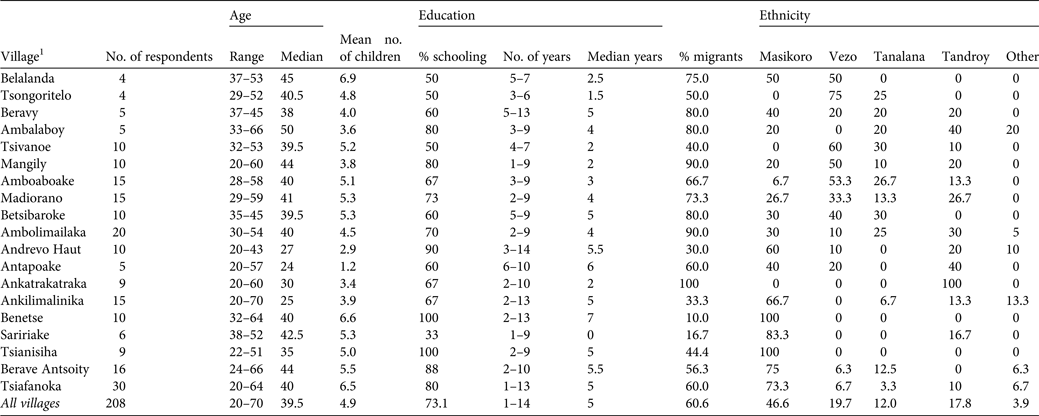
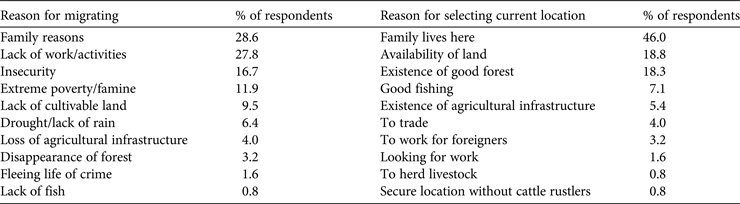
A total of 208 questionnaires were completed in full by charcoal producers resident in villages along Route Nationale 9, representing 16% of the estimated population of charcoal producers in the study area (WWF, unpubl. data). The age range of study participants, who were all male, was 20–70 (median = 39.5, interquartile range = 33–47; mean = 39.7 ± SE 0.76), and 60.6% of individuals were living away from their natal village (Table 1). Of these, 15.1% (n = 19) had migrated from Toliara, 57.1% (n = 72) from elsewhere in Atsimo Andrefana region, and 27.8% (n = 35) from the far south of Madagascar (primarily Androy region). Respondents who had migrated cited a number of factors that influenced their decision to translocate, and which underpinned their selection of settling area (Table 2), all of which related to the need to earn money and the opportunities (or lack of) for doing so.
Summary of socio-demographic data gathered during a questionnaire survey of charcoal producers in 19 villages along Route Nationale 9 in south-west Madagascar (Fig. 1), with village, number of respondents, age range, median age, mean number of children, education data (percentage of respondents that received some formal schooling, number of years of formal schooling, and median number of years schooled), proportion of migrants, and ethnicity.
1 In order of increasing distance from Toliara
Reasons cited by migrant charcoal producers (n = 126) encountered along Route Nationale 9 for migrating and selecting their current place of residence. Some participants provided multiple responses, and therefore the totals are > 100%.
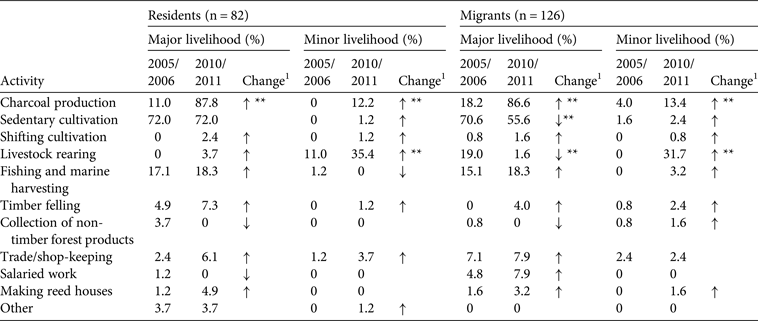
Only 7.2% (n = 15) of individuals who participated in the questionnaire produced charcoal as their sole revenue-generating activity. In addition to charcoal production, 63.9% (n = 133) of respondents also engaged in sedentary cultivation, 35.6% (n = 74) reared livestock and 20.2% (n = 42) fished or harvested other marine resources. Three activities increased significantly over the 5-year study period from 2005/2006: charcoal production (562.2% rise; χ2 = 247.6, P < 0.01), livestock rearing (224.2% rise; χ2 = 20.8, P < 0.01) and timber harvesting (300.0% rise; χ2 = 5.2, P < 0.05). People producing charcoal in 2010/2011 had diversified their livelihoods over time, from a mean of 1.4 to 2.5 activities per person (t = 18.4, P < 0.01), with the majority (92.8%, n = 193) reporting changes in the mix of livelihood activities they practised over the 5 years.
Amongst major livelihoods, the number of participants engaging in charcoal production (565.6% rise, from 15.4% in 2005/2006 to 87.0% in 2010/2011; χ2 = 213.6, P < 0.01) and shifting cultivation (from 0.0% in 2005/2006 to 1.9% in 2010/2011; χ2 = 4.0, P < 0.05) rose significantly over time. Conversely, sedentary cultivation (12.8% decline, from 71.1% in 2005/2006 to 62.0% in 2010/2011; χ2 = 4.1, P < 0.05) and livestock rearing (79.1% decline, from 11.5% in 2005/2006 to 2.4% in 2010/2011; χ2 = 4.5, P < 0.05) declined significantly during the 5 years. Although livestock rearing decreased as a major livelihood, it showed significant increases as a minor livelihood activity (772.1% growth, from 4.3% in 2005/2006 to 33.2% in 2010/2011; χ2 = 56.0, P < 0.01). Charcoal production was the only other activity to grow as a minor livelihood (541.7% rise, from 2.4% in 2005/2006 to 13.0% in 2010/2011; χ2 = 16.4, P < 0.01).
Variation in these trends was further examined for migrants and residents separately (Table 3). Few differences were apparent between the two groups, although there were significant declines in the proportion of migrants engaging in sedentary cultivation and rearing livestock as major livelihoods, which were not reflected in resident populations (χ2 = 6.6, P < 0.01, and χ2 = 20.8, P < 0.01, respectively).
Percentage of resident and migrant charcoal producers along Route Nationale 9 (n = 208) carrying out various revenue generating activities in 2005/2006 and 2010/2011. Participants tended to engage in multiple activities, and therefore the totals are > 100%.
1 ↑ , increase in activity; ↓ , decrease in activity
*P < 0.05; **P < 0.01
Respondents cited a range of factors as having driven a shift in livelihood activities over the period investigated (Fig. 2), reporting a mean of 2.7 factors per individual. We grouped proximal causes into those that related to the needs of the respondent and his household (which we term endogenous factors) and those that affected his ability to meet those needs (exogenous factors). Exogenous factors diminished the viability of some livelihood activities, particularly sedentary cultivation. Over two-thirds of participants (n = 134) stated that their shift to charcoal production was a consequence of lack of rain or a change in the rainy season, 30.3% (n = 63) cited the loss of irrigation infrastructure (a dam and associated canals) south of the Manombo River, 15.4% (n = 32) referred to a decrease in fish/marine resources, and 7.7% (n = 16) cited growing rates of cattle theft as factors that contributed to their adoption of charcoal production. Endogenous factors accounted for almost half (47.5%) of the responses provided, with participants reporting rising living costs, having more children, and family problems as driving their increased need for cash, and hence a shift in livelihoods.
Exogenous and endogenous drivers of livelihood change cited by charcoal producers encountered along Route Nationale 9 in south-west Madagascar (Fig. 1) who had altered their revenue-generating activities over the 5-year period 2005/2006–2010/2011 (n = 193). Horizontal bars represent the percentage of responses (n = 521; mean 2.7 per respondent).

Over half of our study participants (52.4%, n = 109) produce charcoal for only part of the year, during the agricultural off-season (generally March–August) when they are not occupied in their fields; 7% (n = 14) produce charcoal whenever they need money (including for celebrations such as Christmas and Independence Day, and for emergencies); the remainder (n = 85) do so throughout the year.
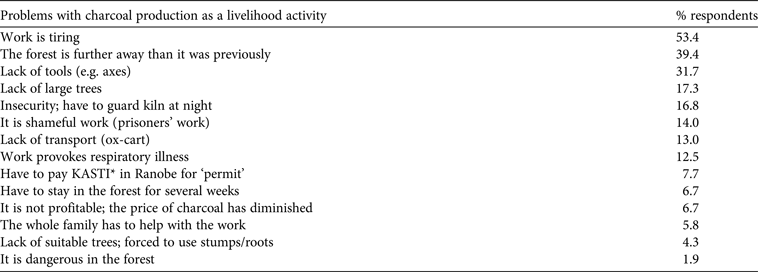
Most participants stated that their lives were harder (58.7%, n = 122) or just as hard (27.4%, n = 57) in 2010/2011 as they had been 5 years previously, and 13.9% (n = 29) stated that their lives had improved. When asked about the difficulties experienced with charcoal production as a livelihood, respondents provided a range of answers (mean = 2.3 responses per person) reflecting the physical hardship, medical problems, shame and low revenues associated with the activity (Table 4).
Factors reported by survey respondents (n = 208) as contributing to the difficulty of their lives as charcoal producers. There were multiple responses per participant, and therefore the total is > 100%.
* Community agents of the State's Forest Service
Discussion
Following the observation that charcoal production had proliferated in south-west Madagascar and was causing forest degradation, particularly in and around the protected area Ranobe PK32, we sought to understand the reasons why people were taking up this livelihood. Our findings suggest that charcoal production is a means of earning money when other preferred options are no longer viable or sufficiently productive. Fewer than one in five participants in our study had been producing charcoal in 2005/2006 but the feasibility of pursuing alternative revenue streams, such as sedentary cultivation, had been diminished (by exogenous factors such as deteriorating infrastructure or drought), or they had a need to generate supplemental income (driven by endogenous pressures, including family problems and increasing family size). The participants had not abandoned their livelihood activities from 5 years previously; rather they had diversified their sources of revenue to meet their increased monetary needs. Charcoal production is also a gap-filler during the agricultural off-season, and a relatively rapid way of generating cash at short notice. As such, it can be characterized as a fall-back activity or safety net (Sunderlin et al., Reference Sievanen, Crawford, Pollnac and Lowe2005). Some people who used to produce charcoal but no longer do may also reside within the study area; investigating what motivated these people to pursue other livelihood strategies would be another interesting line of enquiry.
This situation is one of many examples of the rural poor turning to forest resource use in the absence of more favourable options for income generation (Vira & Kontoleon, Reference Thornton, Jones, Ericksen and Challinor2010) and as ‘employment of last resort’ (Angelsen & Wunder, Reference Angelsen and Wunder2003). It occurs because the chronically poor tend to live disproportionately in remote rural areas close to forests (Hulme & Shepherd, Reference Horning, Goodman and Benstead2003), and because forests are generally easy to access, with few physical or technical barriers preventing their exploitation (Sunderlin et al., Reference Sievanen, Crawford, Pollnac and Lowe2005). Analyses of illegal logging in Indonesia have shown that participation in the industry grew as a consequence of declining returns from agriculture (Angelsen & Resosudarmo, Reference Angelsen and Resosudarmo1999) and the increasing need for cash in rural village communities (Yonariza & Webb, Reference Yonariza and Webb2007); households with fewer options to generate income were more likely to participate in logging (Byron & Arnold, Reference Byron and Arnold1999). In Madagascar, other safety net livelihood activities include bushmeat hunting (Goodman, Reference Golden, Wrangham and Brashares2006; Gardner & Davies, Reference Gardner2014), collecting wild yams (Ackermann, Reference Ackermann2003), and the use of forest products more broadly (Favre, Reference Favre, Ganzhorn and Sorg1996). Forests also provide a reserve of potential agricultural land, albeit of poor quality in general, that may be converted to shifting cultivation, primarily by migrants fleeing drought or seeking cash to invest in cattle (Réau, Reference Phillips2002; Scales, Reference Randriamalala and Liu2014).
Given the importance of charcoal production as a safety net, reducing the practice through rule enforcement (either by reducing the number of permits granted or taking action against charcoal production without a permit) would probably exacerbate poverty. This would be incompatible with the objectives of the Madagascar protected area system, which include both the conservation of biodiversity and the sustainable use of natural resources for poverty alleviation and local development (Gardner et al., Reference Gardner, Fanning, Thomas and Kidney2013), and with calls for conservation to, at the very least, avoid worsening poverty among affected communities (Adams et al., Reference Adams, Aveling, Brockington, Dickson, Elliott and Hutton2004; Kaimowitz & Sheil, Reference Jenkins and Joppa2007). Enforcement is also hindered by corruption in natural resource extraction sectors (Randriamalala & Liu, 2010) and a lack of political will; attempts by the regional administration of Atsimo Andrefana to further regulate the charcoal sector in 2007 led to civil unrest in Toliara city and were withdrawn (Bertrand et al., Reference Bertrand, Ramamonjisoa, Montagne, Montagne, Razafimahatratra, Rasamindisa and Crehay2010). Instigating a reversal in the trend towards increased participation in charcoal production within Ranobe PK32 will thus depend partly on reducing its attractiveness as a livelihood relative to potential alternatives. Theoretically this can be achieved by tackling the underlying factors that push charcoal producers into the industry, and our findings suggest several potential interventions worth exploring.
Endogenous and exogenous factors were cited in approximately equal frequency as drivers of livelihood change. The primary exogenous factors raised by our respondents centred on the diminishing productivity of agriculture as a result of a lack of rain, and degradation of the irrigation infrastructure in the north of the study area. Farmers have been forced to seek additional or alternative sources of income because the Manombo dam is no longer operational, and our survey suggests that restoring the dam and associated canals, a task which is currently being conducted by the African Development Bank, could lead to c. 30% of questionnaire participants abandoning charcoal production to return to farming. Likewise, the establishment of climate-wise agricultural adaptation programmes, including the development and popularization of improved farming techniques and drought-resistant crops, would help mitigate the problems of low and unpredictable rainfall. This will become increasingly pertinent in the future, with climate change expected to have a substantial negative impact on agricultural production in southern Madagascar (Thornton et al., Reference Sunderlin, Angelsen, Belcher, Burgers, Nasi, Santoso and Wunder2011). Without such action, other safety-net forest uses, such as shifting cultivation, may become more prevalent, in addition to charcoal production. Interventions aimed at decreasing cattle theft by improving rural security, and improving the sustainability of marine resources through fisheries management, would help restore the viability of pastoralism and fishing as alternatives to charcoal production.
Although these interventions (so-called distraction activities; Milner-Gulland & Rowcliffe, Reference Milner-Gulland2007) could diminish the relative attractiveness of charcoal production as a livelihood, higher income arising from development gains could be invested in charcoal production or other natural resource exploitation by beneficiaries. The interventions must therefore be accompanied by enforcement of regulations, or made conditional on reductions in environmentally damaging activities (Sievanen et al., Reference Seddon, Butchart, Tobias, Yount, Ramanampamonjy and Randrianizahana2005; St. John et al., Reference Seddon, Tobias and Butchart2013). Moreover, it is likely that a decline in charcoal production in Ranobe PK32 would be offset by leakage (Ewers & Rodrigues, Reference Ewers and Rodrigues2008) if demand from the city remained constant, as the activity would be displaced elsewhere. Decreasing production at a regional scale would thus require a drop in demand for charcoal from natural forests, directly (e.g. through the popularization of fuel-efficient stoves, which has been promoted widely but with variable success; Anenberg et al., Reference Anenberg, Balakrishnan, Jetter, Masera, Mehta, Moss and Ramanathan2013) and/or indirectly through the introduction of an alternative supply (e.g. from fuelwood plantations or biomass briquettes). Many of our respondents expressed a desire for woodlots or small plantations of fast-growing tree species to be established near their villages, but further exploration of this topic was beyond the scope of our questionnaire.
Study participants referred frequently to endogenous drivers of increased charcoal production, including family problems and an increasing number of children. We did not probe into what constituted family problems, but findings from the pilot exercise indicated that this generally referred to either expensive medical emergencies or a death in the family or community. Funerals in southern Madagascar may consist of extremely lavish ceremonies, involving the construction of expensive tombs and the slaughter of zebu cattle (Casse et al., Reference Casse, Nielsen, Ranaivoson and Randrianamarivo2005). Family members are expected to contribute cattle as gifts, and such expenses, often at short-notice, may account for a significant proportion of a household's annual expenditure. Land-owners may sell land to generate the necessary funds (Blanc-Pamard, Reference Blanc-Pamard2004), but for those lacking alternative assets charcoal production offers an opportunity to raise money relatively quickly. Considering that increasing family size was cited as a factor driving more than a quarter of our sample towards charcoal production, the provision of family planning services could contribute to decreasing household expenditures and thus the pressure to practise environmentally destructive activities such as charcoal production to generate cash (Allendorf & Allendorf, Reference Allendorf and Allendorf2012; Harris et al., Reference Hannah2012).
Approximately two thirds of the charcoal producers we surveyed were migrants to the southern Route Nationale 9 area. Comparing the two social groups, we found no evidence that residents and migrants engage in a different mix of livelihoods or that the recent increase in charcoal production has been driven by newcomers. Malagasy societies are dynamic, and migration to the forest frontier is a typical response to resource scarcity (Keller, Reference Kaufmann and Tsirahamba2008). As such, numerous authors have remarked that migrant communities tend to engage in less sustainable resource-use practices than residents (e.g. Réau, Reference Phillips2002; Horning, Reference Harris, Mohan, Flanagan and Hill2003; Kaufmann & Tsirahamba, Reference Kaimowitz and Sheil2006; Andriamalala & Gardner, Reference Andriamalala and Gardner2010). However, our findings do not support this observation. Furthermore, Bertrand et al. (Reference Bertrand, Ramamonjisoa, Montagne, Montagne, Razafimahatratra, Rasamindisa and Crehay2010) state that charcoal production in the Toliara region is linked to migration dynamics because charcoal is primarily produced as a secondary output from shifting cultivation; our data provide evidence to the contrary, as < 2% of our sample were also engaged in slash-and-burn agriculture.
The implementation of management responses to the charcoal problem in Ranobe PK32 has been hampered by a decrease in donor funding following a political coup in 2009; as a result, the protected area has lacked active management since mid 2013. Nevertheless, our research has demonstrated that livelihood change around protected areas can be rapid, involve large numbers of people, and have multiple underlying causes. Given that it can have severe impacts on biodiversity we suggest that protected area management planning should systematically include mechanisms to detect, understand, and mitigate or adapt to livelihood change to minimize its potentially negative effects. The detection of change requires the implementation of a monitoring programme, which is already recognized as a fundamental component of a management plan (Phillips, Reference Ostrom2002; Thomas & Middleton, Reference St. John, Keane, Milner-Gulland, Macdonald and Willis2003). Nonetheless, such monitoring systems in protected areas typically focus on biodiversity (e.g. densities of indicator/important species) and therefore expose only the outcome of changing resource use after it has occurred. Instead, more attention needs to be given to examining the socio-economic conditions being experienced within local communities, and understanding the factors that motivate shifts in behaviour, so that appropriate management responses can be developed. Both protected area managers and the funding bodies supporting their conservation efforts need to be sufficiently flexible to implement new management strategies rapidly in response to substantive livelihood change.
Acknowledgements
This research was carried out as part of the WWF Madagascar and Western Indian Ocean Programme Office's Toliara Land and Seascape project, funded by WWF Sweden. We are grateful to E. Rasolondranaly and R. Andrianarivony for their logistical support, and we thank A. Dorward and L. Jasper for constructive discussion.
Biographical sketches
Charlie Gardner's research focuses on reconciling conservation and development in Madagascar's expanded protected area system, and spanning the researcher–practitioner divide. Firengea Gabriel is interested in human interactions with Madagascar's environment and biodiversity. Freya St. John’s research interests centre on the interface between biodiversity conservation and human populations that use natural resources, with a particular focus on understanding people's decision making and behaviour. Zoe Davies conducts interdisciplinary research centred on improving conservation practice and policy, human–wildlife interactions, and the impacts of environmental change (e.g. habitat fragmentation, climate change, urbanization) on species, assemblages and ecosystem service provision.



