


Introduction
The increasing use of resources with an uneven geographic distribution is often considered a characteristic of the European Bronze Age (c. twenty-second to ninth centuries BC). Metallurgy, and specifically the production of bronze from copper and tin, is an important example for the use of such resources. During the Middle Bronze Age in southern Central Europe (c. sixteenth to fourteenth centuries BC), characterised by the western Tumulus Culture (WTC), metallurgy and its products became an increasingly common part of daily life and work, as seen for example in the extensive use of bronze sickles (Falkenstein Reference Falkenstein, Bartelheim and Stäuble2009). However, relatively little is known about the origins of the copper used and the organisation of metal supply during the Middle Bronze Age in what is today south-western Germany, Switzerland and north-eastern France. While bronze items are numerous in Middle Bronze Age contexts, raw copper artefacts (ingots)—which are more definitive for provenance studies—are relatively rare. In addition, the typical bun-shaped Middle Bronze Age ingot is rather indistinctive and difficult to distinguish from its Late Bronze Age counterparts (Lutz et al. Reference Lutz, Krutter, Pernicka, Turck, Stöllner and Goldenberg2019). When found in fragments, as is predominantly the case, the identification and dating of ingots is dependent on their context, but ingots or ingot fragments found in unambiguous contexts—from deliberately deposited assemblages or stratified settlement features, for example—are not ubiquitous in the WTC.
Therefore, the discovery of several stratified copper-based artefacts, including pieces of raw material, during rescue excavations in the Middle to early Late Bronze Age (fifteenth and fourteenth centuries BC) settlement site of Möriken-Wildegg (Canton of Aargau, Switzerland) offered the possibility to extend the analytical database. In this article, we present the results of archaeometric analyses that were conducted on a selection of these metal finds with the intention of proactively expanding the available data pool for the currently poorly documented context of copper supply in the WTC.
Chemical and lead isotope analyses were employed to characterise the metal and narrow down possible origins of the copper used. Copper isotope analysis was also conducted to further substantiate the insights provided by the other methods (see online supplementary material (OSM) 1 for further information). Using available artefact and ore data from the literature for reference, the most likely provenances of the copper used in Möriken are discussed. The role of deposits in the Swiss Alps and in the larger mining districts in the eastern and southern Alps are considered, as well as indications of potential trading networks extending to the Eastern Mediterranean, in meeting the growing demands for copper in southern Central Europe around 1400 BC.
Archaeological setting
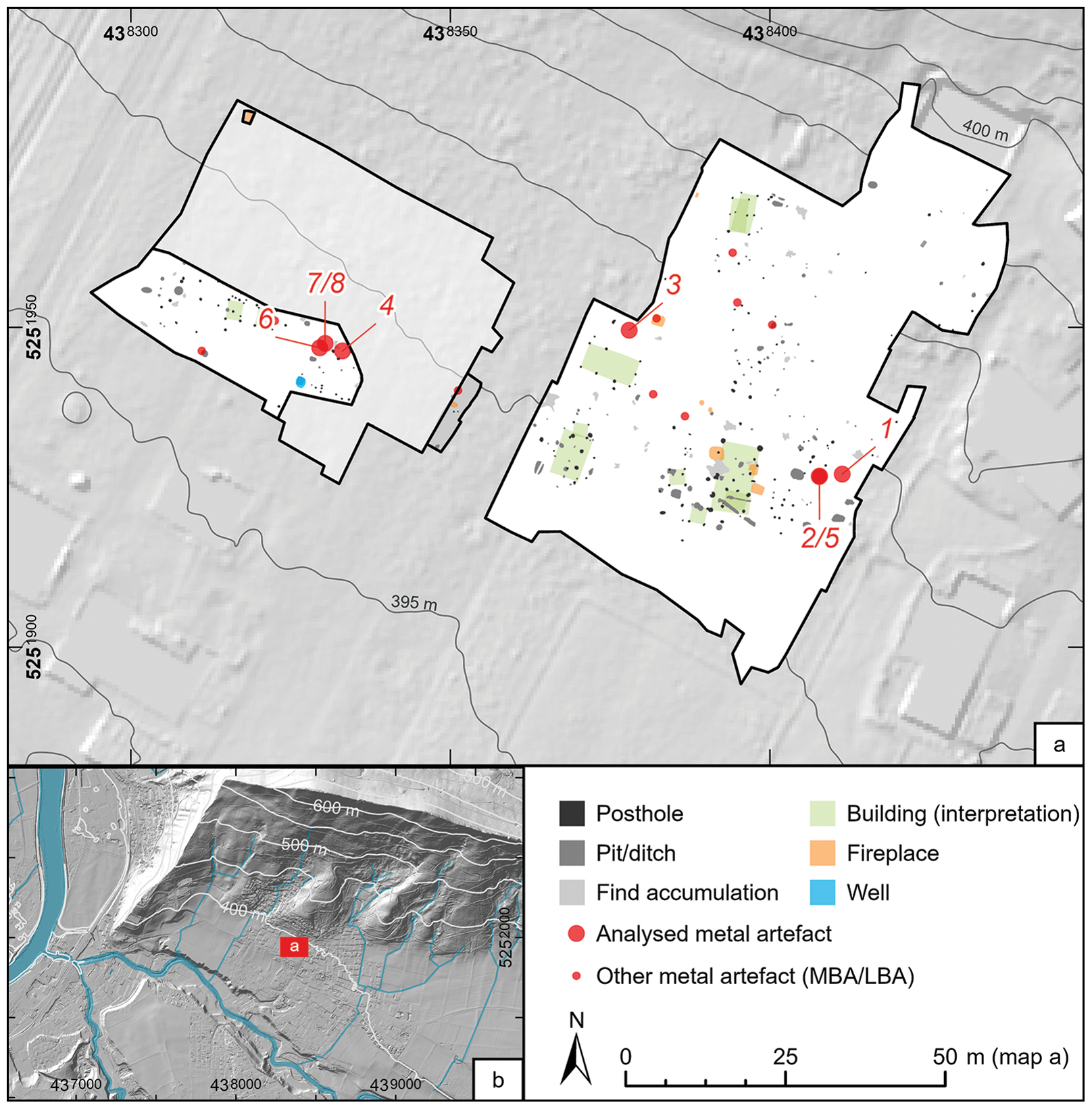
Möriken lies on a glacial terrace at the southern foot of the Chestenberg hill range near the Aare, the Rhine’s largest tributary. In 2021, the remains of a Middle to early Late Bronze Age settlement (BzC/BzD1 in the regional terminology) were discovered within a construction site (Figure 1). As outlined in preliminary reports (Höpfer et al. Reference Höpfer, Nieberle and Maise2022; Höpfer & Maise Reference Höpfer and Maise2023), the excavation uncovered domestic and functional buildings, along with related features typical for WTC settlements (Höpfer et al. Reference Höpfer, Deckers, Scherer, Kühn, Scholten, Knopf and Willroth2024). The Middle Bronze Age topsoil was largely preserved beneath Late Bronze Age and younger colluvial deposits and, in many places, was littered with pottery, burnt stones and, occasionally, metal finds. Overall, the excavation results seem to suggest a rural community that was engaged in various crafts to sustain local needs—pottery making, textile production and, presumably, metalworking.
Excavation plan (a) of the Middle Bronze Age/early Late Bronze Age site in Möriken, and its topographical situation (b). Related metal finds and analysed objects are highlighted in a). The unexcavated construction perimeter is transparent. Co-ordinates in WGS 1984 UTM 32N (figure by Benjamin Höpfer).

Objects and sampling
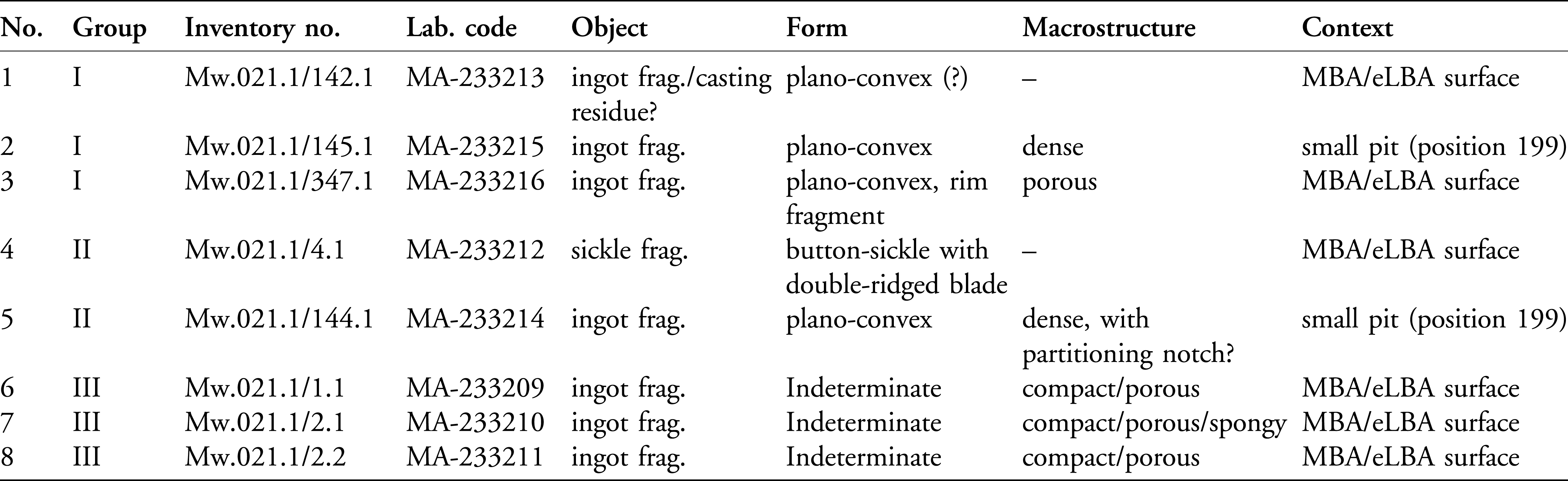
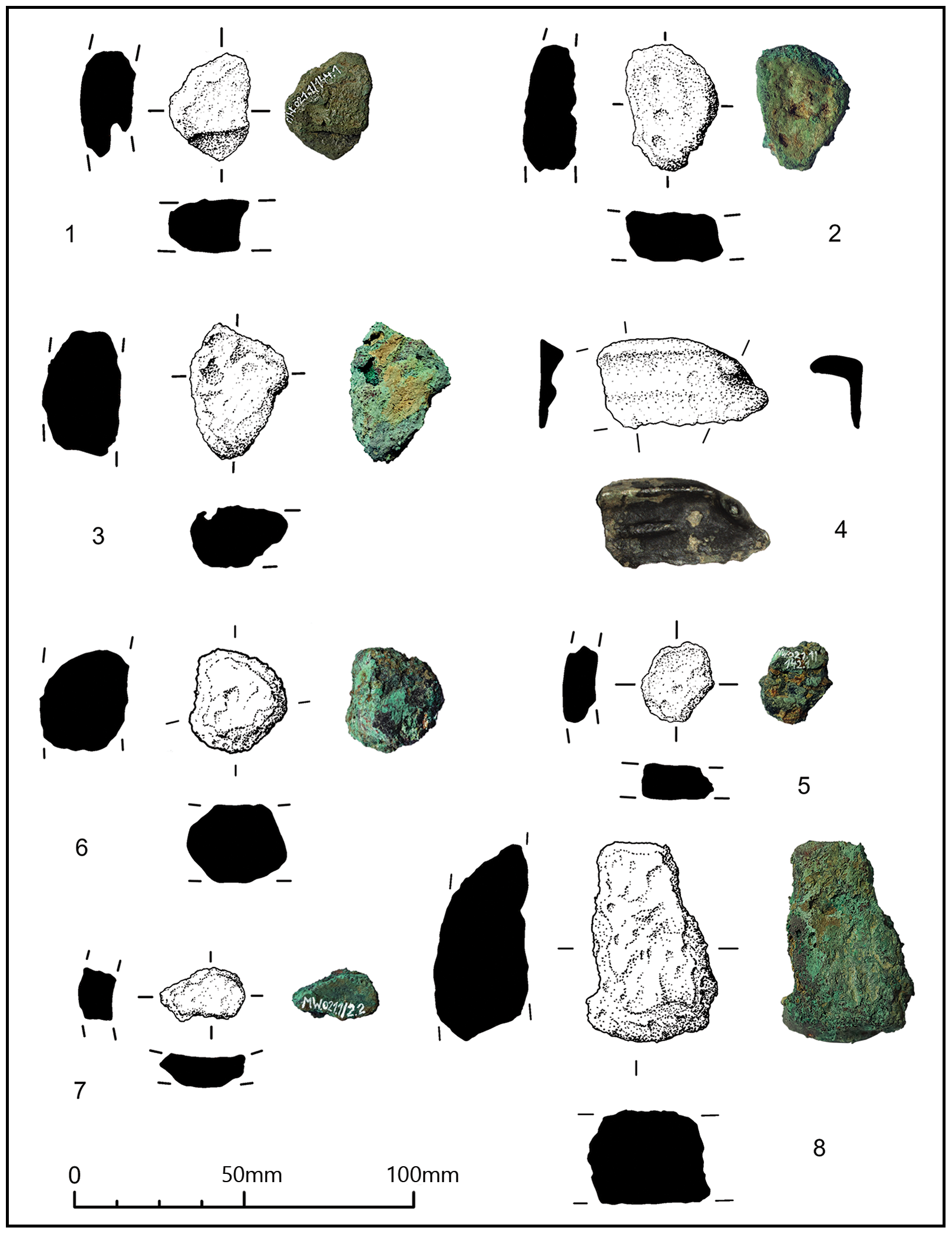
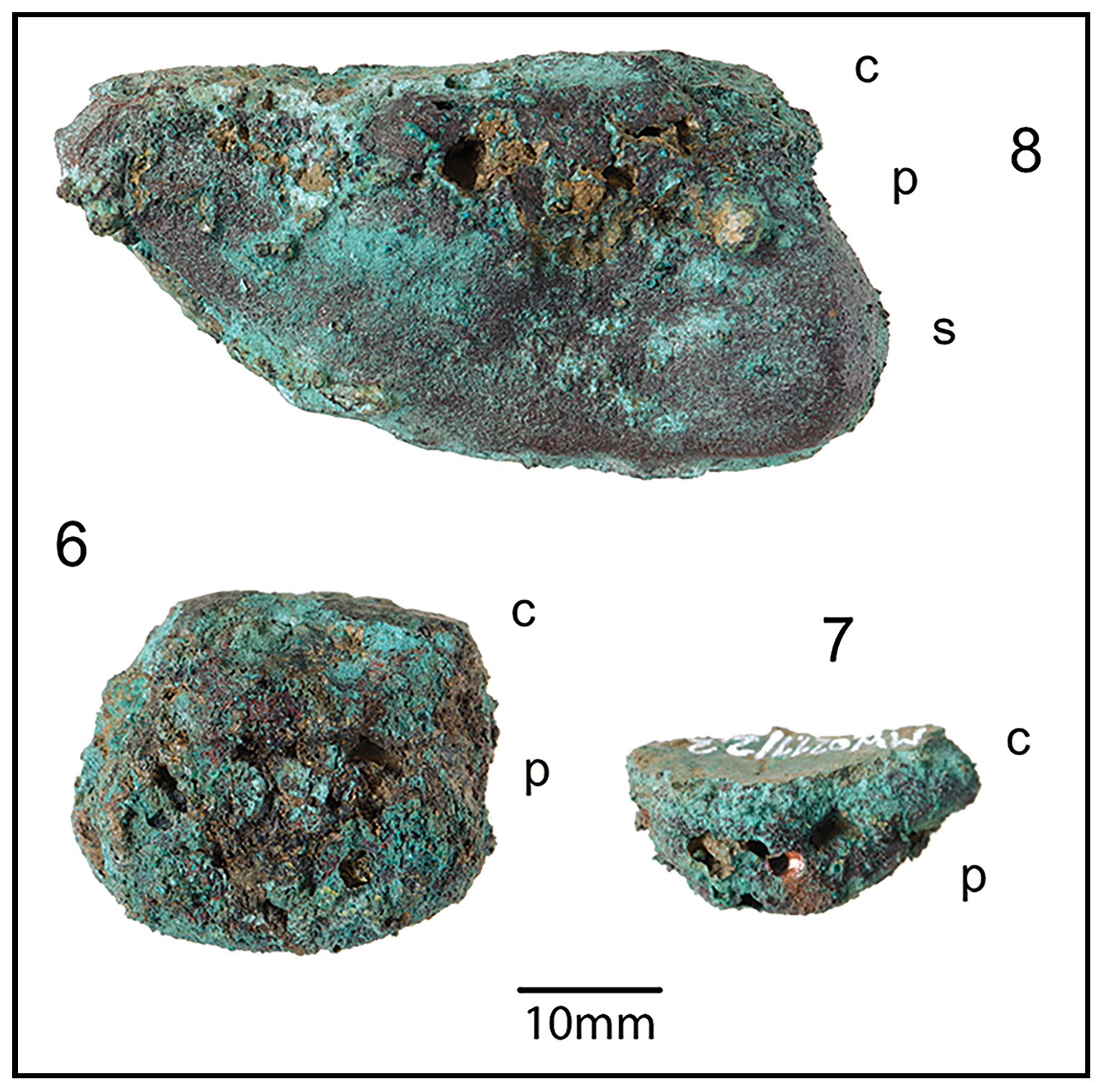
Of about 20 Middle Bronze Age copper-based objects found in Möriken, eight were sampled and underwent chemical and lead and copper isotope analyses (Table 1, Figure 2). Most of these were found scattered on the Middle/early Late Bronze Age surface, while two (nos. 2 and 5) had been deposited in a small pit. One (no. 4) is a fragment of a sickle blade typical of the younger Middle Bronze Age (BzC) (David-Elbiali Reference David-Elbiali2000: 258–60); the other seven are most likely pieces of ingots or remains from intermediate processing stages with roughly parallel, concave- or plano-convex surfaces. One (no. 3) has a circular or oval rim characteristic of bun-shaped ingots. Three pieces (nos. 6–8) feature distinct layers with densities ranging from compact to porous (with cavities of several millimetres) and even ‘spongy’ textured (Figure 3). Details of sampling, sample preparation and laboratory methods are given in OSM1.
Basic information for the eight sampled and analysed objects from Möriken-Wildegg (Canton of Aargau).

MBA/eLBA: Middle Bronze Age to early Late Bronze Age.
Metal objects from Möriken analysed in this study (figure by D. Hug (KAAG) & Benjamin Höpfer).

Details of the fracture surfaces of the ‘layered’ objects (nos. 6–8) (c: compact; p: porous; s: spongy) (figure by Benjamin Höpfer).

Results and discussion
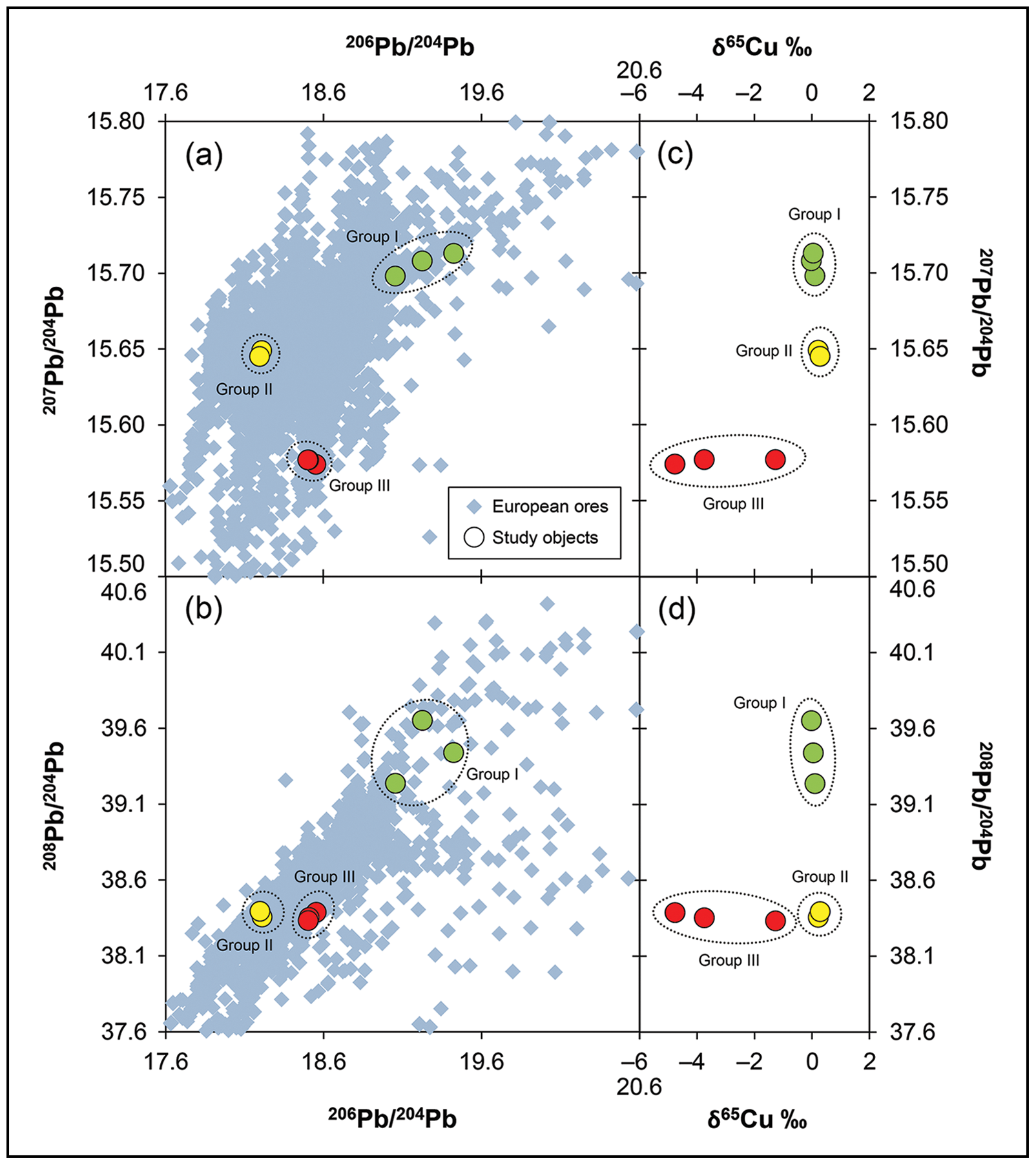
Based on the analytical data, the eight sampled artefacts from Möriken can be separated into three distinct groups (Figure 4, Tables S1 & S2). These groups are distinguished by their chemical and isotopic characteristics, and indicate the potential exploitation of copper from diverse sources.
a & b) Lead isotope ratios of the study objects and their general relation to European copper, lead and other ores. Their distinct isotope systematics and groupings are evident in both the lead and copper isotopes (c & d). The legend applies to all sub-figures (figure by Daniel Berger; see OSM2 for ore data references).

Group I: eastern Alpine copper
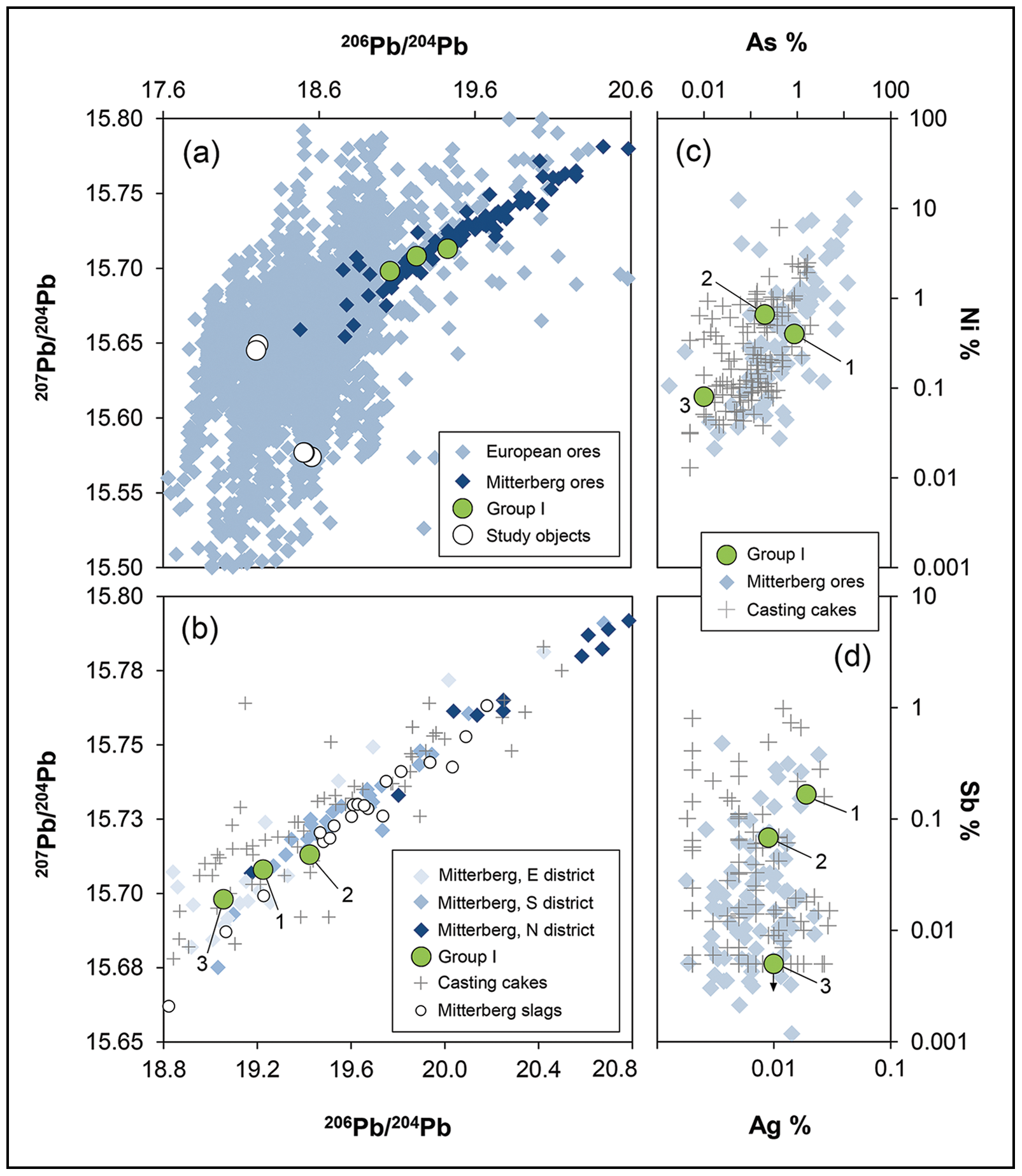
A first group comprises three objects with parallel or plano-convex surfaces (nos. 1–3). These objects feature highly radiogenic lead isotope ratios (206Pb/204Pb and 208Pb/204Pb exceeding 19 and 39, respectively; Table S2). These ratios, along with more positive copper isotope values, set these three objects apart from the other five samples. Radiogenic ratios are notably scarce in European ore mineralisation and primarily observed in the large copper deposits of lead-poor chalcopyrite and fahlores within the Greywacke Zone of the eastern Alps, spanning the North Tyrol and Styria provinces in Austria. The chemical characteristics of the Möriken objects, with low arsenic and antimony and very low silver content (Table S1), speak against an origin from fahlore mineralisations in the Inn Valley (typically with appreciable silver contents), as do the 208Pb/204Pb ratios, which consistently fall below 39 in this deposit (Höppner et al. Reference Höppner, Bartelheim, Huijsmans, Krauss, Martinek, Pernicka and Schwab2005). Rather, a purer copper base is suggested for Group I. At the current state of research, the only plausible match is the chalcopyrite ores of the Mitterberg mining district (Figure 5a), located approximately 450km east of Möriken. This area is renowned as one of the main copper suppliers in Central Europe from the late Early Bronze Age to the early Late Bronze Age (c. seventeenth to thirteenth centuries BC), with a presumed peak in production from the fifteenth century BC onwards (Pernicka et al. Reference Pernicka, Lutz and Stöllner2016). The low levels of impurities in the Möriken artefacts, with dominating nickel and arsenic, correlate closely with the Mitterberg ores and the numerous Middle/Late Bronze Age bun ingots attributed to them (Figure 5c–d) (Lutz et al. Reference Lutz, Krutter, Pernicka, Turck, Stöllner and Goldenberg2019; Möslein & Pernicka Reference Möslein, Pernicka, Turck, Stöllner and Goldenberg2019; Höpfer et al. Reference Höpfer, Lutz, Krutter, Scherer, Kühn, Scholten and Knopf2021). The copper isotope values of the fragments, of around +0.2‰ δ65Cu (Table S2), also align with the characteristic signature of many Bronze Age objects attributed to the Mitterberg based on lead and chemical data (Lockhoff et al. Reference Lockhoff, Lutz, Pernicka, Meller and Bertemes2019; unpublished data at CEZA). Such values are typical of primary (hypogene) sulphide ores like chalcopyrite, the chief copper ore mineral at Mitterberg (Pernicka et al. Reference Pernicka, Lutz and Stöllner2016; Jansen et al. Reference Jansen, Hauptmann, Klein and Seitz2018a). However, the slightly varying lead isotope composition of the Group I objects indicates that they do not derive from a single batch of ore, but from different locations within the Mitterberg region—likely from both the eastern district with the Buchberg or Winkl lodes (nos. 1 and 3) and the southern district with the Birkstein, Burgschwaig or Brander lodes (no. 2) (Figure 5b).
Artefact Group I (nos. 1–3) compared with the lead isotope ratios of chalcopyrite ores from the different mining districts of the Mitterberg, Austria, and copper slags from the Mitterberg region. Also included are ingots (‘casting cakes’) made from Mitterberg copper (a & b). In c & d, the chemical composition of Group I objects aligns with that of Mitterberg ores and ingots of Mitterberg copper. The arrow in ‘d’ applies to a value under the limit of determination (figure by Daniel Berger; for object data from this and other studies, see OSM2).

Tin is identified in one object (no. 1). At exactly 10mass%, its presence is clearly artificial. Ingots with tin are occasionally observed and are presumed to indicate local recycling of bronze objects (Bachmann et al. Reference Bachmann, Jockenhövel, Spichal and Wolf2004). However, the copper dispersed from the Mitterberg region was predominantly unalloyed (Lutz et al. Reference Lutz, Krutter, Pernicka, Turck, Stöllner and Goldenberg2019); this piece may therefore represent an intermediate (after alloying with tin or bronze recycling) or residual (casting waste) product.
Group II: southern Alpine copper
Determining the provenance of the copper in the sickle fragment (no. 4) and another likely bun ingot fragment (no. 5) is less straightforward. The sickle fragment is made of bronze containing 9.4mass% tin and copper with low levels of iron, nickel, arsenic and other trace impurities (Table S1). The alleged ingot is also composed of relatively pure copper, but contains silver, lead and bismuth one order of magnitude higher than the sickle, while the concentrations of other elements are similar (iron, arsenic, antimony) or lower (nickel). It additionally contains 1mass% tin and 0.036mass% indium, the latter of which is rarely found in Bronze Age copper in such high concentrations. This may point to a specific chalcopyrite ore, which is a principal host of indium (Andersen et al. Reference Andersen, Stickland, Rollinson and Shail2016). Yet, the identification of this specific ore deposit is not currently possible, since indium is not regularly monitored in chemical analyses of copper ores and archaeological items. Nevertheless, the δ65Cu values of +0.11 and −0.01‰ are again consistent with copper from primary copper sulphides like chalcopyrite (Table S2), but these values are slightly lower than the values from Mitterberg copper, indicating another source.
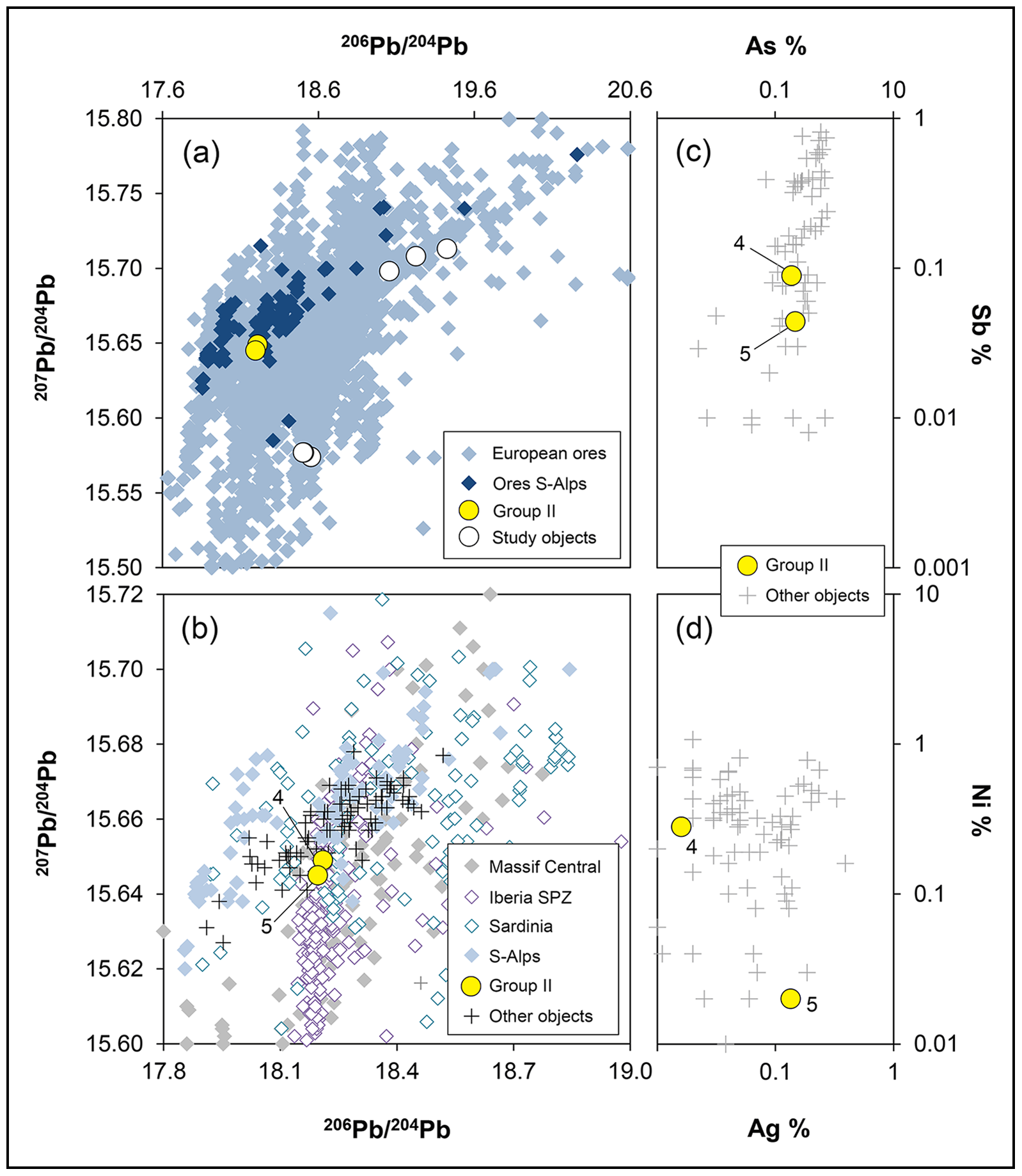
A disparate origin for these two fragments is further supported by the lead isotope ratios, which clearly diverge from those of the Mitterberg ores (Figure 6a). These fall into an isotopic range of lower values (normalised to 204Pb) where copper mineralisations of various ore provinces overlap substantially (Figure 6b). Mineralisations in the southern Alps (particularly in the Alto Adige, Trentino and Veneto regions in Italy (AATV)), the French Massif Central, the Iberian Peninsula and Sardinia show reasonable matches. This list is hard to reduce, as the best matches are associated with lead or polymetallic mineralisations, not copper deposits. For example, the Les Borderies antimony mine in the Massif Central offers the closest match so far, though the absence of substantial concentrations of antimony in the artefacts, as well as missing evidence of prehistoric exploitation in this region, contradicts this source. Another option would be the Pamera deposit in the southern Alps, particularly given the elevated bismuth levels in the ingot fragment (Table S1), but copper minerals are only minor components in this predominantly iron deposit (Nimis et al. Reference Nimis, Omenetto, Giunti, Artioli and Angelini2012).
Artefact Group II (nos. 4 & 5) compared with copper ores from the southern Alps (AATV), the Massif Central, Sardinia and the southern Portuguese zone (SPZ) in Iberia (a & b), showing extensive overlap. For comparative purposes, lead isotope and chemical compositions (c & d) of bronzes and copper ingots attributed to AATV copper are shown (figure by Daniel Berger; ore and object data from this study and others, see OSM2 for details).

Although chemical data of AATV copper ores is missing, the data of the Möriken objects fall within the chemical ranges of copper-based artefacts derived from this region (Figure 6c–d), suggesting a potential provenance in the southern Alps. An attribution of the Group II copper to the AATV region—about 400km from Möriken—therefore appears most plausible, particularly as this region is considered a significant copper supplier from the fifteenth century BC onwards (Artioli et al. Reference Artioli, Angelini, Nimis and Villa2016; Ling et al. Reference Ling2019; Silvestri et al. Reference Silvestri, Bellintani, Hauptmann, Turck, Stöllner and Goldenberg2019; Nørgaard et al. Reference Nørgaard, Pernicka and Vandkilde2021; Gavranović et al. Reference Gavranović2022).
Group III: Cypriot copper
The three objects with layered, and in part very porous, macrostructures (nos. 6–8) are distinct in their low 207Pb/204Pb ratios of about 15.57 (Table 1, Figure 3). Two (nos. 7 & 8) were found within a few centimetres of each other and the third (no. 6) a few metres away; all on the Middle/early Late Bronze Age surface (Figure 1). The copper of these objects is exceptionally pure, displaying nearly identical trace element patterns with low concentrations of cobalt, nickel, arsenic, silver, lead and, notably, selenium and tellurium, while virtually lacking tin, antimony and bismuth. Two (nos. 7 & 8) show nearly identical chemical and lead isotope signatures and would seem to originate from the same batch of copper, except that their copper isotope values are notably different (Tables S1 & S2).
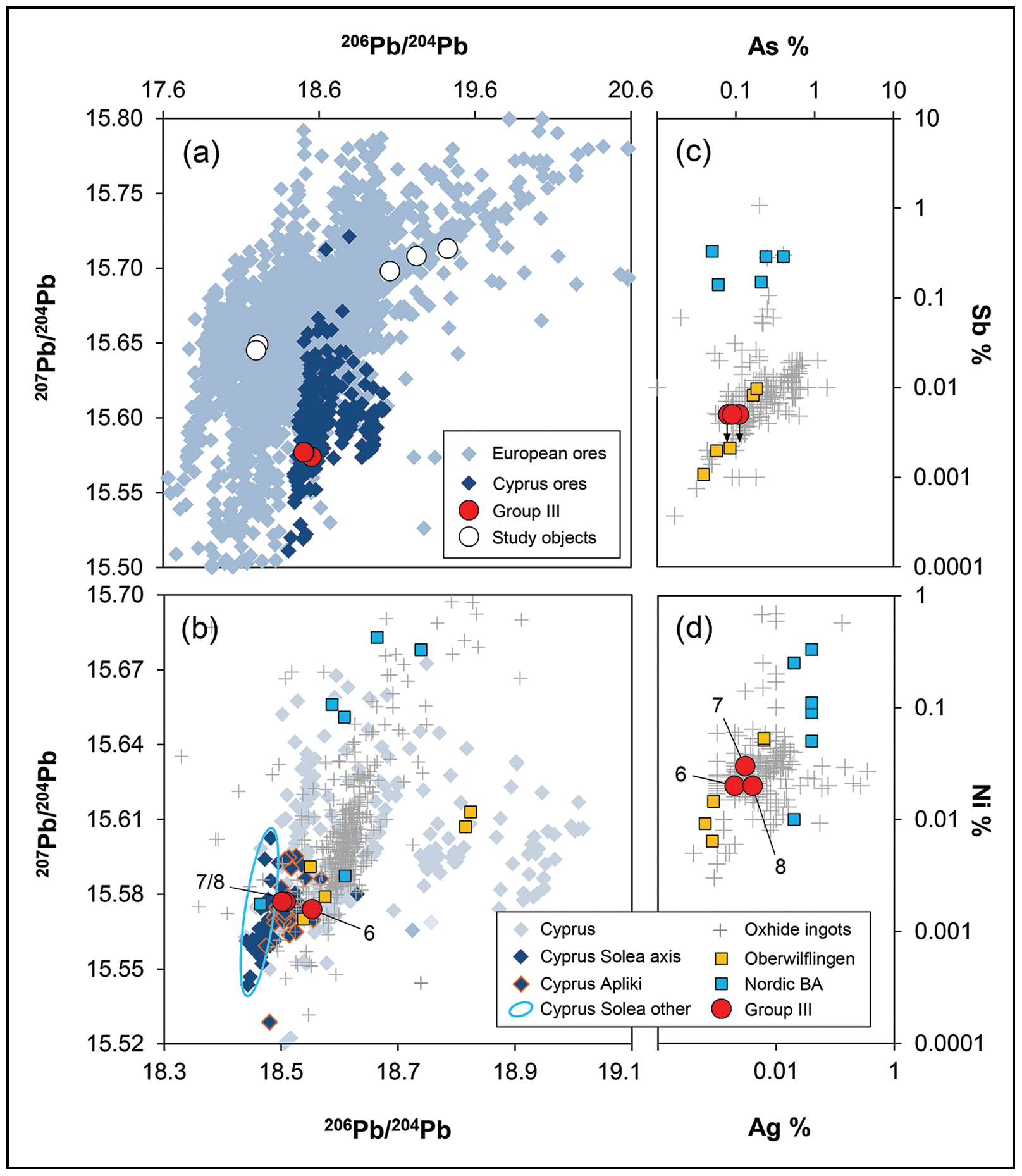
The lead isotope data for Group III do not show a clear match with any known copper deposit in continental Europe, and certainly not with any currently known to have been exploited during the Bronze Age. Instead, the analytical data strongly point to copper of Cypriot origin (Figure 7a). More specifically, the lead isotope ratios align with those of the ‘Solea axis’, a copper-rich region on the northern slopes of the Troodos Mountains in Cyprus. The ores of the Apliki mine provide the closest match, while ores from other mines at Skourioutissa, Mavrovouni and Ambelikou show differing ratios (Figure 7b). The ores from the Solea district were vastly exploited during the Cypriot Late Bronze Age (c. sixteenth to eleventh centuries BC), and the Apliki mining area in particular is thought to have become the major source for the production and distribution of copper in the form of oxhide ingots by c. 1400 BC due to its unusually rich secondary (supergene) enrichment zone (Gale & Stos-Gale Reference Gale, Stos-Gale, Kassianidou and Papasavvas2012; Kassianidou Reference Kassianidou2013; Knapp Reference Knapp, Ben-Yosef and Jones2023). The three samples from Group III also correspond with the extensive lead isotope data from oxhide copper ingots in the Mediterranean, which are often attributed to the Apliki mine (Stos-Gale et al. Reference Stos-Gale, Maliotis, Gale and Annetts1997; Gale & Stos-Gale Reference Gale, Stos-Gale, Kassianidou and Papasavvas2012; Jansen et al. Reference Jansen, Hauptmann, Klein and Seitz2018a & Reference Jansen, Hauptmann, Klein, Giumlia-Mair and Lo Schiavob), although this association has been disputed (Athanassov et al. Reference Athanassov, Dimitrov, Krauß, Popov, Schwab, Slavchev, Pernicka, Maran, Băjenaru, Ailincăi, Popescu and Hansen2020: 326). Likewise, the chemical composition and copper purity of the Group III objects align well with the majority of oxhide copper ingots (Figure 7c–d). Layered macrostructures with particularly porous textures are also characteristic for oxhide ingots, supposedly resulting from the casting of these heavy pieces (typically around 30kg) from several batches of copper (Hauptmann et al. Reference Hauptmann, Maddin and Prange2002, Reference Hauptmann, Laschimke and Burger2015). The incorporation of multiple copper batches might also explain the deviating copper isotope values of the two otherwise similar objects (nos. 7 & 8), particularly if the objects, and thus the samples, derived from different layers of the same ingot. At less than 30mm, the objects from Möriken are thinner than most oxhide ingots, but still within the known range, especially regarding ingots from the Balkans (Athanassov et al. Reference Athanassov, Dimitrov, Krauß, Popov, Schwab, Slavchev, Pernicka, Maran, Băjenaru, Ailincăi, Popescu and Hansen2020).
Artefact Group III (nos. 6–8) compared with Cypriot ores in general (a), and with ores from the Solea region (Apliki, Ambelikou, Mavrovouni, Skourioutissa) in particular (b). Also included are oxhide and bun ingots from the Mediterranean and from Oberwilflingen, Germany, as well as six finished bronze objects from the Nordic Bronze Age. The chemical compositions of the Group III ingots (c & d) agree very well with those of the oxhide and bun ingots, while antimony, silver and nickel contents of the Nordic bronzes are higher. The arrows in ‘c’ apply to values under the limit of determination (figure by Daniel Berger; ore and object data from this study and others, see OSM 2 for details).

Altogether, the analytical data strongly indicate the presence of Cypriot copper in the Möriken settlement in the form of oxhide ingot fragments—a rarity north of the Alps. Until now, the only undisputed occurrence north of the Alps comprises four oxhide ingot fragments from the late Middle/early Late Bronze Age (BzC/D1) hoard of Oberwilflingen in south-west Germany, which have similar geochemical signatures to the Möriken finds (Figure 7b–d; Primas & Pernicka Reference Primas and Pernicka1998; Athanassov et al. Reference Athanassov, Dimitrov, Krauß, Popov, Schwab, Slavchev, Pernicka, Maran, Băjenaru, Ailincăi, Popescu and Hansen2020). These seemed to be an isolated, exotic outlier from the predominant distribution of Cypriot copper and oxhide ingots in the Mediterranean and the Carpathian Basin (Sabatini Reference Sabatini and Aslaksen2016). An influx of Cypriot copper to the Nordic Bronze Age (c. seventeenth to eighth centuries BC) has been suggested based on lead isotope data of artefacts as well as possible representations of oxhide ingots in rock art (Ling et al. Reference Ling, Stos-Gale, Grandin, Billström, Hjärthner-Holdar and Persson2014, Reference Ling2019; Ling & Stos-Gale Reference Ling and Stos-Gale2015), but remains debated (Nørgaard et al. Reference Nørgaard, Pernicka and Vandkilde2021). Although six Nordic Bronze Age objects (sword, axes, daggers) seem to align roughly with Cypriot ores in their lead isotope ratios (Figure 7b), their chemical composition, particularly the higher contents of nickel, antimony and silver, diverges from verified Cypriot copper (Figure 7c–d). On this basis, it has been proposed that the mixing of copper from different sources (and thus with varying chemical signatures) might have resulted in a ‘Cypriot’ lead isotope signal by chance (Nørgaard et al. Reference Nørgaard, Pernicka and Vandkilde2021: 19). Likewise, the Nordic Bronze Age objects might be made from Cypriot copper mixed with another (yet unknown) lead-poor but relatively impure copper, or stem from an altogether different (also yet unknown) source with the given characteristics.
Cypriot copper in the form of oxhide ingots is more commonly found in the Carpathian Basin and eastern Balkans (Athanassov et al. Reference Athanassov, Dimitrov, Krauß, Popov, Schwab, Slavchev, Pernicka, Maran, Băjenaru, Ailincăi, Popescu and Hansen2020; Gavranovic et al. Reference Gavranović2022). While the use of oxhide ingots in local Balkan metal production had previously been dismissed (Athanassov et al. Reference Athanassov, Dimitrov, Krauß, Popov, Schwab, Slavchev, Pernicka, Maran, Băjenaru, Ailincăi, Popescu and Hansen2020), a recent study (Bruyère et al. Reference Bruyère2024) hypothesises that Cypriot copper could have been extensively used in Balkan metalwork if, as suggested for the Scandinavian artefacts, its typical low-lead signature was overprinted by mixing with copper from other sources. The potential oxhide ingot fragments from Möriken represent a crucial—and quite unexpected—find in this ongoing debate.
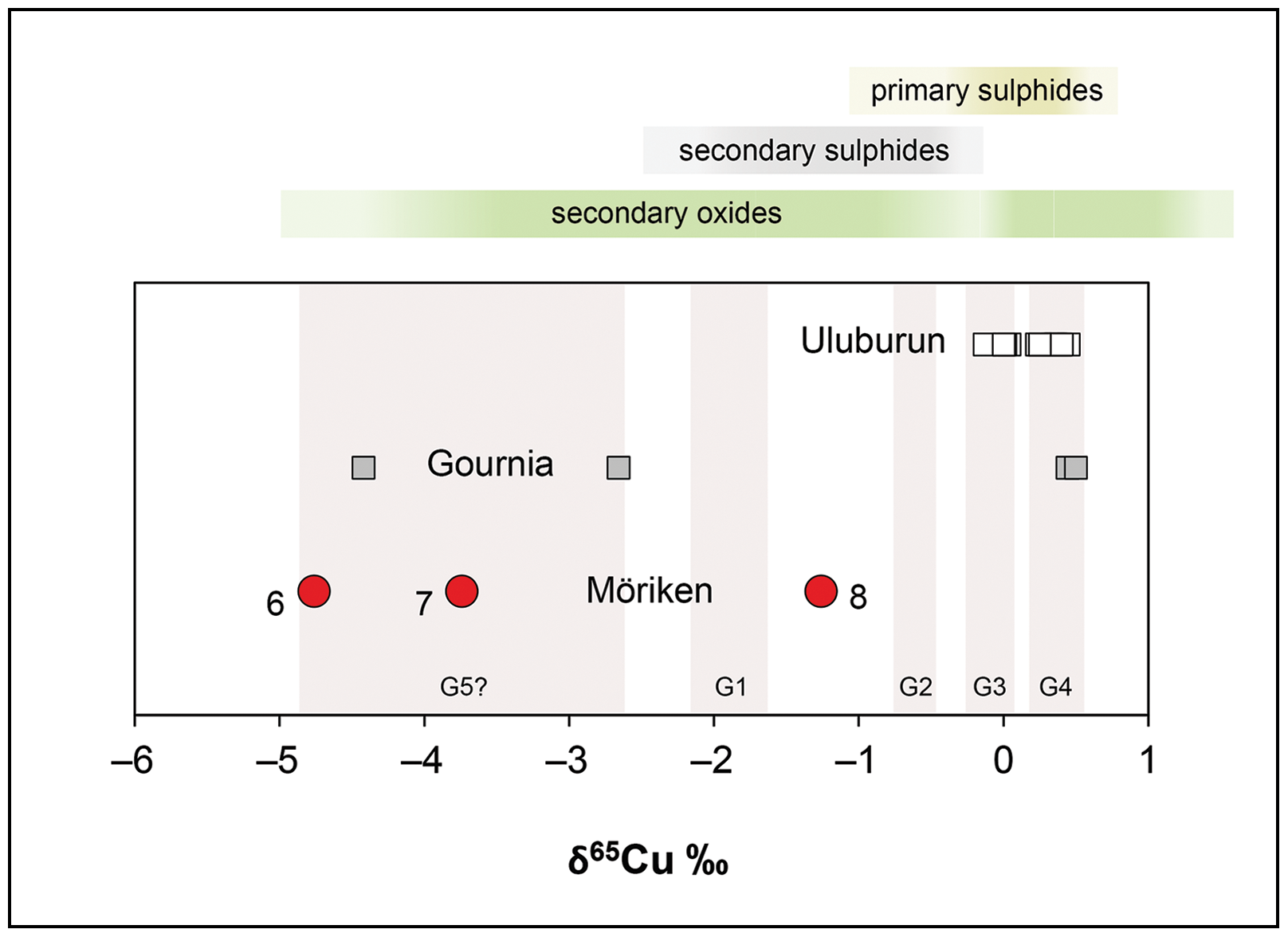
Previous research has indicated a chronological change in the isotopic systematics of Cypriot copper ingots (Gale et al. Reference Gale, Woodhead, Stos-Gale, Walder and Bowen1999; Jansen et al. Reference Jansen, Hauptmann, Klein and Seitz2018a & Reference Jansen, Hauptmann, Klein, Giumlia-Mair and Lo Schiavob). Ingots dated after c. 1300 BC typically display copper isotope values below zero and above –2‰ δ65Cu, whereas older ingots (fourteenth century BC), including those of the Uluburun shipwreck, predominantly show positive values (Figure 8). Values below –2‰ have been reported only for some very early pieces (before c. 1400 BC) from Gournia and Agia Triada on Crete (Jansen et al. Reference Jansen, Hauptmann, Klein, Giumlia-Mair and Lo Schiavo2018b), but artefacts from the latter were not made from Cypriot copper. These differences were interpreted as being indicative of a shift in exploitation between varying types of mineralisation in Cyprus (Jansen et al. Reference Jansen, Hauptmann, Klein, Giumlia-Mair and Lo Schiavo2018b). Essentially, the copper isotope composition provides clues about the type of copper ore used, with primary sulphidic ores (e.g. chalcopyrite) having values around zero, secondary sulphidic ores (e.g. chalcocite) having very negative values and secondary oxidic ores (copper sulphates, e.g. chalcanthite and brochantite, or carbonates, e.g. malachite) having mainly positive values (Figure 8) (Jansen et al. Reference Jansen, Hauptmann, Klein and Seitz2018a). Although this classification is somewhat rough, and the transitions of δ65Cu values are gradual, fifteenth- to fourteenth-century ingots (Uluburun and Gournia) were arguably produced from oxidised copper ores, while younger pieces (after c. 1300 BC) stemmed from primary sulphidic ores (Jansen et al. Reference Jansen, Hauptmann, Klein and Seitz2018a). The highly negative copper isotope values of two Group III artefacts (nos. 6 & 7) align with those of two Gournia ingots and might indicate the use of secondary sulphidic ores or oxide ores derived from them through weathering, as in the Apliki cementation zone. The presence of selenium and tellurium supports the latter possibility, as these elements tend to evaporate during roasting, a process unnecessary for oxide ores (Hauptmann Reference Hauptmann2020). Concurrently, the absence of highly negative δ65Cu values in younger oxhide ingots from the Mediterranean may indicate that the Möriken pieces date to a similar period as the Gournia ingot fragments—prior to 1400 BC (Jansen et al. Reference Jansen, Hauptmann, Klein, Giumlia-Mair and Lo Schiavo2018b)—but more research is needed to verify this hypothesis.
Copper isotope values of artefact Group III (nos. 6–8) from Möriken, and ingots found in Gournia, Crete, and the Uluburun wreck. The red shaded areas correspond to ingot groups G1–G4 defined by Jansen et al. (Reference Jansen, Hauptmann, Klein and Seitz2018a) and correlate with the age of the objects: G3 and G4 before, G1 and G2 after c. 1300 BC. Group G5 is introduced here on the basis of the very low δ65Cu, possibly reflecting an early exploited Cypriot source of copper. Also shown are the approximate isotope ranges of primary and secondary copper ores. Note that oxidic ores have a very broad range, but are mainly positive ≥0.3‰ (figure by Daniel Berger; object data from this study and Jansen et al. Reference Jansen, Hauptmann, Klein and Seitz2018a & Reference Jansen, Hauptmann, Klein, Giumlia-Mair and Lo Schiavob).

Sociocultural and economic implications
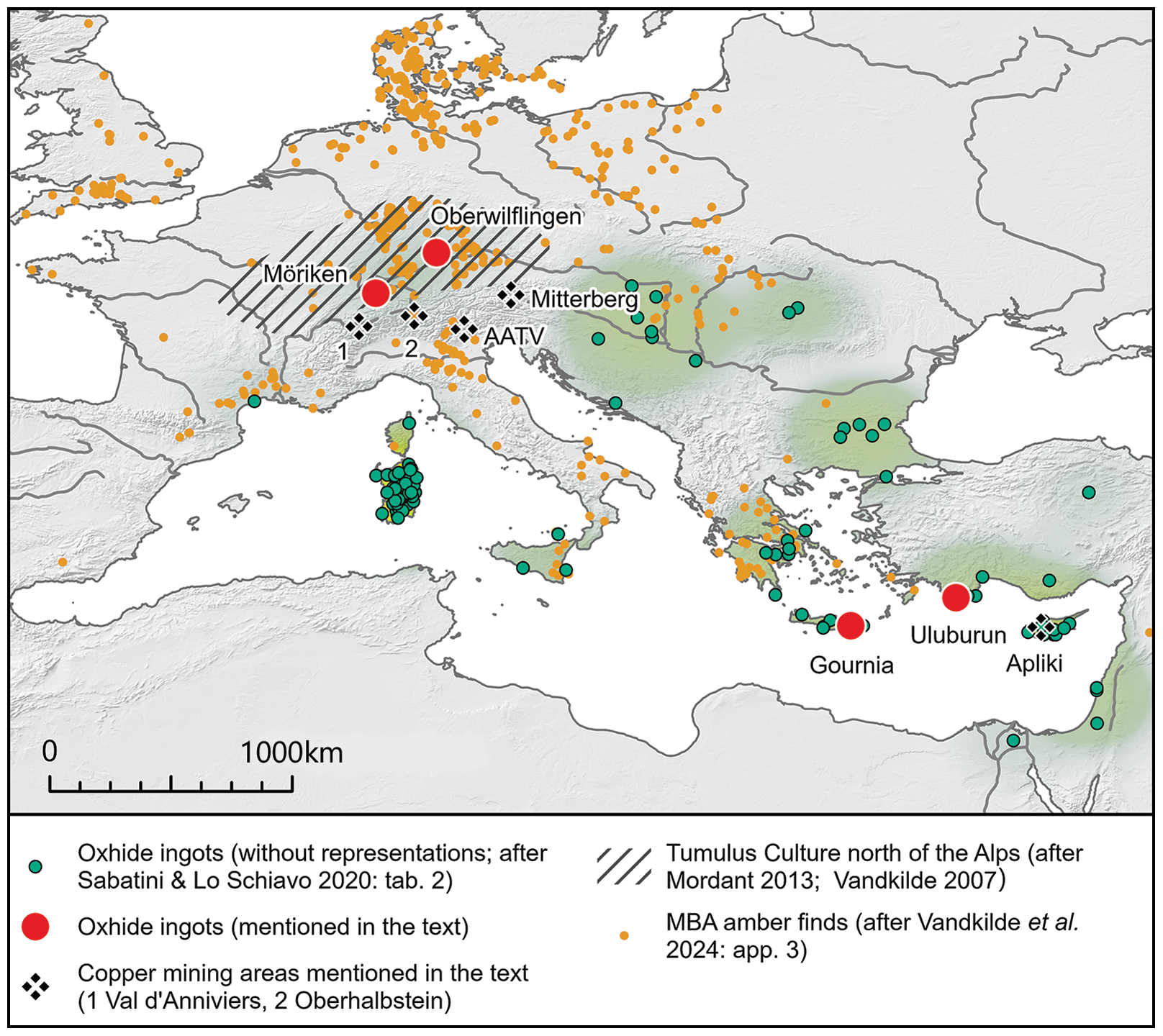
The eight copper-based metal objects from Möriken can be attributed to copper mining districts that were active and, presumably, at their prime around 1400 BC. Perhaps significantly, no matches were found with closer copper deposits in the Swiss Alps (Figure 9). The Oberhalbstein area in central Alpine Grisons and the Val d’Anniviers in western Alpine Valais are often considered possible copper sources for the Bronze Age in Switzerland, although evidence for their exploitation prior to the Late Bronze Age remains ephemeral (David-Elbiali Reference David-Elbiali2000; Cattin et al. Reference Cattin2011; Senn et al. Reference Senn, Beck, Cattin and Schaer2021; Reitmaier-Naef Reference Reitmaier-Naef2022). It is possible, then, that the deposits of the Swiss Alps, each less than 200km from Möriken, played no role in the Middle/early Late Bronze Age because copper from more proficient mining areas was readily available.
Möriken and other sites mentioned in the text, within the context of the Tumulus Culture and with the current distributions of oxhide ingot and amber finds in Europe (figure by Benjamin Höpfer).

Cypriot copper presents an exceptional case, however (Figure 9). Our results imply that the presence of Cypriot copper north of the Alps might be less exceptional than previously assumed. This is underlined by the fact that the three potentially Apliki objects were treated with no apparent reverence, but seem to have been discarded rather carelessly on the Middle/early Late Bronze Age surface, along with other metal artefacts in Möriken. If Cypriot copper could be handled so casually in an ostensibly unexceptional rural settlement, it was apparently not charged with any particular value or meaning. Either the ‘exotic’ origin of the material was not known in Möriken or this origin was not regarded as overly ‘exotic’ at this point in time.
The occurrence of Cypriot copper in the northern Alpine foreland also encourages a reflection on exchange systems in Middle/Late Bronze Age Europe. A ‘metal-for-amber’ exchange system that distributed Baltic amber throughout Europe in exchange for copper and tin likely existed at this time (Ling et al. Reference Ling2019; Vandkilde et al. Reference Vandkilde2024). In the younger Middle Bronze Age, substantial volumes of amber are found in WTC contexts north of the Alps and in northern Italy (Figure 9), which correlates with the increasing copper production in the AATV region and its influx to the Nordic Bronze Age since c. 1500 BC (Nørgaard et al. Reference Nørgaard, Pernicka and Vandkilde2021; Vandkilde et al. Reference Vandkilde2024). Thus, while the connection between Alpine copper production areas and the Nordic Bronze Age appears valid, Cypriot copper in the WTC suggests a more complex situation. Principally, the vast number of oxhide ingots in Sardinia (Sabatini & Lo Schiavo Reference Sabatini and Lo Schiavo2020), where little amber is found (Vandkilde et al. Reference Vandkilde2024), illustrates that the distribution of Cypriot copper was not limited to ‘metal-for-amber’ exchange networks. In continental Europe, the largest concentration of oxhide copper is found in the western Carpathian Basin (Sabatini Reference Sabatini and Aslaksen2016; Bruyère et al. Reference Bruyère2024) (Figure 9). Close cultural relations between the Danubian Bronze Age and the WTC north of the Alps, as seen in burial rites and material culture, are generally recognised. Consequently, a spread of Cypriot copper through the western Carpathian Basin to the northern Alpine foreland seems plausible, although the analytical database of copper ores and ingots may yet be too small to exclude other (e.g. transalpine) exchange corridors.
Our results support the notion of a thriving Eurasian economy that integrated Central European markets and made a plethora of ‘exotic’ products widely available during the Middle Bronze Age (Ialongo et al. Reference Ialongo, Hermann and Rahmstorf2021). Apart from Cypriot copper, Egyptian and Mesopotamian glass beads—found not only in Scandinavia and the Balkans (Varberg et al. Reference Varberg, Gratuze, Kaul, Hansen, Rotea and Wittenberger2016), but also in the northern Alpine foreland (Gratuze Reference Gratuze, Baudais and Piuz2003)—mark similar trajectories in this period. We thus argue that, besides sharing in the transit of ‘metal-for-amber’ exchanges between the Alps and Northern Europe, even rural WTC communities were involved in extensive, integrated Eurasian market networks around 1400 BC.
Acknowledgements
T. Kahlau from the conservation laboratory team of the Archaeological Service of the Canton Aargau (KAAG) provided advice in sample selection and executed the sampling. The isotopic analyses of lead and copper were conducted by B. Höppner and A. Wittke, Curt-Engelhorn-Zentrum Archäometrie (CEZA) Mannheim, with assistance in sample preparation from S. Klaus. Three anonymous reviewers provided critical and helpful comments to the manuscript. We are grateful to all of them for their contributions.
Funding statement
Administration and funding of the fieldwork and the elemental and lead isotope analyses were provided by KAAG (MF and TD). The Swiss Federal Office of Culture participated in funding the rescue excavation. The copper isotope analyses were provided by CEZA. No additional external funding was used.
Online supplementary material (OSM)
To view supplementary material for this article, please visit https://doi.org/10.15184/aqy.2025.10187 and select the supplementary materials tab.


 Open access

