



Food security, as defined by the FAO, is a situation that exists when ‘all people, at all times, have physical, social and economic access to sufficient, safe, nutritious food to meet their dietary needs and food preferences for an active and healthy life’( 1 ). For many years, traditional foods from local environments, that include plants and animals, formed part of diets linked to specific regional ecosystems and offered sustainable food and nutrition security( Reference Johns, Powell and Maundu 2 , Reference Johns and Eyzaguirre 3 ). Major dietary shifts are occurring globally, from consumption of traditional diets, likely to be more nutrient-dense, towards consumption of Westernised diets, which are more energy-dense, with high contents of sugar, salt and saturated fats. This dietary shift, driven by globalisation and urbanisation, is described as ‘nutrition transition’ and is associated with considerable health consequences, such as obesity and non-communicable diseases like diabetes and high blood pressure( Reference Johns, Powell and Maundu 2 , Reference Popkin, Adair and Ng 4 ).
Food security has been a major concern in Botswana, both at national and household level, in part due to the country’s low performance from the agricultural sector, the arid nature of the climate and recurring droughts( 5 , Reference Raboloko 6 ). Subsistence farming dominates the agricultural sector in Botswana and is depended upon for food, income and employment, especially by the majority of rural dwellers( 5 ). Foods produced by local farmers include, among others, maize, sorghum, millet, groundnuts, beans and pulses( 5 ). However, the agricultural production sector is on a downward trend. The 2013 agricultural survey showed that the number of farmers dropped from 121 766 in 2012 to 119 134 in 2013( 5 ). The sector does not produce enough food to feed the nation and, consequently, the population relies on food imports and purchase of foods( 5 – Reference Acquah, Kapunda and Legwegoh 7 ). The country follows a national food security policy that focuses on food imports instead of domestic food production( 8 ). It imports more than 80 % of the national food supply to ensure physical availability of food supplies to its population( Reference Moseley 9 ). Supermarkets are the major food distributors in Botswana and there is increased physical availability of imported, processed and packaged foods( Reference Acquah, Kapunda and Legwegoh 7 , Reference Jackson, Motswagole and Kwape 10 ). Supermarkets handle about 50–60 % of food retail in cities and major urban villages in Botswana( Reference Acquah, Kapunda and Legwegoh 7 ). In 2008, a survey by the African Food Security Urban Network showed that 92 % of urban poor households depended on supermarkets as their food source( Reference Crush and Frayne 11 ). The heavy reliance on imported, often processed, foods may adversely impact on the country’s diverse local traditional and indigenous diets and food security, and may promote an upsurge of overweight and obesity and related non-communicable diseases. The country’s prevalence of undernourished people (with energy intake below the minimum dietary energy requirement) stated by the FAO in 2015 was 28·7 %, while in the whole of Southern Africa it was 6·1 %( 12 ). The decrease in the prevalence of undernourishment in Botswana was only 4 % for the period 1990–92 to 2014–15 compared with 28·0 % for the Southern African region( 12 ). The low decrease was attributed to low agricultural productivity( 12 ).
Notwithstanding, the country has diverse local traditional and indigenous foods (TIF), both cultivated and growing wildly( Reference Flyman and Afolayan 13 , Reference Legwaila, Mojeremane and Madisa 14 ), but often overlooked for food security( Reference Legwaila, Mojeremane and Madisa 14 ). Little is known about household access to these TIF and their importance in achieving food and nutrition security. With increased ‘supermarketisation’ globally( Reference Reardon and Gulati 15 ), some of the foods that are acknowledged by locals to be TIF may be purchased from supermarkets and may also be imported from the surrounding regions and countries( Reference Kuhnlein, Erasmus and Spigelski 16 ). In our research, therefore, TIF were defined as foods that are native or were introduced into Botswana a long time ago, including plant and animal sources, whether locally produced (either domesticated or cultivated) or accessed from the wild. Considering the globalisation of food systems, these foods may also be purchased from retail outlets, irrespective of their origin, but recognised as part of the country’s traditional food culture. This definition of TIF was arrived at in a consultative process by a panel of nutrition experts, local field assistants and the research team prior to the present study.
The objective of our study was to determine access to TIF and the association with household food security (in terms of access), household dietary diversity and women’s BMI in low socio-economic households. In the current paper, we first present quantitative results on access to TIF in Botswana households and the association of TIF use with food security (in terms of access), dietary diversity and women’s BMI. Qualitative narratives of participants from focus group discussions (FGD) are then used to provide a more in-depth view into perceptions on access and use of TIF. Merging these components, the discussion focuses on the role that TIF may play in promoting food security and nutrition and future public health in Botswana.
Methodology
Research setting
Two urban areas (Old Naledi and Area W) and two rural areas (Maun and Tsabong) of Botswana were purposively selected to include predominantly low socio-economic areas and to accommodate the possible variations in availability of TIF in the country. Old Naledi and Area W are situated in Gaborone and Francistown, respectively. Gaborone, the country’s largest city and capital, is situated in the South-East District with a population of 227 333( 17 ). Francistown, located in the North-East District, is the second largest city with a population of about 100 079( 17 ). Tsabong is situated in the Kgalagadi District and covers a vast area of the Kalahari Desert with a population of 7869( 17 ). It is characterised by a hot semi-arid climate, low rainfall and a predominantly savannah landscape of grasslands interspersed with woodland. It has sandy soils, not well suited for cultivation but supporting considerable numbers of cattle, goats, other livestock and wildlife( 18 ). Maun is one of the largest villages in the North-West District with a population of 55 784( 17 ). It is the tourism capital of Botswana and lies on the southern fringes of the Okavango Delta that presents a different landscape: vast areas of open water and lush, green wetlands with an abundance of wildlife( 18 ).
Study design and sampling
A mixed-methods research approach was followed, applying a sequential explanatory design which involved quantitative data collection in the form of a household survey followed by a qualitative phenomenological approach, collecting data with FGD( Reference Creswell 19 ). Data were collected between July and September 2015 (winter – dry season). The quantitative data collection involved a cross-sectional household survey, applying a multistage sampling: first, a purposive selection of the four settings (Old Naledi, Area W, Maun and Tsabong); second, five enumeration areas per setting were randomly selected; third, a random selection of twenty plots per area; and finally, one household was selected from each plot. In cases where household members were absent, we revisited the household at a later time. When household members were not willing to participate (n 2), another household was randomly selected in the same plot. The target respondent was the person mostly responsible for food preparation or, if absent, any other adult household member who had eaten in the house the previous day answered on behalf of the other household members. This guideline was adopted from the household dietary diversity instrument of the FAO( 20 ), which was one section of the household survey. If available, one non-pregnant woman, aged 18–49 years, was selected for weight and height measurements from each of the selected households.
In total, 400 households and 253 women were sampled. In the current paper, a household refers to a person or group of persons related or unrelated by blood, residing in the same plot, under the same roof and eating from the same pot( 21 ). For qualitative data collection, a sub-sample (n 64) was purposively selected from the sample of the household survey to participate in FDG. Inclusion criteria for participation in both the survey and FGD were: aged 18 years or older; resident of the study area for at least 3 months prior to the survey; interest in and familiarity with TIF; and willingness to participate. Data saturation was achieved when themes of answers recurred( Reference Guest, Bunce and Johnson 22 ) with two FGD in each setting, resulting in a total of eight FGD.
Quantitative data collection and analysis
A researcher-administered questionnaire was administered during household visits, composed of three sections: (i) household demographic and socio-economic characteristics, including questions on household size and monthly household income; (ii) household food insecurity access (HFIA), including nine occurrence questions on experienced food insecurity within the past 30 d( Reference Coates, Swindale and Bilinsky 23 ); and (iii) household dietary diversity (HDD), a non-quantitative 24 h recall to capture foods (meals and snacks) that were ‘prepared in the home and consumed in the home or outside the home; or purchased or gathered outside the home and consumed in the home’ by household members during the previous day and night( 20 ). The HFIA scores were categorised into four levels of food security: secure, mildly insecure, moderately insecure and severely insecure( Reference Coates, Swindale and Bilinsky 23 ). The HDD scores were calculated by summing up the number of food groups consumed by all members of the household, from the following twelve groups: (i) cereals; (ii) white tubers and roots; (iii) fruits; (iv) vegetables; (v) legumes, nut and seeds; (vi) fish and other seafood; (vii) meat; (viii) eggs; (ix) oils and fats; (x) sweets; (xi) milk and milk products; and (xii) spices, condiments and beverages( 20 ). The households were then categorised into three HDD score categories defined by the research team for the purpose of determining the distribution of the HDD scores: low (0–4 food groups), medium (5–8 food groups) and high (9–12 food groups). Median HDD score was also calculated. To determine household access to TIF, a 1-point value was given to each individual traditional or indigenous food reported by any of the household members in the HDD component. The sum of points indicated the household’s access to TIF. Mixed foods were disaggregated, so the traditional or indigenous ingredients were included.
Weight was measured using a Seca Robusta 813 calibrated digital scale (graduation 100 g) without shoes and in minimal clothing to the nearest 0·1 kg. Height was measured with the subject standing upright without shoes and with the head in the Frankfort plane position, using a Seca calibrated stadiometer to the nearest 0·1 cm( Reference Lohman, Roche and Martorell 24 ). Based on the WHO cut-offs, the following BMI classifications were used: underweight (<18·5 kg/m2), normal (18·5–24·9 kg/m2), overweight (25–29·9 kg/m2) and obese (≥30 kg/m2)( 25 ).
Descriptive statistics were applied to summarise demographic and socio-economic household characteristics, food insecurity, household dietary diversity, household access to TIF and women’s BMI. Spearman correlations were used to determine the associations of household access to TIF with HDD score, HFIAS score and women’s BMI. Statistical significance was set at P<0·05 for all analyses.
Qualitative data collection and analysis
FGD were conducted in Setswana, the local language, led by a moderator and two facilitators who were taking notes. Guiding questions were: ‘What do you consider as TIF in this area?’ ‘What are the different types of TIF that are found in this area?’ ‘Are TIF used to the same extent throughout the year?’ ‘Where do you find these foods in this area?’ ‘What influences the use of TIF in the area?’
The FGD were audio-recorded and the recordings were first transcribed verbatim in Setswana and then translated into English, comparing them with the notes taken to ensure that the meaning of the data was preserved( Reference Creswell 19 ). The software ATLAS.ti was used for thematic analysis based on the main research questions, resulting in three main themes and related sub-themes( Reference Vaismoradi, Turunen and Bondas 26 , Reference Braun and Clarke 27 ). Co-coding was carried out with an independent researcher, ensuring increased validity of the coded themes.
Results
Household characteristics
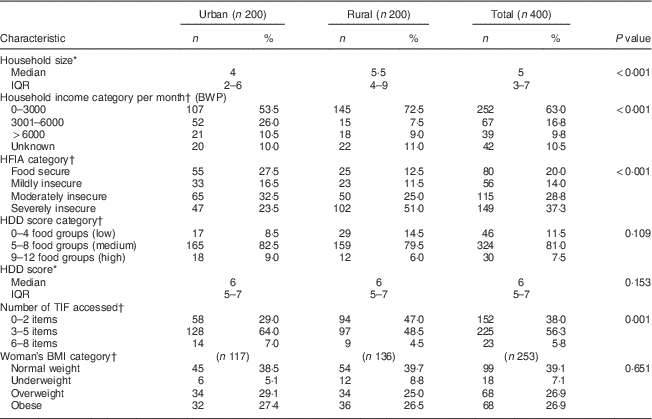
Table 1 summarises household characteristics, including demographic and socio-economic characteristics, household food insecurity, household dietary diversity, number of TIF accessed and women’s BMI. Food insecurity, in terms of access, was experienced by 80·1 % of households, with 14·0, 28·8 and 37·3 % being mildly, moderately and severely food insecure, respectively. Severe food insecurity was significantly higher in rural areas compared with urban areas, 51·0 v. 23·5 %, respectively (P<0.001). Median HDD score was 6 (interquartile range 5–7) out of a total of 12 and the majority of households (81·0 %) fell into the medium HDD category (5–8 food groups) with no significant differences between urban and rural areas (P=0·153). The most commonly consumed food groups were cereals (98·2 %); spices, condiments and beverages (97·2 %); oils and fats (92·5 %); sweets (85·7 %); and vegetables (68·0 %; data not shown). A large share of households (56·3 %) reported having accessed between three and five TIF the previous day. Households in urban areas had access to a significantly bigger variety of TIF compared with rural areas (P=0·001). Among the participating women, 26·9 % were overweight and an equal percentage (26·9 %) were obese.
Demographic and socio-economic characteristics, food security, dietary diversity, number of traditional and indigenous foods (TIF) accessed and women’s BMI, in low socio-economic households from two rural and two urban areas of Botswana, July–September 2015
BWP, Botswana Pula (1 BWP=£0·0632); HFIA, household food insecurity access; HDD, household dietary diversity.
* Independent-samples t test was used to test the differences for continuous data, urban v. rural areas.
† Pearson χ 2 test was used to test the association of categorical data, urban v. rural areas.
Diversity of foods (traditional and indigenous/non-traditional and non-indigenous) per food group as derived from quantitative and qualitative data
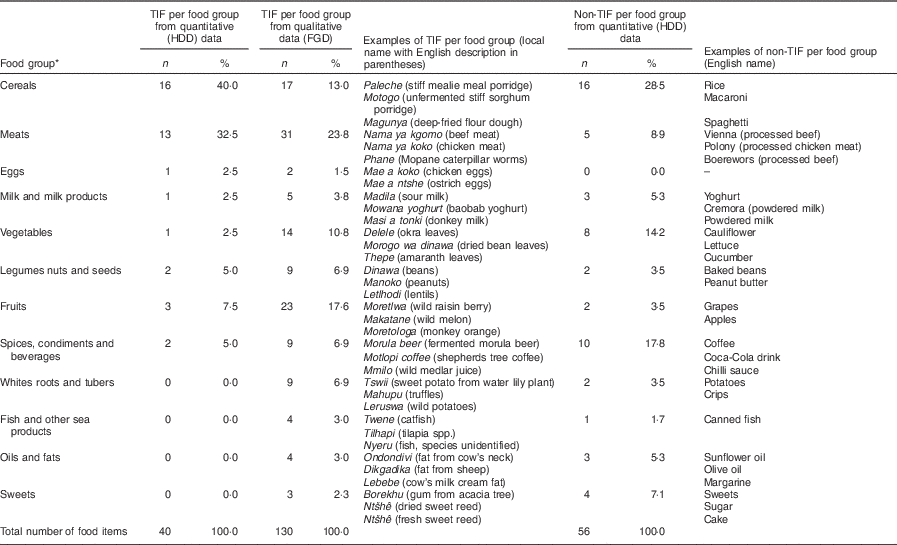
Table 2 presents the number of TIF and non-TIF per food group reported to have been consumed during the previous day (based on HDD data), as well as the number of TIF found in the areas as identified from the FGD. A total number of forty TIF types was reported from the HDD questionnaire, covering eight out of the twelve food groups, with cereals (n 16) and meats (n 13) having the highest number of reported types. On the other hand, fifty-six non-TIF were reported, representing eleven out of the possible twelve food groups, with cereals (n 16) and spices, condiments and beverages (n 10) being the largest groups in terms of types consumed the previous day. During FGD, the total number of TIF types identified was 130, covering all food groups, with meats (n 31), fruits (n 23), cereals (n 17) and vegetables (n 14) having the highest reported number of TIF.
Traditional and indigenous foods (TIF) per food group as identified from quantitative and qualitative data, with examples, and non-TIF per food group as identified from quantitative data, with examples, accessed by low socio-economic households from two rural and two urban areas of Botswana, July–September 2015
HDD, household dietary diversity; FGD, focus group discussion.
* TIF groups are based on the twelve FAO food groups for calculating household dietary diversity( 20 ).
Spearman correlation of access to traditional and indigenous foods with household food insecurity status, household dietary diversity and women’s BMI
Our findings showed a positive correlation between the number of TIF accessed and HDD score (r=0·457; P<0·001) and a negative correlation between the number of TIF accessed and HFIA score (r=−0·272; P<0·001). No correlation was found between accessed TIF and women’s BMI (r=−0·066; P=0·297).
Participants’ perceptions on traditional and indigenous foods: health, availability and access, and consumption
Three main themes emerged during qualitative analysis, namely: (i) health perceptions; (ii) availability and access; and (iii) declining consumption of TIF and attributed factors. We present the results here under these thematic areas.
Health perceptions of traditional and indigenous foods
Participants perceived TIF to be healthy, often comparing TIF with modern foods (e.g. cakes, rice, sugar-sweetened beverages), which were perceived as unhealthy. TIF were described as natural foods that do not require chemicals or additives besides salt during the production and processing stages. TIF were also perceived to be positively related to satiety. The following quotes exemplify these perceptions:
‘Our indigenous foods do not have any added preservatives; these foods are natural.’ (Group 1, Old Naledi, 30.07.2015)
‘These modern foods are not grown properly. They use chemicals for them to grow faster and this might be the reason why we are so sick.’ (Group 1, Area W, 07.08.2015)
‘These modern foods, they are so light. We are not full when we eat them. These rice and spices make us sick.’ (Group 1, Tsabong, 28.08.2015)
Availability of and access to traditional and indigenous foods
Participants indicated that TIF were accessed from different sources. TIF could be collected or hunted from the wild, they can be cultivated at home, sold by street vendors, or bought from shops:
‘We also eat mosulthwane [dehulled sorghum] and mmilo [wild medlar]. We get them from the wild.’ (Group 1, Old Naledi, 30.07.2015)
‘They [indigenous foods] are sold by street vendors and in shops.’ (Group 2, Old Naledi, 30.07.2015)
Availability of TIF in relation to seasonality was discussed with similar perceptions among participants of all four study areas. Participants indicated TIF were mainly found during three seasons (summer, autumn and winter). Some participants mentioned that some leafy vegetables like morogo wa dinawa (bean leaves) were commonly available during the rainy season (summer). Some foods such as beans and bean leaves, sweet reed, green leafy vegetables and watermelon were often dried after harvest and preserved for use during the winter (dry period):
‘We only have melons in autumn and that we like to dry, and we call them lengangale.’ (Group 1, Maun, 14.08.2015)
Declining consumption of traditional and indigenous foods
Participants described societal progress as a contributing factor to the decline in consumption of TIF. Terms such as ‘civilisation’, ‘globalisation’ and ‘modernisation’ were used and mainly associated with the consumption of modern foods. The young generation particularly was perceived to prefer modern foods and to not show much interest in TIF and traditional meals:
‘Things have definitely changed; globalisation has taken over. People are so interested in things that are preserved and advertised than to grow their own food and have small gardens at their homes.’ (Group 2, Old Naledi, 30.07.2015)
‘My grandchild said he won’t eat these indigenous foods when I cooked them last week. He only tasted and then went to the shop to buy bread and coke.’ (Group 1, Tsabong, 28.08.2015)
An increased presence of modern foods in supermarkets, shops and fast-food outlets was also perceived to have caused a reduction in the use of TIF because almost all food products are purchased:
‘Yes, we also used legalalatshwene [herbal tea] but now we buy tea from the supermarket.’ (Group 2, Old Naledi, 30.07.2015)
With regard to lifestyle changes, participants mainly described full-time jobs and lack of time as a reason why TIF are not eaten as often as in the past:
‘For us to eat these [traditional] foods, we have to plough. But due to other obligations, like working, we can’t. So, we go and buy food that is easy to prepare like rice and other easy food.’ (Group 1, Area W, 07.08.2015)
Climate conditions with little and unreliable rain was another reason perceived by the participants to have led to the decline in consumption of TIF:
‘The rain is very scarce, so people are not planting any more. Planting these foods will be waste of money and seeds.’ (Group 2, Old Naledi, 30.07.2015)
Some participants mentioned that government restrictions on hunting to protect wild animals were seen as a barrier to consuming wild meat:
‘In the past we ate a lot of meat. It did not matter if they were dead or slaughtered as the law was not so strict with hunting. But now, we have laws that forbid people from hunting.’ (Group 1, Maun, 14.08.2015)
Discussion
The objective of the present study was to determine access to TIF and the association with household food security (in terms of access), dietary diversity and women’s BMI in low socio-economic households in rural and urban Botswana. Compared with the average monthly household income at national level of BWP 3936·12 (Botswana Pula; 1 BWP=£0·0632) in 2010( 28 ), most households in our study earned an income of less than BWP 3000·00 per month. This is in line with the high levels of food insecurity (in terms of access) found among the households, with rural households being more severely affected than urban households. This is confirmed by national statistics of 2010, indicating that 50·6 and 28·8 % of rural and urban households, respectively, reported being worried about having enough food during the past 4 weeks that preceded the survey( 28 ). Food insecurity seems highly prevalent at household level despite the country being classified as nationally food secure( 8 ). While Botswana’s national food strategy that focuses on economic access to ensure food security can be said to be largely successful at national level( 8 ), this is not the case at household level. Economic access to food requires that households have adequate incomes to access this food. The large number reporting food insecurity both from the present study and national statistics may be an indication of difficulties for a substantial part of the population to attain adequate income to make economic food access a reality, as demonstrated by previous studies( Reference Raboloko 6 , Reference Bashir, Naeem and Niazi 29 ). This may warrant a dual strategy that promotes production of local foods adapted to the arid environment of Botswana while at the same time addressing the shortfall in food supply through economic access( Reference Penafiel, Termote and Lachat 30 ).
The majority of households in the present study presented a relatively low dietary diversity. Median HDD score was 6 (interquartile range 5–7) out of a total of 12, with the largest number of households falling into the medium HDD category (5–8 food groups). Other studies in Botswana confirmed poor dietary diversity in both urban and rural households( Reference Acquah, Kapunda and Legwegoh 7 , Reference Maruapula and Chapman-Novakofski 31 , Reference Maruapula, Jackson and Holsten 32 ). In our study, data were collected during winter (dry period), a time when some foods, especially traditional vegetables and fruits, including those from the wild, have been reported to be in low supply compared with the rainy season( Reference Maruapula and Novakofski 33 ) – a possible reason that could have led to the relatively low dietary diversity. While food insecurity and low to medium dietary diversity have been shown to reflect limited economic access to food( Reference Kuhnlein, Erasmus and Spigelski 16 ), overweight and obesity were found in more than half of participating women. Limited economic resources of households in the present study may pose challenges to accessing a variety of nutrient-dense healthy foods, as omnipresent convenience stores may offer cheaper but less healthy food options and lack a variety of fresh and nutrient-dense foods needed for optimal nutrition( Reference Frongillo and Bernal 34 , Reference Drewnowski 35 ). In Botswana, urbanisation was further linked to unhealthy eating patterns (snacking), fewer servings of traditional foods and overweight and obesity among adolescents( Reference Maruapula, Jackson and Holsten 32 ). The coexistence of all three forms of malnutrition, including undernutrition, overnutrition and micronutrient deficiencies, is a phenomenon increasingly found in developing or transforming countries due to changes in consumption patterns( Reference Hawkes and Popkin 36 ). In our study, more than half of households consumed three to five foods that were classified as indigenous or traditional, indicating that TIF consumption is an integral part of the Botswana diet. The importance of TIF for healthier and more sustainable diets has received increasing attention in the recent past( 37 , Reference Burlingame and Dernini 38 ). However, it needs to be highlighted that cereals and meat, both reported as TIF and non-TIF, were the most consumed food groups derived from the HDD data. This may contribute to the high prevalence of overnutrition among the participating women as previously alluded. It is important for future studies to further investigate traditional diets by clearly differentiating between various traditional or indigenous foods according to their nutritional value, level of processing, preparation methods and portion sizes.
To our surprise, urban households had access to a significantly bigger variety of TIF than those in rural areas. Research suggests that people living in urban areas have limited access to traditional foods as they depend on food retail outlets such as supermarkets, while rural communities are believed to have access to more natural resources( Reference Power 39 ). The smaller proportion of people in the lowest income bracket in the urban areas suggests better economic access for these foods in urban areas. In our study, we acknowledged current global food structures and increased ‘supermarketisation’ in the definition of TIF, resulting in the fact that some of the foods that are referred by locals to be traditional may be purchased from supermarkets and may also be imported from the surrounding regions or countries. For example, some of the reported TIF, such as unprocessed meat of all types, maize meal, sorghum meal and eggs, are available in supermarkets and easily accessible in urban areas. It would be useful to explore the extent to which TIF are channelled from rural to urban areas through both formal and informal markets.
Our qualitative findings showed that the knowledge of TIF is high among the participants, who recalled and described 130 different TIF during group discussions. Findings of the quantitative dietary diversity questionnaire revealed only forty TIF items. This may be because the HDD questionnaire only addressed what was consumed in the past 24 h, while the FGD list was based on general recall of what is available and could be accessed over a broader and undefined time period. The shorter list from the HDD data may therefore in part also reflect what was accessible during the dry season when the data were collected. Variations in seasonal availability of traditional vegetables and fruits have been reported from research done in Botswana( Reference Maruapula and Novakofski 33 ). The FGD participants also perceived a decline in TIF consumption, stating globalisation and urbanisation as possible reasons and the related increased availability of processed and convenience foods distributed by supermarkets and fast-food restaurants. This finding supports other researchers( Reference Vorster, Kruger and Margetts 40 , Reference Anand, Hawkes and De Souza 41 ), who highlighted that decreased consumption of traditional foods was associated with globalisation, modernisation, supermarkets and fast-food restaurants, and increased availability of modern foods. The FGD participants perceived the young generation, in particular, as preferring modern foods. Because these ‘modern foods’ are characterised as energy-dense and nutrient-poor foods which increase the risk of obesity and chronic diseases( Reference Sharma, De Roose and Cao 42 , Reference Erber, Beck and De Roose 43 ), the dietary shift towards modern foods may pose future public health challenges to Botswana as signified by the high prevalence of overweight and obesity observed in the women of this study population. Our findings further showed that access to TIF was positively associated with food security in terms of access and dietary diversity, hence highlighting the potential role of TIF in the context of food security in Botswana. In 2012, the FAO( 44 ) observed that traditional foods are crucial for food and nutrition security, especially for poor families in rural, peri-urban and urban areas, because of their nutritional benefits, affordability, resilience to local growing conditions and cultural acceptability. Other studies in African countries, such as Ethiopia and Kenya, also reported that indigenous food crops are particularly resilient to adverse local environments, highlighting their important role as food alternatives particularly during dry spells( Reference Kunyanga, Imungi and Vellingiri 45 , Reference Fentahun and Hager 46 ).
Limitations of our study
One limitation of the present study is that there is no unified definition on TIF. While a group of local experts decided on selection criteria for TIF, it is difficult to make a clear distinction between traditional and indigenous foods, particularly in instances where an introduced food has been part of cultural dishes for a long time but yet may be purchased from retail outlets. Hence, we had to define a new concept of TIF, considering global changes in food systems. Furthermore, access to TIF, as collected by means of a household dietary diversity questionnaire, was captured only once; hence, neglecting seasonal availability of TIF. Our study did not quantify the dietary intake of TIF among individual women, but looked at the association between the number of TIF accessed at household level and the women’s BMI. Individual TIF consumption and associations with BMI may require more research, taking account of related energy consumption that is in part influenced by food preparation methods, physical activity and other important variables that are determinants of BMI.
Conclusion
Food insecurity and limited access to diversified diets were found to be highly prevalent in the two urban and two rural areas of Botswana. Large proportions of the study population in rural and urban areas were found to have access to TIF. TIF access increased as HFIA score decreased. Participants demonstrated knowledge of TIF, perceiving them to have health benefits, but also reporting declining consumption trends due to preference for and convenience of modern foods. Although the study found associations between greater access to TIF and better household food security (in terms of access) and higher dietary diversity, there is a need to explore the potential benefits of optimal use of TIF in contributing to food security and nutrition. This should include a focus on the nutrient density of TIF, consumption patterns and portion sizes. Attention should also be given to related energy consumption and physical activity as these may influence nutritional status outcomes.
Acknowledgements
Acknowledgements: The authors wish to thank the study participants and fieldworkers. Financial support: The North-West University in South Africa and National Food Technology Centre (NFTRC) of Botswana are gratefully acknowledged for providing financial support. The funders had no role in the design, analysis or writing of this article. Conflict of interest: The authors declare that they have no competing interest. Authorship: S.N.K. participated in conception and designing of the protocol, formulating the research questions, study design, data collection and data analysis, and is the primary writer of the manuscript. B.S.M. participated in formulating the research questions, study design, data collection, interpretation of data and reviewing of the manuscript. N.M.C. participated in conception and designing of the protocol, formulating the research questions, study design, guiding the study, interpretation of data and reviewing of the manuscript. N.C. participated in guiding the study, interpretation of the data and critically reviewed the manuscript. Ethics of human subject participation: This study was conducted according to the guidelines laid down in the Declaration of Helsinki and all procedures involving human subjects were approved by the Faculty of Health Sciences, Health Research Ethics Committee, Potchefstroom Campus, North-West University, South Africa (ethics number NWU-00206-14-A1) and the Botswana Health Research and Development Division, Ministry of Health. Written informed consent was obtained from all subjects.



