



Dietary carbohydrates are a major contributor of postprandial glycaemia. Hyperglycaemia has been associated with the increased risk of diabetes, CVD and some cancer(Reference Coutinho, Gerstein and Wang1–Reference Scappaticco, Maiorino and Bellastella3). Dietary carbohydrates have also been implicated in weight gain(Reference Te Morenga, Mallard and Mann4), hyperlipidaemia(Reference Siri and Krauss5) and hypertension(Reference Klein and Kiat6), which are risk factors for these chronic diseases. Therefore, a higher intake of carbohydrates may adversely affect total mortality. A recent large prospective study of eighteen countries found that high carbohydrate intake was associated with higher risk of total mortality(Reference Dehghan, Mente and Zhang7). However, in our previous study, the consumption of rice, which is a main source of carbohydrates in Japan, was significantly inversely associated with total mortality in Japanese men(Reference Nagata, Wada and Tsuji8). Sugars come from fruits, milk and sugars, syrups or energy sweeteners that are added to foods during food process or manufacturing(Reference Mela and Woolner9) and are also classified as carbohydrates. The impact on health of dietary sugars, especially fructose and sucrose, has been a major concern and continues to be a controversial topic(Reference Kahn and Sievenpiper10). These sugars could mechanistically promote the development of diabetes and CVD through liver lipid accumulation, dyslipidaemia, decreased insulin sensitivity and increased uric acid levels(Reference Dekker, Su and Baker11). The major source of fructose in the diet are fructose-containing sugars (sucrose and high-fructose corn syrup) largely used as free sugar(Reference Malik and Hu12). Epidemiological studies have suggested that the consumption of free sugars is associated with cardiometabolic diseases(Reference de Koning, Malik and Rimm13–Reference Fung, Malik and Rexrode15). However, the majority of evidence is available only from sugar-sweetened beverages. In addition, results from clinical trials do not strongly support a detrimental effect of free sugars on metabolic health(Reference Rippe and Angelopoulos16).
The relationships between the intake of carbohydrates and total mortality may depend on the type of carbohydrates consumed. However, to our knowledge, only one study has prospectively assessed the association of types of sugars with total mortality(Reference Tasevska, Park and Jiao17), and only a few prospective studies include some types of carbohydrates in relation to CVD(Reference Liu, Willett and Stampfer18–Reference Rebella, Koh and Chen22). The results of these studies are mixed. Recently, food content data for available carbohydrates have been published in Japan, which enabled us to estimate the intake of each type of carbohydrate(Reference Yasui23). We examined the association of types of carbohydrates – including starch, total sugar, sucrose, fructose, maltose, lactose and free and naturally occurring sugars – with total mortality and cause-specific mortality in a population-based cohort of Japanese men and women (the Takayama Study).
Methods
Study population
The Takayama Study cohort was established in 1992 to identify dietary and lifestyle factors in relation to morbidity from cancer and various other diseases. Details on baseline characteristics of study subjects and design of the Takayama Study are described in detail elsewhere(Reference Shimizu24). All residents who were aged 35 years and over and not hospitalised in Takayama, Gifu Prefecture, Japan (n 36 990) were invited to the cohort study. A total of 34 018 subjects responded. Written informed consent was not obtained at the baseline. The study has been approved by the ethical committee of the Gifu University Graduate School of Medicine.
Assessment of dietary sugars
Diet over the past 1 year was assessed with a validated 169-item semi-quantitative FFQ(Reference Shimizu, Ohwaki and Kurisu25). The questionnaire asked participants about their usual frequency of consuming each food item and the usual serving size of each item during the past year. For mixed dishes, component foods were predetermined. A total of 520 foods were covered by the FFQ. Estimations of the intake of individual types of carbohydrates (starch, glucose, fructose, sucrose, maltose and lactose) were based on the use of an available carbohydrate table, a supplement to the Standard Tables of Food Composition, 2015, in Japan, published by the Science and Technology Agency of Japan(26). Total carbohydrate contents have been published before(27). Total sugars represent the sum of monosaccharides (i.e. glucose, fructose and galactose) and disaccharides (i.e. sucrose, lactose, maltose and trehalose). This new table is incomplete for some foods; however, in our study subjects, the sum of starch and total sugar covered 95·0 % of the total carbohydrate intake. In addition, we estimated the individual types of carbohydrates for unlisted thirty-food foods including meat and seafood seasoned with sugar, 50 % fruit juice beverage and Danish pastry by assigning borrowed values from similar products or by estimating based on ingredients and/or common recipes. Finally, the sum of starch and total sugar covered 96·2 % of the total carbohydrate intake. Due to the lack of free sugar values in the database(26), all sugars in sugar, honey, starch sugar, soft drinks, juices, soya beverages, jams, confectioneries (including traditional confectioneries, cakes, buns, pastries, desserts, biscuits, snacks, candies, chocolates), ice cream, meat and seafood seasoned with sugar, yeast bread and breakfast cereals were summed up to yield the intake of free sugars. According to the definition by the WHO(28), ‘100 % fruit juices’ was considered as free sugars. Conversely, naturally occurring sugars in fruit and vegetables or dairy products were not included. Intake of naturally occurring sugars was estimated by subtracting the free sugar intake from the total sugar intake(Reference Karrtinen, Simila and Kanerva29). Intakes of other nutrients were estimated based on these information using the Japanese Standard Tables of Food Composition, 5th revised and enlarged edition(27). A detailed description of the FFQ, along with its reliability and validity, was published previously(Reference Shimizu, Ohwaki and Kurisu25). At the start of the cohort study, the FFQ was validated in subsamples in this population by comparing twelve 1-d diet records kept over a 1-year period(Reference Shimizu, Ohwaki and Kurisu25). For the present study, validity of estimation of each type of carbohydrate has been additionally checked using the same data set. The Spearman’s correlation coefficients between the questionnaire and twelve 1-d diet records kept over a 1-year period for intakes of total energy, total carbohydrates, starch, total sugars, glucose, fructose, sucrose, maltose and lactose were 0·44, 0·34, 0·31, 0·28, 0·46, 0·51, 0·48, 0·35 and 0·85, respectively, in men (n 17) and 0·53, 0·45, 0·31, 0·60, 0·68, 0·80, 0·46, 0·56 and 0·71, respectively, in women (n 20).
Subject characteristics and physical activity
Study subjects responded to a baseline self-administered questionnaire that included questions on demographic characteristics, smoking, diet, physical activity and medical and reproductive histories. Physical activity was assessed by asking the average hours per week spent performing various kinds of activities during the past year. The time per week spent at each intensity of activity was multiplied by its correspondent energy expenditure requirements, expressed as a metabolic equivalent, and summed up to yield a score (metabolic equivalents hours/week). The details including its validity are described elsewhere(Reference Suzuki, Kawakami and Shimizu30). Briefly, the correlation coefficients between the daily energy expenditure per body weight measured by the calorie counter for 7 consecutive days and the daily energy expenditure estimated from our questionnaire were 0·69 in men (n 49) and 0·62 in women (n 32)(Reference Suzuki, Kawakami and Shimizu30).
Data cleaning and exclusions
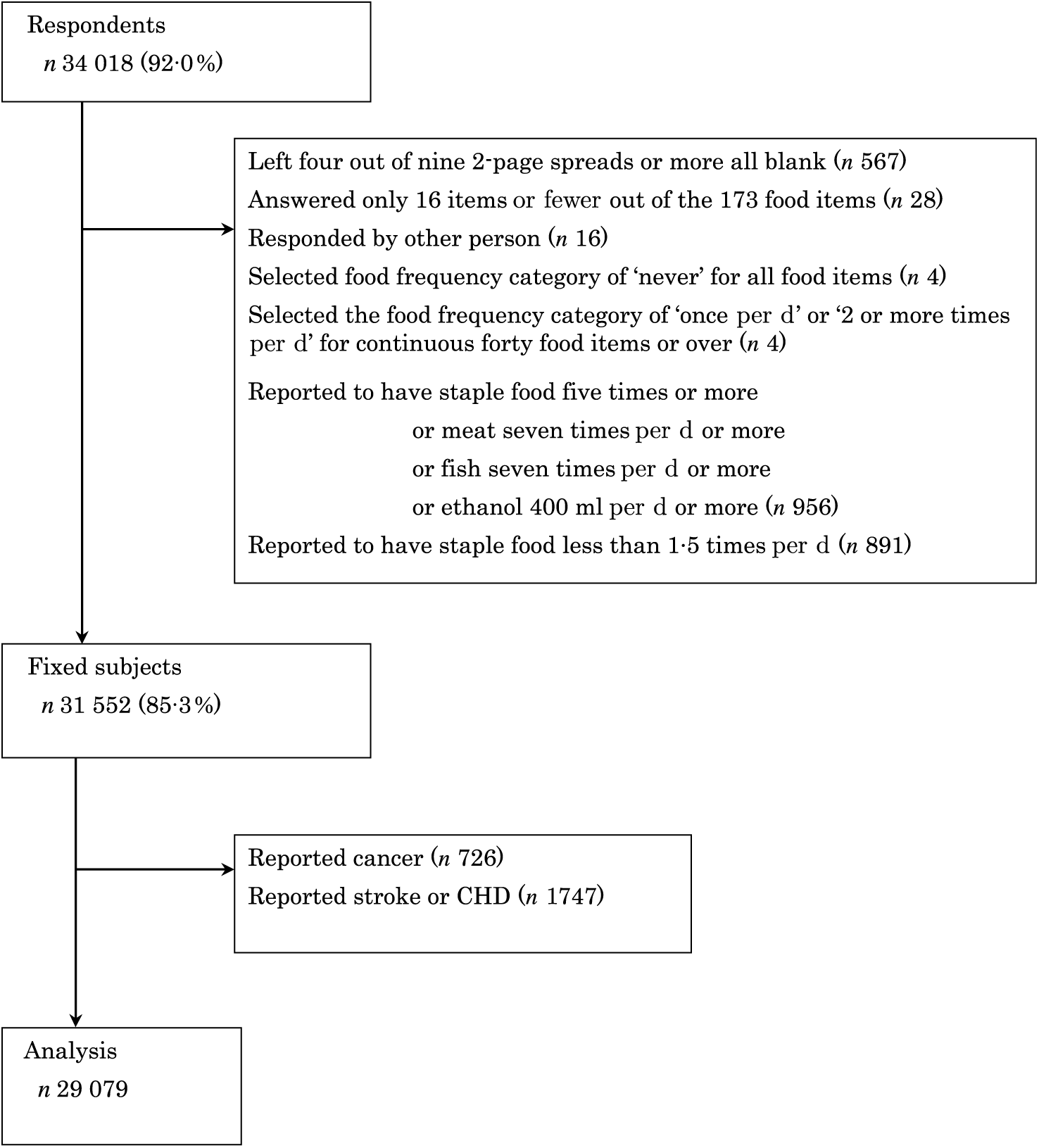
Among 34 018 respondents, those who incompletely filled baseline questionnaire and FFQ were excluded. Exclusion was also made in the analytical phase of the present study. Fig. 1 shows the flow chart for exclusion process. Finally, 29 079 (13 355 men and 15 724 women) participants were included in the present analyses.
Flow chart for the exclusion process.
Follow-up and endpoints
Information concerning subjects who died or moved away from Takayama City between the baseline (1 September 1992) and 1 October 2008, was obtained from residential registers or family registers. The mean duration of follow-up was 14·1 years. Causes of death were identified from death certificates provided by the Legal Affairs Bureau. They were coded according to the International Classification of Diseases, 10th Revision (ICD-10), which was used to define deaths as follows: cancer (ICD-10: C00–D48), CVD (ICD-10: I00–I99) and all other causes (non-cancer, non-CVD diseases). During the study period, 941 (6·5 %) men and 971 (5·7 %) women moved out of Takayama City. Among them, the date of moving was unknown for 104 (0·7 %) men and 147 (0·9 %) women. They were censored at the latest date when they were known to reside in the city.
Statistical analyses
For each participant, person-years of follow-up were calculated from the date of response to the baseline questionnaire to the date of death, the date of emigration out of Takayama or the end of follow-up (1 October 2008), whichever occurred first. Each type of carbohydrate was expressed as percentage energy (E %). Subjects were divided into sex-specific four equal groups according to the quartile of each carbohydrate. We used the Cox proportional hazards model to estimate the hazard ratios (HR) and 95 % CI for total mortality and cause-specific mortality for each intake category as compared with the lowest intake category. The quartile medians as continuous variables (E %) were used to assess the linear trend. As we used E % values as explanatory variables, the models tested the effect of substituting the explanatory carbohydrate variable for other energy-contributing nutrients not included in the models. Separate models for starch and each of the sugar types were created. First, we included age in the model as a covariate. In our second model, we further adjusted for non-dietary factors including marital status (married, not married or missing), level of education (≤11, 12–14, 15≥ years or missing), height (in quartile or missing), BMI (in quartile or missing), physical activity (metabolic equivalents hours/week), alcohol consumption (in quartile for men and non-drinkers, drinkers below or above the median, alcohol level for women), smoking status (never, former, current with ≤30 years of smoking, current and >30 years of smoking or missing for men and never, former, current or missing for women), history of diabetes and hypertension (yes, no) and menopausal status (premenopausal, postmenopausal or missing; women only). Height and weight were self-reported. Our validity study showed that the correlation coefficients between self-reported and measured height and weight among a subsample were 0·85 for height and 0·97 for weight in men (n 1187), and the corresponding values were 0·93 and 0·97, respectively, in women (n 3412). As alcohol drinkers and smokers were fewer in women than men, the different categorisations for alcohol consumption and smoking status between men and women were used. In our third model, we further adjusted for dietary factors including total energy, total fat (E %), salts (g/4184 kJ), dietary fibre (g/4184 kJ) and coffee (cups). For the analyses among men, we further used the energy-partition model(Reference Kipnis, Freedman and Brown31), in which total energy is partitioned into that contributed by different types of carbohydrate (i.e. starch and total sugar) and that contributed by other sources (fat and protein). Total energy intake is not held constant. The model included adjustment for all non-dietary covariates and dietary factors including intakes of salts, dietary fibre and coffee. Intakes of salts and dietary fibre were expressed in terms of grams. All the statistical analyses were performed using SAS programs. Power calculations showed that the sample size and number of total deaths were sufficiently large to detect an HR of 1·2 (or 0·83) for the highest quartile of intake as compared with the lowest, with a statistical power of 80 % and significance level of 5 %.
Results
Mean intakes of starch and total and free sugars were 38·7, 8·6 and 3·9 E %, respectively, in men, and 39·8, 10·9, and 4·8 E %, respectively, in women. The main dietary sources of starch were rice (76·6 % for men and 72·6 % for women, respectively) and other cereals (17·0 %/18·0 %). For total sugar, the leading contributor was sweetened beverages (20·6 %) followed by vegetables excluding juice (17·7 %), fruits excluding juice and jam (12·7 %) and dairy foods excluding ice cream (12·5 %) in men; in women the leading contributor was vegetables excluding juice (18·5 %) followed by sweetened beverages (15·6 %), fruits excluding juice and jam (15·1 %) and dairy foods excluding ice cream (13·7 %). The main sources of free sugars were sweetened beverages (35·7 and 29·6 % in men and women, respectively), confectioneries (18·4 %/25·0 %) and sugars (16·2 %/15·6 %).
Baseline characteristics of the study population by sex and quartile of starch and total sugars are shown in Table 1. Men with greater intake of starch were more likely to be aged, not married and less educated, and physically less active, and less likely to have reported histories of hypertension and diabetes. They also had lower BMI and lower intake of alcohol, total energy, total fat, dietary fibre, salt and coffee. Men with greater total sugar intake were more likely to be aged, educated, obese and never smokers and less likely to have reported histories of hypertension. They also had lower intake of alcohol and higher intake of total energy, total fat, dietary fibre, salt and coffee. Similar tendency was observed for women. Our questionnaire was designed to measure an individual’s relative intakes of nutrients or foods rather than absolute values. Although we presented the mean values for dietary intakes in the table, some of them may be overestimated by our questionnaire.
Baseline characteristics of study subjects according to the quartile (Q) of starch and total sugar intake
(Mean values, numbers and percentages)
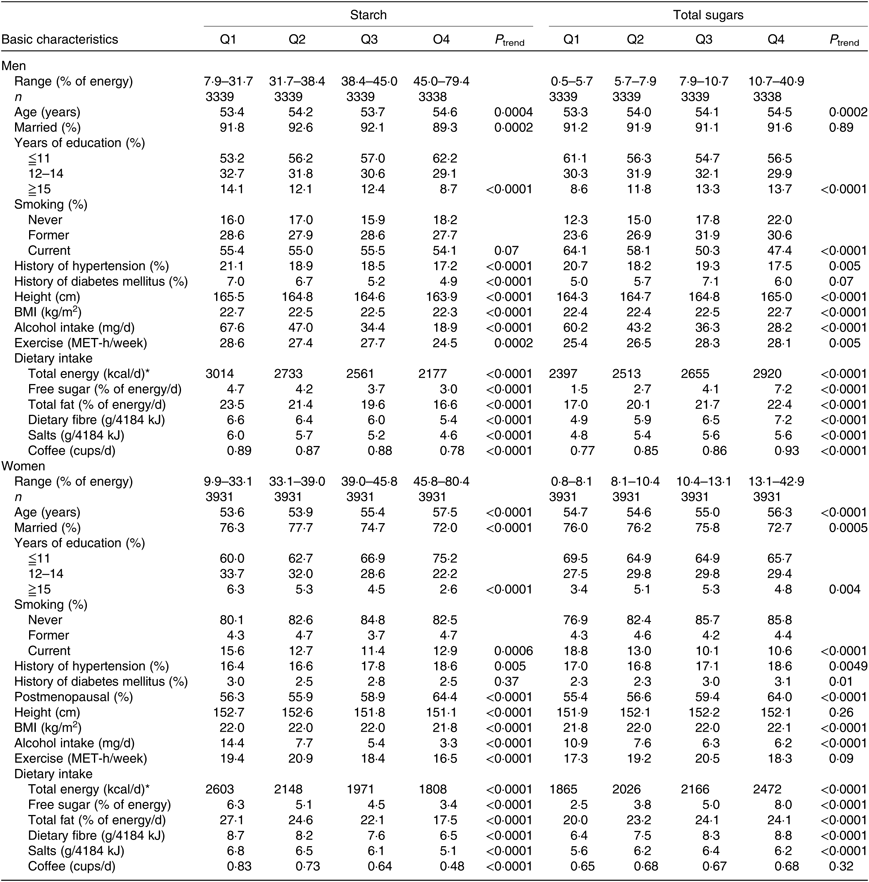
MET, metabolic equivalent.
* To convert energy in kcal to kJ, multiply by 4·184.
During the 16 years of follow-up period, there were 2901 male deaths and 2438 female deaths. Intake of starch was significantly inversely and intake of total sugars was significantly positively associated with total, CVD and non-cancer, non-CVD mortality in men after controlling for all covariates (fully-adjusted model) (Table 2). The trends across quartiles were also statistically significant. In the energy-partition model, both starch and total sugar intakes were significantly associated with all-cause mortality (HR for every 418·4 kJ of starch and total sugar intakes were 0·98; 95 % CI 0·97, 0·997 and 1·07; 95 % CI 1·03, 1·10, respectively) and cardiovascular mortality (HR for every 418·4 kJ of starch and total sugar intakes were 0·96; 95 % CI 0·93, 0·99 and 1·08; 95 % CI 1·01, 1·15, respectively) in men.
Risk for total and cause-specific mortality in men by the quartiles of carbohydrates intake
(Hazard ratios (HR) and 95 % confidence intervals)
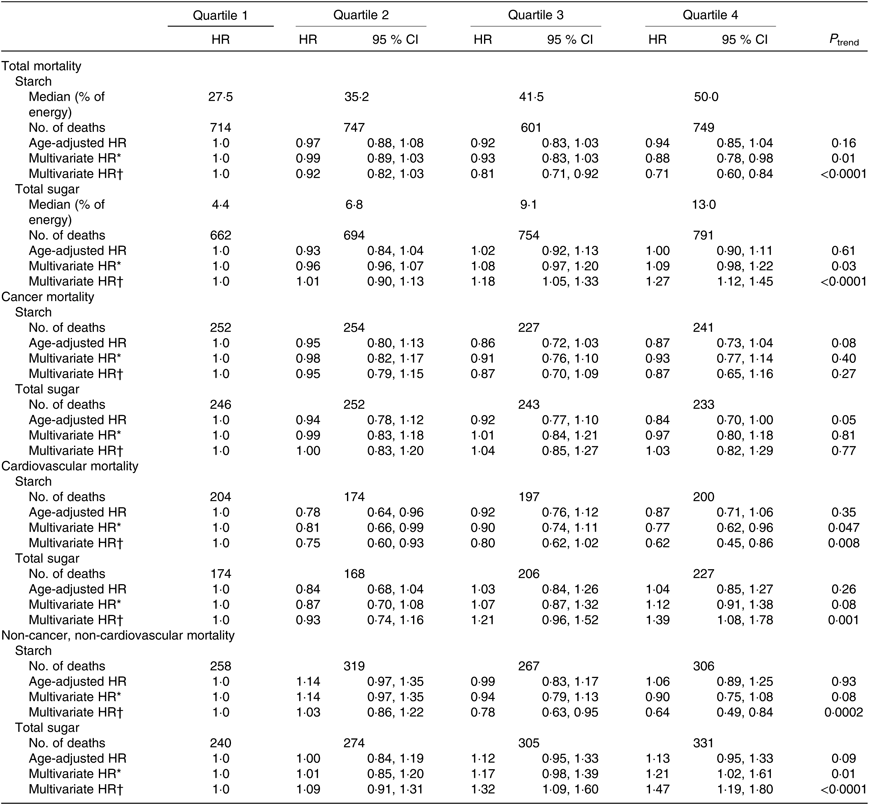
* Adjusted for non-dietary factors including age, height, BMI, physical activity, smoking status, alcohol consumption, education, marital status and histories of diabetes and hypertension.
† Additionally adjusted for dietary factors including total energy and intakes of fat, salt, dietary fibre and coffee.
Among the sugars, glucose, fructose, sucrose, maltose and free and naturally occurring sugars were significantly positively associated with total mortality in men (online Supplementary Table S1). Maltose intake was significantly positively associated with cancer mortality in men. For other types, similar associations were observed for mortality from CVD and non-cancer, non-CVD in men except that naturally occurring sugars were not associated with CVD mortality.
In women, intake of starch as well as total sugars was not significantly associated with total and cause-specific mortality (Table 3). Among the sugars, only the intake of free sugars was significantly associated with mortality from total and non-cancer, non-CVD mortality (Table S2).
Risk of total and cause-specific mortality in women by the quartiles of dietary carbohydrates
(Hazard ratios (HR) and 95 % confidence intervals)
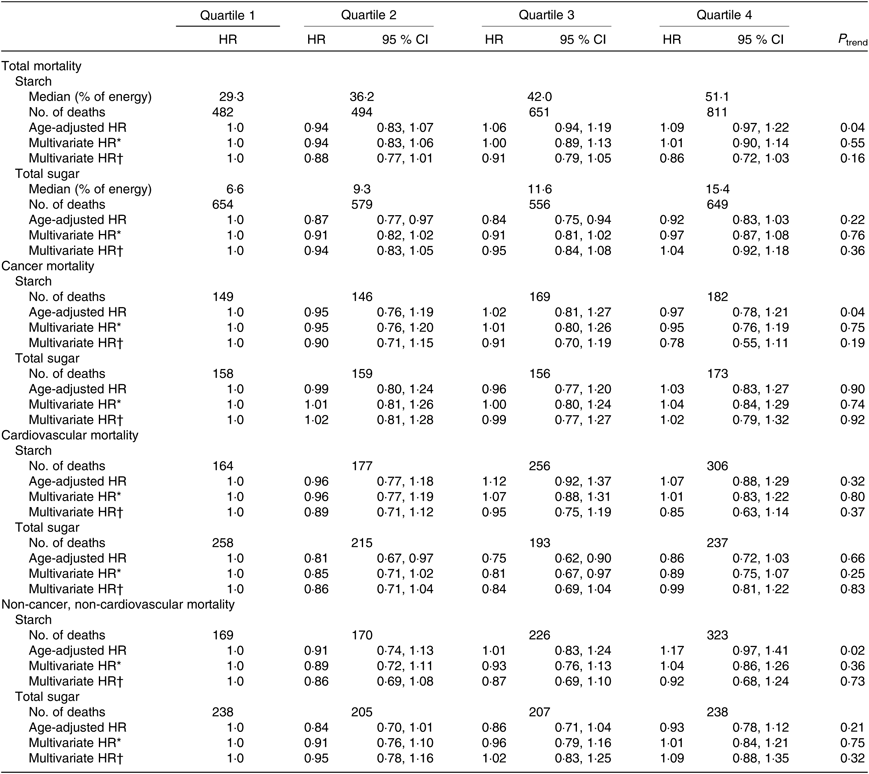
* Adjusted for non-dietary factors including age, height, BMI, physical activity, smoking status, alcohol consumption, education, marital status, menopausal status and history of diabetes and hypertension.
† Additionally adjusted for dietary factors including total energy and intakes of fat, salt, dietary fibre and coffee.
Exclusion of deaths during the first 3 years did not alter the results substantially; the HR of total mortality in men for the highest v. lowest quartile of starch and total sugar intake were 0·74; 95 % CI 0·62, 0·88; P trend = 0·0006 and 1·25; 95 % CI 1·09, 1·45, P trend = 0·0003, respectively.
Discussion
We found that a higher intake of starch was associated with a decreased risk of total mortality, whereas a higher intake of total sugar, sucrose, fructose, and sucrose intake was associated with increased risk of total mortality in men. Similar associations were observed for CVD mortality and non-cancer, non-CVD mortality in men. So far, only one study, the National Institutes of Health-American Association of Retired Persons (NIH-AARP) Diet and Health Study, examined the association between types of carbohydrates and total mortality(Reference Tasevska, Park and Jiao17), though the study included sugars but not starch. In the study, a high intake of total sugars as well as fructose, which is a low-glycaemic index carbohydrate, was weakly but significantly associated with an increased risk of total mortality in men and women. A high intake of sucrose was significantly inversely associated with non-cancer, non-CVD mortality in men. The results for total sugar and fructose intake, in relation to total mortality, were similar to our results in men.
More interest has been paid to the association between types of carbohydrates and CVD. In the NIH-AARP Diet and Health Study, there were no significant associations of total sugars or any type of sugars with CVD mortality(Reference Tasevska, Park and Jiao17). So far, additional four prospective cohorts examined the associations of starch or sugars with the incidence of or mortality from CVD(Reference Liu, Willett and Stampfer18–Reference Rebella, Koh and Chen22). The results of these studies were inconsistent, though differences in ethnicity and outcomes (incidence or mortality; IHD, cerebrovascular disease or CVD) among studies may be partially explanatory. One mortality study, conducted in China, observed that starch intake in women was significantly positively associated with the IHD mortality; and total sugar intake in men was significantly inversely associated with IHD mortality(Reference Rebella, Koh and Chen22). Among the remaining three incidence studies, one study reported that starch, sucrose and lactose were not associated with a risk of IHD in US women(Reference Liu, Willett and Stampfer18). The other two studies included starch or total sugars but not types of sugars: there was no association with the risk of IHD and cerebrovascular disease among Europeans(Reference Beulens, de Bruijne and Stolk19–Reference Sieri, Krogh and Berrino21). Additionally, two prospective cohort studies included a single type of sugar – sucrose or fructose(Reference Warfa, Drake and Wallström32,Reference Bahadoran, Mirmiran and Tohidi33) . Sucrose intake was significantly associated with a risk of acute coronary event in the Swedish population(Reference Warfa, Drake and Wallström32). Fructose intake was significantly positively associated with cardiovascular events (IHD, stroke or CVD death) in the Iranian population(Reference Bahadoran, Mirmiran and Tohidi33).
White rice is a staple food and the main source of starch in the Japanese diet. Rice intake has been associated with CVD risk factors – including the metabolic syndrome and diabetes – but not with CVD mortality(Reference Izadi and Azadbakht34). A meta-analysis of five prospective studies including four Japanese studies observed that high rice intake was related to a modest reduction in the risk of mortality in men but not in women(Reference Saneei, Larijani and Esmaillzadeh35). Starch is the main source of carbohydrates in Japanese diet. In fact, the intake level of total sugars in our study was lower than those in other populations (e.g. the median intakes of total sugars were about 21 E % and 23 E % in men and women, respectively, according to the NIH-AARP Diet and Health Study(Reference Tasevska, Park and Jiao17), and total sugar intake ranged 15–21 E % in European countries(Reference Azais-Braesco, Sluik and Maillot36)). Total carbohydrate intake was reported to be somewhat lower among North American and European populations(Reference Dehghan, Mente and Zhang7). Inconsistent findings on the type of carbohydrate and CVD or total death across studies may also be due to these different food cultures (staple foods and food sources of carbohydrate). The primary role of carbohydrates is to provide energy to cells in the body. Starch from rice may work as a fuel and favour better survival, while an excess intake of other carbohydrates may, rather, be associated with an increased risk in Japanese men. As mentioned above, there are plausible mechanisms that support the suggestion that sucrose or fructose can increase the risk of cardiometabolic disease, which may lead to increased mortality. Unfavourable metabolic consequences of consuming rice or a high-glycaemic index carbohydrates in women have been suggested(Reference Kim, Yun and Choi37,Reference Hare-Bruun, Nielsen and Grau38) , and this may partially explain the lack of inverse association between starch intake and mortality in women in the present study. Nonetheless, our results were not similar to those reported among Chinese men where rice is consumed as a staple food(Reference Rebella, Koh and Chen22). Further studies of these associations in different populations are needed.
Positive associations of naturally occurring and free sugars with mortality in men also support the possible effects of sucrose and fructose. Nonetheless, the intakes of total sugars, glucose, fructose and sucrose were highly correlated (r > 0·67), and, thus, we could not distinguish the effects of these types of sugars on mortality.
To our knowledge, three studies assessed the association of free sugars with mortality not restricted to the intake of sugar-sweetened beverages. The NIH-AARP Diet and Health Study reported that free sugars and added sucrose were significantly inversely associated with non-cancer, non-CVD mortality in men, whereas added fructose was significantly positively associated with total mortality in women(Reference Tasevska, Park and Jiao17). The remaining two studies focused on CVD mortality; the association was significantly positive in the US adults(Reference Yang, Zhang and Gregg39) and significantly inverse in the Chinese elderly(Reference Liu, Tse and Chan40). The definitions for free sugars are not standardised and slightly differed among studies. In our study, either free sugars or naturally occurring sugars was significantly positively associated with total and non-cancer, non-CVD mortality in men. These results would not support the hypothesis that free sugar intake was uniquely associated with the risk of mortality relative to other types of sugar. The results also may lessen the concern that the intake of free sugar is a sole indicator of an unhealthy lifestyle. However, we cannot deny residual confounding effects, especially considering that only free sugar intake was significantly associated with total and non-cancer, non-CVD mortality in women.
Strengths of our study include the prospective design, validation of dietary questionnaire, representation of the general population, information on potential confounders and a high rate and length of follow-up. Our study has several limitations. As mentioned above, we cannot deny effects of confounding due to unknown factors or residual confounding, especially on the association between free sugar intake and mortality in women. The use of mortality instead of incidence data disabled us distinguishing the effect of carbohydrates on incidence, survival or both. The sample size was limited, which precluded analyses on causes with small numbers of deaths. Carbohydrate intake was estimated through a single dietary assessment. While FFQ was validated, the correlation coefficients between FFQ and the diet records were low especially for starch and total sugar in men. Therefore, misclassification of subjects according to these intakes is inevitable. However, the poor validation results may in part be due to inadequate validation sample.
In summary, we found that different types of carbohydrates, starches and sugars have different associations with total and cause-specific mortality in men. The high intake of starch and low intake of sugars – including glucose, fructose and sucrose – may favour longevity of Japanese men. However, these findings are new, and additional studies on the association between types of carbohydrates and mortality are needed.
Acknowledgements
The authors thank Dr Shougen Matsushita and Mr. Takehiko Minaguchi for their help in data collection.
This work was supported by grant from the Ministry of Education, Culture, Sports, Science, and Technology, Japan. The funder had no role in the design, analysis or writing of this article.
C. N. designed research and wrote paper; K. W., M. Y. and K. K. conducted research; Y. G., S. K., F. M. and T. U. analysed the data. All authors read and approved the final manuscript.
None of the authors had any conflicts of interest to declare.
Supplementary material
To view supplementary material for this article, please visit https://doi.org/10.1017/S0007114519001661



