





1. Introduction
Directional complements in Mandarin, defined as directional verbs serving as complements to verbs or adjectives (Liu, Reference Liu1998), have been extensively studied since the early 20th century (e.g., Chao, Reference Chao1968; Fan, Reference Fan1963; Li, Reference Li1924; Li & Thompson, Reference Li and Thompson1981; Liang, Reference Liang2007; Lyu, Reference Lyu1980) and continue to attract scholarly attention from diverse theoretical perspectives (e.g., Cao, Reference Cao2023; Huang & Hsieh, Reference Huang and Hsieh2008; Peyraube, Reference Peyraube, Hickmann and Robert2006; Song, Reference Song2007; Wang, Reference Wang2005; Yang & Li, Reference Yang and Li2025). One major line of research focuses on syntactic structures in which objects co-occur with simplex or complex directional complements (CDCs). With respect to CDCs, four syntactic patterns are typically identified (Lyu, Reference Lyu1980; Zhang, Reference Zhang1991b; Zhang & Fang, Reference Zhang and Fang1996): pre-object (pre-O), mid-object (mid-O), post-object (post-O) and ba-object (ba-O). These structures share broadly comparable syntactic and semantic properties but differ primarily in word order (Zhang, Reference Zhang1991a, p. 5). Crucially, however, they are not always interchangeable. For example, in (1), the object
huà
‘word’ must appear in the mid-O pattern (see [1a]); the post-O pattern is marginal (see [1b]), while the pre-O and ba-O patterns are unacceptable (see [1c–d]).
(1)
a.
mid-O:
shuō qǐ huà lái
‘start to speak’
b.
post-O:
shuō qǐlái huà
‘start to talk’
c.
pre-O:
shuō huà qǐlái*
(ungrammatical)
d.
ba-O:
bǎ huà shuō qǐlái*
(ungrammatical)
(Zhang, Reference Zhang1991a, p. 8)
Previous research has examined these patterns from multiple perspectives, including their semantic and pragmatic contrasts (Guo, Reference Guo2003; Yang, Reference Yang2005), usage constraints (Chen, Reference Chen1980, Reference Chen2007; Jia, Reference Jia1998; Lu, Reference Lu2002; Yang, Reference Yang2006; Zhang & Fang, Reference Zhang and Fang1996), diachronic developments (Hao, Reference Hao2018; Hiroshi, Reference Hiroshi2021; Liang, Reference Liang2007; Zhang, Reference Zhang1991b) and prosodic properties (Dong, Reference Dong1998; Song, Reference Song2019). However, relatively few studies have integrated large-scale diachronic corpus analysis and advanced statistical modeling within a cognitive framework to examine how the usage preferences and functional distinctions among the four structures have evolved over time. Such an approach can provide a more empirically grounded and methodologically rigorous account of how syntactic differences emerge from a usage-based perspective, while also contributing Chinese evidence to broader discussions of language change. Against this background, the present study examines the diachronic development of the four object-involving syntactic patterns of the CDC qǐlái ‘get up’ from the 12th century to the early 20th century, drawing on data from the Center for Chinese Linguistics (CCL) corpus and adopting a mixed-methods approach that combines quantitative modeling with qualitative analysis.
The paper is organized as follows. Section 2 introduces the basic concepts of Mandarin CDCs, with particular attention to qǐlái ‘get up’, and reviews previous studies on object-involving CDC structures. Section 3 describes the methodology. Section 4 presents the empirical findings, combining quantitative results with qualitative analysis. Section 5 offers a cognitive account of the competition and functional differentiation among the structures. Finally, Section 6 summarizes the main findings, discusses the limitations of the study and suggests directions for future research.
2. Research on Mandarin CDCs and object-involving CDC structures
2.1. Overview of Mandarin CDCs and qǐlái ‘get up’
Liu (Reference Liu1998) identifies a closed set of 28 Mandarin directional complements, including 11 simplex and 17 complex forms (see Supplementary Appendix A; see also Li, Reference Li2018, p. 595). CDCs are typically formed by combining a simplex directional complement ranging from C3 to C11 with either lái ‘come’ (C1) or qù ‘go’ (C2). An exception is qǐqù ‘rise-go’, which deviates from conventional compounding patterns and is generally regarded as non-standard (Zhu, Reference Zhu1982). Among them, qǐlái ‘get up’ – the primary focus of this study – originally denotes ‘movement from a lower position to a higher one’ (Liu, Reference Liu1998, p. 341), as illustrated by expressions such as zhàn- qǐlái ‘stand up’. Through progressive grammaticalization, qǐlái has developed several extended meanings when functioning as a complement. According to the Modern Chinese Dictionary (Dictionary Editorial Office, Institute of Linguistics, Chinese Academy of Social Sciences, 2016), qǐlái can (1) indicate the initiation or continuation of an action or state, as in dàxiào- qǐlái ‘burst into laughter’; (2) denote the completion of an action or the attainment of a result, as in xiǎng- qǐlái ‘remember-PFV’; and (3) express estimation or draw attention to a particular aspect, as in kàn- qǐlái ‘it seems’. Scholars have noted that although all directional complements generally undergo semantic extension toward resultative meanings, only some can additionally express inchoative or continuative meanings related to a state or event (Guan & Guo, Reference Guan and Guo2024; Liu, Reference Liu1998), a property that distinguishes qǐlái from other complements.
Due to its semantic diversity and high degree of grammaticalization, qǐlái has attracted substantial scholarly attention, including studies of its syntactic structures (e.g., Song, Reference Song1980; Wang & Wen, Reference Wang and Wen2015), semantics (e.g., Cao, Reference Cao2023; Fang, Reference Fang1992; Liu, Reference Liu1998; Qi & Zeng, Reference Qi and Zeng2009; Song, Reference Song2007), diachronic developments (e.g., Liang, Reference Liang2007; Wang, Reference Wang2005; Zhang & Fang, Reference Zhang and Fang1996) and acquisition patterns and usage errors (e.g., Yang, Reference Yang2003; Zhu, Reference Zhu2019). However, its co-occurrence with objects has received comparatively little attention. As previous studies have rarely examined this issue with a focus on a single CDC, Section 2.2 provides a general review of object-involving CDC syntactic structures to motivate and contextualize the present study.
2.2. Previous research on four object-involving CDC structures
A CDC may occur either without an object (e.g., zuò-qǐlái ‘sit up’) or with an object (e.g., zuò qǐ shēn lái ‘sit up’). When an object is present, however, its position is variable. Previous studies (Lyu, Reference Lyu1980; Zhang, Reference Zhang1991b; Zhang & Fang, Reference Zhang and Fang1996) have identified four distinct syntactic patterns:
Pre-object (pre-O): VOC3-11C1/2 (e.g., tái tóu qǐlái ‘lift one’s head’).
Mid-object (mid-O): VC3-11OC1/2 (e.g., tái qǐ tóu lái ‘lift one’s head’).
Post-object (post-O): VC3-11C1/2O (e.g., tái qǐlái tóu ‘lift one’s head’).
Ba-object (ba-O): bǎOVC3-11C1/2 (e.g., bǎ tóu tái qǐlái ‘lift one’s head’).
While some scholars (e.g., Zhang, Reference Zhang1991a) argue that these four structures share similar syntactic and semantic properties and differ primarily in word order, others (e.g., Song, Reference Song2019) maintain that they vary in typicality and markedness. Among them, mid-O, which emerged during the Song–Yuan period (roughly from the 10th to 14th centuries) (Wang, Reference Wang2005), is generally regarded as the prototypical form: it is the most frequent, subject to fewer constraints (Chen, Reference Chen1980; Jia, Reference Jia1998; Zhang, Reference Zhang1991b) and often serves as the basis for analyzing other structures (Hiroshi, Reference Hiroshi2021). Post-O developed later but only became established in Modern Chinese (Lyu, Reference Lyu1985; Wang, Reference Wang2005; Zhang & Fang, Reference Zhang and Fang1996); it favors indefinite objects (Jia, Reference Jia1998; Zhang, Reference Zhang1991b) and readily licenses long clausal objects (Zhang, Reference Zhang1991a). Pre-O, by contrast, is considered the earliest type (Zhang, Reference Zhang1991b), though it is relatively uncommon in the Beijing dialect at present. Finally, ba-O, a subtype of the narrow disposal ba construction (Liu, Reference Liu2025), expresses affectedness and marks the object as a patient undergoing an explicit change of state (Liu & Cuyckens, Reference Liu and Cuyckens2025). Like the broad disposal construction (Wang, Reference Wang2014; Wu, Reference Wu2003; Jing-Schmidt & Tao, Reference Jing-Schmidt and Tao2009), it is characterized by OV order and exhibits a strong preference for definite objects (Hao, Reference Hao2018; Jia, Reference Jia1998; Zhang & Fang, Reference Zhang and Fang1996) and given information (Fang & Liu, Reference Fang and Liu2021).
Early descriptive work (e.g., Chen, Reference Chen1980; Jia, Reference Jia1998; Liu, Reference Liu1998; Zhang, Reference Zhang1991a, Reference Zhang1991b; Zhang & Fang, Reference Zhang and Fang1996; Zhu, Reference Zhu1982) laid the theoretical groundwork for subsequent investigations by outlining the syntactic constraints and semantic–pragmatic distinctions among the four structures. Zhang and Fang (Reference Zhang and Fang1996, Chapter 7), for instance, offered a systematic analysis showing that syntactic choice is conditioned by multiple factors, including the syntactic and semantic types of the object, the semantics of the CDC and clausal mood. Building on this line of research, Lu (Reference Lu2002) classified the main verbs occurring in object-involving structures and examined their interaction with different object types, numeral modifications and the perfective marker le . Subsequent studies (e.g., Guo, Reference Guo2003; Hao, Reference Hao2018) further confirm that the four patterns are constrained by a range of factors, such as object length, definiteness, thematic roles, the presence of le , verb semantics and the meaning of the CDC (for further details, see Section 3.2). Scholars have also examined the diachronic development of these structures, identifying their periods of emergence and order of appearance (Liang, Reference Liang2007; Wang, Reference Wang2005; Zhang, Reference Zhang2018), as well as the forces motivating their change (Hao, Reference Hao2018; Hiroshi, Reference Hiroshi2021). To account for their distinctions and constraints, explanations have been proposed from both functional–grammatical perspectives (Hao, Reference Hao2018; Li, Reference Li2017; Zhang & Fang, Reference Zhang and Fang1996) and cognitive–linguistic approaches (Yang, Reference Yang2005, Reference Yang2017; Yang, Reference Yang2006; Zhao, Reference Zhao2004). The latter draws on notions such as tense iconicity (Haiman, Reference Haiman1983) and scanning (Langacker, Reference Langacker1987). Yang (Reference Yang2005), for example, applies Dai and Huang’s (Reference Dai and Huang1988) principle of temporal sequence to argue that object position reflects different cognitive processes. In addition, prosodic accounts (e.g., Dong, Reference Dong1998; Song, Reference Song2019) have analyzed rhythmic and structural factors to explain the unmarked status and high frequency of mid-O.
Although previous studies have yielded valuable insights, several limitations remain. First, much of the existing research (e.g., Hao, Reference Hao2018; Lu, Reference Lu2002; Zhang & Fang, Reference Zhang and Fang1996) treats the 17 CDCs as a homogeneous set and examines them collectively, which risks producing overly general conclusions that obscure the distinctive properties of individual CDCs. Second, most studies rely on single-genre corpora (e.g., literary texts such as novels) and primarily employ simple frequency counts, while relatively few draw on large-scale, diverse corpora. As a result, the proposed constraints have been based largely on qualitative analysis and limited quantitative evidence, without exploiting corpus data and advanced multivariate exploratory techniques to systematically capture usage preferences and differences across object-involving structures. Third, cognitive accounts of the diachronic evolution of the four structures and their semantic and functional distinctions remain limited. To address these gaps, this study seeks to answer the following research questions:
-
(1) How did the frequency distributions of the four object-involving qǐlái syntactic structures change from the 12th century to the early 20th century?
-
(2) What usage features were associated with each structure, and did these preferences remain stable or change over time?
-
(3) What cognitive factors motivate their diachronic development and account for their semantic and functional differences?
3. Methodology
3.1 Data collection
Data were drawn from the CCL Corpus (Zhan et al., Reference Zhan, Guo, Chang, Chen and Chen2019), a 5.84-billion-token resource covering multiple genres, including colloquial language, literature, newspaper, practical writing and drama. The corpus has been widely used in research on Chinese linguistics (e.g., Chen, Reference Chen2025; Liu & Li, Reference Liu and Li2024; Yang & Li, Reference Yang and Li2025). More specifically, the present study draws on the Corpus of Historical Chinese (CHC), a sub-corpus containing over 1.09 billion tokens. Among these, 41.05% are classified by dynasty, spanning 14 dynasties from the Western Zhou (1046 BC – 771 BC) to the Qing dynasty (1636–1911).
Following Li et al. (Reference Li, Szmrecsanyi and Zhang2023) and Tian et al. (Reference Tian, Speelman and Zhang2025), the texts were further categorized by century to achieve greater temporal precision than that provided by dynasty-based classification. As object-involving qǐlái structures became relatively frequent only from the Southern Song period onward, data retrieval was limited to texts from the Southern Song dynasty (12th–13th centuries) through the Qing dynasty (17th–early 20th centuries), in accordance with the dynasty-based search design of the CHC. Since the CHC does not consistently provide precise information on authorship or date of composition, these details were supplemented with reference to other authoritative sources. Following Li et al. (Reference Li, Szmrecsanyi and Zhang2023), when the year of composition was unavailable, it was estimated as the midpoint between the author’s birth and death years. Texts spanning multiple centuries or lacking a clearly identifiable century of composition were excluded. The final dataset consists of 311 books, whose distribution across centuries and genres is shown in Supplementary Appendix B. Because of limited data in the early periods, the first three centuries were collapsed into a single period.
To retrieve the relevant data as comprehensively as possible, four query patterns available through the CHC pattern-search function – (v)起来(X) , (v)起(X)来 , (v)(X)起来 and 把(X)(v)起来 – were used. All retrieved instances were then manually inspected, and spurious hits were excluded. These included cases in which (X) was a function word (e.g., de , bù , le , jiāng ) rather than a lexical noun phrase, as well as cases in which (v) did not function as an independent lexical verb (e.g., modal or auxiliary uses). After filtering, a total of 4,641 valid tokens were retained, as shown in Table 1.
Raw frequency of valid tokens across centuries

Table 1. Long description
The table reports raw frequencies for four object-involving qǐlái structures from the 12th to the early 20th century. Mid-O dominates the dataset, with 4,053 of 4,641 total tokens. Pre-O totals 241 tokens, ba-O 325, and post-O only 22. Mid-O is attested from the 12th century, while post-O and ba-O first appear in the 13th–14th century. Later centuries contain much larger totals, especially the 18th, 19th, and 20th centuries.
Moreover, since mid-O was substantially more frequent than the other structures, especially from the 18th to 20th centuries, 300 mid-O tokens were randomly sampled from each century between the 17th and 20th centuries to make manual annotation feasible for subsequent quantitative analyses, following established practices in corpus-based diachronic research (e.g., Chen, Reference Chen2025; Liu & Li, Reference Liu and Li2024). Given the extreme rarity of post-O in the corpus, it was excluded from the statistical modeling to mitigate the effects of data sparsity. In total, 1,991 concordance lines (see Table 2) were annotated for subsequent modeling, as discussed in the following section.
Distribution of annotated data across centuries for quantitative analyses

Table 2. Long description
The table gives the distribution of the 1,991 annotated tokens used in the quantitative analysis across five periods. It includes pre-O, sampled mid-O, and ba-O tokens; post-O is excluded because of rarity. Mid-O contributes 225 tokens in the 12th–16th centuries and 300 sampled tokens in each later century. The period totals are 244, 382, 466, 492, and 407.
3.2. Data annotation
To examine the diachronic dynamics of the object-involving structures in terms of their usage features, the dataset was further annotated on the basis of previous findings and the characteristics of the data. In total, ten variables capturing object-related, verb-related, CDC-related and other relevant properties were coded. The coding scheme is presented in Table 3, and each variable is explained in detail below.
Coding scheme

Table 3. Long description
The coding scheme lists ten variables grouped into object-related, verb-related, CDC-related, and mood constraints. Object variables include length, semantics, definiteness, information status, personal pronoun status, and thematic role. Verb semantics has four categories: activity, movement, physical causative, and state-change causative. Additional variables code le appearance, CDC event type, and mood.
(1) Object length (Label: Oblength) is a well-established factor that influences word order in Chinese. Longer objects, especially clausal ones (Zhang, Reference Zhang1991a), tend to occur in post-O, whereas shorter objects favor pre-O, followed by mid-O and ba-O (Song, Reference Song2019), aligning with the ‘short-before-long’ preference (Chao, Reference Chao1968; Hawkins, Reference Hawkins1983). For multiple correspondence analysis (MCA), object length was categorized as short (1–2 characters), medium (3–5 characters) and long (6–23 characters).
(2) Object semantics (Label: Obsemantics) were classified into three types:Footnote 1 animate entities, including humans and animals; concrete entities, referring to physically perceptible objects; and abstract entities, including intangible concepts such as affective states (e.g., nù ‘anger’, diāo ‘cunning’) and events or actions (Chen, Reference Chen2025; Croft, Reference Croft2022; Zaenen et al., Reference Zaenen, Carletta, Garretson, Bresnan, Koontz-Garboden, Nikitina, O’Connor, Wasow, Byron and Webber2004). This classification not only refines earlier typologies of object types (e.g., Liu, Reference Liu1998; Lu, Reference Lu2002; Lyu, Reference Lyu1985; Zhu, Reference Zhu1982), which often conflated semantic categories with thematic roles and employed relatively coarse distinctions (e.g., agentive, patient, locative categories), but also captures animacy and concreteness, two factors widely recognized in studies of word order variation (Branigan et al., Reference Branigan, Pickering and Tanaka2008; Vogels & Van Bergen, Reference Vogels and Bergen V.2017).
(3) Object definiteness (Label: Obdefiniteness) has been shown to affect syntactic choices (Hao, Reference Hao2018; Zhang, Reference Zhang1991b; Zhu, Reference Zhu1982). Pre-O and post-O typically co-occur with indefinite objects (Hiroshi, Reference Hiroshi2021; Zhang, Reference Zhang1991a, Reference Zhang1991b), ba-O strongly favors definite objects (Chen, Reference Chen2004; Lyu, Reference Lyu1980), and mid-O accommodates both but tends toward indefinite ones (Zhang, Reference Zhang1991b). As Mandarin lacks morphological definiteness marking, definiteness was inferred from lexical and contextual cues. Following Chen’s (Reference Chen2004) widely adopted classification (e.g., Li et al., Reference Li, Szmrecsanyi and Zhang2023; Liu & Cuyckens, Reference Liu and Cuyckens2025), objects were coded for definiteness as a binary yes/no variable.
(4) Object information status (Label: Obinformationstatus) was annotated following established practices (e.g., Fang & Liu, Reference Fang and Liu2021; Xu et al., Reference Xu, Li and Szmrecsanyi2024). A referent was coded as given if it had been mentioned within the preceding ten lines or realized as a pronoun; otherwise, it was coded as new. Previous studies suggest that syntactic choices tend to follow the given-before-new principle (Arnold et al., Reference Arnold, Losongco, Wasow and Ginstrom2000): post-O and mid-O often introduce new information, whereas ba-O predominantly encodes given information (Hao, Reference Hao2018;Zhang, Reference Zhang1991b; Zhang & Fang, Reference Zhang and Fang1996).
(5) Object pronominality (Label: Obpersonpronoun) was annotated as a binary variable, indicating whether the object was a personal pronoun. Although this factor has received limited attention in previous research, manual inspection of the data indicates that personal pronouns tend to appear more frequently in pre-O and ba-O than in mid-O and post-O, a pattern consistent with the pronoun precedence principle (Bresnan et al., Reference Bresnan, Cueni, Nikitina, Baayen, Bouma, Krämer and Zwarts2007).
(6) Object thematic role (Label: Obthematicrole) was coded into two categories, patient and non-patient, based on the dataset. As previously mentioned, the boundary between semantic class and thematic role in object classification is often blurred (e.g., Chen, Reference Chen1980; Lu, Reference Lu2002). Although an initial fine-grained taxonomy, including instrument, theme, patient, and agent (Yang, Reference Yang2011), was adopted, these roles were subsequently merged due to data sparsity.
(7) Verb semantics (Label: Vsemantics) was coded using a four-way classification: activity verbs, which are atelic and lack affectedness or causative semantics (e.g., shuō ‘speak’, hē ‘drink’, xiǎng ‘think’); verbs of movement, which describe spontaneous, self-initiated movement in physical space (e.g., pǎo ‘run’, zǒu ‘walk’); physical causative verbs, which encode the application of physical force resulting in spatial displacement (e.g., sòng ‘deliver’, lā ‘pull’); and state-change causative verbs, which denote agent-induced changes of state or property (e.g., suǒ ‘lock’, shā ‘kill’).
(8) The presence of the perfective marker le (Label: Leappearance) was coded as a binary variable (yes/no), given its interaction with mood reported in previous studies (Lu, Reference Lu2002; Zhang, Reference Zhang1991b). For instance, Zhang (Reference Zhang1991b) observes that le is incompatible with post-O in declarative contexts and with mid-O in imperative contexts. In pre-O, the presence of le is typically associated with declarative mood, whereas its absence is generally associated with imperative readings.
(9) CDC semantics has been shown to influence syntactic choice and is traditionally classified into three types: directional, resultative and stative (Liu, Reference Liu1998; Song, Reference Song2007; Wang, Reference Wang2005). However, this tripartite classification remains relatively coarse. Recent studies adopting a macro-event perspective (Li, Reference Li2018; Yang & Li, Reference Yang and Li2025) demonstrate that CDCs can encode a wider range of macro-event types. Accordingly, this study adopts Talmy’s (Talmy, Reference Talmy2000, p. 214) macro-event typology (Label: Eventtype), distinguishing motion, temporal contouring, state change and realization events. This framework subsumes the traditional categories while providing a more nuanced basis for capturing the semantic diversity of qǐlái .
(10) Mood (Label: Mood) was coded into four categories: declarative, imperative, subjunctive and interrogative, given its interaction with le in shaping syntactic choice (Zhang, Reference Zhang1991b; Zhang & Fang, Reference Zhang and Fang1996).
3.3. Data analysis
First, the full dataset before sampling (see Table 1) was used to trace the emergence and diachronic distribution of the four object-involving qǐlái structures, and a chi-square test was conducted to assess the statistical significance of distributional differences across periods. All statistical analyses and visualizations were conducted in R version 4.4.2 (R Core Team, 2024). Frequency distributions were visualized using ggplot2 version 3.5.2, with data preparation carried out using dplyr version 1.1.4 and tidyr version 1.3.1. Subsequently, MCA was performed using the FactoMineR package version 2.11 in R, while adjusted percentages of inertia were obtained using the ca package version 0.71.1. MCA offers several advantages for the present study: (i) it is well suited to datasets with multiple categorical variables and rich annotation schemes; (ii) it reduces complex multi-way associations to a small number of interpretable dimensions; and (iii) it provides powerful visualizations that map relations of proximity and distance onto configuration plots, making clusters, oppositions and usage tendencies readily observable (Brezina, Reference Brezina2018; Xu, Reference Xu2023). For these reasons, MCA has been widely adopted in diachronic linguistic research (e.g., Liu, Reference Liu2023; Zehentner, Reference Zehentner2021). It is well suited to exploratory contexts in which data imbalance and the rarity of certain structures across periods are common, as it allows both the relative relations among syntactic structures and their usage preferences to be visualized within multidimensional spaces. Nevertheless, categories with very low frequencies were interpreted with caution, and post-O was excluded from the MCA because of its extreme rarity.
4. Results
4.1. Diachronic frequency distribution of the four object-involving qǐlái structures
Since frequent use contributes to cognitive entrenchment of linguistic structures (Bybee, Reference Bybee2010; Langacker, Reference Langacker1987), frequency and proportion provide an important basis for identifying prototypical syntactic patterns and competitive relations among the structures. To better illustrate these trends, Figure 1 visualizes the distribution of the four syntactic forms across centuries.
Proportion of the four syntactic forms across centuries.

Figure 1. Long description
The horizontal X axis is labeled Century and ranges from the 12th to the 20th century. The vertical Y axis is labeled Proportion and ranges from 0.00 to 1.00. Four syntactic types are tracked.
* mid-O (green line) is the dominant form, fluctuating between 0.80 and 1.00. It starts at 1.00 in the 12th century, dips slightly in the 12th-13th, peaks again in the 13th and 14th, and ends near 0.90 in the 20th century.
* pre-O (red line) remains low, generally under 0.15. It shows small peaks in the 12th-13th, 13th-14th, and 17th centuries before declining toward 0.00.
* ba-O (purple line) starts at 0.00 and remains flat until the 13th-14th century. It shows a gradual increase starting in the 16th century, peaking at approximately 0.12 in the 19th century, and then decreasing slightly in the 20th.
* post-O (teal line) remains nearly constant at 0.00 across the entire timeline, with a negligible rise starting in the 17th century.
Mid-O was the earliest-attested form and maintained the highest frequency across all historical periods. Both post-O and ba-O were first attested in the 13th–14th-century transitional period. Although mid-O remained overwhelmingly dominant, its proportion shows a general downward tendency after the 14th century, with fluctuations and a noticeable rebound in the 20th century. This pattern suggests that mid-O increasingly coexisted with other emerging structures rather than being replaced by them. Pre-O reached its highest proportion in the 17th century, whereas ba-O became increasingly prominent from the 16th–19th centuries and reached its highest proportion in the 19th century before declining in the early 20th century. By contrast, post-O remained marginal throughout the present dataset. A chi-square test further confirmed a significant association between syntactic structure and century (χ2 = 162.31, df = 27, p < 0.001), indicating substantial diachronic change in distribution. To further examine patterns of competition among the structures and their distinct diachronic trajectories with respect to usage features, Section 4.2 turns to the results of the MCA.
4.2. MCA visualization of the diachronic evolution of object-involving qǐlái structures
To further examine diachronic changes in the usage features of pre-O, ba-O and mid-O, MCA was conducted. Given their uneven distribution across centuries, the data were further consolidated into three broader stages: the 12th–16th centuries were retained as Stage I, the 17th and 18th centuries were collapsed into Stage II, and the 19th and early 20th centuries were collapsed into Stage III. This step was taken to reduce the influence of data imbalance and low-frequency categories on the MCA results (Glynn, Reference Glynn, Glynn and Robinson2014). A comparison with separate century-by-century analyses confirms that the merged-stage analysis captures diachronic trends in the usage features of the three structures more clearly.
4.2.1. Overall trend
Figure 2 presents the 95% confidence ellipses for the three structures across the historical stages, revealing a rough but clear evolutionary trend. The raw inertia values for the first two dimensions indicate moderate explanatory power across stages. However, since standard MCA tends to underestimate the proportion of explained variance, these raw values are not directly interpretable. We therefore report the adjusted percentages of inertia for the first five dimensions in each stage in Table 4. These adjusted values provide a more realistic estimate of the information captured by each dimension and thus allow for a more reliable evaluation of how well the leading dimensions represent the structure of the data (Glynn, Reference Glynn, Glynn and Robinson2014; Levshina, Reference Levshina2015; Zehentner, Reference Zehentner2021). Across all stages, the first two dimensions consistently account for approximately 71.2%–74.7% of the total variance, indicating relatively strong explanatory power. Moreover, the scree plots show a clear drop after Dimension 2 in every stage. The following analysis therefore focuses on the first two dimensions, which capture the most substantial and stable associations among the variables (Desagulier, Reference Desagulier2017).
Confidence ellipses for pre-O, mid-O and ba-O across three historical stages. Individual instances are color-coded by syntactic type: pre-O in green, mid-O in red and ba-O in black. Panels (a), (b) and (c) correspond to Stage I, Stage II and Stage III, respectively.

Figure 2. Long description
A three-panel vertical series of scatter plots. Each plot features a horizontal x-axis labeled Dim 1 and a vertical y-axis labeled Dim 2, with dashed lines intersecting at the origin 0,0.
Panel a: Dim 1 18.81% and Dim 2 14.55%. Red points are concentrated in the negative Dim 1 quadrants with a red ellipse labeled mid-O near the origin. Green and black points are in the positive Dim 1 quadrants. A green ellipse labeled pre-O and a black ellipse labeled ba-O overlap in the upper-right quadrant.
Panel b: Dim 1 17.49% and Dim 2 16.00%. Data points are more densely packed around the origin. Red points dominate the left side with a mid-O ellipse. Green and black points are clustered on the right with smaller, tighter ellipses for pre-O and ba-O located near the Dim 1 axis between 0 and 1.
Panel c: Dim 1 17.68% and Dim 2 16.38%. Similar distribution to panel b but with a more distinct separation of the black points toward the bottom-right. The mid-O red ellipse remains near the origin, while the pre-O green ellipse and ba-O black ellipse are positioned in the lower-right quadrant.
Principal inertias (eigenvalues) of the first five MCA dimensions across stages

Table 4. Long description
The table reports principal inertias for MCA Dimensions 1–5 in Stage I, Stage II, and Stage III. For each stage it gives eigenvalue, adjusted percentage, cumulative adjusted percentage, and an adjusted scree plot. The first two dimensions account for 71.2% of adjusted inertia in Stage I, 74.6% in Stage II, and 74.7% in Stage III, supporting the interpretation of the two-dimensional MCA plots.
Having established that the first two MCA dimensions adequately capture the structural variation in the data, we now turn to the broader diachronic patterns revealed by the analysis. Overall, the positions of all three structures change across the three stages, indicating substantial shifts in their usage profiles over time. In Stage I (see Figure 2a), pre-O and mid-O are clearly separated in the MCA space, whereas ba-O is too sparsely represented to allow a robust interpretation. In Stage II (see Figure 2b), as the frequencies of pre-O and ba-O increase, the spatial distribution of the three structures changes noticeably. Pre-O shifts leftward along Dimension 1, while remaining mainly on the positive side of Dimension 2. At the same time, the confidence ellipse of ba-O moves markedly closer to that of pre-O, and the substantial overlap between the two suggests a temporary convergence in their usage profiles. In Stage III (see Figure 2c), the three structures become more clearly differentiated. Mid-O is separated from ba-O, and to a lesser extent from pre-O, primarily along Dimension 1, whereas the contrast between pre-O and ba-O is more strongly reflected along Dimension 2. Notably, mid-O remains relatively close to the x-axis, suggesting that its distribution is less strongly shaped by the features captured by Dimension 2. Taken together, this evolving spatial configuration points to a further redistribution of usage features across the three structures and suggests increasing functional differentiation over time.
To further examine how the usage profiles of the three structures evolve, Section 4.2.2 provides a more detailed inspection of the MCA biplots, with particular attention to diachronic variation in their usage patterns. The contributions of individual variables to Dimensions 1 and 2 across different centuries are summarized in Supplementary Appendix C.
4.2.2. Stage I: Initial differentiation
During the 12th–16th centuries, mid-O is the dominant structure, whereas the other two structures are still emerging. This is especially the case for ba-O, which remains relatively infrequent at this stage. The MCA biplot for Stage I is presented in Figure 3.
MCA biplot of Dimensions 1 and 2 for Stage I.
Note: In Figures 3 to 5, the categories of the supplementary variable SyntacticType (pre-O, mid-O and ba-O) are represented by black triangles in the MCA biplots, while the categories of the explanatory variables are distinguished by different colors to enhance readability.

Figure 3. Long description
An MCA biplot with Dim 1 on the x-axis (18.81%) ranging from -3 to 4 and Dim 2 on the y-axis (14.55%) ranging from -1 to 2. Dashed lines intersect at the origin (0,0).
* Top-Left Quadrant: Contains labels such as realization (yellow), Le_yes (magenta), subjunctive (grey), activity (teal), abstract (blue), temporal (yellow), Obdefiniteness_no (magenta), and state change (yellow).
* Top-Right Quadrant: Features interrogative (grey), Obpersonpronoun_yes (green), animate (blue), pre-O (black), and patient (red).
* Bottom-Left Quadrant: Includes Obpersonpronoun_no (green), Le_no (magenta), mid-O (black), new (yellow), and declarative (grey).
* Bottom-Right Quadrant: Concentrates labels like short, medium, and long (red), non-patient (red), Obdefiniteness_yes (magenta), physical causative (blue), motion (yellow), concrete (blue), and movement (teal) near the bottom center.
Data points are represented by small triangles color-coded by category, with labels placed adjacent to their respective coordinates.
As shown in Figure 3, mid-O is located very close to the center of the MCA map. This central position suggests that, on the first two dimensions, mid-O is not strongly associated with a specific cluster of usage features but instead covers a relatively broad range of contexts. This distributional pattern is consistent with its high frequency in Stage I and suggests that mid-O had not yet developed a highly specialized usage profile at this stage. By contrast, although pre-O is considerably less frequent than mid-O, it shows a clear association with object-related features. It is positioned close to the categories patient and animate and, more broadly, to Obpersonpronoun_yes in the upper-right region of the plot. This distribution indicates that pre-O is preferentially associated with contexts involving animate patient objects, especially pronominal objects. Example (2) illustrates this pattern: the object
wǒ
‘I’ is a first-person pronoun referring to a human patient who is physically assisted into an upright position.
(2)
你
且
扶
我
起来,
取出
我的
纸笔墨…
Nǐ
qiě
fú
wǒ
qǐlái,
qǔ-chū
wǒ-de
zhǐ-bǐ-mò…
2SG
first
hold
1SG
QILAI
take-out
1SG-GEN
paper-brush-ink
‘First help me up, and take out my paper, brush, and ink’.
(Xi You Ji, 12th–16th century)
4.2.3. Stage II: Functional overlap and initial specialization
During Stage II, both pre-O and ba-O increase in frequency and become more fully represented in the MCA space. As a result, the usage profiles of the three structures show a clearer reorganization than in Stage I. The MCA biplot for this stage is presented in Figure 4.
MCA biplot of Dimensions 1 and 2 for Stage II.

Figure 4. Long description
An MCA biplot with a horizontal axis labeled Dim 1 17.49 percent ranging from minus 2 to 3 and a vertical axis labeled Dim 2 16.00 percent ranging from minus 1.5 to 1.0. Dashed lines intersect at the 0,0 origin.
* Top-Left Quadrant: Contains labels such as abstract, Obdefiniteness_no, temporal, activity, and realization. These are clustered between Dim 1 minus 1.0 and 0.
* Top-Right Quadrant: Features labels including interrogative, Le_yes, state change, state-change causative, pre-O, ba-O, given, animate, imperative, patient, and Obpersonpronoun_yes. Obpersonpronoun_yes is the furthest outlier on the right at Dim 1 approximately 2.2.
* Bottom-Right Quadrant: Includes Le_no, short, Obdefiniteness_yes, physical causative, and motion. These are spread vertically down to Dim 2 minus 1.0.
* Bottom-Left Quadrant: Contains Obpersonpronoun_no, mid-O, no-patient, declarative, new, concrete, and movement. Movement is the lowest point at approximately Dim 2 minus 1.4.
Points are represented by small triangles in various colors including blue, purple, gold, green, red, and black, corresponding to different categorical variables.
Compared with Figure 3, the distribution of categories in Figure 4 changes in several important respects. Dimension 1 is still structured primarily by object-related variables. Its positive side is associated with features such as given, patient, animate and Obpersonpronoun_yes, whereas its negative side is associated with Obdefiniteness_no, new, abstract and non-patient. This dimension now separates pre-O and ba-O more clearly from mid-O, suggesting that the former two structures are more closely associated with cognitively accessible and affected object profiles. More specifically, pre-O and ba-O move noticeably closer to each other in the upper-right region of the plot, where both are associated most directly with given objects. This pattern is illustrated in (3), where the pronominal object
tā
‘him’ and the definite nominal object
fùrén
‘the woman’ both refer to discourse-accessible participants.
(3)
a.
秦王
自
下
阶
来
搀
他
起来…
Qínwáng
zì
xià
jiē
lái
chān
tā
qǐlái…
King.Qin
from
descend
step
come
support
3SG
QILAI
‘The King of Qin came down the steps and helped him up’.
(Sui Tang Yan Yi, 17th century)
b.
用
手
把
妇人
拉将起来.
Yòng
shǒu
bǎ
fùrén
lā-jiāng-qǐlái.
use
hand
BA
woman
pull-JIANG-QILAI
‘Using his hands, (he) pulled the woman up’.
(Jin Ping Mei, 17th century)
Meanwhile, patient, animate and Obpersonpronoun_yes continue to make substantial contributions to the positive side of Dimension 1. These features are also relevant to the two examples in (3), both of which involve causative spatial motion affecting highly accessible objects. Importantly, however, these object-related features are now positioned somewhat closer to ba-O than in Stage I. Although this association should not be overstated, the shift suggests that, as ba-O becomes more frequent, it begins to share part of the object-related profile that was previously more strongly associated with pre-O. This creates a greater degree of functional overlap between the two structures.
Dimension 2, by contrast, is better interpreted as distinguishing between more concrete, spatially grounded events and more abstract or aspectually construed event types. The negative pole is defined mainly by features such as movement, motion, physical causative and concrete, whereas the positive pole is associated with state change, realization, temporal, activity and state-change causative. In this sense, Dimension 2 captures a contrast between events grounded in visible spatial motion and those involving state change, realization or temporal contouring.
Against this background, pre-O shows a shift relative to its position in Stage I. It is no longer concentrated as strongly around the highly accessible object features in the upper-right region but instead lies closer to upper-central categories such as state change and state-change causative. This does not indicate a one-to-one association between pre-O and any single event-type feature. Rather, it suggests that pre-O retains part of its earlier object-related profile while beginning to overlap more clearly with features related to event type and verbal semantics. This pattern can be seen in (4a), where the pre-O structure
suǒ
wǒ qǐlái ‘lock me up’ involves a pronominal human patient, thus preserving the object-related profile associated with pre-O. At the same time, the verb
suǒ
‘lock’ profiles a causative change of state: the affected participant is brought into a constrained or enclosed condition. In other cases, pre-O is used to mark a change in the state of the event participant. For instance, in (4b), the object
nǎo
‘anger’ is an abstract emotion initiated by the verbal action and the whole expression denotes the onset of an angry state. These examples suggest that, during Stage II, pre-O retains its earlier association with affected patient objects while also extending toward more abstract state-change uses.
(4)
a.
本官
焉
敢
锁
我
起来?
Běnguān
yān
gǎn
suǒ
wǒ
qǐlái?
this.official
how
dare
lock
1SG
QILAI
‘How dare this official lock me up?’
(Shuo Tang Quan Zhuan, 18th century)
b.
佛印
就
发
恼
起来.
Fó.Yìn
jiù
fā
nǎo
qǐlái.
PN
then
become
angry
QILAI
‘Fo Yin then became angry’.
(Yu Shi Ming Yan, 17th century)
The proximity of pre-O to ba-O also indicates that the two structures now share a larger portion of the MCA feature space than before. A comparable profile is found in ba-O, as exemplified in (5), where
bǎ zhè nǚzǐ bǎngfù qǐlái
‘tie this woman up’ involves a definite, animate and highly affected object. The verb
bǎngfù
‘bind’ encodes a causative change of state, in which the woman is brought into a physically constrained condition. Thus, the closer positioning of pre-O and ba-O in the MCA space reflects not only overlap in object-related features but also overlap in event types.
(5)
把
这
女子
绑缚起来.
Bǎ
zhè
nǚzǐ
bǎngfù-qǐlái.
BA
this
woman
bind-QILAI
‘(He) tied this woman up’.
(Xing Shi Heng Yan, 17th century)
Finally, mid-O remains closest to the origin, suggesting that it continues to be the least specialized structure at this stage. At the same time, its shift toward the negative side of Dimension 1 is more visible than in Stage I, indicating that this dimension now contributes more clearly to its differentiation from pre-O and ba-O. Compared with the other two structures, mid-O is located closer to the central-to-left cluster defined by non-patient, new and declarative, and, more weakly, by Obdefiniteness_no, rather than by the cognitively accessible and affected object profile associated with pre-O and ba-O. The instances in (6) further illustrate the broader distributional profile of mid-O. The objects
bìng
‘illness’,
yī-gè dà-báihè
‘a large white crane’,
yuè
‘music’ and
yì-jiān cháipéng
‘a firewood shed’ are all discourse new and non-patient in declarative clauses, yet they occur in different event types. This suggests that mid-O does not show a strong preference for any particular event type on Dimension 2, further supporting its relatively unspecialized and prototypical status across event types.
(6)
a.
受了
暑气,
在
山东
台儿庄
生
起
病
Shòu-le
shǔqì,
zài
Shāndōng
Tái’érzhuāng
shēng
qǐ
bìng
suffer-PFV
summer.heat
at
Shandong
Tai’erzhuang
grow
QI
illness
来.
lái.
LAI
‘Having suffered from summer heat, [he] fell ill in Tai’erzhuang, Shandong’.
(Event of state change, Ye Sou Pu Yan, 18th century)
b.
只
听
那
黑影
里
嘎然
一
声,
Zhǐ
tīng
nà
hēiyǐng
lǐ
gārán
yī
shēng,
only
hear
that
shadow
in
sudden.crack
one
sound
却
飞
起
一个
大白鹤
来.
què
fēi
qǐ
yī-gè
dà-báihè
lái.
but
fly
QI
one-CLF
big-crane
LAI
‘[One] only heard a sudden cracking sound in the shadow, and then a large white crane flew up’.
(Motion event, Hong Lou Meng, 18th century)
c.
不多时,
军中
奏
起
乐
来.
Bùduōshí,
jūnzhōng
zòu
qǐ
yuè
lái.
before.long
army.inside
play
QI
music
LAI
‘Before long, music began to be played in the army camp’.
(Event of temporal contouring, Lyu Ye Xian Zong, 18th century)
d.
在
大树
之间,
搭
起
一间
柴棚
来.
Zài
dàshù
zhījiān,
dā
qǐ
yī-jiān
cháipéng
lái.
at
big.tree
between
build
QI
one-CLF
firewood.shed
LAI
‘[They] built a firewood shed among the big trees’.
(Event of realization, Chu Ke Pai An Jing Qi, 17th century)
Overall, Stage II appears to represent a transitional phase in the historical development of the three structures. With the increase in frequency of ba-O, its distributional profile becomes more salient in the MCA space and begins to overlap with the profile previously more strongly associated with pre-O. At the same time, pre-O no longer remains confined to its earlier object-related profile but extends toward other parts of the feature space. These developments suggest increasing competition between pre-O and ba-O, while also laying the groundwork for the more explicit functional differentiation among pre-O, mid-O and ba-O in the subsequent stage.
4.2.4. Stage III: Clear specialization with continuing overlap
Finally, during Stage III, the three structures become more clearly separated in the MCA space, and their distributional profiles show the strongest differentiation observed across the three stages. Compared with Stage II, where pre-O and ba-O still displayed substantial overlap, Stage III is characterized by a more distinct redistribution of usage features across the structures. The MCA biplot for this stage is presented in Figure 5.
MCA biplot of Dimensions 1 and 2 for Stage III.

Figure 5. Long description
An attribute space diagram with a horizontal X axis labeled Dim 1 17.68 percent ranging from negative 2 to 3 and a vertical Y axis labeled Dim 2 16.38 percent ranging from negative 1.0 to 1.5. Dashed lines intersect at the 0,0 origin.
* Top-Left Quadrant: Contains points for abstract, Obdefiniteness_no, and new.
* Top-Right Quadrant: Features a dense cluster including subjunctive, activity, realization, interrogative, state change, state-change causative, Le_yes, medium, and long.
* Bottom-Right Quadrant: Includes pre-O, ba-O, given, animate, imperative, patient, Obpersonpronoun_yes, and physical causative. The point Le_no sits nearly on the vertical axis near the origin.
* Bottom-Left Quadrant: Contains declarative, Obdefiniteness_yes, concrete, movement, and motion. The points non-patient, mid-O, Obpersonpronoun_no, and short are clustered very close to the origin point.
Data points are represented by small triangles in various colors including blue, purple, green, yellow, red, and black, with text labels positioned immediately adjacent to each triangle.
Generally, mid-O remains on the left and relatively close to the origin, pre-O is located in the upper-right quadrant, and ba-O is located in the lower-right quadrant. This configuration suggests that the three structures reach their highest degree of functional differentiation in this stage. However, this differentiation should be understood as gradient rather than absolute, as their distributions still partially overlap.
As in the preceding stage, Dimension 1 is structured mainly by object-related variables, especially information status, affectedness, animacy and pronominality. From left to right, object profiles become increasingly cognitively accessible and strongly affected: the negative side is associated more with new and non-patient objects, while the positive side is associated more with given, patient, animate and Obpersonpronoun_yes. Dimension 2, by contrast, differentiates the data points more clearly in terms of event types. Its positive side is associated with relatively more abstract, temporal or aspectually construed event types, including abstract, temporal, activity, realization, state change and Le_yes. Its negative side is associated with more concrete and spatially grounded event types, such as movement, motion, physical causative and concrete.
Against this background, ba-O occupies the lower-right quadrant and is most closely associated with given, patient and animate, while also remaining relatively close to imperative. This distribution indicates that ba-O is the structure most strongly associated with cognitively accessible and strongly affected objects. For example, in (7a), the object
tā
‘him’ is a pronominal, discourse-given and animate patient who is physically assisted into an upright position, and in (7b), the object
tāmen sānrén
‘the three of them’ is likewise definite, animate and affected, and the clause occurs in an imperative context, where the speaker orders the addressee to keep the three participants in custody. These examples show that ba-O foregrounds the affectedness of a salient object, often under a causative or directive construal. ‘The Master ordered, “Detain the three of them for the time being”.’
(7)
a.
太夫人
把
他
搀了起来.
Tài-fūrén
bǎ
tā
chān-le-qǐlái.
Madam.Dowager
BA
3SG
support-PFV-QILAI.
‘The Madam Dowager helped him up’.
(Jiu Wei Gui, 20th century)
b.
老爷
吩咐:
‘暂且
把
他们
三
人
看押起来’.
Lǎoyé
fēnfù:
‘zànqiě
bǎ
tāmen
sān
rén
kànyā-qǐlái’.
Master
order
temporarily
BA
3PL
three
person
detain-QILAI
(Peng Gong An, 19th century)
In addition, the position of ba-O in the lower half of the plot suggests that, relative to pre-O, it is less closely associated with abstract and temporally construed event types. This does not mean that ba-O preferentially encodes motion events as such, since it still remains some distance from motion and physical causative. Rather, the contrast is one of relative degree: compared with pre-O, ba-O tends to be associated with a more concrete event space in which a definite and accessible object undergoes physical manipulation, control or confinement. In this sense, ba-O is distinguished not simply by the type of event it encodes, but by the way it construes the object as a salient affected participant within a causative or disposal-like event frame.
By contrast, pre-O occupies the upper-right quadrant on its own. Relative to Stage II, it is now more clearly separated from ba-O along Dimension 2, suggesting that the two no longer share the same distributional profile to the same extent. The position of pre-O indicates a moderate association with the positive side of Dimension 1, but its distinctiveness in this stage lies more clearly in its association with the upper-half feature space, especially relatively close to categories such as state change, state-change causative and Le_yes. These associations are not especially strong individually; taken together, however, they suggest that pre-O is now relatively more inclined toward events of state change or, more broadly, toward aspectually or temporally profiled events. In this sense, what becomes more salient in Stage III is not simply the persistence of its earlier object-related profile, but the emergence of a more distinctive role in event representation. For instance, in (8),
yōudài tā qǐlái
‘begin to treat him favorably’ foregrounds the beginning of a new course of action or attitude toward the pronominal object
tā
‘him’.
(8)
因
贪吃
蟠桃
的
缘故,
Yīn
tānchī
pántáo
de
yuángù,
because
greedily.eat
flat.peaches
DE
reason
反
格外
优待
他
起来.
fǎn
géwài
yōudài
tā
qǐlái.
instead
especially
treat.well
3SG
QILAI
‘Because of his greed for the peaches of immortality, [they] instead began to treat him especially well’.
(Ba Xian De Dao, 19th century)
Finally, mid-O remains on the left side of the plot and closest to the origin. Its position indicates a closer relation to features such as new, non-patient and Obpersonpronoun_no, which are still less affected and non-topical. At the same time, it does not cluster strongly with any single group of event-type features on Dimension 2. This suggests that mid-O continues to be the least specialized of the three structures, with a broader and more neutral distribution across different kinds of scenes. Its relative centrality therefore remains consistent with its prototypical status and its wider range of use.
Overall, the MCA results for Stage III suggest that the three structures display their most pronounced functional specialization in this period. However, such specialization does not imply sharply bounded contexts of use, and they continue to overlap to some extent. Therefore, the differentiation is best understood not as categorical division but as a gradual redistribution of usage preferences across object accessibility, affectedness and event representation.
4.2.5. Qualitative analysis of post-O
Due to its extreme rarity, post-O was excluded from the MCA modeling. Instead, a qualitative analysis was conducted to examine its distinctive usage features. Unlike the other three structures, post-O shows a strong preference for activity verbs such as
xiǎng
‘think’,
kàn
‘look’ and
shuō
‘speak’. These verbs typically introduce a subsequent act of evaluation, judgment or description, with the postverbal object functioning as the entity to be evaluated or further elaborated. For example, in (9a),
kàn-qǐlái zhège fùrén
‘looking at this woman’ introduces
zhège fùrén
‘this woman’ as the entity to be evaluated, which is then followed by the speaker’s judgment,
shì gè bùliáng de
‘[she] is not a decent person’. Similarly, in (9b),
xiǎng-qǐlái nà yì tiān
‘thinking back to that day’ does not simply denote a cognitive activity. Rather, it establishes
nà yì tiān
‘that day’ as a discourse anchor, which provides the reference point for the following evaluative comment.
(9)
a.
看起来
这个
妇人,
是
个
不良
的.
Kàn-qǐlái
zhège
fùrén,
shì
gè
bùliáng
de.
look-QILAI
this
woman
be
CLF
immoral
ADJ
‘Looking at this woman, [one can tell that] she is not a decent person’.
(Quan Yuan Qu, 12th–16th century)
b.
想起来
那
一
天,
因
行令
戒酒,
Xiǎng-qǐlái
nà
yì
tiān,
yīn
xínglìng
jièjiǔ,
think-QILAI
that
one
day
because
drinking- game
abstain.from.alcohol
于
立志
虽
佳,
于
戒酒
稍
欠.
yú
lìzhì
suī
jiā,
yú
jièjiǔ
shāo
qiàn.
regarding
resolve
although
good
regarding
abstaining.from.alcohol
somewhat
lacking
‘Thinking back to that day, when the drinking game led to a pledge of abstinence, the intention was admirable, though the actual abstinence was less than complete’.
(Xia Nü Qi Yuan, 19th century)
In other cases, post-O can also encode a basic motion event, as in (10). The object
yí kuài xiǎozhuān
‘a small brick’ is an indefinite, new, concrete entity, and the structure describes its upward motion.
(10)
由
地下
飞起来
一
块
小砖.
Yóu
dìxià
fēi-qǐlái
yí
kuài
xiǎozhuān.
from
ground
fly-QILAI
one
CLF
small.brick
‘A small brick flew up from the ground’.
(Ji Gong Quan Zhuan, 18th century)
Overall, post-O remains rare throughout the period under investigation, and its range of use is therefore relatively limited. For this reason, its distributional profile should be interpreted with caution. In the following section, we further examine how differences in surface syntactic structure give rise to these distributional patterns and how they help explain the historical competition and functional differentiation among the object-involving qǐlái structures from a cognitive perspective.
5. Discussion
The analyses presented above reveal a clear diachronic reorganization in the distribution and usage profiles of the four object-involving V qǐlái structures. Overall, the frequency distributions of these structures changed significantly across centuries. The decline of pre-O, the marked rise of ba-O, the persistent rarity of post-O and the consistently high frequency of mid-O are broadly consistent with previous observations on object-involving CDC structures (Hao, Reference Hao2018; Hiroshi, Reference Hiroshi2021; Wang, Reference Wang2005; Zhang, Reference Zhang1991b; Zhang, Reference Zhang2018). At the same time, the present data also reveal an important complement-specific pattern. Contrary to the claim that pre-O represents the earliest object-involving form in CDC constructions more generally (Wang, Reference Wang2005; Zhang, Reference Zhang1991b), the present data suggest that, in the case of qǐlái , mid-O is attested earlier and remains the most frequent pattern throughout the period under investigation. This finding supports the view that mid-O constitutes the prototypical configuration of object-involving qǐlái structures (Hiroshi, Reference Hiroshi2021; Jia, Reference Jia1998). The diachronic development of object-involving qǐlái structures therefore both conforms to broader tendencies in CDC constructions and follows a complement-specific trajectory of its own.
The MCA results further show that the usage profiles of pre-O, mid-O and ba-O changed substantially across the three diachronic stages. This development points not to a simple process of replacement but to a more complex process of competition involving retention, redistribution and increasing functional differentiation. The three structures continued to coexist, and their usage profiles became increasingly differentiated over time. This pattern is consistent with recent accounts of language change showing that competing variants may be retained over long periods through partial functional differentiation, stable overlap or the formation of probabilistic functional niches (Fonteyn, Reference Fonteyn2017, Reference Fonteyn2019; Fonteyn & Nini, Reference Fonteyn and Nini2020; De Smet, Reference De Smet2008; Torres Cacoullos & Walker, Reference Torres Cacoullos and Walker2009; Zehentner, Reference Zehentner2021). More specifically, the MCA results suggest that this redistribution was shaped by several interrelated factors, especially object accessibility, object affectedness and event representation. In what follows, this diachronic redistribution is explained from a cognitive perspective, focusing on language processing, conceptual accessibility and diagrammatic iconicity.
In Stage I, the main contrast was between mid-O and pre-O. Previous psycholinguistic and usage-based studies have shown that conceptually accessible elements tend to occur earlier in the clause. Such accessibility may derive from discourse status, such as givenness and definiteness, or from inherent semantic and referential properties, such as animacy and pronominality (Bock & Warren, Reference Bock and Warren1985; Branigan et al., Reference Branigan, Pickering and Tanaka2008; Bresnan et al., Reference Bresnan, Cueni, Nikitina, Baayen, Bouma, Krämer and Zwarts2007; MacDonald, Reference MacDonald2013; V. Nice & Dietrich, Reference Nice V. and Dietrich2003; Vogels & Van Bergen, Reference Vogels and Bergen V.2017). This helps explain why pre-O was associated with animate objects and personal pronouns in the early stage. Compared with mid-O, the [V–O–C] order of pre-O places the object immediately after the verb and before the complement, thereby giving it a more prominent position. This ordering effect can also be interpreted through the iconic principle of proximity. According to diagrammatic iconicity, elements that are conceptually or functionally close tend to be placed close to each other in linguistic form (Bolinger, Reference Bolinger1977; Givón, Reference Givón1991; Haiman, Reference Haiman1985; Radden, Reference Radden, Wen and Taylor2021). The verb and its object constitute a particularly clear case of such conceptual proximity, since the object is the participant most directly acted upon by the verbal event. In pre-O, the adjacency of V and O strengthens the conceptual link between the action and the affected participant. This explains why pre-O was strongly associated with patient objects: it is well suited to conceptualizing the object as directly affected by the event.
In Stage II, ba-O increased in frequency and began to display a usage profile similar to that of pre-O. It preferred discourse-given objects and was also weakly associated with animate and patient objects, a tendency broadly consistent with previous descriptions of object-involving qǐlái structures (Hao, Reference Hao2018; Zhang, Reference Zhang1991a, Reference Zhang1991b; Zhu, Reference Zhu1982). This convergence is also structurally motivated. The ba construction places the object before the verb and marks it overtly, thereby making the object syntactically prominent and construing it as semantically affected. Previous studies of the ba construction have repeatedly emphasized its association with disposal, affectedness and causation (Wang, Wang, Reference Wang2014; Li & Thompson, Reference Li and Thompson1981; Jing-Schmidt & Tao, Reference Jing-Schmidt and Tao2009; Peyraube & Wiebusch, Reference Peyraube, Wiebusch and Xing2020; Liu & Cuyckens, Reference Liu and Cuyckens2025). From this perspective, the similarity between pre-O and ba-O in Stage II is not accidental: both structures can foreground cognitively accessible and highly affected objects. However, they achieve this foregrounding through different formal means. Ba-O relies on an explicitly marked object-preposing strategy, whereas pre-O relies on the adjacency between V and O.
The growing frequency of ba-O also helps explain the subsequent reorganization of pre-O. Since ba-O is structurally specialized for affected and cognitively accessible objects, it may have gradually encroached on part of the functional domain previously associated with pre-O. Pre-O, however, was not simply replaced. Instead, it developed a more specific association with events of state change. This development can again be linked to its surface configuration. Because V and O remain adjacent in pre-O, the verb and the object are more tightly integrated into a conceptual unit. When the verb encodes state-change causation, the structure is therefore particularly suitable for presenting the emergence of a new state in which the object is directly involved. In this respect, pre-O does not simply compete with ba-O for affected objects; rather, it comes to favor a more specific representation that highlights the emergence of a change of state involving the object (see [4]). By contrast, in mid-O, V and O are separated by qǐ , yielding a constituent structure of [V– qǐ ] [O– lái ]. Since qǐ can express an inchoative meaning, the former unit can encode event initiation, while [O– lái ] marks the progression of this initiated event. It is this constituent organization that makes mid-O more compatible with processual or aspectual construals that foreground the unfolding of the event. In addition, the weaker V–O adjacency also makes mid-O less suited to highlighting direct object affectedness, and its object tends to be less patient-like. Moreover, since the object occurs later in the clause, mid-O also tends to occur with indefinite, new, inanimate and non-pronominal objects, which are typically less cognitively accessible.
By Stage III, the three structures had developed more clearly differentiated profiles under the constraints of their respective formal configurations. Ba-O became strongly associated with cognitively accessible and highly affected objects. Its marked [BA–O–V–C] configuration made it especially appropriate when the speaker wished to foreground a definite, given, animate or otherwise salient object before presenting the action that affected it. Pre-O, benefiting from the close proximity between V and O, remained associated more strongly with events of state change. This profile is particularly compatible with relatively short objects, since longer objects are more likely to disrupt the prosodic and processing integration among V, O and the following complement. At the same time, the frequency and proportion of pre-O declined in this stage, and its usage profile came to occupy an intermediate position between mid-O and ba-O. This suggests that pre-O was increasingly constrained by both structural and usage-based pressures: it retained a specialized function, but its distributional range became more limited.
Mid-O, by contrast, retained a broader and more processual profile. Its surface configuration, organized as [V–qǐ] [O–lái], makes it suitable for events represented in terms of temporal unfolding, continuation or aspectual development. Importantly, its stability does not mean that its usage profile remained unchanged. As pre-O and ba-O developed stronger associations with accessible and affected objects, mid-O was gradually redefined by contrast within the system of competing structures. It came to favor less accessible and non-patient objects, while still covering a wide range of event types. This suggests that even the most basic or unmarked variant may adjust its distributional profile in response to structural competition. The prototypicality of mid-O may also be related to broader prosodic constraints in Chinese. Dong (Reference Dong1998) argues that object-involving verb–complement constructions are strongly constrained by Chinese prosodic organization: the verb–complement sequence tends to form a disyllabic prosodic word. In this light, mid-O can be understood as a prosodically balanced configuration, since it allows the structure to be parsed into two relatively compact units, namely [V–qǐ] [O–lái] (Feng, Reference Feng1996; Song, Reference Song2019). This prosodic compatibility, together with general production preferences, may have facilitated its repeated selection in use (MacDonald, Reference MacDonald2013). However, its neutrality and unmarkedness do not mean that it lacks a function of its own. Rather, mid-O provides a relatively neutral, processual and less object-prominent way of representing an event. Precisely because mid-O offers this default representation, the choice of pre-O or ba-O becomes more meaningful, as these forms highlight more specific features such as object accessibility and affectedness. In this sense, competition among syntactic variants is not only a matter of local functional redistribution but also reflects their differential alignment with broader prosodic and production-based tendencies in the language.
The post-O structure requires separate discussion because of its persistent rarity and distinct developmental pathway. Previous studies have proposed that post-O tends to disfavor definite objects, introduce new information and require numeral modification of the object (Lu, Reference Lu2002; Zhang, Reference Zhang1991b; Zhu, Reference Zhu1982). The present data, however, show that most attested instances of post-O involve definite objects and that numeral modification is not obligatory (see [9a–b]). This discrepancy may reflect different stages in the diachronic development of post-O. In the earlier stage, post-O had not yet developed a fully specialized function: approximately half of the tokens encoded basic motion events (see [10]), while the remaining cases showed an emerging evaluative use. At this stage, evaluative meanings were still largely anchored to definite or discourse-given referents, which provided cognitively accessible reference points before further evaluative information was introduced. As illustrated in (9a–b),
zhège fùrén
‘this woman’ and
nà yī tiān
‘that day’ are both definite and discourse-old; they first establish the entity or situation to be evaluated, and the following discourse then supplies new evaluative or descriptive information about them. This suggests that, in modern Chinese, with the further grammaticalization of
qǐlái
toward more subjective meanings (Qi & Zeng, Reference Qi and Zeng2009; Traugott, Reference Traugott, Stein and Wright1995), and with the tendency of the [V–C–O] order to accommodate cognitively less accessible information, such as new, indefinite or inanimate objects (Hao, Reference Hao2018; Li, Reference Li2017; Zhang & Fang, Reference Zhang and Fang1996), post-O may have become less dependent on such anchoring points and gradually extended its evaluative function to newly introduced referents. From this perspective, post-O can be seen as a transitional structure that helped pave the way for the subsequent development of V
qǐlái
into a discourse marker (Jiang, Reference Jiang2020; Wu, Reference Wu2012), as exemplified by (11).
(11)
现在
说起来,
人们
很
难
相信
Xiànzài
shuō-qǐlái,
rénmen
hěn
nán
xiāngxìn
now
say-QILAI
people
very
hard
believe
这
曾
是
一个
白手起家
的
乡镇
zhè
céng
shì
yí-gè
báishǒu-qǐjiā
de
xiāngzhèn
this
once
be
one-CLF
self.start
ATTR
township
企业。
qǐyè.
enterprise
‘Now, speaking of it, people find it hard to believe that this was once a township enterprise built up from nothing’.
(News report from Xinhua News Agency, 2010)
Overall, the diachronic development of the object-involving qǐlái structures shows that competition among related syntactic structures does not necessarily result in the replacement of one form by another. Rather, pre-O, mid-O and ba-O continued to coexist while gradually developing different distributional preferences and functional profiles. This pattern is compatible with usage-based accounts of grammatical change, which emphasize gradualness, variation, frequency effects and the cumulative impact of repeated language use (Bybee, Reference Bybee2010; Traugott & Trousdale, Reference Traugott and Trousdale2013). It is also consistent with studies of variant competition showing that formally related variants may be retained through functional redistribution rather than categorical substitution (Fonteyn, Reference Fonteyn2017, Reference Fonteyn2019; Fonteyn & Nini, Reference Fonteyn and Nini2020; De Smet, Reference De Smet2008; Torres Cacoullos & Walker, Reference Torres Cacoullos and Walker2009). The choice between pre-O, mid-O and ba-O should therefore not be treated as a mechanically determined alternation. Even when these structures can represent comparable event scenes, they impose different ways of representing the relation between the event and the object, especially with respect to object accessibility, affectedness and event unfolding, which corresponds to the cognitive operation of construal (Radden & Dirven, Reference Radden and Dirven2007). This interpretation is also consistent with MacDonald’s (Reference MacDonald2013) production-oriented account of word order choice, in which speakers select forms that help manage conceptual accessibility, production efficiency and communicative clarity. Overall, the case of object-involving qǐlái structures contributes to a broader understanding of language change by showing that structural competition is not merely a matter of changing frequencies or formal redistribution. More fundamentally, it involves the gradual reorganization of how speakers recruit different syntactic patterns to encode event structure, object prominence and discourse accessibility. In this sense, the present study provides a concrete case of how syntactic change emerges from the interaction of multiple factors, including surface structural constraints, processing-based salience and broader language-specific preferences.
6. Conclusions
This study examined the diachronic evolution of four object-involving qǐlái structures from the 12th to early 20th centuries using large-scale corpus data and multifactorial quantitative analysis. The results reveal, first, substantial diachronic changes in their frequency distributions: mid-O was the earliest-attested and consistently most frequent structure, pre-O peaked in the 17th century and subsequently declined, ba-O increased in prominence and reached its highest proportion in the 19th century, and post-O remained marginal throughout. These findings help revise earlier claims about the order of emergence and support the prototypical status of mid-O, underscoring the importance of analyzing object-involving structures at the level of individual CDCs. Beyond frequency, MCA visualizations reveal the diachronic competition and functional differentiation of pre-O, mid-O and ba-O in terms of their usage preferences. These patterns were further interpreted from a cognitive perspective, with particular reference to language processing, conceptual accessibility and diagrammatic iconicity. Over time, ba-O became increasingly associated with cognitively accessible and highly affected objects, pre-O retained a more specialized link with state-change events due to V–O adjacency, and mid-O remained the most frequent and relatively neutral pattern, being more closely associated with less accessible or non-patient objects and foregrounding event unfolding. The persistent rarity of post-O suggests a distinct developmental pathway, in which its evaluative use may have paved the way for the later discourse-marker function of V qǐlái . Overall, the findings show that the diachronic development of the object-involving qǐlái structures was not a process of simple replacement, but one of long-term coexistence, competition and functional redistribution. More broadly, syntactic competition in language change involves not only frequency shifts but also the gradual reorganization of form-function mappings through which speakers encode object prominence, event structure and discourse accessibility.
Taken together, this study contributes to research on Mandarin object-involving CDC structures and syntactic change more broadly. Theoretically, it demonstrates that competition among formally related structures may lead to gradual functional differentiation rather than simple replacement, a process shaped by multiple interacting factors, including surface configuration, processing-related cognitive tendencies and prosodic preferences in the broader language system. It also underscores the need to examine object-involving structures at the level of individual CDCs rather than treating CDCs as a homogeneous category. Methodologically, by integrating large-scale diachronic corpus data with multifactorial quantitative analysis, the study provides a replicable framework for capturing subtle usage preferences and diachronic reorganization in syntactic systems characterized by imbalance and variation.
Several limitations should nonetheless be noted. Due to the extreme rarity of post-O, its analysis necessarily relied primarily on qualitative evidence, which limits direct comparison with the three quantitatively modeled structures. Moreover, although the historical corpus data provide extensive diachronic coverage, they do not capture recent developments or spoken uses of qǐlái , where additional functional extensions may have emerged. Future research should therefore incorporate larger and more diverse datasets, including modern and spoken corpora, to assess the robustness of the usage patterns identified here. Extending the present multifactorial and exploratory approach to other CCs, as well as to cross-linguistic data, would further clarify whether the observed pathways of competition and functional differentiation reflect CDC-specific tendencies or more general cognitive operations underlying syntactic change.
Data availability statement
The datasets generated and/or analyzed during the current study, together with the supplementary material, are available in the OSF repository at https://osf.io/qwuv2/overview?view_only=0c9c33a51b7a4f238a4226739304a3d1.
Acknowledgments
We would like to express our sincere gratitude to the anonymous reviewers for their valuable comments and constructive suggestions. Their insightful feedback has significantly improved the quality, clarity and overall presentation of this article.
Competing interests
The authors declare no conflict of interest.
Declaration of AI-assisted language editing
The authors used ChatGPT, developed by OpenAI and available at chatgpt.com, to assist with English-language editing, including improving grammatical accuracy, sentence fluency and stylistic clarity in selected parts of the manuscript. All AI-assisted suggestions were checked, revised and approved by the authors, who take full responsibility for the final content.


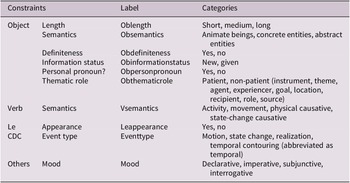

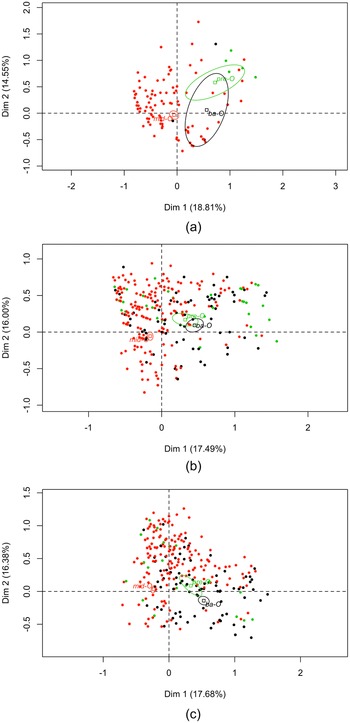


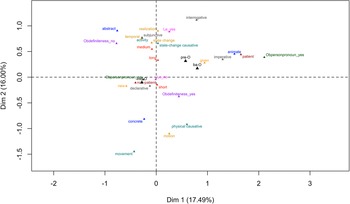


 Open access

