




1. Introduction
The present study provides a corpus-based analysis of Old Saxon vowel insertion. Old Saxon was spoken approximately from the sixth century until the eleventh century in present-day Northern Germany (Cathey Reference Cathey2000). Old Saxon (OS) attestations show great variation, especially when representing vowel phonemes in unstressed positions. The differences across manuscripts have been attributed to the heterogeneous dialects within the OS-speaking community (Rauch Reference Rauch1992:108–111), as well as language interference. There has been mutual influence between OS and both northern and southern West Germanic varieties as part of the post-Proto-West-Germanic dialect continuum (Hartmann Reference Hartmann2023:200–202). However, it is difficult to identify the strength of influence on OS from southern varieties (such as Old Higher German variants) on different parts of the phonological and phonotactic system (see also the discussion in Markey Reference Markey1976, Krogh Reference Krogh1996). Divergent features are expected, given that Old Saxon was spoken by a confederation of several groups living in the North of Germany, called “the Saxons” (Cathey Reference Cathey2000, Reference Cathey2002, Flierman Reference Flierman2017). Furthermore, Old Saxon is attested in only a few texts. The main sources are the Heliand, the OS telling of the gospel (e.g. Cathey Reference Cathey2002), and the Saxon Genesis (Gallée Reference Gallée1910, Holthausen Reference Holthausen1921). The OS Genesis contains three excerpts from the first book of the Old Testament (Doane Reference Doane1991). The Heliand details the most critical aspects of the life of Christ. According to Grein (Reference Grein1896), it constitutes a loose translation of Tatian’s Diatessaron. As it was likely written to convert the Saxons to Christianity, it includes a vast amount of pagan vocabulary, thereby constituting “a unique cultural synthesis” between Christianity and the Germanic warrior society. The Heliand was composed in the traditional alliterative verse and was likely read aloud (Cathey Reference Cathey2002:16). The small number of OS texts, as well as interference from other languages, dialectal variation, and the main attestations being written in artistic poetry, represent limitations and complications for the analysis of the OS language. Potentially for these reasons, OS has received comparatively little attention from researchers compared to other early Germanic languages, and several characteristics of the OS language remain unexplored. One frequently overlooked phenomenon is sporadic vowel insertion, a process also occurring in Old English (OE) and Old High German (OHG). This process involves insertion of a vowel between a liquid and a consonant after a short stem vowel (Suzuki Reference Suzuki2004:13). The inserted vowel is usually identical in quality to the vowel in the stem or the final syllable (Gallée Reference Gallée1910:110).
(1)
a.
burg $ \sim $
burug
$ \sim $
burug
‘city’Footnote
1
b.
harm $ \sim $
haram
$ \sim $
haram
‘harm’
c.
bifelhen $ \sim $
bifelahan
$ \sim $
bifelahan
‘to recommend/confide’
The process does not affect all lemmas with a post-nucleic liquid–consonant (-LC-) sequence, and its occurrence is highly variable across but also within manuscripts. While descriptions and analyses of the phenomenon exist (e.g. Reutercrona Reference Reutercrona1920, Howell Reference Howell1991, Suzuki Reference Suzuki2004), they are lacking in descriptive and explanatory detail. The present article attempts to provide a complete description and analysis of the phenomenon, thereby providing more insights into the OS language. A corpus-based analysis was conducted to carry out the most complete investigation of the process thus far. Three manuscripts representing the major attestations of OS were used as a database for the study.
The remainder of this article is structured as follows: Section 2 summarizes and reviews the current state of research and identifies open questions about the process. Section 3 introduces the data and method. The data analysis is presented in section 4 and section 5 discusses the results. The implications of the results are applied to a different framework in section 6. Section 7 concludes.
2. Previous treatments of vowel insertion
2.1. A description
Most previous accounts of OS vowel insertions have been descriptive (e.g. Gallée Reference Gallée1910, Holthausen Reference Holthausen1921, Rauch Reference Rauch1992), providing a starting point for the analysis in this article. The following characteristics have been noted about this process. Firstly, the insertion is limited to -LC- sequences after a short stem vowel. Secondly, it is further observed that the consonant following the liquid has to be heterorganic. While the exact place of articulation of rhotics in (Early) Germanic has been a matter of debate, standard Old Saxon grammars assume that the phoneme /r/ is nonback (e.g. Holthausen Reference Holthausen1921, Rauch Reference Rauch1992), and most likely a tap/flap articulated at the alveolar ridge (Rauch Reference Rauch1992:121). Only a few homorganic sequences are affected by the insertion, all after /r/, indicating that -/r/C-clusters are more responsive to vowel insertions than -/l/C-clusters (Reutercrona Reference Reutercrona1920, Suzuki Reference Suzuki2004).
Suzuki (Reference Suzuki2004) further suggests that the consonants following the liquids influence the insertion: The process occurs most regularly when a fricative follows the liquid. In contrast, sequences of liquid + stop show the fewest occurrences of an inserted vowel. As previously mentioned, the inserted vowel is frequently identical to the short vowel in the stem or the vowel of the final syllable. Lastly, the insertion occurs with varying frequency in the different manuscripts, and differences between the attestations can be observed.
The description presented in this section represents the consensus across various publications (Gallée Reference Gallée1910, Reutercrona Reference Reutercrona1920, Rauch Reference Rauch1992, Suzuki Reference Suzuki2004). This article aims to verify the aspects mentioned in this section using quantitative methods. Less agreement is found in previous accounts offering explanations for the insertion process, and different underlying motivations and theories have been proposed. They are presented in the exhaustive study of the literature below.
2.2. Scribal-based accounts of vowel insertions
Some researchers have proposed that the inserted vowels can be traced back to the scribes. On the one hand, they may merely represent scribal errors, therefore reflecting the low proficiency of the OS scribes rather than a property of the OS language (Reutercrona Reference Reutercrona1920). Similarly, Smári (Reference Smári1928) suggests that semiliterate people pronounce words more slowly and often produce extra syllables while learning to write. Hence, Liberman (Reference Liberman, Rauch, Carr and Kyes1992) argues that the OS scribes represent their slow pronunciation rather than the actual language in writing. However, if vowel insertions merely represent scribal errors occurring at random with no relation to the phonetics or phonology of the language, there is no reason why they should only occur in -LC-clusters and not elsewhere.
On the other hand, Doane (Reference Doane1991) classifies vowel insertion as a conventional graphic feature. This assumption is based on the fact that the inserted vowel is metrically neutral, leading Doane (Reference Doane1991) to suggest that the inserted vowels had no phonological reality. The differences across manuscripts could be attributed to the scribes’ different scribal practices. However, orthographic convention does not offer a satisfying explanation for the variation within a manuscript written by a single scribe or variation within a single lemma. Therefore, most research thus far has interpreted the sporadic vowel insertions as a feature of the spoken language.
2.3. Phonological accounts of vowel insertion
Although Liberman (Reference Liberman, Rauch, Carr and Kyes1992) argues that the insertions can occasionally be attributed to the scribes’ low proficiency, he also considers a phonological explanation. He incorporates two further sound changes common to West Germanic in his analysis: Consider the examples of vowel lengthening of stressed vowels before sonorant–consonant groups in Germanic in (2a,b) and West Germanic vowel epenthesis in (2c,d) below.
(2)
a.
PGmc *tardaz > OHG zārt ‘tender’
b.
PGmc *felþaz > OE fēld ‘field’
c.
PGmc *akraz > PWGmc *akr, *akkra- > OS akkar, OHG ackar, *ækr > OE æcer ‘field’
d.
P(NW)Gmc *þunraz > PWGmc *þunr > OS thunar, OHG donar, OE þunor ‘thunder’
Since Old Germanic languages were mora-counting, Liberman (Reference Liberman, Rauch, Carr and Kyes1992) proposes a shared motivation for sporadic vowel insertion, vowel lengthening, and regular vowel epenthesis: the re-acquisition of a previously lost mora. Thus, all processes constitute different compensatory mechanisms for the phonological loss of an unstressed vowel. While this proposal is descriptively plausible, it does not explain why the insertion of a vowel is limited to occurring after liquids in OS while not affecting other sonorant–consonant clusters. Additionally, Liberman (Reference Liberman, Rauch, Carr and Kyes1992) does not account for the fact that West Germanic epenthesis (as shown in (2c,d)) occurs more regularly, whereas the later sporadic insertions fail to affect lemmas regularly.Footnote 2 Hence, the West Germanic epentheses and the OS vowel insertions not only differ in terms of the clusters they affect (consonant–sonorant vs. liquid–consonant clusters) and their regularity but they also occur at different times.
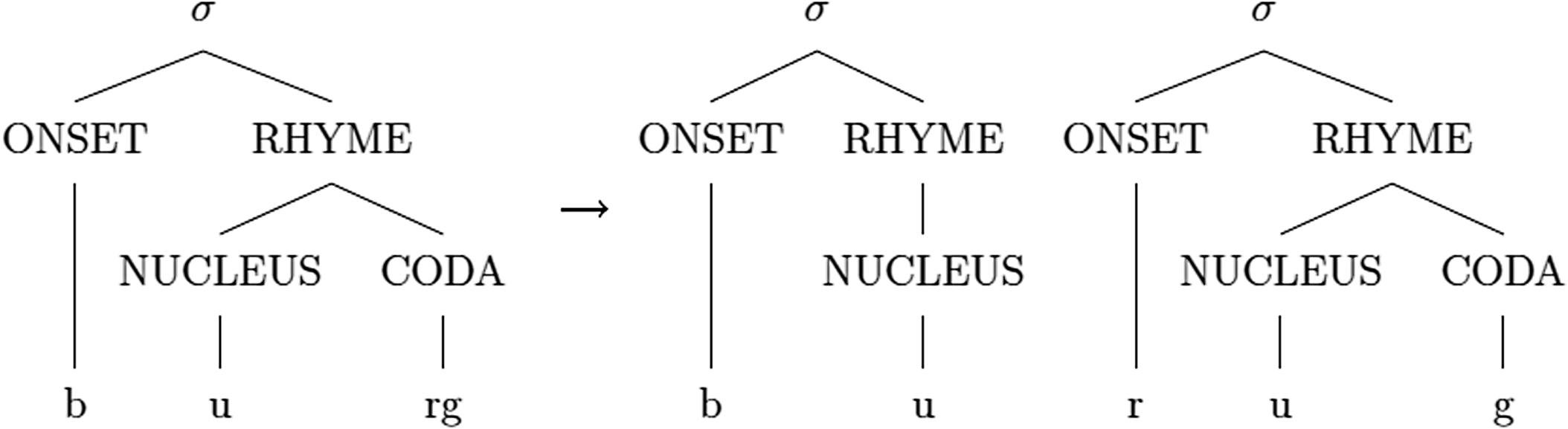
The conventional account for vowel insertions in OS (but also OE and OHG) is laid out in Howell (Reference Howell1991) and refined by Suzuki (Reference Suzuki2004). They argue that the insertions represent a mechanism to deal with -LC-sequences, which they consider marked and phonotactically unstable. They suggest that liquids in the weak position of syllables (i.e. the coda) are subjected to weakening, a process whereby they become more vowel-like. Weakening affects liquids as they are more sonorous than other consonants. The weakening process causes the liquid to be reanalyzed as a cluster of liquid + vowel, whereby the most sonorous, that is weakened part, constitutes the new vowel. Since /r/ is more sonorous than /l/, the process occurs more frequently after the rhotic. Vowel-like properties of the liquids have previously been associated with the cause of vowel insertions by Schmidt (Reference Schmidt1871) and Weinhold (Reference Weinhold1877), as cited in Reutercrona (Reference Reutercrona1920:194). Vowel insertion changes the syllable structure: Since the liquid is now in the onset of the new syllable, liquid reduction is prevented, and the phonotactically challenging -LC-cluster is resolved. Figure 1 illustrates the process as suggested by Howell (Reference Howell1991) and Suzuki (Reference Suzuki2004) with the word burg $ \sim $
burug ‘city’.
$ \sim $
burug ‘city’.
Proposed syllable structure before (left) and after vowel insertion (right) according to the traditional accounts.

Despite the process altering the syllable structure, it does not affect the foot organization: Regardless of whether an inserted vowel is present or not, it is the stem vowel that carries primary stress and constitutes the head of a foot (cf. Suzuki Reference Suzuki2004). Moreover, the process does not affect the meter. In the basic Germanic alliterative verse pattern, each half-line consists of four metrical positions: two lifts and two drops. A lift usually corresponds to a long stressed syllable, and a drop is occupied by at least one unstressed syllable (e.g. Suzuki Reference Suzuki2004:10). OS scribes frequently modified the basic pattern of the Germanic alliterative verse, showing comparatively long line length and fewer restrictions on their poetic composition, especially when compared to other Germanic languages (Hartmann Reference Hartmann2020). Inserted vowels are always associated with drops, which can be occupied by a varying number of unstressed syllables. Hence, they have no detectable effect on the meter in OS.Footnote 3
However, Suzuki (Reference Suzuki2004) argues that vowel insertion affects the stress system and that the process constitutes evidence for weakened root stress in Old Saxon, where “weaker” is in relation to stress in other Early Germanic languages. Two phonological processes in OS support such a prosodic change: restoration of syncopated vowels on the one hand, and vowel insertion on the other hand. “Strong” primary stress causes a weakening of nonprimary stress as well as syncope (Russom Reference Russom1998). OS restored syncopated vowels, which is therefore seen as an indicator of “weaker” stress in OS (Russom Reference Russom1998, Suzuki Reference Suzuki2004). Concerning the later change, the insertion of a vowel causes the primary stressed syllable to decrease in size (see figure 1), which can be understood as a further consequence of a weakening of primary stress (Suzuki Reference Suzuki2004).
While plausible, this account does not address several aspects of the phenomenon, such as the nonregularity of the process. If liquids are subjected to weakening, why are they not reanalyzed as liquid + vowel clusters more regularly? Moreover, the manner and place of articulation of the following consonant should not affect the process if liquid reduction is the trigger. To account for the heterorganicity, Howell (Reference Howell1991) further proposes that -LC-sequences pose phonetic difficulties for the speakers. In particular, transitioning from an apical liquid to a nonapical consonant constitutes a strong articulatory effort. Inserting a vowel eases the articulation of the -LC-sequence (see also Reutercrona (Reference Reutercrona1920) for a similar argument).
A uniting factor of the previous accounts of OS vowel insertion is that they do not consider the inserted vowels themselves. For instance, neither the scribal-based accounts nor the phonological theories explain why the inserted vowels are usually identical to one of the adjacent vowels. Following Suzuki’s reasoning, all vowels emerge from the same segment. Hence, the fact that they are identical to neighboring vowels likely represents the results of assimilatory processes of a default vowel rather than a copying of neighboring vowels. Nonetheless, this aspect needs to be addressed and an explanation needs to be provided.
To summarize the current state of research, the optionality and high variability of occurrence are the primary reasons for the lack of consensus on the phenomenon. Suprasegmental factors, such as foot organization or meter, cannot provide insights into the nature of the process, as the inserted vowels are considered neutral in both. Most researchers assume that the process reflects phonological vowel epenthesis, albeit proposing different underlying motivations for the insertion process. In addition, it has been suggested that several factors influence the likelihood of vowel insertion. Among these are phonological factors (e.g. the consonant following the liquid), and morphological considerations (e.g. the process is restricted to occurring after a short stem vowel). Furthermore, this section also identified various aspects of the phenomenon which have remained unanswered so far. These include the quality of the inserted vowels, as well as the infrequent occurrence. All of this taken together indicates either that the current theories need refinement or that an alternative explanation is needed.
The following section introduces the data and methods used in the corpus analysis. The results are then discussed and checked against the theories presented in this section.
3. Data and method
A two-step analysis was conducted to investigate vowel insertions in manuscripts M and C, and fragment V. A dataset based on an online dictionary was compiled as a first step. The attestations in the dataset were then checked manually against the digitized manuscripts to verify their authenticity and ensure that the dataset was complete. Before introducing the methods used to generate the dataset, a brief introduction to the three manuscripts and the online dictionary is called for.
3.1. Corpora
The manuscripts
The following three manuscripts were chosen as the data source as they reflect the main records of the OS language.
The Monacensis Manuscript (Ms M) is a ninth-century manuscript (Holthausen Reference Holthausen1921:11). Although it is missing several leaves, including the ending and the beginning, it is considered the best manuscript as a single scribe wrote it, and its language is consistent. The exact place of composition remains unclear, and several different places in Northern Germany have been proposed (Drögereit Reference Drögereit1951, Bischoff Reference Bischoff1979).
Cotton Caligula A. VII (Ms C) is usually accepted to be written in Winchester, England, but there is disagreement about whether the scribe was Saxon or English (Priebsch Reference Priebsch1925, King Reference King1965). Manuscript C also lacks its ending. It was composed in the tenth century, making it posterior to manuscript M. Overall, manuscript C contains more corrections, and the language displays less consistency than manuscript M.
Manuscripts C and M represent the central OS text, the Heliand. Manuscripts M and C are two of five surviving copies from an original unattested manuscript.
Fragment V consists of four leaves: One represents lines 1279–1358 of the Heliand, while the remaining three contain the OS Genesis. Fragment V is dated to the ninth century and written by three scribes (Dewey Reference Dewey2011). Sievers (Reference Sievers1875) hypothesized that the OE Genesis was copied from an, at this point unattested, OS Genesis. After discovering the OS fragments in 1894, the close similarities between the two texts confirmed Sievers’ hypothesis.
Online database
The freely accessible online Old Saxon dictionary by Köbler (Reference Köbler2014) was used to generate the dataset for the following analysis. Köbler’s dictionary (Reference Köbler2014) constitutes an extensive database. It lists lemmas alongside their different spelling variations. Furthermore, it includes the line and manuscript of each attestation, making it possible to check each form in Köbler (Reference Köbler2014) against the digitized manuscripts, thereby verifying their authenticity.
3.2. Method
Köbler’s (Reference Köbler2014) dictionary was parsed using a rule-based procedure to generate a suitable dataset. The desired output consisted of a table listing individual lemmas amenable to vowel insertion, their different forms, and the line and manuscript in which the forms occur. Only lemmas consisting of minimally three letters were extracted.Footnote 4 As established in the previous sections, vowel insertion occurs only between a post-nucleic liquid and a following consonant. Thus, the process only affects bases with at least three sounds in the following sequence: -VLC-.
As indicated earlier, vowel insertion in OS only occurs sporadically. However, several lemmas regularly feature the inserted vowel, causing the inserted form to be listed as the underlying word form in Köbler’s (Reference Köbler2014) dictionary, for example, alah < Proto-Germanic (PGmc) *alh ‘temple’, firihos < PGmc *ferhwja ‘humans’. Previous researchers (e.g. Gallée Reference Gallée1910, Suzuki Reference Suzuki2004) consider these as representing the same underlying process as the sporadic vowel insertions, most likely because these insertions also occur in -LC-clusters. For this reason, all lemmas consisting of a sequence of liquid, vowel, and consonant (-LVC-) were extracted from Köbler (Reference Köbler2014). Although this significantly increased the size of the dataset and led to the incorporation of multiple lemmas without the needed environment (e.g. craft), this step was necessary to ensure that all words featuring an inserted vowel were part of the final dataset. I discuss these regular insertions in more detail in section 6.3 below. The output was then checked manually, removing all words that did not meet the requirements mentioned earlier for insertion.
The dataset ended up containing all words receptive to vowel insertion. Note that proper names, such as Marcus, were not included in the dataset as Köbler (Reference Köbler2014) does not list personal names in his dictionary.Footnote 5 For each form, additional information was added, including the type of liquid, the type of consonant following the liquid, whether the -LC-sequence was tautosyllabic or heterosyllabic as well as homorganic or heterorganic, and the quality of the inserted vowel. In the final step, each entry in the dataset was manually checked against the manuscripts, ensuring that the subsequent analysis was based on authentic attestations and that the dataset was complete. The final dataset contained 8,362 words susceptible to vowel insertion in the manuscripts. The dataset was then analyzed using statistical analysis. This allows us to measure the influence of relevant factors on the linguistic process that gives rise to the variation in insertion.
4. Analyzing the data
The dataset was tested against several factors. All of the following hypotheses are based on descriptions of the phenomenon in previous research.
4.1. Hypotheses to test
-
1. Frequency: The insertion does not occur regularly.
It has already been established (e.g. Reutercrona Reference Reutercrona1920, Suzuki Reference Suzuki2004) that the process is highly variable. However, there is no detailed analysis of the overall frequency of the phenomenon. All words with -LC-clusters were analyzed in this study to provide information about the overall frequency of vowel insertion in OS.
-
2. Type of liquid: The additional vowels occur more frequently after /r/ than after /l/.
Suzuki (Reference Suzuki2004), Howell (Reference Howell1991), and Reutercrona (Reference Reutercrona1920) agree that the insertion occurs more regularly in -/rC/-clusters than -/lC/-clusters. This article aims to verify this statement and to gauge the effect of the type of liquid on the occurrence of an additional vowel, a topic on which there exists no previous research.
-
3. Quality of the inserted vowel: The inserted vowels are mostly identical to the vowel in the stem or the final syllable.
The inserted vowels are usually identical to the vowel in the stem or final syllable (Gallée Reference Gallée1910, Reutercrona Reference Reutercrona1920). Furthermore, it was noted that the inserted vowel is most frequently ⟨a⟩ (Reutercrona Reference Reutercrona1920). The purpose of analyzing the inserted vowels is to answer the following questions: Firstly, it will be determined whether all short vowels of OS could be inserted or whether only a subset took part in this process. For instance, Denton (Reference Denton2003:23) states that mostly mid and low vowels were inserted.
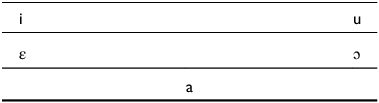
The exact number of OS short vowel phonemes is debated. King (Reference King1965) proposes five short vowel phonemes, Rauch (Reference Rauch1992) and Cathey (Reference Cathey2002) argue for six short vowel phonemes, while Cathey (Reference Cathey2000) only lists four. King (Reference King1965) argues that different OS dialects had a different number of vowels in unstressed positions: The dialect of manuscript M had four vowel phonemes, whereas the dialect of manuscript C additionally had the open-mid back rounded vowel. The five-vowel phoneme system shown in table 1 is adopted in this analysis, as the OS language as a whole is investigated here, and at least one dialect most likely had /ɔ/ as a short vowel phoneme.Footnote 6
Old Saxon short vowel phonemes

Secondly, it will be determined whether the higher frequency of the mid vowel ⟨a⟩ is caused by a higher frequency of /a/ in stems or final syllables. Thirdly, the question whether the inserted vowels are indeed copied from neighboring vowels or whether a default vowel is inserted and then (fully) assimilated to an adjacent vowel will be examined.
-
4. Manuscripts: The frequency of insertion differs across the manuscripts.
An uncontroversial observation is that the manuscripts differ regarding the frequency of the phenomenon. The vowel insertion occurs in decreasing frequency in fragment V > manuscript C > manuscript M (cf. Gallée Reference Gallée1910, Doane Reference Doane1991). However, it has thus far not been investigated whether the Genesis texts and the Heliand excerpt in fragment V differ from each other. This will answer the question whether vowel insertion is a property of the dialect of the scribes of fragment V, or whether it is a feature of the individual texts. If both texts in fragment V behave the same, it indicates that the vowel insertions are a property of the scribes’ dialect. However, if the Heliand passage differs from the Genesis, the insertions are likely to be a property of the texts, or at least of the originals used by the scribes.
-
5. Syllable boundary: Vowel insertion occurs more frequently in tautosyllabic -LC-sequences than in heterosyllabic -LC-sequences.
The role of a syllable boundary between the liquid and the following consonant seemingly also affects the process. On the one hand, Reutercrona (Reference Reutercrona1920:172) hypothesizes that the insertion occurs to break up “heavy” consonant clusters, that is, clusters of three or more successive consonants. This implies that they are found particularly often in compounds, as they are multimorphemic. Consequently, the insertion should occur more frequently across syllable or morpheme boundaries. Seiler (Reference Seiler1879), as cited in Reutercrona (Reference Reutercrona1920:171), on the other hand, suggests that the inserted vowels occur more frequently when the -LC-sequence is tautosyllabic. This is also implied by Suzuki (Reference Suzuki2004:20), who states that solely liquids in pre-final coda positions are amenable to weakening. Hence, he implies that the following consonant is always tautosyllabic with the preceding liquid. I will examine the possible effect of a syllable boundary between the post-nucleic liquid and the following consonant on the occurrence of vowel insertion. Intervocalic consonants in the dataset were assigned to syllables according to the Maximal Onset Principle (Selkirk Reference Selkirk, Moortgat, van der Hulst and Hoekstra1981) and the phonotactic rules provided in Rauch (Reference Rauch1992).
-
6. Consonant type: The type of consonant following the liquid affects the occurrence of the insertion.
As stated in section 2.1, Suzuki (Reference Suzuki2004) reports that the manner of articulation of the consonant following the liquid influences the insertion, with fricatives seemingly triggering the insertion most regularly and stops least often. An important factor in testing this hypothesis is the graph–phone(me) correspondence. Generally, OS scribes used 26 letters, the 24 letters of the Latin alphabet, and ⟨ƀ⟩ and ⟨đ⟩ with differences between the various dialects (cf. Rauch Reference Rauch1992). However, OS texts display a great richness in spelling variations, and there is no one-to-one fit between sound and graph. The graph-to-sound assignment for this analysis is based on the consensus of Rauch (Reference Rauch1992), Odwarka (Reference Odwakra1987), and Schuhmann (Reference Schuhmann2015).
-
7. Place of articulation: The insertion is limited to heterorganic -LC-clusters.
The insertion is, except for a few occurrences, restricted to heterorganic -LC-clusters (Reutercrona Reference Reutercrona1920, Suzuki Reference Suzuki2004). Hence, the place of articulation of the consonant following the liquid seemingly affects the occurrence of the insertion. Heterorganicity in -LC-sequences is based on the assumption that the rhotic in OS had a nonback place of articulation. Whereas a phonetic description of PGmc */r/ and its reflexes is still debated (see, for instance, the discussion in Howell Reference Howell1991), Old Saxon grammars (e.g. Holthausen Reference Holthausen1921, Rauch Reference Rauch1992) uniformly assume a nonback place of articulation of the rhotic. Hence, both liquids were classified as nonback in the present analysis.
4.2. Statistical analysis
A Bayesian binomial multilevel regression model was fitted to the data to model the associations between vowel insertion and the other variables.Footnote 7 The dependent variable of interest is insertion, a binary variable that is either 1 (insertion) or 0 (no insertion). To test the association between the variables identified in the literature, the effect of several independent variables on the occurrence of the insertion was included in the model. The first independent variable is syllable boundary, a binary variable indicating whether the -LC-sequence is tautosyllabic (0) or heterosyllabic (1). The type of liquid present in a word was incorporated as a categorical independent variable. To gauge a possible effect of consonant type on the occurrence of the insertion, consonant type was added as a third predictor. This variable is also categorical, denoting whether the post-liquid consonant is a fricative, a stop, a nasal, a glide, or a second liquid. The last predictor is place of articulation of the consonant following the liquid. Alveolar and dental consonants are classified as homorganic to ⟨r⟩ and ⟨l⟩. Furthermore, manuscripts were included as a varying intercept to account for variance in vowel insertion level by manuscript. Although lemmas could also be considered a random effect, they were not included as such in the model. Because the manuscripts differ in size, not all lemmas were present in all manuscripts, leading to issues of nonidentifiability of certain lemma–manuscript combinations. The Genesis excerpt and the Heliand excerpt in fragment V are coded separately into the model.
4.3. Results
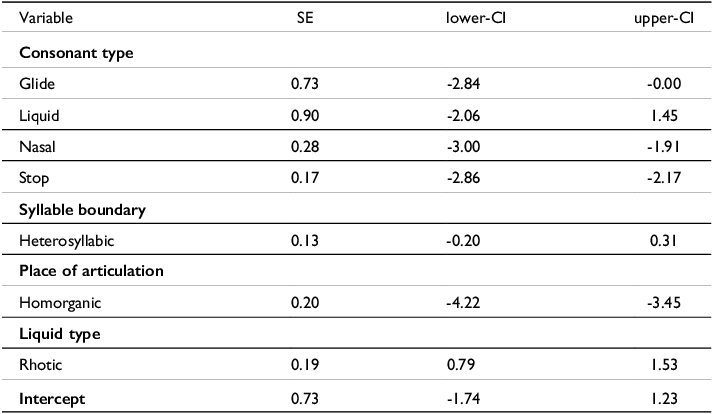
Table 2 shows the log-odds for vowel insertions of the variables of interest. The upper and lower levels of the credibility interval (CI) are shown for each variable. The CI indicates a 95 percent chance that the “true” value for each variable investigated here falls into the range indicated by the lower and upper CI. The Intercept constitutes the lateral followed by a heterorganic fricative in the same syllable and the different effects are displayed in relation to the intercept.
Log-odds for vowel insertion by different variables

In the following, the results shown in table 2 are presented separately for each hypothesis.
-
1. Frequency: Of the 8,362 post-nucleic -LC-sequences in my dataset, 370 show an inserted vowel. Hence, only 4.42 percent of words that are in principle susceptible to vowel insertion are affected by it. This result does not consider additional phonological restrictions.
-
2. Type of liquid: Vowel insertions occur more frequently after the rhotic than after the lateral. Of the 370 words with vowel insertions, 333 occurred in /-rC-/sequences and 37 in /-lC-/ clusters. This difference of the two types of liquids occurs despite the fact that -/rC/-sequences are not much more common than -/lC/-clusters (5,228 -/rC/-clusters and 3,134 -/lC/-). Thus, the process occurs more frequently with /r/ than with /l/. A positive effect of the rhotic was also detected by the model (Lower-CI = 0.79, Upper-CI = 1.53).
-
3. Quality of the inserted vowel: Most of the inserted vowels are mid or low vowels (295 (80%) are mid or low, and 74 vowels (20%) are high).Footnote 8 However, not all vowels are identical to a neighboring vowel: In 73 words (19.46%), the inserted vowel appears to be assimilated neither to the stem vowel nor to the vowel in the final syllable. When the inserted vowel is not identical to a neighboring vowel, it is primarily represented orthographically as ⟨a⟩. The quality of the inserted vowels is discussed in more detail in section 5.
-
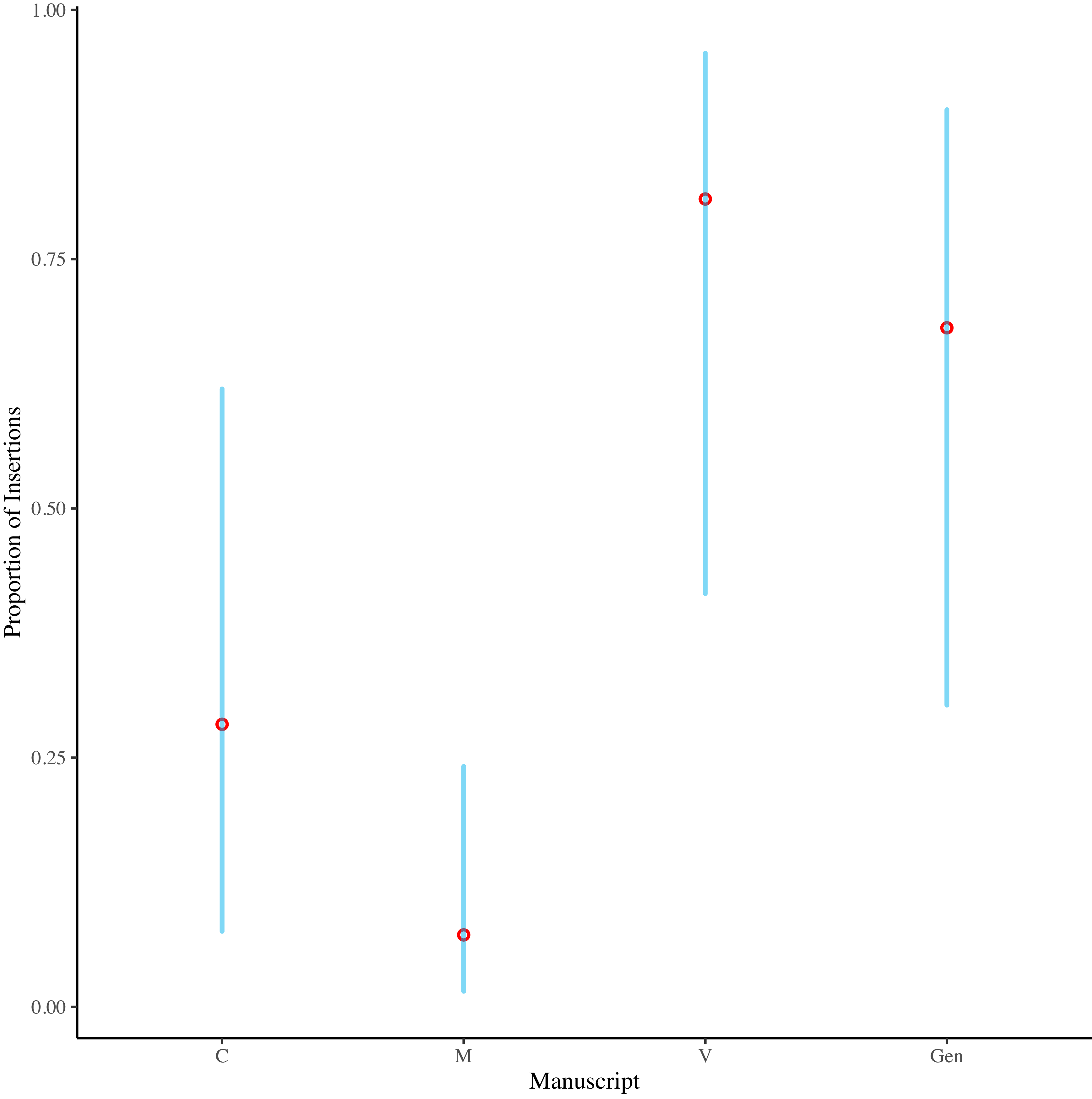
4. Manuscripts: The manuscripts were treated as random effects. There are differences between the manuscripts, as indicated by the high variance (between 0.72 and 0.84 standard deviations). The process occurs most regularly in fragment V (Mean = 0.69 for the Genesis excerpts; Mean = 0.81 for the Heliand passage), represented in figure 2 Manuscripts by Gen for the Genesis passage and V for the Heliand passage in fragment V. The two different texts of fragment V are most similar to each other. Moreover, manuscript M shows the fewest vowel insertions (Mean = 0.07), while manuscript C takes an intermediate position between fragment V and manuscript M (Mean = 0.29).
Figure 2.Vowel insertion across manuscripts.

-
5. Syllable boundary: There is no detectable effect of a syllable boundary between the liquid and the adjacent consonant on the phenomenon (Lower-CI = -0.20, Upper-CI = 0.31).
-
6. Consonant type: The type of consonant following the liquid has an effect. The model finds that a vowel is inserted most frequently between a liquid and a fricative, less regularly between a liquid and a nasal (Lower-CI = -3.00, Upper-CI = -1.91), and in liquid–stop sequences (Lower-CI = -2.86, Upper-CI = -2.17) as well as liquid–glide clusters (Lower-CI = -2.84, Upper-CI = -0.00). The model could not detect a negative effect of liquid–liquid sequences (Lower-CI = -2.06, Upper-CI = 1.45) when compared to fricative–liquid clusters.
-
7. Place of articulation: A homorganic place of articulation of the liquid and the following consonant has a strong negative effect on the insertion process (Lower-CI = -4.22, Upper-CI = -3.45). Thus, vowels are inserted substantially more frequently in heterorganic -LC-sequences than in homorganic -LC-sequences.

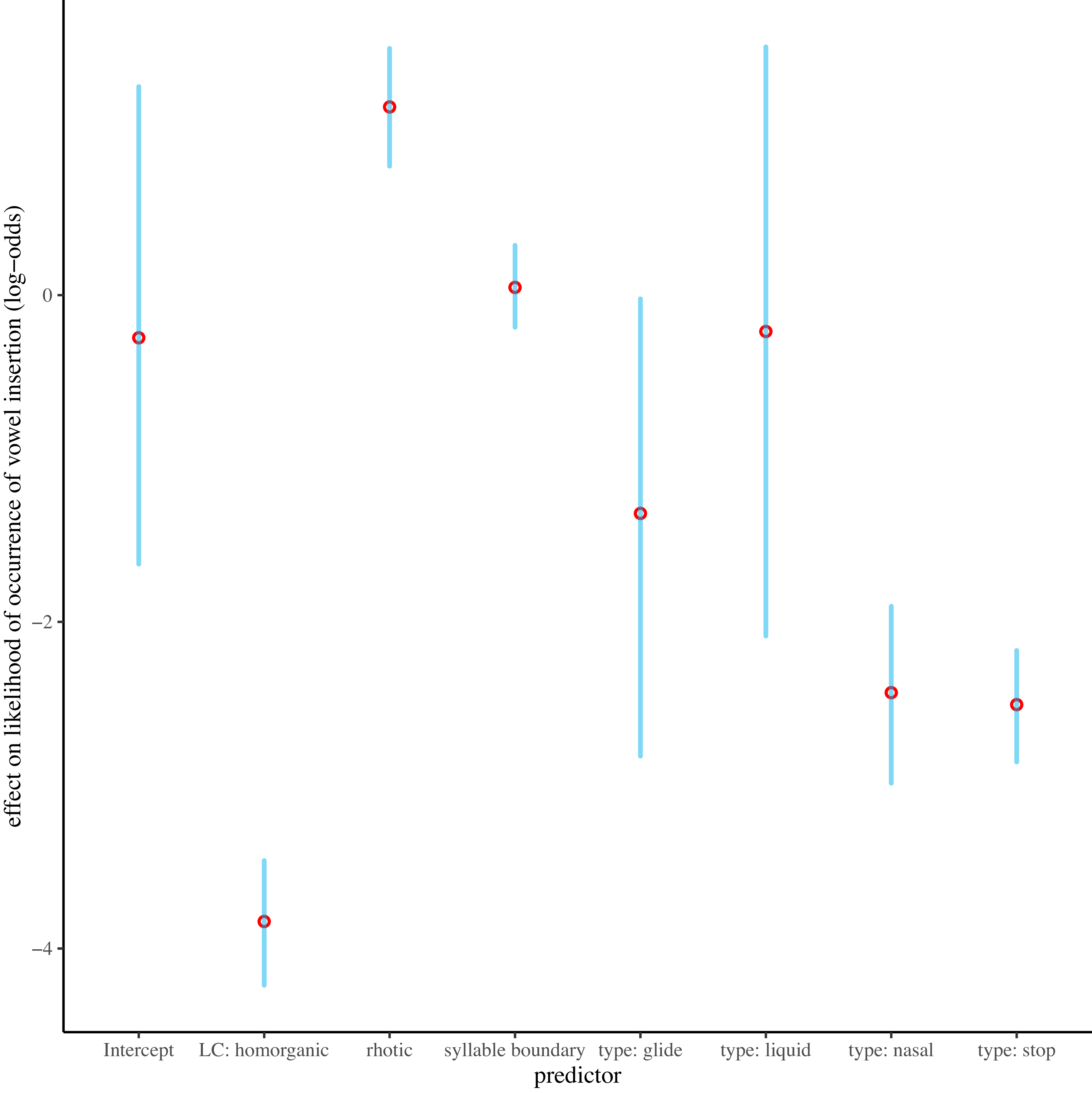
Figure 3 illustrates the result of the model.
Effects of the different variables on the occurrence of the insertion.

5. Discussion
Although arguments that the inserted vowels represent spelling errors or orthographic conventions are not convincing and, therefore, rejected by most scholars (see section 2.2), I briefly address this issue again. Recall that the main arguments against these hypotheses were that the insertions are restricted to -LC-sequences, influenced by phonological factors and that they occur irregularly within a single manuscript. Further evidence against such arguments was revealed while checking the manuscripts. A scribe, albeit only once, intentionally inserted a vowel belatedly.
(3)
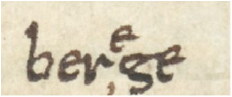
Intentionally inserted vowel in berege ‘mountain’ (Ms C, l. 3164)
If it were the case that the inserted vowels merely constitute spelling errors, there would be no reason for the scribe to add a vowel in (3) above. Instead, a belated insertion seems to indicate that the scribe was unsure whether a vowel should be present or not. Hence, although the vowel insertions occur infrequently, the analysis in the previous section shows that the variation in occurrence can be attributed to linguistic factors, indicating that they indeed reflect a property of the OS language. For instance, the type of liquid affects the insertion process, with insertions occurring more frequently in -/rC/-clusters than -/lC/-sequences when the following consonant is a post-alveolar fricative. The result of this study suggests that the insertions occur least often with stops, which is consistent with the observation by Suzuki (Reference Suzuki2004). The fact that the model could not detect a difference between liquid–liquid sequences and liquid–fricative clusters can be attributed to the fact that there were only a handful of liquid–liquid clusters in the dataset, all homorganic (e.g. erlscepi ‘people’) and that the model could therefore not find an effect. This is also indicated in the model by the large distribution of the Lower-CI log-odds and the Upper-CI log-odds (table 2) as shown by the large whiskers of the liquid in figure 3. Similarly, the model shows uncertainty regarding the results of the liquid–glide sequences due to their low overall frequency. Thus, the results indicate that the words in (4) below constitute the optimal environment for the insertion. Note that the first two examples in (4) are the only two lemmas always written with an additional vowel.
(4)
*alh > alah ‘temple’, *ferhwja > firihos ‘mind, spirit’, berht $ \sim $
beraht ‘bright’
$ \sim $
beraht ‘bright’
The analysis confirmed previous observations that mostly mid and low vowels are inserted (e.g. Denton Reference Denton2003). Moreover, it was found that all short vowel phonemes of OS could be inserted and that the process was, therefore, not restricted to a subset of the short vowel phonemes, as shown by the examples in (5).
(5)
huerigin ‘somewhere’, burug ‘city’, bereht ‘bright’, soroga ‘sorrow’, tharaf ‘need’
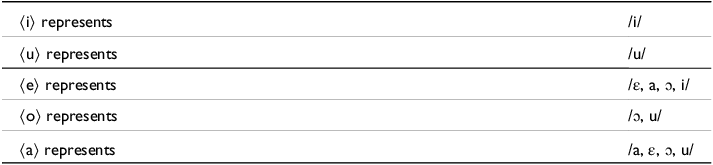
My dataset confirmed the observation that ⟨a⟩ is inserted most frequently: In 203 of the 370 words, the inserted vowel was represented by the graph ⟨a⟩. The overall higher number of this graph is not only caused by a higher frequency of ⟨a⟩ in stems or final syllables, however: In 71 of the 203 words, ⟨a⟩ was used to represent the inserted vowel, although the scribes represented the neighboring vowels differently. Generally, OS manuscripts display a high degree of spelling variation for consonants and vowel phonemes. Variation is especially prominent when the vowel is unstressed. Rauch (Reference Rauch1992:205) comments on this matter: “The obdurate question of the phonetic reflex of graphic variation under weak stress has vexed OS research to such an extent … that it may be allocated to one of the notorious moot questions of Germanic linguistics.” Variation primarily affects mid and low vowels, as demonstrated by the general vowel–graph correspondence based on King (Reference King1965), Rauch (Reference Rauch1992), and Cathey (Reference Cathey2000) in table 3.
Vowel–graph correspondence in OS

Given that the inserted vowel in OS was never stressed due to the fixed initial stress in Germanic, orthographic variation should also affect the inserted vowels. Therefore, it is particularly interesting that, when not identical to an adjacent vowel, all but two of the inserted vowels were represented by ⟨a⟩. The exceptions are faruuurohtiun and harmgiuurohti ‘evil deed’. In both of these, ⟨o⟩ was used to represent the inserted vowel. Interestingly, both are reflexes of the same root, PWGcm *wurkijan ‘to work, make’ with the etymological past participle *worht. This could indicate that these two instances do not reflect vowel insertion but metathesis. Metathesis of the rhotic and the stem vowel results in what looks like an inserted vowel: Original *uuorht becomes *uuroht by metathesis of /r/ and /ɔ/. Analyzing these two exceptions as metathesis could further explain why the stem vowel is seemingly absent in harmgiuuroht, assuming that ⟨uu⟩ reflects /w/. In faruuurohtiun, on the other hand, the ⟨uuu⟩ sequence could represent a spelling mistake and, therefore, also an instance of metathesis. However, Odwarka (Reference Odwakra1987:308) argues that /wu/ sequences are frequently represented as ⟨uu⟩ rather than expected ⟨uuu⟩ as scribes avoided the string of three subsequent ⟨u⟩s in one word. This suggests that the ⟨uuu⟩ sequence in faruuurohtiun represents /wu/ rather than a scribal error. Hence, it is likely to be vowel insertion rather than metathesis in these cases as well.
The overall minimal variation of the inserted vowels is unexpected given the overall variation and confusion of vowels in unstressed positions and poses the question of why the scribes almost always used ⟨a⟩ to represent inserted vowels whose quality differed from the other vowels in a word. Two possibilities could be entertained: Either /a/ was inserted as a default vowel and sometimes fully assimilated to a neighboring vowel, or the scribes used the graph ⟨a⟩ to represent the inserted vowels due to orthographic convention. I address this question in section 6.2 below.
Both the Genesis and the Heliand passage in fragment V show the insertions most regularly, indicating that the vowels were a feature of the dialect and not dependent on the type of text. A further negative finding concerns a possible effect of tautosyllabicity of the -LC-sequence. Hence, neither the claims by Seiler (Reference Seiler1879) and Suzuki (Reference Suzuki2004) nor the claim by Reutercrona (Reference Reutercrona1920) could be confirmed as the insertions are not affected either way by syllable structure.
Previous researchers indicated a morphological restriction by stating that vowel insertions occur only after a short stem vowel (section 2.1). This pattern is reflected in my dataset, as shown by the example in (6) below.
(6)
far + hwėrvian - farhueriƀid but ** faraherƀid ‘to turn’
This observation warrants further examination, as -/rh/-sequences constitute the optimal environment for vowel insertions. Nevertheless, the inserted vowel shows up in the less optimal -/rƀ/-cluster in (6). The pattern can be explained by taking stress into account: Vowel insertions only occur after primary stressed vowels. Stress explains why the insertion is absent in the optimal environment in (6), as verbal prefixes are not assigned primary stress, even though they are the initial syllable (Cathey Reference Cathey2000, Schuhmann Reference Schuhmann2015:15).Footnote 9 Thus, primary stress, or lack thereof, further influences the process.Footnote 10 Hence, rather than stating that the insertion can only occur after short stem vowels, I propose that the insertions can only occur after primary stressed short vowel phonemes.
To summarize, the statistical analysis indicates that the type of liquid (preferably /r/), the manner of articulation of the following consonant (preferably a fricative), and the heterorganicity of the -LC-sequence all affect the likelihood of occurrence of the process. Furthermore, the data indicate that the process only affects syllables with primary stress. Moreover, the inserted vowels are either identical to a neighboring vowel or uniformly represented by the graph ⟨a⟩. Notably, all these characteristics, except for the last, are typical of vowel intrusion.
6. Vowel intrusion
Levin (Reference Levin and Crowhurst1987) and Hall (Reference Hall2006) argue that two distinct types of vowels can be heard in words. On the one hand, epenthetic vowels are phonological segments inserted to repair illicit phonological structures. On the other hand, intrusive vowels (also called excrescent, parasitic, or weightless) occur in interconsonantal position and are phonetic transitions rather than phonological segments. In contrast to phonological epenthetic vowels, intrusive vowels do not form a syllable nucleus (Hall Reference Hall2006).
In the following, I argue that the OS vowel insertions constitute intrusive vowels and not epenthetic vowels. Hence, the syllable structure of the words with and without the vowel insertion is identical and the syllable representation in figure 1, based on Howell (Reference Howell1991) and Suzuki (Reference Suzuki2004), is incorrect. The next section outlines the theoretical background and section 6.2 applies a diagnostic tool for intrusive vowels (Hall Reference Hall2006) to determine whether the OS process indeed reflects vowel intrusion.
6.1. Theoretical background
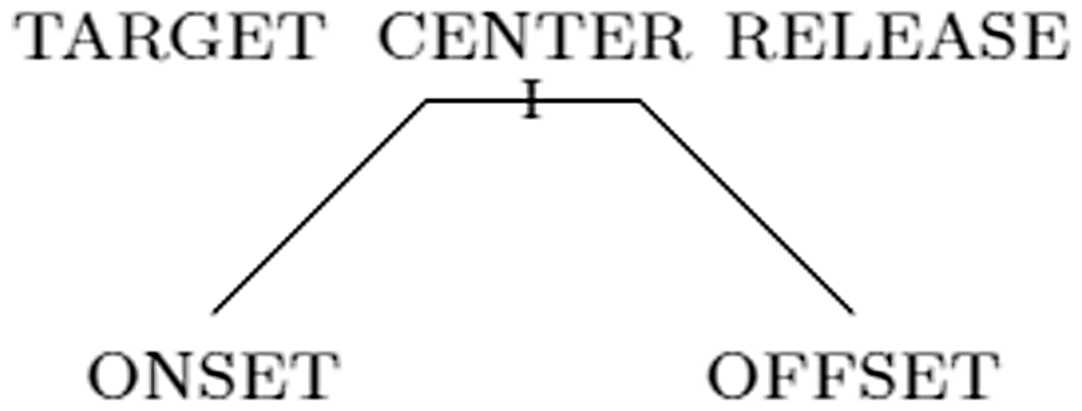
The most elaborate account of intrusive vowels is outlined in Hall (Reference Hall2006), who proposes a mixed framework including gestures in addition to segments and syllables to describe the differences between epenthetic and intrusive vowels. She refines Articulatory Phonology (AP) (Browman & Goldstein Reference Browman and Goldstein1986 et seq.) for her analysis. In AP, the basic units of speech are abstract articulatory gestures. Gestures are two dimensional: They each have a space dimension and a time dimension. Each gesture has gestural landmarks representing the internal temporal structure of gestures (advanced in Gafos Reference Gafos2002). Each gestural landmark refers to an important point of a gesture. A gesture begins with the onset and moves to the target, the position the gesture aims to reach. The center is located between the target and the release and constitutes the mid-point of the gesture. release denotes the beginning of moving away from the position. Lastly, the offset marks the point when the active control of the articulator ends. The gestural landmarks for one oral gesture are shown in figure 4.
Landmarks in gestural life based on Gafos (Reference Gafos2002).

Because gestures have a time dimension, they can overlap. This constitutes the most vital difference between gestures on the one hand and segments and features on the other hand that can only be ordered sequentially. The amount of overlap can be represented by aligning the gestural landmarks of adjacent gestures. A specified degree of overlap is called a phasing relationship.
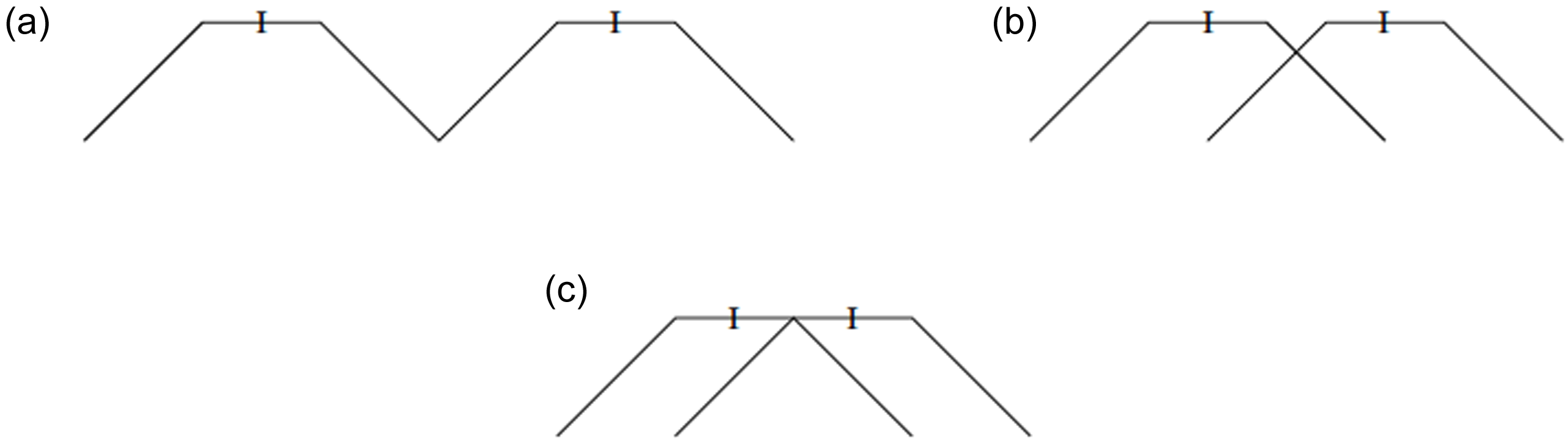
A fundamental assumption in AP is that each vowel is uniquely associated with a tongue body gesture. However, vowel perception can also result from the retiming of existing gestures (Browman & Goldstein Reference Browman and Goldstein1992, Steriade Reference Steriade, Kingston and Beckman1990). A low degree of overlap of the consonantal gestures causes a vowel-like acoustic release between them. No additional gesture is added, but existing gestures are retimed. I follow the assumption that vowels are articulatorily contiguous (e.g. Öhman Reference Öhman1966): Consonants are superimposed on the vowel articulation, and a “vowel substrate” is present during all consonantal gestures. The underlying vowel gesture surfaces whenever the gestures of the consonants are phased so that there is a release between them. Figure 5 shows the possible phasing relationships, based on Gafos (Reference Gafos2002).
Possible phasing relationships (Gafos Reference Gafos2002).

The gestural representation in figure 5a shows no gestural overlap. The articulators of the first sound are no longer engaged, and the articulation of the second consonant has yet to start. Figure 5b shows the phasing relationship center = onset, where the center of the first gesture is aligned with the onset of the second. Lastly, the representation in figure 5c shows a high degree of overlap, where the release of the first consonant coincides with the target of the second gesture (release = target).
A vocalic sound is perceived when the second gesture does not overlap the release of the first gesture. Gafos (Reference Gafos2002:271–272) argues that, since in these cases the target of the second gesture is only reached after the release of the first, there is a period of no constriction in the transition between the two gestures. Hence, a phasing relationship as in figure 5c does not result in an acoustic release, whereas the phasing relationships in figures 5a and 5b do. The perceived vowel sound does not result from an additional vowel gesture but from retiming existing gestures.
The acoustic release can sound either like a copy of a neighboring vowel or schwa-like, depending on the phasing relationship of the consonantal gestures. When the gestures of the consonants are phased, as in figure 5b, the vowel sounds like a schwa. When the gestures do not overlap, as in figure 5a, the acoustic release sounds like a neighboring vowel. The perceived vowel is identical to one of the adjacent vowels as they constitute a single gesture. There is another possibility that causes an intrusive vowel to not sound schwa-like. Since both consonantal articulations are still active in a phasing relationship center = onset, they can color the quality of the perceived vowel (Hall Reference Hall2006).
Intrusive vowels have been reported for various languages, as shown in table 4. The list (from Hall Reference Hall2006 and references therein) is not exhaustive. A gestural analysis has been previously suggested for some of the intrusive vowels, for instance, Scots Gaelic (Bosch Reference Bosch1995, Hind Reference Hind1996).
Examples of vowel intrusions (Hall Reference Hall2006)

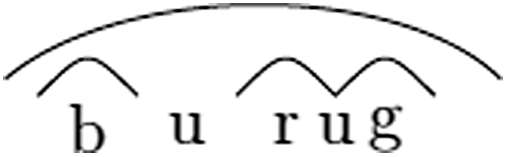
Uniting all these observations, figure 6 shows the gestural representation of vowel intrusion for an OS example, where each cycle represents a gesture (based on Hall Reference Hall2006).
Gestural representation of vowel intrusion in OS burug ‘city’.

According to Steriade (Reference Steriade, Kingston and Beckman1990), intrusive vowels caused by a low degree of gestural overlap automatically cause the emergence of a new syllable nucleus. Against this, Hall (Reference Hall2006) proposes that gestural retiming does not suffice to create a new syllable nucleus. She argues that intrusive vowels, unlike epenthetic vowels, do not trigger or are not subjected to the phonological processes. Hall (Reference Hall2006) argues that this behavior can be explained by assuming that the intrusive vowels do not constitute syllable nuclei. ‘Pure’ AP (as in Browman & Goldstein Reference Browman and Goldstein1986) does not incorporate syllables and segments in its framework. To explain the differences between intrusive and epenthetic vowels, Hall (Reference Hall2006) modifies AP and incorporates syllables and segments alongside gestures in her model. Gestures are only part of the surface level and not part of the underlying representation of a lexical item. As vowel intrusion solely affects the gestural layer of representation, it does not require the addition of a new segment to the underlying representation. Since syllables organize segments, intrusive vowels are phonologically invisible and do not affect the syllable structure. In phonological vowel epenthesis, by contrast, a segment is added to the underlying representation. I assume Hall’s (Reference Hall2006) framework for the following analysis.
6.2. Applying the diagnostic tool
Based on her crosslinguistic survey of vowel intrusion, Hall (Reference Hall2006) notes several characteristics typical of the phenomenon. These can be used to distinguish intrusive vowels from phonological epenthetic vowels. In the following, the results of the corpus study are compared against these criteria, to determine whether OS vowel insertion constitutes vowel intrusion.
-
1. The vowel’s quality is either schwa, a copy of a nearby vowel, or influenced by the place of the surrounding consonants.
As established earlier, the inserted vowel is identical to the vowel in the stem or end-syllable most of the time (∼ 80%), indicating that the gestures of the liquid and the following consonant do not overlap (figure 5a). However, in roughly 20 percent of the cases, the inserted vowel is not identical to the neighboring vowels. The scribes usually used ⟨a⟩ to represent the inserted vowels (with two exceptions where the scribes used ⟨o⟩). I argue that ⟨a⟩ represents the phasing relationship center = onset, that is, a schwa-like transitional vowel. This assumption is founded on several facts. Firstly, intrusive vowels are nonphonemic. Hence, the quality of intrusive vowels can be unlike the quality of lexical vowels in a language (Levin Reference Levin and Crowhurst1987). Whenever the scribes encountered a nonphonemic vowel, they had to represent it using one of the available graphs. It is possible that the schwa-like acoustic release sounded /a/-like in OS. This implies that the inserted vowels do not sound exactly like the phoneme /a/. It seems plausible, then, to hypothesize that the scribes resorted to using ⟨a⟩, especially when the inserted vowel sounded similar to phonemic /a/. A similar explanation is offered by Schmidt (Reference Schmidt1875:3), who hypothesizes that intrusive vowels in Sanskrit had the quality of an “/a/-like schwa-sound.” Secondly, the scribes potentially used ⟨a⟩ due to a graphic convention. Recall that OE and OHG also exhibit a similar phenomenon in heterorganic -LC-sequences. OHG scribes used ⟨a⟩ or ⟨o⟩ to represent an inserted vowel not identical to an adjacent vowel in this environment (Braune Reference Braune and Heidermanns2018:§69). Given that OS shows OHG (orthographic) influence (cf. Rauch Reference Rauch1992), one could argue that OS adapted this graphic convention from OHG. The latter proposal has the advantage of accounting for why the inserted vowels in OS were uniformly represented by ⟨a⟩ when not identical to a neighboring vowel: The scribes were aware of the special acoustics and characteristics of these vowels and used ⟨a⟩ and, to a lesser extent, ⟨o⟩ due to OHG influence. Representing schwa-like sounds as ⟨a⟩ implies that one cannot be sure of the quality of the vowels in words like baram, as ⟨a⟩ could either represent the underlying vowel gesture of phonemic /a/ or the schwa-like nonphonemic intrusive vowel.
Hall (Reference Hall2006) mentions the possibility of an adjacent consonant influencing the quality of intrusive vowels. Consonantal influence is possible when the phasing relationship of the consonantal gestures is center = onset, as both consonantal gestures are active when the acoustic release occurs. For OHG, Reutercrona (Reference Reutercrona1920:179) argues that the surrounding consonants’ quality influences the quality of the inserted vowels. Consider the OS examples in (7) below.
(7)
forhta $ \sim $
forahton ‘fear’, berg
$ \sim $
forahton ‘fear’, berg $ \sim $
berage ‘mountain’, berht
$ \sim $
berage ‘mountain’, berht $ \sim $
beraht ‘bright’
$ \sim $
beraht ‘bright’
In (7), the inserted vowels occur before the voiceless velar fricative. The data show ⟨a⟩ occurring particularly often before a velar, as in (7), which might point towards the influence of the velar consonantal gesture. In terms of articulatory influence, velar sounds and vowels are articulated with the tongue body. As both sounds try to move the tongue body in opposing directions (towards the roof of the mouth for /x/, while the tongue stays relatively low for /a/), the consonantal and the vocalic gestures cannot simultaneously reach their target, resulting in varying location constrictions (Browman & Goldstein Reference Browman and Goldstein1992). Thus, a neighboring consonant may influence the quality of the inserted vowel. However, inserted front vowels can also precede velars (e.g. huerigin), indicating no influence of the following velar consonant. Since consonantal influence is unnecessary in explaining the observed patterns and an analysis of ⟨a⟩ representing a schwa-like sound can account for all examples in (7), I do not assume consonantal influence on the quality of the inserted vowels in OS in this analysis.
Since one can only rely on written data to analyze the phenomenon, I cannot make definitive statements about the quality of the inserted vowels. However, orthographic representation indicates that the inserted vowel is identical to a nearby vowel or schwa-like. Thus, the OS phenomenon appears to meet this first criterion.
-
2. If the vowel copies the quality of another vowel over an intervening consonant, that consonant is a sonorant or guttural.
Whenever an inserted vowel is not copied from a neighboring vowel, it is schwa-like and represented by ⟨a⟩. Since schwa-like vowels are not copied, I leave these instances aside for the moment. Whenever a vowel is identical to the stem vowel, it is copied over the liquid, for example, sorga > soroga ‘concern/worry’, burg > buruges ‘city’. Since liquids are sonorants, this criterion is met in all words where the inserted vowel is identical to the stem vowel. The dataset contains a few examples where the inserted vowel is identical to the final vowel and, therefore, not copied over a sonorant.
(8)
a.
hwergin > huerigin ‘somewhere’
b.
wurgil > uurigil ‘rope’
c.
wirkian > uuaruhtun ‘to make/produce’
Since copying can also occur over a guttural, the intrusive vowels in (8) meet this criterion.Footnote 11 In sum, the OS data match the second criterion.
-
3. The vowel generally occurs in heterorganic clusters.
Gestural phasing predicts the tendency of intrusive vowels to occur more frequently in heterorganic consonant sequences than in homorganic clusters (Hall Reference Hall2006). The acoustic result of gestures is contingent on the phasing of the gesture and the characteristics of the gestures involved. Gafos (Reference Gafos2002) demonstrates that the gestural phasing center = onset results in a schwa-like release only between heterorganic consonants. As the tongue tip has the same target for the liquid and the following consonant in homorganic clusters, the tongue stays in the same place; when the first constriction is released, the same target is activated again. Vowel intrusion is possible in homorganic consonant sequences only when there is no gestural overlap between the two consonantal gestures. Furthermore, Hall (Reference Hall2006) reports that vowel intrusion in homorganic consonant clusters occurs particularly often with flaps. She hypothesizes that since the tongue tip only briefly touches the alveolar ridge in a “hit-and-run” motion, a greater overlap with the following consonant would be needed to prevent an acoustic release. Given the short duration of the gesture associated with a flap, an extensive overlap of a following consonant is rare. Since the OS rhotic was likely a tap/flap (section 2.1), the occasional intrusion in homorganic sequences can be accounted for.
The results of the analysis demonstrate that the OS process meets this third criterion as homorganicity has a strong negative effect on the occurrence of vowel insertions (see section 4.3). Additionally, they never occur in homorganic -/lC/-clusters, and only rarely in homorganic -/rC/-sequences.
-
4. The vowel is likely to be optional, have a highly variable duration, or disappear at fast speech rates.
Despite being unable to trace whether the OS vowel disappears during fast speech, the analysis showed that the process occurs optionally in all but two lemmas. The overall low frequency can be attributed to the fact that intrusive vowels are not always salient to native speakers (Hall Reference Hall2006:388). This could explain the variation within a single manuscript, as it reflects the uncertainty of the scribes regarding the presence and quality of an intrusive vowel. Differences across manuscripts potentially reflect that intrusive vowels are more salient to some scribes than others. It is interesting to point out that fragment V, the only manuscript investigated here composed by more than one scribe and consisting of two distinct texts, shows this process most regularly. This could either indicate that the scribes of fragment V were more sensitive regarding the perception of the intrusive vowels or, given their uncertain relationship, that one scribe who perceived vowel intrusion told the others to write them down. Most convincingly, the infrequency of the phenomenon suggests that inserting a vowel was optional, not obligatory.
Furthermore, the occurrence of the inserted vowels in OS has previously been linked to a slow speech rate. If the scribes pronounced the words to themselves, as suggested by Liberman (Reference Liberman, Rauch, Carr and Kyes1992) and Smári (Reference Smári1928), a slow speech rate might have facilitated the perception of the vowels. In contrast to these authors, I am not suggesting that a slow speech rate is the sole causal factor in the perception of a vowel in this context. Rather, a slow speech rate might have enhanced the perception of the existing subphonemic process.
The insertion of a vowel in OS is optional, as indicated by its low frequency, and its occurrence has been linked to slow speech. This suggests that the OS phenomenon also meets this criterion.
-
5. The vowel does not seem to have the function of repairing illicit structures. The consonant clusters in which the vowel occurs may be less marked, in terms of sonority sequencing, than clusters which surface without vowel insertion in the same language.
Hall (Reference Hall2006) argues that intrusive vowels occur in sequences that are marked to the lowest extent in a language. Considering the sonority hierarchy in (9) below, where segments are listed in decreasing sonority, post-nucleic -LC-clusters are less marked than post-nucleic -CC-sequences.
(9)
Vowels > Glides > Liquids > Nasals > Obstruents
Thus, vowel insertions in OS occur in the least marked clusters in terms of sonority sequencing. Hall (Reference Hall2006:409–410) argues that intrusive vowels are not limited to marked clusters as they cannot repair them.
Checking the OS phenomenon against the criteria showed that the inserted vowels in the OS texts have characteristics typical of intrusive vowels. They occur optionally in heterorganic sequences that are not marked in terms of sonority. Additionally, the inserted vowel is either identical in quality to a neighboring vowel or schwa-like and the quality appears to be copied over a sonorant or guttural. These factors indicate that the OS phenomenon represents an instance of vowel intrusion rather than phonological vowel epenthesis. The following section provides an analysis of the language-specific restrictions identified in the corpus analysis.
6.3. Language-specific restrictions and further remarks
Vowel insertions in OS show crosslinguistically typical characteristics of vowel intrusion. The analysis presented in this article further showed some language-specific restrictions, which are briefly discussed here.
The corpus study has shown that the process in OS occurs only after stressed monophthongs (section 5). In some languages, vowel intrusion is restricted to stressed syllables (Hall Reference Hall2006:416). The duration of gestures in stressed syllables is longer than in unstressed syllables (Kelso et al. Reference Kelso, Vatikiotis-Bateson, Saltzman and Kay1985). Furthermore, stress has been linked to a decreased gestural overlap (Harrington et al. Reference Harrington, Fletcher and Roberts1995). Both factors facilitate vowel intrusion. Longer duration and less gestural overlap are also associated with slow speech rates. Hence, proposing that the OS process is restricted to stressed syllables and analyzing the phenomenon as vowel intrusion go hand in hand. It is not typical for vowel intrusions to be confined to occurring after short monophthongs, however, and various languages show vowel intrusions after long vowels or diphthongs (Hall Reference Hall2006, Reference Hall2003). At least one other language, Scots Gaelic, also only displays vowel intrusion after stressed short monophthongs. Hence, the OS pattern is not unique and does not provide counterevidence for an analysis of vowel intrusion for OS. Instead, the phenomenon is more restricted in OS (and Scots Gaelic), most likely for language-specific reasons.
Another language-specific factor can be observed with the consonants triggering the insertion. In OS, vowel insertions occur significantly more often before fricatives than other consonants. This is not a necessary prerequisite for vowel intrusion and vowel intrusions are crosslinguistically found in all heterorganic -LC-sequences regardless of the manner of articulation of the consonant (Hall Reference Hall2003, Reference Hall2006). This is mirrored in the OS data, as vowel insertions occur before plosives and nasals as well as fricatives. Hence, the fact that fricatives trigger the intrusion more frequently does not provide substantial evidence against an analysis of the OS phenomenon as vowel intrusion. Rather, it seems to reflect a language-specific preference.Footnote 12
Despite it being a phonetic phenomenon affecting neither the segmental nor the syllable structure of a word, intrusive vowels can phonologize (Hall Reference Hall2006). If intrusive vowels become acoustically similar to phonological vowels, they can be reanalyzed as segments (Browman & Goldstein Reference Browman, Goldstein, Kingston and Beckman1990). When reanalysis occurs, the vowels can lose characteristics typical of vowel intrusion, such as shorter duration. Recall that some lemmas in OS are never represented without a vowel in the -LC-sequence: alah ‘temple’, firihos ‘mind, spirit’. One could argue that these two lemmas represent cases where vowel intrusion was phonologized. If this is the case, one needs to explain why phonologization was limited to these two lemmas. Since -/rh/-sequences are the optimal environment for vowel insertion, the regular feature of an additional vowel in firihos might be a coincidence. This reasoning does not apply to alah, however. Firstly, the statistical model in this study found that /l/ has a negative effect on the occurrence of an inserted vowel, which poses the question of why phonologization should occur in a disfavored environment. In the dataset, there is only one other lemma with an -/lh/-sequence: bifelhan ‘to recommend/confide’, in which a vowel is not always inserted. Hence, it is not the case that all -/lh/-sequences feature the vowel regularly. I tentatively propose that the process in alah is distinct from the other sporadic vowel insertions in OS. Rather than vowel intrusion, *alh might be affected by idiosyncratic vowel epenthesis. This could account for the fact that alah is among the only two lemmas that always show an inserted vowel in all manuscripts investigated and that the insertion occurs regularly in a nonoptimal environment. Here, my proposal contrasts with previous literature, where alah has been named as an instance of the sporadic vowel insertions in OS. Ultimately, the overall small number of -/lh/-sequences does not allow for a definitive statement but rather enables me to point out that alah behaves differently from all other lemmas, warranting a distinct examination of this lemma.
Moreover, if the phenomenon reflects vowel intrusion, as suggested in this article, it cannot be used as an argument for weaker stress in OS (see Suzuki Reference Suzuki2004). I am not disregarding the general idea that stress in OS may be weaker than in other Germanic languages. However, if my analysis is correct, vowel insertions cannot be used as an argument for weakened stress in OS as the size of the primary stressed syllable is not altered by vowel intrusion. The restoration of syncopated vowels on the other hand still serves as an indicator for this prosodic change (Russom Reference Russom1998, Suzuki Reference Suzuki2004:11–13).
Although the analysis of the process as vowel intrusion rather than vowel epenthesis fundamentally disagrees with previous analyses, it incorporates several different aspects mentioned in previous accounts. For instance, speech tempo can affect the occurrence of the insertion, with slow speech triggering the process more regularly than fast speech. This is consistent with the hypothesis by Reutercrona (Reference Reutercrona1920) and Liberman (Reference Liberman, Rauch, Carr and Kyes1992) that slow speech facilitates the insertion. Additionally, the “articulatory effort” mentioned in previous analyses (Reutercrona Reference Reutercrona1920, Howell Reference Howell1991) is also encompassed in this analysis, as vowel intrusion explains why the -LC-sequences have to be heterorganic. It also incorporates scribal-based analyses to a small extent, as orthographic conventions may determine the representation of the inserted vowels, though not why they exist in the first place. Thus, the OS phenomenon not only meets the characteristics of vowel intrusion, but it can also account for the observed patterns while simultaneously encompassing observations previously made.
The analysis presented here also has limitations. As with all historical studies, the conclusions are drawn based on limited written records that may not precisely mirror the spoken language. The restricted number of OS attestations, all representing literary works, as well as uncertainties about the OS sound–graph correspondence, further restrict how confident I can be in my conclusions. Notably, in their unpublished talk, Iosad & Maguire (Reference Iosad and Maguire2018) suggest that OS vowel insertion most likely represents vowel intrusion. They do not provide a detailed investigation, however. The detailed analysis presented in this article provides the necessary evidence to validate their claim.
6.4. Related phenomena
As mentioned in the introduction, OS shares this process with OHG and OE. Providing a detailed analysis of vowel insertion in OHG and OE goes beyond the scope of this article. Nevertheless, a brief overview highlighting the similarities and differences between the languages is provided below. While the phenomenon has been analyzed as phonological vowel epenthesis in OHG (e.g. Galton Reference Galton1965), it has also been suggested that it represents phonetically conditioned transitions, namely, vowel intrusion (Braune Reference Braune and Heidermanns2018). The processes in OHG and OS are alike. They occur sporadically in the same environments: After a stressed vowel in heterorganic -LC-sequences, and more frequently after /r/ than /l/. The inserted vowels are either identical to a neighboring vowel or represented orthographically as ⟨a⟩ or ⟨o⟩ (Braune Reference Braune and Heidermanns2018:§69). The similarities between the OS and OHG processes indicate that the OHG insertions most likely constitute vowel intrusion as well.
Campbell (Reference Campbell1959:§360) describes a process whereby a “parasite vowel” is inserted between a liquid and a following heterorganic consonant after a stressed vowel in OE. Thus, the conditioning environment in OE is identical to that of OS and OHG. Moreover, the term “parasitic” used to describe the phenomenon in OE by Campbell (Reference Campbell1959) indicates that the inserted vowels are “weightless,” that is, not affecting the OE meter. However, whereas the process occurs in all dialects in OS and OHG, it is restricted to the Northumbrian dialect in OE. Further differences can be observed with the inserted vowels: They agree in frontness with the stem vowel, rather than being identical to a neighboring vowel (Campbell Reference Campbell1959). Given that intrusive vowels are not segments, they do not affect phonological patterns referring to segments (Hall Reference Hall2006). The inserted vowels in OE, however, do not only agree in frontness with the stem vowel but they can also trigger i-umlaut in some attested instances, a regular sound change in OE, as shown in (10).
(10)
wulf > wul[ə]f > wulif > wylif (from Campbell Reference Campbell1959:§360)
To account for this, one needs to explain the quality of the inserted vowel before it became /i/, since /i/ and /u/ do not agree in frontness. I have done so by assuming a schwa-like sound which subsequently assimilates in height to the stressed vowel. Example (10) is of particular interest since intrusive vowels are not segments, thus they do not affect phonological patterns referring to segments. It is possible that the inserted vowels in OE were originally intrusive and reanalyzed as phonologically epenthetic, assuming that the processes in OS and OHG differ from the process in OE. Any statement is purely speculative at the moment and further research into this process in OHG and OE is called for.
7. Conclusion
The present article represents a detailed study of vowel insertions in OS using statistical modeling on a lexical corpus. First, the previous literature about the process was introduced and discussed, identifying several research gaps. Second, a quantitative corpus analysis was conducted. The results confirm various observations previously made about the process while clarifying contradictory statements and refining others. In the third step, the results were analyzed using a framework incorporating gestures alongside segments and syllables (Hall Reference Hall2006). I argue that the Old Saxon phenomenon constitutes vowel intrusion rather than phonological vowel epenthesis. The results of the statistical analysis support this hypothesis and have important implications. Since the inserted vowels represent phonetic transitions, not segments, they do not alter the syllable structure. This point runs contrary to previous research, where the inserted vowels have been classified as segments. Moreover, analyzing the inserted vowels as phonetic transitions unites previous observations and considers several factors thus far not considered in previous discussions.


 Open access

