




China and Primitive Socialist Accumulation
The term “primitive socialist accumulation” was not used in Mao-era China, and Chinese leaders would have rejected the idea that their development strategy bore any resemblance to the process of violent dispossession described in Part Eight of Marx's Capital. Chinese economists, many of whom had trained in the Soviet Union, must have been familiar with Preobrazhensky's views on the need to transfer surplus value from the private rural to the socialized industrial sector, but because of Preobrazhensky's association with Trotsky, these views could not be openly discussed. It was only after Mao's death that the term (often just “primitive accumulation”, without “socialist”) was applied to the Maoist period. By the late 1990s, the term was “bandied around quite casually by local officials and in the media, sometimes used in a positive sense to denote rapid economic development”. Public discourse came to see primitive accumulation under Mao as a “regrettable, but necessary, starting point by which China [reclaimed] its rightful place in a universalist world history through successful participation in the global capitalist economy”.Footnote 3 English-language scholarship on the topic tends to see pre- and post-socialist regimes as separate stages in a continuous process of accumulation, characterized from beginning to end by overwork, underpayment, and underconsumption of Chinese workers and Chinese rural populations.Footnote 4
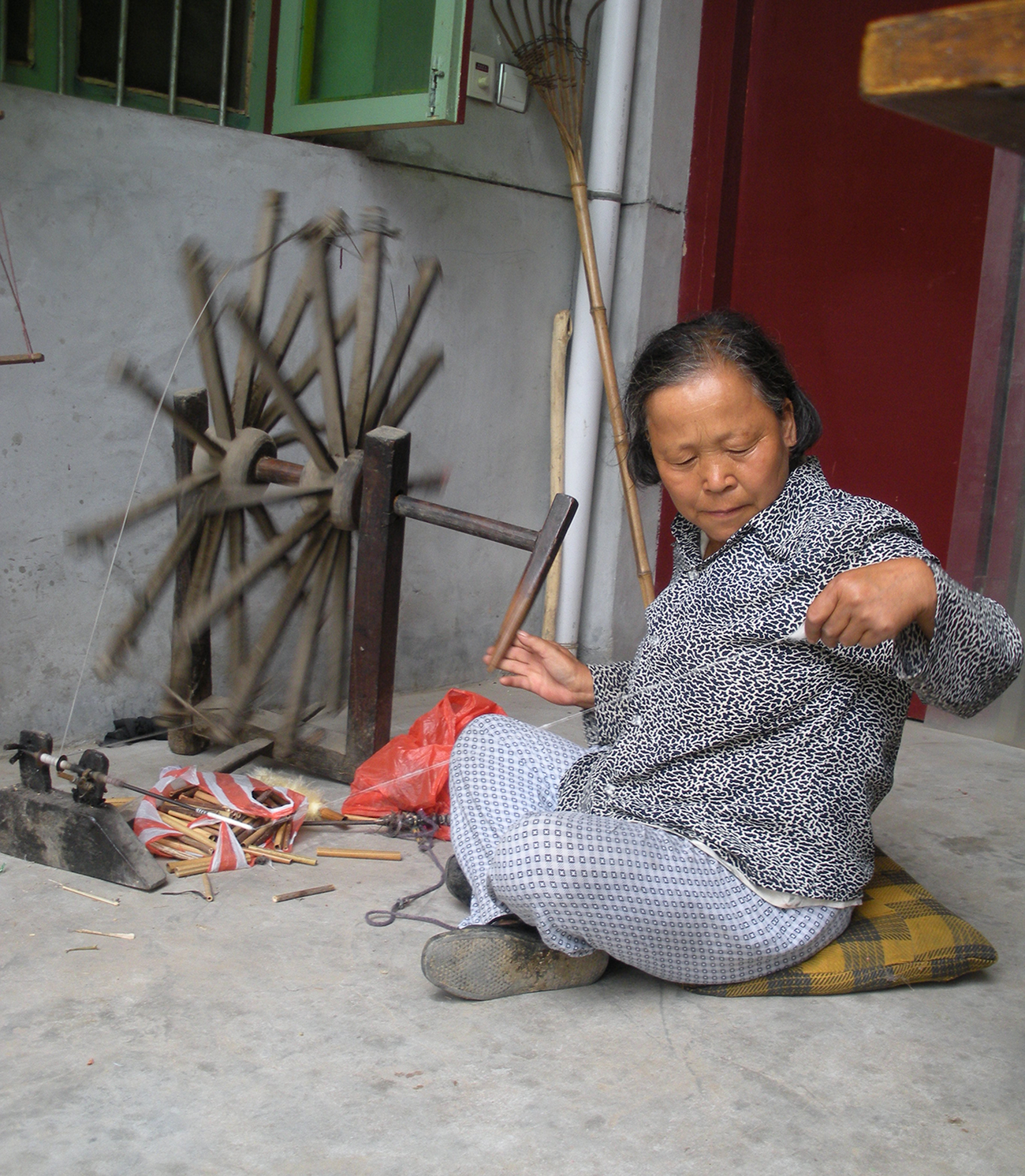
Spinning cotton yarn, Zhouzhi County, 2014.
Photograph by the author.
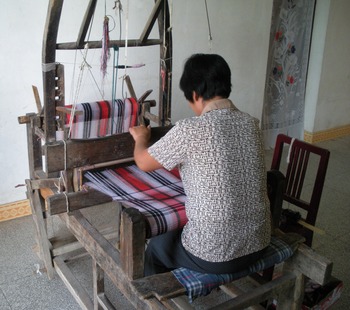
Weaving a cotton bed sheet, Zhouzhi County, 2014.
Photograph by the author.

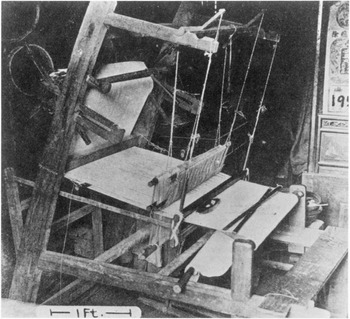
Chinese loom.
From Rudolf Hommel, China At Work (1937; reprint ed., Cambridge, MA: MIT Press, 1969), p. 182.

The logic of primitive accumulation in the Mao years will be familiar to students of the Soviet economy under Stalin. A large agrarian country with a small industrial sector cannot achieve rapid industrialization by relying on surpluses generated in industry alone. Wealth needs to be channeled from the non-industrial, non-socialist sector to state-owned urban industry, through a mechanism of non-equivalent exchange, i.e. through state procurement of grain and other agricultural products at below-market prices and sale of industrial products to the rural population at above-market prices. The framework for this policy was worked out in the 1920s in debates between Yevgeny Preobrazhensky and Nikolai Bukharin. In Stalinist practice, though not in Preobrazhensky's vision, non-equivalent exchange was enforced by coercive means. State monopolies of all major commodities ensured that rural people sold their surplus to the state at depressed prices. Since it was difficult to make millions of small peasants part with their harvest at the terms offered by the state, farmers needed to be organized into agricultural collectives. Private trade and sidelines were suppressed to prevent the diversion of scarce resources into a shadow economy. A country with little surplus above subsistence needs, such as China, also had to ration consumption of grain, cotton, etc., to ensure that sufficient quantities of these goods reached urban industry. It had to impose labor discipline in the collectives, so that discontent with low procurement prices did not translate into foot-dragging or open protest. And finally, it had to ensure that the rural population stayed in place, rather than flocking to the cities in search of work and grain. In the Chinese (but not the Soviet) case, this entailed a system of household registration that permanently tied rural people to their place of birth (or, in the case of women, to their place of marriage).
The Chinese Communist Party achieved these aims through a sequence of well-executed measures. Land reform in the early 1950s equalized landholdings and abolished the old power structure, generating strong support for the Communist Party among poor and middle peasants. State monopolies for grain, cotton, and oilseeds, introduced in 1953–1954, put an end to rampant inflation and gave state trade firms full control over agricultural output. By 1953, four years before full-scale collectivization, state planners were in a position to impose a system of procurement quotas that reached from Beijing down to individual farms. Rural households were classified as grain-surplus, grain-sufficient, or grain-deficient; the vast majority of households fell into the first category and were assigned sales targets based on previous harvests. In theory, sales were voluntary, but local governments were required to meet procurement targets and therefore pressured farmers to fulfill their quotas.Footnote 5 Already during the first Five-Year Plan (1953–1957), the government extracted eighty to ninety per cent of rural surplus above subsistence needs, and procurement quotas remained high throughout the collective years.Footnote 6 Collectivization – initially gradual and voluntary, compulsory after 1956 – further strengthened the state's hand. In the span of a year, collectivization rates rose from fourteen to ninety-six per cent, and agricultural collectives were transformed from self-governing teams of neighbors into administrative units under state control.Footnote 7 Land reform and collectivization provoked widespread protests, but the majority of the population remained supportive of the socialist government and there was little organized resistance.
The Chinese accumulation model, like the Soviet one on which it was based, relied heavily on differential pricing for agricultural and industrial goods. Like its Soviet counterpart, the Chinese Communist Party came to power at a time when industrial output had collapsed due to war and inflation, and the prices of industrial products had risen steeply relative to agricultural commodities. As industrial output revived and the costs of production fell, state planners did not close the “price scissors” but kept industrial prices high, extracting profit from the gap between industrial and agricultural prices. Official statistics show that a basket of farm goods that bought 100 yuan of industrial goods in the prewar years (1930–1936) bought only 38 yuan of such goods at the end of the war (1944). In 1952, three years after the socialist takeover, the same basket bought 84 yuan – more than during the war years but still less than in the 1930s. It was only after 1960 that sellers of farm goods received the same amount of industrial goods for their products as before the war. Since production costs fell faster in industry than in agriculture, even a return to prewar terms of trade allowed state firms to reap abundant profits.Footnote 8 Moreover, official statistics are based on a narrow range of consumer goods whose prices fell in the collective years, and thus overstate the extent to which the scissors gap had closed.Footnote 9
While the sale of industrial commodities to the countryside was highly profitable, rural-urban trade was not a major motor of accumulation. China on the eve of its first Five-Year Plan was a much poorer country than the Soviet Union: its per capita output of grain, coal, and cotton cloth on the eve of its first Five-Year Plan (in 1952) was less than one-half that of the Soviet Union at the same stage of development (in 1928); its electric power generation was one third, its steel output one twelfth that of the Soviet Union.Footnote 10 All of these materials were in short supply, and state planners channeled them to where they were needed most, typically to the industrializing cities and the export sector. Almost all state investment was reserved for urban industry and infrastructure: under the first Five-Year Plan, agriculture received only 2.4 per cent of investment, with another 3.3 per cent allotted to water conservancy; on a long-term average, agriculture and related sectors received twelve per cent of total state investment.Footnote 11 Private consumption of commodities was depressed by a combination of rationing, high prices, rural cash shortages, and a tiered retail network that channeled most consumer goods to the cities. For the length of a generation, rural China was essentially demonetized and decommodified. Average cash income from collective sources was 10 to 15 yuan (US$ 4 to 6) per capita per year, and many families had zero or negative cash incomes, i.e. remained in debt to the collective for many years.
State-enforced austerity went hand in hand with tangible improvements of many aspects of rural life. Life expectancy doubled from thirty-two years in 1949 to sixty-five years in 1978, while infant mortality fell from 250 to fifty per thousand.Footnote 12 Public health initiatives brought sanitation and clean water to many villages. Rural education was expanded, and girls were encouraged to go to school. The collective period also saw substantial investment in irrigation, roads, and electricity generation. The new wells, village clinics, schools, roads, and power stations were built and financed by rural communities, under a system of mandatory savings that put tight limits on payouts to individual households and channeled whatever surplus remained after taxes and procurement into collective infrastructure. The collectives thus became secondary sites of accumulation, extracting labor and resources from their members and investing them in public infrastructure.Footnote 13
The Chinese case deviated from Marx's analysis of primary accumulation in the early stages of capitalism in important aspects. Marx never contemplated the possibility of a peasantry that remained on the land, in physical possession of the means of production, while being dispossessed of its surplus product. Yet, this is what happened in collective-era China: far from enclosing the land, dispossessing the peasants, and replacing them with a proletariat of hired workers, the Party tied rural people ever more closely to the land, making it impossible for them to leave their place of registration. In the late collective years, a rural man had a one-in-five-thousand chance in a given year to obtain an urban household registration; for rural women, the chance was one in thirty thousand.Footnote 14 Legal ownership and de facto control of land and other means of production lay in the hands of Agricultural Production Teams, small units of about twenty-five to fifty households. Teams operated under plans that prescribed not only crop choice and sales targets, but also details of the cultivation regime. However, plans left enough room for local leaders to determine how, where, and when to grow their crops and to assign work tasks to specific members, in a process that involved negotiation and contestation.
This framework was flexible enough to cope with regional differences and robust enough to extract huge quantities of labor and surplus product from the countryside. In the first six years of the People's Republic alone, the number of workdays performed in rural China rose by forty per cent, due in equal measure to an increase in the length of the working year and an expansion of the workforce, as women were mobilized to work in the fields.Footnote 15 In 1959, admittedly an atypical year, the number of workdays in rural China rose 115 per cent above the 1952 level. Even in China's hyper-intensive agriculture, there is a limit to the amount of labor that can be absorbed in cultivating crops, but much of the additional labor was directed towards infrastructure projects, above all in flood control and irrigation.Footnote 16 Infrastructure work consciously sought to “fill the pores” of labor time by targeting slack periods in winter and mid-summer, traditionally times of rest for men and textile work for women. In the area I am most familiar with, central Shaanxi, directives called for an extra unremunerated labor input of forty to 100 yearly workdays per adult worker, and local people remember that in some years, the days spent in digging canals and terracing the fields exceeded those in routine farming. Their work raised area yields, but higher yields led to increased quotas, so that people saw little improvement in their living standards.Footnote 17
How did the Chinese state sustain these levels of mobilization and extraction without provoking militant resistance? Local leaders had few means of coercion at their disposal: their tenure was typically short and subject to community approval, and higher administrative levels rarely backed up leaders who had lost community support. There were no police to speak of in the countryside, and militias represented a cross-section of village society and could not be relied on to enforce any given leader's will. Leaders who resorted to heavy-handed measures risked retribution by opposing factions the moment they fell from power, as they inevitably did. This is not to say that village leaders did not use violence: work on the Great Leap Forward and the Cultural Revolution has documented an extraordinary level of brutality during these campaigns.Footnote 18 However, most of this violence was directed against former landlords, rich peasants, and “bad elements”, who were routinely beaten and humiliated during campaigns, or took place in factional struggles that were often rooted in older rivalries between villages or kinship groups. Collective leaders did not routinely use coercion against the more than ninety per cent of the population who were classified as poor or middle peasants. In fact, they had remarkably little leverage over members of “good” class background. Memoirist Rae Yang describes the case of a rapist who was let off without punishment because “it was not easy to punish a peasant in China. You could not strip him of his Party membership if he did not have one in the first place. You could not demote him, as he was already at the bottom of society […] So as the saying goes, ‘a dead pig is not afraid of boiling water’. A peasant in China was a dead pig”.Footnote 19
In fact, collective leaders had little need to discipline members since the remuneration system ensured that they worked hard. Team members earned not a fixed monetary wage but a share of collective revenue that was determined by assigning them workpoints (gongfen) for their labor, typically ten points per workday for men and eight for women; piece rates were used for particularly arduous or urgent jobs. At years’ end, team accountants subtracted production costs, taxes, and mandatory savings from the team's gross income. The remainder was the team's net income, to be distributed to members in the form of grain or cash. By dividing this residual amount by the total number of workpoints performed in the team, one arrived at the value of a single workpoint. The value of the workpoint was thus known only at the end of the year; it fluctuated over time and differed widely between teams, depending on their natural endowments and on the production quotas assigned to them by the higher levels of the administration.Footnote 20 Grain incomes, which were far more important to rural people than cash incomes, had two components: a subsistence portion given to every member of the team, including children, and a performance portion determined by workpoints earned. Monthly grain supplies (including both subsistence and performance portions) were set at about 14 kg per person, thirty per cent below subsistence minima as defined by international organizations.Footnote 21 People survived by growing additional food in small private plots, in the hours before and after collective work. In addition, people worked long hours and gladly accepted onerous work assignments if these came with high workpoint ratios. In interviews, people drew a direct line between food scarcity and work effort: “of course we worked hard; if you did not work hard, you earned no workpoints and had no grain to eat”.Footnote 22
Accumulation and the Rural Household
This massive extraction of labor and raw materials was possible only because of the largely invisible domestic work of women who grew the crops, replenished the labor pool, and clothed and fed their families in the face of pervasive scarcity. Here my argument intersects with the feminist claim that the production of surplus value under capitalism relies on the reproduction of living labor at home.Footnote 23 Labor, Marx argued, is the font of all value, but labor does not spring from nature fully formed. It needs to be produced and reproduced, and this (re)production is itself a form of labor. In most societies, the work of social reproduction – of giving birth, raising children, feeding and clothing family members; of materially, emotionally, and sexually servicing male workers so that they keep doing their daily work; of taking care of the sick and elderly once they are removed from the process of production – is performed by women. Reproductive work is typically disguised as a labor of love that comes naturally to women, provides its own compensations, and needs no monetary reward or social recognition. Philosopher Nancy Fraser speaks of domestic reproduction as an “abode […] that is more hidden still” than Marx's hidden abode of production in the factory – a realm that creates the material preconditions for the accumulation of capital, is essential to its functioning, but is made to appear as different from and unconnected to it.Footnote 24
Social Reproduction Theory developed as a historical analysis of gender dynamics in early modern Europe and North America, and not all of its assumptions are applicable to socialist China. One obvious difference is that the ideology of separate spheres – of a male-dominated public sphere, where labor is rewarded with cash payments, and a feminine domestic sphere, where reproductive activities are remunerated in the coin of “love” and “virtue”Footnote 25 – had little currency in prerevolutionary China and was rejected by the Communist Party. Traditional gender ideology in China saw men and women as engaged in separate yet complementary tasks, working together to ensure the biological and social continuity of the family. The roles of male breadwinner and female housewife, so central to gender relations in the West, made little sense in a situation where almost everybody worked “at home”, i.e. on the family farm or in the family shops and workshops that dominated Chinese cities well into the twentieth century.
In the West and its colonies, the extraction of value from women's work depended on what Maria Mies calls “housewifization”: the framing of women's economic activities as something that is subsidiary to their “real” work as mothers and housewives and in itself has little value. This misrepresentation made it possible to depress women's wages, keep their work casual and flexible, and offload risks and costs that would otherwise be shouldered by capital onto women's bodies.Footnote 26 The situation was quite different in socialist China, where official rhetoric did not glorify housewives and mothers. To the contrary, housewives were initially regarded as “parasites” and grudgingly accepted only when it became clear that the urban economy could not create enough jobs to employ all women.Footnote 27 Different from the Soviet Union and its European allies, the People's Republic eschewed pronatalism and did not emphasize women's reproductive roles. What counted was production (“production comes first, life second” was a common slogan); reproduction was at best an afterthought. Even more than the Soviet variant, Maoist productivism glorified transformative, future-oriented work: work that built the nation, transformed nature, created the beautiful new world of socialism. In contrast, work that simply reproduced life at home was seen as unimportant. This vision was not overtly gendered, as men and women were equally expected to step out into the bright light of public work, but by tacitly assuming that the remaining reproductive work was done by women, it devalued women's work.
Socialist accumulation relied less on the manipulation of gender norms than on the separation of production from reproduction and the construction of implicit hierarchies that made the plunder of the reproductive realm appear natural and inevitable. This involved a dual transfer, of labor and of raw materials, from rural households to the collective and from there to the state. Both transfers set in motion processes of substitution, as “prime” labor and materials were replaced by whatever resources households could mobilize. In order to realize its development aims, the state moved the most valuable labor (able-bodied men) to high-priority sectors, such as infrastructure construction and collective industry and sidelines, while the cheaper, more abundant labor of women was deployed in low-priority sectors. A 1960 document expresses this as follows: “men should not be assigned work that can be done by women; able-bodied workers should not be assigned work that can be done by part-time workers; part-time workers should not be assigned work that can be done by supplementary workers”.Footnote 28 As men were moved out of the countryside to build canals, dikes, roads, and reservoirs, agriculture became feminized.Footnote 29 Young women, in particular, were mobilized for “frontline work” in the fields, acquiring skills that had previously been limited to men. These women were then no longer available to do “rear service work” at home, and needed to be replaced by other women, often those who were past reproductive age.Footnote 30 Young women often experienced these changes as promotion: their workloads grew, but they assumed new responsibilities, mastered new skills, and rose to positions of greater visibility. The costs of labor substitution fell disproportionally on those at the bottom of the structure: not the young men who moved into industrial or infrastructure employment, nor even the young women who replaced men in agriculture, but women of the older generations, who had to shoulder a large number of new tasks without seeing any diminution in their previous work.
This process of labor extraction and substitution was paralleled by the extraction of food, fuel, and other raw materials from the countryside, and their substitution in the peasant household. In a (hypothetical) equivalent exchange between the sectors, the industrial commodities supplied to the countryside would have embodied the same amount of labor as the raw materials that the countryside produced for the urban–industrial sector. In other words, the extra work performed by rural people to meet the state's procurement quotas would have been compensated by industrially produced consumer goods such as machine-made cloth, rubber boots, or thermos bottles that proportionally reduced their domestic burden, or by producer goods such as diesel pumps and pesticides that eased their labor in the fields. This did not happen, at least not to any large degree. Potentially, industrial commodities such as machine-made cloth or processed foods could substitute for millions of hours of tedious, time-consuming work. Each meter of factory cloth replaced 1.7 days at the spinning wheel and the loom. Similarly, each kilogram of milled flour replaced many hours spent winnowing and milling grain; each kilogram of coal many hours spent gathering firewood; each pair of rubber boots up to ten days spent making shoes. These commodities were sold in the countryside but, as I have argued elsewhere, in insufficient quantities to make up for the extra labor that went into growing grain, cotton, oilseeds, etc. for the state.Footnote 31
The result was a net extraction not only of raw materials but of labor time and a consequent depletion of the realm of social reproduction. To deal with the shortages resulting from mandatory sales to the state, rural people had to produce substitutes, often in very labor-intensive ways. They hand-spun yarn from mildewed, wiry cotton because all their best cotton has been sold to the state and factory cloth was not available in sufficient quantities to substitute for homespun. They foraged for wild greens to make up for nutritional shortages resulting from the forced sale of much of their harvest. They cut wild grasses and gathered firewood to make up for fuel shortages resulting from the state's extraction of timber and crop residues. To flip the argument around, rural ingenuity in finding substitutes for things extracted by the state created the conditions for the continued undersupply of the countryside. While this was never openly expressed, state planners knew that rural households (in most cases, rural women) would find substitutes for missing food, cloth, fuel, etc., and this allowed them to divert these goods to other sectors. Labor intensification at the household level operated automatically and invisibly, driven by chains of scarcity and substitution which reached all the way down from the state administration to village communities, rural households, and women's bodies.
Accumulation and Women's Work: the Case of Cotton and Cotton Cloth
Let us now look at how accumulation worked in the case of cotton, the most important crop in China after grain. The evidence presented in this section comes from six fieldwork trips to villages in Shaanxi, Jiangsu, and Sichuan Province. My main fieldwork site is the Wei River Valley in central Shaanxi, an area also known as Guanzhong, “the land within the passes”. Guanzhong is perhaps as close to average as any place in China can be: it is situated between the developed coastal areas and the impoverished hinterlands, boasts a major metropolis (the former capital of Xi'an) but is not highly urbanized, and has a per capita GDP just below the national average. Guanzhong is also the site of important work on rural women under the collectives by Gail Hershatter and Gao Xiaoxian, which has inspired my own work.Footnote 32 Fieldwork was divided between three villages in Xingping and Zhouzhi counties, all of which are now within easy driving distance from Xi'an but would have taken a day of travel on poor roads in the collective period. For comparative purposes, I did two shorter fieldwork trips to Sichuan (Jiajiang county) and Jiangsu (Qidong and Dantu county). In addition, I collected documents from three provincial and five county or municipal archives.
Cotton was crucial to state accumulation: in most years, the textile industry was China's single largest source of revenue, producing about ten per cent of fiscal income. Monopoly control made it possible to set cotton procurement prices low enough, and textile sale prices high enough, for factories to recoup their investment in a single year.Footnote 33 Profits earned by these factories were then plowed back into infrastructure and heavy industry. Historically an importer of cotton and cotton goods, China emerged as a net textile exporter in the 1950s; in 1967, it overtook Japan as the world's top exporter.Footnote 34 Throughout the Mao years, ten to fifteen per cent of China's cotton output were exported, rising to twenty-five per cent in 1962, at a time when domestic textile rations had dropped to about one meter per capita.Footnote 35 Textile sales to the Soviet Union and its allies paid for the import of Soviet machinery and equipment; exports in the early 1960s paid for the grain that saved China's cities from starvation. Cotton exports also earned badly needed hard currency, so that China could purchase goods on the world market that it could not yet produce. As Kaoru Sugihara has shown, textile production costs in China were above world market levels, mostly because of the high cost of domestic cotton. In order to expand its market position, China pitched the price of its exports below international levels, selling cotton textiles at a loss. Chinese cloth was twice as expensive on the domestic as on the international market; in effect, cash-strapped domestic buyers subsidized China's entry into the global market.Footnote 36
The rise of China's textile industry took place against a backdrop of great scarcity. When the Communist Party came to power, China was barely able to clothe its population: yearly per capita supply of cotton cloth in the 1920–1930s was around 7.4 meters, less than almost any other country in the world.Footnote 37 Early PRC planners set themselves the modest target of 10 m per person, but it took China thirty years to reach this aim.Footnote 38 By the time of Mao's death, the average Chinese citizen consumed less cotton cloth than in the 1930s: per capita consumption of cotton cloth hovered around 6.5 m on average and 5.6 m in the countryside.Footnote 39 China's per capita consumption of all fibers (including wool and synthetics) was five times less than Japan or France, and seven times less than the US or Canada.Footnote 40 For about a quarter century, China was in the throes of a severe textile crisis.
Textile scarcity was due to a variety of factors. A doubling of cotton output in the collective years was neutralized by the parallel doubling of the population. Growing shares of the harvest were exported, and industrialization created whole new categories of textile need. Cotton and cotton cloth were used in public health for gauze and bandages, and in industry for sacks, awnings, tarpaulins, heat insulation, filters, cleaning supplies, explosives, etc. A series of good harvests in the early 1950s led to the construction of large mills, whose hunger for cotton had to be fed in later years, when harvests fell short of earlier expectations. Simultaneous scarcity of grain and cotton led the government to frequently adjust the procurement price of cotton relative to grain. In the early years, high prices for cotton relative to wheat and rice led to a growth in output. This was reversed in 1953, resulting in a reduction of cotton acreage and yields. In the late collective years, the price of cotton was held stable, but as grain prices rose, the amount of wheat or rice one could buy for a kilogram of cotton dropped thirty-five per cent below its 1951 peak.Footnote 41 Farmers became increasingly reluctant to grow a crop that required twice the labor input of maize and four times that of wheat, needed more pesticides and fertilizer than other crops, and in many cases earned less per labor day than the alternatives.Footnote 42
The situation came to a head in 1953–1954, when heavy-handed manipulation of the cotton price led to an undeclared cotton strike, accompanied by protests and sporadic arson attacks on cotton depots. The state responded by tightening procurement and by redefining cotton cultivation as women's work, as women were expected to be more pliable and more easily trained in the intensive cultivation methods promoted by the Ministry of Agriculture. From 1956 on, the rural branches of the All-China Women's Federation were tasked with promoting and assisting cotton cultivation. The Federation argued that women were naturally suited for cotton work: not only did their flexible waists and nimble hands make them expert cotton pickers, but their experience in textile work prepared them for repetitive, painstaking work.Footnote 43 By 1960, it was assumed as a matter of course that cotton work was women's work – despite the fact that before 1949, most work in the cotton fields had been done by men.
Historically, a large share of China's cotton output had remained in the hands of rural households, to be spun into yarn and woven into cloth for domestic use or sale. In cotton growing areas, girls learned to spin at age seven and to weave at age twelve. Most households had spinning wheels and looms, and those that did not could borrow them from neighbors. The rise of urban cotton mills since the 1890s had reduced but not replaced hand spinning and hand weaving. By the 1930s, most yarn produced in China came from mechanized mills, but three quarters of all cloth was still produced on handlooms, often mixing machine-made warp threads with handspun weft.Footnote 44 Manual textile work was enormously time-consuming: a 1954 report estimates that a woman who clothed a family of three spent six months every year spinning yarn, weaving cloth, and making clothes and cloth shoes.Footnote 45 Most women, of course, provided for more than three family members: one woman I interviewed was the sole textile provider for a family of eleven.
Women's participation in agricultural work was therefore limited, not because they were idle but because textile work, together with childcare, cooking, and other domestic chores, left little time for other work. According to Marina Thorborg's reconstruction, the average rural woman before collectivization worked fifty days a year in agriculture. By the mid-1960s, participation had risen to more than 200 days for women working full-time and about 150 days for women with childcare burdens. In one case discussed by Thorborg, young women without household duties were expected to work twenty-four days each month; mothers who could entrust their children to other family members worked twenty to twenty-two days; mothers who had significant childcare and household duties and suffered from bad health were nonetheless expected to work twelve days a month. In the course of a few years, then, women saw their workload in the fields double, triple, or quadruple; in one case, it rose from thirty days to 230 days in the span of three years.Footnote 46
Labor intensification was driven by a systematic attempt to standardize the agricultural labor process and to make team members adopt “best practices” developed on state farms and experimental stations. These practices increased yield but did so at the cost of disproportionally increasing labor input. Chinese agronomists appear not to have seen rural labor as a cost; practices that promised small increases were embraced even if they required a doubling or tripling of labor input. In the case of cotton, collective workers tilled the soil several times before planting, hoed the rows five to twelve times in a season, carefully pruned cotton plants, manually removed pests, and watered and manured plants one by one – a cultivation regime that looked more like intensive gardening than farming.Footnote 47 New cultivation regimes were promoted through manuals, written in simple language and widely available to farmers, and through mass emulation campaigns. Not all teams adopted these measures to the full extent, but few dared to ignore them. Teams that opted for traditional, less labor-intensive methods were criticized and in some cases accused of taking the wrong side in the two-line struggle between capitalism and socialism – a serious accusation in these times.Footnote 48 Labor intensification appears to have been particularly strong in “female” crops such as cotton. In a circular argument, the Shaanxi Women's Federation argued that demanding crops such as cotton were particularly suitable for women, who had a capacity for meticulous, painstaking work – as demonstrated by their assumed or real willingness to hoe the rows eight, ten, or twelve times each season.Footnote 49
While women, under the guidance of the Women's Federation, mastered the techniques of intensive cotton cultivation, they continued to produce cloth and clothes for their families. It is often assumed that hand spinning and hand weaving came to an end after the 1954 introduction of a textile rationing, but this is not the case. In theory, rural and urban populations were entitled to purchase cotton cloth from state factories at stable prices. Distribution favored urban populations: China's cities, home to eighteen per cent of the population, received thirty per cent of textile output, and urban per capita supplies were twice as high as in rural areas – more if one includes the protective work clothes to which most urban workers were entitled.Footnote 50 Rural supplies averaged 5.6 meters per person, falling to 1 m during the crisis years of 1961–1964. Insufficient as these rations were, many households did not claim them. The reason was cash scarcity: a suit of light twill cost 7 yuan, one of expensive corduroy 18 yuan, and with an average cash income from collective sources of 10 to 15 yuan, many people could not afford cloth from state stores.Footnote 51 With few exceptions, the people I interviewed sold their ration coupons on the black market and wore tubu (handloom cloth) instead. The only people who wore factory cloth, interviewees said, were officials who wore Mao suits to meetings and courting couples who dressed in fashionable printed cottons when they met.
Even if people had used their rations, they would have found them insufficient. The long-term average of 5.6 m was enough for a pair of loose pants and a jacket but not for underwear, footwear (most people went through several pairs of cloth shoes every year), headwear, or bedding. Based on interviews with rural women and accounting for the varying durability of different items, I calculated estimates for an absolute physical minimum that can be sustained for only a few years, a physical minimum that can be sustained long-term, albeit at the price of physical discomfort, and a social minimum that allows a person to meet expectations of neatness and cleanliness and to fully participate in communal life. My absolute minimum is 10 m a year for an adult male or female farmer who works outside most of the year. Adjusting for the reduced needs of children and old people, I assume 7 m for the statistically average person. This covers a two-layered suit, worn padded in winter, lined but not padded in spring and autumn, and fashioned into two separate unlined suits in summer, as well as one pair of padded shoes and some minimal bedding. Since all these items are in constant use, they will wear out in a few years. My long-term physical minimum is 13 m for an adult (9 m for the statistically average person). At this level, clothes can be washed only infrequently and not at all in winter; lice are inevitable and skin rashes likely; wearers have to remain indoors in periods of extreme cold. Within these constraints, however, clothes can be replaced at the pace that they are worn out. My social minimum, finally, is 17 m for adults (11 m for the statistically average person). At this level, a person can change and wash clothes every third day in summer and every tenth day in spring and fall. Winter clothes are washed only at the end of the season but can be protected with an overcoat. Clothes are worn until they cannot be patched any longer but are kept clean. 11 m corresponds closely to Huang Jinbing's estimate of a normal clothing need of 15 m in the 1930s.Footnote 52
The average ration of 5.6 m, then, fell short of the most basic replacement needs: a person with ration cloth as her only source would wear out her clothes faster than they could be replaced, and would have found herself in rags after a few years. How then did people keep themselves clothed? In three different ways, all of which involved the manual processing of raw cotton. First, while cotton-growing collectives were required to sell their entire harvest to the state-owned Cotton Company, they were allowed to retain 1 kilogram of ginned cotton per team member. This was meant for padding winter clothes and quilts but was commonly spun into yarn. One kilogram of cotton yields 9 m of handloom cloth, 50 cm wide. If we assume that 300 g are set aside for padding, the remaining 700 g are still enough for about 6 m of cloth – more cloth, and of a better quality, than the 5.6 m of factory cloth theoretically available through the rationing system. In addition, special allowances were given to brides and grooms, infants, and the deceased (whose need for grave clothes was honored by the state, in spite of the state's hostility to folk “superstition”). These extra rations, however, were available only to the thirty-five to forty per cent of rural people who were officially classified as cotton farmers.Footnote 53 Farmers outside the cotton-growing areas were given coupons for 250 to 500 g of cotton wool, but stores did not always stock cotton wool and coupons could not always be redeemed.Footnote 54
Second, cotton-growing teams hid cotton from brigade and commune cadres and distributed it to members. Amounts varied: one interviewee remembered that his team distributed an extra 2.5 kg per capita after an especially good harvest; however, somebody reported them to the higher levels and the extra rations were confiscated. Others said that their teams never engaged in secret distribution. An extra 0.5 to 1 kg seem to have been fairly common.Footnote 55 “Harvest concealment and illicit distribution” (manchan sifen) sometimes took the ingenious form of leaving cotton in the fields until the winter rains discolored it, which made it unsuitable for machine spinning. Such intentionally spoiled cotton was distributed to households as fuel. People then manually extracted the cotton wool, carded it, and spun it into yarn. Team leaders also allowed, even encouraged, women and children to roam the countryside at the end of the cotton harvest and glean leftover cotton from the fields of neighboring teams, a practice going back to the Republican period.Footnote 56 Third, team members stole cotton from the fields. Cotton picking, like other cotton work, was done by women, and when team leaders turned their back, pickers stuffed their shirts with raw cotton. There was little male leaders could do about it: the pickers would deny the theft, and men could not pat women down without causing scandal. Outside picking, few dared to steal large quantities, but people would grab a few handfuls while walking along the edge of a cotton field or pick up bolls that had fallen to the ground.
Another factor that helped people weather the textile crisis was that many families had textile savings from pre-rationing days. This was the case, in particular, for families that had recently taken in a new bride with a textile dowry. In central Shaanxi, girls started producing dowries at age ten and continued, with the help of friends and relatives, until they married.Footnote 57 A standard dowry consisted of five padded winter suits, five lined suits, five unlined summer suits, a short waistcoat, several pairs of shoes and socks, and several quilts, mattresses, and bedsheets – more than 100 m of cloth, enough to tide a bride and her children over the first ten years of her marriage, when pregnancies and childcare left little time for textile work. Dowries and other textile savings added to the availability of textiles in the countryside and saved untold lives in the famine years, as people from cotton-growing districts trekked to remote mountain areas and exchanged dowry items for grain.
Cotton supplies from licit or illicit sources enabled farmers in China's cotton-growing districts to make up for the shortage of ration cloth. Those brave enough to risk fines and censure used these supplies to produce cloth for the black market, to be sold in the Qinling Mountains or on the Loess Plateau. A spinner/weaver who sold her output on the market could earn 2.4 to 3.4 yuan per day – much more than the best-paid job in collective agriculture.Footnote 58 Few women engaged in fulltime market weaving, and those who were caught risked heavy fines, in addition to having their cloth and cotton confiscated. However, women who produced a few extra bolts and sold them on the market were treated leniently even if they were caught. All this came, of course, at the price of extra work: it took a woman eight to ten days to spin one kilogram of cotton into yarn and two to three days to set up the loom and weave the cloth. A woman who had to clothe a family of five would thus spend fifty-five to sixty-five days a year at the wheel and the loom – not counting the time needed for sewing, mending, making shoes, etc. Since most women worked fulltime in agriculture, they spun, wove, and sewed in what they experienced as “stolen” time: at night when men and children had gone to bed, in between other household tasks, or during breaks from collective work. Women I interviewed remembered the collective years as a time of constant fatigue and overwork, with breaks only when they fell ill. Not even pregnancy afforded a relief, since women worked until shortly before giving birth and resumed work soon after.Footnote 59
Without rural women's time-consuming, tedious, uncompensated labor at the loom and the spinning wheel, state planners would have had to supply more textiles to the rural market. Leaving rural people naked was not an option: even if planners had found it morally acceptable, people cannot turn out to work in wind, rain, and snow without textile cover. As long as rural women spun and wove, state planners could direct scarce factory textiles to export markets and urban centers, where they subsidized the state's low-wage industrialization strategy. It is possible, in principle, to quantify the contribution of women's textile work to state accumulation. If we assume, conservatively, that each rural person's yearly cloth supply fell one meter short of the most basic needs and that rural handloom weaving compensated for this shortfall, we arrive at a yearly rural “subsidy” to the state of 600 to 700 million meters of cotton cloth. This corresponds quite neatly to China's textile exports of about 700 million meters a year in the 1950–1960s. In other words, rural women's work at the wheel and the loom made it possible for the People's Republic to enter the global textile market, and thus begin its long climb towards its current position as an industrial superpower.
Similar calculations can be made for other types of domestic work. Since coal, with few exceptions, was reserved for industrial use and urban heating, rural households used plant materials for heating and cooking. In hill and mountain areas, women spent hours gathering and chopping wood; in the deforested plains, grain stalks, which needed to be crushed, dried, and chopped before burning, were the most common fuel. On average, a rural person burned 110 kg of coal a year. If they had burned the same quantity as urbanites (660 kg), total coal consumption would have outstripped the capacity of China's mines.Footnote 60 Because China produced little chemical fertilizer, the state encouraged (and sometimes mandated) the raising of pigs as “small fertilizer factories”, and local regulations demanded that households turn over much of their manure to the collective. The centralization of food-processing industries in the 1950s had deprived the countryside of bran, chaff, and oil press residues, all of which were traditionally used fatten animals for slaughter.Footnote 61 In the absence of quality feed, women and children foraged for wild plants or grew fodder plants which they then cooked and chopped to make them more digestible. With chemical fertilizer in short supply, people composted animal and human excrements, and enriched the mix with ashes from the stove, kitchen refuse, and other organic matter.
What we see here, in short, is a dramatic expansion of public production at the expense of private reproduction, a pillaging of the domestic realm for raw materials and labor. This was met at the domestic level by a secondary labor intensification, as a shrinking domestic labor force had to feed and clothe a larger number of collective workers, squeezing use value out of the raw materials that remained in their hands after state requisitioning. From the perspective of a state that sought to mobilize all available resources, this system had two advantages. First, state-induced scarcity unlocked previously inaccessible reservoirs of household labor, at no cost to the state, without putting extra demands on an overstretched administration, in ways that allowed the state to deny knowledge of and responsibility for domestic overwork. Second, the labor of marginal workers (women, children, the elderly) was applied to marginal resources (late-season cotton, grass from the roadsides, manure collected from village paths) that were too lowly and dispersed to justify state efforts to collect them but were nonetheless useful in the aggregate. It is not a coincidence that women's energies focused on what Jason Moore calls the “Four Cheaps”: the cheap food, energy, raw materials, and labor power that underpin accumulation under capitalism and under state socialism.Footnote 62 To be sure, what women's work produced was use value for their families, which could not be extracted by the state. However, the food, clothes, warmth, shelter, etc. produced by rural women for their families made it possible for the state to extract more from and supply less to the countryside. To express this differently, women's domestic work produced “free” goods and services that decreased the necessary labor time needed to reproduce workers’ life and labor power, and thus increased surplus labor time, i.e. the time from which profit could be extracted.Footnote 63 In this and other ways, women's unrecognized work underwrote accumulation in socialist China and prepared the ground for China's rise in the post-Mao years.

 Open access

