



Herbs and spices are well recognised for their medicinal benefits since Ayurvedic ages. Small cardamom (SC), the ‘Queen of spices’ (Elettaria cardamomum) and yellow mustard (YM) (Brassica campestris), commonly known as field mustard, are two of the widely used spices in India. These spices are reportedly known to possess strong antioxidant, anti-inflammatory and antimicrobial properties(Reference Ghosh, Bhattacharjee and Das1,Reference Oram, Salisbury, Kirk, Burton, Salisbury, Potter, McDonald and Green2) . Authors have successfully extracted bioactive components, that is, 1,8-cineole from SC seeds and melatonin from YM seeds employing supercritical carbon dioxide (SC-CO2) extraction(Reference Paul and Bhattacharjee3,Reference Chakraborty and Bhattacharjee4) . The SC-CO2 extracts thus obtained have revealed appreciable antioxidant properties along with in vitro α-amylase inhibitory activities(Reference Paul and Bhattacharjee3,Reference Chakraborty and Bhattacharjee4) . Moreover, in vivo hypocholesterolaemic efficacies of the extracts have been established in Wistar albino rats in terms of their total cholesterol and lipoprotein levels(Reference Chakraborty, Paul and Mallick5).
Reportedly, both 1,8-cineole and melatonin in their synthetic forms have low LD50 (lethal dose, 50 %) values and exhibited adverse effects in rat models as well as in clinical trials(Reference Caldas, Limeira and Araújo6–Reference Davies, Greenacre, Lookwood, Preedy and Watson10). The aforementioned findings of the extracts and reported toxicities of synthetic 1,8-cineole and melatonin prompted us to investigate the efficacies of the natural SC-CO2 extracts as alternate preventive therapeutics for diabetes (type 2) in vivo, in Wistar albino rats. To the best of our knowledge, there is no literature report on cardamom and mustard seed extracts as antidiabetic agents.
Prevention of type 2 diabetes occurs through a myriad of pathways chiefly, regulation of blood glucose level, enhancing insulin secretion, facilitating insulin sensitivity by increasing peripheral glucose utilisation and regulation of antioxidant activity, to name a few(Reference Poretsky11). In type 2 diabetes, augmentation of glucose-6-phosphatase (G6Pase) activity and reduction of glucose-6-phosphate dehydrogenase (G6PD) activity result in increase in fasting blood glucose (FBG) level(Reference Westergaard and Madsen12,Reference Pinna, Contini, Carru and Solinas13) . Therefore, the present study also investigates the effect of SC-CO2 extracts on these aforesaid enzymes to ascertain whether usage of these extracts lowers FBG level in hyperglycaemic animals through desirable up- and down-regulations of the enzymes.
According to Yu et al.(Reference Yu, Robotham and Yoon14), hyperglycaemia leads to production of reactive oxygen species and simultaneously attenuation of free radical scavenging compounds. Antioxidant enzymes such as catalase appear to be essential for cellular defence against reactive oxygen species(Reference Patlevič, Vašková and Švorc15). Since both these extracts exhibited strong antioxidant activities (in terms of 2,2-diphenyl-1-picrylhydrazyl (DPPH) free radical scavenging activity), it is envisaged that these spice extracts would exhibit secondary effects by scavenging reactive oxygen species production in type 2 diabetes. Therefore, the effects of the aforesaid extracts on hepatic catalase activity have also been analysed.
The present study forays into in vivo investigation of hypoglycaemic efficacies of SC-CO2 extracts (SC and YM seeds) in streptozotocin (STZ)-induced hyperglycaemic Wistar albino rats in terms of FBG level, serum lipid profile, plasma insulin level along with their effects on G6Pase, G6PD and catalase activities for 3 weeks. An in vitro approach was adopted to explore the effects of the extracts on insulin sensitivity as well as on glucose uptake using the non-invasive method of iHOMA2(Reference Hill, Levy and Matthews16). Additionally, in silico molecular docking studies have been conducted by docking the major extract constituents with G6PD. This exercise allowed us to identify which chemical compounds among the major extracted constituents augmented the activity of the aforesaid enzyme. The findings of in silico and in vivo studies were then corroborated to eliminate ambiguity in conferring these spice extracts as novel biotherapeutics. The investigative schemes of the present study have been illustrated in Fig. 1. The uniqueness of the present study lies in investigating the antidiabetic roles of 1,8-cineole-rich and melatonin-rich extracts of globally consumed spices viz. SC and mustard, respectively. The outcome of the present study can safely be extrapolated to redress type 2 diabetes in human. These extracts would serve as antidiabetic supplements or could be ingredients for new spice-based therapeutic foods or drugs.
Schematic representation of investigative pathways for supercritical carbon dioxide (SC-CO2) extracts.  , In vivo method;
  , in vitro method.

Materials and methods
Materials
Authenticated Alleppey green cardamom (Eletteria cardamomum) seeds (of export quality) were procured from Spices Board, Cochin, Kerala, India and authenticated B9 variety of YM seeds (Brassica campestris) were provided by the Faculty Center for Integrated Rural Development and Management, Narendrapur, South 24 Parganas, West Bengal, India. Food-grade CO2 was purchased from BOC India Ltd. SPE-ED matrix for SFE vessel packing was procured from M/s Applied Separations. ELISA kits for G6pase and G6PD were procured from Elabscience. ELISA kit for insulin estimation was purchased from Bioassay Technology Laboratory.
Supercritical carbon dioxide extraction of bioactive components: 1,8-cineole from small cardamom seeds and melatonin from yellow mustard seeds
A laboratory scale ‘SCF Green Technology SPE-ED SFE 2’ model of M/s Applied Separations was used for SC-CO2 extractions of melatonin and 1,8-cineole from YM and SC, respectively (online Supplementary Fig. S1). The extraction pressure (100, 200 and 300 bar), temperature (40, 50 and 60°C) and extraction time (30, 60 and 90 min) were optimised using a 33 full factorial design on the basis of the best combination of yield of 1,8-cineole and phytochemical properties, viz. antioxidant, antidiabetic and hypocholesterolaemic in the extracts. The optimised extraction conditions for 1,8-cineole from SC seeds were a sample size of 25 g of SC seeds (dp = 0·5 mm), an extraction pressure of 200 bar, an extraction temperature of 50°C, an extraction time of 90 min and a flow rate of 2 litres/min of CO2 (Reference Paul and Bhattacharjee3).
A 32 full factorial design was employed for optimisation of extraction parameters (pressure (200, 300 and 400 bar), temperature (40, 50 and 60°C)) of SC-CO2 extraction from YM seeds on the basis of the best combination of yield of melatonin and phytochemical properties, viz. antioxidant, antidiabetic and hypocholesterolaemic in the extracts. The optimised extraction conditions were 300 bar, 50°C, 120 min, a flow rate of 2 litres/min of CO2 and 30 g of YM seeds (dp = 0·5 mm). The extracts were stored in N2-flushed amber-coloured screw-capped glass vials at controlled temperature (YM extract at –20°C, SC seed extract at 4°C) until further study. These extracts being free of solvents could be directly employed in vivo in animal model studies. The extracts of SC and YM seeds were designated as SCE and YME, respectively.
Identification and quantification of bioactive components: 1,8-cineole in SCE and melatonin in YME
The presence of 1,8-cineole in SCE and melatonin in YME has been detected employing GC-MS and LC-MS analyses, respectively.
GC-MS and LC-MS analyses of SCE and YME
The extract having the maximum content of 1,8-cineole (obtained at 200 bar, 50°C, 90 min) was analysed by GC-MS in accordance with the method reported by Ghosh et al.(Reference Ghosh, Bhattacharjee and Das1), while YME was subjected to LC-electrospray ionisation (ESI)-MS analysis in accordance with the method reported by Chakraborty et al.(Reference Chakraborty, Paul and Mallick5). Identification of the components of the extracts was based on comparison of the mass spectra of compounds in the National Institute of Standards and Technology (NIST)(Reference Stein17) compound library and those published in literature(Reference Adams18,Reference Kuyumcu and Küçükba19) .
Quantification of 1,8-cineole in SCE and melatonin in YME
High-performance TLC of SCE was conducted to estimate the 1,8 cineole content therein in accordance with the method described by Ghosh et al.(Reference Ghosh, Bhattacharjee and Das1). Melatonin in YME was quantified by HPLC in accordance with the method reported by Chakraborty & Bhattacharjee(Reference Chakraborty and Bhattacharjee4). Both extracts were diluted in food-grade 10 % dimethyl sulfoxide (DMSO) immediately before oral administration to rats.
Experimental animal acclimatisation and welfare-related assessments
Male Wister albino rats (130–150 g) aged 2 months were procured from M/s Rita Ghosh Private Ltd. The study was conducted in the laboratory of Department of Physiology, Nutrition and Microbiology, Raja N.L. Khan Women’s College, Midnapore, West Bengal, India, in the months of January to March 2017. The experiments were conducted as per approved guidelines of Institutional Animal Ethical Committee guidelines and Committee for the Purpose of Control and Supervision of Experiments on Animals (CPCSEA, registration no. 190/PO/Re/S/2016/CPCSEA.).
The animals were maintained and acclimatised under standard environmental conditions (17–23°C, 60 (sd 5) % relative humidity) for 3 weeks prior to the study. Acclimatised rats were selected randomly and three rats per polyacrylic cage (30 × 23 × 10 cm) were housed inside a temperature and humidity-controlled room with 12 h dark –12 h light – (180 to 200 lux at day time) cycles. They were provided with standard rat feed (a mixture of wheat flour, Bengal gram flour, milk powder, salt and distilled water, on weight basis) and distilled water ad libitum throughout the experimental period. Animal care and personal hygiene of the researchers were maintained according to the Guide to the Care and Use of Experimental Animals(Reference Olfert, Cross and McWilliam20). Food intake and body weight (b.w.) were measured regularly during the experimental period.
Administration of supercritical carbon dioxide extracts to hyperglycaemic Wistar albino rats
Diabetes was induced in each rat by injecting STZ intraperitoneally at a standard dose of 60 mg/kg of the b.w. on day 1 in the morning at 09.00 hours, in accordance with the method reported by Paul et al.(Reference Paul, Bhattacharjee and Chatterjee21). The FBG levels were determined in STZ-injected rats after 72 h of injection. Rats with FBG levels between 120 and 130 mg/dl were considered for the study. The highest dose of the SC-CO2 extracts for oral administration was selected to be 550 mg/kg b.w., much lower than the LD50 of the extracts, that is, 5000 mg/kg b.w.(Reference Chakraborty, Paul and Mallick5). Groups C and HC were treated as normal control and negative control, respectively, and were given normal food and water ad libitum. Groups M and B served as positive controls and were treated with metformin (50 mg/kg b.w.) and a polyherbal drug (BGR 34 (600 mg/kg b.w.) developed by the Council of Scientific & Industrial Research (CSIR)), respectively. Groups E1–E12 were orally administered (commonly used method for administering drugs into the gastrointestinal tract) with SC-CO2 extracts (SC and YM seeds) at regular doses of 55, 175, 550 mg/kg b.w. (Table 1) at 10.00 hours. from day 4 onwards for 21 d in accordance with Organisation for Economic Co-operation and Development (OECD) guidelines(22). The total number of rats used in the present study was ninety-six where each group had six rats. Blood was collected from the retro-orbital plexus of animals on days 8, 15 and 21 of the experimental period, and liver and kidney were collected after killing animals on day 21. The serum and plasma were prepared in accordance with standard protocols and the samples were stored at −20°C for further study(Reference Tuck, Chan and Chia23). Details of in vivo experiments are schematically represented in online Supplementary Fig. S2.
Groups of streptozotocin-injected animals treated with metformin, supercritical carbon dioxide (SC-CO2) extracts of yellow mustard (YM) and small cardamom (SC)

DMSO, dimethyl sulfoxide; b.w., body weight.
In vivo evaluation of effects of SCE and YME on hyperglycaemic Wistar albino rats
Estimation of fasting blood glucose level, serum lipid profile and plasma insulin level
The FBG levels of rats (all groups) were periodically monitored during the treatment on days 8, 15 and 21. The blood samples of all rats were estimated for FBG levels and total cholesterol, TAG, HDL and LDL were estimated in the serum samples by semi-autoanalyser (Merck), according to standard protocols(Reference Itaya and Ui24–Reference Ohkawa, Ohishi and Yagi27). Plasma insulin levels were evaluated using ELISA kit with assay sensitivity of 0·05 mIU/l(Reference Paul, Bhattacharjee and Chatterjee21).
Monitoring stability in fasting blood glucose level after discontinuation of oral administration of SCE and YME
The optimised dose and duration of administration of SCE and YME (obtained from above experiment) were found to be 550 mg/kg b.w. and 15 d, respectively (details of optimisation have been described later). Since there were negligible changes in FBG levels of the extract-administered rats on days 15 and 21, the FBG levels of rats were monitored on days 15, 17, 19 and 21 (by withdrawing blood from the retro-orbital plexus of the rats) after discontinuation of extract administration on day 15 to ascertain whether the FBG levels remained unaltered up to day 21. Concomitantly, the wellness (physical and/or psychological) parameters of the rats were also monitored.
Estimation of glucose-6-phosphatase, glucose-6-phosphate dehydrogenase and catalase activity
The rat liver homogenates were prepared in ice-cold 50 mm TRIS–HCl buffer (pH 7·5) according to the method reported by Ahmad & Ahmad(Reference Ahmad and Ahmad28) and the protein content therein was estimated using the method described by Bradford(Reference Bradford29). Both G6Pase and G6PD activities in rat livers were assayed using ELISA kits. The hepatic catalase activity was estimated according to the method elaborated by Sinha(Reference Sinha30).
Histopathological studies and determination of liver and kidney markers
To confirm whether there are any morphological changes in livers and kidneys of the experimental rats, the said organs were examined under light microscopy (M/s Olympus). The levels of different liver (serum glutamic pyruvic transaminase (SGPT) and serum glutamic-oxaloacetic transaminase (SGOT)) and kidney markers (BUN, serum urea and creatinine) were determined to ascertain toxic effects of the extracts on the said organs, if any(Reference Mallick, Mandal and Roy31).
Estimation of human equivalent dose
There are four different methods of extrapolation of dose from animals to human, namely: dose by factor, similar drug, pharmacokinetically guided and comparative approaches(Reference Nair and Jacob32). In the present study, the ‘dose by factor’ approach has been used to estimate human equivalent dose values of SCE and YME from their respective optimised animal doses.
Molecular docking studies of extract components with glucose-6-phosphate dehydrogenase
The binding affinities of major components of SCE and YME with G6PD were computed by molecular docking to identify the chemical compounds in the extracts which redressed type 2 diabetes. The major components of the aforesaid extracts include limonene and linalool, besides α-terpinyl acetate, α-terpineol and 1,8-cineole in SCE; and melatonin, tocopherol and ascorbic acid in YME. Therefore, the aforesaid components were docked at the known substrate binding site of G6PD receptor using the GOLD (Genetic Optimization for Ligand Docking) package(33).
From the three-dimensional (3D) structures, the respective aforesaid active ingredients of SCE and YME were retrieved from the PubChem database, and solvent accessible surface area was generated using the Chimera program(Reference Kim, Thiessen and Bolton34,Reference Pettersen, Goddard and Huang35) . Top ten energetically preferred conformers of all the active ingredient molecules were generated using FROG2 (FRee On line druG conformation generation) software(Reference Miteva, Guyon and Tufféry36). Molecular docking of these cardamom extract components was performed using the structure of G6PD receptor collected from the protein data bank (PDB)(Reference Berman, Westbrook and Feng37) (PDB ID: 5UKW). Ingredient molecules were docked at the known substrate binding site of G6PD receptor using the GOLD package Cambridge Crystallographic Data Centre (CCDC) (Gold Suite 5.2.2) with two scoring systems, that is, GOLD Scoring and ChemPLP Scoring. GOLD software optimises the fitness score of many possible docking solutions using a genetic algorithm. Following parameters were used in the docking cycles: population size (10), selection pressure (1·100 000), number of operations (100 000), number of islands (5), niche size (2), crossover weight (95), mutate weight (95) and migrate weight (10). Docking solutions from various conformers were clustered based on their root mean square deviation representing structural similarity. Subclusters with minimum of three solutions with root mean square deviation < 2 Å with each other were considered for further analysis. Top three scoring solutions (pose) from the largest cluster were selected for further comparison. For comparison purpose, rescoring of glucose-6-phosphate-bound structure of G6PD receptor structure was carried out using the GOLD program. Ligand–protein interactions were identified by the Schrödinger suite(38) (Maestro, Schrödinger)
In vitro evaluation of effects of SCE and YME on insulin sensitivity, β-cell function and glucose uptake using iHOMA2
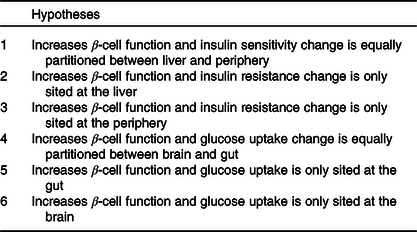
The model of iHOMA2 can be used to predict the effects of therapeutic agents on β-cell function (%β), insulin sensitivity (%S) and glucose uptake by a non-invasive method(Reference Hill, Levy and Matthews16,Reference Paul, Bhattacharjee and Chatterjee21) . In the present study, %S and %β were calculated from experimental glucose and insulin values using iHOMA2 in analytical mode. There was an increase in %S and %β (discussed later) in the extract administered rats compared with that of diabetic rats. Six possible sites of action were hypothesised and modelled (Table 2) using iHOMA2 (predictive mode) on the basis of insulin sensitivity (liver and periphery) and glucose uptake (brain and gut). Since insulin facilitates cellular glucose uptake, the hypotheses were modelled by assuming %S to be directly proportional to glucose uptake in brain and gut(Reference Wilcox39). Since the hypotheses are based on %S and glucose uptake, increase in %β was kept constant in all hypotheses. The predicted values of insulin were compared with the experimental values using Bland–Altman plots to assess the agreement between the two methods of insulin estimation, that is, by ELISA kit assay and by predictive mode of iHOMA2 software. The predicted values of glucose and insulin were further analysed using F tests for model fit.
Hypotheses modelled in iHOMA2
Statistical analyses
The experimental results are expressed as means of the experimental data obtained from six rats in each group. Significant differences between mean values were determined by Duncan’s multiple range test to determine significant differences among means of different parameters of of rat serum and plasma. A value of P ≤ 0·05 was considered significant to establish differences in all tests. All statistical tests were performed by STATISTICA 8.0 software (Statsoft).
Results
1,8-cineole content in SCE and melatonin in YME
GC-MS analysis revealed the presence of 1,8-cineole (along with α-terpinyl acetate, limonene, α-terpineol and linalool) in SCE, while LC-MS analysis of YME revealed presence of melatonin (limonene, linalool, tocopherol and ascorbic acid) in the extract. The amount of 1,8-cineole present in SCE was 46·7 mg/100 mg extract, as determined by high-performance TLC analysis of SCE and amount of melatonin present in YME was 427·26 ng/100 mg extract, as determined by HPLC analysis.
Effects of SCE and YME on fasting blood glucose levels
The FBG levels in rats fed with SCE and YME remained unchanged until day 8. However on day 15, there was 31·49 (sd 2·94) % and 32·28 (sd 2·29) % reduction in FBG level in rats administered with SCE and YME, respectively, at an amount of 550 mg/kg b.w. It was also observed that there was an insignificant (P = 0·102) decrease in FBG levels in animals administered with 550 mg/kg b.w. of extracts on day 21 (87·34 mg/dl for SCE and 86·10 mg/dl for YME) compared with those on day 15, indicating that administration of the aforesaid dose for 15 d (87·11 mg/dl for SCE and 86·93 mg/dl for YME) could achieve normal blood glucose levels in diabetic rats. The reduction in FBG levels in animals administered with extracts at a dose of 175 mg/kg b.w. was lower than that with 550 mg/kg b.w. on day 21. Administration of extracts at 55 mg/kg b.w. did not result in any reduction in FBG level in rats (Fig. 2) on day 21.
Fasting blood glucose levels of Wistar albino rats on day 15. a–j Unlike letters indicate significant difference (P < 0·05). YM, yellow mustard; SC, small cardamom. Data reported in mg/dl can be expressed in mmol/l by multiplying the data by 0·055.

However, when 175 mg/kg b.w. of extracts were co-administered with metformin, the reduction in FBG level was similar to that in rats fed with 550 mg/kg b.w. extract only. The lowest dose of extracts, that is, 55 mg/kg b.w. also resulted in reduction in FBG when co-administered with metformin (Fig. 2). FBG level of the rats co-administered with 550 mg/kg b.w. of either extract and metformin was below 65 mg/dl (below 70 mg/dl indicates hypoglycaemia)(Reference Morales and Schneider40) indicating hyperglycaemia in the animals. Administration of BGR-34 for 21 d also improved the FBG level (86·61 mg/dl) in rats, without inducing hypoglycaemia. No adverse effects in the animals were found during the experimental period.
On discontinuation of oral administration of either extract (SCE and YME) after 15 d of regular administration, the FBG levels did not change significantly (P = 0·200) up to day 21 (online Supplementary Fig. S3). Therefore, it is evident that FBG levels in animals were stable up to day 21 even after discontinuation of extract administration on day 15.
Histological changes and effects on liver and kidney markers
The histological sections of livers and kidneys of the diabetic control rats and the rats treated with SCE and YME (550 mg/kg b.w.) are shown in Fig. 4. Histological structures showed morphological variations in livers of diabetic rats. The kidneys of diabetic rats had severe disorganisation of glomerulus and dilation of renal tubules. The rats treated with SC-CO2 extracts, however, revealed normal organised structures of both liver and kidney.
Levels of (A) total cholesterol, (B) TAG, (C) HDL and (D) LDL in Wistar albino rats on day 15. a–j Unlike letters indicate significant difference (P < 0·05). YM, yellow mustard; SC, small cardamom.

The levels of serum BUN, urea and creatinine (liver markers), serum SGPT and SGOT (kidney markers) levels of the rats are presented in Table 3. No alternations in serum urea and creatinine levels were observed in the rats treated with metformin, BGR-34, SCE and YME, during the experimental period of 21 d; however, the levels changed significantly (P = 0·000) in the HC group of rats. Considering the animal dose to be 550 mg/kg b.w. at which no adverse effect in the animals was found, human equivalent dose was calculated to be 89 mg/kg b.w. for SCE and YME.
Effect of metformin, BGR-34, supercritical carbon dioxide extracts of yellow mustard and small cardamom seeds on kidney and liver markers in diabetic rats (Mean values and standard deviations of six rats in each group)

BUN, blood urea N; SGOT, serum glutamic-oxaloacetic transaminase; SGPT, serum glutamic pyruvic transaminase.
a,b,c,d Values with unlike superscript letters were significantly different (P < 0·05) between groups by Duncan’s multiple range test.
Effects of SCE and YME on serum lipid profile
As diabetes is a metabolic disorder, it is characterised not only by increased FBG levels in rats but also by altered level of lipid profile. In the present study, total cholesterol, TAG and LDL were significantly (P = 0·002) elevated, while HDL was significantly (P = 0·007) lowered in diabetic rats. However, the lipid profile of the animals administered with the SC-CO2 extracts were improved as compared with that of the diabetic animals (Fig. 3).
Effects of SCE and YME on glucose-6-phosphatase, glucose-6-phosphate dehydrogenase and catalase activities
The activities of G6PD significantly decreased, whereas the activities of G6Pase significantly increased in the STZ-injected diabetic rats with respect to the normal control group. After the administration of the SCE and YME to the diabetic rats, significant recoveries were noted in the activities of the aforesaid enzymes. The decrease in hepatic G6Pase activity was most prominent amounting to decreases of 25·41 % and 23·50 % in the groups treated with 550 mg/kg b.w. per d of extracts of SC and YM seeds, respectively (Fig. 5(A)). There was no significant difference (P > 0·05) in activity of G6Pase when the rats were treated with either SCE or YME at 550 mg/kg b.w. However, G6Pase activities of the animals varied significantly (P < 0·05) among the groups of rats administered with SCE and YME at doses of 175 and 55 mg/kg b.w, respectively.
(A) Histology of liver of diabetic control group of rats showing disorganised structure of liver. (B) Histology of liver of group of rats treated with 550 mg/kg body weight (b.w.) of supercritical carbon dioxide (SC-CO2) extract of small cardamom (SC) seeds showing well-organised lobular structure. (C) Histology of liver of group of rats treated with 550 mg/kg b.w. of SC-CO2 extract of yellow mustard (YM) seeds showing organised structure of lobules. (D) Histology of kidney of diabetic control group of rats showing severe disorganisation in the renal tubules. (E) Histology of kidney of group of rats treated with 550 mg/kg b.w. of SC-CO2 extract of SC seeds showing normal renal tubules with intact well-organised cellular boundary. (F) Histology of liver of group of rats treated with 550 mg/kg b.w. of SC-CO2 extract of YM seeds showing normal organisation in the renal tubules.

(A) Activity of glucose-6-phosphatase (G6Pase) in Wistar albino rats on day 21. (B) Activity of glucose-6-phosphate dehydrogenase (G6PD) in Wistar albino rats on day 21. (C) Activity of catalase in Wistar albino rats on day 21. a–g Unlike letters indicate significant difference (P < 0·05 level). YM, yellow mustard; SC, small cardamom.

(A) Average molecular docking score represented as Genetic Optimization for Ligand Docking (GOLD) score is plotted for each active ingredient of the cardamom extract when docked at the substrate binding site. (B) Average molecular docking scores represented as GOLD score for each active ingredient of the mustard extract when docked at the substrate binding site. G6P, glucose-6-phosphate.

The diabetic rats showed reduction in hepatic G6PD activity as compared with that of normal control rats after day 21. In STZ-induced diabetic rats, the reduction of G6PD activity in liver obstructs glucose utilisation through pentose phosphate pathway. There were 36·71 % and 34·40 % increases in the activities of G6PD in the groups treated with SC-CO2 extracts of SC and YM seeds (550 mg/kg b.w.), respectively (Fig. 5(B)). There was no significant difference (P > 0·05) in the activity of G6PD in the rats treated with SCE and YME at 550, 175 and 55 mg/kg b.w. It was observed that the administration of metformin and BGR-34 to the rats resulted in reduction in G6Pase (30·95 % and 25·76, respectively) and increases in G6PD (28·76 % and 27·99 %, respectively) activities in rats (Fig. 5(B)).
The catalase activities of the rats are presented in Fig. 5(C). The animals treated with 550 mg/kg b.w. of SCE and YME, the activities of catalase (21·09 (sd 1·01) and 20·98 (sd 0·99) IU/mg of protein for SC and YM seeds, respectively) were similar to that of the control group (22·12 (sd 1·17) IU/mg of protein) on day 21. Although activity of catalase was similar (P > 0·05) in the rats treated with either extract at doses of 550 and 175 mg/kg b.w., there was significant difference (P < 0·05) in activity of catalase in the rats administered with SCE and YME at the lowest dose, that is, 55 mg/kg b.w.
Augmentative effects of extract components on glucose-6-phosphate dehydrogenase in terms of docking scores
Fig. 5 provides the docking scores of active ingredients of SCE (1,8-cineole, α-terpinyl acetate, terpineol, limonene and linalool) and YME (melatonin, ascorbic acid and tocopherol) with respect to the bound substrate (glucose-6-phosphate) of G6PD receptor protein. Ingredient molecules were docked at the known ligand binding site of G6PD receptor using GOLD package (CCDC). Average docking scores of top three scoring solutions (pose) from the largest cluster of all active ingredient molecules were calculated and compared against GOLD-generated rescores derived from the original substrate bound to G6PD. Online Supplementary Fig. S4 provides the corresponding docking poses with the respective ligands. For SCE, high docking scores were achieved by linalool and limonene, whereas for YME, docking score was appreciably high for tocopherol apart from that of melatonin.
Effects of supercritical carbon dioxide extracts of small cardamom and yellow mustard seeds on serum insulin levels and model assessment in iHOMA2
The insulin content in the rats along with the respective calculated %S and %B values are presented in Table 4. The plasma insulin value was least in the diabetic rats, whereas the values increased in the metformin and extract-treated rats. From the experimental values of blood glucose and plasma insulin levels in the rats, it was found that increases of %S and %β for YM seed extract-treated rats were 33·08 % and 48·35 %, respectively, whereas the same for SC seed extract-treated rats were 35·68 % and 46·29 %, respectively. The Bland–Altman plots showed good fit between the experimental and predictive values of insulin in rats indicating agreement between the methods. The predictive results from iHOMA2 and the F-values are represented in Table 5. The F values indicated that the models based on the second hypothesis (insulin sensitivity increased in liver) and fifth hypotheses (glucose uptake in gut) fitted well to the experimental data (glucose and insulin) of extract-administered rats (Table 5). Similar findings were also observed in the analyses conducted with data obtained from rats treated with metformin and BGR-34. In a study conducted on antidiabetic potency of nanoliposomes of SC-CO2 extract of SC seeds, Paul et al.(Reference Olfert, Cross and McWilliam20) have reported that iHOMA2 results indicated that nanoliposomes had either increased insulin sensitivity in liver or increased glucose uptake in brain of Wistar albino rats.
Plasma insulin level, insulin sensitivity and β-cell function of rats (Means and standard deviations of six rats)

%S, insulin sensitivity; %B, β-cell function.
iHOMA2 results

SC-CO2, supercritical carbon dioxide; SC, small cardamom; b.w., body weight; YM, yellow mustard.
Discussion
Administration of either SC-CO2 extract in the diabetic animals resulted in achieving normal FBG levels in rats on day 15 which remained unaltered till day 21, while co-administration of either SCE or YME at a dose of 550 mg/kg b.w. with metformin resulted in hypoglycaemia in rats on the same day. Therefore, oral administration of either extract alone at a dose of 550 mg/kg b.w. is effective in restoring normal FBG levels in rats on day 15. Although either extract was found to be most effective in reducing blood glucose levels at the highest dose, that is, 550 mg/kg b.w., the concentrations of 1,8-cineole and melatonin in the respective extracts were different (discussed above). Thus, SCE having 46·70 mg 1,8-cineole/100 mg extract and YME having 427·26 ng melatonin/100 mg extract successfully reduced FBG levels in diabetic rats. The reduction in FBG levels in rats administered with either extract at a dose of 550 mg/kg b.w. was similar to those administered with metformin and BGR-34.
Decrease in G6Pase activity extract-administered rats indicated repression of this key gluconeogenic enzyme (G6Pase) and was responsible for reduced FBG levels in the rats. Natural extracts of Cinnamomum zeylanicum and Octomeles sumatrana are also reportedly known to have inhibitory effects on G6Pase activities in rat models(Reference Hassan, Barthwal and Nair41,Reference Azahar, Al-Naqeb and Hasan42) . Moreover, increased levels of G6PD in rats treated with SCE and YME were indicative of proper glucose utilisation through pentose phosphate pathway in the liver. Studies conducted by Kumar et al.(Reference Kumar, Bhandari and Jamadagni43) have also reported on restoration of G6PD activity in rats when administered with fenugreek seed extract. The effects of the extracts on hepatic G6Pase and G6PD activities possibly contributed to the maintenance of normal FBG levels in diabetic rats. It was evident from the results that the efficacies of the extracts in terms of activities of these hepatic enzymes were also comparable to those of metformin and BGR-34, affirming the suitability of the extracts as promising alternatives to metformin and BGR-34 in redressing type 2 diabetes.
The reduced activity of catalase observed in diabetic rats indicated accumulation of H2O2 leading to oxidative stress(Reference Grankvist, Marklund and Taljedal44). However, in rats treated with 550 mg/kg b.w. of SCE and YME, the activities of catalase on day 21 indicated the efficiencies of the extracts in restoring catalase activity, owing to the presence of antioxidants namely 1,8-cineole and melatonin in SCE and YME, respectively. Administration of either extract at 550 mg/kg b.w. successfully down-regulated G6Pase activity(Reference Westergaard and Madsen12) and up-regulated G6PD(Reference Pinna, Contini, Carru and Solinas13) and catalase(Reference Yu, Robotham and Yoon14,Reference Patlevič, Vašková and Švorc15) activities in the animals owing to highest content of respective bioactive component in the extracts.
Additionally, improved lipid profiles of the animals administered with the SC-CO2 extracts confirmed hypolipidaemic effect of the extracts. This finding was in agreement with that reported by Chakraborty et al.(Reference Chakraborty, Paul and Mallick5), where administration of SC-CO2 extracts of SC and YM seeds resulted in improved lipid profile of hypercholesterolaemic Wistar albino rats. Histological sections of livers and kidneys of extract-administered rats attested to the fact that administration of extracts had no toxic effects on liver and kidney of animals. Therefore, these ‘green extracts’ as per WHO(45) guidelines could be termed as ‘herbal preparations’.
Molecular docking results revealed that linalool achieved the highest docking scores in the G6PD-bound site, suggesting its strong augmenting action on G6PD. SCE therefore exhibited its augmenting effect on hepatic G6PD activity not only due to 1,8-cineole alone but also due to the presence of linalool therein. Docking exercise at the known substrate binding site of G6PD suggests that some of the active ingredients of the cardamom extract (e.g. linalool) achieved docking scores comparable to the known substrate of the protein. However, the sizes and surface areas of few active molecules are considerably smaller than the substrate glucose-6-phosphate. Hence, they do not occupy the full substrate binding pocket, instead binds to subpockets. In case of YME, tocopherol achieved appreciably high docking scores which implied that augmenting effect of the extract in the enzyme activity was due to the presence of both melatonin and tocopherol. In fact, the docking scores of the constituents of either extract revealed that each component had affected the enzyme activity desirably. Thus, it was the consortium of antioxidants present in either extract which augmented G6PD activity and not the respective bioactive principle alone. Chakraborty et al.(Reference Chakraborty, Paul and Mallick5) have reported synergistic presence of antioxidants in SC-CO2 extracts of YM and SC seeds which contributed to their strong hypocholesterolaemic activities. In the present study too, it can be concluded from the molecular docking results that prominent antidiabetic activities of SCE and YME were owing to the presence of consortia of bioactives therein and not due to 1,8-cineole or melatonin alone.
The results from iHOMA2 imply that the SC-CO2 extracts either increase hepatic insulin sensitivity or glucose uptake in the gut or both. Therefore, increase in plasma insulin levels of the rat treated with either SCE or YME was owing to either insulin sensitivity increased in liver or glucose uptake in gut or both in extract-administered rats. Similar findings were observed in the analyses conducted with data obtained from rats treated with metformin and BGR-34. The increase in hepatic insulin sensitivity (predicted by iHOMA2) in metformin-administered rats in our study is in agreement with the findings of Tiikkainen et al.(Reference Tiikkainen, Häkkinen and Korsheninnikova46). Further in vivo studies related to the above mechanisms are suggested to substantiate the findings of iHOMA2.
In the present investigation, in vivo antidiabetic and in silico molecular docking results affirmed that oral administrations of SCE and YME effectively inhibited hepatic G6Pase activities and restored FBG levels in the rats. Hence, these biotherapeutic molecules are therefore not invalid metabolic panaceas but authentic natural leads for the design of therapeutic foods and natural product-based drugs. Since both SCE and YME are non-toxic and safe for consumption, either extract can be further employed in clinical trials at a human equivalent dose of 89 mg/kg b.w.
Conclusions
In the present study, it can be reasonably concluded that oral administration of SC and YM seed extracts in rats would exhibit dual benefits viz. inhibition of G6Pase activity which contributed to the maintenance of normal FBG levels in diabetic rats, and scavenging of reactive oxygen species leading to reduction of diabetes-induced oxidative stress. Additionally, the in silico molecular docking study revealed the consortia of bioactives that augmented G6PD activity in the rats. Thus, it can be reasonably concluded that the consortia of bioactives in YME and SCE have contributed to their antidiabetic efficacies. The predicted results on effects on insulin sensitivity and glucose uptake obtained from the iHOMA2 model affirmed antidiabetic potencies of the above extracts. The findings from the present study are strongly suggestive of use of these extracts as safe alternative biotherapeutics in combating type 2 diabetes. These newly discovered biotherapeutic agents derived from spices consumed worldwide could be safely subjected to clinical studies with the aim to establish these as novel, natural antidiabetic supplements.
Acknowledgements
This work has been funded by Spices Board, Cochin, Government of India and University Grant Commission (UGC) New Delhi, India (reference no. 1440/(NET-JUNE 2013)).
The authors would like to thank Biomed (Kolkata, India) for providing assistance in using ELISA kits and Izaz Monir Kamal (research scholar in the Division of Structural Biology and Bioinformatics, CSIR-Indian Institute of Chemical Biology, Kolkata, India) for his help in molecular docking studies.
There are no conflicts to declare.



