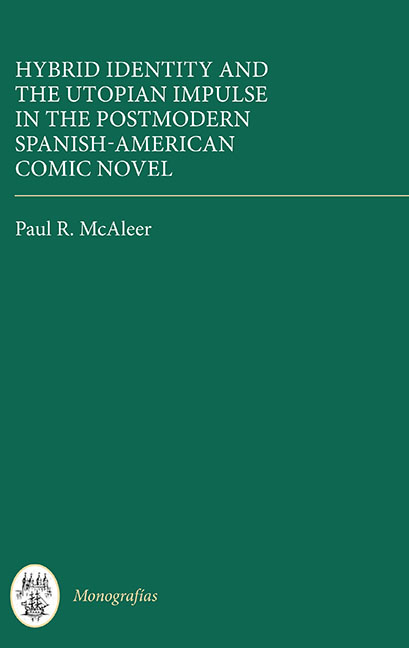

An important but often overlooked function of comedy is its intrinsic relation to questions of identity. This relationship, furthermore, is connected to another traditional feature of comedy: the utopian impulse. This book analyses these functions of comedy in the novels of four key postmodern Spanish-American writers: Gustavo Sainz, Alfredo Bryce Echenique, Fernando Vallejo and Jaime Bayly. Focusing on the correlation between changing concepts of identity and the hybrid cultural context of the late 20th-century, it examines the issues of individual and social identities expressed by these authors in their inscription and distortion of the comic genre as well as in their usage of different modes of comedy. It views the novels' comic aspects as symptoms of hybridity, which, according to many theorists, have brought about the dissolution of concepts, such as the self and society, and utopian modernity. These symptoms are studied in tandem with the individual themes of the novels, such as gender, sexuality, class and global migration, as well as the 'post-national' question of Peruvian, Colombian and Mexican identity.
Paul McAleer is Lecturer in Hispanic Studies at the University of Hull.
Loading metrics...
* Views captured on Cambridge Core between #date#. This data will be updated every 24 hours.
Usage data cannot currently be displayed.
This section outlines the accessibility features of this content - including support for screen readers, full keyboard navigation and high-contrast display options. This may not be relevant for you.
Accessibility compliance for the PDF of this book is currently unknown and may be updated in the future.
