


Introduction
Land managers in the south central and southwestern United States continue to battle with brush and weeds that invade rangeland. These native rangeland ecosystems are commonly used for livestock grazing, wildlife habitat, recreational areas, and as critical watersheds for recharging surface water bodies and underground aquifers. Among the most problematic brush species in this region are mesquite and huisache. Both are native perennial leguminous brush plants often found growing as shrubs or trees (Fisher Reference Fisher1950; Smith and Rechenthin Reference Smith and Rechenthin1964). The negative impacts of mesquite and huisache on rangeland ecosystems are well documented in the literature and include reduced production and diversity of desirable native herbaceous species for livestock and wildlife, reduced soil and surface water availability, reduced livestock carrying capacity, reduced capability and efficiency of gathering livestock, increased costs of rangeland management (e.g., costs of brush control practices), and degradation of fences (Allred Reference Allred1949; Boggie et al. Reference Boggie, Strong, Lusk, Carleton, Gould, Howard, Nichols, Falkowski and Hagen2017; Dahl et al. Reference Dahl, Sosebee, Goen and Brumley1978; Fisher Reference Fisher1950; Laxson et al. Reference Laxson, Schacht and Owens1997; Reinke Reference Reinke2007; Smith and Rechenthin Reference Smith and Rechenthin1964; Teague et al. Reference Teague, Borchardt, Ansley, Pinchak, Cox, Foy and McGrann1997, Reference Teague, Ansley, Pinchak, Dowhower, Gerrard and Waggoner2008; Thurow et al. Reference Thurow, Thurow and Garriga2000; Timmer et al. Reference Timmer, Butler, Ballard, Boal and Whitlaw2014). In north central Texas, Ansley et al. (Reference Ansley, Wu and Kramp2001) reported an increase in mesquite canopy cover from 14.6% to 58.7% over a 20-yr period in an established, unmanaged site, further demonstrating the negative impacts from this species.
Long-distance proliferation of these species is often via seed consumed by livestock and/or wildlife that feed on the pods (Ansley et al. Reference Ansley, Huddle and Kramp1997; Fisher et al. Reference Fisher, Meadors, Behrens, Robison, Marion and Morton1959; Kneuper et al. Reference Kneuper, Scott and Pinchak2003; Meyer and Bovey Reference Meyer and Bovey1982). Although animal vector species, environmental factors (e.g., rainfall, temperature, etc.) after deposition, and vegetative characteristics of the deposition location impact seedling survival, a sufficient number of viable seed pass through the digestive tracts of many domestic and wildlife species and are capable of germinating and establishing new plants (Clayton et al. Reference Clayton, Lyons and McGinty2014; Dickson et al. Reference Dickson, Fisher and Marion1948; Kramp et al. Reference Kramp, Ansley and Tunnell1998). Spreading by animals may be one explanation for the expansion of mesquite and huisache infestations in Texas over the last century. In 1963, a USDA Soil Conservation Service (SCS) brush survey estimated 88.5 million acres of Texas rangeland were infested with brush (USDA-SCS 1963). In 1973, the same survey reported 92 million acres of Texas grassland were occupied by brush, in spite of nearly 30 million acres of brush being treated over that decade (USDA-SCS 1973). In the 1985 survey, brush-infested lands increased to 105.6 million acres (USDA-SCS 1985).
The impact of invasive brush on wildlife production systems is problematic for many land managers across the United States. Encroachment by trees and woody plants has been implicated as a cause for the loss of habitat and population decline of the greater prairie chicken (Tympanuchus cupido pinnatus), an endangered grassland species native to the U.S. plains (Kates Reference Kates2005). Tree encroachment provides hunting perches for predatory birds that prey on ground-nesting avian species (Kates Reference Kates2005). McKee et al. (Reference McKee, Ryan and Mechlin1998) reported better success of greater prairie chicken nest-hatchings in areas with less than 5% woody cover. Reinke (Reference Reinke2007) included brush encroachment among other potential factors as probable causal agents of population declines of whooping crane (Grus americana) and Attwater’s prairie chicken (Tympanuchus cupido) on South Texas coastal prairie lands. Invasive plants, such as the eastern red cedar (Juniperus virginiana L.) in Kansas and Oklahoma and mesquite in New Mexico and Texas, provide cover for predators and draw scarce water resources critical to the region (Smith Reference Smith2013). Timmer et al. (Reference Timmer, Butler, Ballard, Boal and Whitlaw2014) reported a similar link between lesser prairie chicken (Tympanuchus cupid cupid) population and its habitat decline in the northeastern Texas Panhandle, where managing landscapes to maintain a greater percentage of grassland and shrubland with a greater ratio of grasses to shrubs should promote lesser prairie-chicken lek density. Furthermore, Boggie et al. (Reference Boggie, Strong, Lusk, Carleton, Gould, Howard, Nichols, Falkowski and Hagen2017) quantified lesser prairie chicken avoidance of mesquite in southeastern New Mexico and suggests that mesquite presence is a primary driver of space use and limited available habitat for the lesser prairie chicken.
Past honey mesquite and huisache plant-competition research has focused on evaluating impacts of brush canopy cover on grass production. For example, Ansley et al. (Reference Ansley, Pinchak, Teague, Kramp, Jones and Jacoby2004) and Scifres et al. (Reference Scifres, Mutz, Whitson and Drawe1982) modeled both warm-season and cool-season grass production relative to honey mesquite and huisache canopy cover. Ansley et al. (Reference Ansley, Pinchak, Teague, Kramp, Jones and Jacoby2004) concluded that both warm-season mid-grass and cool-season grass production declined with increasing honey mesquite canopy cover. More specifically, Ansley et al. (Reference Ansley, Pinchak, Teague, Kramp, Jones and Jacoby2004) reported little impact on warm-season mid-grass production with mesquite canopy cover less than 25%, and little impact on cool-season grass production with mesquite canopy cover less than 30%. However, as mesquite canopy cover increased above 25%, there was a “precipitous decline” in warm-season forage production. To offset input cost within the first 5 yr following treatment, Dahl et al. (Reference Dahl, Sosebee, Goen and Brumley1978) concluded that at least 80% mesquite mortality from herbicide treatment would be required.
Scifres et al. (Reference Scifres, Mutz, Whitson and Drawe1982) reported 30% or greater huisache canopy cover resulted in significantly reduced grass production, but that total grass production (warm-season plus cool-season) tended to increase as huisache canopy cover increased from 9% to 30%. This increase in total forage production at less than 30% huisache canopy cover was attributed to increased production of Texas wintergrass [Nassella leucotricha (Trin. & Rupr.) Pohl], a cool-season grass, due to the shading provided by the huisache canopy. Scifres et al. (Reference Scifres, Mutz, Whitson and Drawe1982) further documented a shift in expected grass-species composition with increasing huisache canopy cover from more warm-season grasses to more cool-season grasses, as well as a shift in sun-loving forbs to shade-loving forbs. This relationship of increasing shade-tolerant and cool-season species with increasing woody brush cover has been documented by other researchers (Brock et al. Reference Brock, Haas and Shaver1978; Drawe et al. Reference Drawe, Chamrad and Box1978).
The documented research findings of Ansley et al. (Reference Ansley, Pinchak, Teague, Kramp, Jones and Jacoby2004) and Scifres et al. (Reference Scifres, Mutz, Whitson and Drawe1982) are used as treatment thresholds for mesquite and huisache infestations. Based on their findings, honey mesquite should be treated when canopy cover reaches 25% and huisache when canopy cover reaches 30% for optimal rangeland-based livestock production systems in the state of Texas.
Honey mesquite and huisache plants are capable of resprouting from below-ground buds within the root crown (Bontrager et al. Reference Bontrager, Scifres and Drawe1979; Bovey Reference Bovey2001). Their rapid regrowth from new sprouts originating within the bud zones (Bontrager et al. Reference Bontrager, Scifres and Drawe1979; Bovey et al. Reference Bovey, Baur and Morton1970; Meyer and Bovey Reference Meyer and Bovey1973) make top-killing of these species a short-term management solution. Long-term control of established mesquite and huisache plants is achieved only through root-crown-killing herbicide applications or removal of the root crowns using mechanical means. Management practices that fall short of killing the root-crown create short-term solutions and typically must be repeated every few years. For example, Powell et al. (Reference Powell, Box and Baker1972) observed 15- to 20-yr-old huisache trees regrow to one-half their original heights by 5 mo following shredding. Due to these species’ fast regrowth capabilities, mechanical control practices are typically considered an unsatisfactory means of control due to inadequate kill of the perennial root structure, high costs, or the need for retreatment only a few years later (Scifres Reference Scifres1974; Ueckert Reference Ueckert1975).
Early chemical control measures for mesquite and huisache included ingredients such as kerosene, ammate, diesel oil, fire, sodium arsenite, 2,4-D, and 2,4,5-T (Allred Reference Allred1949; Blair Reference Blair1951; Torell and McDaniel Reference Torell and McDaniel1986). The herbicides 2,4-D and 2,4,5-T provided adequate foliage desiccation, but little if any long-term root-kill of mesquite, huisache, and other associated brush species with broadcast applications (Dahl et al. Reference Dahl, Sosebee, Goen and Brumley1978; Fisher Reference Fisher1950; Meyer and Bovey Reference Meyer and Bovey1973). The foundations of chemical control measures for managing mesquite and huisache on rangeland and noncropland sites include herbicides discovered in the 1960s and early 1970s (e.g., clopyralid, picloram, triclopyr, and tebuthiuron) and have been used extensively over the past 3 to 4 decades. In addition to these chemical control measures, a premix of clopyralid + aminopyralid (Anonymous 2014) was labeled for brush control in 2012. Aminocyclopyrachlor has been researched since 2005 for managing undesirable weed and brush species on rangeland and pasture sites (Castner et al. Reference Castner, Rupp, Medlin and Meredith2011). Three aminocyclopyrachlor-containing products were first marketed in 2011 for managing undesirable vegetation, including unwanted brush, on noncropland sites, wildlife management zones, and rights-of-way areas (Anonymous 2011a, 2011b, 2011c). Initial testing of aminocyclopyrachlor has included evaluations with various mix partners, and application methods for control of mesquite, huisache, and associated brush species (Castner et al. Reference Castner, Medlin, Rupp, Brister, Ellis and Meredith2012; Medlin et al. Reference Medlin, Brister, Castner, Ellis, Edwards, Meredith, Rupp and McGinty2012). In a grassland restoration project established in 2014 in a wildlife management area on Welder Wildlife Foundation (near Sinton, Texas), a mix of aminocyclopyrachlor (280 g ae ha−1) and triclopyr amine (560 g ae ha−1) provided 97% huisache mortality when evaluated 2 yr after treatment (YAT; Anonymous 2016). Although 2-YAT results indicate aminocyclopyrachlor provides adequate short-term control of mesquite, huisache, and other associated brush species on rangeland, published data do not report long-term control capabilities of this herbicide, nor its economic impact when used in these sites.
The objective of this research was to compare treatment longevity and economics of industry standard treatments (ISTs) to aminocyclopyrachlor + triclopyr (ACP+T) mixes by utilizing the yield loss models developed by Ansley et al. (Reference Ansley, Pinchak, Teague, Kramp, Jones and Jacoby2004) and Scifres et al. (Reference Scifres, Mutz, Whitson and Drawe1982) and canopy cover assessments collected 4 to 10 YAT of experimental trials.
Materials and Methods
Fifteen nonreplicated strip trials (10 targeting honey mesquite and 5 targeting huisache) were established on privately owned land from 2007 to 2013 (Table 1). Trial locations for honey mesquite extended from near Rio Grande City, Texas, just north of the United States–Mexico border, to near Childress, Texas, just south of the Texas-Oklahoma border. Huisache trial locations were in the coastal plains region of Texas, south of San Antonio and west of Houston. Livestock grazing was deferred from trial sites for at least 1 yr following application of treatments, but after 1 yr, landowners could resume their typical grazing management practices at their discretion. No further manipulation of the brush stands or brush canopies within these trials occurred following the initial application of the treatments.
Application date and method, carrier volume, location, and soil type for trials on honey mesquite and huisache control.
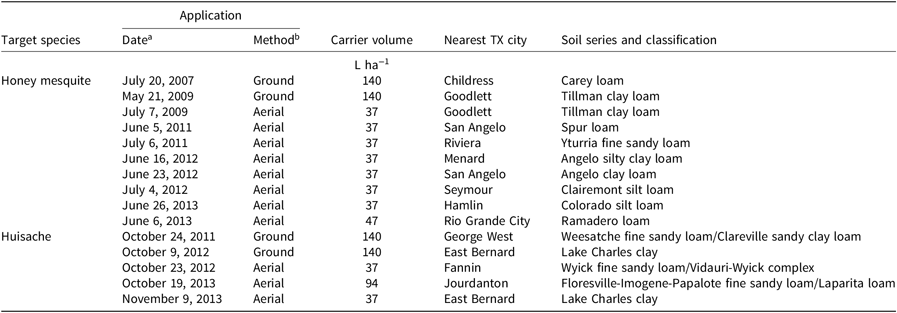
a Treatments targeting honey mesquite were applied from May through July when soil temperature, at a 30-cm depth, was at least 21 C and the mesquite plants had mature, dark-green leaves. Treatments targeting huisache were applied in October and November, when soil temperature, at a depth of 30 cm, was at least 24 C.
b Treatments were applied using ground-broadcast or aerial-broadcast methods. A methylated seed oil-organosilicate adjuvant (290 or 365 ml ha−1) was included with each treatment.
Eight trials targeting honey mesquite were applied using aerial broadcast equipment calibrated to deliver 37 or 47 L ha−1 total spray volume and two trials were sprayed using a tractor-mounted broadcast sprayer with a side-mounted boom calibrated to deliver 140 L ha−1 total spray volume. Three huisache trials were applied using aerial broadcast equipment calibrated to deliver 37 or 94 L ha−1 total spray volume and two trials were sprayed using a tractor-mounted broadcast sprayer with a side-mounted boom calibrated to deliver 140 L ha−1 total spray volume. Carrier volume was based on the spray equipment used (aerial versus ground broadcast), and/or applicator and researcher preference to achieve adequate coverage of the brush. All treatments were applied with a methylated seed oil-organo-silicate (MSO-OS) adjuvant at a rate of 290 or 365 ml ha−1. Plot areas were approximately 3.2 ha for aerial trials and 0.2 or 0.4 ha for ground broadcast trials. Honey mesquite spray dates were from mid-May through July when soil temperature, at a depth of 30 cm, was at least 21 C and the mesquite plants had mature dark-green leaves. Treatments targeting huisache were applied in October through mid-November, when soil temperature, at a depth of 30 cm, was at least 24 C and good huisache foliage was present.
Herbicide treatments included ACP+T applied at rates of 140 + 280 g ae ha−1 for mesquite and 210 + 420 g ha−1 for huisache, and an IST for each location. The ester formulation of aminocyclopyrachlor was used in the 2007 honey mesquite trial and the ester formulation of triclopyr was used in the ACP+T treatment in trials established during 2011 and earlier, while the amine formulation of triclopyr was used in the ACP+T treatment in trials established during 2012 and later. Numerous aerial- and ground-broadcast trials were established from 2009 through 2011 to evaluate these formulation effects on ACP+T brush efficacy. In summary, of those results, 2 YAT brush mortality ratings were similar regardless of formulations used to prepare the ACP+T treatment (data not shown). For this reason, data from all ACP+T treatments were combined for this analysis.
ISTs varied over years and locations due to species targeted (honey mesquite versus huisache) and development of new recommendations and/or products (e.g., Anonymous 2014) during the years these trials were established. The honey mesquite IST consisted of clopyralid + triclopyr-ester (280 + 280 g ha−1) for application year 2011 and earlier and clopyralid + aminopyralid (560 + 120 g ha−1) for application year 2012 and later. The huisache IST of picloram + 2,4-D-amine (605 + 2,240 g ha−1) was applied at two locations, aminopyralid + clopyralid (120 + 560 g ha−1) at two locations, and aminopyralid + picloram + 2,4-D-amine (120 + 570 + 2,250 g ha−1) at one location. Results from IST at each location were pooled by species for our analyses.
Data Collected
Short-term brush mortality evaluations were collected 2 YAT from 100 to 150 randomly selected brush plants in each aerial-broadcast treated plot and from all treated plants in the ground-broadcast treated plots (typically 50+ plants). Plants were determined to be dead when no green leaves were observed on any part of the plant. Green leaves observed on any part of the plant (i.e., from stems present at the time of application or on stems sprouting from the crown) constituted a live plant. Long-term brush control was not assessed using similar mortality assessment methodology due to lodging, decomposition, and loss of brush stems of successfully killed plants. For this reason, brush canopy cover assessments (%) were collected in May and June 2017 using line-intercept methodology (Canfield Reference Canfield1941) from one 75-m line-transect within each ground-broadcast treated plot and from the average of two 90-m line-transects within each aerially treated plot.
Data Analysis
With locations used as replications, honey mesquite and huisache plant mortality at 2 YAT and long-term canopy cover assessments were subjected to ANOVA techniques. When significant treatment differences were present, a Fisher’s protected LSD was calculated for treatment mean comparisons. Linear regression techniques were used to model percent brush canopy cover over time for each treatment. Linear regression models were developed with a y-intercept of 0% canopy cover for the year of application because all treatments provide 100% defoliation soon after application.
Posttreatment forage production was predicted using these linear regression canopy cover models for ACP+T and IST in combination with the forage yield by brush canopy cover models developed by Ansley et al. (Reference Ansley, Pinchak, Teague, Kramp, Jones and Jacoby2004) and Scifres et al. (Reference Scifres, Mutz, Whitson and Drawe1982). For honey mesquite, the two grass yield relationships (a warm-season grass production model and a cool-season grass production model) established by Ansley et al. (Reference Ansley, Pinchak, Teague, Kramp, Jones and Jacoby2004) were used to estimate warm- and cool-season grass yields up to 20 YAT (two times the span of data collected for mesquite) for both the ACP+T and IST. The estimated warm- and cool-season grass yields were then combined for a single grass yield response for each treatment. The two grass yield relationships (a 1978 model and a 1979 model) established by Scifres et al. (Reference Scifres, Mutz, Whitson and Drawe1982) for huisache were used to estimate combined cool- and warm-season grass yields up to 12 YAT (two times the span of data collected for huisache), for both the ACP+T and IST. The forage prediction models were then averaged together for a single grass yield response for each treatment over time.
Economic Analysis
A net present value (NPV) capital budgeting technique was used to measure the economic impact of the honey mesquite and huisache treatments. The NPV of an investment (brush management expenses, in this case) was the discounted cash flow generated by additional grazing at the ranch’s discount rate
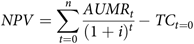 $$NPV = \sum\limits_{t = 0}^n {{{AUM{R_t}} \over {{{(1 + i)}^t}}}} - T{C_{t = 0}}$$
where t=0 is the year of treatment, AUMR is the calculated value of additional animal unit months (AUM) generated by the brush management treatment, and TC is the treatment cost. Treatment costs included the cost of herbicide and application. Application costs were derived from the 2016 Texas Agricultural Custom Rates guide (Klose et al. Reference Klose, Amosson, Bevers, Thompson, Smith and Waller2016). AUMs of available grazing made available at time t by brush control were multiplied by the estimated leasehold value of the AUM. The use of leasehold rates per AUM is straightforward and much easier to use and communicate than a technique that attempts to estimate the value of increased livestock production made possible by the same brush control treatments (Workman Reference Workman1986).
It was further assumed that only 25% of this forage would be utilized by domestic livestock (standard grazing efficiency on rangelands); therefore, the number of available AUMs was then calculated using this 25% value. For each year after treatment the value of produced forage was calculated by multiplying the available AUMs by an estimated AUM leasehold rate. The leasehold rate was assumed to be $18 per AUM in year 1 and is inflated by 3% each year thereafter. The NPV of each brush treatment is calculated with a discount rate of 5.25%.
If the calculated NPV of a brush management treatment is negative, the discounted value of additional grazing will not cover the upfront treatment costs, making the treatment economically unfeasible. A treatment with a greater NPV is assumed to be an economically preferred treatment. Other anticipated costs and/or benefits of brush management activities are specifically outside of the scope of this analysis.
Results and Discussion
Honey Mesquite Mortality Evaluation 2 YAT
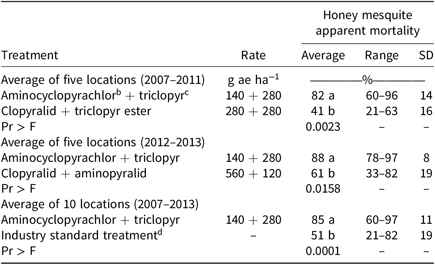
Short-term (2 YAT) honey mesquite mortality with ACP+T versus IST averaged 85% and 51%, respectively (Table 2). IST mortality was the average mesquite mortality obtained from clopyralid + triclopyr (41%) and clopyralid + aminopyralid (61%). These assessments are comparable to the 2-YAT evaluations referenced by Ansley et al. (Reference Ansley, Pinchak, Teague, Kramp, Jones and Jacoby2004) [e.g., 37% and 67% “root kill” with clopyralid (0.56 kg ha−1) or clopyralid + triclopyr (0.28 + 0.28 kg ha−1)] and further supported by 5-YAT and 7-YAT observations of 52% and 57% honey mesquite mortality with clopyralid + triclopyr (0.28 + 0.28 kg ha−1; Ansley et al. Reference Ansley, Kramp and Jones2003).
Honey mesquite apparent plant mortality following aminocyclopyrachlor + triclopyr and industry standard treatments at 10 locations when evaluated 2 yr after treatment.a
a Plants were determined to be dead when no green leaves (i.e., leaves on aerial stems or on crown-sprouts) were observed on any part of the plant.
b A 240 g ae L−1 aminocyclopyrachlor-ester formulation was used at one trial location and a 240 g ae L−1 aminocyclopyrachlor-amine formulation was used at all other nine trial locations.
c A 480 g ae L−1 triclopyr-ester formulation was used at three trial locations and a 360 g ae L−1 triclopyr-amine formulation was used at the other seven trial locations.
d Data from both industry standard treatments (i.e., clopyralid + triclopyr ester and clopyralid + aminopyralid) were combined for overall treatment comparisons.
Although average mortality is an important assessment for any brush treatment, consistency over time and space is also critical. Treatment consistency across locations and/or time can be impacted by many factors including environmental conditions (e.g., timing of last rainfall event prior to application, soil temperature, moisture conditions, etc.) prior to and following application, foliage conditions at the time application, and various application parameters (e.g., carrier volume, droplet size, etc.). The consistency of treatment mortality observations can be evaluated using data ranges and standard deviations of the individual treatments. The ACP+T treatment had a data range of 60% to 97% (standard deviation of 11%) across all 10 locations evaluated, compared with a data range of 21% to 82% (standard deviation of 18.4%) for the IST. In general, when considering the 2-YAT mortality data, greater and more consistent honey mesquite mortality was observed with ACP+T than either IST.
Honey Mesquite Canopy Cover Assessments 4 to 10 YAT
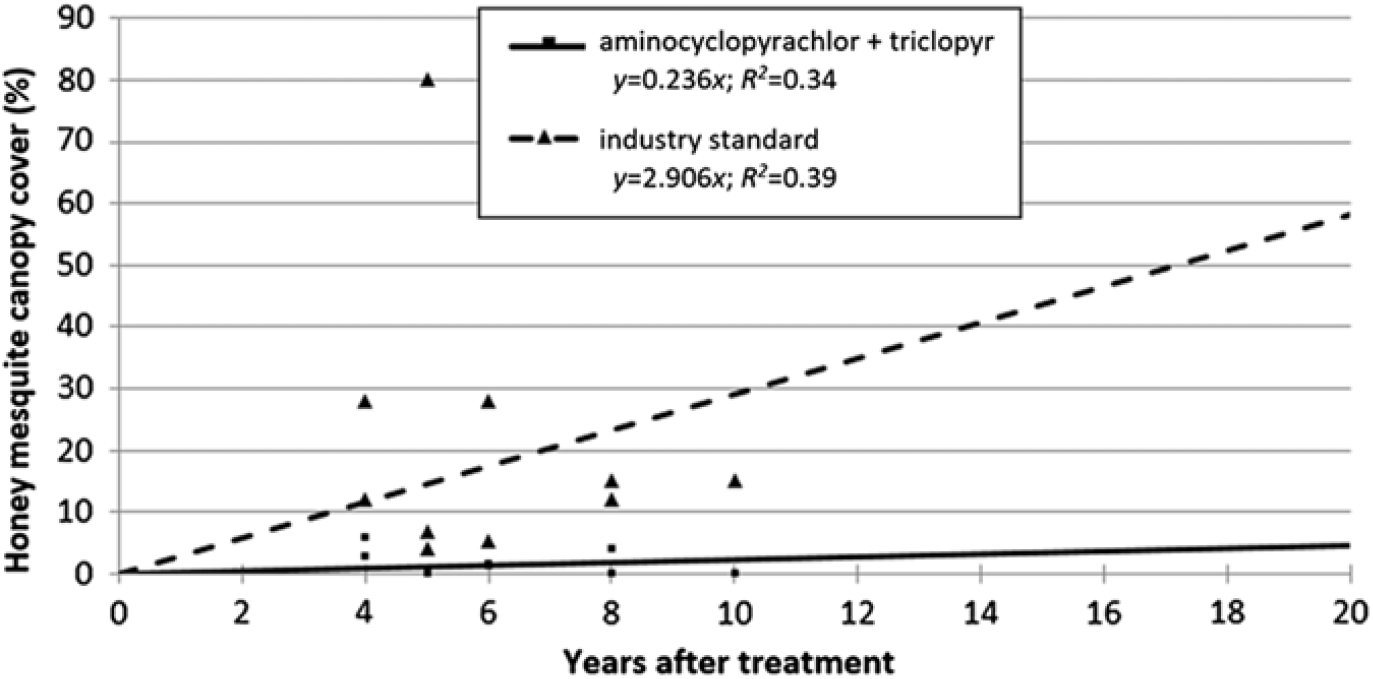
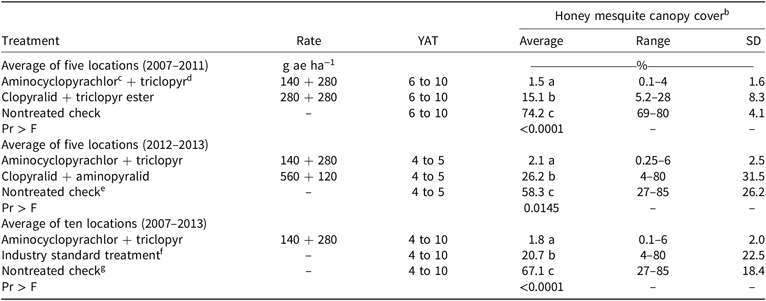
A slightly stronger trend between increasing honey mesquite canopy cover and years after treatment existed with the IST regression model (P = 0.04) than with ACP+T model (P = 0.06). Regression models for both treatments exhibit low R 2 values (Figure 1). Limited fit of both the IST and ACP+T treatment models was partially impacted by force fitting regression equations through the 0% canopy cover origin. Better fitting linear models were possible without force fitting though 0% canopy cover; however, this would not be appropriate because during the year of treatment total leaf defoliation occurred in both treatments. The fit of the standard model was further impacted by excessive variability in honey mesquite canopy cover 4 to 10 YAT (data range of 4% to 80% with a standard deviation of 22.5%; Table 3). Minimal variability in the long-term ACP+T treatment canopy cover assessments (data range of 0.1% to 6%) had a similar impact on its model fit. Because very limited canopy cover was observed from 4 to 10 YAT across all 10 trial locations with ACP+T, the independent variable “years after treatment” did little to explain the limited canopy cover variability in the ACP+T data set. This lack of relationship between years after treatment and mesquite canopy cover further exemplifies the effectiveness of ACP+T for killing the perennial root structure of mesquite and eliminating regrowth from underground buds.
Relationship between honey mesquite canopy cover (%) and years after treatment for aminocyclopyrachlor + triclopyr (140 + 280 g ae ha−1) and the industry standard treatments at 10 locations in Texas during 2007 to 2013. Industry standards were either clopyralid + triclopyr (280 + 280 g ae ha−1) or clopyralid + aminopyralid (560 + 120 g ae ha−1). Both models were force fitted through 0% canopy cover because all treatments provided excellent brush defoliation immediately after application. The model duration (i.e., 20 yr) was twice the duration for which data were collected (i.e., 10 yr).
Honey mesquite canopy cover (%) for 10 locations when evaluated in the summer of 2017, 4 to 10 YAT.a
a Abbreviations: YAT, years after treatment; SD, significant difference.
b Canopy cover was determined using line transect methods described by Canfield (Reference Canfield1941).
c A 240 g ae L−1 aminocyclopyrachlor-ester formulation was used at one trial location and a 240 g ae L−1 aminocyclopyrachlor-amine formulation was used at all other nine trial locations.
d A 480 g ae L−1 triclopyr-ester formulation was used at three trial locations and a 360 g ae L−1 triclopyr-amine formulation was used at the other seven trial locations.
e Based on four locations (i.e., one missing data point).
f Industry standard treatments were used independently for treatment year comparisons and combined for overall treatment comparisons.
g Based on nine locations (i.e., one missing data point).
Honey mesquite canopy reduction was longer-lived in the ACP+T treated plots than the ISTs. For every year following application with the IST, honey mesquite canopy cover increased by approximately 2.9% (Figure 1). Based on this increase, treatment life, defined in this paper as “the duration of time from application until the mesquite canopy recovers and reaches 25%,” was 8.6 yr for the IST. Conversely, honey mesquite canopy cover increased by only 0.2% for each year following ACP+T application, over 10 times slower than the IST. Ansley et al. (Reference Ansley, Pinchak, Teague, Kramp, Jones and Jacoby2004) noted slower canopy recovery from effective root-killing treatments. They attributed this slower canopy cover response to a longer duration needed for emergence of new trees from seed followed by years of growth, an effect that typically takes 20 yr for honey mesquite in north central Texas. Although calculation of ACP+T treatment life is possible from our model (e.g., 106 yr), it would be impractical and better estimated using the theory presented by Ansley et al. (Reference Ansley, Pinchak, Teague, Kramp, Jones and Jacoby2004) concerning reinfestation via new seedlings followed by approximately 20 yr of growth.
Higher mesquite canopy cover observations and faster canopy recovery in the IST plots was largely due to lower mortality of large mesquite trees than similar stature trees treated with ACP+T. Based on our observations, the IST and ACP+T adequately controlled young mesquite less than 2 m in height. Larger mesquite trees (greater than 2 m in height), however, tended to resprout from existing stems in IST plots more so than in the ACP+T treated plots. For example, the 80% canopy cover assessment 5 YAT with clopyralid + aminopyralid was from the Seymour, Texas, site, a location composed of honey mesquite trees ranging in height from 1 to 5 m with the majority being greater than 2 m tall. The 2-YAT mortality assessment for clopyralid + aminopyralid at this location was 70% (data not shown). Although 70% of honey mesquite trees appeared dead at 2 YAT, foliage on most mesquite trees greater than 2-m tall had returned to originally treated stems by 5 YAT in the clopyralid + aminopyralid treated plot. In comparison, 2-YAT mortality was 97% and 5-YAT honey mesquite canopy cover was 0.25% with ACP+T at this location. Similar treatment comparisons were observed over multiple locations, although not to this magnitude, and support the importance of post 2-YAT mortality for long-term mesquite canopy cover management. Reestablishment of foliage on existing stems caused quicker canopy recovery in the IST, an effect noted by Ansley et al. (Reference Ansley, Wu and Kramp2001, Reference Ansley, Pinchak, Teague, Kramp, Jones and Jacoby2004). Those authors noted “rate of increase in mesquite cover is greater following top-killing treatments. Posttreatment increases in cover following root-killing treatments are likely to be slower because most of the increase in cover must occur through recruitment and growth of new seedlings.”
Any contradictory assessments in treatment life of ISTs observed by Ansley et al. (Reference Ansley, Pinchak, Teague, Kramp, Jones and Jacoby2004) (i.e., 20 yr) and the treatment life of the IST from our research (i.e., 8.6 yr) may be explained by three factors. First, treatment life was likely impacted by the size of targeted trees, which reduced mortality of the IST in our trials. For example, Ansley et al. (Reference Ansley, Wu and Kramp2001, Reference Ansley, Pinchak, Teague, Kramp, Jones and Jacoby2004) originally targeted mesquite with stem heights of 2 to 3 m, whereas our research targeted a variety of mesquite stem heights ranging from 1 to 5 m. Mortality of larger mesquite trees was less with the IST, thus shortening the treatment life estimate of the IST as explained earlier. Second, the trial area used by Ansley et al. (Reference Ansley, Wu and Kramp2001, Reference Ansley, Pinchak, Teague, Kramp, Jones and Jacoby2004) was commercially sprayed with 2,4,5-T approximately 12 yr prior to initiation of their experiment. Although canopy reduction and stimulated mesquite basal regrowth observations were noted by Ansley et al. (Reference Ansley, Pinchak, Teague, Kramp, Jones and Jacoby2004), other potential lasting impacts on the growth and development from the 2,4,5-T treatment may not have been realized (Ansley et al. Reference Ansley, Kramp and Jones2003). Finally, Ansley et al. (Reference Ansley, Pinchak, Teague, Kramp, Jones and Jacoby2004) defined treatment life as, “increased perennial grass yield in response to mesquite treatment.” This could also be stated as the length of time between application and when grass production returns to pretreatment levels. Based on this interpreted definition of Ansley et al. (Reference Ansley, Pinchak, Teague, Kramp, Jones and Jacoby2004), treatment life would extend from the time of application until mesquite canopy recovery reached 40% cover. Taking this definition into account, and utilizing our model, the treatment life for the IST would be 13.8 yr, closer to the estimation by Ansley et al. (Reference Ansley, Pinchak, Teague, Kramp, Jones and Jacoby2004).
Honey Mesquite NPV Analysis 4 to 10 YAT
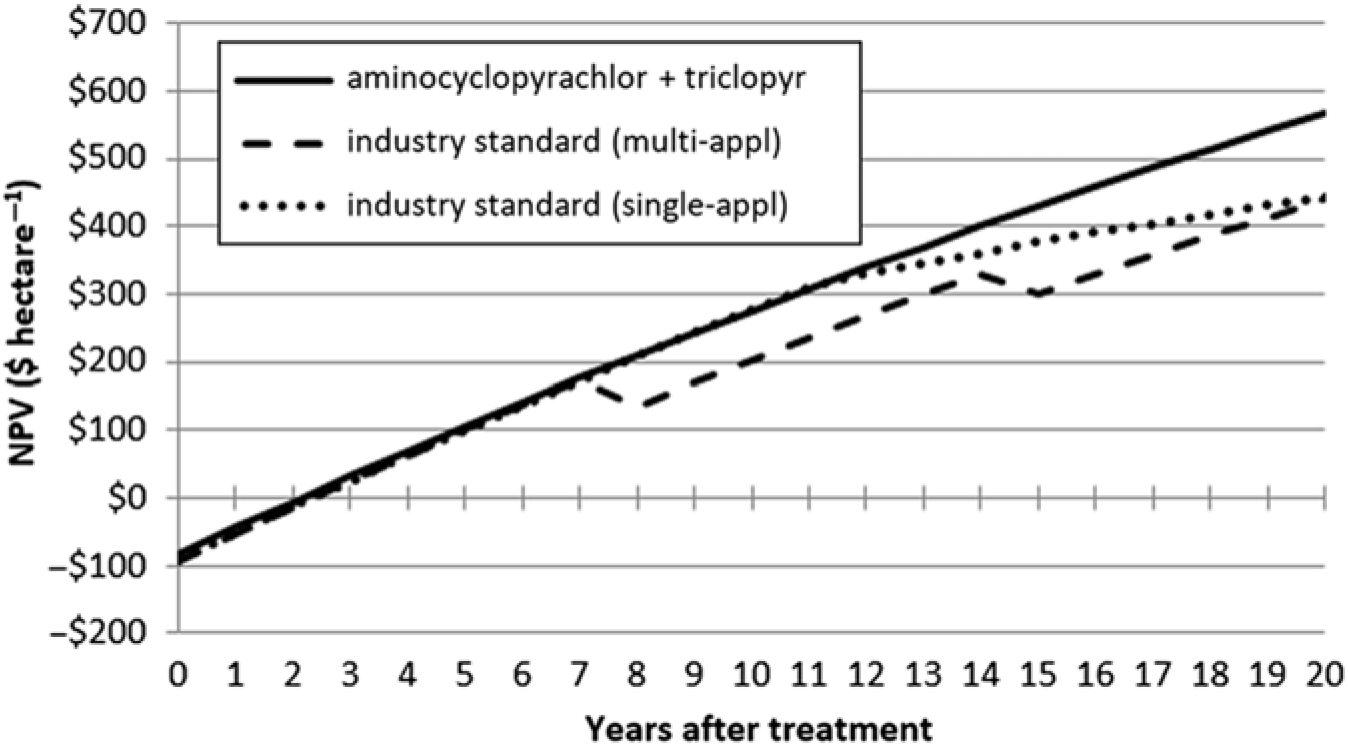
NPV is the discounted cash flow generated by additional grazing resulting from each brush management program, based on additional AUMs of grazing generated by each treatment, herbicide and application cost, and the estimated leasehold value of the AUM. Until 8 YAT, the NPVs of ACP+T and the IST were similar (Figure 2) regardless of a greater than 20% difference in canopy cover between the two treatments (Figure 1). This is an effect of the yield-loss prediction model developed by Ansley et al. (Reference Ansley, Pinchak, Teague, Kramp, Jones and Jacoby2004), and used in our analysis, whose authors explained “plateau effects” on warm-season mid-grass production grown in association with mesquite canopy cover. The first warm-season mid-grass production plateau (higher and more optimum forage yields) occurred from 0% to 25% mesquite canopy cover, coinciding with 0 to 8 YAT of the IST in our research (Figure 2). Ansley et al. (Reference Ansley, Pinchak, Teague, Kramp, Jones and Jacoby2004) identified a second production plateau (much lower, steady-state forage yields) occurring at 40% and higher mesquite canopy cover, coinciding with 13 to 20 YAT of the IST in our research. Cumulatively, the period of rapid forage reduction that occurs between 25% and 40% mesquite canopy cover identified by Ansley et al. (Reference Ansley, Pinchak, Teague, Kramp, Jones and Jacoby2004) coincides with our period of 8 to 13 YAT of the IST. To maintain long-term forage production and resulting NPV from the land, sequential or follow-up application(s) of an IST would be required 8 to 13 YAT of the initial IST application, an additional herbicide and application input cost of $109.30 ha−1 [see industry standard (multi-appl.) model Figure 2]. Without a follow-up IST to manage the recovered mesquite canopy by 13 YAT, the NPV continues at a lower rate of increase [see industry standard (single-appl.) model Figure 2]. Alternatively, due to the much longer treatment life observed with ACP+T (Figure 1), a follow-up application with this treatment would not be necessary within the scope of this NPV analysis (Figure 2); that is, 20 yr after the initial application.
Net present value (NPV; US$ hectare−1) comparison of broadcast honey mesquite applications of aminocyclopyrachlor + triclopyr (140 + 280 g ae ha−1) with industry standard treatments [i.e., clopyralid + triclopyr (280 + 280 g ha−1) or clopyralid + aminopyralid (560 + 120 g ha−1)]. The NPV of each brush management expense was the discounted cash flow generated by additional grazing at the ranch’s discount rate, $NPV = \Sigma_{t = 0}^n {{{AUM{R_t}} \over {{{(1 + i)}^t}}}} - T{C_{t = 0}}$
, where t=0 is the year of treatment, AUMR is the calculated value of additional animal unit months (AUM) generated by the brush management treatment, and TC is the treatment cost.
$NPV = \Sigma_{t = 0}^n {{{AUM{R_t}} \over {{{(1 + i)}^t}}}} - T{C_{t = 0}}$
, where t=0 is the year of treatment, AUMR is the calculated value of additional animal unit months (AUM) generated by the brush management treatment, and TC is the treatment cost.
Huisache Mortality Evaluations 2 YAT
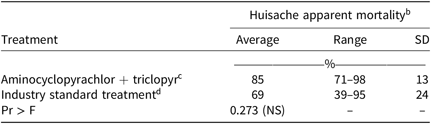
Short-term (2 YAT) huisache mortality analysis was based on four locations, because data were missing from one test location. Although no significant differences were present in this analysis (Pr > F = 0.273), huisache mortality 2 YAT with ACP+T averaged 85% and 69% with the IST (Table 4). Huisache mortality for the IST was the average mortality assessments from one trial location of picloram + 2,4-D amine application, two trial locations of clopyralid + aminopyralid applications, and one trial location of aminopyralid + picloram + 2,4-D amine application. Although the treatment means were not statistically different, the data ranges and standard deviations for each treatment implies that ACP+T was more consistent than ISTs on huisache across the trial locations.
Huisache apparent plant mortality evaluated 2 yr after herbicide applications at four locations during 2011–2013.a
a Plants were determined to be dead when no green leaves (i.e., leaves on aerial stems or on resprouting stems from the crown) were present on the plant.
b Based on four locations (i.e., missing 2-YAT data for one site).
c A 240 g ae L−1 aminocyclopyrachlor-amine formulation (210 g ae ha−1) and a 360 g ae L−1 triclopyr-amine formulation (420 g ae ha−1) were used at all five huisache trial locations.
d Industry standard treatments included one trial location of picloram + 2,4-D amine (605 + 2240 g ae ha−1), two trial locations of clopyralid + aminopyralid (560 + 120 g ae ha−1) and one trial location of aminopyralid + picloram + 2,4-D amine (120 + 570 + 2,250 g ae ha−1).
Huisache Canopy Cover Assessments 4 to 6 YAT
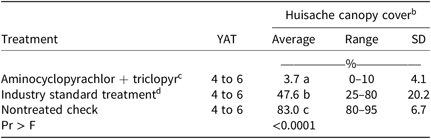
There was a strong trend of increasing huisache canopy cover with years after application in the IST regression model (P = 0.003), but only a slight trend in the ACP+T regression model (P = 0.07). Although mortality assessments were not statistically different for ACP+T and the ISTs (Table 4) at 2 YAT, much regrowth on previously treated trees by 4 to 6 YAT in the IST plots resulted in faster canopy regrowth (Table 5) that occurs from top-killed brush plants versus root-killed plants as explained by Ansley et al. (Reference Ansley, Wu and Kramp2001, Reference Ansley, Pinchak, Teague, Kramp, Jones and Jacoby2004). Regression models accounted for 91% of the variability within the IST data and 61% of the variability in the ACT+T data (Figure 3). The lower R 2 value for the ACP+T model is likely due to a combination of force fitting the regression equation through 0% canopy cover and a weak relationship between increasing huisache canopy cover to years after treatment in the ACP+T data set (i.e., there was 0% huisache canopy in ACP+T plots at two of five locations).
Huisache canopy cover (%) assessments from five locations in the summer of 2017, 4 to 6 YAT.a
a Abbreviations: YAT, years after treatment; SD, significant difference.
b Canopy cover was determined using line transect methods described by Canfield (Reference Canfield1941).
c A 240 g ae L−1 aminocyclopyrachlor-amine formulation (210 g ae ha−1) and a 360 g ae L−1 triclopyr-amine formulation (420 g ae ha−1) were used at all five huisache trial locations.
d Industry standard treatments included two trial locations of picloram + 2,4-D amine (605 + 2,240 g ae ha−1), two trial locations of clopyralid + aminopyralid (560 + 120 g ae ha−1) and one trial location of aminopyralid + picloram + 2,4-D amine (120 + 570 + 2,250 g ae ha−1).
Relationship between huisache canopy cover (%) and years after treatment for aminocyclopyrachlor + triclopyr (210 + 360 g ae ha−1) and the industry standard treatments at five locations in Texas during 2011 to 2013. Industry standards were either picloram + 2,4-D (605 + 2,240 g ha−1), clopyralid + aminopyralid (560 + 120 g ha−1), or aminopyralid + picloram + 2,4-D (120 + 570 + 2,250 g ha−1). Both models were force fitted through 0% canopy cover because all treatments provided excellent brush defoliation immediately after application. The model duration (i.e., 12 yr) was twice the duration for which data were collected (i.e., 6 yr).
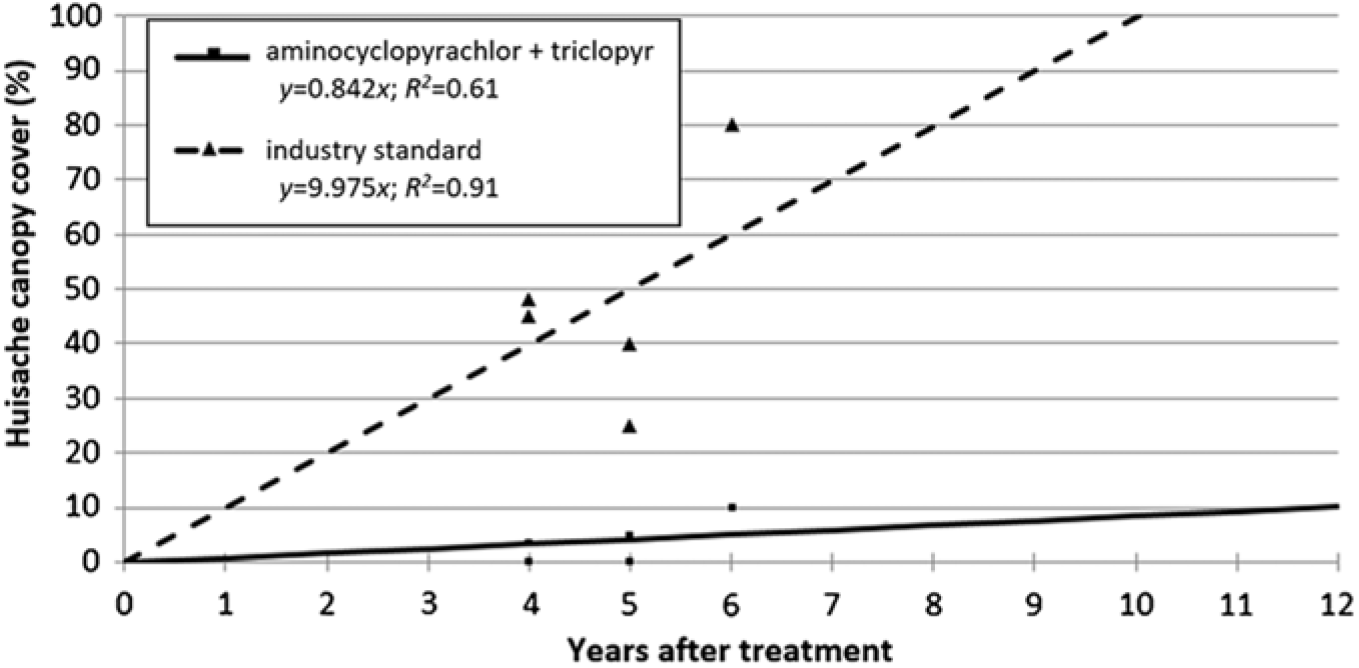
Huisache canopy reduction was longer-lived in ACP+T treated plots than IST plots. For every year following application, huisache canopy cover in the IST plots increased by approximately 10% (Figure 3). Based on this assessment, the treatment life (i.e., time between application and huisache canopy recovery to 30%) was 3 yr for the IST. This treatment life assessment is further supported through lack of approved broadcast treatment options available for cost share dollars through the USDA Environmental Quality Incentive Program (EQIP) and private landowners’ need to impose huisache management every 3 to 4 yr with currently labeled, non-aminocyclopyrachlor-containing chemistries aimed to defoliate the huisache canopy. Conversely, on average, huisache canopy cover increased by 0.8% annually following ACP+T applications, almost 12 times slower than the industry standard treatments. Across the five locations assessed 4 to 6 YAT, huisache canopy cover averaged 3.7% in ACP+T plots and 47.6% in the IST plots (Table 5).
The improved huisache canopy cover reduction and resulting longer treatment life of ACP+T over current industry options was attributed to improved and more consistent huisache mortality in the ACP+T treated plots (Table 4) that resulted in more consistent huisache canopy reduction. This improved mortality is supported with the 2-YAT assessments (Table 4), but more so from post 2-YAT observations. For example, at 2 YAT the mortality rating for the aerially applied clopyralid + aminopyralid treatment was 95% at East Bernard, Texas; however, by 4 YAT a large portion of the huisache plants had regrown from original crowns and/or stems to provide 45% huisache canopy cover. In this same trial, ACP+T killed 98% of huisache plants by 2 YAT and maintained 100% huisache canopy reduction at 4 YAT. Consistency of canopy cover reduction across locations can also be assessed by comparing data ranges and standard deviations of huisache canopy cover evaluations resulting from these treatments (Table 5). The much smaller data range of 0% to 10% canopy cover and standard deviation of 4.1% resulting from the ACP+T treatment compared with the data range of 25% to 80% canopy cover and standard deviation of 20.2% with the IST, indicates ACP+T provided more consistent long-term control of huisache.
Huisache NPV Analysis 4 to 6 YAT
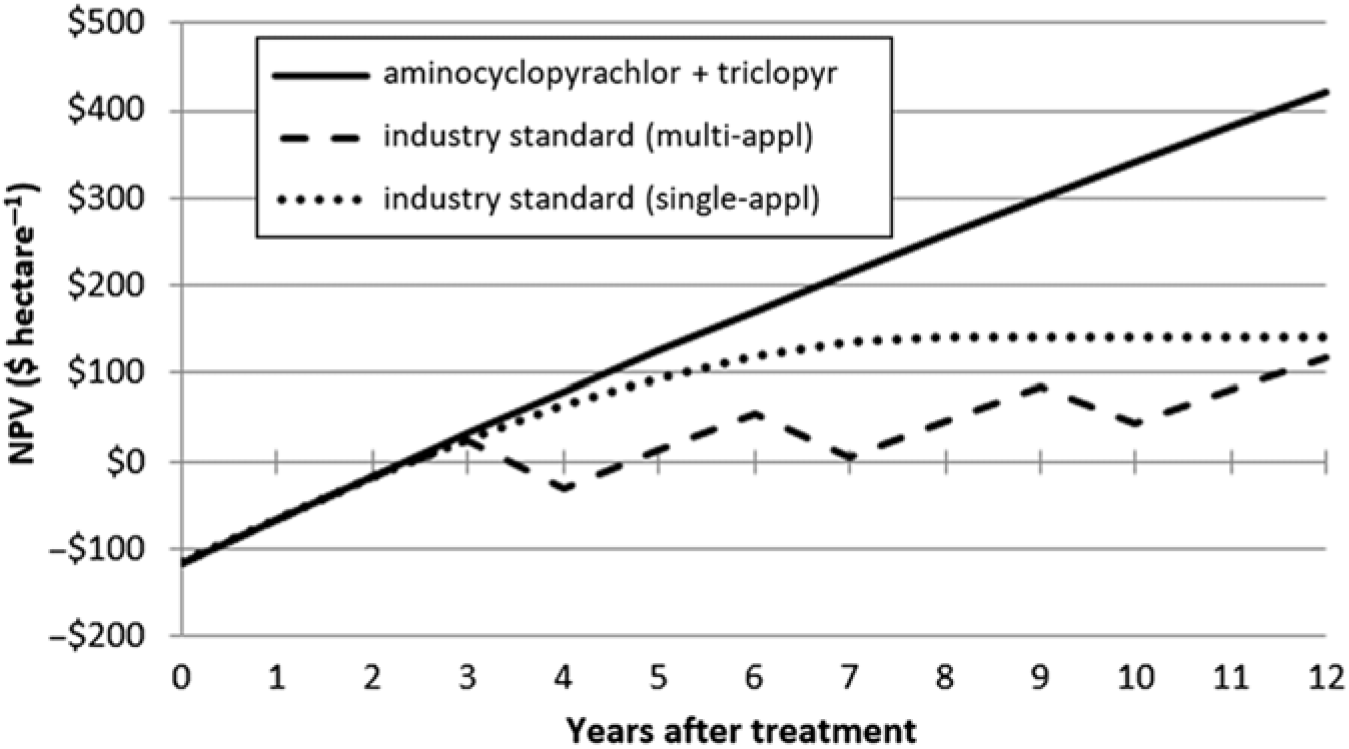
The NPVs of the ACP+T and IST were similar from the time of application until 3 YAT (Figure 4) regardless of an approximate 30% difference in huisache canopy cover between the two models at that time (Figure 3). Scifres et al. (Reference Scifres, Mutz, Whitson and Drawe1982) reported that grass production steadily decreased as huisache canopy cover increased beyond 30%. Results from the first-year research by Scifres et al. (Reference Scifres, Mutz, Whitson and Drawe1982) indicated annual grass production did not decrease until huisache canopy cover exceeded 32%. Therefore, a similar “plateau effect” described by Ansley et al. (Reference Ansley, Pinchak, Teague, Kramp, Jones and Jacoby2004) for honey mesquite can be anticipated with huisache canopy cover of 30% or less, and because the regression equation presented by Scifres et al. (Reference Scifres, Mutz, Whitson and Drawe1982) for grass production relative to huisache canopy cover was used for our NPV analysis, this plateau effect (i.e., minimal competition) is realized in the first 3 YAT. However, at 3 YAT the NPV for the two treatments diverge due to lower huisache mortality and resulting faster canopy recovery in the IST. The quick regrowth of huisache in IST plots would necessitate a follow-up treatment at 3 YAT [see industry standard (multi-appl) model (Figure 4)], when huisache recovers to 30% canopy cover, in order to maintain optimum livestock forage production. This follow-up IST application would be necessary to provide long-term huisache canopy cover management and thus maintain optimum forage production and is aligned with currently used landowner practices of treating every 3 to 4 yr. Thus, additional herbicide and application input costs of approximately $124.73 ha−1 would be required every 3 to 4 yr with ISTs. Due to the much longer treatment-life observed with ACP+T (Figure 3) a follow-up application with this treatment would not be anticipated within the scope of this NPV analysis (i.e., 12 yr after the initial application).
Net present value (NPV; US$ hectare−1) comparison of broadcast huisache applications of aminocyclopyrachlor + triclopyr (210 + 360 g ae ha−1) to industry standard treatments [i.e., picloram + 2,4-D (605 + 2,240 g ha−1), clopyralid + aminopyralid (560 + 120 g ha−1), or aminopyralid + picloram + 2,4-D (120 + 570 + 2,250 g ha−1)]. The NPV of each brush management expense was the discounted cash flow generated by additional grazing at the ranch’s discount rate, $NPV = \Sigma_{t = 0}^n {{{AUM{R_t}} \over {{{(1 + i)}^t}}}} - T{C_{t = 0}}$
, where t=0 is the year of treatment, AUMR is the calculated value of additional animal unit months (AUM) generated by the brush management treatment, and TC is the treatment cost.
$NPV = \Sigma_{t = 0}^n {{{AUM{R_t}} \over {{{(1 + i)}^t}}}} - T{C_{t = 0}}$
, where t=0 is the year of treatment, AUMR is the calculated value of additional animal unit months (AUM) generated by the brush management treatment, and TC is the treatment cost.
Control of invasive brush on rangeland sites is an ongoing struggle for land managers in the southwestern United States. Although current ISTs provide short-term relief through brush defoliation and resulting forage production, more research is needed to better understand the long-term implications of these management programs and to develop better long-term management options. ACP+T applications effectively kills honey mesquite and huisache infestations on rangeland sites, resulting in an improved treatment life of chemical control programs. Increasing the brush treatment life has the potential to delay the need for retreatment, amortize brush herbicide and application costs over a longer time, improve utilization of USDA EQIP funding, reduce the herbicide load in the environment, improve rangeland vegetation diversity, improve the ease of gathering livestock (often impeded in stands of thick brush), and improve genetics of livestock (through more comprehensive gather of livestock from the rangeland) among other benefits.
Acknowledgments
We thank former DuPont Crop Protection colleagues for their early contributions in developing DPX-MAT-28 herbicide. No conflicts of interest have been declared. Bayer CropScience LP provided funding for this research.







 Open access

