


Childhood overweight and obesity are major health issues in many countries, not only because of their high prevalence rates, but also because they are related to several negative health outcomes in adulthood( Reference Kosti and Panagiotakos 1 – Reference Owen, Whincup and Orfei 4 ). One factor contributing to the rising prevalence of overweight and obesity in children and adolescents is the high consumption of sugar-sweetened beverages (SSB) and energy-dense snacks( Reference Rennie, Johnson and Jebb 5 ): a US study has found that 84 % of adolescents consume an average of 887 ml (30 oz) of SSB every day – equivalent to 16 % of their total energy intake( Reference Wang, Bleich and Gortmaker 6 ). European studies carried out in The Netherlands, Hungary and Belgium have reported mean daily intakes of 350 ml for girls and 500 ml for boys and high consumption of soft drinks (more than 450 ml/d)( Reference Brug, van Stralen and Chinapaw 7 , Reference Van Lippevelde, te Velde and Verloigne 8 ). With regard to the consumption of energy-dense snacks, children in the USA have been found to consume nearly three snacks per d, with snacking accounting for up to 27 % of their daily energy intake( Reference Piernas and Popkin 9 ). As children's and adolescents' dietary habits track into adulthood( Reference Kelder, Perry and Klepp 10 , Reference Craigie, Lake and Kelly 11 ), it is important to establish healthy eating habits at an early age. However, to develop effective interventions for reducing the consumption of energy-dense snacks and SSB, it is necessary to first understand the factors that influence children's dietary behaviour.
In recent years, research on children's dietary behaviour has focused more on environmental determinants. The environment has been defined as ‘everything outside the individual’, which had been structured in a framework for obesity-related research in the ANGELO (Analysis Grid for Environments Linked to Obesity) model( Reference Swinburn, Egger and Raza 12 ). Following this model, environments can be divided into two levels (micro and macro) and four types (socio-cultural, economic, political and physical). With respect to the levels, the influence of children's environment is largely confined by their micro-environment, such as the home environment and the neighbourhood environment. For children, especially young ones, the home food environment has a major influence on the development of their dietary behaviour( Reference Verloigne, Van Lippevelde and Maes 13 ): parents determine which food is available at home, can set rules on what their children are allowed to eat, and can act as role models, also with respect to the dietary behaviour( Reference Lindsay, Sussner and Kim 14 ). It has been found in studies investigating the associations between aspects of the home food environment and children's snack and SSB intake that children's consumption is influenced by the home availability of SSB and energy-dense snacks, by parents' own intake of snacks and SSB, and by family food rules regarding snacks and SSB( Reference Verloigne, Van Lippevelde and Maes 13 , Reference Haerens, Craeynest and Deforche 15 – Reference Pearson, Ball and Crawford 19 ).
In most of the Western countries, during the transition from childhood to adolescence (10–12 years), children now have considerable autonomy and decision-making power regarding their dietary behaviour( Reference Verloigne, Van Lippevelde and Maes 13 , Reference Golan and Crow 20 ). They spend a lot of time with their friends and get pocket money they may use to purchase unhealthy foods. Therefore, it is likely that dietary behaviour in this age group is determined not only by the home food environment, but also by children's food-purchasing behaviour and their peers' dietary behaviour. Although little research has been carried out on peer influence on children's energy-dense snack and SSB consumption, peer-group snack and soft drink consumption has been found to be associated with the intake of SSB and snacks among adolescents aged 12–17 years( Reference Wouters, Larsen and Kremers 21 ). Previous findings of the INPACT (IVO Nutrition and Physical Activity Child cohorT) study have also indicated that children who are sensitive to peer influence consume more snacks than their counterparts who are not sensitive to it( Reference van Ansem, Schrijvers and Rodenburg 22 ). Similarly, a recent review by Fletcher et al. ( Reference Fletcher, Bonell and Sorhaindo 23 ) has concluded that school friendships may be critical in shaping adolescents' eating behaviour.
Although little is known about the role of economic factors in children's dietary behaviour, it is generally assumed that parents make decisions that can be influenced by economic determinants, although they leave some of these decisions to their children( Reference Jensen, Bere and De Bourdeaudhuij 24 ). For instance, parents provide pocket money for their children to spend on items of their own choice. In The Netherlands, 82 % of children aged 6–7 years receive pocket money( 25 ). Those with access to pocket money have been reported to spend more on sweets and snacks( Reference Golan and Crow 20 , Reference Roberts, Blinkhorn and Duxbury 26 ). Children who purchase snacks or sweets with their pocket money have been reported to also consume more energy-dense snacks than their counterparts who did not( Reference van Ansem, Schrijvers and Rodenburg 22 ). It has also been found that children who receive pocket money consume more soft drinks( Reference Jensen, Bere and De Bourdeaudhuij 24 ).
Several studies have found associations between socio-economic status (SES) and children's dietary behaviour, with low SES being found to be associated with unhealthy dietary patterns (snacks and fast food) in children and adolescents( Reference Cutler, Flood and Hannan 27 , Reference Craig, McNeill and Macdiarmid 28 ). Children and adolescents with a lower SES have been reported to consume more soft drinks and to more likely be overweight than their counterparts with a high SES( Reference De Coen, Vansteelandt and Maes 29 – Reference Danielzik, Czerwinski-Mast and Langnäse 31 ). However, because SES is not an easily modifiable correlate of children's dietary behaviour and does not directly influence dietary behaviour, it is important to identify modifiable determinants of children's unhealthy dietary behaviour that may explain socio-economic inequalities in their energy-dense snack and SSB consumption. However, little literature is available on factors that explain socio-economic disparities in children's energy-dense snack and SSB consumption.
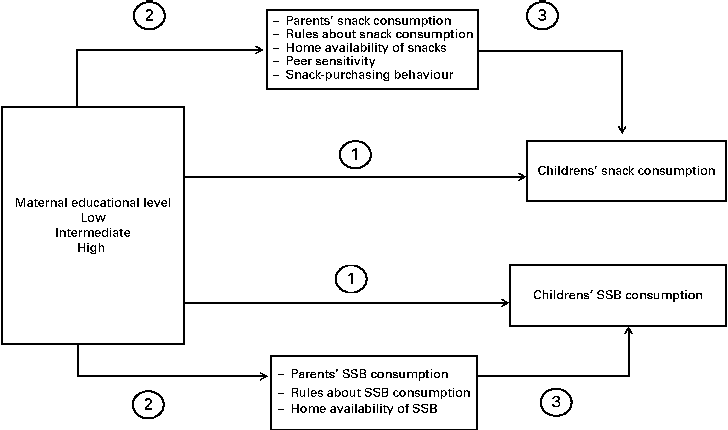
The overall aim of the present study was, therefore, to explore the extent to which various types of environmental factors explain socio-economic inequalities in 10- to 12-year-olds' SSB and energy-dense snack consumption. We examined the following: (1) the association between SES (maternal educational level) and children's SSB and energy-dense snack consumption; (2) whether the association between SES and children's energy-dense snack consumption is mediated by home environmental factors (home availability, food rules and parental intake), by economic factors (children's food-purchasing behaviour), or by peer sensitivity; (3) whether the association between SES and children's SSB consumption is mediated by home environmental factors (home availability, food rules and parental intake) (Fig. 1). Because no proper data were available on SSB-purchasing behaviour and peer sensitivity regarding SSB consumption, we were unable to explore their contribution to socio-economic inequalities in children's SSB consumption.
Research model. SSB, sugar-sweetened beverage.
Methods
Study population and design
The data used in the present study were derived from the Dutch INPACT study. INPACT is a longitudinal study carried out among 8- to 12-year-olds and their parents to investigate modifiable environmental determinants of children's dietary behaviour and physical activity. The INPACT study had four annual data collection periods (2008–2011). The participants were recruited from primary schools in the southern part of The Netherlands (Eindhoven and surroundings). The municipal health service invited all primary schools in this area to participate in the study (n 265). A total of ninety-one primary schools (34·3 %) agreed to participate. The response by schools in urban and rural areas was similar. A total of 1844 parent–child dyads (62·5 %) gave informed consent. Trained research assistants visited the participating schools and measured children's height and weight. The children completed a short questionnaire at school and the parents completed a questionnaire at home. The questionnaire topics differed annually. The INPACT study was approved by the Medical Ethics Committee at Erasmus University Medical Centre Rotterdam. The present study was based on the data collected in the last wave (2011), in which a questionnaire was completed by 1428 parents (77·5 %) and 1575 children (85·4 %).
Measurements
Maternal educational level
In the present study, we used maternal educational level as an indicator of SES, as it is one of the three commonest indicators of SES and has been found to be the strongest and most consistent SES indicator for predicting health-related behaviour( Reference Winkleby, Jatulis and Frank 32 ). Maternal educational level was classified into three groups: ‘low educational level’ (primary school and lower secondary education); ‘intermediate educational level’ (intermediate vocational level, higher secondary school and pre-university education); ‘high educational level’ (higher vocational education and university). In the remainder of this article, we refer to these groups as ‘low SES’ (children of mothers with a low educational level), ‘intermediate SES’ (children of mothers with an intermediate educational level) and ‘high SES’ (children of mothers with a high educational level).
Outcome measurements (children's snack and sugar-sweetened beverage consumption)
To measure children's snack and SSB consumption, we used questionnaires based on the validated FFQ( Reference Bogers, Van Assema and Kester 33 , Reference Haraldsdóttir, Thórsdóttir and De Almeida 34 ). Children's snack consumption was measured based on their reports, and their SSB consumption was measured based on their parents' reports (no children's reports were available on SSB consumption). It was reported how many days in the past 7 d the children had consumed the following items between meals: (1) savoury snacks (e.g. potato chips, peanuts or sausage rolls); (2) sweet snacks (e.g. candy bars, chocolate or candies); (3) cake or large biscuits; (4) SSB. The answer categories ranged from ‘none or less than 1 d a week’ to ‘7 d a week’. Additionally, the number of items that the children had consumed on such a day was reported. For savoury snacks, sweet snacks, and cake or large biscuits, the answer categories ranged from ‘0 items per d’ to ‘10 items or more per d’. For SSB, the answer categories ranged from ‘0 glasses per d’ to ‘more than 5 glasses per d’, by increments of half a glass. A reported intake of more than five glasses per week (n 7) was recoded as six glasses. In the questionnaire, it was specified that one glass equals 200 ml, that one can equals 330 ml or 1·5 glasses, and that one bottle equals 500 ml or 2·5 glasses. Children's total snack consumption was calculated in items per week by multiplying the consumption frequencies of savoury snacks, sweet snacks and cakes with their corresponding quantities and summing these scores. Children's SSB consumption was calculated in servings per week by multiplying frequencies and quantity.
Potential mediating variables
Parental intake of snacks and sugar-sweetened beverages
Parental intake of snacks and SSB was measured and calculated in the same way as children's snack and SSB consumption; it was reported by the parents.
Snack and sugar-sweetened beverage consumption rules
The parents were asked whether they had set rules about (1) the number of snacks and (2) the number of SSB that their children could consume. The answer categories were ‘yes’ and ‘no’. These questions were derived from the ENDORSE study( Reference Van der Horst, Oenema and van de Looij-Jansen 35 ).
Home availability of snacks and sugar-sweetened beverages
The availability of snacks and SBB at home was measured using a questionnaire based on the validated Home Environment Survey( Reference Gattshall, Shoup and Marshall 36 ). The parents were asked to report how often (1) sweet snacks and biscuits, (2) savoury snacks and (3) SBB were available at home. The answer categories were ‘always available’, ‘usually available’, ‘sometimes available’, ‘usually not available’ and ‘never available’. Due to limited variation in this variable, we dichotomised the response categories into ‘always available’ and ‘not always available’. We created one variable for the home availability of snacks, for which we merged the home availability of sweet snacks and that of savoury snacks into one variable. Due to limited variation in these variables, we dichotomised the response categories into ‘snacks always available at home’ (at least sweet snacks and biscuits or savoury snacks were always available at home) v. ‘snacks not always available at home’ (neither sweet snacks and biscuits nor savoury snacks were always available at home).
Snack-purchasing behaviour
The children were asked what they usually bought with their pocket money. There were ten answer categories including ‘sweet snacks’ and ‘savoury snacks’; most of the other categories were related to non-food items (e.g. ‘toys’, ‘computer games’ or ‘books’). The children were allowed to choose more than one answer category. We created a dichotomous variable ‘purchasing snacks’ with the answer categories ‘yes’ (children bought sweet snacks and/or savoury snacks) and ‘no’. Children who did not receive pocket money (n 267, 18·7 %) were classified as those ‘purchasing no snacks’.
Peer sensitivity
To measure the influence of peers on children's dietary intake, we presented the children with the following hypothetical situation: ‘After school, you are with some friends. You and your friends decide to go to a supermarket or fast-food restaurant. While you don't intend to buy any snacks, you decide to join your friends. When they're in the supermarket or fast-food restaurant, all your friends buy snacks.’ We asked the children how they would act in such a situation. They were given two response options: ‘Then I'll buy some food, too’ or ‘I won't buy any food’. We named the answer categories ‘peer sensitivity’ (‘Then I'll buy some food, too’) and ‘peer sensitivity’ (‘I won't buy any food’).
Control variables
Because children's age, sex, ethnicity and BMI might be associated with the dependent and independent variables, they were considered as potential confounders.
Children's age was calculated on the basis of the date of birth and the date of measurement. For the purpose of analysis, we dichotomised children's age into ‘ ≤ 11 years’ v. ‘>11 years’. Children's ethnicity was categorised into ‘Dutch native’ (both parents born in The Netherlands) and ‘immigrants’ (at least one of the parents was born outside The Netherlands). Children's BMI was calculated on the basis of their weight and height, which were measured with clothes but without shoes to the nearest 0·1 kg and 0·1 cm; the measurements were made by trained research assistants. BMI cut-off points for children were used to define ‘overweight’ (‘overweight’ and ‘obesity’) v. ‘non-overweight’ (‘underweight and normal weight’)( Reference Cole, Bellizzi and Flegal 37 ).
Data analyses
Respondents who lacked maternal educational level data were excluded from the analysis (n 110, 7·7 %). Descriptive analyses were carried out to describe the characteristics of the study population.
To investigate whether environmental factors mediated the association between maternal educational level and children's energy-dense snack and SSB consumption, we used Baron & Kenny's( Reference Baron and Kenny 38 ) four-step approach. According to Baron and Kenny, there are three criteria for mediation: (1) the predictive variable has to be associated with the outcome variable; (2) the predictive variable has to be associated with the mediator, (3) the mediator has to be associated with the outcome variable (adjusted for the predictive variable). If all the associations assessed in steps 1–3 are statistically significant, the criteria for mediation have been met. Step 4 of the approach involves testing the mediation model: mediation is supported if the association between the predictive variable and the outcome variable changes after controlling for the mediator( Reference Baron and Kenny 38 ).
The steps of the mediation analysis were conducted separately for each outcome measure (children's snack consumption and children's SSB consumption). Depending on the scale of the outcome measures, logistic regression models or linear regression models were used to test the subsequent steps of the mediation approach. Several potential mediators were tested for each outcome measure. If it appeared that more than one potential mediator met the criteria for mediation, the unique contribution of each mediator was determined (single-mediator model). Next, a multivariate mediation model was tested. Bootstrap resampling techniques were used to calculate CI for the mediated effects.
All the analyses were adjusted for potential confounders. The regression analyses were carried out using IBM SPSS Statistics version 20, and the bootstrapping analyses were carried out using R (2013). Due to missing values, the computed models for snack and SSB consumption differ with regard to the numbers of participants.
Results
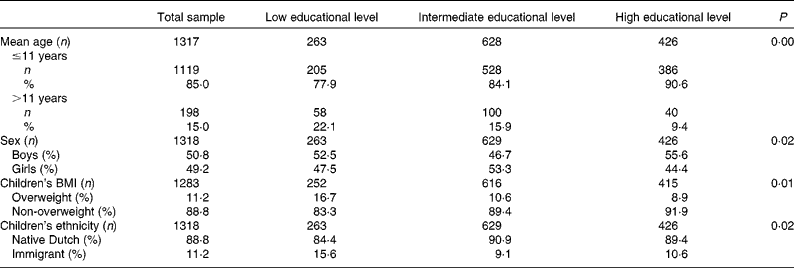
Most of the children were aged ≤ 11 years; about half were boys. The majority were Dutch natives and were not overweight (Table 1). There were statistically significant SES differences in their background characteristics: (1) relative to the low-SES and high-SES groups, there were more girls in the intermediate-SES group and (2) relative to children with an intermediate or high SES, more children with a low SES were overweight, were aged >11 years and were immigrants.
Characteristics of the study population (total sample and sample broken down) according to maternal educational level (Number of children and percentages)
Snack consumption
While high-SES children exhibited the lowest mean snack consumption (9·0 items a week), those with an intermediate SES exhibited the highest (10·2 items) (univariate analyses; Table 2). Multivariate analyses revealed that, per week, children with an intermediate SES consumed more snacks (B= 1·22, 95 % CI 0·22, 2·20) than those with a high SES. There was no statistically significant difference in snack consumption between children with a low SES and those with a high SES. Because none of the potential mediators was associated with maternal educational level, the criteria for mediation were not met, and the further steps of the mediation analysis were not conducted.
Regression analyses of snack consumption (n 1173) (Unstandardised coefficients (B) or odds ratios and 95 % confidence intervals)

* Statistically significant association: children of mothers with an intermediate educational level consumed more snacks than those of mothers with a high educational level (P= 0·02).
† Multivariate regression analyses adjusted for children's age, sex, ethnicity and BMI.
Sugar-sweetened beverage consumption
The highest mean SSB consumption was observed in low-SES children (2·4 litres per week) and the lowest in high-SES children (1·8 litres per week) (Table 3). Multivariate analyses revealed that children with a low SES consumed 0·63 litres of SSB more per week than high-SES children (95 % CI 0·36, 0·91). There was no statistically significant difference in SSB consumption between children with an intermediate SES and those with a high SES.
Analyses of sugar-sweetened beverage (SSB) consumption (n 1266) (Unstandardised coefficients (B), odds ratios or percentage changes and 95 % confidence intervals)

** Statistically significant association (P< 0·05).
† Multivariate regression analyses adjusted for children's age, sex, ethnicity and BMI.
‡ Multivariate regression analyses adjusted for maternal educational level and children's age, sex, ethnicity and BMI.
Parents with an intermediate SES and parents with a low SES consumed more SSB and were more likely to always have SSB available at home than parents with a high SES. There was no statistically significant association between maternal educational level and SSB consumption rules. As this meant that the criteria for mediation were not met, the remaining steps of the mediation analysis were not conducted for SSB consumption rules.
Parental intake of SSB and home availability of SSB were significantly associated with children's SSB consumption: if their parents consumed 1 litre of SSB per week, children consumed 0·46 litres of SSB more per week. If SSB were always available at home, they consumed 0·96 litres of SSB more per week.
In the single-mediator model, home availability of SSB explained 23·7 % of the socio-economic differences between children of mothers with a low educational level and those with a high educational level parental intake of SSB explained 45·6 %. In the multiple-mediator model, home availability of SSB and parental intake of SSB together explained 58·2 % of the differences in SSB consumption between children with a low SES and those with a high SES. Home availability of SSB and parental intake of SSB did not significantly mediate SSB consumption between children of mothers with an intermediate educational level and those with a high educational level.
Discussion
The present results revealed snack and SSB consumption to be the lowest in children with a high SES, snack consumption to be the highest in those with an intermediate SES and SSB consumption to be the highest in those with a low SES. The association between maternal educational level and children's energy-dense snack consumption was not mediated by the environmental factors, because none of them differed between socio-economic groups. The association between maternal educational level and children's SSB consumption was mediated by the home availability of SSB and parental intake of SSB.
As has been stated above, we found socio-economic differences in children's energy-dense snack consumption. Unexpectedly, there was no ascending gradient in children's snack consumption, with children with an intermediate SES exhibiting the highest snack consumption. Nor was there a significant difference in snack consumption between children with a high SES and those with a low SES. Both these findings may be due to the difficulty of accurately measuring snack consumption, where the main problem is one of definition. As snacking is often defined as an eating occasion between meals, a snack can be any kind of food that is eaten between meals – for example, fruit is sometimes referred to as a healthy snack( Reference Chapelot 39 ). As snacks represent a broad range of foods, their nutrient and energy values can differ greatly between one snack and another and therefore be difficult to measure precisely.
In the present study, the term ‘snacks’ refers to unhealthy foods eaten between meals. To measure snack consumption as accurately as possible, we distinguished three categories of energy-dense snack – savoury snacks, sweet snacks, and cake or large biscuits – and gave examples of the type of foods that we considered as snacks in each category. Nevertheless, the energy intake from snacks remains unclear, and it is possible that children from lower SES backgrounds consumed more low-nutrient energy-dense snacks than those from higher ones. However, our findings that children with a high SES consumed fewer snacks than children from lower-SES groups are in line with those of previous studies( Reference Cutler, Flood and Hannan 27 , Reference Craig, McNeill and Macdiarmid 28 ).
Contrary to our expectations, we found no association between maternal educational level and home environmental determinants of snacking (i.e. home availability of snacks, snack consumption rules and parental intake of snacks). This may also have been due to the same difficulty of defining snacks and may also affect the measurement of home environmental determinants of snacking. For example, it is conceivable that children from low-SES backgrounds have more high-energy snacks available at home than their counterparts from high-SES backgrounds, although this was not observed in the present study. It is also possible that the use of dichotomised variables (e.g. home availability of snacks) may be responsible for a lack of mediation effect in the association between maternal educational level and children's snack consumption. However, additional analyses (in which home availability of snacks was included as a measure with three answer categories) yielded comparable results. Nevertheless, future studies should use more extensive questionnaires to measure determinants of the home food environment instead of using binary variables.
Hardly any other studies have examined the association between environmental determinants of snack consumption and SES. To our knowledge, only a study carried out by Hupkens et al. ( Reference Hupkens, Knibbe and Van Otterloo 40 ) explored whether food rules varied across maternal educational levels. They found that high-SES mothers were more likely to limit their children's intake of sweets and chips. However, due to differences in measurements, the results of the study carried out by Hupkens et al. are not comparable to those of the present study.
We found no association between maternal educational level and children's snack-purchasing behaviour. In fact, the present results revealed that only a small proportion of the children purchased snacks with their pocket money. This indicates that pocket money has only a limited influence on the dietary behaviour of primary school children (aged 10–12 years). As Dutch primary schools have no canteens or vending machines, children also have fewer opportunities to purchase snacks. The influence of pocket money on children's dietary behaviour may be greater in older adolescents, who have more autonomy and more opportunities to buy food. By interpreting the findings regarding pocket money, it should be mentioned that children who did not receive pocket money (n 267, 18·7 %) were classified as those ‘purchasing no snacks’. However, this possibly biased the present results, as we do not know whether these children would buy snacks if they received pocket money. However, additional analyses in which children who received no pocket money were excluded yielded the same results.
The present results also revealed that peer sensitivity was not associated with children's SES. Although no other studies have examined whether the association between SES and children's dietary behaviour is mediated by peer sensitivity, the influence of peers on children's dietary behaviour has been studied among older children at secondary school( Reference Wouters, Larsen and Kremers 21 , Reference Bruening, Eisenberg and MacLehose 41 , Reference Fitzgerald, Heary and Kelly 42 ). This may suggest that peers are likely to have more influence on dietary behaviour in older adolescents. Future studies could explore whether socio-economic differences in adolescents' dietary behaviour are explained by economic factors and peer sensitivity.
We explored whether the association between maternal educational level and children's SSB consumption was mediated by home environmental factors (parental intake of SSB, SSB consumption rules and home availability of SSB). In line with a recent study carried out by De Coen et al. ( Reference De Coen, Vansteelandt and Maes 29 ), we found that parental intake and home availability of SSB were indeed mediating factors. Unlike some previous studies, however, we found no associations between SES and SSB consumption rules( Reference De Coen, Vansteelandt and Maes 29 , Reference Hupkens, Knibbe and Van Otterloo 40 ).
It is already known that home environmental determinants (including children's snack and SSB consumption) are important for the development of children's dietary behaviour. Our findings indicated that socio-economic disparities in children's SSB consumption can also be explained by home environmental factors. Because parents shape the home food environment (by deciding, for example, which food is available and by setting food rules)( Reference Lindsay, Sussner and Kim 14 ), they not only play a crucial role in the development of their children's dietary behaviour, but are also important targets for health interventions. Interventions focusing on home environmental factors and the important role of parents may be able to reduce not only children's snack and SSB consumption but also socio-economic differences in children's SSB consumption. Although improvement of the home food environment may be a key factor through which interventions can improve children's dietary intake, little is known about effective ways to do this. However, a few community interventions have examined changes in children's home food environments. These interventions provide activities to engage families, and it has been found that this may provide added benefits to improve the home food environment( Reference Heim, Bauer and Stang 43 , Reference Baranowski, Davis and Resnicow 44 ).
The present study has some limitations. First, except for the data on children's BMI, most of our data were derived from parents' or children's reports. By evoking socially desirable answers, these may lead to under-reporting of the outcome variables (children's snack consumption and children's SSB consumption) or of any of the potential mediating variables (home availability, rules and parental intake). If certain SES groups give a greater number of socially desirable responses, under-reporting of mediating variables can lead these variables to be underestimated as factors that explain socio-economic differences in children's snack consumption. For example, because parents with a high SES are more likely to be more health-minded and to be more knowledgeable about healthy eating behaviour, they may also be likely to give more socially desirable responses. On the other hand, it is possible that parents and children from high socio-economic backgrounds do indeed have more healthy eating patterns in which they consume fewer snacks and SSB. This would make it less likely that they gave socially desirable answers. Due to this and to our finding of associations between maternal educational level and home environmental determinants of SSB consumption, we do not expect socially desirable answers to explain why we found no associations between maternal educational level and home environmental determinants of snacking.
The second limitation is that we measured peer sensitivity on the basis of the children's answers to how they would act in a hypothetical situation; we did not measure their actual behaviour when they spent time with their friends. It may be difficult for children, especially those with a low SES, to answer questions about a hypothetical situation. However, because trained research assistants were available to help them complete the questionnaire in the classroom, we believe that this would not have affected the results substantially. The questionnaire to measure peer sensitivity was developed for the present study, as, to our knowledge, no relevant child questionnaires are available. Future research should develop validated questionnaires to measure the influence of peers on children's and adolescents' dietary behaviour.
The third limitation is that we carried out statistical analyses based on a cross-sectional dataset that did not allow conclusions to be drawn about any causal relationships. However, as educational level is a consistent factor over time, it is highly unlikely that children's food consumption will affect a mother's educational level. Although it is possible that children's SSB consumption contributes to the amounts of SSB available at home or to parental intake of SSB, we believe that the impact of parental intake and home availability of snacks and SSB on children's consumption of snacks and SSB is greater. Therefore, we expect the directions of the associations we found to be as shown in Fig. 1.
Finally, in our analyses, we adjusted for some potential confounders, including children's BMI. As children's BMI is associated with many other factors, there is a risk of ‘overadjusting’ the associations under study. Adjustment of children's BMI may have erased part of the effect of SES and children's snack and SSB consumption. However, additional analyses in which we excluded children's BMI as a control variable yielded comparable results.
Conclusion
The present study found associations between maternal educational level and children's consumption of SSB and snacks, with children of mothers with a lower educational level (low and intermediate SES) exhibiting the least favourable behaviour. The association between maternal educational level and children's SSB consumption was mediated by parental intake of SSB and home availability of SSB.
Interventions to reduce children's SSB consumption, especially that of children from a low socio-economic background, should focus on reducing the home availability of SSB and their intake by parents. Future research should focus on ways of doing so, especially with regard to parents with a lower educational level. By focusing on the association between SES and children's snack consumption, future research should also seek to explain socio-economic inequalities in children's snack consumption.
Acknowledgements
The present study was financially supported by the Netherlands Organisation for Health Research and Development (ZonMw; project no. 115100004).
The authors' contributions are as follows: W. J. C. v. A., C. T. M. S. and D. v. d. M. were involved in the design of the study; W. J. C. v. A. was responsible for data collection and statistical analyses and drafted the manuscript; C. T. M. S., F. J. v. L., G. R. and D. v. d. M. helped with the interpretation of the data and helped draft the article. All authors read and approved the final manuscript.
None of the authors has any conflicts of interest to declare.



