


Even though the prevalence of overweight and obesity in men is high(Reference Dunstan, Zimmet and Welborn1, Reference Lobstein, Rigby and Leach2), they are less likely to perceive themselves as overweight or to attempt weight loss compared with women(Reference Lemon, Rosal and Zapka3). In a telephone survey of over 184 000 adults in the 2000 Behavioral Risk Factor Surveillance System survey, 33 % of men and 46 % of women reported trying to lose weight and men’s attempts were initiated from higher BMI levels compared with women(Reference Bish, Blanck and Serdula4). In an earlier survey of adults from the 1998 US National Health Interview, 24 % of men and 38 % of women reported weight-loss attempts(Reference Kruger, Galuska and Serdula5), with the top strategies being to eat fewer calories, eat less fat and increase exercise. Interestingly, in a systematic review of online weight-loss interventions that included over 5700 subjects, less than 23 % were men(Reference Neve, Morgan and Jones6). Men were also less likely to join a weight-loss programme and more likely to skip meals or do nothing at all(Reference Kruger, Galuska and Serdula5). Furthermore, a cross-sectional survey of rural men and women in Iowa trying to lose weight found that men used fewer of the commonly recognized weight-loss strategies, yet reported having received greater social support for making dietary changes(Reference Nothwehr, Snetselaar and Wu7). In that study, no gender differences in the percentage of energy from fat or daily servings of fruit and vegetables were found, although it is unclear how representative the adults in the particular rural setting were of the general population(Reference Nothwehr, Snetselaar and Wu7). Men have also been reported to consume more high-fat foods and less fruit and vegetables than women(Reference Wardle, Griffith and Johnson8).
Evaluation of the impact of targeted weight-loss interventions on men’s eating habits is important. Men are at increased risk of cardiovascular morbidity and mortality compared with women(Reference Gelber, Gaziano and Orav9) and this risk is further exacerbated by excess body weight(Reference Gelber, Kurth and Manson10). The evidence indicates that important improvements in CVD risk factors are achievable with appropriate dietary interventions(Reference Van Horn, McCoin and Kris-Etherton11). Consequently, the evaluation of dietary interventions for weight loss specifically for men has the potential to refine dietary advice and to facilitate the development of food-based guidelines. Further, knowledge of how dietary intake in men alters in response to specific nutrition advice enables the identification of areas where further support may be needed to achieve dietary goals and appropriate tailoring of individualized feedback.
The current literature provides some insight into male-specific approaches to weight loss, but there is a gap in knowledge about men’s behaviours while participating in weight-loss programmes and on how their dietary intake alters specifically in response to a targeted weight-loss intervention. In 1996 Egger et al. reported a reduction in total fat and alcohol intakes at 1-year follow-up in men participating in a 6-week male-only intervention(Reference Egger, Bolton and O’Neill12), while Andersson et al. reported in 2000 that men educated on adhering to a diet with 6694 kJ/d (1600 kcal/d) and losing approximately 11 % body weight after a year of treatment had more healthful dietary patterns compared with those who were not as successful(Reference Andersson, Lennernäs and Rössner13). Currently, comprehensive data on how men’s food intake alters in response to a male-only weight-loss intervention are limited.
The present paper aims to describe changes from baseline to 6 months in self-reported dietary intakes of overweight men participating in the Self-Help, Exercise and Diet using Information Technology (SHED-IT) study. The hypothesis was that the men in the 3-month online weight-loss intervention would improve their dietary intake to a greater extent post-intervention and at 6-month follow-up from baseline, compared with an information-only control group receiving a weight-loss package provided in a single session.
Materials and methods
The SHED-IT study investigated the effects of two weight-loss programmes for men. Men with BMI > 25–37 kg/m2 were recruited from the campus community of the University of Newcastle, Callaghan, New South Wales, Australia. Details of the study design, including anthropometric techniques, intervention, primary (weight) and other secondary (waist circumference, BMI blood pressure, resting heart rate, physical activity) outcomes, have been reported elsewhere(Reference Morgan, Lubans and Collins14). Briefly, sixty-five overweight or obese adult men were randomly assigned to either the SHED-IT Internet intervention group or an information-only control group. The design, conduct and reporting of the present study adhered to the Consolidated Standards of Reporting Trials (CONSORT) guidelines(Reference Altman, Schulz and Moher15).
Intervention
All participants attended an identical face-to-face introductory session lasting 60 min led by a male Chief Investigator and received a programme handbook, the Weight Loss Bible for Blokes ©. This session provided information on dietary modification including how to reduce portion size, decrease energy-dense/nutrient-poor foods, monitor beverage kilojoules and plan ahead, as well as how to increase physical activity, using behaviour change strategies including self-monitoring, goal setting and social support. The sessions were conducted separately for Internet and control groups. In addition to the introductory session participants in the Internet group received a single 15 min technical orientation on the free online website Calorie King™ (www.calorieking.com.au), explaining how they were to use the tools and information the website provides to self-monitor their diet and physical activity behaviours. The Calorie King website was used as an educational tool to assist men in understanding the concept of energy balance and allowed them to estimate the contribution of food intake and physical activity to changes in energy balance. Use of the website also provided an opportunity for feedback by study staff on how to improve their dietary intake and physical activity behaviours, and has been described previously(Reference Morgan, Lubans and Collins14). Although the Australian version has modelled nutrient values using the Australian food composition database, NUTTAB 1995 (Australian Government Publishing Service, Canberra, Australia), it may contain some nutrient information from other sources. However, the purpose was to demonstrate to men the kilojoule values of the foods and beverages they consumed and the impact of regular physical activity on energy balance.
During the 3-month intervention the Internet group were advised to submit daily eating and exercise diaries for the first month, for two weeks in the second month, and for just one week in the final month. Submitted diaries were reviewed on seven occasions by members of the research team. This was completed weekly in the first month, twice in the second month and once at the end of the third month. Individualized feedback was provided in the key areas of dietary intake (kilojoule intake, saturated fat, Na and fibre) and physical activity (frequency, intensity, type and time). The control group was advised in the information session and programme handbook to self-monitor their daily diet and exercise but were given no tools to assist in the monitoring process or feedback.
Assessment of dietary intake
Dietary intake was assessed at baseline, at the end of the intervention period and at 6 months from baseline using the paper-based Dietary Questionnaire for Epidemiological Studies (DQES) FFQ, which asks respondents to report their usual consumption of seventy-four foods and six alcoholic beverages. At baseline the time span was the preceding 12 months, and at the two follow-up time points, the preceding 3 months. A 10-point frequency option ranging from ‘never’ to ‘three or four times daily’ was employed in both assessments. Portion size photographs were used to calculate a single portion size factor (PSF) to indicate whether on average a person eats the median size serving (PSF = 1), more than the median (PSF > 1) or less than the median (PSF < 1), and was used to scale the reported serving size for vegetables, meat and casseroles responses. The DQES FFQ includes additional questions about the total number of daily servings of fruit, vegetables, bread, dairy products, eggs, fat spreads and sugar, as well as asking the type of bread, dairy products and fat spreads used. This acted as a cross-reference and check to the questionnaire. Furthermore, six questions were asked about contemporary items not in the FFQ but thought to be of relevance to men and targeted in the intervention, including frequency of takeaway foods, snacks, sweetened beverages and water. Nutrient intakes from the FFQ were computed from NUTTAB 1995 (Australian Government Publishing Service), using software developed by the Cancer Council of Victoria (www.cancervic.org.au). The development of the DQES FFQ(Reference Ireland, Jolley and Giles16) and validation studies using plasma biomarkers for estimating PUFA and MUFA(Reference Hodge, Simpson and Gibson17) and fruit and vegetable intakes(Reference Hodge, Simpson and Fridman18) have been previously reported. Additionally, its ability to predict CVD mortality in a cohort of over 40 000 adults including more than 17 000 men has been demonstrated(Reference Harriss, English and Powles19). The study was approved by the Human Research Ethics Committee of the University of Newcastle, Australia and all participants provided written, informed consent. The trial was registered with the Australian New Zealand Clinical Trials Registry, Trial No. ANZCTRN12607000481471.
Statistical analysis
Data analysis was undertaken using the JMP® statistical software package version 7·0 2007 (SAS Institute Inc., Cary, NC, USA) with differences between treatment groups being considered statistically significant at P < 0·05. Main and interaction effects for all dietary outcomes over time were assessed using generalized linear modelling (GLM). Changes over time for all participants were assessed using ANOVA and regression was used to examine the variation in weight change. The power calculation was based on 80 % power to detect a significant difference (P = 0·05, two-sided); a sample size of eighteen participants for each group was needed to detect a 3·0 kg difference among groups. Assuming a 20 % attrition rate, a sample of forty-five subjects was required.
Results
Of the men participating in the study, sixty-two (95 %) completed a usable FFQ at baseline, fifty-four (83 %) at 3 months and fifty-three (82 %) at 6 months. There was no significant difference (P > 0·05) in follow-up rates between the Internet and control groups at 3 or 6 months.
Table 1 reports the baseline demographics of participants by intervention and control group. There were no significant differences (P > 0·05) in baseline characteristics between those lost to follow-up and those retained at 6 months for age, weight or any of the secondary outcomes. Academic staff comprised 15 % of those recruited, with 42 % non-academic general staff and 43 % university students. Despite being a convenience sample, the socio-economic status was representative of the general population in the state of New South Wales, Australia(20).
Baseline characteristics of men participating in a weight-loss intervention and randomized to the control and Internet groups: Self-Help, Exercise and Diet using Information Technology (SHED-IT) study, New South Wales, Australia

Weight loss and compliance outcomes have been reported previously. Using an intention-to-treat analysis both groups lost weight, with the Internet group losing 5·3 (95 % CI −7·3, −3·3) kg at 6 months and the control group losing 3·5 (95 % CI −5·5, −1·4) kg(Reference Morgan, Lubans and Collins14).
The average PSF decreased significantly over time (χ 2 = 20·9, df = 5, P ≪ 0·001) from 1·5 (sd 0·4) at baseline to 1·3 (sd 0·3) at 3 months and was maintained at 1·3 (sd 0·4) at 6 months, with no difference between groups.
Table 2 reports the nutrient intakes for all men at baseline, 3 months and 6 months. There was a trend for the intervention group to have a higher total energy intake at baseline (P = 0·06) which was attributed to a higher alcohol intake. Both groups reduced their mean daily energy intake over time (GLM χ 2 = 34·5, df = 3, P ≪ 0·001). There was a trend towards a greater energy reduction in the Internet group (GLM χ 2 = 3·3, P = 0·07). The Internet group reported a reduction in mean daily total energy from baseline by approximately 3000 and 3500 kJ/d at 3 months and 6 months v. 2300 and 2000 kJ/d respectively for the control group. There were no other statistically significant differences between groups, with both groups reducing mean total fat, protein and carbohydrate (g/d), percentage of energy from fat (P = 0·005) and saturated fat (P ≪ 0·001) and increasing percentage of energy from protein (P = 0·009). There was no change in dietary fibre intake, grams of alcohol or percentage of energy from alcohol (P > 0·05). The variation in weight change from baseline to 6 months was not explained by reductions in portion size, total energy or fat intakes (P > 0·05).
Nutrient intakes of men participating in a weight-loss intervention at baseline, 3 months and 6 months post-programme: Self-Help, Exercise and Diet using Information Technology (SHED-IT) study, New South Wales, Australia
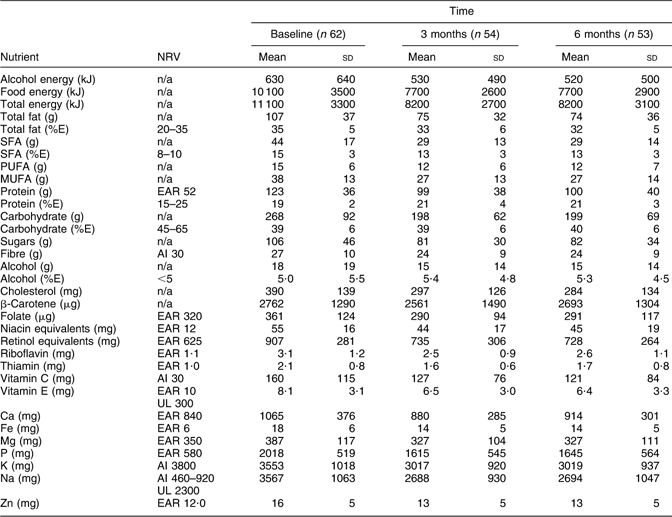
%E, percentage of energy; n/a, not applicable.
NRV, Nutrient Reference Value: applicable to males aged 19 to 70 years(Reference Altman, Schulz and Moher15).
EAR, Estimated Average Requirement: daily nutrient level estimated to meet the requirements of 50 % of healthy individuals and indicates the prevalence of inadequate intake.
AI, Adequate Intake: indicates the percentage of the population at potential risk. Those above this amount would have a decreased probability of nutrient inadequacy.
UL, Upper Level of Intake: highest average daily nutrient intake level likely to pose no adverse health effects to almost all individuals in the general population.
Table 3 reports the mean daily intakes of items assessed in the DQES FFQ for all participants at baseline, 3 months and 6 months. There were few baseline differences in intake between groups, with a trend towards higher red wine (P = 0·06) and white wine intakes (P = 0·08) in the Internet group. For the majority of foods examined, there were no differential impacts of the interventions over time. Both groups reported reductions (P < 0·05) in some common foods named in the FFQ (beef, chicken, full-cream milk, white bread, egg, pasta, potato) and in many energy-dense/nutrient-poor items (sugar, crackers, sweet biscuits, cakes, meat pie, pizza, hamburger, chocolate, flavoured milk, potato crisps, jam, ice cream, salami, hot chips, tomato sauce). With respect to fruit, there was a reported increase in consumption of bananas and melon and for vegetables an increase in cucumber, with no significant changes reported for total daily grams of vegetables. Although reported mean beer consumption decreased, the reduction was not significant (Table 3). There was a reduction in the consumption of fruit juice (P = 0·018) and a trend towards an increase in total daily fruit (GLM χ 2 = 7·6, df = 3, P = 0·054).
Daily intakes (g) of specific food items from an FFQ answered by men participating in a weight-loss intervention at baseline, 3 months and 6 months post-programme: Self-Help, Exercise and Diet using Information Technology (SHED-IT) study, New South Wales, Australia
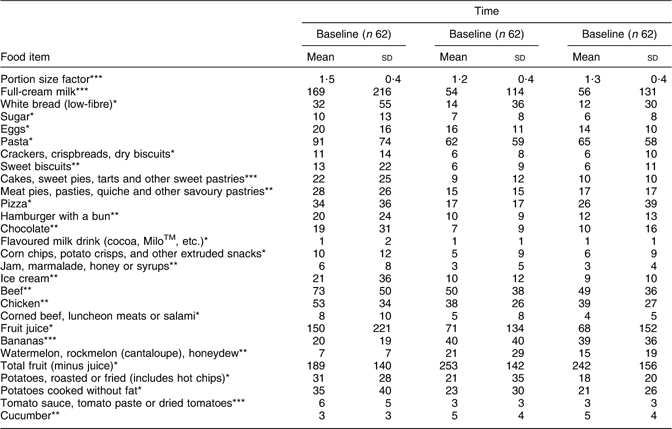
Mean intake changed significantly over time: *P < 0·05, **P < 0·01, ***P < 0·001.
Changes in food items over time for all participants were assessed using ANOVA. Food items that did not change significantly were yoghurt, reduced-fat and skimmed milk; high-fibre white, wholemeal, rye and multigrain breads; all types of margarine and butter spreads; all types of hard and soft cheese, including fat reduced; all types of breakfast cereal, rice; nuts, peanut butter; yeast extracts; all legumes, tofu and soya milk; all other fruit; all other red meats, bacon, ham, sausages and frankfurters; all types of fish; all other vegetables; all types of alcohol.
Discussion
The current study provides a comprehensive report of the impact of a weight-loss intervention on dietary intake in men. It describes in detail the self-reported dietary intake changes made by men during a 3-month weight-loss intervention and after 6 months of follow-up. We have detected some important improvements in men’s dietary intake and identified that, regardless of group allocation, the key strategies used to reduce total energy intake and achieve weight loss were reducing portion size and consumption frequency of high-fat and energy-dense/nutrient-poor foods and fruit juice. While we have reported previously that men in both groups successfully reduced body weight at 6-month follow-up(Reference Morgan, Lubans and Collins14), the extent of their weight loss was not explained solely by self-reported reduction in total energy, fat intake or portion size from baseline to 6 months. However, it could be that the reported intakes were influenced by a reporting bias over time, with the subjects being better able to estimate their intake due to the repeated administration of the FFQ which helped to increase their awareness of what they usually eat. It is not likely that their weight reduction could be solely explained by physical activity. While we have previously reported that men participating in SHED-IT did increase their physical activity levels significantly(Reference Morgan, Lubans and Collins14), the increased number of steps of approximately 1000 daily, as measured by a pedometer, would not produce an energy deficit great enough to explain the mean weight loss at 6 months of 4·4 kg. Alternatively, the relatively small sample size and the large standard deviations on the mean food and nutrient intakes may have reduced the power to detect changes in eating patterns as statistically significant.
To date, the dietary intakes of men during weight loss have rarely been reported in the literature and have never been reported comprehensively in the context of weight-loss interventions. Studies in adults do not always report the dietary intake data separately by sex, presumably because the number of men in the study is too few. Consequently there are few previous studies with which to compare our results. In a male-only weight-loss intervention in Australia, participants reported reduced total fat and alcohol intakes(Reference Van Horn, McCoin and Kris-Etherton11). However, that study used only a brief questionnaire to assess diet and this may explain differences with our findings as men in SHED-IT using a comprehensive FFQ did not report a significant reduction in alcohol consumption as a percentage of total energy, by total grams consumed per day or by types of alcohol consumed such as beer and wine. In 2000, using repeated 24 h recalls and after a year of treatment, Andersson et al. found in sixty-three obese men that, for those losing the most weight (mean 14·2 kg), energy intake along with nutrient-poor snacks decreased while the percentage of energy from what the authors described as ‘good quality hot meals’ increased. However, detailed information about other food items was not reported(Reference Andersson, Lennernäs and Rössner13).
Cross-sectionally, men in general have been shown to report lower intakes of fruit and vegetables, higher intakes of total fat and food choice profiles that are less healthy than women(Reference Westenhoefer21). This has been attributed to different health beliefs, different attitudes to eating and dieting, poorer nutritional knowledge(Reference Westenhoefer21) or potentially a differential reporting bias. Wardle and co-workers(Reference Wardle, Griffith and Johnson8, Reference Wardle, Haase and Steptoe22) also reported on the food choice behaviours of young adults in twenty-three countries and demonstrated that men were less likely to report eating fruit or high-fibre foods or to avoid high-fat foods or limit salt.
The DQES FFQ has been used previously to examine fat intakes in men and demonstrated that saturated fat intakes were excessive(Reference Hodge, Simpson and Gibson17). In a study of over 41 000 adults, including over 17 000 men (mean age 55 years, mean BMI 27 kg/m2), the median daily energy intake was 9700 kJ (interquartile range 7900, 12 000 kJ) with approximately 13 % of total energy from fat; of this, 40 % was saturated fat(Reference Hodge, Simpson and Gibson17). The high saturated fat intakes in the current study are consistent with this. Importantly, the DQES FFQ has also been shown to predict mortality from CVD(Reference Harriss, English and Powles19) and consequently suggests the men participating in SHED-IT are also at increased risk.
Despite making and sustaining dietary improvements at 6 months that were congruent with the recommendations made in the information session and programme handbook, dietary intakes still did not meet a number of the national dietary recommendations(23). At 6 months post-intervention, the dietary intakes of men who had lost weight were still too high in saturated fat and Na and low in K, folate and vitamin E. Although there was a trend towards a small increase in fruit intake, there was no increase in vegetable consumption, use of reduced-fat dairy products or use of higher-fibre breads. A small decrease in alcohol intake was observed but this was not statistically significant and some intakes were still in excess of the target upper limit of 5 % of total energy intake(24). This is important given that overweight men have increased CVD risk profiles including hyperlipidaemia and hypertension and may not seek nutritional advice which would usually focus on reducing Na, total fat and saturated fat intakes and on increasing fruits, vegetables and fibre(Reference Brunner, Rees and Ward25).
There are some limitations in the present study. The level of burden was not balanced between groups because the control group was not instructed to keep a paper-based food and exercise diary. The higher participant burden for the online group may have compromised potential between-group differences. The use of an FFQ to estimate usual intake rather than an estimated food record is a limitation as this does reduce the range of foods evaluated. However, it is not common that both these dietary assessment methods would be used in a large study due to participant and analytic burden. FFQ can be useful when reporting intakes at the group level(Reference Willett26) but may not be sensitive enough to detect all of the modifications in dietary intake at an individual level; hence the dietary assessment may be underpowered, meaning the results presented are a worst-case scenario. That we have detected changes in the desired direction is encouraging and future studies could include a validation of reported intakes. We felt that having a dietary assessment tool with relatively low respondent burden was important in order to facilitate compliance in the men. It is of note that the DQES FFQ does not include some food items commonly consumed by men such as soda, but the assessment tool has been used in a large survey with men and the reported baseline dietary intakes in the current study are consistent with this previous report(Reference Hodge, Simpson and Gibson17). In addition, the control group was not a ‘no treatment’ group, rather a minimal intervention group who received standardized weight-loss advice in the form of an information session and booklet. This no doubt attenuated the differences between groups and explains the control group’s successful weight loss and potentially why greater differences in dietary intake were not found. The lack of intervention effect could also be explained by the fact that less than 50 % of the Internet participants complied with the recommended online treatment component(Reference Morgan, Lubans and Collins14), measured by self-monitoring of diet through the website. Further studies should explore strategies to improve online compliance, which would address a current omission in the literature(Reference Neve, Morgan and Jones6). That less than 50 % of men complied with the recommended online self-monitoring instructions is comparable with other studies that have reported poor usage levels and poor engagement in the expected activities(Reference Neve, Morgan and Jones6). The fact that only 15 min was spent on explaining the use of the website may explain the low level of compliance with the website. Increasing the time spent educating men on website use and allowing men to engage with the website during the information session may be a worthy programme modification. Strategies that reduce the amount of time taken to self-monitor dietary intake and physical activity may contribute to enhanced compliance and success in future targeted interventions for overweight men. Internet-based programmes for men may also need to consider additional intervention components, such as telephone prompts, email reminders, text messaging or face-to-face sessions to provide opportunities for additional support and to ensure that men understand fully what is required. Further, the degree to which people comply with self-monitoring instructions in face-to-face or other interventions may be even lower.
While the present findings may be limited by small sample size and consequently low statistical power, or by the limitations of the FFQ, they do indicate that men volunteering for a weight-loss study are able to implement some dietary recommendations successfully irrespective of group allocation with brief but specific advice. Further, they suggest that men need support to improve their diet quality which could in turn reduce their diet-related CVD risk. It appears that men participating in a weight-loss programme will remove some foods from their diets in order to lose weight, but may be more focused on reducing their overall intake rather than trying to improve their overall eating patterns.
Conclusions
We have shown that men volunteering to participate in a sex-specific weight-loss study can successfully improve some aspects of their diet with minimal advice on diet and exercise, with or without additional feedback, and maintain these improvements for up to 6 months. Key strategies utilized included reductions in portion size and decreases in the consumption of energy-dense, nutrient-poor and high-fat foods. However, men did not increase their vegetable intakes, decrease their alcohol consumption or use higher-fibre breads or reduced-fat dairy products, and consequently did not meet national targets for fibre, saturated fat and Na. The current study provides evidence that men need additional strategies or more extensive advice and support to facilitate dietary changes in order for them to fully benefit from diet-related CVD risk reduction. While future studies should be powered to detect differences in dietary intake as a primary outcome, it is recommended that weight-loss interventions for men target specific food-based guidelines and provide support for men to alter their dietary intakes in line with population strategies to reduce CVD risk factors.
Acknowledgements
This work was supported by the University of Newcastle (Strategic Pilot Grant G1087848 to P.J.M., R.C. and D.R.L.). The authors declare that they do not have any conflicts of interest. P.J.M., D.R.L., R.C. and C.E.C. obtained funding for the research. All authors contributed to developing the protocols and reviewing, editing and approving the final version of the paper. The trial was implemented by P.J.M., D.R.L. and C.E.C.; J.M.W. and R.C. provided advice and guidance on the strategies and conduct of the randomized controlled trial. D.R.L. and R.C. were responsible for data collection. C.E.C. conducted the analysis and drafted the first version of the manuscript. P.J.M. is the guarantor and accepts full responsibility for the conduct of the study and the integrity of the data; C.E.C. accepts full responsibility for the accuracy of the data analysis. The authors wish to acknowledge the project manager, Mr David Went, and the research assistants, Elroy Aguiar and David Gibson. They also thank all study participants.



