


Low vitamin D levels are common in Americans, especially among postmenopausal women. Between 2000 and 2004 researchers in the Third National Health and Nutrition Examination Survey (NHANES III) measured serum 25-hydroxyvitamin D (25(OH)D) levels in 20 289 Americans using a RIA( Reference Looker, Pfeiffer and Lacher 1 ). Vitamin D insufficiency (VDI), defined as a serum 25(OH)D level <50 nmol/l, was present in approximately 35 % of adult women and 36 % of women aged 50–69 years( Reference Looker, Pfeiffer and Lacher 1 ). Such suboptimal vitamin D status can be attributed to limited sun exposure, reduced cutaneous vitamin D synthesis, poor nutrition, certain medications and diseases( Reference Powell and Greenberg 2 ). Individuals with suboptimal vitamin D status can experience decreased Ca absorption, which stimulates increased parathyroid hormone secretion. Parathyroid hormone promotes bone resorption to release skeletal Ca and maintain normocalcaemia, but over the long term secondary hyperthyroidism can contribute to decreased bone mineral density( Reference Dobnig 3 ).
Blood tests such as HPLC assays can diagnose low serum 25(OH)D levels, but at an expense of $US 260 per test (personal communication with laboratory personnel at University of Wisconsin Hospital). Due to the high expense of vitamin D measurement, the Endocrine Society( Reference Adams, Clemens and Parrish 4 ) discourages population screening for suboptimal vitamin D levels. A questionnaire to identify people at high risk of VDI would potentially allow its detection prior to development of long-term consequences, such as osteoporosis or osteomalacia. While several studies have reported the variables that influence serum 25(OH)D levels, relatively few studies have designed a questionnaire and tested its sensitivity and specificity for detection of hypovitaminosis D.
Among 153 healthy women aged 18–41 years old living in Quebec, Canada who completed a questionnaire( Reference Gagnon, Baillargeon and Desmarais 5 ), BMI, parathyroid hormone levels, travel south during the spring or winter, and use of oral contraceptives accounted for 40 % of the variance in 25(OH)D levels. The paper did not report the sensitivity or specificity of the Quebec questionnaire. A 3 d food diary correlated weakly, but significantly (r = 0·20, P = 0·04), with serum 25(OH)D levels among 165 ambulatory postmenopausal women living in the San Francisco Bay area( Reference Hacker-Thompson, Schloetter and Sellmeyer 6 ). A third chart review study( Reference Peiris, Bailey and Guha 7 ) of 14 920 veterans reported that TAG levels, race, season of vitamin D measurement, total cholesterol, BMI and serum Ca together accounted for 12 % of the variance in serum 25(OH)D levels, with TAG accounting for almost 5 % of the variance. The study did not identify a model that could predict either vitamin D levels or vitamin D status( Reference Peiris, Bailey and Guha 7 ) but notably did not assess participants’ intake of vitamin D from supplements, diet or sun exposure. Among 3055 postmenopausal women participating in the Women's Health Initiative Study( Reference Millen, Wactawski-Wende and Pettinger 8 ), 21 % of the variance in serum 25(OH)D levels was explained by vitamin D intake from food and supplements, waist circumference, exercise habits, race and latitude of residence. Unfortunately, a predictive model accurately identified vitamin D status in only 3 % with vitamin D deficiency, 64 % with VDI and 3 % with vitamin D sufficiency.
In a prior study, we tested the ability of a questionnaire to predict serum 25(OH)D levels in 184 healthy young adults aged 18–40 years living in Madison, Wisconsin( Reference Bolek-Berquist, Elliot and Gangnon 9 ). Participants completed a questionnaire recording their age, gender, race/ethnicity, season of testing, sun exposure habits, use of multivitamins and vitamin D supplements, consumption of milk and cod-liver oil, and the presence of chronic intestinal disorders or diarrhoea. Three questions were moderately useful in identifying young adults with vitamin D deficiency, defined as a serum 25(OH)D level <40 nmol/l: receipt of a suntan within the prior year, use of a tanning booth and consumption of ≥2 glasses of milk daily. Overall, the questionnaire demonstrated a sensitivity of 79 % and a specificity of 78 % for vitamin D deficiency.
We hypothesized that a questionnaire could identify postmenopausal women with a higher likelihood of VDI. Our objectives were three-fold. First, we aimed to identify variables significantly associated with serum 25(OH)D levels as a continuous variable. Second, we aimed to identify a subset of variables that were independent and additive predictors of VDI. Third, we aimed to develop a short list of questions that, when answered as yes/no in a clinical setting, could generate a composite score to easily identify a person at high or low risk of VDI. We specifically avoided using laboratory tests as predictor variables, in order to minimize medical costs related to use of the questionnaire. We modified the previous questionnaire( Reference Bolek-Berquist, Elliot and Gangnon 9 ) to record more specific questions regarding sun exposure, use of supplements and identification of skin type to test our hypothesis.
Materials and methods
We evaluated the performance characteristics of the Vitamin D & Sun (VIDSUN) questionnaire (Table 1). We recruited postmenopausal women for a randomized, placebo-controlled clinical trial comparing the effects of different vitamin D doses on changes in Ca absorption, bone mineral density and muscle fitness (clinicaltrials.gov identifier NCT00933244). In order to participate in the study, women had to have a serum 25(OH)D level between 16 and 25 ng/ml and be ≥5 years past the date of their last menses or bilateral oophorectomy, or ≥60 years old if they received a hysterectomy without bilateral oophorectomy, with a total Ca intake (diet and supplements) of ≥600 mg and <1400 mg/d. We excluded women >75 years old, those with inflammatory bowel disease, celiac sprue, chronic diarrhoea, hypercalcaemia, active cancer, nephrolithiasis or chronic kidney disease, defined as a glomerular filtration rate <45 ml/min based on the Modification of Diet in Renal Disease formula( Reference Levey, de Jong and Coresh 10 ). We recruited potential participants by posting advertisements in local newspapers and by sending letters of invitation to the University of Wisconsin faculty and registrants of the University of Wisconsin's Institute of Aging Subject Registry. Women interested in the study contacted our office and were screened by telephone to determine eligibility for a screening visit.
The Vitamin D & Sun (VIDSUN) questionnaire
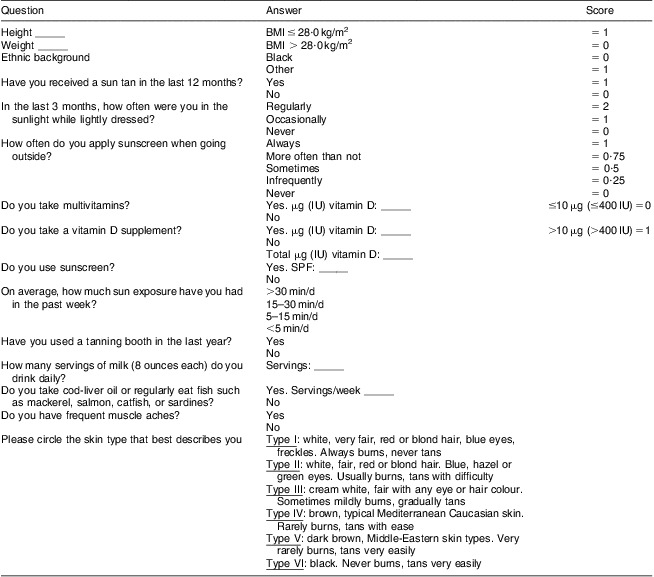
SPF, sun protection factor.
The participant undergoes height and weight measurement to determine BMI. The participant completes the questionnaire starting with self-identified race, circling the option that best reflects her habits. The scoring system is hidden from participants, but is recorded above to instruct users how to assign points for a total score of 0 to 7. A final score of ≤2·25 indicates higher likelihood of vitamin D insufficiency.
Women who passed the telephone screen came to the University of Wisconsin Clinical Research Unit for a screening visit. At the visit, women provided a medical history and underwent phlebotomy for measurement of blood serum 25(OH)D levels using an HPLC assay. Research staff immediately centrifuged samples and removed serum for storage in a research freezer at −70°C for up to 1 week, until analysis by HPLC assay. The assay has a lower limit of detection of 7 nmol/l and a between-run CV of 2·6 % to 4·9 % for 25(OH)D3 and 3·2 % to 12·6 % for 25(OH)D2 ( Reference Lensmeyer, Wiebe and Binkley 11 ), with participation in the Vitamin D External Quality Assessment Scheme (DEQAS) to confirm accuracy of measurements.
At the screening visit, research nurses measured the participants’ height using a single wall-mounted stadiometer and determined their weight without shoes using a single digital scale. At the visit, participants completed the VIDSUN questionnaire (Table 1). Participants completed the questionnaire by circling the answers that best reflected their habits. We modified the questionnaire from that used in the prior study( Reference Bolek-Berquist, Elliot and Gangnon 9 ) by adding a Fitzpatrick score for skin type( Reference Fitzpatrick 12 ) and asking additional information about the use of sunscreen, frequency of sun exposure, dose of vitamin D supplements and cod-liver oil consumed daily and presence of myalgia. Of note, participants were unaware of scores for each question. We include the point system in the questionnaire (Table 1) to indicate how to score the questionnaire.
Ethics
We obtained approval to conduct the study from the University of Wisconsin Human Subjects Committee, and participants gave written informed consent prior to any study procedures.
Statistics
All data were entered in duplicate into an Excel® database and plotted to detect the presence of outliers and confirm a normal distribution. The following variables were analysed as potential predictors of vitamin D status: age, race, Fitzpatrick skin type, height, weight, BMI, season of vitamin D measurement, sun tan within the past year, use of sunscreen and tanning booths, recent sun exposure, habitual consumption of milk, fatty fish, cod-liver oil, multivitamins, vitamin D supplements, dose of vitamin D consumed from supplements and presence of myalgia.
We defined VDI as a serum 25(OH)D level <50 nmol/l( 13 ), and then compared the characteristics of participants with and without VDI using the Wilcoxon test (continuous data) or the Fisher exact test (categorical data). We next used linear regression models to identify which of the variables analysed were significantly associated with serum 25(OH)D levels. We then used a backwards stepwise procedure to find the subset of variables that explained a large portion of the variability in serum 25(OH)D levels. From these stepwise models, we identified variables (answers to questions) that best discriminated between participants with and without VDI.
Finally, we identified the subset of questions that identified individuals at high or low risk of VDI. We used univariate logistic regression models to identify VIDSUN variables that were independent predictors of VDI. For significant variables that were continuous rather than dichotomous, we analysed their performance characteristics (sensitivity, specificity and area under the curve) to determine the best value at which the continuous variable predicted VDI. We arbitrarily scored risk factors for VDI as zero if present, so that lower total scores indicated lower 25(OH)D levels and a higher likelihood of VDI. We calculated each participant's composite score using the final significant variables. Lastly, we evaluated the composite score from all six variables to determine the threshold providing the best sensitivity and specificity for VDI.
We performed all analyses of data using R software version 2·13·1. In all analyses, we used a P value of <0·05 as significant and we limited our model analyses to participants with no missing data.
Results
We analysed VIDSUN data from the first 609 participants who underwent a screening visit between March 2010 and May 2012, most of whom were Caucasian (90 %) with a mean age of 61 (sd 6 years), mean BMI of 29·5 (sd 6·8) kg/m2 and mean serum 25(OH)D of 78 (sd 28) nmol/l (Table 2). Of the 609 participants, 113 (19 %) had VDI. Compared with participants who were vitamin D replete (Table 2), those with VDI were more likely to be black (17 % v. 2 %, P < 0·001) or have a Fitzpatrick skin type of V or VI. Participants with VDI had a higher BMI (33·0 (sd 7) kg/m2 v. 29·0 (sd 7) kg/m2, P < 0·001) and were less likely to undergo a study visit in summer (18 % v. 29 %, P = 0·015). Participants with VDI were less likely to take a multivitamin (15 % v. 28 %, P = 0·005) or a vitamin D supplement (18 % v. 36 %, P = 0·002) and reported lower vitamin D intake from all supplements (2·15 (sd 5·24) μg/d (86 (sd 210) IU/d) v. 4·55 (sd 8·48) μg/d (188 (sd 344) IU/d), P = 0·003). Participants with VDI were less likely to apply sunscreen (57 % v. 72 %, P = 0·003), have a suntan within the past year (49 % v. 72 %, P < 0·001) or report regular sun exposure in the recent past.
Demographic characteristics and questionnaire responses according to participants’ 25-hydroxyvitamin D (25(OH)D) level: postmenopausal women attending a screening visit for a large clinical trial at the Clinical Research Unit, University of Wisconsin–Madison, March 2010 to May 2012
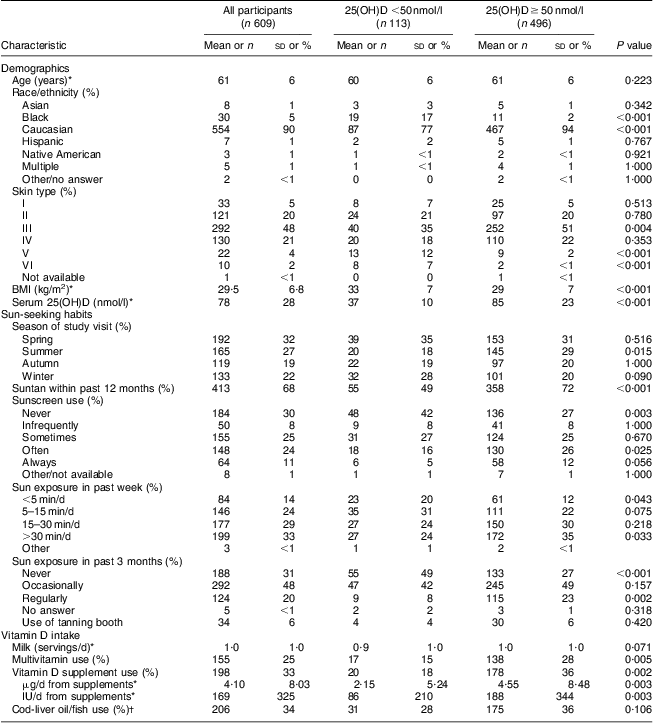
*These data are presented as mean and standard deviation; all other data are presented as number and percentage.
†Only sixteen participants consumed cod-liver oil; their average dose was 3·6 tablespoons/week.
Univariate associations between each variable and serum 25(OH) D levels are summarized in Table 3. Together, all variables accounted for 31 % of the variance in serum 25(OH)D levels. In backwards stepwise selection, the final model explained 28·5 % of the variance in serum 25(OH)D based on race, BMI, days to or from the autumn equinox, suntan in the past year, sun exposure in the past 3 months, use of multivitamins and vitamin D supplements and consumption of cod-liver oil (P < 0·001).
Variables associated with serum 25-hydroxyvitamin D (25(OH)D) level among postmenopausal women (n 609) attending a screening visit for a large clinical trial at the Clinical Research Unit, University of Wisconsin–Madison, March 2010 to May 2012
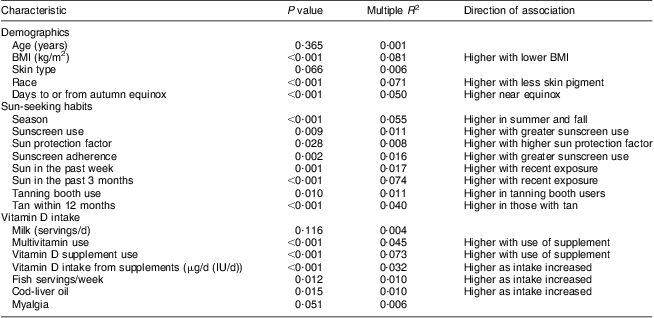
Together all variables accounted for 31 % of the variance in serum 25(OH)D levels. In stepwise backwards models, 28·5 % of the variance was explained by race, BMI, days to or from the autumn equinox, suntan in the past year, sun exposure in the past 3 months, and consumption of multivitamins, vitamin D supplements and cod-liver oil (P < 0·001).
In logistic regression models, we identified six variables that were independent and significant predictors of VDI. The six variables were black race (yes/no), BMI, vitamin D intake from supplements (μg/d (IU/d)), suntan within the past year (yes/no), sun exposure in the prior 3 months (never, occasionally, regularly) and frequency of sunscreen use (spanning from never to always). BMI < 28·0 kg/m2 and vitamin D intake >10 μg/d (>400 IU/d) were the thresholds at which a yes/no answer demonstrated the best sensitivity and specificity for VDI, with lower BMI and higher vitamin D intake each decreasing the probability of VDI. We further refined the scoring system for use of sunscreen and frequency of sun exposure (Table 1), so that weighting of these variables was congruent with weighting of the other four variables in the model.
We arbitrarily scored significant predictors of VDI as zero if present (Table 1) so that higher scores indicated a higher likelihood of vitamin D repletion. We added the scores for all six variables to determine a composite score for each participant. With this approach, a participant would have a composite score between 0 and 7. For example, a participant with a BMI >28·0 kg/m2, black race, vitamin D intake <10 μg/d (<400 IU/d), no tan within the prior year, rare sun exposure in the past 3 months and no use of sunscreen would have a VIDSUN score of 0, indicating a high likelihood of VDI. Among 583 participants with no missing VIDSUN data, the six questions explained 21·5 % of the variance in serum 25(OH)D levels.
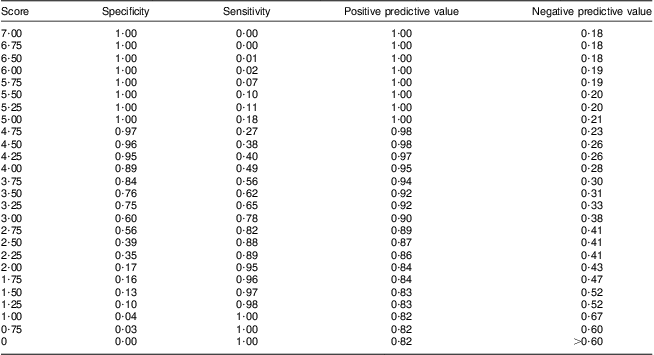
Finally, we evaluated the composite score from all six variables to determine the threshold providing the best sensitivity and specificity for VDI (Table 4). A score of ≤2·25 provided ≥89 % sensitivity for VDI, with a positive predictive value ranging from 82 % to 86 % but low specificity (35 %) and negative predictive value (41 %). Table 4 provides the sensitivity, specificity, positive and negative predictive values for composite VIDSUN scores between 0 and 7. These results suggest that serum 25(OH)D measurement would be most useful and cost-effective in postmenopausal women with a composite VIDSUN score of ≤2·25.
Vitamin D & Sun (VIDSUN) questionnaire composite score performance characteristics
Discussion
We hypothesized that a questionnaire could identify postmenopausal women with a high or low likelihood of VDI. We developed the VIDSUN questionnaire and tested its performance characteristics in 609 postmenopausal women undergoing a screening visit for a large clinical trial, of whom 113 (19 %) had VDI. Six variables were independent and significant predictors of VDI: BMI, black race, vitamin D intake from supplements, sun tan within the prior year, sun exposure in the past 3 months and frequency of sunscreen application. Answers to the six questions provided a composite score for each participant and, subsequently, a score of ≤2·25 showed reasonable sensitivity and positive predictive value for VDI, although specificity was low. To our knowledge, ours is the first study to report the sensitivity and specificity of a questionnaire designed to identify VDI in postmenopausal women.
Our VIDSUN questionnaire identified several variables that were significant and independent predictors of VDI. In agreement with other researchers( Reference Brot, Vestergaard and Kolthoff 14 ), we identified sun exposure as a significant predictor of serum 25(OH)D levels. In our study, three questions about sun-seeking habits (tan in the past year, regular sun exposure in the past 3 months and use of sunscreen) were independent predictors of vitamin D status. Unexpectedly, greater use of sunscreen was associated with higher serum 25(OH)D levels. We believe this association simply reflects the fact that individuals who are outdoors often are more likely to use sunscreen, whereas individuals who never go outside will likewise never apply sunscreen.
In agreement with other studies( Reference Looker, Pfeiffer and Lacher 1 , Reference Gagnon, Baillargeon and Desmarais 5 , Reference Peiris, Bailey and Guha 7 ), we found that BMI was significantly associated with serum 25(OH)D levels. BMI was one of four significant predictors of serum 25(OH)D levels in 153 healthy, ambulatory women aged 18–41 years in Quebec, Canada( Reference Gagnon, Baillargeon and Desmarais 5 ). Among 14 920 patients receiving care at six Veterans Affairs Medical Centers( Reference Peiris, Bailey and Guha 7 ), BMI explained 12 % of the variance in 25(OH)D levels. Likewise in 20 289 Americans participating in NHANES III( Reference Looker, Pfeiffer and Lacher 1 ), 25(OH)D levels were lowest in the obese, higher in the overweight and highest in the Americans with normal BMI. Earthman et al.( Reference Earthman, Beckman and Masodkar 15 ) summarized the potential mechanisms by which obesity is associated with hypovitaminosis D, citing adipose tissue sequestration of fat-soluble vitamin D, greater 24-hydroxylase activity in adipose cells leading to greater catabolism of vitamin D, and obesity-related fatty liver disease with lower 25-hydoxylation of precursors leading to lower 25(OH)D levels.
In our study, black race and skin type were significantly associated with VDI. Black race was an independent predictor of vitamin D status, functioning better than skin type to distinguish between women with and without VDI. Several other studies report that black race is a risk factor for VDI. Among 3055 women in the Women's Health Initiative study who underwent 25(OH)D measurement( Reference Millen, Wactawski-Wende and Pettinger 8 ), black women had significantly lower 25(OH)D levels and race was a significant variable in the model predicting 25(OH)D levels. Likewise, race accounted for almost 8 % of the variance in 25(OH)D levels among 14 920 patients in the Veterans Affairs study( Reference Peiris, Bailey and Guha 7 ). Among 20 289 Americans participating in NHANES III( Reference Looker, Pfeiffer and Lacher 1 ), blacks had significantly lower 25(OH)D levels than Mexican Americans or whites. By reducing transmission of UV light, greater skin pigmentation is believed to protect races living near the equator from sun-induced vitamin D toxicity( Reference Loomis 16 ). Melanin's effects on cutaneous synthesis of vitamin D was demonstrated by Clemens et al.( Reference Clemens, Adams and Henderson 17 ). Serum 25(OH)D levels increased sixty-fold in Caucasian individuals after whole-body UV radiation (0·054 J/cm2), whereas blacks receiving the same dose of UV radiation experienced no change in 25(OH)D levels( Reference Clemens, Adams and Henderson 17 ).
Scrutiny of prior publications might identify potential new variables to include, in attempts to improve the performance characteristics of the VIDSUN questionnaire. Inclusion of a food diary might improve the performance of the VIDSUN questionnaire( Reference Hacker-Thompson, Schloetter and Sellmeyer 6 ), although its use would be impractical in a clinical setting. Unfortunately, vitamin D intake based on the use of two FFQ did not correlate with 25(OH)D levels( Reference Hacker-Thompson, Schloetter and Sellmeyer 6 ), and answers to questions about consuming fish and milk in the VIDSUN questionnaire did not predict VDI. Physical activity was a significant predictor of serum 25(OH)D levels in 1984 adults in Auckland, New Zealand( Reference Bolland, Grey and Ames 18 ). In agreement, recreational physical activity was a significant variable in models predicting 25(OH)D levels in the 3055 participants of the Women's Health Initiative( Reference Millen, Wactawski-Wende and Pettinger 8 ). Although physical activity might simply be a surrogate marker of sun exposure, its inclusion in future versions of the VIDSUN questionnaire would clarify whether exercise is an additional independent predictor of vitamin D status. Finally, cross-sectional studies report that higher vitamin D levels are associated with better lipid profiles, although vitamin D therapy does not improve the lipid profile( Reference Ponda, Dowd and Finkielstein 19 ). TAG levels explained 5 % of the variance in serum 25(OH)D levels in the Veterans Affairs study( Reference Peiris, Bailey and Guha 7 ). Measurement of TAG might improve the performance of the VIDSUN questionnaire.
Our study has several strengths. We tested the performance characteristics of the VIDSUN questionnaire in the first 609 women screened for a large clinical trial. We measured 25(OH)D levels using a highly accurate HPLC assay. Our findings are consistent with large epidemiological studies reporting that sun exposure, race and BMI predict vitamin D status. Our study also has limitations. We evaluated our questionnaire in postmenopausal women; we cannot assume it would predict vitamin D status in children, young adults or older men. Indeed, in our prior study( Reference Bolek-Berquist, Elliot and Gangnon 9 ), vitamin D status in young adults was predicted by milk consumption, getting a suntan and use of tanning booths. We had a relatively small sample size that may have limited our power to detect associations between VDI and intake of certain foods, such as fatty fish. We suggest that future versions of the VIDSUN questionnaire ask about consumption of fish and cod-liver oil separately. Selection bias also limits our study. Individuals participating in research studies are more likely to be younger( Reference Murthy, Krumholz and Gross 20 ), white( Reference Murthy, Krumholz and Gross 20 ) and have a higher socio-economic status( Reference Gross, Filardo and Mayne 21 ) than individuals who do not participate in research. We recruited women from southern Wisconsin and certain racial groups were under-represented; a larger study with a more diverse population might identify other racial groups at high risk of VDI. We excluded individuals with significant chronic illnesses that might interfere with skeletal health or vitamin D status.
Conclusion
The VIDSUN questionnaire helped identify postmenopausal women with a higher likelihood of VDI. Revision of the questionnaire to include questions about exercise, TAG levels and consumption of vitamin D-rich foods such as fatty fish might improve its performance characteristics. Future studies are needed to refine and validate the questionnaire, with the goal of creating an inexpensive tool to aid clinicians in decisions to measure their patients’ 25(OH)D levels.
Acknowledgements
Sources of funding: The work was supported by the National Institutes of Health (NIH) National Institute on Aging (AG028739), the Office of Dietary Supplements (AG028739) and an NIH Clinical and Translational Science Award Program (UL1TR000427). Conflicts of interest: K.E.H. is a consultant to Takeda Pharmaceuticals and Deltanoid Pharmaceuticals. All other authors have no conflicts of interest. Authors’ contributions: K.E.H. designed and conducted the research study and had primary responsibility for the final content of the manuscript. K.E.H. and R.E.J. collected and entered data; all authors analysed the data, wrote the manuscript and approved the final manuscript. Acknowledgements: The authors thank the women for their participation in the study.



