


Most research studies performed in developing and middle-income countries have examined the association between macro- and micronutrient deficiencies and several measures of cognitive functioning in children( Reference Walker, Wachs and Gardner 1 – Reference Gupta, Goel and Shah 3 ). The economic boom of the past two decades, however, has paved the way for an increase in non-communicable diseases associated with overweight and obesity since infancy. The consumption of salty, sugary and high-fat processed foods, major elements of the so-called Western diet, which contribute to excessive nutrient intake and weight gain, is becoming extremely prevalent among school-age children from these countries( Reference Bonilla-Chacin, Marcano-Vázquez and Sierra 4 ). This is a subject of huge concern for public health officials, academics and all those struggling against the obesity epidemic( Reference Fraser 5 ).
The Western diet does not merely lead to obesity and cardiovascular and metabolic disorders. Studies in both animal and human models have found evidence for an association between cognitive functioning and excess consumption of the macronutrients that are the primary components of the Western diet. They indicate that excessive intakes of saturated fats and simple carbohydrates are related to impairment in several learning and memory processes dependent on the hippocampus( Reference Morris, Evans and Bienias 6 – Reference Smith and Foster 10 ). Exposure to these macronutrients interferes with hippocampal functioning directly, by cutting down the production of neurotrophins, increasing the level of neuroinflammatory markers and altering the blood–brain barrier, and indirectly by impairing glucose regulation( Reference Gale, Martyn and Marriott 11 – Reference Kanoski and Davidson 13 ).
With the exclusion of research about the effect of breast-feeding on cognitive evolution and/or functioning later in life, few works have addressed the cognitive impact of dietary rules in children rather than focusing on individual nutrients, the predominant approach to studying this subject. In the UK, the Avon Longitudinal Study of Parents and Children (ALSPAC) has offered evidence suggesting that unhealthy dietary practices during early childhood have a lasting association with intelligence in mid-childhood and adolescence( Reference Northstone, Joinson and Emmett 14 – Reference Smithers, Golley and Mittinty 16 ). Similarly, in children from New Zealand, Theodore et al. found a positive relationship between cognitive abilities and dietary patterns at 3·5 and 7 years of age( Reference Theodore, Thompson and Waldie 17 ), whereas Nyaradi et al. reported that Australian children with better diet quality during the early years of life showed higher verbal and non-verbal abilities later in mid-childhood( Reference Nyaradi, Li and Hickling 18 ).
The nutritional quality of food and meal patterns is related to specific outcomes that are important for the educational attainment of children and teens. Studies of nutrition and academic performance and/or behaviour have typically focused on the effect of malnutrition and micronutrient deficiency( Reference Taras 19 , Reference Dewey and Begum 20 ). Very few have addressed the effect of overnutrition and they have been mostly carried out in developed countries( Reference Sigfúsdóttir, Krisjánsson and Allegrante 21 – Reference Florence, Asbridge and Veugelers 25 ). Due to the lack of evidence from countries undergoing transitional processes, the aim of the present study was to examine the association between diet as a composite measure and academic outcomes in children from Chile, a middle-income country that underwent a profound shift from under- to overnutrition in less than two decades( Reference Albala, Vio and Kain 26 – Reference Vio, Albala and Kain 28 ). Specifically, we examined the relationship between unhealthy snacking at school and the ability to perform in Language and Mathematics. We hypothesized that an increase in consumption of unhealthy food items during snack time would be associated with poor academic outcomes in both domains.
Methods
Study population and sample selection
The target population, 187 860 children (39 % of the Chilean school-age population), included all students enrolled in 5th (n 91 663) and 9th (n 96 197) grade in the Santiago Metropolitan Region in 2010 and who took the national standardized System for the Assessment of Educational Quality test (herein SIMCE) in 2009. They attended public, partially subsidized and private schools from urban areas.
The sampling frame of the study corresponds to the educational establishments from the Santiago Metropolitan Region. The sampling system was performed in two stages. In the first stage, thirty-three educational establishments accounting for 2·6 % of the total urban school population (n 1262) were randomly selected by proportional allocation according to the type of school and level of achievement in the SIMCE 2009 as established by the Ministry of Education (high-, mid- and low-achieving). In a second stage, in each of the thirty-three schools, students enrolled in both grades who took the SIMCE 2009 were invited to participate in the study. A total of 1277 school-age children and their parents agreed to participate and signed the informed consent form. Two hundred and four students were excluded because they did not provide full information on their eating habits or because they did not attend the SIMCE examination. Thus, the final sample included 1074 participants, 84 % of the original data set.
The study was approved by the Committee on Ethics in Studies in Humans of the Institute of Nutrition and Food Technology (INTA), University of Chile, and the Committee on Bioethics of the National Fund for Scientific and Technologic Development (FONDECYT), Chile. The field study was carried out during academic year 2010.
Snacking at school
Nutritional quality of items consumed during the snack time at school was measured accounting for the amounts of saturated fat, fibre, sugar and salt in the foods. We used an FFQ validated in previous studies( Reference Burrows, Díaz and Sciaraffia 29 , Reference Correa-Burrows, Burrows and Uauy 30 ) that was administered by a researcher to all students at the time they attended the anthropometric examination. Students in 9th grade answered by themselves whereas 5th graders answered with their parents’ help. The questions and response categories were identical in both groups. The questionnaire was designed to assess the habitual diet during the school day (rather than the whole diet), by asking about the frequency of food consumption. A list of twenty-five items, including foods and beverages, was used. The frequency of food consumption was assessed by a multiple response grid in which respondents were asked to estimate how often a particular food or beverage was consumed. Categories ranging from ‘never’ to ‘five times a week’ were used and participants had to choose one of these options. A computerized software based on the Chilean Food Composition Tables 2010 edition( 31 ) calculated nutrient intakes by multiplying the reported frequency of each food item by the amounts of nutrients in a serving of that food item. Depending on the amounts of saturated fat, fibre, sugar and salt in the foods, snacking at school was considered to be unhealthy (items of poor nutritional value and high in fat, sugar, salt and energy), poor-to-fair (highly processed items although low in fat) and healthy (nutrient-rich items and protective foods).
Academic performance
Academic performance in Mathematics and Language was assessed using the national standardized SIMCE test, which has national coverage in Chile and is administered by the Ministry of Education to all students attending 4th and 8th grade. SIMCE consists of four major tests: Language, Mathematics, Science and Social Science. Each test, made up of multiple-choice items as well as open-ended questions, receives a score on the scale of 0–400. In order to perform this analysis, scores in Language and Mathematics were categorized according to the achievement levels established by the Ministry of Education. Thus, the minimum score to pass in Language was 241 in 4th grade and 235 in 8th grade, whereas in Mathematics it was 233 in 4th grade and 276 in 8th grade. Since the SIMCE tests were taken prior to the field study, we used personal identification codes to link SIMCE scores to students’ anthropometric, socio-economic and dietary pattern data.
School’s performance
All schools were categorized by the Chilean Ministry of Education into three levels, namely low-achieving schools, mid-achieving schools and high-achieving schools, based upon the performance of their students in all SIMCE tests( 32 ).
Anthropometric measurements and nutritional status
Standardized procedures were used to measure students’ weight to the nearest 0·1 kg, using a Seca scale (SECA, Hamburg, Germany), and height to the nearest 0·1 cm, using a Holtain stadiometer. All instruments were verified before measuring each participant( Reference Gibson 33 ). BMI (kg/m2) and height-for-age were evaluated, and Z-scores were obtained according to the references of the Centers for Disease Control, National Center for Health Statistics (USA)( Reference Kuczmarski, Ogden and Guo 34 ). Nutritional status was defined as follows: underweight, BMI Z-score <−1; normal weight, BMI Z-score from −1 to +1; overweight, BMI Z-score from +1 to +<2; and obesity, BMI Z-score ≥+2.
Socio-economic status
Socio-economic status (SES) was measured using a scale based on Graffar’s modified method which was adapted to Chilean urban and rural populations( Reference Álvarez, Muzzo and Ivanovic 35 ). This scale classified the sample into five socio-economic groups: 1=high (0·3 %); 2=mid–high (14·7 %); 3=middle (38·3 %); 4=mid–low (45·6 %); and 5=low (1·1 %). However, in our analysis we merged these five categories into three: high (1+2), middle (3) and low (4+5) SES.
Statistical analysis
Statistical analysis included performing χ 2 tests to compare categorical variables, and ANOVA and Bonferroni tests for comparison of continuous variables. After performing bivariate analyses with each potential confounding variable, including sex, grade, nutritional status, SES and school’s performance, we used logistic regression to assess the relationship between the nutritional quality of snacks at school (exposure) and individual academic performance in Mathematics and Language (outcome). In each case, the probability of passing the test was estimated using three models. The first one included the nutritional quality of snacks, sex, grade and a variable denoting nutritional status (overweight/obesity=BMI Z-score ≥+1). In the second model, SES was added. Finally, a fully adjusted model contained all mentioned covariates with the addition of a variable denoting the school’s academic performance. Because the variable school’s performance was partly derived from the outcome variables, this adjustment may cause underestimation of the association, so we included models with and without adjustment for school’s performance. A P value of <0·05 denoted statistical significance. Data were processed using the statistical software package Stata SE for Windows version 12·0.
Results
Our sample was made up of 13·1 (sd 2·3) year-old male (52 %) and female (48 %) adolescents of low (44·3 %), middle (39·6 %) and high (16·1 %) SES. They attended 5th (51·9 %) and 9th (48·1 %) grade in public (34·8 %), partially subsidized (57·8 %) and private schools (7·4 %) in the Santiago Metropolitan Region. As for nutritional status, 45 % of participants were overweight or obese. Nearly half of the students (48 %) attended high-achieving schools, whereas 29 % and 23 % attended mid- and low-achieving schools, respectively.
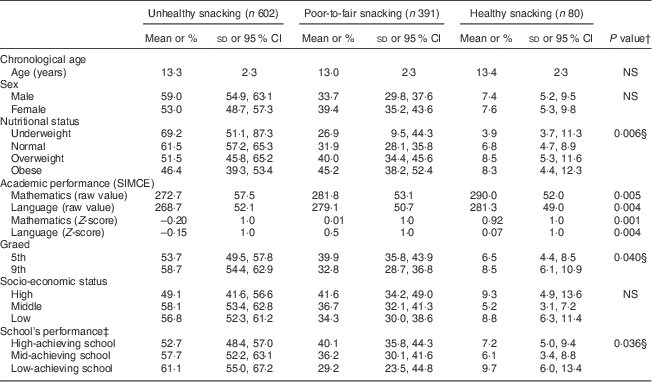
In the sample, 56 % of students reported consumption of items at snack time that were high in fat, sugar, salt and energy. Thirty-six per cent were regarded to have poor-to-fair snacking, whereas just 8 % were considered to eat healthy items during the snack time at school. Table 1 contains the descriptive statistics of the sample. Average values of scores in Language and Mathematics were significantly decreased among those with lower nutritional quality of snacks at school (P=0·01). The share of students consuming unhealthy snacks at school was significantly higher among 9th graders (59 %; P=0·040), students attending low-achieving schools (61 %; P=0·036), as well as among underweight and normal-weight participants (69 % and 62 %, respectively; P=0·006).
Descriptive statistics of the sample by nutritional quality of snacks at school; random sample 5th and 9th grade students (n 1073) attending public, partially subsidized and private schools in Santiago Metropolitan Region, Chile, 2010
SIMCE, System for the Assessment of Education Quality.
Values are presented as mean and standard deviation for continuous variables or as percentage and 95 % confidence interval for categorical variables.
† P values from one-way ANOVA, except as indicated.
‡ School performance defined according to the Ministry of Education.§P values from χ 2 test (Pearson).
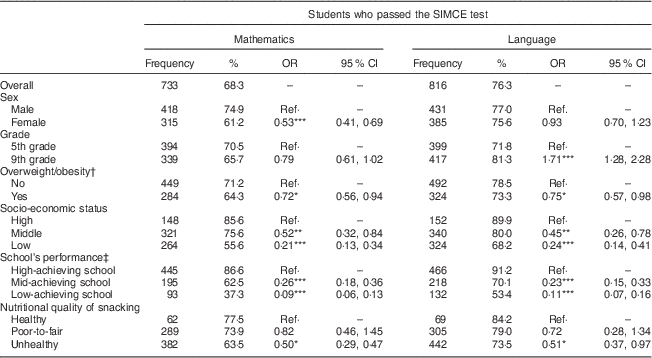
As shown in Table 2, the proportions of students who passed the standardized Mathematics and Language tests were significantly higher among students having healthy snacks at school (P=0·015 and P=0·041, respectively). Sex (P<0·0001) and overweight/obese status (P=0·017) were both significantly associated with outcomes in Mathematics, whereas performance in Language was significantly associated with grade (P<0·0001). We likewise found a substantial relationship between performance in the standardized tests and SES (P=0·01) and the school’s performance (P<0·0001).
Academic performance in the SIMCE (Mathematics and Language) by selected covariates; random sample 5th and 9th grade students (n 1073) attending public, partially subsidized and private schools in Santiago Metropolitan Region, Chile, 2010
SIMCE, System for the Assessment of Education Quality; Ref., referent category.
* Significance at the 0·05 level, **significance at the 0·01 level, ***significance at the 0·001 level.
† Overweight and obesity: BMI Z-score for age and sex ≥+1.
‡ School performance defined according to the Ministry of Education.
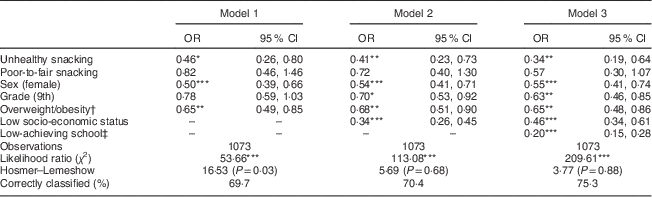
Table 3 shows the association between academic outcomes in Mathematics and nutritional quality of snacking at school. After adjusting for sex, grade and overweight, students eating unhealthy foods had significantly lower odds of good academic performance. Compared with the students eating healthy snack foods, the odds of passing the test were lower among students having unhealthy snacks at school (OR=0·46; 95 % CI 0·26, 0·80). We likewise found that performance in the test was also associated with sex and overweight/obesity. When SES was added as a covariate, the association between academic performance in Mathematics and nutritional quality of snacks remained significant (OR=0·41; 95 % CI 0·23, 0·73) and similarly the association with sex and overweight/obesity. In this model we also found a significant relationship with grade and SES. Lastly, after full adjustments, the odds of passing the test remained significantly lower among students eating unhealthy snacks (OR=0·34; 95 % CI 0·19, 0·64). An association with the school’s performance was found, while sex, grade, overweight and SES remained associated.
Relationship between individual academic performance in Mathematics and nutritional quality of school snacking, after controlling sociodemographic, health and educational confounders; random sample 5th and 9th grade students (n 1073) attending public, partially subsidized and private schools in Santiago Metropolitan Region, Chile, 2010
* Significance at the 0·05 level, **significance at the 0·01 levels ***significance at the 0·001 level.
† Overweight/obesity: BMI Z-score for age and sex ≥+1.
‡ Low-achieving school: definition according to the Ministry of Education.
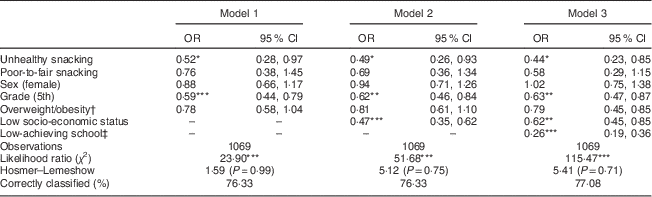
The results of students’ performance in Language are given in Table 4. In the first model, the association between academic performance and nutritional quality of snacks was significant. Students eating items rich in salt, simple sugars and saturated fat were 48 % less likely (OR=0·52; 95 % CI 0·28, 0·97) to pass the standardized test compared with students eating nutrient-rich items. Attainment in Language was associated with grade, but the association with sex and overweight/obesity was insignificant. By adding SES as a covariate, the association between academic performance and nutritional quality of snacks remained significant (OR=0·49, 95 % CI 0·26, 0·93) and, similarly, the association with grade. The relationship with SES was significant as well. In the fully adjusted model, students having unhealthy food items at school remained less likely to pass the standardized test compared with their peers consuming healthy foods (OR=0·44; 95 % CI 0·23, 0·85). The relationship between performance in this domain with grade and SES remained significant in this model, whereas a significant link to the school’s performance was found.
Relationship between individual academic performance in Language and nutritional quality of school snacking, after controlling sociodemographic, health and educational confounders; random sample 5th and 9th grade students (n 1073) attending public, partially subsidized and private schools in Santiago Metropolitan Region, Chile, 2010
* Significance at the 0·05 level, **significance at the 0·01 level, ***significance at the 0·001 level.
† Overweight/obesity: BMI Z-score for age and sex ≥+1.
‡ Low-achieving school: definition according to the Ministry of Education.
Discussion
Main conclusions
Our findings show that unhealthy snacking is remarkably widespread among Chilean students. In our sample, less than 10 % were considered to have healthy snacking at school (i.e. consumption of nutrient-rich items and protective foods on a daily basis). At the same time, more than a half ate energy-dense snacks, rich in simple sugars and saturated fat. In 2010, Bustos et al. studied eating habits during snack time in 10–13-year-old children attending public schools (n 668)( Reference Bustos, Kain and Leyton 36 ). Fifty-nine per cent used to buy food items at the school kiosk on a daily basis, mostly sweet snacks (35 %), sugary drinks, ice creams (33 %) and salty snacks (30 %). A few years earlier, Olivares et al. reported that 35 % of Chilean students aged 10–13 years had always money to buy food items at the school kiosk whereas 64 % had money from their parents at least three times per week( Reference Olivares, Yañez and Díaz 37 ). With the money, 68 % of the children used to buy sweet and salted products, 17 % bought soft drinks, 6 % bought yoghurt and 4 % bought fast food.
Chilean students are persistently exposed to a huge number of unhealthy food products, so snacking accounts for a considerable proportion of energy intake during the day. In almost every single school, there is a kiosk cart and a cafeteria-style food service that is open for luncheon and during recess time and after-school programmes. Very few districts within the Santiago Metropolitan Region are taking genuine steps towards healthier eating in schools by providing so-called ‘healthy spaces’. These are kiosks and cafeterias whose supply is made up of 70 % healthy foods (less than 544 kJ (130 kcal), 3 g of fat, 20 g of carbohydrates and 140 mg of Na per serving) at convenient prices( Reference Bustos, Kain and Leyton 38 ). In fact, price and the lack of availability of healthier food choices are among the main barriers to healthy snacking in elementary-school settings( Reference Salinas, Correa and Vio 39 ).
A second major finding is the positive association between nutritional quality of school snacking and academic outcomes in school-age children. In our sample, participants having unhealthy snacking showed significantly lower performance in Mathematics and Language compared with students eating nutrient-rich snacks. Consumption of refined carbohydrates and SFA has been related to poorer cognitive performance in both children( Reference Northstone, Joinson and Emmett 14 – Reference Nyaradi, Li and Hickling 18 ) and adolescents( Reference Smithers, Golley and Mittinty 16 , Reference Nyaradi, Foster and Hickling 40 , Reference Howard, Robinson and Smith 41 ). According to studies carried out in both animal and human models, these two macronutrients interfere with synaptic plasticity and neurogenesis in the hippocampus and the medial prefrontal cortex, disrupting high-ordered learning and memory processes( Reference Kanoski and Davidson 13 , Reference Davidson, Chan and Jarrard 42 , Reference Kanoski, Zhang and Zheng 43 ).
Also, our results are in line with those obtained by previous studies in various population samples of children. Sigfúsdóttir et al. and Kristjánsson et al. analysed survey data from Icelandic 9th and 10th graders to explore the relationship between selected health behaviours and academic outcomes( Reference Sigfúsdóttir, Krisjánsson and Allegrante 21 , Reference Kristjánsson, Sigfúsdóttir and Allegrante 22 ). They found that performance in Icelandic, Mathematics and foreign languages was negatively influenced by poor dietary habits, although both studies used self-reported averaged grades to measure academic outcomes. In Norwegian 9th and 10th grade adolescents (n 475), Øverby et al. observed that a high intake of foods representing a poor diet was significantly associated with increased odds of mathematical difficulties( Reference Øverby, Lüdemann and Høigaard 23 ). In previous research using the same sample, Øverby and Høigaard had found that receiving an optimal diet was linked with decreased odds of behavioural problems at school( Reference Øverby and Høigaard 24 ). Among 5200 children in 5th grade from Nova Scotia, Canada, Florence et al. reported a positive association between diet quality and academic performance in the standardized Elementary Literacy Assessment. Students with decreased overall diet quality and higher energy intake from fat were significantly more likely to perform badly on both the reading and the writing assessments( Reference Florence, Asbridge and Veugelers 25 ). Finally, using longitudinal data from ALSPAC and different measures of school performance, Feinstein et al. found that the ‘junk food’ dietary pattern at 3, 4 and 7 years of age was negatively associated with performance on entry assessments to school and the national standardized Key Stage 1 and Key Stage 2 tests, administered when children are aged 6–7 years and 10–11 years, respectively. Furthermore, the impact of that pattern at age 3 years recorded the greatest magnitude on the three indicators of academic outcome, suggesting that early feeding patterns have implications for academic outcomes that seem to run over time, irrespective of subsequent modifications in diet( Reference Feinstein, Sabates and Sorhaindo 44 ). All of these research studies used similar definitions of unhealthy foods and dietary habits. Less healthy foods are normally identified as those that are higher in processed carbohydrate and/or saturated fat and low in vitamins and minerals, such as sugar-sweetened soft drinks, sweets, chocolate, savoury snacks and high-fat processed foods.
Some comments should be made on the effect of nutritional status on the outcome variables. In a growing number of studies, school performance of overweight children has been found to be lower compared with that of normal-weight children, although the grounds for this relationship are debated( Reference Datar and Sturm 45 – Reference Taras and Potts-Datema 47 ). In our sample, overweight/obesity status increased the odds of academic difficulties, but only the association with Mathematics was significant.
Likewise, determinants such as social background and family support, which affect students’ academic performance, have also been found to be linked to children’s eating patterns( Reference Darmon and Drewnowski 48 – Reference Ambrosini, Oddy and Robinson 52 ). In our sample, the consumption of unhealthy snacks was somewhat lower in high-SES children, but the difference with middle- and low-SES children was insignificant. Nevertheless, we did see a significant positive association between school’s performance and nutritional quality of snacking. Since education is a key aspect of children’s present and future well-being, we can assume this variable denotes parental support in other dimensions of well-being, including nutrition and health status. Parents committed to their children’s education may be parents committed to their children’s lifestyles.
Implications for policy
Our results may have significant implications for government policy. They not only support the idea of a positive association between dietary patterns consistent with the food guidelines and academic outcomes, but also suggest that encouraging the consumption of snacks within the guidelines may be a simple method of advancing students’ performance in Mathematics and Language. According to the Chilean Ministry of Education, an important proportion of students shows important deficiencies in both fields( 32 ).
A further implication is that the link between diet and students’ academic performance might play a major role to promote sustained behavioural changes regarding lifestyles. Aiming to improve the population’s health and to prevent chronic diseases, several countries have developed food and nutrition guidelines. The underlying assumption is that if people are aware of the risks and that healthier choices exist, they will make wise decisions and modify their behaviour. However, in spite of the availability of information and healthy alternatives, people usually fail in making choices that truly advance their health and well-being. Behavioural scientists and behavioural economists have identified psychological biases that explain the anomalous health decision making( Reference Just and Payne 53 , Reference Gittelsohn and Lee 54 ). Reluctance to paternalism (forced choices), the tendency to choose the default option and the tendency to overvalue current benefits and costs relative to future ones are among the biases that prevent people from making smart health decisions no matter what information and knowledge they have about these matters. Given that reality, some positive external properties of healthy choices may be highlighted to increase the present value of healthy lifestyles. In previous works, we found a positive association of regular exercise with academic outcomes( Reference Correa-Burrows, Burrows and Orellana 55 , Reference Burrows, Correa and Ibaceta 56 ). Whereas the health implications of unhealthy lifestyles can take time to materialize, the academic benefits may be easily anticipated and, therefore, provide stronger incentives to make healthy choices.
Likewise, these results are interesting since they focus on school snacks which may be easier to address for future interventions than the whole diet. Two years after enactment of the Healthy Foods Act, the Chilean Ministry of Health is still working on the implementation regulations. One of the most difficult issues has been controlling the food sold and advertised in school settings. Due to the association of snacking at school with children’s academic outcomes, the present findings may reduce parental reluctance to the regulation of school kiosks, which has been traditionally perceived as contrary to freedom of choice. Indeed, when it comes to regulating the foods offered in schools, parents usually state that shaping children’s dietary habits is not a responsibility for the government( Reference Fraser 5 ).
Finally, these findings may pave the path for a major involvement of educational agencies in health advancement. In 1995, the WHO set up the Global School Health Initiative. A call was made to provide healthy settings for learning and to encourage governmental organizations, education officials, teachers and parents to get involved in the goal of increasing the number of schools that serve as a point of entry for health promotion and nutrition interventions( Reference Jones and Furner 57 , Reference Aldinger and Jones 58 ). Later, the 2004 Global Strategy on Diet, Physical Activity and Health reckoned that health behaviours can be influenced especially in schools and educational institutions, encouraging governments to adopt policies to support healthy diets at school and limit the availability of unhealthy foods( 59 ). Although school health and nutrition strategies have been implemented in Chile since the late 1990s, including the Vida Chile Program, the Global Strategy for Obesity (EGO-Chile) Schools Program and the Elige Vivir Sano Program, they have not been successful, judging by the obesity rates in children and adolescents. On the one hand, there is a lack of coordination among agencies, from local and regional to central government( Reference Salinas and Vio 60 ). On the other, the foremost aim of these strategies has been the population’s health, which is not considered to be a major goal by schools and educational agencies.
Strengths and limitations
The present research provides results supporting the notion of a positive link between unhealthy eating and academic achievement, although more investigation is needed to establish the directionality of this relationship. A further strength is that we provide evidence that may be useful for middle-income and developing countries undergoing nutritional and epidemiological transitions; while most studies have been conducted in the developed world, evidence for the developing world is still lacking. Last, we measured students’ academic performance using a nationwide standardized test.
In spite of these strengths, several limitations should be acknowledged. Our sample is not nationally representative; however, the Santiago Metropolitan Region accounts for 55 % of the Chilean school-age population, and our sample is representative of the target population by type of school (private, partially subsidized and public) and school’s academic performance in the SIMCE 2009. Second, although we accounted for sex, grade, nutritional status, SES and the school’s performance as possible confounders, due to data constraints we did not consider the mediating effect of other important influences such as breast-feeding duration, parental education and environment. A further weakness has to do with the fact that 5th graders answered the FFQ with their parents. This may introduce certain bias since parents are unable to truly monitor their children’s food choices at school. Yet, scientific evidence shows that children’s preferences and eating habits are highly influenced by familial environment and parental behaviours regarding lifestyles( Reference Savage, Fisher and Birch 51 , Reference Ambrosini, Oddy and Robinson 52 ). Finally, subsequent follow-up and longitudinal studies should address this issue and provide evidence on the temporality of this relationship.
Acknowledgements
Acknowledgements: The authors wish to acknowledge the ongoing commitment of the participants, their families and schools. They also thank to the Ministry of Education (Chile) for providing part of the data used in this research and all of the people who contributed to the development of this project. Financial support: This research received financial support from the National Commission for Scientific and Technological Research (CONICYT), Chile (grant FONDECYT nº 1100431). CONICYT had no role in the design, analysis or writing of this article. Conflict of interest: None. Authorship: P.C.-B. conceived the study, collected the literature, analysed the data and wrote the manuscript; R.B. and D.I. were involved in the study design, assisted in data interpretation and provided input for the manuscript; Y.O. was in charge of the sampling process and assisted in statistical analysis of the data. All authors had final approval of the submitted version. Ethics of human subject participation: This study was approved by the Committee on Ethics in Studies in Humans of the Institute of Nutrition and Food Technology (INTA), University of Chile, and ratified by the Committee on Bioethics of the National Fund for Scientific and Technologic Development (FONDECYT), Chile. Participants and their parents gave informed and written consent.



