



The importance of a healthy diet already starts early in life because dietary habits are being formed at a young age and track into adolescence and adulthood( Reference Huybrechts and De Henauw 1 , Reference Craigie, Lake and Kelly 2 ). However, the diet of European (pre-school) children is found to be poor as many children do not reach the dietary guidelines( Reference Huybrechts, Matthys and Vereecken 3 – Reference Kersting, Alexy and Kroke 6 ). Nevertheless, comparison between countries and different studies is difficult because of the variety of measurement methods used to asses dietary status in pre-schoolers. Huybrechts and colleagues developed and validated a Diet Quality Index (DQI) for pre-schoolers which enables the identification of diet quality across young children in different countries based on an FFQ( Reference Huybrechts, Vereecken and De Bacquer 7 ).
The DQI consists of four index components: dietary diversity, dietary quality, dietary equilibrium and the meal index( Reference Huybrechts, Vereecken and De Bacquer 7 ). The first component, dietary diversity, stresses the importance of food intake variety to reduce morbidity and mortality( Reference Huybrechts, Vereecken and De Bacquer 7 , Reference Huybrechts, Vereecken and Vyncke 8 ). To meet macro- and micronutrient needs, eating a variety of foods is essential( Reference Nicklaus 9 , Reference Krebs-Smith, Smiciklas-Wright and Guthrie 10 ). However, a maximum diversity score does not necessarily imply an optimal quality of food choice within the food groups. Hence, the second component is the dietary quality score. Highly nutritious food items (such as fresh fruit) should be recommended and energy-dense, low-nutritious food items (such as sweet snacks) should be discouraged( Reference Huybrechts, Vereecken and De Bacquer 7 , Reference Huybrechts, Vereecken and Vyncke 8 , Reference McConahy, Smiciklas-Wright and Mitchell 11 ). The dietary equilibrium score, the third component of total dietary quality, is composed of two subcomponents: adequacy and excess/moderation( Reference Huybrechts, Vereecken and De Bacquer 7 , Reference Huybrechts, Vereecken and Vyncke 8 ). An adequate but moderate intake of each food group is recommended to maintain a healthy diet( Reference Huybrechts, Vereecken and Vyncke 8 ). The daily intake should reach the minimum recommendation to cover the needs of all nutrients, which is investigated in the adequacy score. However, the daily intake should not exceed the maximum recommendation. Hence, this is investigated in the excess score( Reference Huybrechts, Vereecken and De Bacquer 7 , Reference Huybrechts, Vereecken and Vyncke 8 ). Portion sizes should be adapted to the age of the child( Reference McConahy, Smiciklas-Wright and Mitchell 11 ). Barlow and an expert committee selected the limiting of portion sizes, adapted to the age of the child, as a target behaviour to prevent excessive weight gain( 12 ). The last component of dietary quality is the meal index. A certain number of meals per day is recommended in a healthy diet( Reference Koletzko and Toschke 13 ). The total DQI is calculated from the sum of the four index subcomponents. High total DQI scores indicate a better diet quality of the pre-schoolers than low scores( Reference Huybrechts, Vereecken and De Bacquer 7 , Reference Huybrechts, Vereecken and Vyncke 8 ). By using four different subcomponents to determine total diet quality, the complex and multidimensional nature of eating patterns is covered. This complex nature of eating patterns is missing in studies focusing on one or more specific food items( Reference Patterson, Haines and Popkin 14 ).
Studies that investigate the multidimensional nature of eating patterns in pre-schoolers are scarce. Current studies often have a narrow focus on one or more food items or are regional( Reference Huybrechts, Matthys and Vereecken 3 – Reference Huybrechts, Vereecken and De Bacquer 7 ). A Flemish study using the DQI for pre-schoolers of Huybrechts et al. found rather low scores on diet quality in pre-schoolers( Reference Huybrechts, Vereecken and De Bacquer 7 ). A Greek study reported a poor diet in pre-schoolers based on the Healthy Eating Index (HEI), a diet quality index based on food and nutrient guidelines( Reference Manios, Kourlaba and Kondaki 4 ). A cross-European study on the diet quality of pre-schoolers is currently lacking.
Additionally, few studies have examined the relationship between diet quality and gender, socio-economic status (SES) and overweight. However, insight into differences by gender, SES and weight status may be important to target subgroups in interventions. A Greek study on diet quality in pre-schoolers based on the HEI reported a better overall diet quality and a better variety in boys compared with girls, while other studies found no differences according to gender( Reference Huybrechts and De Henauw 1 , Reference Manios, Kourlaba and Kondaki 4 ). To the best of our knowledge, no previous studies have investigated the relationship between overall diet quality and SES in European pre-schoolers. However, several studies have investigated the relationship between specific food and nutrient intakes and SES in children( Reference Batty and Leon 15 ). These studies showed that children of lower-SES backgrounds consumed more fat, sweets and soft drinks, and less fruit and vegetables, than children of high-SES backgrounds( Reference Batty and Leon 15 – Reference Brug, van Stralen and te Velde 17 ). A difference in diet quality by SES could be expected, with high-SES pre-schoolers having better scores than their lower-SES peers. Also, little is still known about the relationship between overweight and diet quality in pre-schoolers. Unhealthy food choices can lead to overweight or obesity, so a difference in diet quality could be expected according to weight status, with pre-school children with overweight or obesity having lower scores than pre-schoolers with a normal weight( Reference Royo-Bordonada, Gorgojo and Martín-Moreno 5 , 12 , Reference Szajewska and Ruszczynski 18 , Reference Martin 19 ). In addition, an interaction between gender, SES and overweight can be expected.
The purpose of the present study was to: (i) examine the diet quality of European pre-schoolers, based on the DQI scores; (ii) investigate the differences in diet quality according to gender, SES (educational level of the mother) and overweight/obesity status; and (iii) investigate the interaction between gender, SES and overweight on diet quality. Data were collected in the context of the ToyBox-study (multifactorial evidence-based approach using behavioural models in understanding and promoting fun, healthy food, play and policy for the prevention of obesity in early childhood) in six European countries. Diet quality and differences in diet quality were investigated in the total sample and in all six countries. By using one DQI, comparison between the European countries is possible. A cross-European study may be more valuable than a study with a regional focus.
Methods
Study background
Detailed sampling methods have been described elsewhere( Reference Manios, Androutsos and Katsarou 20 ). The ToyBox-study is an EU-funded large-scale study of pre-schoolers (3·5–5·5 years old) and their families from six European countries (Belgium, Bulgaria, Germany, Greece, Poland and Spain). It aimed to develop and evaluate a kindergarten-based, family-involved intervention to prevent overweight and obesity in pre-school children (www.toybox-study.eu)( Reference Manios, Grammatikaki and Androutsos 21 ). For the present study, the cross-sectional baseline data from the ToyBox-study were used.
The ToyBox-study was approved by ethical committees and local authorities in all six European countries, in line with national regulations (i.e. Ethical Committee of Ghent University Hospital (Belgium); Committee for the Ethics of the Scientific Studies (KENI) at the Medical University of Varna (Bulgaria); Ethikkommission der Ludwig-Maximilians-Universität München (Germany); Ethics Committee of Harokopio University of Athens and Ministry of Education (Greece); Ethical Committee of Children’s Memorial Health Institute (Poland); and CEICA (Comité Ético de Investigación Clínica de Aragón; Spain)). Parents/caregivers were asked for written informed consent for the participation of their child and themselves in the study.
Participants
The pre-school children and their families were recruited at kindergartens, day-care centres or pre-school settings, depending on the country regulations and legislation. Precisely, in Germany, Bulgaria, Spain and Poland children/families were recruited from kindergartens, in Greece from kindergartens and day-care centres, and in Belgium from pre-school settings. In order to avoid confusion for the reader, all these settings (kindergartens, day-care centres, pre-school settings) are referred to as ‘kindergartens’ herein. Kindergartens were recruited from different sociodemographic backgrounds within each of the provinces (West and East Flanders in Belgium, Varna in Bulgaria, Bavaria in Germany, Attica in Greece, Warsaw and surroundings in Poland, Zaragoza in Spain). Lists of all municipalities that exist within the selected provinces were created with information on the SES variables of the municipalities (mean years of education of the population aged 25–55 years or mean annual household income). Tertiles including three different sociodemographic groups were created based on the selected SES variables and each country randomly selected approximately five municipalities per SES status: five municipalities for low SES, five for medium SES and five for high SES. Then, kindergartens within these randomly chosen municipalities were randomly selected (with the exclusion of the lowest 20 % of the kindergartens with the smallest number of pupils). The number of kindergartens varied in each municipality, depending on reaching the minimum sample of 1100 pre-schoolers per country. All children whose parents gave written consent were included in the baseline measurements and questionnaires. This means that the number of children in each kindergarten differed by number of registered children and number of informed consents.
A minimum sample of 800 children and their families and twenty kindergartens per country, resulting in a total sample of 4800 children and their families and 120 kindergartens, was initially targeted. However, in order to account for an estimated dropout rate of about 30 %, a minimum total number of about 6500 children and their families were aimed to be recruited in the six participating countries. Therefore, a minimum sample of 1100 pre-schoolers per country was targeted. These numbers are based on detailed power calculations described elsewhere( Reference Manios, Androutsos and Katsarou 20 ). Data collection occurred between May and June 2012.
Measures
Food and beverage intakes
Parents/caregivers were asked to describe the child’s usual food and beverage habits over the last 12 months in a self-administered FFQ for pre-school children, which was developed based on a previously validated FFQ developed by Huybrechts et al.( Reference Huybrechts, De Backer and De Bacquer 22 ). For each of the thirty-seven food and beverage items, the frequency of consumption was asked. Response categories were: ‘never or less than once per month’, ‘1–3 days per month’, ‘1 day per week’, ‘2–4 days per week’, ‘5–6 days per week’ and ‘every day’. Next, the average consumption per day was asked. Parents/caregivers were asked to indicate the portion size category that best fitted the daily portion of their child. The response categories varied depending on the food item and a list of common standard measures as examples was given, as well as colour images to facilitate the selection of portion sizes. Dietary data from the FFQ were converted to average daily intake values by multiplication of number of days per week and amount per day then dividing by 7( Reference Huybrechts, De Backer and De Bacquer 22 ).
To avoid missing scores, the following encodings, based on encoding of Huybrechts et al.( Reference Huybrechts, De Backer and De Bacquer 22 ), in the FFQ data were made. When no score was given for portion size and the frequency was scored ‘1’ (never or less than once per week), it was considered that the children did (almost) never consume the item and the portion size was scored ‘0’. When the score on portion size was missing but the frequency was not missing and not ‘1’, the median of the portion size of that item was given as the score on this item. Children with a missing score both on frequency and portion size on an item of the FFQ were considered as non-consumers and their score was changed into ‘0’, both on frequency and portion size of that item. When a score on frequency was missing but a portion size was mentioned, the score on frequency was replaced by the median of the frequency of that item.
Pre-school children who had no data on both frequency and portion size for all thirty-seven items were excluded from the study (n 74).
Diet Quality Index
The DQI for pre-school children was developed based on the Flemish active food triangle and assesses the compliance of pre-schoolers with the Flemish food-based dietary guidelines( Reference Huybrechts, Vereecken and Vyncke 8 , Reference Vanhauwaert 23 ). The triangle recommends a daily intake for each food group (non-sugared beverages; bread, cereals, potatoes and grains; vegetables; fruit; milk products and calcium-enriched soya products; meat, fish, eggs and meat substitutes; fat and oils) in order to cover the varying nutrient needs in the population. The tip of the triangle is separated from the rest of the triangle and is called the ‘rest group’ or snacks( Reference Huybrechts, Matthys and Vereecken 3 ). The DQI is based on Flemish guidelines because there are no European guidelines yet. However, the Flemish recommendations are very similar to dietary guidelines in other countries, making these recommendations applicable for a European population of pre-schoolers( 24 ). The advantage of using one index is that it makes comparison between the different countries in the current study possible.
The food and beverage items of the FFQ were used to compute the total DQI and the four subcomponents. A study of Huybrechts et al. on the reproducibility and validity of a DQI in pre-schoolers assessed using an FFQ concluded that the FFQ-based DQI score is a reasonable estimate of diet quality when compared with 3 d diet records( Reference Huybrechts, Vereecken and De Bacquer 7 ). As mentioned before, the total DQI consists of four index subcomponents: dietary diversity, dietary quality, dietary equilibrium and the meal index.
Dietary diversity
At least one food item from each of the eight food groups of the Flemish active food triangle should be consumed on a daily basis( Reference Huybrechts, Vereecken and De Bacquer 7 , Reference Huybrechts, Vereecken and Vyncke 8 , Reference Vanhauwaert 23 ). For each food group (water, cereals, potatoes, fruit, vegetables, milk products, cheese and meat & fish), the frequencies of the food items belonging to that food group were summed. Next, a diversity score of ‘1’ was given if this sum was one or more; if not, diversity was scored ‘0’ for that particular food group. The diversity scores of all food groups were summed, divided by the number of food groups (8) and multiplied by 100.
Dietary quality
Each food item of the FFQ was scored ‘−1’, ‘0’ or ‘1’ depending on whether the food item of a certain food group was categorized in the low-nutritious but energy-dense group (−1), the intermediate group (0) or the preference group (1) of the Flemish active food triangle. This score was then multiplied by the amount (grams/millilitres) that was consumed for each food item in order to obtain the dietary quality score. All the individual food scores were then summed, divided by the total intake of all food items (grams/millilitres per day) and multiplied by 100.
Dietary equilibrium
For each food group, the total daily intakes of all food items of that food group were summed. Then the daily intake of each food group was compared with the recommendation for that specific food group to calculate both adequacy and moderation( Reference Vanhauwaert 23 ). If the daily intake met the minimum norm, a score of ‘1’ was given for adequacy. When the daily intake of a food group did not meet the minimum norm, the adequacy score was calculated as follows: daily intake of the food group/minimum norm of the food group. Moderation was scored ‘0’ if the maximum norm was not exceeded. If the maximum norm was exceeded, the score was calculated as follows: (maximum norm – daily intake of the food group)/maximum norm. If the daily intake of a food group was twice as many or more than the recommended maximum intake, a score of ‘−1’ was given for moderation. Equilibrium for each food group was calculated from the sum of adequacy and moderation. To determine the equilibrium score, an extra food group was added, more specifically snacks. Because this group consists mainly of energy-dense, low-nutritious food items, moderation of the snack group is very important. The total equilibrium score was the sum of all equilibrium scores divided by the total number of food groups (9) and multiplied by 100.
Meal index
Meal patterns were inquired in the FFQ. The meal index was calculated from the average amount of times breakfast, lunch and dinner were consumed, divided by 3 and multiplied by 100.
Total DQI
The total DQI was calculated from the sum of the four index components, divided by 4. High total DQI scores indicate better diet quality of the pre-schoolers than low scores, with 100 % being a perfect score, meaning perfect compliance with the food-based dietary guidelines( Reference Huybrechts, Vereecken and De Bacquer 7 , Reference Huybrechts, Vereecken and Vyncke 8 ). Results of the total DQI and the subcomponents are reported as percentages of maximum scores.
Socio-economic status
Education of the parents/caregivers was determined in the core questionnaire. The educational level of the mother was used as a SES indicator. Educational level has been identified as an important indicator for SES( Reference Winkleby, Jatulis and Frank 25 ). The educational level was dichotomized into lower (≤14 years of education) and high (>14 years of education) SES, which distinguishes families with a mother who has completed medium or higher education, college or university training from other families( Reference Brug, van Stralen and te Velde 17 ).
Overweight
Pre-schoolers’ weight and height were measured by the ToyBox-study researchers as has been described elsewhere( Reference De Miguel-Etayo, Mesana and Cardon 26 ). Each measurement was conducted for a minimum of two times, then mean height and mean weight were calculated. Based on these measurements, the BMI was calculated. Next, the pre-schoolers were categorized into two categories based on the age- and sex-specific cut-off levels of Cole and Lobstein: being overweight or obese and not being overweight or obese( Reference Cole and Lobstein 27 ).
Other sociodemographic variables
Gender and date of birth were self-reported by one of the parents/caregivers of the pre-schoolers in the core questionnaire. Pre-school children’s age was computed based on the date of birth and the date when the questionnaire was completed. All questionnaires are available on the ToyBox-website (www.toybox-study.eu) and in the ToyBox supplement issue( Reference Mouratidou, Miguel and Androutsos 28 ).
Statistical analyses
Descriptive statistics were performed using the statistical software package IBM SPSS Statistics for Windows, version 21.0. One-way (M)ANOVA were used to assess the country-specific differences in the descriptive statistics and the diet quality scores. Next, MANOVA were performed to assess differences in means of diet quality scores according to gender, SES and overweight. A three-way MANOVA was performed to investigate the interaction effects between gender, SES and overweight. Diet quality and differences in diet quality were tested in the total sample and stratified by country. The significance level was set at P < 0·05.
Results
Population characteristics
The total and country-specific population characteristics are presented in Table 1. The total sample included 7063 pre-schoolers (mean age 4·8 (sd 0·4) years, 52·0 % boys) from six European countries; 40·1 % had a mother with a lower level of education (≤14 years of education) and 14·1 % of the pre-schoolers were overweight or obese. Significant differences in SES were found between the different countries (F=73·58, P<0·001). The Polish sample counted the fewest pre-schoolers of lower-SES mothers (21·0 %), the Greek sample the most (51·6 %). Also, significant differences in overweight were found between the six countries (F=15·81, P<0·001). The Greek sample contained twice as many pre-school children with overweight (19·7 %) compared with the German sample (10·5 %).
Characteristics of participants of the total sample and of each country separately. European pre-schoolers (aged 3·5–5·5 years) and their parents/caregivers (n 7063), ToyBox-study, May–June 2012

SES, socio-economic status.
† SES indicator is years of school education of the mother: lower, mother of the child has ≤14 years of education.
‡ Including obese.
Diet quality indices
Table 2 provides an overview of the total and country-specific scores on the total DQI and the subcomponents. Pre-schoolers of the total sample had a mean total DQI score of 68·3 %. Significant differences between countries were found (F=65·42, P<0·001). Greek pre-school children had the lowest total score (65·2 %) and Belgian pre-schoolers the highest (72·3 %). Also, significant differences between countries were found for each subscore (dietary diversity: F=59·41, P<0·001; dietary quality: F=121·89, P<0·001; dietary equilibrium: F = 22·52, P<0·001; meal index: F = 83·12, P<0·001). The scores were especially low on dietary quality across all countries (56·5 %). Polish pre-school children scored the lowest on quality (47·9 %), Bulgarian pre-schoolers had the best score (63·2 %). The score on dietary diversity was 61·7 % for the total sample. After stratification, this score ranged from 58·0 % (Bulgaria) to 70·5 % (Belgium). The dietary equilibrium score of the total sample was 65·4 %. After stratification, all scores were similar, ranging from 62·2 % (Bulgaria) to 66·7 % (Belgium). The highest subscore was the meal index score (89·7 %), 72·9 % of the pre-schoolers of the total sample consumed breakfast, lunch and dinner on a daily basis. Only 47·4 % of Greek pre-schoolers consumed three meals every day, compared with 87·0 % of Polish pre-schoolers.
Mean diet quality indices (%) of the total sample and each country separately. European pre-schoolers (aged 3·5–5·5 years) and their parents/caregivers (n 7063), ToyBox-study, May–June 2012

DQI, Diet Quality Index( Reference Huybrechts, Vereecken and De Bacquer 7 ).
† Percentage of pre-schoolers who consume breakfast, lunch and dinner every day.
Diet quality indices by gender
Table 3 shows the results on differences in diet quality scores by gender. No significant differences by gender were found in the total DQI score. For dietary diversity, a significant difference in one country was found after stratification. Belgian male pre-schoolers scored better on diversity than female pre-schoolers. Female pre-school children of the total sample had a higher score on dietary quality than their male peers. This result was also seen in the Polish sample. For dietary equilibrium and the meal index, no significant differences by gender were found.
Differences in means of diet quality indices (%) between boys and girls in the total sample and the six European countries separately (MANOVA). European pre-schoolers (aged 3·5–5·5 years) and their parents/caregivers (n 7063), ToyBox-study, May–June 2012

DQI, Diet Quality Index( Reference Huybrechts, Vereecken and De Bacquer 7 ).
*P < 0·05, **P < 0·01.
Diet quality indices by educational level of the mother
As presented in Table 4, scores on the diet quality indices differed significantly by SES. Pre-schoolers of high-SES backgrounds scored better on the total DQI than pre-schoolers of lower SES. After stratification, this result was also seen in four of the six countries (Belgium, Germany, Greece and Poland). The dietary diversity scores also varied by SES. Pre-school children of high-SES mothers had a higher score on diversity than their lower-SES peers. This result was also confirmed in the Bulgarian, German, Greek and Spanish samples. For dietary quality, scores were higher in pre-schoolers of high-SES backgrounds than in pre-schoolers from lower-SES mothers. After stratification, this result was seen in all countries, except for Bulgaria. Also for dietary equilibrium, higher scores were found for high-SES pre-school children compared with their lower-SES peers. This result was confirmed in three countries (Belgium, Germany and Greece). Finally, also the scores on meal index were higher in pre-schoolers of high-SES backgrounds than pre-schoolers of lower-SES mothers. After stratification, this was found only in the German sample.
Differences in means of diet quality indices (%) between lower and high SES in the total sample and the six European countries separately (MANOVA). European pre-schoolers (aged 3·5–5·5 years) and their parents/caregivers (n 7063), ToyBox-study, May–June 2012

SES, socio-economic status; DQI, Diet Quality Index( Reference Huybrechts, Vereecken and De Bacquer 7 ).
*P < 0·05, **P < 0·01, ***P < 0·001.
† SES indicator is years of school education of the mother: lower, mother of the child has ≤14 years of education; high, mother of the child has >14 years of education.
Diet quality indices by overweight
Table 5 presents the results on differences in scores on diet quality indices by overweight. No differences in scores on total DQI were seen based on overweight status, neither in the total sample nor after stratification. Pre-schoolers with overweight had significantly lower scores on dietary diversity than pre-schoolers without overweight in the total sample. For dietary quality, no significant differences by overweight were found. Bulgarian pre-school children with overweight had higher scores on dietary equilibrium than their peers with a normal weight. This result was not found in other countries or in the total sample. For the meal index, only in the total sample was a significant difference found. Pre-school children with overweight scored worse on the meal index than pre-schoolers without overweight.
Differences in means of diet quality indices (%) between normal-weight and overweight pre-schoolers in the total sample and the six European countries separately (MANOVA). European pre-schoolers (aged 3·5–5·5 years) and their parents/caregivers (n 7063), ToyBox-study, May–June 2012

DQI, Diet Quality Index( Reference Huybrechts, Vereecken and De Bacquer 7 ).
*P < 0·05, **P < 0·01.
† Including obesity.
Interaction between gender, socio-economic status and overweight
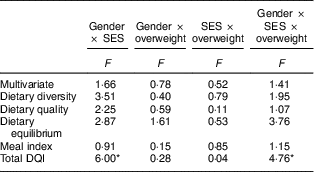
Table 6 presents the results on the interaction effects between gender, SES and overweight. Only limited interaction effects were found. Both in the overweight pre-schoolers as in the normal-weight pre-school children, pre-schoolers of high-SES backgrounds had better total DQI scores than lower-SES pre-schoolers. In overweight pre-schoolers, gender differences were dependent on SES: in pre-schoolers of lower-SES backgrounds, boys had better scores on total diet quality than girls, while in high-SES pre-schoolers, girls had better total diet quality scores than boys. In normal-weight pre-school children gender differences were not dependent on SES.
Interaction effects between gender, SES and overweightFootnote † on diet quality indices in the total sample (three-way MANOVA). European pre-schoolers (aged 3·5–5·5 years) and their parents/caregivers (n 7063), ToyBox-study, May–June 2012
SES, socio-economic status; DQI, Diet Quality Index( Reference Huybrechts, Vereecken and De Bacquer 7 ).
*P < 0·05.
† Including obesity.
Discussion
The aim of the present study was to investigate the diet quality in pre-schoolers of six European countries based on the DQI and the differences in diet quality according to gender, SES and overweight. The first objective of the study was to provide an overview of the diet quality of European pre-schoolers based on the total DQI and the four subcomponents. A high total DQI score indicates a better diet quality of the pre-schoolers than a low score, with 100 % being a perfect score( Reference Huybrechts, Vereecken and Vyncke 8 , Reference Nicklaus 9 ). Results of the total DQI and the subcomponents are reported as percentages of maximum scores. There was still a lot of room for improvement in the mean score on total diet quality (68·3 %). Similar results for total diet quality were found in Flemish pre-schoolers in a study of Huybrechts et al. (72 %)( Reference Huybrechts, Vereecken and De Bacquer 7 ).
When looking into the four subcomponents, it was found that the highest scores were achieved for the meal index (89·7 %). Most pre-schoolers consumed breakfast, lunch and dinner every day. The lowest scores were found in dietary quality (56·5 %). This means that the subcomponent dietary quality appeared to be the main problem in European pre-schoolers. In other words, pre-schoolers or their parents/caregivers made unhealthy food choices since especially energy-dense, low-nutritious food items (such as sweet snacks or sugared beverages) were consumed instead of highly nutritious food items (such as vegetables). However, also rather low scores were found on dietary diversity and dietary equilibrium. So pre-school children do not have a lot of variety in their diet and do not have an adequate but moderate intake of each food group. In other words, they did not reach the minimum norm or they exceeded the maximum recommendation. Minimal differences were found between the different countries. So it seemed that a similar pattern in diet quality can be found in all six countries. Similar results were found in a study of diet quality based on the DQI in Flemish pre-schoolers in which dietary quality was the lowest subcomponent and pre-schoolers had the highest scores on the meal index( Reference Huybrechts, Vereecken and De Bacquer 7 ).
A second objective was to provide insight into differences in diet quality scores according to SES, gender and overweight status. Very clear differences in diet quality scores were found by SES. Pre-schoolers of lower-SES mothers had lower scores on total diet quality and all subcomponents compared with pre-school children of high-SES backgrounds. The country-specific results in much smaller samples supported this finding, to a large extent in Germany and much less in Bulgaria. A study on Greek pre-schoolers using the HEI also found lower diet quality in pre-schoolers of mothers with lower educational status( Reference Manios, Kourlaba and Kondaki 4 ). This is an important finding given that the scores were already low in the general pre-schoolers group. Previous studies already found higher consumption of fat, sweets and soft drinks, and lower fruit and vegetable intakes, in children of lower-SES backgrounds( Reference Batty and Leon 15 – Reference Brug, van Stralen and te Velde 17 ). However, the current study indicates that the problem is much larger. It appeared that already in very young children lower-SES mothers are not able to provide a good diet quality and this was consistent for all four subcomponents of the total DQI. Several explanations can be provided for the differences in diet quality according to SES. First, parents play an important role in food consumption of young children. It has been found that lower-SES mothers consume less fruit and vegetables and more soft drinks compared with high-SES mothers, which is a significant factor given the important influence of parental role modelling on children’s dietary behaviours( Reference Vereecken, Keukelier and Maes 29 ). Also a difference in other parenting practices between high- and lower-SES mothers can explain the differences in diet quality according to SES. Lower-SES mothers often lack skills to impose restrictions on the consumption of unhealthy foods and skills to reinforce positive behaviour( Reference Vereecken, Keukelier and Maes 29 ). In addition, high-SES parents often take health more into account than lower-SES parents( Reference Vereecken, Keukelier and Maes 29 ). Furthermore, lower-SES parents are more difficult to reach with health messages( Reference O’Malley, Kerner and Johnson 30 ). In lower-SES parents, knowledge problems might occur as the educational level of the mother was used as an indicator for SES. Kant and Graubard indicated that ‘education may be linked to acquisition, understanding, and implementation of knowledge about desirable dietary behaviours’ (p. 690)( Reference Kant and Graubard 31 ). Future interventions to improve the diet quality should pay extra attention to this subgroup of pre-schoolers.
Unlike the significant differences by SES, no differences in total diet quality were found between boys and girls. Only in the subcomponent dietary quality were differences by gender found, with female pre-schoolers having better scores than their male peers. Also, the present study showed little differences in diet quality scores in terms of overweight/obesity status. Although a difference in diet quality was expected as unhealthy choices can lead to overweight or obesity( Reference Huybrechts and De Henauw 1 , Reference Huybrechts, Matthys and Vereecken 3 , 12 , Reference Szajewska and Ruszczynski 18 ), we did not find this in the current study. The lack of difference by overweight/obesity status can possibly be explained by the young age of the children. The negative health effects of an unhealthy diet might not be seen yet at such a young age. However, we know that tracking of the unhealthy diet quality may lead to an increase of overweight in later life. A review by Craigie et al. reported evidence of eating patterns tracking between childhood and adulthood( Reference Craigie, Lake and Kelly 2 ). In addition, an unhealthy diet can also cause other health problems besides overweight or obesity. Parents may think that their child is healthy when there is no weight problem, but other health problems, such as diabetes, may occur in later life because of a poor diet quality in early childhood.
The present study holds several strengths. To our knowledge, it is the first study that examined the diet quality of pre-schoolers in European countries based on the DQI and its relationship with SES, gender and weight status. In addition, by using the validated DQI to assess diet quality, also the complexity and the multidimensional nature of food consumption patterns are covered( Reference Huybrechts, Vereecken and Vyncke 8 , Reference Koletzko and Toschke 13 ). Another study strength was the large sample of pre-schoolers from six European countries and the standardized data collection protocol across the different countries.
The current study has some limitations. The FFQ was filled in by parents/caregivers, so under-reporting and over-reporting might be a bias caused by socially desirable answers( Reference Tooze, Subar and Thompson 32 ). This was partially covered by ensuring anonymity. In addition, González-Gil et al. have studied the reliability of primary caregivers’ reports and concluded that a primary caregivers’ questionnaire is a reliable tool to assess sociodemographic characteristics, perinatal factors and lifestyle behaviours of pre-school children and their families participating in the ToyBox-study( Reference González-Gil, Mouratidou and Cardon 33 ). An FFQ is not as accurate in evaluating food intake as a multiple diet record( Reference Huybrechts, Vereecken and De Bacquer 7 ). However, the FFQ used in the ToyBox-study is based on a previously validated FFQ developed by Huybrechts et al.( Reference Huybrechts, De Backer and De Bacquer 22 ). As mentioned before, the FFQ-based DQI score is a reasonable estimate of diet quality when compared with 3 d diet records and an appropriate indicator to rank individuals according to their diet quality( Reference Huybrechts, Vereecken and De Bacquer 7 ). The DQI of Huybrechts et al. is exclusively based on food-based guidelines and not on nutrient-based guidelines, unlike the original Diet Quality Index developed for the US population( Reference Huybrechts, Vereecken and Vyncke 8 ). However, benefits of a food-based guideline index include the possible use of an FFQ and does not require a link with food composition tables, avoiding additional measurement errors inherent to food composition data and matching with food consumption data( Reference Huybrechts, Vereecken and Vyncke 8 ). The encoding strategy used to avoid missing scores may have affected the accuracy of the findings. A maximum of 3 % of missing values was found for frequency of the FFQ items. Regarding portion size, for some items up to half of the participants had a missing value. However, most items had lower percentages (less than 10 %) of missing values. Nevertheless, the encoding strategy used in the current study has also been used in the validation study of the FFQ of Huybrechts et al., which means that this is a widely used method to deal with missing variables in an FFQ( Reference Huybrechts, De Backer and De Bacquer 22 ). Since SES was assessed only by the educational level of the mother, pre-school children living in a family with a father having a higher educational level than the mother were assessed as having a lower educational status. However, maternal education is often seen as more influential for the child than education of the father given that mothers are often the primary caregiver( Reference De Coen, Vansteelandt and Maes 34 , Reference Williams and Kelly 35 ). This was also found in a study of De Coen et al., in which only maternal education was found as a risk factor for overweight in pre-school children and no significant results were found for paternal education( Reference De Coen, De Bourdeaudhuij and Verbestel 36 ). We acknowledge that the ToyBox-sample is not a fully representative European sample, due to sampling in specific regions in each country. However, limited differences can be found between regions within European countries. Samples included pre-schoolers of low-, medium- and high-SES backgrounds and in each kindergarten (almost) complete classes were included. The samples can give a fair approximation of the average situation in each country. The procedure of sampling in specific regions has also been used in several other European studies such as HELENA (Healthy Lifestyle in Europe by Nutrition in Adolescence) and ENERGY (EuropeaN Energy balance Research to prevent excessive weight Gain among Youth)( Reference Moreno, De Henauw and González-Gross 37 , Reference van Stralen, te Velde and Singh 38 ). As the present study was a cross-sectional study, no causality in relationships could be identified. Longitudinal data are needed to study the change in diet quality throughout childhood.
Conclusion
The total diet quality of European pre-schoolers is rather low. Especially the subcomponent dietary quality, which focuses on the quality of the selected food products, appeared to be the main problem as pre-schoolers or their parents/caregivers made unhealthy food choices. However, scores on dietary variety and dietary equilibrium were also low. Differences in diet quality according to gender and overweight/obesity status were not found. However, differences in diet quality scores by SES were found. Pre-schoolers of high-SES backgrounds had higher scores on total diet quality and all subcomponents than their lower-SES peers. So, it appeared that even in very young children lower-SES mothers are not able to provide a good diet quality and this was consistent for all four subcomponents of the total DQI. An optimal food intake should be enhanced, especially in pre-schoolers of lower-SES backgrounds.
Acknowledgements
Financial support: The ToyBox-study is funded by the Seventh Framework Programme (CORDIS FP7) of the European Commission under grant agreement number 245200. The sponsor had no role in the design or conduct of the study, the collection, management, analysis or interpretation of the data, or the preparation, review and approval of the manuscript. The content of this article reflects only the authors’ views and the European Community is not liable for any use that may be made of the information contained herein. Conflict of interest: None. Authorship: All authors, except for I.H., B.D., W.V.L. and A.-S.P., participated in the ToyBox-study and in the study design. All authors read, critically reviewed the manuscript and approved the final manuscript. A.-S.P. wrote the manuscript. Ethics of human subject participation: The ToyBox-study was approved by ethics committees in all six European countries, in line with national regulations. The ToyBox-study group consists of the following. Co-ordinator: Yannis Manios; Steering Committee: Yannis Manios, Berthold Koletzko, Ilse De Bourdeaudhuij, Mai Chin A Paw, Luis Moreno, Carolyn Summerbell, Tim Lobstein, Lieven Annemans, Goof Buijs; External Advisors: John Reilly, Boyd Swinburn, Dianne Ward; Harokopio University (Greece): Yannis Manios, Odysseas Androutsos, Eva Grammatikaki, Christina Katsarou, Eftychia Apostolidou, Eirini Efstathopoulou; Ludwig-Maximilians-Universität-München (Germany): Berthold Koletzko, Kristin Duvinage, Sabine Ibrügger, Angelika Strauß, Birgit Herbert, Julia Birnbaum, Annette Payr, Christine Geyer; Ghent University (Belgium), Department of Movement and Sports Sciences: Ilse De Bourdeaudhuij, Greet Cardon, Marieke De Craemer, Ellen De Decker and Department of Public Health: Lieven Annemans, Stefaan De Henauw, Lea Maes, Carine Vereecken, Jo Van Assche, Lore Pil; VU University Medical Center, EMGO Institute for Health and Care Research (the Netherlands): Mai Chin A Paw, Saskia te Velde; University of Zaragoza (Spain): Luis Moreno, Theodora Mouratidou, Juan Fernandez, Maribel Mesana, Pilar De Miguel-Etayo, Esther González, Luis Gracia-Marco, Beatriz Oves; Oslo and Akershus University College of Applied Sciences (Norway): Agneta Yngve, Susanna Kugelberg, Christel Lynch, Annhild Mosdøl; University of Durham (UK): Carolyn Summerbell, Helen Moore, Wayne Douthwaite, Catherine Nixon; State Institute of Early Childhood Research (Germany): Susanne Kreichauf, Andreas Wildgruber; Children’s Memorial Health Institute (Poland): Piotr Socha, Zbigniew Kulaga, Kamila Zych, Magdalena Góźdź, Beata Gurzkowska, Katarzyna Szott; Medical University of Varna (Bulgaria): Violeta Iotova, Mina Lateva, Natalya Usheva, Sonya Galcheva, Vanya Marinova, Zhaneta Radkova, Nevyana Feschieva; International Association for the Study of Obesity (UK): Tim Lobstein, Andrea Aikenhead; National Institute for Health Promotion and Disease Prevention (the Netherlands): Goof Buijs, Annemiek Dorgelo, Aviva Nethe, Jan Jansen; AOK-Verlag (Germany): Otto Gmeiner, Jutta Retterath, Julia Wildeis, Axel Günthersberger; Roehampton University (UK): Leigh Gibson; University of Luxembourg (Luxembourg): Claus Voegele.



