



Malnutrition is a major public health problem in many low- and middle-income countries (LMIC). Currently, 159 million children <5 years of age suffer from stunting and 50 million from wasting( 1 ), which contributes to nearly one-third of all deaths of children in this age group worldwide( Reference Black, Victora and Walker 2 ). Disparities in the prevalence of malnutrition are evident across geographic regions and wealth strata, with rural and poor children at increased risk( Reference Black, Victora and Walker 2 ). Nutritional inadequacies in early childhood are associated with poor physical growth, increased risk for overweight, obesity and non-communicable diseases, and reduced educational attainment and economic productivity( Reference Black, Victora and Walker 2 , Reference Victora, Adair and Fall 3 ).
The first 1000 d of life are critical for ensuring optimal growth and development and reducing the likelihood of morbidity and mortality( Reference Black, Victora and Walker 2 ). The use of appropriate, evidence-based infant and young child feeding (IYCF) practices (Box 1) is listed among the WHO’s essential nutrition actions for improving infant and child health and preventing malnutrition( 4 ). However, caregivers in LMIC may employ inappropriate IYCF practices due to several psychosocial factors, such as a lack of knowledge, low confidence in performing certain feeding practices, and inaccurate beliefs about feeding( Reference Balogun, Dagvadorj and Anigo 5 ). Children who experience inappropriate feeding practices, particularly during the first 6–12 months of life, are at high risk of malnutrition, growth faltering and stunting( Reference Bhutta, Das and Rizvi 6 – Reference Dewey and Adu-Afarwuah 8 ).
Definition of key terms used in the present systematic review of mass media and nutrition education interventions for infant and young child feeding in low- and middle-income countries

Interventions to encourage optimal IYCF practices are thus a promising strategy to prevent malnutrition in childhood and improve physical growth( Reference Bhutta, Das and Rizvi 6 – Reference Fabrizio, Van Liere and Pelto 9 ). Previous IYCF interventions, which typically target expectant mothers or mothers with infants between 0 and 24 months old, have addressed the following behaviours: exclusive breast-feeding; appropriate and timely introduction of safe, nutritious complementary foods; and the proper preparation of infant foods and/or use of micronutrient supplements( Reference Dewey and Adu-Afarwuah 8 ). IYCF interventions may be delivered via individual or community-based nutrition education sessions or home visits by community health workers or volunteer peer educators( Reference Fabrizio, Van Liere and Pelto 9 ). A nutrition education approach allows participants to develop a set of cognitive, affective and physical skills( Reference Contento 10 ) and is effective in encouraging optimal psychosocial factors and IYCF practices among caregivers in LMIC( Reference Bhutta, Das and Rizvi 6 – Reference Pelto, Matin and Van Liere 11 ). Previous authors have identified best practices in the design, implementation and evaluation of nutrition education interventions focused on IYCF( Reference Dewey and Adu-Afarwuah 8 , Reference Fabrizio, Van Liere and Pelto 9 , Reference Pelto, Matin and Van Liere 11 ), which align with recommendations from the broader nutrition and health education fields( Reference Contento 10 , Reference Baranowski, Cerin and Baranowski 12 , Reference Bartholomew, Parcel and Kok 13 ). For example, the use of formative research to understand the needs of the target audience, a formal theory of behaviour change and behaviour-specific messages may increase the effectiveness of interventions( Reference Dewey and Adu-Afarwuah 8 , Reference Fabrizio, Van Liere and Pelto 9 ). In particular, the use of theory during the design of an intervention provides several benefits to researchers and practitioners, such as making explicit the proposed pathway or mechanism for an intervention to change behaviour and facilitating replication in future studies( Reference Davidoff, Dixon-Woods and Leviton 14 ).
Yet there is concern about the ability to scale up IYCF interventions given the lack of capacity among frontline nutrition and health workers( Reference Fanzo, Graziose and Kraemer 15 ). While not a new delivery platform for nutrition education( Reference Manoff 16 ), mass media have recently enjoyed renewed interest as a means to expand the reach (especially to rural, inaccessible areas) and improve the cost-effectiveness of traditional approaches( Reference Naugle and Hornick 17 , Reference Annan and Dryden 18 ). Mass media generally include radio, print (e.g. newspapers, pamphlets, posters), loudspeakers on cars, telephones (including SMS (text) and voice messages), videos and, more recently, Internet and smartphone software applications. These platforms provide the opportunity to educate and motivate individuals who might otherwise have been missed by traditional approaches.
There has been a concurrent expansion of scientific literature describing applications of mass media for behaviour change. Yet previous reviews have been narrowly focused on developed countries, specific continents( Reference Aranda-Jan, Mohutsiwa-Dibe and Loukanova 19 ), the type of platforms used( Reference Hall, Fottrell and Wilkison 20 ) or behaviours other than IYCF, such as health services utilization, HIV treatment, family planning, and fruit and vegetable consumption( Reference Snyder 21 ). Four recent reviews of mass media did not focus exclusively on IYCF interventions or describe intervention design and implementation( Reference Naugle and Hornick 17 , Reference Higgs, Goldberg and Labrique 22 – Reference Wakefield, Loken and Hornick 24 ). A comprehensive synthesis of the theories used to design and implement behaviour change interventions within mass media platforms remains an unfilled gap in the literature.
The objective of the current systematic review was to describe the design, implementation and effectiveness of recent interventions that include mass media components focused on improving IYCF practices and related psychosocial factors (including knowledge, attitudes and beliefs) among caregivers of children aged 0–24 months within LMIC and relative to a control group. The review is guided by previously identified design frameworks( Reference Contento 10 , Reference Baranowski, Cerin and Baranowski 12 , Reference Bartholomew, Parcel and Kok 13 ) and suggested reporting conventions( Reference Fabrizio, Van Liere and Pelto 9 ).
Methods
The present review includes a systematic search of the peer-refereed and grey literature, in accordance with the Preferred Reported Items for Systematic Reviews and Meta-Analyses (PRISMA) Statement( Reference Moher, Liberati and Tetzlaff 25 ). The protocol for the review was registered in PROSPERO (CRD42015017536). The search was constructed using the following PICO format: Population (caregivers of children aged 0–24 months), Intervention (behaviour change interventions including mass media and/or nutrition education), Comparator (usual care or no-intervention), Outcome (IYCF practices and/or related psychosocial factors) and Context (LMIC).
Study identification
Searches were conducted within PubMed, Embase and PsycINFO databases and within Google (www.google.com) to identify records describing interventions with mass media components targeting IYCF knowledge, attitudes and practices in LMIC. Searches were performed in July 2016 with the assistance of a medical librarian using the following terms: (‘infant and young child feeding’ or ‘infant nutrition’ or ‘child nutrition’) AND (‘nutrition education’ or ‘health education’ or ‘behaviour change’ or ‘behaviour change communication’) AND (‘knowledge’ or ‘attitudes’ or ‘beliefs’ or ‘practices’ or ‘behaviours’). The searches were constructed first in PubMed and adapted for subsequent databases and the grey literature search in Google. In addition, hand searches of the reference lists were performed using previously identified reviews( Reference Bhutta, Das and Rizvi 6 – Reference Pelto, Matin and Van Liere 11 ) and all records that received a full-text review in the present study. Experts (n 4) from non-governmental and normative organizations were consulted to identify additional records.
Study screening and eligibility
Eligibility criteria for all identified records, including those identified in the grey literature, included: (i) LMIC setting, as defined by the World Bank( 26 ); (ii) interventions with a mass media component (with or without nutrition education); (iii) pre–post evaluations (with or without a control group); (iv) assessed IYCF knowledge, attitudes, beliefs and/or practices; (v) written in English; and (vi) published between 2000 and present, to align with the adoption of the Millennium Development Goals. Studies conducted in acute, hospital-based settings or in humanitarian aid situations were excluded. Conference abstracts were considered for the review, and corresponding authors were contacted for additional information.
Identified records were exported into EndNote version X5 (Thomson Reuters, Philadelphia, PA, USA; 2011) and duplicates were removed. An online software platform, Covidence (Veritas Health Innovation, Deerfield, IL, USA), was used to manage the screening of records. Two investigators (M.M.G. and Q.O.) independently reviewed the titles and abstracts of all records (in cases where no abstract was available, investigators read the entire article). After removing records that did not meet the inclusion criteria, the full text of the remaining articles was reviewed against our eligibility criteria, and disagreements were resolved with a third investigator (S.M.D.).
Data extraction and quality assessment
The following data were extracted from each article: setting, study design, baseline characteristics of participants, use of formative research, intervention design (including the use of a design framework), use of theory, formative research, mass media and/or nutrition education delivery platform, dose delivered, participant exposure, results and funding source. All supplementary data and referenced publications from the same study were considered. Data were extracted by one investigator (M.M.G.) and reviewed by a second (S.M.D.). Disagreements were resolved with the consensus decision of a third investigator (Q.O. or J.F.).
Quality appraisal
The quality of each study was assessed using the Effective Public Health Practice Project (EPHPP) Quality Assessment Tool( Reference Armijo-Olivo, Stiles and Hagen 27 ). This tool is appropriate for assessing the quality of randomized controlled trials, observational, case–control and pre–post studies across six domains: selection bias, study design, confounders, blinding, data collection method and withdrawals/dropouts. Across each domain, studies can be rated as weak, moderate or strong. An overall score is generated by averaging the scores on each domain: weak (=1), moderate (=2) or strong (=3).
Summary measures and synthesis
Author reports of the primary (IYCF practices) and secondary outcomes (psychosocial factors) for each study were used as the summary measure. These included comparisons between intervention and control arms of the studies and/or comparisons between pre- and post-outcome measures. Where available, the sd and/or 95 % CI of estimates and indicators of statistical significance (P value) were extracted. Given the heterogeneity in designs and outcome measures between studies, a meta-analysis was not possible. Study authors were contacted to provide additional information, when necessary.
Results
Overview of search
A total of 4734 records were identified from the database searches and twenty-nine records were identified from the grey literature search, hand searches of recent reviews and articles considered for the present review, and consultations with experts (Fig. 1). Of these records, 4529 were retained for screening after duplicates were removed. Through screening, we excluded 3982 records on the basis of the title and proceeded to review the abstracts of 547 records. After excluding 455 on the basis of the abstract, the full texts of the remaining ninety-two records were reviewed for eligibility. Records that were duplicates (n 3), did not publish in English (n 5), did not use a pre–post study design (n 9), did not have an LMIC setting (n 10) or did not include a mass media component (n 47) were excluded. A total of eighteen unique records (e.g. those describing a unique trial or study), representing sixteen peer-refereed articles and two conference abstracts, were included (Table 1)( Reference White, Schmidt and Sahanggamu 28 – Reference Sellen, Mbugua and Webb 45 ).
Identification, screening, eligibility and inclusion of studies in the present systematic review examining mass media and nutrition education interventions for infant and young child feeding in low- and middle-income countries

Characteristics of nutrition education and mass media interventions that address infant and young child feeding knowledge, attitudes and practices in low- and middle-income countries
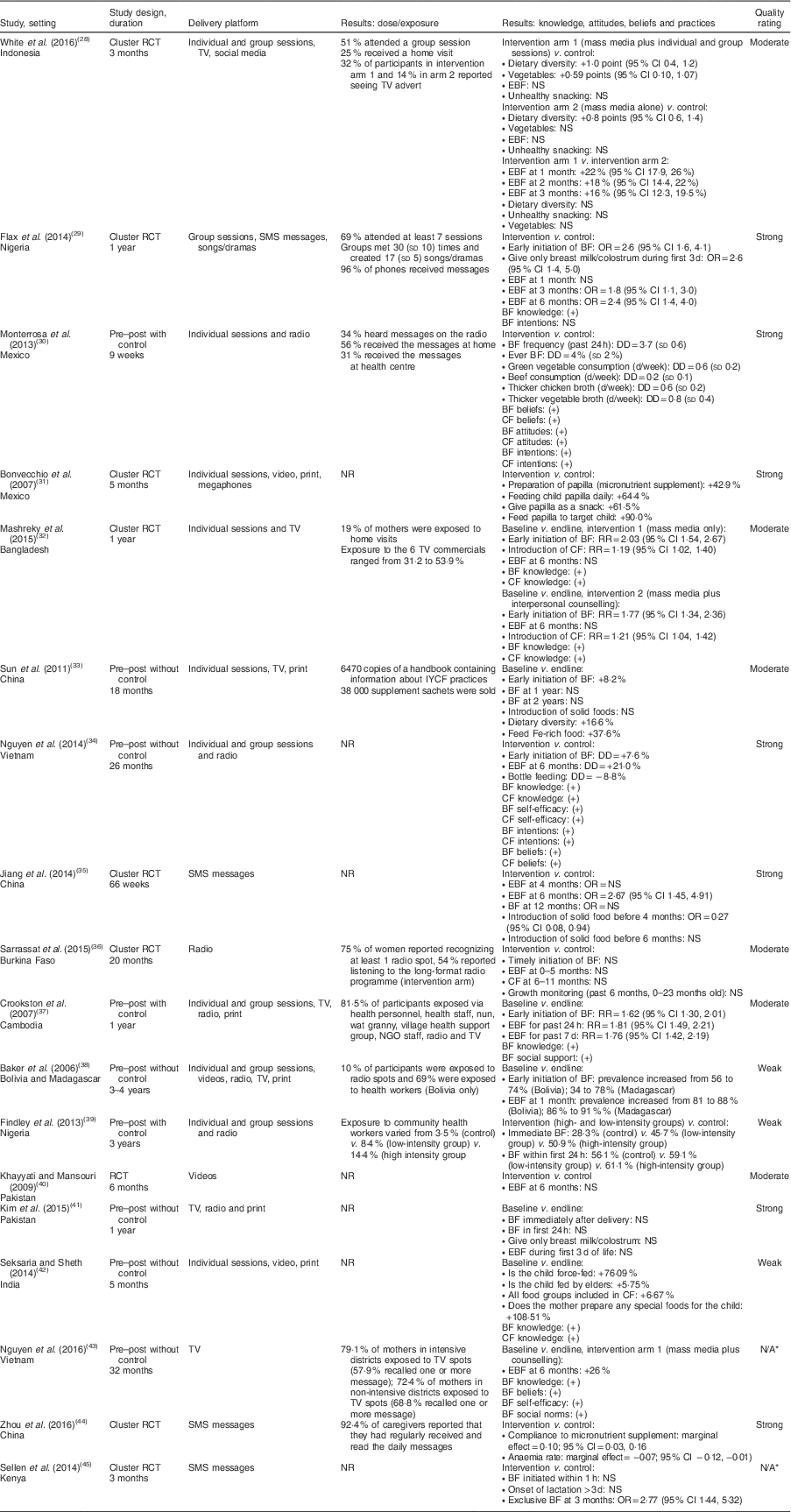
RCT, randomized controlled trial; TV, television; IYCF, infant and young child feeding; NR, not reported; NGO, non-governmental organization; EBF, exclusive breast-feeding; (+), increase; DD, difference in difference; BF, breast-feeding; CF, complementary feeding; RR, relative risk; N/A, not applicable.
* We did not evaluate the quality of these studies as they are described in conference abstracts.
Study setting and design
Studies were conducted in China (n 3), Nigeria (n 2), Mexico (n 2), Pakistan (n 2), Vietnam (n 2), Bangladesh (n 1), Indonesia (n 1), Cambodia (n 1), India (n 1), Kenya (n 1), Burkina Faso (n 1) and Bolivia and Madagascar (n 1). Eight studies were cluster-randomized controlled trials( Reference White, Schmidt and Sahanggamu 28 , Reference Flax, Negerie and Ibrahim 29 , Reference Bonvecchio, Pelto and Escalante 31 , Reference Mashreky, Rahman and Rahman 32 , Reference Jiang, Li and Wen 35 , Reference Sarrassat, Meda and Ouedraogo 36 , Reference Zhou, Sun and Luo 44 , Reference Sellen, Mbugua and Webb 45 ), one was an individual-randomized controlled trial( Reference Khayyati and Mansouri 40 ), six were pre–post without a control group( Reference Sun, Dai and Zhang 33 , Reference Nguyen, Menon and Keithly 34 , Reference Baker, Sanei and Franklin 38 , Reference Kim, Haq and Soomro 41 – Reference Nguyen, Alayón and Nguyen 43 ) and three were pre–post with a control group( Reference Monterrosa, Frongillo and de Cossio 30 , Reference Crookston, Dearden and Chan 37 , Reference Findley, Uwemedimo and Doctor 39 ). The longest study duration was 4 years and the shortest was 9 weeks; the modal duration was 1 year (n 5). Three studies had <300 participants( Reference Sun, Dai and Zhang 33 , Reference Khayyati and Mansouri 40 , Reference Seksaria and Sheth 42 ), seven had 300–1000 participants( Reference White, Schmidt and Sahanggamu 28 , Reference Flax, Negerie and Ibrahim 29 , Reference Monterrosa, Frongillo and de Cossio 30 , Reference Bonvecchio, Pelto and Escalante 31 , Reference Jiang, Li and Wen 35 , Reference Crookston, Dearden and Chan 37 , Reference Sellen, Mbugua and Webb 45 ) and eight had >1000 participants( Reference Mashreky, Rahman and Rahman 32 , Reference Nguyen, Menon and Keithly 34 , Reference Sarrassat, Meda and Ouedraogo 36 , Reference Baker, Sanei and Franklin 38 , Reference Findley, Uwemedimo and Doctor 39 , Reference Kim, Haq and Soomro 41 , Reference Nguyen, Alayón and Nguyen 43 , Reference Zhou, Sun and Luo 44 ).
Study quality
The quality of studies was categorized as weak (n 3)( Reference Baker, Sanei and Franklin 38 , Reference Findley, Uwemedimo and Doctor 39 , Reference Seksaria and Sheth 42 ), moderate (n 6)( Reference White, Schmidt and Sahanggamu 28 , Reference Mashreky, Rahman and Rahman 32 , Reference Sun, Dai and Zhang 33 , Reference Sarrassat, Meda and Ouedraogo 36 , Reference Crookston, Dearden and Chan 37 , Reference Khayyati and Mansouri 40 ) and strong (n 7)( Reference Flax, Negerie and Ibrahim 29 , Reference Monterrosa, Frongillo and de Cossio 30 , Reference Bonvecchio, Pelto and Escalante 31 , Reference Nguyen, Menon and Keithly 34 , Reference Jiang, Li and Wen 35 , Reference Kim, Haq and Soomro 41 , Reference Zhou, Sun and Luo 44 ) (we did not evaluate the quality of the two studies described in conference abstracts). A key limiting component of the quality of studies in the current review was the design, wherein only nine studies met the ‘strong’ criteria for utilizing a randomized design( Reference White, Schmidt and Sahanggamu 28 , Reference Flax, Negerie and Ibrahim 29 , Reference Bonvecchio, Pelto and Escalante 31 , Reference Mashreky, Rahman and Rahman 32 , Reference Jiang, Li and Wen 35 , Reference Sarrassat, Meda and Ouedraogo 36 , Reference Khayyati and Mansouri 40 , Reference Zhou, Sun and Luo 44 , Reference Sellen, Mbugua and Webb 45 ). Of the studies utilizing a cluster-randomized design( Reference White, Schmidt and Sahanggamu 28 , Reference Flax, Negerie and Ibrahim 29 , Reference Bonvecchio, Pelto and Escalante 31 , Reference Mashreky, Rahman and Rahman 32 , Reference Jiang, Li and Wen 35 , Reference Sarrassat, Meda and Ouedraogo 36 , Reference Zhou, Sun and Luo 44 , Reference Sellen, Mbugua and Webb 45 ), more than half employed an appropriate statistical analysis method to account for clustering( Reference White, Schmidt and Sahanggamu 28 , Reference Flax, Negerie and Ibrahim 29 , Reference Bonvecchio, Pelto and Escalante 31 , Reference Sarrassat, Meda and Ouedraogo 36 , Reference Zhou, Sun and Luo 44 ). A majority of studies did not describe the blinding status of outcome assessors and/or participants, leading to a moderate rating for this component. The validity and reliability of data collection methods was also a key component limiting the quality of included studies: thirteen of the included studies used a data collection instrument with validity or reliability for the primary outcome( Reference White, Schmidt and Sahanggamu 28 , Reference Monterrosa, Frongillo and de Cossio 30 , Reference Bonvecchio, Pelto and Escalante 31 , Reference Sun, Dai and Zhang 33 – Reference Crookston, Dearden and Chan 37 , Reference Kim, Haq and Soomro 41 – Reference Sellen, Mbugua and Webb 45 ), but most studies did not describe both the validity and reliability of the instrument.
Impact on infant and young child feeding practices
All but three studies demonstrated a positive impact on IYCF practices( Reference Sarrassat, Meda and Ouedraogo 36 , Reference Khayyati and Mansouri 40 , Reference Kim, Haq and Soomro 41 ). These three studies only used mass media platforms to deliver messages and did not have nutrition education components. In the 20-month radio campaign described in Sarrasset et al., there were no increases in the rates of early initiation of breast-feeding, exclusive breast-feeding or appropriate complementary feeding practices among women with children aged <5 years( Reference Sarrassat, Meda and Ouedraogo 36 ). In Khayyati and Mansouri, training videos for breast-feeding did not result in increased rates of exclusive breast-feeding at 6 months( Reference Khayyati and Mansouri 40 ). Kim et al. evaluated a 1-year television campaign and observed no significant increase in the timely initiation of breast-feeding, provision of colostrum or exclusive breast-feeding for the first 3 d after birth( Reference Kim, Haq and Soomro 41 ).
Six studies reported an increased prevalence of early initiation of breast-feeding( Reference Flax, Negerie and Ibrahim 29 , Reference Sun, Dai and Zhang 33 , Reference Nguyen, Menon and Keithly 34 , Reference Crookston, Dearden and Chan 37 – Reference Findley, Uwemedimo and Doctor 39 ). In Flax et al., SMS messages delivered via cell phones resulted in increased odds of timely initiation of breast-feeding (OR=2·6; 95 % CI 1·6, 4·1) as compared with control( Reference Flax, Negerie and Ibrahim 29 ). The radio and education intervention described in Crookston et al. resulted in an increase in the prevalence (relative risk=1·62; 95 % CI 1·30, 2·01) compared with control( Reference Crookston, Dearden and Chan 37 ). Across the two countries included in Baker et al., prevalence of early breast-feeding initiation increased from 56 to 74 % (Bolivia) and from 34 to 78 % (Madagascar)( Reference Baker, Sanei and Franklin 38 ). In Findley et al., the prevalence increased from 28·3 to 45·7 % (low-intensity intervention arm) and 50·9 % (high-intensity arm)( Reference Findley, Uwemedimo and Doctor 39 ). The intervention described in Nguyen et al. resulted in an increase in the timely initiation of breast-feeding relative to control (difference-in-difference=7·6 %)( Reference Nguyen, Menon and Keithly 34 ). The social marketing campaign described by Sun et al. increased prevalence from 8·6 to 16·8 %( Reference Sun, Dai and Zhang 33 ).
Four studies reported improvements in the prevalence of exclusive breast-feeding at 6 months of age( Reference Flax, Negerie and Ibrahim 29 , Reference Nguyen, Menon and Keithly 34 , Reference Jiang, Li and Wen 35 , Reference Nguyen, Alayón and Nguyen 43 ). In Flax et al., the prevalence of exclusive breast-feeding at 6 months increased relative to control (OR=2·4; 95 % CI 1·4, 4·0)( Reference Flax, Negerie and Ibrahim 29 ). Jiang et al. reported that an SMS campaign for mothers resulted in an increased prevalence of exclusive breast-feeding at 6 months relative to control (OR=2·67; 95 % CI 1·45, 4·91)( Reference Jiang, Li and Wen 35 ). Nguyen et al. reported a 21 % increase in prevalence of exclusive breast-feeding for children up to 6 months within the intensive intervention arm relative to the non-intensive intervention arm( Reference Nguyen, Menon and Keithly 34 ). Nguyen et al. reported a 26 % increase in exclusive breast-feeding at 6 months among mothers who were exposed to television spots and counselling( Reference Nguyen, Alayón and Nguyen 43 ).
Five studies reported increases in the prevalence of appropriate complementary feeding practices( Reference Monterrosa, Frongillo and de Cossio 30 , Reference Mashreky, Rahman and Rahman 32 , Reference Sun, Dai and Zhang 33 , Reference Jiang, Li and Wen 35 , Reference Seksaria and Sheth 42 ). In Monterrosa et al., mothers were more likely to prepare and feed children vegetable and chicken broths of thicker consistency after receiving a scripted-message intervention delivered via nurses and radio( Reference Monterrosa, Frongillo and de Cossio 30 ). Mashreky et al. reported an improvement in the age of introduction of first complementary food( Reference Mashreky, Rahman and Rahman 32 ). Sun et al. and Seksaria and Sheth reported an increase in the dietary diversity of complementary foods( Reference Sun, Dai and Zhang 33 , Reference Seksaria and Sheth 42 ). In Jiang et al., mothers who received SMS messages were less likely to introduce solid foods before 4 months (OR=0·27; 95 % CI 0·08, 0·94)( Reference Jiang, Li and Wen 35 ).
Three studies reported more frequent use of a micronutrient supplement( Reference Bonvecchio, Pelto and Escalante 31 , Reference Sun, Dai and Zhang 33 , Reference Zhou, Sun and Luo 44 ). In Bonvecchio et al., a mass media intervention increased the correct preparation (+42·9 % relative to control) and frequency of use (+64·4 % relative to control) of a micronutrient supplement prepared in a mix of powdered milk( Reference Bonvecchio, Pelto and Escalante 31 ). The social marketing and mass media intervention described in Sun et al. increased purchase (13·5 % of sample) and use (55·6 % of sample) of a micronutrient supplement( Reference Sun, Dai and Zhang 33 ). Likewise, Zhou et al. reported greater compliance to the micronutrient supplement regimen among those in the SMS message group as compared with the control (marginal effect= 0·10; 95 % CI 0·03, 0·16)( Reference Zhou, Sun and Luo 44 ).
Five studies allowed for comparisons of a nutrition education intervention alone and nutrition education integrated with mass media( Reference White, Schmidt and Sahanggamu 28 , Reference Nguyen, Menon and Keithly 34 , Reference Mashreky, Rahman and Rahman 32 , Reference Zhou, Sun and Luo 44 , Reference Sellen, Mbugua and Webb 45 ). In two of these studies( Reference White, Schmidt and Sahanggamu 28 , Reference Nguyen, Menon and Keithly 34 ), an integrated approach appeared more effective than mass media alone for improving breast-feeding practices. In White et al., participants in the integrated arm reported a 22 % (95 % CI 18, 26 %) greater increase in the prevalence of exclusive breast-feeding at 1 month than participants who received mass media alone( Reference White, Schmidt and Sahanggamu 28 ). The integrated arm of the study described in Nguyen et al. had increases in the prevalence of early initiation of breast-feeding (difference-in-difference=7·6 %) and exclusive breast-feeding at 6 months (difference-in-difference=21·0 %) and a decrease in the rate of bottle-feeding (difference-in-difference=8·8 %)( Reference Nguyen, Menon and Keithly 34 ). In the remaining studies, intervention groups displayed similar improvements in IYCF practices. In Mashreky et al., the integrated and mass media only intervention groups reported similar improvements in IYCF practices compared with baseline( Reference Mashreky, Rahman and Rahman 32 ). In Kenya, Sellen et al. reported similar improvements in the prevalence of exclusive breast-feeding at 3 months among groups receiving SMS messages as those assigned to peer-led support groups( Reference Sellen, Mbugua and Webb 45 ). Similarly, caregivers receiving micronutrient supplements plus SMS messages displayed similar improvements in the prevalence of anaemia as those receiving micronutrient supplements plus one-on-one education in Zhou et al.( Reference Zhou, Sun and Luo 44 ).
None of the studies examined the impact of the intervention on physical growth, morbidity or mortality outcomes. One study found that the use of SMS messages to promote compliance to micronutrient supplementation resulted in a reduced likelihood of anaemia among children in the intervention group (marginal effect=–0·07; 95 % CI –0·12, –0·01)( Reference Zhou, Sun and Luo 44 ). Two studies reported the costs of delivering the intervention: Nguyen et al. estimated a cost of $US 0·13 per woman reached by the intervention( Reference Nguyen, Menon and Keithly 34 ) and Baker et al. reported a cost–benefit estimate of $US 2·33 per each new breast-feeding initiate( Reference Baker, Sanei and Franklin 38 ).
Impact on psychosocial factors
Six studies measured intervention impacts on psychosocial factors, all of which reported improvements in one or more factor( Reference Flax, Negerie and Ibrahim 29 , Reference Mashreky, Rahman and Rahman 32 , Reference Nguyen, Menon and Keithly 34 , Reference Crookston, Dearden and Chan 37 , Reference Seksaria and Sheth 42 , Reference Nguyen, Alayón and Nguyen 43 ). Four studies reported improvements in knowledge about duration of exclusive breast-feeding up to 6 months( Reference Flax, Negerie and Ibrahim 29 , Reference Mashreky, Rahman and Rahman 32 , Reference Crookston, Dearden and Chan 37 , Reference Seksaria and Sheth 42 ). One study reported improvements in knowledge of specific complementary feeding behaviours such as providing water and formula and age at introduction of complementary foods( Reference Nguyen, Menon and Keithly 34 ). Three studies measured behavioural intentions for breast- and complementary feeding practices( Reference Flax, Negerie and Ibrahim 29 , Reference Monterrosa, Frongillo and de Cossio 30 , Reference Nguyen, Menon and Keithly 34 ). Flax et al. reported no improvement in participants’ intention to initiate breast-feeding in first hour of life, provide only colostrum or exclusively breast-feed in the first 6 months( Reference Flax, Negerie and Ibrahim 29 ). Monterrosa et al. reported improvements in intentions to feed vegetables, beef and thickened broths to children( Reference Monterrosa, Frongillo and de Cossio 30 ) and Nguyen et al. reported improvements in intentions to feed breast milk in the first 3 d and first 6 months of life( Reference Nguyen, Menon and Keithly 34 ). Two studies reported improvements in participants’ perceptions of normative beliefs regarding breast-feeding and complementary feeding practices( Reference Monterrosa, Frongillo and de Cossio 30 , Reference Nguyen, Menon and Keithly 34 ). One study reported an increase in caregiver perceptions of breast-feeding self-efficacy( Reference Nguyen, Menon and Keithly 34 ).
Intervention design
One study used a systematic design procedure for the intervention: White et al. used the Behaviour Centred Design model to develop an intervention to encourage IYCF practices among mothers in East Java, Indonesia( Reference White, Schmidt and Sahanggamu 28 ). The authors of four studies explicitly mentioned a formal behaviour change theory for the intervention, including the Behaviour Centred Design theory( Reference White, Schmidt and Sahanggamu 28 ), the Theory of Planned Behaviour( Reference Monterrosa, Frongillo and de Cossio 30 ), Saturation Theory( Reference Sarrassat, Meda and Ouedraogo 36 ) and Adult Learning Theory( Reference Crookston, Dearden and Chan 37 ). In the remaining studies, a formal behaviour change theory was not reported, although some mentioned a potential pathway or mechanism. Two studies provided a formal programme impact pathway( Reference Nguyen, Menon and Keithly 34 , Reference Sarrassat, Meda and Ouedraogo 36 ).
Use of formative research
Nine studies explicitly mentioned the use of formative research, but the sources and methods were varied. Four of these studies provided explicit detail on what types of information were gleaned from formative research and how it was used in developing the intervention( Reference White, Schmidt and Sahanggamu 28 , Reference Monterrosa, Frongillo and de Cossio 30 , Reference Bonvecchio, Pelto and Escalante 31 , Reference Sarrassat, Meda and Ouedraogo 36 ). White et al. used several methods, including motive mapping, video ethnography, attribute ranking exercises, inventories of personal belongings and daily scripts( Reference White, Schmidt and Sahanggamu 28 ). Flax et al. collected formative information from midwives, community health workers, mothers, fathers and grandmothers( Reference Flax, Negerie and Ibrahim 29 ). Monterrosa et al. used in-depth interviews and home observations of twenty-nine mothers in the study region( Reference Monterrosa, Frongillo and de Cossio 30 ). Bonvecchio et al. conducted formative research to understand the types of communication channels that could be used to deliver messages( Reference Bonvecchio, Pelto and Escalante 31 ). Mashreky et al. cited government formative research conducted as a part of a national communication plan for IYCF practices( Reference Mashreky, Rahman and Rahman 32 ). Sun et al. conducted concept testing of a micronutrient supplement using surveys( Reference Sun, Dai and Zhang 33 ). Nguyen et al. cited formative research that included semi-structured interviews, observations, focus group discussions and 24 h recalls( Reference Nguyen, Menon and Keithly 34 ). Jiang et al. consulted guidelines from normative organizations, paediatricians, community health workers and published literature to form intervention messages( Reference Jiang, Li and Wen 35 ). Sarrasset et al. conducted a media survey to measure radio usage and conducted focus groups to form messages( Reference Sarrassat, Meda and Ouedraogo 36 ). In the remaining studies, the use of formative research was not formally stated.
Nutrition education and/or mass media delivery platforms
In twelve studies, the target audience was primarily mothers with children up to age 24 months( Reference White, Schmidt and Sahanggamu 28 , Reference Monterrosa, Frongillo and de Cossio 30 – Reference Nguyen, Menon and Keithly 34 , Reference Crookston, Dearden and Chan 37 , Reference Baker, Sanei and Franklin 38 , Reference Kim, Haq and Soomro 41 – Reference Zhou, Sun and Luo 44 ). In four studies the audience was expectant mothers( Reference Flax, Negerie and Ibrahim 29 , Reference Jiang, Li and Wen 35 , Reference Khayyati and Mansouri 40 , Reference Sellen, Mbugua and Webb 45 ) and in two studies the audience was mothers who had given birth in the past 5 years( Reference Sarrassat, Meda and Ouedraogo 36 , Reference Findley, Uwemedimo and Doctor 39 ). The types of mass media included: television( Reference White, Schmidt and Sahanggamu 28 , Reference Mashreky, Rahman and Rahman 32 – Reference Nguyen, Menon and Keithly 34 , Reference Crookston, Dearden and Chan 37 , Reference Baker, Sanei and Franklin 38 , Reference Kim, Haq and Soomro 41 ); print (such as newspapers, posters or pamphlets)( Reference White, Schmidt and Sahanggamu 28 , Reference Bonvecchio, Pelto and Escalante 31 , Reference Sun, Dai and Zhang 33 , Reference Crookston, Dearden and Chan 37 , Reference Baker, Sanei and Franklin 38 , Reference Kim, Haq and Soomro 41 , Reference Seksaria and Sheth 42 ); voice and/or SMS messages( Reference Flax, Negerie and Ibrahim 29 , Reference Jiang, Li and Wen 35 , Reference Zhou, Sun and Luo 44 , Reference Sellen, Mbugua and Webb 45 ); radio( Reference Monterrosa, Frongillo and de Cossio 30 , Reference Sarrassat, Meda and Ouedraogo 36 – Reference Findley, Uwemedimo and Doctor 39 , Reference Kim, Haq and Soomro 41 ); megaphones/loudspeakers( Reference Bonvecchio, Pelto and Escalante 31 , Reference Nguyen, Menon and Keithly 34 ); videos( Reference Baker, Sanei and Franklin 38 , Reference Khayyati and Mansouri 40 , Reference Seksaria and Sheth 42 ); social media( Reference White, Schmidt and Sahanggamu 28 ); and songs/dramas( Reference Flax, Negerie and Ibrahim 29 ).
In eleven studies mass media was included as a component alongside nutrition education( Reference Flax, Negerie and Ibrahim 29 , Reference Monterrosa, Frongillo and de Cossio 30 – Reference Nguyen, Menon and Keithly 34 , Reference Crookston, Dearden and Chan 37 – Reference Findley, Uwemedimo and Doctor 39 , Reference Seksaria and Sheth 42 , Reference Zhou, Sun and Luo 44 ). Within these studies, nutrition education was delivered through individual sessions (n 5), in groups (n 1), or using a combination of both individual and group sessions (n 5). In eight studies, nutrition education sessions were led by a trained delivery agent, including credit officers( Reference White, Schmidt and Sahanggamu 28 ), nurses( Reference Monterrosa, Frongillo and de Cossio 30 ), nuns( Reference Crookston, Dearden and Chan 37 ) or community health workers( Reference Mashreky, Rahman and Rahman 32 , Reference Sun, Dai and Zhang 33 , Reference Nguyen, Menon and Keithly 34 , Reference Baker, Sanei and Franklin 38 , Reference Findley, Uwemedimo and Doctor 39 ). With the exception of three studies( Reference Monterrosa, Frongillo and de Cossio 30 , Reference Crookston, Dearden and Chan 37 , Reference Nguyen, Menon and Keithly 34 ), little detail was provided on the content and duration of training for those delivering nutrition education or there was no mention of training( Reference Baker, Sanei and Franklin 38 , Reference Bonvecchio, Pelto and Escalante 31 , Reference Seksaria and Sheth 42 ). In four studies mass media was used alone without any in-person nutrition education( Reference Jiang, Li and Wen 35 , Reference Sarrassat, Meda and Ouedraogo 36 , Reference Khayyati and Mansouri 40 , Reference Kim, Haq and Soomro 41 ). Five studies included separate intervention arms for mass media and nutrition education components( Reference White, Schmidt and Sahanggamu 28 , Reference Mashreky, Rahman and Rahman 32 , Reference Nguyen, Menon and Keithly 34 , Reference Zhou, Sun and Luo 44 , Reference Sellen, Mbugua and Webb 45 ).
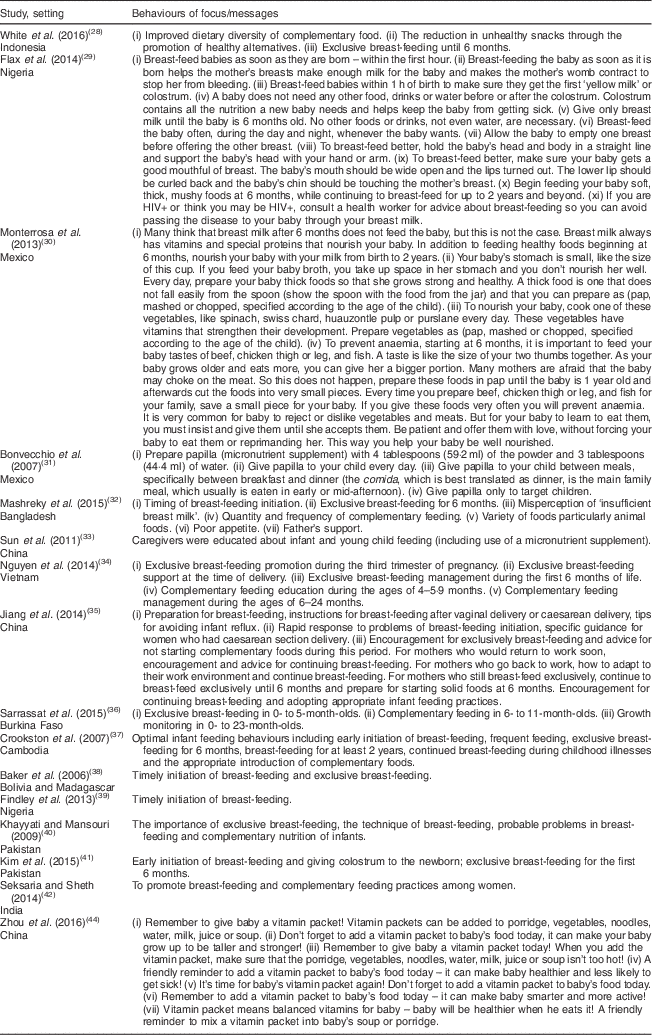
All studies used messages encouraging specific IYCF practices (Table 2). Three studies included a focus on the provision of micronutrient supplements( Reference Bonvecchio, Pelto and Escalante 31 , Reference Sun, Dai and Zhang 33 , Reference Zhou, Sun and Luo 44 ) and the remaining studies included messages on the timely initiation of breast-feeding, exclusive breast-feeding for the first 6 months of life and/or appropriate complementary feeding. Two studies relied on scripted messages, which were provided in full in their published report( Reference Flax, Negerie and Ibrahim 29 , Reference Monterrosa, Frongillo and de Cossio 30 ), and one study provided the content of SMS messages( Reference Zhou, Sun and Luo 44 ). Generally, however, all studies provided little detail regarding if and how messages were adapted for each media platform or supported with nutrition education learning techniques.
Summary of messages and behaviours of focus from studies included in the current systematic review of mass media and nutrition education interventions in low- and middle-income countries
Intervention dose delivered and participant exposure
Studies provided varying detail regarding dose of nutrition education and/or mass media delivered to participants. For example, White et al. delivered three television spots daily over the course of 3 months( Reference White, Schmidt and Sahanggamu 28 ). Flax et al. reported delivering seven group sessions of 20–30 min in duration and two SMS messages per week over the course of 4 months and then two SMS messages every other week for 3 months( Reference Flax, Negerie and Ibrahim 29 ). Monterrosa et al. delivered seven radio spots (30 s each) over the course of 21 d, with thirty additional mentions by radio hosts and five live interviews( Reference Monterrosa, Frongillo and de Cossio 30 ). Mashreky et al. reported that six television spots were aired six to twenty-four times per day on two national channels( Reference Mashreky, Rahman and Rahman 32 ). Sun et al. distributed 6470 copies of a handbook containing information on IYCF practices( Reference Sun, Dai and Zhang 33 ). Nguyen et al. reported that each mother–child received between nine and fifteen counselling sessions (six to ten were individual and three to five were group sessions) over a 27-month period( Reference Nguyen, Menon and Keithly 34 ). In the radio campaign described by Sarrassat et al., 1 min spots were broadcast approximately 10 times/d, and 2 h interactive long-format programmes were broadcast 5 d/week( Reference Sarrassat, Meda and Ouedraogo 36 ). In Khayyati and Mansouri, mothers viewed a breast-feeding training video on at least three occasions( Reference Khayyati and Mansouri 40 ). Kim et al. reported that two television spots were aired 18 972 times over the course of a year( Reference Kim, Haq and Soomro 41 ). In Zhou et al., SMS messages were delivered daily to caregivers over the course of 6 months( Reference Zhou, Sun and Luo 44 ).
Participants’ exposure to the intervention was assessed in some of the included studies. In White et al., 32 % of participants in intervention arm 1 (television adverts and group sessions) and 14 % in arm 2 (television adverts alone) reported seeing an advert, 51 % reported attending at least one group session and 25 % reported having received a home visit( Reference White, Schmidt and Sahanggamu 28 ). Flax et al. reported 69 % of participants attended at least seven group sessions, where a mean of 17 (sd 5) songs or dramas were created, and that cell phone SMS and voice messages were received by 96 % of phones( Reference Flax, Negerie and Ibrahim 29 ). In Monterrosa et al., 34 % of participants reported hearing scripted messages; 56 % of whom received the messages from a nurse at home and 31 % at a health centre( Reference Monterrosa, Frongillo and de Cossio 30 ). Mashreky et al. reported that 19 % of mothers were exposed to home visits and exposure to each of the six television commercials ranged from 31·2 to 53·9 %( Reference Mashreky, Rahman and Rahman 32 ). In the radio campaign described in Sarrasat et al., 75 % of women in the intervention group reported recognizing at least one of the radio spots, and 54 % reported listening to the long-format programme( Reference Sarrassat, Meda and Ouedraogo 36 ). Crookston et al. reported that 60 % of the households in the intervention area attended education sessions and 76·1 % received counselling( Reference Crookston, Dearden and Chan 37 ). In Baker et al., the project in Bolivia reported that 10 % of participants were exposed to radio spots and 69 % were exposed to health workers( Reference Baker, Sanei and Franklin 38 ). Across the intervention arms described in Findley et al., exposure to community health workers varied from 3·5 % (control) v. 8·4 % (low-intensity group) v. 14·4 % (high-intensity group)( Reference Findley, Uwemedimo and Doctor 39 ). Sun et al. reported that 38 000 sachets of a micronutrient supplement were sold during the intervention( Reference Sun, Dai and Zhang 33 ). In Kim et al., 29·5 % of participants saw the television spots, 2·3 % heard radio spots and 2·5 % saw print media( Reference Kim, Haq and Soomro 41 ). In Zhou et al., 92·4 % of caregivers reported that they received and read the SMS messages( Reference Zhou, Sun and Luo 44 ).
Discussion
The current systematic review identified eighteen studies that examined the impact of nutrition education and/or mass media approaches on IYCF knowledge, attitudes, beliefs and practices. Overall, fifteen of the eighteen studies demonstrated improvements in breast-feeding practices, including the timely initiation of breast-feeding and breast-feeding at 1 month, 3 months and 6 months. Several studies reported improvements in specific complementary feeding practices such as improved dietary diversity, age at introduction of complementary foods and use of micronutrient supplements. Although studies were heterogeneous in the indicators assessed (which precluded a meta-analysis), all used one or more recommended by the WHO for assessing IYCF( 46 ).
A few of the studies included in the present review examined mass media approaches alone (without nutrition education) or directly compared a mass media approach with a combined approach. When in-person nutrition education was combined with mass media, participants generally reported greater improvements in breast- and complementary feeding practices. In three studies where mass media was used as the only approach, there were no significant improvements in IYCF practices, suggesting that mass media alone is not effective in changing behaviour. Although the trials were heterogeneous in many aspects and several authors provided limited detail on the messages used within the mass media approaches, the refrain that communication alone is not effective for behaviour change has a long history( Reference Gillespie 47 ). Previous authors have cautioned that mass media alone may increase awareness or knowledge, but without the proper skills, individuals are unlikely to adopt a given behaviour( Reference Contento 10 ).
Less than half of studies included in the present review assessed psychosocial factors related to IYCF among caregivers. Although mass media approaches are hypothesized to be useful in shaping social normative beliefs( 48 ), only three studies assessed this indicator( Reference Monterrosa, Frongillo and de Cossio 30 , Reference Nguyen, Menon and Keithly 34 , Reference Nguyen, Alayón and Nguyen 43 ). Assessing psychosocial factors may help to identify a mechanism by which mass media components interventions are working to change behaviour( Reference Baranowski, Cerin and Baranowski 12 ). Previous authors have suggested that mass media approaches are useful in encouraging one-off, episodic behaviours (e.g. vaccination) as opposed to habitual, ongoing behaviours( Reference Naugle and Hornick 17 , Reference Sarrassat, Meda and Ouedraogo 36 ). While IYCF practices represent habitual, albeit periodic, behaviours, expectant mothers and mothers of infants and young children are likely different from other audiences in that they are more receptive and have a strong desire to provide proper nutrition for their children. In the studies included in the present review, there was little similarity in the methods used to measure psychosocial factors and little detail regarding the validation or psychometric properties associated with the questionnaire items used. Future studies should explore which psychosocial factors mediate the relationship between the intervention and behaviour using consistent, validated measures.
Several authors have called for the use of systematic design processes for developing intervention components, yet only one study in the present review mentioned using one. To our knowledge, multiple design frameworks exist, including the Trials of Improved Practices( 49 ), the DESIGN system( Reference Contento 10 ), Behaviour Centred Design( Reference White, Schmidt and Sahanggamu 28 ) and others( Reference Baranowski, Cerin and Baranowski 12 , Reference Bartholomew, Parcel and Kok 13 ). Since a majority of interventions included in the review did not use a systematic design process, we cannot draw conclusions about the effectiveness of their use, although we believe that they may allow for easier comparison of future mass media IYCF interventions.
More than half of studies in the present review used formative research, but varied in the amount of detail provided to the description of this work. Few of these studies reported specific descriptions of how formative work was used to develop intervention components. There is a great need to detail how the findings of formative research are applied to the design of messages so that others may adapt interventions in disparate contexts( Reference Bentley, Johnson and Wasser 50 ). Specific to mass media, formative research can be used to help provide rationale for the platforms chosen for delivering messages. In the current systematic review, we found only two instances of formative research being used to this end.
Only four studies mentioned the use of a formal theory, although some studies mentioned a potential pathway or mechanism. The absence of a formal theory does not mean interventions are atheoretical by default, but a stated theory may provide credibility to the hypothesized programme pathway. A recent systematic review of behaviour change interventions focused on fruit and vegetable intake concluded that theory-based interventions were more efficacious than those that did not use theory( Reference Diep, Chen and Davies 51 ). Further, no study included in the present review provided detail on the specific behaviour change techniques utilized in nutrition education or mass media components to encourage behaviour change. The consistent reporting of techniques can ensure that interventions are replicable and that future systematic reviews identify effective intervention components. We suggest that authors report on techniques used consistent with previously published taxonomy of behaviour change techniques( Reference McNulty 52 ).
Many of the studies in the present review reported on the dose delivered and participants’ exposure to messages, but few reported both. Reporting dose delivered allows researchers to identify the optimal amount of ‘touch’ from an intervention that is sufficient to result in behaviour changes, so as not to be wasteful of resources( 48 , Reference Snyder and Hamilton 53 ). Moreover, assessing participants’ exposure to the intervention allows researchers to identify the extent to which intervention messages were read, heard or otherwise interacted with by participants. For example, in studies using SMS messages, it is useful to assess and report on the number of messages sent, the number of messages received, and participants’ perceptions and use of the messages. These indicators may identify essential components for the design of mass media interventions, particularly regarding the types of messages, which channels should be used to deliver message and how messages are perceived by the audience( 48 ).
A strength of the present review is the multiple search strategies, including a search of three academic databases and a search of the grey literature. We also registered this search a priori in PROSPERO, a registry of systematic review protocols, although we added an additional search method (consultations with experts in the fields of IYCF) to identify all eligible studies. There are also several limitations. First, there is concern about the review’s timeliness, given the potential for new mass media platforms to be used to deliver IYCF messages. However, we believe that the principles of effective intervention design, including the use of a systematic design process and behaviour change theory, are applicable to all mass media platforms. Second, our extraction of data from studies is limited by the lack of published information describing intervention components. Although descriptions of interventions are often limited by space limitations in most peer-refereed journals, several avenues exist to report this information, including within online supplementary material, multiple publications or other web platforms, all of which were considered during our search. We echo previous recommendations for reporting conventions to ensure consistency and replicability of IYCF intervention studies( Reference Fabrizio, Van Liere and Pelto 9 ) and mass media studies( Reference Naugle and Hornick 17 ) (Table 3).
Reporting priorities for future research examining nutrition education and mass media interventions targeting infant and young child feeding practices in low- and middle-income countries

As governments, think-tanks and funders coalesce around mass media as a development strategy, there are concerns about the evidence base supporting their use. The current systematic review provided evidence of effectiveness of integrated mass media and nutrition education interventions for IYCF among caregivers in LMIC. Yet studies often asked a narrow question: are mass media platforms effective? To open the ‘black box’, future research should ask broader questions, including: in which contexts are they effective; using which types of messages; for which audiences; at what intensity; and are they synergistic with traditional approaches? An exploration of these questions may help overcome concerns about the use of mass media, including issues of literacy, participant fatigue and equity in coverage rates. Moreover, given the heightened attention to and funding for nutrition-specific interventions, more information regarding design and implementation of mass media interventions will help to meet the needs of practitioners currently working in this area( Reference Pelto, Matin and Van Liere 11 , Reference Pelto, Martin and van Liere 54 ).
Acknowledgements
Financial support: This research received no specific grant from any funding agency in the public, commercial or not-for-profit sectors. Conflict of interest: The authors have no conflicts of interest to declare. Authorship: J.F. and S.M.D. provided the study concept and design; M.M.G., Q.O. and S.M.D. were responsible for acquisition and interpretation of data; M.M.G. drafted the manuscript; J.F., S.M.D. and Q.O. contributed to critical revisions of the manuscript and approved the final version; J.F. supervised all aspects of the study and provided administrative, technical and material support. Ethics of human subject participation: Not applicable.



