



Community-supported agriculture (CSA), an emerging community-based food system structure, offers potential to simultaneously address dietary inadequacies and sustainability. While per capita vegetable intake in the USA varies from state to state, overall intake is below the recommended number of daily servings( 1 ). Only about 40% of Americans consume at least five servings of fruits and vegetables daily( Reference Guenther, Dodd and Reedy 2 ). The typical American diet provides less than two-thirds (59%) of the amount of fruits and vegetables recommended by the US Dietary Guidelines( 3 ). Guenther et al. found that mean intakes by all sex–age groups were lower than recommended for total vegetables and for all vegetable subgroups except starchy vegetables, among eleven of the fifteen sex–age groups( Reference Guenther, Dodd and Reedy 2 ). Mean intakes of dark green vegetables, orange vegetables and legumes were at most one-third of recommended amounts. Inadequate fruit and vegetable intake is associated with lower socio-economic position and education levels( Reference Dubowitz, Heron and Bird 4 – Reference Bowman 6 ).
Vegetable-rich diets are associated with lowered risk of several chronic diseases and can help achieve and maintain a healthy weight( 7 ). Meta-analyses have found an inverse relationship between the risk for cancers of the breast, oesophagus, lung, stomach and colorectum and vegetable intake( Reference Riboli and Norat 8 ), as well as a lower risk of stroke associated with higher intake of fruits and vegetables( Reference He, Nowson and MacGregor 9 ). Inverse associations have been shown between fruit and vegetable intake and incidence of both coronary artery disease( Reference Steffen, Jacobs and Stevens 10 , Reference Dauchet, Amouyel and Hercberg 11 ) and diabetes (particularly among women)( Reference Ford and Mokdad 12 ).
CSA – a farmer-to-consumer arrangement where members (or ‘shareholders’) pay in advance for a weekly supply of seasonally harvested produce( Reference DeMuth 13 ) – has emerged and proliferated across the USA. CSA, along with farmers’ markets, farm to school programmes, food hubs, community gardens and community kitchens, are considered elements of community-based and sustainable food systems.
Virtually unknown in the USA until the mid-1980s, an estimated 6000 to 6500 CSA schemes exist today( Reference DeMuth 13 , Reference McFadden 14 ). CSA is considered a ‘win–win’ for farmers and consumers. Farmers gain a direct market while members have greater access to seasonal and diverse local foods, and opportunities to know and trust the source of their foods( Reference Guthman, Morris and Allen 15 – Reference Lyson 17 ).
Given the often-substantial upfront cost involved in CSA membership (full shares can cost between $US 450·00 and $US 750·00), people with lower incomes are less likely to participate. As a result, CSA operators are developing creative methods (sliding-scale share costs, instalment payment options and subsidization of shares with additional funds) to reach people with lower incomes. In a mail survey of CSA managers, Guthman et al. found that 83% of respondents had tried at least one strategy to attract low-income participants( Reference Guthman, Morris and Allen 15 , Reference Allen, Guthman and Morris 18 ). Without sliding-scale share prices, or share subsidy programmes, studies have found ‘limited socio-economic diversity among CSA members, with most being middle-class, urban, white and highly educated’( Reference Ostrom 19 ), often creating a considerable income gap between the CSA farmers and the members they feed( Reference Hinrichs 20 ).
In addition to providing weekly harvest shares, CSA typically exposes members to unfamiliar vegetables and provides guidance on vegetable selection, preparation and storage. CSA members cite access to fresh, high quality, organic produce as a key benefit of CSA participation( Reference Cooley and Lass 21 , Reference Goland 22 ) and report an increase in the amount and variety of produce they consume. The role of exposure in the development and expansion of food preferences has been studied extensively since early work by Zajonc( Reference Zajonc 23 ). For novel foods, such as some of the vegetables offered in a CSA, studies suggest that repeated exposure may be required to develop a new preference( Reference Pliner 24 , Reference Pliner, Pelchat and Grabski 25 ). CSA participants are likely to have repeated exposure to vegetables concentrated within their harvest periods. CSA farmers’ decisions about which vegetables (and which vegetable varieties) to plant and provide in weekly shares are influenced more by member interests, natural resources and agronomic skills than by market forces influencing produce vegetable availability in supermarkets. With increased exposure to novel CSA vegetables, participants are more likely to increase preference for and purchase of these vegetables.
The purpose of the present study was to explore the influence of CSA participation on vegetable exposure, vegetable intake during and after the CSA season and change in vegetable preference and use. Variables of interest included changes in: quantity and variety of vegetables consumed; vegetable preferences; and self-efficacy related to vegetable preparation. Because evidence suggests that lower vegetable intake is associated with lower incomes( Reference Bowman 6 ), and individuals with average or higher incomes are more likely to meet dietary recommendations for fruits and vegetables than people with lower incomes( Reference Casagrande, Wang and Anderson 26 ), we were particularly interested in the impact of CSA participation on members from lower-income households.
Methods
Study participants
Study participants were recruited from a 1000-shareholder CSA serving members within and north of New York City, and two CSA farms in upstate New York with a combined total of 250 shareholders. There were two urban share pickup sites in low-income neighbourhoods in uptown Manhattan for the large metropolitan New York City CSA and choice of on-farm or farmers’ market pickup sites for the upstate CSA. CSA farms selected for inclusion in the present study were known to deliberately offer subsidized or low-cost shares. CSA managers assisted with study participant recruitment by distributing study information and invitations to all members via email or in person at pre-CSA season meetings. Participants were included regardless of family status, e.g. single, married, CSA members with or without children, or cohabitants. Enrolment in the study occurred prior to the first CSA share distribution during each of two years. Members voluntarily enrolled in the study and completed a written pre-season survey at the time of their first CSA share pick-up. Study participants were recruited prior to each of two CSA seasons and data were collected via electronically administered surveys after the initial paper version.
To ensure inclusion of low-income CSA members in our sample, we collaborated with a local Cooperative Extension programme that offers subsidies for CSA memberships to households eligible for the Supplemental Nutrition Assistance Program (SNAP) or the Special Supplemental Nutrition Assistance Program for Women, Infants, and Children (WIC). The extension programme covered about half of the $US 500 share price and participants paid the remaining $US 250 in monthly instalments, using cash or SNAP benefits. Programme staff actively recruited study participants from community members who applied for and received the CSA subsidy.
Weekly shares were available for collection by participants over approximately 24 weeks, into late November. The composition and quantity of each weekly share was determined by the farmer and was based on availability and seasonality. Typically each weekly share contained between eight and twelve different items.
The study was conducted according to the guidelines laid down in the Declaration of Helsinki and the Cornell University Institutional Review Board approved all procedures involving human subjects. Written consent was obtained from all participants prior to implementation of the first survey and implied consent was obtained prior to completion of subsequent online surveys. Smith Lever and Hatch Federal Formula Funds were used to support this project.
Survey administration and design
Data collection occurred over two CSA seasons, defined as the period beginning the week before the first CSA share distribution and extending through the following February. Three surveys were administered in two CSA seasons as follows: (i) before the first CSA share pickup (Pre-CSA); (ii) immediately following the CSA season (Post-CSA); and (iii) three months after the end of the CSA season (Mid-winter). After the initial paper version, subsequent surveys were administered online using Survey Monkey, a publically available online survey tool (www.surveymonkey.com/). CSA subsidy programme administrators, selected CSA managers, current and former CSA members, CSA farmers and managers, and academic Community Nutrition colleagues provided input on surveys. The surveys were revised and finalized based on these reviews.
Survey components at each data collection point included: (i) sociodemographic characteristics (Pre-CSA); (ii) vegetable consumption frequency of thirty specific vegetables (Pre-CSA, Post-CSA, Mid-winter); (iii) perceived changes in daily servings of vegetables (Post-CSA, Mid-winter); (iv) vegetables tried for the first time and changes in preferences (Post-CSA); (v) changes in selected food-related behaviours possibly affected by membership (Post-CSA); and (vi) intention to eat more vegetables year-round (Post-CSA).
Existing validated, brief survey measures of fruit and vegetable intake( Reference Kim and Holowaty 27 ) include a limited number (from four to eleven) of vegetables or vegetable categories and as such do not adequately represent the diversity offered by a CSA in the study area. Since we wished to explore specific changes in intake of a wide variety of vegetables and development of new preferences, our assessment of vegetable intake needed to reflect diversity typical of local CSA shares. We developed our vegetable frequency list based on historic reports of offerings by CSA managers plus observations and vegetable production data collected at other New York State and Northeast CSA farms by one co-author. The resulting vegetable list in our survey instrument was similar to one used in a study of CSA members in the Research Triangle Region of North Carolina, which contained vegetables typically grown in that study region( Reference Landis, Smith and Lairson 28 ). Inclusion of colour pictures of vegetables, alongside the list of vegetables names, helped study participants complete the frequency measure and more easily identify vegetables tried for the first time.
Data analysis
Survey data were analysed with the statistical software package SPSS for Windows version 17·0 (2008); P≤0·05 was considered statistically significant. Analysis was conducted on data from all respondents pooled from both years and categorized by member status (new or returning) and by income category. Because all study participants with subsidized shares reported household incomes of $US 30 000 or less, $US 30 000 was used as the cut-off to categorize participants as ‘lower-income’ compared with those of ‘higher-income’. Every participant contributed information on the Pre-CSA and on at least one of the two additional surveys. Quantitative frequencies, χ 2 and Fisher’s exact tests were used to analyse participant characteristics, attitudes and vegetable consumption measures.
The thirty-vegetable frequency measure was included in each survey (Pre-CSA, Post-CSA, Mid-winter) and data were analysed using multilevel linear regression models. Fixed effects included: project year, season, new or continuing membership, income, and interaction of new or returning membership with season. For vegetables infrequently eaten, consumption was dichotomized (eaten/not eaten during the previous week) and generalized estimating equation models with a binomial distribution and logit link were used to analyse responses. Non-significant fixed effects with P≥0·05 were removed in the final models. Significant effects were further examined using post hoc multiple comparisons with Tukey correction. New vegetables tried and changes in preferences and behaviours were analysed using frequencies and t, Wilcoxon, χ 2 and Fisher’s exact tests, as appropriate.
Results
Analysis was based on responses from 151 of the initial sample of 218 CSA members who agreed to participate in the study. Only those who completed the Pre-CSA and one or both of the Post-CSA and Mid-winter surveys in the same CSA season were retained: eighty-one completed all three surveys in the same CSA season; fifty-nine completed Pre- and Post-CSA; and eleven people completed Pre-CSA and Mid-winter but not the Post-CSA. Those who completed only the Pre-CSA survey were excluded from the analysis. Comparisons were made between the data points for the full sample and, for selected items, between new and returning membership status and income level categories.
Participant characteristics
Respondent characteristics are shown in Table 1. Respondents were primarily female (87%), white (81%), had incomes greater than or equal to $US 30 000 (65%), no children (45%), had previously participated (‘returning’) in a CSA (64%) and paid full price for their share (83%). The χ 2 and Fisher’s exact tests showed that the sixty-seven participants who completed the Pre-CSA survey only (and were therefore excluded from the analysis) were similar to those who completed at least two surveys in age, race/ethnicity and number of children, but were significantly more likely to be men (P=0·001), new members (P=0·001) and to have lower or unreported incomes (P=0·002).
Sample characteristics of the study participants: CSA members (n 151) from a rural county in New York, USA
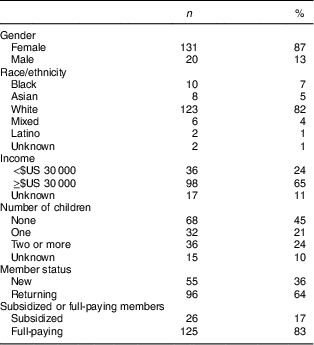
CSA, community-supported agriculture.
Vegetable consumption differences before, after and between CSA seasons
Comparisons of weekly servings consumed were made between Pre-CSA and Post-CSA, Post-CSA and Mid-Winter, and between Pre-CSA and Mid-Winter. Significance differences in weekly servings between time point pairs are indicated with superscript letters a, b and c in Table 2 (see footnote for explanation). Values in pairings with letters in common are not significantly different, whereas those pairings with different letters are significantly different.
Differences in weekly vegetable consumption during the CSA cycle (pre-CSA, post-CSA and Mid-winter) among CSA members (n 151) from a rural county in New York, USA
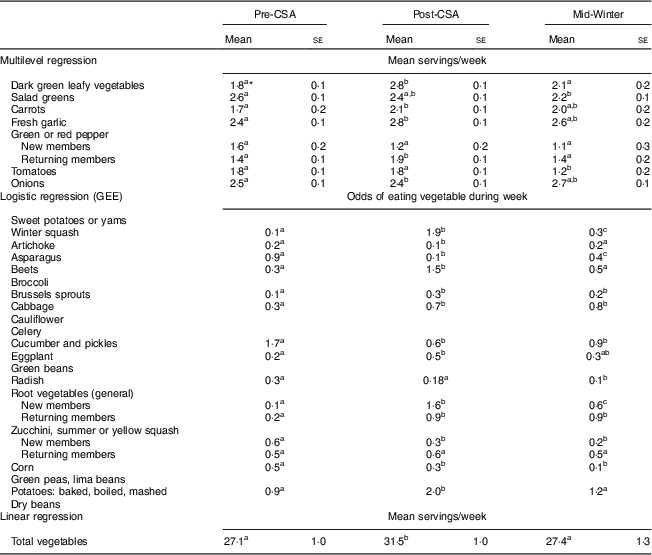
CSA, community-supported agriculture; GEE, generalized estimating equation.
Predicted means and odds are controlled for by project year, season, new or continuing membership, income, and interaction of new or returning membership with season (if significant).
* Significant difference notation: superscript letters (a,b,c) are used to denote differences and similarities between pairs of mean servings/week. Three possible pairing exist for these data: Pre-CSA and Post-CSA; Post-CSA and Mid-Winter; and Pre-CSA and Mid-Winter. Differences between values sharing the same letter (e.g. between 1·6a and 1·2a) are not statistically significant (P>0·05). For differences between values that are significant (P≤0·05) the superscript letters are different (e.g. between 1·8a and 2·8b). Where significant differences exist between all three possible pairings, all letters (a,b,c) are present (e.g. 0·1a, 1·6b and 0·6c). For each vegetable, seasonal intake means that do not share a letter in common are significantly different from each other (P≤0·05). Rows left blank indicate no significant differences were found between time point pairings.
Comparison of data from the Pre-CSA and Post-CSA surveys revealed a significant increase in weekly consumption for eleven of thirty specific vegetables: dark leafy greens, carrots, garlic, onions, winter squash, beets, Brussels sprouts, cabbage, eggplant, root vegetables and potatoes (Table 2). Returning, but not new, members also significantly increased their intake of green or red peppers. Total mean weekly intake of the thirty vegetables combined increased significantly from Pre-CSA (27·1 servings/week) to Post-CSA (31·5 servings/week), then returned to Pre-CSA level by Mid-winter (27·4 servings/week).
Post-CSA survey data revealed a decreased consumption of four vegetables (artichoke, asparagus, cucumbers/pickles and corn) from Pre-CSA among all participants (P≤0·05; Table 2). Consumption of zucchini, summer or yellow squash decreased among new members only. Mean weekly consumption Mid-winter was significantly higher than Pre-CSA for four winter storage vegetables (winter squash, Brussels sprouts, cabbage and root vegetables) among all respondents.
In the Post-CSA retrospective post/pre measure, the reported mean daily servings of vegetables consumed ‘after CSA’ (mean 3·5 (sd 1·2)) was significantly higher than ‘before CSA’ (mean 2·7 (sd 1·4); P≤0·001; n 97; data not shown). Mid-winter, participants reported significantly higher mean daily vegetable servings ‘during CSA’ (mean 3·1 (sd 1·2)) than ‘now’ (mean 1·9 (sd 1·3); P≤0·001; n 90; data not shown). However, lower-income members reported significantly lower mean daily household servings of vegetables ‘now’ (mean 1·8 (sd 1·2)) than did higher-income members (mean 2·5 (sd 1·5); P=0·043; n 75; data not shown).
Trying new vegetables and acquiring preferences
Post-CSA, nearly 60% (n 81) of participants who completed the post-CSA survey reported trying at least one, and up to eleven, new vegetables during the CSA season (Table 3). Within this group of participants, the mean number of new vegetables tried was 3·7 (sd 2·8; data not shown). New members tried significantly more (P=0·002) new vegetables (mean 4·8 (sd 3·0)) than returning members (mean 2·9 (sd 2·3)). There was no significant difference in trial of new vegetables between the lower- and higher-income groups. Eleven vegetables (bokchoi, broccoli raab, celeriac, collards, daikon, fennel, kale, parsnips, rutabaga, Swiss chard and turnips) were tried for the first time by over 10% of all participants. Post-CSA, 52% (n 73) participants named at least one, and up to seven, different vegetables ‘liked now but not before CSA participation’ (Table 4). Of the thirty-one different vegetables for which new preferences developed, those mentioned by more than 5% of participants were beets, collards, greens, kale, Swiss chard, turnips and winter squash.
New vegetables tried and number of participants trying each for the first time during the CSA season (N 140)Footnote * among CSA members (n 151) from a rural county in New York, USA

CSA, community-supported agriculture.
* Eighty-one participants (57·9%) who completed the post-CSA survey reported trying at least one, and up to eleven, new vegetables during the CSA season.
New vegetable preference acquisitions as reported by participants at Post-CSA time point and sustained new vegetable enjoyment reported at Mid-Winter time point among CSA members (n 151) from a rural county in New York, USA

CSA, community-supported agriculture.
Mid-winter, forty-two (46%) participants named twenty-eight different vegetables new to them during the CSA that they continued to eat and enjoy (Table 4). Most often mentioned were celeriac, greens, kale and kohlrabi.
Discussion
Vegetable intake in the USA is generally limited in overall quantity and diversity. Potatoes and tomatoes (fresh and processed) account for nearly one-third of total per capita vegetable consumption( Reference Peters, Bills and Wilkins 29 ). These, together with lettuce, carrots, broccoli, onions, sweetcorn, snap beans, cucumbers, spinach, green peas and celery, make up 80% of total vegetable intake. Although the remaining 20% of total vegetables consumed includes over seventy other vegetables, most are consumed in very small amounts and/or by very few people( Reference Peters, Bills and Wilkins 29 ).
While the CSA strategy was originally conceived of as a way to strengthen economic and social ties among small-scale farmers and consumers, the model shows promise for increasing vegetable consumption and addressing disparities in food security. CSA members in our study significantly increased the amount and variety of some of these ‘other’ vegetables eaten. Throughout the season, CSA members become more aware of seasonality and local varieties. The social aspect of CSA may also help encourage members to try new vegetables and preparation methods.
Acquiring new vegetable preferences has particular relevance for public health and for developing and sustaining local food systems. Given the importance of vegetables to public health and the limited diversity of vegetables consumed, acquiring and expanding vegetable preferences can lead to improved nutrient intake. Further, expanding and diversifying vegetable preferences may increase food security among low-income consumers. Sandholtz and Price suggest that developing larger ‘produce portfolios’ may enable consumers to pay lower average prices for produce, by substituting away from expensive vegetables during price shocks( Reference Sandholtz and Price 30 ). Although all vegetables provide health benefits, those providing highest benefits include: dark green leafy vegetables, such as spinach, Swiss chard and mustard greens; cruciferous vegetables such as broccoli, cauliflower, cabbage, Brussels sprouts, bokchoi and kale; and deep yellow vegetables such as sweet potatoes and squashes( Reference Hung, Joshipura and Jiang 31 ). Most, if not all, of these nutritionally important vegetables were commonly grown on CSA farms in the present study. Reported increased intake during the CSA season of over a third of the vegetables in the frequency list is consistent with other studies( Reference Uribe, Winham and Wharton 32 ) and is not surprising as CSA participants received a share of vegetables each week. Increased consumption and reported first-time trial of dark green and orange vegetables is especially encouraging since underconsumption of these vegetables is well documented( 33 ).
The reported decrease in consumption of some specific vegetables could reflect a greater consumption of CSA-provided vegetables with consequent displacement of retail-purchased vegetables. For example, artichokes are not grown extensively in the Northeast and thus not typically included in a CSA share. Sweetcorn is rarely produced on organic CSA farms, because pest pressure reduces ear quality in the Northeast. Asparagus, an early-season crop, would likely be available before the typical CSA season. Week-to-week variability in vegetable availability throughout the CSA season may also have encouraged members to decrease or eliminate certain non-seasonal vegetables, such as summer squashes, once their harvest season ended. Seasonal variation in vegetable availability is a dominant aspect of the CSA experience that sets it apart from conventional retail experiences.
Data from the mid-winter vegetable frequency measure indicate participants’ reported consumption of winter squash, Brussels sprouts, cabbage and root vegetables remained significantly higher than before beginning the CSA season (Pre-CSA). Retention of these vegetables in the diet may reflect a sustained interest in eating what is locally and seasonally available. All of these vegetables can be stored and marketed during Northeast winter months and many are common in winter CSA shares. The elevated intake of all other vegetables observed post-CSA was not sustained by the Mid-winter survey, but had returned to pre-CSA levels. Eating foods that are produced locally during the harvest and availability period is consistent with how consumers conceptualize seasonal eating( Reference Wilkins, Bowdish and Sobal 34 ).
CSA, along with farmers’ markets, community kitchens, mobile meat processing units and consumer food cooperatives, are examples of ‘civic agriculture’ typified by locally organized systems of food production with networks of producers bound together by place( Reference Lyson 17 ). Civic agriculture is considered an alternative to socially, economically and environmentally destructive practices often associated with conventional agriculture. CSA expose shareholders to vegetables that are available through such an alternative food system and increase awareness of seasonal availability. Augmenting vegetable preferences and increasing consumer willingness to vary vegetable intake seasonally can better align consumer demand with local food production, thus increasing local food system sustainability.
What is in season, however, may be changing in the study region. High tunnels, covered cold frames and other season-extension technologies are increasing seasonal availability of certain vegetables( Reference Bachmann 35 ). Such technologies make it possible to meet increasing consumer demand for locally grown produce and create an additional opportunity for farm viability( Reference Conner, Montri and Montri 36 ). When the present study began, we did not anticipate that lines between in- and out-of-season produce would become blurred. Our original assumption that some vegetables (such as greens) would not be available from local sources at the Mid-winter time point may be unfounded.
The reported lower daily vegetable servings consumed ‘now’ among lower- compared with higher-income participants may indicate the importance of the CSA share subsidy to augment limited food budgets. Given the perishability of fresh vegetables, economic loss associated with spoilage and waste, and the skills and time required to prepare them, investing a limited food budget on fresh vegetables can involve greater relative economic risk for low-income consumers. Andreatta et al. suggest that federal and state food assistance programmes can be leveraged to decrease barriers to CSA participation among low-income consumers( Reference Andreatta, Rhyne and Dery 37 ). One of the strengths of non-governmental subsidized CSA share schemes is that participants get to try unfamiliar vegetables and see if they and family members like them with less economic risk. Given diet-related health disparities associated with income it is important to explore a range of approaches to increase healthy food access. Quandt et al. suggest that CSA is a feasible strategy for providing fresh produce to under-resourced communities( Reference Quandt, Dupuis and Fish 38 ).
Our findings about exposure to and subsequent liking of previously unfamiliar vegetables support research documenting that exposure, availability, familiarity and preferences are important determinants of vegetable consumption for children and adults alike( Reference Blanchette and Brug 39 – Reference Pollard, Kirk and Cade 41 ). CSA participation may provide an encouraging environment in which to experiment with unfamiliar vegetables. Further, since access to unfamiliar vegetables appears to have led to trying and liking them, increasing opportunities for such exposure may help stimulate consumer demand for greater variety in local and regional vegetable production.
Findings from the present study are consistent with other studies reporting an increase in vegetable intake and varieties consumed( Reference Oberholtzer 42 ) and in overall diet quality( Reference Perez, Allen and Brown 43 ). Landis et al. found that CSA members consumed significantly greater amounts of vegetables than non-member controls( Reference Landis, Smith and Lairson 28 ). Data in Landis et al.’s study were collected at one time point and a non-member control group was used for comparison. Our study considered the changes in vegetable intake associated with CSA participation over time. Although our study lacked a control group, participants acted as their own controls, as they reported vegetable intake before and after the CSA experience.
Several limitations to the present study warrant attention. Although farmers reported similar growing conditions, crop types and yields in both study years, we did not track the quantity of specific vegetables included in weekly shares. Year-to-year variation in yields and planting decisions could have influenced the amount and types of vegetables available and hence reported change in variety and quantity consumed.
Because a desire for fresh, locally grown and organic food is a key motivator to join a CSA( Reference Brehm and Eisenhauer 44 ), study participants may have been more enthusiastic ‘vegetable eaters’ to begin with than the general population. Those who choose to join a CSA, regardless of subsidy options, may be more interested than those who do not in trying new vegetables and expanding preferences. Potential selection bias was not controlled for and limits our interpretation of the data. Another limitation relates to our aggregation of all respondent data. Because of this any differences in vegetable intake, exposure and preference that may have stemmed from being in a rural county v. an urban setting could not be assessed.
Despite careful selection of CSA with known share subsidy programmes, our sample of low-income participants was limited. This limited our ability to make definitive conclusions regarding the influence of CSA participation on vegetable access, diet quality and food security among low-income community members. The CSA share subsidy programme increased access to this source of fresh, seasonal and local vegetables for lower-income members. Although the subsidy programme most likely appeals to people who are interested in health and want to eat more vegetables, some subsidized participants may have been motivated to join mainly because of the financial assistance provided. It is impossible, from our data, to separate the influence of CSA participation from such individual factors.
Different CSA vegetable share assembly strategies may yield different results in terms of vegetable intake and preference. Members of the CSA in the present study assembled their own shares according to quantity and volume guidelines provided by CSA managers. Members had some choice among types or quantity of certain vegetables. In other CSA, managers may completely specify share contents, thus potentially exposing members to items that they would otherwise avoid, and further increasing opportunities to expand preferences.
Our thirty-vegetable frequency measure was constructed prior to the start of the CSA season and kept constant throughout the data collection to assure comparability. Changes in consumption of any additional vegetables provided by the CSA would have therefore been missed. More accurate descriptions of vegetable familiarity and change in quantity and variety consumed would have been possible by presenting members with a list of the specific vegetables grown by their CSA farmers. Further, our measure of vegetable frequency has not been validated. Finally, since we did not ask respondents to identify the source of vegetables they reported consuming, it is uncertain whether changes in consumption were due entirely to the CSA experience.
Conclusion
CSA participation was associated with increased consumption of vegetables among CSA members, whether new or returning, and regardless of household income. Given disparities in diet quality and higher incidence of diet-related diseases among lower-income groups, enhancing CSA participation among individuals with lower incomes may offer an effective strategy for increasing the quantity and variety of vegetables they consume. CSA share subsidizing mechanisms may be worthy of public support and commitment of tax dollars. The CSA members in our study could pay the remainder of their share cost in monthly instalments using part of their SNAP benefits. Extending the delivery of CSA shares into the winter season to include more storage crops may help retain total vegetable intake levels similar to those observed post-CSA. Results of the study suggest that increasing access to vegetables through alternative marketing and social structures such as CSA holds promise for improving diet quality in general and increasing vegetable variety and quantity in particular. Further, increasing liking for vegetables available seasonally through CSA participation can better align consumer preferences with production in local food systems.
Acknowledgements
Acknowledgements: The authors wish to thank Tompkins County Cooperative Extension for facilitating collaboration between study investigators and CSA farmers and managers. In particular they acknowledge critical contributions made by Elizabeth Karabinakis in low-income participant recruitment and in communication and coordination with participating CSA farmers. The authors wish to extend deep thanks to Françoise Marie Vermeylen for her statistical advice. Special thanks also go to the participating CSA managers and farmers for their assistance in study participant recruitment by providing access to their CSA members through email communication and on-site contact. Financial support: This work was supported by a joint research and extension programme funded by the Cornell University Agricultural Experiment Station (Hatch funds) and Cornell Cooperative Extension (Smith Lever funds) received from the National Institutes for Food and Agriculture (NIFA), US Department of Agriculture. Any opinions, findings, conclusions or recommendations expressed in this publication are those of the author(s) and do not necessarily reflect the view of the US Department of Agriculture. Conflict of interest: None. Authorship: J.L.W. served as principal investigator and provided oversight on all aspects of the project including research design, survey instrument development, data collection and analysis, and publication preparation. T.J.F. was primarily responsible for data management and analysis, liaising with the statistician and assisting with manuscript preparation; A.R. assisted in survey instrument development, coordinated survey implementation in the urban CSA site, provided horticultural expertise and assisted with the interpretation of findings. Ethics of human subject participation: The study was conducted according to the guidelines laid down in the Declaration of Helsinki and all procedures involving human subjects were approved by the Cornell University Institutional Review Board. Written consent was obtained from all participants prior to implementation of the first survey and implied consent was obtained by completion of subsequent online surveys.



