




Introduction
Language learning is no doubt an emotional endeavor, with learners experiencing a wide range of emotions, both positive and negative, during their language-learning journey. The foreign language (FL) classroom is replete with emotional content, often addressing themes such as ethnicity and race, language diversity and language norms, and minoritization. These topics, complex in nature, can be particularly controversial and emotionally stimulating for heritage language learners (HLLs) (Carreira, Reference Carreira, Roca and Colombi2003; Ortega, Reference Ortega2020), whose identities are highly interconnected with sensitive issues of language, race, and minority status (Beaudrie et al., Reference Beaudrie, Ducar and Potowski2014). Research on emotion within the context of the traditional second language (L2) classroom has sparked interest for decades, particularly since the so-called affective turn in second language acquisition (SLA) (Pavlenko, Reference Pavlenko, Gabrys-Barker and Belska2013). Nonetheless, research on affect and emotion remains scarce within the realm of SLA as a whole (e.g., Butler, Reference Butler2017; Dewaele, Reference Dewaele2010; Pavlenko, Reference Pavlenko2008, Reference Pavlenko, Gabrys-Barker and Belska2013; Quiñones-Camacho et al., Reference Quiñones-Camacho, Shih, Savage, Lamar Prieto and Davis2018), and particularly rare within the context of heritage language education (HLE) (e.g., Jee, Reference Jee2016; Tallon, Reference Tallon2009, Reference Tallon2011). Thus, there remains a vast need for SLA research exploring the effects of sensitive themes on language learning outcomes.
Specifically, vocabulary acquisition is considered a foundational pillar of FL learning within the realm of SLA (e.g., Nation, Reference Nation2014; Webb, Reference Webb, Malovrh and Benati2018). However, even as the diversity of the FL classroom is increasingly acknowledged, particularly regarding the growing HLL population (Torres & Turner, Reference Torres and Turner2017), studies addressing vocabulary learning for learners other than monolingual, English-speaking, White individuals with no cultural or ancestral ties to the language are few and far between. Additionally, though vocabulary is seen as essential for comprehension and achievement across multiple fields (Laufer & Nation, Reference Laufer and Nation2013), only few scholars (e.g., MacIntyre & Gregersen, Reference MacIntyre, Gregersen, Mercer, Ryan and Williams2012a; Negari & Rezaabadi, Reference Negari and Rezaabadi2012; Teimouri, Reference Teimouri2018) explore the potential relationship between emotion and any aspect of FL achievement, let alone vocabulary learning in particular. Even with growing calls for attention to affective factors and awareness of the true diversity of the FL classroom, no studies are known to address emotion and HLL achievement.
Given the consensus among SLA researchers as much as language educators about the importance of vocabulary development in the FL classroom, the need for research investigating the effects that emotion-inducing content may have on vocabulary learning for a diversity of learners is essential, if educators are to maximize FL and HL development within instructed SLA. This study, therefore, explores the effects of emotional-laden classroom materials to address the scarcity of research in emotion within the realm of SLA. Specifically, the study aims to investigate the effects of emotion-laden reading content and words on vocabulary learning outcomes. By exploring vocabulary learning for HLLs and foreign language learners (FLLs) from diverse sociolinguistic backgrounds, the study speaks to the diversity in the U.S. Spanish language learner population, leading to implications not only for HL and FL contexts, but also mixed Spanish language classrooms.
The Implications of Emotional Content on Vocabulary Learning
Though numerous scholars have taken to exploring emotion in SLA (e.g., Dewaele, Reference Dewaele2010; MacIntyre et al., Reference MacIntyre, Gregersen and Mercer2016; Pavlenko, Reference Pavlenko, Gabrys-Barker and Belska2013), research concerning the potential relationship between emotion and language achievement is still limited and is particularly scarce with respect to emotion and vocabulary learning (e.g., Frances et al., Reference Frances, De Bruin and Duñabeitia2020a; MacIntyre & Gardner, Reference MacIntyre and Gardner1994). Perhaps the most commonly addressed question within this realm pertains to the connection between emotional words and recall, where scholars have largely found that emotional stimuli, both positive and negative in connotation, result in processing advantages over neutral stimuli (e.g., Altarriba & Bauer, Reference Altarriba and Bauer2004; Ayçiçegi-Dinn & Caldwell-Harris, Reference Ayçiçegi-Dinn and Caldwell-Harris2009; Ferré et al., Reference Ferré, García, Fraga, Sánchez-Casas and Molero2010; Frances et al., Reference Frances, De Bruin and Duñabeitia2020a). In one canonical study on emotional words and recall, Ayçiçegi-Dinn and Caldwell-Harris (Reference Ayçiçegi-Dinn and Caldwell-Harris2009) explored differences in memory attributes of five categories of emotional words (reprimands, taboos, and negative, positive, and neutral words) for late, advanced Turkish–English bilinguals. Taboo and positive words both demonstrated higher recall outcomes in both L1 Turkish and L2 English than neutral and, unexpectedly, negative words. Ferré et al. (Reference Ferré, García, Fraga, Sánchez-Casas and Molero2010) later found an advantage for both positive and negative emotional words relative to neutral words for adult early and late proficient bilinguals. Together, these studies show strong support for the advantage of emotional words over neutral words in the context of L2 learning, though the use of real words over pseudowords might complicate findings given the multiple contextual, social, and linguistic factors contributing to how a word is interpreted by a diversity of individuals. Some scholars also still question whether the benefits of emotional words may only be exhibited in the L1 (e.g., Kazanas & Altarriba, Reference Kazanas and Altarriba2016). Thus, given that HLs can neither be classified nor treated as L1 or L2, studies that address emotional words in a HL are needed before any definitive generalizations can be proposed that consider a diversity of language learning experiences.
In addition to emotional words, emotional content also has the potential to influence vocabulary learning, though few studies in SLA are known to have yet addressed the question. In one study exploring the effects of positive semantic contexts on FL vocabulary learning, Frances et al. (Reference Frances, De Bruin and Duñabeitia2020a) tasked L1 Spanish–L2 intermediate English speakers with learning pseudowords embedded in vocabulary descriptions that were either (a) positive valence and high arousal (i.e., stimulating) or (b) neutral in emotionality. Their findings revealed that the positive contexts did promote better word recognition, suggesting the benefit of positive valence texts on memory and vocabulary learning. Though no studies are known to explore the effects of a negative reading context on FL vocabulary learning, negative feelings of emotion, or negative mood, have been found to have a negative effect on FL vocabulary learning (e.g., Hayakawa et al., Reference Hayakawa, Bartolotti and Marian2021; MacIntyre & Gardner, Reference MacIntyre and Gardner1994; Miller et al., Reference Miller, Fox, Moser and Godfroid2018). In particular, studies by MacIntyre and Gardner (Reference MacIntyre and Gardner1994) and Miller et al. (Reference Miller, Fox, Moser and Godfroid2018) both implemented methods to intentionally induce negative emotions either immediately prior to or during vocabulary learning tasks and found detrimental effects on word learning outcomes. While none of these studies explores the effects of emotional and thematic reading content, they do suggest opposing effects of positive versus negative contexts on word learning. Additionally, they raise the question as to whether other instigators of negative or positive emotions, such as full-length texts on language and immigration that are common in FL and HL classrooms, may also influence vocabulary learning. Through the use of emotion-laden, thematic texts relevant to learners’ academic and sociolinguistic experiences, the present study aims to explore the effects of emotional context on FL and HL vocabulary learning.
Emotional Content in the Heritage Language Classroom
Broadly speaking, HLLs can be described as language learners with a strong historical and cultural connection to the target language who are often exposed to the target language in the home through family interaction and who may or may not have proficiency in the language (Fishman, Reference Fishman, Peyton, Ranard and McGinnis2001; Kelleher, Reference Kelleher2010). Though few studies explore questions specifically surrounding affect within the context of HLE (e.g., Prada et al., Reference Prada, Guerrero-Rodriguez and Pascualy Cabo2020), it is worth noting that objectives defined for the HL classroom often draw attention to historical, linguistic, cultural, and affective dimensions (Beaudrie et al., Reference Beaudrie, Ducar and Potowski2014), all of which anchor on critical and often emotionally sensitive topics. Notably, an increase in mixed classrooms (Carreira & Kagan, Reference Carreira and Kagan2018) has influenced textbooks and curricula for both HLLs and FLLs that explore topics of social justice, inclusion, access, and identity and involve classroom discussions encompassing oppression, ethnicity, race, and immigration (He, Reference He2010; Kagan, Reference Kagan2012; Leeman & Martínez, Reference Leeman and Martínez2007), all with potentially high emotional connotations. In one of the only studies conducted on HL emotion, Prada et al. (Reference Prada, Guerrero-Rodriguez and Pascualy Cabo2020) found that these very themes were indeed largely influential in the anxiety HLLs felt, though the potential implications of this emotionality on language achievement have yet to be explored within SLA.
Scholars outside the realm of SLA suggest that content surrounding issues of ethnic and racial identity can lead to strong emotional reactions for ethnoracial minorities (e.g., Bogdanowska-Jakubowska, Reference Bogdanowska-Jakubowska, Lewandowska-Tomaszczyk, Wilson and Croucher2017; Reyes, Reference Reyes2017). For example, Beverly Tatum (Reference Tatum1992) specifically discusses the guilt, shame, anger, and despair generated by race-related content in a college-level psychology course and the effects that issues of racism, classism, and oppression were seen to have on motivation levels for students from diverse ethnoracial backgrounds. These findings are particularly relevant to the current study, given the relationship between linguistic, ethnoracial, and social aspects of identity and heritage and the wide diversity of the FL classroom. Notably, Tatum shares that the emotional moods that these themes induced led to a resistance to the learning process and, ultimately, an interference with cognitive understanding of the content, suggesting meaningful implications for emotionally negative classroom content on academic performance.
At the other end of the emotion continuum, the influence of positive emotional content in HLE has yet to be explored, though one study by Dixon et al. (Reference Dixon, Zhao, Quiroz and Shin2012) does offer some insight. In this study, they explored the influence of home and community factors in predicting HL vocabulary learning success for 282 Singaporean kindergartners of Chinese, Malay, and Tamil heritage and found that Malay children showed higher levels of HL vocabulary than Chinese and Tamil pupils. Given the esteemed status of the Malay culture and language within the Singaporean Malay community (Kamsiah & Ayyub, Reference Kamsiah, Ayyub, Gopinathan, Pakir, Ho and Saravanan1998), the authors suggest that lifting the social profile and value of a minority language among the minority and broad population may be a key element of impact that creates language opportunities for bilinguals. They propose that this increase in respect and opportunities may, in turn, assist in enhancing use, and therefore achievement, in the HL. The study is the first to suggest that the positive portrayal of a minority community and language may act as a motivating factor for HLLs and result in improved HL vocabulary learning. However, whether similar beneficial effects can be expected in response to classroom materials that positively portray the target language and culture is yet unknown. Given the findings on the effects of emotional content and ideologies on learning outcomes in general, it serves to reason that a considerable amount of content seen in language classrooms may elicit emotional responses that also positively or negatively affect language learning objectives specifically, a question that the present study sets forth to explore for a diversity of learner profiles.
Research Questions
The current study explores how positive and negative emotions may interact to influence vocabulary recall and retention of novel words embedded in readings on sensitive issues, such as identity, ethnicity, and race, in both positive and negative lights. The central goal is to understand how various emotion-laden texts (positive, negative, and neutral) affect HLLs linguistically, in comparison to FLLs. Accordingly, the following research questions are posed:
-
1. Does the emotional valence (positive, neutral, negative) of a text, centered on themes of language, ethnoracial identity, and immigration, influence the immediate recall and retention of novel vocabulary items presented in context in a heritage or foreign language? If so, in what ways?
-
2. How might a word’s emotional valence (positive, neutral, negative) influence novel vocabulary immediate recall and retention in a heritage or foreign language?
The two research questions were answered by means of mixed-effects models, and, in addition, open-ended answers on two written exit questionnaires were analyzed thematically to augment the quantitative main findings with qualitative insights.
Methods
Participants
One hundred and thirty-one undergraduates—67 Spanish HLLs and 64 Spanish FLLs—were originally recruited for participation in the current study from four public (N = 68) and three private (N = 63) U.S. East Coast universities. For the current study, Spanish HLLs are those of Latinx descent who grew up in a Spanish-speaking home and received a majority of their formal education in English in the United States. All other self-reported English-Spanish bi- and multilingual speakers who learned their Spanish mainly through formal instruction were classified as FLLs of Spanish. Nine participants were excluded due to failure to complete the second session, and one participant of heritage from Spain was excluded, given that this individual had a different immigration, cultural, and sociopolitical experience in the United States compared to all other HLLs, who were all of Latinx descent. One participant with autism, who expressed difficulty at times in recognizing different emotions, is included in the final participant count, as none of her data points represented extreme outliers.
The final sample included 121 participants representing the two profiles of adult Spanish language learners: 64 HLLs (50 female) and 57 FLLs (37 female) between 18 and 25 years old (M = 19.98 years, SD = 1.44). A summary of HLL and FLL participant characteristics is presented in Table 1.
Participant background data across HLL and FLL groups
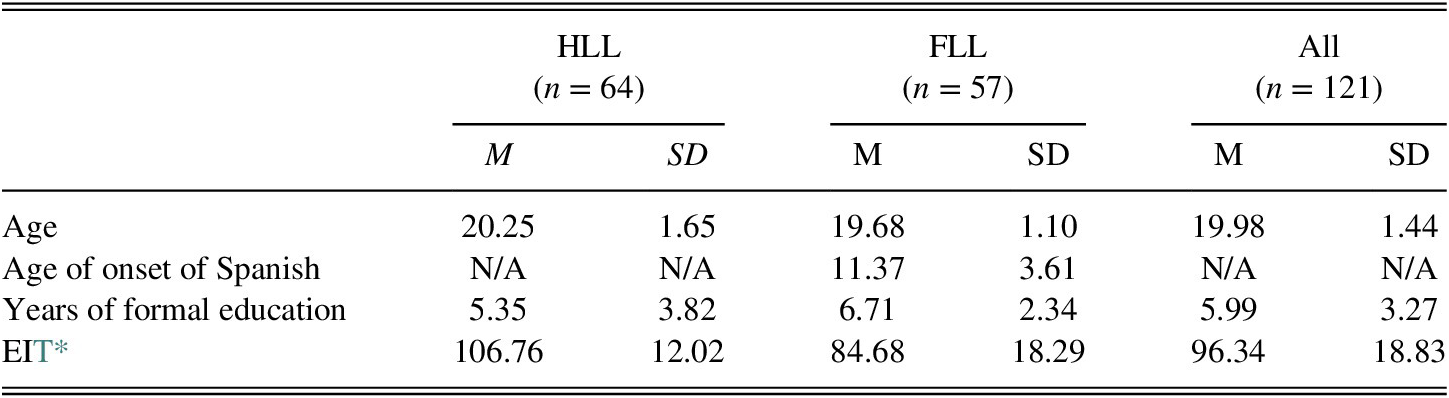
Note: Age is expressed in years; EIT = Elicited Imitation Test, scores out of a maximum 120.
* HLLs showed significantly higher EIT scores than FLLs (t = –7.7, p < .001, d = 1.42).
All participants were enrolled in or had completed a university-level heritage or advanced-language Spanish course and scored at an advanced level on a Spanish proficiency test—an elicited imitation task (EIT; Bowden, Reference Bowden2016) (see Table 1). Cross-group comparisons revealed that the HLL group held significantly higher proficiency than the FLL group (t = –7.7, p < .001, d = 1.42). With respect to linguistic and cultural background, collected through a modified Language and Social Background Questionnaire (LSBQ; Luk & Bialystok, Reference Luk and Bialystok2013), both groups were heterogenous in nature. The HLL group included individuals of first, second, and third generation with heritage roots representing 13 Latin American countries. HLLs varied widely in their formal education in Spanish, which ranged from 3 months to 16 years (M = 5.35 years, SD = 3.82). Twenty-one participants (33% of the HLL group) were born in a Spanish-speaking country, with an average age of arrival to the United States of 8.52 years (SD = 4.98). Within the group of Spanish FLLs, 17 participants (30% of the FLL group) identified as HL (N = 11) or L1 speakers (N = 6) of a language other than English, showing the growing prevalence of multilingualism (Ortega, Reference Ortega2019). FLLs’ age of onset for FL Spanish ranged from 2 to 19 years of age (M = 11.37 years, SD = 3.61) and held between 1.5 and 15 years of formal education in L2 Spanish (M = 6.71 years, SD = 2.34). Eight FLLs had previous study abroad experiences of at least three months in a Spanish-speaking country.
Materials
Emotion-Laden Texts
Emotional contexts and reactions were established through three texts: two emotionally laden texts centered on positive and negative portrayals of common Spanish classroom topics and one neutral text of a similar theme (see Supplementary Materials). All participants read all three texts, in counterbalanced order. All three texts were adapted from Marqués (Reference Marqués2012) and Potowski (Reference Potowski2011, Reference Potowski2017), two Spanish textbooks designed for the Spanish heritage classroom, and relate to the Latinx population in the United States, namely addressing themes pertaining to ethnicity, race, identity, and language policies and ideologies in the United States. All texts were between 1,100 and 1,200 words (M = 1146; SD = 26.25) in length to allow ample opportunity for affective reactions without fatiguing participants. This range of text length was chosen based on pilot study observations. To verify that the choice of topics and texts had achieved the intended emotional effect, as originally determined in a pilot study, emotionality ratings were collected from all learners following each reading through a question asking if each text was perceived as positive, negative, or neutral in overall connotation. The results showed that a majority of participants associated each text with the emotional valence intended: positive for the topic of the contributions of the Latinx community in the United States (93% of 121 learners), neutral for the topic of bilingual programs in the United States (54%), and negative for the topic of antiimmigration opinions (88%). A short, three-question multiple-choice reading comprehension test was also included at the end of each text. The responses confirmed that all participants comprehended and paid attention to all reading content and reaffirmed that all had advanced Spanish proficiency.
Target Vocabulary Items
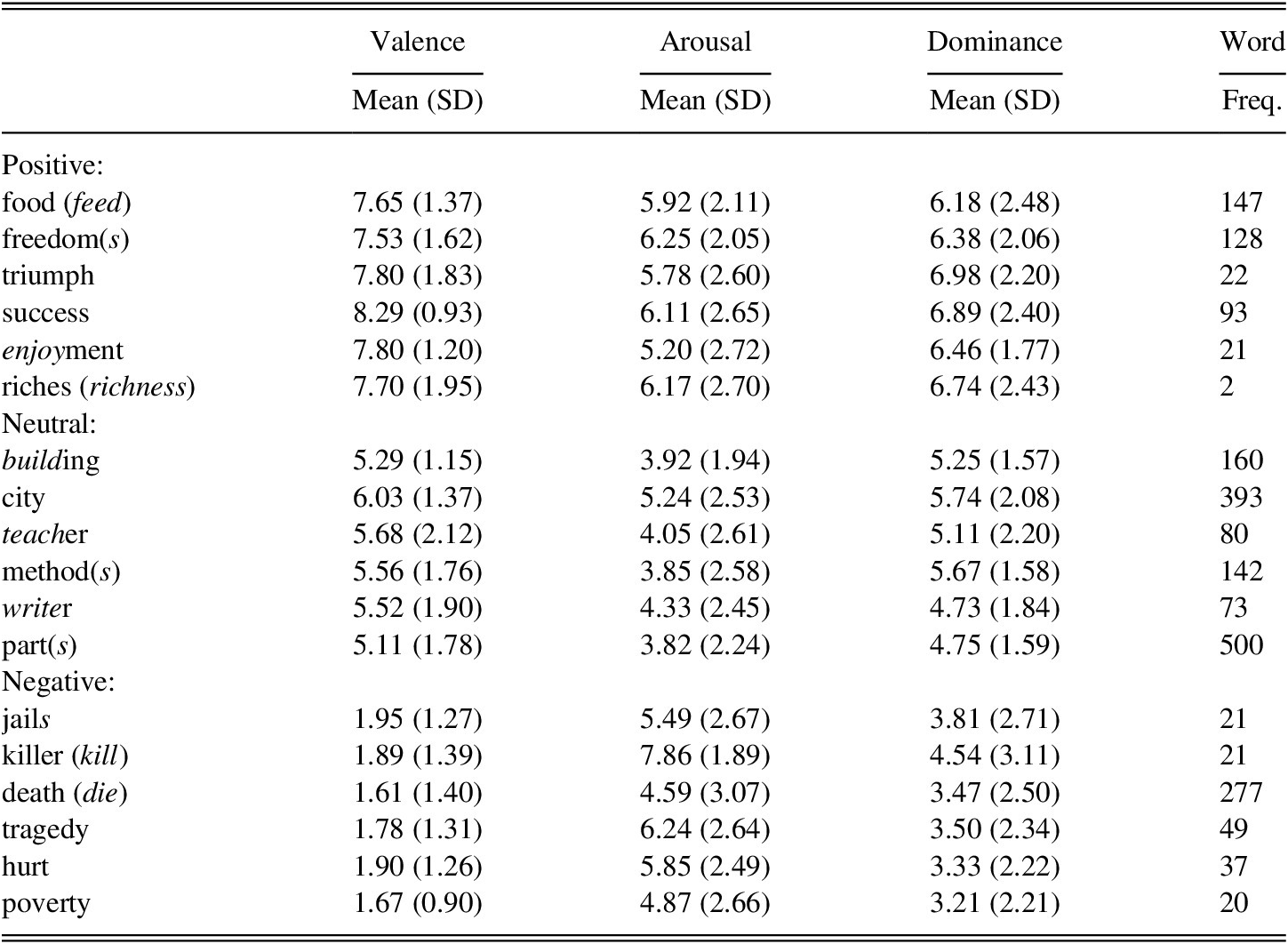
Target items were 18 bisyllabic Spanish pseudowords, adapted from a list of Spanish pseudowords by Carreiras and Perea (Reference Carreiras and Perea2004). Each target item was presented in bold in the text, with the English translation that participants were asked to learn for each item provided in parentheses immediately following the pseudoword. Table 2 shows the lexical characteristics of the neutral and emotion-laden English translation words. A full list of the English translations and pseudoword target items can be found in Appendix A.
Mean lexical characteristics for emotion-laden English translation words
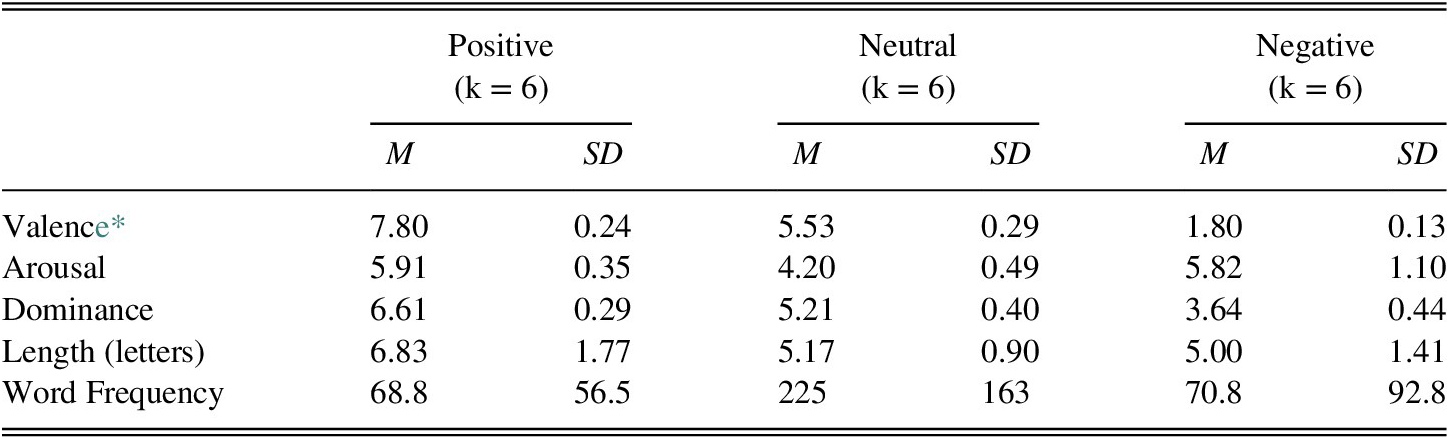
Note: Positive words: enjoy, richness, triumphed, success, feed, and freedoms. Neutral words: write, parts, teach, methods, build, and city. Negative words: hurt, poverty, died, tragedy, kill, and jail. Valence ratings from Bradley and Lang (Reference Bradley and Lang1999).
* Valence ratings are on a 9-point scale, from 1, very negative, to 9, very positive, in connotation.
Pseudowords were selected to have an initial syllable of high frequency to facilitate pronunciation and lexical identification (Carreiras & Perea, Reference Carreiras and Perea2004). All items were approximately 5.94 letters in length and appeared mid-sentence. Within each emotion-laden text, six different pseudowords were embedded, representing positive (k = 2), negative (k = 2), and neutral (k = 2) meanings. The valence for the English translations (Table 2) was provided by the Affective Norms for English Words database (ANEW; Bradley & Lang, Reference Bradley and Lang1999). Positive emotion-laden words have a database rating above 7.25 (M = 7.80, SD = 0.24) on the 9-point valence scale, neutral words are rated between 5 and 5.75 (M = 5.53, SD = 0.29), and negative emotion-laden words are rated between 1 and 2 (M = 1.80, SD = 0.13).
Vocabulary Assessment
Three test formats were used to assess receptive vocabulary learning of the 18 target pseudowords: form recognition, translation, and multiple choice. The three response formats were completed in this sequence to minimize any one subtest affecting the answers of the next. Form recognition targeted pure recognition of the pseudoword without probing memory of the English meaning (Chen & Truscott, Reference Chen and Truscott2010; Malone, Reference Malone2018; Webb, Reference Webb2007). The translation and multiple-choice response formats both targeted memory of both form and meaning (Chen & Truscott, Reference Chen and Truscott2010; Webb, Reference Webb2007). Participants had as much time as needed to complete each subtest.
The form-recognition subtest included a randomized list of the 18 pseudoword target items, as well as 18 distractor items, and participants were instructed to select the words they recognized from any the three texts. Distractors were two-syllable Spanish pseudowords that were not presented in any of the texts but similar in form to the target items. All target items were coded as correct or incorrect for a possible score of 18. In the translation subtest, a list of the same 18 target items were presented in randomized order followed by a blank, where participants provided the English translation. Direct translations and their synonyms, as well as words falling within those word families, were scored as correct. In the multiple-choice test, the same 18 target pseudowords were presented in randomized order, and participants were instructed to choose which of four options was the correct meaning as glossed in the text. Distractors were of the same part of speech as the target item and had a related meaning. The total possible score for each of these subtests was 18, making the maximum for the total vocabulary score from all three tests 54.
Exit Questionnaires
Qualitative data were collected through two distinct open-ended exit questionnaires designed to elicit information on participants’ reactions to the readings and explore participants’ identities, social and academic experiences, and emotional connections to any of the texts. All exit questionnaire items were optional for all participants. The first exit questionnaire, presented at the end of the first session, consisted of two questions inquiring into any connections participants may have made between the themes covered in any of the texts, their own life experiences, and their emotional reactions to any of the readings. A second exit questionnaire at the end of the second session posed four additional questions exploring, again, emotional connections to any of the texts, as well as connections to participants’ identities and social and academic experiences. These questionnaires were piloted prior to the main study with a group of 28 HLLs and FLLs, who were asked to respond to questionnaire items and comment on questionnaire clarity and relevance. Prior to the current study, ambiguous or problematic questions were modified.
Procedures
Data Collection
The present study took place in two sessions held one week apart at seven university sites. With the exception of the consent form and proficiency test, all questionnaires, texts, and tests were administered online through Qualtrics.
Participants reported to a language lab for the first session of 1 hour, where they were given task instructions in English, informed that they would be quizzed on reading comprehension and bolded vocabulary items after reading, and told that they were not permitted to take notes on any reading content or vocabulary. They then read all three emotion-laden texts, in counterbalanced order, where they were tasked with learning the form and meaning of 18 pseudoword vocabulary items in total. Immediately after reading each text, participants completed a short, three-question multiple-choice reading comprehension test and an emotionality rating where they characterized the text as positive, negative, or neutral. Upon completion of all three texts, participants completed the vocabulary test. Finally, following an explanatory sequential design (Merriam & Tisdell, Reference Merriam and Tisdell2015), each participant was invited to optionally respond to a short, open-ended written exit questionnaire and scheduled for Session 2.
Participants returned 6–8 days later to complete a delayed posttest—the same vocabulary assessment from Session 1. They then completed the Spanish EIT and the background questionnaire (LSBQ). Finally, optionally, participants answered a second set of open-ended written exit questionnaire items. Upon completion of Session 2, participants received $15 cash.
Data Coding
Participants’ answers for all 18 target pseudowords on the vocabulary test were coded for correctness. For the form recognition test, all target pseudowords that participants marked as “recognizable” were given a score of 1. For the translation subtest, all words and synonyms from the same word family as the English translations presented in the texts for each pseudoword were scored 1, and all other answers were scored 0. For the multiple-choice subtest, only one of the four multiple-choice options for each pseudoword matched the English translation given in the text and was given a score of 1. Because two words of each type of emotion were included in each text, the maximum total score for each word type (positive, neutral, negative) within each text is 6. The maximum total score for vocabulary test results is 18 per text (regardless of word type) and 18 per word type (regardless of text).
Statistical Analysis
All inferential analyses were performed using binary logistic mixed-effects models with random effects for participants using the lme4 package (version 1.1-27) of R (version 4.0.5) (Linck & Cunnings, Reference Linck and Cunnings2015). First, the dependent variable was defined as a binary variable measuring success of failure on each vocabulary test score. The analysis was conducted with contrast coding, with one level for each variable specified as a reference level. Coefficients therefore represent the difference from the reference levels, which were defined as neutral text, neutral word type, multiple-choice test, immediate posttest, and FLL. The simple fixed effects were text (positive, neutral, negative), word type (positive, neutral, negative), vocabulary test type (form recognition, translation, multiple choice), and time (immediate, delayed posttests); the covariates were linguistic profile (FLL, HLL), gender (male, female), Spanish proficiency (EIT score), formal education in Spanish (in months), and university (public, private), and included a full factorial design, with all interaction terms. The random-effects structure included participants. Models were fit using a technique of maximum likelihood. Fixed effects with an absolute value of the t statistic greater than or equal to 2.0 were considered significant (Gelman & Hill, Reference Gelman and Hill2007).
Qualitative Analysis
Written responses to the two open-ended exit questionnaires from all 121 participants were first organized by grouping the data according to similar concepts. The qualitative data was then coded descriptively (Richards, Reference Richards2015), for participant characteristics and learning context, as well as analytically (Saldaña, Reference Saldaña2016), by labeling the emotions and experiences recalled by participants. By providing insight into learners’ sociolinguistic experiences, perceptions, attitudes, and worldviews, the qualitative analysis was meant to provide a deeper reflection and better holistic understanding of quantitative findings within linguistic, sociopolitical, and cultural contexts (Creswell, Reference Creswell2015).
Results
To answer whether the emotional valence of the texts and the words influenced the learning and retention of the 18 novel vocabulary items for HLLs and FLLs, I present here the descriptive statistics first, followed by the results of the best-fitting mixed-effects model, which examined the variables of text (positive, neutral, negative), word type (positive, neutral, negative), vocabulary test type (form recognition, translation, multiple choice), and time (immediate, delayed posttests), the covariate linguistic profile (FLL, HLL), and relevant interactions. Gender, Spanish proficiency, formal education in Spanish, and university were not significant predictors and do not appear in the final model. The final model included 13,068 total data points, with 108 observations per subject on 121 subjects. I then offer the results from participants’ qualitative responses to the open-ended exit questions as triangulating evidence that aids in the understanding and interpretation of main findings.
Statistical Results
The average score for each type of word (positive, negative, neutral) separately within each text is presented in Table 3 for the immediate posttest, separately for HLLs and FLLs, as well as for all participants. The table also shows in bold the average score for each text (when word type is not considered) and in italics the average score for each word type (when text valence is not considered).
Average immediate posttest scores by text and word type

Note: The maximum for scores in bold and italics is 18; all other scores are out of a maximum 6.
Table 4 shows the same data for the delayed posttest, 1 week after the reading took place. Participants’ memory of the pseudowords deteriorated somewhat, though retention was only slightly weaker as shown in marginally lower values than on the immediate posttest.
Average delayed posttest scores by text and word type
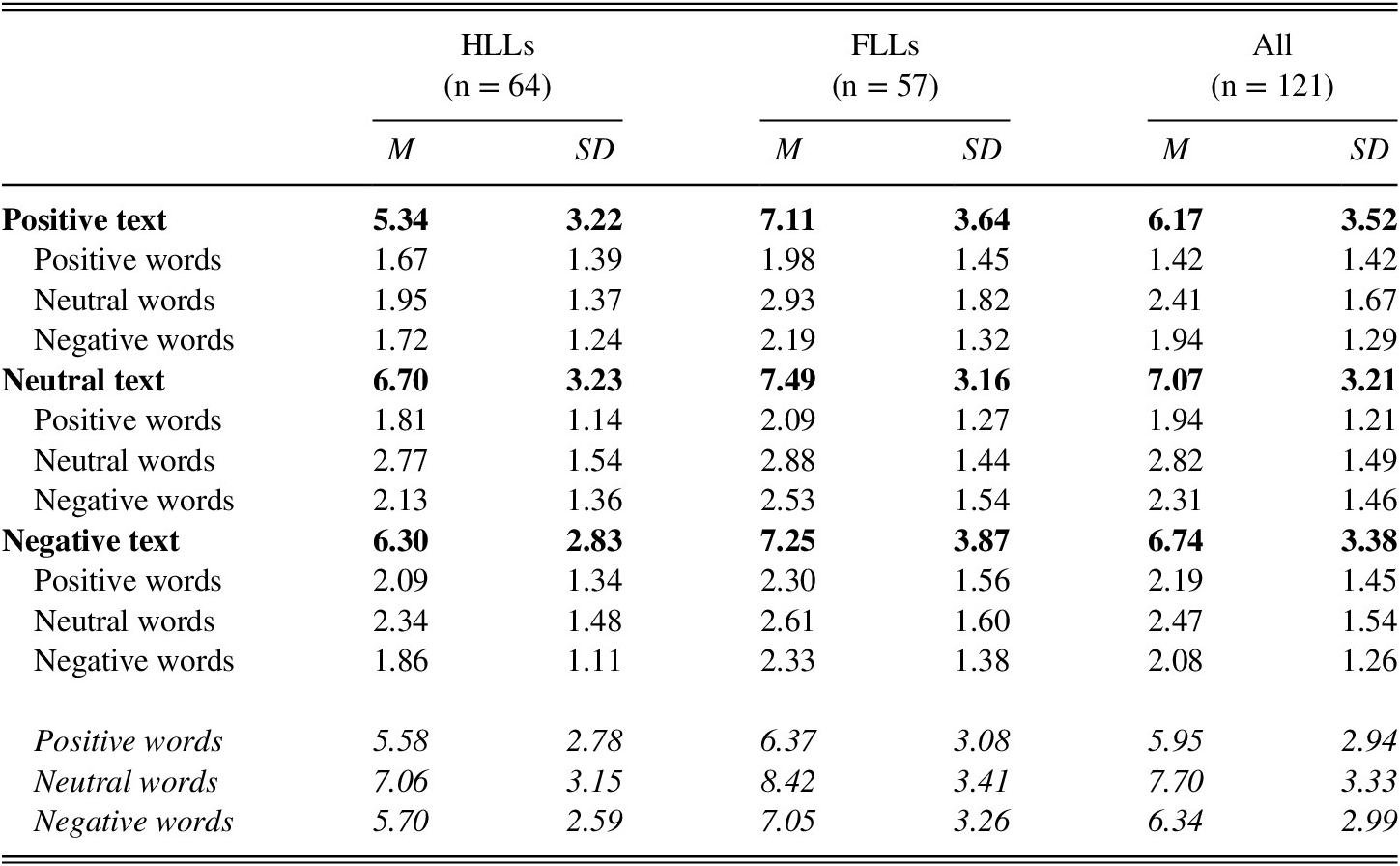
Note: The maximum for scores in bold and italics is 18; all other scores are out of a maximum 6.
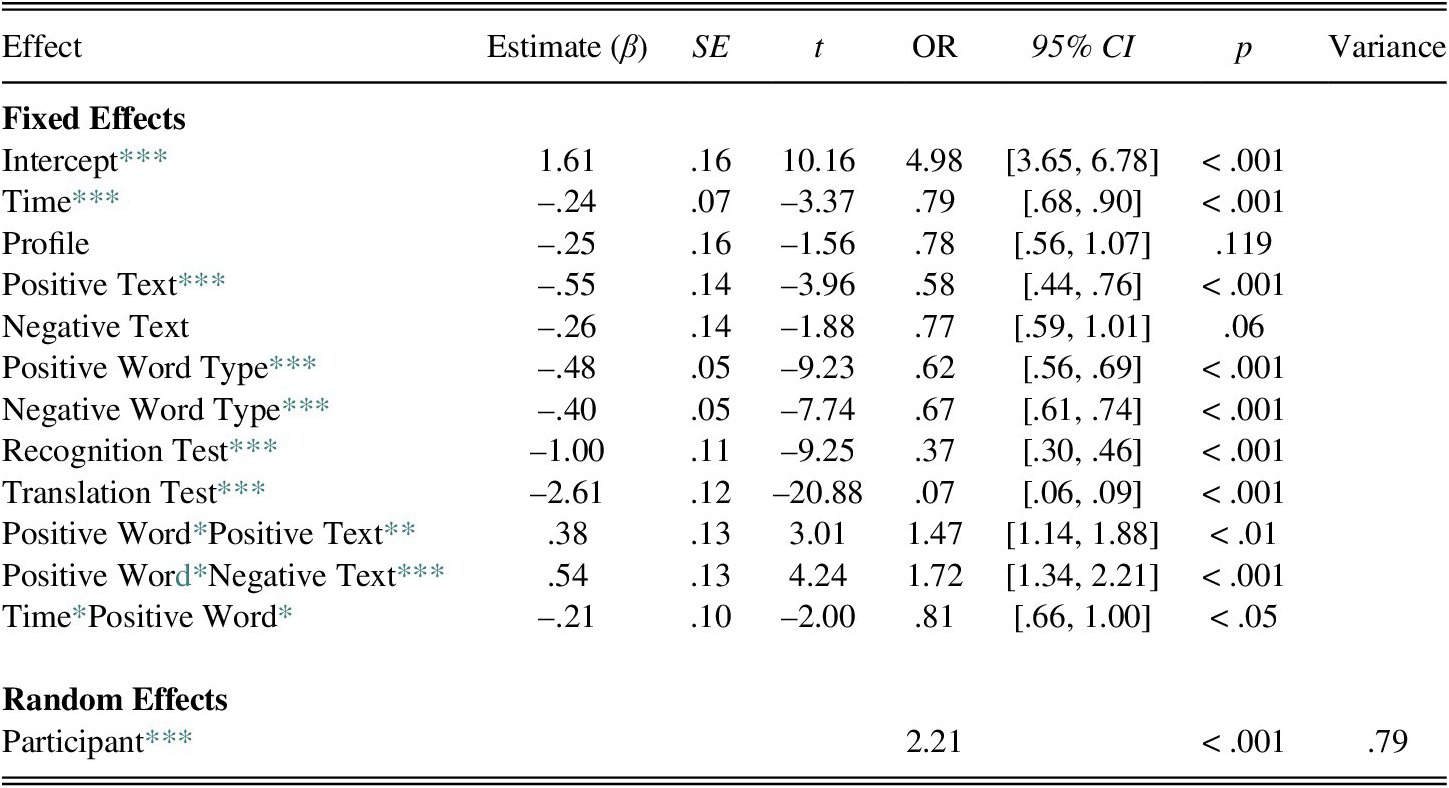
Table 5 reports the results of the best-fitting model for vocabulary learning. The simple effect of profile was not significant (β = –.25; SE = .16; t = –1.56). The effects of time, text, word type, and vocabulary test were significant. With the immediate posttest defined as the baseline, the negative estimate for time signifies that a higher total score is predicted on the immediate posttest (β = –.24; SE = .07; t = –3.37) than 1 week later on the delayed posttest. For text, participants were predicted to perform better on target words presented in the neutral text than in the positive text (β = –.55; SE = .14; t = –3.96) and expected to perform similarly on words presented in the neutral and negative texts (β = –.26; SE = .14; t = –1.88).
Best-fitting model for vocabulary learning
Note: |t| ≥ 2.0, indicating a significant effect (Gelman & Hill, Reference Gelman and Hill2007).
* p < .05;
** p < .01;
*** p < .001.
For word type, greater success was predicted for neutral words than for positive (β = –.48; SE = .05; t = –9.23) or negative words (β = –.40; SE = .05; t = –7.74). Expectedly, participants had a better chance of performing better on the multiple-choice test than on the form-recognition (β = –1.00; SE = .11; t = –9.25) and translation (β = –2.61; SE = .12; t = –20.88) vocabulary tests. It is worth noting that in a previous weaker model, comparing form recognition to collapsed scores for meaning (i.e., multiple-choice and translation test scores combined), test type was not found to be a significant predictor of vocabulary learning; this model was rejected in favor of the best-fitting model (Table 5) comparing all three vocabulary subtests individually. With respect to significant interactions, the retention of positive words was expected to be lower than retention of other words (β = –.21; SE = .10; t = –2.00).
No other main effects or interactions were significant (all ts < 2.0), indicating that the prediction for HLLs paralleled that of the FLLs, with a greater likelihood for a better score in the neutral and negative texts and for neutral words overall. These results are true both immediately as well as 1 week later.
Qualitative Insights
Each exit questionnaire gave participants the opportunity to reflect on any or all of the three texts. Though participants were told that exit questionnaire responses were voluntary, all 121 participants (64 HLLs and 57 FLLs) provided some written response at the end of either Session 1 or 2. Notably, qualitative data provide insight into how participants’ underlying experiences and emotional reactions to each text might explain differences in vocabulary learning success that could not be captured in the quantitative data, alone.
First, a descriptive analysis of the qualitative responses revealed that only a very small number of HLLs (N = 8) and FLL participants (N = 3) mentioned the positive text in their reflections during either session and very few themes could be identified in the positive text responses. The few HLLs who commented on the positive text made brief mentions of the pride and joy felt from reading about their community in a positive light, but these emotions were short-lived: 1 week later, HLLs made no mention of any emotions by name. Similarly, FLLs’ few statements were generally absent of any emotional connection to the texts’ themes. Together, the limited reflections and connections made with the central theme of the positive text—the benefits of the Latinx community to the United States—may be indicative of low arousal (i.e., low stimulation) and imply that the reading was neither memorable nor influential for either linguistic profile. This is in contrast to results from the negative and neutral readings, where a greater number and complexity of qualitative responses reveal higher and longer-lasting emotional involvement by participants’ than with the positive text. Each one of these texts attracted comments from between one quarter and one half of both HLLs (between 15 and 24) and FLLs (between 13 and 28) both immediately and even 1 week later.
With respect to the neutral text, the theme of bilingual experiences came up for both learner profiles, though perhaps in more emotional ways for HLLs. Namely, HLLs made connections between the neutral text and their own language learning biographies, some highlighting negative emotionality, by recalling feelings of frustration with their own ESL experience (Example 1) or the struggles they had overcome to learn English (Example 2):
-
(1) “I feel it [sic] so frustrating the early education system of dual lingual programs, or ESL programs. I learned how to read [and] write in English in 5th grade, because I knew how to speak English but not write or read … but it went well.” (P037-HLL)
-
(2) “The [neutral] text of bilingualism resigned [sic] with me because I learned English as a second language after I immigrated from El Salvador. I remembered the difficulty of learning English in my early teen years, but that exposure of struggling learning a new language make [sic] me see the world through different lenses from different languages.” (P110-HLL)
Still, even those who were reminded by the neutral text of the challenges they met during their own language learning endeavors noted the overall benefit and positive outcome of the experience (Examples 1–2). FLLs, in contrast, did not relate to the text through personally lived or intensely emotional experiences but, instead, made connections to their work or to experiences that peers and colleagues had shared with them about ESL programs. Additionally, though FLLs reflected positively on the neutral reading, they generally opted for a more matter-of-fact, as opposed to emotional, reflection of the text (Example 3):
-
(3) “[M]any of my friends and coworkers grew up in the ESL programs at my school, which was discussed extensively in the [neutral] reading. Additionally, I used to be a peer tutor at my high school, and we would tutor foreign students. It was interesting to consider how their skills could have developed better or worse if our school’s ESL program were formatted only a little bit differently.” (P015-FLL)
Notably, much like Spanish HLLs, FLLs who identified as HLLs of other languages (Example 4) recalled personal and positive and negative emotional experiences relating to their own bilingualism in response to the neutral reading.
-
(4) “The third article, which dealt with language acquisition and national sentiments towards bilingualism relates directly to my life, as I am a first-generation American citizen. My entire family is bilingual and supports the prospect of being able to speak more than one language. Members of my family and I have all experienced moments of nativism in the United States. Thus, I had quite a bit of personal investment in the material I was reading.” (P108-FLL, HLL of Albanian)
Much like the neutral reading, the negative text, which outlined the author’s negative opinions on U.S. immigration, led participants to reflect in great numbers on their own experiences related to the topic, though once again, in slightly different lights for HLLs and FLLs. In particular, themes of racism and immigration were repeated in many reflections. As demonstrated by Example 5, FLLs often recounted strained and frustrating relationships with racist family members and the traumatic immigration experiences of classmates and friends. HLLs, however, highlighted their family and own personal immigration biographies and emotional experiences as victims of microaggressions, social injustices, and racist actions, as shown in Example 6:
-
(5) “The first [negative] text made me extremely angry because I have family members who think that way about illegal immigrants. Especially with recent events regarding ICE and the camps immigrants are being put into, the mindset behind that reading made me frustrated.” (P031-FLL)
-
(6) “For all 4 years that I was in high-school I was the only Latino in the school, so I got made fun of a bit. People would ask how I crossed the border, or if I could mow their lawn and myriad of other things.” (P057-HLL)
As with the neutral text, reflections on the negative reading showed deeper connection and higher arousal for participants than with the positive text. Notably, feelings of anger and frustration, both activating and arousing negative emotions (Russell, Reference Russell1980), were mentioned repeatedly as central emotions elicited by the negative text by FLLs and HLLs, alike (Examples 5 and 7).
-
(7) “I am frustrated with immigrants being considered a drain to this country. I see how it affects me and my family on a daily bases.” (P126-HLL)
HLLs of other languages also expressed negative emotions of frustration and annoyance with the negative reading themes. Like HLLs of Spanish, they connected the reading to their own personal experiences and also brought up themes of immigration, as well as ethnolinguistic minority identities.
Still, open-ended comments to the negative text also uncovered positive feelings, even while addressing the same themes of racism and immigration, for both groups in response to the negative text, implying complex emotional responses to the reading. These positive feelings were particularly voiced by HLLs of both Spanish and other languages:
-
(8) “This text definitely let me more motivated to prove my point to people who don’t believe in the power of immigrants.” (P052-FLL, heritage speaker of Polish)
-
(9) “[The negative text] made me a little frustrated because these issues are continous [sic] and it feels like there is nothing being done to stop them. However, it also made me more interested and curious because I want to learn more, and motivated because I want to be a better person and accomplish so many things.” (P069-HLL)
As seen in Examples 8 and 9, in addition to negative and potentially activating feelings of intense frustration, confusion, and anger, the negative reading also led many HLLs to greater curiosity in different existing points of view, piqued interest in educating themselves more on the reading’s central theme, and stronger motivation to work against harmful immigration concepts and policies.
Discussion
This study set out to explore the effects of emotion-laden contexts and vocabulary on FL and HL vocabulary learning outcomes and is the first known to implement full-length texts centered on socially relevant themes as a method for inducing positive, negative, and neutral emotion. Triangulating evidence from quantitative and qualitative methods allows for a deeper understanding of emotion and vocabulary learning situated at the intersection of SLA, heritage language education, and psycholinguistics. Findings raise points to be addressed in future research and suggest implications for foreign, heritage, and mixed-language classrooms.
The Association between Emotion-Laden Texts and Vocabulary Learning
The current study supports a dimensional view for the study of emotion proposed by some theoretical models in psychology (e.g., Russell, Reference Russell1980, Reference Russell2003). This support comes from the influence of valence and arousal demonstrated in the mixed-effects modeling analyses and qualitative findings regarding reading topics and target vocabulary items. In response to the first research question, the results of the vocabulary tests across the three emotion-laden reading contexts in the current study generally support the findings that both emotional valence (Frances et al., Reference Frances, De Bruin and Duñabeitia2020b; Kensinger, Reference Kensinger2009; Mizrak & Öztekin, Reference Mızrak and Öztekin2016) and emotional arousal (Frances et al., Reference Frances, De Bruin and Duñabeitia2020a; Kensinger, Reference Kensinger2009) influence learning and retention outcomes. Specifically, a mixed-effects analysis did return significant results, predicting the neutral and negative readings as the best contexts for vocabulary learning for both FLLs and HLLs. Notably, the finding that the negative context was beneficial for vocabulary learning contradicts previous work suggesting the detrimental effects of negative mood on learning outcomes (e.g., Miller et al., Reference Miller, Fox, Moser and Godfroid2018). However, some studies have observed that other methods of negative mood induction, such as music (e.g., Liu, 2019), can improve learning by promoting more careful processing. By influencing online and continuous induction of negative emotions, the negative reading may have similarly encouraged more analytical and strategic processing of target vocabulary items. Given that the present study is the first to implement full-length, thematic texts to induce both positive and negative emotion, respectively, during FL/HL vocabulary learning, further research will be essential before a consensus can be reached on the influence that emotional reading contexts may be expected to have on learning outcomes.
Interestingly, the present results resonate with previous research in psychology (e.g., Kensinger, Reference Kensinger2004; McGaugh, Reference McGaugh2018; Steidl & Anderson, Reference Steidl, Mohi-Uddin and Anderson2006) that suggests that emotional arousal (i.e., emotional activation or stimulation) occurring before, during, or even shortly after learning may be associated with enhanced memory of target items. Qualitative results suggest that the neutral reading on the state of bilingual education in the United States, indeed characterized as neutral by a majority of participants in their holistic emotionality ratings, may have had a greater emotional influence on learners, with respect to arousal, than expected. Specifically, exit questionnaire responses uncover that the neutral text incited more memories of past experiences and deeper personal investment in participants whose life experiences resonated with the reading content: both HLLs of Spanish, and, unexpectedly, FLLs who were HLLs of other languages. These results suggest that the neutral text, even if deemed the most neutral of the three texts, may have elicited a mix of somewhat positive and negative emotions and, perhaps more importantly, been more memorable and arousing than the positive text. In response to the negative text, participants’ emotional reactions of not only negative emotions, such as frustration and anger, but also positive emotions, like curiosity and interest, as well as motivation, are all suggestive of an emotionally arousing reading experience, particularly for Spanish and non-Spanish HLLs. Positive emotions, specifically, have been seen to combat the effects of negative feelings by building resiliency to endure challenging events (Fredrickson, Reference Fredrickson2003). These feelings may have aided readers in being more emotionally aware of the arguments put forth in the negative text, rather than absorbed by the negativity of the theme, potentially leading to lower levels of discomfort and better chances of engaging and taking interest in the reading (Tatum, Reference Tatum1992). These qualitative results reveal the true complexity of any reading context and suggest that a reading’s connection to biographical and personal memories may determine its potential to arouse an emotional response. They also suggest that the neutral and negative readings both incited stronger, enduring, and, for HLLs, more personal emotions than the positive text. These results corroborate previous findings in psychology (e.g., Jia et al., Reference Jia, Gao, Wang, Han, Cui and Guo2020; Nielson & Powless, Reference Nielson and Powless2007; Nielson et al., Reference Nielson, Yee and Erickson2005) that suggest the benefit of emotional arousal for memory and word learning, though research on the effects of arousing and socially relevant contexts is still needed in SLA.
Given the present findings that the topics perceived as qualitatively negative, at least in part, predict better vocabulary learning outcomes, it is important to note that the literature on positive psychology and positive emotion within SLA (e.g., Frances et al., Reference Frances, De Bruin and Duñabeitia2020a, Reference Frances, De Bruin and Duñabeitia2020b; Fredrickson, Reference Fredrickson2003; Fredrickson & Branigan, Reference Fredrickson and Branigan2005; MacIntyre & Gregersen, Reference MacIntyre and Gregersen2012b; MacIntyre et al., Reference MacIntyre, Gregersen and Mercer2016) emphasizes the advantages of positive emotions and contexts over negative emotions for language achievement. However, studies also exist within psychology noting in some cases the detriment of negative emotional content on memory (e.g., Bisby et al., Reference Bisby, Horner, Bush and Burgess2018) and in others the benefits of negative stimuli on recall (Hinojosa et al., Reference Hinojosa, Moreno and Ferré2020; Mizrek and Öztekin, Reference Mızrak and Öztekin2016). Simply put, not all negative emotionality has been found to have harmful effects on learning outcomes, as also demonstrated in the present study. Additional research is needed on the implications of emotional contexts, specifically on negative emotion, for cognitive processes including memory and learning. In addition, the current study appears to be the first in SLA, and, specifically within heritage language education, to further suggest that emotional arousal through socially relevant reading themes and contexts may have a positive effect on vocabulary learning, which also highlights the need for continued investigation into the multiple dimensions of emotion and their effects on vocabulary achievement. Specifically, research addressing the constructs of valence and arousal separately with respect to learning context will be of particular benefit to the field.
Learning Expectations for Emotion-Laden Vocabulary
With respect to the second research question, the results of the mixed-effects modeling on the learning outcomes for emotion-laden words revealed that participants in the current study were predicted to recall and retain neutral words better than either positive- or negative-laden items. While this generally supports prior studies in psychology, both with monolingual (e.g., Altarriba & Bauer, Reference Altarriba and Bauer2004; Jay et al., Reference Jay, Caldwell-Harris and King2008; Snefjella et al., Reference Snefjella, Lana and Kuperman2020) and bilingual (e.g., Ayçiçegi & Harris, Reference Ayçiçeği and Harris2004; Ayçiçegi-Dinn & Caldwell-Harris, Reference Ayçiçegi-Dinn and Caldwell-Harris2009; Ferré et al., Reference Ferré, García, Fraga, Sánchez-Casas and Molero2010) participants, that mark a contrast between emotion-laden and neutral words, the current study contradicts previous research in psycholinguistics (e.g., Altarriba & Bauer, Reference Altarriba and Bauer2004; Ayçiçegi & Harris, Reference Ayçiçeği and Harris2004; El-Dakhs & Altarriba, Reference El-Dakhs and Altarriba2019; Kazanas & Altarriba, Reference Kazanas and Altarriba2015a, Reference Kazanas and Altarriba2015b; Snefjella et al., Reference Snefjella, Lana and Kuperman2020), neurolinguistics (e.g., Hinojosa et al., Reference Hinojosa, Moreno and Ferré2020), and psychology (e.g., Hadley & MacKay, Reference Hadley and MacKay2006; Jay et al., Reference Jay, Caldwell-Harris and King2008; MacKay & Ahmetzanov, Reference MacKay and Ahmetzanov2005; MacKay et al., Reference MacKay, Shafto, Taylor, Marian, Abrams and Dyer2004) on learning and memory enhancement. In this research, findings largely show that emotion (e.g., love, hate), emotion-laden (e.g., puppy, jail), and taboo words (e.g., reproductive organs, expletives) are recalled more successfully than neutral words. Still, it is important to note that all of these previous studies presented target word items in list form, as opposed to within a context, as in the current study. This may help explain the present converse finding that neutral words led to better recall. Specifically, word learning in the context of socially relevant emotional readings may have been different from word list learning. Qualitative results coupled with emotionality ratings show that participants did respond at least somewhat emotionally to all three readings. Thus, the added emotionality and arousal potentially triggered by the emotion-laden (i.e., positive and negative) vocabulary items may have maximized cognitive strain for participants and drawn cognitive resources away from learning these positive or negative word items. In contrast, neutral words, by not adding any additional emotional, and therefore cognitive, burden for leaners, may have been more accessible for cognitive processing and recall than positive and negative words (Fraser et al., Reference Fraser, Ma, Teteris, Baxter, Wright and McLaughlin2012). It is also worth considering that learners’ experiences with explicit and intentional vocabulary learning through second language textbooks are largely with neutral words (Dewaele, Reference Dewaele2010). This suggests that language learners may do better learning neutral words as a result of increased familiarity and comfort with these items. However, further research will be needed to explore these possibilities.
Limitations and Future Research
As with any empirical study, the current one has a number of limitations that should be acknowledged. First, the results of emotionality ratings show that some participants perceived the neutral text as either positive or negative in connotation, despite ratings in a pilot study characterizing the text as neutral. Though comparisons were possible based on relative emotionality and arousal, the use of a continuous, as opposed to categorical, emotional rating scale would allow for a deeper statistical comparison of emotion-laden texts.
Second, participants were given unlimited time to complete the readings. Thus, some participants may have taken more time to implement different learning strategies, such as reviewing novel vocabulary items, or to contemplate the content of each reading, potentially enhancing or abating the emotional connection and reaction to a text. Future studies controlling for or measuring reading, and hence exposure and reflection, time may elucidate additional factors in vocabulary learning and emotion.
Furthermore, online measures may be adapted to explore the dynamic nature of emotional reactions throughout a task (e.g., Boudreau et al., Reference Boudreau, MacIntyre and Dewaele2018). Researchers might also consider the implications of emotional arousal, in addition to emotional valence, on learner achievement, and, specifically, the benefits and multidimensionality of positive emotions, some of which might guard against negative emotions to promote greater learning outcomes. Nonverbal assessment techniques, such as the Self-Assessment Manikins (Bradley & Lang, Reference Bradley and Lang1994) might prove beneficial as alternative methods for exploring subjective valence and arousal levels with greater variance. This would strengthen theories within positive psychology and point to potential uses of discrete positive emotions within different contexts and in response to distinct negative emotions.
Additionally, nearly one third of FLLs were heritage speakers of other languages, who, based on their qualitative responses, may have reacted differently than other FLLs to the themes of bilingualism and immigration treated in the texts. This supports the now common acknowledgment that neither FLL nor HLL groups are homogeneous in character (Kagan & Dillon, Reference Kagan and Dillon2013; Valdés, Reference Valdés1995). Future research should consider diverse social backgrounds and multilingual repertoires in exploring the effects of sensitive and emotionally charged themes on vocabulary learning. Themes around identity, including influences related to race, ethnicity, and sexuality, were all alluded to in the qualitative questionnaire data and would prove of interest in future research that takes a qualitative perspective on emotions in language learning.
Finally, all participants in the present study were advanced learners of Spanish. Thus, exploring different proficiency levels would be desirable to ascertain the degree to which the present findings are generalizable to low and intermediate levels of proficiency. Generalizability can also be explored in the future by studying emotions and vocabulary learning while varying other background factors, including amount and type of HL/FL exposure and instruction, multilingualism, or experience with different learning strategies. Researchers interested in individual differences might also find it profitable to include emotional intelligence and language aptitude when designing future studies on the relationship between emotions and FL achievement.
Pedagogical Implications
Although laboratory-based, the present study has important implications not only for heritage language education but also for second language education, in general, with learners of diverse backgrounds. Most importantly, educators might consider that even seemingly neutral topics in the language classroom may elicit emotional responses from learners and affect vocabulary learning objectives (Frances et al., Reference Frances, De Bruin and Duñabeitia2020b). Specifically, content that is likely to elicit personal and vivid memories for learners may better support vocabulary learning. Furthermore, the present findings suggest that sensitive classroom content can affect all profiles of learner and lead to varying degrees of language achievement for both HLLs and FLLs. When utilizing emotional or sensitive readings in the classroom, practitioners, particularly those of mixed classrooms, should consider that certain themes, including topics on immigration, bilingualism, and ethnoracial identity, might activate stronger emotional responses from some students than others due to family connections and personal memories of emotional events (Prada et al., Reference Prada, Guerrero-Rodriguez and Pascualy Cabo2020; Tatum, Reference Tatum1992). Instructors might consider allotting extra time for these activities and prefacing content with a trigger warning (see Wyatt, Reference Wyatt2016) to alert students in advance of any emotion-laden themes and even allowing students to opt for alternative study of the content, given that even seemingly positive or neutral themes may induce sensitive or traumatic memories for some learners. Further inquiry on how the current findings translate to the classroom is an area with considerable promise for future research.
Conclusion
This study found that neutral and negative reading contexts led to greater success in vocabulary learning for both HLLs and FLLs. However, qualitative findings suggest that the neutral text may have been received by many participants as partially emotional in connotation, despite being rated as neutral in overall valence. Qualitative results also showed that higher levels of emotional arousal and memory may have been elicited by both the neutral and negative texts. Thus, emotional arousal, and not just valence as more commonly investigated, may be a telling facilitator of vocabulary learning for diverse groups of learners. In addition, neutral vocabulary items were learned more successfully than positive or negative items. This may be attributed to the lower emotional strain, and therefore reduced cognitive burden, of learning neutral words in an emotional reading context (Fraser et al., Reference Fraser, Ma, Teteris, Baxter, Wright and McLaughlin2012) and to learners’ increased familiarity with learning neutral words (Dewaele, Reference Dewaele2010).
The study shows the implications of emotional content on vocabulary learning for a diverse learner population. Specifically, in placing a focus on HLLs, who are widely underrepresented in the SLA emotion literature, the study suggests the importance for researchers and educators alike to consider this growing diversity of the language learning community. It is my hope that this study will encourage further research and pedagogical designs that continue to explore affective variables within the wide diversity of HL and FL classrooms to support these learners in their language learning endeavors. Going forward, this will serve to continue extending the boundaries of SLA into new, but necessary, territory.
Given that this study was completed in the midst of the Black Lives Matter movement, the COVID-19 global pandemic, and tense political elections, I would be remiss not to highlight the implications of the present study for language learners from ethnoracial and linguistic minority populations, who have been disproportionately affected by the current events and will carry the emotional memories of this time into their future academic, professional, and social lives. Researchers and educators, alike, must consider that learners’ perception of, response to, and success with classroom content is largely affected by a complex collaboration of social, emotional, ideological, and cognitive factors. As language educators and scholars continue to build online resources and materials for use during this pandemic, and webinars, podcasts, and social media platforms highlight a need to address the issues and challenges our society is now contemplating on race, immigration, and social justice in dual and world language classrooms, it becomes clear that research and pedagogy in SLA, not just in the middle of a social movement and global pandemic but also going forward, will and should address the same sensitive topics. These themes and conversations will no doubt continue to persist and be essential to the language learning experience. Thus, understanding the influence that these topics might have on learning achievement will be particularly important as we move forward, and a considered approach by language educators will be more crucial than ever to support equitable learning inclusive of vulnerable students in the classroom.
Supplementary Materials
To view supplementary material for this article, please visit http://doi.org/10.1017/S0272263121000851.
Appendix A Documentation of Target Pseudowords and their Meanings
Note: Lexical characteristics were taken from the Affective Norms for English Words (ANEW) designed by Bradley and Lang (Reference Bradley and Lang1999).
Pseudoword targets with their English translations


 Open access

