



The prevalence of fo1od insecurity, defined as ‘limited or uncertain availability of nutritionally adequate and safe foods or limited or uncertain ability to acquire acceptable foods in socially acceptable ways’, has increased in the past decade and is concentrated in low-income households, large metropolitan centres and minority populations in the USA( Reference Coleman-Jensen, Nord and Singh 1 ). Similar to the US Department of Agriculture (USDA) terminology, food insecurity includes both low and very low food security. In 2012, one in fourteen adults in the USA were unable to secure dependable access to nutritious, acceptable food at some point in the previous 12 months( Reference Coleman-Jensen, Nord and Singh 1 ). In California, food insecurity has increased overall from 2001 to 2009 with low-income adults experiencing the largest increase (from 8 % to 17 %)( Reference Chaparro, Langellier and Birnbach 2 ).
Inadequate dietary intake impairs nutrition, which in turn weakens the immune system and increases disease susceptibility and severity( Reference Scrimshaw and SanGiovanni 3 ). Adults who are food insecure are more likely to report poor health( Reference Stuff, Casey and Szeto 4 ), depression( Reference Palar, Kushel and Frongillo 5 ) and to experience delayed access to medical care, medications and hospital admissions than their food-secure peers( Reference Kushel, Gupta and Gee 6 ).
Food insecurity is a significant, but understudied problem among the estimated 16 million people who inject drugs (PWID) globally( Reference Mathers, Degenhardt and Phillips 7 ). Studies have shown that PWID have lower body weight and impaired micronutrient status than their non-drug using peers( Reference Hendricks and Gorbach 8 ). Existing reports indicate that food insecurity is associated with depression symptoms( Reference Anema, Wood and Weiser 9 , Reference Vogenthaler, Hadley and Rodriguez 10 ) and sex work and unprotected sex among HIV-positive PWID( Reference Shannon, Kerr and Milloy 11 ). One study found that 65 % of PWID in urban Canada reported difficulty affording enough food and feeling hungry as a result( Reference Anema, Wood and Weiser 9 ). However, that study relied on a single question for estimating hunger( Reference Anema, Wood and Weiser 9 ), a modified measure specific to Canada( Reference Strike, Rudzinski and Patterson 12 ). Research on the vulnerable intersection between hunger and injection drug use representing areas outside North America is lacking.
In the present study, we use the US Adult Food Security Survey Module (ten item) developed by the USDA. It is a nationally validated and widely used measure that permits comparison with the general US population( 13 ). The primary aim of the present study was to estimate the prevalence of food insecurity among PWID in Los Angeles and San Francisco and explore correlates of food insecurity with sociodemographic and health indicators.
Methods
Procedures
Data are from a multi-method, cross-sectional research project investigating drug injection initiation funded by the National Institute on Drug Abuse (NIDA; grant number 1R01DA027689). Data included 777 quantitative interviews and 114 qualitative interviews with PWID in Los Angeles and San Francisco. In the current paper we report only from the quantitative survey which included participants 18 years and older. Study participants were recruited using community outreach and targeted sampling methods( Reference Watters and Biernacki 14 , Reference Bluthenthal and Watters 15 ). Eligible participants were 18 years of age or older and had at least one injection episode in the last 30 d as verified by visible signs of recent venepuncture( Reference Green, Bluthenthal and Singer 16 ). After providing informed consent, participants completed a computer-assisted personal interview (Questionnaire Development System; NOVA Research Company, Bethesda, MD, USA) with a trained interviewer that addressed sociodemographics, drug use history, practices and patterns, drug injection initiation episode, sex risk, health-care utilization, exposure to violence, police contact and food insecurity. Participants were remunerated $US 20 for completing the survey.
Measures
Food security in the last 30 d was ascertained using the US Adult Food Security Survey ten-item Module( Reference Coleman-Jensen, Nord and Singh 1 ). This questionnaire consists of three types of questions. The first set of questions asks how true (‘never’, ‘sometimes’, ‘often’) the following statements were for participants: (i) ‘I worried whether my food would run out before I could get more food’; (ii) ‘The food that I had just didn’t last, and I wasn’t able to get more food’; and (iii) ‘I couldn’t manage to eat balanced meals’. The second set of questions asks the following ‘yes’/‘no’ questions: (i) ‘Did you ever cut the size of your meal or skip meals because there was not enough food?’; and (ii) ‘Did you ever not eat for a whole day because there wasn’t enough food?’. If participants replied ‘yes’ to either, they were then asked on how many days in the last 30 d this occurred. The last set of questions requested ‘yes’/‘no’ responses to the following items: (i) ‘In the last 30 d, did you ever eat less than you felt you should eat?’; (ii) ‘In the last 30 d, were you ever hungry but didn’t eat because there was not enough food?’; and (iii) ‘In the last 30 d, did you lose weight because there wasn’t enough food?’.
The food security scale (continuous measure) and food security status (categorical measure) were created according to USDA guidance( Reference Bickel, Nord and Price 17 ). Using responses to the questionnaire, we created a 0–10 point scale of food security where responses of ‘yes’ or ‘sometimes’ or ‘often true’ were counted as 1 point. For the ‘number of days’ items, responses of 5 d or more were counted as 1 point. We classified participants with three or more affirmative responses as food insecure and six or more affirmative responses as very low food security status.
Data for a wide range of other domains were also collected including socio-economic (employment, income sources, housing status, among others) and sociodemographic characteristics (age, gender, race/ethnicity, among others). We asked comprehensive questions about drug use history, current use patterns and administration routes for the following substances: alcohol, powder cocaine, crack cocaine, heroin, methamphetamine, and non-medical use of prescription opiates, stimulants, tranquilizers and sedatives, among other items. Information on injection-related and sex-related HIV risk was also gathered, as were items on common health problems among PWID such as abscess and overdose. Utilization of preventive health services (e.g. HIV testing, HCV testing) was queried as well. Lastly, we collected data on exposure to and experience of violence.
Analysis
A wide range of variables were considered as potential correlates of food insecurity. Due to the paucity of research conducted on food insecurity among PWID, we did not restrict our analysis to variables with documented associations. All bivariate analyses tested differences using the χ 2 test or Fisher’s exact test, with P<0·05 as the criterion for statistical significance. For the multivariate analyses, we included all variables that were statistically associated (P<0·05) with food insecurity in the bivariate analyses as predictors for food insecurity. The resulting final model retained only variables with parameter estimates significant at the P<0·05 level. Due to the high prevalence of food insecurity, we calculated prevalence ratios (PR) using a generalized linear model with a binomial distribution and log link function. All analyses were repeated for the alternative food security score cut-off representing very low food security. All statistical analyses were computed using the statistical software package STATA version 10·1.
Results
Three-quarters of respondents were male and over 40 years of age. The sample was 34 % White, 30 % African American, 25 % Hispanic, and 11 % Asian American, American Indian, Pacific Islander or mixed race. Socio-economic deprivation was high, with 81 % reporting an income under $US 1350/month, and 63 % reporting being currently homeless. In addition, one-third (36 %) had not completed high school. Roughly one in twelve participants reported engaging in sex work in the prior 6 months. Lastly, 30 % reported being diagnosed with depression and among those who reported ever being tested for HIV, 7 % were HIV-positive.
Food insecurity and associations of variables with food insecurity
Over half (58 %) of the participants reported food insecurity and 41 % met USDA criteria for very low food security status. A wide range of demographic, health characteristics, drug and sexual risk behaviours as well as exposure to violence were evaluated for their association with food insecurity (Tables 1 and 2). High prevalence of food insecurity did not vary by demographic variables such as age, race, ethnicity, recruitment city and gender in bivariate analysis. Although food insecurity was similar among participants with different income and education levels, it was more frequently reported among PWID who reported being homeless (62 % v. 50 %; P=0·001), experiencing chest pain in the past 12 months (67 % v. 55 %; P=0·001) and needing dental care in the past 6 months (62 % v. 52 %; P=0·005).
Prevalence of food insecurity among people who inject drugs (n 777) by demographic and health characteristics, Los Angeles and San Francisco, 2011–2013
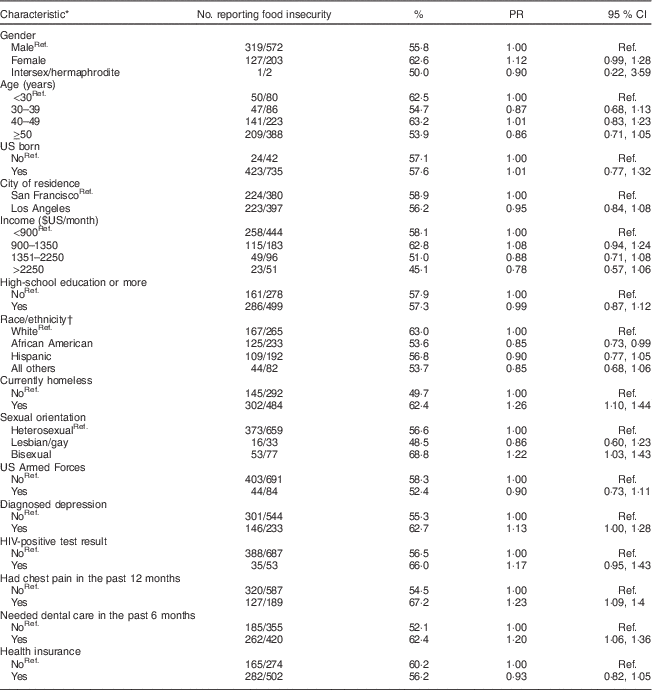
PR, prevalence ratio; Ref., reference category.
* Information was missing for ten or fewer participants for all variables except HIV-positive test result (n 37).
† ‘All others’ includes Asians, Pacific Islanders and Native Americans.
Prevalence of food insecurity among people who inject drugs (n 777) by drug and sexual risk behaviours and experienced and witnessed violence, Los Angeles and San Francisco, 2011–2013
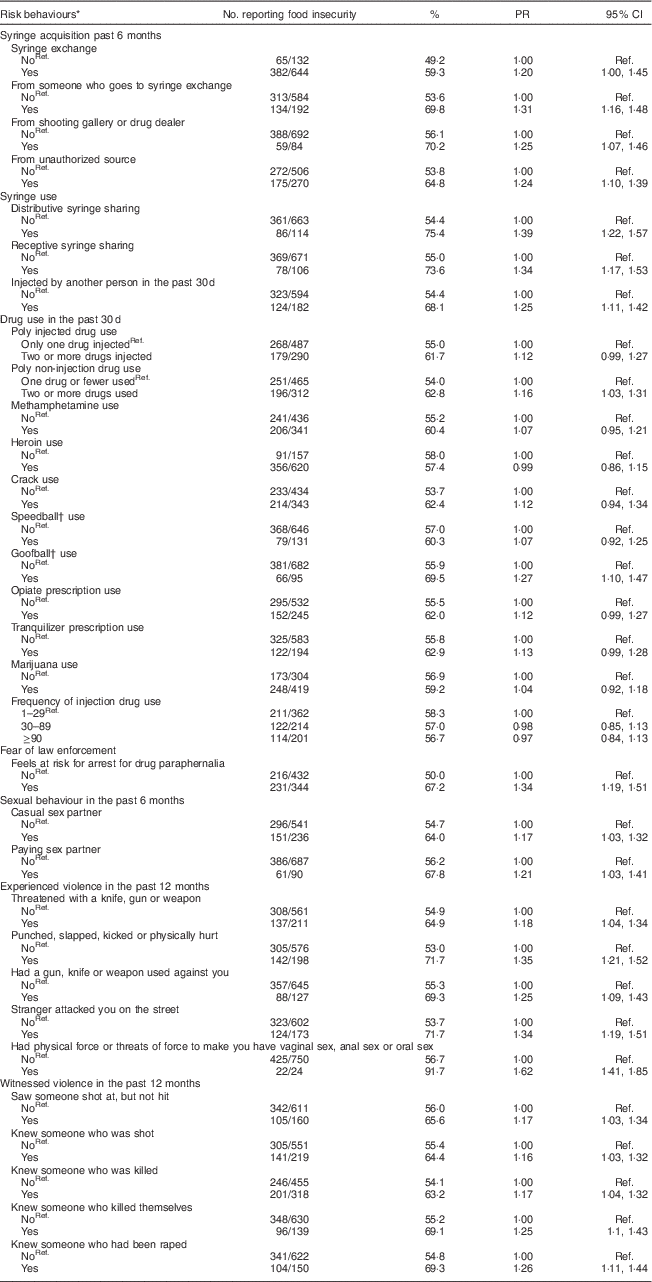
PR, prevalence ratio; Ref., reference category.
* Information missing for ten or fewer participants for all variables.
† Speedball is a mixture of heroin and cocaine; goofball is a mixture of methamphetamine and heroin.
Several variables related to drug and sexual risk behaviours were associated with food insecurity. PWID who acquired syringes from someone who goes to a syringe exchange (also referred to as indirect exchange use( Reference Green, Bluthenthal and Singer 16 )) in the past 6 months (70 % v. 54 %; P<0·001) and those engaging in distributive syringe sharing (75 % v. 54 %; P<0·001) more frequently reported food insecurity. Feeling at risk of arrest for possessing drug paraphernalia was associated with reported food insecurity (67 % v. 50 %; P<0·001). Reporting poly non-injection drug use (63 % v. 54 %; P=0·013) in the last 30 d was associated with a higher prevalence of food insecurity and, among specific drugs queried, only use of goofball (a mixture of methamphetamine and heroin) in the last 30 d was associated with food insecurity. Those PWID reporting having any casual sex partners (64 % v. 55 %; P=0·012) or paying (68 % v. 56 %; P=0·019) sex partners in the past 6 months reported more food insecurity.
Exposure to violence as a witness or knowing about a violent attack exhibited a consistent association with food insecurity. For example, PWID who reported being punched, slapped, kicked or physically hurt in the past 12 months were more likely to be food insecure than those not reporting violence (72 % v. 53 %; P<0·001) and those who knew someone who was raped in the past 12 months reported food insecurity more frequently than those without such knowledge (69 % v. 55 %; P<0·001).
After excluding variables that were not associated with food insecurity in bivariate or fully adjusted models, four variables were significantly associated with food insecurity (Table 3). Compared with their peers who were food secure, food-insecure PWID were more likely to be currently homeless (PR=1·20; 95 % CI 1·05, 1·37), to report chest pain (PR=1·19; 95 % CI 1·06, 1·35), to report indirect syringe exchange programme use (PR=1·27; 95 % CI 1·13, 1·43) and to feel at risk for arrest for possession of drug paraphernalia (PR=1·30; 95 % CI 1·15, 1·46).
Characteristics and behaviours independently associated with food insecurity among people who inject drugs in multivariate analysis (n 775), Los Angeles and San Francisco, 2011–2013
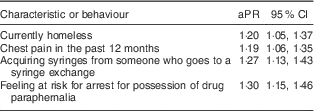
aPR, adjusted prevalence ratio.
Discussion
The present study found that well over half of PWID in Los Angeles and San Francisco reported being food insecure. The prevalence of food insecurity among PWID (58 %) is more than four times the level (14 %) documented among adults in the USA( Reference Coleman-Jensen, Nord and Singh 1 ). This level is among the highest found in any demographic sub-population in the USA as reported by the USDA (the highest level of food insecurity in a nationally representative survey was 35 % in households headed by single women)( Reference Coleman-Jensen, Nord and Singh 1 ). Furthermore, most PWID who were food insecure in the present study met criteria for very low food security (71 %, 317/447); and the absolute prevalence of very low food security in the present study (41 %) is more than seven times higher than the prevalence of very low food security in the overall US adult population (5 %)( Reference Coleman-Jensen, Nord and Singh 1 ). Our study is consistent with previous research that found exceedingly high levels of food insecurity among people who use drugs, PWID and HIV-positive individuals, although use of alternative methods to establish food insecurity prevalence prevents making direct comparisons. In a Vancouver-based study, 64·7 % of PWID self-reported to be currently hungry due to a lack of money( Reference Anema, Wood and Weiser 9 ); and 54·5 % of PWID in London, Ontario reported not having enough to eat because of a lack of money( Reference Strike, Rudzinski and Patterson 12 ). Similarly, about half (53·6 %) of an HIV-positive population of adults living in poverty in San Francisco were food insecure based on the nine-question Household Food Insecurity Access Scale used primarily in international settings( Reference Weiser, Bangsberg and Kegeles 18 ). Despite using a range of methods to estimate food insecurity or hunger, these studies consistently describe alarmingly high levels of food insecurity among PWID in North America.
Other studies have reported that PWID often eat fewer meals or skip meals for an entire day due to binge drug use( Reference Strike, Rudzinski and Patterson 12 , Reference Himmelgreen, Perez-Escamilla and Segura-Millan 19 ) and this may explain the overall high level of food insecurity in our PWID population as well. Not only is overall dietary intake lower, diet composition is often significantly different among drug users. For example, female drug users living in Hartford, Connecticut report eating at most once per day, often consuming a small amount of rice to survive during drug binges( Reference Romero-Daza, Himmelgreen and Perez-Escamilla 20 ). Although some drugs stimulate appetite, most drugs used described by our study participants suppress appetite. Efforts to improve food insecurity should consider unique dietary intake preferences and patterns in the PWID population. Clear patterns did not emerge as to which drugs, alone or in combination, may have a particular effect on food security status. Food insecurity was high throughout this drug-using population.
The present study suggests that housing status may increase risk of food insecurity among PWID. Previous studies support an association between food insecurity and unstable housing or homelessness( Reference Anema, Wood and Weiser 9 , Reference Weiser, Bangsberg and Kegeles 18 , Reference Furness, Simon and Wold 21 , Reference Normen, Chan and Braitstein 22 ), which severely limits, if not precludes, the ability to store and prepare food. In contrast to studies that documented a positive association between income poverty and hunger, such as in a national sample of the USA( Reference Coleman-Jensen, Nord and Singh 1 ), in low-income households in Los Angeles County( Reference Furness, Simon and Wold 21 ) and in people living with HIV/AIDS in Canada( Reference Normen, Chan and Braitstein 22 ), poverty was not associated with food insecurity in our sample. However, our findings are consistent with an association between income and hunger, as the highest-income group was the least food insecure. Our study was not designed to assess income-related effects and statistical power was low to detect variation across income groups, as more than half of participants reported an income of less than $US 900/month, an amount less than the federal poverty threshold of $US 995/month( 23 ); and only forty-nine people (less than 9 % of the sample) reported an income above $US 2250/month.
The similarity in prevalence of food insecurity among PWID in Los Angeles and San Francisco (56·2 % and 58·9 %, respectively) is striking, given that PWID in each city may have access to a very different array of services and resources. The similar prevalence of food insecurity in the two cities strengthens the case for the generalizability of our findings to other urban areas of the USA; and suggests that the current range of services in either city is insufficient to address hunger among PWID.
Fear of arrest for possession of drug paraphernalia was significantly associated with food insecurity, even after adjustment for other factors. Interaction with law enforcement has been found to influence injection risk among PWID( Reference Wagner, Simon-Freeman and Bluthenthal 24 – Reference Bluthenthal, Lorvick and Kral 26 ). Syringe sharing among injection drug users was found to be more common among those who feel at risk for arrest for possession of drug paraphernalia( Reference Wagner, Simon-Freeman and Bluthenthal 24 ). Syringe use variables displayed consistent associations with food insecurity in bivariate analysis but not in multivariate analysis. In the adjusted, final model we found that only indirect syringe exchange use was associated with food insecurity. A Canadian study found associations of unsafe injection practices with food insecurity( Reference Strike, Rudzinski and Patterson 12 ). It is possible that not directly using syringe exchange services and concern with arrest for drug paraphernalia indicated an elevated fear of exposure as a PWID. This fear of exposure could also impair use of food distribution centres. More research on how and why food insecurity is associated with injection-related risk and preventive service utilization is needed.
Among candidate health-related variables, only reporting chest pain in the past 12 months was associated with food insecurity in the multivariate model. Reported chest pain can be an indication of a serious health condition or a drug reaction among PWID. Myocardial infarction, pulmonary embolism, pneumonia and endocarditis are all more common among PWID than in the general population and can result in chest pain( Reference Karpel 27 , Reference McCord, Jneid and Hollander 28 ). Less serious conditions that often result in chest pain include gastrointestinal reflux disease and anxiety (e.g. panic attacks). The observed association could be due to these conditions or be spurious. Previous evidence from North America supports a relationship between HIV and two behaviours related to increased risk of HIV such as needle sharing( Reference Strike, Rudzinski and Patterson 12 ) and food insecurity( Reference Weiser, Bangsberg and Kegeles 18 ), but evidence for such an association was lacking among our participants. Perhaps PWID who tested positive for HIV in our study sample had access to a stronger network of support services than HIV-negative PWID, such as those provided by the US federal law Ryan White CARE Act, and that contributed to a lower prevalence of food insecurity.
Violence was common in the lives of PWID in our study; 41 % of participants reported direct experience of physical or sexual violence in their lives in the past 12 months. This level is likely typical among illicit substance users. For example, among a group of women and men in substance abuse treatment, 32 % reported involvement in an incident of physical violence in the previous 90 d( Reference Chermack and Blow 29 ). Although violence variables were consistently associated with food insecurity in bivariate analysis, they were not significant in the final multivariate model for food security. However, one of the violence-related variables (reported attack by a stranger) remained strongly associated with the more severe outcome of very low food security (PR=1·43, P<0·001). Studies have found violence exposure and food insecurity to be related( Reference Chilton and Booth 30 , Reference Chilton, Rabinowich and Woolf 31 ). In another study, violence was associated with food insecurity in a large national study of women( Reference Montgomery, Rompalo and Hughes 32 ). To our knowledge, we are the first to report on associations between food insecurity and exposure to violence among PWID.
Food insecurity, being homeless, interactions with and feelings about law enforcement, syringe use and exposure to violence may represent important indicators of otherwise unmeasured vulnerability and instability among PWID. Inclusion of food security questions in longitudinal studies and intervention trials among PWID would help to clarify the causal relationships between these types of variables and hunger, and inclusion of more targeted measures of life chaos or vulnerability( Reference Wong, Sarkisian and Davis 33 ) may address unmeasured confounding. In the meantime, routine assessment of syringe-related behaviours, exposure to violence and food insecurity among PWID may help to identify subgroups at particularly elevated risk of hunger and acquisition of blood-borne infections such as hepatitis C virus and HIV. Given the high levels of food insecurity in this population with likely distinct dietary intake patterns, future research on this topic should probe in more depth into eating patterns, nutritional intake and anthropometric measurements.
To our knowledge this is the first time that the US Adult Food Security Survey Module has been used to quantify food insecurity among PWID in North America. The use of this survey enhances the ability to compare our findings with national prevalence estimates. The range of potential exposures assessed enabled a thorough investigation of the dynamics of food insecurity among PWID. There are possible limitations of our study. Although the US Adult Food Security Survey Module has proved to be a robust measure in many populations( Reference Bickel, Nord and Price 17 ), it has not been validated in an urban population of PWID and therefore may not be valid. Our cross-sectional data are insufficient to establish causal relationships, and our data rely on participant responses and as such are susceptible to recall, social desirability and other biases inherent in self-reported survey data( Reference Aday and Cornelius 34 ).
In summary, food insecurity among PWID living in Los Angeles and San Francisco is shockingly common. Few risk factors were associated with food insecurity in this sample, even though food insecurity was lowest among those reporting the highest monthly income. The absolute prevalence of food insecurity in the highest income group was still 41·5 %, comparable to the highest rate among any subgroup reported for the USA. Efforts to ameliorate hunger among PWID may not require refined targeting of interventions to specific subgroups, as the majority of PWID appear to be at substantial risk. Involving harm reduction programmes in food distribution could yield substantial benefits( Reference Riley, Vlahov and Huettner 35 ); however, these programmes tend to be poorly funded( Reference Bluthenthal, Heinzerling and Anderson 36 ). Collaboration with food distribution organizations would probably be welcomed given the food insecurity prevalence in this population( Reference Parker, Jackson and Dykeman 37 ) and the historic interest of needle exchange programmes in collaborating with other agencies( 38 ). Food insecurity among PWID represents an acute emergency that requires broad and urgent strategies aimed at improving food access among all PWID.
Acknowledgements
Acknowledgements: The authors thank the participants who took part in this study. The following research staff and volunteers also contributed to the study and are acknowledged here: Sonya Arreola, Vahak Bairamian, Philippe Bourgois, Soo Jin Byun, Jose Collazo, Jacob Curry, David-Preston Dent, Karina Dominguez, Jahaira Fajardo, Richard Hamilton, Frank Levels, Luis Maldonado, Askia Muhammad, Brett Mendenhall, Stephanie Dyal-Pitts and Michele Thorsen. Financial support: The research was supported by NIDA (grant number R01DA027689; Program Official, Elizabeth Lambert) and in part by the National Cancer Institute (grant number P30CA014089). The content is solely the responsibility of the authors and does not necessarily represent the official views of the National Institutes of Health. The National Institutes of Health had no role in the design, analysis or writing of this article. Conflict of interest: None. Authorship: J.S. analysed the data and wrote the manuscript. A.H.K. conceived of the study, contributed to data analysis and edited the manuscript. D.C. and L.D.W. contributed to data collection and editing the manuscript. R.N.B. conceived of the study, analysed the data, and contributed to writing and editing the manuscript. Ethics of human subject participation: This study was conducted according to the guidelines laid down in the Declaration of Helsinki and all procedures involving human subjects were approved by the Institutional Review Boards of the University of Southern California and RTI International. Written informed consent was obtained from all subjects.



