




The challenges around us today hardly need to be mentioned: from ever-increasing economic inequality and the crisis in democratic institutions, to impeding environmental catastrophe.Footnote 1 How are historians of science to respond? A few years ago people often spoke of multiple ‘turns’ in historical writing: the cultural turn, the linguistic turn, the ontological turn, the spatial turn and so forth. I never liked the language of ‘turns’, because (as my title indicates) good historical writing is structured by transformations of traditions and is relatively eclectic. Talking of ‘turns’ gives at once too much primacy to theory in historical writing, while making theoretical shifts sound suspiciously trivial, particularly when they become so numerous.
But among all the changes that historians of science are facing, it is a transformation that doesn’t have an adequate name that is the most far-reaching. It is the move towards what is often called the ‘global’, although anyone who has looked at the subject will recognize the inadequacy of that term. In many ways the designation works only because of the clear but residual sense that the history of science, like many areas of history, was for so long dominated by perspectives from one part of the globe over others. In a positive sense, the ‘global’ speaks to a connected history, an entangled history, a history that stresses movement, conflict and exchange.Footnote 2 This welcome expansion of our horizons is transforming not only the academic interpretations of the history of science, but also its role in public debate. The changes are so profound that earlier supposed ‘turns’ pale in significance beside it.Footnote 3
Today I want to look not so much to the future of the history of science, but rather to ways that its past might inform that future. My focus, reflecting my own knowledge and experience, will be on English-language traditions in Britain and the United States. As a seriously researched academic discipline, the history of science has a short history in the Anglo-American world, one in which the founding of the British Society for the History of Science in 1947 is an important marker. Although that history is in some respects well known, it is – like all histories – most frequently mobilized for polemical purposes. In ordinary discussion and research, the history of the history of science is either dealt with in shorthand or through implicit contrasts. Scientists are not the only ones who have what Adrian Wilson has termed an ‘imagined past’ to explain their disciplinary genealogy.Footnote 4
My aim is to outline the ways in which the field of history of science has always been implicated in questions of politics beyond the borders of what is usually termed ‘the West’. Initially, this is part of a story about the Cold War not as a simple rivalry between the superpowers, but as a multi-centred conflict involving decolonization and the role of academic life within that struggle. I will then argue that the drive from the 1970s onwards to recast the history of science through the sociology of knowledge had foundational geopolitical motivations as well, which derived from reactions to the role that science had come to occupy in what President Eisenhower had called ‘the military–industrial complex’. This history, which dominated the 1970s and after, could still be called ‘global’, but no longer in terms of diffusion from the West, but rather through a universally applicable principle of symmetry, originating in colonial anthropology. If anything, at the present moment historians of science are finally beginning to escape the clutches of a panoptic vision of the global. All histories should be relational, but they do not need to be global.
The setting of Mr Sun
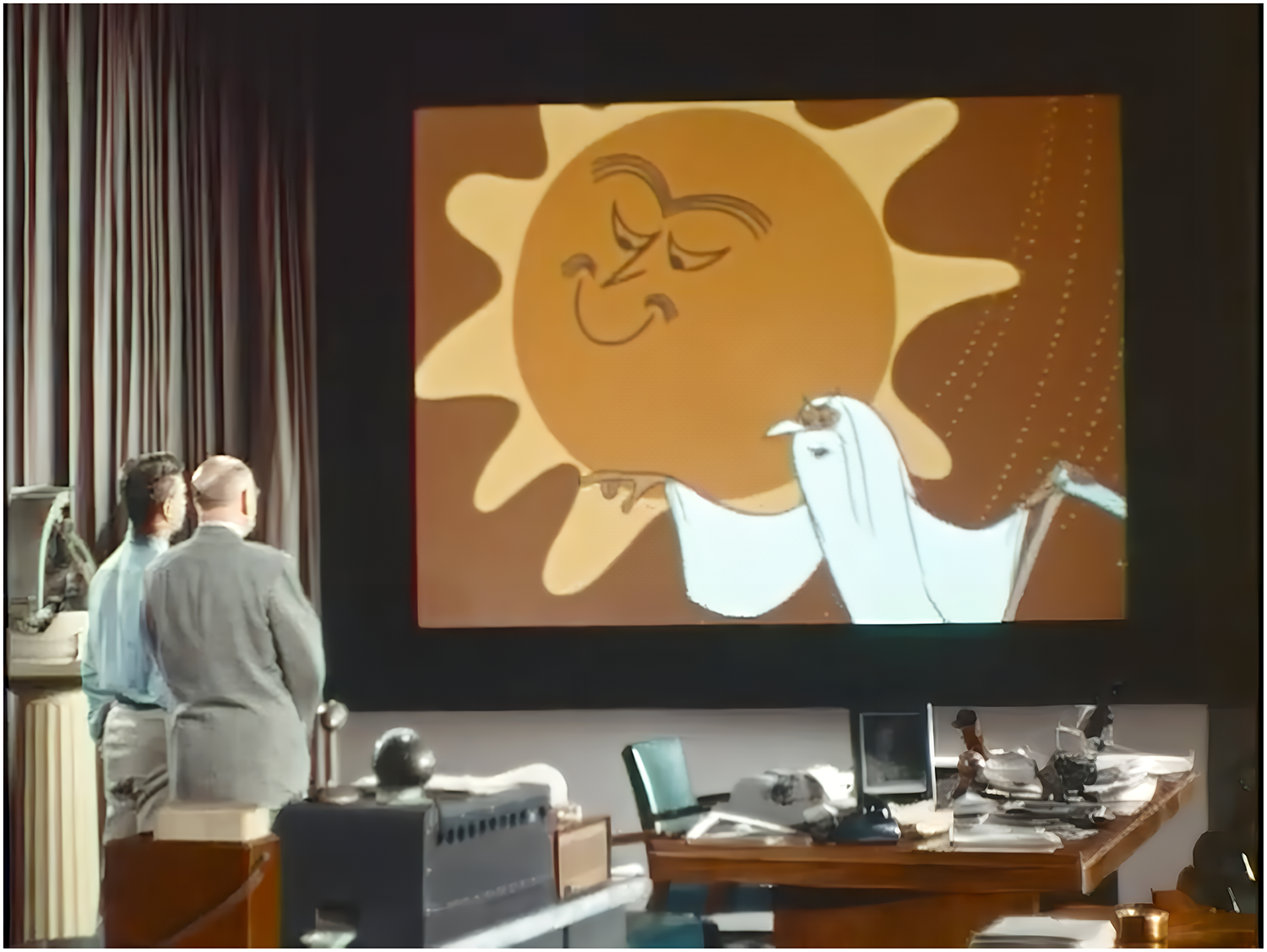
At the age of ten in 1963, I was fortunate to have a wonderful teacher, Charlotte Barnes, who taught science through projects and activities. In our classroom in Madison, Wisconsin we watched the first Gemini space launch, went on field trips to local quarries, and experimented using the ‘Science Box’ filled with glassware, wires, batteries and a big jar of mercury. Among the most memorable days were those when we were shown the Bell System Science Series films (Figure 1). Produced from 1956 to 1964, these explained scientific principles through an innovative combination of live action and cartoons. One of the best was Our Mr. Sun, directed by Frank Capra, who (as I later learned) was famous for It’s a Wonderful Life (1946) and other award-winning features. Our Mr. Sun was viewed by over 24 million people when broadcast on television in 1956, and later by millions more in classrooms. I recommend that you watch it and the other Bell films on YouTube.Footnote 5
‘The Fiction Writer’ (Eddie Albert) and ‘Dr Research’ (Frank C. Baxter) watch an animated discussion between Mr Sun and Father Time. From Frank Capra, Our Mr. Sun, Bell System Science Series (1956). Public domain. At https://youtu.be/ucQNFBNAdnk?t=170 (accessed 05 October 2024).
The success of the Bell System films exemplifies the unparalleled esteem that scientists enjoyed in the post-war era. My classmates and I were beneficiaries of the American response to the Russian launch of Sputnik in 1957, but faith in science was already central to defining what the world would look like after the decline of the old colonial empires and the rise of the United States. Science had a special role in defining what it meant to be enlightened, civilized and modern.
The opening minutes of Capra’s film illustrate the assumptions underpinning the public history of science at this time. First, science is driven by discoveries made by uniquely insightful individuals who almost without exception happen to be men. Second, science is a special feature of Western civilization. Even if other cultures have contributed astrolabes or number systems, true genius has been overwhelmingly found in the West. Third, science spreads because it is true. As the animated character of the Sun explains, the Greek scientist Anaxagoras was the first to argue that the sun was not a god, but a large rock a few thousand miles away. Anaxagoras was exiled from Athens for his heresy, but eventually his way of thinking spread ‘like measles’. ‘Primitive curiosity’, Mr Sun said, is the ‘beginning of all your science’, but only with the Greeks did rational ways of thinking about nature begin their inevitable diffusion. And finally, science was the key element in creating modern health and wealth. The film, like many documentaries of the period, cut back and forth between men like the principal narrator, ‘Mr Research’, and scenes of back-breaking farm labour in Africa and crowded streets in India. Uncovering the truth about nature, individual scientists working in laboratories and research stations would transform the life of populations throughout the world.
It seemed obvious that science should be the epitome of progress. The triumph of science-based technologies from the late nineteenth century onwards, most of them deriving from the European colonial powers, had irrevocably changed everyday life. My great-grandmother – whom I remember well – was born in rural Norway in 1867, into a world without electric lighting, radio, films, modern pharmaceuticals or other innovations of the science-based Industrial Revolution. For her (and for Capra and millions of others as well), what mattered more than any of these was religious faith and family. Yet for many science had become the epitome of rationality and the only road to truth.
All this is familiar enough. But it is important to keep in mind that science was idealized, not only in industrialized countries such as the United States, but also by anti-imperial movements in Asia, Africa and Latin America, where science offered a path towards economic development, public health and international peace. Laying the foundation stone for what was planned as Africa’s first nuclear reactor in 1964, Kwame Nkrumah explained, ‘We in Ghana, are committed to the building of an industrialized socialist society. We cannot afford to sit still and be mere passive onlookers. We must ourselves take part in the pursuit of scientific and technological research as a means of providing the basis for our socialist society’.Footnote 6 Africans had a head start, as they were building on the universal heritage of science over many centuries and did not need to repeat past mistakes. Along similar lines, in 1937 Jawaharlal Nehru, later first prime minister of India, noted that it was ‘science alone that can solve these problems of hunger and poverty, of insanitation and illiteracy, of superstition and deadening custom and tradition, of vast resources running to waste, of a rich country inhabited by starving people’.Footnote 7 In Nehru’s view Britain’s only contribution of value to India had been science, and yet because he believed that science had deep roots in Indian culture, it could be developed there in an anti-colonial version that would avoid military applications and negative consequences.
The ambiguities of this situation are evident in the contradictions they imposed. The Afro-Caribbean philosopher Frantz Fanon looked to Sigmund Freud and psychoanalysis to identify the dehumanizing effects of Western thought on the mindsets of the colonized. Fanon’s works were avidly read in Western radical circles, as in the short-lived commune that Bob Young, Sheila Ernst and others created in Chesterton in Cambridge.Footnote 8 The frontier of knowledge was not ‘endless’, as Vannevar Bush said, but ended in the violence of empire, a world likely to be dominated by the United States. As we knew from school drills about how to hide under our desks in the event of a nuclear attack, science was implicated in struggles for global leadership.
Debates about history of science took place in the context of deep geopolitical divides. Socialists like Nehru and Nkrumah believed that science had the possibility for transforming life through technology, but would thrive only through centralized state planning of the kind found in the Soviet Union. The postwar debate in the Anglo-American world, in contrast, was dominated by the view that science was above all a product of free individual minds. For those wishing to avoid the extremes of Marxism or Fascism, history could be used to teach lessons in reasoning, observing and balancing evidence that were deemed essential to democratic citizenship. So in elementary school we learned the steps of the scientific method and read about technological progress in Africa and Asia in the issues of My Weekly Reader handed out in class.
Underlying the stress on the unique power of science was a sense of its significance in the rise of the West. However it might be defined, Eurocentrism never meant isolation, but rested on the assumption that the story of science in Europe was the key to global history. As Newton’s biographer Richard Westfall wrote in Isis in 1981, the history of science was the basis for a history of the entire world. ‘In my vision of modern history’, he explained, ‘the growth of science plays the central role. It began by transforming the intellectual structure of the Western world. It proceeded to transform the economic system. It is now transforming life itself on the entire globe, not to mention threatening it as well’.Footnote 9
Though these developments are complex, my point is simple. Viewed in the context of the immediate postwar decades, the history of science was, emphatically and explicitly, a ‘global’ history because science itself was seen as universal. As an academic field, history of science was inevitably enmeshed in questions of decolonization and international relations, with widespread sales of key works and translations into other languages. Whether resisted, enforced or adapted, science was central to what the historian William McNeill had famously chronicled as ‘the rise of the West’. That is a view that McNeill himself belatedly acknowledged as driven by a teleology towards the dominance of the United States, and ‘a form of intellectual imperialism’.Footnote 10
Global symmetry
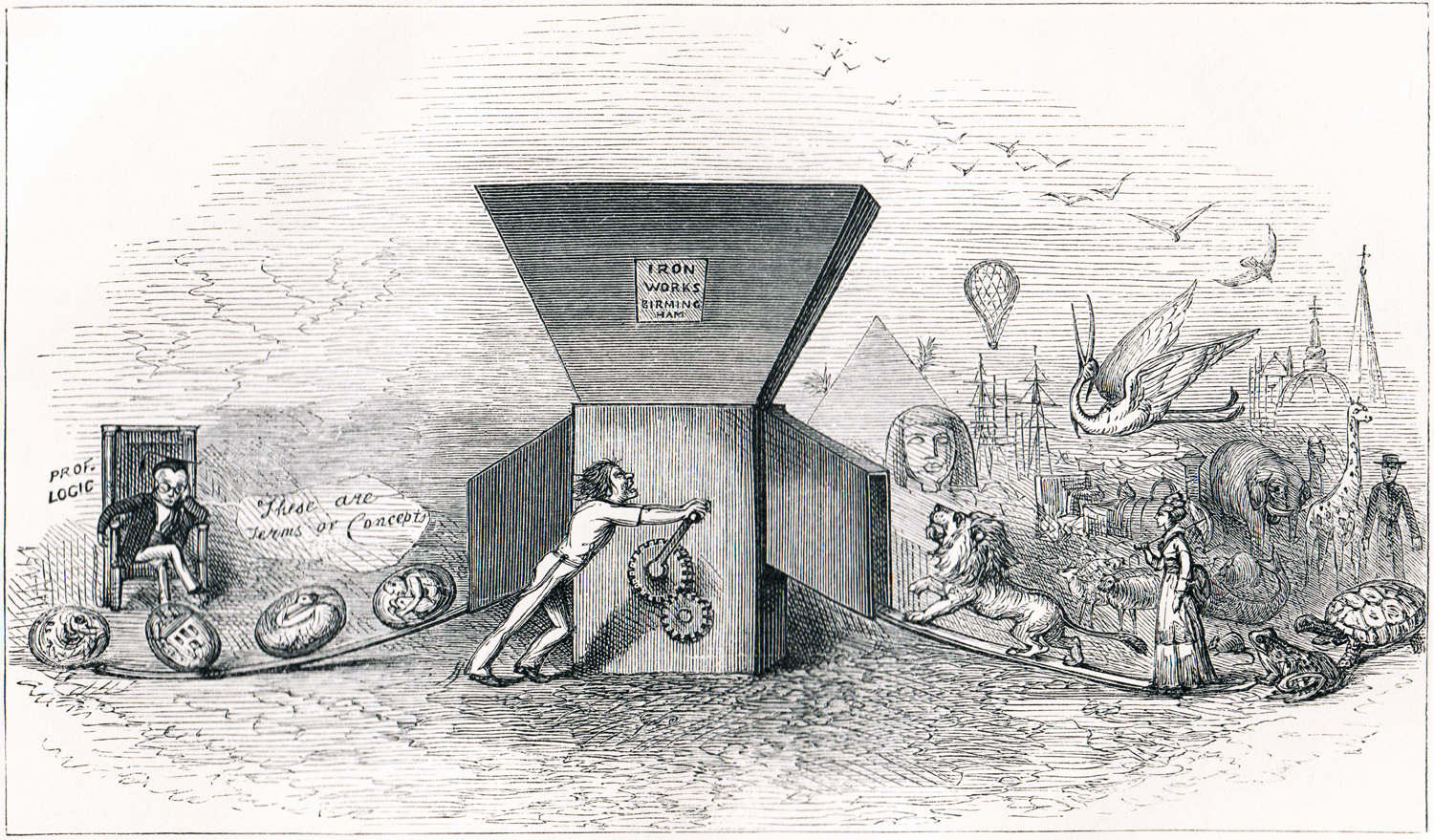
Much of the early post-war historical work was sophisticated both in its cosmopolitan range and in its analysis of the intellectual and philosophical settings for science. The inadequacies of a simplistic view of the scientific method were widely acknowledged, and many of the key works (including, in a characteristically subdued way, Herbert Butterfield’s Origins of Modern Science of 1949) were far from sanguine about the prospects of a world dominated by science. Nineteenth-century critics had already parodied notions of a ‘logical sausage machine’ that reduced the wonderful complexity of the world into tidy parcels of fact (Figure 2). However, it was easy to caricature the early postwar decades of the history of science as dominated by a similarly reductive view of the march of the human intellect. As a graduate student starting at Princeton in 1976, that is certainly how I tended to see the work of the preceding generation. Books like my doctoral supervisor Charles Gillispie’s Edge of Objectivity (1960) – a brilliantly written survey which showed what happened when the French philosopher Alexandre Koyré’s idealist perspective on Galileo’s accomplishment was extended back to the Greeks and forward to the twentieth century – seemed highly problematic.Footnote 11
‘The logical sausage machine’, from Alfred Swinbourne, Picture Logic: Or, the Grave Made Gay; an Attempt to Popularise the Science of Reasoning by the Combination of Humorous Pictures with Examples of Reasoning Taken from Daily Life, London: Longmans, 1875, facing p. 35.
The flashpoint in the years before I arrived at Princeton had been the Vietnam War, in which a range of science-based weapons were deployed in a neocolonial campaign by the United States. I vividly remember being woken up by the bombing of the Army Mathematics Research Center on the University of Wisconsin campus on the morning of 24 August 1970. Particularly significant for my cohort in secondary school was the burgeoning environmental movement, leading up to the first Earth Day demonstrations in April 1970. We read Rachel Carson, Loren Eiseley, Barry Commoner and Aldo Leopold. I left to study geology and literature at Pomona College in California, where I was assigned Thomas Kuhn’s Structure of Scientific Revolutions (1962, rev. edn 1970) as a prescient guide to the emergence of plate tectonics.Footnote 12
This was, however, only one of many possible readings of Structure. In the charged international context, Kuhn’s book had become a countercultural classic. Many readers, appalled by the role of the sciences in military conquest and environmental destruction, looked to Structure for proof that the sciences were not as purely ‘rational’ or ‘empirical’ as scientists wanted to believe.Footnote 13 Structure took its place on student shelves next to Theodore Roszak’s The Making of a Counter Culture: Reflections on the Technocratic Society and Its Youthful Opposition (1969) and Carlos Castenada’s The Teachings of Don Juan: A Yaqui Way of Knowledge (1968). The end of empire and the questioning of American hegemony led to doubts about the value of science and the inherent superiority of the West. In this context, Kuhn was an unlikely ally, for in his view the revolutionary schema only worked because of a structure of scientific authority unique to the West.Footnote 14
These debates about the politics of the history of science have been extensively studied, but for the most part in relation to works that argued for radical changes in scientific practice, such as Jerry Ravetz’s Scientific Knowledge and Its Social Problems, first published in 1971. The most immediately political movement in this regard was the British Society for Social Responsibility in Science, as well as the Radical Science Collective led by Bob Young, who claimed that ‘science is social relations’. These projects, although forthright in their critiques, had little discernible effect on science, and only very partially succeeded in shaping historical practice.Footnote 15
But the history of science did change during the late 1960s and the 1970s in ways that have been permanent and beneficial. In part this was a question of increasing institutional maturity and intellectual autonomy. More fundamental was a shift in the balance of its assumptions and methods, moving from a relatively abstract history of ideas to approaches drawn from cultural history.
Within history of science, a handful of key articles pointed a way forward. These depended on what you were studying, but they were widely read and influential far beyond their specific fields. They included ‘Newton and the pipes of Pan’ by Ted McGuire and Piyo Rattansi; Paul Forman’s ‘Weimar culture, causality, and quantum theory: adaptation by German physicists and mathematicians to a hostile environment’; Jack Morrell’s ‘The chemist breeders: the research schools of Liebig and Thomas Thomson’; and Young’s ‘Malthus and the evolutionists: the common context of biological and social theory’. These works had vastly different orientations, but they all broke through the old limits for contextual interpretation and showed that science – and not just an outer shell of institutional arrangements – could be understood as part of general history without descending into a crude economic determinism.Footnote 16
Following through from these beachheads, however, was not easy. This is where, at least in my own experience, the sociology of scientific knowledge (SSK) from the early 1970s to the mid-1980s became a vital source of inspiration and encouragement. The central insight was that science could be analysed as a belief system like any other, so that the workings of true science were cultural phenomena that could be subjected to close historical analysis. Before this, accounts turned to what were called ‘social’ or ‘external’ ‘factors’ only when explaining false beliefs and failure. True beliefs were explained as rational. The new approach, in contrast, looked to science in terms of what it actually did and where it was coming from. As the social theorist Barry Barnes later recalled, there had as yet been ‘no sense of the culture of science existing as a tradition deriving from the ancestors’.Footnote 17
In retrospect, such sweeping dismissals of previous work can be seen as something of a caricature, particularly as a depiction of actual historical practice. Works such as Edgar Zilsel’s pioneering studies of the role of skilled artisans in natural philosophy and Walter Pagel’s accounts of Renaissance alchemy and medicine, among many others, openly contested narrowly rationalist views. As far back as 1951 the Assyriologist Otto Neugebauer had passionately defended ‘the study of wretched subjects’ such as astrological divination, ‘regardless of our own tastes and prejudices’. Even Koyré made a point of embedding science in long-standing philosophical and religious debates.Footnote 18 In fact, much of the inspiration for SSK came from existing historical studies, although this often involved reading them against the grain.Footnote 19
The move to challenge dominant views of Western science originated in global intellectual crises that were particularly acute in anthropology. As members of a discipline that had emerged in service to colonial regimes, anthropologists began to question their most basic categories such as ‘culture’, and the assumption that fieldwork should involve the immersive study of distant peoples. Concerns about decolonization gave a particular significance to the anthropological principle of ‘studying up’. As a result, principles that had been used to investigate colonized peoples were applied to settings in the West.Footnote 20 Science, widely seen as the most powerful form of knowledge, became an obvious candidate for decolonizing the social sciences in this way.
The key principle was symmetry, as classically expressed in David Bloor’s Knowledge and Social Imagery, first published in 1976. Bloor started from the proposition that analysis had to ‘be impartial with respect to truth and falsity, rationality or irrationality, success or failure. Both sides of these dichotomies would require explanation’. And further, Bloor looked to an account that ‘would be symmetrical in its style of explanation. The same types of cause would explain, say, true and false beliefs’.Footnote 21 The origins of this insight lay in changing relations within a rapidly changing international order, and a key resource in establishing it was a reading of the later writings of Ludwig Wittgenstein in light of colonial social anthropology.
A focus on knowledge as an extended conceptual scheme, like those found in human societies generally, was characteristic of the early work of the group at the University of Edinburgh. Barnes and Bloor looked to Emile Durkheim and Marcel Mauss’s Primitive Classification (1903), which used Chinese, Zuñi and Australian aboriginal examples to argue that space, time, order and other cognitive categories mirrored the form of society. Throughout, what mattered most was the network of concepts to which newly experienced phenomena could be assimilated. Examples used to explain the new approach were taken from prewar fieldwork in colonial Anglo-Egyptian Sudan by the Oxford ethnographer E.E. Evans-Pritchard in Witchcraft, Oracles and Magic among the Azande (1937). Evans-Pritchard explored beliefs of a kind that had often been dismissed, instead examining them for their inner logic, rationality and functions within society. Slightly later, the Edinburgh group drew on the anthropological writings of Mary Douglas on classification, purity and danger.
In significant ways, the role of anthropology in what soon became known as science and technology studies (STS) was distinctly unanthropological. As anthropologists have pointed out, its application often relied upon a principle of ‘strangeness’, in which reference to Azande witchcraft (to use the most frequently cited example) became a way of rhetorically highlighting the radicalism of the symmetry principle. Such references played a vital role, but for supporting philosophical points about objectivity, reason and relativism, rather than modelling ritual practices, family structure or other aspects of human interaction. Anthropology offered the shock of making science exotic, and ultimately the exoticized ‘other’, but in so doing also fed into a narrative of difference.Footnote 22
The insistence on impartiality and symmetry, however, opened the window on a new history of science. In the wider context of debates about decolonization and Western power, to take supposedly ‘primitive’ cosmologies as exemplars for interpreting mathematics and physics seemed either perverse or courageous. I remember buying Knowledge and Social Imagery in a countercultural bookshop in Greenwich Village soon after it appeared. Its attractions were not lessened by the decision of the publisher, Routledge, to produce the work as a rough-looking camera-ready typescript, which unintentionally gave it the appearance of samizdat literature, to be handed by one graduate student to the next. Nor were they reduced by knowing that my senior professors, Gillispie and Kuhn, profoundly disagreed with its conclusions. The principle of symmetry is so taken for granted by historians of science today that it is vital to remember just how controversial it was.
Anthropology and the politics of cultural history
The move towards anthropology within history of science took place within a broader shift towards cultural history – what my history professor at Princeton, Lawrence Stone, defined as ‘the revival of narrative’.Footnote 23 There were many reasons for this, notably the rise of feminist and working-class histories, the social history of institutions, and other movements affecting the historical profession at large. Historical studies were moving away from the arid quantitative social history that had dominated discussion in the 1960s, and historians of science were poised to join in creating a new cultural history.
Among the eclectic readings I was assigned as a first-year graduate student – including a post-mortem history of the mathematician Pierre-Simon Laplace’s brain – one essay stood out: Clifford Geertz’s account of a cockfight in a Balinese village. Published in 1972, it was the first anthropological account I had ever read. Geertz’s evocative essay opened up a world that seemed unfamiliar yet understandable. I could see how contexts I was studying in past science, whether they involved mining in the early Royal Society of London, the reception of children’s books on science or the development of French chemistry, could benefit by being seen from a similar perspective. Take a specific example, situate it as closely as possible in time and place, and squeeze it for every possible drop of meaning: what Geertz (following Gilbert Ryle) termed ‘thick description’.Footnote 24
Geertz’s writings, particularly in the Princeton context, became the starting point for a new cultural history. Approaches based on meaning and interpretation followed the lessons of social history by tackling a more inclusive agenda, including the history of women, the working classes, enslaved peoples and others who had been sidelined.
Most of the general historical works we were assigned, however, did not extend anthropological methods into the study of science. The Oxford early modernist Keith Thomas based his celebrated account of magic and religion on anthropological theory, but did not apply the same approach to seventeenth-century science. The labour historian Edward Thompson, whose work in many ways contrasted with that of Thomas, also applied anthropology to early modern folklore and agreed in giving science a special status. Even Bob Young, while arguing that the broad principles of evolutionary biology were the product of social relations, had almost nothing to say about the details of the science that underpinned that knowledge.Footnote 25
The new approaches led to strong disagreements. To take an example from my experience at Princeton, when Lawrence Stone asked the graduate students to prepare a short reading list about Newtonianism, we included works such as McGuire and Rattansi’s ‘Newton and the pipes of Pan’ and Margaret Jacobs’s recent book on the Boyle lectures.Footnote 26 When the final assignment was made, Stone replaced most of them with the writings of Koyré, Bernard Cohen and Rupert Hall. So although many of the most innovative historians were reluctant to apply the new perspectives to science itself, students read them in relation to the rapid rise in cultural history. In this we were encouraged by younger faculty, particularly Michael Mahoney with his brilliant lectures on the medieval and early modern periods, and Gerry Geison, who introduced me to new approaches being developed in Edinburgh and Bath.
Ironically, just as historians had been discovering ‘culture’ defined as a system of meaning in Geertz’s writings, many anthropologists were rejecting the assumptions about coherence that had underpinned it. Geertz had investigated integrated systems of meaning, a view that was also present when Kuhn used ‘paradigm’ in the sense of a conceptual scheme. From the mid-1970s the stress on science as systematic knowledge and belief had begun to evolve towards an emphasis on practice, moving away from the definition of culture as a system of symbols that had underpinned the work of anthropologists such as Geertz and his followers. A key resource for historians was the French social theorist Pierre Bourdieu, who had studied the Kabyle people of the Berbers in Algeria during the anti-colonial wars of the late 1950s. In contrast to Geertz, Bourdieu saw culture as a scene of struggle and contradiction.Footnote 27
I eventually realized that the most compelling aspects of the cockfight essay were not specific to Geertz at all. What mattered most was the article’s vividness and tight focus; I was attracted not so much by the essay’s theoretical orientation around symbolic meaning and interpretation, as by its sheer literary power. It was a narrative, reconstructing the inner workings of a different culture. His story seemed exotic, a term that we belatedly realized had imperial and orientalist overtones, but which also helped to capture the differences, the strangeness, that made the study of past science particularly alluring. The task of the historian became one of reconstructing situations in which reasonable people did things that at first glance seemed improbable or outlandish.
The world in the laboratory
Anthropology provided historians of science with a model for interpreting practice, in ways that paralleled the techniques that historians such as Robert Darnton and Natalie Davis were already using to forge the new cultural history. However, it seemed one thing to apply ethnographic techniques to cat massacres, carnivals or cockfights; to do this for mathematical statistics, botanical taxonomy or particle physics appeared more challenging. For many historians of science, accounts of the inner workings of modern laboratories offered a way forward. Harry Collins, Andy Pickering, Trevor Pinch, Karin Knorr Cetina, Bruno Latour and other sociologists and anthropologists were revealing the significance of concrete ways of work, tacit knowledge and hands-on experience. There was a long tradition of writing on these areas, but the attempt to investigate them in these ways was new, drawing on Kuhn’s concept of normal science and the philosophies of Wittgenstein and Michael Polanyi.Footnote 28
To an extent that is often not acknowledged, many of the pioneering laboratory studies owed an important debt to colonial ethnography. The immersive methods developed for exploring the practices of so-called ‘primitive’ societies could be used to understand the ‘tribe’ of science, as part of the move to rid the social sciences of their colonial legacy. Knorr Cetina, for example, had trained in cultural anthropology at Vienna and turned to studying science after experiencing ‘the sort of cathartic disorientation that Lévi-Strauss reported after his fieldwork among native tribes in the Tristes Tropiques’.Footnote 29
The anthropological impetus behind the move to practice is clearest in Bruno Latour and Steve Woolgar’s celebrated ethnography of 1979 Laboratory Life: The Social Construction of Scientific Facts. This compelling and witty work presented Latour as a bewildered outsider in an unnamed biochemistry lab in California. Raised as a conservative Catholic in France, Latour had decided to engage with science after his experiences in Abidjan in the Ivory Coast in 1973, where he was assigned the task of explaining why replacing the departing Europeans with African recruits was proving so difficult:
There was a flagrant asymmetry here: the Whites anthropologized the Blacks, yes, quite well, but they avoided anthropologizing themselves. Or else they did so in a falsely distant, ‘exotic’ fashion, by focusing on the most archaic aspects of their own society – communal festivals, belief in astrology, first communion meals – and not on what I was seeing with my own eyes … industrial technologies, economization, ‘development’, scientific reasoning, and so on: in other words, everything that makes up the structural heart of the expanding empires.Footnote 30
As Latour’s trajectory indicates, the move towards practice was part of a response to shifting global politics in the academy, expressed most strongly in questioning the colonial heritage of anthropology.
Although the immersive laboratory ethnographies derived directly from colonial anthropology, a different approach involved in-depth interviews with informants. Driving around the United States in the early 1970s in pursuit of his doctorate, Harry Collins met the leading scientists attempting to build a gravity wave detector. As he suddenly realized, ‘if I don’t know if it’s working, the scientists don’t know if it is working either, and that is much more interesting’.Footnote 31 Such an insight was possible, Collins argued, only through his engaged expertise as an analyst: against Latour, he held that it was essential to understand what one’s informants were talking about. He did, however, agree that observing implanted or ‘proxy’ strangers could reveal otherwise implicit features of a situation.Footnote 32
Initially these studies of contemporary science had little connection with history, but there was great potential for cross-fertilization. Historians had plenty of proxies, particularly in the study of controversies. They could not watch Isaac Newton or Robert Boyle at work, but there was abundant testimony from those who had. A series of conferences at the University of Bath initiated by Collins brought practitioners of the new approaches together: anthropologists, sociologists, philosophers and historians. The first of these gatherings was jointly organized in 1980 by the British Society for the History of Science and the Sociology of Science Study Group of the British Sociological Association.Footnote 33
Much of the early work in SSK and the histories modelled on it had strongly masculine overtones, with attitudes towards gender not far removed from those of physical-science laboratories in the period. In his early writings Latour depicted science as war, a site of continuous struggle to maintain allies and defend positions. Later, naming an award of the Society for Social Studies of Science after a woman required a campaign against sustained opposition. Given that the sciences had historically been dominated by male practitioners, the lack of attention to gender was an obvious blind spot.Footnote 34
As became clear, however, the new sociology and perspectives in feminist studies had much in common. Making a place for women in the history of science required not only the recovery of hidden figures, but also a different conception of science itself, viewing it as forms of work and involving a wide range of people. An understanding of gender demanded close attention to bodily presentation, identity and relations between private and public. Science is always, as Donna Haraway put it in 1988, ‘situated knowledge’.Footnote 35 There could be no higher aim than to achieve for the history of science what feminist accounts were doing for studies of the labour process in books such as Ruth Schwartz Cowan’s More Work for Mother: The Ironies of Household Technology from the Open Hearth to the Microwave (1983).
The emphasis on practice was also indebted to the later writings of Michel Foucault, which were informed by the postcolonial political realignment of the late 1960s. Discipline and Punish (1975, tr. 1977) and The History of Sexuality (1976, tr. 1978) turned from a stress on epistemic ruptures towards practices of regimes of surveillance, repression and control. Like so much of the work that shaped the history of science, these writings had developed in the context of anti-colonial struggle. For a substantial period in the late 1960s, Foucault taught in the former French colony of Tunisia, writing the Archaeology of Knowledge (1969, tr. 1972) and reconfiguring his early work into an analysis of power. As Foucault later said, ‘Tunisia, for me, represented in some ways the chance to reinsert myself in the political debate. It wasn’t May of ’68 in France that changed me; it was March of ’68, in a third-world country.’Footnote 36
Most fundamentally, the focus on practice broke down old distinctions between words and things, between texts, books, instruments and images. Historians were examining the full range of everyday practices of observation, experiment, modelling, teaching, visualizing, reading and publishing. By this point I was researching my doctoral dissertation on mapping and classifying strata in Victorian geology. Surrounded by the books and periodicals in the library of the Geological Society of London, it seemed almost incomprehensible to me that historians had so little to say about the forms of practice that had produced them.
The direction of travel was evident in the work of Steve Shapin, who as lecturer in history of science at the Edinburgh Science Studies Unit became a key cross-disciplinary intermediary. Shapin’s early articles argued that controversies in nineteenth-century Edinburgh about phrenology mirrored the structure of society. But in a paper published in 1979, Shapin turned to what phrenologists and their opponents actually did in the dissecting room, what he termed the ‘politics of observation’.Footnote 37 This shift opened the way for collaboration with Simon Schaffer on Leviathan and the Air-Pump: Hobbes, Boyle, and the Experimental Life, which appeared in 1985. Leviathan was one of a small library of big historical books that developed diverse takes on the new approach, from Martin Rudwick’s Great Devonian Controversy (1985) and Adrian Desmond’s Politics of Evolution (1989) to Peter Galison’s How Experiments End (1987) and Donna Haraway’s Primate Visions (1990).Footnote 38
Some of this work dealt directly with empire, race, patriarchy and class. But many of these writings focused on the smaller-scale negotiations within scientific communities, with an implicit assumption that what mattered was science as it had evolved in the West – for good or ill for the rest of the world. For the most part, and unlike the publications of groups such as the Radical Science Collective, the aim was not to alter the practice of science, but to recast the way it was understood. This was itself a political strategy, though not in the sense that is meant when critics speak of ‘tenured radicals’ or ‘woke professors’. As Barry Barnes said a few years ago in an interview about the early years of the Science Studies Unit,
Of course it was definitely political in one sense. Relativism, naturalism, scepticism, empiricism, materialism are some of the words that come to mind to describe the ethos of the Unit, all alike in giving bottom-up accounts of knowledge and society that have always had an important political dimension as their historians have shown us. So from that point of view there is a politics implicit in what the Unit was doing, but it wasn’t political in the usual sense; it wasn’t up front political.Footnote 39
Most historians of science (including myself) have worked largely within established academic systems. From this perspective, teaching a more open and flexible view of science to thousands of students – as I did in London and Cambridge – was an extraordinary political opportunity. How to maintain these opportunities in a constrained economic climate is a question I’m not in a position to answer, but there is much to be learned both positively and negatively from the experience of the past few decades.
Towards an entangled history
The foundation of the new history of science was an anthropologically inspired principle of symmetry applied to the study of practice. As I’ve suggested, this was rooted in the politics of the postcolonial world – shaped by reactions against the colonialist baggage of existing approaches and fears about blind faith in science and technology. At last we could study science in the way other historians were interpreting forms of culture from marriage and healing to gift exchange, fresco painting and book production. The culture of science was an activity, a matter of lived experience in a material world.
The prospects opened up by the new approaches were nothing short of a revelation, much as reading Koyré had been for the previous generation. Symmetry raised difficult questions for philosophers, but historians of science could welcome it as an essential tool. More than that, the emergence of a sociology and anthropology of scientific knowledge showed that the philosophical foundations of history of science were the same as those in any discipline dealing with the past. Science, although in many ways the epitome of specialized expertise, was not intrinsically special. There was no unique scientific method, no logical structure governing practices of experiment, observation or theory construction. Historians of science could relax. They could apply, debate and experiment with the wide range of techniques that other historical disciplines used to understand human activities of all kinds. The job of history of science was not to create case studies supporting a specific anthropological school, epistemological agenda or sociological theory. This typically resulted in work that was as unsatisfactory as that employing a Procrustean framework of Kuhnian paradigms. What mattered was the creative use of analytical tools and narrative strategies to tell convincing stories about the past.
The principle of symmetry is by definition global, and approaches grounded in the study of practice can in principle apply anywhere, from the Nuer and Kabyle peoples to the research worlds of modern California. The new historical accounts of science were based on techniques pioneered in ethnographic studies from Africa, Asia and many other parts of the world. In principle, there was no reason not to use their findings to explore different local scientific practices, perspectives and cross-cultural exchange.
The vast majority of work, however, remained limited in its subject matter by traditional geographical boundaries and centre–periphery models. English-speaking scholars respected work on Chinese, Indian or Brazilian science, but in their own teaching and research all too often condescendingly viewed such topics as ‘marginal’ and originating from area studies rather than from colleagues in HPS and STS groups or history faculties. For that reason, almost any work done in the period I have been discussing could be seen as ‘Eurocentric’.
But the reason for the European focus had been turned on its head. The immediate post-war generation had believed that science spread because it was true. Westfall, Gillispie, Hall and Kuhn offered a global history because they passionately believed that science itself was universal. From the 1970s, the task was different: to uncover the detailed work involved in making modern science in its centres of power. It went into the field, laboratories and museums with the aim of demonstrating the local contingency of observational and experimental practices, to show that what had been assumed as global and universal was local and contestable. For example, a remarkable array of studies of what had previously been lumped together as ‘popular science’ showed how science had been produced by people ranging from aristocratic women in country houses to weavers and shoemakers meeting in pubs.Footnote 40 Ethnographic accounts of local agency have always been antithetical to notions of diffusion, and much of the most innovative work continues to focus on European subjects.
An appreciation of symmetry and ethnographic engagement, however, was only rarely accompanied by a willingness to look beyond traditional geographical and linguistic borders. There were notable exceptions, especially the extraordinary growth in studies of American science. Only gradually, however, did the mainstream of work begin to examine science outside the urban centres of Europe and the United States. The most important development was a focus on empire. From the 1980s onwards, this built on challenges to diffusionist models such as George Basalla’s now notorious three-stage model of the spread of Western science; from the following decade, it increasingly involved working with historical geographers and imperial historians.Footnote 41 Initially the work on science and empire focused on how the experience of empire changed Western science, from Darwinian evolution to Maxwellian field theory; one of my earliest articles was a study of ‘the imperial theme’ in the geological work of Roderick Murchison.Footnote 42
With regard to what Dipesh Chakrabarty has termed ‘provincializing Europe’, much of this work was incomplete.Footnote 43 Even when wider issues were raised, as they often were, historical studies often appeared as isolated ‘cases’. Use of the social-science literature was often selective and mediated primarily through a narrow SSK lens, with not enough attention paid to traditions deriving from Max Weber, Karl Marx and other writers on macro-scale social and economic questions. Too many articles and books made grand claims about the nature of science and abstract models of power, networks or circulation, rather than reference to the messy realities of social and economic history. There are important ways in which aspects of this work failed as a strategy, and not primarily by being limited by traditional geographical boundaries. There was often too little sense of how science fitted into larger historical movements, with the grand narrative of internal so-called ‘scientific revolutions’ continuing to trundle along in public discussion and popular books. As part of the general crisis of theory that affected much of the humanities and social sciences around the new millennium, there was a rethinking of strategy, with soul-searching roundtables in Isis and other leading journals.Footnote 44
Since then history of science has changed dramatically, as general historical practice has responded to debates about globalization, a realignment of power away from the West, attacks on expertise, and the impending collapse of Earth systems. This has required major retooling, not least in terms of language skills and familiarity with other ways of writing about the past in different regions of the world.
The anthropological perspective now works in a different and deeper way. Ethnography, rather than being evoked rhetorically as a marker of alterity as it so often was in the 1970s and 1980s, has become a resource in its own right, as one way of accessing other voices and perspectives. When I first read Geertz’s essay on the Balinese cockfight, it was to find a way to approach questions about early modern England. Today, it might provide a historian of science some testimony about Balinese relationships with animals during the late 1950s. But the main way to approach this question would be to use original sources and to ask the Balinese – and that requires different linguistic skills, new kinds of collaboration and new forms of historical understanding. Being a ‘stranger’ just isn’t enough.
Conclusion: the work of a worm
I’d like to conclude by saying something more about politics. This is a year of elections: during the past week alone we’ve had results from France, Iran and the UK; and as I speak there is the first Tuesday in November looming in the United States. But my concern just now is with the politics behind a meeting like this. Viewed from outer space – on a globe – we are meeting in the West, in Europe and in Britain. These are all entities constructed through colonial power.
In that sense we’re in the belly of the beast that too often is still dismissed with the vague term ‘Eurocentric’, a word that belies everything we learned in the past half-century about the diversity – the provincialism – of practices across Europe. Zoom in even slightly, and we are in Aberystwyth, in Wales, a distinct nation with its own language, literature and scientific traditions, and a unique history of colonization and conquest. As I know from my travels today, to get here from Cambridge by rail takes over six hours. More than that, we have over 120 papers from participants from twenty countries, speaking on a remarkable diversity of topics and themes.Footnote 45 Many of the abstracts I found most enticing are for talks by postgraduate students and early-career scholars. That is the politics of this particular moment.
In terms of its subject matter, the history of science is undergoing the greatest and most exciting transformation it has ever faced. Up to the present time, the orientations towards practice, exchange, materiality and symmetry of explanation have endured. In their application to an extended geographical and temporal range, these approaches are being transformed by encounters with other ways of telling stories about the past. Recent works are exploring new media and fresh narrative strategies.
As methods and tools evolve, it is essential that our histories retain a focus on the inner workings of expert practices, for in any culture these are what have given science unrivalled authority. In the public realm and in much academic writing, that authority is accorded too often to a compelling but abstracted vision of science associated with the West. The anthropologically inspired ‘ontological turn’, for example, tends to code post-Enlightenment science as rational, objective, secular, masculine and white, and as drawing a sharp boundary between nature and culture.Footnote 46 Such a view ignores what decades of historical research have revealed about the messy reality of actual scientific practices and the continuing complexity of relations between matters of spirit and matters of fact. Historians of science need to combat the stereotype of the ‘logical sausage machine’, whether it comes from old-style positivists or through binary contrasts with Indigenous ways of world-making. A machine so comprehensive and consistent would be impossible to challenge, change or defend.
If there is one message I hope has come across in my brief and sketchy survey, it is that the discipline of history of science has always been global, enmeshed in issues beyond the borders of Europe and the West. That ambition, as I have suggested, has deep connections to the universalizing aspirations of development theory, social anthropology and sociology. ‘Global’ is a term that embodies the expansionist liberal vision which the German physicist Hermann von Helmholtz hailed as ‘intellectual mastery of nature’.Footnote 47 Even more than most fields of the humanities, the use of the word in the history of science has ties to science itself, with goals for knowledge as surveillance, prediction and control that have their roots in empire. These associations are difficult to escape. Although useful in setting out an agenda for change, ‘global’ is a poor word to express the direction in which the history of science is headed.
What current scholarship aims for is not some imperial all-seeing planetary vision, nor an exclusive focus on long-distance connections or non-European settings. The goal is rather to develop relations and exchanges at an appropriate range of scales, both in the academic community and in the histories we write.Footnote 48 This means reading outside specialist comfort zones, writing accessibly, supporting language instruction and collaborating with those familiar with relevant traditions. These are politics with a small ‘p’, involving people with diverse commitments, agendas and understandings. There is a lot of work to do.
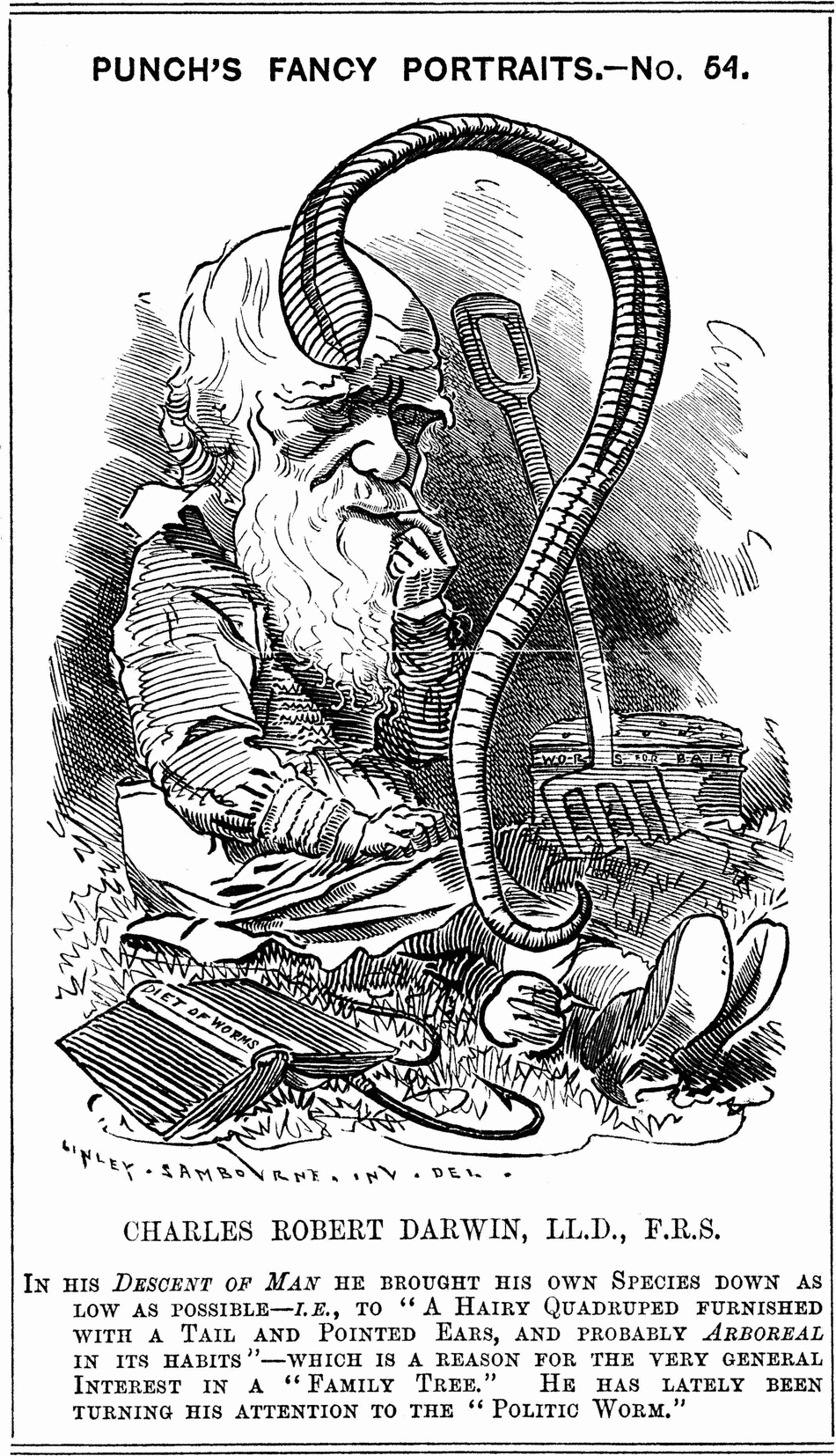
I cannot think of a better way to close than by quoting a letter that Charles Darwin wrote late in life while researching the agency of earthworms. His description expresses the job of the historian pretty well:
I tried to observe what passed in my own mind when I did the work of a worm. – If I come across a professed metaphysician, I will ask him to give me a more technical definition with a few big words, about the abstract, the concrete, the absolute & the infinite. But seriously I shd. be grateful for any suggestions …Footnote 49
Linley Sambourne, ‘Punch’s fancy portraits: – No. 54’. Punch, 22 October 1881, p. 190.


 Open access

