The short window from symptom onset to initiation of thrombolysis in acute stroke patients only allows quick history taking and neurological examination, making it difficult to differentiate acute stroke from other disorders that simulate acute stroke, including seizures, metabolic disorders, migraine with aura, and psychiatric problems.Reference Quenardelle, Lauer-Ober and Zinchenko1,Reference Kim, Kim, Kim, Roh and Park2 These heterogeneous disorders, presenting with acute onset of focal neurological deficits, which were later associated with nonvascular etiologies, are often termed as stroke mimics, which constitute approximately 20% of patients admitted with a suspicion of acute stroke.Reference Gibson and Whiteley3
Migraine with aura is a well-documented risk factor of acute stroke.Reference Gryglas and Smigiel4 The increased incidence of atrial fibrillation and cardioembolism in patients diagnosed with migraine with aura was linked to acute stroke.Reference Androulakis, Kodumuri and Giamberardino5,Reference Sen, Androulakis and Duda6 Migraine with aura can also be found as a stroke mimic during acute stroke managementReference Terrin, Toldo, Ermani, Mainardi and Maggioni7; however, only a few studies investigated the frequency and characteristics of migraine with aura in patients who initially presented with stroke-like symptoms.
The objective of the present study was to determine the frequency and characteristics of migraine with aura in patients who initially presented with stroke-like symptoms. We also studied the frequency of incidental atrial fibrillation and asymptomatic ischemic stroke in these patients.
We conducted a retrospective study of patients identified in our prospective stroke and neuroradiology registry. Between January 2008 and August 2017, all consecutive patients visiting emergency department with a sudden onset of focal neurological deficit in a time window of less than 6 h, as indicated for thrombolysis, were included in the present study. In our acute stroke management protocol, a patient with symptoms suggestive of acute stroke was initially evaluated with rapid neurological examination, electrocardiogram (ECG), blood sampling, and emergency multimodal brain CT including brain nonenhancement CT and CT angiography with CT perfusion images. Thrombolysis was performed according to acute stroke management protocol modified from the Korean stroke guideline. Acute stroke-dedicated MRI protocols including diffusion-weighted imaging (DWI) were usually performed in patients after the administration of intravenous thrombolysis and during the preparation of endovascular treatment. However, a few patients underwent DWI MRI without other stroke MRI protocols to exclude the presence of cerebral ischemia depending on the attending physicians’ discretion. The detailed methods of acute stroke management protocol and multimodal CT protocol were described previously.Reference Kim, Kim, Kim, Roh and Park2
The diagnosis and classification of headache was based on the recent International Classification of Headache Disorder (ICHD-3), and the auras in patients with migraine were classified as visual, sensory, speech and/or language, motor, brainstem, and retinal auras, according to the ICHD classification.8
Continuous variables were expressed by the mean ± standard deviation and categorical variables as frequency (%). We compared the clinical characteristics between the two groups using the Student’s t-test for continuous variables and the χ 2 test for categorical variables.
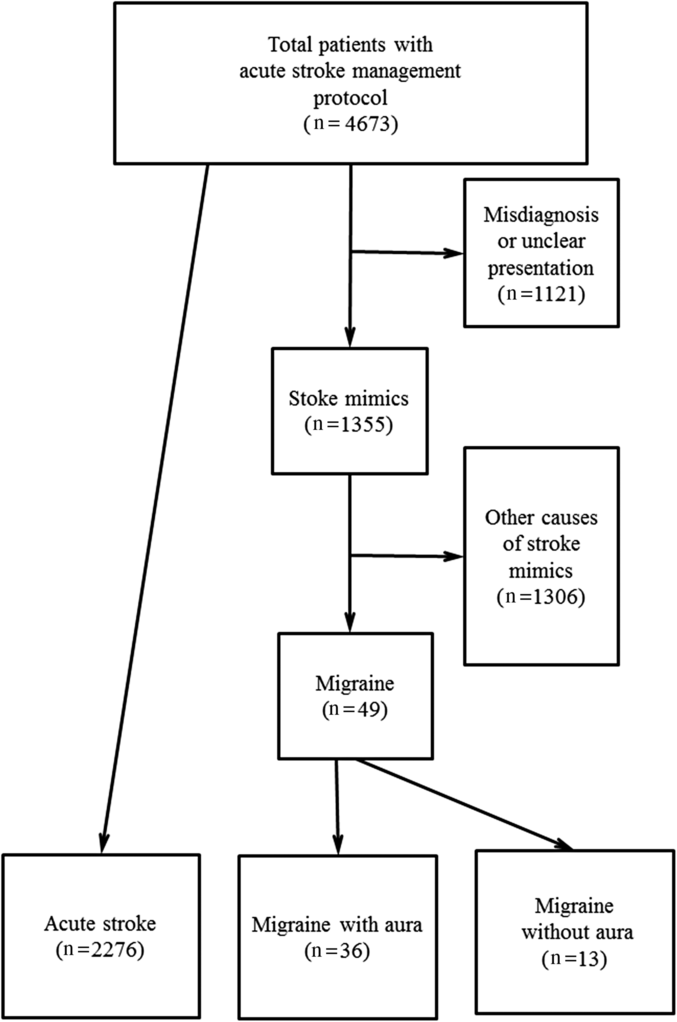
During the study period, we included 4673 patients who were treated with acute stroke management protocol. A final diagnosis of stroke was made in 2276 patients. Excluding patients with misdiagnosis or unclear presentation including peripheral vertigo, general weakness, incomplete work-up (1121 patients), stroke mimics were found in 1355 patients. The most common diagnosis in patients with stroke mimics was metabolic disorders (379 patients, 28.0%), and migraine was the final diagnosis in 49 patients (3.6%, Table 1). Among the 49 patients diagnosed with migraine, 36 (2.7%) had migraine with aura, and 13 (1.0%) had migraine without aura with somatic complaints such as decreased consciousness and general weakness due to hyperventilation (Figure 1). There was no difference in sex between patients diagnosed with migraine with aura and those with acute stroke (M: F = 16:20 vs. 1311:965, p = 0.113). However, patients with migraine with aura were significantly younger than patients with acute stroke (48.0 ± 15.2 years vs. 69.5 ± 13.8 years, p < 0.001). A previous history of migraine was noted only in 17 patients (47.2%). No patients underwent intravenous or endovascular thrombolysis following a misdiagnosis of migraine with aura as acute ischemic stroke.
Final diagnosis of 1355 patients with stroke mimics

Schematic representation of patients with acute stroke, stroke mimics, and migraine with aura.

In 36 patients diagnosed with migraine with aura, 24 complained of one type of aura (3 visual, 8 sensory, 2 speech and/or language, 6 motor, and 5 brainstem), 11 patients complained of 2 different types of aura, and another patient complained of 4 types of aura. Interestingly, the most common aura included sensory and brainstem auras (13 patients), followed by motor (11 patients), visual (9 patients), and speech/language auras (4 patients). The features of brainstem aura were vertigo in eight patients, vertigo with other brainstem symptoms in four patients (veering, drowsiness, nystagmus, and tinnitus), and diplopia in one patient. No patient complained of retinal aura.
All patients manifesting migraine with aura underwent ECG, and 23 patients underwent DWI MRI in addition to multimodal CT scan during their stay in the emergency room. An 88-year-old female patient, who denied any previous history of migraine, showed incidental atrial fibrillation on ECG during the first migraine attack with motor (hemiplegic) aura, which was resolved spontaneously the next day. No patient carried acute arterial occlusion or manifested perfusion changes on multimodal CT scan or asymptomatic high signal intensity on DWI MRI.
Based on an analysis of the 10-year medical records, we found migraine with aura in approximately 2.7% of all patients with stroke mimics. Patients carrying migraine with aura tended to be younger than patients with acute stroke; however, there was no significant difference based on sex between the two groups. We found only a few studies that investigated migraine with aura as a stroke mimic. A recent meta-analysis showed that migraine with aura constituted about 12% of stroke mimics.Reference Terrin, Toldo, Ermani, Mainardi and Maggioni7 It appears that the risk of thrombolysis in patients exhibiting migraine with aura as a stroke mimic was not significantly high; however, additional studies are needed to accurately estimate the incidence of migraines with aura in patients with stroke mimics and evaluate the risk of thrombolysis in such patients.
Although visual symptoms are the most frequent manifestations of aura in patients with migraine, we found that sensory, brainstem, and even motor auras were more common than visual auras in our patients. Visual auras were found in only a quarter of patients and only 3 of 36 patients complained of isolated visual auras. These results were unexpected, because it is well documented that most patients suffering from migraine with aura manifest visual symptoms, and motor and brainstem auras were found only in a minority of patients.Reference Viana, Sances and Linde9 Our findings could be in part explained by that accurate diagnosis of migraine with aura was not difficult in the presence of visual symptoms in the emergency setting and the diagnosis was more complicated and the chance of acute ischemic stroke should be considered in patients with other types of aura. Isolated vertigo was a common aura in our patients. Patients with isolated vertigo were classified as having brainstem aura in the present study, but they could be classified as having “vestibular migraine,” which is a recently proposed migraine subtype.8
Migraine with aura is a risk factor for ischemic stroke.Reference Spector, Kahn and Jones10 Cortical spreading depression, a pathophysiological mechanism of migraine with aura, occurs rather frequently in patients with ischemic stroke.Reference Gryglas and Smigiel4 Recent studies showed that migraine with aura-induced stroke may be associated with an increased risk of incidental atrial fibrillation and cardioembolic stroke.Reference Androulakis, Kodumuri and Giamberardino5,Reference Sen, Androulakis and Duda6 Because we included patients diagnosed with migraine with aura who initially presented with stroke-like symptoms, all patients underwent ECG and multimodal CT scan, and more than half patients underwent DWI MRI. We found no patients with perfusion change or asymptomatic ischemic stroke. However, we found one patient without a previous history of cardiac disease had atrial fibrillation, which resolved spontaneously with the improvement of migraine with motor aura. Considering a recent study, which found that ischemic stroke may symptomatically manifest as migraine aura,Reference Waters, Cheong, Jannes and Kleinig11 a further study with large population is necessary to accurately estimate the risk of atrial fibrillation and cardioembolism in patients diagnosed with migraine with aura.
Our study has several limitations. First of all, we performed this study as a retrospective review of medical records involving patients with acute stroke management pathway. Because history taking and neurological examination in these patients usually focus on the deficits in motor, sensory, and language functions, it is possible that the presence of these deficits was exaggerated while the frequency of visual symptoms was rather underestimated or neglected. It is also possible that motor aura in some patients may be attributable to function disorders not to migrainous aura. Second, considering the low incidence of a previous history of migraine and the frequent atypical presentation of aura in our patients, it would be difficult to distinguish the migrainous aura from transient ischemic attack as shown in our illustrative patients, because both conditions have an abrupt onset and there is a continuum between cortical cerebral depression and ischemic stroke. In addition, although previous studies documented that young women with aura involving vision or language without hemiplegia may have a higher chance of stroke mimic, we failed to demonstrate this clinical implication of these demographic features with the limited number of patients.Reference Terrin, Toldo, Ermani, Mainardi and Maggioni7,Reference Purdy and Diener12 Finally, we did not perform diagnostic evaluations such as 24-h Holter study and DWI MRI, which may facilitate accurate risk assessment of atrial fibrillation and cardioembolism in all patients. Therefore, it is possible that the incidence of atrial fibrillation and cardioembolism is underestimated. Despite these limitations, we believe that the present study involving a large population elucidates the frequency and characteristics of migraine with aura as a stroke mimic.
Acknowledgements
This work was supported by Konkuk University Medical Center Grant 2019.
Conflicts of Interest
The authors have no conflicts of interest to declare.
Statement of Authorship
J-JP: Conception and execution of the study, writing of first draft,
SJK: Execution of the study, writing of first draft,
HYK: Execution and critical review of the study, statistical analysis,
HGR: Execution and critical review of the study,
DWK: Conception, design, organization, and critical review of the study.