

Introduction
Family and domestic violence (FDV) has been recognised as a major workplace issue by Australian industries and policymakers given that it has profound consequences on labour market outcomes including productivity, earnings, job satisfaction, and career progression, as well as costs to employers (Fitz-Gibbon et al Reference Fitz-Gibbon, Pfitzner and McNicol2023; Guthrie & Babic Reference Guthrie and Babic2021; Summers Reference Summers2022). FDV is also a major health and welfare issue in many countries, including Australia and remains one of the greatest challenges for policymakers. Broadly, FDV in the context of enterprise bargaining in Australia is defined by the Fair Work Commission (2021) as ‘violent, threatening or abusive behaviour by an employee’s close relative that seeks to coerce or control the employee or cause them harm or fear.’ According to the 2021-22 Personal Safety Survey (PSS), approximately 1 in 4 (27 per cent) women and 1 in 8 (12 per cent) men have experienced violence by an intimate partner or family member since the age of 15 (Australian Bureau of Statistics 2023). Experiences of violence have profound impacts on the lives of individuals, affecting their health, well-being, education, relationships, housing, and labour market outcomes (Australian Institute of Health and Welfare 2018). Evidence in the literature shows that FDV has immediate and longer-term consequences for gender inequality in labour market with as many as 50 per cent of women earning lower incomes and experiencing cash flow problems (Summers Reference Summers2022; Wilcox et al Reference Wilcox, Greenwood, Pullen, O’Leary Kelly and Jones2021). As such, violence imposes major costs on society as a whole with the annual cost of violence against women to the Australian economy in 2014–15 estimated at $21.7 billion (PwC 2015). The returns to interventions to prevent such violence as well as to mitigate its impacts are of paramount legal, economic, and social significance (Guthrie and Babic Reference Guthrie and Babic2021; Chan-Serafin et al Reference Chan-Serafin, Sanders, Wang and Restubog2023).
Workplace policies to support employees who are experiencing FDV are increasingly seen as an important policy response to mitigate the consequences of such violence. This is crucial to advance the progress towards gender equality in line with Sustainable Development Goals 5 given that women are disproportionally affected by FDV. An important workplace policy in response to the incidence of FDV is the provision of paid or unpaid leave to employees affected by it. The main objective of this measure is to assist employees experiencing FDV to remain employed and productive at work, ultimately benefiting not only the employees concerned but also the national economy more broadly.
FDV leave is provided under the framework of the National Employment Standards (NES) that sets the minimum employment entitlements that have to be provided to all employees (e.g., annual leave, paid sick and carer’s leave). Prior to August 2023, Australia’s FDV law stipulated 5 days of unpaid leave provision to employees experiencing FDV. However, the adequacy of the 5-day unpaid leave entitlement has been brought into question recently, particularly in light of the COVID-19 pandemic, leading to the enactment of a 10-day paid FDV leave provision for all employees covered in the modern award. A modern award is a ruling in the Australian labour law of the National Fair Work Commission that came into effect in 2010. It sets out the minimum terms and conditions of employment for a particular industry or occupation on top of the NES. This is a timely response to the increase in the incidence of FDV in Australia (Boxall et al Reference Boxall, Morgan and Brown2020; Foley and Cooper Reference Foley and Cooper2021; Leslie and Wilson Reference Leslie and Wilson2020; Lyons and Brewer Reference Lyons and Brewer2022). While such regulatory policies are important responses to victims of FDV, little is known about the costs and benefits of expanding such entitlements to employers, constraining the enactment of more generous provisions in the past.
In the present study, we examine the employers’ costs and benefits of providing 10 days of paid FDV leave to employees covered by modern awards. To do so, we use a bottom-up approach, utilising micro data that span the labour force and personal safety surveys of the Australian Bureau of Statistics (ABS) and Household, Income and Labour Dynamics in Australia (HILDA) Survey. Our estimates reveal the total annual cost to employers of providing an entitlement of 10 days of paid FDV leave to award-covered employees is between $13.1 million and $34.3 million. This estimate is modest due to the fact that the average wage for modern award employees is the lowest compared to the wage rate under other wage-setting methods. Despite the modest cost, drawing insights from existing literature, evidence shows that there are significant benefits to employers and employees of providing 10 days of paid FDV leave.
This paper contributes to the literature and policy debates by providing data-driven estimates of the cost to employers of providing 10 days of paid FDV leave to award-covered employees and its benefits to employers and employees. Our analysis highlights the role of robust economic analysis in generating evidence for policy change and offers an approach that can be applied in evaluating costs and benefits of other employer initiatives of similar nature.
The remainder of the paper is organised as follows. The next section presents a review of the related theoretical and empirical literature, followed by a brief background of FDV leave in Australia. The fourth section describes the data and empirical approach followed by discussions of the results and findings. The concluding section offers an overview and puts forward recommendations.
Literature review
Theoretical background
What are some of the theories that underpin FDV and the associated provisions for employees experiencing FDV? Collective bargaining theory has been a workhorse in many countries as a means of determining terms and conditions of employment as featured in the industrial relations literature for many decades (e.g. Kochan and Katz Reference Kochan and Katz1988). Traditionally, collective bargaining theories have been framed with the ideology that men are the breadwinners in the family and hence wages and workplace conditions should favour men to fulfil these requirements. According to the traditional household bargaining theories, the lower economic empowerment of women weakens their outside options and increases the risk of experiencing violence. This is in line with the evidence on the positive impact of women’s economic empowerment in reducing the risk of partner violence as posited in household bargaining models (e.g. Dildar Reference Dildar2021). On the other hand, instrumental theories of violence predict that there may be unintended consequences of increasing the incidence of domestic violence if male partners make use of violence as coercion to subdue their partners (Erten and Keskin 2018). Similarly, the theories of male backlash predict that violence may also be used by males to reassert their dominance in response to a status threat when a woman’s economic status exceeds that of her husband (Mansbridge and Shames Reference Mansbridge and Shames2008; Meyer et al Reference Meyer, Hardt, Brambilla, Page and Stöckl2024).
Another important element yet given little attention in the existing literature is the political economy theory of domestic violence (Adelman Reference Adelman2004; True Reference True2010; Weissman Reference Weissman2012). While it has been long recognised that criminal justice is an important tool to yield immediate results in the cessation of violence, it is unlikely that the legal system alone addresses the structural economic inequality and socio-economic problems that contribute to criminal behaviour of perpetrators (Loffredo Reference Loffredo2007). Evidence shows that there is a link between macro-political conditions and crime, including FDV. For example, high unemployment rate is associated with the incidence of domestic violence (e.g., Anderberg et al Reference Anderberg, Rainer, Wadsworth and Wilson2016). Without the development of appropriate policy responses, the incidence of FDV tends to increase in such circumstances. As argued by Weissman (Reference Weissman2012), it is crucial to consider the realm of policy responses under the political economy of domestic violence to address economic uncertainty and worsening inequality in addition to the domestic violence/criminal justice paradigm. While economic inequality and socio-economic problems can lead to criminal behaviour, these aspects are rarely remedied in the legal system. Put succinctly, there has been little attention given to the link between gender-based violence and the political economy which hinders efforts to pursue law-related structural reforms and the development of legal responses to issues of economic inequality. Along these lines, Loury (Reference Loury2010) suggest that it is crucial to take into account the political economy landscape in the criminal justice policy. The concept of equality bargaining has been extended to include a framework for gender equality in recent decades (Baird et al Reference Baird, Frino and Williamson2009; Colling and Dickens Reference Colling and Dickens1998; Dickens Reference Dickens2000; Williamson and Baird Reference Williamson and Baird2014; Williamson Reference Williamson2012). Broadly, equality bargaining is defined as the practice of negotiating for terms and conditions of employment contracts to promote gender equality in the workplace (Colling and Dickens Reference Colling and Dickens1998; Williamson and Baird Reference Williamson and Baird2014). It is crucial to extend the scope of collective bargaining to embrace gender issues, particularly to address the widening gender inequality that can be caused by FDV in the absence of protections, such as the provision of paid FDV leave.
Equality bargaining forms the basis for recognition of workplaces as sites for policy interventions to reduce the harms of FDV and advance gender equality (Baird et al Reference Baird, McFerran and Wright2014; Guthrie and Babic Reference Guthrie and Babic2021). In Australia, clauses for FDV and other entitlements were introduced in enterprise agreements in 2010 following the enactment of the Fair Work Act 2009, which enshrined women’s rights to promote gender equality. Since then, hundreds of enterprise agreements have included FDV clauses (Australian Institute of Health and Welfare 2018), motivating the need for empirical evidence on the costs and benefits of such clauses to employers.
Empirical literature on the costs and benefits of paid FDV leave
What is the evidence on the costs associated with providing FDV leave entitlements? What are the benefits associated with providing such entitlements and are these likely to offset the costs? This section provides insights into these questions through drawing on existing studies.
Costs of providing paid FDV leave entitlements
There are some perceptions in place that mandating paid domestic violence leave entitlements will result in negative corporate outcomes, particularly through an increased labour cost burden on employers and decrease in international competitiveness (Stanford Reference Stanford2016). Discussions around the economic costs associated with broader workplace protection measures for employees experiencing FDV have also highlighted the time lost from work from flexible working arrangements, perceived costs of implementation of relevant human resource policies, costs of training and induction programmes, and work lost through days of leave (Kahui et al Reference Kahui, Ku and Snively2014). It has also been posited by some employer groups that paid FDV would open the possibility of union claims for leave entitlements for ‘myriad’ social problems such as mental health issues, relationship breakdown, drug or alcohol dependence, and crime (Williamson et al Reference Williamson, Foley and Cartwright2019, p. 352).
Only a few studies have been undertaken to formally evaluate the costs associated with the provision of paid family and domestic leave entitlements. The Australian Chamber of Commerce and Industry (2016) provided one of the first estimates of the costs associated with offering 10 days of paid FDV, arriving at a figure of $2 billion per year. However, the assumptions underlying this estimate, especially those around the utilisation rate and employment base, have been criticised (Stanford Reference Stanford2016). Tzoumakis (Reference Tzoumakis2015) showed that, based on 102 surveyed Australian employers with FDV leave provisions, only one-third reported that employees had requested FDV (paid or unpaid) leave in the past 12 months, where 92% of them were female. A recent study by Behavioural Economics Team of the Australian Government (BETA 2024) suggests that the main reason for low utilisation rate is lack of awareness.
Applying a data-driven approach, Stanford (Reference Stanford2016) estimated that the incremental wage payouts to workers on FDV leave associated with the provision of a 10-day paid FDV leave policy would be in the order of $80 to $120 million per year across all Australian businesses. This represents an assessment of FDV costs for all types of workers, and assumes that (i) women who experience FDV are twice as likely to take time off work as a result, compared to men; (ii) the share of employees experiencing FDV taking time off work will double under the universal paid FDV leave scheme. A plausible assumption here is that the FDV leave provision tends to create awareness and visibility; (iii) about one-third of employees experiencing FDV other than intimate partner violence take time off work; and (iv) the average male and female weekly earnings used to cost the provision of FDV are drawn from ABS data, and apply to all workers regardless of their characteristics and wage setting methods. The study concluded that the costs of a 10-day paid FDV leave policy are likely to be largely offset by the estimated benefits to employers, including reduced turnover and improved productivity.
Returns to providing paid FDV leave entitlements
-
(i) Reductions in the likelihood of perpetual violence
There are several potential mechanisms through which FDV leave could reduce violence. First, FDV leave provision can break the likelihood of perpetual violence through improved access to resources. It enables survivors of FDV to have the time required to access critical resources, such as legal procedures, consulting with counsellors and arranging shelters without the fear of financial or employment repercussions. Access to resources and financial independence are critical to improve the capability of survivors to leave abusive perpetrators which is a key pathway out of domestic violence (Cortis and Bullen Reference Cortis and Bullen2015). Based on existing evidence, employment and financial independence can play an important role in preventing further FDV either through enhancing the intra-household bargaining position of individuals affected by it or through diminishing their contacts with perpetrators (Chin Reference Chin2012; Henke and Hsu Reference Henke and Hsu2020; Mavisakalyan and Rammohan Reference Mavisakalyan and Rammohan2021). It should be noted, however, that the nature of these findings appears to be context-specific. In other studies, especially those in settings characterised by conservative gender role norms, women’s economic empowerment has been linked with increased exposure to violence. For example, Atkinson et al (Reference Atkinson, Greenstein and Lang2005) find that wives’ share of relative incomes is positively associated with the likelihood of abuse by traditional husbands.
Second, increased awareness within workplaces is another important mechanism through which FDV leave provisions can be used to break the perpetual cycle of FDV incidence. FDV leave provisions can foster workplace awareness to create an environment where co-workers and management have better knowledge of FDV issues and are able to recognise signs of abuse. This facilitates the early intervention and provision of support to those at risk, preventing the occurrence of FDV (Fitz-Gibbon et al Reference Fitz-Gibbon, Pfitzner and McNicol2023; BETA 2024, Aeberhard-Hodges and McFerran Reference Aeberhard-Hodges and McFerran2018).
Third, FDV leave provisions reduce isolation and stigma by acknowledging FDV as a legitimate workplace and social issue. This creates a workplace culture that removes isolation and stigma so that workers at risk of FDV and survivors are encouraged to seek support without fear of judgement. This is crucial to reduce the incidence of FDV and break the cycles of abuse (Fitz-Gibbon et al 2021; BETA 2024).
The introduction of paid FDV leave may give rise to other complementary initiatives to support employees affected by FDV within the workplace, including training managers to better deal with situations of FDV, and provision of relevant information and resources to employees (Stanford Reference Stanford2016). Analysis of the Workplace Agency Database provides information on other FDV-related provisions, such as compassionate leaves and non-leave supports such as safety precautions, counselling, access to an Employee Assistance Program; and provisions for carers/supporters of FDV victim-survivors (Seymour et al Reference Seymour, Marmo, Cebulla, Ibrahim, Esmaeili, Richards and Sinopoli2024). It is underscored that the integration of paid FDV leave policies with the broader policies and structural changes is critical to its effectiveness. In addition, an institutional arrangement targeted towards employees experiencing FDV may serve to further elevate the status of FDV as an important problem of national significance. There is evidence from a large literature that changes in institutions may result in changes in norms (Beaman et al Reference Beaman, Duflo, Pande and Topalova2012; Andriani and Bruno Reference Andriani and Bruno2022). It is possible, therefore, that the provision of paid FDV leave entitlement may affect the violence norms and prevalence beyond the case of an individual employee.
-
(ii) Productivity gains associated with FDV-free workforce
Reduction in FDV has significant personal and societal level benefits. But what does the reduction of prevalence of such violence among employees mean to employers? Alongside evaluating the costs associated with paid FDV leave provision, the costs associated with the prevalence of violence within the workforce should be considered. A growing body of evidence suggests that the introduction of workplace protection measures for employees affected by FDV will increase the overall productivity in the workplace.
A large body of evidence shows that FDV has significant effects on individuals’ physical and mental health and well-being (Ellsberg et al Reference Ellsberg, Jansen, Heise, Watts and Garcia-Moreno2008; Devries et al Reference Devries, Mak, Bacchus, Child, Falder, Petzold, Astbury and Watts2013; World Health Organization 2013). Unsurprisingly, these effects of violence feed into workplace performance with a large body of literature documenting links between FDV experiences and negative work outcomes. Evidence from a number of studies suggests that employees who experience FDV tend to have concentration difficulties, decreased job satisfaction, and reduced work performance (Banyard et al Reference Banyard, Potter and Turner2011; LeBlanc et al Reference LeBlanc, Barling and Turner2014; Wathen et al Reference Wathen, MacGregor and MacQuarrie2015). Experiences of violence also affect the employees’ ability to get to work resulting in increased absenteeism (LeBlanc et al Reference LeBlanc, Barling and Turner2014; Wathen et al Reference Wathen, MacGregor and MacQuarrie2015). In their projections of the costs of FDV in workplaces, KPMG (2016) assumes that 7.2 workdays are lost each year from absenteeism due to physical violence, 8.1 days as a result of sexual violence, and 10.1 days as a result of stalking.
FDV also has profound implications for the quality and stability of employment. Loss in productivity, increased absenteeism, and prejudice may lead to disproportionately high job losses following the violence (Staggs et al Reference Staggs, Long, Mason, Krishnan and Riger2007; Finlay Reference Finlay2012; Yragui et al Reference Yragui, Mankowski, Perrin and Glass2012). Studies have shown that FDV contributes to more disrupted work histories, intentions to quit work and lower earnings (Crowne et al Reference Crowne, Juon, Ensminger, Burrell, McFarlane and Duggan2011; Adams et al Reference Adams, Greeson, Kennedy and Tolman2013; LeBlanc et al Reference LeBlanc, Barling and Turner2014). This, in turn, implies that FDV bears implications upon the costs associated with increased staff turnover, including recruitment and training of new employees.
There are also potential indirect productivity losses associated with the presence of employees experiencing FDV in the workforce. Even if the violence itself does not take place in the workplace, there are risks of spillover effects. The literature suggests that the productivity of co-workers may be affected if a colleague is distressed or injured and when a family member visits the workplace causing safety risks (Murray and Powell Reference Murray and Powell2008; McFerran 2014; Wathen et al Reference Wathen, MacGregor and MacQuarrie2015).
-
(iii) Returns to corporate image from FDV-related entitlements
With increased awareness of corporate social responsibility, employers are held to increasingly higher standards of behaviour in relation to employees and the wider society (Waddock Reference Waddock2004; Commission 2011). One of the earliest aspects of corporate social responsibility to gain recognition in the literature is the responsibility for employee welfare (Compa Reference Compa2008; Pearson et al Reference Pearson, Seyfang and Jenkins2013). ‘Family-friendly’ policies are a key ingredient of corporate social responsibility that has emerged in recognition of employees’ responsibilities towards their families (Albrecht Reference Albrecht2003; De Cieri et al Reference De Cieri, Holmes, Abbott and Pettit2005).
FDV is an aspect of the lives of many employees, and as such, there is a valid case regarding FDV-related entitlements as part of family-friendly policies aimed at facilitating the ability of employees to balance work and family obligations (de Jonge Reference de Jonge2018). Existing evidence shows that family-friendly policies are a form of corporate social responsibility that benefits organisations with such policies in terms of enhancing performance and reducing employee turnover (e.g. Ngo et al Reference Ngo, Foley and Loi2009). In particular, provision of paid FDV leave may give employees the sense that employers care about them through extending support in difficult times; this may in turn have positive effects on morale, dedication, and productivity.
Background to Australia’s FDV leave provisions
Provision of paid FDV leave has been a matter of public discourse in recent years. The first clauses providing paid leave and other entitlements to employees experiencing FDV included in union-negotiated enterprise agreements registered with the Australian Fair Work Commission date back to 2010 (Baird et al Reference Baird, McFerran and Wright2014). Although the legislative framework for paid FDV leave was not fully established until 2023, a substantial number of Australian employers had already adopted paid FDV leave.
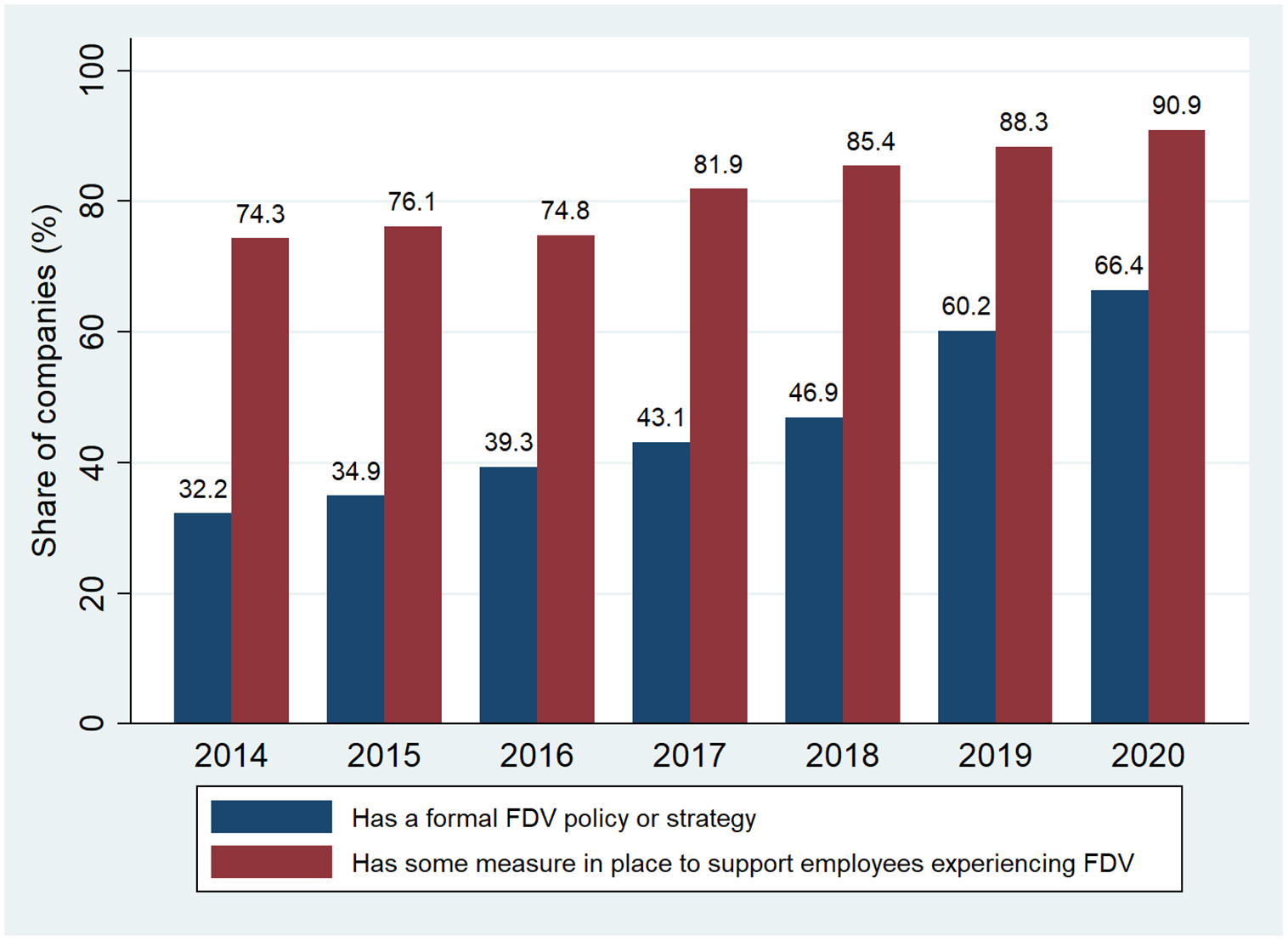
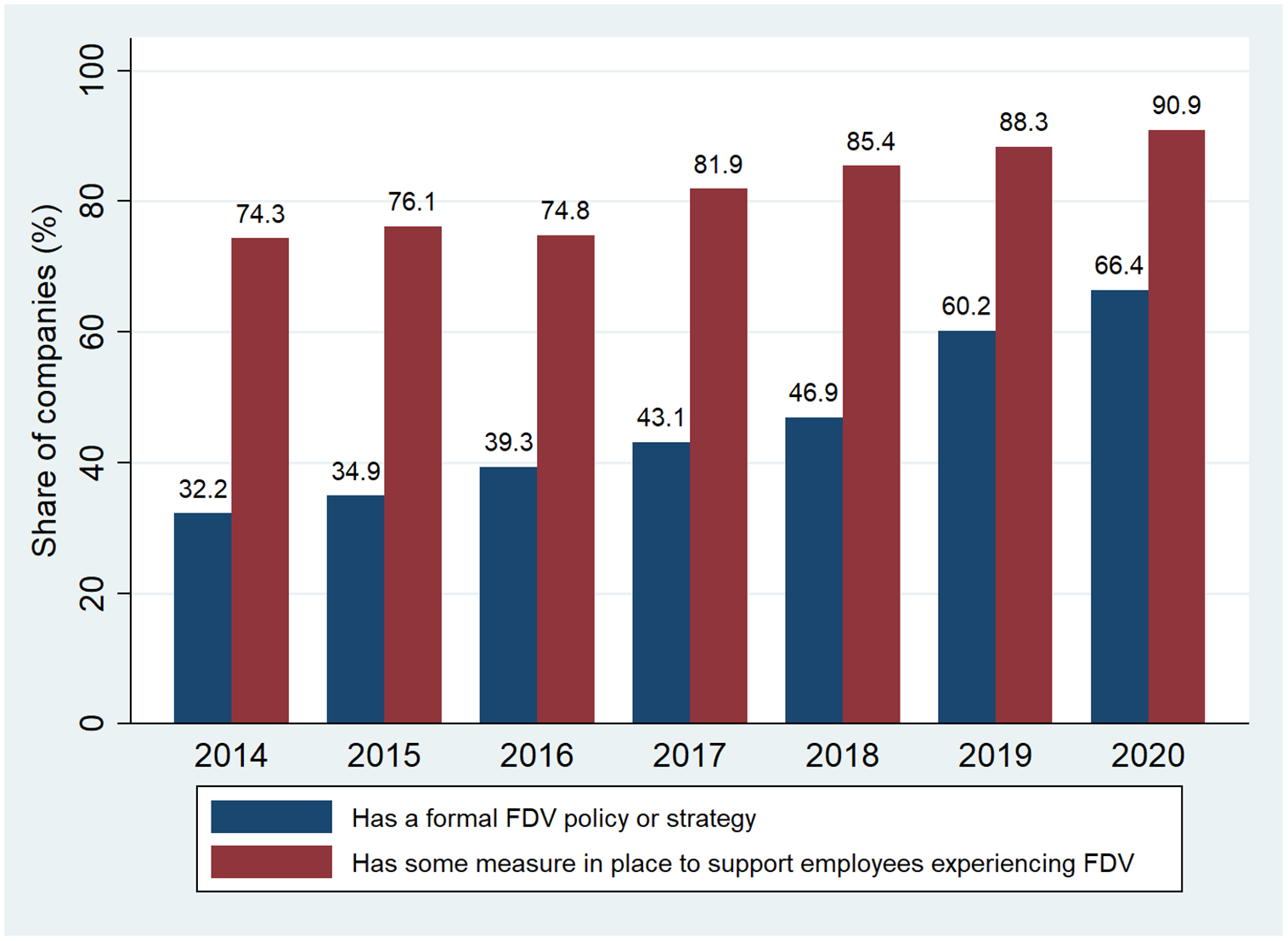
Although much is yet to be done, there has been a significant increase in Australian business initiatives to support workers experiencing FDV in recent years. As can be seen in Figure 1, the share of companies that put formal FDV policies in place to support employees experiencing FDV has increased significantly from 32.2 per cent in 2014 to 66.4 per cent in 2020. In the same period, there was an increase in the share of companies that had some measure in place to support employees experiencing FDV, reaching 90.9 per cent as of 2020.
Share of organisations with provisions of formal family and domestic violence policies or individual support measures: 2014 to 2020. Source: Bankwest Curtin Economics Centre — Data from Workplace Gender Equality Agency.
In Australia, the Workplace Bargaining Policy 2018 encourages organisations to put policies and practices in place that offer the maximum support available for employees experiencing FDV through the inclusion of clauses into new enterprise or workplace arrangements. Related to this, some progress has been underway in Australia’s workplace enterprise agreements, such as the Fair Work Amendment of the FDV Bill passed on December 6, 2018 that granted 5 days of unpaid FDV annual leave to all employees covered by the Fair Work Act 2009. In 2023, this act was amended to 10 days of paid FDV leave for eligible employees each year.
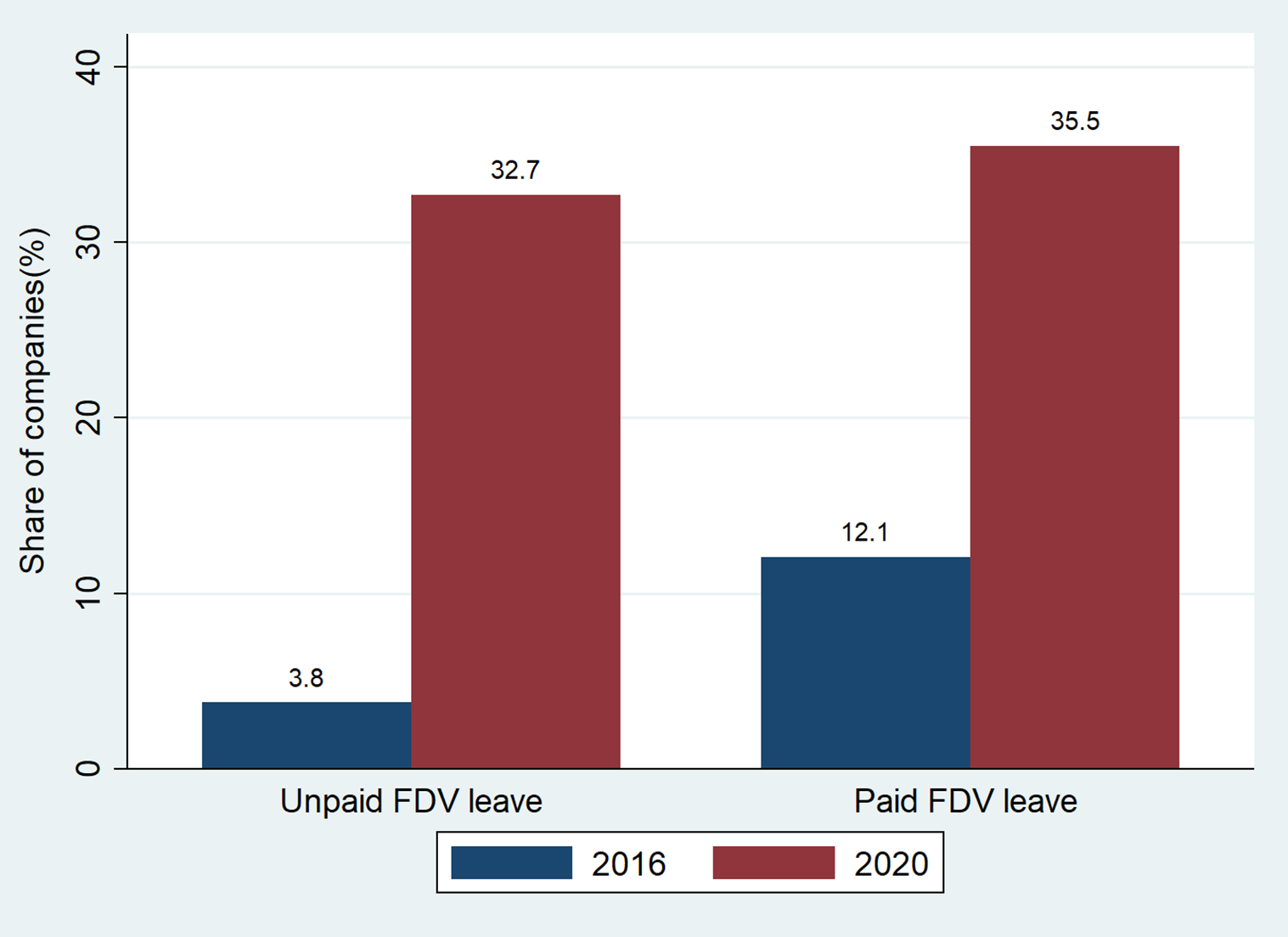
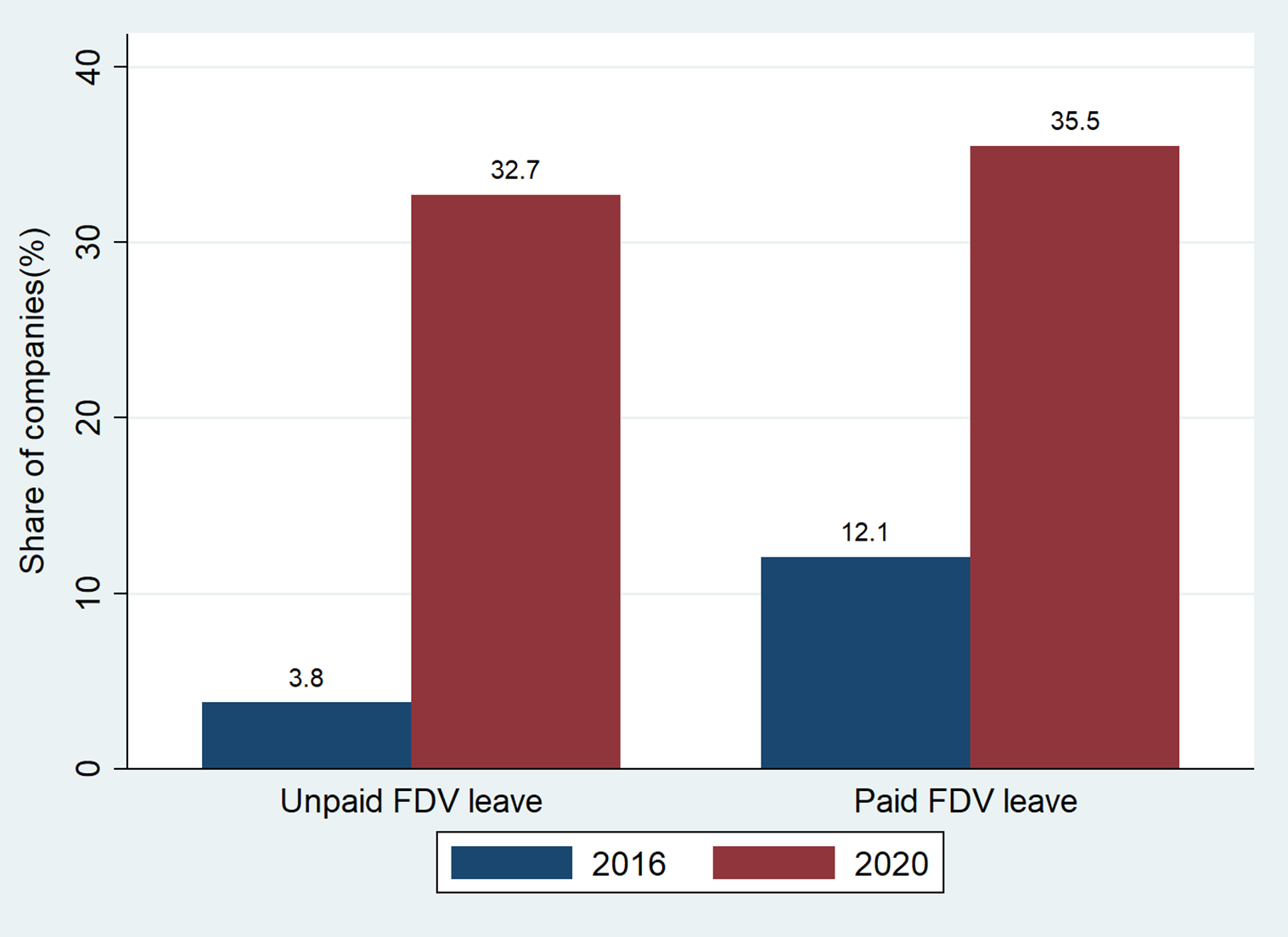
As shown in Figure 2, of the organisations that report to the Workplace Gender Equality Agency (a statutory agency responsible for promoting and improving gender equality in Australian workplaces), 35.5 per cent of all employers offered paid FDV leave in 2020, up from 12.1 per cent in 2016 (Workplace Gender Equality Agency 2020). Similarly, the share of organisations with unpaid FDV leave provisions increased from 3.8 per cent to 32.7 per cent between 2016 and 2020.
Share of organisations with family and domestic violence (FDV) leave provisions to support employees experiencing FDV: 2016 and 2020. Source: Bankwest Curtin Economics Centre — Data from Workplace Gender Equality Agency.
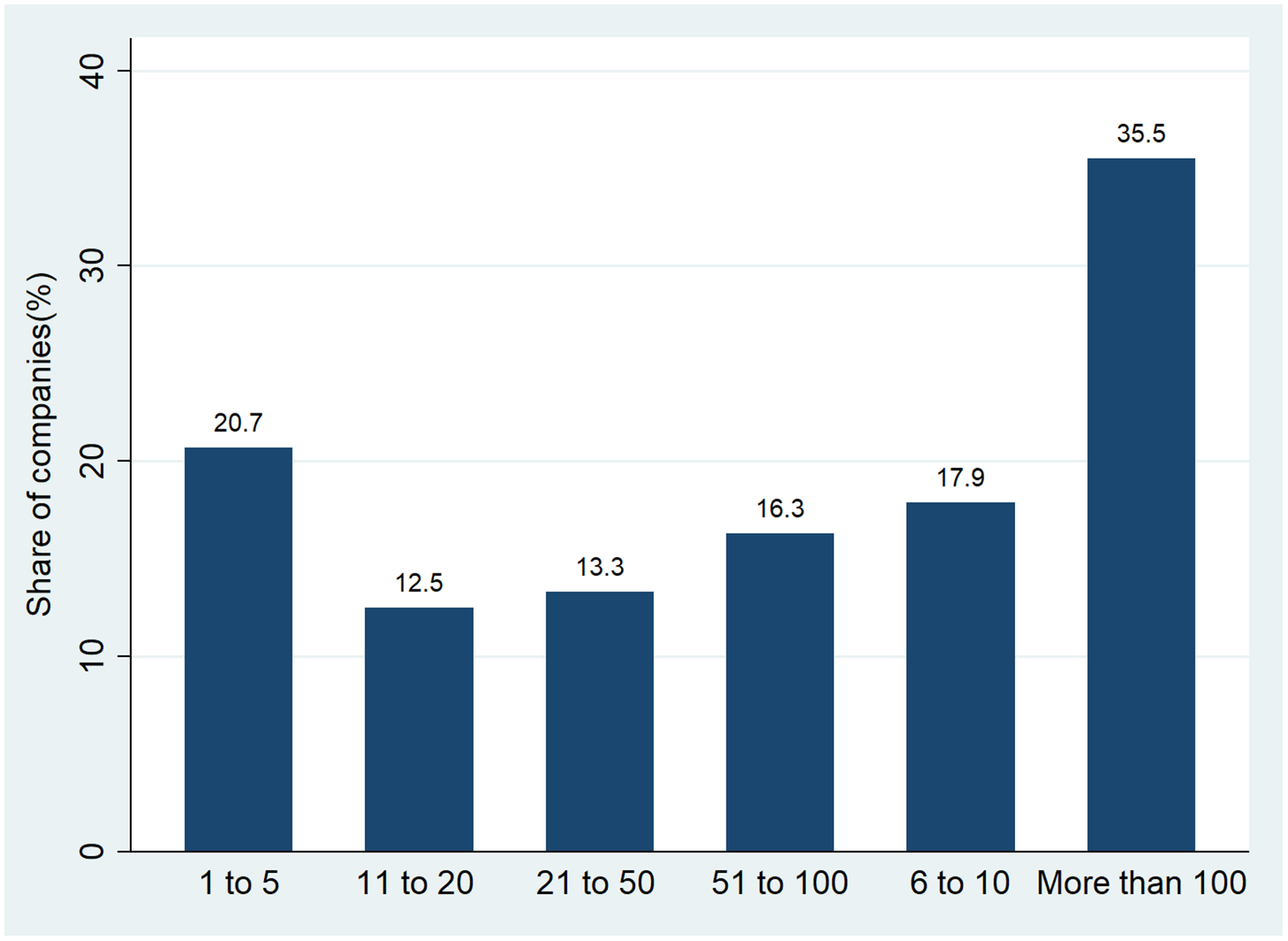
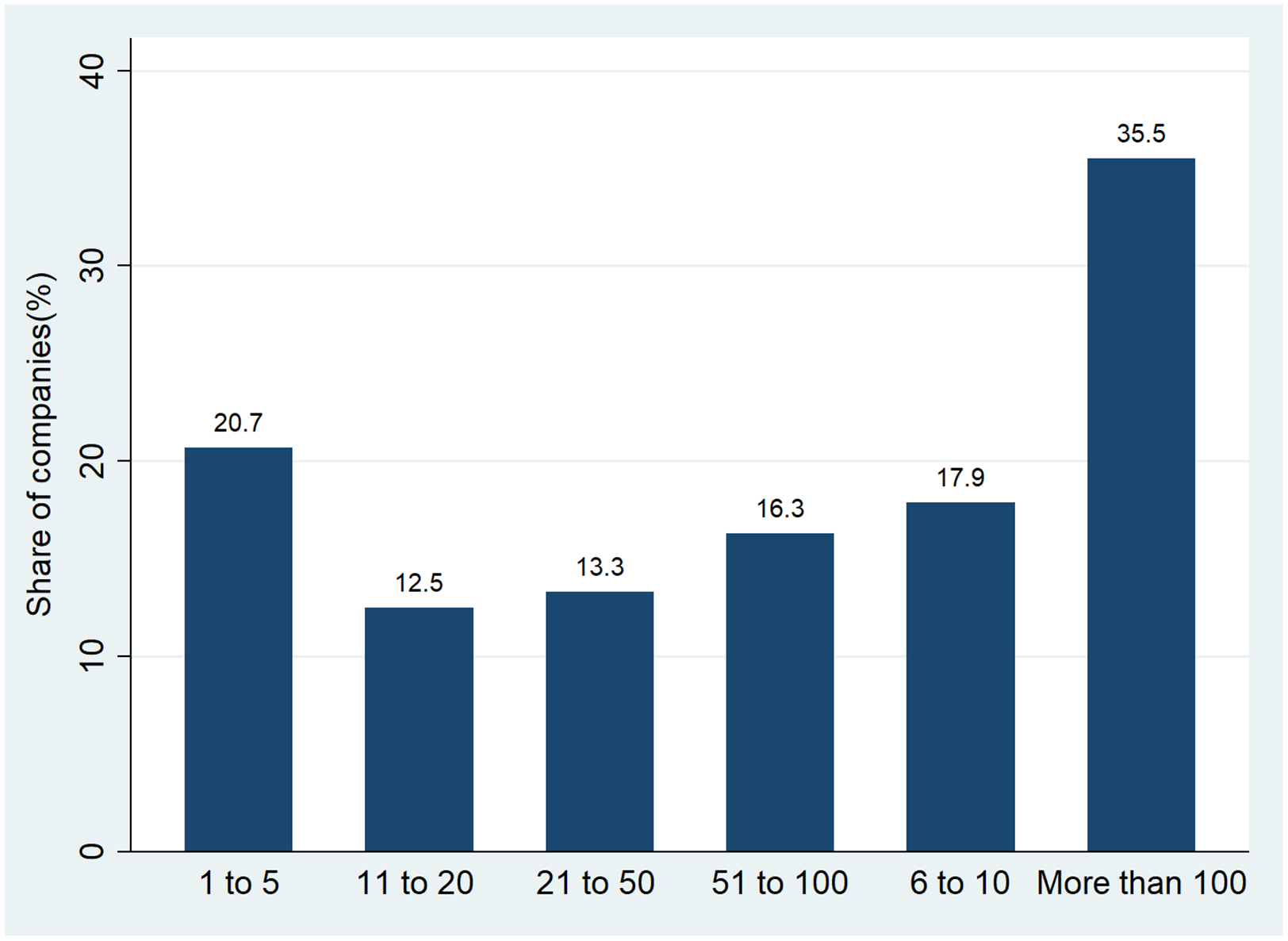
The share of companies that have paid FDV leave varies significantly by business size. Figure 3 shows the summary of the results of the Fair Work Commission survey of employers by business size about the provisions of paid FDV leave as part of the FDV leave review in 2021. Based on 859 responses, the results of the survey show that companies that employed more than 100 employees had the highest share (35.5 per cent) that offered paid FDV leave to employees experiencing domestic violence. Overall, the share of companies that provide paid FDV leave increases with firm size (excluding those with less than 10 employees).
Share of organisations that provide employees with paid family and domestic violence (FDV) leave by business size, 2021. Source: Fair Work Commission (2021), Survey for the FDV review.
Empirical approach
Methodology
To estimate the cost of providing 10 days of paid FDV leave, our first approach is estimating the prevalence rate of FDV among the employed population by age and sex using micro data from the Personal Safety Survey (PSS) provided by the Australian Bureau of Statistics (ABS). More precisely we estimate:
 $$p = {{{E_{fdv}}} \over E}$$
where $p$
is the probability of experiencing FDV,
$p$
is the probability of experiencing FDV, ${E_{fdv}}$
denotes the estimates of the number of employed people experiencing FDV in the last 12 months including those subjected to violence from current or previous partners or family members, and
${E_{fdv}}$
denotes the estimates of the number of employed people experiencing FDV in the last 12 months including those subjected to violence from current or previous partners or family members, and $E$
denotes the total number of employed people.
$E$
denotes the total number of employed people.
Once we estimate the probability of experiencing FDV and ascertain its stability over time, the number of employed people who experience violence (E
f dv
) at any point in time, t, is given by ${E_{fdv}} = {p_t}{\rm{\;}} \times {E_t}$
. Next, the total leave payments to award-covered employees affected by FDV can be forecast by multiplying the number of employed people who took time off work in the last 12 months following the incidence of FDV by the 10-day average wage for the respective sex and age group.
${E_{fdv}} = {p_t}{\rm{\;}} \times {E_t}$
. Next, the total leave payments to award-covered employees affected by FDV can be forecast by multiplying the number of employed people who took time off work in the last 12 months following the incidence of FDV by the 10-day average wage for the respective sex and age group.
More precisely, the total cost of providing 10 days of paid FDV leave assuming 100 per cent utilisation rate of leave provisions is given by
 $$TC = {E_f}_{dv} \times {S_A} \times {S_t} \times (10 \times {W_d})$$
where TC is the total cost of providing paid leave for the full 10 days, S A is the share of award-covered employees, S t denotes the projected share of those experiencing FDV who take time off work (based on ABS estimates), and W d is the average daily wage for award-covered employees.
It is unlikely that all employees who experience FDV will utilise the full 10-day leave provision. Therefore, it is important to assess the average actual number of leave days taken by employees experiencing FDV. The actual cost of the 10 days FDV leave provision is given by:
 $$TC = {E_f}_{dv} \times {S_A} \times {S_t} \times ({D_l} \times {W_d})$$
where d l denotes the projected number of leave days taken based on the estimates of Stanford (Reference Stanford2016). With improvement in awareness, the utilisation rate may increase over time. However, the latest PSS data from 2021 to 22 survey show that the FDV prevalence rate decreased recently, which helps overcome the potential issue of underestimation. It is important to keep in mind the potential measurement error in prevalence of FDV in the 2021–22 wave of the PSS. Given that the survey was conducted during COVID-19, it’s possible that in many households, partners were potentially present during the survey reporting, making the truthful reporting of FDV more challenging.
We adopt a bottom-up approach using micro data on the prevalence of FDV among workers to estimate the costs and benefits of 10 days of paid FDV leave offered to award-covered employees, including those employed in small and medium-sized enterprises. This approach captures the costs associated with FDV in a specific year using information on the number of employees experiencing violence in that year. This approach is widely used in the literature (e.g., KPMG 2016; Oliver et al Reference Oliver, Alexander, Roe and Wlasny2019).
While the Stanford (Reference Stanford2016) study makes an important contribution to the subject, there are several limitations regarding the assumptions and methodology employed. Stanford (Reference Stanford2016) assumes that aggregate average weekly wage is applicable to all employees regardless of age and methods of wage setting (including modern award, collective agreement, and individual arrangements). However, average wage significantly varies across these dimensions. To circumvent this issue, our study utilises detailed wage profiles by age, sex, and employment contract type using unit record data from the HILDA survey. Specifically, this study utilises average weekly wages for award-covered employees from the HILDA survey by sex and age groups in line with the aim of the paper instead of relying on arbitrary assumptions about the average wage and leave utilisation rates.
Data
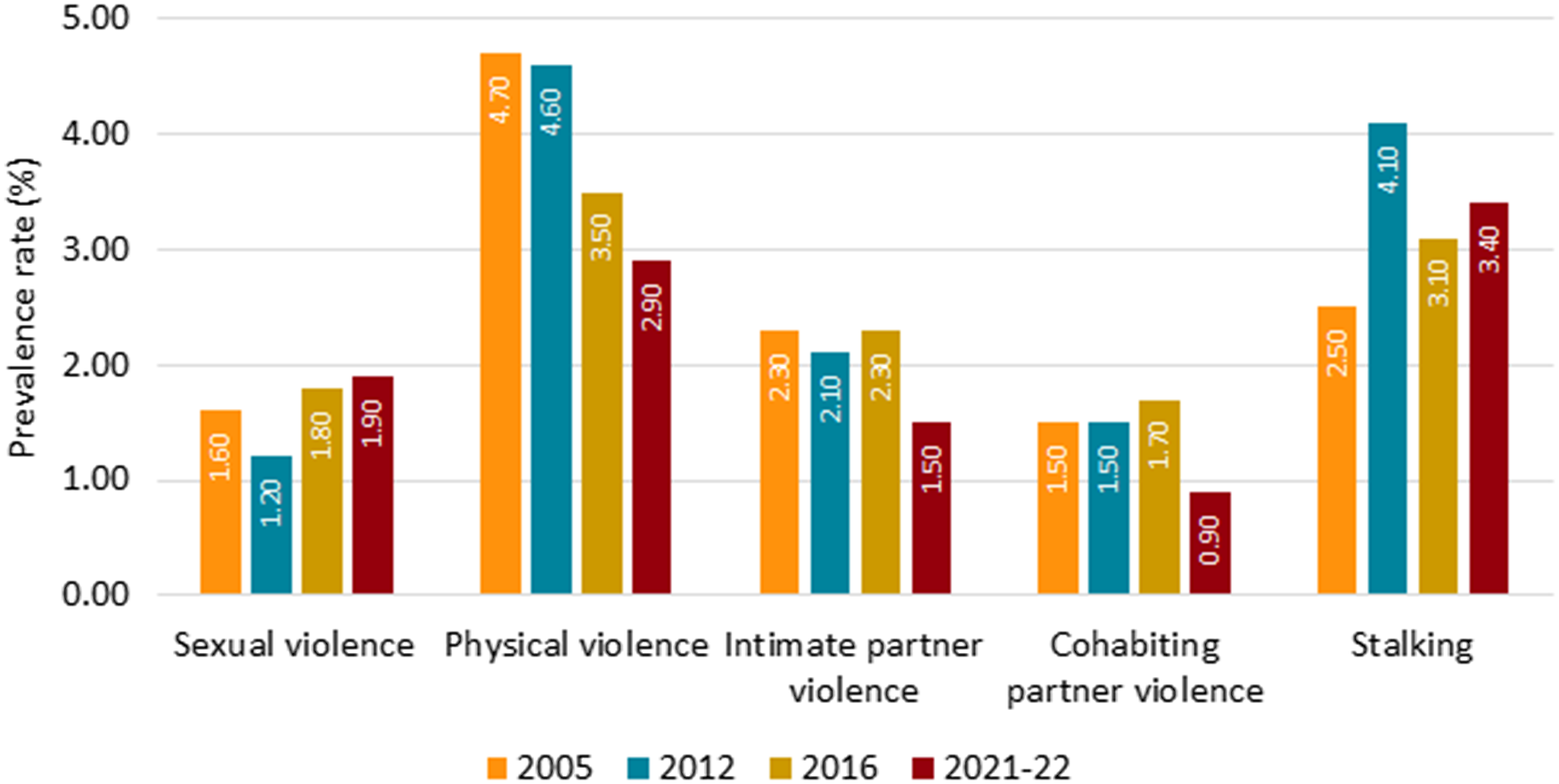
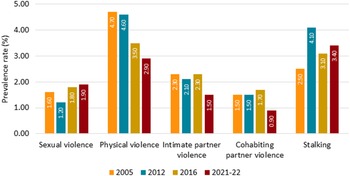
This paper utilises data on time taken off work by employees experiencing FDV using the family relationship to the perpetrator as a filter in TableBuilder in the Personal Safety Survey (PSS) (2016) data provided by the Australian Bureau of Statistics (ABS). The PSS data contain detailed information about the nature and extent of violence experienced by men and women aged 18 years and over since the age of 15, such as sexual harassment in the last 12 months, stalking, violence, emotional abuse, and economic abuse by a cohabiting partner. While the PSS survey is valuable in providing detailed and rich information about FDV, it is important to acknowledge the limitation in terms of low frequency as it runs every four or more years. The ABS conducted the PSS survey in 2005, 2012, 2016, and 2021–22. This study is based on the 2016 PSS data as the micro data from the latest survey were not released by the ABS. This limitation of the data is relevant to plausibility of the assumption of stable prevalence rate of FDV over time as there were concerns that there was a surge in FDV incidence during the COVID-19 period. To assess this concern, we compare the FDV prevalence rate over time using data from the four PSS rounds. As clearly shown in Figure 4, the prevalence rates were stable in the period from 2005 to 2016, and slightly decreased in the latest round for most categories of violence. This underscores that there is no concern in terms of underestimating the prevalence rate in our assumption.
Prevalence rate of violence against women over time: 2005 – 2021-22. Source: Australian Bureau of Statistics.
Data on FDV by labour force status are obtained from the 2016 wave of the PSS. In all estimations and analyses in this paper, the data used to estimate the costs to the employer of paid FDV leave include employed people aged 18 years and over who experienced FDV in the last 12 months before the survey. Based on data availability, we use detailed data on wage profiles by age and contract types for 2019, uprated to 2021 using consumer price index (CPI) data from ABS to reflect current remuneration rates.
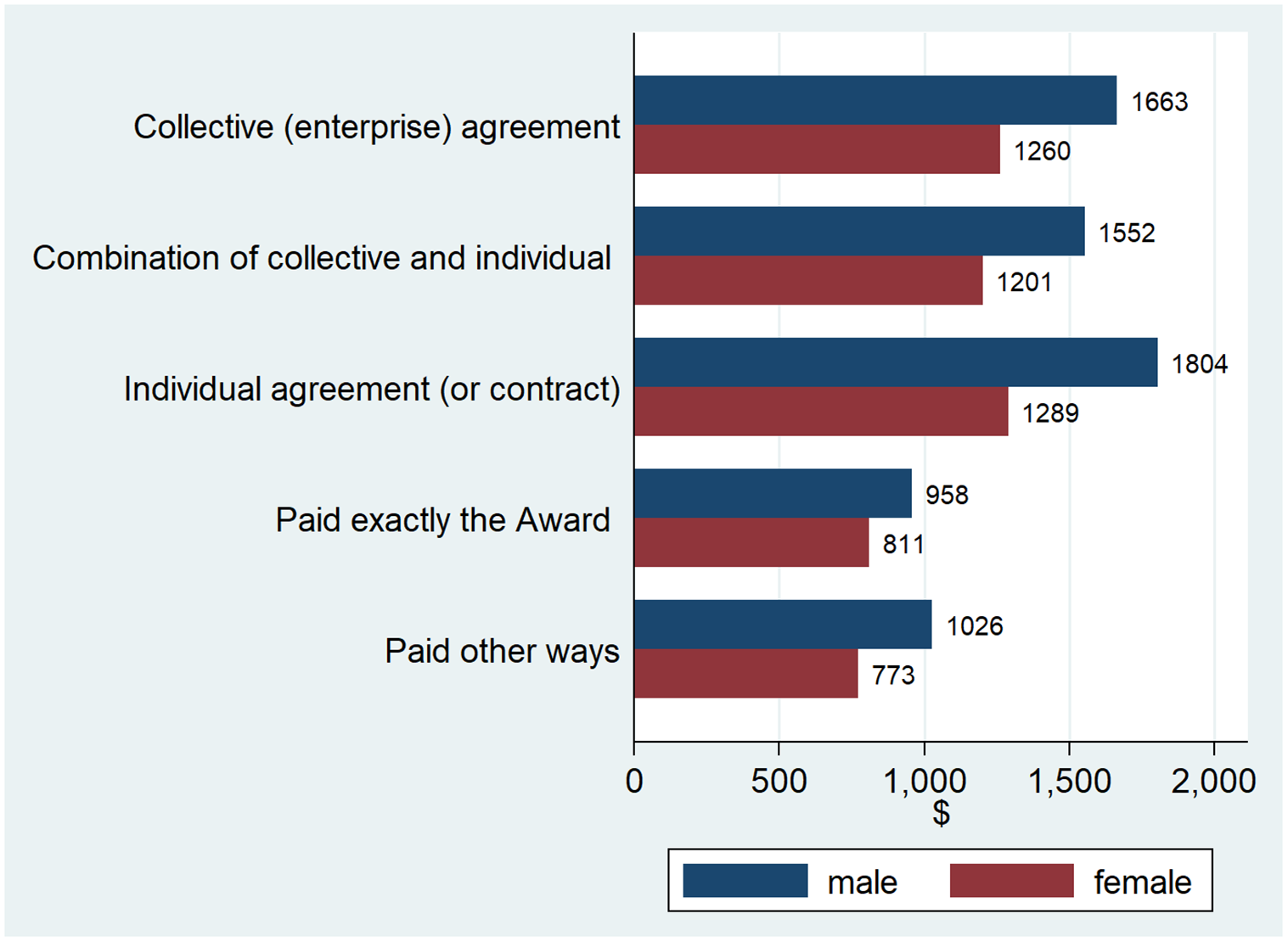
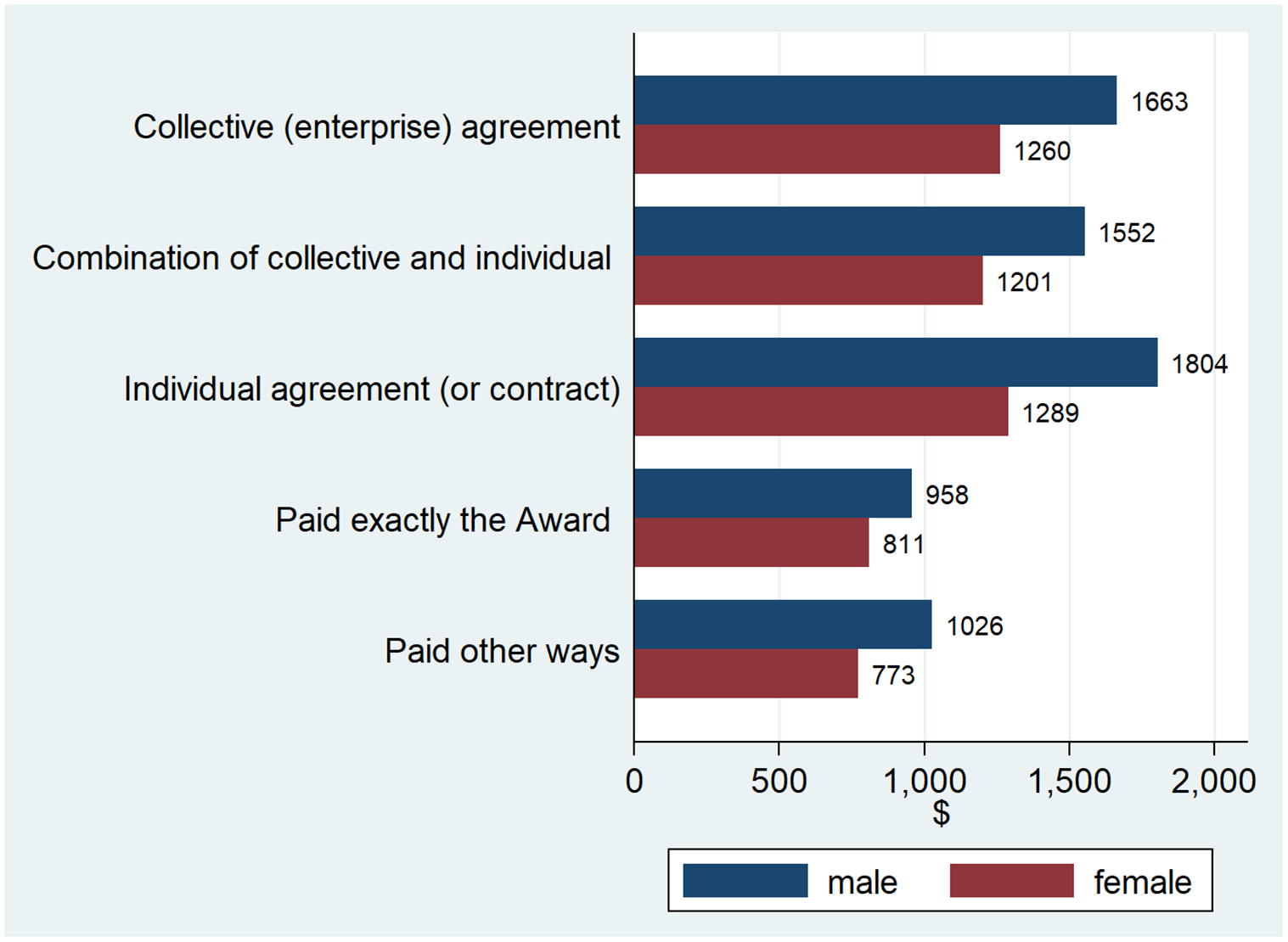
In addition, we use weekly disaggregated wage data for award-covered employees from release 9 of the HILDA survey, uprated to June 2021 dollars using CPI data from the ABS to reflect current remuneration rates. The HILDA Survey provides nationally representative individual and household level longitudinal data annually starting from 2001. The survey includes information on a range of topics and aspects of the life of Australians, including employment, income, health and well-being, and household and family relationships, as well as various life events and experiences. The main advantage of using unit record wage data from HILDA compared to studies that use only aggregate average wages from the ABS (e.g., Stanford Reference Stanford2016) is that we can use detailed wage profiles by age and contract types to provide more precise estimates of the costs of paid FDV leave. As shown in Figure 5, the average weekly wage for award-covered employees is lower than all other formal methods of pay setting. Specifically, the average weekly wage of award-covered male employees is approximately $958, and $811 for female employees.
Average weekly wages by gender and methods of pay setting. Sources: Authors’ calculations using data from Household, Income and Labour Dynamics in Australia and consumer price index from Australian Bureau of Statistics.
Results and discussions
Costs of providing 10 days paid family and domestic violence leave
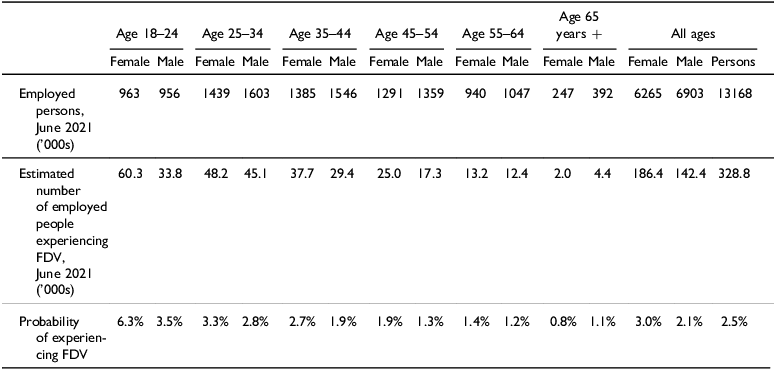
To estimate the cost of providing 10 days of paid FDV leave for award-covered employees, we first estimate the prevalence rate of FDV among the employed population using the approach described in Section 3.1. Table 1 shows the estimated prevalence rate of FDV for age and salary earners in Australia as of June 2021, by age and sex. Using the prevalence rates calculated from the 2016 PSS, and assuming prevalence has remained stable in the period to 2021, we estimate that 186,400 employed women and 142,400 employed men in Australia have experienced FDV in the last 12 months. Prevalence rates of FDV among employed people decrease consistently with age for both women and men, with rates typically higher for women (3.0 per cent) compared to men (2.1 per cent).
Number and share of employed persons experiencing family and domestic violence (FDV) in the last 12 months: by age and gender
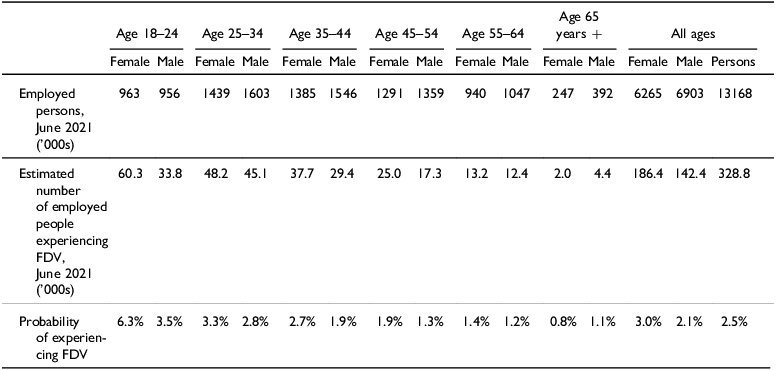
Notes. Estimates of the number of people experiencing family and domestic violence in the last 12 months include those subjected to violence from current or previous partners or family members. Prevalence rates are calculated as the ratio of FDV incidence to the number of employed people, by age and gender. Counts are uprated to June 2021 using Australian Bureau of Statistics counts of employed persons by age and gender.
As outlined in Section 4, estimating the costs of providing 10 days of paid FDV leave requires an assessment of the proportion of employees who might access paid FDV leave entitlement as a result of experiencing FDV, including the number of days that may be claimed. We make use of the data on the 2016 PSS that provides evidence of the proportion of employees who take time off work under current leave arrangements as a result of experiencing FDV.
Table 2 shows the estimated proportion of male and female employees who took time off work in 2016 as a result of experiencing family-related violence in different forms. These include the incidence of family violence (from partners, parents, siblings, or relatives), intimate partner violence, current partner violence, or current and/or previous partner violence.
Share of employees taking time off work due to experiencing family and domestic violence in last 12 months Nature of most recent experience of family-related violence

Notes. Authors’ calculations from ABS Personal Safety Survey, 2016.
The results from Table 2 show a fairly consistent pattern in which a significantly higher share of women than men take time off work as a result of FDV. Depending on the nature of FDV experienced, between 15.9 per cent and 20.1 per cent of women were found to take leave due to FDV. For male employees, the shares were far lower, up to 2.7 per cent for men who experienced violence from a current or previous partner. Following the approach described in Section 3.2, we start with the projections of the number of employees who have experienced FDV over the previous 12 months to estimate the costs of providing 10 days of FDV leave entitlement for award-covered employees only. These projections account for the fact that FDV prevalence differs between women and men by age range.
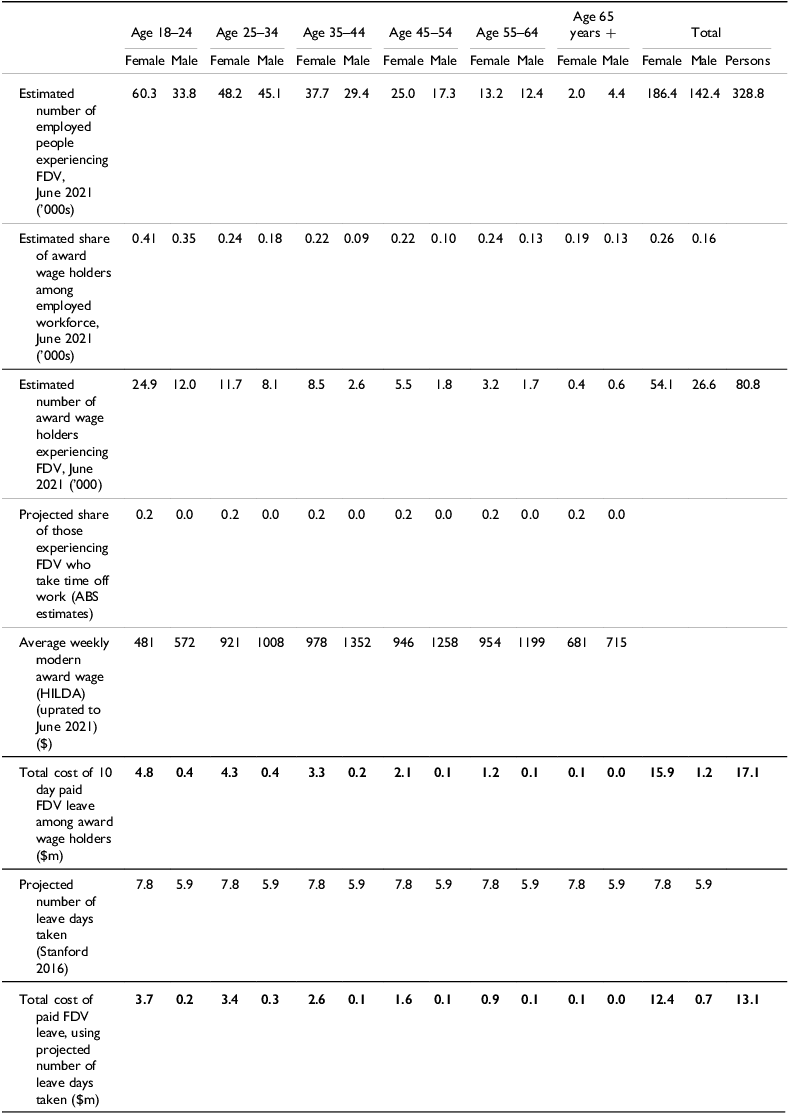
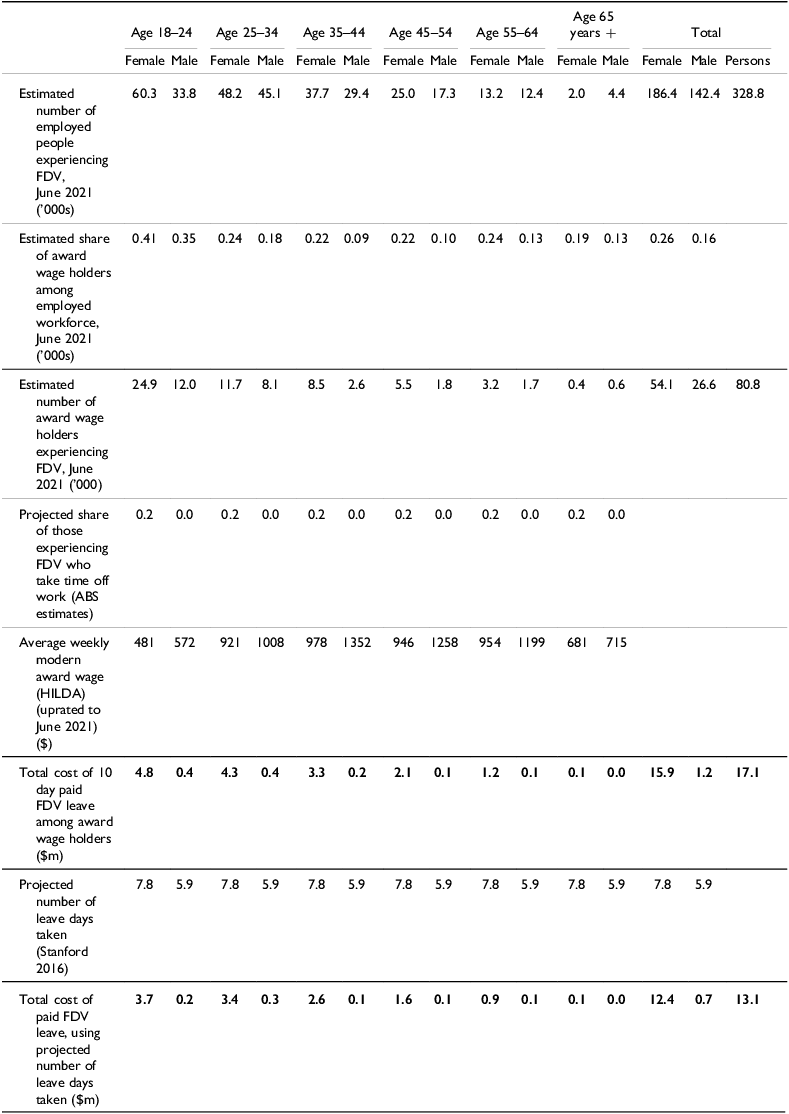
As can be seen in Table 3, around 26 per cent of female employees across all age groups are on award wages, compared to 16 per cent of male employees (the second row of Table 3). As expected, a far higher share of younger workers are on modern awards. Over 41 per cent of female workers and 35 per cent of male workers aged 24 and under are on award wages. This is an important step when projecting the potential costs of paid FDV leave entitlements, given that younger workers will typically be receiving lower award wage rates than their older counterparts.
Estimated cost of 10 days paid family and domestic violence (FDV) leave, award-covered employees
Notes. Estimates of the number of people experiencing family and domestic violence in the last 12 months include those subjected to violence from current or previous partners or family members. Prevalence rates are calculated as the ratio of FDV incidence to the number of employed people, by age and gender. Counts are uprated to June 2021 using Australian Bureau of Statistics counts of employed persons by age and gender. The proportion of employees on award wages by age and gender are calculated using data on pay setting arrangements from the Household Income and Labour Dynamics in Australia (HILDA) survey, Wave 19.
Using this information on the proportion of male and female workers in different age bands who are on modern award wages, we are able to estimate the number of award-covered employees who have experienced FDV in the last 12 months (the third row of Table 3). The PSS data provides detailed set of information about respondents in addition to experiences of violence, including age, sex, country of birth, employment, education and income, among others which allows disaggregated analysis. Overall, we estimate 54,100 female and 26,600 male award-wage holders to have experienced FDV during the previous year (80,800 in total), the majority of whom are aged 34 and under.
We assume that award wage workers who have experienced FDV during the past 12 months will access paid FDV leave entitlements at the same rates as under current arrangements (using the maximum rates shown in Table 2). Following the approach outlined in Section 4, the costs of 10 days of paid FDV leave entitlement can be estimated as the number of award-covered employees who have experienced FDV in the last 12 months (Table 3 row 3), multiplied by the share of those workers who access FDV leave provisions (Table 3 row 4), times 10 days of average pay for modern award wage holders (Table 3 row 5).
Assuming that the share of employees that took time off work remains constant and employees use the full 10 days of paid leave, the estimated total cost of providing 10 days of paid FDV leave to award-covered workers is $17.1 million (Table 3 row 6), of which $15.9 million is for female employees and only $1.2 million to male employees.
Sensitivity analysis
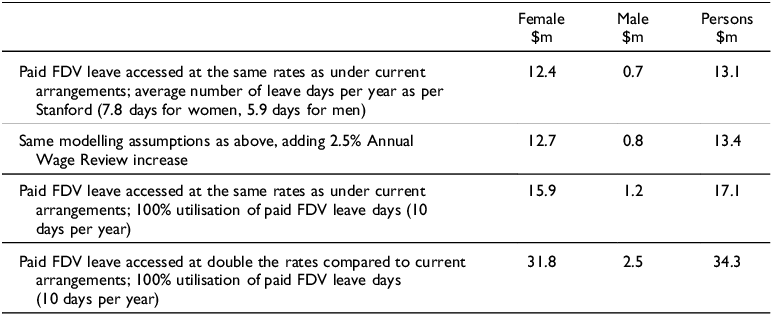
There are a number of assumptions underlying this analysis that can be tested to provide some sensitivity analysis of the estimated costs of 10 days paid FDV leave entitlements. It may not be the case that all workers who have access to FDV leave would utilise the full 10-day entitlement. In his costings, Stanford (Reference Stanford2016) assumes that women would access an average of 7.8 days of leave, and men 5.9 days. If we apply these settings in place of an assumed utilisation of the full 10 days of paid FDV, the estimated total cost to employers of paid FDV entitlement would be $13.1 million, of which $12.4 million would be accessed by female employees and $0.7 million by male employees (Table 3 row 8).
To see the implication of the recent Annual Wage Review on the estimates, this study assesses the impact on estimated costs of the 2.5 per cent increase in wages as per the Annual Wage Review 2021 by the FWC. Our estimates suggest that the estimated cost to employers of providing 10 days of paid FDV leave to award wage holders would increase only marginally, from $13.1 million to $13.4 million (Table 4 row 2).
Estimated costs of 10 days of paid family and domestic violence (FDV) leave for award-covered employees: alternative scenarios
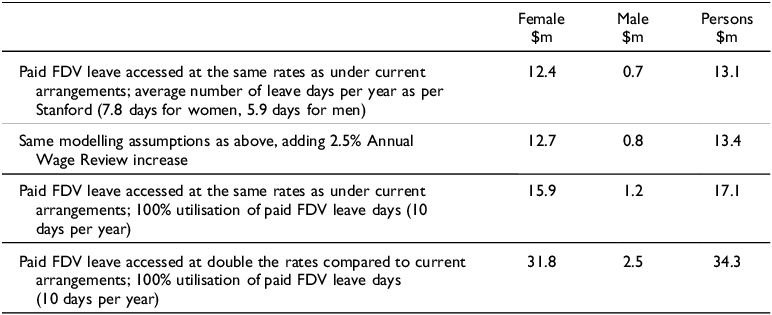
Notes. Authors’ calculations based on Household Income and Labour Dynamics in Australia (2019), Australian Bureau of StatisticsPersonal Safety Survey (2016) and Annual Wage Review 2020–21.
The number of employees that may take time off as a result of FDV may plausibly increase with the provision of paid leave entitlements. Stanford (Reference Stanford2016) assumes that the proportion of employees who may take time off will double under the paid FDV provision. Assuming the rate at which employees experiencing FDV will access leave will double, this study estimates that the cost of 10 days of FDV leave will be approximately $34.3 million.
Cost implications to small and medium-sized businesses
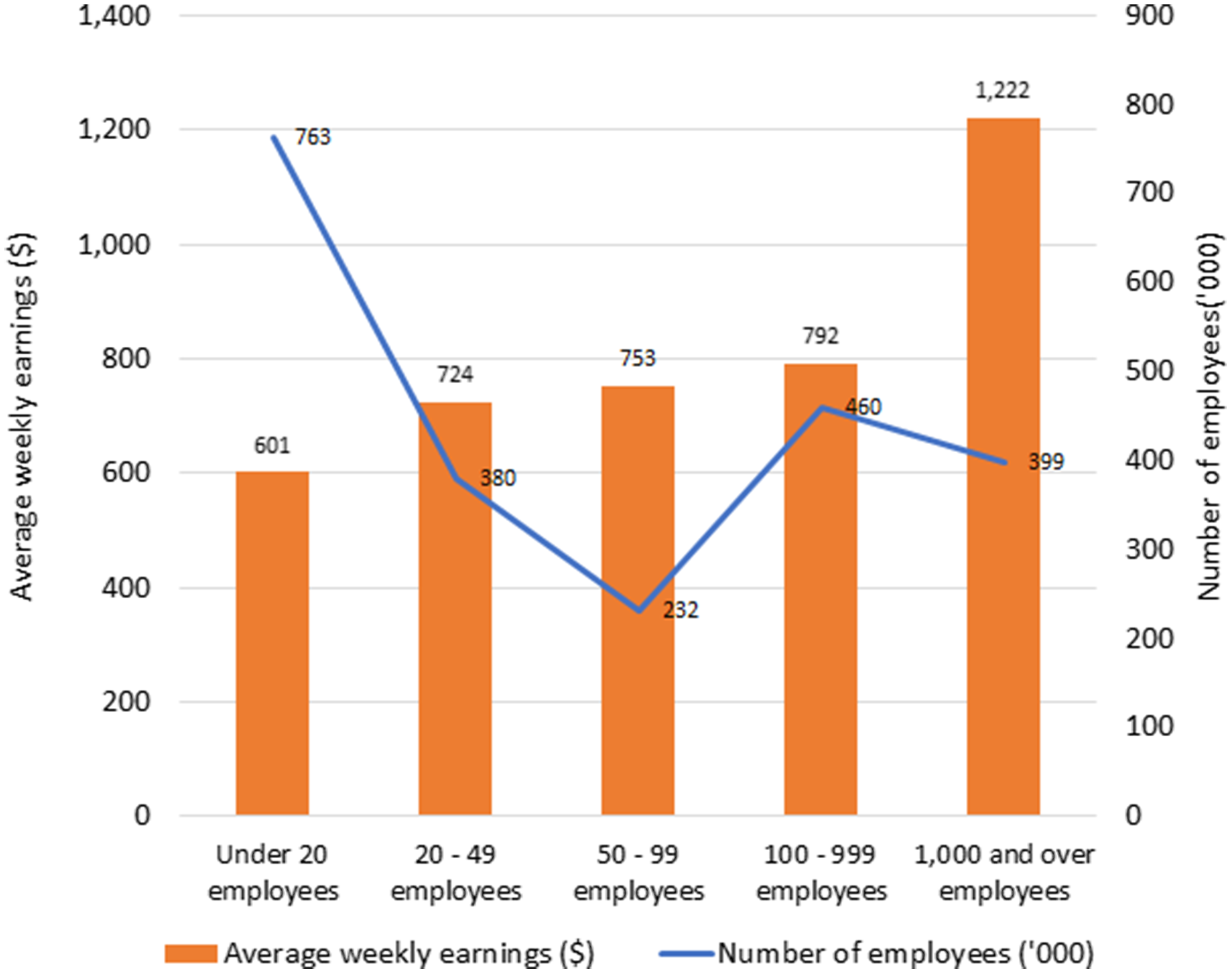
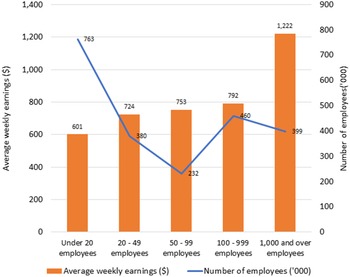
An important point to note is that small and medium enterprises account for a significant proportion of employees under the modern award pay setting. As shown in Figure 6, the largest employers of modern award employees are small businesses (under 20 employees) which amounts to 763,000 employees in 2018.
Number of award-covered employees and average weekly earnings by firm size. Sources: Authors’ calculations using data from Australian Bureau of Statistics.
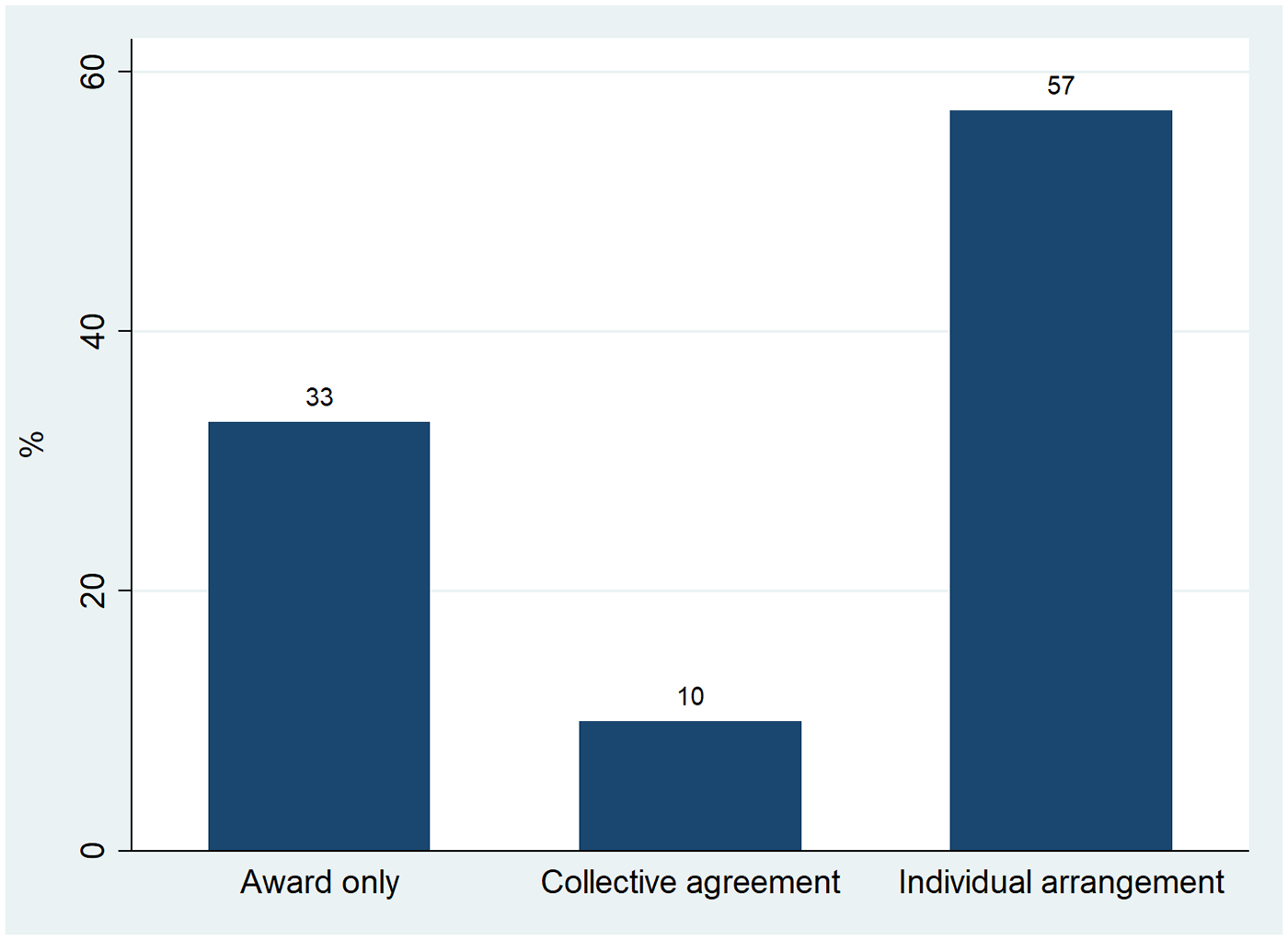
Share of award-covered employees in small and medium-sized businesses (under 100 employees) by methods of setting pay. Sources: Authors’ calculations using data from Australian Bureau of Statistics.
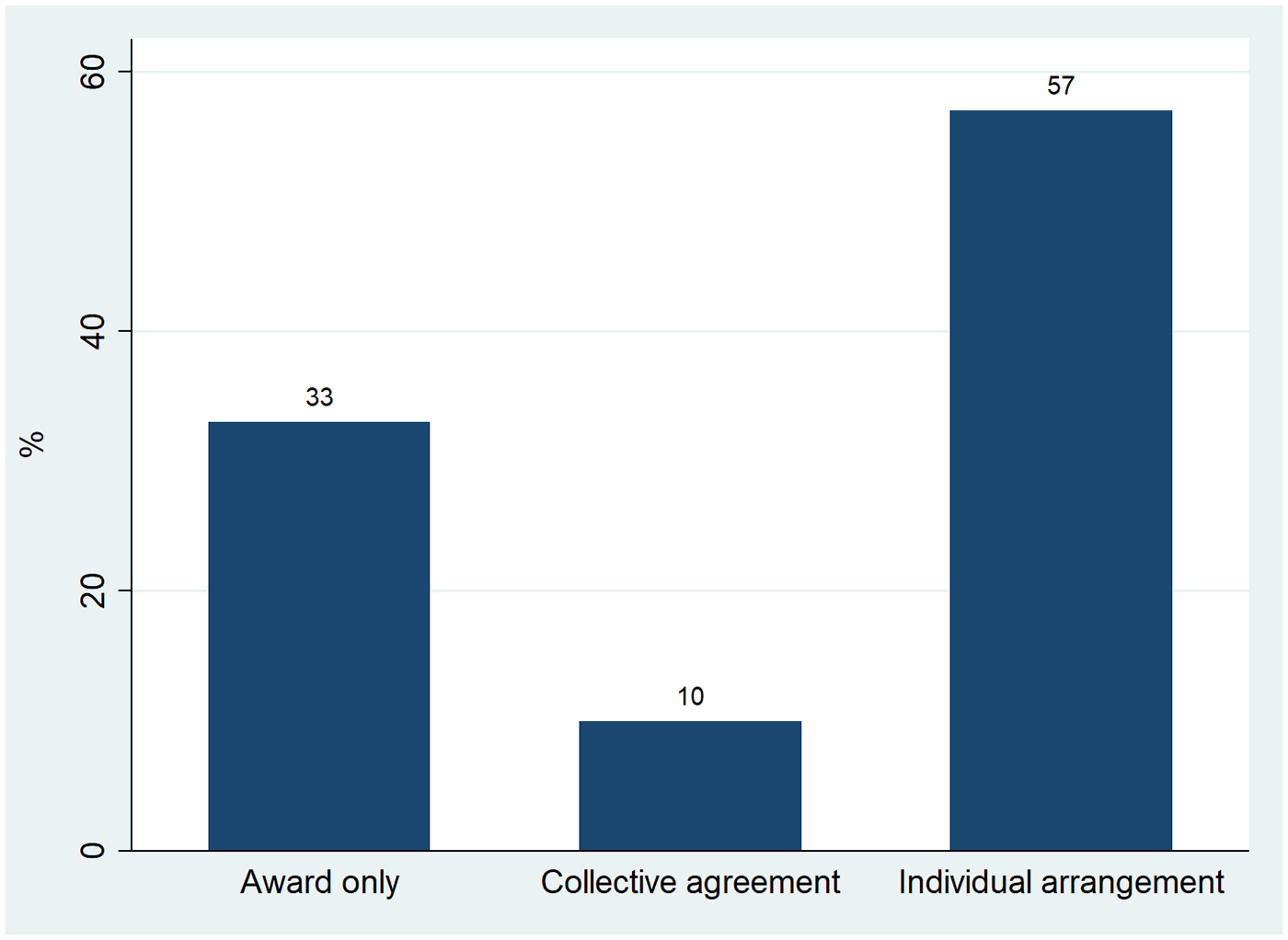
Businesses with a total workforce of under 100 employees collectively account for more than 60 per cent of all employees whose wages are set under the modern award contract. Smaller businesses typically recruit a larger share of award wage holders too. Around 33 per cent of workers among businesses with under 100 employees are on award wages only. This compares to 16 per cent of workers in businesses with between 100 and 999 employees, and 13 per cent of businesses with 1,000 or more employees.
This suggests that small and medium-sized businesses will bear a greater cost burden in the provision of 10 days of paid FDV leave.
The average modern award wage increases with firm size while the number of award-covered employees decreases with firm size. Figure 6 clearly shows that the average award wage in large businesses (with 1,000 or more employees) is more than twice the average wage in small businesses (with under 20 employees). This evidence is in line with earlier estimation results that show the estimated cost of 10 days paid FDV leave entitlement for award-covered employees may not be significant.
Figure 6 compares the share of employees under different wage-setting methods among small and medium-sized businesses (less than 100 employees) and shows that 33 per cent of employees have their wage set under the modern award method. A further 57 per cent of employees in small and medium businesses have wages set under individual arrangements. The remaining 10 per cent of employees are paid under collective agreements.
As noted earlier, small and medium businesses will face a larger cost burden from providing 10 days of paid FDV leave entitlement to award wage holders, given that they employ the largest share of workers on the modern award wage. However, it is worth noting that a significant number of employers are already providing paid FDV leave entitlements. Therefore, the additional cost of the provision may be less than the estimated value. Stanford (Reference Stanford2016) assumes that about 15 per cent of the entitlement is already covered by employers implementing paid FDV leave.
Benefits of providing 10 days paid family and domestic violence leave
What are the likely benefits (if any) for award-covered employees, including those working in small and medium-sized businesses, of the provision of an entitlement of 10 days paid FDV leave? Evidence from the existing literature shows that FDV has a significant impact on employers in terms of lost output. In a survey of the impact of FDV on the workplace in six European countries (France, Belgium, Germany, Italy, Spain, and the UK) based on survey responses from 6,639 employees, Pillinger et al (Reference Pillinger, Bowlus, MacQuarrie and Stancanelli2019) find that 55 per cent of employees who experience domestic violence reported that it affected their work negatively through lateness, absenteeism or being less productive. One-quarter of respondents had taken time off work or were late for work because of domestic violence, and one-fifth of respondents reported absenteeism because of domestic violence.
The benefits of providing 10 days of paid FDV leave for award-covered employees can be classified into direct (monetary) benefits and indirect (intangible) benefits. As discussed earlier, the direct benefits to employers from providing paid FDV leave include the reduction in costs from absenteeism and lost productivity. The indirect benefits to employers include the mitigation of the negative effects of FDV on workplace productivity (Murray and Powell Reference Murray and Powell2008; Wathen et al Reference Wathen, MacGregor and MacQuarrie2015). In a similar vein, de Jonge Reference de Jonge2018 suggests that providing support to employees affected by FDV could have a positive effect on productivity in the workplace.
There is evidence of several potential mechanisms that channel the effects of the provision of FDV leave to enhanced workplace productivity. First, FDV leave provision helps employees address urgent matters effectively and return to work sooner after crises, ultimately reducing absenteeism and avoiding loss of productivity. For example, Guthrie and Babic (Reference Guthrie and Babic2021) show that workplace policies such as FDV leave provisions by Australian employers are crucial to minimise short-term and long-term productivity losses. Reeves and O’Leary-Kelly (Reference Reeves and O’Leary-Kelly2007) provide supporting empirical evidence on productivity-enhancing effect of FDV leave provision based on a survey of over 2000 employees. They find that FDV provisions to affected employees reduce lost productivity related to tardiness and distraction. The provision of paid FDV leave could reduce turnover costs as well as hiring and training costs, with workers who are financially supported through FDV leave being better able to retain their jobs while still resolving or escaping from violent situations. Along these lines, earlier studies (see e.g., LeBlanc et al Reference LeBlanc, Barling and Turner2014; Wathen et al Reference Wathen, MacGregor and MacQuarrie2015) show that violence can affect the employees’ ability to get to work and result in lateness at work and absenteeism. Despite such evidence in existing studies, it should be acknowledged that the low utilisation rate of FDV leave due to lack of awareness can hinder the realisation of the full benefit of FDV leave provisions.
Second, it is well established that experiencing FDV leads to emotional and psychological distress that can have adverse effects on employees’ concentration, performance, and productivity at workplace. FDV leave provisions allow survivors to get counselling and support services without penalty for absence from work. This is crucial to reduce the additional emotional strain and psychological distress, enabling employees experiencing FDV to refocus and perform productively upon their return from the crises. Previous literature has provided causal evidence that abuse can deter human capital accumulation through the negative impact on the health of employees experiencing it, which translates to lower productivity and poor labour market outcomes (Swanberg and Macke Reference Swanberg and Macke2006; Aizer Reference Aizer2010). FDV leave provisions help reduce such negative impacts on health, as they provide options outside of violent partnerships. From this point of view, the literature considers the avoidance of domestic violence, including exiting an abusive relationship, and improved health conditions as an investment in human capital, which is key to improving the quality of life and enhancing labour market productivity (Becker Reference Becker2007; Papageorge et al Reference Papageorge, Pauley, Cohen, Wilson, Hamilton and Pollak2021).
Third, FDV leave provision signals positive workplace environment and creates awareness as it shapes employees’ perception that their employer is supportive. This motivates employees to remain committed and focused as they feel that their employer genuinely cares about their well-being, which translates into higher workplace productivity (BETA 2024, Aeberhard-Hodges and McFerran Reference Aeberhard-Hodges and McFerran2018).
The direct benefit to award-covered employees is the avoidance of financial loss. The literature on cost of domestic violence suggests that those affected by the incidence bear the significant financial cost due to loss of income with unpaid leave as well as consumption-related costs due to loss of economies of scale following family break-up (e.g., KPMG 2016). The indirect benefits to award-covered employees may include the reduction of psychological distress and suffering that is attributed to financial stress. Although it is difficult to disentangle the effect of financial stress from other health effects, earlier studies show that the costs related to mental health and suffering constitute the largest share of the total cost. It is plausible to expect that financial stress may exacerbate this issue. Evidence from existing literature shows that FDV has significant effects on individuals’ physical and mental health and well-being (Ellsberg et al Reference Ellsberg, Jansen, Heise, Watts and Garcia-Moreno2008; Devries et al Reference Devries, Mak, Bacchus, Child, Falder, Petzold, Astbury and Watts2013; World Health Organization 2013). Therefore, 10 days of paid FDV leave entitlement could partly reduce the negative effects on health that are attributed to financial stress.
Conclusion
FDV has been increasingly recognised as a major workplace issue in Australia and other countries around the world. Workplace policies and interventions can reduce the harms of FDV and advance gender equality. Each policy involves a tradeoff. Hence, it is crucial to assess the costs and benefits of a policy using a data-driven and evidence-based approach. In this paper, we estimate the costs to employers of providing a 10-day paid FDV leave using individual-level data and assess the potential benefits to employers and award-covered employees.
Using detailed and disaggregated wage data from release 19 of HILDA and PSS, the estimated total payment for 10 days of FDV leave for award-covered employees is estimated at $13.1 million. The estimated payment to female employees constitutes $12.4 million and the estimate for male employees is $0.7 million. Under the scenario of full utilisation rate of 10 days of FDV leave, the upper limit of the cost is estimated at $34.3 million.
Our estimates suggest that providing 10 days of paid FDV leave for award-covered employees may not impose a significant cost to businesses, particularly when set against the potential benefits to both the employers and employees of providing such leave. From our detailed review of the literature, the direct and indirect benefits of the FDV leave provision tend to outweigh the costs to employers.
The findings of this study have important policy implications to move a step forward in supporting employees experiencing FDV through enterprise/workplace arrangements. Implementing workplace policies to support employees who experience FDV would benefit millions of people who experience domestic violence each year while delivering significant benefits to employers.
Rebecca Cassels is an Assistant Secretary in the Climate and Industry Modelling Branch of the Commonwealth Treasury and Adjunct Associate Professor. Her research expertise includes economic evaluation, cost-effectiveness analysis, labour economics, gender equity, poverty, disadvantage and inequality, spatial analyses, wealth and superannuation, social mobility, social exclusion, child wellbeing.
Astghik Mavisakalyan is a Professor of Economics at the Bankwest Curtin Economics Centre at Curtin University. She is also a Chief Investigator of the Australian Research Council Centre of Excellence for the Elimination of Violence against Women (CEVAW) and leads Curtin’s node of the Centre. Astghik’s current research mostly focuses in areas of gender, violence, crime, health, wellbeing and institutions.
Alan Duncan is Director of the Bankwest Curtin Economics Centre and John Curtin Distinguished Professor of Economics at Curtin University in Australia. He has published widely in both academic and policy outlets, with research interests and expertise covering a broad range of fields including labour and workforce issues, gender equity, economic evaluation, public policy, poverty and inequality, housing, migration, and family wellbeing.
Abebe Hailemariam is a Senior Research Fellow at the Bankwest Curtin Economics Centre, Curtin University. His research interest includes energy economics, climate change and gender issues. He has published widely in peer-reviewed international journals.


 Open access

