


Although food provides the nutrients necessary and sometimes essential to the physiological functioning of the body, it is also a vector for contaminants involved in toxicological processes. Seafood, and more specifically fish, is the main vector of essential n-3 long-chain PUFA (n-3 LC-PUFA), EPA and DHA, and a significant source of protein, vitamins and minerals. The health benefits of all of these nutrients have been well documented, particularly for n-3 LC-PUFA. Numerous studies have shown a negative association between fish consumption and certain illnesses, including CVD, CHD(Reference Daviglus, Stamler and Orencia1–Reference Kris-Etherton, Harris and Appel3), strokes(Reference He, Song and Daviglus4) and cancers(Reference Hirose, Takezaki and Hamajima5–Reference Hughes, Williams and Fourtanier7), depression(Reference Astorg, Couthouis and Bertrais8, Reference Timonen, Horrobin and Jokelainen9) and certain neurodegenerative diseases(Reference Morris, Evans and Bienias10, Reference Huang, Zandi and Tucker11). Nevertheless, fish also contributes (sometimes as the principal vector) to the exposure to certain environmental contaminants, such as methylmercury, arsenic and persistent organic pollutants, namely, dioxins, polychlorinated biphenyls (PCB), polybrominated diphenyl ethers (PBDE) and so on, whose roles in triggering or aggravating certain diseases are known. The neurotoxic effects of methylmercury(Reference Harada12–Reference Grandjean, Budtz-Jorgensen and White14) have been described in the literature, which suggests its involvement in diminishing the protective effects of n-3 on cardiovascular health. Many toxic effects of persistent organic pollutants have also been reported, mainly on the liver, the kidney, the thyroid and the central nervous system(15–18).
Considering only the risk or only the benefit of seafood can lead to contradictory consumer guidelines that are difficult to understand. Risk–benefit approaches are therefore needed in order to propose consistent guidelines that take into account both the risks related to contaminants present in the food and the nutritional benefits of that same food(Reference Renwick, Flynn and Fletcher19). Risks and benefits of seafood consumption have been investigated by numerous studies(Reference Hites, Foran and Carpenter20–Reference Pouzaud, Ibbou and Blanchemanche25). Moreover, international and national bodies have been revising the recommendations for fish consumption by basing them on risk–benefit assessments(26–28). Most risk–benefit analyses of seafood consumption deal with methylmercury and PCB for contaminants, and with n-3 LC-PUFA for nutrients. Vitamin D is rarely considered(Reference Becker, Darnerud and Petersson-Grawé29, Reference Sioen, Van Camp and Verdonck30), nor the other nutrients of interest. The recommendations are often based on the difference between fatty v. lean fish. Most agree on a consumption of two servings per week, including one of fatty fish. Yet the fatty v. lean fish distinction is not sufficient. For the same total lipid content, two species may have very different levels of EPA and DHA. For example, with a total lipid content of about 4 g/100 g, the catshark (Scyliorhinus canicula) and mackerel (Scomber scombrus) have EPA+DHA levels of, respectively, 0·1–0·2 mg/100 g and 2–4·5 g/100 g(Reference Bemrah, Sirot and Leblanc31). Therefore, recommending the consumption of fatty fish without specifying the species does not guarantee that consumers will make a choice that allows them to achieve the dietary reference intake(28). It is thus important to take an account of differences in nutrient and contaminant levels between species(Reference Mahaffey32).
The objective of the present study was to develop a method to determine an optimal seafood consumption level taking into account the risks and benefits of food consumption, while satisfying some or all of the accepted constraints relating to intakes of nutrients of interest and exposure to contaminants, and to apply it to the consumption in the general French adult population.
Materials and methods
Data and creation of seafood clusters
The seafoods addressed in the present study were selected from eighty-two products covered by the Calipso study(Reference Bemrah, Sirot and Leblanc31), including fresh and frozen fish, molluscs, crustaceans and also canned and smoked products. Data on the nutritional composition of seafood came from the French nutritional composition database(33), and for species not available in this database, the data were supplemented by the American National Nutrient Database for Standard Reference(34), giving preference to data on species from the Atlantic Ocean. The contamination data were taken from the 2004–6 Calipso study(Reference Sirot, Samieri and Volatier35–Reference Leblanc38). A principal component analysis was conducted on the fifty-two products for which twenty-four variables for corresponding nutritional and contamination information was available (see list in Table 1). The number of dimensions of the initial system was thus reduced, while ensuring that the selected components were neither a linear combination of each other nor strongly correlated. The selection of each principal component was based on maximum representativeness of inter-product variability. Axis interpretation was based on the correlation matrix.
Cluster composition and part (%) of each species or product in the consumption of the clusters

A hierarchical cluster analysis of the products was carried out to determine groups of similar mutually exclusive products, based on their nutritional composition and contamination. The products were classified into different clusters according to the differences between their composition and contamination averages. Ward's algorithm was used to identify clusters by selecting the most similar individuals to minimise intra-group variance and by identifying dissimilarities between individuals to maximise inter-group variance. The Cubic Clustering Criterion was used to determine the optimal number of clusters, with a maximum set at five. The groups were compared by ANOVA combined with a Tukey's test.
The statistical analyses were performed using SAS version 9.1.3 (SAS Institute, Cary, NC, USA). The α risk was considered to be 5 %.
Selection of contaminants and nutrients for the risk–benefit analysis
Contaminant selection was based on identifying known public health concerns in the general population or in high seafood consumers(Reference Sirot, Samieri and Volatier35, Reference Sirot, Tard and Marchand39–Reference Sirot, Guerin and Mauras41). Indeed, although seafood does appear to contribute to a toxicological reference value or safety limit being exceeded in high consumers, care should be taken before extrapolating this to include the general population. Similarly, if seafood seems to be a significant contributor of a nutrient whose intake is inadequate in the general population, this should be taken into account.
Inorganic arsenic was selected because it is the most toxic form of arsenic for human subjects(42). Cadmium was included in the analysis, as the European Food Safety Authority lowered its health-based guidance value to 2·5 μg/kg body weight (BW) per week in 2009(43). Methylmercury and persistent organic pollutants (dioxins, furans (PCDD/F), dioxin-like PCB (DL-PCB) and indicator PCB (iPCB)) were included because of their high toxicity and the particular sensitivity of fetuses to these contaminants.
Nutrients were selected once seafood became a major contributor (>5 %), and was therefore likely to help achieve the recommended dietary intakes(Reference Drewnowski44) of EPA+DHA, vitamin D and iodine. Other nutrients were selected if one or more subgroups of the general population or high seafood consumers had been identified as being at risk of inadequate intake (e.g. selenium for the elderly) or if the safety limits were exceeded by an amount significantly different from zero (Zn, Cu and Ca) among adult high consumers, potentially due to their high seafood consumption(Reference Sirot, Dumas and Leblanc45).
Risk–benefit balance and model constraints
The aim was to quantify for the adult population the weekly consumption, X i, of each cluster of seafood, i, determined by the hierarchical cluster analysis, in order to maximise the benefits and minimise the risks. Linear programming with combined models was used to calculate the optimal consumption of total seafood and the consumption of each cluster. Constraints on risk and benefit were included using equations to ensure that RDA or estimated average requirement for nutrients(Reference Martin46) were achieved, and that health-based guidance values for contaminants(15, 16, 42, 43, 47, 48) and upper safety limits for nutrients(49) were not exceeded.
For each nutrient or contaminant, the constraint was set on the intake or exposure through seafood consumption estimated by the following formulae:
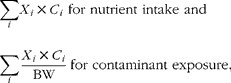
where X i is the weekly consumption (g/week) of the cluster of products i; C i corresponds to the mean concentration of the contaminant or nutrient considered in the cluster i, (mg, μg or pg WHO-TEQ/g fresh weight); and BW is the consumer's body weight (kg). The model constraints relating to coverage of nutritional needs (EPA+DHA, Se, I and vitamin D) and safety limits (Zn, Cd and Cu), and the risk from contaminants exceeding health-based guidance values (methylmercury, PCDD/F+DL-PCB, iPCB and cadmium) are grouped in Table 2. From the total intake or exposure of the general adult population(Reference Dubuisson, Lioret and Touvier50–52), contribution from seafood has been subtracted to assess the ‘background’ intake or exposure. Then, the constraint has been set for the remaining intake or exposure through seafood, as described earlier.
Model constraints for the coverage of the nutritional needs, and concerning the risk linked with the exposure to contaminants and the safety limits

BW, body weight; BMDL, benchmark dose limit; MeHg, methylmercury; PTWI, provisional tolerable weekly intake; PCDD/F, polychlorinated dibenzofuran; DL-PCB, dioxin-like polychlorinated biphenyls; TDI, tolerable daily intake; TEQ-WHO98, toxic equivalents defined by the WHO; iPCB, indicator polychlorinated biphenyls; NA, not available; EAR, estimated average requirement; USL, upper safety limit.
* There are few data on EPA+DHA intakes in the general population, but in Western countries, land animal products contribute up to 15–20 % of intake(Reference Astorg, Arnault and Czernichow70–Reference Sioen, Pynaert and Matthys72); in such cases, 85 % of the EAR has to be provided by seafood.
A BW of 70 kg was used for the calculations. For each component, the daily or monthly reference values were converted to weekly values (the daily values were multiplied by 7 and the monthly values by 7/30·5).
To calculate the mean concentration, C i, two scenarios were tested. In Scenario 1, compositions and contamination levels of all the products in the cluster were included for the arithmetic mean. It was thus considered that the consumer would select a species in the cluster at random. In Scenario 2, the mean concentrations of the products were considered, weighted by their consumption within the cluster by the population of the Calipso study(Reference Bemrah, Sirot and Leblanc31). This second scenario took into account, within each cluster, French consumer habits for different species.
The constraint for inorganic arsenic was set using a different way and consisted in the model target functions. As there is no classical health-based guidance value, the risk evaluation is done by calculating a margin of exposure as the ratio of a reference dose and the consumer exposure. Joint FAO/WHO Expert Committee on Food Additives recently proposed a benchmark dose lower confidence limit (BMDL0·5) of 3·0 μg/kg BW per d as the reference dose(42). The margin of exposure for the French population, assessed from the mean exposure, was 11–13. However, a low margin of exposure is a significant cause for public health concern(53). The margin of exposure should be increased to ensure the lowest exposure possible. Thus, the target function was  minimum.
In addition, all X i consumption had to be greater than or equal to zero.
Moreover, it has been shown that consumption of more than 200 g/week of high-fat fish in addition to the consumption of other seafood does not result in any further significant benefit on cardiovascular health, compared to lower consumption(Reference Sirot, Dumas and Desquilbet54). Indeed, from 200 g/week, a plateau is observed in DHA+EPA levels in erythrocytes. An additional constraint was included: the maximum total consumption of fatty fish was set at 200 g/week.
The analysis was performed using the Microsoft Excel Solver and the LPSolve IDE v5.5.0.15 (Henri Gourvest, William Patton, Peter Notebaert), using the simplex method (www.solver.com) for the linear models. This algorithm enables a target value to be determined by successive iterations for one or more variables, taking into account the constraints imposed. In Microsoft Excel, the precision was set at 0·0001.
Results
Selection of variables
The principal component analysis performed on the twenty-four variables confirmed the correlations between certain variables, namely, the lipophilic components: iPCB and PCDD/F+DL-PCB (r 0·996); PBDE and PCDD/F+DL-PCB (r 0·98); PBDE and iPCB (r 0·98); vitamin D and PCDD/F+DL-PCB (r 0·71); vitamin D and iPCB (r 0·70); vitamin D and PBDE (r 0·73); Cu and inorganic As (r 0·64).
The first axis represents 19 % of the initial inertia, whereas two axes represent 32 %. On the first axis, PBDE, the sum PCDD/F+DL-PCB, iPCB and vitamin D are well represented and contribute 48 % to the construction of the axis. As their coordinates are positive on this axis, they are highly correlated. Similarly, inorganic As and Cu are well represented on axes 1 and 2, and they contribute 11 and 19 %, respectively, to the construction. Their coordinates are negative on axis 1 and positive on axis 2.
As a single variable can therefore represent the others on the same axis, the variables PCDD/F+DL-PCB, PBDE, Cu and vitamin D were excluded from the analysis.
Determination of product clusters
The hierarchical cluster analysis enabled five clusters to be determined (Table 1), two of which contain just one product: eel and smoked mackerel. Table 3 shows the mean contaminant and nutrient concentration of the five clusters, for all contaminants and nutrients considered, in Scenarios 1 and 2, i.e. excluding and including food habits.
Mean contaminant and nutrient concentrations of the five clusters

MeHg, methylmercury; PCDD/F, polychlorinated dibenzofuran; TEQ-WHO98, toxic equivalents defined by the World Health Organisation; DL-PCB, dioxin-like polychlorinated biphenyls; iPCB, indicator polychlorinated biphenyls; PBDE, polybrominated diphenyl ether.
a,b,c,d Mean values within a column with unlike superscript letters were significantly different (P < 0·05; Tukey's test).
* Concentrations weighted by the consumption of the species within the cluster (see Table 1).
† Clusters: 5: Grenadier, hoki, ling, dab, whiting, hake, cod, plaice, ray, scorpion fish, angler fish, catshark, sole, pout, thon frais, saithe, fresh haddock, periwinkle, whelk, great scallop, lobster, oyster, squid, scampi, calico scallop, cockle, shrimp, mussel, octopus, cuttlefish, canned tuna, canned crab, smoked haddock; 4: swordfish, fresh herring, smoked herring, halibut, smoked salmon, fresh salmon, canned mackerel, canned sardine; 3: sea bass, fresh mackerel, goatfish, fresh sardine, fresh anchovy, sea bream, fresh crab, canned anchovy, tarama; 2: smoked mackerel; 1: eel.
Significant differences between clusters mainly relate to fatty acids and lipophilic compounds: PCDD/F, PCB, PBDE and vitamin D. Cluster 4 consists of fatty fish particularly rich in EPA+DHA (P < 0·05), which are also rich in vitamin D (P < 0·05). Cluster 3 also consists of fatty fish that are less fatty than those in Cluster 4 and significantly less rich in EPA+DHA. Nevertheless, they have higher concentrations of dioxins and PCB, but not PBDE. These products are also rich in I and Cu, and have slightly higher concentrations of inorganic arsenic. Cluster 5 contains the remaining fish that are relatively lean, and molluscs and crustaceans, apart from crab.
From a nutritional standpoint, the eel is the species that is richest in SFA, retinol and vitamins D and E. It is also characterised by the highest concentrations of DL-PCB, iPCB and PBDE, which is consistent with the fact that it is a highly bioaccumulative species. Eels (Cluster 1) were not included in the risk–benefit analysis owing to the recent Agence Française de Sécurité Sanitaire des Aliments opinions advising against the marketing and consumption of eels caught in many French rivers and generally considered as not complying with regulatory limits(55). Smoked mackerel (Cluster 2) cannot be significantly distinguished from Clusters 3, 4 and 5 in terms of contaminant levels. However, it could not be included in any of these clusters, as it is significantly richer in EPA+DHA (factor 2–26). Moreover, as smoked mackerel is not consumed in large quantities by the general French adult population(Reference Dubuisson, Lioret and Touvier50), it was not included in the risk–benefit analysis. Consequently, only Clusters 3, 4 and 5 were integrated into the model.
Risk–benefit analysis and optimal consumption
The linear model results showed that irrespective of the scenario tested, the consumption of products from Cluster 3 is always zero.
In Scenario 1, the same solution allowed both vitamin D intake to be maximised and exposure to inorganic arsenic to be minimised (Table 4): consumption of 213 g/week of fatty fish from Cluster 4 and 26 g/week of lean fish, molluscs and crustaceans (Cluster 5). In this scenario, vitamin D intake from seafood amounted to 17·7 μg/week (or 2·5 μg/d) and total intake to 4·1 μg/d (Table 5). Exposure to inorganic arsenic was 0·08 μg/kg BW per week through seafood.
Results of the linear program for Scenarios 1 and 2 with Clusters 3, 4 and 5

Max, maximum; X3, consumption from cluster 3; X4, consumption from cluster 4; X5, consumption from cluster 5 (see Table 3 for cluster description); BW, body weight.
* Through seafood consumption.
Nutritional intakes and contaminant exposure for the solution of Scenarios 1 and 2*, coverage of the nutritional requirements or exceedance of the toxicological values (%)

MeHg, methylmercury; BW, body weight; PCDD/F, polychlorinated dibenzofuran; DL-PCB, dioxin-like polychlorinated biphenyls; TEQ-WHO98, toxic equivalents defined by the World Health Organization; iPCB, indicator polychlorinated biphenyls.
* Scenario 1 includes 213 g/week of fatty fish from cluster 4 and 26 g/week of lean fish, molluscs and crustaceans from cluster 5; Scenario 2 includes 181 g/week of fatty fish from cluster 4 and 72 g/week of lean fish, molluscs and crustaceans from cluster 5.
By adding the constraint of maximum consumption of 200 g/week of fatty fish, optimal consumption for maximising vitamin D intake (17·7 μg/week through seafood) was 200 g/week of fatty fish from Cluster 4 and 75 g/week of lean fish, molluscs and crustaceans from Cluster 5. Optimal consumption for minimising exposure to inorganic arsenic (0·08 μg/kg BW per week through seafood) was then different: 200 g/week of fatty fish from Cluster 4 and 36 g/week of lean fish, molluscs and crustaceans from Cluster 5.
In Scenario 2, including consumers' food habits (weighting of composition and contamination averages by consumption), only one solution enabled all the constraints to be combined, while maximising vitamin D intake and minimising exposure to inorganic arsenic: 181 g/week of fatty fish from Cluster 4 and 72 g/week of lean fish, molluscs and crustaceans from Cluster 5. In this scenario, however, the intake of vitamin D from seafood was slightly lower than that achieved by the previous scenario (random choice of a species in the clusters): 15 μg/week compared to 17·7 μg/week. Exposure to inorganic arsenic through seafood was also slightly higher than that obtained in Scenario 1: 0·10 μg/kg BW per week compared to 0·08 μg/kg BW per week.
Discussion
First of all, the method developed in the present study for the risk–benefit analysis is based on an ‘average’ adult individual, and the variability inherent in intake and exposure, due to the variability of consumption as well as composition and contamination, is not taken into account.
It is therefore not possible to define an optimal consumption level for each subject. One way to integrate the variability existing in the population would be to redefine the problem for different population subgroups, as done in another study(Reference Pouzaud, Ibbou and Blanchemanche25). It would be an advantage to be able to consider food habits in terms of species consumed, which may differ greatly from one population to another and within a same population group(Reference Pouzaud, Ibbou and Blanchemanche25). For example, elderly subjects consume significantly more herring or skate than adults aged below 65 years(Reference Bemrah, Sirot and Leblanc31). Using a model for each subgroup would also have the advantage of being able to favour one or other of the constraints, depending on the target population: methylmercury or PCB for women of childbearing age, for example, in terms of the risk to the developing fetus or young children; vitamin D, EPA+DHA and selenium for the elderly and so on. Lastly, it would be useful to be able to take into account intake and exposure specific to each population subgroup and to apply each one's own RDA or estimated average requirement. For example, in subjects with CVD, the American Heart Association recommends an EPA+DHA intake of 1000 mg/d(Reference Lichtenstein, Appel and Brands56). A specific consumption level for this population could be determined by modifying the constraint for EPA+DHA intake in the model accordingly. Another area for improvement would be to develop an optimisation algorithm to integrate different tolerance percentages regarding the toxicological and nutritional benchmarks in order to relax but not eliminate some of the constraints. Health-based guidance values, although they are generally applied to the entire population, are defined on the basis of a critical effect and on a critical population. For example, the health-based guidance value for methylmercury was defined on the basis of observed effects in children following exposure of the mother during pregnancy(48). Interpretation of any exceeding of this value among the elderly should take this information into account.
Concerning the variability of composition and contamination, the data used in the present work correspond to average levels representative of the products that are available on the French market, i.e. representative of what is consumed by the studied population. The use of this average value enables a realistic estimate of intakes and exposure over the long term.
The method proposed is meant to be a general purpose one and it is possible to extend it to other food groups than seafood and other substances, nutrients and contaminants for which the information is available. Species in fresh or frozen form were not addressed together with smoked or canned forms. This is because both nutrient and contaminant concentrations can vary widely according to the preservation method(Reference Sirot, Oseredczuk and Bemrah-Aouachria57). These differences can be partly explained by different fishing areas according to the final fate of the fish, whether it is intended to be consumed directly or whether it is intended for mass production (e.g. canning or smoking). In addition, there are gradients in dorsoventral and anteroposterior lipid concentrations in fish muscle(Reference Wheeler and Morrissey58). The parts used for canning are not necessarily those directly consumed fresh. Concentrations in lipids and, thus, in lipophilic compounds are likely to differ for different forms of preservation. Finally, compared with species consumed fresh, canned fish are richer in oleic, arachidonic or linoleic acids, which are commonly found in oils. Thus, the different preservation methods of the species should be considered separately, when data become available.
The results of the exposure simulations showed that there is no single solution for satisfying all the constraints. They are therefore mutually incompatible. On removing them one by one, vitamin D appeared to be the limiting factor. It was therefore impossible, given the model constraints, to achieve the RDA set for vitamin D. Consequently, the constraint about vitamin D intake was made more flexible: vitamin D intake has to be maximum instead of requiring the RDA coverage. The maximisation of vitamin D intake and the minimisation of exposure to inorganic arsenic were tested separately, but gave equivalent results for Scenarios 1 and 2 (Table 4).
The optimal consumption for adults thus appeared to be the following combination: 181–213 g/week of fatty fish from Swordfish; fresh, frozen or smoked Herring; Halibut; fresh, frozen or smoked Salmon; canned Mackerel; canned Sardines plus 26–72 g/week of lean fish, molluscs and crustaceans. For the general population, this consumption ensures a maximum intake of vitamin D, while ensuring minimal exposure to inorganic arsenic. The requirements in EPA+DHA, Se and I are covered without exceeding the health-based guidance values for cadmium, dioxins and PCB or the safety limits for Zn, Ca and Cu. This seafood consumption is in line with other recommendations in terms of quantity: fish twice a week recommended by the UK Committee on Medical Aspects of Food Policy(59), the American Heart Association(Reference Lichtenstein, Appel and Brands56), the UK Scientific Advisory Committee on Nutrition(60) and the Health Council of the Netherlands(61). Nevertheless, most of these committees recommend the consumption of only one fatty fish, whereas the consumption calculated in the present work is mainly based on fatty fish (about two portions).
The corresponding vitamin D intake is 17·7 μg/week, solely from consumption of seafood, or 2·5 μg/d. Considering the remainder of the diet, the final intake would amount to 4·1 μg/d, i.e. 83 % of the French RDA but only 41 % of the Institute of Medicine recommendation(62) (Table 5). Exposure to inorganic arsenic is 0·08 μg/kg BW per week, solely from consumption of seafood, or 0·1 μg/kg BW per d. The French adult population's exposure to inorganic arsenic has been estimated on average to be between 0·242 and 0·278 μg/kg BW per d (low and high assumptions based on hypotheses of inorganic arsenic speciation)(51), with 1·5–1·7 % coming from consumption of seafood. Then, considering the remainder of the diet, total exposure linked with the optimal seafood consumption would be 0·248–0·284 μg/kg BW per d, according to the hypotheses considered, which is equivalent to those estimated in the general population. Then, the proposed optimal consumption does not allow exposure to be reduced significantly compared to the present situation in the general population. Exposure related to the background still appeared to be too high, with less than 5 % from seafood. Drinking-water in particular is an excessive vector of inorganic arsenic(Reference Caceres, Pino and Montesinos63, Reference Uchino, Roychowdhury and Ando64). It therefore appears necessary to focus primarily on reducing levels in drinking-water.
By following the optimal consumption, the risk for the neurodevelopment of the fetus and young child appears to be under control. It leads to an average exposure to methylmercury of 0·49 and 0·31 μg/kg BW per week, respectively, in Scenarios 1 and 2 (Table 5) or only 31 and 19 %, respectively, of the health-based guidance value. Specifically, public health recommendations on avoiding the species most contaminated by methylmercury(28) can help limit atypical eating behaviour (high percentiles of exposure) that is likely to pose a risk to the fetus. In contrast, the cardiovascular effects of methylmercury on older subjects, which are still debated(Reference Mozaffarian65), were not considered in this evaluation.
The model showed that consumption of species from Cluster 3 does not lead to a favourable risk–benefit balance because of the high contaminant content, especially in PCB, despite the high content of EPA+DHA or vitamin D compared with Cluster 5, for instance, or other nutrients that are not included in the study. It means that their consumption leads to poorer results for intake and exposure than those of the optimal consumption. It should also be borne in mind that the RDA for vitamin D was determined for the entire population, but that endogenous synthesis also has a key role in total vitamin D intake. Not achieving the RDA must be put into perspective, given the probable lower need in populations most exposed to sunlight (north–south gradient, the elderly, etc.).
It is noteworthy that the optimal consumption is consistent with the standard diet of the general population. The French adult daily consumption is 31 g of fish, molluscs and crustaceans or 217 g/week(Reference Dubuisson, Lioret and Touvier50). The total proposed optimal consumption amounts to 239 g/week (Scenario 1) or 253 g/week (Scenario 2). Such consumption seems achievable without a significant change to the remaining diet and therefore to ‘background’ intake and exposure, which reinforces the model used. It does not seem to be a good idea to propose an optimal consumption requiring a radical change to the standard diet, as such a recommendation would have little chance of being followed by the consumer. Moreover, the additional constraint of maximum consumption of 200 g/week of fatty fish did not appear to modify the results significantly. This quantitative constraint enabled the total consumption to be limited, and thus a solution to be found that reflects more closely the actual diet of the French population.
The optimal consumption is given as consumption ranges, as Scenario 2 reflects food habits, whereas Scenario 1 does not take them into account. Under Scenario 1, the consumption recommendation must specify that a species in the cluster is to be chosen at random. Thus, each species has an equal probability of being consumed, and consumption can then indeed achieve maximum vitamin D intake and minimum exposure to inorganic arsenic while satisfying the model constraints. However, even if the recommendation includes such information on diversifying the species, it is likely that consumers will not follow it or will follow it for a while and then revert to their past habits and forget all or part of the message(Reference Verger, Houdart and Marette66).
The results of the Scenario 2, which includes food habits, appeared to be different (Table 4): consumption of fatty fish from Cluster 4 is lower and consumption from Cluster 5 is higher. Fresh salmon is the most consumed species in Cluster 4, accounting for 47 % (Table 1). It is richer in EPA+DHA and vitamin D than the other species in the cluster; hence, less can be consumed to achieve the same level of EPA+DHA and vitamin D intake. At the same time, salmon does not have the highest level of contaminants, which makes salmon a healthy choice, as previously observed(Reference Dewailly, Ayotte and Lucas24). In Cluster 5, cod and hake are the most consumed species (11 and 8 %, respectively), but have among the lowest levels of selenium. Therefore they need to be consumed in larger quantities to achieve the estimated average requirement.
The total intake of inorganic arsenic through consumption of seafood is slightly higher in Scenario 2, which includes the food habits, and vitamin D intake is lower. The difference between the two scenarios should be put into perspective because, considering the average background intake, the total individual intake of vitamin D in Scenario 1 is 4·1 μg/d and in Scenario 2 is 3·8 μg/d, i.e. a difference of only 7 or 6 % of the RDA. Nevertheless, these results show that the food habits of the consumers regarding fish species consumed do not promote a positive risk–benefit balance, compared to greater diversification. It would therefore be preferable, when making recommendations, to insist on the random choice of a species among those mentioned.
The drawing up of consumption guidelines, following the determination of optimal consumption, which is a prerequisite, is the final step that requires to take into account other factors, including socioeconomic ones, such as availability of resources, cost of foodstuffs(Reference Kinnucan, Kxiao and Hsia67, Reference Verbeke and Ward68), consumer perception of health messages(Reference Kinnucan, Kxiao and Hsia67–Reference Robenstein and Thurman69) and dietary diversification. The numerous recommendations, their content and evolving nature, may mean that consumers find it difficult to understand them, and the literature emphasises the difficulty of retaining complex messages. It is therefore necessary to prepare support measures to help consumers to take heed of public health messages, particularly if they are stated for various population sub-groups, taking account of their own specificities in terms of needs and risks.
Acknowledgements
The present study was supported by grants from the French Ministry of Agriculture and Fisheries. V. S. designed the research, conducted research, analysed data and wrote the paper. J.-C. L. and I. M. had primary responsibility for final content. All authors read and approved the final manuscript. The authors declare no conflict of interest.



