




Introduction
It is widely reported that music can contribute to individual and social well-being (Heard and Bartleet, Reference HEARD and BARTLEET2025). Music can have a positive effect on the lives of people with profound intellectual and multiple disabilities (PIMD) (Ockelford, Reference OCKELFORD2008; Johnels et al., Reference JOHNELS, VEHMAS and WILDER2023). However, the purpose and significance of music varies depending on the context, engagement and experiences of individuals involved. Although it is frequently claimed that music has a transformative power (Carlson, Reference CARLSON2013), particularly in relation to people with intellectual disabilities, understanding how or why this phenomenon occurs is not easy. Furthermore, supporting music-making for people with intellectual disabilities may be considered challenging because of an individual’s physical and cognitive abilities, further impacted by societal and attitudinal perspectives (Nind and Strnadová, Reference NIND and STRNADOVÁ2020).
The creative, flexible and interactive nature of music-making closely parallels the attributes typically associated with play and playfulness. If music-making may be perceived as playful, it is plausible that playful activities may also include music (Solms, Reference SOLMS2022). From early childhood, many children’s toys include music or musical elements (Young, Reference YOUNG2008), and forms of early play between parent and child include songs, musical games and routines (Watson, Reference WATSON2014; Young, Reference YOUNG2008). Musical play is often evident in the expressive and exploratory play of non-disabled children (Niland, Reference NILAND2009). This musical activity is notably different from the activity of music-making between adults, often process-based, rather than outcome-focused, and freer of musical expectations or structures (Pitt, Reference PITT2020).
However, unlike the spontaneous and unstructured musical play described in the Early Years, children with PIMD are less likely to initiate spontaneous musical play activity. The role of the adult, instruments, props and environment likely influence the experiences and reciprocal relationships encountered during the musical play of people with intellectual disabilities (Corke, Reference CORKE2012; Rushton and Kossyvaki, Reference RUSHTON and KOSSYVAKI2020).
This research aimed to consider staff perspectives of implementing the Musical Play Framework (MPF) with students and young people with PIMD in two educational settings in the United Kingdom (UK). The MPF is designed to be used by non-music specialists, such as teachers, teaching assistants (TAs) or parent/carers to support opportunities for playfulness in, and through, music-making. The MPF was developed by the author, with the support of school staff (Rushton and Kossyvaki, Reference RUSHTON and KOSSYVAKI2020), and further refined after the consultation of people with PIMD and their families (Rushton et al., Reference RUSHTON, KOSSYVAKI and TERLEKTSI2023b).
Within this study, playfulness was defined as a subjective phenomenon, both an internal state, and an external expression, of feeling, influenced by an individual’s current environmental factors and social availability, as well as their previous playful experiences and current state of health (Dewey, Reference DEWEY1933; Watson, Reference WATSON, CORKE, Lacey, Ashdown, Jones, Lawson and Pipe2015).
People with PIMD
People with PIMD have a profound intellectual impairment, combined with physical disabilities, sensory impairments and complex medical needs (Nind and Strnadová, Reference NIND and STRNADOVÁ2020). Individuals with PIMD often engage with the world through sensory experiences (Grace, Reference GRACE2017). Having little, or no, understanding of formal language, people with PIMD live interdependently, relying on support for all aspects of daily life (Vehmas and Mietola, Reference VEHMAS and MIETOLA2021). Adopting the biopsychosocial model of disability (Engel, Reference ENGEL1977), this research was undertaken from the perspective that people with PIMD are disabled due to their profound intellectual disability, complex medical needs and/or sensory impairments (Mansell, Reference MANSELL2010; Doukas et al., Reference DOUKAS, FERGUSSON, FULLERTON and GRACE2017). They are also people with the same rights as all humans, to live a high-quality life, to experience, participate and engage with society, and are unique individuals with preferences and interests (Rushton and Kossyvaki, Reference RUSHTON, KOSSYVAKI and TERLEKTSI2023b). Within the UK, the population of people with PIMD is increasing in both size and age, this is primarily because of medical advances and increased survival rates (Carpenter et al., Reference CARPENTER, ASHDOWN and BOVAIR2017). Therefore, it is necessary to better understand effective ways to support the musical experiences, well-being and quality of life of people with PIMD, considering how and when they can access opportunities which enable them to flourish.
Music and people with PIMD
Technological developments and the creation of accessible instruments may support music-making for people with PIMD (Frid, Reference FRID2019; Frid and Panariello, Reference FRID and PANARIELLO2022). However, there are few frameworks or pedagogical approaches which consider music-making for people with PIMD and research which considers the impact of musical interventions for people with PIMD is scarce (Rushton et al., Reference RUSHTON, KOSSYVAKI and TERLEKTSI2023a).
Ockelford (Reference OCKELFORD2008) makes a significant contribution to the literature on music education for people with PIMD, highlighting the widespread recognition of the value of music within their daily lives. The Sounds of Intent (SOI) framework, created to map the musical development of people with PIMD, focuses primarily on the development of musical skill, interest and preference (Ockleford, 2008). The Count me In! (Ockelford et al., Reference OCKELFORD, GRAY, COHEN and MAI2023) resource builds on the SOI framework and provides musical resources and activities which are designed to include people with PIMD and to be accessible for use by non-music specialists. Whilst it is refreshing to have an educational resource which acknowledges and includes people with PIMD, the complexity of the resource, such as the use of standardised musical notation, may be overwhelming for those with limited musical confidence and/or experience.
Another music-based educational approach, Tactile Approach to Communication Pac (Tacpac, n.d), was developed specifically for use with people with severe and profound disabilities. This approach pairs particular pre-recorded music and sensory stimuli and focuses primarily on sensory communication using touch and music, rather than supporting an individual with PIMD to create and make music.
The role of support staff in music-making
Within the wider literature, non-music specialists, or generalist classroom teachers, are repeatedly reported to lack confidence in music-making and delivering music sessions (Ofsted, 2023; Welsh, Reference WELCH2020). In special educational settings within the UK, most classroom activities, such as teaching, social and personal support, are delivered, or facilitated, by TAs (Abbott et al., Reference ABBOTT, MCCONKEY and DOBBINS2011). Access to music specialists is often limited (Imray and Hinchcliffe, Reference IMRAY and HINCHCLIFFE2013; Thompson and Skewes McFerran, Reference THOMPSON and SKEWES-MCFERRAN2015), perhaps to weekly sessions (Welch et al., Reference WELCH, OCKELFORD, ZIMMERMANN, HIMONIDES and WILDE2016). Since people with PIMD live their lives interdependently (Vehmas and Mietola, Reference VEHMAS and MIETOLA2021), the role, skills and confidence of support staff are likely to significantly influence the musical experiences of people with PIMD (Corke, Reference CORKE2012; Rushton and Kossyvaki, Reference RUSHTON and KOSSYVAKI2020).
Upskilling TAs’ understanding and developing their confidence is necessary if people with PIMD are going to have frequent access to music-making whilst in education (Haakma et al., Reference HAAKMA, DE BOER, VAN ESCH, MINNAERT and VAN DER PUTTEN2021).
Methods
The pragmatic approach employed within the research meant that the research questions were given a high priority (Lund, Reference LUND2012). Qualitative data were generated from staff participants, through focus-group interviews in two special educational settings. Data were coded abductively (Timmermans and Tavory, Reference TIMMERMANS and TAVORY2012) using thematic analysis (Braun and Clarke, Reference BRAUN and CLARKE2022). Abductive analysis uses both deductive and inductive methods of analysis to generate themes from the data. This method acknowledges that although data should be analysed with a broad knowledge of theory (deductive analysis), the researcher should be open to novel themes and concepts (inductive analysis).
The research aimed to answer the following question:
-
How does the implementation of the MPF affect the attitudes of non-music specialist teaching staff towards music-making for students with PIMD?
Participants
The research was conducted in two educational settings in England. A purposive sampling approach was used to recruit participants across two settings. Purposive sampling enabled the researcher to assemble a sample which met the specific needs of the study, staff working with individuals with PIMD. Potential participants were identified by senior leadership teams in each setting.
The inclusion criteria for recruiting potential participants were as follows: (i) staff who work regularly with participants with PIMD (at least 3 days per week), (ii) staff who work regularly at the research sites (at least 3 days per week) and (iii) staff who provide written informed consent.
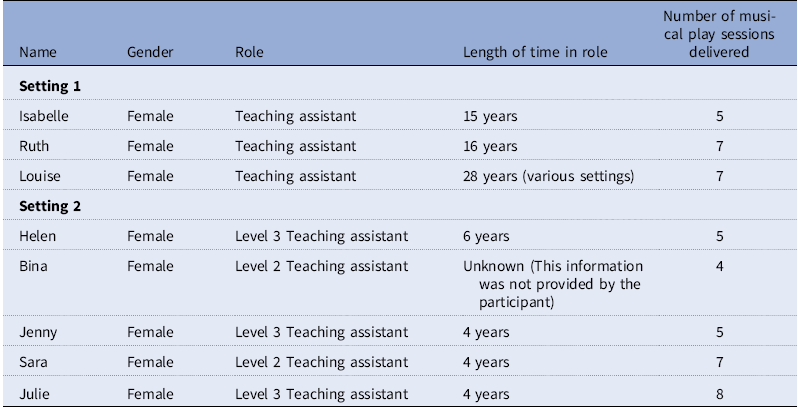
Setting 1 was a special school for students aged 2–11 years identified as having severe and complex special educational needs and disabilities. Setting 2 was a specialist college for young people aged 19–25 years with intellectual disabilities. The size of each setting was approximately 150 students. Each setting had three classes for students with PIMD, with approximately 10–12 students, one teacher and 3–4 TAs in each class. Detailed demographic information of the staff participants is presented in Table 1. These eight participants took part in delivering a minimum of two Musical Play sessions.
Demographic information on staff participants

Ethical considerations
Ethical approval for this research was obtained by the Research Ethics Committee, England (REC 21/LO/0674) as part of the wider research project it fell within. It also abided by the British Educational Research Association’s guidelines for educational research (BERA, 2024).
Voluntary informed written consent was sought from staff participants and ongoing right to withdraw from the research was also highlighted. All participants were given pseudonym names to maintain confidentiality.
Although no data on the individuals with PIMD are included within this paper, consent was obtained from parents and consultees of the individuals with PIMD (BERA, 2024; Health Research Authority, 2022). Ongoing assent was also sought from individuals with PIMD throughout the research. Ongoing assent is the process in which the researcher and/or supporting staff continually assess participants’ behaviours and responses in relation to the task or situation (Cameron and Murphy, Reference CAMERON and MURPHY2007).
Data collection
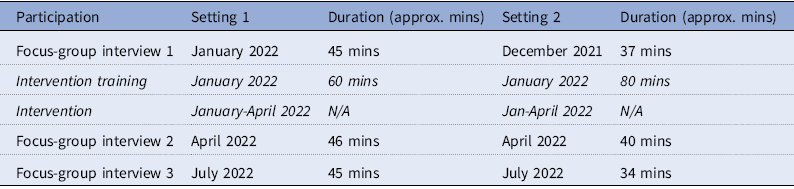
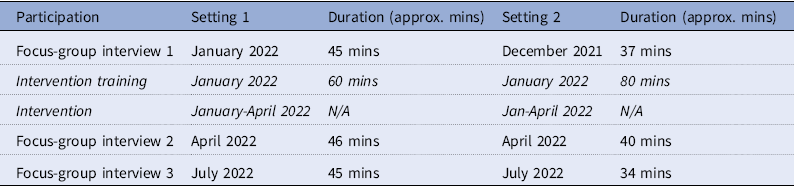
Staff delivered Musical Play sessions on a weekly or twice weekly basis depending on their availability, for the duration of one school term (12 weeks with a week break for half-term). The number of sessions staff delivered varied due to the multiple baseline design of the research. The maximum period for delivery was ten weeks and the minimum period was five weeks. Focus-group interviews took place prior to the MPF training, at the end of the intervention period, and a follow-up interview, three months after the intervention period had finished (see Table 2).
Schedule of focus-group interviews
Coding
The focus-group interviews were audio-recorded and later transcribed verbatim. Transcriptions were thematically analysed using the software programme N-Vivo Version 12 (N-Vivo, n.d). The transcriptions were abductively analysed (Timmermans and Tavory, 2012). This pragmatic method of analysis allowed the researcher to code the data for themes that best answered the research question, whilst also facilitating the opportunity for topics which were significant to the participants to be captured.
Musical play framework
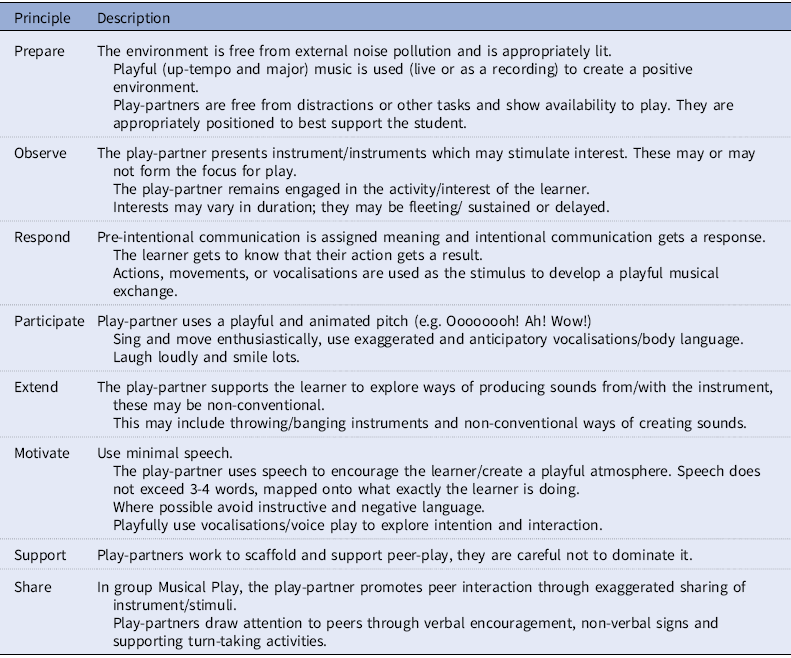
The MPF was developed by the researcher and was adapted from the General Principles of Musical Play and Play-Partners: The Role of Adults in Play (Rushton and Kossyvaki, Reference RUSHTON and KOSSYVAKI2020) and a consultation of the musical preferences of people with PIMD (Rushton et al., Reference RUSHTON, KOSSYVAKI and TERLEKTSI2023b). Rather than a prescriptive set of activities, the MPF comprises of eight principles for staff, who are not necessarily music specialists, to support playful music-making.
The MPF is designed to be delivered by one staff member with two students with PIMD for up to 30 minutes in duration. The duration of the sessions across both settings ranged between 14 and 34 minutes. In Setting 1, the average session lasted 17 minutes. In Setting 2, the average Musical Play session lasted 26 minutes.
A description of the MPF, as provided for staff participants, is outlined in Table 3.
Musical Play Framework

Equipment
Staff were provided with the following equipment to use in the Musical Play sessions: i. an electronic tablet with a music playlist, ii. a Bluetooth speaker, as well as: a. two seed-shakers, b. two wrist bells, c. flat-skinned drum, d. chime-tree, and e. large seed shaker. The instruments were selected for their tactile interest, responsiveness, ease of use, versatility and variety of timbre (see Figure 1). The electronic tablet included a playlist of instrumental music based on earlier consultation with people with PIMD (for more information on the consultation process see (Rushton et al., Reference RUSHTON, KOSSYVAKI and TERLEKTSI2023b)).
Instruments provided to staff participants for use in the musical play sessions.
*Image source: A. Seed shakers (Sound Travels, n.d). D. Chime-tree (Amazon, n.d).

Staff training
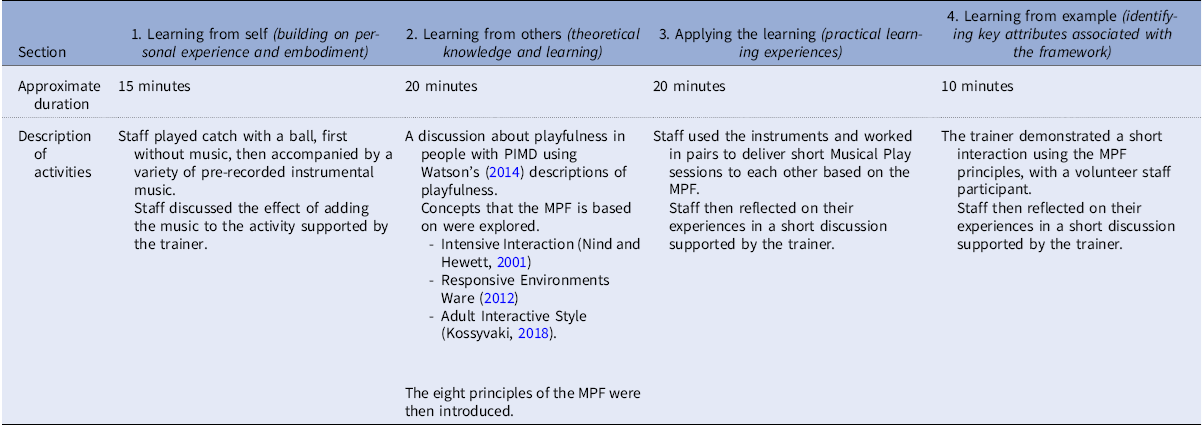
All staff participants were trained by the researcher in using the MPF. Training lasted for approximately one-hour and included theoretical and practical content (see Table 4).
Content of staff training session

All staff were trained at the beginning of the data collection period, regardless of when, they started delivering the Musical Play sessions. This was due to the time limitations and availability of staff participants in both settings.
After the training process, the researcher supported staff participants to set up equipment for the Musical Play sessions during their first week of delivery. Following this initial set-up, support staff participants were asked to conduct the sessions independently. Musical Play sessions were delivered twice weekly. This was a practical and manageable frequency for staff in school settings and is in line with previous studies of similar nature (Rushton et al., Reference RUSHTON, KOSSYVAKI and TERLEKTSI2023a).
Results
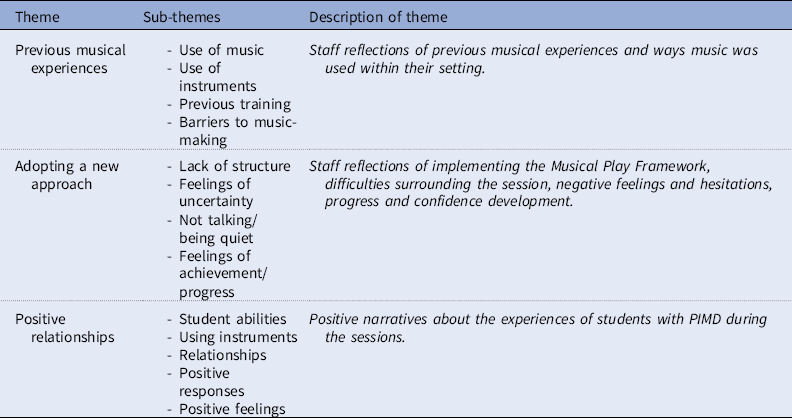
During the focus-groups staff reflected on their previous musical experiences and the implementation of the Musical Play sessions (see Table 5 for an overview of themes). Staff comments addressed the personal challenges encountered in adopting a new approach. The experience of reflecting on their own practice that the Musical Play sessions had facilitated was included in staff discussions. Staff also recounted positive experiences and narratives involving the students they had supported.
Overview of themes and descriptions generated from all focus-group interviews

Previous musical experiences
Staff across both settings described their previous musical experiences, and the way in which they used music and musical instruments, in their roles. In Setting 1, staff spoke about using music ‘lots’ in activities such as a ‘soundbath’, ‘TACPAC’, ‘musical maths’, ‘dance massage’ and ‘morning greetings’.
In Setting 2, staff described using music ‘extensively’ and discussed the range of music technology such as ‘Soundbeam’ and ‘Cosmo’ switches they used to support music sessions for students with PIMD. Staff described how music was used throughout the day.
‘in a morning routine we play music and we use instruments’
Julie (Focus-group 1)‘we [have] different music for everyday, like [a] Monday song, Tuesday song’
Sara (Focus-group 1)‘even through dinner time…we let them choose what songs they like. There’s different groups [like] music and dancing’
Jenny (Focus-group 1)Across both settings, none of the participants had received any training on music-making with people with PIMD prior to taking part in this research. One member of staff in Setting 2, Jenny, commented on the training she had received in her previous role within Early Years and the transferability of this. Staff discussed some of the challenges they experienced in supporting music-making for people with PIMD, including their own skill set, confidence and lack of access to music sessions with comments such as;
‘Definitely couldn’t play an instrument…I couldn’t use my voice’
Jenny (Focus-group 1)‘I wish they [the students] had music every week, because for our class that’s when we get the most amazing responses in music’.
Isabelle (Focus-group 1)During focus-groups 2 and 3, further considerations were highlighted with a specific focus on the implementation of the MPF.
Adopting a new approach
During focus-group 2, staff participants reported initially feeling unsure of their abilities to implement the Musical Play sessions. Staff reported that they ‘struggled a little bit’, in knowing if what they were doing was ‘right’ and felt it ‘went against everything [they] normally do’.
‘When I first did it [Musical Play], I did find it strange. I found it really odd. It’s like there’s no instructions is there really, no, and then you don’t know if you’re doing it right or wrong’.
Beth (Focus-group 2)Staff implementing the sessions in Setting 1 were TAs who typically worked as part of a wider team led by the class teacher. Staff found that the principles of Musical Play contrasted with previous training or approaches they were ‘programmed’ to use to ‘cover all areas of communication’. The main difference in approach staff highlighted was the reduction in language (see Table 3, ‘Motivate’). Staff usually used words and on-body signing to alert, prepare and communicate with the students they supported, and this was particularly important for staff when working with participants who had visual impairments. Staff participants discussed their usual desire to provide a narrative for the students, to explain to them what they were doing, what was happening or to give them prompts or praise.
‘It’s just alright to be sort of quiet and just see what they do. You don’t have to praise them all the time for doing it or well ‘come on do this, you’re not doing this. Do it like that’. You sort of just, it’s in their hands really, isn’t it?…So I think being quiet and just watching, we learn, you can learn a lot more about what they’re doing’.
Louise (Focus-group 3)When reflecting on the reduction of spoken language that was encouraged in the Musical Play sessions, staff acknowledged that ‘being quiet, listen[ing] to them [the students] …made a big difference’. Staff identified a difference between themselves as ‘linguistic’ individuals, and the students they supported, who were not. Constant use of language was identified as overshadowing opportunities for ‘the child to express [themselves]’.
Another difference identified by staff in implementing the Musical Play sessions was the lack of prescriptive activities included in the MPF. Initially, staff felt apprehensive about leading the sessions and whether their delivery would be ‘right’.
‘It was just ‘cuz, it was free for us to do. It’s like, am I going to do a good job of it. And we’re used to been saying, ‘do this, do this, do this’. ‘Cause it was just our own way. I’m, am I going to do the right thing’.
Isabelle (Focus-group 2)‘But for the class in the upper school we do a lot of Tacpac but it’s all, so the teachers organised this activity, and you deliver it…and then you from delivering it, you have to see whether they’ve done this target, this target, this target, what have you observed from this? Did they have they reached out; can they do this? So going into the music, and saying just go and have fun, in the beginning, wasn’t it, sort of. Oh’.
Ruth (Focus-group 3)Staff discussed the freeness of the Musical Play sessions as different from their usual role, in which they delivered activities organised by the teacher. These activities were typically activity or outcome-based, and so staff knew if they had ‘got it right’ or not. In contrast to this, the Musical Play session created an environment which required the staff participants to work autonomously within a framework of principles, rather than a set of rules. Staff initially found this daunting.
However, when reflecting on facilitating the sessions, the impact of the sessions on the students, and discussing the implementation of the sessions with each other, staff confidence seemed to have developed. Staff spoke with a sense of accomplishment and pride in their delivery of the Musical Play sessions.
‘So, if we had to tell anybody else, I think what we would say is swallow all your own fears and apprehensions and have a go’.
Ruth (Focus-group 3)‘…as time’s gone on you can see the benefits in it and you can see why you were doing it, and you start reflecting on your practice as you go along’.
Jenny (Focus-group 2)Staff gained confidence from the positive experiences they had with the students during the intervention sessions and through reflecting on their own practice and skill development.
It’s a research thing, whereas we wouldn’t normally, yeah, we’d just go and do it wouldn’t we? Where this probably made us think more about what we are doing <laugh> does that make sense… It’s a good thing because it then does make you think. Whereas you probably wouldn’t do that in a normal sense as such would you?
Jenny (Focus-group 2)This time for reflection was considered valuable to skill development. However, aside from the intervention research, staff identified that engagement in reflective practice was limited. One staff participant, Helen, described their involvement in the Musical Play sessions as a journey from the ‘unconscious incompetent’ to the ‘conscious competent’. This statement referred to the conscious competence learning model (Wilhelm, Reference WILHELM2016) and captured the essence of the individual development and sense of personal achievement that most staff participants (n = 7) highlighted in relation to their involvement in the Musical Play sessions.
Positive relationships
After taking part in the Musical Play sessions, staff spoke about ways in which they had learned more about the individuals. This included personal qualities of the individuals with PIMD:
‘…for me the one thing that shone for me was I saw a side of [him] I probably wouldn’t have seen if I hadn’t done the musical session’,
Ruth (Focus-group 3)as well as capabilities which staff had not been previously aware of.
‘I mean that’s where I learned how much sound [he] was making and what difference it makes, that music makes’
Louise (Focus-group 3)Staff discussed how through the Musical Play sessions they had learned more about the students, ‘seen different aspects’ of them, and see ‘some reactions that you don’t necessarily pick up when they’re in the class’. The humanising aspect of music-making was reflected in staff comments on the sessions.
‘‘I think it brings out a side the them that we don’t always get the opportunity to see in class and build a relationship and see them as a person’.
Jenny (Focus-group 2)‘You see different aspects of the students. We can gain understanding of them. We can open them up in ways that we couldn’t do ordinarily’.
Helen (Focus-group 2)Musical Play sessions not only facilitated the development of relationships and understanding of the students but also created the possibility for staff participants to see individuals as people. During Musical Play sessions, students were seen as more than the sum of their disabilities, medical needs and complex care routines, but for themselves, their personality and individual character, ‘as a person’.
Narratives surrounding the Musical Play sessions were positive. Speaking enthusiastically about the ‘happiness’, ‘laugher’, ‘giggles’ and ‘fun’, they had experienced with the students, most staff (7 out of 8) seemed to have enjoyed taking part in the intervention. Playful responses from participants with PIMD led to positive experiences and emotions in staff. Recounting a playful exchange in which positive emotions were shared between staff and student Sara (Focus-group 2) commented;
‘…I stopped it and I just looked at him, what he’s doing. He looked at me, smiled and I said to myself, ‘oh yes, he’s happy’. So, I started again. So, it means he responded so I could see when I stopped and actually, he smiled and sometimes he looked at me. So, I was really happy in my, I was really happy. Oh yes’.
The reason for Sara’s happy emotion is directly related to the individual with PIMD. In seeing he is happy, demonstrated through his smiles and gaze, she also becomes ‘really happy’. Although it is not clear whether the root of this happiness is her own success and practice, or in a shared positive experience with the individual she is playing with, the catalyst for the happiness is the positive expressions and experience of another. Within this exchange, the individual with PIMD was not a passive within the narrative, nor were they receiver within the exchange; instead his positive expressions proactively influenced the mood of another.
The capabilities demonstrated by the students, who engaged with the instruments and music-making opportunities, also contributed to the positive experience staff had during the sessions.
‘But he actually stopped mouthing and… he didn’t only just stop mouthing, he moved his hand from side-to-side with the chimes…I would never have put him down to be able to do that. And if you look on the footage you can see he’s clearly doing that’.
Ruth (Focus Group 2)The narrative implies that the student used intentional movements to play with the chime-tree and that the staff member, Ruth, was surprised by this. Describing an interaction which used both an instrument and clapping, Bina highlighted the paired music-making opportunities that also occurred during the Musical Play sessions.
‘and then I just sit back and then she’s [student A] playing the drum and he’s [student B] was clapping. And that’s a good interaction’
Bina (Focus Group 2)Staff also commented on using the instruments in less conventional ways such as ‘throwing’, ‘spinning’ and ‘hiding behind’ the instruments. These novel ways of exploring the instruments further contributed to the positive experiences of staff and the engagement of the students, Julie commented
‘he [student] liked it when you threw the things in the drum and sometimes, he might laugh if I’m sat with her [student] doing that, so that’s good’
Julie (Focus Group 2).The positive experiences shared by staff participants during the focus-group interviews captured the personalities of the students, their capabilities and the reciprocal relationships between people with PIMD and staff participants which were facilitated during the Musical Play sessions.
Discussion
Staff participants in both settings found the initial implementation of the Musical Play sessions daunting. Staff had reported using music frequently within their setting, however, had never received any specific training in this. When reflecting on the implementation of the MPF, participants felt they did not have enough guidance to know what to do, or if what they were doing was ‘right’. Although staff were trained in the principles of Musical Play, there was flexibility in the framework. Staff participants were TAs, within this role, except for supporting personal care, staff rarely worked autonomously away from the main classroom or direction of the class teacher. The MPF was based on principles which were not prescriptive tasks or goal-orientated. Unlike other musical interventions which staff had experienced, such as Tacpac (Tacpac, n.d.), dance massage or music within routine, the MPF did not include steps or activities to work through, resulting in staff feeling unsure of their practice.
Nevertheless, staff were able to facilitate Musical Play and felt empowered by the opportunity to reflect on, learn from and contribute to the research process. This suggests that with the appropriate guidance, a network of support among colleagues, and scaffolded opportunities to reflect on their practice, TAs can adopt and implement meaningful music-making opportunities for people with PIMD independently. Furthermore, facilitating opportunities for TAs to share in creative activities, which are not outcome driven, and in which they are able share of themselves in a personal and individualised way, may support greater staff self-worth and increase individual knowledge bases of students within their setting (Belknap and Taymans, Reference BELKNAP and TAYMANS2015).
Music-making
Instruments used within the Musical Play sessions were identified as being motivating and engaging for students with PIMD. Staff were confident to use the instruments provided in novel and creative ways. Staff explored the sensory elements of the instruments with participants, focusing more on the process of exploration and engagement with the instrument, rather than teaching instrumental skill or standardising its use. Comments from staff described how using the instruments motivated participants to demonstrate physical and vocal abilities that staff had not previously seen or known about. Corke (Reference CORKE2012) highlights how musical instruments can be used in playful ways to invite opportunities for engagement with people with PIMD. Staff experiences within this research echoed these suggestions.
Musical Play sessions were designed to be implemented in almost languageless environments, where staff were encouraged to reduce language to ‘positive language of three to four words’. Some staff found this element of the Musical Play sessions particularly novel or ‘strange’. The notable differences staff experienced in reducing language during the sessions been highlighted in previous recent research regarding people with PIMD (Grace, Reference GRACE2017; Watson, Reference WATSON, NIND and STRNADOVÁ2020). Goodwin (Reference GOODWIN2019) argues that staff must overcome the discomfort in not speaking to open the space for people with PIMD to engage in interactions. This may be even more necessary when engaging in music-making opportunities where creating, responding and listening to sound are fundamental to the experience. To support staff in the process of limiting language, Goodwin (Reference GOODWIN2019) provided a musical accompaniment, in the form of a drone, to encompass the openness and ‘hold’ open the possibility for interactions. Similarly, the Musical Play sessions used playful instrumental music to create the space for reciprocity. Although more musically complex than a drone, instrumental music was adopted as a medium in which staff were supported through potential extended periods of silence and discomfort. Using music in this way may discourage staff from filling space, in which people with PIMD may be processing, thinking or listening, to list only a few, with words, and therefore support the reduction of language. Staff articulated a greater understanding of, and were able to comment on, the benefits of adopting this approach after taking part in the Musical Play sessions.
Longevity of impact
Staff participants from Setting 1 (n = 3) continued to deliver the Musical Play sessions, although in different formats and environments after the intervention period. However, staff in Setting 2 did not. Whilst some staff did not continue to deliver the Musical Play sessions, the impact of participating in these sessions, and the relationships which build and developed between staff and participants with PIMD, was reported to have transferred back into their typical classroom environment.
Furthermore, staff described how principles of the MPF, such as a reduction in language, had been adopted into their practice. Since both settings had reported using music frequently prior to starting this research, it may have been that the principles of the MPF were adopted into sessions which were already taking place, rather than implementing discrete Musical Play sessions. Understanding and evidencing the extent of this would require further research. Exploring the reasons why staff did not continue the MPF sessions is something which requires further investigation.
Limitations
Previous musical skills and experiences of staff participants were not collected within the demographic data, both of which likely impacted on the results of this research. Additionally, both the training for staff participants and the focus-group interviews were conducted by the researcher, which may have led to prestige bias (Thomas, Reference THOMAS2017). Since the participants may have wanted to give the ‘right’ answers, due to perceived researcher hierarchy, data collection by an independent individual, without connection to the MPF, may have been more robust.
Recommendations for practice
The research highlighted some of the potential challenges that staff may encounter when implementing unfamiliar approaches to music-making for people with PIMD. However, there is evidence that when staff are provided with appropriate training, implementation and reflection time, then positive experiences in novel music-making approaches can build confidence and skill. These skills and experiences can be applied to other areas within the staff role, helping to enhance and support staff relationships with students who have PIMD. Therefore, further training for support staff, such as TAs, in supporting music-making for people with PIMD is recommended.
Conclusion
This study examined the perspectives of TAs implementing the MPF as an approach to music-making for people with PIMD. Whilst all participants had previously used music within their setting, they initially lacked confidence to lead and deliver playful music-making sessions using the MPF. Creative and expressive opportunities for people with PIMD are essential. However, as interdependent individuals’ people with PIMD are at risk of activities being ‘done to’ rather than ‘done with’ them. When a TA’s activity is task or outcome-orientated, they may feel more secure. However, this may lead to a hurried and product-based mindset, inadvertently diminishing the musical contributions and presence of individuals with PIMD (Goodwin, Reference GOODWIN, NIND and STRNADOVÁ2020).
Staff participants reported that principles of the MPF enabled students with PIMD to flourish, in that they had the ability, and the external opportunity, to realise their capability and demonstrate this to staff (Sissons et al., Reference SISSONS, BARNES, IMRAY, COLLEY, IMRAY, KOSSYVAKI and SISSONS2023). When TAs were also given the opportunity, availability and had the readiness to notice this, during the Musical Play sessions, they were able to value and celebrate the individuals, and their unique musical capabilities.
Acknowledgements
The author would like to thank the staff participants for their time and willingness to take part in this research and the people with PIMD for their contributions.
Funding
The author(s) disclosed receipt of the following financial support for the research, authorship and/or publication of this article: This work was supported by the Economic and Social Research Council (ES/P000711/1).
Rosie Rushton is a Research Associate in the Intellectual Disabilities Research Institute (IDRIS) at the University of Birmingham, and a Specialist Lecturer at the Royal Birmingham Conservatoire. She is interested in the way music can be utilised to support the education, well-being and relationships of people with intellectual disabilities, more specifically those with profound and complex needs. Rosie is a trustee of the charity Melody, and Director of the inclusive music-making organisation, Big Top Musical Adventures CIC.


 Open access

