




Introduction
Despite the location of many archaeological sites along the rivers and streams and on the coastlines and freshwater lakes of Western Asia, fish and fishing have rarely featured in studies of ancient Near Eastern food economies. In one of the few archaeological overviews devoted to fish consumption and supply in this region, Potts (Reference Potts2012: 221) observes that there are few systematically recorded assemblages of fish remains, and that often “their underrepresentation reaches a level of absurdity” at sites located close to water. The Bronze Age Levant is no exception, with few systematic collections undertaken at sites on or near the Mediterranean coast, even where fish remains are reported (van Neer et al. Reference van Neer, Zohar and Lernau2005: tab 1), and interpretation limited primarily to the discussion of Nilotic imports (e.g. Lernau Reference Lernau, Kempinski, Scheftelowitz and Oren2002; van Neer et al. Reference van Neer, Lernau, Friedman, Mumford, Poblome and Waelkens2004). An assemblage of freshwater fish bones and fishing gear recovered during recent excavations at the Early Bronze Age site of Tel Bet Yerah (Kh. el-Kerak), on the southern shore of the Sea of Galilee, now offers an initial means with which to address this long-overlooked subject.
The Levantine Early Bronze Age (c. 3700–2400 BC) has long been recognised as a time of significant change, when small agricultural societies adopted some of the attributes of the political and economic centralisation that transformed neighbouring Egypt and Mesopotamia at this time (Greenberg Reference Greenberg2019: 128–31). It is also marked by the appearance of an unmistakably intrusive ceramic tradition associated with the Kura-Araxes Culture of the Southern Caucasus and Eastern Anatolia in a handful of sites in the Jordan River catchment (Sagona Reference Sagona2017: 213–80). Little consensus, however, has been reached on the extent of social change and urbanisation in the earlier part of this period, or on the specific context within which the Kura-Araxes cultural elements were introduced. We argue that striking changes in fishing practices and fish consumption combine with other components in the material assemblage of Early Bronze Age Bet Yerah to reflect the profound impact on task-scapes and sense-scapes of the transition from village to town life in Early Bronze I and II (c. 3200–3000 BC), and to illustrate a mode of cultural negotiation between local and incoming migrant groups in the first half of Early Bronze III (c. 2850–2700 BC).
Tel Bet Yerah
Tel Bet Yerah (Kh. el-Kerak) is a large, archaeological mound formed around a small, natural hill at the south-west corner of the Sea of Galilee. Excavated intermittently since the 1930s, the 25ha mound contains the remains of a large Early Bronze I village that was rebuilt as an Early Bronze II walled town (for a review of earlier excavations, see Greenberg et al. Reference Greenberg, Paz, Wengrow and Iserlis2012). Detailed studies of Early Bronze II architecture and public spaces indicate that, although the town walls and basic plan were established from the outset, the imposition of urban discipline was a gradual process, resulting in a dense grid of streets and houses by the end of the period, c. 2850 BC (Greenberg & Paz Reference Greenberg, Paz and Greenberg2014: 38–39; Paz & Greenberg Reference Paz and Greenberg2016). During Early Bronze III, following a partial depopulation, Bet Yerah was the destination for incoming groups associated with the Kura-Araxes cultural tradition (Sagona Reference Sagona2017: 213–80). Settling in proximity to the local population, these groups left a ceramic legacy that has established Bet Yerah/Khirbet el-Kerak as the type-site for their characteristic ceramic assemblage: Khirbet Kerak Ware. This ware anchors a cultural assemblage that diverges in many notable respects, including those of food production and consumption, from pre-existing local tradition (Greenberg et al. Reference Greenberg, Shimelmitz and Iserlis2014; Greenberg Reference Greenberg2019: 117–22).
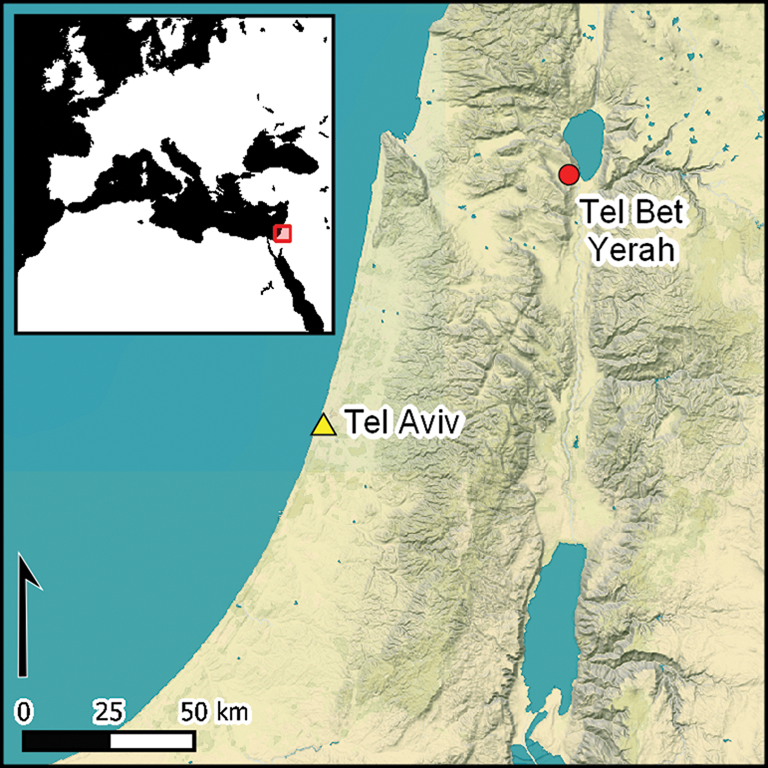
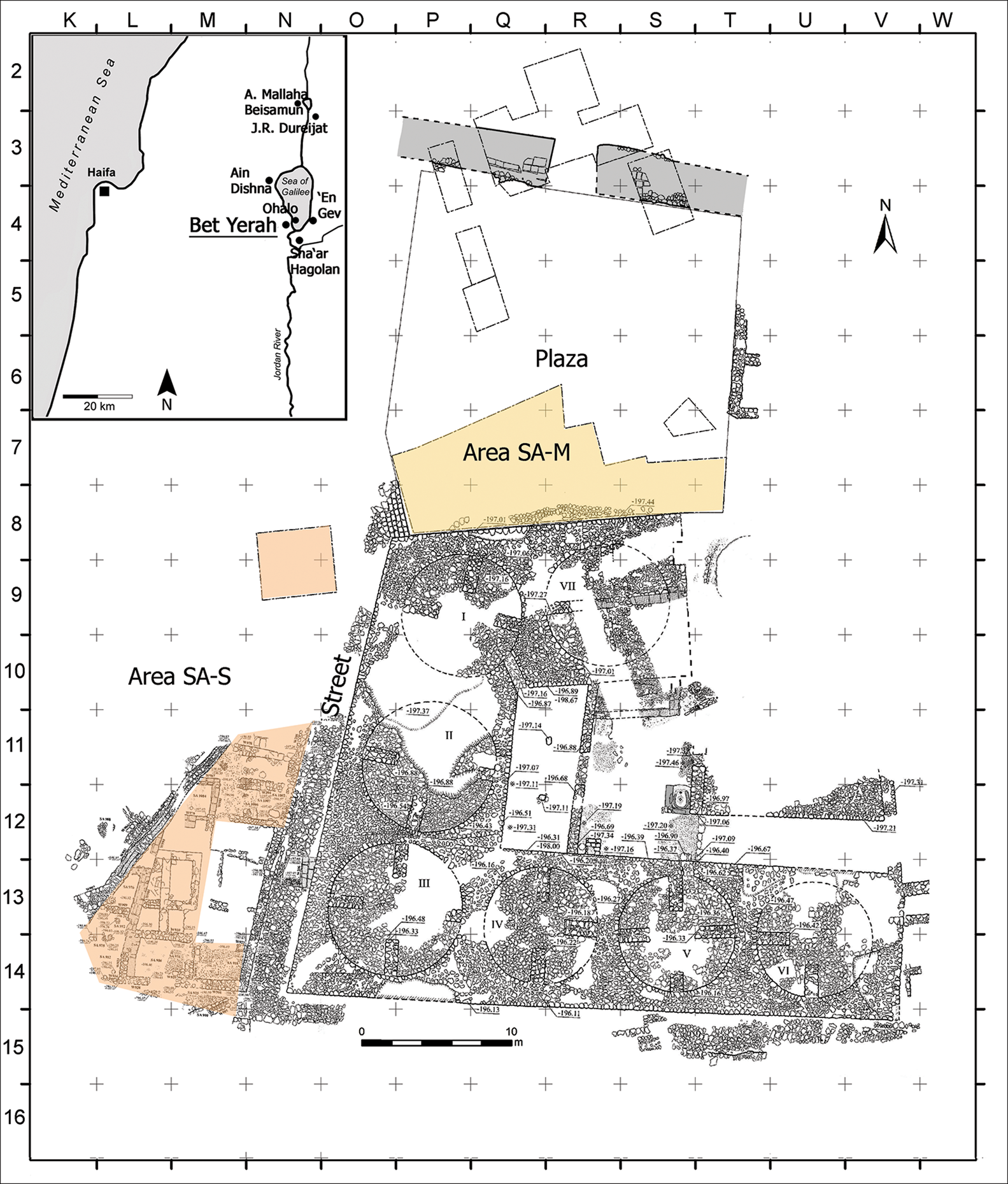
A major goal of the Tel Aviv University excavations of 2003–2015 was the retrieval of a detailed dataset on human-environment interactions and on human foodways (not addressed by previous investigations at the site) by means of small-scale (450m2) excavation in and around the previously excavated monumental granary, or ‘Circles Building’, in the northern part of the mound (Figure 1; for interim reports, see Greenberg et al. Reference Greenberg, Rotem and Paz2013, Reference Greenberg, Ashkenazi, Berger, Iserlis, Paz, Rotem, Shimelmitz, Tan and Paz2017; Regev et al. Reference Regev, Paz, Greenberg and Boaretto2020). The fine-screening of approximately half of all sediments excavated over seven seasons provides—alongside extensive assemblages of mammalian fauna, microfauna, plant remains and flint-knapping waste—substantial evidence for the consumption of fish. That the people of Bet Yerah practised fishing was already known, due to the discovery, by every earlier excavation at the site, of numerous stone net-sinkers. This indirect evidence is now augmented by an assemblage of fish remains. The two complementary datasets, concerning consumption (fish bones) and acquisition (fishing gear), are presented below.
Location map of sites mentioned in this paper and general plan of the 2003–2015 excavations at Tel Bet Yerah (courtesy of the Tel Bet Yerah Archaeological Project).
The fish assemblage
The strata sampled were predominantly from areas of domestic occupation and refuse disposal situated to the north and west of the previously excavated Circles Building—a large public structure built in early Early Bronze III (c. 2800 BC; Greenberg et al. Reference Greenberg, Ashkenazi, Berger, Iserlis, Paz, Rotem, Shimelmitz, Tan and Paz2017). The western area of excavation (area SA-S; grid squares L–N/11–15 and N/8-9), provided a contiguous sequence, primarily from the Early Bronze II and III periods, with a few soundings reaching the latest layer of Early Bronze I occupation. The northern area, area SA-M, consisted predominantly of large refuse deposits in an open plaza (grid squares P–T/7–8) associated with an Early Bronze III Khirbet Kerak Ware cultural assemblage and separated from contemporaneous local tradition Early Bronze III occupation deposits by a paved street. Radiocarbon dates (Regev et al. Reference Regev, Paz, Greenberg and Boaretto2020) from Bet Yerah suggest that the late Early Bronze I–II sequence should be bracketed between 3200 and 2850 BC, while the two Early Bronze III communities were contemporaneous, both apparently coexisting in the first half of Early Bronze III (c. 2850–2700 BC). The two areas of excavation thus provide insights into economic change or divergence on both temporal and spatial/cultural axes: from Early Bronze I–III in the local tradition and between deposits associated with the local tradition and those associated with Khirbet Kerak Ware.
In total, 594 fish bones were obtained from secure contexts: 134 associated with the Khirbet Kerak Ware-bearing deposits in the plaza (and from one pit outside of the plaza), 458 in local tradition Early Bronze I–III deposits, and two bones in a Hellenistic pit (c. 250–100 BC). The bones were collected from samples that were either dry-sieved (on a 2mm mesh) or recovered from flotation and placed on stacked 5–0.5mm sieves. The overall state of bone preservation was poor. Most bones were very small and were photographed through a Leica Binocular to facilitate identification. They were identified with the aid of modern fish-reference collections belonging to the first author, and collections of present-day specimens prepared for this project by the second author. Taxonomic nomenclature follows www.fishbase.se. The better preserved identified bones were measured to estimate the sizes of the original fish by comparing with modern fish in the reference collections. Size estimations by this method are subject to a margin of error of roughly 15 per cent, which, while relatively large, we have deemed sufficient for the current purpose. The sizes of fish provided below are therefore approximate and figures are rounded.
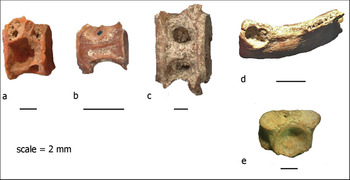
Of the total of 594 fish bones (see Table S1 in the online supplementary material (OSM)), the specific skeletal element was identified for 399 bones (67 per cent of the total assemblage); the rest were unidentifiable fragments. There were 326 skeletal elements of the meat-bearing part of the fish—predominantly vertebrae (Figure 2)—and 73 bones of the neuro- and branchiocranium. The most common elements were vertebrae, which comprised 69 and 81 per cent of the identified skeletal elements from areas SA-S and SA-M, respectively.
a) Cyprinidae: anterior vertebra, left lateral view; b) Cichlidae: posterior vertebra, left lateral view; c) Clarias gariepinus: posterior vertebra, left lateral view; d) Serranidae: left dentary, superior view; e) Serranidae: first vertebra, anterior view (photographs by O. Lernau).
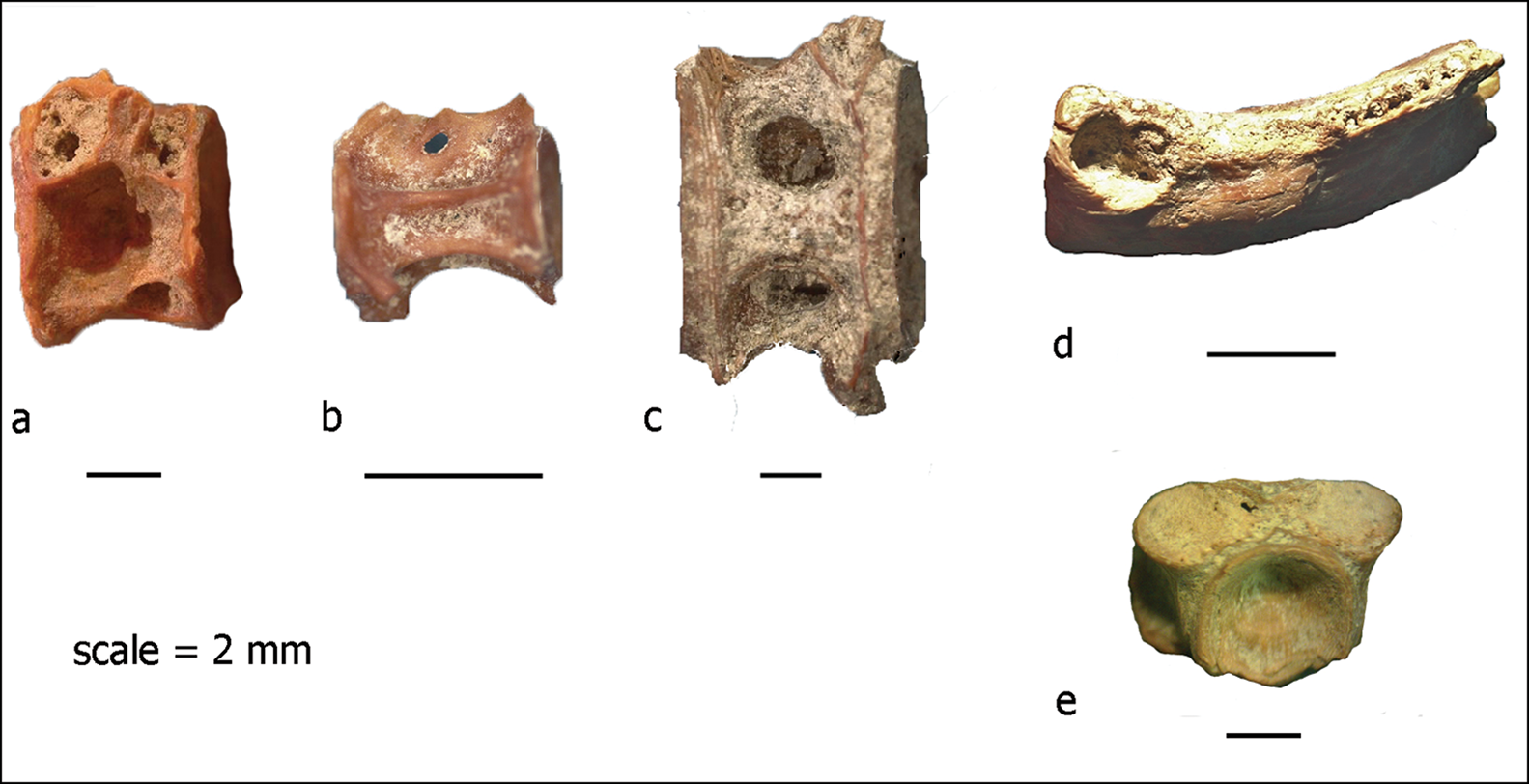
Taxonomic identification was achieved for 219 bones (55 per cent of the 399 identified skeletal elements). Six families of fish were identified (Table 1). The low proportion of identifications is due to the small size and relatively poor preservation of the bones. Most identified bones (212) belong to three families of freshwater fish found in the Sea of Galilee: Cyprinidae (carp), Cichlidae (cichlids) and Clariidae (catfish). Among the cyprinid bones, 11 could be further identified to the species: three as Jordan himri (Carasobarbus canis); four as Kinneret bleak (Mirogrex terraesanctae); two as Jordan barbell (Luciobarbus longiceps); and two as Mesopotamian barb (Capoeta damascina).
Taxonomic identifications of fish bones (NISP = number of identified specimens).

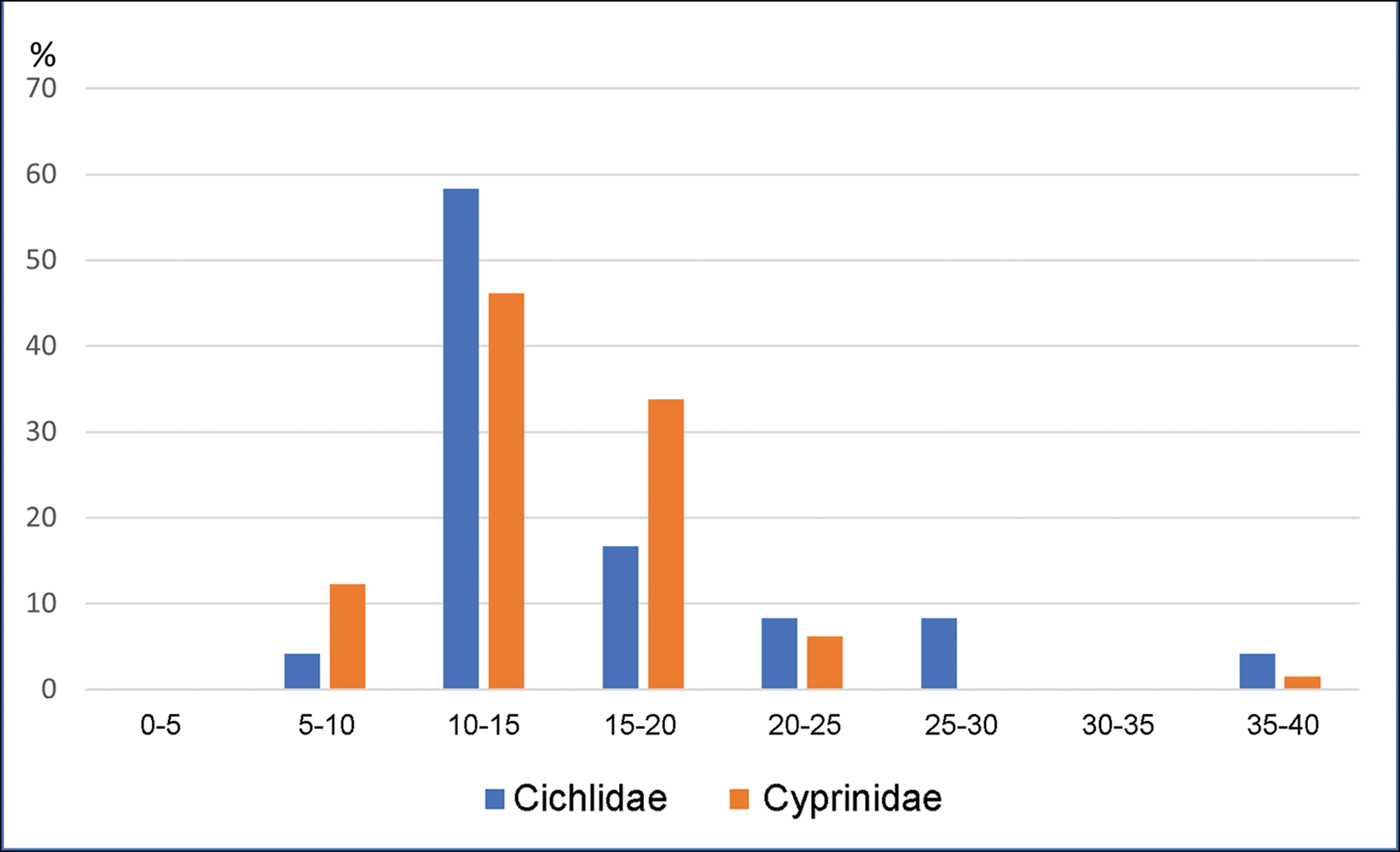
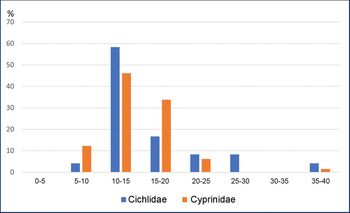
Among the cichlid bones, four can be identified as mango tilapia (Sarotherodon galilaeus), and one as Jordan St Peter's fish (Oreochromis aureus). All the catfish bones relate to North African catfish (Clarias gariepinus). Measurements of 66 cyprinid bones and 25 cichlid bones yield estimated sizes ranging between 60mm and 0.36m, with averages of 0.14 and 0.16m, respectively (Figure 3). Measurements of four catfish bones provide estimated sizes of 70mm, 0.12, 0.24 and 0.63m, respectively.
Size distribution of cichlids and cyprinids (figure by O. Lernau).
Seven bones relate to three marine families: Sparidae (porgies), Serranidae (groupers) and Mugilidae (mullets). One sparid bone was identified as gilthead seabream (Sparus aurata). All three families originate in the Mediterranean Sea, approximately 50km to the west of Bet Yerah. The same types of marine fish have been recovered in small quantities at several other Early Bronze Age coastal sites, such as Ashkelon-Afridar (Lernau Reference Lernau2004; Early Bronze I) and Megadim (Early Bronze I; unpublished), and from Kabri (Lernau Reference Lernau, Kempinski, Scheftelowitz and Oren2002; Early Bronze I–II), Megiddo (Early Bronze I & III; Lernau Reference Lernau, Finkelstein, Ussishkin and Halpern2006) and Tel Qashish (Early Bronze I–III; Lernau Reference Lernau, Ben-Tor, Bonfil and Zuckerman2003) farther inland; the latter may be attributed to small-scale trade in cured fish. In later periods, especially during the Late Bronze and the Iron Ages, the importation and consumption of fish became more intensive and widespread, encompassing the entire Eastern Mediterranean, with the addition of imported fish from the Bardawil hypersaline lagoon in northern Sinai and from the Nile (van Neer et al. Reference van Neer, Lernau, Friedman, Mumford, Poblome and Waelkens2004; Sisma-Ventura et al. Reference Sisma-Ventura, Tütken, Zohar, Pack, Sivan, Lernau, Gilboa and Bar-Oz2018). To date, Bet Yerah is the farthest site from the Mediterranean to have provided evidence for Early Bronze Age marine fish consumption.
Temporal and cultural distribution of the fish bones
At Bet Yerah the fish-bone assemblage is distributed across the three principal periods of occupation on this part of the mound: late Early Bronze I, Early Bronze II and early Early Bronze III. The fish bones in the deposits west of the Circles Building represent Early Bronze I–III activity associated with domestic occupation and the local ceramic tradition (except for two bones from a Khirbet Kerak Ware pit). The remaining fish bones are all associated with Early Bronze III Khirbet Kerak Ware ceramics. Table 2 shows the identified bones in the domestic, local tradition deposits and in the refuse deposits containing Khirbet Kerak Ware in the plaza. Both areas have yielded the same three types of freshwater fish, with a larger proportion of cyprinids and a lower proportion of clarids in the local tradition contexts. The latter also yielded three types of marine fish, while the Khirbet Kerak Ware contexts yielded only one bone of the marine Sparidae family.
Taxonomic identifications by cultural context (NISP = number of identified specimens).
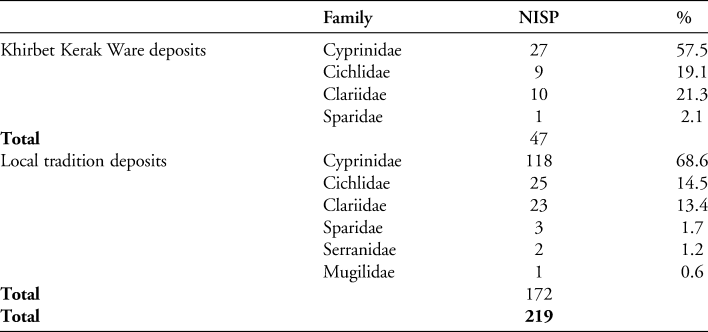
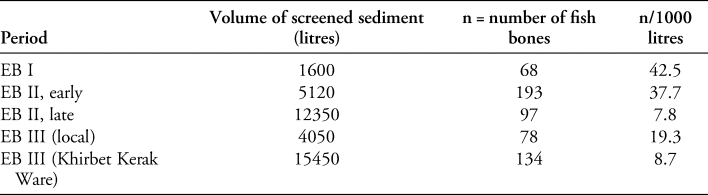
Table 3 shows the relative frequency of fish bones (both identified and unidentified), by period. The frequency is calculated in relation to the total screened volume of material from the relevant contexts, as fish remains were almost exclusively identified in screened sediments (Figure 4). These numbers should be treated with some caution given the probability of residual material and of the different circumstances of deposition for each period (e.g. Early Bronze I and early Early Bronze II deposits in area SA-S, as well as Early Bronze III deposits from SA-M, are primarily from midden contexts, whereas late Early Bronze II and Early Bronze III contexts in area SA-S are predominantly from house floors and mud-brick collapse). The numbers, however, do suggest significant quantitative differences in relative fish consumption, as can be seen in Table 3. From an Early Bronze I maximum of 42.5 bones per 1000 sifted litres of sediment, a fall-off occurs in late Early Bronze II and local-tradition Early Bronze III (approximately 9.2 and 19.5 bones per 1000 litres, respectively). While early Early Bronze II may well be affected by a high proportion of Early Bronze I residual bone, the steep decline in late Early Bronze II correlates with the intensification of urbanisation at Bet Yerah. It should be noted that the late Early Bronze II numbers are skewed due to their peculiar distribution: more than half were recovered from refuse pits that occur in this period alone, suggesting that house floors were periodically swept clean. A second divergence can be seen in the relationship between local tradition and Khirbet Kerak Ware contexts, where the latter demonstrate consistently fewer fish bones (approximately 8.5 bones per 1000 litres). These data suggest that the community producing and using Khirbet Kerak Ware relied less on the exploitation of fish from the Sea of Galilee than their contemporaneous neighbours.
Frequency of fish bones in screened sediments; EB = Early Bronze.
Frequency of fish bones in the screened sediments by period (figure by O. Lernau).
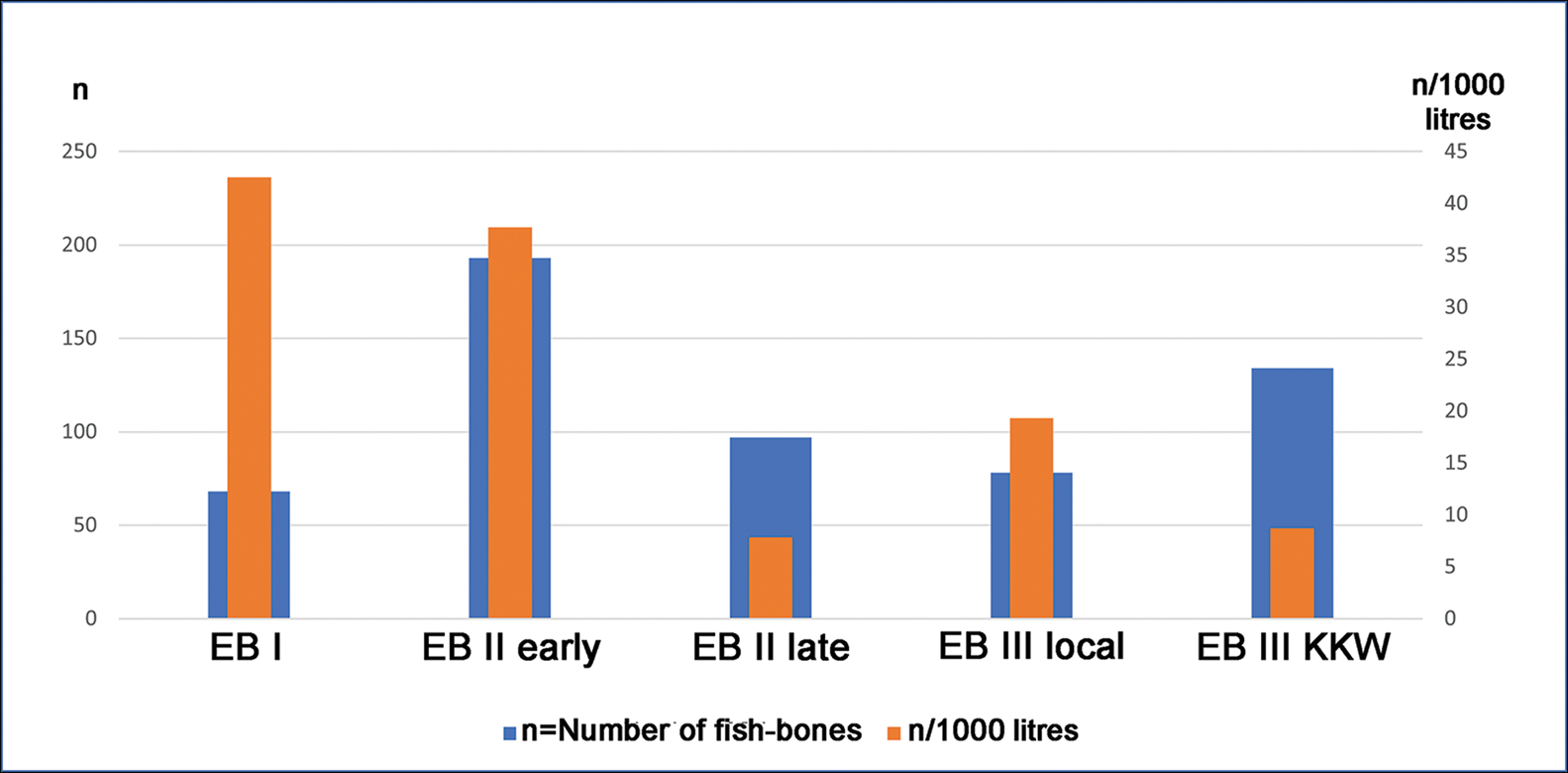
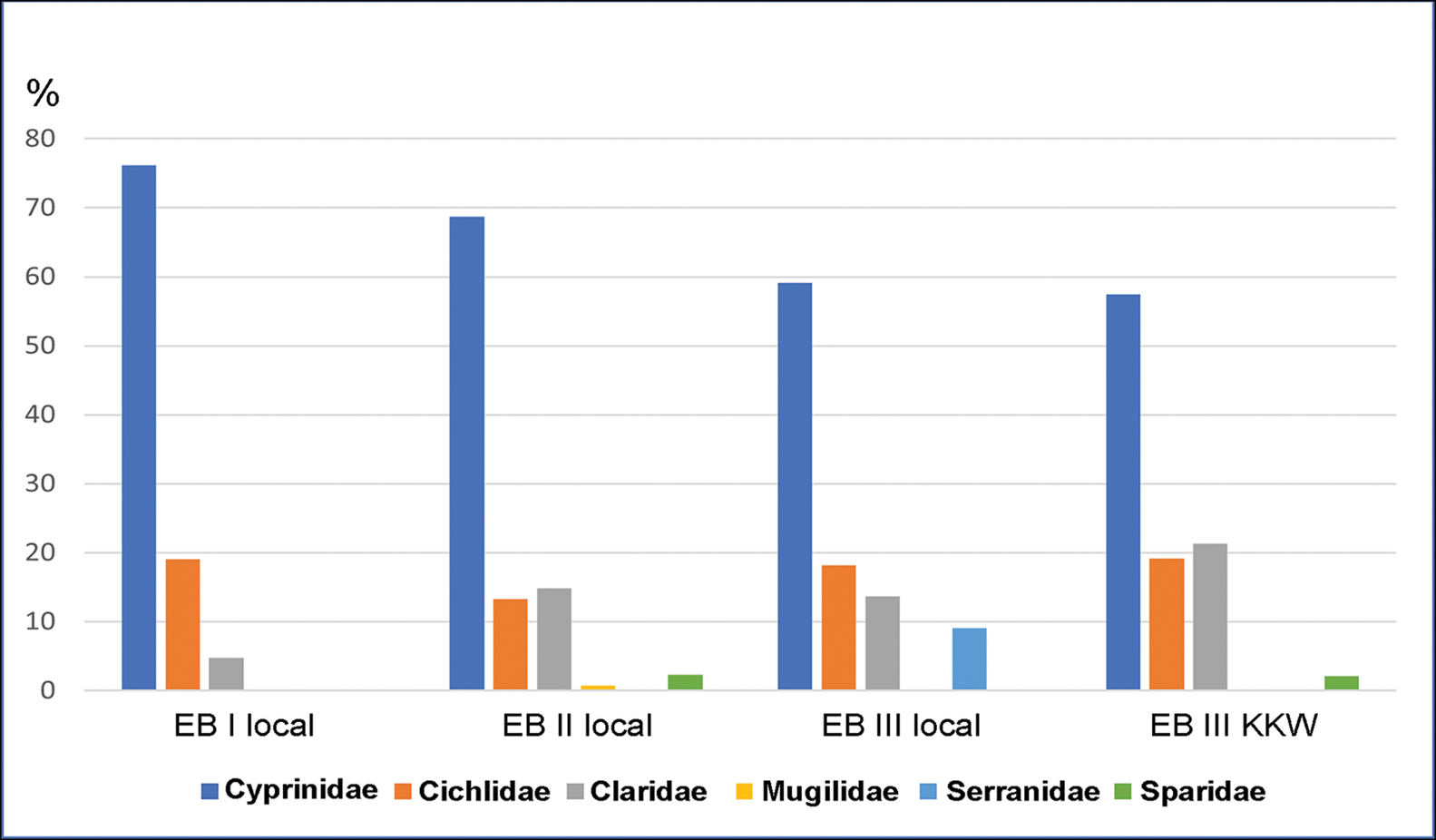
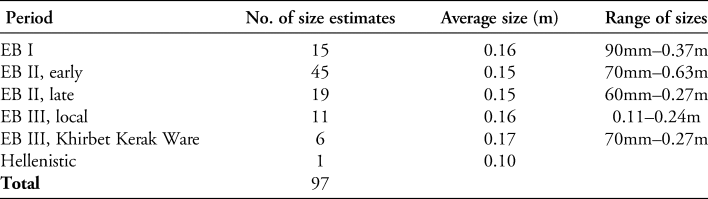
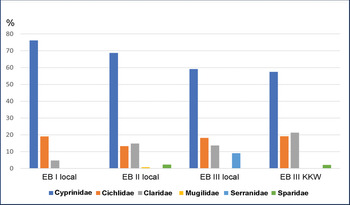
Figure 5 shows the distribution of taxonomic identifications along a temporal axis. The proportion of Cyprinidae was highest in the Early Bronze I, but subsequently diminished. The proportions of the fish varieties from the Sea of Galilee were roughly the same for the local Early Bronze III population and their Khirbet Kerak Ware-using neighbours, albeit with a slight increase in Clariidae. Size estimates from the measurement of 97 bones show that the average size of the fish caught in the Sea of Galilee remained constant over time, at approximately 0.15–0.17m (Table 4). This may indicate that fishing techniques were unchanged during the time covered by the assemblage. The seemingly wide range in size in early Early Bronze II is due to one cyprinid vertebra (0.36m) and one from a catfish (0.63m); no other examples in the assemblage exceed an estimated size of 0.23m.
Families of fish (%) by period and culture (figure by O. Lernau).
Estimated sizes of fish by period; EB = Early Bronze.
Fishing gear
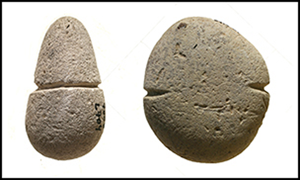
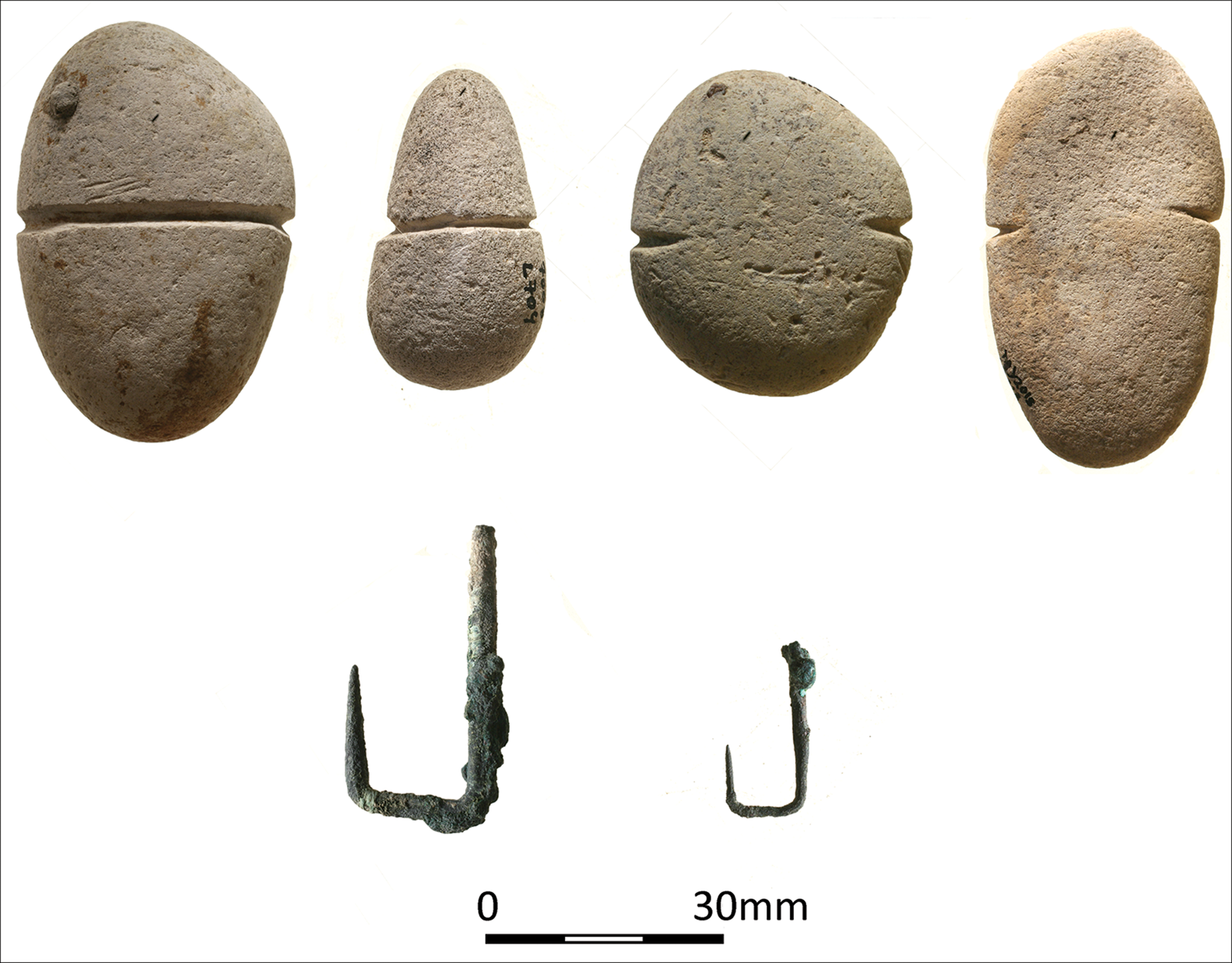
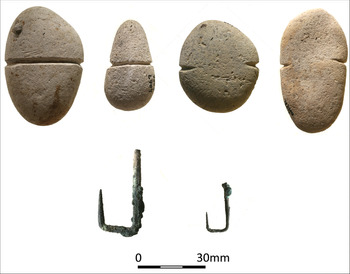
While only the most recent excavations at Bet Yerah were conducted at a resolution sufficient to recover fish remains, indirect evidence for fish consumption has emerged from earlier excavations at the site in the form of small, carefully notched or grooved stone net-sinkers, found mainly in open courtyards (Getzov Reference Getzov2006: 26–28; Rosenberg & Greenberg Reference Rosenberg, Greenberg and Greenberg2014: 208). Similar artefacts have also been found in the most recent excavations, along with two copper fish hooks—rare finds in the Levant (Figure 6).
Fishing gear from Bet Yerah: a) notched and grooved net-sinkers; b) copper hooks (photographs by P. Shrago, the Tel Bet Yerah Archaeological Project).
Twenty-one of 26 net-sinkers from the recent excavations come from stratified deposits (see Table 5): 14 from Early Bronze I and II contexts and seven from Early Bronze III contexts (including five associated with Khirbet Kerak Ware). Data from the earlier excavations show a pronounced drop in the frequency of stone weights during Early Bronze II, from 48 in Early Bronze I and early Early Bronze II, to seven in late Early Bronze II, to six in Early Bronze III. Together, the numbers indicate a marked decline in the on-site use or maintenance of fishing nets during Early Bronze II. This conclusion is consistent with our observations on the relative quantities of fish remains. Net-sinkers found in Early Bronze III, contexts are therefore most likely residual, and should not be attributed to the continuing use of fish nets by inhabitants of the walled settlement.
Distribution of net-sinkers by period; EB = Early Bronze.

1 Based on Rosenberg and Greenberg (Reference Rosenberg, Greenberg and Greenberg2014) and Getzov (Reference Getzov2006); cultural affiliation of the Early Bronze III finds is unclear.
The two copper hooks, which are remarkably similar in form and proportion, although of different size (Figure 6), were found in association with Khirbet Kerak Ware ceramics. They are both made from round-sectioned copper pins (differing from the common Southern Levantine pins, which are square in section; Ilan & Sebbane Reference Ilan, Sebbane and de Miroschedji1989) that were bent twice from the midpoint of each pin, at 90° angles. The larger hook, 3–4mm in section, has a 37mm-long shank, a width (gap) of 13mm and an 18mm-long barb. The hook appears to preserve mineralised remains of vegetal fibre, presumably belonging to the fishing line. The smaller hook is half the size of its larger counterpart: it is 1mm in section, has a 21mm-long shank, an 8mm gap and a 9mm-long barb. These are the only such hooks so far found in the Southern Levant, and we are yet to identify comparable right-angled copper hooks in the broader West Asian region.
The use of net-sinkers made of notched or grooved pebbles had a long history around the Sea of Galilee and in the Jordan Valley (Nadel & Zaidner Reference Nadel and Zaidner2002; Rosenberg et al. Reference Rosenberg, Agnon and Kaufman2016)—a history that appears to have ended with the onset of Early Bronze Age urbanisation. Cast nets or suspended gill nets (Jawad Reference Jawad2006: 6–8, figs. 2 & 4) were probably used for catching carp and cichlids (these dominated the fish assemblage at nearby Ohalo II; Zohar et al. Reference Zohar, Dayan, Goren, Nadel and Hershkovitz2018). Fishing hooks would probably have been used for targeting catfish, as they are more apt to bite than other species. Unusual as they are, the appearance of hooks and line in the Bet Yerah plaza supports the possibility that the Early Bronze III Khirbet Kerak Ware-using newcomers were unacquainted with the use of nets for fishing in open water. Instead, they preferred to fashion fishing hooks of different sizes and to target catfish, with which they would have been familiar from the rivers and streams in their presumed regions of origin. Given the absence of systematic screening in most excavations, however, the evidence for fishing and fish consumption at Kura-Araxes sites in the Southern Caucasus and other areas of Kura-Araxes presence is scarce. The important Kura-Araxes site of Kvastkhelebi in Georgia, for example, has yielded a single bone fishing hook (Dzhavakhishvili & Glonti Reference Dzhavakhishvili and Glonti1962: fig. IV.424) and only two fish bones from domestic contexts (unpublished). No evidence for fishing is reported at other Kura-Araxes sites, or in the isotopic evidence of human diet in the Southern Caucasus (Herrscher et al. Reference Herrscherin press). Fish are also notably absent in the rich corpus of Kura-Araxes zoomorphic iconography (Sagona Reference Sagona1984).
Discussion
Bet Yerah is the first Early Bronze Age site in the Levant to provide firm evidence for freshwater fish consumption. The site shows significant trends that can be related to cultural and economic changes associated with the transition from a village lifestyle to one with elements of urbanism—a transition still fiercely debated (see Chesson Reference Chesson2015; Greenberg Reference Greenberg2019: 128–31). In Early Bronze I, when Bet Yerah was a large, sprawling village composed of walled compounds and communal areas, fishing was widespread. Net-sinkers have been found in abundance in most excavation areas, and fish formed a significant part of the diet, as attested by the relatively high proportion of fish bones in the sieved deposits of this period. This does not imply that Early Bronze I Bet Yerah relied solely on fishing: mammal remains heavily outnumber fish remains, and charred cereals indicate thriving agriculture (Berger Reference Berger2013: 79, 92–93 & 101, Reference Berger, Çakırlar, Chahoud, Berthon and Birch2018: 17–21). Indeed, even at the waterlogged late Upper Palaeolithic Ohalo II fishing village, which lies at the foot of the Bronze Age mound, fish were a component, albeit an important one, in a varied diet that included hunted mammals and birds, and plant foods (Rabinovich & Nadel Reference Rabinovich and Nadel2005: 47; Zohar et al. Reference Zohar, Dayan, Goren, Nadel and Hershkovitz2018: 20). Still, the ubiquity of fish and expertly prepared fishing gear suggests that the lakeshore residents of Early Bronze I Bet Yerah were competent fishers. Following the abandonment of the village and the foundation of the walled settlement in Early Bronze II, fishing and fish consumption seem to have been maintained at the same level for a time (even assuming residuality in early Early Bronze II contexts), before declining rapidly.
The decline in fishing seems to correlate with the marked increase in housing density in late Early Bronze II, when the urban template, followed initially only in portions of the site, expanded to every excavated sector. As noted in the detailed architectural reports (Greenberg & Paz Reference Greenberg, Paz and Greenberg2014: 38–39 & 49–50; Paz & Greenberg Reference Paz and Greenberg2016: 211–13), there was a lag between the initial stage of fortification in early Early Bronze II Bet Yerah, during which the principles of spatial organisation appear to have been determined, and the extension and imposition of these principles across all parts of the site in late Early Bronze II. It is in this latter phase that open spaces between houses were filled with new structures, streets were kept clear of the accumulation of material and domestic refuse was swept into small pits. Concomitantly, the ceramic industry was standardised (Greenberg & Iserlis Reference Greenberg, Iserlis and Greenberg2014: 92), archaeobotanical remains indicate the managed, off-site processing of cereals (Berger Reference Berger2013: 80 & 99) and mammal remains indicate specialised herd management (Berger Reference Berger, Çakırlar, Chahoud, Berthon and Birch2018: 10; cf. Gaastra et al. Reference Gaastra, Greenfield and Greenfield2020). These developments are consistent with the gradual adoption of an urban habitus that would probably have encouraged both specialisation in fishing and its relocation from domestic and public areas in the centre of the town to more distant spots.
Notably, however, fishing did not return in Early Bronze III, when parts of the town lay unoccupied for extended periods, or when groups of Khirbet Kerak Ware producers/users began to settle in them, apparently alongside the pre-existing inhabitants. As it appears that both communities were still consuming some fish, we can assume that net fishing was the domain of the same extra mural specialists mentioned above who supplied the town with their catch. Moreover, we may surmise that Khirbet Kerak Ware-using groups also acquired the cichlids and cyprinids that they consumed (albeit in small quantities) from the same extra mural source as their neighbours, whether directly or through exchange. Hook-and-line fishing may have been used to supplement their diet with catfish, which were consumed only in limited numbers in Early Bronze I–II, and not at all in nearby earlier settlements (Zohar et al. Reference Zohar, Dayan, Goren, Nadel and Hershkovitz2018). A Clarias gariepinus head and vertebrae found in the area SA-M plaza could indicate in situ butchering, as this species has a large, inedible head that accounts for a third of its body length (Ben Tuvia Reference Ben Tuvia and Serruya1978); its preparation would entail removing and discarding the head and part of the attached anterior vertebral column. These nuanced differences between local tradition and Khirbet Kerak Ware communities resemble differences observed in other realms of food consumption, such as a preference by the newcomers for stewed rather than roasted meat (Greenberg Reference Greenberg2019: 119).
We have noted that the use of stone-weighted nets in Early Bronze Age Bet Yerah (c. 3200–2700 BC) marks the end of a deeply rooted tradition of fishing in the Upper Jordan valley that dates to at least as far back as the late Upper Palaeolithic (c. 21 000 BC; see Figure 1). It is not entirely clear how and where continuity in the use of stone-weighted nets was preserved over time, although several sites bridge parts of this timeframe: Natufian ‘En Gev (fish remains), ‘Ain Mallaha and Jordan River Dureijat (net-sinkers); Pre-Pottery Neolithic A ‘Ain Dishna; and Pre-Pottery Neolithic B to Pottery Neolithic Beisamun and Sha‘ar Hagolan (net-sinkers) (Grosman et al. Reference Grosman, Munro, Abadi, Boaretto, Shaham, Belfer-Cohen and Bar-Yosef2016: 19; Rosenberg et al. Reference Rosenberg, Agnon and Kaufman2016). Given the marked diachronic reduction in the size and weight of net-sinkers, there seems to have been a significant change in the quality of nets in the Pre-Pottery Neolithic B (c. 8500–6500 BC), which coincides with the domestication of flax and the frequent use of linen fibres (Levy Reference Levy2020: 164–65). Finer fibres would have permitted finer nets and smaller, lighter weights, facilitating the catching of smaller fish. The termination of such an ancient tradition at Early Bronze II–III Bet Yerah emphasises the deep change that must have occurred when people began to live in walled towns, resulting in a loss of diversity not only in the economy but in the ‘sense-scape’ of the settlement. The exclusion or marginalisation of fishing specialists and fish-markets, resulting in the loss of their characteristic spaces, sounds and smells, as well as the impoverishment of the local cuisine, can be counted among the changes induced as a result of early urbanisation.
Conclusion
Systematic sieving of Early Bronze I–III contexts at Tel Bet Yerah, complemented by a substantial assemblage of artefacts associated with fishing, has provided a unique window into fishing and fish consumption at an Early Bronze Age Levantine site on the southern shore of the Sea of Galilee. The finds suggest that the Early Bronze I village marks the end of a long-lived tradition of lake fishing, focused on cyprinids and cichlids, using cast or suspended gill nets weighted with grooved or notched pebbles. As urban lifeways became entrenched and their effects on domestic and economic life more profound, net fishing was pushed out of the town, and fish—including marine species obtained from a distance—became only a minor feature in the diet. Subtle differences between the Khirbet Kerak Ware-rich plaza deposits and local tradition domestic deposits suggest that the people associated with the incoming cultural tradition had limited access to fish, and may have augmented their diets by angling for catfish. The Bet Yerah copper fishhooks are the first of their kind recorded in the Southern Levant, and add to the distinct cultural repertoire that characterised the ‘Khirbet Kerak’ manifestation of the Kura-Araxes diaspora.
Acknowledgements
Our thanks to Daniella Bar-Yosef Mayer and Ehud Spanier for their contributions to this study.
Funding statement
This research was supported by the Israel Science Foundation (grants 310/12 & 681/19).
Supplementary material
To view supplementary material for this article, please visit https://doi.org/10.15184/aqy.2021.70







 Open access

