


In the USA, 17·5 % of children are food insecure(1). Childhood food insecurity is associated with poor health outcomes, including anaemia, cognitive issues, asthma and behavioural health problems(1–Reference Gundersen and Ziliak3). The National School Lunch Program (NSLP), which provides free or subsidized lunch to 30 million children every day, is the cornerstone of the federal system to address childhood food insecurity. Participation in the NSLP and the related School Breakfast Program (SBP) reduces children’s food insecurity(Reference Bartfeld and Ahn4–Reference Arteaga and Heflin6). Updated NSLP standards from the Healthy, Hunger-Free Kids Act of 2010 successfully improved the nutritional profile of meals and the food environments of schools(Reference Terry-McElrath, O’Malley and Johnston7). On average, lunches brought from home are of lower nutritional quality than NSLP lunches(Reference Farris, Misyak and Duffey8, Reference Caruso and Cullen9).
The federal government provides subsidies to local school districts to provide free or reduced-price (FR) meals to students in households with incomes up to 185 % of the federal poverty level(10). While FR meal participation has increased over the past 20 years, participation in the paid meal programme has decreased(11). Federal legislators have attempted to increase participation through restrictions on unhealthy snack foods and enhanced eligibility for FR meals. In the 2014–2015 school year (SY2014–15), the Community Eligibility Provision (CEP) began allowing eligible high-poverty schools across the country to serve all students free meals(11–14). In order to be eligible for CEP, 40 % or more of a school’s student body must already be enrolled in other need-based programmes such as the Supplemental Nutrition Assistance Program or Temporary Assistance for Needy Families(12). This percentage is known as the identified student percentage (ISP), and schools are reimbursed using a weighted FR and paid subsidy rate based on this percentage. CEP participation among eligible schools varies widely from state to state, ranging from 8 % of districts in New Hampshire to 100 % of districts in North Dakota for SY2015–16(Reference Segal, Hewins and Sanderson15). Nationally, only 37 % of eligible districts and 50 % of eligible schools have adopted CEP(Reference Segal, Hewins and Sanderson15).
A number of studies have documented increases in meal participation following implementation of universal free breakfast programmes(Reference Ribar and Haldeman16–Reference Leos-Urbel, Schwartz and Weinstein18). For example, Ribar and Haldeman found a 12–16 % increase in SBP participation in North Carolina school districts after implementation of universal free breakfast(Reference Ribar and Haldeman16). However, little research on the impact of free meals through CEP exists. The most comprehensive analysis of CEP’s impact on NSLP has been the US Department of Agriculture’s (USDA) CEP pilot evaluation (SY2011–12 to SY2013–14)(Reference Logan, Connor and Harvill19). The pilot showed a 5·2 % increase in NSLP participation and a 9·4 % increase in SBP participation among CEP-participating schools with a $US 0·13 average increase in federal reimbursement per meal(Reference Logan, Connor and Harvill19). Interviews with schools and state agencies also reported a decrease in stigma, administrative burden and procedural errors(Reference Logan, Connor and Harvill19).
To our knowledge, no research exists on the effect of CEP implementation on NSLP participation or differences in meal consumption by payment status following the USDA pilot evaluation. We evaluated the association between CEP participation and NSLP meal counts in CEP-eligible Pennsylvania and Maryland schools in SY2016–17 and the impact of CEP implementation in Pennsylvania schools in SY2014–15.
Methods
Study data
We conducted an online search of state education agencies to identify publicly available meal count data by school. We identified these data in Pennsylvania for SY2013–14 to present. SY2016–17 meal count data in Maryland were provided upon request by the Maryland Department of Education. To increase statistical power and sample size, we chose to combine Maryland and Pennsylvania data as there are no major programmatic differences between NSLP and CEP implementation between states. School CEP and FR eligibility (proportion of students eligible for FR meals) data were obtained from the Food Research & Action Center’s CEP database, which includes state, school district, school name, ISP, student enrolment and current CEP participation status(20). A school’s ISP is used to determine federal reimbursement for meals served. In CEP schools all students receive free meals; nevertheless, meals can be reported based on a student’s qualification (i.e. free, reduced-price or paid) for school records or state agency reporting purposes, and these data were used for the present study. Average daily participation was defined as the quantity of meals served divided by operating days, and participation in the meal programme was estimated by dividing average daily participation by enrolment.
Statistical analysis
The distribution of schools across levels of CEP participation was evaluated using frequencies (%), while means and sd were used to assess meals served, operating days, average daily participation, FR eligibility and participation. A Student’s t test was used to determine differences in participation and change in participation between CEP and non-CEP groups. The association between FR eligibility and CEP participation was examined using a χ 2 test. To evaluate the association between CEP participation and meal count rates in SY2016–17, we fitted negative binomial regression models where rates (per student-year for total, FR and paid enrolment) were estimated using enrolment by reimbursement level. While meals served in schools participating in CEP are free to all students, the data analysed were reported as what would be free, reduced-price and paid meals. We used a robust sandwich covariance estimator to account for district-level clustering, and models were adjusted for FR eligibility and operating days.
To estimate the impact of CEP implementation, we conducted an analysis of NSLP participation (evaluated through meal counts) after CEP was first implemented in Pennsylvania in SY2014–15. Consistent with the cross-sectional analysis, we fitted negative binomial regression models to assess the association between CEP implementation and meal count rates, after adjusting for FR eligibility, operating days and meal counts from the prior year. Again, we used the robust sandwich covariance estimator to account for district-level clustering. In this model, we also controlled for meal counts in the year prior to CEP implementation (SY2013–14).
Results
Analysis of Community Eligibility Provision and meal count association
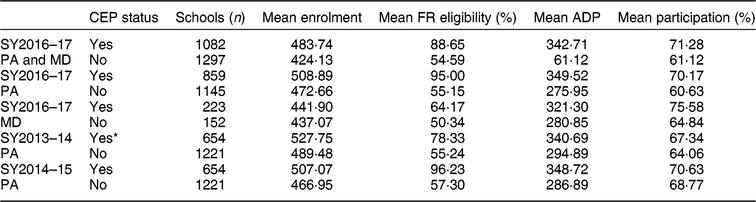
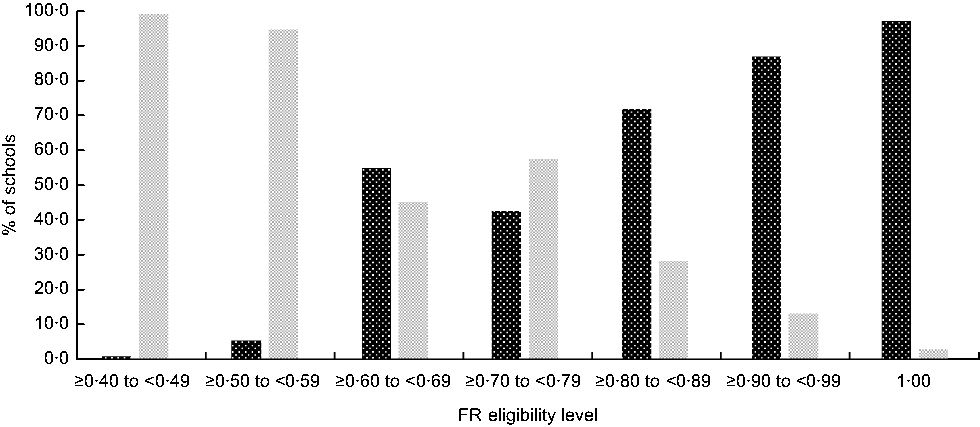
We pooled data from Pennsylvania and Maryland to analyse the association between CEP and meal counts using data from SY2016–17. A total of 2379 schools were eligible for CEP with 1082 participating and 1297 not participating in the programme. Average enrolment was 468 and average FR eligibility was 70·08 %. Additional school characteristics are displayed in Table 1. A total of 130 614 580 meals were served during SY2016–17. We observed that FR eligibility was significantly associated with CEP participation (χ 2 = 1495·70; df = 5; P < 0·0001; Fig. 1). Average total meal participation was not significantly different between CEP and non-CEP schools (t = −0·91; P = 0·36).
School characteristics by participation in the Community Eligibility Provision (CEP), Pennsylvania and Maryland, USA
FR, free and reduced-price; ADP, average daily participation; SY, school year.
* These schools implemented CEP in SY2014–15. We present SY2013–14 data here to provide a baseline comparison.
Percentage of schools in Pennsylvania and Maryland, USA, participating in the Community Eligibility Provision (CEP;  , % CEP;
  , % non-CEP) by free and reduced-price lunch (FR) eligibility, school year 2016–17
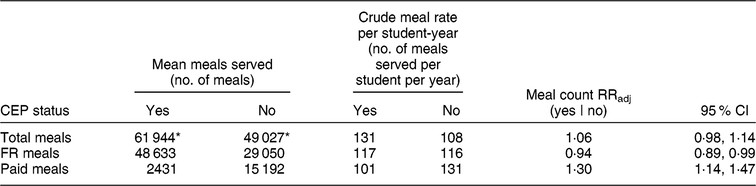
Crude rates (per student-year for total, FR and paid enrolment) for total and paid lunches were higher in CEP schools than in non-CEP schools and comparable for FR lunches (Table 2). Adjusted rate ratios (RRadj) of total meals were not significantly different between CEP and non-CEP schools (RRadj = 1·06, 95 % CI 0·98, 1·14; Table 2). Due to zero meal counts observed at several levels of FR eligibility, we were unable to incorporate this covariate into the paid lunch count model and consequently adjusted only for operating days. The estimated paid meal counts were approximately 30 % higher in CEP-participating schools (RRadj = 1·30, 95 % CI 1·14, 1·47). Conversely, the estimated FR meal count was lower among CEP-participating schools (RRadj = 0·94, 95 % CI 0·89, 0·99).
Mean number of meals served in the National School Lunch Program, crude meal count rate per student-year and adjusted meal count rate ratio (RRadj) with 95 % CI, Pennsylvania and Maryland, USA, school year 2016–17
CEP, Community Eligibility Provision; FR, free and reduced-price.
* We note that the sum of reported free, reduced-price and paid-price lunches do not summate to the total meals served reported for 146 Maryland schools. This is a result of missing values in the extracted data, and we acknowledge it as a limitation of the data.
Analysis of Community Eligibility Provision implementation impact on meal counts
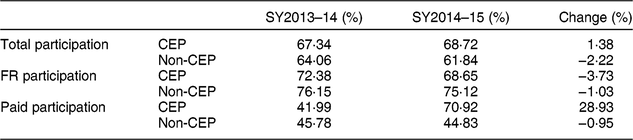
We utilized schools (n 1762) for which meal count data were available for SY2013–14 and SY2014–15, to evaluate the impact of CEP implementation on observed meal counts. In SY2014–15, the average FR eligibility for CEP-participating schools was 96·23 % while non-CEP average FR eligibility was 57·30 %. See Table 1 for additional school characteristics. In SY2014–15, average total lunch participation was 68·72 % among CEP schools and 61·84 % among non-CEP schools (Table 3). Total NSLP participation immediately following CEP implementation increased by 1·38 % in comparison to a decrease of 2·22 % in schools that did not implement CEP. Conversely, FR participation decreased regardless of CEP implementation. Paid participation increased by 28·93 % following CEP implementation while participation in non-CEP schools decreased by 0·95 % (Table 3).
Mean change in participation in the Community Eligibility Provision (CEP) by year, Pennsylvania, USA, school year (SY) 2013–14 to SY2014–15
FR, free and reduced-price.
Crude rates (per student-year for total, FR and paid enrolment) of total and paid lunches served in CEP-participating schools were higher than in non-CEP schools. Crude rates and RRadj can be found in Table 4. We noted an 8 % higher rate of total lunches served in schools that implemented CEP compared with those that did not (RRadj = 1·08, 95 % CI 1·03, 1·12) after adjusting for prior-year meal participation. Similarly, we noted a 69 % higher rate of paid meals served among schools that implemented CEP compared with those that did not (RRadj = 1·69, 95 % CI 1·11, 2·56). However, FR lunch rates were lower in schools that implemented CEP as compared with those that did not (RRadj = 0·91, 95 % CI 0·86, 0·96) after adjustment for prior-year meal participation.
Mean number of meals served in the National School Lunch Program, crude meal count rate per student-year and adjusted meal count rate ratio (RRadj) with 95 % CI, Pennsylvania, USA, school year (SY) 2013–14 to SY2014–15
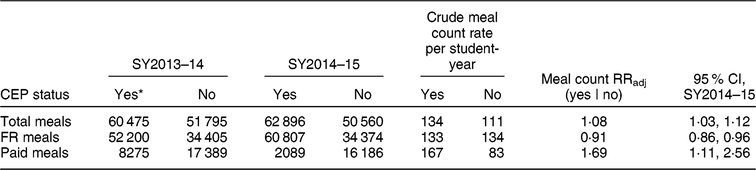
CEP, Community Eligibility Provision; FR, free and reduced-price.
* These schools implemented CEP in SY2014–15. We present SY2013–14 data here to provide a baseline comparison.
Discussion
We found that school participation in CEP in Pennsylvania and Maryland was associated with higher total and paid school lunch participation and meals served compared with eligible but non-participating schools. Our results indicate that CEP has been effective at increasing overall student access to nutritious school lunches. Our unexpected finding that CEP participation was associated with lower FR lunch participation and meals served requires more research to confirm that the programme does not have unintended negative consequences for students in lower-income households. Additionally, the association between meal counts and CEP was stronger when analysed using Pennsylvania SY2016–17 data controlling for the prior year without CEP implementation than when analysed using both Pennsylvania and Maryland SY2016–17 data only. This may be a result of the nature of missing values in the data extracted for Maryland. However, observed associations in both analyses are in the same direction.
Our overall and paid participation results are largely consistent with the USDA CEP pilot and previous research on universal free breakfast. We found that CEP was associated with an 8 % higher lunch participation, consistent with the 5·2 % increase observed in the USDA’s pilot evaluation(Reference Logan, Connor and Harvill19). The USDA pilot did not report stratified findings by meal type (e.g. total, paid and FR); therefore, it is difficult to compare our finding of a reduction in FR meals among CEP-participating groups. The observed lower FR lunch participation may be explained by both data quality problems and characteristics of the schools that implemented CEP. Prior to CEP implementation, many students became eligible for FR meals only if their families submitted applications to the school. As part of CEP implementation, FR eligibility was determined through direct certification based on enrolment in prior approved, need-based programmes, which caused many students previously ineligible to join the FR category. If newly FR eligible students did not start to participate in school lunch, overall FR participation rates would decline despite an increase in FR meals served. FR eligibility among the 654 schools that implemented CEP in Pennsylvania increased from 78·33 % in SY2013–14 to 96·23 % in SY2014–15 (Table 1). While participation in lunch among FR-eligible students was 9 % lower in schools that implemented CEP, there was a 14 % increase in FR meals actually served from SY2013–14 to SY2014–15, and in schools that did not implement CEP, there was a minor decline in the number of FR meals served (Table 4). In schools with majority low-income students and high FR eligibility, reported barriers to NSLP participation such as stigma and ‘lunch shaming’ may be less prevalent than in schools with a lower percentage of FR eligibility(Reference Mirtcheva and Powell21). In SY2016–17, only six Pennsylvania and Maryland schools with low FR eligibility (40·0–49·99 %) participated in CEP, while 596 schools with low FR eligibility did not participate in CEP.
The low CEP participation rate among schools with low FR eligibility is likely explained by the reimbursement structure of CEP(22). For schools with >62·5 % ISP, all meals are reimbursed at the free rate. Schools with lower ISP receive less federal reimbursement per meal, potentially putting CEP’s financial viability into question from the perspective of district administrators(13, Reference Johnson23, 24). This is amplified in districts with high FR eligibility and ISP discrepancies. If ISP is lower than would be expected by the school’s actual FR eligibility, the schools would receive a relatively lower reimbursement for meals served under CEP than they would if ISP properly reflected the size of the FR student population. The discordance between FR eligibility and ISP within a school can be explained by both low enrolment in other need-based assistance programmes (e.g. Supplemental Nutrition Assistance Program, Temporary Assistance for Needy Families, etc.) and poor or no direct certification systems(Reference Johnson23). Efforts to improve states’ direct certification systems were included in the Healthy, Hunger-Free Kids Act of 2010 legislation(25). As of SY2014–15, the majority of states were below the 95 % direct certification quality benchmark, with as low as 65 % of Supplemental Nutrition Assistance Program participants directly certified in some states(14). Many small, charter and private districts do not conduct direct certification at all and may need additional technical assistance(Reference Levin and Neuberger26). Improvements in direct certification could reduce the discrepancy between FR eligibility and ISP, increase CEP participation, improve the financial viability of CEP and increase access to FR meals for students.
While focused on a specific aspect of federal school food programmes in the USA, the current analysis has broader implications for researchers conducting nutrition programme planning and evaluation regardless of their location. In their framework to enhance dissemination and implementation) of health interventions, Neta et al. highlight the lack of reporting and analysis of both setting-level adoption and representativeness of programme participants(Reference Neta, Glasgow and Carpenter27). Our research illustrates the failure of CEP delivery for schools with low FR eligibility. This focus on setting-level adoption yielded important policy-relevant insights. Compared with high ISP schools, schools with low FR eligibility and ISP may need modified implementation strategies in order to adopt and implement CEP. We also identified challenges analysing and interpreting participation at the individual level by eligibility category using administrative data. Participation data linked at the individual level would strengthen our inference regarding effects of programme adoption on population subgroups. Enhancing evaluation of adoption and participation would support programme and policy reach and sustainability. For example, research has previously evaluated the impact of a state policy change on school meal participation that informed the state and federal approaches to reducing unhealthy snack foods in schools(Reference Long, Luedicke and Dorsey28).
We noted several limitations in the present study. Data were limited to two US states, which limits generalizability to countries with very different meal programmes or baseline lunch participation rates. We note that the sum of reported free, reduced-price and paid lunches did not summate to the total meals served reported for 146 Maryland schools (as observed in Table 2). This was a result of the nature of missing values in the extracted data set, and we acknowledge it as a limitation of the data analysed here. In addition, we also note that in our sample CEP participation was low among schools with low (40–60 %) FR eligibility. These schools are likely to experience stigma and ‘lunch shaming’ more so than high-FR-eligibility schools; therefore, CEP is expected to have more of an impact on the purchasing behaviour of FR-eligible students in low-FR-eligibility schools(Reference Mirtcheva and Powell21). Furthermore, we did not have access to and could not adjust for school demographics beyond FR eligibility. Additional covariates related to the lunch service such as length of lunch period, student access to competitive foods and outside restaurants, and meal quality were also not available.
Findings from our analysis of CEP implementation impact are strengthened by the adjustment for prior-year lunch participation, which allowed us to make inferences regarding the impact of changing CEP status. Future research may evaluate CEP’s effect on FR lunch counts in CEP-participating schools with low (40–60 %) FR eligibility as well as the impact of CEP on SBP participation and meal counts. The USDA pilot found a larger effect on SBP participation (9·4 % increase), and both NSLP and SBP have implications for children’s health and food security(Reference Ryu and Bartfeld2, Reference Bartfeld and Ahn4, Reference Ribar and Haldeman16, Reference Crepinsek, Singh and Bernstein17, Reference Logan, Connor and Harvill19). Continued evaluation is needed to assess long-term outcomes along with intended and unintended consequences. Incorporating the perspectives of school nutrition professionals and administrators into future evaluations would provide context for evaluating barriers to local policy adoption(Reference Neta, Glasgow and Carpenter27).
Providing free school meals is important to improve the health and wellness of students, reduce household food insecurity and reduce stigma related to receiving FR meals(Reference Gundersen and Ziliak3–Reference Arteaga and Heflin6, Reference Cullen and Chen29). Our study provides evidence that CEP may positively contribute to these outcomes by increasing NSLP meals served and participation. Despite the overall gains in student lunch participation, additional research is needed to confirm whether CEP implementation has a negative effect on FR lunch participation, which may require modifications to the programme.
Acknowledgements
Financial support: This research received no specific grant from any funding agency in the public, commercial or not-for-profit sectors. Conflict of interest: None. Authorship: P.E.P. developed the study question and design, carried out the analysis, interpreted the results, drafted the manuscript and critically revised the manuscript. A.C. developed the analysis plan, interpreted results and critically revised the manuscript. M.W.L. developed the study question and design, interpreted results and critically revised the manuscript. Ethics of human subject participation: This study was determined to be not human subjects research by the George Washington University Milken Institute School of Public Health IRB Liaison.



