


CVD remains the leading cause of death in the USA and in most developed countries, despite the reported decline in the mortality rates of CVD( Reference Roger, Go and Lloyd-Jones 1 , Reference Lopez, Mathers and Ezzati 2 ). Nutrients present in fruits and vegetables play an important role in the maintenance of optimal cardiovascular health( Reference Dauchet, Amouyel and Dallongeville 3 ). Dietary flavonoids constitute a large group of polyphenolic compounds, comprising approximately 6000 members, abundant in vegetables, fruits, tea and red wine. These bioactive polyphenols are non-energetic, non-nutrient secondary metabolites present in plants and cannot be synthesised by humans( Reference Bravo 4 ). Numerous epidemiological studies have investigated the effects of dietary flavonoids on cardiovascular risk factors. While some studies have observed significant inverse associations between the intake of specific classes of flavonoids or total flavonoid intake and CVD incidence or mortality( Reference Knekt, Jarvinen and Reunanen 5 – Reference Mursu, Voutilainen and Nurmi 13 ), other studies have failed to observe such associations( Reference Sesso, Gaziano and Liu 14 – Reference Hertog, Sweetnam and Fehily 16 ). Previous systematic reviews( Reference Wang, Nie and Zhou 17 – Reference Hollman, Geelen and Kromhout 19 ) that have focused simply on flavonol intake have reported controversial results. An inverse association between high flavonol intake and CHD mortality has been found by one systematic review( Reference Huxley and Neil 18 ). However, evidence from that systematic review was limited, because it included only seven studies available at that time. Another meta-analysis( Reference Hollman, Geelen and Kromhout 19 ) of six studies has reported that flavonol intake may reduce the risk of stroke. In contrast, another meta-analysis of nine studies observed no significant association between flavonol intake and CHD risk( Reference Wang, Nie and Zhou 17 ). In addition, the consumption of certain classes of flavonoids may be more efficacious for human health than total flavonoid intake( Reference Esmaillzadeh and Azadbakht 20 ). With the use of updated flavonoid databases released by the US Department of Agriculture( 21 , 22 ), some recent studies have assessed the role of more subclasses, instead of one or two subclasses included in most of the previous studies.
In the present study, we conducted a systematic review of prospective cohort studies to quantitatively assess the strength of the association between the intakes of six specific classes of flavonoids (flavonols, anthocyanidins, proanthocyanidins, flavones, flavanones and flavan-3-ols) and the risk of CVD. Furthermore, we evaluated whether a dose–response relationship existed between flavonol intake and CVD risk.
Methods
Search strategy
We carried out a systematic search of studies from 1985 to October 2012 using PubMed, MEDLINE, EMBASE, ISI Web of Knowledge and the Cochrane Library for published articles. The following search terms were used: (1) (bio) flavonoids, flavonols, flavones, anthocyanidins, flavanones, flavan-3-ols, catechins, proanthocyanidins, quercetin, myricetin, kaempferol, isorhamnetin, apigenin and luteolin; (2) CHD, CVD, myocardial infarction, ischemic heart disease, stroke and death; (3) prospective studies and cohort studies. No restrictions were imposed on the language of publication. Moreover, we found additional articles through a manual search of reference lists from the retrieved original papers and recent reviews. We repeated this process until we found no more relevant publications.
Study selection
We first conducted an initial screening of all the abstracts and then selected articles for full-text examination. To be included in the meta-analysis, studies had to meet the following criteria: (1) have intake of flavonoids including flavonols (quercetin, kaempferol, myricetin and isorhamnetin), flavones (luteolin and apigenin), flavanones, flavan-3-ols (catechins), anthocyanidins and proanthocyanidins as the exposure of interest; (2) have non-fatal or fatal CVD events, but not CVD risk factors, as the outcome of interest; (3) assess and report relative risk (RR) and the corresponding 95 % CI for CVD (or sufficient data to compute them).
Data collection and quality assessment
The key exposure variable was dietary intake at baseline of six specific classes of flavonoids (flavonols, anthocyanidins, proanthocyanidins, flavones, flavanones and flavan-3-ols). The outcome of interest in the present study was non-fatal or fatal CVD events. CVD was defined as CHD or stroke and other CVD, including cardiac arrest, heart failure and sudden death. Using a standardised data extraction form, two authors (G. Z. and Y. Y. O.) independently extracted the data. To resolve discrepancies with the inclusion of studies and interpretation of data, a third investigator (L. L.) was consulted, and consensus was reached by discussion. The following characteristics of the identified studies were recorded: first author(s)'s last name; publication date; country; follow-up (years); number and characteristics of the participants and age at baseline; method of dietary assessment and validity of the method; number of end points; ascertainment of outcomes; adjustments for potential confounding factors, reported RR and their corresponding 95 % CI for CVD related to every category of flavonol intake, and reported RR and their corresponding 95 % CI for CVD related to the highest and lowest categories of the other five classes of flavonoid intake. Using a modified scoring system, two authors (Y. Y. O. and G. Z.) independently assessed the studies for quality. The scoring system was based on Meta-analysis of Observational Studies in Epidemiology (MOOSE), Quality Assessment Tool for Systematic Reviews of Observational Studies (QATSO) and Strengthening the Reporting of Observational Studies in Epidemiology (STROBE). The system allowed a total score of 0–6 points (6 representing the highest quality)( Reference Carter, Gray and Troughton 23 ).
Statistical analyses
We used RR as a common measure of the association between the dietary intakes of six principal classes of flavonoids and the risk of CVD across the studies. RR and their corresponding standard errors, which were calculated from 95 % CI or P values, were logarithmically converted to stabilise the variance and normalise the distribution( Reference Walter and Cook 24 ). When a study reported the risk estimates in different levels of adjustment for covariates, we used the risk estimate from the most fully adjusted models in the analysis of the pooled RR. If the individual study reported risk estimates based on multiple exposures or multiple outcomes, we combined these risk estimates with inverse variance weight and used the combined estimates for the main analysis.
Between-study homogeneity of RR across the studies was assessed using Cochran's Q test (significance level at P< 0·10)( Reference Hedges, Olkin and Statistiker 25 ). The I 2 statistic was also calculated to quantify the proportion of inconsistency across the studies( Reference Higgins, Thompson and Deeks 26 ). By comparing the lowest category of dietary intake of the six classes of flavonoids, we estimated the pooled RR and 95 % CI for CVD for the highest category using both fixed-effects and DerSimonian & Laird's( Reference DerSimonian and Laird 27 ) random-effects models. For the present study, we present the results on the basis of the fixed-effects model.
Sensitivity analyses were further conducted to examine possible explanations for heterogeneity and to explore the effect of various exclusion criteria and individual cohorts on the overall risk estimate. According to geographical region (the USA and Europe), sex (two categories), duration of follow-up ( < 10 v. ≥ 10 years), sample size ( < 10 000 v. ≥ 10 000 participants), database of flavonoids (previous v. updated) and dietary assessment methods (FFQ v. others), subgroup analyses were carried out to evaluate the impact of these factors on the association between flavonol intake and CVD risk.
We further conducted secondary analyses to quantify the potential linear dose–response relationship between flavonol intake and CVD risk. We first calculated a RR for every 10 mg/d increment in flavonol intake for each study on the basis of the method proposed by Greenland and co-workers( Reference Berlin, Longnecker and Greenland 28 , Reference Orsini, Bellocco and Greenland 29 ). We then combined these RR across the studies to obtain a summary estimate.
Potential publication bias was detected with visual inspection of contour-enhanced funnel plots( Reference Peters, Sutton and Jones 30 ), the Egger linear regression test( Reference Egger, Smith and Schneider 31 ) and the Begg rank correlation test using a P< 0·10 level of significance( Reference Begg and Mazumdar 32 ).
We carried out all the analyses using STATA version 11.2 (StataCorp LP). Except where otherwise specified, a P value < 0·05 was considered to be statistically significant.
Results
Literature search
We initially retrieved 2789 potentially relevant publications from the electronic reference databases. After full-text review of forty-seven papers that met the inclusion criteria, twenty-seven studies were excluded because of reviews or editorials, a case–control study, meta-analyses, biological effects and pharmacological properties of flavonoids, animal models, studies that did not specifically consider the effects of flavonoids on cardiovascular outcomes, assessment of the role of flavonoid-rich diets and randomised controlled trials. Of the remaining twenty studies, eight were further excluded. An additional two studies were included by a manual review of references from the retrieved articles. Finally, a total of fourteen studies( Reference Knekt, Kumpulainen and Järvinen 6 , Reference Hertog, Feskens and Kromhout 9 – Reference Hertog, Sweetnam and Fehily 16 , Reference Lin, Rexrode and Hu 33 – Reference Keli, Hertog and Feskens 37 ) were included in the present meta-analysis. A flow chart presenting the study selection is shown in Fig. 1.
Flow chart showing the literature search for prospective cohort studies of flavonoid intake in relation to CVD risk. RR, relative risk.

Study characteristics
The characteristics of the fourteen prospective cohort studies are given in Table 1. Overall, thirteen studies reported data on the association between flavonol intake and CVD risk, four studies on that between flavone intake and CVD risk, four studies on that between flavanone intake and CVD risk, four studies on that between flavan-3-ol intake and CVD risk, three studies on that between anthocyanidin intake and CVD risk, and two studies on that between proanthocyanidin intake and CVD risk.
Characteristics of the fourteen prospective cohort studies on flavonoid intake and CVD risk

MI, myocardial infarction; HRT, hormone replacement therapy; SBP, systolic blood pressure; HDL-C, HDL-cholesterol; LDL-C, LDL-cholesterol; SF, saturated fat; BP, blood pressure; WHR, waist:hip ratio; DBP, diastolic blood pressure; TC, total cholesterol; AP, angina pectoris.
All the studies were published between 1996 and 2012. Dietary intake at baseline was assessed using FFQ in nine studies( Reference Geleijnse, Launer and van der Kuip 10 – Reference Mink, Scrafford and Barraj 12 , Reference Sesso, Gaziano and Liu 14 – Reference Hertog, Sweetnam and Fehily 16 , Reference Lin, Rexrode and Hu 33 – Reference Hirvonen, Virtamo and Korhonen 35 ). In the remaining studies, information on diet was obtained using more extensive dietary survey methods, such as an interview on dietary history( Reference Knekt, Kumpulainen and Järvinen 6 ), a cross-check of dietary history( Reference Hertog, Feskens and Kromhout 9 , Reference Arts, Hollman and Feskens 36 , Reference Keli, Hertog and Feskens 37 ) and 4 d food records( Reference Mursu, Voutilainen and Nurmi 13 ). Most studies used the dietary intakes of one or two subclasses. The calculations included the intakes of mainly flavonols and flavones. Mean flavonoid intake was about 8–75 mg/d in these studies. Total flavonoid intake may have been underestimated. In contrast, three studies( Reference McCullough, Peterson and Patel 11 – Reference Mursu, Voutilainen and Nurmi 13 ) considered the intakes of more flavonoid subclasses by using the updated US Department of Agriculture data( 21 , 22 ). In these studies, mean total flavonoid intake was 139–604 mg/d.
The study population was followed between 5·6 and 28 years. Among the studies reviewed, three studies included both men and women, eight consisted of only men and three consisted only women. Of the fourteen studies, five were carried out in the USA, four in Finland, four in The Netherlands and one in the UK. In most studies, participants were classified into quintiles according to flavonol intakes, whereas few studies were based on quartiles or tertiles. Adjustments for age, sex, BMI and smoking were made in all the studies. In most studies, adjustments were made for blood pressure, dietary factors such as energy and alcohol intake, and physical activity. No study scored for the highest level of quality (maximum 6), but overall the level was adequate, with three of the fourteen studies scoring 5, nine scoring 4 and only two scoring 3 (Table 1).
Intake of flavonols and risk of CVD
In the analysis of the relationship between flavonol intake and total CVD risk, thirteen studies( Reference Knekt, Kumpulainen and Järvinen 6 , Reference Hertog, Feskens and Kromhout 9 – Reference Hertog, Sweetnam and Fehily 16 , Reference Lin, Rexrode and Hu 33 – Reference Hirvonen, Virtamo and Korhonen 35 , Reference Keli, Hertog and Feskens 37 ) were included. Of these, six studies used the sum of the intakes of three flavonols (quercetin, kaempferol and myricetin) and the intakes of two flavones (apigenin and luteolin) as an estimate of the dietary exposure( Reference Knekt, Kumpulainen and Järvinen 6 , Reference Sesso, Gaziano and Liu 14 , Reference Lin, Rexrode and Hu 33 – Reference Hirvonen, Virtamo and Korhonen 35 , Reference Keli, Hertog and Feskens 37 ). For two( Reference Knekt, Kumpulainen and Järvinen 6 , Reference Lin, Rexrode and Hu 33 ) of these six studies, we combined RR on the basis of the sum of the intakes of three flavonols and used the sum of three flavonols as an estimate of the dietary exposure.
Overall, there was a significant inverse association between flavonol intake and total CVD risk. The studies included 344 488 subjects with 12 445 CVD cases. The results of the pooled analysis of the relationship between flavonol intake and CVD risk are shown in Fig. 2. The pooled RR comparing the highest and lowest categories of intake were 0·89 (95 % CI 0·84, 0·94; P for trend = 0·001). No between-study heterogeneity was observed (P= 0·317, I 2 =13 %).
Forest plot showing the association between flavonol intake and CVD risk. RR, relative risk. (A colour version of this figure can be found online at http://www.journals.cambridge.org/bjn).

Sensitivity analyses
We carried out sensitivity analyses by omitting one study at a time and recalculating the pooled RR, which yielded a range of RR from 0·86 (95 % CI 0·85, 0·94) to 0·91 (95 % CI 0·85, 0·96). The analyses showed that one study( Reference Keli, Hertog and Feskens 37 ) appreciably affected the between-study heterogeneity. Although the overall combined RR was not materially changed (RR 0·89 (95 % CI 0·85, 0·94); P= 0·001), between-study heterogeneity was markedly decreased (from 18 to 0 %) by the removal of that study( Reference Keli, Hertog and Feskens 37 ).
To determine whether adjustments for physical activity affected the relationship, we carried out a restriction analysis. The restriction of the analysis to those studies that adjusted for physical activity did not significantly alter the combined risk estimate (RR 0·87 (95 % CI 0·82, 0·93); P= 0·001).
Subgroup analyses
Subgroup analyses were conducted according to location, sex, duration of follow-up, sample size, database of flavonoids and dietary assessment tools. The results of analyses of all the subgroups are shown in Fig. 3.
Analyses of subgroups relating flavonol intake to CVD risk. RR, relative risk.
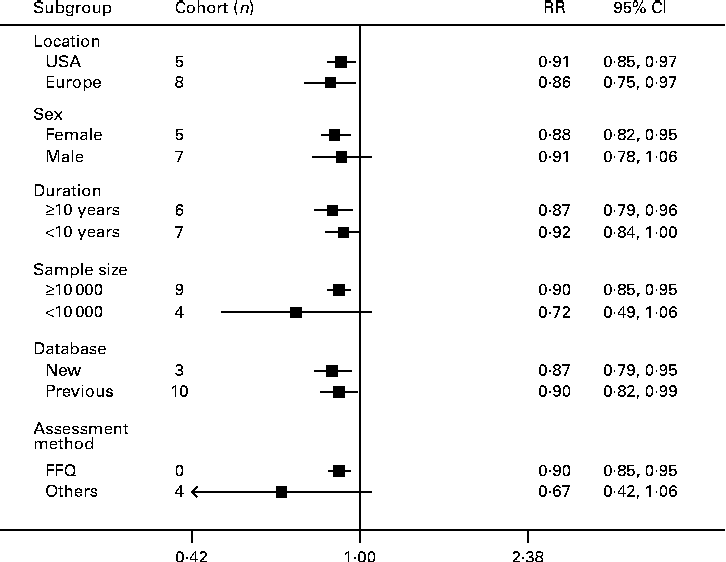
The inverse associations between flavonol intake and total CVD risk were observed in subgroups of females, duration of follow-up ≥ 10 years, sample size ≥ 10 000 participants and dietary assessment using FFQ.
Intakes of anthocyanidins and proanthocyanidins and risk of CVD
The relationship between anthocyanidin intake and CVD risk was examined by three studies( Reference McCullough, Peterson and Patel 11 – Reference Mursu, Voutilainen and Nurmi 13 ), and that between proanthocyanidin intake and CVD risk was examined by two studies( Reference McCullough, Peterson and Patel 11 , Reference Mink, Scrafford and Barraj 12 ). The results obtained from the meta-analyses of the associations between anthocyanidin and proanthocyanidin intakes and CVD risk are shown in Fig. 4.
Forest plots showing the associations between the intakes of anthocyanidins, proanthocyanidins, flavones, flavanones and flavan-3-ols and the risk of CVD. RR, relative risk.

Overall, the dietary intakes of anthocyanidins and proanthocyanidins were inversely associated with CVD risk. The pooled RR for CVD comparing the highest with the lowest categories of intake were 0·89 (95 % CI 0·83, 0·96; P= 0·002) and 0·90 (95 % CI 0·82, 0·98; P= 0·017), respectively. There was no evidence of between-study heterogeneity for these outcomes (all P values >0·47, all I 2= 0 %).
Intake of flavones, flavanones and flavan-3-ols and risk of CVD
In the meta-analysis of flavone intake and CVD risk, four studies( Reference McCullough, Peterson and Patel 11 – Reference Sesso, Gaziano and Liu 14 ) were included, in that of flavanone intake and CVD risk, four studies( Reference Knekt, Kumpulainen and Järvinen 6 , Reference McCullough, Peterson and Patel 11 – Reference Mursu, Voutilainen and Nurmi 13 ); and in that of flavan-3-ol intake and CVD risk, four studies( Reference McCullough, Peterson and Patel 11 – Reference Mursu, Voutilainen and Nurmi 13 , Reference Arts, Hollman and Feskens 36 ). In one study( Reference Knekt, Kumpulainen and Järvinen 6 ), we combined RR on the basis of the sum of the intakes of two flavanones (hesperetin and naringenin) for the analysis of flavanone intake. For another study( Reference Sesso, Gaziano and Liu 14 ), the RR of the intakes of apigenin and luteolin, two very closely related subclasses of flavones, were presented separately. We computed the RR of flavone intake and used the sum of the intakes of these two flavones as the exposure measure. If myocardial infarction and stroke were reported separately as outcomes, we combined these two outcomes into a single group and calculated the combined RR for the main analysis, as has been done in the study of Arts et al. ( Reference Arts, Hollman and Feskens 36 ).
Flavone, flavanone and flavan-3-ol consumption was associated with a decreased risk of CVD (Fig. 4). The overall RR for CVD were 0·88 (95 % CI 0·82, 0·96; P= 0·003) for flavones, 0·88 (95 % CI 0·82, 0·96; P= 0·002) for flavanones and 0·87 (95 % CI 0·80, 0·95; P= 0·002) for flavan-3-ols, when comparing the highest category of intake with the lowest category. There was no between-study heterogeneity in any of these analyses (all P values >0·430, all I 2= 0 %).
Dose–response analysis
We further evaluated whether there was a dose–response relationship between flavonol intake and total CVD risk. We could not include three studies( Reference Knekt, Kumpulainen and Järvinen 6 , Reference Mursu, Voutilainen and Nurmi 13 , Reference Rimm, Katan and Ascherio 15 ) in our secondary analysis because they did not provide sufficient numbers of cases for each exposure category or did not include a median of flavonol intake for each corresponding category.
Therefore, this analysis included ten studies( Reference Hertog, Feskens and Kromhout 9 – Reference Mink, Scrafford and Barraj 12 , Reference Sesso, Gaziano and Liu 14 , Reference Hertog, Sweetnam and Fehily 16 , Reference Lin, Rexrode and Hu 33 – Reference Hirvonen, Virtamo and Korhonen 35 , Reference Keli, Hertog and Feskens 37 ) with a total of 297 695 participants and 10 217 CVD cases. The pooled RR for CVD per 10 mg/d increment in flavonol intake was 0·95 (95 % CI 0·91, 0·99; P for trend=0·013), with moderate between-study heterogeneity (P= 0·116; I 2= 36·6 %).
Publication bias
Publication bias was assessed among the studies of flavonol intake and total CVD risk using the Begg rank correlation test and the Egger linear regression test, which suggested the absence of publication bias (Begg, P= 0·583; Egger, P= 0·348). No substantial asymmetry was identified on visual inspection of contour-enhanced funnel plots (Fig. 5).
Contour-enhanced funnel plots for flavonol intake and CVD risk. The plot indicates that most studies were in the non-significant area (the area between the two  ), while few studies were in the significant areas where P< 0·01 (
 ) and where P= 0·01 to < 0·05 (
 ). The large studies at the top of the plot were somewhat more symmetrically distributed than the small studies at the bottom. ● refers to the included studies. RR, relative risk; log (RR), logarithm of the RR.
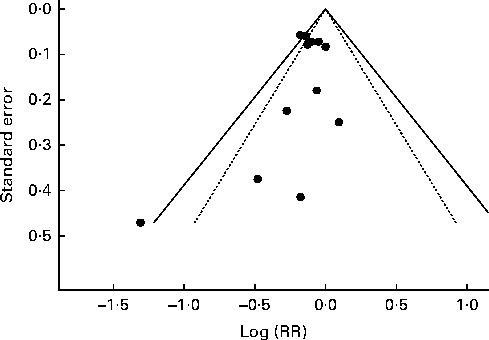
No evidence of publication bias was observed among the studies of anthocyanidin, flavone, flavanone, and flavan-3-ol intakes and CVD risk (Begg, all P values >0·730; Egger, all P values >0·230).
Discussion
The present meta-analysis of prospective cohort studies found that the intakes of anthocyanidins, proanthocyanidins, flavones, flavanones and flavan-3-ols were inversely associated with the risk of CVD when comparing the highest and lowest categories of intake. The meta-analysis of the thirteen prospective cohort studies, consisting of 344 488 subjects with 12 445 CVD cases, showed a similar association for flavonol intake and CVD risk. The results of the dose–response analysis indicated that an average increase of 10 mg of flavonol intake per d was associated with a 5 % lower risk of CVD. These results support recommendations for higher consumption of flavonoid-rich foods to reduce the risk of CVD.
Our finding that flavonoid intake may influence CVD risk is in agreement with the results of a number of large observational studies. Flavonoids are found most abundantly in fruits, vegetables, cocoa, nuts and beverages such as wine and tea. The dietary intakes of fruits and vegetables have been reported to be associated with a reduced risk of CHD( Reference Crowe, Roddam and Key 38 , Reference Dauchet, Amouyel and Hercberg 39 ). Furthermore, it has been reported that flavanol-rich foods and beverages can exert cardioprotective effects with respect to platelet reactivity and vascular function( Reference Murphy, Chronopoulos and Singh 40 , Reference Heiss, Dejam and Kleinbongard 41 ). The Mediterranean diet is rich in fruits and vegetables and is low in saturated fat and cholesterol. Many observational studies have shown that the Mediterranean diet is inversely associated with total and cardiovascular mortality( Reference Mitrou, Kipnis and Thiebaut 42 , Reference Knoops, de Groot and Kromhout 43 ).
Flavonoids are not uniformly distributed throughout the plant kingdom, despite the omnipresence of flavonoids in nature( Reference Beecher 44 ). The content of flavonoid subclasses may be more important than that of total flavonoids in foods. As an example, although there are only moderate levels of proanthocyanidins in cranberries, these flavonoids have a substantial proportion of unique molecular structures (A linkages)( Reference Gu, Kelm and Hammerstone 45 ) that may contribute to their bacterial anti-adhesion activity( Reference Foo, Lu and Howell 46 ). However, there are primarily B linkages in cocoa, which appear to protect against several biomarkers of CVD( Reference Schewe, Sadik and Klotz 47 ). The present study of flavonoid subclasses provided an insight into this and further confirmed this issue.
Possible mechanisms by which flavonoids decrease the risk of CVD probably involve more than one pathway, which have been reported to be most often related to their antioxidant and anti-inflammatory functions( Reference Middleton, andaswami and Theoharides 48 ) and vasodilatory properties( Reference Fisher, Hughes and Gerhard-Herman 49 ). Using flavonols as an example, there is a lot of evidence that quercetin and related flavonols exert protective effects on the most common forms of CVD. Flavonols play a protective role in atherosclerosis by inhibiting one or several processes involved in disease progression, such as oxidative stress, endothelial dysfunction and inflammation( Reference Perez-Vizcaino and Duarte 50 ). Flavonols may protect coronary vessels by preventing atherosclerosis, hypertension and endothelial dysfunction( Reference Perez-Vizcaino and Duarte 50 ). Most acute coronary events are due to a rupture in the atherosclerotic plaque and subsequent myocardial ischaemia. However, quercetin can stabilise the atherosclerotic plaque by decreasing the expression of matrix metalloproteinases( Reference Motoyama, Koyama and Moriwaki 51 ). Flavonols may have effects on different phases of stroke. In the acute phase, flavonols can prevent platelet aggregation and thrombosis, inhibit oxidative stress, reduce excitotoxicity and improve cerebral blood flow( Reference Simonyi, Wang and Miller 52 ). In the intermediate phase, flavonols can protect endothelial integrity and decrease inflammation( Reference Patil, Singh and Satyanarayan 53 , Reference Kao, Ou and Raung 54 ). In the late phase, flavonols may interfere with ischaemia-induced cell-death mechanisms, such as apoptosis and necrosis( Reference Silva, Oliveira and Dias 55 – Reference Echeverry, Arredondo and Abin-Carriquiry 57 ).
Due to a lack of information in nutrient databases available for the flavonoid content of foods, most previous studies have focused primarily on flavonols and flavones. The values reported for flavonoids are mainly based on composition analyses carried out by Hertog et al. ( Reference Hertog, Hollman and Katan 58 , Reference Hertog, Hollman and Van de Putte 59 ). In 2003 and 2004, the US Department of Agriculture published new databases of flavonoids( 21 , 22 ). A new database of flavonoids released by the US Department of Agriculture was used by three recent studies( Reference McCullough, Peterson and Patel 11 – Reference Mursu, Voutilainen and Nurmi 13 ). As a result, the variable of individual flavonoids may not be uniform. To further determine whether the use of databases of flavonoids affected the association between flavonol intake and CVD risk, we also conducted subgroup analyses. The results demonstrated a significant inverse association in both the previous studies and studies carried out using the updated flavonoid databases.
In analyses stratified by sex, we observed a significant inverse association between flavonol intake and CVD risk in women, but not in men. These results are in line with those of one study( Reference Knekt, Jarvinen and Reunanen 5 ) demonstrating the beneficial effects of antioxidants particularly in women. Moreover, cigarette smoking and physical activity may be strong confounders in both men and women. Adjustments for smoking were made in all the included studies. Several studies reported that supplementation with antioxidants or dietary intake of antioxidants can decrease the symptoms or indicators of oxidative stress as a result of exercise( Reference Peternelj and Coombes 60 ). However, restriction of the analysis to those studies that adjusted for physical activity did not significantly alter the present results, suggesting that the inverse association between flavonol intake and CVD risk was not influenced by physical activity or smoking.
We found that flavonol intake was inversely associated with CVD risk in both US and European populations, suggesting that geographical or related factors did not affect the relationship between flavonol intake and CVD risk. However, it is still possible that dietary habits may alter the biological activities of flavonoids in vivo and other dietary constituents may impair the absorption and protective effects of flavonoids( Reference Serafini, Bugianesi and Maiani 61 ). Stratified analyses also indicated a significant inverse association in subgroups of females, large sample size, long follow-up period and dietary assessment using FFQ. These results further confirmed the beneficial effects of flavonol intake on CVD.
The present meta-analysis showed for the first time, to our knowledge, that the intakes of anthocyanidins, proanthocyanidins, flavones, flavanones and flavan-3-ols are inversely associated with the risk of CVD. However, three previous meta-analyses had focused solely on the evaluation of the role of flavonols, and these studies yielded inconsistent results. In one previous meta-analysis( Reference Huxley and Neil 18 ) that included seven studies, it was found that the intake of flavonols may be inversely associated with CHD mortality. Another meta-analysis( Reference Hollman, Geelen and Kromhout 19 ) that included six studies observed that flavonol intake may reduce the risk of stroke. In contrast, no significant association was found in another meta-analysis( Reference Wang, Nie and Zhou 17 ) combining nine studies on the relationship between flavonol intake and CHD risk. In contrast to previous meta-analyses, a total of fourteen prospective cohort studies were included in the present study. We assessed the role of six specific classes of flavonoids in CVD risk. The present results indicated that the intakes of all the six classes of flavonoids were inversely associated with the risk of CVD.
The limitations of the present study should be addressed. First, we could not exclude potential biases due to the misclassification of dietary exposure. Exposure to flavonoids was measured using FFQ in most studies. Second, the present meta-analysis was based on observational studies. We cannot rule out that uncontrolled or unmeasured risk factors may not have potentially confounded any association between flavonoid intake and CVD risk. The relationship between diet and CHD or CVD is complex. The dietary intakes of carotenoids( Reference Knekt, Ritz and Pereira 62 ), vitamin E( Reference Rimm, Stampfer and Ascherio 63 ), vitamin D, vitamin C( Reference Khaw, Bingham and Welch 64 ), folate( Reference Rimm, Willett and Hu 65 ) and fibre( Reference Pietinen, Rimm and Korhonen 66 ) have been reported to be positively and independently associated with a lower risk of CHD. Besides, the subclasses of flavonoids are highly correlated. The CVD outcomes were also heterogeneous across different studies. These factors may also have affected the results of the present study.
In conclusion, the present meta-analysis of prospective cohort studies provides further evidence that the dietary intakes of six classes of flavonoids, namely flavonols, anthocyanidins, proanthocyanidins, flavones, flavanones and flavan-3-ols, are inversely associated with the risk of CVD. Our data support the hypothesis that a greater intake of dietary flavonoids is associated with a lower risk of CVD.
Acknowledgements
The present study was funded by the Shandong Province Natural Science Foundation of China (ZR2010HM123). The funder had no role in study design, data collection and analysis, decision to publish or preparation of the manuscript.
X. W. and G. Z. conceived the study; X. W. and Y. Y. O. searched the databases; G. Z. helped develop the search strategies; X. W., Y. Y. O. and J. L. helped extract quantitative data from some papers; X. W., Y. Y. O. and J. L. analysed the data; X. W. wrote the draft of the paper; X. W., Y. Y. O., J. L. and G. Z. had partial responsibility for the approval of the final version of the manuscript.
All authors declare that there are no conflicts of interest.



