



Hispanics/Latinos are the largest minority ethnic group in the USA and a relatively young population that presents increased burden for cardiovascular risk factors, including overweight and obesity( Reference Rodriguez, Allison and Daviglus 1 – Reference Wang, Gortmaker and Taveras 4 ). Over the past 20 years, the percentage of overweight Latino youth in the USA has approximately doubled( Reference Ogden, Carroll and Lawman 5 ). If unaddressed, these rates will lead to devastating consequences, including decreased quality of life and increased mortality and health-care costs related to preventable CVD, type 2 diabetes mellitus and certain cancers( Reference Heidenreich, Trogdon and Khavjou 6 ).
Higher rates of obesity are found among children living in low-income neighbourhoods( Reference Sallis and Glanz 7 , Reference Lovasi, Hutson and Guerra 8 ). These neighbourhoods often lack access to foods of high nutritional quality( Reference Lovasi, Hutson and Guerra 8 , Reference Larson, Story and Nelson 9 ). Federal and local initiatives have aimed at increasing economic and/or geographical access to healthful foods as one step in the process of improving diets and lowering the burden of obesity in high-risk populations( Reference Story, Kaphingst and Robinson-O’Brien 10 – 12 ). However, there is limited evidence on the effectiveness of these strategies in increasing consumption of healthful foods in the USA( Reference Ortega, Albert and Chan-Golston 13 , Reference Dubowitz, Ghosh-Dastidar and Cohen 14 ), particularly among children. Large longitudinal studies have not found an association between the neighbourhood food environment and foods available at home, children’s diet, BMI or obesity( Reference An and Sturm 15 – Reference Shier, Nicosia and Datar 20 ).
This disagreement in findings could be partly related to a gap in knowledge about how primary caregivers make feeding decisions in the context of neighbourhood food availability. Food choices are determined by a complex web of factors( Reference Dubowitz, Ghosh-Dastidar and Cohen 14 , Reference Krukowski, Sparks and DiCarlo 21 – Reference Cannuscio, Hillier and Karpyn 26 ). There is a critical need to provide conceptual clarity on how food environments may shape these choices among primary caregivers of children( Reference Rose 27 – Reference Zachary, Palmer and Beckham 29 ). The present study aimed to deepen our understanding of what makes it easier or harder for Latina mothers to feed their children healthy foods, with an emphasis on the reciprocal relationship between mothers’ feeding decisions and a neighbourhood food environment saturated with unhealthy options.
Methods
We used the photovoice methodology, a participatory qualitative research method, to elicit participants’ documentation of their lived realities through photographs( Reference Wang and Pies 30 – Reference Wang and Burris 32 ) and to participate in a critical dialogue to recognize the causes of community-centric problems and identify possible solutions. We also conducted a culminating workshop whereby participants met to share their photos and to identify steps to transform their perspectives into action( Reference Wang and Pies 30 – Reference Hergenrather, Rhodes and Cowan 33 ).
Study setting
The study was conducted in a largely Latino immigrant community located in the Washington, DC, metropolitan area. The resident population (n 20675) is almost 80 % Hispanic and almost 68 % are foreign-born in Central American countries (primarily El Salvador and Guatemala). The community is mostly low-income, with almost one in four children living in poverty( Reference Narayan, Boyle and Thompson 34 ). The region where the target population is based is saturated with food options, with 95 % of adults in the community reporting a grocery store in the neighbourhood; many of these grocery stores cater specifically to Latinos. Although there is a variety of food establishments, 71 % of them are fast-food restaurants( 35 , Reference Scott, MacDonald and Collazos 36 ), suggesting that this community is a ‘food swamp’ or a geographic area with disproportionate access to energy-dense, nutrient-poor foods( Reference Luan, Law and Quick 37 , Reference Rose, Bodor and Hutchinson 38 ).
The community is home to a >12-year-old community–academic partnership (Avance Center for the Advancement of Immigrant/Refugee Health) that is guided by an advisory board including residents, representatives from non-governmental and private organizations, interest groups, and academics and teachers. The partnership recently became interested in addressing poor nutrition and access to healthful foods in the community( Reference Andrade, Cubilla and Sojo-Lara 39 ). The work described here is part of formative activities conducted to decide the specific actions that the partnership could focus on.
Theoretical framework
The approach and design of the present study were developed and refined during discussions with the community advisory board of the community–academic partnership. The framework integrates elements of Social Cognitive Theory within a social ecological perspective. Social Cognitive Theory provides a theoretical framework for understanding and describing the potential interaction between individuals engaging in health behaviours and their environments. The basic principle from this framework is the simultaneous influence between environmental, cognitive or personal and behavioural factors (reciprocal determinism). Among the key theoretical concepts of the Social Cognitive Theory are self-efficacy (confidence in abilities to perform a behaviour), behavioural capability (actual knowledge and ability to perform a behaviour), responses internal or external to a person that affect the likelihood of behavioural continuance (e.g. values, outcome expectations, social reinforcement and expectancies) and observational or vicarious learning (observation and reproduction of others’ behaviours)( Reference Glanz, Rimer and Lewis 40 , Reference Bronfenbrenner 41 ). We incorporated these factors into the context of a social ecological approach in which an individual is nested within a larger context of the home, social and neighbourhood food environments( Reference Story, Kaphingst and Robinson-O’Brien 10 , Reference Bronfenbrenner and Ceci 42 , Reference Colón-Ramos, Thurman and Burns 43 ).
Sample population
We purposively sampled Latina/Hispanic mothers who lived in this community, had been in the USA for less than 15 years and had at least one child under the age of 10 years. We chose the specific age range for children because they are often more dependent on what foods parents bring home to eat( Reference Birch and Fisher 44 – Reference Gillespie and Johnson-Askew 46 ).
Study participants and recruitment
We worked closely with a local data collector group that has over 20 years of experience working and living in this community, to identify fifteen mothers through word of mouth and community outreach activities. Each participant provided written informed consent and was encouraged to ask questions about the study before starting.
Data collection
Following the photovoice approach( Reference Wang and Pies 30 – Reference Wang and Burris 32 ), we collected qualitative (textual and visual) data via four activities: (i) an initial in-depth interview with each mother (~1 h); (ii) photographs taken over a 3–4d period by mothers; (iii) a second in-depth interview with each mother to discuss her photos and elicit explanatory comment (~40 min); and (iv) a summary of an action-oriented workshop during which all participants identified their priority areas and made collective recommendations for future programmes and activities (2·5 h).
Individual in-depth interviews and photographs
The research team developed an open-ended interview guide that included questions on the activities carried out during a typical day (‘Can you walk me through your typical day?’), as well as about factors perceived as barriers and facilitators to providing the foods that caregivers wanted to provide for their children (i.e. ‘Some parents mention that the foods that they provide are not the foods that they would like to feed their children; do you feel that way? What would make it easier for you to provide the foods that you want for your kids?’). At the end of each interview, the researcher and the participant identified together the barriers and facilitators that emerged during the interview. The researcher then asked the participant to take photos over the next 3–4d of those barriers and facilitators, and any additional ones. Participants were provided with a folder that included information about the study, along with photo-taking tips. We provided cameras, but most participants (n 14) preferred to take photos with their phones. Participants were reminded daily via text or phone calls to take pictures during the next 3–4d.
During the second individual interview, participants were asked to share their photos and to identify three or four favourite pictures that best represented what made it easier or harder to provide the foods that they wanted to provide for their child. Participants were asked to state what the photo showed, why they took it, and to provide an illustrative title and description for each favourite photo according to principles of storytelling and contextualization( Reference Wallerstein and Bernstein 47 ).
Culminating workshop
After all interviews had been conducted, the research team printed and organized the participants’ favourite photos along with captions and descriptions. All interviewees (n 15) also participated in the culminating workshop. At the workshop, which was facilitated by the local data collector group and the principal investigator, each mother was asked to present her favourite photos and captions as illustrations of the barriers and facilitators. Then, as a group, they were asked to list the common barriers and facilitators that they wished to discuss and identify the reasons why. Each participant was asked to put a sticker next to the listed barriers/facilitators that she wanted to take further action on. This prompted an open-ended discussion about their shared and prioritized barriers, facilitators and next action steps.
Data were collected between April and May of 2015. Meetings were conducted at a convenient time and place for participants, and all data collection activities were audio- or videotaped with the express permission of participants. All instruments and protocols were reviewed and approved by the Office of Human Research of the George Washington University. Participants received a monetary incentive after completing the interviews.
Data analysis
Audio recordings from thirty individual interviews and the workshop discussion with fifteen mothers were transcribed verbatim for analysis as textual data. The data analysis followed a multi-step, iterative coding process. As a first step, the principal investigator systematically coded all data deductively using the thematic categories from our theoretical framework that identify the various environments from the social ecological approach and constructs of the Social Cognitive Theory( Reference Story, Kaphingst and Robinson-O’Brien 10 , Reference Bronfenbrenner 41 , Reference Bronfenbrenner and Ceci 42 ). As a second step, a research assistant also analysed the data independently and in the same manner. During a third step, the research assistant and principal investigator met to discuss the codes and illustrative quotations that emerged from this process, resolve discrepancies, refine sub-codes, merge themes and ultimately create an agreed-upon coding scheme. A fourth step was to review the photographs and their accompanying descriptions along with the textual data from the culminating workshop discussions using both the initial codebook and allowing for additional themes to emerge. The draft codebook was continuously revised and refined. Throughout this process, we also shared and discussed findings and interpretations with the community advisory board in order to identify alternative explanations from those derived, and to assess if our findings had identified salient issues according to the perceptions of our community advisory board members. This reflexive and communal exercise also allowed us to conceptualize the relationships between emerging themes.
Results
We present the findings of recurrent themes that emerged among a majority of mothers or that held a prominent place during the culminating workshop discussion. These themes are organized in tables according to the sub-themes that emerged in all textual data, sometimes reinforced by visual data from photographs.
I. Home environment: what caregivers are feeding their children
Data from the in-depth interviews, the culminating workshop discussion and the photographs point to three categories of foods that mothers valued and wanted to feed their children: traditional foods, water, and fruits and vegetables (Table 1; sub-themes 1·1a–1·1c). Traditional foods were dishes that the mothers tied to their country of origin, such as soups and prepared dishes with rice, tortillas, Central American cheese and eggs. Mothers perceived that these foods were more healthful and therefore valued them more (internal reinforcement). They expected positive health outcomes from giving these foods to their children (outcome expectations). Traditional foods were also valued because, through preparing them, mothers reinforced a tie between their children (born and raised in the USA) and their own countries of origin.
Home environment: what mothers are feeding their children. Data collected from thirty in-depth interviews, a participatory workshop and a photovoice approach among Latina mothers with <10-year-old children living in a ‘food swamp’ in the Washington, DC, metropolitan area, April–May 2015

During the interviews and discussions, mothers described their child feeding strategies based on their knowledge (behavioural capability) and outcome expectations. Some mothers decided themselves what the children would eat (Table 1; sub-theme 1·2a) and limited the child’s exposure to ‘outside’ foods (Table 1; sub-theme 1·3a), while other mothers made the desired foods available in their homes and presented them in an appealing way to the children (Table 1; sub-themes 1·3b and 1·3c).
Other mothers, expecting negative responses from enforcing a menu that their children may not value, were then more permissive in the foods that they allowed at home. They allowed the children to decide, or at least influence, what was put on the table in order to avoid conflict (Table 1; sub-theme 1·2b). For example, some mothers described that the foods that they offered at home (traditional foods, vegetables, fruit, water) were rejected by the children in favour of ‘outside’ foods such as pizza, French fries and fried chicken (Table 1; sub-theme 1·4). This led to frustration, as one mother expressed, deterring her from cooking and pushing her to purchase ready-to-eat foods available in fast-food outlets. These data suggest that for mothers who valued family cohesion over other aspects of foods (e.g. healthfulness or tradition), the children’s preferences could then influence what the mothers fed them (reciprocal determinism).
II. Social environment: the roles of work and the nuclear family in deciding what to feed their children
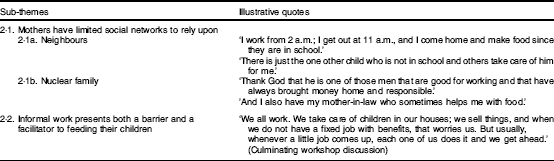
The majority of mothers had limited social networks that included the nuclear family (husbands, children, mother-in-law) and neighbours, some of whom they paid to take care of their young children (Table 2; sub-theme 2·1). Mothers relied on the assets that these limited networks afforded them in order to acquire resources to feed their children. For example, mothers described how their participation in the informal local economy, selling ice creams or other items, helped them make ends meet. This sub-theme was also described as a source of concern, because these informal work activities did not provide sufficient economic stability to systematically cover their housing and utility bills. Housing and utility bills were discussed as being prioritized (out of necessity) over child or family nutrition (Table 2; sub-theme 2·2), altogether suggesting that the social environment provided few incentives to prioritize family or child nutrition over other needs.
Social environment: the roles of work and the nuclear family in deciding what to feed their children. Data collected from thirty in-depth interviews, a participatory workshop and a photovoice approach among Latina mothers with <10-year-old children living in a ‘food swamp’ in the Washington, DC, metropolitan area, April–May 2015
III. Neighbourhood physical environment: availability and access to specific foods and beverages in the neighbourhood
This theme emerged only during the culminating workshop. In discussing where they obtained the foods portrayed in their photographs, mothers described how they had easy access to supermarkets and grocery stores that cater to the Latino population. This made it convenient for them to shop if they did not have a car (Table 3; sub-theme 3·1a). The majority of mothers felt that there was a strong influence from the neighbourhood food environment to consume sugary drinks, because stores in the community are saturated with these beverages. According to these mothers, stores are oriented towards satisfying the preferences of Latinos who come from countries where sodas are popular, but the cost is prohibitive. As one mother explained, sodas were available and more affordable in the USA (Table 3; sub-theme 3·1b). These data suggest that a neighbourhood environment where these beverages are more available and affordable can externally reinforce the desire to consume these sugary drinks.
Neighbourhood physical environment: availability and access to specific foods and beverages in the neighbourhood (theme emerged only during culminating workshop discussion). Data collected from thirty in-depth interviews, a participatory workshop and a photovoice approach among Latina mothers with <10-year-old children living in a ‘food swamp’ in the Washington, DC, metropolitan area, April–May 2015.

Costco is a US warehouse that sells foods; it is also a chain.
An important issue that arose concerned potential alternatives to sugary beverages, specifically water. Although mothers wanted to provide water for their children to drink, they also expressed negative outcome expectations about tap water, considering it to be dirty and distasteful. This was linked to the perception that the physical environment of their neighbourhood was a barrier to drinking water (e.g. water utility, housing and water pipes) (Table 3; sub-theme 3·2). For example, although some mothers had been told that tap water was more healthful, they reported that the water in their homes often came out yellow or dirty because the homes in their neighbourhood had worse piping infrastructure than more affluent neighbourhoods. The low expectancies linked to tap water consumption were heightened by uncertainty about the origin of potable tap water in the USA. For example, mothers believed (erroneously) that tap water in the USA was recycled from the toilet and faucet – it is unclear from where this belief originates. In contrast, in their countries of origin, mothers trusted tap water because they saw the actual source of the water, often a river or a lake (Table 3; sub-theme 3·2).
IV. Macrosystem: national policies and programmes, customs and culture
Three themes, all related to the macrosystem and characteristic of the reciprocal determinism proposed by the Social Cognitive Theory, were identified as factors that made it easier or more difficult for mothers to offer the foods that they valued for their children: (i) customs related to pre-migration food habits (a cultural and cognitive factor); (ii) health professionals’ advice (behavioural practice); and (iii) the national nutrition and feeding programmes (policy-level environmental factor) (Table 4; sub-themes 4·1–4·3).
Macrosystem: national policies and programmes, customs and culture. Data collected from thirty in-depth interviews, a participatory workshop and a photovoice approach among Latina mothers with <10-year-old children living in a ‘food swamp’ in the Washington, DC, metropolitan area, April–May 2015

WIC, Special Supplemental Nutrition Program for Women, Infants, and Children.
Customs and pre-migration culture, a theme that emerged during the culminating workshop, could influence which foods mothers valued based on their cultural roots and beliefs about healthfulness of these foods. Mothers described how foods tasted better in their country of origin than in the USA, and expressed concern about chemicals and preservatives in the foods commonly found in the USA (Table 4; sub-theme 4·1a). They wanted to transmit traditional food customs to their children and re-create the same feeding experiences from their home country.
The advice of health professionals had also shaped mothers’ decisions on what to feed their families. Dentists, doctors and nutritionists advised mothers on what to eat in order to deal with family members’ problems with diabetes, obesity, dental cavities and other ailments (Table 4; sub-theme 4·2). This suggests that health professionals’ advice led to self-efficacy to provide a healthy diet and reinforced mothers’ positive expected outcomes when serving fruits and vegetables, leaner cuts of meat, water and fewer sugary drinks. However, some practices that were tied to pre-migration food habits, such as having a sugary drink with each meal, were perceived as ‘difficult to change’, regardless of known health consequences (Table 4; sub-theme 4·1b). These data suggest that for those mothers there was a value conflict between the health aspects of a food and the pre-migration habits or cultural roots of the food. As noted earlier, the pre-migration habits related to sugary drink consumption were reinforced by a neighbourhood food environment in the USA that made sweet beverages more accessible and affordable.
In accordance with the above, the majority of mothers mentioned that the school feeding programme exposed the children to foods that they considered unhealthful or culturally inappropriate. They therefore compensated at home by feeding their children the traditional foods that they valued more (Table 4; sub-theme 4·3a). The Special Supplemental Nutrition Program for Women, Infants, and Children (WIC) facilitated mothers’ feeding decisions because it gave out vouchers that allowed mothers to purchase fruits, vegetables and dairy products to prepare foods that they valued and could not otherwise afford (Table 4; sub-theme 4·3b). No other safety net programmes were mentioned.
V. Mesosystem: how mothers navigate the neighbourhood food environment
Since mothers had assigned values to specific foods that they wanted to provide for their children, they navigated the food retail environment looking for these foods. The characteristics of the neighbourhood food environment and the values that mothers had assigned to foods led to a complex dynamism at the time of procuring foods. Mothers navigated the neighbourhood food retail environment and decided where to shop based on availability, pricing and quality of foods that they had decided to value (Table 5; sub-themes 5·1a–5·1c). For example, they went to the Latino stores to obtain items that were essential for the preparation of traditional foods (rice, beans, special creams and cheeses imported from their countries of origin) and that were unlikely to be found elsewhere.
Mesosystem: how mothers navigate the food environment. Data collected from thirty in-depth interviews, a participatory workshop and a photovoice approach among Latina mothers with <10-year-old children living in a ‘food swamp’ in the Washington, DC, metropolitan area, April–May 2015

Giant, Aldi and Safeway are US supermarket brands with national chains. Costco and Walmart are warehouses that sell foods; they are also chains. Megastore is a local supermarket that targets Latinos by bringing foodstuffs from Latin America.
As part of this reciprocal process, the mothers’ self-control regarding food expenditures influenced family eating behaviours. The majority of mothers described how they planned shopping according to their monthly or biweekly budgets, and adjusted their shopping strategies accordingly. For example, many would buy in bulk (Table 5; sub-theme 5·1d), stocking up on large quantities of non-perishables such as rice and oil. They resorted to different strategies to offset the negative expectancies of having unbalanced foodstuffs in their homes at the end of the budget period. For example, they: (i) stayed away from animal proteins such as meats and fish, and instead complemented the staples with beans; (ii) changed recipes to include less oil, which is expensive, and fewer perishables (also expensive); and (iii) bought only what was necessary and avoided sweets, desserts or non-perishable foods (Table 5; sub-theme 5·1e).
VI. Actions from culminating workshop
The photovoice approach draws from an approach that uses critical reflection as a mechanism for discovery of social inequalities and emphasizes action to address these inequalities( Reference Wang and Burris 32 , Reference Wallerstein and Bernstein 47 , Reference Freire 48 ). During the culminating workshop, mothers discussed what they would like to address to make it easier for them to feed their children and they emphasized three areas for action that triangulate the relationship between socio-environmental, personal and behavioural factors: (i) the neighbourhood food retail environment; (ii) the school food environment; and (iii) education and information (Table 6). Mothers hinted at a sense of injustice and inequity when discussing access to clean tap water for drinking and to quality foods in their neighbourhoods vis-à-vis more affluent, white-serving neighbourhoods. Nevertheless, mothers showed a strong self-determination and wanted the stores and schools to provide foods more in line with their food values. They suggested forming groups to advocate for: (i) improving the foods sold in Latino retail stores in their communities; (ii) learning about and influencing foods offered at lunch; and (iii) learning about how to make better choices and reinforce their own knowledge about healthful foods and beverages for their children.
Actions from culminating workshop. Data collected from Latina mothers with <10-year-old children living in a ‘food swamp’ in the Washington, DC, metropolitan area, April–May 2015.

Safeway is a US supermarket brand with a national chain. Costco is a US warehouse that sells foods; it is also a chain.
Summary of results
We summarize the results in a refined conceptual framework (Fig. 1) that emerged from the relationships between the different themes and sub-themes in the present study. In all of the framework’s segments, reciprocal determinism and external reinforcement between behaviours and environments play a key role. At home, mothers valued certain foods based on their outcome expectations (keeping traditions, healthfulness of foods and, in some cases, avoidance of conflict). Child feeding strategies then emerged based on their outcome expectations. Mothers navigated the neighbourhood food retail environment in order to find quality and affordable foods and beverages that they valued for their children (Segment A). For some mothers, child preferences also influenced mothers’ food values, especially if mothers wanted to avoid the conflict caused by food preferences (Segment B). Child preferences could be directly influenced by exposure to foods in the neighbourhood and at schools (Segment C). Mothers’ expected outcomes related to serving specific foods were reinforced by pre-migration food customs and habits and health professionals’ advice (Segment E), and these, especially in the case of sugary drink consumption, were further reinforced by the availability and affordability of these foods in the neighbourhood food retail environment. The informal economy and national feeding/nutrition programmes facilitated the purchase of foods that the mothers valued (Segment D).
Conceptual framework depicting the interactions between various environments and children’s diets among Latinos in a food swamp (WIC, Special Supplemental Nutrition Program for Women, Infants, and Children)

Discussion
In light of persistently increasing obesity and overweight rates among Latino children and adolescents, there is a need for conceptual clarity on how the physical food environment may shape feeding decisions among primary caregivers of children( Reference Bowen, Barrington and Beresford 49 – Reference Neff, Palmer and McKenzie 51 ). Our results contribute to the growing literature on how food shopping decisions are determined and support previous reports that describe how these decisions are determined by a complex network of factors beyond the physical food environment( Reference Dubowitz, Ghosh-Dastidar and Cohen 14 , Reference Krukowski, Sparks and DiCarlo 21 – Reference Cannuscio, Hillier and Karpyn 26 ).
Mothers navigated the neighbourhood food retail environment to procure the foods that they valued for their children. Our data suggested that these Latina mothers valued foods that they considered to be healthful and ‘traditional’ because of the positive expected outcomes from providing these foods. Other studies with varied Latino populations have reported similar findings that emphasize Latino parents’ knowledge about, and desire to feed, healthful foods to their children( Reference Evans, Banks and Jennings 52 – Reference Lindsay, Sussner and Greaney 55 ). These values could be influenced, at least in part, by the knowledge and degree of confidence or self-efficacy that the mothers felt about feeding these foods to their children.
Advice from health professionals can reinforce the confidence that mothers feel in improving dietary choices for their families. Health professionals’ advice can contribute to mothers’ knowledge of what is healthful to eat and what to feed their families, as well as to mothers’ self-efficacy to take those actions. Others have reported that Latinos trust doctors’ information slightly more than media sources of information or than family and friends( 56 ), even if they face numerous barriers to accessing formal health care( Reference Livingston, Minushkin and Cohn 57 ). The findings from our study are somewhat surprising given the limited geographic access to clinics and hospitals in the community (a report from 2014 found that there are no paediatricians and medical specialists in the neighbourhood, and a very small number of primary caregivers; all families travel to neighbouring areas to get these medical services( Reference Scott, MacDonald and Collazos 36 )). However, there are also outreach programmes from private health organizations and national programmes (e.g. doctors, nurses and other health practitioners through Federally Qualified Health Centers; nutritionists with WIC) that specifically target and try to reach Latinos via bilingual programmes and door-to-door visits of community health workers. Our results imply that engaging health professionals in this community to disseminate health and nutrition information has been, and may continue to be, a successful strategy to reach mothers and achieve better health outcomes.
Mothers’ food values for offering ‘healthful’ or ‘traditional’ foods could be offset by conflicting child food preferences. The food choice literature explains this common phenomenon as clashing food values between family members( Reference Gillespie and Johnson-Askew 46 , Reference Connors, Bisogni and Sobal 58 ). Individuals tend to place values on foods and the position that a specific food holds within a value hierarchy may affect whether or not the food is consumed( Reference Pollard, Kirk and Cade 59 ). For example, although mothers may want to introduce foods that they consider more healthful or ‘traditional’, these foods may not reflect the cultural identity or preference of their US-born children and therefore may not hold the same value for the children. This could produce conflict between family members. Conflict can also arise within individuals if two foods hold different competing values: for example, drinking water may have a positive ‘healthful’ value for mothers, but drinking sugary drinks with meals has a positive ‘traditional’ value that recalls cultural identity for mothers. Depending on the hierarchy between healthful and traditional values, a decision will be made. For those mothers who may place higher priority on sustaining stable and positive relationships, they will provide their children the foods that do not produce conflict at the expense of healthful foods.
Our findings also emphasize the reciprocal determinism between the environment, culture and social environments that leads to external and internal reinforcement of behaviours( Reference Glanz, Rimer and Lewis 40 , Reference Bronfenbrenner 41 ). For example, mothers’ beliefs about the source of tap water in the USA were reinforced by the environment (yellow water coming out of the pipes) and resulted in behaviours (not providing tap water to their children). Similarly, exposure to foods at school and in the neighbourhood food retail outlets could have directly influenced the children’s food preferences and possibly caused clashes in food values with their mothers, while also shaping what the mothers ultimately valued and decided to feed their children. The school feeding environment was of particular concern to the mothers because the children spend the majority of their day there( Reference Story, Kaphingst and French 60 ) and the mothers had no influence and limited knowledge about the foods that were fed to their children during this time. Schools exposed the children to foods that mothers considered to be culturally inappropriate or unhealthful. These food choices presented to the children at school were thought to directly influence children’s food preferences, thereby causing conflict at home. Evans and colleagues reported similar findings among Spanish-speaking Latino families (mostly Mexican) in Texas( Reference Evans, Chow and Jennings 61 ). Those families then made their traditional, culturally appropriate foods more available to their children at home. This is a missed opportunity for school feeding and the success of the Healthy Hunger Free Kids Act, which provides federal guidance on the quantity and quality of foods served at school. If parents or children dislike the foods provided at school, they may bring more snacks and foods from home to consume at school. Children who consume lunch or snacks brought from home tend to have worse diet quality than those who eat the school lunch( Reference Au, Rosen and Fenton 62 ). Engaging parents and the student body as stakeholders in school-feeding decision making has been touted as a key factor to the success of school feeding programmes( Reference Chatterjee, Daftary and Campbell 63 ).
Finally, mothers’ reliance on their immediate social environment (nuclear family, neighbours) and national programmes like WIC made it easier for them to feed their children by either making foods more affordable or freeing their time to spend in informal economic activities in order to eventually be able to afford foods. Mothers’ reliance on their nuclear families is not uncommon among Latin American families with strong feelings of familismo, a cultural value reflecting strong family attachment( Reference Callister, Beckstrand and Corbett 64 – Reference Alvidrez 66 ). But their dependence on the nuclear family and immediate neighbours could also be due to difficulties in building and maintaining social ties, which have been reported as a common barrier to social support among recent immigrants( Reference Callister, Beckstrand and Corbett 64 , Reference Ornelas and Perreira 65 , Reference Parrado, Flippen and McQuiston 67 ). First-generation Latina immigrants, for example, reportedly rely on a smaller set of social ties to meet their needs compared with second-generation Latinas( Reference Viruell-Fuentes and Schulz 68 ). In addition to language and cultural barriers, socio-economic pressures to make money and the resulting time limitations can make it difficult to develop, expand and maintain social networks( Reference Hurtado-de-Mendoza, Gonzales and Serrano 69 ).
Our design and analyses have a few limitations: we did not collect in a systematic manner any sociodemographic characteristics of the respondents (such as age, education, years in the USA, country of origin). This information would be helpful to understand possible differences in experiences by sub-population groups. We also did not directly assess mothers’ perspectives about healthful eating and therefore cannot make any assumptions about diet quality. The strengths of our study include: (i) interviewing participants twice and holding an action workshop with all participants to delve deeper into their perceptions and experiences; (ii) verbatim transcription of all discussions to increase accuracy of the qualitative data and to aid in the interpretation and relationships between sub-themes and themes; and (iii) the use of participatory methods by including the community advisory board to assist in the interpretation of findings. These approaches maximize the rigour of the qualitative analysis.
In sum, mothers’ food values for ‘traditional’ and ‘healthful’ foods influenced how they navigate the neighbourhood food environment. Mothers navigated the food environment to find quality and well-priced foods and beverages that they valued for their children. Food values were reinforced by pre-migration food customs, health professionals’ advice and, in some cases, by the avoidance of family conflict and catering to child food preferences. The neighbourhood food environment could directly influence children’s food preferences and often created conflict between what the child wanted to eat and the foods that mothers valued. Mothers in this ‘food swamp’ would like to be engaged in addressing the selection of foods offered in schools and in neighbourhood food venues to reflect the foods that they value.
Acknowledgements
Acknowledgements: The authors would like to thank the Community Advisory Board of the Avance Center for the Advancement of Immigrant/Refugee Health for their input in providing context to the study findings. They would also like to thank the mothers who participated in the study; Mrs Basmah Rahman, research associate at the Avance Center, and Rivera Group staff, who assisted with the logistics and coordination of the culminating workshop; and N. Ramos Torres and A. Colon-Rosado for assistance throughout this project and manuscript, including editing, translations and initial coding scheme. Financial support: This publication was supported by a grant from the Honey Nashman Center for Civic Engagement and Public Service at the George Washington University; and by the Centers for Disease Control and Prevention (grant/cooperative agreement number 5 U58 DP005819-03). Its contents are solely the responsibility of the authors. Conflict of interest: None declared. Authorship: U.C.-R. conceived the study, study design and analysis; led analysis of the data; contributed to interpretation; and led the writing and drafting of revisions. R.M.-R. contributed significantly to interpretation of results and writing. E.C. assisted with data analysis and contributed to writing and interpretation of results. I.M.R. led data collection. E.L.A. and M.C.E. contributed to revisions and interpretation of data, incorporation of photovoice methodology and theoretical application for findings. All authors contributed significantly to drafting the manuscript and revisions, and reviewed all drafts and the final manuscript. Ethics of human subject participation: All instruments and protocols were reviewed and approved by the Office of Human Research of the George Washington University. All participants provided informed consent and express permission for audio- or videotaping during data collection activities.



