




As teacher educators and researchers, we hope to open and soften conversations and activities about climate change with teacher candidates. We strive to use approaches that make the topic less overwhelming and paralysing, and more connected to who each person is, what they love, and how their lives are intertwined with other living species. Here we describe part of an art-making and consciousness-raising initiative we designed and implemented called Change with the Earth in Mind. This involved offering a clay-based art-making workshop to 53 teacher candidates as an optional learning experience within a required environmental education course in Canada. Drawing on Bentz’s (Reference Bentz2020) framework for arts-based engagement with climate change, we sought to engage teacher candidates in, with, and through art. During the workshops we observed and reflected on how teacher candidates responded to our call to listen to the Earth. Leveraging this art education experience as a research study utilising a/r/tography and narrative inquiry, our observations led to findings related to clay as both a medium and metaphor for human relationships to the Earth and for climate education pedagogies. We describe four workshop movements that we observed emerging: preparing and working with the clay, leaving traces, clay leftovers, and decay. Briefly, we conclude by looking for the ways that clay itself shaped the learning in ways that exceeded our own efforts (Bennett, Reference Bennett2010). The contributions of this study to teacher education, art education, and environmental education are in how clay art-making pedagogies can become a generative medium, and a generative metaphor, for human relationships to the Earth, and for climate education pedagogies.
We live in a time of ecological crisis. As this crisis mounts, so too does the prevalence of challenging emotions, including eco-anxiety, fear, grief, guilt, and trauma, but also wonder, ambivalence, and embarrassment (Chawla, Reference Chawla2020; Pihkala, Reference Pihkala2020; Ray, Reference Ray2020). The crisis is often referred to as a wicked problem (Levin et al., Reference Levin, Cashore, Bernstein and Auld2012; Rittel & Webber, Reference Rittel and Webber1973; Scranton, Reference Scranton2015). As Stein et al. (Reference Stein, Andreotti, Ahenakew, Suša, Valley, Huni Kui, Tremembé, Taylor, Siwek, Cardoso, Duque, Oliveira da Silva Huni Kui, Calhoun, van Sluys, Amsler, D’Emilia, Pigeau, Andreotti, Bowness and McIntyre2023) share, wicked problems are: “hyper-complex and multi-layered; involve many unknowns; affect different communities in different ways; and can only be addressed through situated, imperfect solutions that offer no guaranteed outcomes and can create new problems” (p. 2). One of the pressing dimensions of this wicked problem is its impact on youth mental health. In a global survey of over 10,000 students between the ages of 16–25, 59% reported being “extremely worried” (Hickman et al., Reference Hickman, Marks, Pihkala, Clayton, Lewandowski, Mayall, Wray, Mellor and van Susteren2021, p. e866) about the future of the planet (see also Galway & Field, Reference Galway and Field2023). Climate affect and emotions can be significant drivers of climate change action, and collective action can build a feeling of agency (Brosch, Reference Brosch2021; Schwartz et al., Reference Schwartz, Benoit, Clayton, Parnes, Swenson and Lowe2022; Vamvalis, Reference Vamvalis2023). Thus, as teacher educators we cannot avoid this complex topic, but we must handle it carefully.
The field of environmental education has long sought to strengthen relationships between youth and their ecosystems, to which art education research has contributed. For example, in Canada, Hilary Inwood’s research consistently brings attention to the potential of an arts orientation for fostering environmentalism among students and teacher candidates (Inwood, Reference Inwood2010; Inwood & Taylor, Reference Inwood and Taylor2012; Inwood & Kennedy, Reference Inwood and Kennedy2020). Following from Inwood and Kennedy’s (Reference Inwood and Kennedy2020) invitation to provide more examples of environmental art education with preservice teachers, we contribute by sharing the outcomes of experimenting with a clay-focused activity. At the same time, the fast-growing field of climate education recommends providing students with ideas for climate action, as a vehicle for supporting their well-being and agency (Arcanjo, Reference Arcanjo2019; Cunsolo et al., Reference Cunsolo, Harper, Minor, Hayes, Williams and Howard2020; Hart, Reference Hart1997; Schwartz et al., Reference Schwartz, Benoit, Clayton, Parnes, Swenson and Lowe2022; Trott, Reference Trott2022, Reference Trott2025; Vamvalis, Reference Vamvalis2023), pivoting away from the cognitive and content-driven approaches that have dominated in the past (Monroe et al., Reference Monroe, Plate, Oxarart, Bowers and Chaves2019). Bringing environmental arts education and climate education together may nurture students’ capacity to imagine better futures, and to “counter those maladaptive forms of reason that radically distance us from the non-human sphere and disguise or disappear our ecological embodiment and membership of the global ecological community” (Plumwood, Reference Plumwood2002, p. 261). Action and transformation in the face of uncertain futures depend on the work of imagining (Dator, Reference Dator2009). The arts can attend to complex relationships and emotions, while simultaneously deepening questions, generating images and metaphors, and in this way, illuminating alternative paths toward different future scenarios (Bentz, Reference Bentz2020). Artistic ways of knowing can help create links between disciplines and support meaning-making where conventional language and mainstream curriculum content fall short (Bertling, Reference Bertling2023; Girak et al., Reference Girak, Lummis and Johnson2019; Inwood, Reference Inwood2008). Some of this imaginative work may depart from the realm of the cognitive and meta-cognitive; it may depend on embodied, liminal, dreamlike, “as-if” processes – processes that art practices are well-suited to engage (Greene, Reference Greene1995).
Smithrim and Upitis (Reference Smithrim and Upitis2002) posit that telling teachers about the transformative power of the arts is not enough; teachers need to experience art for themselves to understand its potential to foster this type of “as if” thinking. Thus, we sought to create an artistic learning experience that interrupts the solution-driven approach by grounding learners in clay, care, and curiosity, and creative flow. Csikszentmihalyi’s “flow” state, being completely immersed in a task and characterised by deep concentration, has been examined across disciplines and is linked to a multitude of benefits, such as increased motivation, wellbeing, and creative performance (e.g., McHugh, Reference McHugh2016; Seifert & Hedderson, Reference Seifert and Hedderson2010; Stollberger & Debus, Reference Stollberger and Debus2020). Being in flow can transform a person’s perception of a learning experience, from something that initially seems tedious to something that feels enjoyable (Csikszentmihalyi, Reference Csikszentmihalyi2014). Although we did not set out in our lesson design to create the conditions for flow, it appeared to emerge from the clay work, potentially inviting participants into experiencing the transformative potential of art. Also embedded in this experience is a sense of futurity, a conviction that this kind of work is healing work – the quiet, complicated work that cares about the life of things and sees uncertainty as possibility.
Project background
The project was funded and initiated by the Office of the Associate Dean, Research and Strategic Initiatives, Faculty of Education, Queen’s University. Tiina Kukkonen, a visual artist, arts educator, and arts-based researcher, was commissioned as the artist for the project. Heather McGregor, Micah Flavin and Sara Karn of the Social Studies and History Education in the Anthropocene Network (SSHEAN), a research group dedicated to reimagining social studies and history education to address climate change, was then selected to work with Tiina to develop an arts-based project that addressed themes within their research – relationality, love, empathy, hope, and action. In the project planning process, we set the intention of using art to create a welcoming opportunity for members of the Faculty of Education community to reflect on climate change through art-making and interacting with artworks. Together, we (the artist-researcher-educator team) conceived of an art exhibition that would assemble the various art works. The clay pieces, created by teacher candidates during the clay workshops, were displayed along with a soundscape, fabric mural, and felted work (Kukkonen et al., Reference Kukkonen, McGregor, Flavin and Cooper2025). The complete exhibition was displayed at the Faculty of Education art gallery in October 2023, and attended by teacher candidates graduate students, faculty members, alumni, and other members of the community. As will be described in more detail below, the clay pieces were designed and displayed in such a way as to invite exhibition visitors to pick them up, feel their textures, hold them to their ears, and experiment with listening through them (like a conch shell) to interact with a soundscape provided in the space.
Theoretical underpinnings of the clay workshop
We designed a 90-minute clay-making workshop for teacher candidates centred around creating listening devices out of clay that would represent the act of listening deeply with, to, and for the Earth. There was a dual purpose in (1) modelling the use of clay in art education while integrating art with climate change themes, and (2) creating the listening devices that would be displayed and used by visitors in the eventual art exhibition. The selection of materials and decision not to fire the clay was intended to make the activities sustainable, ensuring the clay could biodegrade and return to the Earth. Teacher candidates were invited to personalise their listening devices by bringing pieces of fallen nature (pinecones, grass, bark) that they could imprint on the clay. Below we further describe the workshop and demonstrate how it accomplished engagement in, with, and through art, drawing on Bentz’s (Reference Bentz2020) framework for arts-based engagement with climate change.
Engagement in art
According to Bentz (Reference Bentz2020), engagement in art occurs when art “is used as a platform for introducing or communicating the issue” (p. 1597). Jokela (Reference Jokela2019) posits that contemporary art, with its “contextual, process-based and dialogical stance” (p. 601), is more likely to spark dialogue and community engagement than artworks focused on individual self-expression. Thus, the workshop provided teacher candidates with examples of contemporary artists whose place-based installations touch on themes of environmental sustainability.
By analysing the work of contemporary Canadian artists Caitlind r.c. Brown and Wayne Garrett (see Brown & Garrett, Reference Brown and Garrett2022, Reference Brown and Garrett2023), we introduced the practice of deep listening as an approach to amplify awareness around human-Earth relationships. Deep listening, as conceived by composer Pauline Oliveros (Reference Oliveros2005), involves tuning into and exploring connections between all perceptible sounds and vibrations in an environment. When engaged in deep listening, one can focus on a single sound, sequence of sounds, or the profound lack of sound (Oliveros, Reference Oliveros2005). Oliveros describes deep listening as a form of meditation that promotes creativity and expands individual perceptions of sound and space.
Specifically, we examined Brown and Garrett’s installation Devices for Listening to Falling Snow, where the artists crafted and installed large-scale conical listening devices that invited the public to listen deeply to sounds from the sky, river, and snow-covered paths near Calgary, Alberta. Teacher candidates were prompted to think about if and how the act of deep listening in this way might encourage shifts in ecological perspective.
Manav Gupta was also featured. He arranged thousands of traditional earthen clay lamps in the formation of a flowing river at the India Habitat Centre in New Delhi, India (see Gupta, Reference Gupta2015). In general, Gupta’s work serves to heighten environmental consciousness and bring to light environmental issues, such as the sacredness and increasing scarcity of water (see About Manav Gupta, n.d.). With Gupta’s work, we asked teacher candidates to consider the significance of clay as a medium for promoting environmental awareness and consciousness.
Engagement with art
Engagement with art leverages the power of art as “a medium to facilitate dialogue and express learning” (Bentz, Reference Bentz2020, p. 1597). This is typically achieved through participatory artistic practices that bring people together, support dialogue, and encourage creative engagement with the issues at hand, which may then lead to deeper understanding and appreciation (Bentz, Reference Bentz2020). In our workshop teacher candidates worked at communal tables, shared materials, and chatted while they worked. They crafted clay listening devices that expressed their understanding of the concepts discussed and shared their designs with each other. Bentz (Reference Bentz2020) contends that such hands-on experiential learning processes draw on the collective creative potential of the group and build community toward social transformation.
Engagement through art
Engagement through art recognises the transformative processes that occur as individuals experience and make meaning through art using their different emotions and senses (Bentz, Reference Bentz2020). To create personal meaning through art making, Bentz suggests that projects should be process-oriented and allow for results that “differ from initial expectations” (p. 1600). While we offered some technique demonstrations and suggestions on how to manipulate the clay to form a listening device, we encouraged teacher candidates to create their own designs. The resulting devices were aesthetically diverse and unique to the individuals who made them.
As a final task, we asked the teacher candidates to write a sticky note prompt to be presented alongside their devices in the upcoming gallery exhibition. The prompt could be a single word, question, or thought for gallery audiences to consider as they touch, hold, and observe the pieces. The sticky notes were used to promote personal reflection among teacher candidates on the significance of their own work, and also to engage future audiences in the co-construction of meaning around each piece and the collection as a whole. During the final exhibition, gallery audiences were invited to hold the clay devices to their ears as they listened to a soundscape, comprising both natural sounds and voice excerpts of individuals speaking on climate change themes. Another way of interacting with the listening devices was to match each device with its corresponding sticky note message. The sticky notes were displayed on a gallery wall near the clay devices, which were installed on the floor. Audiences could flip through a catalogue of photographs showcasing the clay devices and their corresponding sticky note messages, and then try to identify the messages (on the wall) and the devices (on the floor).
A/r/tography and clay methodology
We initially designed the clay workshop to foster community engagement and participation, and then saw potential to conduct a study that would inform the development of climate change education pedagogies in, with, and through art. Accordingly, we designed the research study detailed below, guided by the question: How might engaging in, with, and through art encourage listening to the Earth? This study aligns with a/r/tography, which recognises the co-construction of meaning within the liminal spaces that exist in-between the arts, research, and education (Irwin & de Cosson, Reference Irwin and de Cosson2004; Irwin, Reference Irwin and Given2008; Springgay et al., Reference Springgay, Irwin and Kind2005). Springgay and colleagues (Reference Springgay, Irwin and Kind2005) contend that a/r/tography is well-positioned to “create meaning out of difficult and complex questions” (p. 902) that do not prompt straightforward solutions, such as the question guiding this research.
A/r/tography enables new understandings to materialise and evolve through the reflexive praxis of artist-researcher-educators, as they actively engage in living inquiry with others (Irwin & Springgay, Reference Irwin, Springgay, Springgay, Irwin, Leggo and Gouzouasis2008). Living inquiry, in this sense, is an embodied and aesthetic encounter where the meaning making process is linked to artful ways of thinking, making, and being (Springgay et al., Reference Springgay, Irwin and Kind2005). In this study, we crafted an aesthetic learning experience with/for teacher candidates, where meaning and understanding emerged through encounters with artist works, art materials, creative processes (e.g., planning, making, reflecting, revising), and each other. Two streams of interpretation ran parallel and collided in this meaning-making process: (1) participants’ interpretations of the presented themes as reflected in/through the clay-making process that we observed and the art pieces they created; and, (2) our interpretations of meanings generated during the workshop and afterward.
We also draw connections to narrative inquiry, which Connelly and Clandinin (Reference Connelly, Clandinin, Green, Camilli and Elmore2006) describe as “the study of experience as story” (p. 479). Riley and Hawe (Reference Riley and Hawe2005) further explain that narrative inquiry is used to understand “how people think through events” (p. 229), like the artistic learning experience that we facilitated. Through narrative inquiry, researchers engage in mutual storytelling with participants and re-story experiences as the research progresses (Connelly & Clandinin, Reference Connelly and Clandinin1990). We initially storied the workshop experience by observing, documenting, and reflecting on the workshops through personal writing and group discussion among the researchers. Drawing on the “composite vignette” method used by Coholic et al. (Reference Coholic, Schinke, Oghene and Dano2020), we then re-storied the experience by amalgamating our personal written reflections into synthesised first-person narratives.
Our identities as artists, researchers, and teachers continuously intermingled, detached, and reconnected, informing how each phase of the study infolded. For example, we were participant observers in the workshop as we guided the activities (in the case of Tiina), or circulated in the room and commented on the clay pieces or art-making process to participants (all authors). Furthermore, after collecting observational data in the workshops, we chose to engage in personal writing and re-storying to reflect on the experience in a way that spoke to our artist and teacher selves, and that we thought might resonate with audiences of our work. Our intent was to create openings through the interplay of these practices (Springgay et al., Reference Springgay, Irwin and Kind2005); namely, to open conversations and relationships (e.g., artist-audience, researcher–participant, teacher–student, author-reader) that could produce ripple effects in the realm of climate change action and education. Furthermore, clay showed up (Bennett, Reference Bennett2010) as a participant in ways we wanted to acknowledge and story as we share our work with others.
Participants
The workshops were conducted with teacher candidates in the Faculty of Education at Queen’s University in Ontario, Canada who were enrolled in two sections of a required environmental education course in June 2023. We collaborated with the course instructor (who was not on the research team) to offer the workshops as part of a series of workshop rotations from which candidates could choose, ensuring that students who were not interested or did not wish to participate in research could easily choose an alternate activity. Foreseeing the potential of the workshops to inform future teaching practice, we sought approval from our general research ethics board to conduct a study of the activities. To recruit participants, we visited the class in advance to describe the focus of the workshops, to provide our letter of information, and to notify candidates that by choosing to attend they would be consenting to observations for research purposes. We explained that non-identifying photographs would be taken of their hands working the clay and the resulting clay pieces they created, but that they could ask not to be photographed at any time. There was no course-related evaluation of the candidates during the workshops, apart from taking attendance, and none of the researchers were formally in a position of power over the participants at the time. Each workshop was capped at 30 students to ensure enough space in the art classroom and material availability. Out of approximately 160 teacher candidates notified about the workshops, 53 teacher candidates (n = 53) chose to attend one of the two workshops. The workshop was designed as an introductory activity for a wide range of participants with different backgrounds and teaching interests.
Data collection and analysis
We adopted a participant-observer approach to data collection, with a moderate level of researcher participation (DeWalt & DeWalt, Reference DeWalt and DeWalt2011). In this observation scenario, researchers occasionally interact with participants (e.g., by asking clarifying questions or offering encouraging comments) but do not actively participate in the activity. While Tiina facilitated the clay workshops, the rest of the research team conducted observations and took field notes on topics such as: the types of natural materials used for imprinting; the questions asked by participants; the way the prompts were interpreted differently by participants; and, other elements of meaning making present in the activity. Photographs were also taken of the art-making process and the art created (see Figures 1–5 below). While the interactions of Heather, Micah and Sara with participants were largely casual, the context of the research study that was described to participants and our presence in the learning situation may have shaped student engagement in the clay-making, such as by setting a more serious tone or increasing their willingness to produce something related to the theme(s).
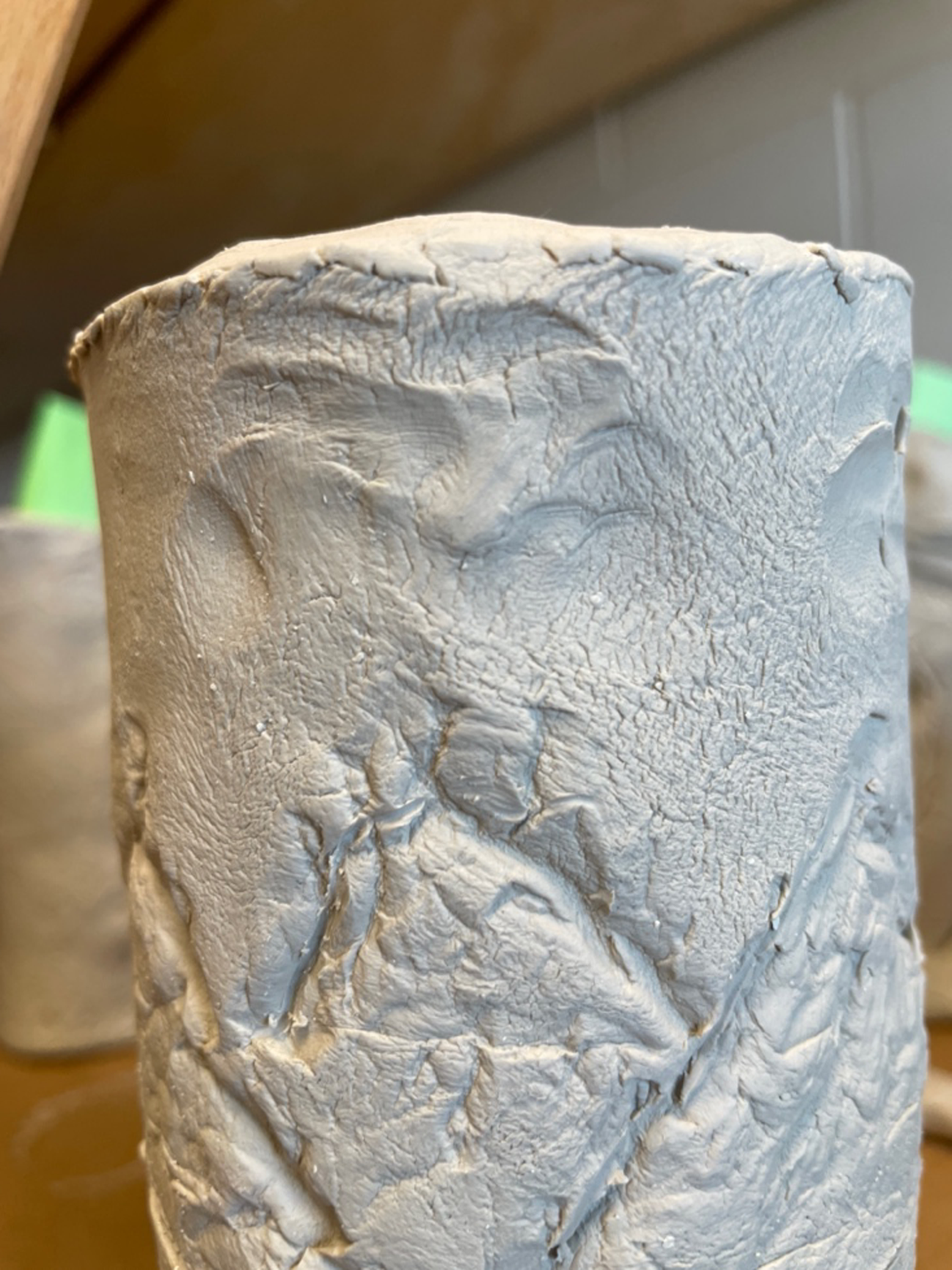
Close-up of listening device (Texture and fingerprints).

Figure 1 Long description
A detailed close-up image of a listening device, highlighting the texture of its surface and visible fingerprints. The device appears to be cylindrical with a rough, uneven texture, and the fingerprints are clearly imprinted on its surface.
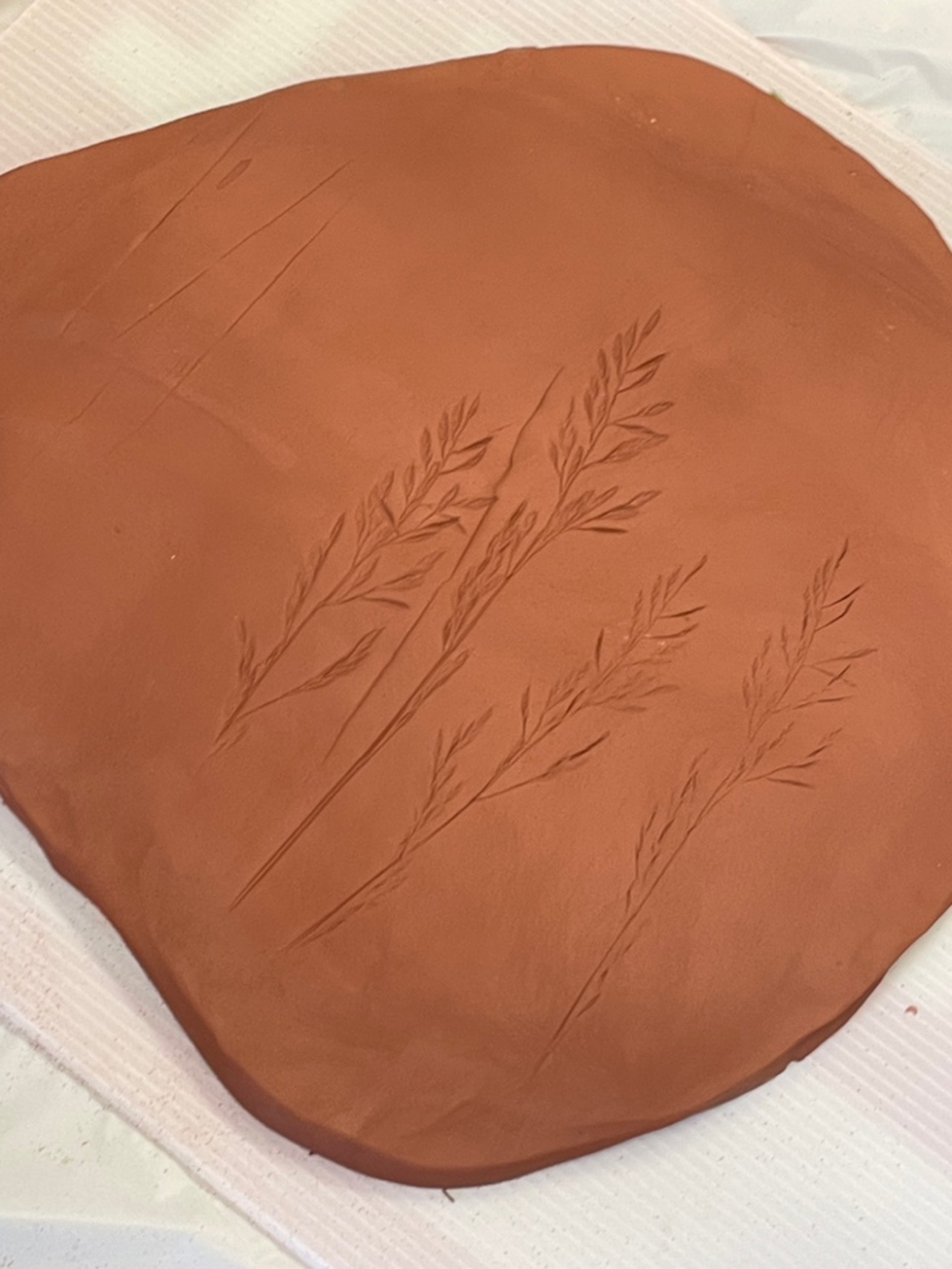
Imprinting of ryegrass on the clay slab.

Figure 2 Long description
The image features a clay slab with a detailed imprint of ryegrass leaves. The leaves are pressed into the clay, creating a clear and intricate pattern. The slab itself is a reddish-brown color, and the imprint is centrally located, with the leaves extending vertically across the surface.
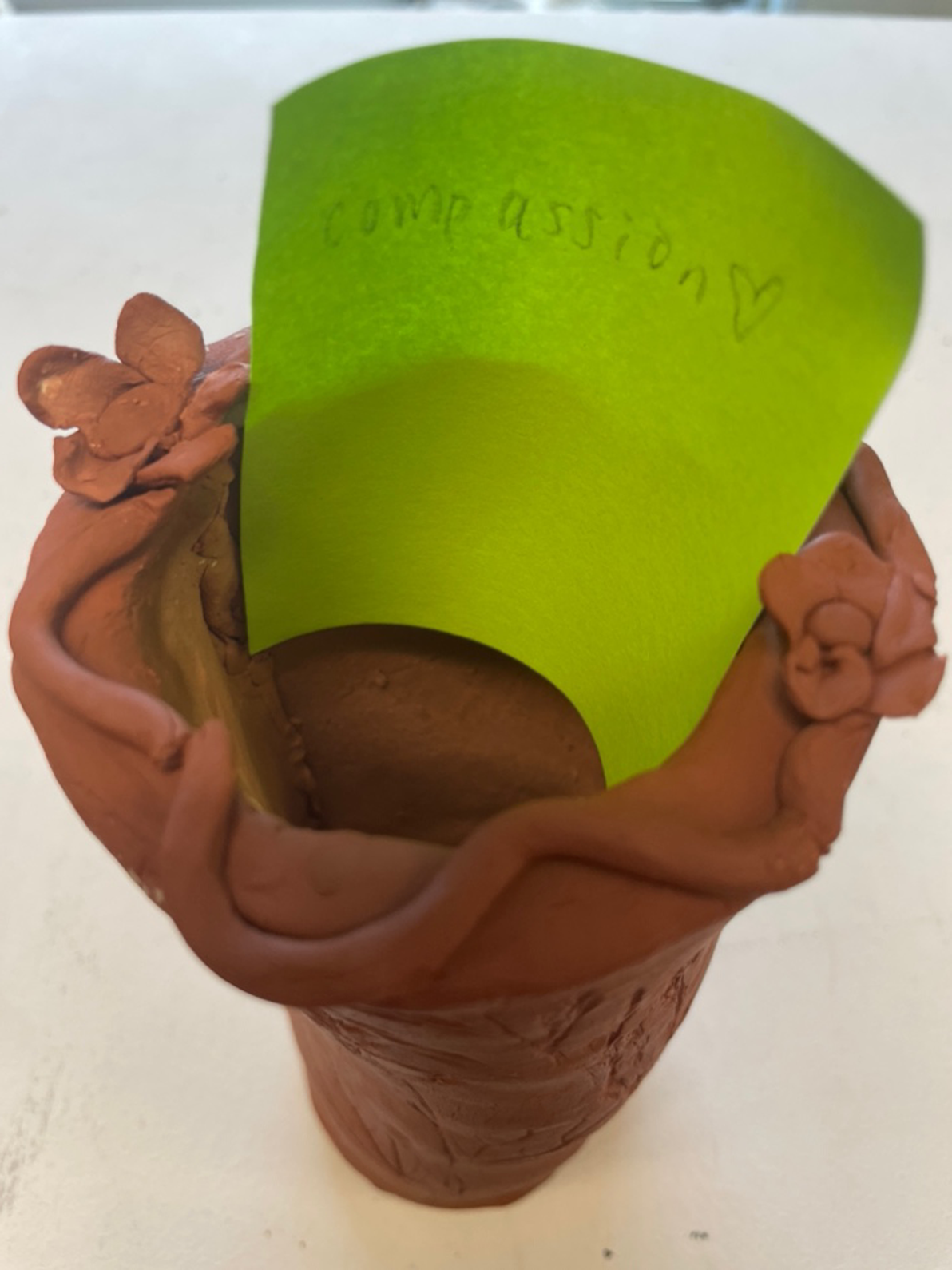
Close-up of listening device (Compassion).

Figure 3 Long description
A clay sculpture shaped like a vessel with two hands holding it from either side. The hands are detailed with fingerprints and textures, giving them a realistic appearance. Inside the vessel, there is a bright green paper with the word 'Compassion' written on it in black ink. The sculpture is placed on a white surface, and the background is blurred, focusing attention on the intricate details of the clay and the message within.
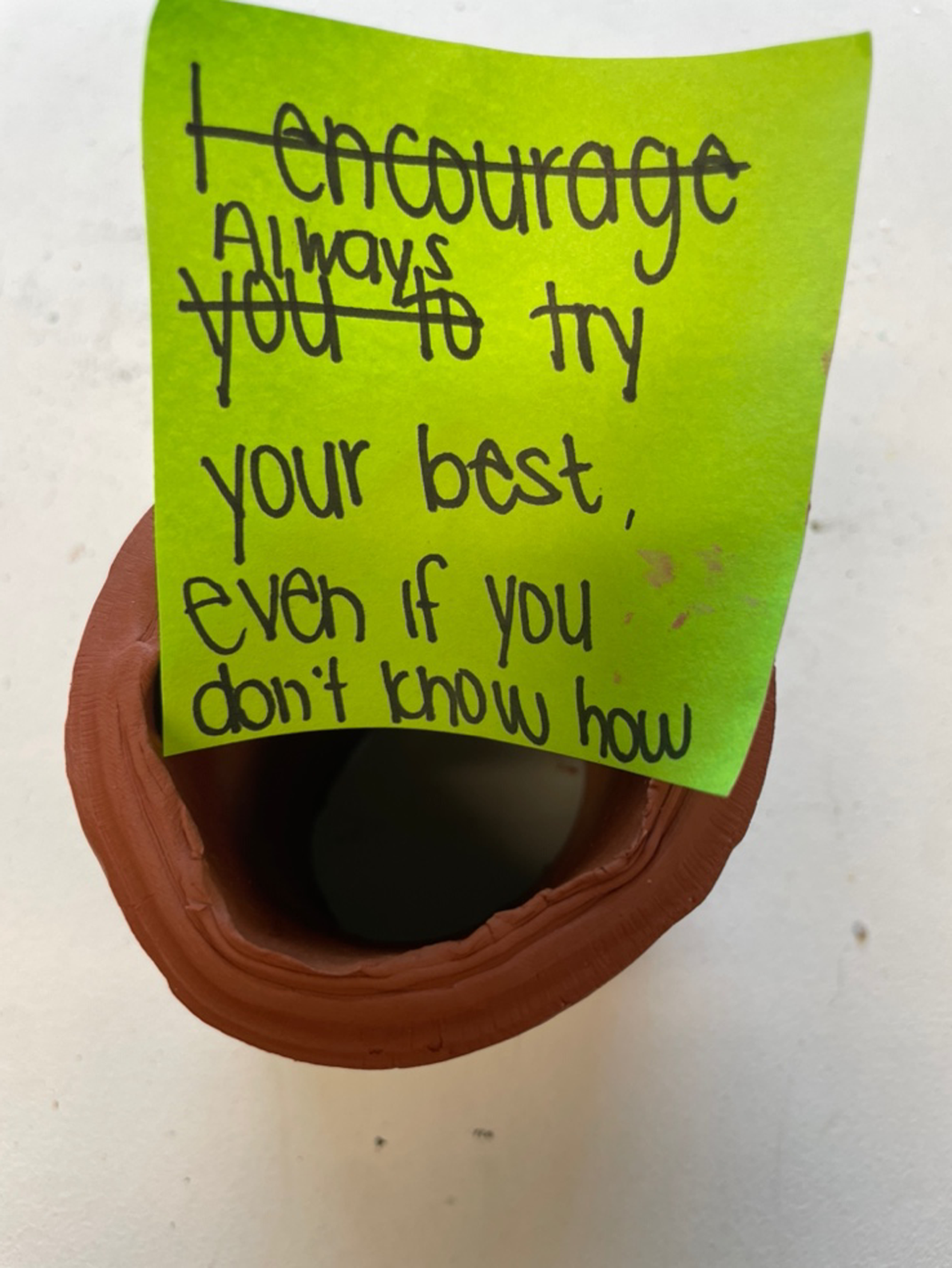
Traces of the teacher candidate-artist left on their sticky note.

Figure 4 Long description
A green sticky note with handwritten text that reads, 'I encourage you to try your best, even if you don't know how.' The sticky note is placed in a terracotta pot, partially visible against a light background.
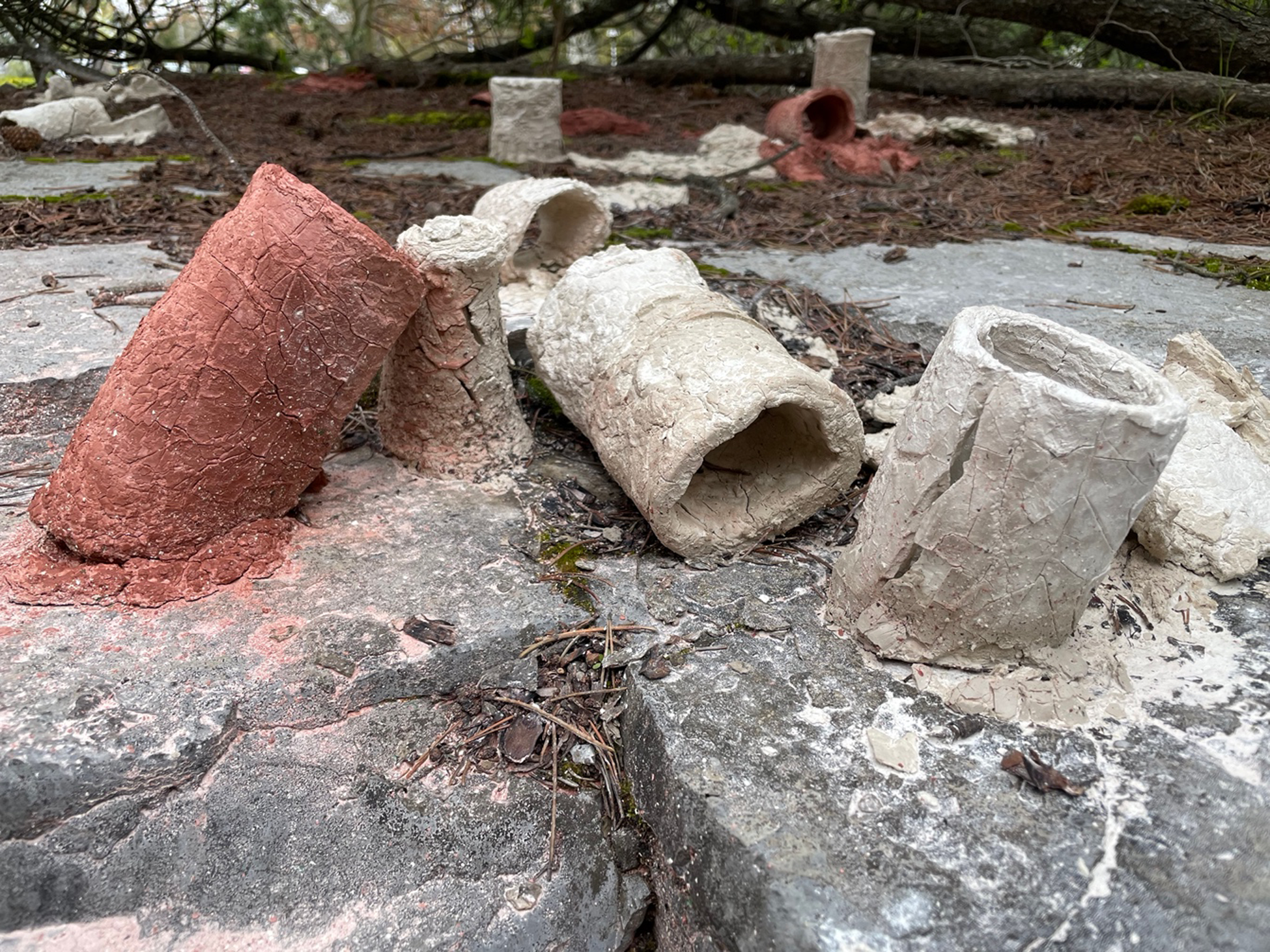
Allowing the clay to decay.

Figure 5 Long description
Several broken clay pipes of varying sizes and colors, including red and white, are scattered on a rocky surface in a forested area. The pipes are cracked and weathered, with some pieces lying on their sides and others upright. The background features fallen leaves, branches, and tree trunks, creating a natural, outdoor setting.
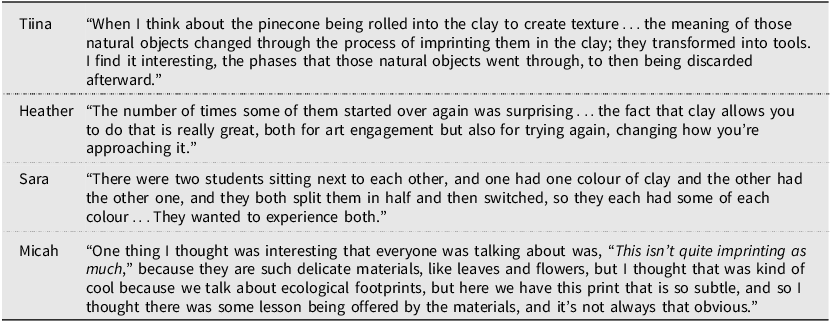
Recognising that “each observer attends to different aspects” (DeWalt & DeWalt, Reference DeWalt and DeWalt2011, p. 89) of the research scenario, we had a debrief discussion immediately after the workshops to reflect on what we noticed in/through the artful learning situation. Drawing on our field notes, photographs, and memories, we shared initial observations and impressions of the workshops, as well as our own feelings that emerged throughout the process (e.g., excitement, amazement, disappointment). We include excerpts from our recorded discussion in Table 1 below. Through this discussion, we identified two emergent themes: clay as medium, and clay as metaphor for encouraging attuning to the Earth. Clay as medium was stiff, messy, penetrable, textured, cracked, crusty, vulnerable, and soluble. The use of metaphor and symbolism, specifically, aligns with a/r/tographic practices and how artists make sense of experiences (Lasczik et al., Reference Lasczik, Hotko, Cutter-Mackenzie-Knowles and McGahey2022; Springgay et al., Reference Springgay, Irwin and Kind2005).
Examples of observations we shared, taken from a recorded debrief discussion held immediately after the clay workshops

After debriefing, we adopted a visual-verbal narrative approach to further analyse our observations, honouring the “various modalities through which humans communicate and construct meaning” (Guyotte et al., Reference Guyotte, Sochacka, Costantino, Kellam and Walther2015, p.10), including visual forms that transcend the limitations of words. We wrote individual narratives illuminating examples from the workshops of each theme from our differing perspectives. We also analysed the resulting clay pieces and photographs individually, taking note of specific features (e.g., imprints, designs, leftover clay pieces, words on sticky notes) that resonated with our themes and narratives. The focus on both visual images and written texts contributed to a more holistic narrative of the learning situation (Guyotte et al., Reference Guyotte, Sochacka, Costantino, Kellam and Walther2015; Johnson, Reference Johnson2004).
As a final step, we looked across the narratives for thematic similarities and pulled together different sections to form four composites reflecting the intersections of clay as medium and metaphor. An a/r/tographic persona (i.e., artist-teacher-researcher) emerges through our composite narratives, capturing “the spirit of our data” (White et al., Reference White, Carter, Davies, Kara, Mannay and Roy2024, p. 227) and representing our collective experience. Since the composites are drawn from our observational data and individual narratives, they are limited to a participant-observer lens and do not reflect the voices of teacher candidates who participated in the workshops.
Narrative findings in four movements
As the chosen artistic medium for the workshop, clay represented sustainability and created tangible connections between participants’ bodies and the Earth. Clay as medium, alongside sticky note as medium, also reflected the differentiated ways teachers brought their hands, intentions, gifts, and meanings into the learning space. Clay-making, as a metaphor, represented the varied approaches that are required for climate crisis response. Additional metaphors were drawn from the practice of letting go of the clay devices and the leftovers from the workshops. We present our composite narratives under sub-headings corresponding to four workshop movements that emerged from our narrative analysis: preparing and working with the clay, leaving traces, clay leftovers, and decay.
Preparing and working with the clay
Preparing for the workshops involved cutting 60 individual blocks from 10 large pugs of clay. Unravelling the plastic covering of the first pug, I was struck by the distinct scent of clay wafting from the bag – a smell which then seeped and settled into my skin. It lingered for a while, even after I washed my hands and changed my clothes. I was imprinted by the clay [the Earth]. The scent eventually disappeared, but the mnemonic mark remained.
In many ways, the act of handling clay creates a tangible connection between the human body and the Earth. As the teacher candidates rolled, kneaded, carved, and otherwise manipulated the clay, I noticed that they forged a relationship with their little piece of earth and responded to its behaviour. For example, upon receiving their rigid blocks of clay, several teacher candidates took time to soften the block by playing with it in their hands, which made it easier to work with. When the clay responded back to its handlers by losing moisture, they had to rub in drops of water to keep it malleable, keeping in mind that too much water would result in mud. While the participants may have had certain designs in mind for their listening devices, they had to work with the clay and adapt to its needs to realise their visions. Clay will only harden successfully when both the medium and maker are satisfied; “…things, too, are vital players in the world” (Bennett, Reference Bennett2010, p. 4). As described, the lifespan of clay comprises states of hardening and softening that are often cyclical, like the natural environment from whence it came. In working with clay as a medium, I am reminded of the natural, non-linear states of life on this Earth.
The teacher candidates’ hands were dirty and busy as they worked the clay. For some it required use of their entire upper body weight to knead and roll the clay into a slab. Later, as their slabs became other forms, as they imprinted the clay slabs with their chosen nature pieces or other tools, and fused the clay into something like a cylinder along a seam, their fingerprints, finger sizes, and hand shapes left evidence of themselves on the listening devices (see Figure 1).
As I was circulating around the classroom, one individual’s artwork caught my eye. They had created an intricate design using delicate pieces of what looked like ryegrass (see Figure 2). I continued past the student to view the other creations, but by the time I walked another loop around the classroom the student was rolling back over their design. In my head, I exclaimed, “No! That was so beautiful!” But I knew the person must have had a reason for starting again. When I came back around later, I thought the design looked very similar, if not identical, to how it had looked before. Upon reflection, I realised that redoing their listening device was part of the individual’s process (a non-linear process – perhaps their experience of flow?) and, from their perspective, the first attempt may not have been what they originally imagined. In thinking about how much the participant cared about their artwork and getting the imprinting just right, it made me reflect on how we as educators can inspire such care in students towards the natural world – so much so that they feel called to create change, even when the process may not be linear or predictable. As I drew meaning from this moment of surprise, both at the time and in my later reflections, my identities as teacher, artist, and researcher intermingled: my initial reaction was informed by a teacher voice that said the original clay design held value and was a beautiful interpretation of the learning activity; an artist’s perspective reminded me that creating is often a nonlinear process and redoing the piece was part of this student’s process; and my role as a researcher prompted me to look for deeper meanings to which I may not have otherwise been attuned.
Despite advance instructions to bring their own fallen pieces of nature, many candidates did not arrive with them, and I was worried that they might not personally connect to the artmaking. But they worked with the materials available to them, those contributed by the workshop leaders or other candidates. Participants showed flexibility and problem solving, especially as they were figuring out the best approaches for sealing their cylindrical devices. Some reached a point when they decided to redo their piece, folding the clay back over itself and rolling it out to begin again. Others tended to evolve their piece into something new, changing their original design and letting new ideas flow from any challenges they encountered in the process. Sometimes the clay cracked or did not stay together, but they tried again and considered new strategies.
In this willingness to try something new, I see a parallel to what is needed to address climate change. We need to be curious and creative, imagine new possibilities, and when something does not go the way we planned, we require a willingness to keep trying. As circumstances evolve, our ideas, solutions, and approaches can take new shape. These examples illustrate how clay artmaking can be viewed as a metaphor for the varied approaches that are required for climate crisis response, involving care, imagination, curiosity, flexibility, and experimentation.
Leaving traces
As they finalised their pieces, the candidates were invited to respond to the prompt, “What message, thought, or feeling would you attach to your device for gallery audiences to consider?” They handwrote words, phrases, instructions, or questions on lime green sticky notes, leaving yet more traces of themselves through the words they chose, their pen or pencil, printing or cursive, punctuation and decoration.
Taken together, the diversity of colour, form, and detail in the 60+ listening devices, accompanied by the variety of communications accomplished by the sticky notes, each made and marked by the artist’s hands, is one of this activity’s strengths. Clay as medium, alongside sticky note as medium, makes it impossible to overlook the differentiated ways teacher candidates brought their own hands, intentions, gifts, and meanings into the learning space.
In environmental activism, we likewise must create welcoming spaces that celebrate differentiation and each person’s perspectives, intentions, gifts, and meanings (Ray, Reference Ray2020). We will benefit from each person, through their own sphere of influence, contributing pathways towards solutions for environmental problems. There is no recipe, there is no singular right way, there is no use for uniformity.
The sticky notes signify that the listening devices were created to be used by others – the audiences who would attend the future-dated exhibition – not those who formed them with their own hands. This demanded that the teacher candidates be willing to let go of their listening devices, although we did promise to return them if they were to contact us after the scheduled exhibition. And this letting go of something one has invested energy into through one’s own hands (and heart?) is a fitting practice for environmentalism, and for teacher education. The listening devices became a gift to pass on to other humans who might be provoked by them, listen through them, and as a result might even explore a new dimension of their relationship to Earth. Likewise, teacher educators must let our candidates go, to become the teachers of their future humans. They will bring their imprint to some other part of the world, some other community, who – we can hope – will be provoked by them, listen through them, and as a result might even explore a new dimension of their relationship to Earth.
Clay leftovers
As the workshop concluded, the tables held both the finished works and the leftovers of the clay-based activity. The leftovers – discarded trimmings and warped towers of mud – sat quietly, providing a visual history of the students’ journey of (in)decisions. Intrigued by their presence, yet sensing an arbitrariness, my inquiry began: Why am I disproportionately drawn to the clay that received little attention, and defied the careful intentions that the finished pieces were subject to? Are these leftover remnants of clay vital parts of a larger whole, or is discarding of this kind a natural part of creation? What influenced the students’ decision to use some clay, and leave the rest?
My initial reflection is that this process of choosing what to preserve and what to let go mirrors how we sift through our memories, with some details resurfacing while others fade, ultimately forming the story of our lives. Just as we shape our own narratives by recombining moments and fragments, so too do these clay remnants seem to invite a new kind of assembly, each edge and imprint suggesting a fragment of a larger, unfinished story. Left untended, these leftovers spoke a peculiar truth about storytelling itself: our lives unfold through both what is remembered and what is left behind.
Similarly, the work of addressing the climate crisis calls us to sift through our current reality to reimagine how we might inhabit this planet alongside the vast, intricately connected community of life on which we depend. In imagining new futures, it is necessary to mourn the loss of the present as we know it. We might ask ourselves: How could the end of some worlds be both necessary and instrumental in marking the beginning of new ones? Which institutional structures, beliefs, and human practices can be left behind? Which should be preserved? What other futures might we envision in their place (Taschereau Mamers, Reference Taschereau Mamers2021)?
Decay
The final step of the art exhibition, which the teacher candidates in the workshop unfortunately did not get a chance to witness for themselves, was leaving the clay listening devices outside in the elements. Clay, as a medium, is particularly ripe for exploring decay. After holding the traces of human touch, the clay became differently animated and mutated through its own slow, organic process of dissolution; like they were agents (Bennett, Reference Bennett2010) of their own transformation. The remnants of clay, like organic matter in a forest floor, break down and rejoin the Earth, part of an ongoing cycle of renewal. This decomposition raises questions of time, waste, remains, and recycling – highlighting how the artmaking process can be one of simultaneous preservation, destruction, and renewal. It opened a conversation about clay as both fragile and resilient in that it always, eventually, surrenders. Each leftover thus serves as a quiet meditation on impermanence, the fragility of materials, and the complex ecological web to which they (and we) inevitably return.
What was left behind in this workshop is a subtle paradigm for conceiving art: an art that values the traces of process, an art that does not aim only for completion but also honours the unfinished, the temporary, and the transitional. In such a framework, the aesthetic experience becomes less about viewing an endpoint and more about contemplating the residue of intention, and the beauty of process. Returning to the context of climate response, these clay remnants remind me of the fragments left in our own attempts to respond to a changing world. Like the process of climate action, clay work is shaped by trial, error, constant adaptation, and a sensitivity to the agency of things (Bennett, Reference Bennett2010) in place of enduring anthropocentrism. Each fragment and failed attempt is a necessary part of the collective effort, reminding me to appreciate the importance of even my smallest contributions, of the imperative to continue, and that other beings will continue quite apart from me.
Implications for teaching and conclusions
This final section will summarise and discuss the implications of engaging in, with, and through art for current and future teachers seeking to promote awareness and positive change.
Engaging in art: Introducing and/or communicating the issue
Marshall McCluhan (Reference McLuhan1964) famously coined the phrase, “The medium is the message,” suggesting that the medium through which content is transmitted is more influential than the content itself. In the workshop with teacher candidates, we talked about how clay represents sustainability and tangible human-Earth connections, since it comes from the Earth and can be returned to the Earth. In an interview for Sculpture, Manav Gupta mentions that “choosing clay as the medium was an extension of its significance in sustainable development. It is something everyone across the world relates to, in the context of earth and environment” (Balasubramaniam, Reference Balasubramaniam2020, para. 2). Our narratives describe how the smell and feel of clay prominently reminds us of its earthen origins and natural lifecycle. We amplified the natural transience of the material by making the process of clay decay visible for educators and teacher candidates in our building (i.e., allowing the clay to decay naturally through contact with the elements outside in a public space). Thus, for us, the use of clay as a natural material was paramount to introducing and communicating the idea of attuning to the Earth in times of climate uncertainty. And yet, although clay is a natural material, it still needs to be harvested, packaged (usually in plastic), and transported – a process that inevitably impacts the environment and can be costly. We recommend teachers similarly consider material selection for art projects that aim to respond to climate issues, balancing cost, access, classroom use, and disposal options.
Presenting and discussing relevant artist or artwork examples, as we did in the workshops, can further enhance students’ engagement with and understanding of critical concepts prior to and during the art-making process (Bertling, Reference Bertling2023). In our case, the discussion of artist examples was rushed because we wanted to prioritise the hands-on clay-making experience within the allotted workshop timeframe. As such, the opportunity for teacher candidates to fully appreciate the messages and concepts presented in the artists’ works – and how they may apply to the clay activity at hand – was limited. For instance, while teacher candidates were prompted to think about how deep listening might encourage shifts in perception towards the environment, after looking at the art works, they did not get a chance to use their devices, or sample listening devices, outside in relationship to nature. A future iteration of this workshop could include a session where students take their devices outdoors and listen deeply to their surroundings both with and without the devices, extending an embodied and relational approach to climate pedagogy. Through this experience, we recognised the tension that exists between the urgency of communicating the climate crisis, the timeframes on which schools and universities usually operate, and the benefits of engaging in slow pedagogy, that is, affording students opportunities to slow down, linger, imagine, and discover (Bertling, Reference Bertling2023). We suggest teachers provide ample time for discussing artwork and implement approaches to effectively engage students in critical analysis of the artwork content, such as Visual Thinking Strategies (e.g., Yenawine, Reference Yenawine2013) or Slow Looking (e.g., Tishman, Reference Tishman2017). Additionally, educators can integrate explicit reflection prompts: What did the clay ask of you? What did you notice about the process? How might this parallel our relationship with the Earth? These questions can help bridge the experiential aspects of the workshop with broader environmental themes.
Engaging with art: Facilitating dialogue and expressing learning
The arts are known to create space for engaging students with challenging topics and inspiring positive action through creation. Shin and colleagues (Reference Shin, Lee, Koo, Hsieh and Gu2023), for example, describe several pedagogical strategies they have used for addressing racial stereotypes and biases within art education courses at the university level, including openly reflecting on and creating artworks that challenge prejudices. In another college-level course called “Activism, Art and Design”, Buller (Reference Buller2021) invited several artists into the classroom to share their artist-activist practices to broaden students’ understanding of how the arts contribute to critical dialogue and action. At the high school level, Chalas and Pitblado (Reference Chalas and Pitblado2021) designed an arts-integrated history project that engaged Grade 11 students in critical thinking, historical learning, and artmaking related to the Holocaust. Students created unique assemblages from found objects representing young victims of the Holocaust, which helped foster deeper understanding of and emotional connections to the subject matter (Chalas & Pitblado, Reference Chalas and Pitblado2021). These and other examples (e.g., see Dewhurst, Reference Dewhurst2023) demonstrate how teachers can consciously design arts learning spaces and activities that (a) foster meaningful dialogue around the topics and (b) allow students to express their learning about these topics in creative and nonverbal ways.
While the previous examples from the literature relate to older students with the capacity for complex analysis, art can also open opportunities for students of all ages and abilities to engage with critical issues in ways that speak to their senses and lived experiences. Hence, in the case of the clay workshops, we sought to create alternative pathways for teacher candidates – who are training to work with both elementary and high school students – to enter and engage in the dialogue around human-Earth relationships that were not centred around climate change facts and solutions, but rather sensory and personal connections. We observed that in working with the clay, teacher candidates entered into a sensory form of dialogue with a small piece of earth, in addition to the verbal dialogue occurring with peers. Perhaps it opened a small space in which they could connect to vibrant matter, and “inspire a greater sense of the extent to which all bodies are kin in the sense of inextricably enmeshed in a dense network of relations” (Bennett, Reference Bennett2010, p. 13). In letting go of their clay pieces, imprinted by their hands and personal experiences, they helped create new opportunities for dialogues with and among future gallery audiences. The sticky note messages contributed additional meaning to the dialogues between various entities included in the process (e.g., clay-makers and clay devices, artist-researchers and teacher candidates, clay-makers and gallery audiences). Based on these observations, we encourage teachers to consider the different ways art-making processes can generate dialogue that is both verbal and non-verbal, as students interact with materials, each other, and resulting artworks.
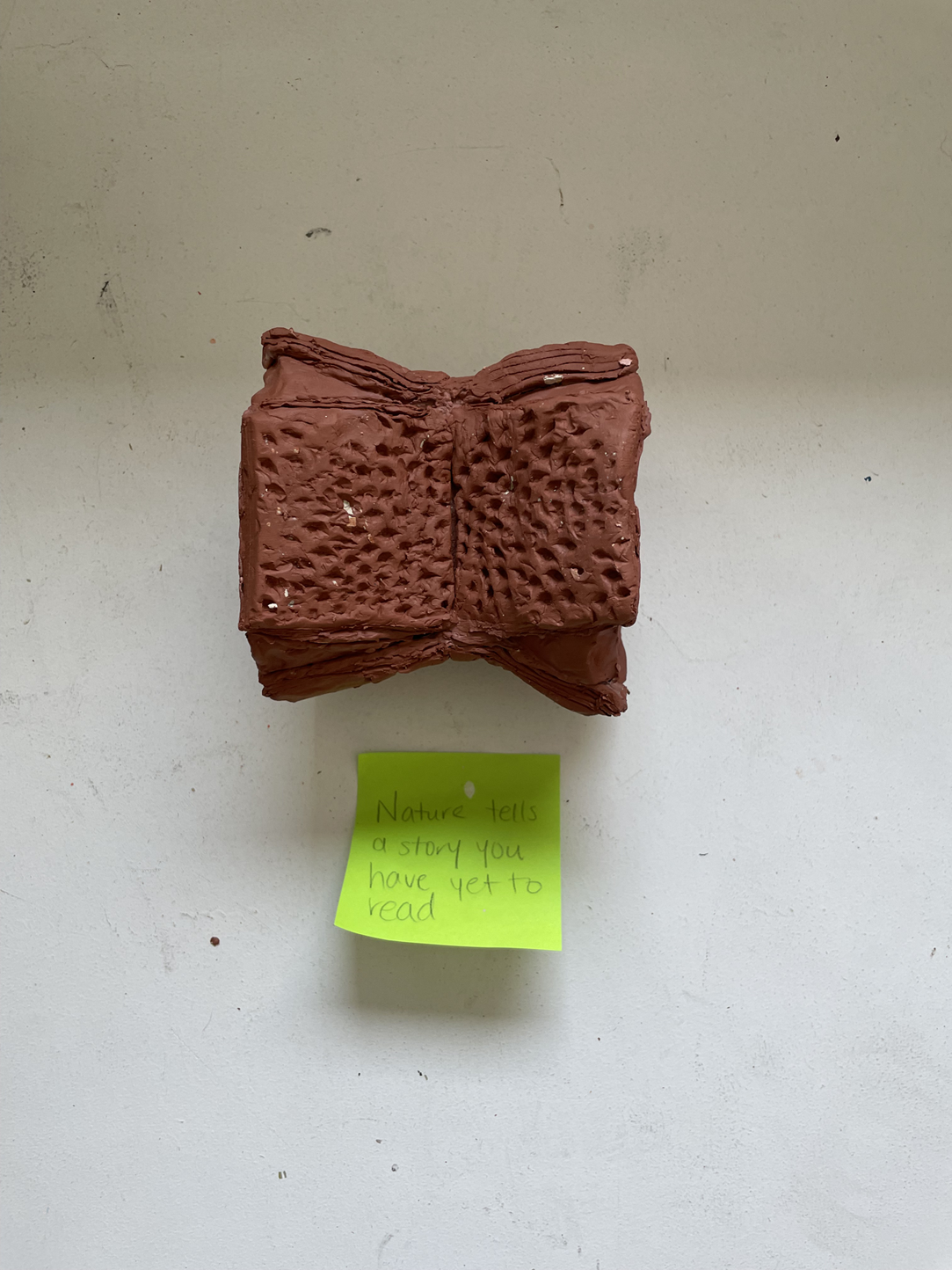
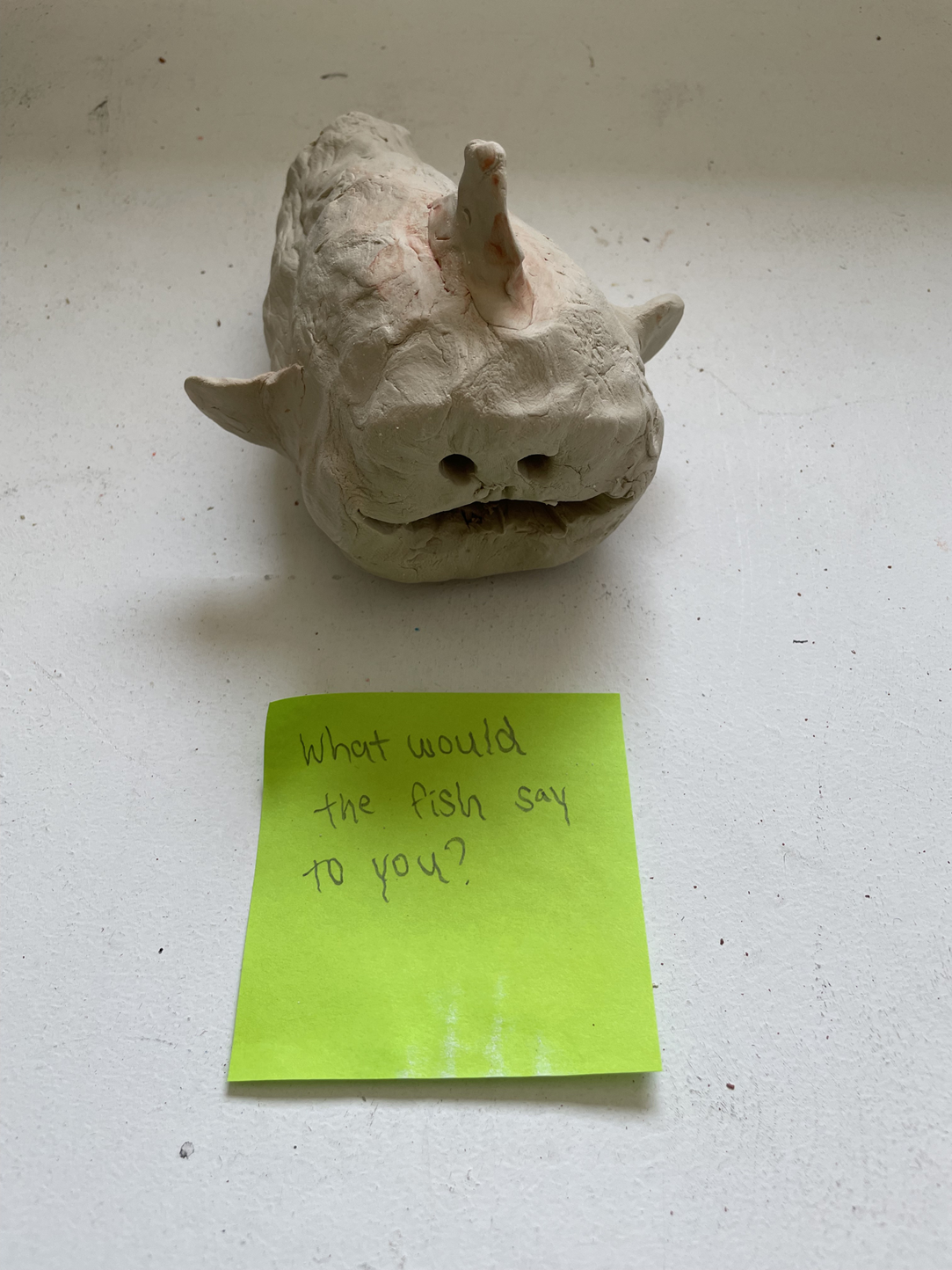
While teacher candidates were required to create a clay listening device and write a sticky note message to accompany the device, how they approached the task was open-ended (i.e., they could adopt any shape/design for their device and attach any sort of word or message to their device). As a result, many unexpected shapes, designs, and messages emerged. For instance, one clay device was shaped into a book, another into a fish (see Figures 6 and 7). Some written messages were clearly understood (e.g., “Take time to listen to the trees”), others were more cryptic (e.g., “On the outside looking through”). As artist-researcher-educators, we embraced the possibilities of what participants would create based on their interpretations of the task, as well as their personal interests and abilities with the clay. The beauty of clay is that it is accessible and adaptable to a wide range of abilities. We presented a simple form that teacher candidates could choose to use if they were not as comfortable with the medium or experimentation (which many did opt to use). Similarly, teachers who use clay for environmental-related projects can adapt the process and forms to the skill levels of their students. We also observed that kneading and rolling the clay into slabs took a lot of force because the initial clay blocks were quite thick, so we recommend smaller portions of clay for young children who may not have the strength to roll out thick blocks.
Clay listening device shaped into a book, with corresponding sticky note that reads, “Nature tells a story you have yet to read”.

Figure 6 Long description
A clay sculpture shaped like a book with a textured surface, resembling the pages of an open book. Attached to the sculpture is a bright green sticky note with handwritten text that reads, 'Nature tells a story you have yet to read.' The sculpture and note are displayed against a plain, light-colored background.
Clay listening device shaped into a fish, with corresponding sticky note that reads, “What would the fish say to you?”.

Figure 7 Long description
A clay sculpture shaped like a fish with a prominent horn on its head. The sculpture has two large eyes and a wide mouth with visible teeth. In front of the sculpture, there is a green sticky note with handwritten text that reads, 'What would the fish say to you?' The sculpture and sticky note are placed on a white surface.
Engaging through art: Encouraging transformative processes
The process-orientation of the clay workshops (Bentz, Reference Bentz2020) encouraged connecting with the clay material and concepts presented, rather than emphasising the final aesthetic of the clay devices. As our composite narratives reveal, teacher candidates continuously and vigorously re-worked their clay, embracing the process-based approach and perhaps engaged in a state of creative flow. While our observations cannot confirm that workshop participants experienced Csikszentmihalyi’s concept of flow per se, we were pleased to realise that the workshop conditions may have allowed for it. For instance, participants were given a clear goal, and efforts were made to ensure the task was accessible for almost any skill level to ensure candidates would feel capable. We taught the basic skills of rolling out a clay slab and hand-building a cylindrical form. Csikszentmihalyi posited that once individuals develop basic skills and envision what they can do with those skills, they can start to enjoy the process of learning and enter flow. Focusing on “process rather than results” (Csikszentmihalyi, Reference Csikszentmihalyi2014, p. 145) and allowing for individual freedom, as we did, can also encourage a flow state. Adopting this approach is not always easy, however. As facilitators and observers of this learning experience, we had to be aware and let go of our own perceptions, feelings, and expectations, such as the shock and disappointment of witnessing participants destroy their original designs and start anew. Teachers may also feel this type of disappointment while facilitating more open-ended art activities with students, but we hope that they keep in mind that flow and transformation through art is a process that can look different for each student.
Letting clay teach
The process of engaging teacher candidates in, with, and through clay invited subtle but important shifts in how they approached environmental learning and teaching. Rather than focusing on prescriptive outcomes or facts residing in misguided rationalism (Plumwood, Reference Plumwood2002), the workshop foregrounded slow, sensory, and situated ways of knowing. Participants were encouraged to explore materials that pushed back, as though agential, and that resist certainty and permanence. In doing so, they made space for ecological thought and emotion to emerge through gesture, contact, and play.
Working with clay allowed participants to embody climate pedagogies that are often spoken about in abstract terms: relationality, attunement, and transformation. Through touch, repetition, and reflection, the teacher candidates were able to consider their own role in a broader ecological web. Clay as medium was hard, messy, penetrable, textured, cracked, crusty, vulnerable, and soluble – one where fragility, care, and process matter as much as action or advocacy.
The narratives shared in this study do not offer a template for climate education, nor do they claim to resolve the tensions of teaching in a time of ecological uncertainty. Instead, they offer an invitation to dwell within these tensions. Clay became a medium not only for listening, but for lingering – for staying a little longer with the messy, non-linear, and affective work of imagining otherwise. Ultimately, our findings suggest that climate education need not always aim for clarity or closure. It can begin instead with a question, a soft material, and an openness to what happens when we allow our hands, and our thinking, to change shape.
Acknowledgements
We would like to thank the Office of the Associate Dean, Research and Strategic Initiatives, Faculty of Education for instigating this artification initiative. Thanks to Rebecca S. Evans for allowing us to offer the workshops for students in her courses. Lastly, we are grateful to each student who participated in the workshop and contributed their clay listening device to the project.
Ethical statement
This project was approved by the Queen’s University General Research Ethics Board, file #6038884.
Financial support
This project was funded by the Office of the Associate Dean, Research and Strategic Initiatives, Faculty of Education, Queen’s University; the Community Initiatives Fund, Faculty of Education, Queen’s University; and, the Social Studies and History Education in the Anthropocene Network (SSHEAN) which is funded by the Social Sciences and Humanities Research Council of Canada (SSHRC) grant #430-2021-00006.
Author Biographies
Tiina Kukkonen is an Assistant Professor of Visual Arts Education at Queen’s University, Canada. Tiina has contributed research in the areas of early childhood development through art, artist-school partnerships, and rural arts education. She also has a keen interest in arts-based approaches to research and knowledge translation. The driving force behind her work is the desire to make visual arts and arts education accessible, relevant, and inspiring for all.
Heather E. McGregor is an Associate Professor of Curriculum Theory at Queen’s University, Canada. Heather has published in a range of Canadian and international journals on topics including the history of Inuit education and curriculum change in the Canadian Arctic, decolonising research methodologies, experiential learning, and theorising history and social studies learning in the context of climate crisis.
Micah Flavin is an interdisciplinary researcher, teacher, and artist based in Tiohtià:ke/Mooniyaang (Montréal, Quebec). He is interested in wetlands, contradictions, and the cultural politics of emotions.
Sara Karn is a Postdoctoral Fellow for the SSHRC Partnership project Thinking Historically for Canada’s Future and is based in the Department of History at McMaster University, Canada. Her research explores empathy and emotion in history and social studies education. Sara is also a certified K-12 teacher in Ontario and teaches social studies education and environmental education at the postsecondary level.

 Open access

